
Brazil Single Use Surgical Instruments Market (2025-2030)

The Brazil Single Use Surgical Instruments Market was valued at $58.75 Million in 2025 and projected to reach to $79.19 Million by 2030, representing a compound annual growth rate of 6.2%. Brazil's single-use surgical instruments market is positioned for sustained growth through 2030, supported by increasing healthcare expenditure and modernization of surgical facilities across major metropolitan areas and emerging regions.


| Market Size in | USD 26.32 MN |
| Market Forecast in | |
| CAGR | |
| Forecast Period | |
| Units Considered | Value (USD MN) |
Brazil Single Use Surgical Instruments Market Trends and Insights
- This growth trajectory reflects Brazil's expanding healthcare infrastructure and increasing surgical procedure volumes across both public and private healthcare systems.
- Brazil's market expansion is driven by rising demand for infection control, improved surgical safety standards, and greater adoption of disposable instruments in hospitals and surgical centers. The Brazilian market benefits from a large population base and growing healthcare expenditure, positioning Brazil as a key player in the Latin American single-use surgical instruments sector.
- Brazil's regulatory environment and emphasis on patient safety continue to support the transition from reusable to single-use instruments.
- Between 2025 and 2030, Brazil is expected to see sustained growth as healthcare providers prioritize cost-effective, sterile surgical solutions and comply with international infection prevention protocols..
Key Market Statistics
- CAGR (2025-2030) 6.2% CAGR
- Market Size, 2025 ~USD 58.75 Million
- Forecast, 2030 ~USD 79.19 Million
- Country Brazil
Brazil Single Use Surgical Instruments Market Overview
Market Valuation Growth :
Brazil's single-use surgical instruments market is valued at USD 58.75 million in 2025 and is projected to reach USD 79.19 million by 2030, demonstrating robust expansion driven by increased surgical volumes and healthcare modernization.
Above-Global Growth Rate :
Brazil's market CAGR of 6.2% outpaces the global average of 5.7%, indicating stronger regional demand and market penetration opportunities compared to international benchmarks.
Healthcare Infrastructure Expansion :
Brazil's expanding healthcare infrastructure, including investments in both public (SUS) and private hospital systems, is driving increased adoption of single-use surgical instruments across surgical specialties.
Rising Surgical Procedure Volumes :
Growing surgical procedure volumes across Brazil's healthcare ecosystem, coupled with infection control awareness and regulatory compliance requirements, are accelerating demand for disposable surgical instruments.
Brazil Single Use Surgical Instruments Market Dynamics
- The market benefits from rising awareness of infection prevention protocols and the shift toward disposable instruments in both public and private healthcare settings. Key growth drivers include expanding middle-class populations seeking advanced surgical care, regulatory emphasis on patient safety standards, and technological improvements in single-use instrument design.
- Strategic investments by healthcare providers and growing partnerships with international medical device manufacturers will further accelerate market penetration and product innovation tailored to Brazil's specific healthcare needs..
Market Ecosystem
Related Ecosystem
Medical Devices
- Polymerase Chain Reaction (PCR)
- Magnetic Resonance Imaging (MRI)
- Disposable Autoinjectors
- Pulse Oximeters
- Blood Pressure Monitors
- Medtronic plc
- Abbott Laboratories
- Stryker Corporation
- Becton, Dickinson and Company
- JOHNSON & JOHNSON
Key Takeaways
- Brazil's single-use surgical instruments market is valued at USD 58.75 million in 2025 and will reach USD 79.19 million by 2030.
- Brazil is experiencing a 6.2% CAGR, outpacing the global average of 5.7%, indicating strong regional demand.
- Brazil's healthcare infrastructure expansion and infection control priorities are primary drivers of market growth.
- Brazil's large population and rising surgical procedure volumes position it as Latin America's largest single-use surgical instruments market.
Single Use Surgical Instruments Market Report Scope
| Report Metric | Details |
|---|---|
| Base Year | 2025 |
| Fastest Growing Segment | ENDOSCOPIC INSTRUMENTS (Product Type) |
| Forecast Period | 2025–2030 |
| Growth Rate | CAGR of 5.7% from 2025 to 2030 |
| Largest Segment | HOSPITALS & SPECIALTY CLINICS (Care Setting) |
| Market Size Base Year (Billions) | ~USD 5.91 (2025) |
| Revenue Forecast (Billions) | ~USD 7.8 (2030) |
| Segments Covered | Product Type, Type, Application, Care Setting |
Brazil Single Use Surgical Instruments Market Report Segmentation
4 segment dimensions are covered across the global market.
By Product Type
- Electrosurgical Instruments
- Endoscopic Instruments
- Handheld Surgical Instruments
- Other Single-Use Surgical Instruments
By Type
- Bipolar Forceps
- Cautery Devices
- Forceps
- Graspers
- Other Electrosurgical Instruments
- Other Endoscopic Instruments
- Other Handheld Surgical Instruments
- Scalpels
- Scissors
- Single-Use Trocars
By Application
- Cardiovascular Surgery
- Ent Surgery
- General Surgery
- Gynecology & Obstetrics Surgery
- Ophthalmic Surgery
- Orthopedic Surgery
- Other Applications
By Care Setting
- Ambulatory Surgical Centers (Ascs)
- Home Care Settings
- Hospitals & Specialty Clinics
BRAZIL: SINGLE-USE SURGICAL INSTRUMENTS MARKET, BY APPLICATION, 2023–2030
| Segment | 2023 | 2024 | 2025 | 2026 | 2027 | 2028 | 2029 | 2030 | CAGR (%) |
|---|---|---|---|---|---|---|---|---|---|
| CARDIOVASCULAR SURGERY | 19.05 | 20.13 | 21.52 | 23.02 | 24.65 | 26.33 | 28.13 | 30.01 | 6.9 |
| ENT SURGERY | 9.81 | 10.37 | 11.1 | 11.89 | 12.74 | 13.62 | 14.57 | 15.55 | 7 |
| GENERAL SURGERY | 40.68 | 42.99 | 45.97 | 49.18 | 52.65 | 56.26 | 60.1 | 64.12 | 6.9 |
| GYNECOLOGY & OBSTETRICS SURGERY | 16.3 | 17.28 | 18.52 | 19.87 | 21.33 | 22.86 | 24.49 | 26.2 | 7.2 |
| OPHTHALMIC SURGERY | 5.91 | 6.23 | 6.65 | 7.1 | 7.58 | 8.08 | 8.62 | 9.17 | 6.6 |
| ORTHOPEDIC SURGERY | 23.57 | 25.02 | 26.87 | 28.88 | 31.06 | 33.34 | 35.78 | 38.35 | 7.4 |
| OTHER APPLICATIONS | 14.48 | 15.34 | 16.44 | 17.64 | 18.94 | 20.29 | 21.74 | 23.25 | 7.2 |
| TOTAL | 129.8 | 137.37 | 147.08 | 157.59 | 168.96 | 180.79 | 193.42 | 206.66 | 7 |
Target Audience
- Medical Device Manufacturers : Manufacturers need Brazil-specific market data to develop localized product portfolios, establish distribution networks, and capitalize on the 6.2% CAGR growth opportunity in this expanding healthcare market.
- Healthcare Facility Operators : Hospital administrators and surgical center managers require market insights to optimize procurement strategies, negotiate supplier contracts, and plan surgical instrument inventory investments aligned with regional demand trends.
- Investment & Private Equity Firms : Investors evaluating healthcare sector opportunities in Brazil need validated market sizing and growth forecasts to assess portfolio companies, identify acquisition targets, and evaluate return potential in surgical instruments.
- Healthcare Consultants & Advisors : Consulting firms advising healthcare clients on market entry, expansion, or operational efficiency require Brazil-specific data to develop evidence-based strategies and competitive recommendations.
- Regulatory & Compliance Officers : Healthcare compliance professionals need Brazil market context to understand regulatory drivers, infection control standards, and safety protocols influencing single-use instrument adoption and procurement decisions.
Key Companies in the Brazil Single Use Surgical Instruments Market
| Company | HQ | Ownership | Strongest segments |
|---|---|---|---|
| JOHNSON & JOHNSON SERVICES, INC. (ETHICON, INC.) | United States | ||
| MEDTRONIC | Ireland | Public Company | Handheld Surgical Instrument,Electrosurgical Instrument,Endoscopic Instrument, |
| BD | United States | Public Company | Handheld Surgical Instrument,Electrosurgical Instrument,Endoscopic Instrument, |
| SMITH+NEPHEW | United Kingdom | Public Company | Handheld Surgical Instrument,Electrosurgical Instrument,Endoscopic Instrument, |
| STRYKER | United States | Public Company | Handheld Surgical Instrument,Electrosurgical Instrument,Endoscopic Instrument, |
| STERIS | Ireland | Public Company | Handheld Surgical Instrument,Electrosurgical Instrument,Endoscopic Instrument, |
| PAUL HARTMANN AG | Germany | Public Company | Handheld Surgical Instrument (single-use),Electrosurgical Instrument (single-use),Endoscopic Instrument (single-use), |
| TATA SURGICAL | India | Handheld Surgical Instrument,Electrosurgical Instrument,Endoscopic Instrument, |
JOHNSON & JOHNSON SERVICES, INC. (ETHICON, INC.)
Johnson & Johnson Services, Inc., operating through its Ethicon subsidiary, is a United States-based medical device and surgical products company.
MEDTRONIC
Medtronic is a publicly traded Irish-founded company established in 1949 with approximately 95,000 employees, operating as a global medical technology leader.
BD
BD (Becton Dickinson) is a publicly traded United States company founded in 1897 with 72,000 employees, specializing in medical devices and diagnostic solutions.
SMITH+NEPHEW
Smith+Nephew is a publicly traded United Kingdom company founded in 1856 with 16,988 employees, specializing in medical devices and surgical products.
STRYKER
Stryker is a publicly traded United States company founded in 1941 with 56,000 employees, operating as a leading medical technology and surgical equipment manufacturer.
STERIS
STERIS is a publicly traded company founded in Ireland in 1985, providing sterilization and contamination control solutions for healthcare and life sciences.
PAUL HARTMANN AG
Paul Hartmann AG is a publicly traded German company founded in 1818 with 10,066 employees, manufacturing medical and hygiene products.
TATA SURGICAL
Tata Surgical is an India-based surgical products company.
Reasons to Buy this Report
- Precise Brazil Market Sizing : Access validated market valuations specific to Brazil (USD 58.75M in 2025), enabling accurate budgeting, investment decisions, and competitive positioning within this high-growth regional market.
- Competitive Growth Intelligence : Understand Brazil's 6.2% CAGR advantage over global rates (5.7%), identifying market dynamics and opportunities that outpace international competitors and inform expansion strategies.
- Healthcare System Insights : Gain detailed understanding of Brazil's dual public-private healthcare landscape (SUS and private systems), enabling targeted product development and distribution strategies for maximum market penetration.
- Regulatory & Compliance Framework : Leverage Brazil-specific insights on infection control standards, regulatory requirements, and patient safety protocols driving single-use instrument adoption across surgical specialties.
- Strategic Investment Guidance : Make informed decisions on market entry, partnership development, and resource allocation in Brazil with comprehensive forecasts through 2030 and regional growth trajectory analysis.
Frequently asked questions
What is the current market size of single-use surgical instruments in Brazil?
Brazil's single-use surgical instruments market is valued at USD 58.75 million in 2025.
What is the projected market size for Brazil by 2030?
Brazil's single-use surgical instruments market is projected to reach USD 79.19 million by 2030.
What is the CAGR for Brazil's single-use surgical instruments market?
Brazil's market is growing at a CAGR of 6.2% from 2025 to 2030.
Why is Brazil's market growing faster than the global average?
Brazil's 6.2% CAGR exceeds the global 5.7% due to expanding healthcare infrastructure, rising surgical volumes, and increased emphasis on infection control and patient safety standards.
What factors are driving growth in Brazil's single-use surgical instruments market?
Key drivers include Brazil's growing healthcare expenditure, large population base, regulatory focus on infection prevention, and the transition from reusable to disposable surgical instruments in hospitals and surgical centers.
RESEARCH METHODOLOGY
The study involved significant efforts to estimate the current size of the single-use surgical instruments market. Extensive secondary research was conducted to gather information about this market. The next step was to validate these findings, assumptions, and estimates through primary research with industry experts throughout the value chain. Various methodologies were used to calculate the total market size, including top-down and bottom-up approaches. Following this, market segmentation and data triangulation procedures were employed to estimate the sizes of the different segments and subsegments within the market.
Secondary Research
This research study extensively utilized secondary sources, including directories and databases such as Dun & Bradstreet, Bloomberg Business, Factiva, whitepapers, and company documents from public registries. The secondary research was conducted to identify and gather information for a comprehensive, technical, market-oriented, and commercial analysis of the single-use surgical instruments (SUSI) market. It aimed to gather crucial insights about the top players in the market, as well as to classify and segment the market according to industry trends, geographical areas, and key developments. Additionally, a database of the leading industry players was compiled using the data collected through secondary research.
Primary Research
In the primary research process, various sources from both the supply and demand sides were interviewed to gather qualitative and quantitative information for this report. Supply-side primary sources included industry experts such as CEOs, vice presidents, marketing & sales directors, technology & innovation directors, engineers, and other key executives from companies and organizations operating in the SUSI market. Demand-side primary sources encompassed hospitals, clinics, researchers, lab technicians, purchasing managers, and stakeholders from both corporate and government bodies.
Breakdown of Primary Interviews
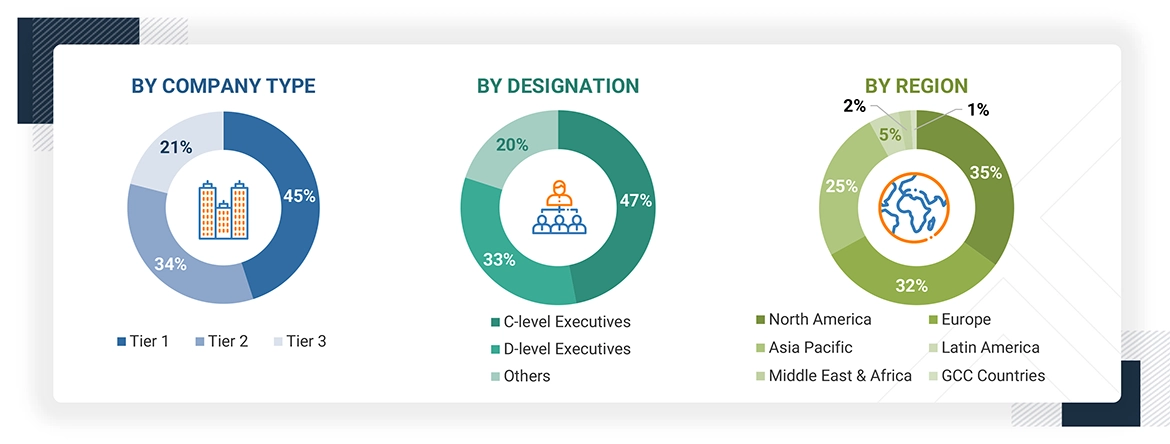
Note 1: C-level executives include CEOs, COOs, and CTOs.
Note 2: Others include sales, marketing, and product managers.
Note 3: Companies are classified into tiers based on their total revenue. As of 2024: Tier 1 = >USD 1 billion, Tier 2 = USD 500 million to USD 1 billion, and Tier 3 = < USD 500 million.
To know about the assumptions considered for the study, download the pdf brochure
Market Size Estimation
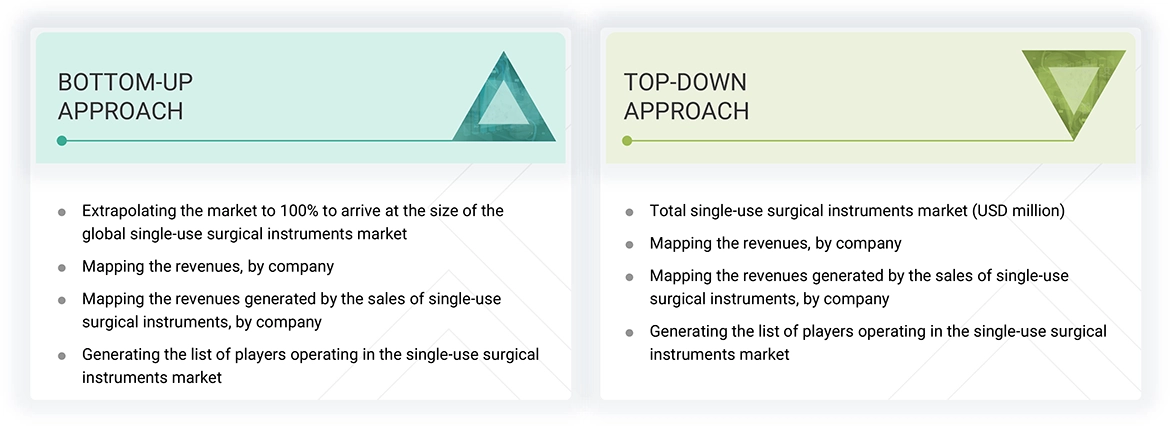
Both top-down and bottom-up approaches were used to estimate and validate the total size of the SUSI market. These methods were also used extensively to estimate the size of various subsegments in the market. The research methodology used to estimate the market size includes the following:
Data Triangulation
When the market size was determined, the entire market was split into three segments. Data triangulation and market breakdown processes were used where necessary to complete the entire market engineering process and arrive at precise statistics for all segments.
Approach to derive the market size and estimate market growth.
The market rankings of major players were determined using secondary data from both paid and unpaid sources. This analysis focused on their sales of SUSI. In some cases, due to data limitations, the revenue share was estimated after a detailed review of the product portfolios of large companies and their individual sales performance. Additionally, this information was verified at each stage through in-depth interviews with industry professionals.
Market Definition
Single-use surgical instruments are sterile medical tools designed for one-time use during procedures. Their primary purpose is to ensure safety and prevent cross-contamination. This category includes handheld instruments such as forceps, scissors, and scalpels, as well as electrosurgical instruments like cautery devices and bipolar forceps. Additionally, it encompasses endoscopic instruments, including single-use trocars and graspers, which are commonly used in minimally invasive surgeries.
Stakeholders
- Single-use surgical instrument manufacturers
- Research laboratories
- Healthcare service providers (including hospitals, ambulatory surgical centers, and specialty clinics)
- Market research and consulting firms
- Medical device suppliers, distributors, channel partners, and third-party suppliers
- Regulatory authorities
- Academic medical centers and universities
- Business research and consulting service providers
- Venture capitalists and other government funding organizations
Report Objectives
- To define, describe, and forecast the single-use surgical instruments market based on product type, application, care setting, and region
- To provide detailed information regarding the major factors influencing the market growth (drivers, restraints, opportunities, and challenges)
- To analyze the micromarkets with respect to individual growth trends, prospects, and contributions to the overall single-use surgical instruments market
- To analyze market opportunities for stakeholders and provide details of the competitive landscape for key players
- To forecast the size of the single-use surgical instruments market in six regions: North America (US and Canada), Europe (Germany, the UK, France, Spain, Italy, and the Rest of Europe), the Asia Pacific (Japan, China, India, Australia, South Korea, and the Rest of Asia Pacific), Latin America (Brazil, Mexico, and the Rest of Latin America), the Middle East & Africa, and GCC Countries
- To strategically profile the key players in the global market and comprehensively analyze their core competencies
- To track and analyze competitive developments, such as product launches, expansions, agreements, and acquisitions, of the leading players in the market
Get the Full Single Use Surgical Instruments Market Report
Full forecast, segment splits, and company analysis for all Single Use Surgical Instruments Market.
- Canada Single Use Surgical Instruments Market
- US Single Use Surgical Instruments Market
- Germany Single Use Surgical Instruments Market
- UK Single Use Surgical Instruments Market
- France Single Use Surgical Instruments Market
- Italy Single Use Surgical Instruments Market
- Spain Single Use Surgical Instruments Market
- China Single Use Surgical Instruments Market
- Japan Single Use Surgical Instruments Market
- India Single Use Surgical Instruments Market
- Australia Single Use Surgical Instruments Market
- South Korea Single Use Surgical Instruments Market
- Mexico Single Use Surgical Instruments Market
- GCC Countries Single Use Surgical Instruments Market
- Rest Of Europe Single Use Surgical Instruments Market
- Rest Of Asia Pacific Single Use Surgical Instruments Market
- Rest Of Latin America Single Use Surgical Instruments Market
Need a Tailored Report?
Customize this report to your needs
Get 10% FREE Customization
Customize This Report
