
US Therapeutic Hypothermia Systems Market (2023-2028)

The US Therapeutic Hypothermia Systems Market was valued at $59.5 Million in 2023 and projected to reach to $81.1 Million by 2028, representing a compound annual growth rate of 6.4%. The US therapeutic hypothermia systems market is positioned for sustained growth through 2028, driven by rising adoption in critical care settings and expanding clinical applications.


| Market Size in | USD 26.32 MN |
| Market Forecast in | |
| CAGR | |
| Forecast Period | |
| Units Considered | Value (USD MN) |
US Therapeutic Hypothermia Systems Market Trends and Insights
- The US market benefits from advanced healthcare infrastructure, high adoption of temperature management technologies in critical care settings, and increasing clinical awareness of hypothermia's neuroprotective benefits.
- In the US, therapeutic hypothermia systems are increasingly deployed in post-cardiac arrest care, stroke management, and traumatic brain injury treatment across hospitals and specialized care centers. The US market growth is driven by rising incidence of cardiac arrest, expanding ICU capacity, and growing investment in advanced medical devices.
- US healthcare providers are prioritizing patient outcomes through temperature management protocols, supported by clinical guidelines and reimbursement frameworks.
- The forecast period through 2028 reflects sustained demand in the US for both intravascular and surface cooling technologies, with particular emphasis on portable and user-friendly systems that enhance clinical workflow efficiency..
Key Market Statistics
- CAGR (2023-2028) 6.4% CAGR
- Market Size, 2023 ~USD 59.5 Million
- Forecast, 2028 ~USD 81.1 Million
- Country US
US Therapeutic Hypothermia Systems Market Overview
Market Valuation :
The US therapeutic hypothermia systems market reached $59.5 million in 2023, demonstrating strong demand for temperature management solutions across American healthcare facilities.
Growth Trajectory :
With a CAGR of 6.4% through 2028, the US market is expanding faster than the global average of 6.3%, indicating accelerating adoption within the country's healthcare ecosystem.
Advanced Infrastructure :
The US benefits from sophisticated healthcare infrastructure and high penetration of critical care units, driving widespread implementation of therapeutic hypothermia technologies in hospitals and ICUs.
Clinical Awareness :
Increasing recognition among US clinicians of hypothermia's neuroprotective benefits for cardiac arrest and traumatic brain injury patients is fueling market expansion and technology adoption.
US Therapeutic Hypothermia Systems Market Dynamics
- Healthcare providers across the nation are increasingly recognizing the neuroprotective benefits of temperature management protocols, particularly in post-cardiac arrest care and traumatic brain injury treatment.
- The projected growth from $59.5 million to $81.1 million reflects growing investment in advanced medical technologies and improved reimbursement pathways. Key growth drivers include enhanced clinical evidence supporting hypothermia therapy, integration with hospital ICU infrastructure, and technological innovations improving ease of use and patient outcomes.
- The US market's maturity and regulatory clarity create favorable conditions for both established players and new entrants.
- Continued physician education and protocol standardization across American hospitals will further accelerate market penetration through 2028..
Market Ecosystem
Related Ecosystem
Medical Devices
- Polymerase Chain Reaction (PCR)
- Magnetic Resonance Imaging (MRI)
- Disposable Autoinjectors
- Pulse Oximeters
- Blood Pressure Monitors
- Medtronic plc
- Abbott Laboratories
- Stryker Corporation
- Becton, Dickinson and Company
- CONMED Corporation
Key Takeaways
- The US therapeutic hypothermia systems market is valued at $59.5 million in 2023 and will reach $81.1 million by 2028.
- The US market is growing at a 6.4% CAGR, driven by increased adoption in post-cardiac arrest and neurological care.
- US healthcare providers are investing in advanced temperature management technologies to improve patient outcomes and clinical efficiency.
- The US market is characterized by strong reimbursement support and clinical guideline adoption across major hospital networks.
Therapeutic Hypothermia Systems Market Report Scope
| Report Metric | Details |
|---|---|
| Base Year | 2023 |
| Fastest Growing Segment | CARDIOLOGY (Application) |
| Forecast Period | 2023-2028 |
| Growth Rate | CAGR of 6.3% from 2023 to 2028 |
| Largest Segment | COOLING DEVICES (Product) |
| Market Size Base Year (Billions) | ~USD 0.29 (2023) |
| Revenue Forecast (Billions) | ~USD 0.4 (2028) |
| Segments Covered | Product, Application, Volume |
US Therapeutic Hypothermia Systems Market Report Segmentation
3 segment dimensions are covered across the global market.
By Product
- Cool Caps
- Cooling Catheters
- Cooling Devices
By Application
- Cardiology
- Neonatal Care
- Neurology
- Other Applications
By Volume
- Cooling Devices
US: THERAPEUTIC HYPOTHERMIA SYSTEMS MARKET, BY APPLICATION, 2021–2028
| Segment | 2021 | 2022 | 2023 | 2024 | 2025 | 2026 | 2027 | 2028 | CAGR (%) |
|---|---|---|---|---|---|---|---|---|---|
| CARDIOLOGY | 38.2 | 40.9 | 43.3 | 46 | 48.9 | 52.1 | 55.6 | 59.3 | 6.5 |
| NEONATAL CARE | 6.7 | 7.1 | 7.5 | 8 | 8.4 | 8.9 | 9.5 | 10.1 | 6.1 |
| NEUROLOGY | 42.9 | 45.8 | 48.6 | 51.4 | 54.5 | 57.9 | 61.7 | 65.5 | 6.2 |
| OTHER APPLICATIONS | 5.1 | 5.4 | 5.6 | 5.9 | 6.2 | 6.6 | 6.9 | 7.3 | 5.4 |
| TOTAL | 92.9 | 99.2 | 105 | 111.3 | 118 | 125.5 | 133.7 | 142.2 | 6.3 |
Target Audience
- Medical Device Manufacturers : Manufacturers need US market data to develop localized product strategies, identify competitive positioning opportunities, and plan market entry or expansion within American healthcare systems.
- Hospital & ICU Administrators : Healthcare facility leaders require market insights to justify capital investments in therapeutic hypothermia systems, benchmark adoption rates against peer institutions, and optimize procurement decisions.
- Investment & Private Equity Firms : Investors need comprehensive US market analysis to evaluate acquisition targets, assess growth potential of hypothermia technology companies, and identify emerging market opportunities in temperature management.
- Clinical & Medical Professionals : Physicians and clinical teams use market data to understand technology adoption trends, identify best-in-class solutions, and advocate for protocol implementation within their US healthcare institutions.
- Healthcare Consultants & Analysts : Consulting firms and research analysts require detailed US market segmentation to support client advisory work, competitive benchmarking, and strategic planning for healthcare technology stakeholders.
Reasons to Buy this Report
- US-Specific Market Sizing : Obtain precise valuation data for the US market ($59.5M in 2023) with country-specific forecasts through 2028, enabling accurate budget allocation and market entry strategies.
- Competitive Landscape Intelligence : Understand the competitive dynamics specific to the American healthcare market, including key players, market share distribution, and differentiation strategies among US-based and international competitors.
- Regulatory & Reimbursement Insights : Access detailed analysis of US FDA regulations, Medicare/Medicaid reimbursement policies, and insurance coverage trends that directly impact market growth and adoption rates.
- Clinical Adoption Drivers : Identify US-specific factors driving adoption in critical care settings, including hospital ICU penetration rates, clinical protocol standardization, and physician awareness levels.
- Strategic Growth Opportunities : Discover high-potential segments within the US market, emerging applications in trauma and cardiac care, and geographic expansion opportunities across American healthcare systems.
Frequently asked questions
What is the current size of the US therapeutic hypothermia systems market?
The US therapeutic hypothermia systems market was valued at $59.5 million in 2023 and is expected to reach $81.1 million by 2028.
What is the growth rate of the US therapeutic hypothermia systems market?
The US market is growing at a compound annual growth rate (CAGR) of 6.4% from 2023 to 2028.
Which clinical applications drive demand in the US therapeutic hypothermia market?
The US market is primarily driven by post-cardiac arrest care, acute ischemic stroke management, and traumatic brain injury treatment in hospital ICUs and specialized care centers.
What factors support market growth in the US?
Key growth factors in the US include rising cardiac arrest incidence, expanding ICU infrastructure, strong clinical guideline adoption, favorable reimbursement policies, and increasing awareness of neuroprotective benefits.
What types of therapeutic hypothermia systems are used in the US?
The US market utilizes both intravascular cooling systems and surface cooling technologies, with growing demand for portable, user-friendly devices that integrate with existing hospital workflows.
RESEARCH METHODOLOGY
The objective of the study is to analyze the key market dynamics, such as drivers, opportunities, challenges, restraints, and key player strategies. To track company developments such as acquisitions, product launches, expansions, collaborations, agreements, and partnerships of the leading players, the competitive landscape of the therapeutic hypothermia systems market to analyze market players on various parameters within the broad categories of business and product strategy. Top-down and bottom-up approaches were used to estimate the market size. To estimate the market size of segments and subsegments, the market breakdown and data triangulation were used.
The four steps involved in estimating the market size are
Collecting Secondary Data
The secondary research data collection process involves the usage of secondary sources, directories, databases (such as Bloomberg Businessweek, Factiva, and D&B), annual reports, investor presentations, and SEC filings of companies. Secondary research was used to identify and collect information useful for the extensive, technical, market-oriented, and commercial study of the market. A database of the key industry leaders was also prepared using secondary research.
Collecting Primary Data
The primary research data was conducted after acquiring knowledge about the market scenario through secondary research. A significant number of primary interviews were conducted with stakeholders from both the demand side (such as pharmaceutical & biotechnology industries, food & nutraceutical industries, and research laboratories) and supply side (such as included various industry experts, such as Directors, Chief X Officers (CXOs), Vice Presidents (VPs) from business development, marketing, and product development teams, product manufacturers, wholesalers, channel partners, and distributors) across major countries of North America, Europe, Asia Pacific, the Middle East & Africa, and Latin America. Approximately 40% of the primary interviews were conducted with stakeholders from the demand side, while those from the supply side accounted for the remaining 60%. Primary data for this report was collected through questionnaires, emails, and telephonic interviews.
A breakdown of the primary respondents is provided below:
Breakdown of Primary Participants:
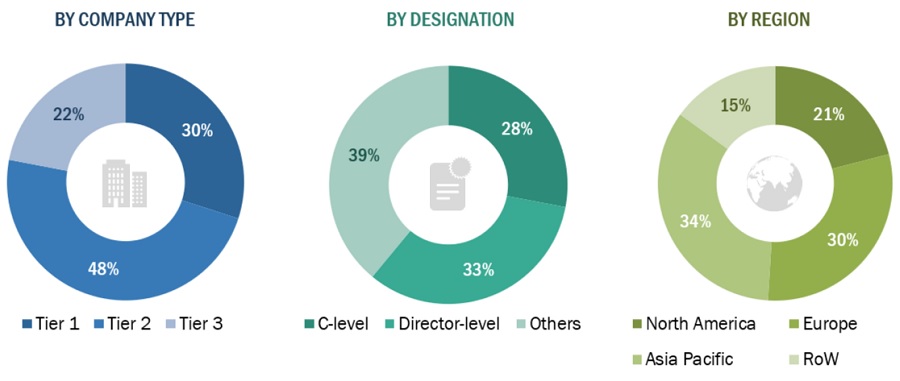
Note 1: *Others include sales managers, marketing managers, and product managers.
Note 2: Tiers are defined based on a company’s total revenue as of 2022: Tier 1=> USD 1 billion, Tier 2 = USD 500 million to USD 1 billion, and Tier 3=< USD 500 million.
To know about the assumptions considered for the study, download the pdf brochure
Market Size Estimation
All major product manufacturers offering various therapeutic hypothermia systems were identified at the global/regional level. Revenue mapping was done for the major players and was extrapolated to arrive at the global market value of each type of segment. The market value therapeutic hypothermia systems market was also split into various segments and subsegments at the region and country level based on:
- Product mapping of various manufacturers for each type of market at the regional and country level
- Relative adoption pattern of each market among key application segments at the regional and/or country-level
- Detailed primary research to gather qualitative and quantitative information related to segments and subsegments at the regional and/or country level.
- Detailed secondary research to gauge the prevailing market trends at the regional and/or country level
Global Therapeutic Hypothermia Systems Market Size: Top-Down Approach
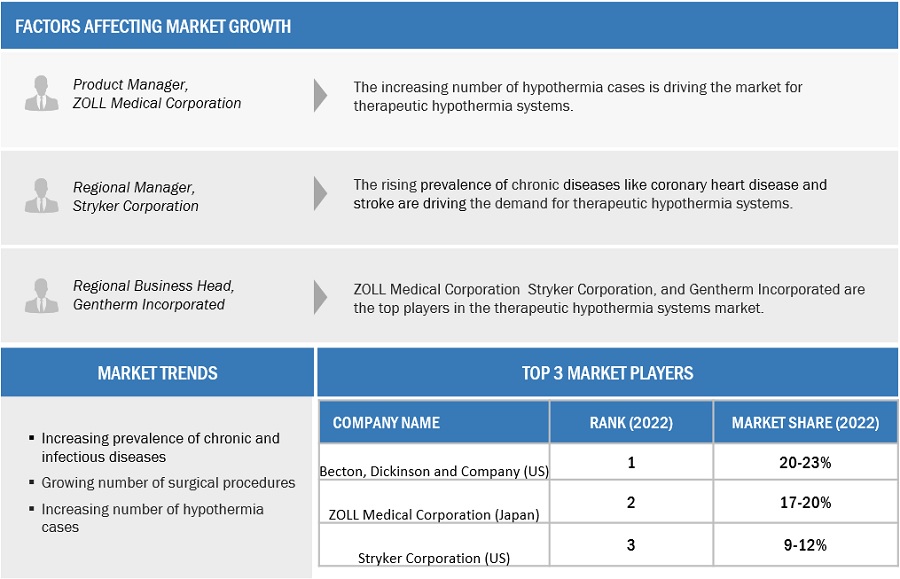
To know about the assumptions considered for the study, Request for Free Sample Report
Global Therapeutic Hypothermia Systems Market Size: Bottom-Up Approach
Data Triangulation
After arriving at the overall market size—using the market size estimation processes—the market was split into several segments and subsegments. To complete the overall market engineering process and arrive at the exact statistics of each market segment and subsegment, data triangulation and market breakdown procedures were employed, wherever applicable. The data was triangulated by studying various factors and trends from both the demand and supply sides in the Therapeutic hypothermia systems industry.
Market Definition
Therapeutic hypothermia, also known as targeted temperature management or induced hypothermia, is a medical treatment that involves lowering a patient’s body temperature for a specific period to provide therapeutic benefits. This intervention is often employed in certain medical conditions to reduce the risk of injury to tissues, particularly the brain, and improve overall outcomes. The primary goal of therapeutic hypothermia is to protect the body’s organs, especially the brain, from damage following events such as cardiac arrest, traumatic brain injury, stroke, or neonatal hypoxic-ischemic encephalopathy (a type of brain injury that occurs when there is a lack of oxygen and blood flow to the brain in newborns).
Key Stakeholders
- Senior Management
- Finance/Procurement Department
- R&D Department
- Surgeons and Anesthesiologists/Paramedical Staff/Nursing Staff
Report Objectives
- To provide detailed information about the factors influencing the market growth (such as drivers, restraints, opportunities, and challenges)
- To define, describe, segment, and forecast the therapeutic hypothermia systems market by product, application, and region
- To analyze market opportunities for stakeholders and provide details of the competitive landscape for key players
- To analyze micro markets with respect to individual growth trends, prospects, and contributions to the overall market
- To forecast the size of the market in five main regions along with their respective key countries, namely, North America, Europe, the Asia Pacific, Rest of the world.
- To profile key players in the market and comprehensively analyze their core competencies and market shares
- To track and analyze competitive developments, such as acquisitions; product launches; expansions; collaborations, agreements, & partnerships; and R&D activities of the leading players in the market.
- To benchmark players within the market using the Competitive Leadership Mapping framework, which analyzes market players on various parameters within the broad categories of business and product strategy
Available Customizations
MarketsandMarkets offers the following customizations for this market report:
- Additional country-level analysis of the Therapeutic hypothermia systems market
- Profiling of additional market players (up to 5)
Product Analysis
- Product matrix, which provides a detailed comparison of the product portfolio of each company in the Therapeutic hypothermia systems Market
Get the Full Therapeutic Hypothermia Systems Market Report
Full forecast, segment splits, and company analysis for all Therapeutic Hypothermia Systems Market.
- Canada Therapeutic Hypothermia Systems Market
- Germany Therapeutic Hypothermia Systems Market
- UK Therapeutic Hypothermia Systems Market
- France Therapeutic Hypothermia Systems Market
- Italy Therapeutic Hypothermia Systems Market
- Spain Therapeutic Hypothermia Systems Market
- China Therapeutic Hypothermia Systems Market
- Japan Therapeutic Hypothermia Systems Market
- India Therapeutic Hypothermia Systems Market
- Rest Of Europe Therapeutic Hypothermia Systems Market
- Rest Of Asia Pacific Therapeutic Hypothermia Systems Market
Need a Tailored Report?
Customize this report to your needs
Get 10% FREE Customization
Customize This Report
