
Argentina Translation Management Systems Market (2024-2029)

The Argentina Translation Management Systems Market was valued at $37.6 Million in 2024 and projected to reach to $111.2 Million by 2029, representing a compound annual growth rate of 19.8%. Argentina's Translation Management Systems market is positioned for exceptional growth through 2029, driven by accelerating digital transformation across enterprises and the nation's expanding global business footprint.


| Market Size in | USD 26.32 MN |
| Market Forecast in | |
| CAGR | |
| Forecast Period | |
| Units Considered | Value (USD MN) |
Argentina Translation Management Systems Market Trends and Insights
- This represents a compound annual growth rate of 19.8%, significantly outpacing global trends.
- Argentina's digital transformation initiatives and increasing demand for multilingual business solutions are driving adoption across enterprises seeking to streamline localization workflows and enhance global market reach. The Argentine market benefits from a growing technology sector and rising investments in cloud-based translation infrastructure.
- Argentina's position as a regional hub for software development and business process outsourcing is accelerating demand for sophisticated translation management capabilities.
- Organizations in Argentina are increasingly recognizing the strategic value of integrated translation platforms to support cross-border operations and customer engagement in multiple languages. By 2029, Argentina's Translation Management Systems market is expected to nearly triple in value, reflecting strong momentum in enterprise digital adoption and localization strategies.
- This growth trajectory underscores Argentina's emergence as a key market for translation technology vendors and service providers operating across Latin America..
Key Market Statistics
- CAGR (2024-2029) 19.8% CAGR
- Market Size, 2024 ~USD 37.6 Million
- Forecast, 2029 ~USD 111.2 Million
- Country Argentina
Argentina Translation Management Systems Market Overview
Exceptional Growth Trajectory :
Argentina's TMS market is expanding at 19.8% CAGR, substantially exceeding the global rate of 17.2%, indicating strong regional momentum and market maturation.
Significant Market Expansion :
The market is projected to nearly triple from USD 37.6 million in 2024 to USD 111.2 million by 2029, reflecting accelerating enterprise adoption and investment.
Digital Transformation Catalyst :
Argentina's ongoing digital transformation initiatives are driving widespread adoption of translation management solutions across enterprises seeking competitive advantages.
Multilingual Business Demand :
Increasing demand for multilingual business solutions among Argentine enterprises expanding internationally is fueling TMS adoption and localization investments.
Argentina Translation Management Systems Market Dynamics
- The 19.8% CAGR significantly outpaces global trends, reflecting strong regional demand for sophisticated localization and multilingual communication solutions.
- Enterprise organizations are increasingly recognizing TMS as critical infrastructure for managing complex translation workflows and ensuring consistent brand messaging across international markets. The forecast period will see continued expansion as Argentine companies scale their international operations and invest in automation technologies.
- Growing awareness of TMS benefits in reducing translation costs, improving quality, and accelerating time-to-market will drive adoption across mid-market and enterprise segments.
- Regional economic recovery and increased foreign direct investment are expected to further stimulate demand for professional translation management capabilities..
Market Ecosystem
Related Ecosystem
Software And Services
- Natural Language Processing (NLP)
- Machine Learning
- Supply Chain Management
- Predictive Analytics
- Image Sensors
- International Business Machines Corporation
- MICROSOFT CORPORATION
- Oracle Corporation
- SAP SE
- Amazon.com, Inc.
Analytics
- Natural Language Processing (NLP)
- Machine Learning
- Supply Chain Management
- Predictive Analytics
- Image Sensors
- International Business Machines Corporation
- MICROSOFT CORPORATION
- Oracle Corporation
- SAP SE
Cloud Computing
- Software as A Service (SaaS)
- Natural Language Processing (NLP)
- Platform as A Service (PaaS)
- Machine Learning
- Supply Chain Management
- International Business Machines Corporation
- MICROSOFT CORPORATION
- Oracle Corporation
- Amazon.com, Inc.
Key Takeaways
- Argentina's Translation Management Systems market will grow from $37.6M (2024) to $111.2M (2029) at a 19.8% CAGR.
- Argentina's digital transformation and regional tech hub status are primary drivers of translation management system adoption.
- Cloud-based and AI-powered translation solutions are gaining traction among Argentine enterprises seeking operational efficiency.
- Argentina represents a high-growth opportunity for translation technology vendors targeting Latin American expansion.
Translation Management Systems Market Report Scope
| Report Metric | Details |
|---|---|
| Base Year | 2024 |
| Fastest Growing Segment | RETAIL & E-COMMERCE (Vertical) |
| Forecast Period | 2024-2029 |
| Growth Rate | CAGR of 17.2% from 2024 to 2029 |
| Largest Segment | ON-PREMISES (Deployment Mode) |
| Market Size Base Year (Billions) | ~USD 2.2 (2024) |
| Revenue Forecast (Billions) | ~USD 4.86 (2029) |
| Segments Covered | Offering, Software, Service, Professional Service, Business Function, Content Type, Application, Vertical, Professional Services, Component, Organization Size, Deployment Mode |
Argentina Translation Management Systems Market Report Segmentation
12 segment dimensions are covered across the global market.
By Offering
- Services
- Software
By Software
- Analytics & Reporting
- Localization Software
- Other Software
- Quality Assurance Software
- Terminology Management Software
- Translation Project Management Software
- Translation Software
By Service
- Managed Services
- Professional Service
- Professional Services
By Professional Service
- Support & Maintenance
- Support & Maintenance Services
- System Integration & Deployment
- System Integration & Deployment Services
- Training & Consulting
- Training & Consulting Services
By Business Function
- Contact Center
- Finance & Accounting
- Hr
- Human Resources
- Legal
- Operations & Supply Chain
- Other Business Functions
- Sales & Marketing
By Content Type
- Audio-Based Content
- Text-Based Content
- Video-Based Content
By Application
- Billing & Invoice Analysis
- Other Applications
- Project Management
- Quality Assurance
- Resource Management
- Terminology Management
- Translation
By Vertical
- Bfsi
- Government & Public Sector
- Healthcare & Life Sciences
- It & Ites
- Manufacturing
- Media & Entertainment
- Other Verticals
- Retail & E-Commerce
- Travel & Hospitality
By Professional Services
- Support & Maintenance
- System Integration & Deployment
- Training & Consulting
By Component
- Services
- Software
- Solutions
By Organization Size
- Large Enterprises
- Smes
By Deployment Mode
- Cloud
- On-Premises
Target Audience
- TMS Solution Providers : Software vendors and TMS platform companies need Argentina-specific market data to identify growth opportunities, assess competitive positioning, and develop localized product strategies for this high-growth market.
- Enterprise Localization Leaders : Global companies with Argentine operations require detailed market insights to optimize localization investments, benchmark against regional trends, and justify TMS technology budgets.
- Investment & Private Equity Firms : Investors evaluating opportunities in Argentina's ICT sector need comprehensive market sizing and growth forecasts to assess portfolio companies and identify acquisition targets in the TMS space.
- Business Consultants & Analysts : Management consultants advising Argentine enterprises on digital transformation require market-specific data to recommend appropriate TMS solutions and validate technology investment decisions.
- Language Service Providers : Translation agencies and LSPs operating in Argentina need market intelligence to understand TMS adoption trends, identify technology partnership opportunities, and plan service expansion strategies.
Reasons to Buy this Report
- Market-Specific Growth Intelligence : Gain detailed insights into Argentina's 19.8% CAGR trajectory and understand the unique drivers propelling the market faster than global averages, enabling strategic positioning.
- Accurate Sizing & Forecasting : Access precise market valuations (USD 37.6M in 2024, USD 111.2M in 2029) to inform investment decisions, budget allocations, and revenue projections for Argentina operations.
- Competitive Landscape Analysis : Understand Argentina-specific competitive dynamics, customer preferences, and market segmentation to develop targeted go-to-market strategies and differentiation approaches.
- Digital Transformation Trends : Identify how Argentina's digital transformation initiatives and multilingual business expansion are reshaping TMS adoption patterns and creating new market opportunities.
- Strategic Market Entry Planning : Leverage Argentina-focused data to evaluate market entry feasibility, identify high-potential customer segments, and develop localized product and pricing strategies.
Frequently asked questions
What is the current size of Argentina's Translation Management Systems market?
Argentina's Translation Management Systems market was valued at USD 37.6 million in 2024.
What is the projected market size for Argentina by 2029?
Argentina's Translation Management Systems market is forecast to reach USD 111.2 million by 2029.
What is the CAGR for Argentina's Translation Management Systems market?
Argentina's Translation Management Systems market is expected to grow at a compound annual growth rate of 19.8% from 2024 to 2029.
What factors are driving growth in Argentina's translation management systems market?
Key drivers include Argentina's digital transformation initiatives, its role as a regional technology hub, increasing demand for multilingual business solutions, and rising cloud-based infrastructure investments.
How does Argentina's market growth compare to global trends?
Argentina's 19.8% CAGR significantly exceeds the global Translation Management Systems market CAGR of 17.2%, positioning Argentina as a high-growth regional market.
RESEARCH METHODOLOGY
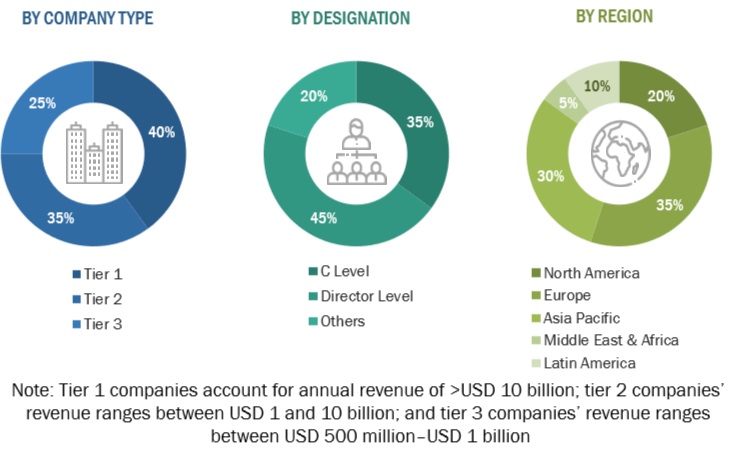
The translation management systems market research study involved extensive secondary sources, directories, journals, and paid databases. Primary sources were mainly industry experts from the core and related industries, preferred translation management systems providers, third-party service providers, consulting service providers, end users, and other commercial enterprises. In-depth interviews were conducted with various primary respondents, including key industry participants and subject matter experts, to obtain and verify critical qualitative and quantitative information, and assess the market’s prospects.
Secondary Research
In the secondary research process, various sources were referred to, for identifying and collecting information for this study. Secondary sources included annual reports, press releases, and investor presentations of companies; white papers, journals, and certified publications; and articles from recognized authors, directories, and databases. The data was also collected from other secondary sources, such as journals, government websites, blogs, and vendors websites. Additionally, translation management systems spending of various countries was extracted from the respective sources. Secondary research was mainly used to obtain key information related to the industry’s value chain and supply chain to identify key players based on solutions, services, market classification, and segmentation according to offerings of major players, industry trends related to software, hardware, services, technology, applications, warehouse sizes, verticals, and regions, and key developments from both market- and technology-oriented perspectives.
Primary Research
In the primary research process, various primary sources from both supply and demand sides were interviewed to obtain qualitative and quantitative information on the market. The primary sources from the supply side included various industry experts, including Chief Experience Officers (CXOs); Vice Presidents (VPs); directors from business development, marketing, and translation management systems expertise; related key executives from translation management systems solution vendors, SIs, professional service providers, and industry associations; and key opinion leaders.
Primary interviews were conducted to gather insights, such as market statistics, revenue data collected from solutions and services, market breakups, market size estimations, market forecasts, and data triangulation. Primary research also helped in understanding various trends related to technologies, applications, deployments, and regions. Stakeholders from the demand side, such as Chief Information Officers (CIOs), Chief Technology Officers (CTOs), Chief Strategy Officers (CSOs), and end users using translation management systems solutions, were interviewed to understand the buyer’s perspective on suppliers, products, service providers, and their current usage of translation management systems solutions and services, which would impact the overall translation management systems market.
To know about the assumptions considered for the study, download the pdf brochure
|
COMPANY NAME |
DESIGNATION |
|
Lingo24 |
Language Technology, Localization Content Lifecycle & Translation Workflow Consultant |
|
RWS Group |
Director, Linguistic AI Consultant |
|
Localization Lab |
Translation and Localization Professional |
|
BingX |
Language Localization Specialist & Language Owner |
|
Unbabel |
Language Operations Specialist |
|
Commit Global |
Localization Project Manager |
|
Pegasystems |
Senior Localization Specialist, Product UI |
|
Centific |
Director of Strategy & Research |
|
AWS |
Senior Consultant AI & ML |
|
Expert AI |
Senior Project Manager |
|
Senseforth AI |
Senior Software Developer- AI |
Market Size Estimation
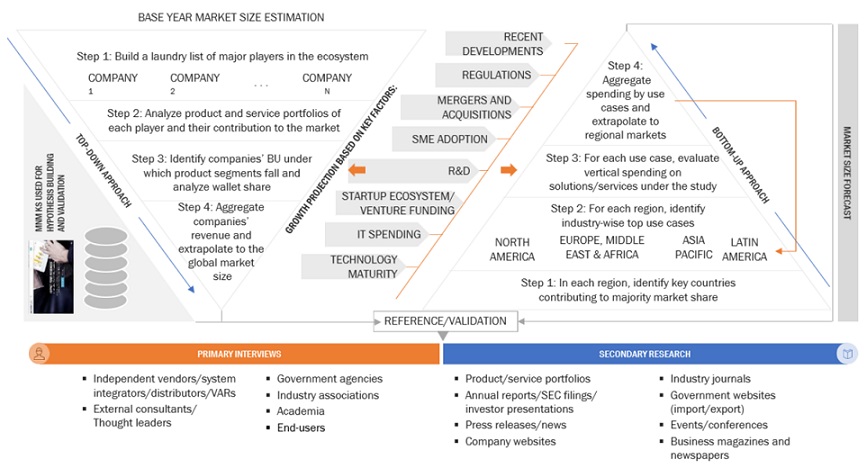
In the bottom-up approach, the adoption rate of translation management systems solutions and services among different end users in key countries with respect to their regions contributing the most to the market share was identified. For cross-validation, the adoption of translation management systems solutions and services among industries, along with different use cases with respect to their regions, was identified and extrapolated. Weightage was given to use cases identified in different regions for the market size calculation.
Based on the market numbers, the regional split was determined by primary and secondary sources. The procedure included the analysis of the translation management systems market’s regional penetration. Based on secondary research, the regional spending on Information and Communications Technology (ICT), socio-economic analysis of each country, strategic vendor analysis of major translation management systems providers, and organic and inorganic business development activities of regional and global players were estimated. With the data triangulation procedure and data validation through primary interviews, the exact values of the overall translation management systems market size and segments’ size were determined and confirmed using the study.
Global Translation management systems Market Size: Bottom-Up and Top-Down Approach:
To know about the assumptions considered for the study, Request for Free Sample Report
Data Triangulation
Based on the market numbers, the regional split was determined by primary and secondary sources. The procedure included the analysis of the translation management systems market’s regional penetration. Based on secondary research, the regional spending on Information and Communications Technology (ICT), socio-economic analysis of each country, strategic vendor analysis of major translation management systems providers, and organic and inorganic business development activities of regional and global players were estimated. With the data triangulation procedure and data validation through primaries, the exact values of the overall Translation management systems market size and segments’ size were determined and confirmed using the study.
Market Definition
According to RWS, a translation management system is software for automating human language translation efforts. A TMS’s purpose is to optimize the translation processes in an organization by creating automated workflows for translating repeatable and already previously translated content, freeing time for translators who can now focus on fine-tuning translated content or on translating content that is more nuanced and needs a human touch for a perfect end-result. A TMS centralizes all translation efforts, offering enterprises a single solution for managing all content translation and localization efforts. A TMS comprises tools like translation memory, vocabulary management, collaboration tools, a quality assurance module, or a content translation dashboard for estimating costs. From an integration perspective, most TMSs are based on open standards-based architectures that enable seamless integration with other software from the enterprise suite. Digital asset management (DAM), software configuration management (SCM), databases, and file systems are some content repositories that TMSs integrate, source from, or deliver content to.
Stakeholders
- Application design and software developers
- Translation management systems software vendors
- Business analysts
- Cloud service providers
- Consulting service providers
- Enterprise end-users
- Distributors and Value-added Resellers (VARs)
- Government agencies
- Independent Software Vendors (ISV)
- Managed service providers
- Market research and consulting firms
- Support and maintenance service providers
- System Integrators (SIs)/migration service providers
- Language service providers
- Technology providers
Report Objectives
- To define, describe, and predict the translation management systems market by offering (software and services), application, content type, business function, vertical, and region
- To provide detailed information related to major factors (drivers, restraints, opportunities, and industry-specific challenges) influencing the market growth
- To analyze the micro markets with respect to individual growth trends, prospects, and their contribution to the total market
- To analyze the opportunities in the market for stakeholders by identifying the high-growth segments of the market
- To analyze opportunities in the market and provide details of the competitive landscape for stakeholders and market leaders
- To forecast the market size of segments for five main regions: North America, Europe, Asia Pacific, Middle East Africa, and Latin America
- To profile key players and comprehensively analyze their market rankings and core competencies.
- To analyze competitive developments, such as partnerships, new product launches, and mergers and acquisitions, in the market
- To analyze the impact of recession across all the regions across the translation management systems market
Available Customizations
With the given market data, MarketsandMarkets offers customizations as per your company’s specific needs. The following customization options are available for the report:
Product Analysis
- Product quadrant, which gives a detailed comparison of the product portfolio of each company.
Geographic Analysis
- Further breakup of the North American translation management systems market
- Further breakup of the European market
- Further breakup of the Asia Pacific market
- Further breakup of the Middle Eastern & African market
- Further breakup of the Latin America market
Company Information
- Detailed analysis and profiling of additional market players (up to five)
Get the Full Translation Management Systems Market Report
Full forecast, segment splits, and company analysis for all Translation Management Systems Market.
- Rest Of Latin America Translation Management Systems Market
- GCC Translation Management Systems Market
- US Translation Management Systems Market
- Canada Translation Management Systems Market
- UK Translation Management Systems Market
- Germany Translation Management Systems Market
- France Translation Management Systems Market
- Italy Translation Management Systems Market
- Spain Translation Management Systems Market
- China Translation Management Systems Market
- India Translation Management Systems Market
- Japan Translation Management Systems Market
- South Korea Translation Management Systems Market
- Singapore Translation Management Systems Market
- Brazil Translation Management Systems Market
- Mexico Translation Management Systems Market
- Egypt Translation Management Systems Market
- South Africa Translation Management Systems Market
- Turkey Translation Management Systems Market
- Rest Of Europe Translation Management Systems Market
- Rest Of Asia Pacific Translation Management Systems Market
Need a Tailored Report?
Customize this report to your needs
Get 10% FREE Customization
Customize This Report
