
China Zero Trust Network Access (ZTNA) Market (2025-2030)

The China Zero Trust Network Access (ZTNA) Market was valued at $110.2 Million in 2025 and projected to reach to $383.3 Million by 2030, representing a compound annual growth rate of 28.3%. China's Zero Trust Network Access market is poised for exceptional growth, expanding from USD 110.2 million in 2025 to USD 383.3 million by 2030.


| Market Size in | USD 26.32 MN |
| Market Forecast in | |
| CAGR | |
| Forecast Period | |
| Units Considered | Value (USD MN) |
China Zero Trust Network Access (ZTNA) Market Trends and Insights
- This represents a compound annual growth rate (CAGR) of 28.3%, significantly outpacing global trends.
- China's digital transformation initiatives, coupled with increasing cybersecurity threats and regulatory compliance requirements, are driving widespread adoption of zero trust architectures across enterprises, government agencies, and financial institutions. The market growth in China is fueled by accelerating cloud migration, remote work adoption, and stringent data protection regulations.
- China's enterprises are increasingly recognizing that traditional perimeter-based security models are inadequate in protecting against sophisticated cyber threats.
- By 2030, China is expected to become a major contributor to the Asia Pacific ZTNA market, with organizations across manufacturing, finance, telecommunications, and technology sectors prioritizing zero trust implementations to secure their digital infrastructure and comply with evolving regulatory frameworks..
Key Market Statistics
- CAGR (2025-2030) 28.3% CAGR
- Market Size, 2025 ~USD 110.2 Million
- Forecast, 2030 ~USD 383.3 Million
- Country China
China Zero Trust Network Access (ZTNA) Market Overview
Rapid Market Expansion :
China's ZTNA market is growing at 28.3% CAGR, significantly exceeding the global rate of 25.5%, driven by aggressive digital transformation initiatives across enterprises and government sectors.
Regulatory Compliance Pressure :
Stringent cybersecurity regulations and data protection mandates from Chinese authorities are compelling organizations to adopt Zero Trust architectures to meet compliance requirements and avoid penalties.
Rising Cyber Threats :
Escalating sophisticated cyberattacks targeting Chinese enterprises and critical infrastructure are accelerating ZTNA adoption as organizations prioritize network security and threat prevention strategies.
Cloud & Remote Work Adoption :
Widespread shift to cloud computing and hybrid work models in China is creating demand for Zero Trust solutions that secure distributed access and protect sensitive business data across multiple endpoints.
China Zero Trust Network Access (ZTNA) Market Dynamics
- This trajectory reflects the nation's commitment to cybersecurity excellence and digital infrastructure modernization.
- Government initiatives promoting secure digital ecosystems, combined with mandatory compliance frameworks, are compelling enterprises across financial services, healthcare, and technology sectors to implement ZTNA solutions. The market will be further catalyzed by increasing investments in cloud infrastructure, 5G deployment, and IoT ecosystems requiring granular access controls.
- Chinese vendors are emerging as competitive players alongside international providers, fostering innovation and localized solutions.
- Organizations prioritizing data sovereignty and regulatory adherence will drive sustained demand for Zero Trust architectures throughout the forecast period..
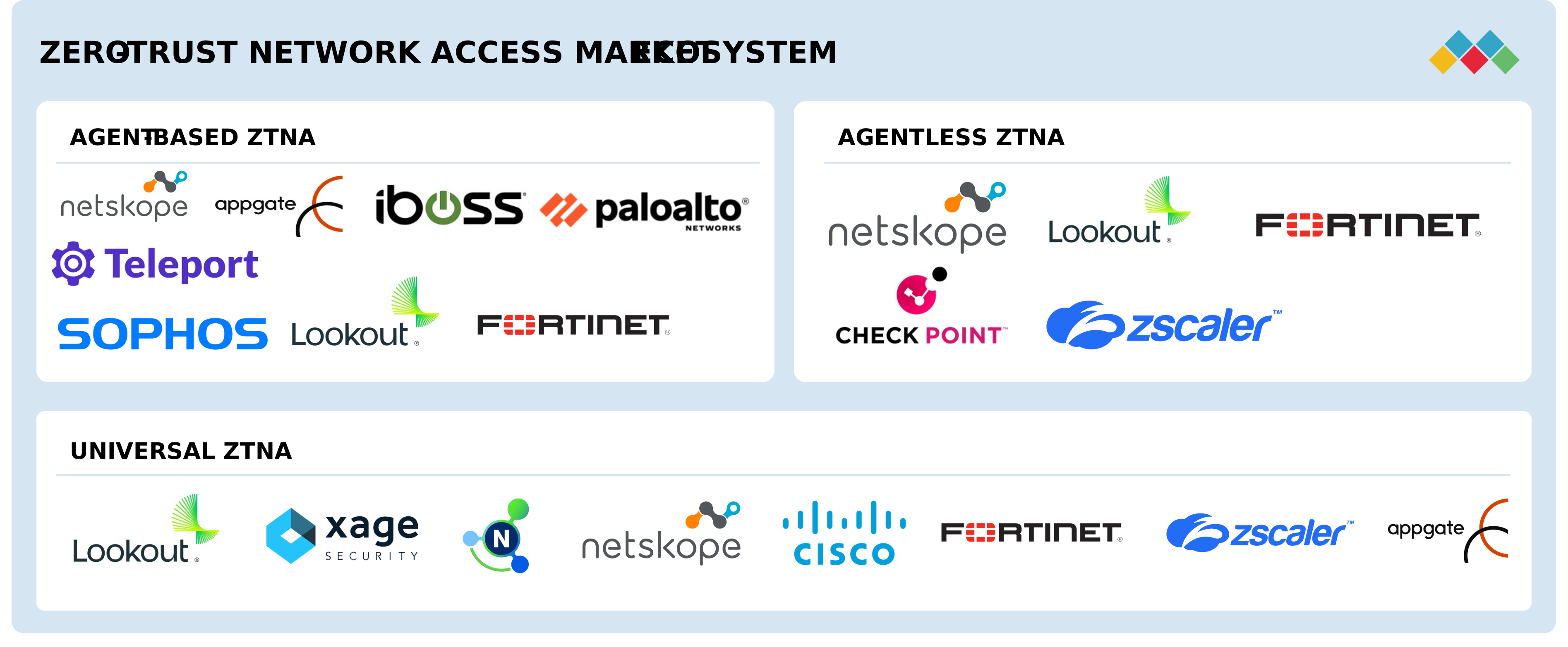
Market Ecosystem
Zero Trust Network Access (ZTNA) Market: COMMERCIAL USE CASES ACROSS INDUSTRIES
| COMPANY | USE CASE DESCRIPTION | BENEFITS |
|---|---|---|
 |
NOV modernizes global security with Zscaler Zero Trust, reducing costs and cyber risks. | 35x fewer cyber events, legacy cost savings, and seamless secure access to 7,500+ apps |
 |
Wealden District Council secures hybrid workforce with Palo Alto’s AI-powered ZTNA solution. | Improved security, lower costs, seamless access, and unified visibility for remote workforce |
 |
Canva leverages Cloudflare ZTNA and edge solutions to secure global collaboration. | Enhanced security, faster performance, and seamless scaling for users and internal teams |
 |
Barnes Group modernizes global security with Fortinet Universal ZTNA for seamless access. | Cut integration time, reduced costs, and strengthened security with unified zero-trust policies |
 |
Victoria University builds a secure, smart campus using Cisco’s ZTNA-based SD-Access. | Enhanced security, hybrid learning flexibility, and smarter, data-driven campus operations |
Logos and trademarks shown above are the property of their respective owners. Their use here is for informational and illustrative purposes only.
Related Ecosystem
Cyber Security
- Cloud Security
- Biometric Systems
- Data Loss Prevention (DLP)
- Multi-Factor Authentication
- Security Analytics
- International Business Machines Corporation
- MITSUI BUSSAN SECURE DIRECTIONS INC
- Cisco Systems, Inc.
- MICROSOFT CORPORATION
- Allot Ltd.
Key Takeaways
- China's ZTNA market is valued at USD 110.2 million in 2025 and is forecast to grow to USD 383.3 million by 2030, representing a 28.3% CAGR.
- China's rapid digital transformation and cloud adoption are primary drivers accelerating zero trust network access adoption across enterprises.
- Regulatory compliance mandates and increasing cyber threats are compelling China's organizations to transition from legacy security models to zero trust architectures.
- By 2030, China is positioned to become a significant regional market contributor, with strong growth across financial services, manufacturing, and technology sectors.
Zero Trust Network Access (ZTNA) Market Report Scope
| Report Metric | Details |
|---|---|
| Base Year | 2025 |
| Fastest Growing Segment | HEALTHCARE (Vertical) |
| Forecast Period | 2025-2030 |
| Growth Rate | CAGR of 25.5% from 2025 to 2030 |
| Largest Segment | SOLUTIONS (Offering) |
| Market Size Base Year (Billions) | ~USD 1.34 (2025) |
| Revenue Forecast (Billions) | ~USD 4.18 (2030) |
| Segments Covered | Offering, Solution, Service, Professional Service, Deployment Mode, Organization Size, Application Area, Vertical |
China Zero Trust Network Access (ZTNA) Market Report Segmentation
8 segment dimensions are covered across the global market.
By Offering
- Service
- Services
- Solutions
By Solution
- Agent-Based Ztna
- Agentless Zna
- Agentless Ztna
- Universal Ztna
By Service
- Managed Services
- Professional Service
- Professional Services
By Professional Service
- Consulting & Advisory
- Implementation & Integration
- Support & Maintenance
- Training & Education
By Deployment Mode
- Cloud
- Hybrid
By Organization Size
- Large Enterprises
- Smes
By Application Area
- Private Application Access
- Privileged/Administrative Access
- Remote Workforce Access
- SaaS Application Access Control
- Third-Party/Contractor & Byod Access
- Workload-To-Workload & Api Access
By Vertical
- Bfsi
- Education
- Government & Public Sector
- Healthcare
- It & Ites
- Manufacturing
- Other Verticals
- Retail & E-Commerce
- Retail & Ecommerce
CHINA: ZERO TRUST NETWORK ACCESS MARKET, BY APPLICATION AREA, 2025–2030
| Segment | 2025 | 2026 | 2027 | 2028 | 2029 | 2030 | CAGR (%) |
|---|---|---|---|---|---|---|---|
| PRIVATE APPLICATION ACCESS | 17.3 | 21.9 | 27.7 | 35 | 44.2 | 55.7 | 26.3 |
| PRIVILEGED/ADMINISTRATIVE ACCESS | 12.3 | 16.1 | 21.1 | 27.7 | 36.4 | 47.7 | 31.3 |
| REMOTE WORKFORCE ACCESS | 40.9 | 51.7 | 65.4 | 82.6 | 104.3 | 131.7 | 26.3 |
| SAAS APPLICATION ACCESS CONTROL | 10.5 | 13.7 | 17.8 | 23.1 | 29.9 | 38.9 | 29.8 |
| THIRD-PARTY/CONTRACTOR & BYOD ACCESS | 17.9 | 22.9 | 29.3 | 37.4 | 47.8 | 61.1 | 27.8 |
| WORKLOAD-TO-WORKLOAD & API ACCESS | 11.3 | 15.2 | 20.4 | 27.3 | 36.4 | 48.3 | 33.8 |
| TOTAL | 110.2 | 141.5 | 181.7 | 233.1 | 299 | 383.3 | 28.3 |
Target Audience
- Enterprise Security Leaders : CISOs and security directors in Chinese enterprises need market intelligence to justify ZTNA investments, benchmark against peers, and align security strategies with regulatory requirements and industry best practices.
- Technology Solution Providers : ZTNA vendors and cybersecurity firms require China-specific market data to assess opportunity size, competitive positioning, customer segments, and growth potential for product development and market expansion.
- Government & Regulatory Bodies : Chinese government agencies and policy makers need market insights to understand ZTNA adoption trends, inform cybersecurity policy development, and support national digital security infrastructure initiatives.
- Investment & Private Equity Firms : Investors evaluating cybersecurity opportunities in China require detailed market analysis, growth projections, and sector dynamics to identify promising portfolio companies and assess investment returns.
- IT Consultants & System Integrators : Consulting firms and integrators serving Chinese clients need market data to advise on ZTNA implementation strategies, vendor selection, ROI analysis, and align solutions with organizational security objectives.
Reasons to Buy this Report
- Market Size & Growth Validation : Obtain precise market valuation data for China (USD 110.2M in 2025) with verified 28.3% CAGR projections through 2030, enabling accurate business planning and investment decisions in this high-growth region.
- Competitive Landscape Intelligence : Understand China-specific vendor positioning, local player emergence, and competitive dynamics to identify partnership opportunities, market entry strategies, and differentiation approaches for your ZTNA solutions.
- Regulatory & Compliance Insights : Access detailed analysis of Chinese cybersecurity regulations, data protection mandates, and compliance requirements driving ZTNA adoption, ensuring your solutions align with local regulatory frameworks.
- Sector-Specific Opportunity Analysis : Identify high-priority industries in China (financial services, healthcare, technology, government) with specific ZTNA adoption drivers, budget allocations, and implementation timelines for targeted go-to-market strategies.
- Strategic Growth Planning : Leverage China market forecasts and trend analysis to develop long-term expansion strategies, resource allocation plans, and revenue projections aligned with the region's accelerating digital transformation trajectory.
Frequently asked questions
What is the current market size of ZTNA in China?
China's ZTNA market was valued at USD 110.2 million in 2025 and is expected to grow significantly through 2030.
What is the projected market size for ZTNA in China by 2030?
China's ZTNA market is projected to reach USD 383.3 million by 2030, representing substantial growth from 2025 levels.
What is the CAGR for China's ZTNA market?
China's ZTNA market is growing at a compound annual growth rate (CAGR) of 28.3% between 2025 and 2030.
What are the primary drivers of ZTNA adoption in China?
Key drivers include digital transformation initiatives, cloud migration acceleration, remote work expansion, regulatory compliance requirements, and rising cybersecurity threats across China's enterprises.
Which industries in China are leading ZTNA adoption?
Financial services, manufacturing, telecommunications, technology, and government sectors in China are among the leading adopters of zero trust network access solutions.
RESEARCH METHODOLOGY
Secondary research was conducted to collect information useful for this technical, market-oriented, and commercial study of the global zero trust network access (ZTNA) market. The next step was to validate these findings, assumptions, and sizing with industry experts across the value chain using primary research. The top-down and bottom-up approaches were employed to estimate the total market size. Thereafter, the market breakup and data triangulation procedures were used to estimate the market size of the segments and subsegments of the ZTNA market.
Secondary Research
In the secondary research process, various secondary sources were referred to for identifying and collecting information regarding the study. The secondary sources included annual reports, press releases, investor presentations of ZTNA vendors, forums, certified publications, and white papers. The secondary research was mainly used to obtain key information about the industry’s supply chain, the total pool of key players, market classification and segmentation according to industry trends to the bottom-most level, regional markets, and key developments from market- and technology-oriented perspectives, all of which were further validated by primary sources.
Primary Research
In the primary research process, various primary sources from the supply and demand sides were interviewed to obtain qualitative and quantitative information for this report. The primary sources from the supply side included various industry experts, including Chief Executive Officers (CEOs), Vice Presidents (VPs), marketing directors, technology and innovation directors, and related key executives from various key companies and organizations operating in the ZTNA market.
In the market engineering process, both top-down and bottom-up approaches were utilized extensively, along with various data triangulation methods. These techniques were employed to estimate and forecast the market for the overall segments and subsegments detailed in this report. A thorough qualitative and quantitative analysis was conducted throughout the market engineering process to highlight key information and insights presented in the report.
After the complete market engineering process (including calculations for market statistics, market breakups, market size estimations, market forecasts, and data triangulation), extensive primary research was conducted to gather information and verify & validate the critical numbers. The primary research was also conducted to identify the segmentation types, industry trends, competitive landscape of ZTNA market players, and key market dynamics, such as drivers, restraints, opportunities, challenges, industry trends, and key strategies.
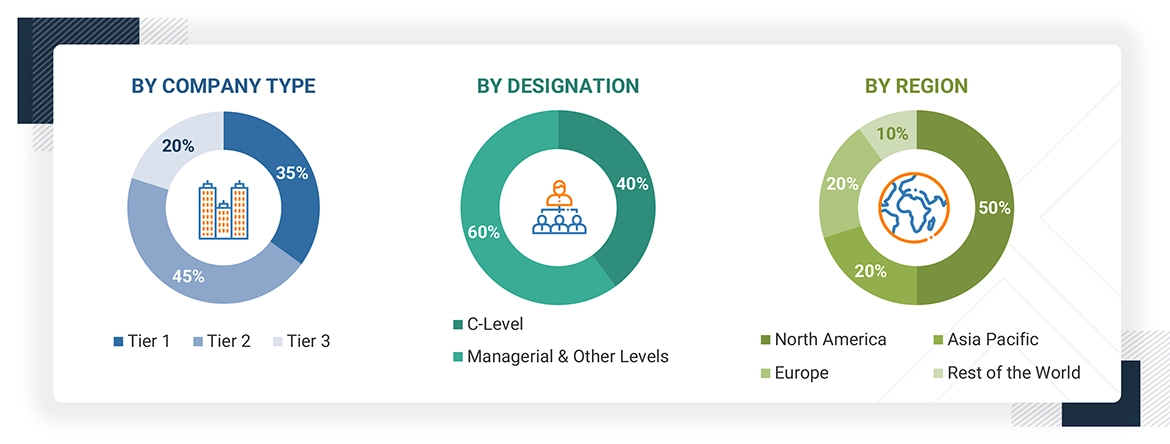
Note: Other levels include sales managers, marketing managers, and product managers.
Tier 1 companies’ revenues are higher than USD 5 billion; Tier 2 companies’ revenues range between USD 1 and 5 billion;
and Tier 3 companies’ revenues range between USD 500 million and USD 1 billion.
Source: Industry Experts
To know about the assumptions considered for the study, download the pdf brochure
Market Size Estimation
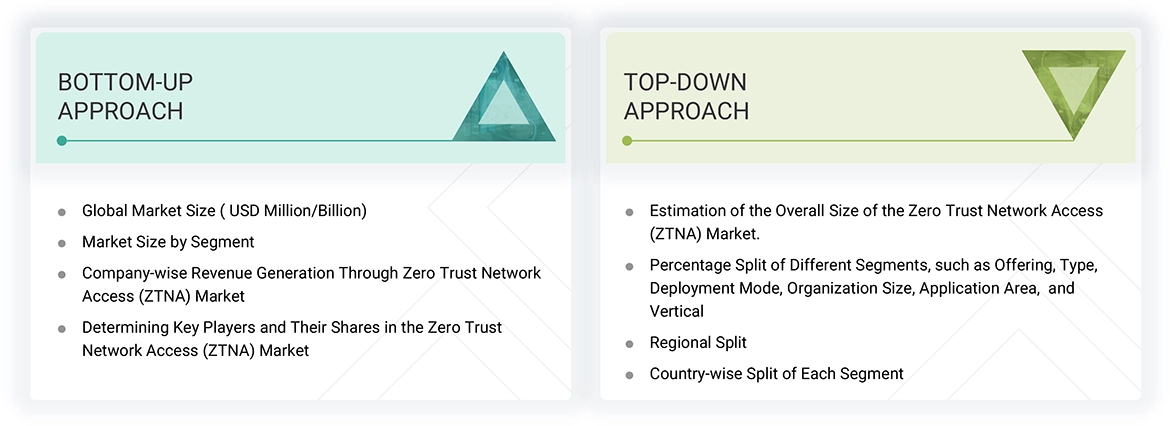
Top-down and bottom-up approaches were used to estimate and validate the size of the ZTNA market and the size of various dependent sub-segments. The research methodology used to estimate market size included details on identifying key players through secondary research, while their market shares in respective regions were determined using primary and secondary research. This procedure involved studying the annual and financial reports of leading market players, along with conducting extensive interviews to gain key insights from industry leaders, including CEOs, VPs, directors, and marketing executives.
All percentage splits and breakdowns were determined using secondary sources and verified through primary sources. All possible parameters that affect the market covered in this research study have been accounted for, viewed in extensive detail, verified through primary research, and analyzed to get the final quantitative and qualitative data. This data is consolidated and added to detailed input and analysis from MarketsandMarkets.
Zero Trust Network Access (ZTNA) Market : Top-Down and Bottom-Up Approach
Data Triangulation
The market was split into several segments and subsegments after determining the overall market size using the market size estimation processes explained above. The data triangulation and market breakup procedures were employed, wherever applicable, to complete the overall market engineering process and determine the exact statistics of each market segment and subsegment. The data was triangulated by studying various factors and trends from both the demand and supply sides.
Market Definition
According to MarketsandMarkets, “The Zero Trust Network Access (ZTNA) refers to the ecosystem of technologies, solutions, and services that enable secure, identity- and context-based access to applications, workloads, and services without relying on traditional network perimeters. ZTNA enforces the “never trust, always verify” principle by ensuring that every user, device, and session is continuously authenticated, authorized, and monitored before granting access to enterprise resources. In addition to being offered as standalone solutions, ZTNA increasingly serves as a core component of broader Secure Service Edge (SSE) and Secure Access Service Edge (SASE) platforms, where it integrates with other cloud-delivered security functions such as Secure Web Gateway (SWG), Cloud Access Security Broker (CASB), and Firewall-as-a-Service (FWaaS).”
Stakeholders
- Cloud Security Architects
- Chief Technology and Data Officers
- Consulting Service Providers
- Business Analysts
- Information Technology (IT) Professionals
- Government Agencies
- Investors and Venture Capitalists
- SMEs and Large Enterprises
- Third-party Providers
- Consultants/Consultancies/Advisory Firms
- Managed and Professional Service Providers
Report Objectives
- To define, describe, and forecast the global ZTNA market by offering, deployment mode, organization size, application area, vertical, and region from 2025 to 2030, and analyze the various macroeconomic and microeconomic factors that affect market growth
- To forecast the market size of North America, Europe, Asia Pacific, the Middle East & Africa, and Latin America
- To analyze the subsegments of the market concerning individual growth trends, prospects, and contributions to the overall market
- To provide detailed information regarding major factors (drivers, restraints, opportunities, and challenges) influencing the growth of the market
- To analyze opportunities in the market for stakeholders and provide details of the competitive landscape of major players
- To profile key market players, provide a comparative analysis based on the business overviews, regional presence, product offerings, business strategies, and key financials, and illustrate the competitive landscape of the market
- To analyze competitive developments, such as mergers & acquisitions, product developments, partnerships and collaborations, and research & development (R&D) activities, in the market
Available Customizations
With the given market data, MarketsandMarkets offers customizations based on company-specific needs. The following customization options are available for the report.
Geographic Analysis as per Feasibility
- Further breakup of the Asia Pacific market into countries contributes to the rest of the regional market size
- Further breakup of the North American market into countries contributes to the rest of the regional market size
- Further breakup of the Latin American market into countries contributing to the rest of the regional market size
- Further breakup of the Middle East & African market into countries contributing to the rest of the regional market size
- Further breakup of the European market into countries contributes to the rest of the regional market size
Company Information
- Detailed analysis and profiling of additional market players (up to 5)
Get the Full Zero Trust Network Access (ZTNA) Market Report
Full forecast, segment splits, and company analysis for all Zero Trust Network Access (ZTNA) Market.
- Canada Zero Trust Network Access (ZTNA) Market
- US Zero Trust Network Access (ZTNA) Market
- UK Zero Trust Network Access (ZTNA) Market
- Germany Zero Trust Network Access (ZTNA) Market
- France Zero Trust Network Access (ZTNA) Market
- Italy Zero Trust Network Access (ZTNA) Market
- Japan Zero Trust Network Access (ZTNA) Market
- India Zero Trust Network Access (ZTNA) Market
- UAE Zero Trust Network Access (ZTNA) Market
- South Africa Zero Trust Network Access (ZTNA) Market
- Brazil Zero Trust Network Access (ZTNA) Market
- Mexico Zero Trust Network Access (ZTNA) Market
- Rest Of Europe Zero Trust Network Access (ZTNA) Market
- Rest Of Asia Pacific Zero Trust Network Access (ZTNA) Market
- Rest Of Latin America Zero Trust Network Access (ZTNA) Market
- GCC Zero Trust Network Access (ZTNA) Market
- Ksa Zero Trust Network Access (ZTNA) Market
- Rest Of GCC Countries Zero Trust Network Access (ZTNA) Market
Need a Tailored Report?
Customize this report to your needs
Get 10% FREE Customization
Customize This Report
