
Asia Pacific Zero Trust Security Market (2024-2029)

The Asia Pacific Zero Trust Security Market was valued at $9304.1 Million in 2024 and projected to reach to $23885.6 Million by 2029, representing a compound annual growth rate of 20.8%. Asia Pacific's Zero Trust Security Market is positioned for exceptional growth through 2029, driven by accelerating digital transformation initiatives, cloud migration, and heightened cybersecurity awareness among enterprises.


| Market Size in | USD 26.32 MN |
| Market Forecast in | |
| CAGR | |
| Forecast Period | |
| Units Considered | Value (USD MN) |
Asia Pacific Zero Trust Security Market Trends and Insights
- Asia Pacific's 20.8% compound annual growth rate significantly outpaces the global average of 16.6%, reflecting the region's accelerating digital transformation and heightened cybersecurity investments.
- This growth is driven by increasing regulatory compliance requirements, rising cyber threats, and widespread cloud adoption across Asia Pacific enterprises. Asia Pacific organizations are increasingly recognizing the critical importance of Zero Trust architecture in securing distributed workforces and hybrid IT environments.
- The region's rapid economic growth, coupled with expanding digital infrastructure and growing awareness of advanced persistent threats, positions Asia Pacific as a key growth engine for Zero Trust Security solutions.
- Between 2024 and 2029, Asia Pacific is expected to capture substantial market share as governments and enterprises across the region prioritize security modernization and implement Zero Trust frameworks to protect sensitive data and critical assets..
Key Market Statistics
- CAGR (2024-2029) 20.8% CAGR
- Market Size, 2024 ~USD 9304.1 Million
- Forecast, 2029 ~USD 23885.6 Million
- Geography Asia Pacific
Asia Pacific Zero Trust Security Market Overview
Exceptional Growth Trajectory :
Asia Pacific's Zero Trust Security Market is expanding at 20.8% CAGR, significantly outpacing the global average of 16.6%, driven by rapid digital transformation and enterprise cloud adoption across the region.
Market Valuation Surge :
The region's market is projected to grow from $9,304.1 million in 2024 to $23,885.6 million by 2029, representing a 157% increase over five years as organizations prioritize cybersecurity investments.
China & Japan Leadership :
China ($5,047.1M) and Japan ($4,598.8M) are the largest markets in Asia Pacific, with Singapore ($4,377.8M) and India ($3,704.3M) emerging as high-growth contributors to regional expansion.
Regulatory & Compliance Drivers :
Stringent data protection regulations, increasing cyber threats, and government mandates across Asia Pacific nations are accelerating Zero Trust adoption among enterprises and government agencies.
Asia Pacific Zero Trust Security Market Dynamics
- The region's 20.8% CAGR reflects strong demand from financial services, government, healthcare, and technology sectors investing heavily in advanced security architectures. Key growth catalysts include rising cyber threats, regulatory compliance requirements, and the proliferation of remote work environments across major economies.
- China, Japan, Singapore, and India are leading adoption, while emerging markets in Southeast Asia present untapped opportunities.
- Organizations are increasingly recognizing Zero Trust as essential for protecting distributed workforces and cloud-native applications, positioning the region as a critical growth engine for the global market..
Market Ecosystem
Related Ecosystem
Cns Systems
- C-Band
- Ka-Band
- Antennas
- Unmanned Ground Vehicles (UGV)
- Rotary Wing Aircraft
- L3Harris Technologies, Inc.
- Thales group
- HONEYWELL INTERNATIONAL INC.
- Northrop Grumman Corporation
- LOCKHEED MARTIN CORPORATION
Cyber Security
- Cloud Security
- Biometric Systems
- Data Loss Prevention (DLP)
- Multi-Factor Authentication
- Security Analytics
- REDINGTON
- International Business Machines Corporation
- Cisco Systems, Inc.
- MITSUI BUSSAN SECURE DIRECTIONS INC
- MICROSOFT CORPORATION
Endpoint Security
- Cloud Security
- Security Analytics
- Multi-Factor Authentication
- Biometric Security and Authentication System
- Critical Communication Network
- REDINGTON
- International Business Machines Corporation
- MICROSOFT CORPORATION
- Cisco Systems, Inc.
- PALO ALTO NETWORKS, INC
Key Takeaways
- Asia Pacific Zero Trust Security Market is valued at $9,304.1 million in 2024 and will grow to $23,885.6 million by 2029, representing a 20.8% CAGR.
- Asia Pacific's growth rate of 20.8% significantly exceeds the global CAGR of 16.6%, establishing the region as the fastest-growing Zero Trust Security market.
- Regulatory compliance mandates, cloud migration initiatives, and rising cyber threats are primary drivers accelerating Zero Trust adoption across Asia Pacific enterprises.
- Asia Pacific organizations are increasingly investing in Zero Trust frameworks to secure distributed workforces, hybrid IT environments, and critical digital infrastructure.
Zero Trust Security Market Report Scope
| Report Metric | Details |
|---|---|
| Base Year | 2024 |
| Fastest Growing Segment | API SECURITY (Application) |
| Forecast Period | 2024-2029 |
| Growth Rate | CAGR of 16.6% from 2024 to 2029 |
| Largest Segment | LARGE ENTERPRISES (Organization Size) |
| Market Size Base Year (Billions) | ~USD 36.52 (2024) |
| Revenue Forecast (Billions) | ~USD 78.7 (2029) |
| Segments Covered | Offering, Application, Security Type, Authentication Type, Vertical, Type, Deployment Mode, Organization Size |
Asia Pacific Zero Trust Security Market Report Segmentation
8 segment dimensions are covered across the global market.
By Offering
- Services
- Solutions
By Application
- Access Control
- Api Security
- Security Analytics
- Uba
- User Behavior Analytics (Uba)
By Security Type
- Application Security
- Cloud Security
- Data Security
- Endpoint & IoT Security
- Endpoint Security & IoT Security
- Endpoint Security And IoT Security
- Network Security
By Authentication Type
- Multi-Factor Authentication
- Single-Factor Authentication
By Vertical
- Bfsi
- Energy & Utilities
- Government & Defense
- Healthcare
- It & Ites
- Other Verticals
- Retail & E-Commerce
- Retail & Ecommerce
By Type
- Consumer Iam
- Workforce Iam
By Deployment Mode
- Cloud
- Hybrid
- On-Premises
By Organization Size
- Large Enterprises
- Smes
Target Audience
- Cybersecurity Solution Providers : Vendors offering Zero Trust platforms, identity management, and network security solutions need Asia Pacific market data to identify growth opportunities, prioritize regional expansion, and benchmark competitive positioning.
- Enterprise IT & Security Leaders : CISOs and IT directors across Asia Pacific require market insights to justify Zero Trust investments, understand regional adoption trends, and align security strategies with industry benchmarks and best practices.
- Investment & Private Equity Firms : Investors evaluating cybersecurity companies and market opportunities in Asia Pacific need comprehensive market analysis to assess growth potential, valuation metrics, and strategic acquisition targets.
- Consulting & Systems Integration Firms : SI partners and consultants serving Asia Pacific enterprises require detailed market intelligence to advise clients on Zero Trust implementation, identify service opportunities, and develop regional go-to-market strategies.
- Government & Regulatory Bodies : Policy makers and government agencies across Asia Pacific need market data to understand cybersecurity trends, assess national security implications, and develop effective regulatory frameworks for Zero Trust adoption.
Countries within Asia Pacific - compare and drill down
| Country | 2025 size (native) |
|---|---|
| China | USD 5047.1 Million |
| Japan | USD 4598.8 Million |
| India | USD 3704.3 Million |
| Singapore | USD 4377.8 Million |
| Australia | USD 2313.4 Million |
| Rest Of Asia Pacific | USD 3844.2 Million |
Country market size visualization
Reasons to Buy this Report
- Regional Market Segmentation : Gain detailed insights into Asia Pacific's Zero Trust Security Market with country-level breakdowns for China, Japan, India, Singapore, and Australia, enabling targeted market entry and expansion strategies.
- Growth Opportunity Identification : Identify high-growth segments and emerging markets within Asia Pacific where Zero Trust adoption is accelerating, with 20.8% CAGR significantly outpacing global trends and competitor activities.
- Competitive Intelligence : Understand market dynamics, key players, and competitive positioning specific to Asia Pacific's unique regulatory environment, digital transformation pace, and enterprise security spending patterns.
- Investment & Expansion Planning : Make data-driven decisions for product launches, partnerships, and M&A activities in Asia Pacific with comprehensive market sizing, forecasts, and regional trend analysis through 2029.
- Risk & Regulatory Insights : Navigate Asia Pacific's complex regulatory landscape, compliance requirements, and cybersecurity mandates that are driving Zero Trust adoption across different countries and industry verticals.
Frequently asked questions
What is the current market size of Zero Trust Security in Asia Pacific?
The Asia Pacific Zero Trust Security Market was valued at $9,304.1 million in 2024 and is projected to reach $23,885.6 million by 2029.
What is the expected growth rate for Zero Trust Security in Asia Pacific?
Asia Pacific is expected to grow at a compound annual growth rate (CAGR) of 20.8% from 2024 to 2029, outpacing the global average of 16.6%.
Why is Asia Pacific experiencing faster Zero Trust Security adoption than other regions?
Asia Pacific's rapid digital transformation, stringent regulatory requirements, widespread cloud adoption, and increasing cyber threats are driving faster Zero Trust Security implementation across the region.
Which industries in Asia Pacific are leading Zero Trust Security adoption?
Financial services, healthcare, government, telecommunications, and technology sectors in Asia Pacific are among the leading adopters of Zero Trust Security frameworks.
What are the key challenges for Zero Trust Security implementation in Asia Pacific?
Key challenges include legacy system integration, skills gaps, varying regulatory landscapes across countries, and the complexity of implementing Zero Trust across diverse IT environments in Asia Pacific.
RESEARCH METHODOLOGY
The market size of zero trust security was ascertained through a range of essential research efforts. A lot of secondary research was done to learn more about the sector. Primary research with industry professionals from all points of the value chain then confirmed these conclusions, hypotheses, and estimates. A variety of strategies, including top-down and bottom-up approaches, were used to estimate the total market size. The market sizes of the various segments and subsegments within the zero trust security market were then determined using market segmentation and data triangulation approaches.
Secondary Research
During the secondary research phase, various sources were looked into to gather information for the study. These secondary sources included annual reports, press releases, investor presentations from Zero Trust Security software and service providers, online forums, accredited publications and white papers. This secondary research was used to get insights into the industry supply chain, key players, market segmentation down to granular level, regional markets and notable developments from market and technology perspective. These findings were then validated through primary sources. Factors considered to estimate regional market size included government and technology initiatives, Gross Domestic Product (GDP) growth rates, Information and Communication Technology (ICT) spend, recent market developments and a thorough analysis of major Operational Technology Security solution providers’ market position.
Primary Research
The comprehensive market engineering process employed a combination of top-down and bottom-up approaches, complemented by various data triangulation methods, to estimate accurately and forecast market trends for overall market segments and subsegments outlined in the report. The report accordingly compiled and presented key insights and information through accurate qualitative and quantitative analyses ran throughout the market engineering process.
After completing the market engineering process, which encloses calculations for market statistics, segmentation breakdowns, market size estimations, forecasts, and data triangulation, thorough primary research was conducted. This primary research gathered, verified, and validated critical numerical data and identified segmentation types, industry trends, and the competitive landscape within the Zero Trust Security market. The primary research was instrumental in elucidating fundamental market dynamics, Including drivers, restraints, opportunities, challenges, industry trends, and strategic initiatives market players adopt.
Following is the breakup of the primary study:
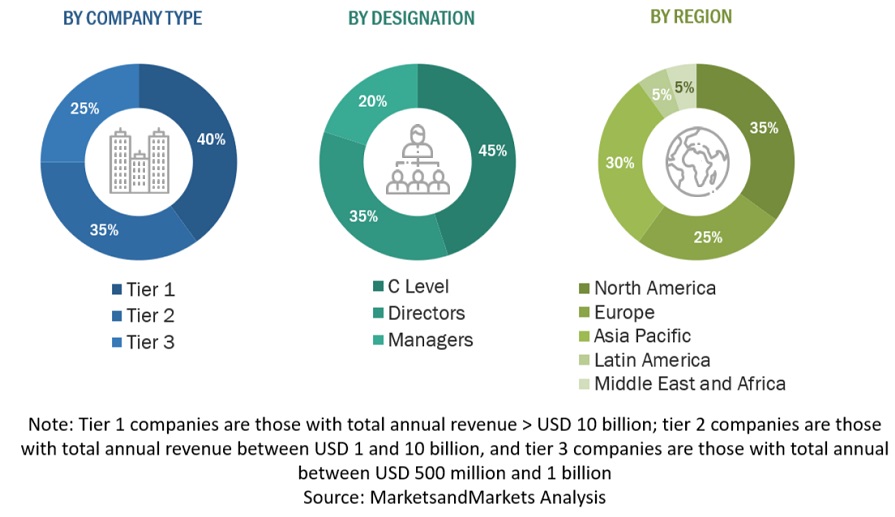
To know about the assumptions considered for the study, download the pdf brochure
Market Size Estimation
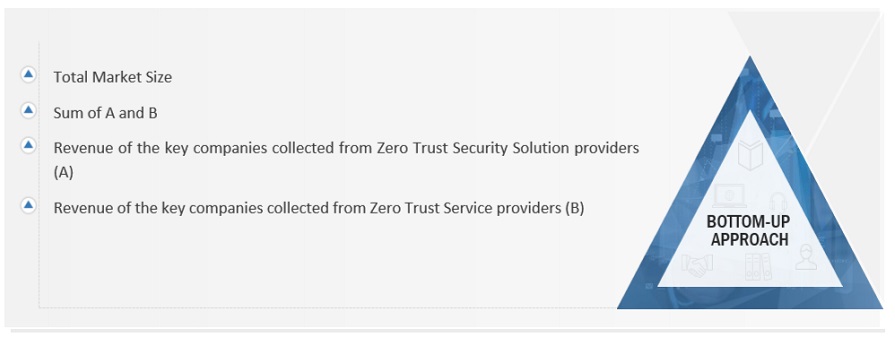
Both top-down and bottom-up methods were implemented to get an accurate picture of the global Zero Trust Security market's size. Also evaluated the sizes of different parts within this bigger market. This approach had several steps:First, Identifying the main players in the market through a lot of background reading. Then, looked at the revenue made in different Regions by the players. To do this, Have gone through reports and spoken to people in charge. Spent time looking at yearly and revenue reports from the top companies. Also had primary interviews with industry leaders like CEOs, VPs, directors, and marketing bosses to learn more. All the numbers about market splits and different parts came from reading reports. Re-ensured these numbers were Accurate by talking to Officials.
INFOGRAPHIC DEPICTING BOTTOM-UP AND TOP-DOWN APPROACHES
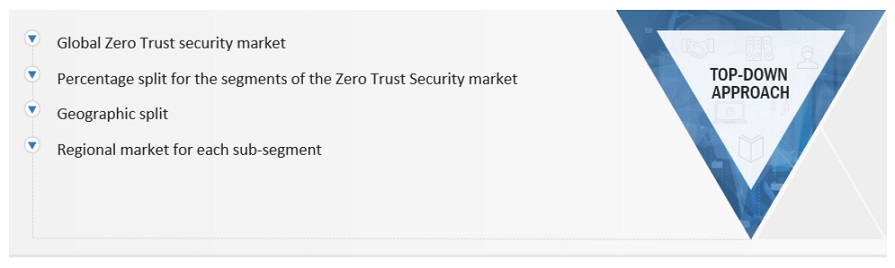
To know about the assumptions considered for the study, Request for Free Sample Report
Data Triangulation
Following the determination of the overall market size using the market above size estimation methodologies, the market was segmented into distinct segments and subsegments. Data triangulation and market segmentation procedures were utilized, as needed, to complete the comprehensive market engineering process and ascertain the precise statistics for each market segment and subsegment. Data triangulation was achieved by analyzing various factors and trends from both the demand and supply sides.
Market Definition
The US National Institute of Standards and Technology (NIST), in its current draft of standards for zero trust architecture, defines zero trust in the following manner: “Zero trust is a cybersecurity paradigm focused on resource protection and the premise that trust is never granted implicitly but must be continually evaluated.” Zero trust security is, therefore, not only a product or an approach—it is a web of connected policies, practices, software, and hardware that create an entire zero-trust ecosystem.
According to CrowdStrike, zero trust is a security concept that requires all users, even those inside the organization’s enterprise network, to be authenticated, authorized, and continuously validating security configuration and posture before being granted or keeping access to applications and data.
Further, according to Akamai Technologies, zero trust is a network security model, based on a strict identity verification process. The framework dictates that only authenticated and authorized users and devices can access applications and data. At the same time, it protects those applications and users from advanced threats on the Internet”.
Report Objectives
- To define, describe, and forecast the Zero Trust Security market based on offering, application, security type, authentication type, vertical, and region.
- To forecast the market size of five central regions: North America, Europe, Asia Pacific (APAC), Middle East & Africa (MEA), and Latin America.
- To analyze the subsegments of the market concerning individual growth trends, prospects, and contributions to the overall market.
- To provide detailed information related to the primary factors (drivers, restraints, opportunities, and challenges) influencing the growth of Zero Trust Security market.
- To analyze opportunities in the market for stakeholders by identifying high-growth segments of the Zero Trust Security market.
- To profile the key players of the Zero Trust Security market and comprehensively analyze their market size and core competencies.
- Track and analyze competitive developments, such as new product launches, mergers and acquisitions, partnerships, agreements, and collaborations in the global Zero Trust Security market.
Customization Options
With the given market data, MarketsandMarkets offers customizations based on company-specific needs. The following customization options are available for the report:
Geographic Analysis
- Further breakup of the Asia Pacific market into major countries.
- Further breakup of the North American market into major countries.
- Further breakup of the Latin American market into major countries.
- Further breakup of the Middle East African market into major countries
- Further breakup of the European market into major countries.
Company Information
- Detailed analysis and profiling of additional market players (up to 5)
Get the Full Zero Trust Security Market Report
Full forecast, segment splits, and company analysis for all Zero Trust Security Market.
- Rest Of Latin America Zero Trust Security Market
- GCC Zero Trust Security Market
- Ksa Zero Trust Security Market
- Rest Of GCC Countries Zero Trust Security Market
- US Zero Trust Security Market
- Canada Zero Trust Security Market
- UK Zero Trust Security Market
- Germany Zero Trust Security Market
- France Zero Trust Security Market
- Italy Zero Trust Security Market
- China Zero Trust Security Market
- Japan Zero Trust Security Market
- India Zero Trust Security Market
- Singapore Zero Trust Security Market
- Australia Zero Trust Security Market
- UAE Zero Trust Security Market
- South Africa Zero Trust Security Market
- Brazil Zero Trust Security Market
- Mexico Zero Trust Security Market
- Rest Of Europe Zero Trust Security Market
- Rest Of Asia Pacific Zero Trust Security Market
Need a Tailored Report?
Customize this report to your needs
Get 10% FREE Customization
Customize This Report
