Germany Next Generation Sequencing Market Size, Growth, Share & Trends Analysis

Germany Next Generation Sequencing Market by Product (Reagents, Kits, Platforms) Service (CHIP Sequencing, Whole Genome, Methyl, RNA Sequencing), Technology (SBS, Nanopore), Workflow (Sequencing, Data Analysis), Application - Forecast to 2031




OVERVIEW
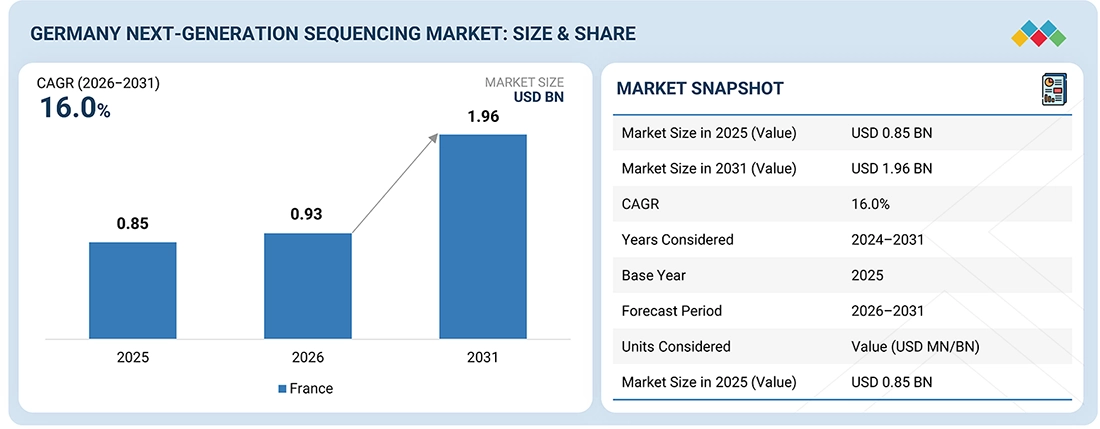
Source: Secondary Research, Interviews with Experts, MarketsandMarkets Analysis
The Germany Next Generation Sequencing market, valued at USD 0.85 billion in 2025, stood at USD 0.93 billion in 2026 and is projected to advance at a resilient CAGR of 16.0% from 2026 to 2031, culminating in a forecasted valuation of USD 1.96 billion by the end of the period. Next-generation sequencing refers to high-throughput DNA sequencing technologies that are not based on Sanger sequencing. NGS primarily relies on sequencing by synthesis (SBS), ion semiconductor sequencing, single-molecule real-time (SMRT) sequencing, and nanopore sequencing. These methods are designed to handle large amounts of genomic data and are used in various fields, including clinical diagnostics, drug discovery and development, and agriculture research.
KEY TAKEAWAYS
-
By OfferingBy offering, the products segment is projected to reach USD 1,270.5 million by 2031, growing at a CAGR of 14.0% during the forecast period.
-
By ConsumablesBy consumables, sequencing kits and reagents are projected to register a CAGR of 14.9% during the forecast period.
-
Competitive LandscapeIllumina, Thermo Fisher Scientific, and QIAGEN were identified as leading players in the Germany Next-generation Sequencing market, given their strong market presence and extensive technology portfolios.
The next-generation sequencing market in Germany is growing quickly, driven by advances in sequencing technologies, rising demand for precision medicine, and decreasing costs of sequencing. Market growth is also supported by initiatives like the German Alliance for Precision Medicine and collaborations aimed at improving the country's genomic research capabilities across clinical diagnostics, oncology, and rare disease management.
TRENDS & DISRUPTIONS IMPACTING CUSTOMERS' CUSTOMERS
The German next-generation sequencing market is currently experiencing a period of innovation and rapid adoption. Healthcare systems, research institutions, and diagnostic laboratories across Germany are seeing advancements in sequencing platform development and regulatory approval processes. This progress aligns with emerging trends in precision oncology, rare disease diagnostics, and personalized treatment strategies. In Germany, the use of long-read sequencing technologies, advanced bioinformatics tools, and integrated sequencing platforms is increasing among hospitals and genomic research centers. These technologies enable faster analysis of complex genetic variants, structural variations, and epigenetic modifications, leading to quicker diagnoses, reduced turnaround times, and support for precision medicine and targeted therapies. Government agencies and regulatory authorities are promoting local innovation, the development of companion diagnostics, and public-private research collaborations. These efforts help shorten approval times and encourage the adoption of clinically validated sequencing platforms tailored to the needs of the German patient population.
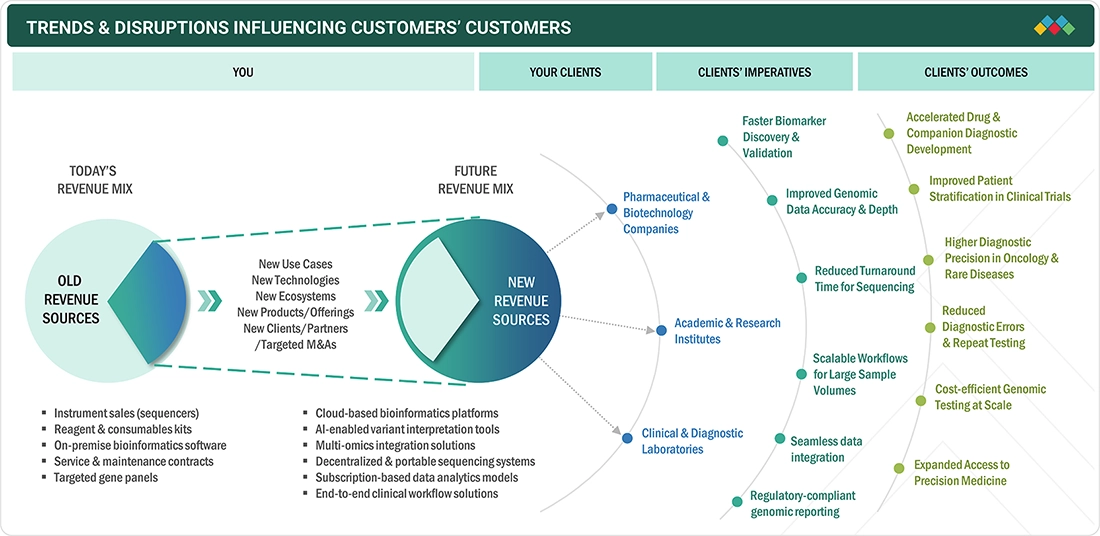
Source: Secondary Research, Interviews with Experts, MarketsandMarkets Analysis
MARKET DYNAMICS

Level
-
Technological advancements in sequencing platforms

-
Rising demand for precision medicine and personalized healthcare


Level
-
High Capital Investment and Operational Costs


Level
-
Expanding applications in clinical diagnostics


Level
-
Data management and storage complexity

-
Shortage of Skilled Bioinformatics Professionals

Source: Secondary Research, Interviews with Experts, MarketsandMarkets Analysis
Driver: Technological advancements in sequencing platforms
Continuous advancements in next-generation sequencing (NGS) technologies, including enhancements in sequencing speed, accuracy, and throughput, are driving the adoption of NGS across Germany. These technological improvements allow researchers and clinicians to analyze large genomic datasets more effectively, supporting applications in genomics research, precision medicine, and clinical diagnostics.
Restraint: High Capital Investment and Operational Costs
Implementing NGS technologies requires significant investment in advanced sequencing equipment, laboratory infrastructure, and data analysis tools. Additionally, the need for skilled personnel and bioinformatics expertise raises operational costs, which can restrict the use of NGS technologies in smaller research labs and healthcare facilities.
Opportunity: Expanding applications in clinical diagnostics
The growing adoption of next-generation sequencing (NGS) in clinical diagnostics is driving significant growth opportunities in the Germany NGS market. NGS is commonly used in applications such as oncology testing, rare disease detection, and genetic disorder screening, allowing for more accurate and comprehensive identification of disease-related genetic variations.
Challenge: Data management and storage complexity
NGS technologies produce large amounts of genomic data that require sophisticated storage systems and powerful computational infrastructure for analysis. Managing, interpreting, and securely storing this huge volume of data remains a significant challenge for research institutions and clinical laboratories adopting NGS technologies in Germany.
GERMANY NEXT GENERATION SEQUENCING MARKET: COMMERCIAL USE CASES ACROSS INDUSTRIES
| COMPANY | USE CASE DESCRIPTION | BENEFITS |
|---|---|---|
 |
Collaboration with German research institutes and clinical laboratories participating in the German genome sequencing pilot program to scale sequencing operations and integrate NGS into routine clinical care | Accelerates adoption of precision medicine and genomic diagnostics, enabling broader clinical use of sequencing technologies in oncology and rare disease research |
|
|
Use of Illumina sequencing technologies in the “Beyond the Exome” genomics research project conducted by German research institutions to identify clinically relevant genetic variants beyond traditional exome sequencing | Improves the detection of disease-associated genetic variants, supporting advanced genomic research and expanding the diagnostic capabilities of NGS |
Logos and trademarks shown above are the property of their respective owners. Their use here is for informational and illustrative purposes only.
MARKET ECOSYSTEM
The Germany next-generation sequencing market is a collaborative ecosystem where technology providers, diagnostic laboratories, research institutions, bioinformatics companies, and healthcare professionals work together to develop and implement sequencing solutions in healthcare and research. Key players in Germany supply various sequencing platforms, consumables, reagents, and bioinformatics tools. Contract research organizations, diagnostic service providers, and academic institutions support the preclinical and clinical validation stages, as well as the implementation process for these sequencing technologies. Ultimately, healthcare organizations and research centers in Germany utilize the developed sequencing solutions, benefiting from supportive funding mechanisms and regulatory frameworks.
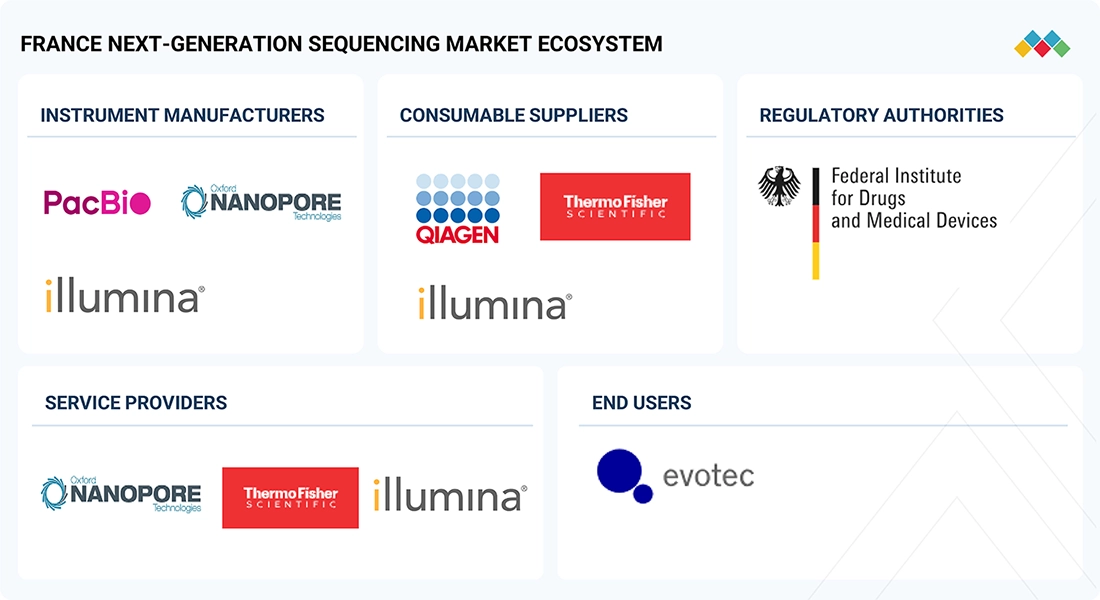
Logos and trademarks shown above are the property of their respective owners. Their use here is for informational and illustrative purposes only.
MARKET SEGMENTS
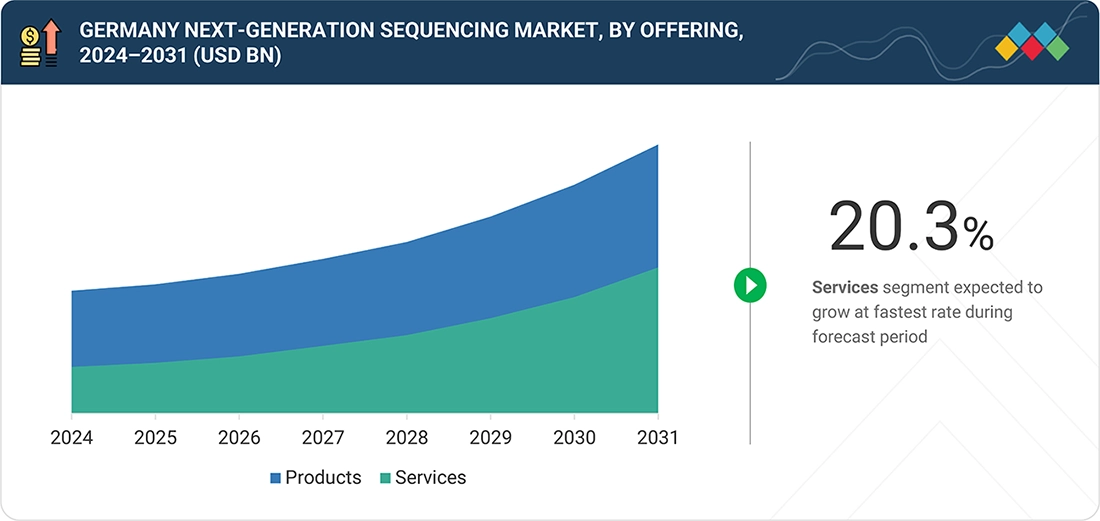
Source: Secondary Research, Interviews with Experts, MarketsandMarkets Analysis
Germany Next-generation Sequencing Market, by Offering
The products segment led the market in 2025, with sequencing platforms, consumables, and bioinformatics tools forming the core of most genomic analysis workflows used daily in research and clinical settings. This is because of their reliability, high throughput capacity, and proven performance, making them preferred choices for oncology diagnostics, rare disease detection, and precision medicine applications.
Germany Next-generation Sequencing Market, by Application
Diagnostics comprised the largest segment of the Germany Next-generation Sequencing market. The rising use of genomic analysis in disease diagnosis and treatment decisions has pushed this segment to the forefront in the country. Factors such as increased focus on precision medicine, rising cancer rates, more patients with rare genetic disorders, and expanded use of companion diagnostics are fueling the demand for sequencing-based diagnostic tests, oncology panels, and genetic screening services.
REGION
Germany to be the fastest growing county.
Germany is enhancing its genomic research capabilities by focusing on building partnerships and securing funding from government agencies like the German Federal Ministry of Education and Research. This support greatly bolsters Germany's role as a major research hub in the European Next-generation Sequencing market. The demand for oncology diagnostics, rare disease detection, and precision medicine applications is growing, alongside the development of sequencing infrastructure and bioinformatics skills in Germany. Moreover, substantial investment in genomic research efforts, combined with a strong clinical research foundation, is helping accelerate the shift of sequencing technologies from research environments to clinical practice.
GERMANY NEXT GENERATION SEQUENCING MARKET: COMPANY EVALUATION MATRIX
Illumina, recognized as a leading player in the Germany next-generation sequencing market, offers a diverse portfolio that includes sequencing platforms, consumables, and bioinformatics solutions for clinical and research applications. The company maintains a strong presence in Germany and collaborates with research institutions, diagnostic laboratories, and pharmaceutical companies. Another key player in the German market is Thermo Fisher Scientific, known as a leading provider. The company is strengthening its position by launching advanced sequencing systems, integrated workflows, and specialty reagents designed for use in oncology, infectious disease, and genetic disorder diagnostics.
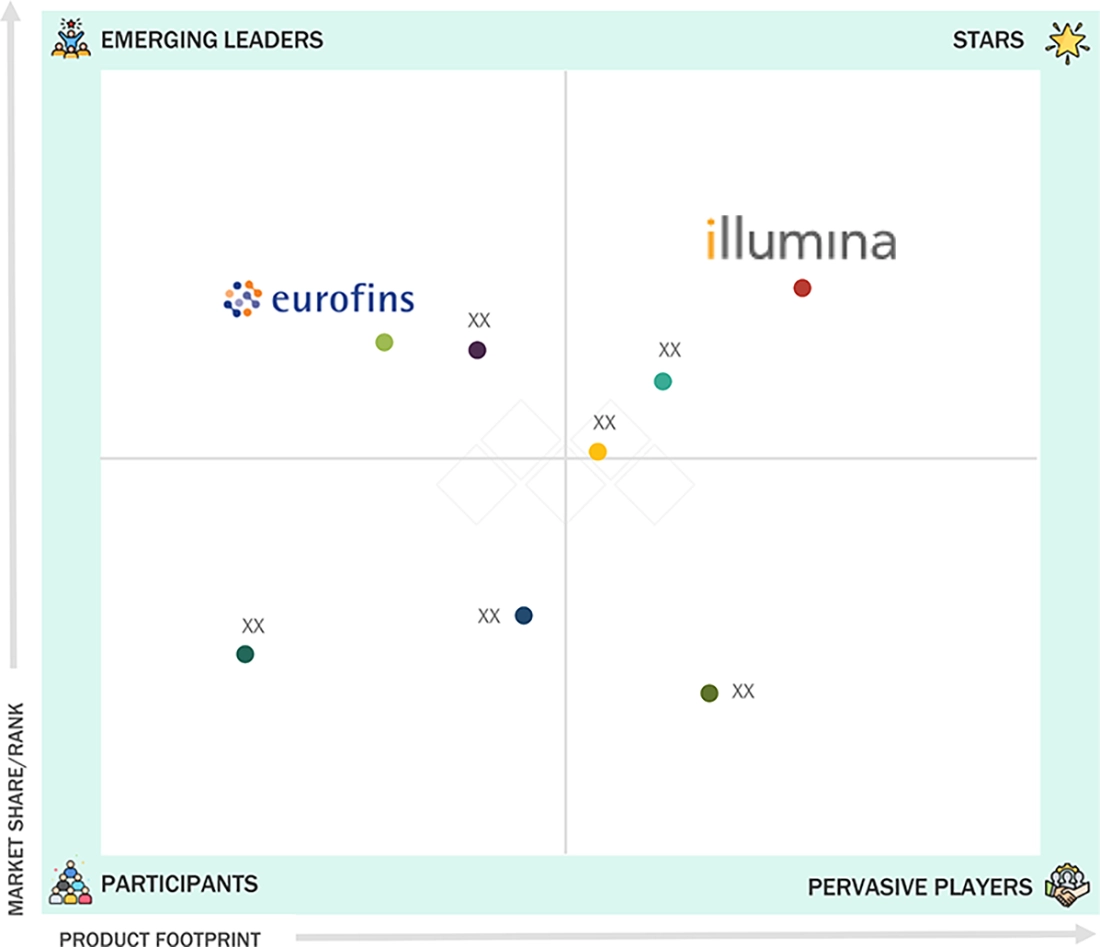
Source: Secondary Research, Interviews with Experts, MarketsandMarkets Analysis
KEY MARKET PLAYERS
- Illumina, Inc. (US)
- Thermo Fisher Scientific (US)
- QIAGEN (Netherlands)
- F. Hoffmann-La Roche Ltd. (Switzerland)
- Agilent Technologies, Inc. (US)
- Oxford Nanopore Technologies plc (UK)
- PacBio (US)
- Eurofins Scientific (Luxembourg)
MARKET SCOPE
| REPORT METRIC | DETAILS |
|---|---|
| Market Size in 2025 (Value) | USD 852.6 Million |
| Market Forecast in 2031 (Value) | USD 1,960.3 Million |
| Growth Rate | CAGR of 16.0% from 2026-2031 |
| Years Considered | 2024-2031 |
| Base Year | 2025 |
| Forecast Period | 2026-2031 |
| Units Considered | Value (USD Million) |
| Report Coverage | Revenue Forecast, Company Ranking, Competitive Landscape, Growth Factors, and Trends |
| Segments Covered |
|
| Regions Covered | Germany |
| Parent & Related Segment Reports |
Next generation Sequencing Market North America Next Generation Sequencing Market Europe Next Generation Sequencing Market Asia Pacific Next Generation Sequencing Market Single-molecule Real-time (SMRT) Sequencing Market France Next Generation Sequencing Market UK Next-generation Sequencing Market South Korea Next-Generation Sequencing Market China Next Generation Sequencing Market Next Generation Sequencing Services Market |
WHAT IS IN IT FOR YOU: GERMANY NEXT GENERATION SEQUENCING MARKET REPORT CONTENT GUIDE
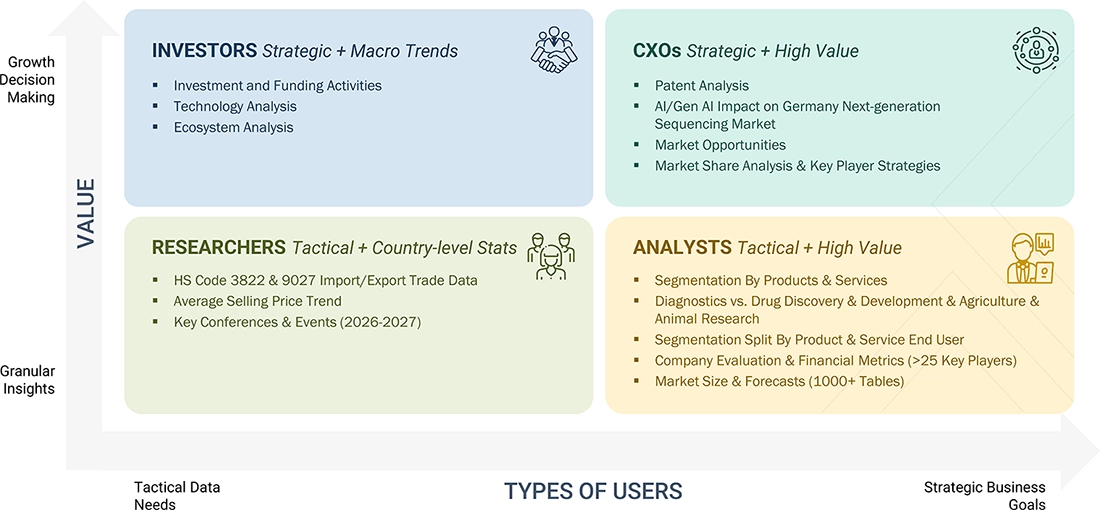
DELIVERED CUSTOMIZATIONS
We have successfully delivered the following deep-dive customizations:
| CLIENT REQUEST | CUSTOMIZATION DELIVERED | VALUE ADDS |
|---|---|---|
| Understanding demand patterns for Next-generation Sequencing technologies across German healthcare and research systems | Assessed sequencing technology usage trends across key German institutions, highlighting differences in adoption of short-read and long-read platforms across oncology, rare disease, infectious disease, and research applications | Helps clients align product portfolios with institution-specific demand drivers, funding availability, and application priorities |
| Identifying local service providers and technology partners | Mapped regional sequencing service providers, bioinformatics companies, and diagnostic laboratories across Germany, with insights into sequencing capacity, data analysis capabilities, and clinical validation expertise | Supports partnership strategies, reduces implementation complexity, improves access to local expertise, and accelerates market entry |
RECENT DEVELOPMENTS
- May 2025 : QIAGEN acquired Genoox, an AI-driven genomic analysis platform provider, to strengthen its bioinformatics portfolio for genetic testing and next-generation sequencing data interpretation. The acquisition enhances QIAGEN's capabilities in clinical genomics and precision medicine applications.
- March 2023 : Illumina launched its first product with Illumina Complete Long-read technology, targeting improved sequencing capabilities for complex genomic regions and structural variant detection.
Table of Contents
 Exclusive indicates content/data unique to MarketsandMarkets and not available with any competitors.
Methodology
This study on the Germany next Generation Sequencing Market employed secondary sources, directories, and databases to gather pertinent information. To gather and validate important qualitative and quantitative data and evaluate market growth prospects, in-depth interviews were conducted with many primary respondents including key industry participants, subject-matter experts (SMEs), C-level executives from key market players, and industry consultants. After estimating the Germany next Generation Sequencing Market using several research strategies, the size of the final market was obtained by triangulating data from primary research.
Secondary Research
The secondary sources referred to for this research study include publications from government sources. These include the Centers for Disease Control and Prevention (CDC), the US Food and Drug Administration (FDA), the World Health Organization (WHO), the American Cancer Society (ACS), the National Center for Biotechnology Information (NCBI), the National Institutes of Health (NIH), National Human Genome Research Institute (NHGRI), International Agency for Research on Cancer (IARC), National Institute for Infectious Diseases (IRCCS), Association for Clinical Genomic Science (ACGS), American Society of Human Genetics (ASHG), European Society of Human Genetics (ESHG), Asia Pacific Society of Human Genetics (APSHG), Nature Reviews Genetics, Nature Methods, Biotechnology and Biological Sciences Research Council (BBSRC), Organisation for Economic Co-operation and Development (OECD), Genome Research, National Cancer Institute (NCI), European Medicines Agency (EMA), Population Health Research Institute (PHRI), PubMed, World Bank, and the World Health Organization (WHO), among others. Secondary sources also included corporate & regulatory filings, such as annual reports, SEC filings, investor presentations, and financial statements; business magazines & research journals; press releases; and trade, business, and professional associations. Secondary data was collected and analyzed to arrive at the overall size of the global Germany next Generation Sequencing Market, which was validated through primary research.
Primary Research
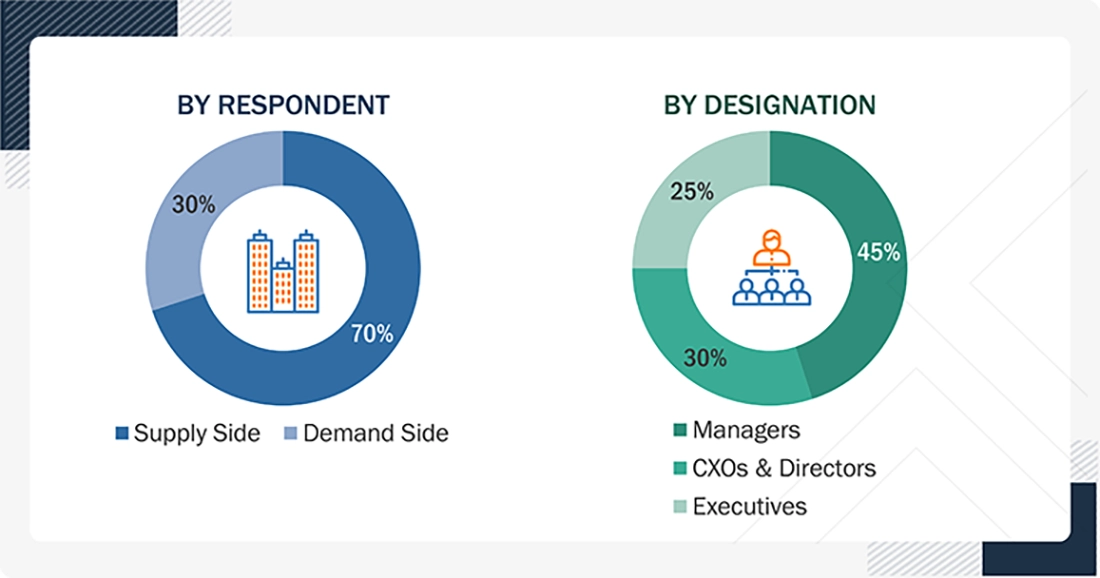
Extensive primary research was conducted after acquiring basic knowledge about the global Germany next Generation Sequencing Market scenario through secondary research. Several primary interviews were conducted with market experts from the supply side, such as C-level and D-level executives, operational managers, marketing & sales managers of key manufacturers, distributors, and channel partners of companies providing NGS; experts from the demand side, such as personnel from academic & research institutes, hospitals, clinics and diagnostic labs, pharmaceutical & biopharmaceutical industries, CROs, and other end users. These interviews were conducted across six major regions, including North America, Europe, the Asia Pacific, Latin America, the Middle East, and Africa. Approximately 70% and 30% of the primary interviews were conducted with supply-side and demand-side participants, respectively. This primary data was collected through questionnaires, e-mails, online surveys, personal interviews, and telephonic interviews.
To know about the assumptions considered for the study, download the pdf brochure
Market Size Estimation
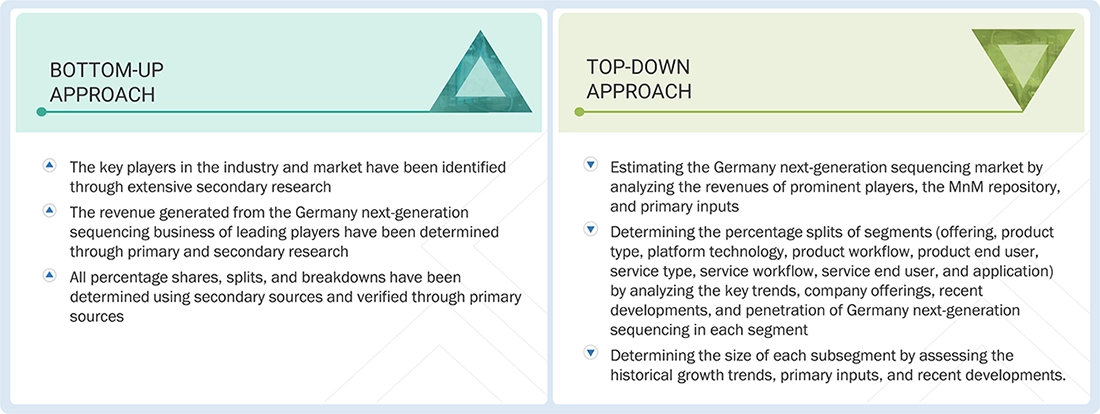
Both top-down and bottom-up approaches were used to estimate and validate the total size of the Germany next Generation Sequencing Market. These methods were also used extensively to estimate the size of various subsegments in the market. The research methodology used to estimate the market size includes the following:
Data Triangulation
To complete the overall market engineering process and arrive at the exact statistics for all segments and subsegments, data triangulation and market breakdown procedures were employed, wherever applicable. The data was triangulated by studying various factors and trends from both the demand and supply sides.
Market Definition
NGS refers to non-Sanger-based, high-throughput DNA sequencing technologies. DNA strands can be sequenced simultaneously, yielding substantially more throughput and minimizing the need for fragment-cloning methods often used in the Sanger sequencing of genomes. NGS is fundamentally based on sequencing by synthesis (SBS), ion semiconductor sequencing, single-molecule real-time (SMRT) sequencing, and nanopore sequencing.
Stakeholders
- NGS instrument manufacturers, vendors, and distributors
- NGS service providers
- NGS bioinformatics/data analysis companies
- Research laboratories and academic institutes
- Venture capitalists and other government funding organizations
- Research and consulting firms
- Healthcare institutions (hospitals and diagnostic clinics)
- Pharmaceutical and biotechnology companies
- Academic and government research institutes
- Life science companies.
Report Objectives
- To define, describe, and forecast the Germany next Generation Sequencing Market based on offerings, product type, platform technology, product workflow, product end user, service type, service workflow, service end user, application, and region
- To provide detailed information regarding the major factors influencing the market growth (such as drivers, restraints, opportunities, and challenges)
- To strategically analyze micro markets with respect to individual growth trends, prospects, and contributions to the overall Germany next Generation Sequencing Market
- To analyze the opportunities in the market for stakeholders and provide details of the competitive landscape for market leaders
- To forecast the size of the market segments with respect to six main regions, namely, North America, Europe, the Asia Pacific, Latin America, the Middle East, and Africa
- To profile the key players in the global Germany next Generation Sequencing Market and comprehensively analyze their platforms, reagents, kits, consumables, and services portfolios, market positions, and core competencies
- To track and analyze competitive developments such as product & service launches, expansions, agreements, and collaborations in the Germany next Generation Sequencing Market
- To benchmark players within the Germany next Generation Sequencing Market using the ‘Company Evaluation Matrix' framework, which analyzes market players based on various parameters within the broad categories of business and service strategy.


Personalize This Research
- Triangulate with your Own Data
- Get Data as per your Format and Definition
- Gain a Deeper Dive on a Specific Application, Geography, Customer or Competitor
- Any level of Personalization
Let Us Help You
- What are the Known and Unknown Adjacencies Impacting the Germany Next Generation Sequencing Market
- What will your New Revenue Sources be?
- Who will be your Top Customer; what will make them switch?
- Defend your Market Share or Win Competitors
- Get a Scorecard for Target Partners

Custom Market Research Services
We Will Customise The Research For You, In Case The Report Listed Above Does Not Meet With Your Requirements
Get 10% Free CustomisationTESTIMONIALS

JAYANT RAJPUROHIT
Director of Market Insights, Data and Analytics
SFI Health,
Leading Pharmaceutical Companywww.sfihealth.com/
We at SFI Health approached MarketsandMarkets for an Opportunity Assessment on "Incidence and Prevalence of Focus Indications" as we wanted to know the most attractive HCPs like Physician, Functional MD, Naturopath and Pharmacist. The project was critical for us to ensure our focus on the right target which would enable sustainable growth and profitability for SFI Health. The business insights provided exceeded our expectations and we were extremely impressed. The team at MarketsandMarkets is highly professional and detail oriented and very well understood our business needs. MarketsandMarkets offers a unique combination of expertise and dedicated engagement model. We identified 2 new products to be launched in coming months, based on the research findings provided by MarketsandMarkets. We are happy with the services and would strongly recommend MarketsandMarkets to my peers in the industry.
BEATRIZ DE LA CALLE
Head of Commercial Analytics
Qualicaps,
Leading Pharmaceutical Companywww.qualicaps.com/

We partnered with MarketsandMarkets for an assessment study on hard empty capsules. The team was extremely professional in understanding our business requirements and we received timely responses to all our queries. The market intelligence and the recommendations has met our business requirements. We were extremely impressed to see the final study results; it really exceeded our expectations. The market intelligence offered by MarketsandMarkets, and clarity on next steps will help us achieve our business objective for the Year 2021. We are happy with the services and would strongly recommend MarketsandMarkets to my peers in the industry.

Bob Williams,
Senior Director Business Development & Innovation
Bracco Diagnostics Inc.,
Italian Multinational in life sciences sector and a World Leader in imaging diagnosticsimaging.bracco.com/us-en
We were pleased with targeted insights that MarketsandMarkets identified from a custom study on the 'Radiation Dose Management Solutions Market'. Your team identified and characterized the market participants as well as underlying trends accurately. This study was useful to Bracco in formulating business strategies for our dose monitoring product lines and we thank MarketsandMarkets for the job well done.
Cody Coonradt,
Market Development and Strategy Manager
3M Health Information Systems,
Leader in Health care Coding, Payment & Analytics Solutions.www.3m.com/3M/en_US/health-information-systems-us
The value for our organization comes from three things: depth of research, specificity of segments and being easy to work with. As important as the first two are, the third can't be underestimated. MarketsandMarkets, maybe more than any other research vendor, wants to know what is top of mind for our team and what big questions we are grappling to answer.
Their customer first approach and high value engagement model, have given us great analysis and excellent value for money






Growth opportunities and latent adjacency in Germany Next Generation Sequencing Market