HVAC Insulation Market

HVAC Insulation Market by Product Type (Pipes, Ducts), Material Type [Mineral Wool (Glass Wool, Stone Wool), Plastic Foam (Phenolic, Elastomeric Foam)], End-use Industry (Commercial, Residential, Industrial), and Region - Global Forecast To 2031




OVERVIEW
Source: Secondary Research, Interviews with Experts, MarketsandMarkets Analysis
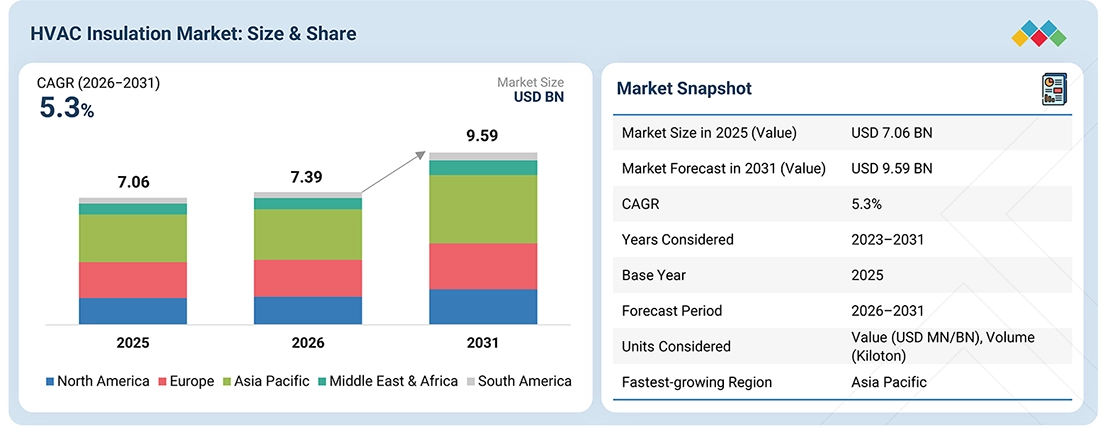
The HVAC insulation market is projected to reach USD 9.59 billion by 2031 from USD 7.39 billion in 2026, at a CAGR of 5.3% during the forecast period. HVAC insulation refers to the materials and methods used to reduce heat loss or gain in heating, ventilation, and air conditioning systems. Interest in HVAC insulation is growing rapidly due to tighter energy-efficiency requirements, greater awareness of sustainable building principles, and requirements to reduce carbon emissions. Geographies like Europe and North America are leading, with well-established environmental laws and retrofitting standards, while the Asia Pacific, and more so China and India, is undergoing the most aggressive expansion driven by urbanization, industrial growth, growing manufacturing practices and a flourishing building & construction sector. This reflects a broader shift toward energy-efficient infrastructure and climate-responsible development.
KEY TAKEAWAYS
-
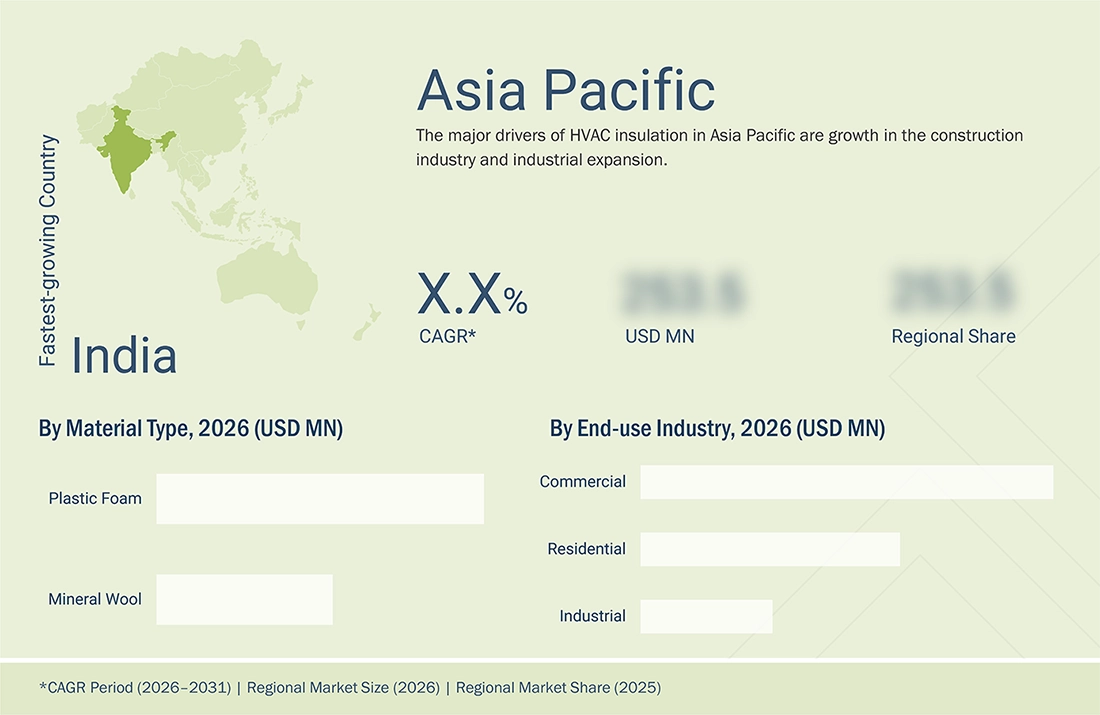
BY REGIONBy region, Asia Pacific accounted for 37.9% of the HVAC insulation market in 2026, supported by urbanization, robust economic growth and a growing construction industry in key economies.
-
BY MATERIAL TYPEBy material type, the mineral wool segment is projected to grow at a CAGR of 5.5% between 2026 and 2031, driven by its improved thermal, sound, and fire-resistant properties.
-
BY PRODUCT TYPEBy product type, the ducts segment is expected to account for 58.2% of the market.
-
BY END-USE INDUSTRYBy end-use industry, the commercial segment is expected to dominate the market with a 51.9% share in 2026.
-
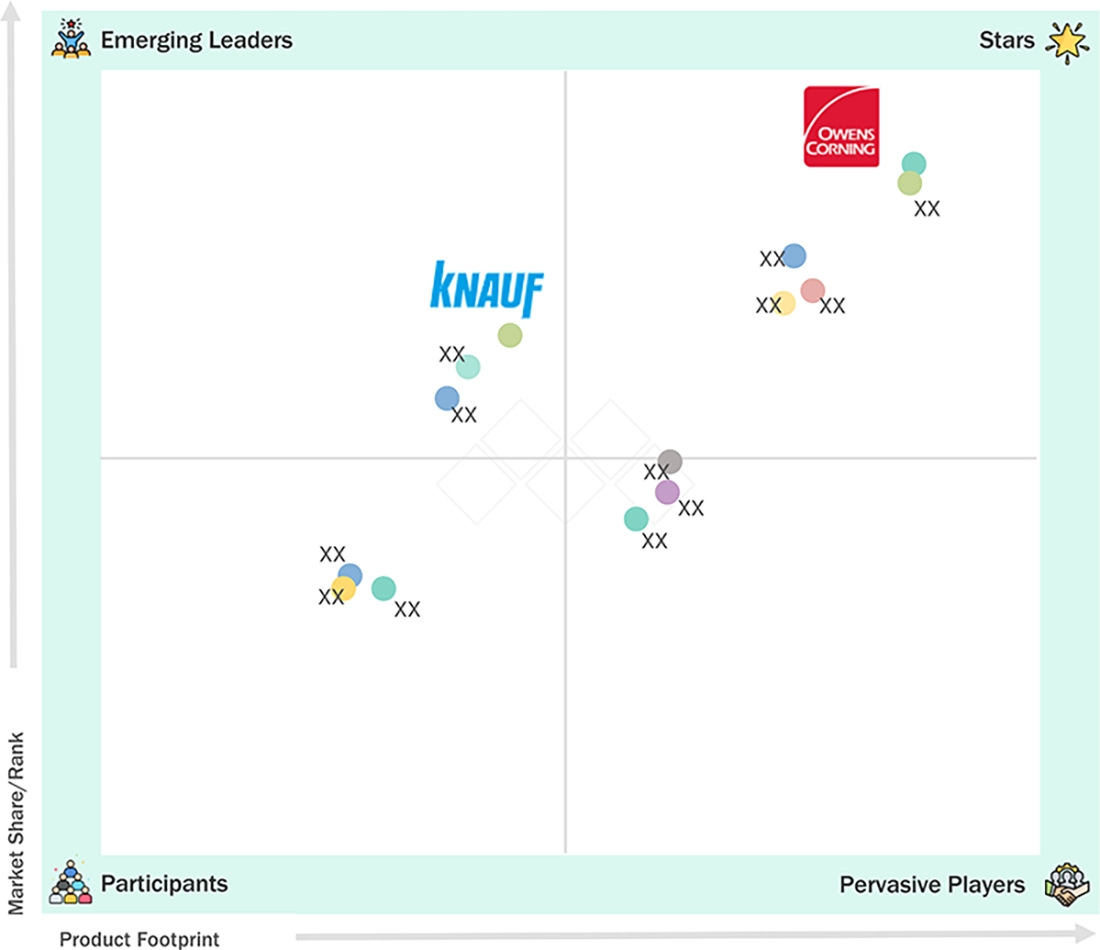
COMPETITIVE LANDSCAPE - KEY PLAYERSOwen Corning Corporation (US), Saint-Gobain SA (France), and Knauf Group (US) were identified as key players in the HVAC Insulation market because of their strong market share and product footprint.
-
COMPETITIVE LANDSCAPE - STARTUPS/SMESSager AG, Wincell Insulation Co. Ltd., and Lindner SE, among others, have distinguished themselves among startups and SMEs by securing strong footholds in specialized niches, underscoring their potential as emerging market leaders.
Insulation materials for heating, ventilating, and air-conditioning (HVAC) systems help minimize both heat gain and heat loss. This improves thermal efficiency and reduces energy consumption. This is driving an increasing need for HVAC insulation. This market has seen growing demand due to increased focus on energy-efficient structures, operating costs and sustainability considerations. Market growth will continue as the construction industry matures, supported by the development of commercial and residential buildings, industrial sites, data centers and cold-chain facilities, as well as the installation and replacement of HVAC systems in existing facilities. Developed countries such as Europe and North America have strict regulations on efficiency, energy-use laws and codes, and renovation and reconstruction processes, while Asia is a promising region because of its ongoing construction activity.
TRENDS & DISRUPTIONS IMPACTING CUSTOMERS' CUSTOMERS
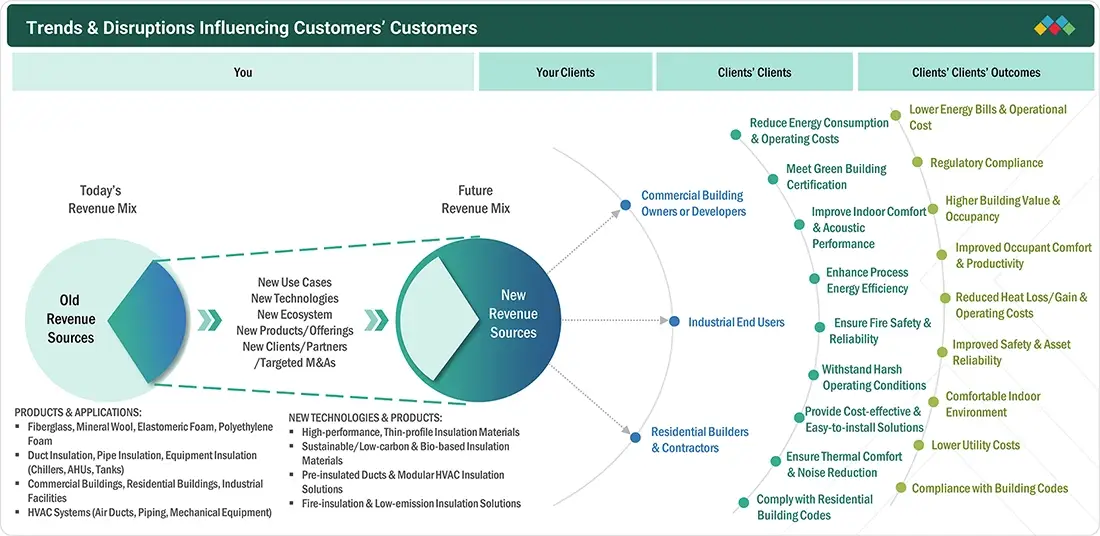
The HVAC insulation market is shaped by emerging trends and disruptions, including the growing adoption of energy-efficient HVAC systems, tighter building energy regulations, and rising consumer preference for sustainable insulation materials with lower environmental impact. The emergence of green buildings and net-zero requirements drives the uptake of high-quality insulation products that minimize heat losses while increasing the energy efficiency of buildings. At the same time, the expansion of data centers, cold chain facilities, and high-density buildings creates demand for better insulation materials that deliver high thermal performance under challenging conditions. Technological advances such as thinner insulation, better vapor barriers, pre-insulated HVAC components, and more convenient insulation solutions also change product requirements. On the other hand, fluctuating raw material prices, supply chain disruptions, stricter regulations on specific blowing agents and chemicals, and labor shortages may affect installation costs and timelines. These trends gradually change the market from conventional insulation to higher-performance, sustainable and application-oriented HVAC insulation systems.
Source: Secondary Research, Interviews with Experts, MarketsandMarkets Analysis
MARKET DYNAMICS

Level
-
Expanding construction industry


Level
-
Lack of awareness about energy efficiency

-
High upfront cost of advanced insulation


Level
-
Innovation in eco-friendly insulation materials

-
Technological advancements in HVAC systems


Level
-
Requirement of skilled workforce

-
Fire safety and toxicity concerns

Source: Secondary Research, Interviews with Experts, MarketsandMarkets Analysis
Driver: Expanding construction industry
The growing expansion in the construction sector is a key driver of the HVAC insulation market. As residential, commercial, and industrial infrastructure continues to grow, demand for efficient heating, ventilation, and air conditioning systems is surging. New building & construction projects, especially in emerging countries such as India and China, are focusing more on energy efficiency and sustainability, driving strong demand for insulation to control energy use and maintain indoor comfort. HVAC insulation assists in reducing thermal losses, increasing the efficiency of the system, and lowering costs, a consideration for both new construction and retrofitting endeavors. Governments and regulatory authorities worldwide are also enforcing strict building codes and energy standards that require thermal insulation in HVAC systems. This regulatory impetus is particularly visible in markets like North America, Europe, and Asia Pacific, where green building certifications like LEED and BREEAM are becoming increasingly popular. Furthermore, population growth and urbanization are driving more high-rise buildings and large commercial areas that require sophisticated HVAC systems with high insulation. The shift toward sustainable and smart buildings further adds to the importance of HVAC insulation. Generally, the large construction industry serves as a pillar development driver, directly influencing the growth of the HVAC insulation industry in both emerging and developed regions.
Restraint: Lack of awareness about energy efficiency
A major limitation among building owners, contractors, and end users in the HVAC insulation market is a lack of awareness of energy efficiency, which is common in underdeveloped and emerging countries. Most building owners, contractors, and end users do not understand the long-term cost savings from efficient HVAC insulation because they are either unaware of it or do not consider it during construction due to limited knowledge or smaller budgets. In some sectors, insulation is still treated as an add-on or secondary element rather than a core part of energy-efficient design. This is exacerbated by a lack of stricter policy requirements or incentives in some places, which hinders the adoption of energy-saving technologies. Additionally, a lack of technical expertise or awareness can discourage stakeholders from making rational decisions about insulation products and installation levels. Therefore, the market for HVAC insulation is growing more slowly than it should, despite the economic and environmental advantages it offers. To overcome this barrier, greater emphasis is needed on education, public campaigns, and government programs that highlight the importance of HVAC insulation in reducing energy use and improving building efficiency.
Opportunity: Innovation in eco-friendly insulation materials
Green innovations in insulation materials offer strong growth potential for the HVAC insulation segment. As attention to sustainability and environmental responsibility grows, there is a greater need for effective insulation that is not only energy-efficient but also environmentally friendly. Traditional insulation materials such as fiberglass and foam are effective but often face environmental challenges in manufacturing and waste management. As a result, producers are investing in the production of green alternatives made from recycled, biodegradable, or low-polluting materials. Materials like plant foams, aerogels, sheep's wool, recycled denim, and cellulose are increasingly accepted because of their low environmental footprint, low toxicity, and comparable thermal performance. They meet green building standards like LEED and BREEAM, which focus on green materials and energy efficiency. As regulations tighten and consumer sensitivity to the environment grows, demand for these materials is expected to rise significantly. This trend offers new channels of commerce and allows HVAC insulation manufacturers to differentiate products, serve green building developments, and accommodate modified building codes. In addition, using sustainable insulation products enables additional applications, such as carbon neutrality and circular-economy practices, which are strategic priorities for long-term competitiveness and ethical industry growth.
Challenge: Requirement of skilled workforce
A lack of a trained workforce is the key challenge holding back the development of the HVAC insulation market. Proper HVAC insulation installation is essential for energy efficiency, thermal comfort, and system performance. It necessitates trained professionals with knowledge of insulation materials, system designs, and industry standards. But most parts of the world, particularly emerging countries, lack skilled workers, and improper installation causes thermal leaks, reduces insulation effectiveness and increases energy costs. This not only undermines the value of insulation but also increases operating costs and maintenance needs, discouraging end users from investing in quality insulation systems. The challenge is also exacerbated by the growing use of complex, eco-friendly insulation products that require specialized expertise for proper handling and installation. Without sufficient training, workers cannot meet energy codes and safety regulations, causing compliance issues and undermining adoption of new solutions. Also, the lack of training programs or certifications across much of the globe limits efforts to build a harmonized, skilled workforce to implement large projects. Project implementation delays stem from skill shortages, rising labor costs, and limited market growth. The solution is training, certification programs, and industry partnerships, which are essential to unlock the HVAC insulation market's full potential.
HVAC INSULATION MARKET: COMMERCIAL USE CASES ACROSS INDUSTRIES
| COMPANY | USE CASE DESCRIPTION | BENEFITS |
|---|---|---|
 |
Owens Corning creates insulation products that use different kinds of fiber glass, such as FOAMULAR and Owens Corning Fiberglas duct and equipment insulation | Its insulation solutions are suitable for the HVAC industry and can be utilized in commercial, industrial, and residential buildings to allow for heat loss/gain control | The company also provides duct wrap and pipe insulation products with efficient installation capabilities. | Effective thermal and acoustic insulation | Helps reduce energy consumption and HVAC operating costs | Non-combustible and moisture-resistant options | Improves indoor comfort | Supports energy-efficient and green building designs. |
 |
Saint-Gobain is a brand responsible for insulation solutions in HVAC systems through brands like ISOVER and ArmaFlex | Its products are designed for installations in commercial facilities, industrial plants, and healthcare infrastructure relying on its insulation capabilities, such as thermal, acoustic, and fire safety features. | High thermal performance and fire resistance | Provides acoustic insulation and noise reduction | Helps prevent condensation and moisture-related issues | Offers low-emission and sustainable product options | Suitable for ducts, pipes, and HVAC equipment | Supports energy-efficient building designs. |
 |
Knauf Group is a manufacturer of mineral wool products, including glass wool and rock wool insulation products, offering insulation products that are applied in HVAC systems of different kinds to heat/cool the air | This means that the company uses its insulation materials to minimize thermal gain/loss, improve sound insulation, and provide fire safety features. | Excellent thermal and acoustic insulation | Non-combustible and fire-safe properties | Moisture-resistant and durable solutions | Helps improve HVAC energy efficiency | Supports compliance with building and fire-safety requirements | Suitable for commercial, industrial, and residential HVAC applications. |
 |
The Kingspan Group provides insulation solutions that effectively insulate HVAC ductwork, pipes, and mechanical systems | The phenolic rigid insulation solutions are used in commercial and industrial buildings and wherever there is a need for thermal insulation and little space for installation | The products can be used as they require very little space and have high thermal resistance. | High thermal performance with thinner insulation thickness | Helps reduce energy consumption and heat loss/gain | Enables space-efficient HVAC insulation | Provides fire and smoke performance options | Suitable for demanding applications such as commercial buildings, industrial facilities, and other space-constrained installations | Supports sustainable and energy-efficient building goals. |
Logos and trademarks shown above are the property of their respective owners. Their use here is for informational and illustrative purposes only.
MARKET ECOSYSTEM
The HVAC insulation market has a complex ecosystem, including manufacturers, raw material suppliers, distributors, governments, and end-use industries. Prominent companies in this market include well-established, financially stable manufacturers of HVAC insulation products. These companies have operated in the market for several years and have diversified product portfolios and strong global sales and marketing networks.
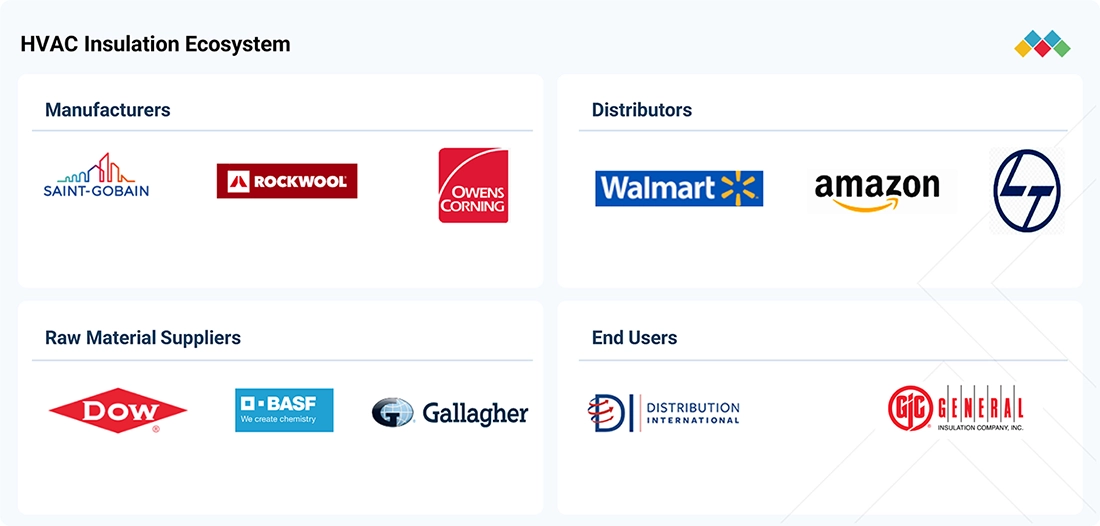
Logos and trademarks shown above are the property of their respective owners. Their use here is for informational and illustrative purposes only.
MARKET SEGMENTS
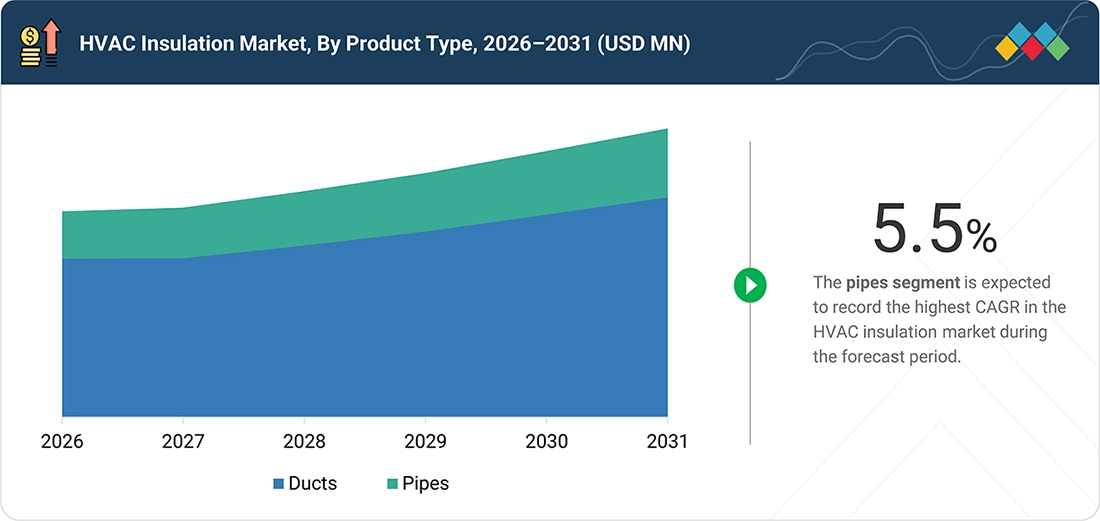
Source: Secondary Research, Interviews with Experts, MarketsandMarkets Analysis
HVAC Insulation Market, By Material Type
Mineral wool is emerging as one of the fastest-evolving products in the HVAC insulation market because of its improved thermal, sound, and fire-resistant properties. Made from natural or synthetic minerals such as basalt, slag, or glass, mineral wool offers excellent insulation, making it highly efficient at controlling temperature and reducing energy loss in HVAC systems. Its non-combustible nature and resistance to high temperatures make it particularly suited to commercial and industrial applications where fire prevention is the main concern. In addition to its thermal performance, mineral wool also has excellent soundproofing characteristics, making it ideal for buildings that require temperature regulation and noise reduction, such as schools, hospitals, and offices. The product resists moisture and does not support microbial growth, which improves indoor air quality and enhances long-term system performance. The growing demand for environmentally friendly and energy-efficient buildings, especially in regions with strict environmental regulations like Europe and North America, is also driving the adoption of mineral wool. As stringent building codes continue to emphasize energy conservation and fire resistance, mineral wool is gaining popularity.
HVAC Insulation Market, By End-use Industry
The residential end-use segment is expected to be the fastest-growing segment for the HVAC insulation market, driven by rising demand for energy-efficient housing, indoor comfort, and sustainable building practices. With increasing urbanization and housing development worldwide, particularly in emerging economies such as China and India, there is growing emphasis on optimizing HVAC performance in homes. As energy conservation becomes popular and energy prices rise, owners and builders are looking for safe & reliable insulation materials to comply with stringent regulatory requirements and green building ratings. Governments and organizations worldwide are also introducing mandates and incentive schemes to promote energy-efficient homes, further driving demand for HVAC insulation in residential applications. Also, insulating materials used in this market segment—like plastic foam, mineral wool, and fiberglass—are being designed for easy installation, long-term durability, and affordability. As smart homes and green construction become more widespread, the residential segment will continue to play a central role in driving the HVAC insulation industry.
HVAC Insulation Market, By Product Type
The ducts product segment is the largest segment of the HVAC insulation market because air-distributing ducts are used in nearly all commercial, residential, and industrial HVAC systems and require insulation over large areas. Duct insulation reduces heat gain/loss, helping conditioned air travel more efficiently between air-handling units and occupied areas. Additionally, duct insulation helps prevent surface condensation in cooling applications and humid environments, and it can also provide acoustic benefits during airflow and HVAC operation. Lastly, stricter energy-efficiency standards in construction and the development of commercial buildings, data processing centers, medical facilities, various industrial plants, and large residential projects are driving increased use of insulated ducting. On the whole, ducts have a much bigger area compared with other HVAC components and therefore the market for this type of product is in demand.
REGION
Asia Pacific to be fastest-growing region in HVAC insulation market during forecast period
Asia Pacific is the fastest-growing and largest market for HVAC insulation, driven by rapid urbanization, strong economic growth, and a growing construction industry in key economies. China, India, Japan, and South Korea are spearheading this growth, supported by rising infrastructure investment, growing demand for energy-efficient buildings, and government policies focused on sustainability and climate resilience. The region's population growth and expanding middle class are driving demand for residential and commercial buildings, each of which needs efficient HVAC systems to provide indoor comfort and energy efficiency. As awareness of energy conservation and sustainable building practices grows, insulation is becoming a necessary part of new buildings and retrofitting projects. Hot, humid weather in most areas of the region also increases the need for effective HVAC insulation to minimize cooling loads and improve system performance. Regulations & government policies encouraging energy conservation, coupled with incentives for green buildings, are further driving the use of HVAC insulation products. Growth & expansion in manufacturing, logistics, and data centers are also increasing the demand for HVAC insulation. With robust economic growth, a huge and expanding base of construction activity, and favorable policy environments, Asia Pacific will continue to be the leading force in the worldwide HVAC insulation market in the foreseeable future.
HVAC INSULATION MARKET: COMPANY EVALUATION MATRIX
Owens Corning (Star) is a prominent HVAC insulation company operating in the US. The company has an excellent portfolio of fiberglass-based HVAC solutions used across residential, commercial, and industrial sectors. The firm's HVAC insulation offerings include Owens Corning Fiberglass duct and equipment insulation, designed to maximize the thermal efficiency of HVAC systems by minimizing heat loss. Covestro AG (Emerging Leader), a German company, is strengthening its position in the HVAC Insulation market through its portfolio.
Source: Secondary Research, Interviews with Experts, MarketsandMarkets Analysis
KEY MARKET PLAYERS
- Owens Corning (US)
- Saint Gobain (France)
- Knauf Group (US)
- Kingspan Group (Ireland)
- Rockwool Group (Denmark)
- Armacell International SA (Germany)
- Johns Manville (US)
- Ursa Insulation SA (Spain)
- Huntsman Corporation (US)
- Covestro AG (Germany)
MARKET SCOPE
| REPORT METRIC | DETAILS |
|---|---|
| Market Size in 2025 (Value) | USD 7.06 Billion |
| Market Forecast in 2026 (Value) | USD 7.39 Billion |
| Market Forecast in 2031 (Value) | USD 9.59 Billion |
| Growth Rate | CAGR of 5.3% from 2026–2031 |
| Years Considered | 2023–2031 |
| Base Year | 2025 |
| Forecast Period | 2026–2031 |
| Units Considered | Value (USD Million/Billion), Volume (Kiloton) |
| Report Coverage | Revenue Forecast, Company Ranking, Competitive Landscape, Growth Factors, and Trends |
| Segments Covered |
|
| Regions Covered | North America, Asia Pacific, Europe, South America, and Middle East & Africa |
WHAT IS IN IT FOR YOU: HVAC INSULATION MARKET REPORT CONTENT GUIDE
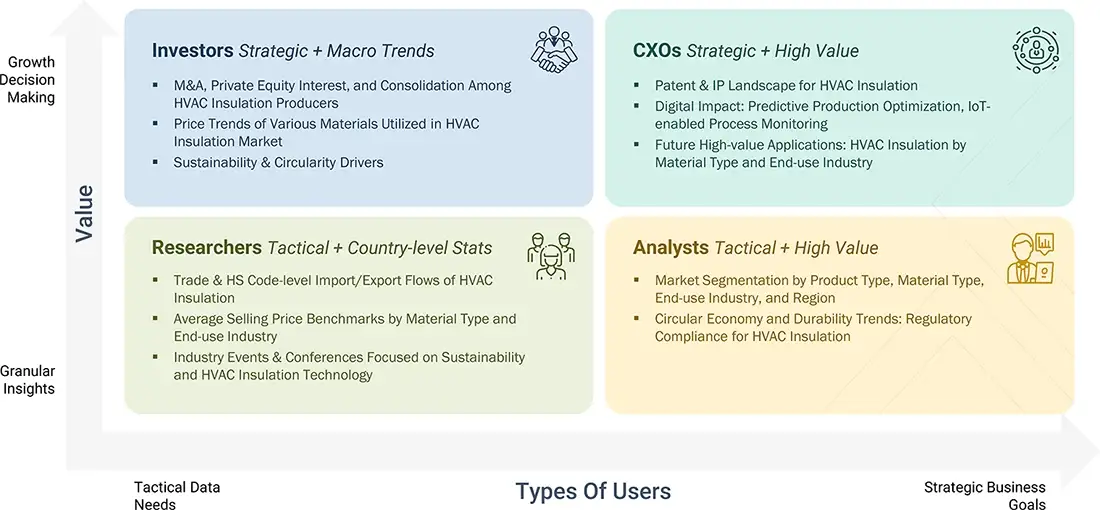
DELIVERED CUSTOMIZATIONS
We have successfully delivered the following deep-dive customizations:
| CLIENT REQUEST | CUSTOMIZATION DELIVERED | VALUE ADDS |
|---|---|---|
| Leading HVAC industrial supplier | Competitive profiling of key HVAC Insulation suppliers (financials, polymer portfolio, technologies, applications, and strategic developments) | Supported go-to-market strategy and competitive positioning |
| Country-level insights for high-growth regions |
|
Enabled prioritized market entry and resource allocation across high-growth geographies |
| Identify emerging HVAC Insulation technologies | Conducted technology scouting and feasibility analysis for glass wool, stone wool, and plastic foam | Supported investment decisions and innovation roadmaps for clients |
| Evaluate regulatory compliance for new market entry | Compiled country-level HVAC regulations | Ensured smoother market entry and minimized regulatory and compliance risks |
RECENT DEVELOPMENTS
- December 2024 : Rockwool announced an investment of over USD 100 million to add a new production line at its existing facility in Marshall County, Mississippi. This expansion aims to strengthen Rockwool’s position in the North American industrial insulation market, particularly to meet growing demand from the Gulf of Mexico’s process industries.
- March 2024 : Owens Corning announced the acquisition of Natural Polymers, LLC, a Cortland, Illinois-based manufacturer of spray polyurethane foam insulation for building and construction applications.
- August 2023 : Saint-Gobain acquired U.P. Twiga, a major Indian manufacturer of glass wool insulation. The deal strengthens ISOVER’s HVAC presence in India by expanding production capacity and distribution reach in a fast-growing market.
- August 2022 : Covestro expanded its Hebron, Ohio facility with a low triple-digit million-euro investment, significantly increasing its manufacturing capabilities. This expansion focuses on enhancing the production of customized polycarbonate compounds and blends to meet evolving customer and market needs.
- May 2022 : Rockwool North America began 460,000 sq. ft. of commercial production of stone wool insulation products at its US manufacturing facility in Jefferson County, West Virginia.
- February 2022 : Saint-Gobain acquired Rockwool India. Rockwool India operates two manufacturing facilities, one in Hyderabad and one in Silvassa, with a combined annual capacity of 50,000 MT.
Table of Contents
 Exclusive indicates content/data unique to MarketsandMarkets and not available with any competitors.
Methodology
The study involved four major activities for estimating the current size of the global HVAC insulation market. We conducted exhaustive secondary research to collect information on the market, the peer product market, and the parent product group market. Next, we validated these findings, assumptions, and sizes with industry experts across the HVAC insulation value chain through primary research. We used both top-down and bottom-up approaches to estimate the overall size of the HVAC insulation market. Next, the team used market breakdown and data triangulation to determine the size of different market segments and subsegments.
Secondary Research
In the secondary research process, the team referred to secondary sources such as Hoovers, Factiva, Bloomberg BusinessWeek, and Dun & Bradstreet to identify and collect information for this study on the HVAC insulation market. These secondary sources included annual reports, press releases & investor presentations of companies; white papers; certified publications; articles by recognized authors; regulatory bodies; trade directories; and databases.
Primary Research
The HVAC insulation market includes several supply-chain stakeholders, including raw material suppliers, distributors, end-product manufacturers, buyers, and regulatory organizations. The research team interviewed various primary sources from the market's supply and demand sides to gather qualitative and quantitative information. Primary participants on the demand side include key opinion leaders, executives, vice presidents, and CEOs of companies in the HVAC insulation market. Primary sources from the supply side include associations and institutions involved in the HVAC insulation market, key opinion leaders, and processing players.
The following is the breakdown of primary respondents:
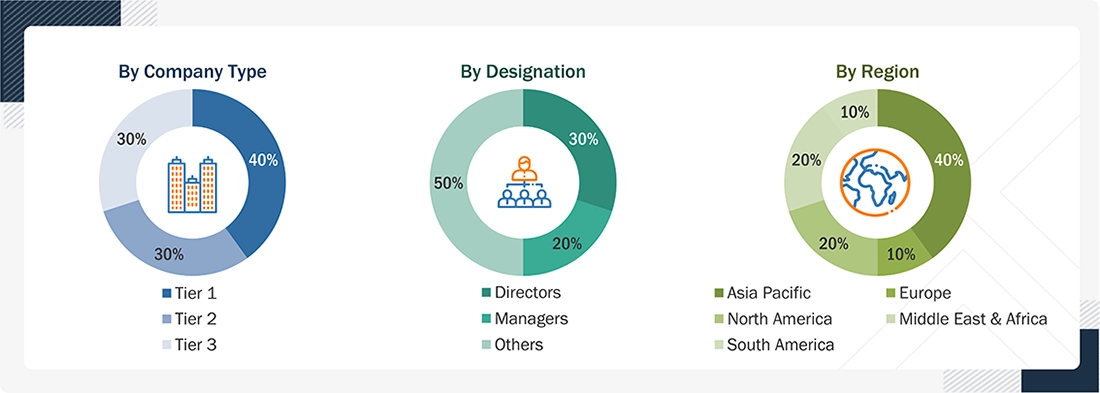
To know about the assumptions considered for the study, download the pdf brochure
Market Size Estimation
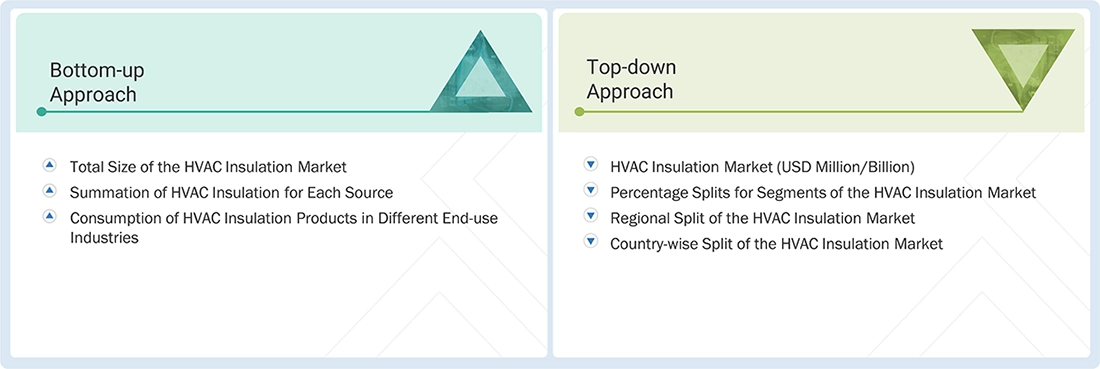
The bottom-up and top-down approaches were used to estimate the HVAC insulation market by material type, product type, end-use industry, and region. The research methodology used to calculate the market size includes the following steps:
- The research team identified key industry and market players through extensive secondary research.
- The team determined the industry’s supply chain and market size through primary and secondary research.
- The team determined all percentage shares, splits, and breakdowns using secondary sources and verified them through primary sources.
- All parameters affecting the markets covered in this research study were accounted for in detail, verified through primary research, and analyzed to obtain the final quantitative and qualitative data.
- The research included reviewing reports, reviews, and newsletters from top market players, along with extensive interviews with leaders such as directors and marketing executives to gather their opinions.
The following figure illustrates the overall market size estimation process employed for this study.
Data Triangulation
After estimating the overall size of the HVAC insulation market using the process described above, the total market was split into several segments and subsegments. Wherever applicable, we used data triangulation and market-breakdown procedures to complete the overall market-engineering process and arrive at precise statistics for all segments and subsegments. The data was triangulated by studying various factors and trends from both the demand and supply sides. The market size was also validated using both top-down and bottom-up approaches.
Market Definition
HVAC insulation refers to the range of materials and solutions used to insulate heating, ventilation, and air conditioning (HVAC) systems to prevent heat loss or gain, enhance energy efficiency, and maintain desired indoor temperatures. It includes insulation for ducts, pipes, chillers, and other system components to optimize thermal performance, reduce energy consumption, minimize noise, and ensure occupant comfort. The HVAC insulation market encompasses products such as fiberglass, mineral wool, foam, elastomeric materials, and eco-friendly alternatives, used across residential, commercial, and industrial sectors. This market is driven by rising energy costs, stringent building codes, sustainability goals, and growing demand for efficient, environmentally friendly building systems.
Key Stakeholders
- HVAC Insulation Manufacturers
- Raw Material Suppliers
- Regulatory Bodies & Government Agencies
- Distributors & Suppliers
- End-use Industries
- Associations & Industrial Bodies
- Market Research & Consulting Firms
Report Objectives
- To define, describe, and forecast the size of the HVAC insulation market in terms of value and volume
- To provide detailed information regarding the key factors influencing the growth of the market (drivers, restraints, opportunities, and challenges)
- To forecast the market size based on material type, product type, end-use industry, and region
- To forecast the market size for the five main regions—North America, Europe, Asia Pacific (APAC), South America, and the Middle East & Africa (MEA)—along with their key countries
- To strategically analyze micromarkets with respect to individual growth trends, prospects, and contributions to the total market
- To analyze the opportunities in the market for stakeholders and provide details of the competitive landscape for the market leaders
- To strategically profile leading players and comprehensively analyze their key developments such as product launches, expansions, and deals in the HVAC insulation market
- To strategically profile key players and comprehensively analyze their market shares and core competencies
- To study the impact of AI/Gen AI on the market under study, along with the macroeconomic outlook
Available customizations:
With the given market data, MarketsandMarkets offers customizations to meet companies' specific needs.
The following customization options are available for the report:
PRODUCT ANALYSIS
- Product matrix, which provides a detailed comparison of the market for different sources of HVAC insulation.
REGIONAL ANALYSIS
- Further breakdown of a country with respect to the HVAC insulation market.
COMPANY INFORMATION
- Detailed analysis and profiling of additional market players.
Key Questions Addressed by the Report
What primary factor is propelling the growth of the HVAC insulation market?
Rising growth in construction industry and industrial expansion are the primary factors propelling the HVAC insulation market.
How is the HVAC insulation market segmented?
This report segments the HVAC insulation market based on material type, product type, end-use industry, and region.
What are the major challenges in the HVAC insulation market?
Requirement of skilled workforce is the major challenge in the market.
What are the major opportunities in the HVAC insulation market?
Innovation in eco-friendly materials and growth in emerging regions are the major opportunities in the HVAC insulation market.
Which region has the largest demand?
Asia Pacific region stands out with the highest demand for HVAC insulation products.
Who are the major manufacturers of HVAC insulation products?
Major manufacturers in the HVAC insulation market are Owens Corning Corporation (US), Saint-Gobain SA (France), Knauf Group (US), Kingspan Group PLC (Ireland), Rockwool Group (Denmark), Armacell International SA (Germany), Johns Manville (US), Ursa Insulation S.A. (Spain), Huntsman Corporation (US), Covestro (Germany), L’ISOLANTE K-FLEX SPA (Italy), Union Foam SPA (Italy), Arabian Fiberglass Insulation Company Ltd. (Saudi Arabia).


Personalize This Research
- Triangulate with your Own Data
- Get Data as per your Format and Definition
- Gain a Deeper Dive on a Specific Application, Geography, Customer or Competitor
- Any level of Personalization
Let Us Help You
- What are the Known and Unknown Adjacencies Impacting the HVAC Insulation Market
- What will your New Revenue Sources be?
- Who will be your Top Customer; what will make them switch?
- Defend your Market Share or Win Competitors
- Get a Scorecard for Target Partners

Custom Market Research Services
We Will Customise The Research For You, In Case The Report Listed Above Does Not Meet With Your Requirements
Get 10% Free CustomisationTESTIMONIALS
We at Nissan Chemicals Corporation have been clients of MarketsandMarkets for more than a year now. We recently consulted MarketsandMarkets for a study, the team at MarketsandMarkets was extremely professional and organized. The business insights were very detailed and aligned well with our expectations that really helped us formulate the Business Plans and device new strategies for development themes. MarketsandMarkets offers a unique combination of expertise and dedicated engagement model. Their research findings have helped us in designing our Pricing Strategy which will make it easier for us to predict the future sales and profits for the next ten years. We look forward to working with MarketsandMarkets in the future.
VP of Strategy & New Business Development
Leading Specialty Chemical Company
The MarketsandMarkets Engagement Model, composed of both the Knowledge Store and advisory custom research, has greatly helped us in understanding our markets and making strategic decisions. The Knowledge Store is a fast way to allow everyone in our organization to understand more about most any market they are interested in. The ability to then get custom research done and get answers to specific strategic questions and market insight has been spectacular. The Markets and Markets team feel more like colleagues than vendors and their services have helped us change our culture where statements of things like growth opportunities and competitive position are always backed by industry research.

Rich Gibson,
Director, Corporate Strategy
Milliken & Company,
Leading Industrial Manufacturer of specialty chemical, floor covering, performance and protective textile materials, and healthcaremilliken.com
MarketsandMarkets is a trusted resource that helps us to better understand markets that are near-adjacencies-whether its technology, value chain or geography. Their Knowledge Store platform provides a dashboard of markets and their characteristics which is easy to use and saves us time.
Adam Shaw,
Market Development and Strategy Manager
AdvanSix Inc. USA,
An American Leader in Chemicalswww.advansix.com
The Knowledge Store from MarketsandMarkets is a valuable tool which has helped my team acquire greater insight in to the end markets that our business serves. This has enabled us to help our company build stronger strategies throughout our planning process.
TOSHIO KINOSHITA
Senior Chif Consultion Research & Consulting Division
Mitsubishi Chemical Research Corporation,
Leading Manufacturer of Chemical Productswww.mitsubishichem-res.co.jp/en/

We recently engaged with MarketsandMarkets for a study, the team not only clearly understood our business objectives but was also extremely professional in the way they handled the entire project. The study was efficiently conducted in a phase-wise manner, and the engagement model furnished us with high-quality business insights that far exceeded our expectations at each phase. We were especially happy that MarketsandMarkets could provide us with both, an English as well as a Japanese version of the study. A special thanks to the Analyst Team and Client Services Team, whose fluency in Japanese enhanced our comfort level, as we could converse with them in our preferred language.
Independent entrepreneurs
Arrow Precision
We approached MarketsandMarkets for study on Proppants Market, and their work exceeded our expectations. The study conducted was comprehensive and enabled us to view the market through the various dimensions. In addition, the team was extraordinarily responsive throughout the process and resolved our queries on time. I strongly recommend MarketsandMarkets and will certainly consider them for additional market assessments we will need in the future.
Global engineering company, Japan
Deputy Manager,
Strategic Planning OfficeThe high-quality insights shared by the MarketsandMarkets team helped us understand the pharmaceutical plant designers in a specific geography. It also captured the risks that we may likely face in communicating with our potential partners. The study would enable us identify partners, which would impact our future growth.
- China HVAC Insulation Market
- India HVAC Insulation Market
- Japan HVAC Insulation Market
- South Korea HVAC Insulation Market
- Germany HVAC Insulation Market
- France HVAC Insulation Market
- UK HVAC Insulation Market
- Italy HVAC Insulation Market
- Canada HVAC Insulation Market
- Mexico HVAC Insulation Market
- US HVAC Insulation Market
- Brazil HVAC Insulation Market
- Argentina HVAC Insulation Market
- South Africa HVAC Insulation Market
- Rest Of Europe HVAC Insulation Market
- Rest Of Asia Pacific HVAC Insulation Market
- GCC Countries HVAC Insulation Market
- –Rest Of The GCC Countries HVAC Insulation Market
- Rest Of South America HVAC Insulation Market






Growth opportunities and latent adjacency in HVAC Insulation Market