Industrial Robotics Market Size, Share & Analysis

Industrial Robotics Market by Robot (Articulated, SCARA, Cartesian, Parallel, Cylindrical, Collaborative), Payload (up to 16 kg, >16 to 60 kg, >60 to 225 kg, >225 kg), Offering (End Effectors, Controllers, Drive Units, Sensors) - Global Forecast to 2032




OVERVIEW
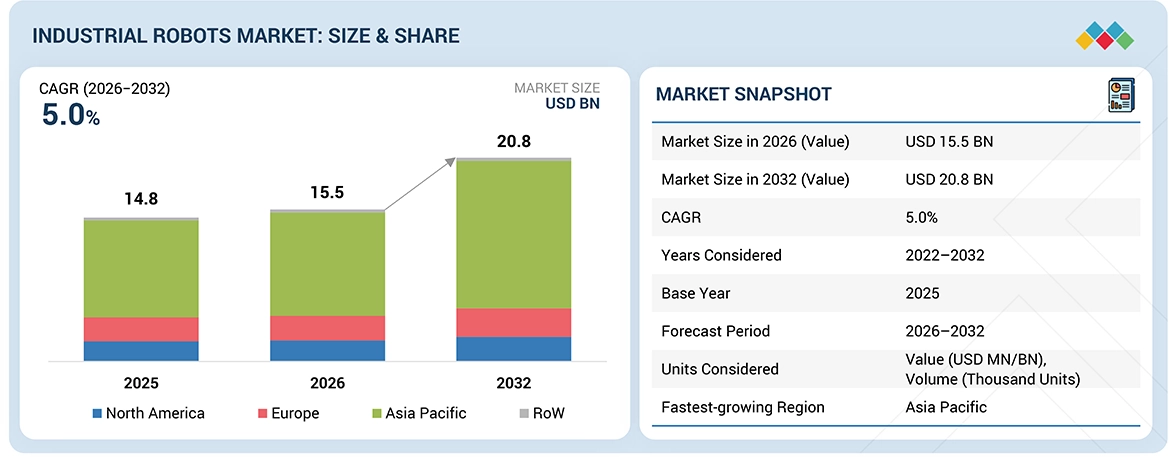
Source: Secondary Research, Interviews with Experts, MarketsandMarkets Analysis
The industrial robotics market is valued at USD 15.5 billion in 2026 and is projected to reach USD 20.8 billion by 2032, growing at a CAGR of 5.0% over the forecast period. The growing adoption of smart manufacturing, AI, and IIoT technologies across industries is driving demand for advanced industrial robotic systems. Additionally, the increasing need for automated production processes, high operational efficiency, and rising investments in factory automation are accelerating the adoption of industrial robotics solutions globally.China accounts for more than 50% of global industrial robot installations, making it the world's largest market, driven by rapid manufacturing automation, government initiatives, and investments in smart factories. Rising robot deployments across Asia-Pacific are expected to sustain long-term market growth as manufacturers increasingly adopt automation to improve productivity, quality, and operational efficiency
KEY TAKEAWAYS
-
By REGIONThe Asia Pacific industrial robots market accounted for 67.3% of revenue in 2025.
-
By ROBOT TYPEThe traditional robot segment in the industrial robots market accounted for the largest revenue share in 2025.
-
BY PAYLOADUp to 16 kg is expected to dominate the payload segment, with a share of 51.2% in 2025.
-
BY OFFERINGSoftware & programming segment is expected to register the highest CAGR of 3.9% during the forecast period.
-
BY APPLICATIONProcessing is projected to experience the highest growth rate in the industrial robot during the forecast period.
-
BY END USE INDUSTRYFood & beverages end user will grow at a high CAGR in the industrial robots market
-
COMPETITIVE LANDSCAPE (KEY PLAYERS)ABB (Switzerland), YASKAWA ELECTRIC CORPORATION (Japan), and FANUC Corporation (Japan), among others, were identified as the key players in the industrial robotics market due to their strong market share and extensive product footprint.
-
COMPETITIVE LANDSCAPE (STARTUPS/SMES)IRS Robotics (The Netherlands) and Rethinks Robotics (Germany), among others, have distinguished themselves among startups and SMEs by securing strong footholds in specialized niche areas, underscoring their potential as emerging leaders in the industrial robotics market.
The industrial robotics market is witnessing significant growth due to the increasing adoption of automation and smart manufacturing technologies across industries. Companies are increasingly deploying industrial robots for applications such as material handling, welding, assembly, packaging, and inspection to improve productivity, operational accuracy, and manufacturing efficiency. Additionally, growing investments in Industry 4.0, factory automation, and intelligent production systems, along with rising demand for high-speed and flexible manufacturing operations, are accelerating the expansion of the global industrial robotics market.
TRENDS & DISRUPTIONS IMPACTING CUSTOMERS' CUSTOMERS
The impact on consumers' businesses in the industrial robotics market stems from evolving customer needs and industry disruptions. Automotive, electrical & electronics, metal & machinery, plastics, rubbers & chemicals, food & beverages, precision engineering & optics, pharmaceuticals & cosmetics, and aerospace & defense are the primary end users of industrial robotics. A shift from traditional robots to cobots, AI robots, and smart robots directly influences the operational performance and revenues of end users. These impacts, in turn, drive demand in the industrial robotics market, shaping its growth trajectory.
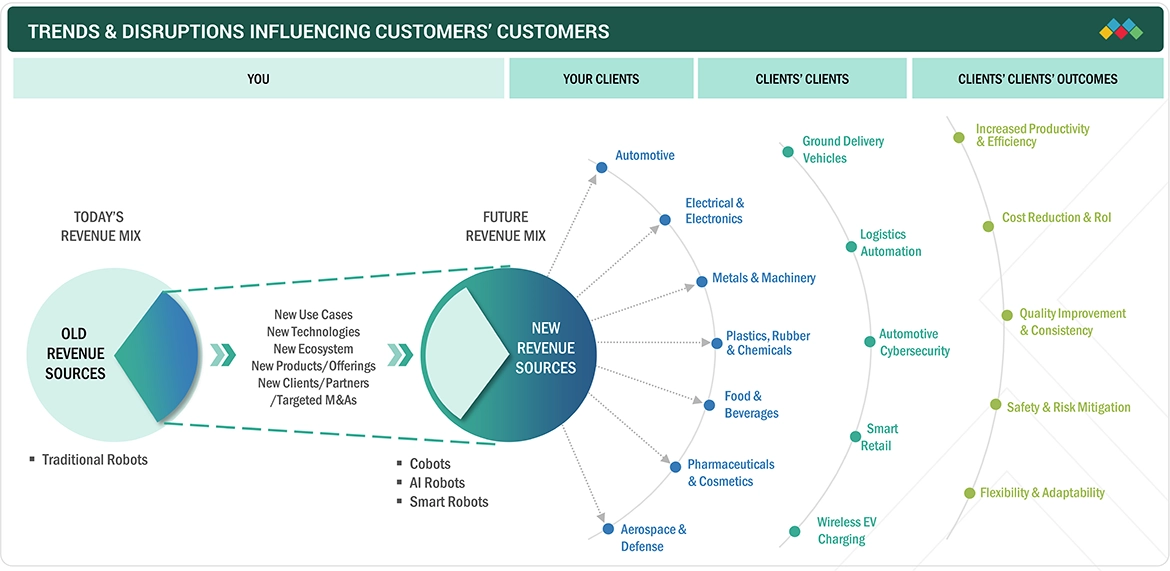
Source: Secondary Research, Interviews with Experts, MarketsandMarkets Analysis
MARKET DYNAMICS

Level
-
Mounting adoption of automation solutions to optimize manufacturing operations

-
Rapid advances in AI and digital automation technologies


Level
-
High costs of collaborative robots


Level
-
Emergence of Industry 5.0

-
Rise in automation in electronics manufacturing


Level
-
Complexities associated with integrating cobots into diverse workstations

-
Lack of standardization and interoperability issues

Source: Secondary Research, Interviews with Experts, MarketsandMarkets Analysis
Driver: Mounting adoption of automation solutions to optimize manufacturing operations
The increasing adoption of automation solutions is helping industries improve production efficiency, reduce labor dependence, and enhance operational accuracy across manufacturing facilities.
Restraint: High costs of collaborative robots
High installation, integration, and maintenance costs of collaborative robots limit their adoption, particularly among small and medium-sized enterprises.
Opportunity: Emergence of Industry 5.0
The emergence of Industry 5.0 is increasing demand for human-machine collaboration, intelligent automation, and flexible manufacturing systems across industries.
Challenge: Complexities associated with integrating cobots into diverse workstations
Integrating cobots into existing production environments is challenging due to compatibility issues, complex workflows, and varying workstation configurations.
INDUSTRIAL ROBOTICS MARKET SIZE, SHARE & ANALYSIS: COMMERCIAL USE CASES ACROSS INDUSTRIES
| COMPANY | USE CASE DESCRIPTION | BENEFITS |
|---|---|---|
 |
Deployment of high-speed handling robots in automotive body-shop lines for welding, material transfer, and precision assembly | Delivers ultra-high cycle time reliability | >99.99% uptime | Reduced takt time | Lower total cost of ownership |
 |
Use of articulated robots integrated into flexible manufacturing cells for EV battery module assembly and pack handling | Enables high-precision battery assembly | Reduces defect rates | Supports multi-product flexibility | Accelerates EV line ramp-up |
 |
Integration of ABB’s IRB series robots in electronics manufacturing for PCB assembly, micro-soldering, and component placement | Enhances throughput by 20–30% | Improves micro-assembly accuracy | Reduces human-error-driven quality deviations |
 |
Adoption of Motoman robots in metal fabrication for welding, cutting, and grinding operations in industrial machinery plants | Improves weld consistency | Reduces scrap | Increases operator safety | Enables continuous 24/7 production |
 |
Use of Mitsubishi’s SCARA & 6-axis robots in food & beverage packaging lines for pick-and-place and high-speed sorting | Boosts packaging line efficiency | Ensures hygiene compliance | Minimizes labor dependency | Improves output scalability |
Logos and trademarks shown above are the property of their respective owners. Their use here is for informational and illustrative purposes only.
MARKET ECOSYSTEM
The industrial robotics market ecosystem comprises hardware device & component manufacturers, software & solution providers, industrial robot manufacturers, system integrators, and end users. Hardware and component manufacturers provide sensors, controllers, drives, and semiconductor components that support robotic system performance and precision. Software and solution providers deliver robot programming, automation, and monitoring solutions to improve operational efficiency and intelligent manufacturing capabilities. Industrial robot manufacturers and system integrators develop and deploy robotic systems across industries, while end users from automotive, electronics, metal processing, logistics, and other sectors increasingly adopt industrial robots to enhance productivity, flexibility, and manufacturing automation.
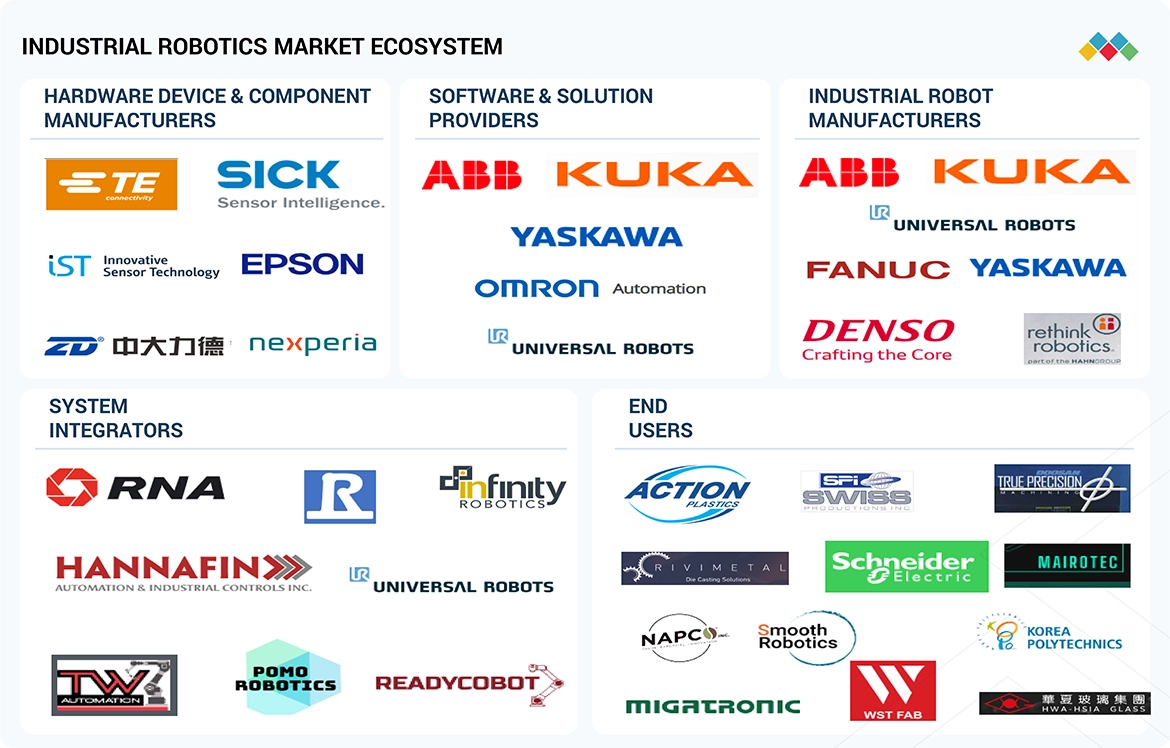
Logos and trademarks shown above are the property of their respective owners. Their use here is for informational and illustrative purposes only.
MARKET SEGMENTS
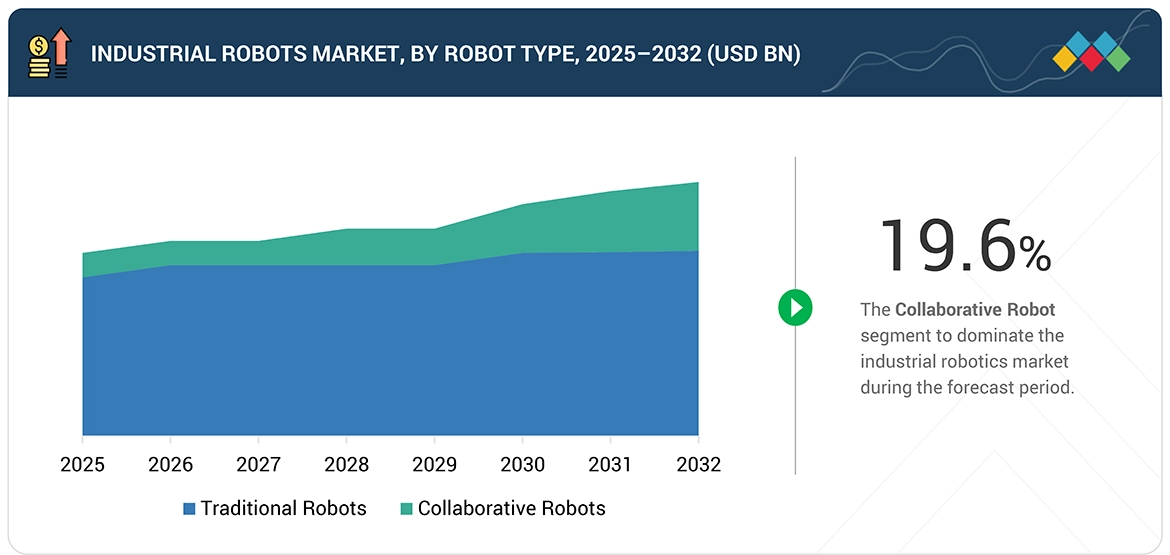
Source: Secondary Research, Interviews with Experts, MarketsandMarkets Analysis
Industrial Robots Market, By Robot Type
The collaborative robots (cobots) segment is expected to register the highest CAGR in the industrial robots market, owing to increasing demand for flexible automation, human-robot collaboration, and cost-effective deployment across manufacturing facilities. Collaborative robots enable safer operations by working alongside human operators without extensive safety barriers, making them highly suitable for small and medium-sized enterprises. Rising adoption across the automotive, electronics, logistics, and food & beverage industries, coupled with advancements in AI-enabled sensing and machine vision technologies, is further accelerating global demand for collaborative robots.
Industrial Robots Market, By Payload
The handling segment holds the largest share in the industrial robotics market due to the widespread use of robots for material handling, pick-and-place operations, palletizing, packaging, sorting, and warehouse automation processes. Growing demand for operational efficiency, reduced labor dependency, and higher throughput across automotive, e-commerce, electronics, and manufacturing sectors continues to drive adoption. The increasing implementation of smart factories and automated production lines is further strengthening the dominance of handling applications in the industrial robotics market.
Industrial Robots Market, By Application
The up to 16 kg payload segment accounts for the largest share in the industrial robotics market, owing to its extensive deployment across assembly, material handling, packaging, machine tending, and electronics manufacturing applications. Robots within this payload range offer an optimal balance of precision, flexibility, speed, and affordability, making them suitable for a broad range of industries. Rising adoption of compact automation solutions and increasing demand from automotive components, consumer electronics, and general manufacturing sectors are further contributing to the growth of the up to 16 kg payload segment.
REGION
Asia Pacific to be the fastest-growing region in the industrial roboticss market during the forecast period
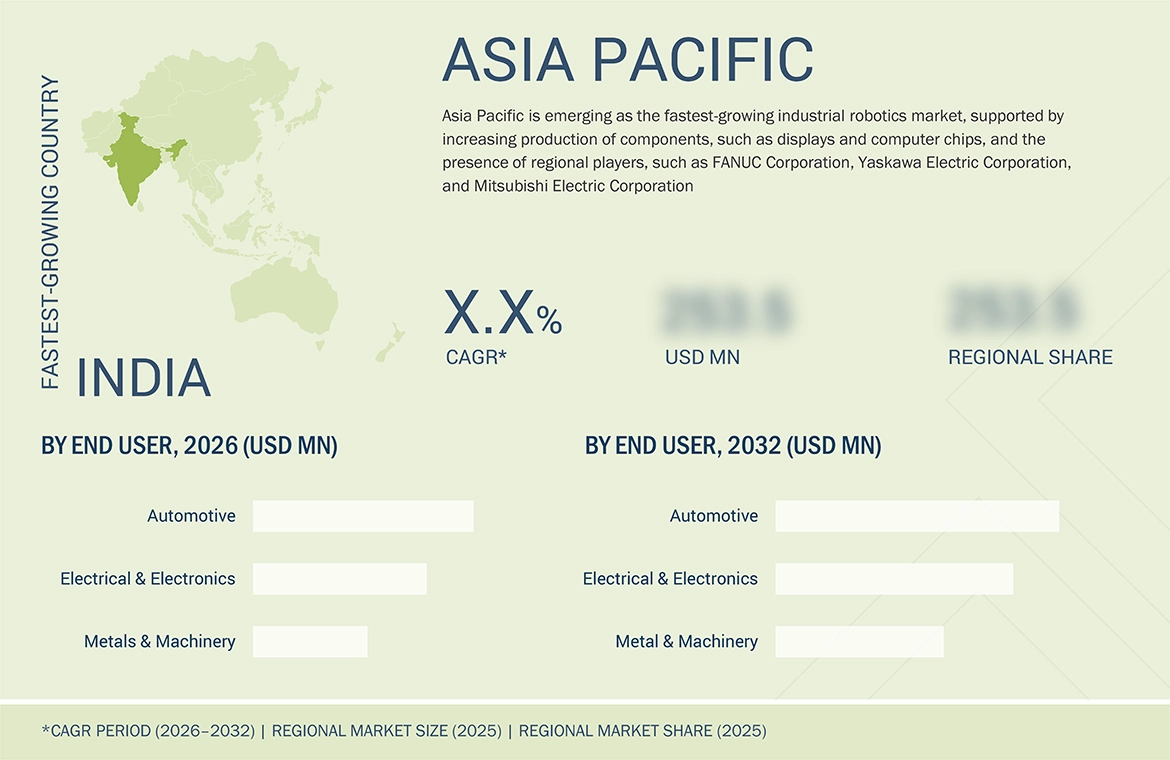
Asia Pacific is expected to register the highest CAGR in the industrial robotics market due to rising industrial automation, rapid manufacturing expansion, and increasing investments in smart factory infrastructure across countries such as China, India, and South Korea. The growing demand for high-speed, efficient production systems is further accelerating market growth across the region.
China is the largest industrial robotics market, accounting for over 50% of global robot installations. Growth is driven by smart manufacturing initiatives, rising automation, and strong demand from the automotive, electronics, and battery industries.
India industrial robotics market is expanding due to increasing automation in the automotive, electronics, pharmaceuticals, and manufacturing sectors. Government initiatives such as Make in India and PLI schemes are further supporting market growth.
South Korea is a global leader in industrial automation, supported by one of the highest robot densities worldwide. Strong demand from the semiconductor, electronics, automotive, and battery industries continues to drive industrial robot adoption.
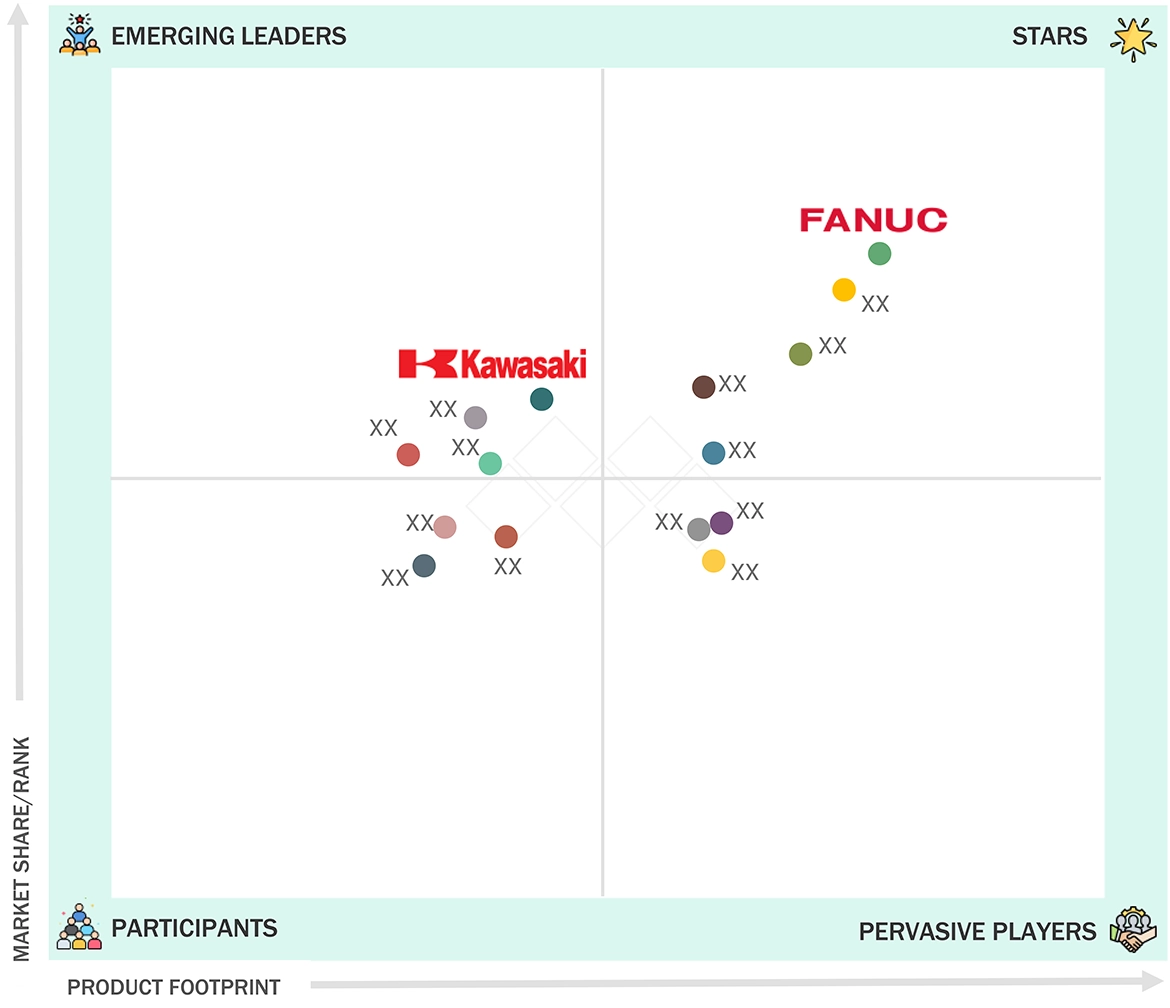
INDUSTRIAL ROBOTICS MARKET SIZE, SHARE & ANALYSIS: COMPANY EVALUATION MATRIX
In the industrial robotics market matrix, FANUC Corporation (Japan) is the star player with a strong market presence and a broad portfolio of industrial robots used across automotive, electronics, metal processing, and factory automation applications. Kawasaki Heavy Industries, Ltd.(Japan)(Emerging Player) is strengthening its position by expanding robotics capabilities and increasing the adoption of automation solutions across industrial manufacturing environments. While FANUC Corporation maintains leadership through its extensive global reach and advanced robotic technologies, Kawasaki Heavy Industries, Ltd. continues to expand its market presence with flexible and high-performance industrial robotic systems.
Source: Secondary Research, Interviews with Experts, MarketsandMarkets Analysis
KEY MARKET PLAYERS
- ABB
- YASKAWA ELECTRIC CORPORATION.
- FANUC
- KUKA SE & Co. KGaA
- Mitsubishi Electric India Pvt. Ltd
- Kawasaki Heavy Industries, Ltd.
- DENSO CORPORATION.
- Nachi-fujikoshi corp.
- Seiko Epson Corporation
- Dürr Group.
MARKET SCOPE
| REPORT METRIC | DETAILS |
|---|---|
| Market Size in 2025 (Value) | USD 14.80 Billion |
| Market Size in 2026 (Value) | USD 15.50 Billion |
| Market Forecast in 2032 (Value) | USD 20.80 Billion |
| CAGR | 5.0% |
| Years Considered | 2022–2032 |
| Base Year | 2025 |
| Forecast Period | 2026–2032 |
| Units Considered | Value (USD Billion/Million), Volume (Thousand Units) |
| Report Coverage | Revenue Forecast, Company Ranking, Competitive Landscape, Growth Factors, and Trends |
| Segments Covered |
|
| Regions Covered | North America, Europe, Asia Pacific and Rest of World |
WHAT IS IN IT FOR YOU: INDUSTRIAL ROBOTICS MARKET SIZE, SHARE & ANALYSIS REPORT CONTENT GUIDE
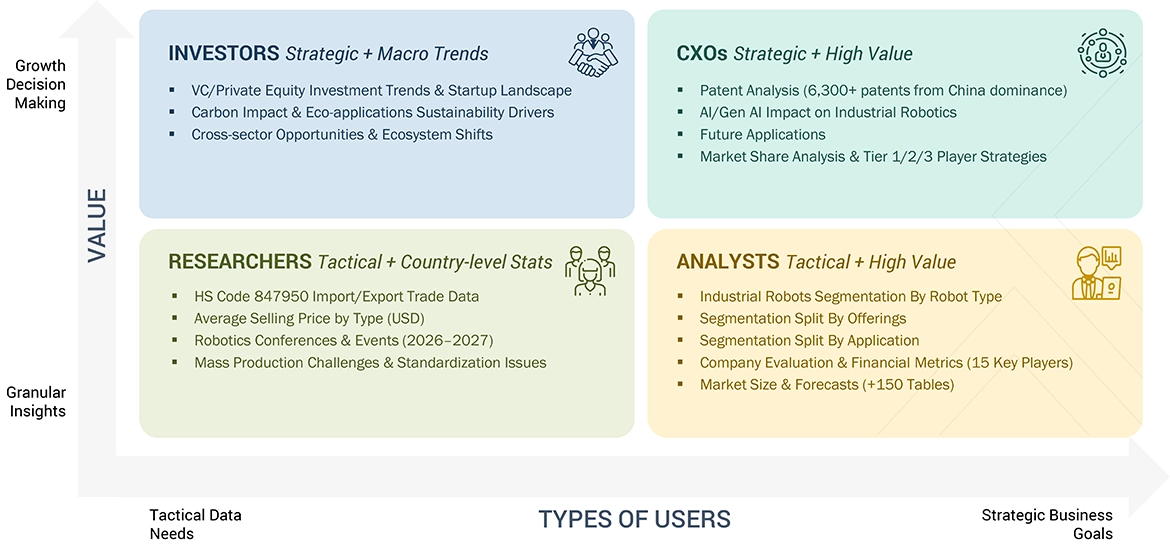
DELIVERED CUSTOMIZATIONS
We have successfully delivered the following deep-dive customizations:
| CLIENT REQUEST | CUSTOMIZATION DELIVERED | VALUE ADDS |
|---|---|---|
| Automotive Manufacturer | Competitive benchmarking of industrial robots for welding, assembly, painting, and material handling applications with production efficiency assessment |
|
| Electronics Manufacturer | Regional demand analysis for precision robotics, semiconductor automation, and high-speed assembly solutions with deployment strategy evaluation |
|
| Industrial Automation Integrator | Evaluation of robotic automation requirements across smart factories, collaborative robotics, and Industry 4.0 environments with implementation roadmap analysis |
|
| Robotics Component Manufacturer | Supply-demand analysis for robotic sensors, controllers, actuators, and servo motors with technology trend and procurement assessment |
|
RECENT DEVELOPMENTS
- August 2026 : WeTouch Technology partnered with Canop Robotics to advance industrial robotics touch interaction and intelligent manufacturing solutions. The collaboration integrates 8-inch industrial touch display modules into robotics control systems for parameter setting, status monitoring, fault alerts, and on-site operations. The partners have completed initial technical adaptation, with approximately US$1.47 million in contracts and product supply already executed. The cooperation is expected to generate approximately US$2.94 million in annual incremental revenue. The partnership expands WeTouch Technology’s role from touch-display components into robotics interaction, intelligent hardware, and industrial automation.
- August 2026 : EnPower and Echion Technologies partnered to develop U.S.-manufactured XNO® battery cells for North American industrial robotics. The cells combine Echion’s niobium-based anode technology with EnPower’s high-power cell design and domestic manufacturing capabilities. XNO® technology enables rapid charging, high-rate performance, long cycle life, and operation across a wide temperature range. The solution targets AGVs, industrial and humanoid robots, and other autonomous systems requiring high uptime and power. The partnership strengthens the North American robotics supply chain with high-performance, domestically manufactured battery technology.
- July 2026 : RoboticsTomorrow highlighted best practices for maintaining fibre-optic performance in industrial robotics, where contamination can disrupt high-speed data transmission. Proper cleaning tools, techniques, and procedures help protect fibre connectors from microscopic contaminants that can degrade signal quality. Regular inspection and preventive maintenance can reduce communication failures, downtime, and costly production interruptions. The approach supports reliable connectivity for increasingly data-intensive robotic systems and automated manufacturing environments. Fibre-optic maintenance is becoming increasingly important for sustaining high-performance, reliable, and connected industrial robotics.
- July 2026 : Roche partnered with ABB Robotics to bring Physical AI and advanced robotics into clinical laboratories. The collaboration will develop scalable automation for sample preparation, intra-logistics, and pathology slide handling. ABB Robotics will use autonomous mobile manipulators to move samples and materials between instruments, improving workflow efficiency and consistency. The solutions aim to reduce repetitive manual tasks, accelerate diagnostic processes, and address laboratory workforce pressures. The partnership strengthens Roche and ABB Robotics’ push toward connected, flexible, and intelligent laboratory automation.
- June 2026 : Sanctuary AI expanded its Physical AI strategy into industrial robotics, demonstrating production-ready performance on a complex wire-plugging task. Its system achieved a 99.5%+ task success rate with a 2.54-second cycle time, validated against live production benchmarks at a global Tier 1 automotive supplier. The technology is designed to operate across existing and next-generation robotic hardware, enabling flexible deployment. The milestone demonstrates Sanctuary AI’s Physical AI capability in high-speed, precision industrial applications. The company is positioning its technology to help manufacturers automate complex tasks, improve productivity, and address industrial labor challenges.
Table of Contents
 Exclusive indicates content/data unique to MarketsandMarkets and not available with any competitors.
Methodology
The research process for this technical, market-oriented, and commercial study of the industrial robotics market included the systematic collection, recording, and analysis of data on companies operating in the market. It involved the extensive use of secondary sources, directories, and databases (Factiva, Oanda) to identify and collect relevant information. In-depth interviews were conducted with primary respondents, including experts from core and related industries and preferred manufacturers, to obtain and verify critical qualitative and quantitative information and to assess the market's growth prospects. Key players in the industrial robotics market were identified through secondary research, and their market rankings were determined through primary and secondary research. This included studying the annual reports of top players and interviewing key industry experts, including CEOs, directors, and marketing executives.
Secondary Research
In the secondary research process, various secondary sources have been referred to for identifying and collecting information relevant to this study. Secondary sources include annual reports, press releases, and investor presentations of companies; white papers, certified publications, and articles from recognized authors; directories; and databases. Secondary research has been mainly conducted to obtain key information about the supply of the industry; a total pool of key players; segmentation of the market according to industry trends, geographic markets, and key developments from market- and technology-oriented perspectives.
Primary Research
In the primary research process, primary sources from the supply and demand sides have been interviewed to obtain qualitative and quantitative information for this report. Primary sources from the supply side include experts, such as CEOs, vice presidents, marketing directors, technology and innovation directors, subject-matter experts, consultants, and related key executives from major companies and organizations operating in the industrial robotics market.
After the complete market engineering process (market statistics calculations, market breakdown, market size estimations, market forecasting, and data triangulation), extensive primary research has been conducted to gather information and verify and validate the critical market numbers.
Several primary interviews have been conducted with experts from the demand and supply sides across four major regions—North America, Europe, Asia Pacific, and RoW. Approximately 25% of the primary interviews were conducted with the demand side and 75% with the supply side. This primary data has been collected through questionnaires, emails, and telephonic interviews.
BREAKDOWN OF PRIMARY INTERVIEW PARTICIPANTS
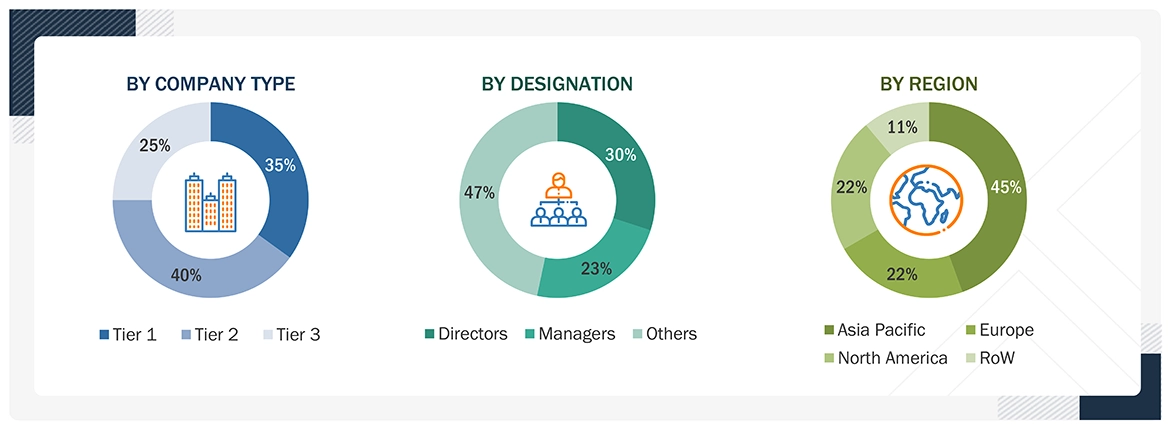
Notes: Tier 1 companies include market players with revenues above USD 500 million; tier 2 companies earn revenues between USD 100 million and USD 500 million; and tier 3 companies earn revenues up to USD 100 million.
Other designations include sales, marketing, and product managers.
To know about the assumptions considered for the study, download the pdf brochure
Market Size Estimation
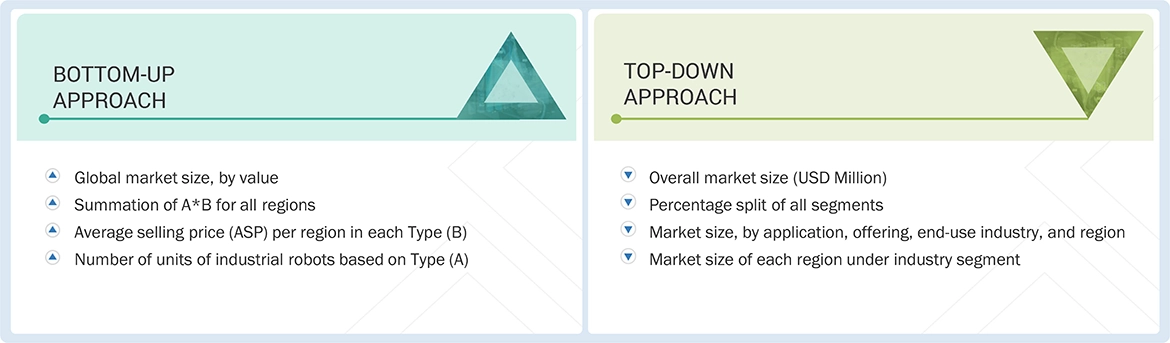
In the complete market estimation process, the top-down and bottom-up approaches have been used, along with several data triangulation methods, to estimate and forecast the size of the market and its segments and subsegments listed in the report. Extensive qualitative and quantitative analyses have been carried out on the complete market engineering process to list the key information/insights pertaining to the industrial robotics market.
Key players in the industrial robotics market have been identified through secondary research, and their rankings in the respective regions have been determined through primary and secondary research. This entire procedure involved the study of the annual and financial reports of top players and interviews with industry experts, such as chief executive officers, vice presidents, directors, and marketing executives, for quantitative and qualitative insights. All percentage shares, splits, and breakdowns have been determined using secondary sources and verified through primary sources. All parameters that affect the markets covered in this research study have been accounted for, viewed in extensive detail, verified through primary research, and analyzed to obtain the final quantitative and qualitative data. This data has been consolidated and enhanced with detailed inputs and analysis from MarketsandMarkets and presented in this report.
BOTTOM-UP APPROACH
- Identifying shipments of industrial robots at the country levels
- Analyzing the penetration of each country-level shipment through secondary and primary research
- Conducting multiple discussion sessions with key opinion leaders to understand the detailed adoption of industrial robots and their implementation by multiple end users; this helped analyze the breakdown of the scope of work carried out by each major company
- Verifying and cross-checking the estimates at every level with key opinion leaders, including CEOs, directors, and operations managers, and finally with MarketsandMarkets’ domain experts
- Studying various paid and unpaid sources of information, such as annual reports, press releases, white papers, and databases
TOP-DOWN APPROACH
- Focusing initially on the top-line investments and expenditures made in the industrial robots ecosystem, further splitting the key market areas based on robot type, payload, offering, application, end-use industry, and region, and listing the key developments
- Identifying all leading players in the industrial robots market based on type and end-use industry through secondary research and fully verifying them through brief discussions with industry experts
- Analyzing revenues, product mix, geographic presence, and key verticals served by all identified players to estimate and arrive at percentage splits for all key segments
- Discussing splits with industry experts to validate the information and identify key growth pockets across all key segments
- Breaking down the total market based on verified splits and key growth pockets across all segments
Industrial Robotics Market : Top-Down and Bottom-Up Approach
Data Triangulation
After arriving at the overall market size from the market size estimation process explained above, the total market has been split into several segments and subsegments. To complete the overall market engineering process and arrive at the exact statistics for all segments and subsegments, the market breakdown and data triangulation procedures have been employed, wherever applicable. The data has been triangulated by studying various factors and trends from both the demand and supply sides. Additionally, the market size has been validated using both top-down and bottom-up approaches.
Market Definition
According to the International Organization for Standardization (ISO 8373), an industrial robot is an automatically controlled, reprogrammable, multipurpose manipulator with three or more axes of motion that can be either fixed in place or mounted on a mobile platform for use in automation applications in an industrial environment.
According to the International Federation of Robotics (IFR), collaborative industrial robots perform tasks alongside workers in industrial settings. These robots comply with ISO 10218-1 and 10218-2, which specify requirements and guidelines for the inherently safe design, protective measures, and use of industrial robots. The industrial robotics market study primarily includes an analysis of industrial robots and brief market information on peripherals, software, and systems engineering required to develop a robotic cell.
Key Stakeholders
- Original equipment manufacturers (OEMs)
- Providers of technology solutions
- Research institutes
- Market research and consulting firms
- Forums, alliances, and associations
- Technology investors
- Governments and financial institutions
- Analysts and strategic business planners
- Existing and prospective end users
Report Objectives
- To describe and forecast the industrial robotics market, by robot type and offering, in terms of value
- To describe and forecast the industrial robotics market, by robot type, payload, application, and end-use industry, in terms of value and volume
- To describe and forecast the industrial robotics market size with respect to four main regions, namely, North America, Europe, Asia Pacific, and the Rest of the World (RoW), in terms of value and volume
- To provide detailed information regarding the drivers, restraints, opportunities, and challenges influencing the growth of the industrial robotics market
- To provide a detailed overview of the supply chain, ecosystem analysis, case study analysis, patent analysis, trade analysis, technology analysis, average selling price (ASP) analysis, AI/gen AI impact analysis, Porter’s Five Forces analysis, macroeconomic outlook, and regulations of the market of industrial robotics
- To strategically analyze micromarkets1 with respect to individual growth trends, prospects, and contributions to the overall market
- To analyze opportunities in the market for various stakeholders by identifying the high-growth segments of the market
- To benchmark the market players using the proprietary company evaluation matrix framework, which analyzes the market players on various parameters within the broad categories of business strategy excellence and strength of product portfolios
- To strategically profile the key players and comprehensively analyze their market positions in terms of ranking and core competencies, along with a detailed competitive landscape of the market
- To analyze competitive developments, such as acquisitions, product launches, partnerships, expansions, and collaborations, in the industrial robotics market
Available customizations:
With the given market data, MarketsandMarkets offers customizations according to the company’s specific needs. The following customization options are available for the report:
Company Information
-
Detailed analysis and profiling of additional market players (up to 7)


Personalize This Research
- Triangulate with your Own Data
- Get Data as per your Format and Definition
- Gain a Deeper Dive on a Specific Application, Geography, Customer or Competitor
- Any level of Personalization
Let Us Help You
- What are the Known and Unknown Adjacencies Impacting the Industrial Robotics Market
- What will your New Revenue Sources be?
- Who will be your Top Customer; what will make them switch?
- Defend your Market Share or Win Competitors
- Get a Scorecard for Target Partners

Custom Market Research Services
We Will Customise The Research For You, In Case The Report Listed Above Does Not Meet With Your Requirements
Get 10% Free CustomisationTESTIMONIALS

Tetsuya Ohhira
Business Development Manager-Technology Business
Nikon Corporation,
Leading Japanese MNC specializing in optics and imaging productswww.nikon.com
MarketsandMarkets™ response
is quick. Their attitude is flexible and positive. Analyst Insights are globally considered and
significant. Client Services quickly respond to our inquiry and demand. Their wide range of global
surveys help us make our strategic plan.
We hope Knowledge Store will be easier to search
for a report.
VP - Marketing & Business Development
Leading Provider of Process Control Solutions
We engaged with MarketsandMarkets on a study to perform an analysis and recommend a Go-To-Market strategy for metrology and process control in the semiconductor market. The study was tailored to our targets and needs with well-defined milestones. Our overall experience with the MarketsandMarkets team was very good throughout the project in all aspects including the analysis methodologies used, the quality and depth of primary and secondary data sets, the professionalism and flexibility of the team and the ability to meet the target schedule and milestones. We want to thank MarketsandMarkets team for a job well done.
- US Industrial Robotics Market
- Canada Industrial Robotics Market
- Mexico Industrial Robotics Market
- France Industrial Robotics Market
- Germany Industrial Robotics Market
- Italy Industrial Robotics Market
- Spain Industrial Robotics Market
- UK Industrial Robotics Market
- China Industrial Robotics Market
- India Industrial Robotics Market
- Japan Industrial Robotics Market
- South Korea Industrial Robotics Market
- Taiwan Industrial Robotics Market
- Thailand Industrial Robotics Market
- Rest Of Europe Industrial Robotics Market
- Rest Of Asia Pacific Industrial Robotics Market
Growth opportunities and latent adjacency in Industrial Robotics Market




Ravi
Nov, 2018
We need to know the industrial robots market size for electronics industry specifically. .
Shoko
Oct, 2017
Interested in a separate study on Philippines industrial robotics market (overall and by industry) and after-market of industrial robotics. Could you please quickly provide estimated fees and timeline for delivery?.
Peter
Jun, 2018
I am currently pursuing MBA and require some market data on industrial Robots for the Oceania region (Australia and New Zealand). Can you help me with this?.
Ivan
Dec, 2014
We are interested in all Market type above and we would like to know more about Robotic molds appertain in Cast Industry. .
Olga
Mar, 2016
Hello, I am interested in the warehousing, logistics and robotics. .
Koji
Apr, 2015
Please let me know if this report include 1.Value chain analysis data 2.Total system cost analysis including materials cost and production cost and units/parts cost by each types of industry robots?.
Nathalie
Mar, 2017
Hi, I'm interested in a sample or an overview of the report before purchase. I'm currently looking for forecasts and predictions in the different markets. .
Yannick
Sep, 2013
Specific interest is in Automotive robotics for different applications such as, dispensing, handling, welding, and fitting. Looking for market size of each application in this industry..
Assaf
Apr, 2017
I am interested in information regarding Milking Robotics and future trends. Last time where I have purchased a report from you -finally the report did not answer my needs and expectations. Before purchasing any new report on milking robots - I would like to get insights on and from the report that will assure me I am getting what I really expecting to get. Can you please provide me this info?.
Arun
Nov, 2016
Does your report have information on industrial robots and various end users of industrial robots?.
Arun
Nov, 2016
Does your report have quantitate information on industrial robots and various end users of industrial robots?.
Patrick
Jul, 2016
I have purchased the report and need to understand what is driving the growth rates for the components of the industrial robots..
Philippe
Jul, 2014
Would you have student version of the report, I am interested in a free version or a much reduced cost version as part of your corporate policy to support higher education?.
Christopher
Jul, 2019
I would like a free sample report to check weather this report fits with what I am looking for..
Luis
May, 2015
I'm doing a study to determine the size of robot market and how to define our strategy to address this market..
Peter
May, 2019
Does this report include information regarding the average unit price / cost for these robots and any unit cost data of their assembly components (gear drives, motors, sensors, structural elements, etc.)?.
MOO
May, 2016
Is there any scope for new entrants in the market? If yes please provide me few start-ups in the market along with entry barriers in the market. Information on best practices in the market will also be well appreciated..
Jeffrey
Mar, 2015
Can you provide me comparative qualitative and quantitate analysis of industrial robots? Make sure to provide unit shipments and ASP of industrial robots. Also provide me the top 10 vendors in the industrial robots market. .
R
Feb, 2019
Interested in purchasing the complete "Industrial Robotics Market". Please suggest me the complete process and any discount offer available. .