Marine Collagen Market

Marine Collagen Market by Type (Type I, Type III, Other types), Source (Fish Skin, Scales, Muscles, Fish Bones & Tendons, Other Sources), Marine Animal (Fish, Other Types), Application, Extraction Process, and Region - Global Forecast to 2031




OVERVIEW
Source: Secondary Research, Interviews with Experts, MarketsandMarkets Analysis
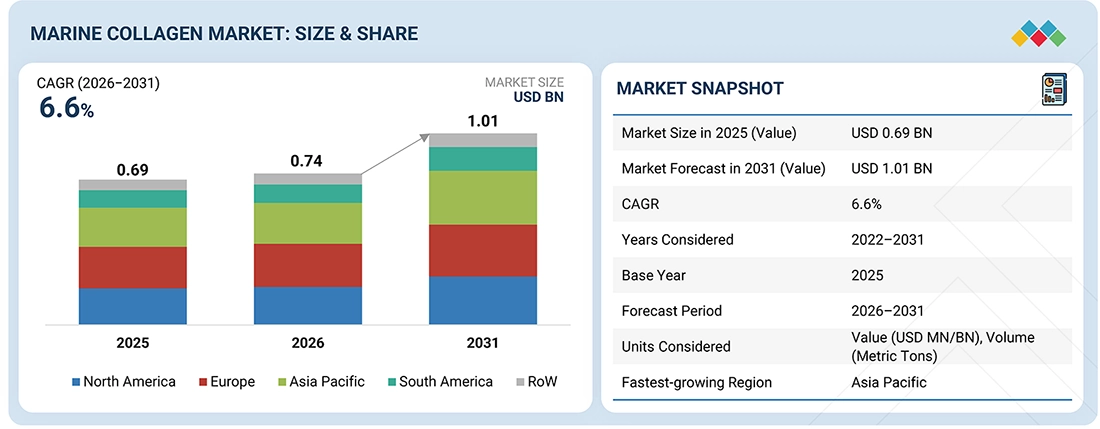
The marine collagen market size is projected to reach USD 1.01 billion by 2031 from USD 0.74 billion in 2026, growing at a CAGR of 6.6% during the forecast period. Surging market demand for bioavailable, sustainable, and functional protein ingredients with skin health, joint support, and well-being benefits in nutraceutical, food, and personal care products drives the market. Growing demand for beauty-from-within products, sustainable ingredients, functional nutrition, and clinically validated collagen formulations is also reshaping the market growth.
Marine Collagen Market Size and Forecast:
- Market Size Value in 2025: USD 0.69 Billion
- Market Size Value in 2026: USD 0.74 Billion
- Revenue Forecast in 2031: USD 1.01 Billion
- Growth Rate: CAGR of 6.6% from 2026 to 2031
- Forecast period: 2026–2031
- Asia Pacific is expected to record a CAGR of 7.4% during the forecast period.
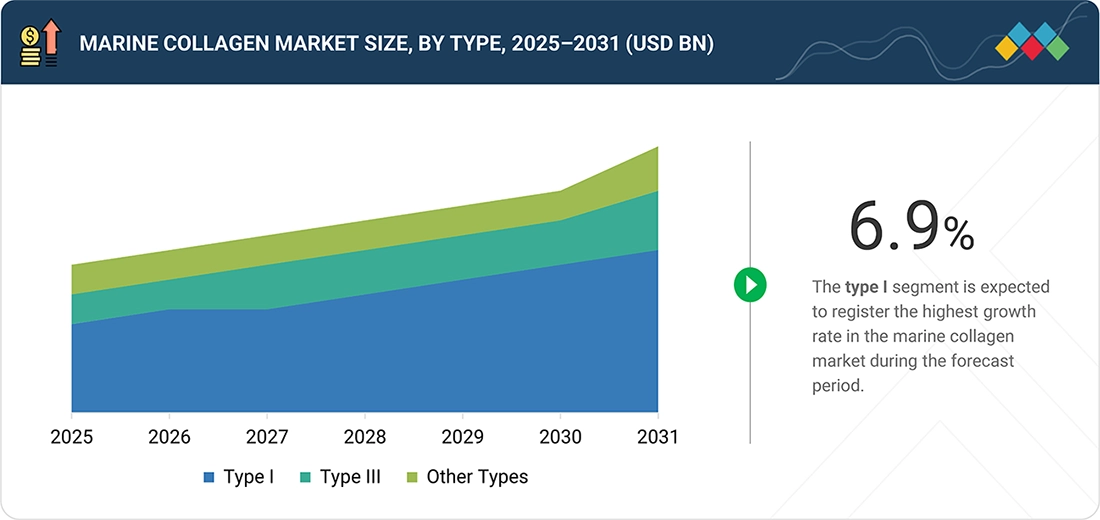
- The type I segment is projected to account for a 67.4% share of the marine collagen market in 2026.
Key Marine Collagen Market Trends and Insights
- By Type: The Type I Marine Collagen segment accounts for the largest share of the marine collagen market, driven by its high bioavailability and extensive use in dietary supplements, functional foods, nutraceuticals, and cosmetic formulations.
- Market Trends: Consumers are increasingly preferring sustainably sourced, clean-label, and marine-based collagen ingredients for beauty-from-within, healthy aging, and joint health applications. Continuous advancements in collagen extraction technologies are further improving product quality and expanding commercial applications.
- Market Drivers: Rising demand for collagen-based dietary supplements, growing consumer awareness of skin, bone, and joint health, increasing preference for marine-derived ingredients over bovine and porcine sources, expanding applications across food & beverages, pharmaceuticals, and personal care, and continuous product innovation are driving the growth of the marine collagen market.
- Future Opportunities: Significant opportunities are emerging from the increasing adoption of marine collagen peptides in functional foods and beverages, expanding demand for premium nutraceutical products, growing applications in regenerative medicine and biomedical research, rising consumption across emerging economies, and continued investments in sustainable marine ingredient processing technologies.
KEY TAKEAWAYS
-
By RegionBy region, Asia Pacific is expected to record a CAGR of 7.4% during the forecast period.
-
By TypeBy type, the type I segment is projected to account for a 67.4% share of the marine collagen market in 2026.
-
By ApplicationBy application, the cosmetics & personal care products segment is expected to lead the application segment, with a share of 32.7% in 2026.
-
By SourceBy source, the fish skin, scales & muscles segment is likely to hold the largest market share in 2031.
-
By FormBy form, the liquid segment is expected to experience the highest growth rate during the forecast period.
-
By Marine AnimalBy marine animal, the fish-based segment is expected to account for the largest share during the forecast period.
-
By Extraction ProcessBy extraction process, the enzymatic segment is expected to account for the largest market share during the forecast period.
-
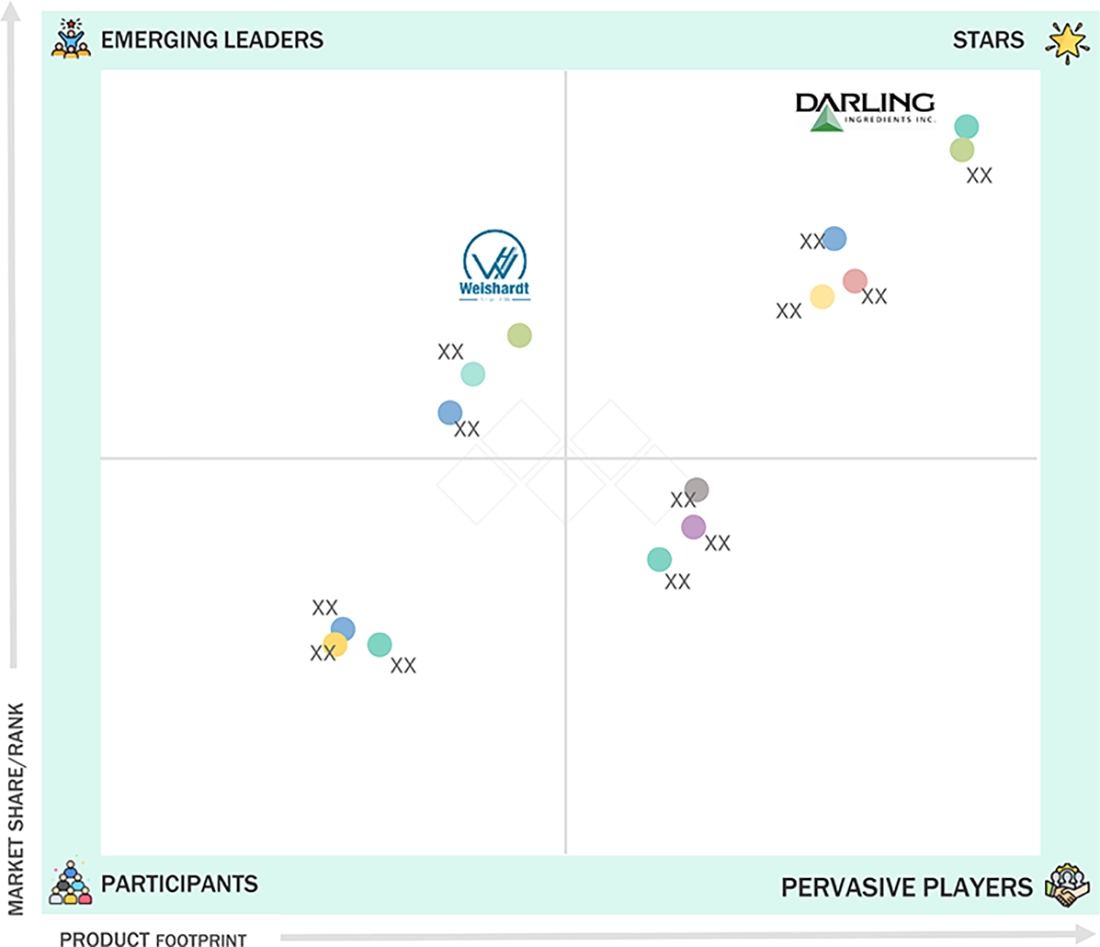
Competitive Landscape (Key Players)Ashland, Darling Ingredients, Weishardt, Nitta Gelatin, Inc, and Nippi Collagen Na Inc, were identified as some of the star players in the marine collagen market, given their strong market share and product footprint.
-
Competitive Landscape (Startups/SMEs)Ningbo Inno Pharmchem Co., Ltd., Jellagen, and Italgel S.R.L. have distinguished themselves among startups and SMEs by securing strong footholds in specialized niche areas, underscoring their potential as emerging market leaders.
The marine collagen market is growing steadily, with increasing demand for clean-label, high-quality ingredients sourced from sustainable marine sources, including fish skin, scales, and bone. Additionally, the growing demand for beauty-from-within, protein supplementation, and preventive health care products is further driving the market. Marine collagen has excellent bio-availability and formulation compatibility and is therefore ideal for use in dietary supplements, sports nutrition products, and cosmetics.
TRENDS & DISRUPTIONS IMPACTING CUSTOMERS' CUSTOMERS
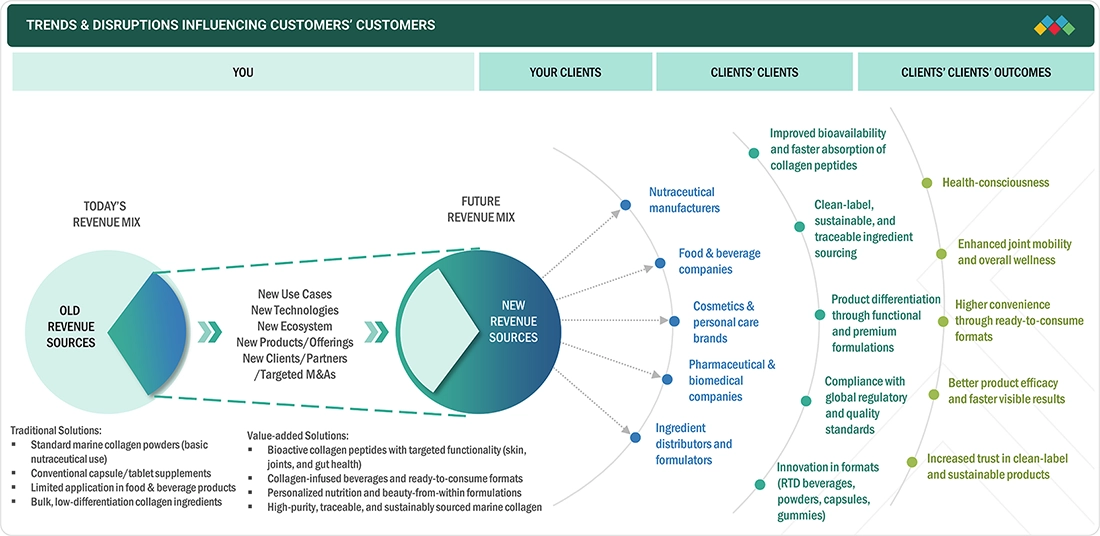
Impact on marine collagen market stakeholders flows from changing consumer preferences for health, wellness, and sustainability. Marine collagen manufacturers have downstream customers in the nutraceuticals, food & beverages, and cosmetics industries. Additionally, shifts in consumer preferences, such as growing uptake of collagen supplements and functional foods, affect the revenue of manufacturers of end products. This impacts the use of marine collagen. Moreover, variations in raw material supply and processing costs affect the value chain, which can also impact prices and margins for manufacturers and suppliers.
Source: Secondary Research, Interviews with Experts, MarketsandMarkets Analysis
MARKET DYNAMICS

Level
-
Mounting demand for beauty-from-within and anti-aging products

-
Increasing use of marine collagen in nutraceuticals and functional foods


Level
-
High cost of extraction and processing

-
Regulatory and quality compliance requirements


Level
-
Growing need for functional foods and protein supplements

-
Increasing sourcing of sustainable and marine ingredients


Level
-
Marine material supply variability

-
Supply chain and quality control problems

Source: Secondary Research, Interviews with Experts, MarketsandMarkets Analysis
Driver: Mounting demand for beauty-from-within and anti-aging products
The demand for marine collagen is strong due to the growing consumer interest in skin health, anti-aging, and well-being. Marine collagen peptides are popular in dietary supplements and functional foods for their high absorbability and efficacy in enhancing skin elasticity and joint health. Additionally, increasing focus on preventative health and growing consumer wealth is driving adoption worldwide.
Restraint: High cost of extraction and processing
Marine collagen extraction and purification processes, such as enzymatic hydrolysis and filtration, add to the cost of production. Scarcity of quality marine resources and strict quality control also increase costs. This could limit usage, especially in cost-sensitive markets.
Opportunity: Growing need for functional foods and protein supplements
The increasing popularity of functional foods, dietary supplements, and cosmetics offers a key growth opportunity for marine collagen producers. Growing innovation in formats like ready-to-drink products, gummies, and powder is broadening applications. Additionally, the growing awareness regarding marine and sustainable ingredients is opening up new market opportunities.
Challenge: Supply chain and quality control problems
The marine collagen industry relies on fish by-products, which can be seasonal and unpredictable. Supply may be affected by seasonal variability, environmental conditions, and regulatory constraints. Additionally, consistency, quality, and cost-effectiveness while sourcing are a challenge for manufacturers.
MARINE COLLAGEN MARKET: COMMERCIAL USE CASES ACROSS INDUSTRIES
| COMPANY | USE CASE DESCRIPTION | BENEFITS |
|---|---|---|
 |
Uses marine collagen peptides in nutritional products, including functional beverages, dietary supplements, and beauty-from-within formulations | Enhances product functionality | Supports skin health and wellness positioning | Enables premium product offerings with high consumer appeal |
 |
Incorporates marine collagen in dietary supplements and nutraceutical formulations targeting joint health, skin health, and overall wellness | Supports high-margin product development | Improves brand positioning in preventive healthcare | Ensures consistent product performance |
 |
Utilizes marine collagen in cosmetic and personal care products, such as anti-aging creams and ingestible beauty supplements | Improves skin hydration and elasticity | Strengthens anti-aging claims | Supports innovation in beauty-from-within solutions |
Logos and trademarks shown above are the property of their respective owners. Their use here is for informational and illustrative purposes only.
MARKET ECOSYSTEM
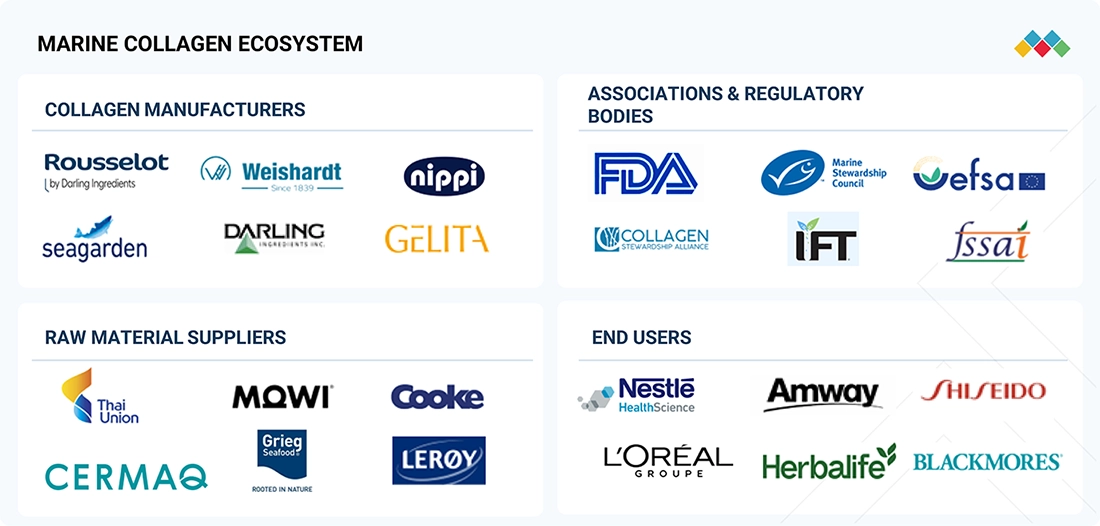
The marine collagen market ecosystem covers raw material providers (Thai Union, Mowi, Cooke, Grieg Seafood), collagen manufacturers (Rousselot, Gelita, Nitta Gelatin, Weishardt, Seagarden, Ashland), associations & regulatory bodies (FDA, EFSA, FSSAI, Marine Stewardship Council, Collagen Stewardship Alliance, IFT), and end users (Nestlé Health Science, Amway, L’Oréal, Blackmores, Shiseido). Marine raw materials, such as fish skin, scales, and bones, are processed into high-bioavailability collagen peptides for use in nutraceuticals, food & beverages, and personal care applications. End users drive demand for functional benefits, clean-label products, and sustainability, while collagen manufacturers deliver high-purity, application-specific collagen ingredients. Collaboration across the value chain is key to innovation and market growth.
Logos and trademarks shown above are the property of their respective owners. Their use here is for informational and illustrative purposes only.
MARKET SEGMENTS
Source: Secondary Research, Interviews with Experts, MarketsandMarkets Analysis
Marine Collagen Market, By Type
The type I collagen segment is expected to be the fastest-growing in the marine collagen market during the forecast period due to its high bioavailability and applications in nutraceuticals and cosmetology. Type I is the most prevalent form and is key to enhancing skin elasticity, hydration, and structure. It is widely incorporated into supplements, functional foods, and cosmetics, and is a major market segment. These benefits, along with its versatility in formulation, make it highly favored by companies.
Marine Collagen Market, By Application
The nutritional products segment is expected to dominate the marine collagen market during the forecast period, owing to the growing popularity of dietary supplements and functional foods. Collagen sourced from marine is commonly found in powders, capsules, and beverages for skin, joint, and general health. Additionally, the rising consumer interest in preventive health and increasing protein supplementation are driving this segment. Moreover, the development of collagen-fortified food and beverages is also contributing to the segmental growth.
Marine Collagen Market, By Form
The dry segment is expected to dominate the marine collagen market during the forecast period, owing to its stability, longer shelf life, and ease of handling and processing. It is extensively used in powder, capsule, and tablet form, and is particularly popular in nutraceuticals and functional foods. Additionally, it is stable throughout transportation and compatible with different processing technologies, further bolstering its market position.
REGION
Asia Pacific to be fastest-growing market for marine collagen during forecast period
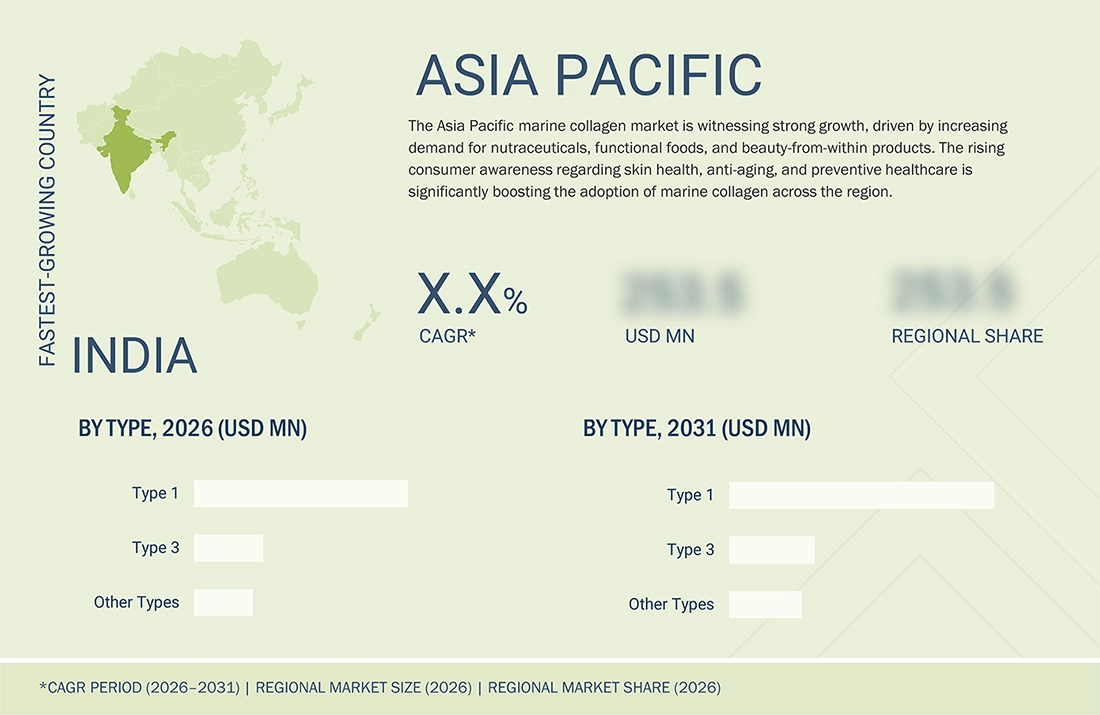
The Asia Pacific marine collagen market has experienced strong growth due to the rising demand for nutraceuticals, functional foods, and cosmetics. China, Japan, South Korea, and India are experiencing growth in demand as health consciousness and supplement consumption grow. The region has a rich marine resource and a mature seafood processing industry, offering consistent sources of collagen. Innovations in extraction processes, such as enzymatic and ultrasound extraction, allow manufacturers to extract superior-quality marine collagen. Regional players are also expanding their manufacturing capabilities and product development to meet local and international demand. Furthermore, the rise of beauty from within products and functional beverages is leading to increased use of marine collagen in a range of products.
MARINE COLLAGEN MARKET: COMPANY EVALUATION MATRIX
In the marine collagen market matrix, Darling Ingredients (Star) leads with a strong market presence and extensive product portfolio, driven by its vertically integrated operations and large-scale production of high-quality collagen peptides under its Rousselot brand. Weishardt Group (Emerging Leader) is gaining visibility with its specialized marine collagen solutions and focus on high-purity, application-specific peptides for nutraceutical and cosmetic applications, strengthening its position through innovation and sustainable sourcing. While Darling Ingredients dominates through scale and global supply capabilities, Weishardt Group shows significant potential to move toward the leaders’ quadrant as demand for premium, bioactive marine collagen continues to rise.
Source: Secondary Research, Interviews with Experts, MarketsandMarkets Analysis
KEY MARKET PLAYERS
- Darling Ingredients (US)
- Nippi, Inc. (Japan)
- Weishardt (France)
- Nitta Gelatin, Inc. (Japan)
- Vinh Hoan Corporation (Vietnam)
- Hainan Huayan Collagen Technology Co., Ltd. (China)
- GELITA (Germany)
- Seagarden AS (Norway)
- Tessenderlo Group (Belgium)
- ITALGEL S.p.A. (Italy)
MARKET SCOPE
| REPORT METRIC | DETAILS |
|---|---|
| Market Size in 2025 (Value) | USD 0.69 billion |
| Market Forecast in 2026 (Value) | USD 0.74 Billion |
| Market Forecast in 2031 (Value) | USD 1.01 Billion |
| Growth Rate | CAGR of 6.6% from 2026–2031 |
| Years Considered | 2022–2031 |
| Base Year | 2025 |
| Forecast Period | 2026–2031 |
| Units Considered | Value (USD Million/Billion), Volume (Metric Tons) |
| Report Coverage | Revenue forecast, company ranking, competitive landscape, growth factors, and trends |
| Segments Covered |
|
| Regions Covered | North America, Asia Pacific, Europe, South America, and RoW |
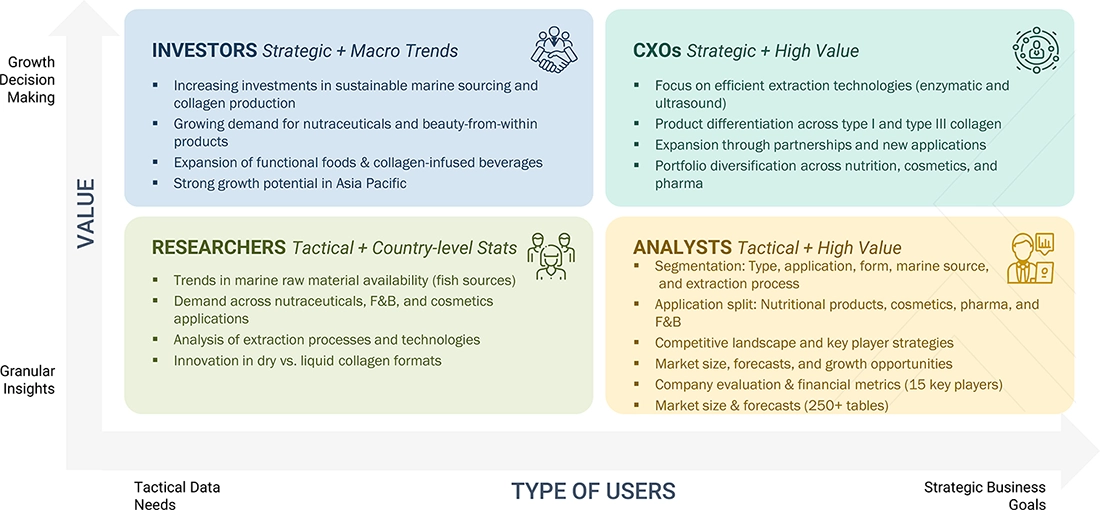
WHAT IS IN IT FOR YOU: MARINE COLLAGEN MARKET REPORT CONTENT GUIDE
DELIVERED CUSTOMIZATIONS
We have successfully delivered the following deep-dive customizations:
| CLIENT REQUEST | CUSTOMIZATION DELIVERED | VALUE ADDS |
|---|---|---|
| Marine Collagen Market |
|
|
| Collagen Ingredients Market (Extended Scope) |
|
|
| Functional & Nutritional Ingredients Market |
|
|
RECENT DEVELOPMENTS
- June 2025 : Ashland entered product development collaborations with personal care and nutraceutical brands to integrate marine collagen-based ingredients into next-generation beauty-from-within and skincare formulations.
- March 2025 : Seagarden invested in scaling up its marine-based ingredient processing capabilities, including collagen extraction from fish by-products, to strengthen its sustainable sourcing and supply chain operations.
- January 2025 : Darling Ingredients (Rousselot) introduced new marine collagen-based ingredient solutions for functional nutrition, targeting joint health and skin health applications in global markets.
Table of Contents
 Exclusive indicates content/data unique to MarketsandMarkets and not available with any competitors.
Methodology
This study employed two primary approaches to estimate the current size of the marine collagen market. Exhaustive secondary research was carried out to collect information on types, sources, forms, applications, marine animal types, extraction processes, and regions for the market. The next step involved validating these findings, assumptions, and sizing with industry experts across the value chain through primary research. The top-down and bottom-up approaches were employed to estimate the complete market size. Thereafter, data triangulation was used to estimate the market size of segments and subsegments.
Secondary Research
This research study used extensive secondary sources—directories and databases such as Bloomberg Businessweek and Factiva—to identify and collect information for a technical, market-oriented, and commercial market study. In the secondary research process, sources such as annual reports, press releases & investor presentations of companies, white papers, agriculture and marine collagen-related journals, certified publications, articles from recognized authors, directories, and databases were referred to identify and collect information. Secondary research was mainly used to obtain key information about the industry’s supply chain, the pool of key players, and market classification and segmentation based on the industry trends to the bottom-most level, regional markets, and key developments from market- and technology-oriented perspectives.
Primary Research
Extensive primary research was conducted after obtaining information regarding the marine collagen market scenario through secondary research. Several primary interviews were conducted with market experts from the demand and supply sides. Primary data was collected through questionnaires, emails, and telephonic interviews. The primary sources from the supply side included various industry experts, such as chief experience officers (CXOs), vice presidents (VPs), directors from business development, marketing, research, and development teams, and related key executives from distributors and key opinion leaders.
Primary interviews were conducted to gather insights, including market statistics, revenue data from products and services, market breakdowns, market size estimations, market forecasting, and data triangulation. Primary research helped understand the various trends related to types, sources, forms, applications, marine animal types, extraction processes, and regions. Stakeholders from the demand side, including distributors, importers, exporters, and end-use sectors such as nutraceuticals, food & beverages, personal care & cosmetics, and healthcare companies, were interviewed to understand the buyers’ perspective on suppliers, products, and the outlook for their business, which will impact the overall market.
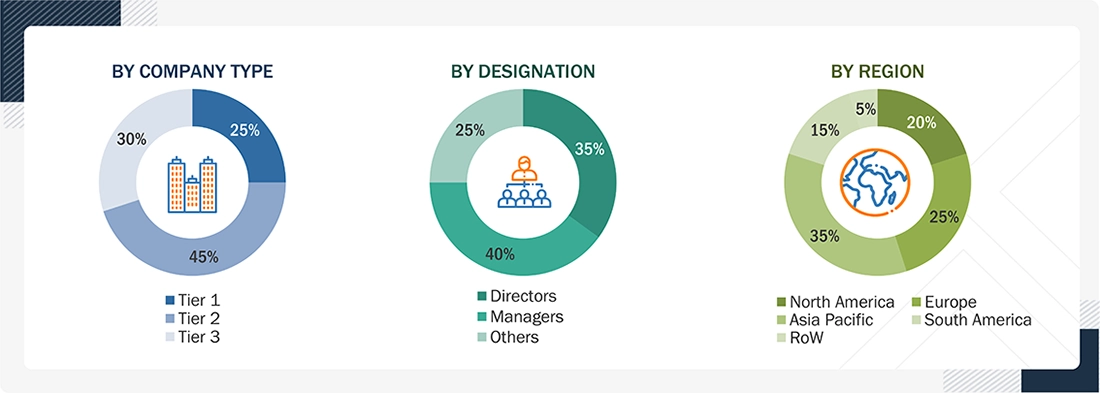
Breakdown of Primary Interviews
Notes:
- The three tiers of the companies are defined based on their total revenues in 2023 or 2024, based on the availability of financial data.
- Tier 1: Revenue > USD 1 billion; Tier 2: USD 100 million ≤ Revenue ≤ USD 1 billion; Tier 3: Revenue < USD 100 million
To know about the assumptions considered for the study, download the pdf brochure
Market Size Estimation
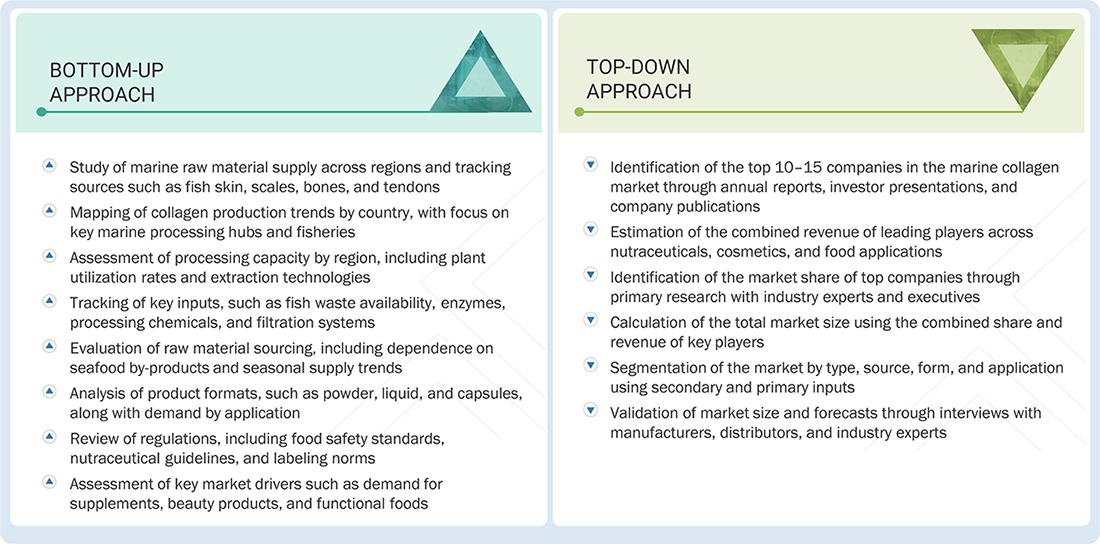
The top-down and bottom-up approaches were used to estimate and validate the total size of the marine collagen market. These approaches were also used extensively to determine the size of various subsegments in the market.
The research methodology used to estimate the market size includes the following details:
- The key players in the industry and the overall markets were identified through extensive secondary research.
- All shares, splits, and breakdowns were determined using secondary sources and verified through primary sources.
- All possible parameters that affect the market covered in this research study were accounted for, viewed in extensive detail, verified through primary research, and analyzed to obtain final quantitative and qualitative data.
- The research included the study of reports, reviews, and newsletters of top market players, along with extensive interviews for opinions from leaders, such as CEOs, directors, and marketing executives.
Marine Collagen Market : Top-Down and Bottom-Up Approach
Data Triangulation
After determining the overall market size from the estimation process explained above, the total market was split into several segments and subsegments. The data triangulation procedure was employed, wherever applicable, to estimate the overall marine collagen market and obtain precise statistics for all segments and subsegments. The data was triangulated by studying various factors and trends from the demand and supply sides. The market size was also validated using the top-down and bottom-up approaches.
Market Definition
Marine collagen is a pure, hypoallergenic protein derived primarily from the skin of marine animals such as fish. Fish skins are thoroughly cleaned and processed through acid and food-grade enzymatic hydrolysis to produce low-molecular-weight marine collagen peptides, enabling enhanced digestion and absorption. Rich in glycine, hydroxyproline, and proline, marine collagen is widely utilized in nutraceutical, pharmaceutical, medical, and cosmetic applications due to its potential benefits in supporting skin regeneration, bone health, wound healing, and healthy aging. Owing to its high collagen concentration and superior bioavailability, marine collagen is recognized as one of the most effective collagen sources for health, wellness, and beauty-related applications.
Key Stakeholders
- Supply-side Stakeholders: Marine collagen manufacturers, raw material suppliers (fisheries and seafood processing units), ingredient suppliers, distributors, importers, and exporters
- Ingredient and Product Manufacturers: Nutraceutical companies, functional food and beverage producers, and personal care and cosmetic manufacturers using marine collagen as a key ingredient
- Demand-side Stakeholders: Supplement consumers, food and beverage companies, cosmetic brands, healthcare providers, and pharmaceutical companies using collagen in medical and wellness applications
- Regulators: Food safety authorities, pharmaceutical regulators, and cosmetic regulatory bodies ensure compliance with product quality, safety, and labeling standards
-
Associations and Industry Bodies:
- US Food and Drug Administration (FDA)
- Food Safety and Standards Authority of India (FSSAI)
- European Food Safety Authority (EFSA)
- World Health Organization (WHO)
- National Oceanic and Atmospheric Administration (NOAA)
Report Objectives
- To determine and project the size of the marine collagen market based on type, source, form, application, marine animal, extraction process, and region
- To identify key growth opportunities by analyzing the largest and fastest-growing segments across regions
- To provide detailed insights on factors influencing market growth, including drivers, restraints, opportunities, and challenges
- To evaluate market opportunities for stakeholders and present the competitive landscape of leading players
- To analyze micro-markets with respect to individual growth trends, future potential, and their contribution to the overall market
- To identify and profile key companies operating in the marine collagen market
- To assess the competitive environment and highlight key strategies adopted by major players across regions
Available customizations:
With the given market data, MarketsandMarkets offers customizations according to company-specific scientific needs. The following customization options are available for the report:
Product Analysis
-
Product matrix, which gives a detailed comparison of the product portfolio of each company.
Segmental Analysis
-
With the given market data, MarketsandMarkets offers customizations according to company-specific scientific needs.
- Further breakdown of the rest of Europe by key countries
- Further breakdown of the rest of Asia Pacific by key countries
Key Questions Addressed by the Report
What is the projected size of the global marine collagen market?
The global marine collagen market is projected to grow from USD 1.14 billion in 2026 to USD 1.66 billion by 2031, at a CAGR of 6.7% during the forecast period. Growth is driven by rising demand for bioavailable, sustainable protein ingredients in nutraceuticals, functional foods, and personal care products.
Which segment holds the largest share of the marine collagen market?
The Type I collagen segment holds the largest share of the marine collagen market, accounting for 62% in 2026. Its high bioavailability and extensive use in dietary supplements, functional foods, cosmetics, and nutraceutical products contribute to its market leadership.
What are the key trends driving the marine collagen market?
Major trends include increasing demand for beauty-from-within products, growing adoption of clean-label and sustainable ingredients, rising popularity of collagen supplements for skin and joint health, and technological advancements in collagen extraction and processing.
Which region is expected to witness the highest growth in the marine collagen market?
Asia Pacific is expected to register the highest CAGR during the forecast period, supported by rising health awareness, expanding nutraceutical and cosmetics industries, abundant marine resources, and increasing demand for functional nutrition products.
Who are the key players in the marine collagen market?
Key companies operating in the marine collagen market include Ashland (US), Darling Ingredients (US), Weishardt (France), Nitta Gelatin, Inc. (Japan), Nippi Collagen Na Inc. (Japan), Jellagen (UK), Italgel S.R.L. (Italy), and Ningbo Inno Pharmchem Co., Ltd. (China). These companies are focused on product innovation, sustainable sourcing, and expanding their global market presence.


Personalize This Research
- Triangulate with your Own Data
- Get Data as per your Format and Definition
- Gain a Deeper Dive on a Specific Application, Geography, Customer or Competitor
- Any level of Personalization
Let Us Help You
- What are the Known and Unknown Adjacencies Impacting the Marine Collagen Market
- What will your New Revenue Sources be?
- Who will be your Top Customer; what will make them switch?
- Defend your Market Share or Win Competitors
- Get a Scorecard for Target Partners

Custom Market Research Services
We Will Customise The Research For You, In Case The Report Listed Above Does Not Meet With Your Requirements
Get 10% Free CustomisationTESTIMONIALS

Business Innovation Director
US Based Leading Agribusiness,
Food and Ingredients ManufacturerI highly appreciate the team's efficiency for a well conducted study that helped us clarify some blind spots in food and agricultural niche markets. Although compiling information for B2B markets is very difficult, the MnM team pulled out the task successfully. The quality of research, level of insights, and responsiveness of team were commendable.
- US Marine Collagen Market
- Canada Marine Collagen Market
- Mexico Marine Collagen Market
- Germany Marine Collagen Market
- UK Marine Collagen Market
- France Marine Collagen Market
- Italy Marine Collagen Market
- Spain Marine Collagen Market
- China Marine Collagen Market
- India Marine Collagen Market
- Japan Marine Collagen Market
- Brazil Marine Collagen Market
- Argentina Marine Collagen Market
- Rest Of Europe Marine Collagen Market
- Rest Of Asia Pacific Marine Collagen Market






Growth opportunities and latent adjacency in Marine Collagen Market