Metalized Flexible Packaging Market

Metalized Flexible Packaging Market by Material Type (Aluminum-Foil-Based Flexible Packaging, Metalized Film Packaging, and Others), Structure, Packaging Type (Pouches, Bags, and Others), End-Use Industry (Food and Others) & Region - Global Forecast to 2030




OVERVIEW

Source: Secondary Research, Interviews with Experts, MarketsandMarkets Analysis
The metalized flexible packaging market is projected to reach USD 16.47 billion by 2030 from USD 13.15 billion in 2025, at a CAGR of 4.6% from 2025 to 2030. Metalized flexible packaging market is set to experience exponential growth in the next few years, mainly due to the soaring demand for high-barrier, lightweight weight and aesthetically pleasing packaging formats in all major end-use segments. With the busy lifestyles of consumers, it is witnessed that they prefer easy-to-consume, ready-to-consume, and portable food and beverage products. Metalized films offer an excellent moisture, oxygen, light, and aroma barrier - they are used to package snacks, confectionery, dairy products, and ready-to-eat meals, where the freshness and shelf life of the products are important. The growing need for high-quality, single-serving, and resealable types of packaging in personal care, cosmetics, and pet food markets is promoting the market growth, as these markets depend on the appealing packaging to attract consumers and communicate the product quality. The online retail has transformed the packaging focus, placing more emphasis on durability, visual attractiveness, and protection of the product during transit.
KEY TAKEAWAYS
-
BY MATERIAL TYPEThe metalized flexible packaging market by material type includes aluminum-foil-based flexible packaging, metalized film flexible packaging, ALOX/SIOX PP, ALOX/SIOX PET, other ALOX/SIOX metalized film flexible packaging. Aluminum-foil-basd flexible packaging dominates the market in terms of demand, because of its ability to block out bacteria and moisture, it helps packaged food to last longer.
-
BY PACKAGING TYPEThe metalized flexible packaging market by packaging type includes bags, pouches, wraps, rollstocks, and other packaging types. Pouches is the largest segment due to rising popularity of ready-to-eat foods.
-
BY STRUCTUREThe metalized flexible packaging market by structure includes laminated structures, mono-extruded structures, and others. Mono-extruded structures is the fastest-growing segment because they are more cost-effective than laminated structures, as they require fewer materials and manufacturing steps.
-
BY END-USE INDUSTRYThe metalized flexible packaging market by end-use industry includes food, beverage, pharmaceuticals, personal care, pet food, and others end-use industries. Food is the largest segment due changing lifestyles and increasingly busy schedules among the working population.
-
BY REGIONAsia Pacific is expected to grow fastest, with a CAGR of 6.1%, driven by higher consumer spending and manufacturing of packaging materials in emerging economies such as India and China.
-
COMPETITIVE LANDSCAPEThe market is driven by strategicproduct launches, partnerships, acquisitions, agreements, and expansions from leading players such as Amcor plc (Switzerland), Huhtamäki Oyj (Finland), Mondi (UK), Sealed Air Corporation (US), and TOPPAN Holdings Inc. (Japan). These companies are launchng advanced metallized solutions tailored for sectors like food, personal care, and others, aiming to offer sustainable alternatives.
The increasing demand for sustainable packaging and material efficiency is positively influencing the market growth. Metalized flexible formats weigh less than rigid ones and use less material, making them sustainable from the perspectives of minimizing packaging waste and limiting carbon emissions in logistics. As the pharmaceutical industry grows against the backdrop of growing healthcare demand, the need for protective, unit-dose, and tamper-evident packaging is also exploding. The increasing demand for premium packaged products is being spurred by economic growth in emerging markets such as India, China, Brazil, and Southeast Asia, where disposable incomes are rising and the size of the middle-class populations is growing. This increasingly consumer base, whose preferences towards quality and presentation are also shifting, will continue to increase the use of metalized flexible packaging during the forecast period.
TRENDS & DISRUPTIONS IMPACTING CUSTOMERS' CUSTOMERS
Customers are influenced by the growing demand for sustainable materials and eye-catching designs. They also seek packaging solutions with better barrier and longer shelf life to meet changing lifestyle.

Source: Secondary Research, Interviews with Experts, MarketsandMarkets Analysis
MARKET DYNAMICS

Level
-
Increasing demand for pharmaceutical packaging

-
Rapid growth of e-commerce


Level
-
Fluctuating costs of raw materials

-
Stringent government policies and regulatory frameworks


Level
-
Increasing demand for packaging personal care and cosmetics products

-
Growing demand for pet food packaging


Level
-
Poor recyclability and environmental impact

-
Supply chain disruptions

Source: Secondary Research, Interviews with Experts, MarketsandMarkets Analysis
Driver: Rapid growth of e-commerce
The International Trade Administration, U.S. Department of Commerce, states that worldwide e-commerce sales in B2B companies have grown during the last ten years, and the market is expected to reach USD 36 trillion by 2026. Asia Pacific is likely to maintain its market share growth, and value growth of B2B e-commerce will also be contributed to by smaller and fast-developing markets like Latin America and the Middle East. Regarding the consumer side, the global B2C e-commerce market is expected to achieve USD 5.5 trillion by 2027, and the compound annual growth rate (CAGR) is robust at 14.4%. Industry figures also indicate that India will be the fastest-growing retail e-commerce market in the world between 2023 and 2027, with a CAGR of 14.1%, ahead of countries such as Argentina and Brazil, both of which are above 13.6% growth, compared to the estimated global retail e-commerce CAGR of 11.16% in the same period. This fast growth of e-commerce and direct-to-consumer (DTC) retailing formats is shifting the packaging priorities of brands, which creates significant opportunities for metalized flexible packaging
Restraint: Poor recyclability and environmental impact
Metalized flexible packaging is generally a thin aluminum layer laminated to plastic films of polyethylene terephthalate (PET), polyethylene (PE), or biaxially oriented polypropylene (BOPP). The combination produces multi-layer composite structures that have excellent barrier properties. Such laminates are quite challenging to recycle in a traditional recycling stream since splitting the metal foil, which is ultra-thin, and the plastic films involves using complex and expensive technologies that are neither sufficiently spread nor cost-efficient in most countries. Most of these packaging formats are thus disposed of in either landfills or incineration centers, which adds to the environmental waste management issues. This is a big issue in areas such as Europe, Canada, Japan, and certain parts of the US, where environmental policies regarding packaging waste are getting tougher and stricter.
Opportunity: Expansion of pet food packaging
The March 2025 Pet Food Report by the Institute for Feed Education & Research indicates that in 2024, sales of dog and cat food were estimated at USD 51.7 billion, and the volume of their production comprised 9.8 million tons of feed made using over 600 nutritious plant and animal ingredients. Pet food is one industry that has been on the upward trend over the past few years, mainly due to the shift in customer sentiment that finds pets becoming more considered as members of the family. This change has brought with it higher expectations about the nutritional value of pet food, but also regarding the safety, convenience, and aesthetic appearance of the packaging.
Challenge: Intensifying competition from emerging high-barrier alternatives
During the past few years, large packaging producers have ramped up the creation of recyclable mono-material films, bio-based laminates, and paper-based barrier solutions, which equal or even exceed the protective qualities of conventional metalized structures. These new developments provide similar barrier properties to moisture, oxygen, light, and aroma, and provide answers to recycling and environmental issues, a major shortcoming of conventional metalized laminates. As pressure mounts on consumers and regulatory agencies to reduce packaging waste and increase circularity, these sustainable packaging innovations are rapidly finding traction in the market. With consumer minds moving towards environmentally friendly brands and governments issuing more stringent guidelines on packaging waste management, the metalized flexible packaging industry has the challenge of protecting its market share and pumping money into R&D to update its product line.
Metalized Flexible Packaging Market: COMMERCIAL USE CASES ACROSS INDUSTRIES
| COMPANY | USE CASE DESCRIPTION | BENEFITS |
|---|---|---|
 |
Collaborated with Amcor and CAM-Partena to develop Formpack Dessiflex Ultra, a moisture-resistant blister packaging designed for antibiotic tablets in high-humidity climates. The format features a high-barrier lidding foil with integrated moisture-absorbing properties, eliminating the need for separate desiccant sachets. | Improved product protection and extended shelf life in tropical conditions. Enhanced patient convenience through easier dose tracking. Boosted production safety and efficiency by removing glass bottles. Strengthened product authenticity and reduced contamination risk. |
Logos and trademarks shown above are the property of their respective owners. Their use here is for informational and illustrative purposes only.
MARKET ECOSYSTEM
The ecosystem analysis section provides detailed information about companies working in the metalized flexible packaging market. The metalized flexible packaging market ecosystem includes raw material suppliers, metalizers, converters, brand owners, and end consumers. The basic components of this ecosystem are material suppliers, who offer the key inputs in terms of aluminum foil, metallized films, adhesives, resins, and printing inks. The important participants in this area are companies such as Uflex Ltd. and Jindal Poly Films that supply metalized films and foil substrates to converters and packaging manufacturers. These suppliers play a key role in the quality of materials, barrier characteristics, and adherence to various package structures. The next important part of the ecosystem is the packaging converters and manufacturers. They convert raw materials into different flexible packaging forms that include pouches, sachets, wraps, and blister packs.

Logos and trademarks shown above are the property of their respective owners. Their use here is for informational and illustrative purposes only.
MARKET SEGMENTS

Source: Secondary Research, Interviews with Experts, MarketsandMarkets Analysis
Metalized Flexible Packaging Market, By Material Type
Aluminum-foil-based flexible packaging is the largest segment in the metalized flexible packaging market because of its outstanding barrier characteristics and its adaptability in various industries. Aluminum foil creates a barrier to moisture, oxygen, light, and contaminants. Aluminum-foil-based packaging keeps products safe and intact, with outstanding spoilage, oxidation, and flavor loss resistance, during long shelf lives, and even under harsh storage and transport conditions. In the pharmaceutical sector, aluminum foil is widely used in blister packs because it provides an excellent barrier to light, gases, and moisture. Flexible packaging made of foil helps leading pharmaceutical brands to retain the strength and efficacy of their drugs. In the food industry, aluminum foil has been a popular option to pack confectionery, dairy products such as processed cheese, coffee, and ready meals, where retaining freshness and aroma is crucial.
Metalized Flexible Packaging Market, By Structure
Laminated structures are the largest structure of metalized flexible packaging because of their durability, barrier properties, which make them accessible to various end-use industries. Lamination can be made up of numerous layers of materials, typically metalized films, polyethylene, and others, which add performance attributes such as moisture resistance, oxygen barrier, puncture resistance, and printability. The laminate structure improves the barrier and provides a glossy, metallic appearance, which helps increase shelf appeal. Thus, laminated metalized packaging is useful in maintaining product freshness, shelf life, and protecting goods from external elements. The increasing demand for convenience, along with premium packaged products, has also contributed to the large-scale shift towards laminated structure in the flexible packaging market.
Metalized Flexible Packaging Market, By PackagingType
Pouches will emerge as the fastest-growing packaging type in the upcoming years in the metalized flexible packaging market. A major benefit of pouches is that they are lightweight, flexible, and space-saving, thus very effective in storage, shipping, and presentation. With the current quick-paced consumer world, particularly the development of e-commerce and busy-on-the-go lifestyles, there is a growing desire to have an easy-to-use, resealable, and convenient packaging format that can be used in not only single-use occasions, but also multi-use as well. Metalized pouches are well suited to fulfill these needs and provide excellent barrier protection against moisture, oxygen, and light, required to maintain the freshness, aroma, and shelf life of delicate products like snacks, coffee, tea, confectionery, nutraceuticals, pet food, and cosmetics. Pouches are versatile according to sizes, shapes, and other functionalities. Brands can differentiate pouches to meet the requirements of products and consumer desires, including adding resealable zippers and spouts, and handles.
Metalized Flexible Packaging Market, By End-use Industry
Food is the largest end-use industry of the metalized flexible packaging market because it is highly dependent on packaging solutions that can preserve product quality, extend product shelf life, and improve visual appeal aspects, in which metalized flexible packaging excels. It is an excellent moisture, oxygen, light, and external contaminant barrier packaging that is required to protect sensitive food products. Metalized films are also used to keep food items fresher, tastier, and more nutritious for longer, especially in modern-day supply chains in which products are frequently shipped long distances and stored in environments with fluctuating temperatures and humidity. The rise of the e-commerce food segment and the growing consumption of processed food products and gourmet food products have also added to the demand for metalized flexible packaging. The online food retail needs to package that both protects the product during shipping and creates a memorable unboxing experience, and the eye-pleasing looks and barrier performance of metalized packaging.
REGION
Asia Pacific to be fastest-growing market during forecast period
The metalized flexible packaging market in Asia Pacific will experience the fastest growth during the upcoming years. This is mostly due to the large population and the fast-growing population of the region, which has a growing middle class with higher and higher disposable incomes and changing consumption habits. The consumers in nations such as China, India, Indonesia, and Vietnam are increasingly taking an interest in packaged and branded items in food, drinks, personal care, makeup, as well as pharmaceuticals. This trend has increased the need for high-quality, eye-catching, and strong packaging formats, in which metalized flexible packaging offers many benefits. Its ability to provide excellent moisture, oxygen, and aroma barrier, along with the capability of boosting shelf appeal through glossy and metallic finishes, has made it a brand of choice among brands aiming at these ever more sophisticated consumers. The soaring development of e-commerce and direct-to-consumer (DTC) retailing formats in the area has also boosted the demand for lightweight, protective, and visually engaging packaging solutions.

Metalized Flexible Packaging Market: COMPANY EVALUATION MATRIX
In the metalized flexible packaging market matrix, Amcor plc (Star), leads the market. The company has positioned its focus on key regions such as North America, Europe, Asia Pacific, and South America. This strategic emphasis on diverse global markets shows Amcor's effort to establish a strong presence. JPFL Films Private Limited (Emerging Leader) is gaining traction. The company offers a wide range of flexible packaging films catering to various industries, including food and beverages, pharmaceuticals, and more

Source: Secondary Research, Interviews with Experts, MarketsandMarkets Analysis
KEY MARKET PLAYERS
MARKET SCOPE
| REPORT METRIC | DETAILS |
|---|---|
| Market Size in 2024 (Value) | USD 12.58 Billion |
| Market Forecast in 2030 (Value) | USD 16.47 Billion |
| Growth Rate | CAGR of 4.6% from 2025-2030 |
| Years Considered | 2021-2030 |
| Base Year | 2024 |
| Forecast Period | 2025-2030 |
| Units Considered | Value (USD Million), Volume (Kiloton) |
| Report Coverage | Revenue forecast, company ranking, competitive landscape, growth factors, and trends. |
| Segments Covered | By Material Type: Aluminum-foil-based flexible packaging, metalized film flexible packaging, ALOX/SIOX PP, ALOX/SIOX PET, other ALOX/SIOX metalized film flexible packaging By Packaging Type: Bags, pouches, wraps, rollstocks, and other packaging types By End-use Industry: Food, beverage, pharmaceuticals, personal care, pet food, and others end-use industries By Structure: Laminated structures, mono-extruded structures, and other structures |
| Regions Covered | North America, Asia Pacific, Europe, South America, the Middle East & Africa |
WHAT IS IN IT FOR YOU: Metalized Flexible Packaging Market REPORT CONTENT GUIDE

DELIVERED CUSTOMIZATIONS
We have successfully delivered the following deep-dive customizations:
| CLIENT REQUEST | CUSTOMIZATION DELIVERED | VALUE ADDS |
|---|---|---|
| APAC-based Metalized Flexible Packging Market | Detailed company profiles of metalized flexible packaging competitors (financials, product portfolio, production capacity) End-use industry mapping (food, beverage, pharmaceutical, pet food, personal care, others) Policy & regulation analysis | Identified & profiled 20+ metalized flexible packaging producers across APAC Mapped demand trends across high-growth segments (food, pharmaceutical, pet food) |
RECENT DEVELOPMENTS
- April 2025 : Mondi Plc acquired the Western European assets of Schumacher Packaging, enhancing its product portfolio, production capacity, and innovation capabilities to serve better customers seeking high-performance, sustainable packaging solutions at scale.
- April 2025 : TOPPAN Holdings Inc. completed the acquisition of the Thermoformed & Flexibles Packaging (TFP) business from Sonoco Products Company.
- November 2024 : Mondi Plc announced the launch of its new extrusion line at Mondi Coating Šteti in the Czech Republic, representing another step in the Group’s commitment to helping customers transition to sustainable packaging solutions.
Table of Contents
 Exclusive indicates content/data unique to MarketsandMarkets and not available with any competitors.
Methodology
The study involved four major activities to estimate the current size of the global metalized flexible packaging market. Exhaustive secondary research was conducted to gather information on the market, the peer product market, and the parent product group market. The next step was to validate these findings, assumptions, and sizes with industry experts across the value chain of metalized flexible packaging through primary research. Both top-down and bottom-up approaches were used to estimate the overall size of the metalized flexible packaging market. Following that, market breakdown and data triangulation procedures were employed to determine the size of different segments of the market.
Secondary Research
The market for companies offering metalized flexible packaging is derived from secondary data available through paid and unpaid sources, analyzing the product portfolios of major companies in the ecosystem and evaluating their performance and quality. Various secondary sources, such as Business Standard, Bloomberg, World Bank, and Factiva, were referenced to identify and gather information for this study on the metalized flexible packaging market. In the secondary research process, multiple secondary sources were consulted to collect relevant information related to the study. These sources included annual reports, press releases, and investor presentations of metalized flexible packaging vendors, forums, certified publications, and whitepapers. The secondary research was used to obtain crucial information on the industry’s value chain, the total pool of key players, market classification, and segmentation from the market and technology-oriented perspectives.
Primary Research
In the primary research process, various primary sources from both the supply and demand sides were interviewed to obtain qualitative and quantitative information for this report. The primary sources from the supply side included industry experts such as Chief Executive Officers (CEOs), Vice Presidents (VPs), marketing directors, technology and innovation directors, and other key executives from several prominent companies and organizations operating in the metalized flexible packaging market. After completing the market engineering process, which involved calculations for market statistics, market breakdown, market size estimations, market forecasting, and data triangulation, extensive primary research was conducted to gather information and verify the critical numbers obtained. Additional primary research was also carried out to identify the segmentation types, industry trends, competitive landscape of metalized flexible packaging offered by various market players, and key market dynamics such as drivers, restraints, opportunities, challenges, industry trends, and key player strategies. Throughout the market engineering process, both top-down and bottom-up approaches, along with several data triangulation methods, were employed for market estimation and forecasting across the overall market segments and subsegments listed in this report. Comprehensive qualitative and quantitative analysis was conducted during the market engineering process to compile the key insights and information throughout the report.
The following is the breakdown of primary respondents:
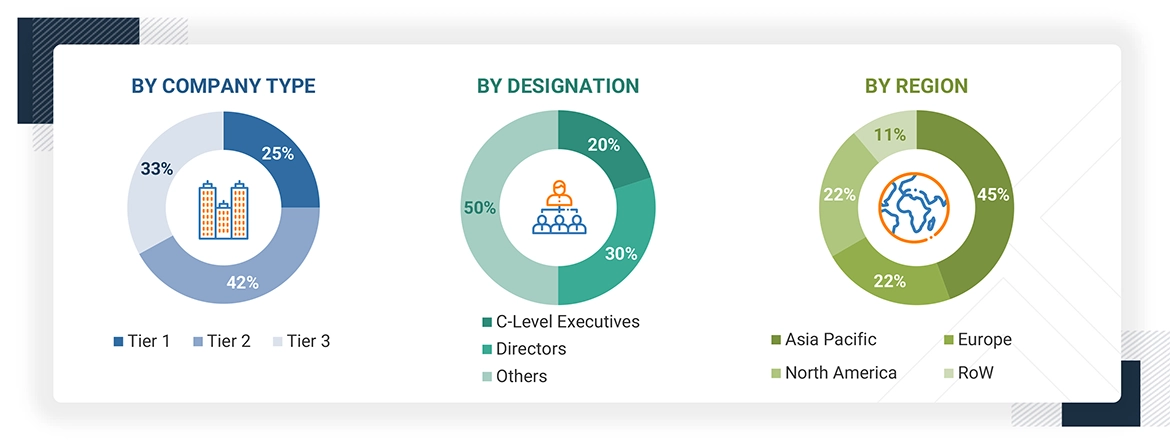
Notes: Other designations include sales, marketing, and product managers.
Tier 1: >USD 1 Billion; Tier 2: USD 500 million–1 Billion; and Tier 3: < USD 500 million.
To know about the assumptions considered for the study, download the pdf brochure
Market Size Estimation
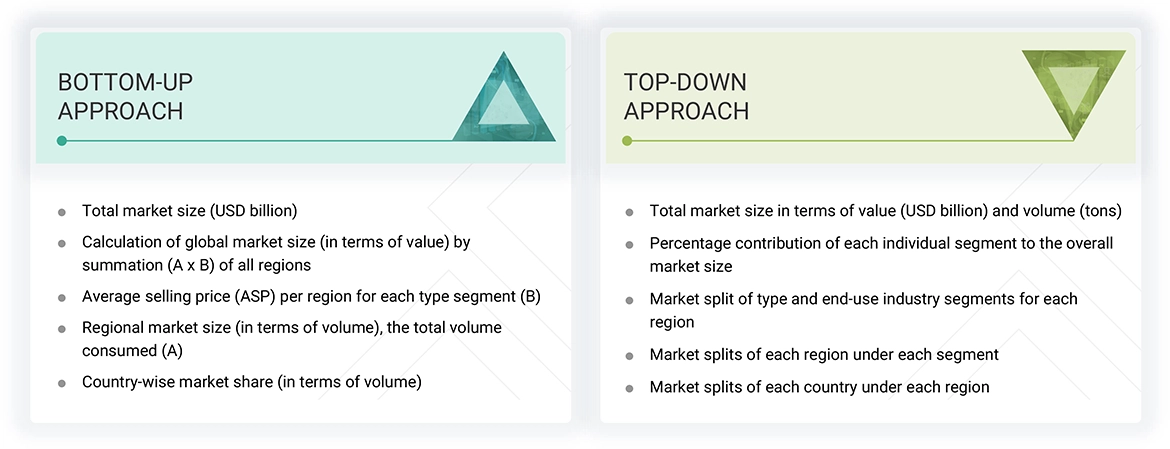
The top-down and bottom-up approaches were used to estimate and validate the size of the global metalized flexible packaging market. These approaches were also used extensively to estimate the size of various dependent market segments. The research methodology used to estimate the market size included the following:
Data Triangulation
After determining the overall market size through estimation processes, the market was divided into several segments and subsegments. Data triangulation and market breakup procedures were utilized, wherever applicable, to finalize the overall market engineering process and obtain accurate statistics for each market segment and subsegment. The data was triangulated by analyzing various factors and trends from both demand and supply sides.
Market Definition
Metalized flexible packaging is a specialized material that combines the versatility of polymer or paper-based films with the added functionality of a thin metallic coating. This metalized layer—usually aluminum—is applied through techniques such as vacuum metallization or sputtering, resulting in a material that provides strong protection against light, moisture, oxygen, and other environmental factors. Common structures include aluminum-paper, aluminum-polymer, aluminum-paper-polymer, Met PET/PE, and Met PP/PE, each designed to meet specific barrier and performance needs. Widely used across industries such as food and beverages, pharmaceuticals, personal care, and cosmetics, metalized flexible packaging offers both functional and aesthetic advantages. It helps preserve product freshness, quality, and safety by minimizing exposure to external elements, making it ideal for items requiring an extended shelf life. Beyond its barrier properties, the shiny, reflective finish enhances product presentation and shelf appeal, drawing consumer attention in competitive retail environments. Furthermore, metalized flexible packaging acts as a lightweight, cost-effective alternative to traditional rigid packaging while providing comparable protection. It reduces packaging weight, lowers shipping costs, and improves storage efficiency without sacrificing performance. This makes it particularly suitable for modern supply chains and fast-paced retail markets, where convenience, durability, and visual impact are increasingly important in packaging attributes.
Stakeholders
- Metalized flexible packaging and other raw material manufacturers
- Metalized flexible packaging manufacturers
- Raw material dealers and suppliers
- End-use industries of metalized flexible packaging, namely, food, pet food, beverages, pharmaceuticals, and personal care products
- Traders, distributors, and suppliers of metalized flexible packaging
- Regional manufacturers’ associations and Flexible packaging associations
- NGOs, governments, investment banks, venture capitalists, and private equity firms
Report Objectives
- To define, describe, and forecast the size of the global metalized flexible packaging market based on material type, structure, packaging type, end-use industry, and region in terms of value and volume
- To provide detailed information on the significant drivers, restraints, opportunities, and challenges influencing the market
- To strategically analyze micromarkets concerning individual growth trends, prospects, and their contribution to the market
- To assess the growth opportunities in the market for stakeholders and provide details on the competitive landscape for market leaders
- To forecast the market size of segments for North America, Europe, Asia Pacific, South America, and the Middle East & Africa
- To strategically profile key players and comprehensively analyze their market shares and core competencies
- To analyze competitive developments such as product launch, acquisition, and expansion in the metalized flexible packaging market
- To provide the impact of AI on the market
Key Questions Addressed by the Report
Which factors are propelling the growth of the metalized flexible packaging market?
Rapid growth of e-commerce is one of the primary factors propelling the growth of the metalized flexible packaging market.
What are the major challenges to the growth of the metalized flexible packaging market?
Intensifying competition from emerging high-barrier alternatives is a major challenge impacting market growth.
What are the major opportunities in the metalized flexible packaging market?
The expansion of pet food packaging is expected to create lucrative opportunities for market players in the coming years.
What are the major factors restraining the growth of the metalized flexible packaging market?
Poor recyclability and environmental impact are the major factors restraining market growth.
Who are the major players in the metalized flexible packaging market?
Major players include Amcor plc (Switzerland), Mondi Plc (UK), Sealed Air Corporation (US), Huhtamaki Oyj (Finland), and Transcontinental Inc. (Canada).


Personalize This Research
- Triangulate with your Own Data
- Get Data as per your Format and Definition
- Gain a Deeper Dive on a Specific Application, Geography, Customer or Competitor
- Any level of Personalization
Let Us Help You
- What are the Known and Unknown Adjacencies Impacting the Metalized Flexible Packaging Market
- What will your New Revenue Sources be?
- Who will be your Top Customer; what will make them switch?
- Defend your Market Share or Win Competitors
- Get a Scorecard for Target Partners

Custom Market Research Services
We Will Customise The Research For You, In Case The Report Listed Above Does Not Meet With Your Requirements
Get 10% Free CustomisationTESTIMONIALS
We at Nissan Chemicals Corporation have been clients of MarketsandMarkets for more than a year now. We recently consulted MarketsandMarkets for a study, the team at MarketsandMarkets was extremely professional and organized. The business insights were very detailed and aligned well with our expectations that really helped us formulate the Business Plans and device new strategies for development themes. MarketsandMarkets offers a unique combination of expertise and dedicated engagement model. Their research findings have helped us in designing our Pricing Strategy which will make it easier for us to predict the future sales and profits for the next ten years. We look forward to working with MarketsandMarkets in the future.
VP of Strategy & New Business Development
Leading Specialty Chemical Company
The MarketsandMarkets Engagement Model, composed of both the Knowledge Store and advisory custom research, has greatly helped us in understanding our markets and making strategic decisions. The Knowledge Store is a fast way to allow everyone in our organization to understand more about most any market they are interested in. The ability to then get custom research done and get answers to specific strategic questions and market insight has been spectacular. The Markets and Markets team feel more like colleagues than vendors and their services have helped us change our culture where statements of things like growth opportunities and competitive position are always backed by industry research.

Rich Gibson,
Director, Corporate Strategy
Milliken & Company,
Leading Industrial Manufacturer of specialty chemical, floor covering, performance and protective textile materials, and healthcaremilliken.com
MarketsandMarkets is a trusted resource that helps us to better understand markets that are near-adjacencies-whether its technology, value chain or geography. Their Knowledge Store platform provides a dashboard of markets and their characteristics which is easy to use and saves us time.
Adam Shaw,
Market Development and Strategy Manager
AdvanSix Inc. USA,
An American Leader in Chemicalswww.advansix.com
The Knowledge Store from MarketsandMarkets is a valuable tool which has helped my team acquire greater insight in to the end markets that our business serves. This has enabled us to help our company build stronger strategies throughout our planning process.
TOSHIO KINOSHITA
Senior Chif Consultion Research & Consulting Division
Mitsubishi Chemical Research Corporation,
Leading Manufacturer of Chemical Productswww.mitsubishichem-res.co.jp/en/

We recently engaged with MarketsandMarkets for a study, the team not only clearly understood our business objectives but was also extremely professional in the way they handled the entire project. The study was efficiently conducted in a phase-wise manner, and the engagement model furnished us with high-quality business insights that far exceeded our expectations at each phase. We were especially happy that MarketsandMarkets could provide us with both, an English as well as a Japanese version of the study. A special thanks to the Analyst Team and Client Services Team, whose fluency in Japanese enhanced our comfort level, as we could converse with them in our preferred language.
Independent entrepreneurs
Arrow Precision
We approached MarketsandMarkets for study on Proppants Market, and their work exceeded our expectations. The study conducted was comprehensive and enabled us to view the market through the various dimensions. In addition, the team was extraordinarily responsive throughout the process and resolved our queries on time. I strongly recommend MarketsandMarkets and will certainly consider them for additional market assessments we will need in the future.
Global engineering company, Japan
Deputy Manager,
Strategic Planning OfficeThe high-quality insights shared by the MarketsandMarkets team helped us understand the pharmaceutical plant designers in a specific geography. It also captured the risks that we may likely face in communicating with our potential partners. The study would enable us identify partners, which would impact our future growth.
- China Metalized Flexible Packaging Market
- India Metalized Flexible Packaging Market
- Japan Metalized Flexible Packaging Market
- South Korea Metalized Flexible Packaging Market
- Germany Metalized Flexible Packaging Market
- UK Metalized Flexible Packaging Market
- France Metalized Flexible Packaging Market
- Italy Metalized Flexible Packaging Market
- Spain Metalized Flexible Packaging Market
- Russia Metalized Flexible Packaging Market
- Canada Metalized Flexible Packaging Market
- Mexico Metalized Flexible Packaging Market
- US Metalized Flexible Packaging Market
- Brazil Metalized Flexible Packaging Market
- Argentina Metalized Flexible Packaging Market
- South Africa Metalized Flexible Packaging Market
- Rest Of Europe Metalized Flexible Packaging Market
- Rest Of Asia Pacific Metalized Flexible Packaging Market
- GCC Countries Metalized Flexible Packaging Market
- Rest Of Mea Metalized Flexible Packaging Market
- –Rest Of GCC Metalized Flexible Packaging Market
- Rest Of South America Metalized Flexible Packaging Market






Growth opportunities and latent adjacency in Metalized Flexible Packaging Market