



Microirrigation Systems Market
Report Code
AGI 2232
Published in
Oct, 2026, By MarketsandMarkets™
Microirrigation Systems Market by Type (Drip, Micro Sprinkler), Crop Type (Orchard Crops & Vineyards, Field Crops, Plantation Crops), End User (Farmers, Industrial Users), And Region (North America, Europe, Asia Pacific, South America, RoW) – Global Forecast to 2030

USD 21.56 BN
MARKET SIZE, 2030

CAGR 9.8%
(2025-2030)

300
REPORT PAGES

230
MARKET TABLES
OVERVIEW
Source: Secondary Research, Interviews with Experts, MarketsandMarkets Analysis
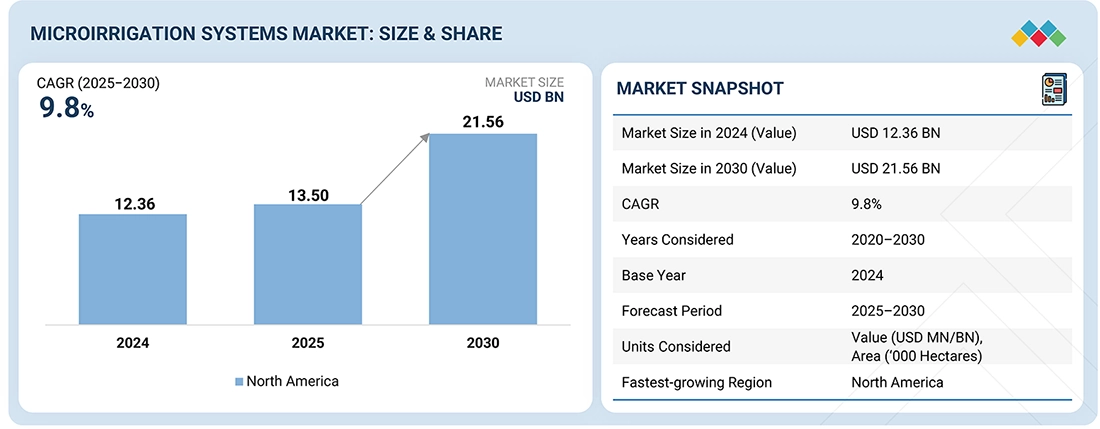
The microirrigation systems market is estimated to be USD 13.50 billion in 2025 and is projected to reach USD 21.56 billion by 2030, registering a CAGR of 9.8% over the same period. Market growth is increasingly shaped by long-term structural factors rather than short-term agricultural cycles, including chronic water scarcity, climate volatility, and tightening environmental regulations across both developed and emerging economies. Adoption is particularly strong in water-stressed regions, export-oriented agricultural zones, and areas dominated by high-value crops such as fruits, vegetables, orchards, and vineyards, where reliable irrigation is critical for yield stability and quality. As a result, demand is rising not only for new installations but also for system upgrades, retrofitting of existing infrastructure, and replacement of inefficient legacy irrigation systems, supporting sustained long-term growth of the global micro-irrigation systems market.
Market Size and Forecast:
- Market Size Value in 2024: USD 12.36 Billion
- Market Size Value in 2025: USD 13.50 Billion
- Revenue Forecast in 2030: USD 21.56 Billion
- Growth Rate: CAGR of 9.8% from 2025 to 2030
- Data available from 2020 to 2030
- Base year: 2024
- Forecast period: 2025–2030
-
Asia Pacific accounted for 49.5% of the microirrigation systems market in 2024.
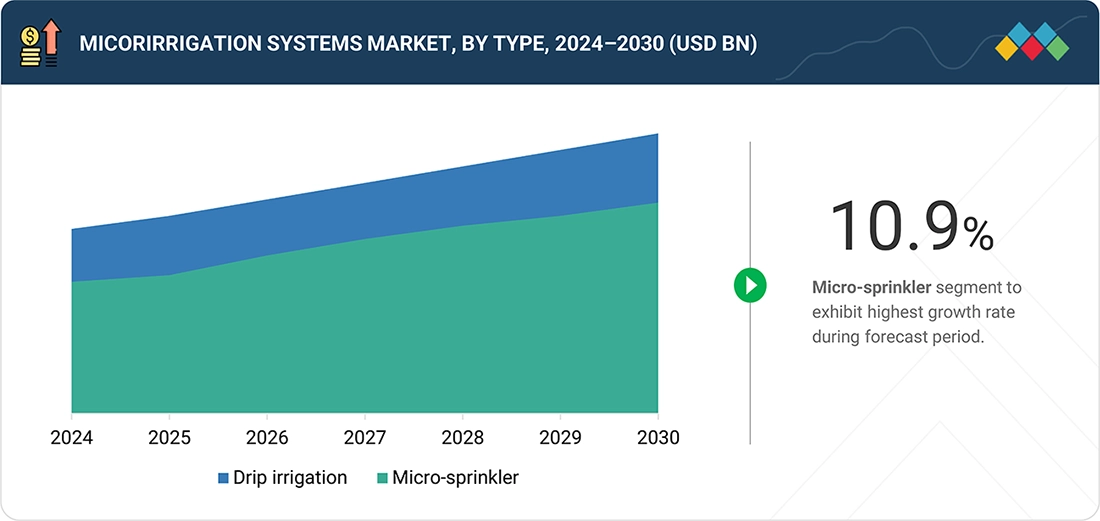
- The micro sprinkler segment is expected to register the highest CAGR of 9.7% during the forecast period.
Key Market Trends and Insights
- By Type: Rising adoption of drip irrigation, sprinkler systems, and micro-sprinklers is driving market growth across agricultural and horticultural applications.
-
Key Advantages: Microirrigation improves water efficiency, reduces wastage, enhances crop yields, and lowers operational costs.
- Growing Trends: Increasing use of smart irrigation technologies, IoT-enabled monitoring, and automated irrigation systems is boosting precision farming practices.
- Growth Opportunities: Expanding government support, growing water conservation efforts, and increasing adoption of precision agriculture are creating significant market opportunities.
KEY TAKEAWAYS
-
By RegionAsia Pacific accounted for 49.5% of the microirrigation systems market in 2024.
-
By TypeThe micro sprinkler segment is expected to register the highest CAGR of 9.7% during the forecast period.
-
By Crop TypeThe orchard crops & vineyards segment dominated the market with a 58.6% share in 2024.
-
By End UserIndustrial users will grow faster, supported by growth in commercial farming.
-
Competitive Landscape – Key PlayersKey players operating in the microirrigation systems market include Jain Irrigation Systems Ltd., The Toro Company, Netafim, and Nelson Irrigation supported by strong brand equity and regional distribution.
-
Competitive Landscape – StartupsEmerging companies such as Rain Drip and Metro Irrigation are gaining traction in the drip and sprinkler irrigation segments.
The microirrigation systems market is projected to grow from USD 13.50 billion in 2025 to USD 21.56 billion by 2030, at a CAGR of 9.8% during the forecast period. This growth is driven less by short-term technology trends and more by fundamental changes in global water management practices, regulatory rules, and farm economics. Across regions, the growing need to conserve water, comply with environmental regulations, and manage rising input costs is leading growers to adopt micro-irrigation as a necessity rather than an optional upgrade.
TRENDS & DISRUPTIONS IMPACTING CUSTOMERS' CUSTOMERS
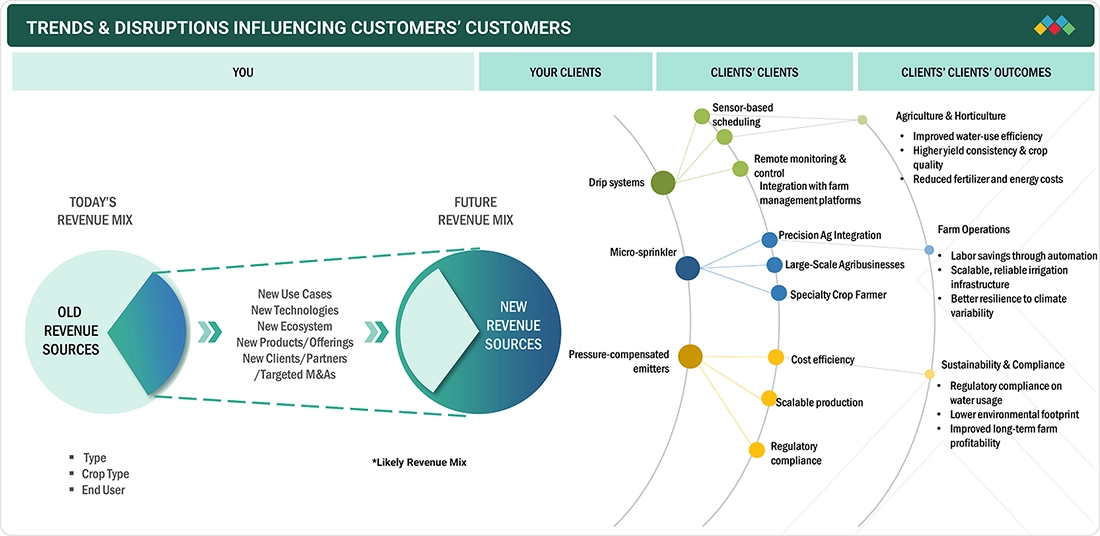
The global micro-irrigation systems market currently focuses on key applications, such as drip and micro-sprinkler systems for orchards, vineyards, and high-value crops. In the future, revenue growth will come more from new use cases, improved technologies, and integrated solutions than from just selling more products. This shows a fundamental change in the market. The adoption of automation, IoT-enabled controls, fertigation, and data-driven irrigation management is shifting the market from hardware sales to integrated irrigation platforms. The increase in greenhouse farming, water-scarce areas, and large-scale commercial agriculture is changing demand worldwide. At the same time, users are placing greater emphasis on water efficiency, energy savings, reliability, and regulatory compliance. This is driving ongoing demand across agriculture, landscaping, and institutional applications worldwide.
Source: Secondary Research, Interviews with Experts, MarketsandMarkets Analysis
MARKET DYNAMICS

Drivers
Impact
Level
Level
-
•Need for efficient use of water resources in drought conditions

-
•Demand for technologically advanced irrigation systems


RESTRAINTS
Impact
Level
Level
-
§ High initial investment

-
§ Need for continous maintainence


OPPORTUNITIES
Impact
Level
Level
-
§Global presence of agricultural and food companies

-
§Public and private support for irrigation projects in developing countries


CHALLENGES
Impact
Level
Level
-
§Delayed reimbursement of subsidies

-
§Absence of monitoring agencies

Source: Secondary Research, Interviews with Experts, MarketsandMarkets Analysis
Driver: Need for efficient use of water resources in drought conditions
Protection of agricultural fields against drought has become a possibility with the use of advanced irrigation systems. Appropriate irrigation scheduling techniques have given various successes among farmers.using advanced technologies is gaining importance, and many farmers are successfully applying these techniquestechniques successfully. Through mican sustain the same production levels even in a drought year, as minimal water use also ensures high yieldsthe use of such systemsdriving the growth of the microirrigation systems market in tropical countries where droughts are frequentoughts occur frequently.
Restraint: High initial investment
Micro-irrigation systems work best in high-investment agricultural areas such as orchards, nurseries, greenhouses, and vineyards. Conventional irrigation methods often don’t work well in these settings. The high initial cost of installing micro-irrigation systems makes them less appealing for low-value crops, where the returns may not justify the expense. The main cost issue with micro-irrigation is the upfront investment. This includes tubing, emitters, pumps, filtration systems, and control equipment, especially for large operations. Total system costs can vary widely based on crop type, regional conditions, water quality, field layout, the level of automation needed, and the complexity of the filtration and fertigation components used in the system.
Opportunity: Global presence of agricultural and food companies
Several global food companies have adopted measures in the last few years to market their products as sustainably produced. This is a differentiating factor in the end products, which has proved profitable for companies and enhanced their market share. Microirrigation systems are one way these companies can ensure their raw materials are produced sustainably. Microirrigation systems reduce the amount of water consumed by crops, thereby limiting environmental degradation and water table depletion. This is an opportunity for the microirrigation systems market, as these agricultural and food companies operate on large scales, either through their farms or through contract farming with small farmers. In contract farming, these companies provide equipment, such as drip and sprinkler irrigation systems, to resource-poor farmers who are essential for producing crops with desired characteristics.
Challenge: Delayed reimbursement of subsidies
In agrarian countries of Asia, governments allocate large sums for agricultural technological development, including increased use of machinery and equipment. In the case of microirrigation systems, the components are sold at subsidized prices to small and medium farmers. Most microirrigation system components are sold at subsidized prices to encourage farmers to improve yields from limited land areas and maximize their profits. Multinational companies operating in many countries must deal with subsidy policies in these regions, making it challenging to sustain day-to-day operations smoothly. A major challenge for market players is to recover the revenue lost due to those subsidized prices for drip or micro-sprinklers. There is often a delay in receiving government reimbursement.
MICROIRRIGATION SYSTEMS MARKET: COMMERCIAL USE CASES ACROSS INDUSTRIES
| COMPANY | USE CASE DESCRIPTION | BENEFITS |
|---|---|---|
 |
Comprehensive drip and micro-irrigation solutions for orchards, vineyards, field crops, and protected cultivation, with strong focus on fertigation and cost-efficient system design | Improved water and nutrient-use efficiency | Lower input costs | Better yield stability | Scalable solutions across diverse farm sizes |
 |
Advanced precision irrigation systems for high-value crops, orchards, vineyards, and greenhouses, integrating drip irrigation with automation and climate-resilient technologies | Consistent irrigation performance | Labor savings | Improved crop quality | Resilience under water-stressed and variable water-quality conditions |
 |
Drip and micro-irrigation solutions for specialty crops, orchards, vineyards, and commercial landscaping, integrated with automation and smart controls. | Improved water-use efficiency, uniform crop irrigation, reduced labor requirements, and higher return on irrigation investment |
 |
Micro-sprinkler and rotator-based irrigation systems for orchards, vineyards, and row crops, designed for durability, modularity, and easy retrofitting | Uniform water distribution | Reduced maintenance time | Lower system lifecycle costs | Improved operational reliability |
 |
Drip and micro-irrigation systems for agriculture, greenhouses, and turf & landscape applications with strong focus on precision and system reliability | Reduced water wastage | Improved crop and landscape performance | Regulatory compliance on water usage | Lower maintenance needs |
Logos and trademarks shown above are the property of their respective owners. Their use here is for informational and illustrative purposes only.
MARKET ECOSYSTEM
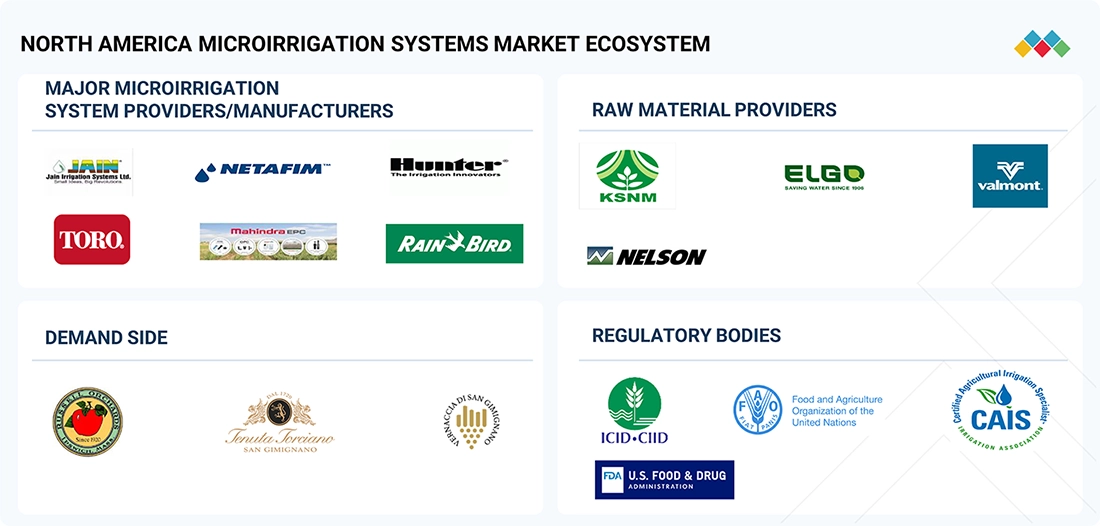
The global micro-irrigation systems market is changing as water-use efficiency becomes a key focus for both agricultural and non-agricultural users worldwide. Farmers in different regions are increasingly using drip and micro-sprinkler systems to optimize water application, improve irrigation uniformity, and boost productivity in both open-field farming and controlled-environment agriculture. These systems are especially important for specialty crops, orchards, vineyards, and row crops, where precise moisture control directly affects yield quality, resource efficiency, and overall farm economics. Market growth is also driven by labor shortages, rising input costs, and increasing demand for low-maintenance, automated irrigation solutions. At the same time, the expanding use of micro-irrigation in commercial landscaping, turf management, and institutional applications is widening the addressable market beyond traditional agriculture. As sustainability, climate resilience, and cost reduction become central to global farming and land management practices, micro-irrigation systems are now seen as essential infrastructure for long-term productivity, resource conservation, and competitiveness across the global agricultural value chain.
Logos and trademarks shown above are the property of their respective owners. Their use here is for informational and illustrative purposes only.
MARKET SEGMENTS
Source: Secondary Research, Interviews with Experts, MarketsandMarkets Analysis
Microirrigation Market, By Type
The drip irrigation segment continues to lead the market because it delivers reliable agricultural and financial results across many crops and locations. Unlike surface or traditional sprinkler systems, drip irrigation delivers a steady, low-volume water application that meets the needs of plant roots. This makes it especially useful for perennial crops, specialty farming, and areas that face ongoing water shortages. Worldwide, drip irrigation has become the top choice for farms seeking to boost yields while using less water, comply with stricter water regulations, and manage rising costs. Its modular design can be adjusted based on crop spacing, soil type, and terrain. It also works well with fertigation and digital farm management tools, which improve nutrient efficiency and operational control. Local manufacturing, lower costs in emerging markets, and strong government backing for water-saving irrigation further support its growth. As global agriculture focuses more on resilience, sustainability, and returns on investment, drip irrigation is set to remain a key technology in the micro-irrigation field.
Microirrigation Market, By Crop Type
At a global level, orchards and vineyards make up the largest crop segment in the micro-irrigation systems market. This growth is mainly due to the nature of perennial farming, not just regional policies. Tree crops and vineyards need steady, multi-year water management plans to keep plants healthy, maintain yields, and protect fruit quality over long production cycles. Microirrigation systems, particularly drip and microsprinkler solutions, meet these needs well because they deliver water and nutrients accurately and consistently to specific root zones. Worldwide, orchard and vineyard operators face greater challenges from climate variability, water scarcity, and higher labor costs. This makes automated, sensor-enabled irrigation systems an important investment rather than just a nice addition. The ability to adjust irrigation for different growth stages, soil types, and land conditions helps ensure even crop development and reduces long-term plant stress. Although the initial costs are higher, the long lifespan of orchards and vineyards allows growers to reap significant returns over time through greater yield consistency, improved quality, and reduced resource waste. Consequently, the ongoing growth in fruit and wine production worldwide keeps orchards and vineyards as the top application segment in the global micro-irrigation systems market.
Microirrigation Market, By End User
Globally, farmers make up the largest group of users in the micro-irrigation systems market. This shows the clear connection between irrigation effectiveness and farm productivity. Farmers across many areas are using micro-irrigation to address the increasing pressure on water resources, rising costs, and the need for steady yields amid changing weather conditions. Drip and micro-sprinkler systems allow precise control over water and nutrients, helping farmers use their inputs more efficiently while maintaining consistent crop quality. The demand from farmers is driven by the need to protect the long-term financial health of their farms rather than focusing solely on short-term output. In both developed and developing markets, farmers are looking for irrigation solutions that cut down water loss, increase resilience to drought and heat, and support precision farming. The rise of automation, sensor-based scheduling, and digital irrigation tools is accelerating this trend, especially in areas with labor shortages. As sustainability, cost management, and the ability to adapt to climate change become key to agricultural strategies worldwide, farmers are likely to remain the primary users shaping demand and innovation in the global micro-irrigation systems market.
REGION
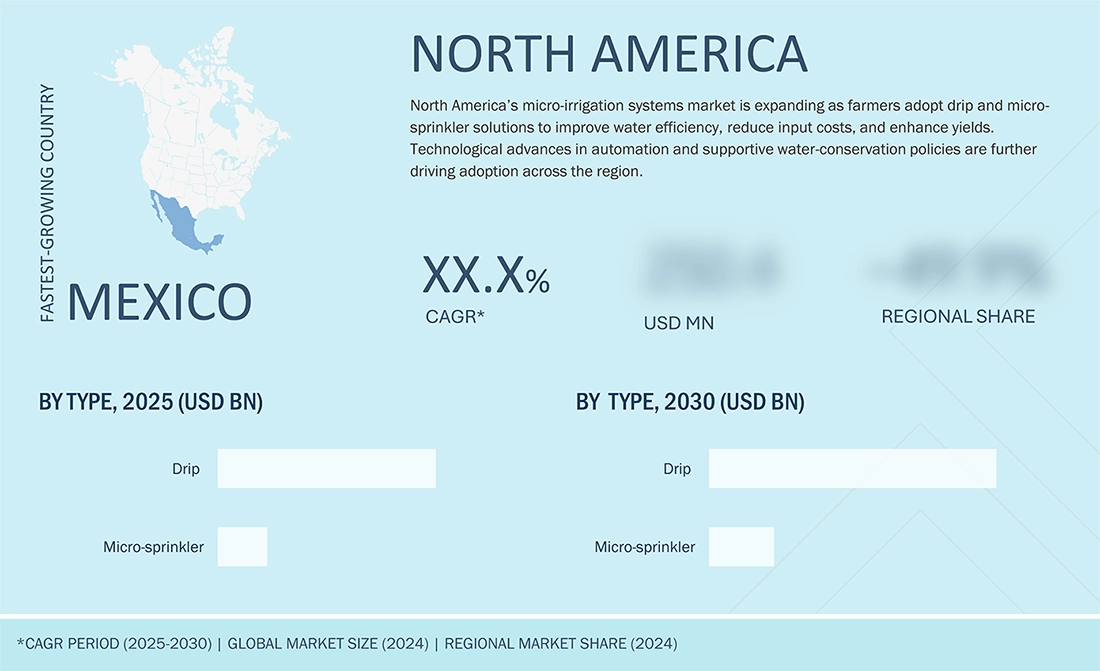
North America to be fastest-growing region in microirrigation systems market during forecast period
The region has been a significant user of microirrigation technologies, especially drip irrigation systems. This is due to the large-scale farming of high-value crops, modern farming methods, and early use of precision agriculture solutions. Freshwater resources are important to the environment, the economy, and regulatory frameworks across North America. However, their availability and distribution vary greatly between regions. This unevenness has raised concerns about water scarcity, particularly in areas with limited water, such as the US Midwest and parts of the western United States. As a result, both large commercial growers and small farmers are increasingly adopting micro-irrigation systems. These systems help improve water efficiency, reduce runoff and evaporation losses, and meet tighter water-management regulations. Additionally, rising awareness of sustainable farming practices, higher input costs, and the need to maintain long-term farm productivity are accelerating adoption across different farm sizes. Government incentives, conservation programs, and more automated and digitally enabled irrigation solutions support this market growth. Together, these factors make North America a key region for the micro-irrigation systems market, with growth driven by technological advancements and ongoing water management challenges.
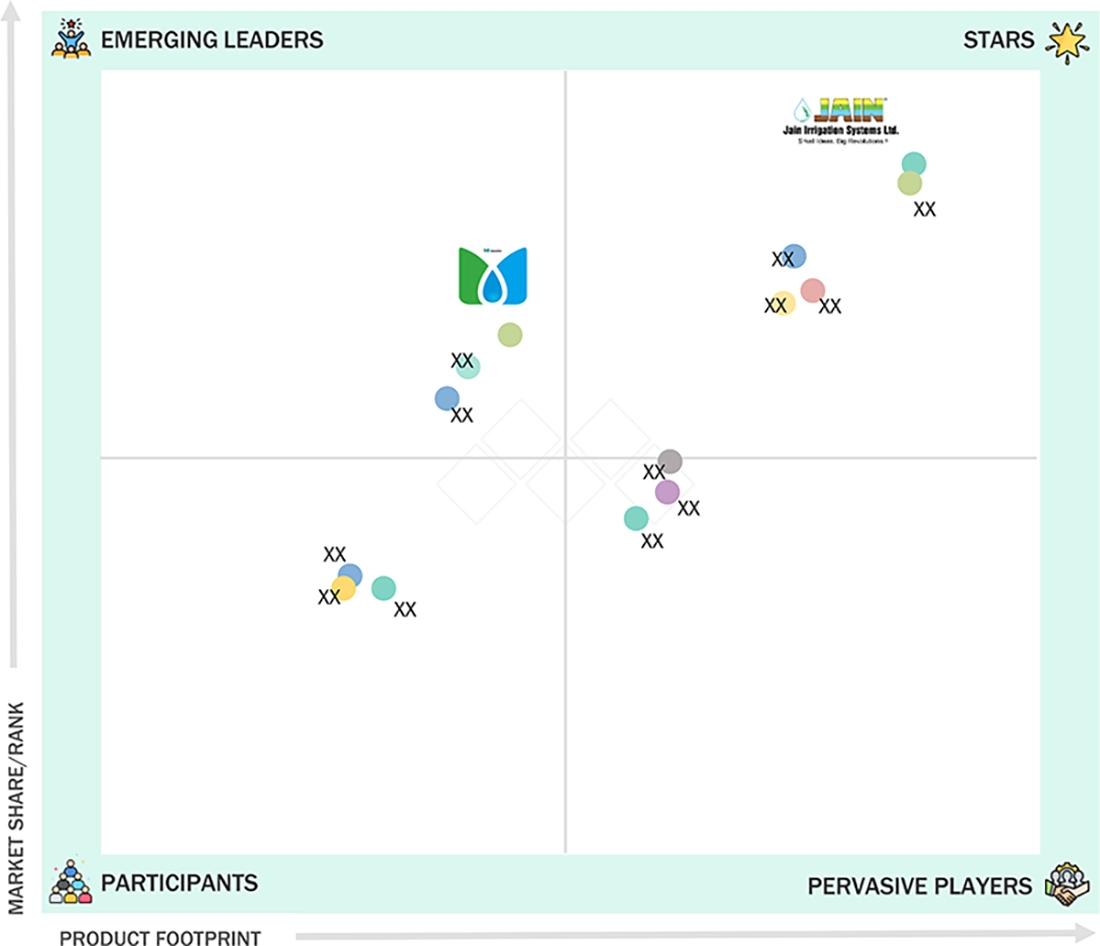
MICROIRRIGATION SYSTEMS MARKET: COMPANY EVALUATION MATRIX
The global micro-irrigation systems market exhibits a well-defined competitive structure shaped by technology leadership, portfolio breadth, manufacturing scale, and global distribution reach. Market leadership is anchored by Jain Irrigation Systems, Netafim, The Toro Company, Nelson Irrigation, and Rain Bird Corporation, all of which maintain strong positions through comprehensive micro-irrigation offerings, deep agronomic expertise, and extensive dealer and distributor networks across major agricultural regions. These players compete by continuously expanding product portfolios across drip, micro-sprinkler, filtration, fertigation, and increasingly smart and automated irrigation solutions. Their global manufacturing footprints and localized service capabilities allow them to address diverse crop types, climatic conditions, and regulatory requirements. Overall, this market structure supports sustained innovation, steady consolidation, and long-term growth of the global microirrigation systems market.
Source: Secondary Research, Interviews with Experts, MarketsandMarkets Analysis
KEY MARKET PLAYERS
- Jain Irrigation Systems Ltd. (India)
- Nelson Irrigation (US)
- Rain Bird Corporation (US)
- The Toro Company (US)
- Netafim (Israel)
- Finolex Plasson (India)
- Chinadrip Irrigation Equipment Co., Ltd. (China)
- Rivulis (Israel)
- HUNTER INDUSTRIES (US)
- Antelco (Australia)
- T-L Irrigation (US)
- Elgo Irrigation Ltd. (Israel)
- Irritec S.p.A (Italy)
- Microjet (South Africa)
- Mahindra EPC Irrigation Limited (India)
- Rain drip (US)
- Metro Irrigation (India)
- Kothari Group (India)
- HARVEL AGUA INDIA PRIVATE LIMITED (India)
- Heibei Plentirain Irrigation Equipment Ltd (China)
MARKET SCOPE
| REPORT METRIC | DETAILS |
|---|---|
| Market Size in 2024 (Value) | USD 12.36 Billion |
| Market Size in 2030 (Value) | USD 21.56Billion |
| Growth Rate | CAGR of 9.8% from 2025 to 2030 |
| Years Considered | 2020–2030 |
| Base Year | 2024 |
| Forecast Period | 2025–2030 |
| Units Considered | Value (USD Million/Billion), Volume ('000 Hectares) |
| Report Coverage | Revenue forecast, company ranking, competitive landscape, growth factors, and trends |
| Segments Covered |
|
| Regions Covered | North America, Europe, Asia Pacific, South America, RoW |
WHAT IS IN IT FOR YOU: MICROIRRIGATION SYSTEMS MARKET REPORT CONTENT GUIDE
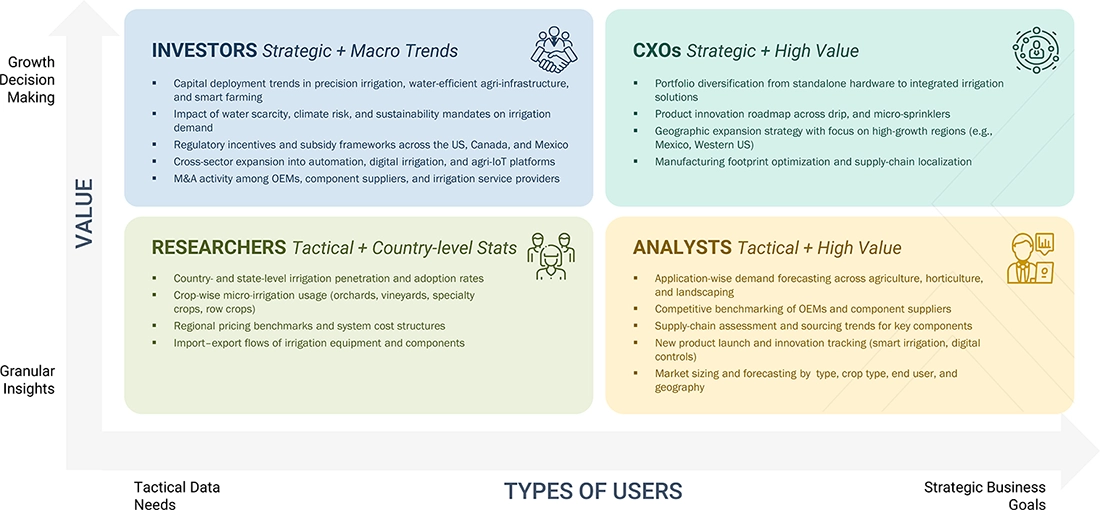
DELIVERED CUSTOMIZATIONS
We have successfully delivered the following deep-dive customizations:
| CLIENT REQUEST | CUSTOMIZATION DELIVERED | VALUE ADDS |
|---|---|---|
| Global Microirrigation Market Landscape |
|
|
| Application & Crop Economics Assessment |
|
|
| End-User & Route-to-Market Dynamics |
|
|
RECENT DEVELOPMENTS
- November 2025 : Nelson Irrigation’s R7 Rotator Sprinkler strengthens its position in the micro-sprinkler segment by addressing two critical grower priorities namely operational efficiency and total system cost reduction. As the latest addition to the Rotator family, the R7 combines full-coverage irrigation performance with 7 Series modularity and Quick Clean (QC) technology, enabling fast flushing and reconnection that significantly reduces maintenance time and labor requirements.
- February 2025 : Netafim has launched a patented Hybrid Dripline system, positioning it as the first integral dripline with a built-in outlet, combining the advantages of integral and on-line dripper systems into a single solution. This innovation addresses key operational pain points in orchards, vineyards, and greenhouse cultivation, where labor availability, installation complexity, and system reliability increasingly constrain irrigation efficiency.
- January 2024 : Lindsay Corporation announced a USD 50 million investment over the next two years to enhance its largest global manufacturing facility in Lindsay, Nebraska. The initiative aims to improve safety, quality, and efficiency while accelerating the development of innovations like the Smart Pivot.
- March 2023 : The completion of Jain Irrigation Systems Limited’s merger with Rivulis, backed by Temasek, marks a transformational consolidation move in the global micro-irrigation industry. By combining Jain’s international irrigation business with Rivulis, the transaction creates a global irrigation and climate solutions leader with an estimated USD 750 million in annual revenue.
Table of Contents
 Exclusive indicates content/data unique to MarketsandMarkets and not available with any competitors.
TITLE
PAGE NO
1
INTRODUCTION
15
2
EXECUTIVE SUMMARY
3
PREMIUM INSIGHTS
4
MARKET OVERVIEW
Explains the evolving landscape through demand-side drivers, supply-side constraints, and opportunity hotspots.
4.1
INTRODUCTION
4.2
MARKET DYNAMICS
4.2.1
DRIVERS
4.2.2
RESTRAINTS
4.2.3
OPPORTUNITIES
4.2.4
CHALLENGES
4.3
UNMET NEEDS AND WHITE SPACES
4.4
INTERCONNECTED MARKETS AND CROSS-SECTOR OPPORTUNITIES
4.5
STRATEGIC MOVES BY TIER-1/2/3 PLAYERS
5
INDUSTRY TRENDS
Provides a snapshot of current market scenario, value chain context, and factors impacting competitive intensity.
5.1
PORTER’S FIVE FORCES ANALYSIS
5.1.1
INTENSITY OF COMPETITIVE RIVALRY
5.1.2
THREAT OF NEW ENTRANTS
5.1.3
THREAT OF SUBSTITUTES
5.1.4
BARGAINING POWER OF SUPPLIERS
5.1.5
BARGAINING POWER OF BUYERS
5.2
MACROECONOMICS INDICATORS
5.3
VALUE CHAIN ANALYSIS
5.3.1
RESEARCH & PRODUCT DEVELOPMENT
5.3.2
RAW MATERIAL SOURCING AND STRAIN IDENTIFICATION
5.3.3
PROCESSING AND MANUFACTURING OPERATIONS
5.3.4
DISTRIBUTION & LOGISTICS
5.3.5
END-USER SEGMENTS AND CONSUMPTION PATTERNS
4.3.6
VALUE ADDED ACROSS VALUE CHAIN
5.4
ECOSYSTEM ANALYSIS
5.4.1
DEMAND SIDE
5.4.2
SUPPLY SIDE
5.5
PRICING ANALYSIS
5.5.1
AVERAGE SELLING PRICE TREND OF PRODUCT TYPE, BY KEY PLAYER (2024)
5.5.2
AVERAGE SELLING PRICE TREND, BY REGION (2021–2024)
5.6
TRADE ANALYSIS
5.6.1
EXPORT SCENARIO (HS CODE 3002) – MAJOR EXPORTING COUNTRIES & REGIONS
5.6.2
IMPORT SCENARIO (HS CODE 3002) – MAJOR IMPORTING COUNTRIES & REGIONS
5.7
KEY CONFERENCES & EVENTS IN 2025–2026
5.8
TRENDS/DISRUPTIONS IMPACTING CUSTOMER BUSINESS
5.9
INVESTMENT AND FUNDING SCENARIO
5.10
CASE STUDY ANALYSIS
5.11
IMPACT OF 2025 US TARIFF –MICROIRRIGATION SYSTEMS MARKET
5.11.1
INTRODUCTION
5.11.2
KEY TARIFF RATES
5.11.3
PRICE IMPACT ANALYSIS
5.11.4
IMPACT ON COUNTRY/REGION*
5.11.4.1
US
5.11.4.2
EUROPE
5.11.4.3
ASIA PACIFIC
5.11.5
IMPACT ON END-USE INDUSTRIES
6
STRATEGIC DISRUPTION THROUGH TECHNOLOGY, PATENTS, DIGITAL, AND AI ADOPTIONS
6.1
KEY TECHNOLOGIES
6.1.1
AUTOMATED IRRIGATION SYSTEMS
6.1.2
PRESSURE COMPENSATING SYSTEMS
6.2
COMPLEMENTARY TECHNOLOGIES
6.2.1
DIGITAL IMAGE PROCESSING
6.2.2
REMOTE SENSING
6.3
ADJACENT TECHNOLOGIES
6.3.1
PRECISION AGRICULTURE
6.4
PATENT ANALYSIS
6.4.1
LIST OF MAJOR PATENTS PERTAINING TO MARKET
6.5
FUTURE & EMERGING PRODUCTS OF MICROIRRIGATION SYSTEMS
6.6
IMPACT OF GEN AI ON MICROIRRIGATION SYSTEMS
6.6.1
INTRODUCTION
6.6.2
USE OF GEN AI IN MICROIRRIGATION SYSTEMS INDUSTRY
6.6.3
CASE STUDY ANALYSIS
6.6.4
IMPACT ON MICROIRRIGATION SYSTEMS MARKET
6.6.5
ADJACENT ECOSYSTEM WORKING ON GEN AI
6.7
SUCCESS STORIES AND REAL-WORLD APPLICATIONS
7
REGULATORY AND SUSTAINABILITY LANDSCAPE
7.1
REGIONAL REGULATIONS
7.1.1
REGULATORY BODIES AND FRAMEWORKS
7.1.2
CERTIFICATION AND ACCREDITATION BODIES
7.1.3
LABELING REQUIREMENTS AND CLAIMS
7.1.4
ANTICIPATED REGULATORY CHANGES OVER NEXT 5–10 YEARS
7.2
SUSTAINABILITY INITIATIVES
7.2.1
SUSTAINABLE SOURCING
7.2.2
CARBON FOOTPRINT REDUCTION INITIATIVES
7.2.3
CIRCULAR ECONOMY APPROACHES
7.2.4
CERTIFICATION, TRACEABILITY & TRANSPARENCY
7.3
SUSTAINABILITY IMPACT AND REGULATORY POLICY INITIATIVES
7.4
BIODEGRADABLE PACKAGING, CERTIFICATIONS, LABELING, ECO-STANDARDS
8
CUSTOMER LANDSCAPE & BUYER BEHAVIOR
8.1
DECISION-MAKING PROCESS
8.2
BUYER STAKEHOLDERS AND BUYING EVALUATION CRITERIA
8.3
ADOPTION BARRIERS & INTERNAL CHALLENGES
8.4
UNMET NEEDS FROM VARIOUS END-USE INDUSTRIES
8.5
MARKET PROFITABILITY
9
MICROIRRIGATION SYSTEMS MARKET, BY TYPE (MARKET SIZE & FORECAST TO 2030: USD MILLION & ‘000 HECTARE)
COMPARATIVE ASSESSMENT OF KEY MICROIRRIGATION SYSTEM TYPES, THEIR MARKET POTENTIAL, AND DEMAND PATTERNS BY VARIOUS SUPPLIER COMPANIES
Market Size, Volume & Forecast – USD Million
9.1
INTRODUCTION
9.2
DRIP IRRIGATION
9.3
MICRO SPRINKLER
10
MICROIRRIGATION SYSTEMS MARKET, BY CROP TYPE (MARKET SIZE & FORECAST TO 2030: USD MILLION)
COMPARATIVE ASSESSMENT OF KEY CROP TYPES, THEIR MARKET POTENTIAL, AND DEMAND IN MICROIRRIGATION SYSTEMS SEGMENT
10.1
INTRODUCTION
10.2
ORCHARDS & VINEYARDS
10.3
FIELD CROPS
10.4
PLANTATION CROPS
10.5
OTHER CROP TYPES
11
MICROIRRIGATION SYSTEMS MARKET, BY END USER (MARKET SIZE & FORECAST TO 2030: USD MILLION)
DEMAND FOR MICROIRRIGATION SYSTEMS FOR VARIOUS END USERS AND GROWTH PATHWAY SHAPING MARKET
11.1
INTRODUCTION
11.2
INDUSTRIAL USERS
11.3
FARMERS
11.3
OTHER END USERS
12
MICROIRRIGATION SYSTEMS MARKET, BY COMPONENT (QUALITATIVE)
Market Size, Volume & Forecast – USD Million
DEMAND FOR MICROIRRIGATION SYSTEMS IN VARIOUS FORMS AND GROWTH PATHWAY SHAPING MARKET
12.1
INTRODUCTION
12.2
DRIP EMITTER/DRIPPER
12.3
POLYETHYLENE TUBING
12.4
IRRIGATION VALVE
12.5
FILTER
12.6
MICRO SPRAY/SPRINKLER
13
MICROIRRIGATION SYSTEMS MARKET, BY REGION (MARKET SIZE & FORECAST TO 2030: USD MILLION & ‘000 HECTARE)
ASSESSING MARKET POTENTIAL AND GROWTH PATTERNS ACROSS KEY GEOGRAPHIES AND COUNTRIES
13.1
NORTH AMERICA
13.1.1
US
13.1.2
CANADA
13.1.3
MEXICO
13.2
EUROPE
13.2.1
GERMANY
13.2.2
UK
13.2.3
FRANCE
13.2.4
SPAIN
13.2.5
ITALY
13.2.6
REST OF EUROPE
13.3
ASIA PACIFIC
13.3.1
CHINA
13.3.2
JAPAN
13.3.3
INDIA
13.3.4
AUSTRALIA & NEW ZEALAND
13.3.5
REST OF ASIA PACIFIC
13.4
SOUTH AMERICA
13.4.1
BRAZIL
13.4.2
ARGENTINA
13.4.3
REST OF SOUTH AMERICA
13.5
REST OF THE WORLD
13.5.1
MIDDLE EAST
13.5.2
AFRICA
14
COMPETITIVE LANDSCAPE
STRATEGIC ASSESSMENT OF LEADING PLAYERS, MARKET SHARE, REVENUE ANALYSIS, COMPANY POSITIONING, AND COMPETITIVE BENCHMARKS INFLUENCING MARKET POTENTIAL
14.1
OVERVIEW
14.2
KEY PLAYERS STRATEGIES/RIGHT TO WIN, 2022–2025
14.3
REVENUE ANALYSIS, 2022–2024
14.4
MARKET SHARE ANALYSIS,
14.5
BRAND/PRODUCT COMPARISON
14.6
COMPANY VALUATION AND FINANCIAL METRICS
14.7
COMPANY EVALUATION MATRIX: KEY PLAYERS,
14.7.1
STARS
14.7.2
EMERGING LEADERS
14.7.3
PERVASIVE PLAYERS
14.7.4
PARTICIPANTS
14.7.5
COMPANY FOOTPRINT: KEY PLAYERS,
14.7.5.1
COMPANY FOOTPRINT
14.7.5.2
REGION FOOTPRINT
14.7.5.3
TYPE FOOTPRINT
14.7.5.4
CROP TYPE FOOTPRINT
14.7.5.5
END USER FOOTPRINT
14.8
COMPANY EVALUATION MATRIX: STARTUPS/SMES,
14.8.1
PROGRESSIVE COMPANIES
14.8.2
RESPONSIVE COMPANIES
14.8.3
DYNAMIC COMPANIES
14.8.4
STARTING BLOCKS
14.8.5
COMPETITIVE BENCHMARKING: STARTUPS/SMES,
14.8.5.1
DETAILED LIST OF KEY START-UPS/SMES
14.8.5.2
COMPETITIVE BENCHMARKING OF KEY START-UPS/SMES
14.9
COMPETITIVE SCENARIO
14.9.1
PRODUCT LAUNCHES
14.9.2
DEALS
14.9.3
EXPANSIONS
14.9.4
OTHERS
14
COMPANY PROFILES
IN-DEPTH REVIEW OF COMPANIES, PRODUCTS, RECENT INITIATIVES, AND POSITIONING STRATEGIES IN MICROIRRIGATION SYSTEMS MARKET LANDSCAPE
14.1
KEY PLAYERS
14.1.1
JAIN IRRIGATION SYSTEMS LTD
14.1.2
NETAFIM
14.1.3
THE TORO COMPANY
14.1.4
LINDSAY CORPORATION
14.1.5
EPC INDUSTRIES
14.1.6
NELSON IRRIGATION
14.1.7
RAIN BIRD CORPORATION
14.1.8
T-L IRRIGATION
14.1.9
HUNTER INDUSTRIES
14.1.10
RIVULIS
14.1.11
CHINADRIP IRRIGATION EQUIPMENT CO., LTD
14.1.12
ELGO IRRIGATION
14.1.13
ANTELCO PTY LTD.
14.1.14
MICROJET IRRIGATION SYSTEMS
14.1.15
IRRITEC S.P.A
14.2
STARTUPS/SMES
14.2.1
CHAMSA - GRUPO CHAMARTIN S.A.S
14.2.2
DRIP IRRIGATION TECHNOLOGY SOLUTIONS (DRTS)
14.2.3
DRIPWORKS
14.2.4
RAINDRIP
14.2.5
KOTHARI AGRITECH PRIVATE LIMITED
14.2.6
HARVEL AGUA INDIA PRIVATE LIMITED
14.2.7
ECOFLOW INDIA
14.2.8
REINKE MANUFACTURING CO., INC.
14.2.9
RIPPLE AQUAPLAST LTD
14.2.10
EURODRIP SA
15
RESEARCH METHODOLOGY
15.1
RESEARCH DATA
15.1.1
SECONDARY DATA
15.1.1.1
KEY DATA FROM SECONDARY SOURCES
15.1.2
PRIMARY DATA
15.1.2.1
KEY DATA FROM PRIMARY SOURCES
15.1.2.2
KEY INDUSTRY INSIGHTS
15.1.2.3
BREAKDOWN OF PRIMARIES
15.2
MARKET SIZE ESTIMATION
15.2.1
BOTTOM-UP APPROACH
15.2.1.1
APPROACH FOR CAPTURING MARKET SHARE BY BOTTOM-UP ANALYSIS
15.2.2
TOP-DOWN APPROACH
15.2.2.2
APPROACH FOR CAPTURING MARKET SHARE BY TOP-UP ANALYSIS
15.3
MARKET BREAKDOWN AND DATA TRIANGULATION
15.4
RESEARCH ASSUMPTIONS
15.5
RISK ASSESSMENT
15.6
RESEARCH LIMITATIONS
16
ADJACENT & RELATED MARKETS
17
APPENDIX
17.1
DISCUSSION GUIDE
17.2
KNOWLEDGE STORE: MARKETSANDMARKETS’ SUBSCRIPTION PORTAL
17.3
CUSTOMIZATION OPTIONS
17.4
RELATED REPORTS
17.5
AUTHOR DETAILS
Methodology
This study employed two primary approaches to estimate the current size of the microirrigation systems market. Exhaustive secondary research was conducted to gather information on the market segments for type, crop type, end user, and region. The next step involved validating these findings, assumptions, and sizing with industry experts across the value chain through primary research. The top-down and bottom-up approaches were employed to estimate the complete market size. Thereafter, data triangulation was used to estimate the market size of segments and subsegments
Secondary Research
This research study used extensive secondary sources—directories and databases such as Bloomberg Businessweek and Factiva—to identify and collect information for a technical, market-oriented, and commercial market study. In the secondary research process, sources such as annual reports, press releases & investor presentations of companies, white papers, agriculture-related journals, certified publications, articles from recognized authors, directories, and databases were referred to identify and collect information. Secondary research was primarily used to obtain key information on the industry’s supply chain, the pool of key players, and market classification and segmentation based on industry trends, down to the bottom-most level of regional markets, and key developments from market- and technology-oriented perspectives.
Primary Research
Extensive primary research was conducted after obtaining information regarding the microirrigation systems market scenario through secondary research. Several primary interviews were conducted with market experts from the demand and supply sides across major countries of North America, Europe, Asia Pacific, South America, and the Rest of the World. Primary data was collected through questionnaires, emails, and telephonic interviews. The primary sources from the supply side included various industry experts, such as Chief Experience Officers (CXOs), vice presidents (VPs), directors from business development, marketing, research, and development teams, and related key executives from distributors and key opinion leaders.
Primary interviews were conducted to gather insights, including market statistics, revenue data from products and services, market breakdowns, market size estimations, market forecasting, and data triangulation. Primary research also helped to understand the various trends related to type, crop type, end user, and region. Stakeholders from the demand side, including distributors, importers, exporters, and end-use sectors such as commercial agricultural farms, were interviewed to understand buyers’ perspectives on suppliers, products, and the outlook for their businesses, which will impact the overall market.
Breakdown of Primary Interviews
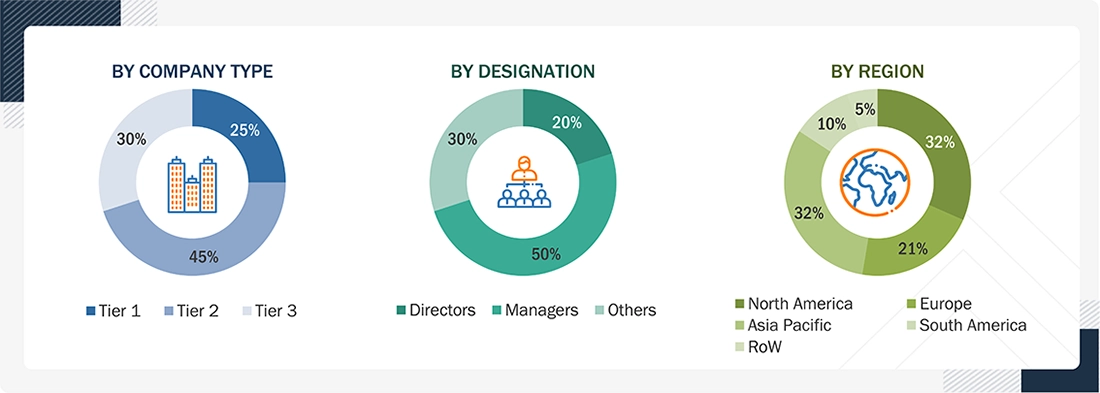
Note: The three tiers of the companies are defined based on their total revenues in 2023 or 2024, based on the availability of financial data: Tier 1: Revenue > USD 1 billion; Tier 2: USD 100 million ≤ revenue ≤ USD 1 billion; Tier 3: Revenue < USD 100 million. RoW includes Africa and the Middle East
To know about the assumptions considered for the study, download the pdf brochure
|
COMPANY NAME |
DESIGNATION |
|
BASF |
Product Development Manager |
|
Nufarm |
Sales Manager |
|
Coromandel International Ltd. |
Marketing |
|
Mosaic |
Marketing |
|
Nouryon |
Senior Sales Manager |
|
Manvert |
Business Development Manager |
Market Size Estimation
The top-down and bottom-up approaches were used to estimate and validate the total size of the microirrigation systems market. These approaches were also widely used to determine the sizes of various subsegments in the market. The research methodology used to estimate the market size includes the following details:
- The key players in the industry and the overall markets were identified through extensive secondary research.
- All shares, splits, and breakdowns were determined using secondary sources and verified through primary sources.
- All possible parameters that affect the market covered in this research study were accounted for, viewed in extensive detail, verified through primary research, and analyzed to obtain final quantitative and qualitative data.
- The research included the study of reports, reviews, and newsletters of top market players, along with extensive interviews for opinions from leaders, such as CEOs, directors, and marketing executives.
Microirrigation Systems Market : Top-Down and Bottom-Up Approach

Data Triangulation
After determining the overall market size from the estimation process explained above, the total market was split into several segments and subsegments. The data triangulation procedure was employed, wherever applicable, to estimate the overall microirrigation systems market and obtain precise statistics for all segments and subsegments. The data was triangulated by studying various factors and trends from the demand and supply sides. The market size was also validated using the top-down and bottom-up approaches.
Market Definition
Microirrigation is the slow application of water on, above, or below the soil using surface drip, subsurface drip, bubbler, or microsprinkler systems. Water is applied as discrete or continuous drips, tiny streams, or miniature sprays through emitters or applicators placed along a water-delivery line adjacent to the plant row.
Key Stakeholders
- Microirrigation system manufacturers
- Microirrigation system importers and exporters
- Microirrigation system traders, distributors, and suppliers
- Government and research organizations
- Government regulatory agencies
- Food and Agriculture Organization (FAO)
- United States Department of Agriculture (USDA)
- Environmental Protection Agency (EPA)
- Department of Environment, Food, and Rural Affairs (DEFRA)
Report Objectives
- To determine and project the size of the microirrigation systems market based on type, crop type, end user, and region, over five years, ranging from 2025 to 2030
- To identify the attractive opportunities in the market by determining the largest and fastest-growing segments across regions
- To provide detailed information about the key factors influencing market growth (drivers, restraints, opportunities, and challenges)
- To analyze the opportunities in the market for stakeholders and provide details of the competitive landscape for market leaders
- To analyze the micromarkets with respect to individual growth trends, prospects, and their contribution to the total market
- To identify and profile the key players in the market
- To understand the competitive landscape and identify the major growth strategies adopted by players across the key regions
Available customizations:
With the given market data, MarketsandMarkets offers customizations according to company-specific scientific needs. The following customization options are available for the report:
Product Analysis
- Product matrix that provides a detailed comparison of each company's product portfolio.
Geographic Analysis
Based on the given market data, MarketsandMarkets offers customizations tailored to company-specific scientific needs.
- Further breakdown of the Rest of Europe microirrigation systems market into key countries
- Further breakdown of the Rest of Asia Pacific microirrigation systems market into key countries
- Further breakdown of the Rest of South America microirrigation systems market into key countrie
Company Information
- Detailed analyses and profiling of additional market players (up to five)
Key Questions Addressed by the Report
What is the current size of the microirrigation systems market?
The microirrigation systems market is valued at approximately USD 13.50 billion in 2025 and is projected to reach around USD 21.56 billion by 2030. The market is expanding steadily as farmers increasingly adopt efficient irrigation technologies that improve water management, increase crop productivity, and reduce operational costs across agricultural applications.
What is the expected CAGR of the microirrigation systems market?
The microirrigation systems market is expected to grow at a CAGR of 9.8% during the forecast period from 2025 to 2030. Growth is supported by rising concerns over water scarcity, government initiatives promoting sustainable agriculture, and increasing adoption of precision farming technologies worldwide.
What factors are driving the growth of the microirrigation systems market?
The microirrigation systems market growth is driven by increasing demand for water-efficient farming, expanding cultivation of high-value crops, supportive government subsidies, growing awareness of sustainable agriculture, and the need to improve agricultural productivity while conserving natural resources.
What are the latest trends in the microirrigation systems market?
Key trends include the integration of IoT-enabled irrigation systems, automated fertigation, smart controllers, remote monitoring, AI-driven irrigation scheduling, and the increasing adoption of drip irrigation systems in commercial farming operations.
What opportunities exist in the microirrigation systems market?
Significant opportunities are emerging in developing countries, greenhouse farming, precision agriculture, climate-resilient farming practices, and solar-powered irrigation solutions as governments and farmers invest in improving water-use efficiency.
Fact checked
Personalize This Research
- Triangulate with your Own Data
- Get Data as per your Format and Definition
- Gain a Deeper Dive on a Specific Application, Geography, Customer or Competitor
- Any level of Personalization
Let Us Help You
- What are the Known and Unknown Adjacencies Impacting the Microirrigation Systems Market
- What will your New Revenue Sources be?
- Who will be your Top Customer; what will make them switch?
- Defend your Market Share or Win Competitors
- Get a Scorecard for Target Partners

Custom Market Research Services
We Will Customise The Research For You, In Case The Report Listed Above Does Not Meet With Your Requirements
Get 10% Free CustomisationTESTIMONIALS

Business Innovation Director
US Based Leading Agribusiness,
Food and Ingredients ManufacturerI highly appreciate the team's efficiency for a well conducted study that helped us clarify some blind spots in food and agricultural niche markets. Although compiling information for B2B markets is very difficult, the MnM team pulled out the task successfully. The quality of research, level of insights, and responsiveness of team were commendable.
- US Microirrigation Systems Market
- Canada Microirrigation Systems Market
- Mexico Microirrigation Systems Market
- France Microirrigation Systems Market
- Spain Microirrigation Systems Market
- Italy Microirrigation Systems Market
- Russia Microirrigation Systems Market
- Ukraine Microirrigation Systems Market
- China Microirrigation Systems Market
- India Microirrigation Systems Market
- Australia Microirrigation Systems Market
- Thailand Microirrigation Systems Market
- Indonesia Microirrigation Systems Market
- Philippines Microirrigation Systems Market
- Brazil Microirrigation Systems Market
- Argentina Microirrigation Systems Market
- Chile Microirrigation Systems Market
- Colombia Microirrigation Systems Market
- Peru Microirrigation Systems Market
- South Africa Microirrigation Systems Market
- Saudi Arabia Microirrigation Systems Market
- Azerbaijan Microirrigation Systems Market
- Rest Of Europe Microirrigation Systems Market
- Kazakhstan Microirrigation Systems Market
- Rest Of Asia Pacific Microirrigation Systems Market
- Uzbekistan Microirrigation Systems Market
Growth opportunities and latent adjacency in Microirrigation Systems Market






User
Nov, 2019
Interested in purchasing the report, does it have data on drip sensors..
Mohammed
Jun, 2017
Interested in global drip irrigation market with deep dive in US, Latin America, India and China markets.
David
Jul, 2026
How does microirrigation support sustainable agriculture?.
Benjamin
Jul, 2026
Which irrigation type is expected to grow the fastest?.
Timothy
Jul, 2026
How does irrigation automation improve water efficiency for growers?.
Chiranjeevi
May, 2018
Looking for the current market size of the drip irrigation sector in India. .