Sugar Substitutes Market

Sugar Substitutes Market by Type (HFCS, High-intensity Sweeteners, Low-intensity Sweeteners), Manufacturing Technology (Precision Fermentation, Enzymatic Conversion, Chemical Synthesis), Application, Form, Source, Region - Global Forecast to 2031


OVERVIEW
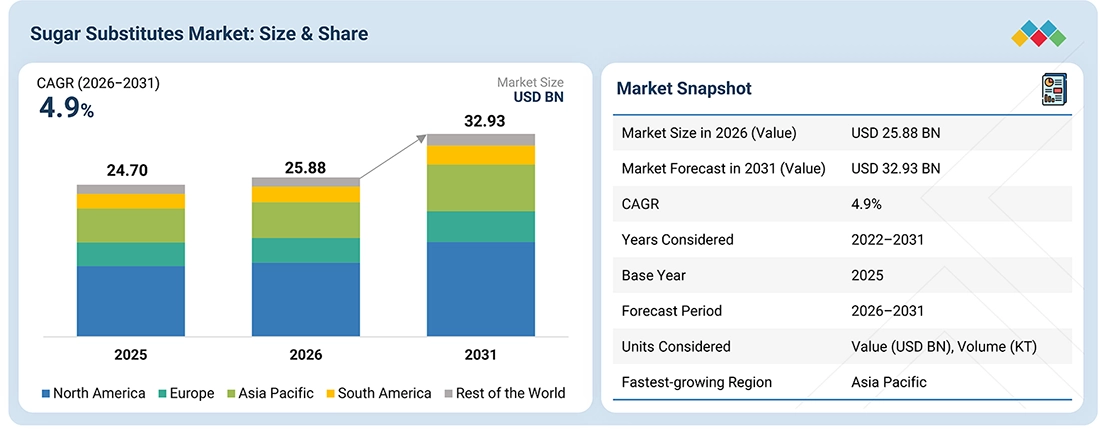
Source: Secondary Research, Interviews with Experts, MarketsandMarkets Analysis
KEY TAKEAWAYS
-
By RegionThe Asia Pacific region is projected to register the highest CAGR of 5.5% in the sugar substitutes market during the forecast period.
-
By TypeThe high-intensity sweeteners segment is expected to exhibit the highest CAGR of 6.0% during the forecast period.
-
By High-intensity Sweetnener SourceThe artificial segment is expected to account for the largest market share during the forecast period.
-
By FormThe dry segment is estimated to account for a larger market share of 56.4% in 2026.
-
By ApplicationThe beverages segment is projected to exhibit the highest CAGR of 5.3% during the forecast period.
-
COMPETITIVE LANDSCAPE - KEY PLAYERSCargill, Incorporated (US), ADM (US), International Flavors & Fragrances Inc. (US), Ingredion Incorporated (US), and Tate & Lyle (UK) are some of the star companies identified in the sugar substitutes market.
-
COMPETITIVE LANDSCAPE - Startups/SMEsMycoTechnology, Inc. (US) and Foodchem International Corporation (China) are identified as progressive startups/SMEs operating in the sugar substitutes market.
The sugar substitutes market refers to the global industry involved in the production, distribution, and utilization of ingredients used to replace or reduce conventional sugar in food, beverages, and other applications. These ingredients include high-intensity sweeteners (HIS), high-fructose corn syrup (HFCS), and low-intensity sweeteners (LIS). Sugar substitutes are used across applications such as beverages, confectionery, bakery products, dairy products, processed foods, and other products to achieve desired sweetness, reduce sugar content, or modify formulation characteristics.
TRENDS & DISRUPTIONS IMPACTING CUSTOMERS' CUSTOMERS
The sugar substitutes market is undergoing rapid transformation, shaped by evolving consumer preferences, regulatory developments, and advances in sweetener technologies. Key trends include the growing adoption of natural-origin sweeteners such as stevia and monk fruit, alongside increasing demand for reduced-sugar and low-calorie food and beverage products. Manufacturers are investing in improved sweetener formulations, taste-modulation technologies, and blended sweetening systems to overcome aftertaste and maintain product quality. Innovation in fermentation and biotechnology is also expanding opportunities for developing novel sweetening ingredients. Disruption comes from changing sugar-reduction policies, nutrition-labeling requirements, and the emergence of new sweetener technologies that challenge established ingredients. At the same time, fluctuations in raw material costs, production economics, and supply availability influence sourcing and pricing strategies. Ultimately, the market's trajectory is being shaped by the intersection of health-conscious consumption, taste performance, regulatory compliance, and innovation in sweetener development.
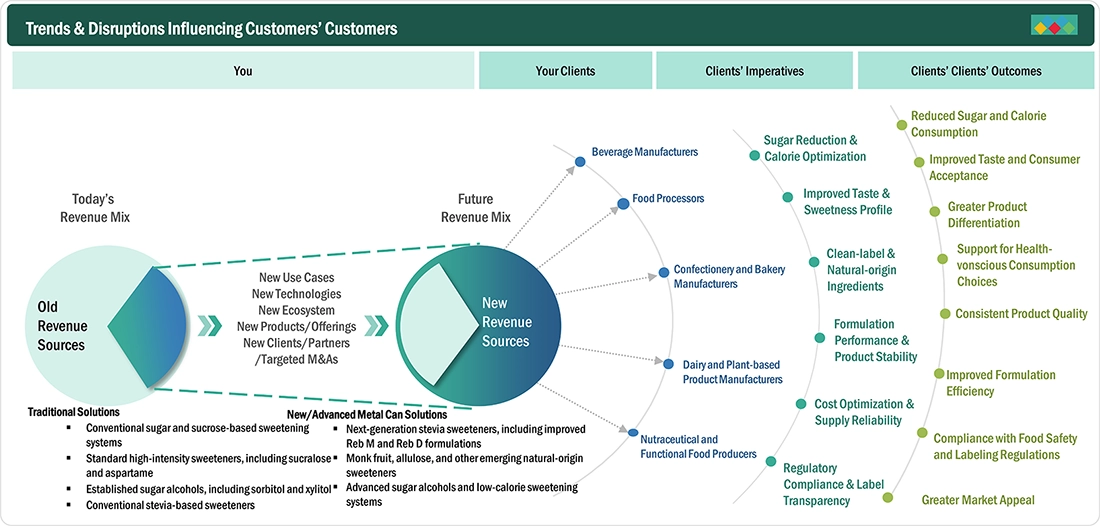
Source: Secondary Research, Interviews with Experts, MarketsandMarkets Analysis
MARKET DYNAMICS

Level
-
Increase in health consciousness

-
Partnerships established between sweetener manufacturers and food & beverage entities


Level
-
Adherence to international quality standards and regulations for alternative sweeteners and sweetener-based products

-
Side effects associated with consumption of sugar substitutes


Level
-
Advancement in research & development in sweetener technology for diabetic wellness

-
Rising investments in sugar substitute production


Level
-
Product labeling and claims issues

-
Premium pricing of natural sweeteners owing to higher costs of production

Source: Secondary Research, Interviews with Experts, MarketsandMarkets Analysis
Increase in health consciousness
Growing health consciousness and increasing concerns about excessive sugar consumption are driving demand for sugar substitutes across the food and beverage industry. Consumers are increasingly seeking reduced-sugar and low-calorie alternatives to support weight management and healthier dietary choices. This shift is encouraging manufacturers to reformulate beverages, confectionery, dairy products, and processed foods using high-intensity sweeteners (HIS), high-fructose corn syrup (HFCS), and low-intensity sweeteners (LIS), depending on their formulation requirements. The growing popularity of functional beverages, sugar-free confectionery, and reduced-sugar packaged foods is further supporting market growth. As manufacturers prioritize sweetness, taste, and product functionality, demand for innovative sweetener blends and taste-modulation technologies is expected to increase.
Adherence to international quality standards and regulations for alternative sweeteners and sweetener-based products
The sugar substitutes market is influenced by food safety regulations and quality standards governing the approval, permitted use, labeling, and maximum usage levels of sweeteners. Regulatory authorities across major markets require manufacturers to demonstrate the safety and suitability of sweetening ingredients for specific applications. Differences in regulatory frameworks across countries can increase product approval timelines, compliance costs, and formulation complexity for ingredient suppliers and food manufacturers. Requirements related to ingredient declarations, nutrition labeling, and claims such as sugar-free or reduced-sugar also influence product development and commercialization. Compliance with established food safety and quality requirements is therefore essential for market participants seeking to expand their sweetener portfolios and supply international markets.
Advancement in research & development in sweetener technology for diabetic wellness
Advances in stevia, monk fruit, sugar alcohols, and fermentation-derived sweeteners are helping manufacturers improve taste and reduce aftertaste. These innovations support reduced-sugar product development, although suitability for people with diabetes depends on the ingredient and finished product.
Product labeling and claims issues
Varying regulations for claims such as sugar-free, no added sugar, and reduced sugar create compliance challenges. Clear ingredient declarations, accurate nutritional information, and substantiated claims are essential to maintain consumer trust and support market adoption.
SUGAR SUBSTITUTES MARKET TRENDS, GROWTH, AND FORECAST [LATEST]: COMMERCIAL USE CASES ACROSS INDUSTRIES
| COMPANY | USE CASE DESCRIPTION | BENEFITS |
|---|---|---|
 |
IFF applies taste-modulation technologies and flavor expertise to help manufacturers reduce sugar while maintaining desirable sweetness, flavor balance, and overall sensory quality in food and beverage products. | Helps minimize taste trade-offs associated with sugar reduction, improves consumer acceptance, and supports the development of differentiated reduced-sugar formulations. |
 |
ADM offers sweetening solutions that include stevia, monk fruit, and other sweetener systems. These ingredients can be incorporated into beverages, dairy, snacks, and other food products to support sugar reduction and calorie management. | Enables manufacturers to reformulate products for reduced-sugar and low-calorie positioning, diversify sweetener options, and address changing consumer preferences. |
 |
Ingredion provides sugar-reduction solutions through its stevia-based sweeteners, including PURECIRCLE ingredients, alongside specialty sweeteners and formulation expertise. These solutions serve beverages, dairy, confectionery, and other food applications. | Supports sugar reduction, helps improve sweetness and formulation performance, and enables manufacturers to develop products that meet clean-label and reduced-calorie requirements. |
Logos and trademarks shown above are the property of their respective owners. Their use here is for informational and illustrative purposes only.
MARKET ECOSYSTEM
The sugar substitutes market is driven by food and beverage manufacturers seeking ingredients that support sugar reduction, sweetness optimization, and product reformulation. Ingredient manufacturers develop and supply high-intensity sweeteners (HIS), high-fructose corn syrup (HFCS), and low-intensity sweeteners (LIS), focusing on taste performance, functionality, quality, and supply reliability. Regulatory authorities establish requirements for sweetener safety, permitted applications, labeling, and usage levels, while research institutions and technology providers support innovation in sweetener production and taste modulation. Demand-side companies, including beverage, confectionery, bakery, and dairy manufacturers, influence ingredient development through their formulation requirements and consumer-focused product strategies. Key suppliers such as Cargill, Incorporated, ADM, Ingredion Incorporated, Tate & Lyle, and International Flavors & Fragrances Inc. provide sweeteners and sugar-reduction solutions for diverse applications. End users incorporate these ingredients into products to meet demand for reduced-sugar, low-calorie, and alternative sweetening options. This ecosystem reflects the interconnected roles of ingredient suppliers, food and beverage manufacturers, regulatory bodies, and technology developers in shaping market growth.
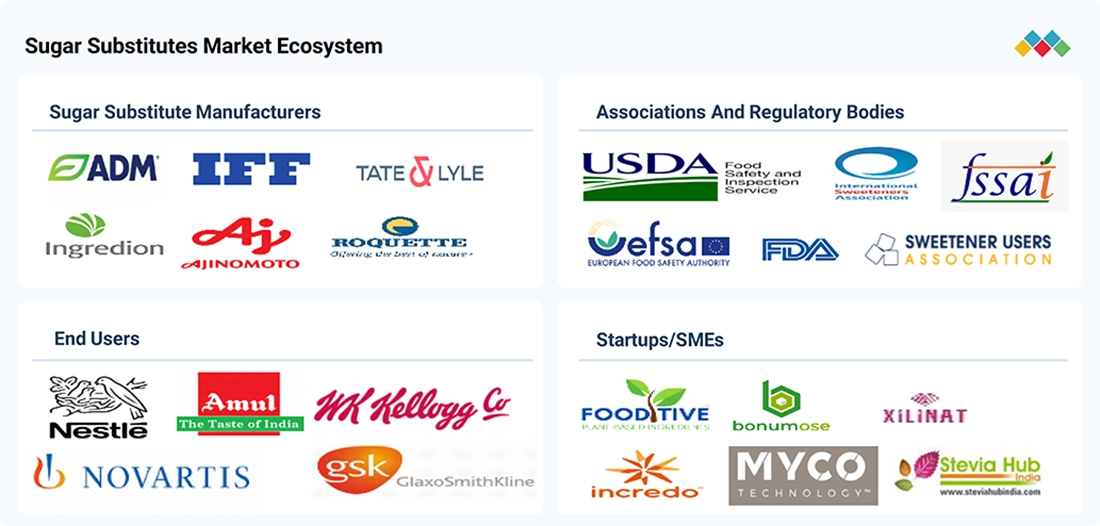
Logos and trademarks shown above are the property of their respective owners. Their use here is for informational and illustrative purposes only.
MARKET SEGMENTS
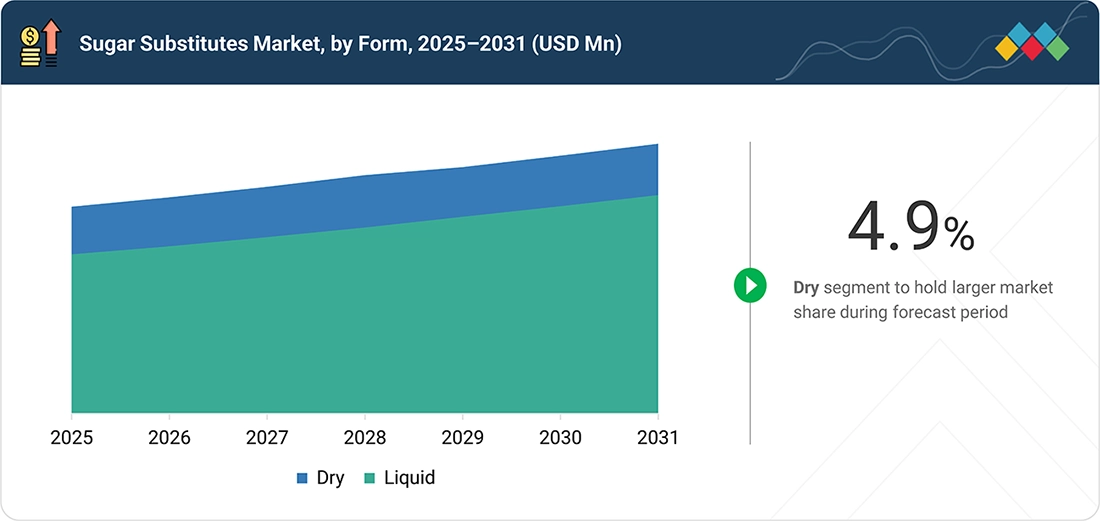
Source: Secondary Research, Interviews with Experts, MarketsandMarkets Analysis
By Type
High-intensity sweeteners are expected to register the highest CAGR during the forecast period, driven by increasing demand for low-calorie and reduced-sugar products and growing adoption across food and beverage applications.
By High-intensity Sweetnener Source
Artificial sweeteners are expected to account for the largest market share during the forecast period, supported by their established use in food and beverages, high sweetness intensity, cost-effectiveness, and wide availability.
By Form
Dry forms are expected to account for a larger market share than liquid forms during the forecast period, driven by their ease of handling, storage stability, longer shelf life, and suitability for incorporation into diverse food and beverage formulations.
By Application
Beverages are expected to register the highest CAGR during the forecast period, driven by increasing demand for low-calorie soft drinks, sugar-free beverages, flavored waters, and reduced-sugar functional drinks.
REGION
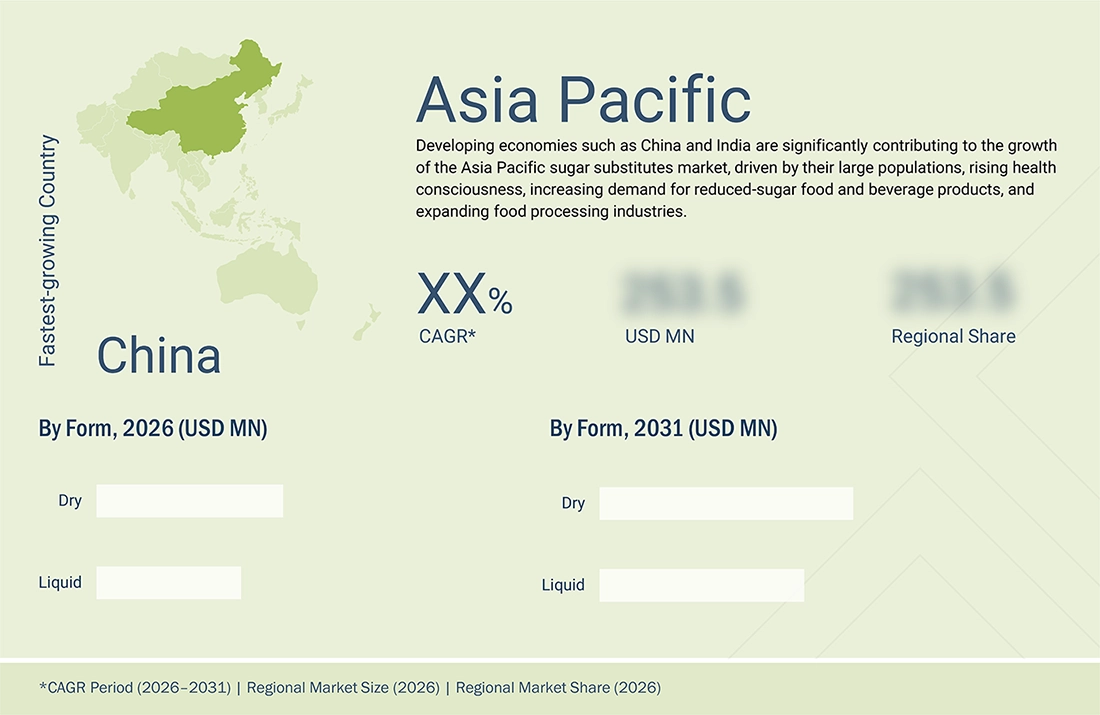
Asia Pacific to register highest CAGR during forecast period
Asia Pacific is expected to register the fastest growth in the global sugar substitutes market during the forecast period. Countries such as China and India are contributing significantly to regional demand, supported by their large populations, expanding food and beverage industries, rising health consciousness, and growing demand for reduced-sugar and low-calorie products. Increasing consumption of packaged beverages, confectionery, dairy products, and processed foods is encouraging manufacturers to adopt sugar substitutes and reformulate existing products. These factors, combined with growing investment in sweetener innovation and expanding food processing capabilities, are expected to strengthen Asia Pacific's position as a key growth market for sugar substitutes.
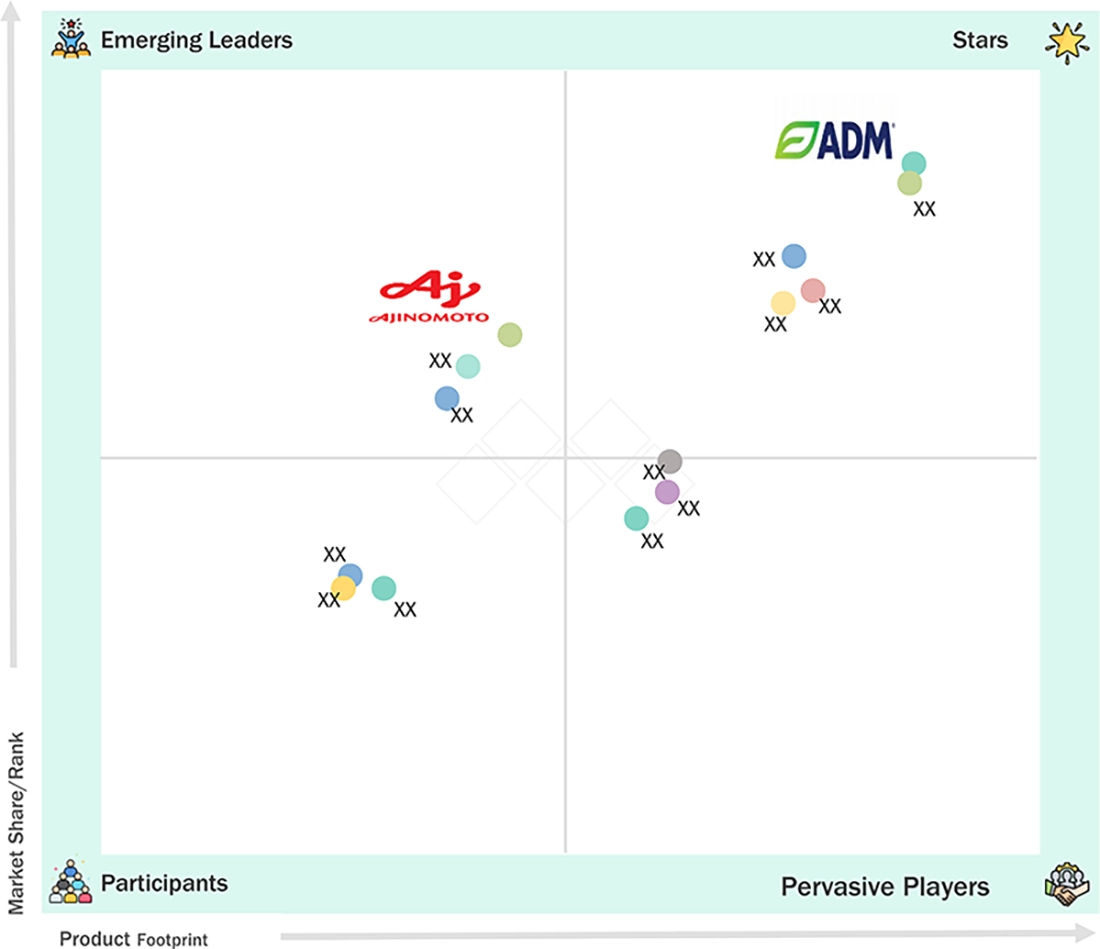
SUGAR SUBSTITUTES MARKET TRENDS, GROWTH, AND FORECAST [LATEST]: COMPANY EVALUATION MATRIX
In the sugar substitutes market matrix, Cargill, Incorporated (US), ADM (US), International Flavors & Fragrances Inc. (US), Ingredion Incorporated (US), and Tate & Lyle (UK) are identified as star players, supported by their diverse sweetener portfolios, global presence, extensive food and beverage customer networks, formulation expertise, and investments in sugar-reduction technologies. These companies strengthen their market positions through natural sweeteners, specialty ingredients, taste-modulation solutions, and product innovation. Meanwhile, Ajinomoto Co., Inc. (Japan), Roquette Frères (France), MANE (France), and other specialized ingredient and sweetener companies contribute through focused product portfolios, emerging sweetening technologies, application-specific solutions, and strategic partnerships. Their capabilities in natural-origin sweeteners, polyols, and innovative sugar-reduction approaches support the evolving needs of food and beverage manufacturers.
Source: Secondary Research, Interviews with Experts, MarketsandMarkets Analysis
KEY MARKET PLAYERS
- Cargill, Incorporated (US)
- ADM (US)
- International Flavors & Fragrances Inc. (US)
- Ingredion (US)
- Tate & Lyle (UK)
- Ajinomoto Co. Inc. (Japan)
- GLG Life Tech Corporation (Canada)
- Celanese Corporation (US)
- Roquette Frères (France)
- Prakash Chemicals International Private Limited (India)
- Mane (France)
- Döhler GmbH (Germany)
- Morita Kagaku Kogyo Co., Ltd. (Japan)
- zuChem (US)
- VW Ingredients (Netherlands)
MARKET SCOPE
| REPORT METRIC | DETAILS |
|---|---|
| Market Size in 2026 (Value) | USD 25.88 BN |
| Market Forecast in 2031 (Value) | USD 32.93 BN |
| Growth Rate | CAGR of 4.9% from 2026 to 2031 |
| Years Considered | 2022–2031 |
| Base Year | 2025 |
| Forecast Period | 2026–2031 |
| Units Considered | Value (USD Million/Billion), Volume (KT) |
| Report Coverage | Revenue Forecast, Company Ranking, Competitive Landscape, Growth Factors, and Trends |
| Segments Covered |
|
| Regions Covered | North America, Asia Pacific, Europe, South America, Rest of the World |
WHAT IS IN IT FOR YOU: SUGAR SUBSTITUTES MARKET TRENDS, GROWTH, AND FORECAST [LATEST] REPORT CONTENT GUIDE
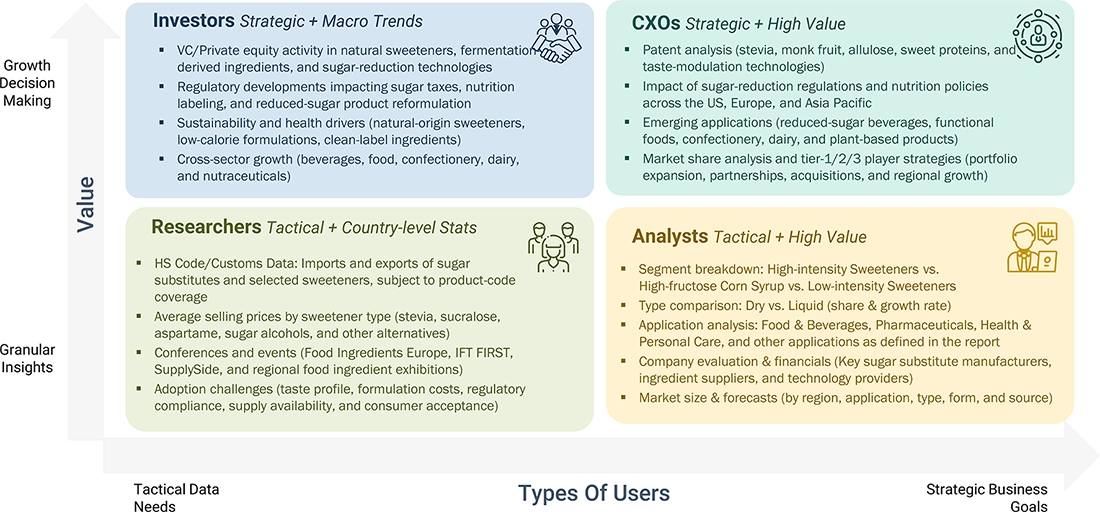
DELIVERED CUSTOMIZATIONS
We have successfully delivered the following deep-dive customizations:
| CLIENT REQUEST | CUSTOMIZATION DELIVERED | VALUE ADDS |
|---|---|---|
| Sugar Substitutes Market | Detailed analysis of all market segments, including Type (High-Intensity Sweeteners, High-Fructose Corn Syrup, and Low-Intensity Sweeteners); Source (Artificial and Natural); Form (Dry and Liquid); Application (Food, Beverages, and other applications included in the report); regional markets; competitive landscape; and company benchmarking. |
|
| Sugar Substitutes Market Assessment |
|
|
RECENT DEVELOPMENTS
- Februrary 2026 : Tate & Lyle and Manus launched Yume, a new sweetener brand under The Sweetener Alliance, with Yume M Stevia Sweetener as its first ingredient. The Reb M stevia sweetener is produced through bioconversion at Manus' BioFacility in Augusta, Georgia, and uses an all-Americas supply chain. The product is positioned as a scalable, sugar-like sweetener solution designed to help food and beverage manufacturers reduce sugar while maintaining taste and performance.
- February 2025 : Ingredion announced a collaboration with Oobli to combine Ingredion's natural sweeteners, including stevia, with Oobli's sweet proteins to develop great-tasting and affordable sugar-reduction solutions. The companies had previously co-developed products combining stevia and sweet proteins and used consumer feedback from these products to advance the partnership. The collaboration targets applications across beverages, bakery, yogurt, confectionery, and other food and beverage categories.
- March 2023 : ADM announced that it signed a joint venture agreement with Marel (Netherlands), a leading provider of advanced food processing solutions. The agreement would help establish an innovation center at the renowned Wageningen Campus in the Netherlands. This campus is known as the heart of the country’s food valley. The innovation center’s opening was subject to regulatory approvals and slated for the latter half of 2024. The innovation center is specifically designed to facilitate partnerships between food manufacturers, food scientists, extrusion experts, and culinary professionals.
Table of Contents
 Exclusive indicates content/data unique to MarketsandMarkets and not available with any competitors.
Methodology
This study involved two major approaches in estimating the current size of the sugar substitutes market. Exhaustive secondary research was conducted to collect information on the market, peer, and parent markets. The next step involved validating these findings, assumptions, and sizing with industry experts across the value chain through primary research. Both top-down and bottom-up approaches were employed to estimate the complete market size. After that, market breakdown and data triangulation were used to estimate the market size of segments and subsegments.
Secondary Research
This research study involved the extensive use of secondary sources—directories and databases such as Bloomberg Businessweek and Factiva—to identify and collect information useful for a technical, market-oriented, and commercial study of the market.
In the secondary research process, various sources such as annual reports, press releases & investor presentations of companies, white papers, food journals, certified publications, articles from recognized authors, directories, and databases were referred to to identify and collect information.
Secondary research was mainly used to obtain key information about the industry’s supply chain, the total pool of key players, and market classification and segmentation as per the industry trends to the bottom-most level, regional markets, and key developments from both market- and technology-oriented perspectives.
Primary Research
Extensive primary research was conducted after obtaining information regarding the sugar substitutes market scenario through secondary research. Several primary interviews were conducted with market experts from both the demand and supply sides across major countries of North America, Europe, Asia Pacific, South America, and the Rest of the World. Primary data were collected through questionnaires, emails, and telephonic interviews. The primary sources from the supply side included various industry experts, such as Chief Experience Officers (CXOs), Vice Presidents (VPs), Directors from business development, marketing, research, and development teams, and related key executives from distributors and key opinion leaders. Primary interviews were conducted to gather insights such as market statistics, data on revenue collected from the products and services, market breakdowns, market size estimations, market forecasting, and data triangulation. Primary research also helped in understanding the various trends related to sugar substitutes by type, manufacturing technology, application, form, source, and region. Stakeholders from the demand side, such as food and beverage companies and health and personal care companies that use sugar substitutes, were interviewed to understand the buyer’s perspective on the suppliers, products, and their current usage of sugar substitutes and the outlook of their business, which will affect the overall market.
Following is the breakup of the primary study:
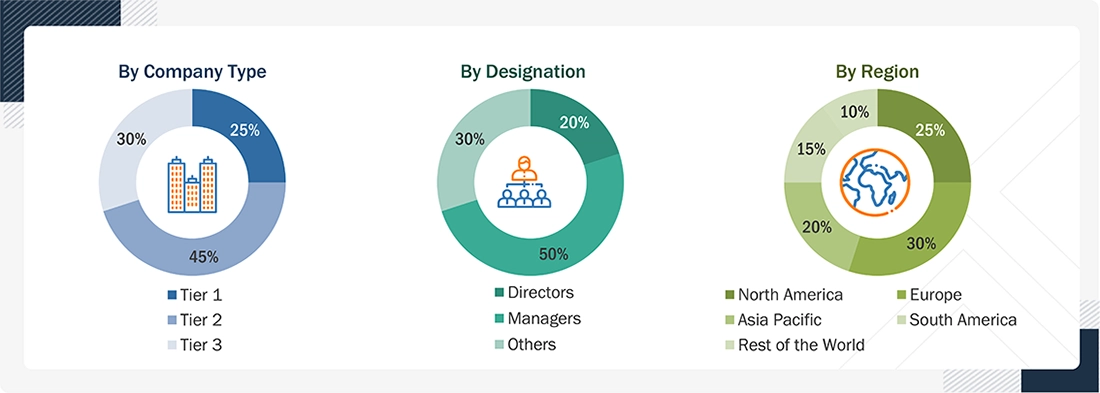
Note: The three tiers of the companies are defined based on their total revenues in 2024 or 2025, based on the availability of financial data: Tier 1: Revenue >USD 1 billion; Tier 2: USD 100 million ≤ revenue ≤ USD 1 billion; Tier 3: Revenue USD 100 million.
To know about the assumptions considered for the study, download the pdf brochure
|
COMPANY |
DESIGNATION |
|
Cargill, Incorporated (US) |
General Manager |
|
ADM (US) |
Sales Manager |
|
Ingredion (US) |
Manager |
|
International Flavors & Fragrances Inc. (US) |
Head of Processing Department |
|
Tate & Lyle (UK) |
Marketing Manager |
|
Ajinomoto Co. Inc. (Japan) |
Sales Executive |
Market Size Estimation
- Both the top-down and bottom-up approaches were used to estimate and validate the total size of the sugar substitutes market. These approaches were also used extensively to determine the size of various subsegments in the market. The research methodology used to estimate the market size includes the following details:
- The key players in the industry and the overall market were identified through extensive secondary research.
- All shares, splits, and breakdowns were determined using secondary sources and verified through primary sources.
- All possible parameters that affect the market covered in this research study were accounted for, viewed in extensive detail, verified through primary research, and analyzed to obtain final quantitative and qualitative data.
- The research included the study of reports, reviews, and newsletters of top market players, along with extensive interviews for opinions from leaders, such as CEOs, directors, and marketing executives.
Sugar Substitutes Market : Top-Down and Bottom-Up Approach

Source: MarketsandMarkets Analysis
Data Triangulation
After arriving at the overall market size from the estimation process explained above, the total market was split into several segments and subsegments. The data triangulation and market breakdown procedures were employed, wherever applicable, to estimate the overall sugar substitutes market and arrive at the exact statistics for all segments and subsegments. The data were triangulated by studying various factors and trends from the demand and supply sides. The market size was also validated using both the top-down and bottom-up approaches.
Market Definition
As defined by the FDA, “Sugar substitutes refer to substances that have little to no calories or other nutrients.” Sugar substitutes are substances used instead of sweeteners with sugar or sugar alcohol. They may also be called artificial sweeteners, non-nutritive sweeteners (NNS), and non-caloric sweeteners. Sugar substitutes can be defined as a food additive that duplicates the effect of sugar in taste, but usually with less food energy.
Key Stakeholders
- Raw material suppliers
-
Regulatory bodies, which include the following:
- Food and Drug Administration (FDA)
- European Food Safety Authority (EFSA)
- US Department of Agriculture (USDA)
- Food Standards Australia New Zealand (FSANZ)
- Health Canada – Food Directorate
- China National Center for Food Safety Risk Assessment (CFSA)
- World Health Organization (WHO)
- Government agencies and NGOs
-
End users, which include the following:
- Food & beverage manufacturers/suppliers
- Health & personal care product manufacturers/suppliers
- Retailers
- Commercial Research & Development (R&D) institutions and financial institutions
- Importers and exporters of sugar substitutes
- Traders, distributors, and suppliers
- Research organizations
- Trade associations and industry bodies
Report Objectives
- To determine and project the size of the sugar substitutes market with respect to the type, manufacturing technology, application, form, source, and region in terms of value over five years, ranging from 2026 to 2031
- To identify the attractive opportunities in the market by determining the largest and fastest-growing segments across regions
- To provide detailed information about the key factors influencing market growth (drivers, restraints, opportunities, and challenges)
- To analyze the opportunities in the market for stakeholders and provide details of the competitive landscape for market leaders
- To analyze the micro-markets with respect to individual growth trends, prospects, and their contribution to the total market
- To identify and profile the key players in the market
- To understand the competitive landscape and identify the major growth strategies adopted by players across the key regions
Customization Options
With the given market data, MarketsandMarkets offers customizations according to company-specific scientific needs.
The following customization options are available for the report:
Product Analysis
- Product Matrix, which gives a detailed comparison of the product portfolio of each company.
Geographic Analysis
With the given market data, MarketsandMarkets offers customizations according to company-specific scientific needs.
- Further breakdown of the Rest of Europe sugar substitutes market into key countries.
- Further breakdown of the Rest of Asia Pacific sugar substitutes market into key countries.
- Further breakdown of the Rest of South America sugar substitutes market into key countries.
Company Information
Detailed analyses and profiling of additional market players (up to five)


Personalize This Research
- Triangulate with your Own Data
- Get Data as per your Format and Definition
- Gain a Deeper Dive on a Specific Application, Geography, Customer or Competitor
- Any level of Personalization
Let Us Help You
- What are the Known and Unknown Adjacencies Impacting the Sugar Substitutes Market
- What will your New Revenue Sources be?
- Who will be your Top Customer; what will make them switch?
- Defend your Market Share or Win Competitors
- Get a Scorecard for Target Partners

Custom Market Research Services
We Will Customise The Research For You, In Case The Report Listed Above Does Not Meet With Your Requirements
Get 10% Free CustomisationTESTIMONIALS

Business Innovation Director
US Based Leading Agribusiness,
Food and Ingredients ManufacturerI highly appreciate the team's efficiency for a well conducted study that helped us clarify some blind spots in food and agricultural niche markets. Although compiling information for B2B markets is very difficult, the MnM team pulled out the task successfully. The quality of research, level of insights, and responsiveness of team were commendable.
- US Sugar Substitutes Market
- Canada Sugar Substitutes Market
- Mexico Sugar Substitutes Market
- Germany Sugar Substitutes Market
- UK Sugar Substitutes Market
- France Sugar Substitutes Market
- Italy Sugar Substitutes Market
- Spain Sugar Substitutes Market
- China Sugar Substitutes Market
- India Sugar Substitutes Market
- Japan Sugar Substitutes Market
- Brazil Sugar Substitutes Market
- Argentina Sugar Substitutes Market
- Rest Of Europe Sugar Substitutes Market
- Rest Of Asia Pacific Sugar Substitutes Market
- Rest Of South America Sugar Substitutes Market



Growth opportunities and latent adjacency in Sugar Substitutes Market