Research Use (RUO) Recombinant Protein Market

Research Use (RUO) Recombinant Protein Market by Product (Cytokines, Growth Factors), Formulation (Lyophilized, Liquid), Species (Human, Mouse), Host (Mammalian, Yeast), Application (Cell Culture), End User, Competition, Region - Global Forecast to 2031



RESEARCH USE RECOMBINANT PROTEIN MARKET SIZE, SHARE & GROWTH SNAPSHOT
Source: Secondary Research, Interviews with Experts, MarketsandMarkets Analysis
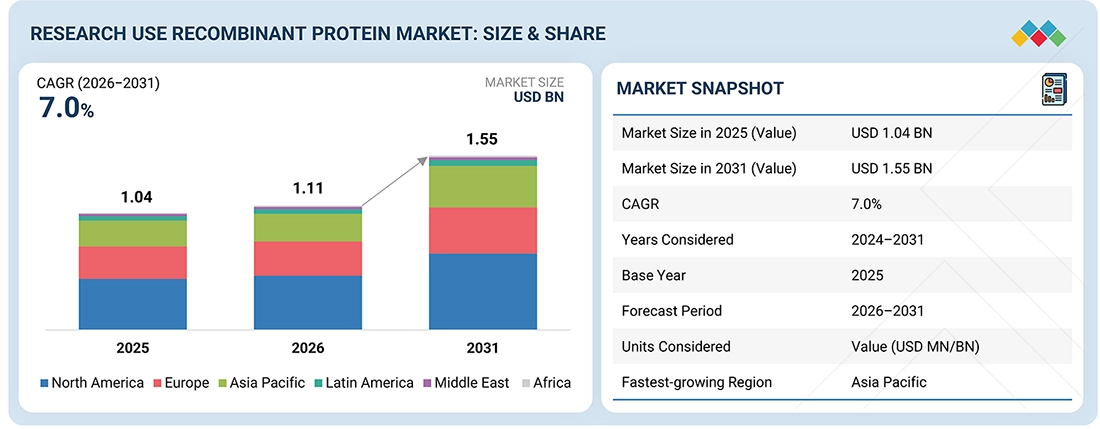
The global research use recombinant protein market is projected to grow from USD 1.11 billion in 2026 to USD 1.55 billion by 2031, at a CAGR of 7.0% during the forecast period. The market was valued at USD 1.04 billion in 2025. Market growth is driven by expanding drug discovery and preclinical research, increasing use of advanced cell-based models, and rising demand for biologically active proteins in oncology, immunology, stem cell, and infectious disease studies. Recombinant cytokines, chemokines, growth factors, antigens, enzymes, receptors, and ligands are increasingly used in cell culture, assay development, target validation, biomarker discovery, and disease modeling. Additionally, growing adoption of organoids and human cell-based assays is strengthening demand for human-expressed, high-purity, low-endotoxin, and species-specific proteins. The increasing preference for animal-free, carrier-free, and application-validated recombinant proteins is further supporting reproducibility and broader adoption across pharmaceutical, biotechnology, CRO, and academic research settings.
KEY TAKEAWAYS
-
MARKET SNAPSHOT:
Base Year Market Size (2025): USD 1.04 Billion
Current Market Size (2026): USD 1.11 Billion
Forecast Market Size (2031): USD 1.55 Billion
CAGR (2026–2031): 7.0% -
SEGMENT LEADERSHIP:
Regional Leader: North America accounted for the largest share (43.6%) of the research use recombinant protein market in 2025.
Product Leader: Cytokines & chemokines segment accounted for the largest market share of 25.9% in 2025.
Application Leader: Cell culture & differentiation segment accounted for the largest market share of 29.5% in 2025.
End User Leader: Pharmaceutical & biotechnology companies accounted for the largest share of the research use recombinant protein market in 2025. -
MARKET OUTLOOK & COMPETITIVE LANDSCAPE:
Thermo Fisher Scientific Inc. (US), Bio-Techne (US), and Merck KGaA (Germany) were identified as some of the star players in the research use recombinant protein market, given their strong market share and product footprint.
STEMCELL Technologies (Canada), RayBiotech, Inc. (US), ProSpec-Tany TechnoGene Ltd. (Israel), ProteoGenix (France), and Aviva Systems Biology Corporation (US), among others, have distinguished themselves among startups and SMEs by securing strong footholds in specialized niche areas, underscoring their potential as emerging market leaders.
The research use recombinant protein market is growing due to the increasing use of cytokines, growth factors, antigens, enzymes, receptors, and ligands in drug discovery, cell culture, disease modeling, biomarker research, and advanced cell-based assays, alongside improvements in protein expression, purification, bioactivity, and stability.
TRENDS & DISRUPTIONS IMPACTING CUSTOMERS' CUSTOMERS
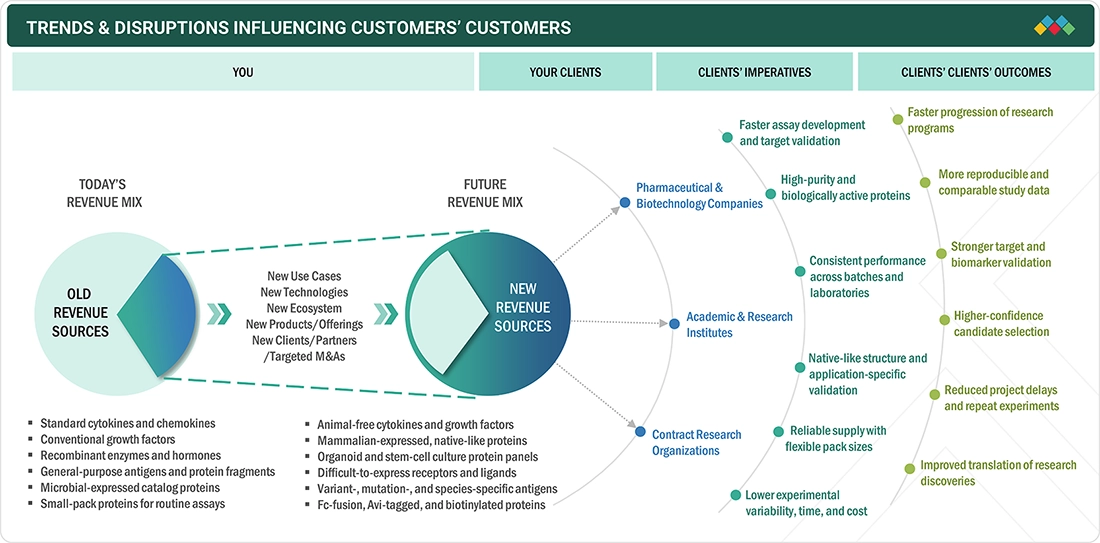
The research use recombinant protein market is shifting from standard catalog proteins toward highly specialized, application-specific, and biologically relevant protein formats that improve experimental reproducibility and translational value. Adoption of animal-free cytokines and growth factors, mammalian-expressed native-like proteins, organoid and stem cell culture protein panels, and difficult-to-express receptors and ligands is increasing across drug discovery and disease-modeling workflows. Additionally, rising demand for high-purity, low-endotoxin, species-specific, and batch-consistent proteins is encouraging suppliers to expand variant, mutation-specific, Fc-fusion, Avi-tagged, and biotinylated offerings. These advances support faster assay development, stronger target validation, and more reliable comparison of research data across laboratories. Furthermore, flexible pack sizes, improved protein stability, and enhanced compatibility with complex cell-based models are reducing experimental variability, repeat testing, project delays, and overall research costs, thereby accelerating market growth.
Source: Secondary Research, Interviews with Experts, MarketsandMarkets Analysis
MARKET DYNAMICS

Level
-
Growing pipeline for recombinant therapeutic proteins

-
Rising preclinical research activities in advanced therapies (cell & gene therapies)


Level
-
High lot-to-lot variability and inconsistency in off-the-shelf recombinant proteins for research use applications

-
High costs associated with premium recombinant proteins expressed in mammalian cells


Level
-
Emergence of ready-to-use liquid formulations for integration into automated high-throughput workflows

-
Development of bio-engineered, heat-stable protein variants for continuous cell lines & cell culture


Level
-
Advent of non-protein mimics and alternative modalities

-
Rising supply chain complexities

Source: Secondary Research, Interviews with Experts, MarketsandMarkets Analysis
Driver: Growing pipeline for recombinant therapeutic proteins
The expanding pipeline of recombinant therapeutics is increasing demand for research use recombinant proteins in target validation, assay development, mechanism studies, and preclinical research. Pharmaceutical and biotechnology companies require cytokines, growth factors, receptors, ligands, antigens, and enzymes to evaluate biological activity, optimize cell culture conditions, and screen therapeutic candidates. Growth in immuno-oncology, regenerative medicine, rare diseases, and cell and gene therapy is further broadening demand across protein types and formats. This is encouraging suppliers to expand high-purity, low-endotoxin, animal-free, and application-validated protein portfolios.
Restraint: High lot-to-lot variability and inconsistency in off-the-shelf recombinant proteins for research use applications
Lot-to-lot variability can reduce experimental reproducibility and limit confidence in off-the-shelf recombinant proteins. Differences in expression systems, purification methods, folding, glycosylation, aggregation, endotoxin levels, and storage conditions may alter biological activity between batches. These inconsistencies are especially problematic in stem cell differentiation, immune-cell activation, organoid culture, receptor-binding assays, and potency studies. Researchers may need to repeat experiments, adjust concentrations, or qualify alternative suppliers, increasing time and cost. Consequently, end users increasingly prefer vendors offering stringent quality controls, batch-specific documentation, validated bioactivity, and dependable supply.
Opportunity: Emergence of ready-to-use liquid formulations for integration into automated high-throughput workflows
Ready-to-use liquid recombinant proteins offer a strong opportunity in automated and high-throughput research workflows. These formulations reduce reconstitution steps, handling errors, contamination risk, and operator variability, making them suitable for robotic liquid handling, cell-based screening, organoid culture, immune profiling, and assay miniaturization. Standardized concentrations can improve dosing consistency across multiwell plates and repeated experiments. Demand is expected to rise as pharmaceutical companies, CROs, biotechnology firms, and academic laboratories expand automation. Suppliers can differentiate through preservative-free formats, flexible pack sizes, extended refrigerated stability, and compatibility with closed culture systems.
Challenge: Advent of non-protein mimics and alternative modalities
Non-protein mimics and alternative modalities are creating competition for recombinant proteins in selected research applications. Small molecules, peptides, synthetic ligands, nucleic acid-based agonists, engineered scaffolds, and biomimetic materials can reproduce specific protein functions while offering improved stability, consistency, storage, and cost advantages. These alternatives may reduce recombinant protein use in pathway modulation, receptor activation, and differentiation studies. However, they may not fully replicate native protein structure, post-translational modifications, or biological complexity. Suppliers must therefore emphasize biological relevance, validated performance, and develop more stable, engineered, and cost-efficient recombinant protein formats.
RESEARCH USE (RUO) RECOMBINANT PROTEIN MARKET: COMMERCIAL USE CASES ACROSS INDUSTRIES
| COMPANY | USE CASE DESCRIPTION | BENEFITS |
|---|---|---|
 |
R&D Systems Fluorokines fluorescent-labeled recombinant proteins applied in flow-cytometric detection of CARs, immune checkpoint receptors, and antigen-binding cells for immuno-oncology and cell therapy research | Direct and specific target staining | Streamlined receptor-expression analysis | Supports CAR-T characterization | Reduced assay complexity |
 |
Gibco PeproTech cytokines and growth factors applied in primary cell expansion, stem cell differentiation, organoid and 3D culture, cell-signaling studies, and investigational CAR-T workflows | Reliable cell culture supplementation | Supports disease modeling and drug discovery | Enables cell expansion and differentiation | Broad application versatility |
Logos and trademarks shown above are the property of their respective owners. Their use here is for informational and illustrative purposes only.
MARKET ECOSYSTEM
The research use recombinant protein market ecosystem comprises raw material suppliers, product providers, end users, and regulatory authorities. Raw material suppliers, including Thermo Fisher Scientific Inc. (US), Sartorius AG (Germany), and Danaher Corporation (US), support protein production by providing expression media, host-cell systems, chromatography materials, filtration products, buffers, stabilizers, enzymes, and other inputs used in recombinant protein development and purification. Product providers such as Thermo Fisher Scientific Inc. (US), Bio-Techne Corporation (US), and Merck KGaA (Germany) supply cytokines, chemokines, growth factors, recombinant antigens, receptors, ligands, enzymes, and ECM proteins for research applications. Regulatory authorities, including the US FDA, CDSCO, MHRA, OLAW, and Health Canada, establish requirements relevant to product labeling, biosafety, quality controls, research practices, and handling of biological materials. End users, including Amgen Inc. (US), Harvard University (US), MIT (US), and other pharmaceutical companies, biotechnology firms, CROs, and academic institutes, use these proteins in cell culture, drug discovery, cancer research, stem cell studies, infectious disease research, biomarker validation, and preclinical development.
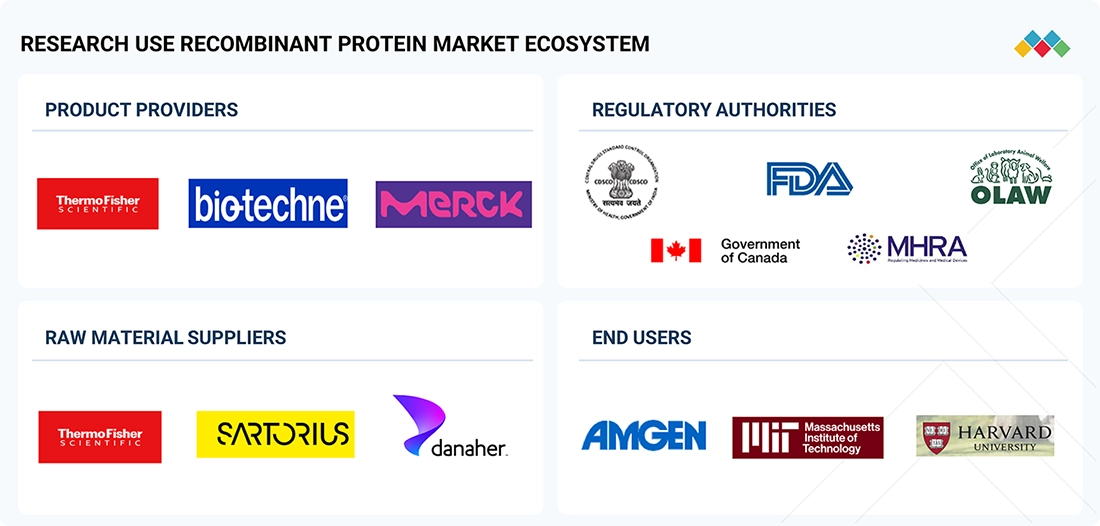
Logos and trademarks shown above are the property of their respective owners. Their use here is for informational and illustrative purposes only.
MARKET SEGMENTS
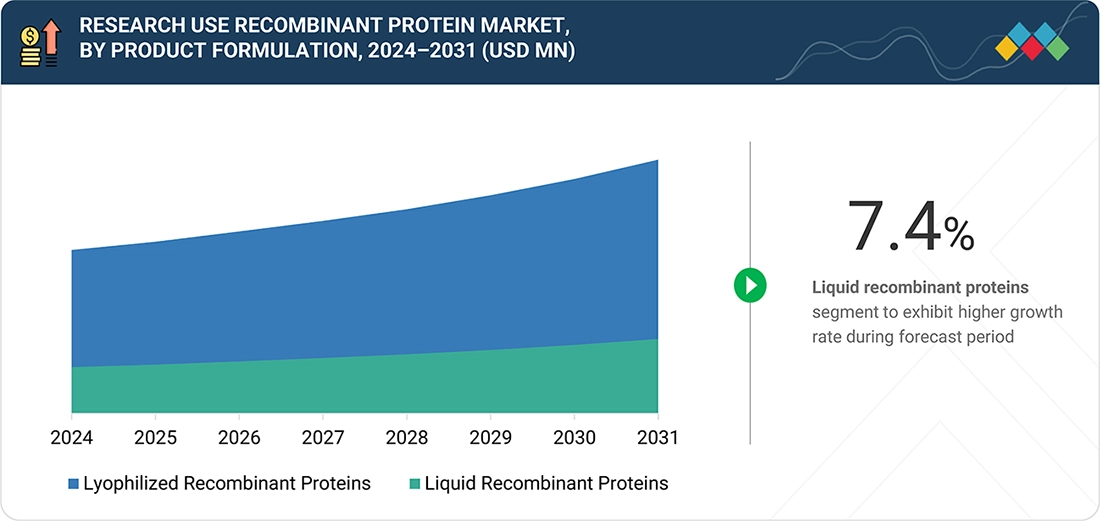
Source: Secondary Research, Interviews with Experts, MarketsandMarkets Analysis
Research Use Recombinant Protein Market, By Product
In 2025, the cytokines & chemokines segment dominated the research use recombinant protein market. This leadership is driven by the extensive use of cytokines & chemokines in immune-cell activation, proliferation, differentiation, migration, and inflammatory pathway studies. These proteins are widely applied in immunology, oncology, stem cell research, organoid culture, infectious disease studies, and cell-based assays. The recurring requirement for interleukins, interferons, colony-stimulating factors, and chemotactic proteins across pharmaceutical, biotechnology, CRO, and academic laboratories continues to support steady demand for this segment.
Research Use Recombinant Protein Market, By Application
In 2025, the cell culture & differentiation segment dominated the research use recombinant protein market due to the widespread use of cytokines, growth factors, chemokines, and other bioactive proteins for maintaining, expanding, and differentiating stem cells, immune cells, primary cells, and organoids. Recombinant proteins are essential for controlling cellular behavior and establishing reproducible in vitro models. Growing adoption of advanced cell culture systems, disease models, and regenerative medicine research is strengthening demand for high-purity, low-endotoxin, and biologically active proteins across research laboratories.
Research Use Recombinant Protein Market, By End User
In 2025, pharmaceutical & biotechnology companies dominated the research use recombinant protein market due to their strong focus on drug discovery, target validation, assay development, and preclinical research. These companies widely use cytokines, growth factors, antigens, receptors, ligands, and enzymes in cell-based screening, biomarker studies, mechanism-of-action analysis, and therapeutic candidate evaluation. Rising R&D investment, expanding biologics and advanced therapy pipelines, and increasing adoption of physiologically relevant disease models are driving demand for validated, application-specific, and batch-consistent recombinant proteins across this end-user group.
REGION
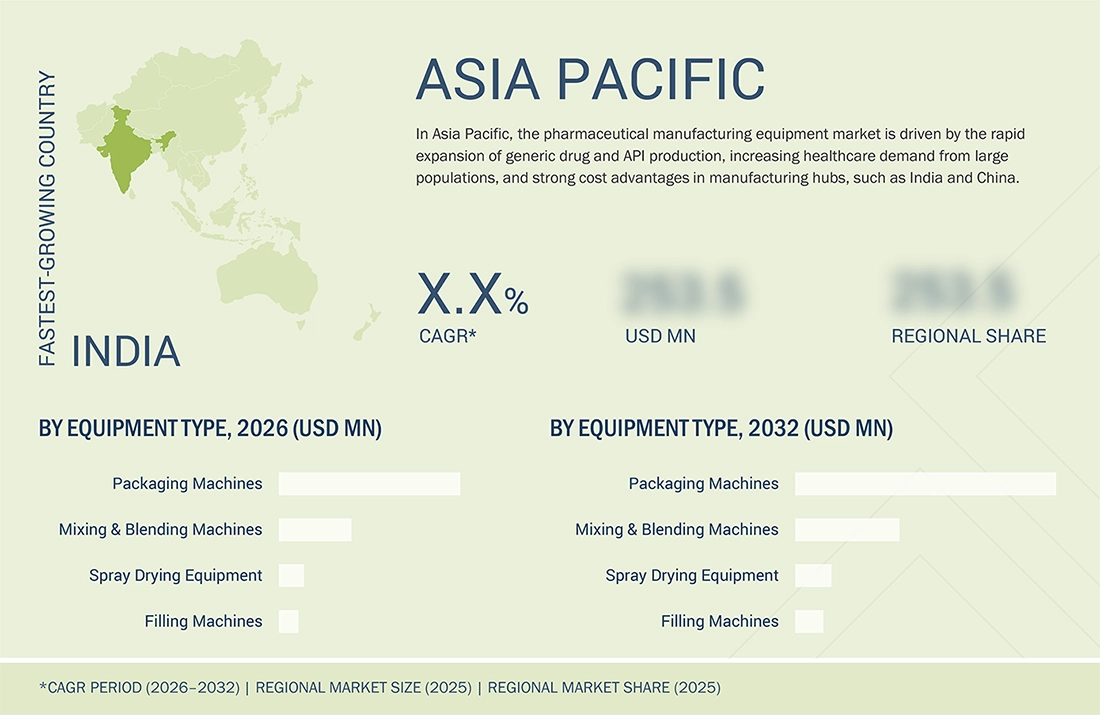
Asia Pacific to be fastest-growing region in global research use recombinant protein market during forecast period
The Asia Pacific research use recombinant protein market is expected to register the highest CAGR during the forecast period, supported by expanding biopharmaceutical R&D, increasing investment in life sciences, and growing use of recombinant proteins across drug discovery and preclinical research. China, India, Japan, and South Korea are strengthening their research capabilities through new biotechnology facilities, expanding academic laboratories, and increasing participation in biologics and advanced therapy development. Rising demand for cytokines, chemokines, growth factors, recombinant antigens, enzymes, receptors, and ligands in cell culture, cancer research, stem cell studies, infectious disease research, and assay development is accelerating regional adoption. In addition, the growth of CROs, increasing use of organoid and human cell-based models, and improving access to high-purity, low-endotoxin, and species-specific proteins are supporting market expansion. Competitive production costs and the growing presence of regional recombinant protein suppliers further contribute to rapid market growth.
RESEARCH USE (RUO) RECOMBINANT PROTEIN MARKET: COMPANY EVALUATION MATRIX
In the research use recombinant protein company evaluation matrix, Thermo Fisher Scientific Inc. (US) is positioned as a star player due to its broad product portfolio, strong global distribution network, and established presence across pharmaceutical, biotechnology, CRO, and academic research settings. Through its Gibco, Invitrogen, and PeproTech brands, the company offers cytokines, chemokines, growth factors, enzymes, receptors, ligands, antigens, and specialized protein formats used in cell culture, drug discovery, immunology, oncology, stem cell research, and disease modeling. Its portfolio breadth, strong quality controls, application support, and focus on high-purity, low-endotoxin, animal-free, and biologically active proteins strengthen its competitive position. Sino Biological Inc. (China) is considered an emerging leader in this market. The company is expanding its position through an extensive range of mammalian-expressed recombinant proteins, viral antigens, immune checkpoint proteins, receptors, enzymes, and species-specific offerings. Its focus on difficult-to-express proteins, rapid catalog expansion, research-focused customization, and growing international reach is supporting wider adoption and strengthening its market presence.
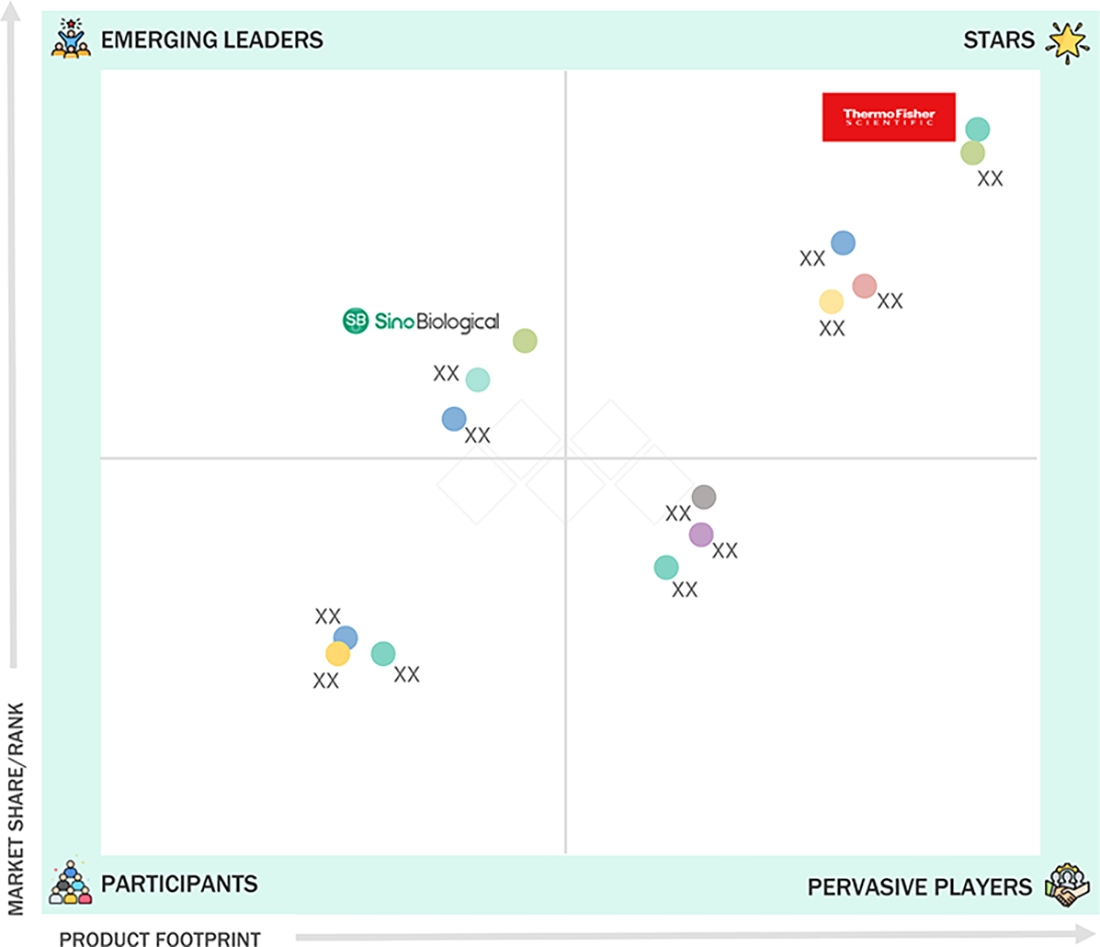
Source: Secondary Research, Interviews with Experts, MarketsandMarkets Analysis
KEY MARKET PLAYERS
- Thermo Fisher Scientific Inc. (US)
- Bio-Techne (US)
- Merck KGaA (Germany)
- Danaher Corporation (US)
- Revvity (US)
- BPS Bioscience, Inc. (US)
- Bio-Rad Laboratories, Inc. (US)
- Sartorius AG (Germany)
- Sino Biological, Inc. (China)
- GenScript (China)
- Proteintech Group, Inc. (US)
- Miltenyi Biotec (Germany)
- Enzo Biochem Inc. (US)
- Abnova Corporation (Taiwan)
MARKET SCOPE
| REPORT METRIC | DETAILS |
|---|---|
| Market Size in 2026 (Value) | USD 1.11 Billion |
| Market Forecast in 2031 (Value) | USD 1.55 Billion |
| Growth Rate | CAGR of 7.0% from 2026 to 2031 |
| Years Considered | 2024-2031 |
| Base Year | 2025 |
| Forecast Period | 2026-2031 |
| Units Considered | Value (USD Million/Billion) |
| Report Coverage | Revenue forecast, company ranking, competitive landscape, growth factors, and trends |
| Segments Covered |
|
| Regions Covered | North America, Europe, Asia Pacific, Latin America, Middle East & Africa |
WHAT IS IN IT FOR YOU: RESEARCH USE (RUO) RECOMBINANT PROTEIN MARKET REPORT CONTENT GUIDE
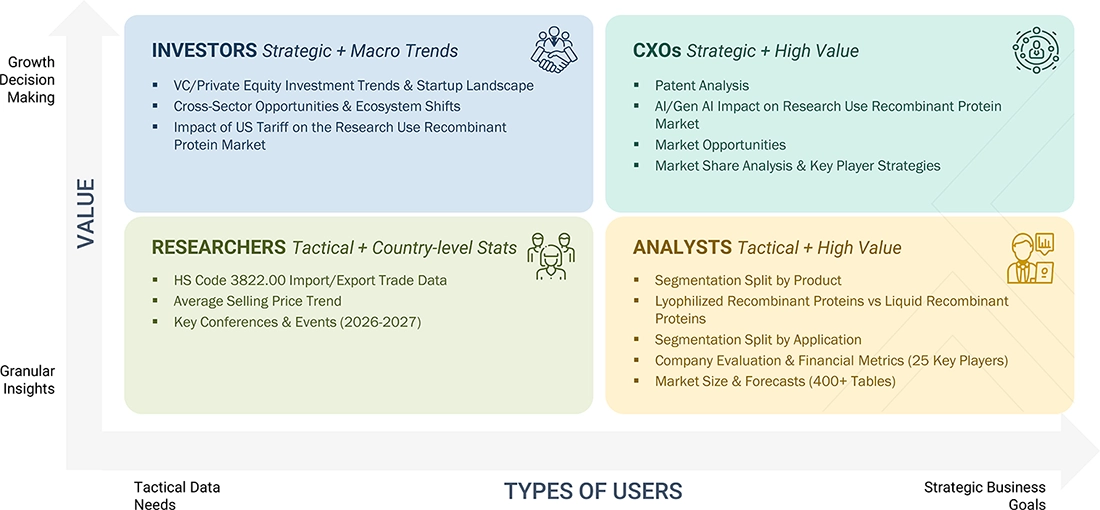
DELIVERED CUSTOMIZATIONS
We have successfully delivered the following deep-dive customizations:
| CLIENT REQUEST | CUSTOMIZATION DELIVERED | VALUE ADDS |
|---|---|---|
| Rest of Europe Breakdown | Country-level market sizing and growth forecasts (Switzerland, Sweden, Turkey, the Netherlands, Norway, Poland, Portugal, Romania, Denmark, Estonia, Finland, the Czech Republic, Greece, Austria, Belgium, and Russia) | Provides granular country-level insights, enabling clients to prioritize high-growth markets |
| Company Evaluation |
|
Delivers visibility into competitors, helping clients identify partners, evaluate positioning, and detect market gaps for smarter collaboration, outsourcing, and strategic market entry decisions |
RECENT DEVELOPMENTS
- June 2026 : Merck KGaA entered into a definitive agreement to acquire Bio-Techne. The proposed transaction would add Bio-Techne’s recombinant protein portfolio, including cytokines and growth factors, to Merck KGaA’s Life Science business.
- May 2026 : Miltenyi Biotec launched research-grade recombinant human IL-18, a pro-inflammatory cytokine optimized for cell-culture and functional-assay applications. The product supports NK-cell expansion and activation, cytokine-induced memory-like NK-cell generation, CAR-T research, and investigation of IL-18-mediated signaling pathways.
- October 2025 : IDT and Profluent Bio activated a strategic collaboration to design and optimize next-generation enzymes. The partnership combines Profluent Bio’s generative AI protein-design platform with IDT’s enzymology, genomics, validation, and manufacturing capabilities. IDT will test, validate, and scale Profluent-designed sequences with the objective of converting AI-generated designs into production-ready enzymes for epigenetics, cancer research, synthetic biology, and gene-editing workflows.
Table of Contents
 Exclusive indicates content/data unique to MarketsandMarkets and not available with any competitors.
Methodology
This research study extensively utilized secondary sources, directories, and databases to identify and collect valuable information for analyzing the research use recombinant protein market. In-depth interviews were conducted with various primary respondents, including key industry participants, subject-matter experts (SMEs), C-level executives of key market players, and industry consultants, to obtain and verify critical qualitative & quantitative information and assess the growth prospects of the market. The global market size estimated through secondary research was triangulated with inputs from primary research to determine the final market size.
Secondary Research
Secondary research was primarily used to identify and collect information for the comprehensive technical, market-oriented, and commercial study of the research use recombinant protein market. The secondary sources used for this study include the Antibody Society, Pharmaceutical Research and Manufacturers of America (PhRMA), National Institutes of Health (NIH), Centers for Disease Control and Prevention (CDC), National Center for Biotechnology Information (NCBI), American Medical Association (AMA), Recombinant Antibody Network (RAN) National Cancer Institute (NCI), Association of Medical Laboratory Immunologists (AMLI), American Society of Clinical Oncology (ASCO), United States Department of Agriculture (USDA), United States Food & Drug Administration (US FDA), American Association for Cancer Research (AACR), Biomolecular Interaction Network Database, European Medicines Agency (EMA), British Society for Immunology (BSI), and Institute for Molecular Medicine. Secondary research also included the use of academic journals and company websites; corporate & regulatory filings, such as annual reports, SEC filings, investor presentations, and financial statements; business magazines & research journals; press releases; and trade, business, and professional associations, among others. Secondary data were collected and analyzed to determine the overall size of the research use recombinant protein market, which was subsequently validated through primary research. These sources were also used to gather key information about major players, market classification, and segmentation based on industry trends, regional/country-level markets, market developments, and technological perspectives.
Primary Research
In-depth interviews were conducted with various primary respondents, including key industry participants, subject-matter experts (SMEs), C-level executives of key market players, and industry consultants, to obtain and verify critical qualitative & quantitative information and assess the market’s prospects. Various primary sources from the supply & demand sides of the market were interviewed to obtain qualitative and quantitative information.
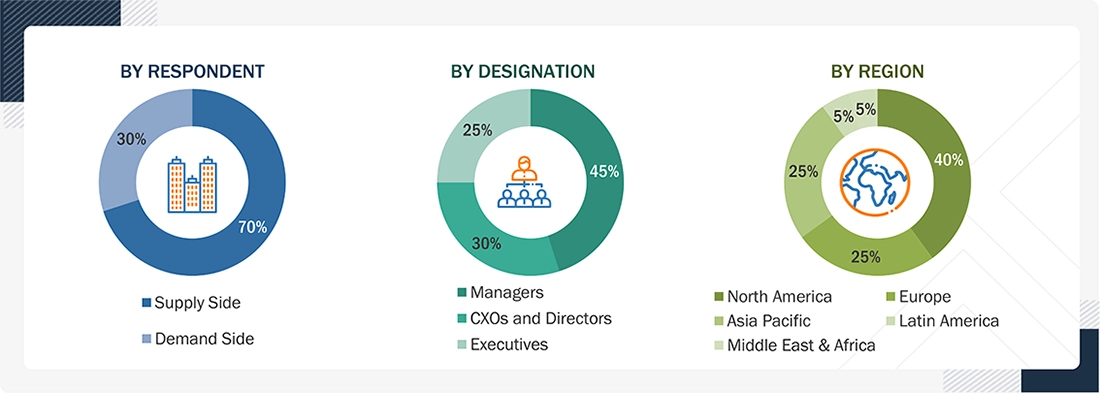
To know about the assumptions considered for the study, download the pdf brochure
Market Size Estimation
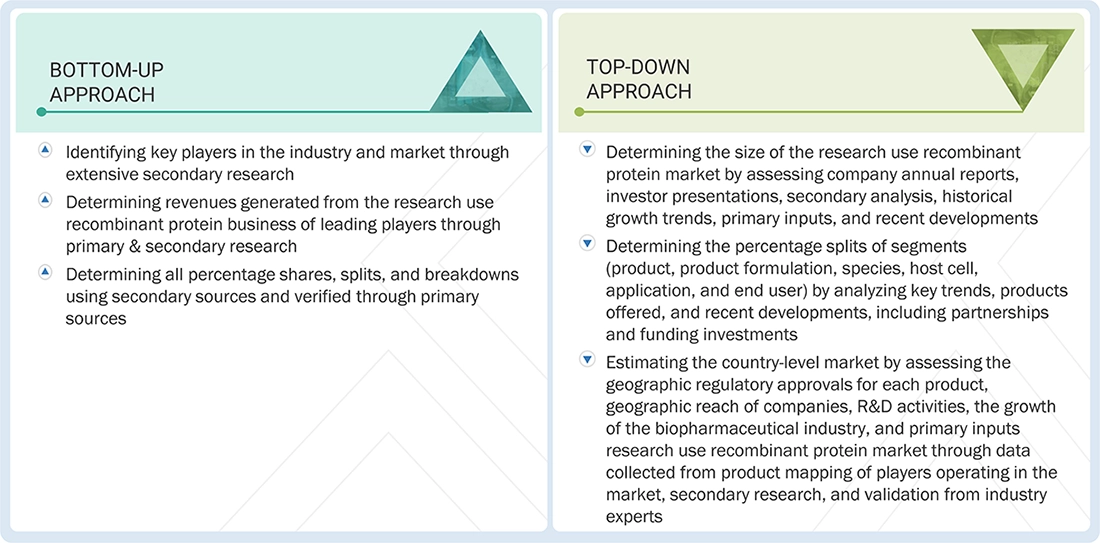
The top-down and bottom-up approaches were used to estimate & validate the total size of the research use recombinant protein market. These methods were also used extensively to estimate the size of various market segments.
Research Use (RUO) Recombinant Protein Market : Top-Down and Bottom-Up Approach
Data Triangulation
After evaluating the overall market size through the market size estimation process, the total market was divided into several segments and subsegments. Data triangulation and market breakdown procedures were used, whenever applicable, to complete the overall market engineering process and obtain precise statistics for all segments and subsegments. The data was triangulated by analyzing various factors and trends from the demand and supply sides.
Market Definition
The research use recombinant protein is defined as a recombinant protein supplied as a finished off-the-shelf consumable for research applications such as basic/academic research, drug discovery & translational research, and preclinical research. Lyophilized and liquid formulations of research use recombinant proteins are considered in the report scope. These proteins originate from different species, including human, mouse/murine, and non-human primates, among others. Research use recombinant proteins are expressed in different types of hosts such as bacterial cells, mammalian cells, insect cells, and yeast & fungi, among others, which are also considered in the report scope.
Key Stakeholders
- Pharmaceutical & biotechnology companies
- Contract research organizations (CROs)
- Life science companies
- Academic & research institutes
- Private research institutes
- Venture capitalists & investors
- Market research & consulting firms
- Medical institutions & universities
Report Objectives
- To define, describe, and forecast the research use recombinant protein market based on product, product formulation, species, host cell, application, end user, and region
- To provide detailed information regarding the major factors influencing the market growth (such as drivers, restraints, opportunities, and challenges)
- To strategically analyze micromarkets concerning individual growth trends, prospects, and contributions to the overall market
- To analyze the opportunities in the market for stakeholders and provide details of the competitive landscape for market leaders
- To forecast the size of the market segments concerning six main regions, namely, North America, Europe, Asia Pacific, Latin America, the Middle East, and Africa
- To strategically profile the key players in the market and comprehensively analyze their core competencies and market rankings
- To track and analyze competitive developments such as product launches, acquisitions, expansions, agreements, partnerships, and collaborations in the market
- To benchmark players within the research use recombinant protein market using the ‘Company Evaluation Matrix' framework, which analyzes market players based on various parameters within the broad categories of business and product/service strategy
Available customizations:
With the given market data, MarketsandMarkets offers customizations per the company’s specific needs. The following customization options are available for this report:
Geographical Analysis
- Further breakdown of the Rest of Europe research use recombinant protein market, by country
- Further breakdown of the Rest of Asia Pacific research use recombinant protein market, by country
- Further breakdown of the Rest of Latin America research use recombinant protein market, by country
- Further breakdown of the Rest of Middle East research use recombinant protein market, by country
Company Information
- Detailed analysis and profiling of additional market players (up to five)


Personalize This Research
- Triangulate with your Own Data
- Get Data as per your Format and Definition
- Gain a Deeper Dive on a Specific Application, Geography, Customer or Competitor
- Any level of Personalization
Let Us Help You
- What are the Known and Unknown Adjacencies Impacting the Research Use (RUO) Recombinant Protein Market
- What will your New Revenue Sources be?
- Who will be your Top Customer; what will make them switch?
- Defend your Market Share or Win Competitors
- Get a Scorecard for Target Partners

Custom Market Research Services
We Will Customise The Research For You, In Case The Report Listed Above Does Not Meet With Your Requirements
Get 10% Free CustomisationTESTIMONIALS

JAYANT RAJPUROHIT
Director of Market Insights, Data and Analytics
SFI Health,
Leading Pharmaceutical Companywww.sfihealth.com/

We at SFI Health approached MarketsandMarkets for an Opportunity Assessment on "Incidence and Prevalence of Focus Indications" as we wanted to know the most attractive HCPs like Physician, Functional MD, Naturopath and Pharmacist. The project was critical for us to ensure our focus on the right target which would enable sustainable growth and profitability for SFI Health. The business insights provided exceeded our expectations and we were extremely impressed. The team at MarketsandMarkets is highly professional and detail oriented and very well understood our business needs. MarketsandMarkets offers a unique combination of expertise and dedicated engagement model. We identified 2 new products to be launched in coming months, based on the research findings provided by MarketsandMarkets. We are happy with the services and would strongly recommend MarketsandMarkets to my peers in the industry.

BEATRIZ DE LA CALLE
Head of Commercial Analytics
Qualicaps,
Leading Pharmaceutical Companywww.qualicaps.com/

We partnered with MarketsandMarkets for an assessment study on hard empty capsules. The team was extremely professional in understanding our business requirements and we received timely responses to all our queries. The market intelligence and the recommendations has met our business requirements. We were extremely impressed to see the final study results; it really exceeded our expectations. The market intelligence offered by MarketsandMarkets, and clarity on next steps will help us achieve our business objective for the Year 2021. We are happy with the services and would strongly recommend MarketsandMarkets to my peers in the industry.

Bob Williams,
Senior Director Business Development & Innovation
Bracco Diagnostics Inc.,
Italian Multinational in life sciences sector and a World Leader in imaging diagnosticsimaging.bracco.com/us-en
We were pleased with targeted insights that MarketsandMarkets identified from a custom study on the 'Radiation Dose Management Solutions Market'. Your team identified and characterized the market participants as well as underlying trends accurately. This study was useful to Bracco in formulating business strategies for our dose monitoring product lines and we thank MarketsandMarkets for the job well done.
Cody Coonradt,
Market Development and Strategy Manager
3M Health Information Systems,
Leader in Health care Coding, Payment & Analytics Solutions.www.3m.com/3M/en_US/health-information-systems-us
The value for our organization comes from three things: depth of research, specificity of segments and being easy to work with. As important as the first two are, the third can't be underestimated. MarketsandMarkets, maybe more than any other research vendor, wants to know what is top of mind for our team and what big questions we are grappling to answer.
Their customer first approach and high value engagement model, have given us great analysis and excellent value for money
- Brazil Research Use (RUO) Recombinant Protein Market
- Mexico Research Use (RUO) Recombinant Protein Market
- Saudi Arabia Research Use (RUO) Recombinant Protein Market
- UAE Research Use (RUO) Recombinant Protein Market
- Rest Of Europe Research Use (RUO) Recombinant Protein Market
- Rest Of Asia Pacific Research Use (RUO) Recombinant Protein Market
- Rest Of Latin America Research Use (RUO) Recombinant Protein Market
- Rest Of GCC Countries Research Use (RUO) Recombinant Protein Market
- GCC Countries Research Use (RUO) Recombinant Protein Market
- Rest Of Middle East Research Use (RUO) Recombinant Protein Market
- US Research Use (RUO) Recombinant Protein Market
- Canada Research Use (RUO) Recombinant Protein Market
- Germany Research Use (RUO) Recombinant Protein Market
- UK Research Use (RUO) Recombinant Protein Market
- France Research Use (RUO) Recombinant Protein Market
- Italy Research Use (RUO) Recombinant Protein Market
- Spain Research Use (RUO) Recombinant Protein Market
- China Research Use (RUO) Recombinant Protein Market
- Japan Research Use (RUO) Recombinant Protein Market
- India Research Use (RUO) Recombinant Protein Market
- Australia Research Use (RUO) Recombinant Protein Market
- South Korea Research Use (RUO) Recombinant Protein Market






Growth opportunities and latent adjacency in Research Use (RUO) Recombinant Protein Market