SOC as a Service (SOCaaS) Market

SOC as a Service (SOCaaS) Market by Service Type (Managed SIEM & Log Management, Vulnerability Scanning & Assessment, Threat Detection & Remediation), Security Type (Endpoint Security, Network Security, Cloud Security) - Global Forecast to 2031


OVERVIEW
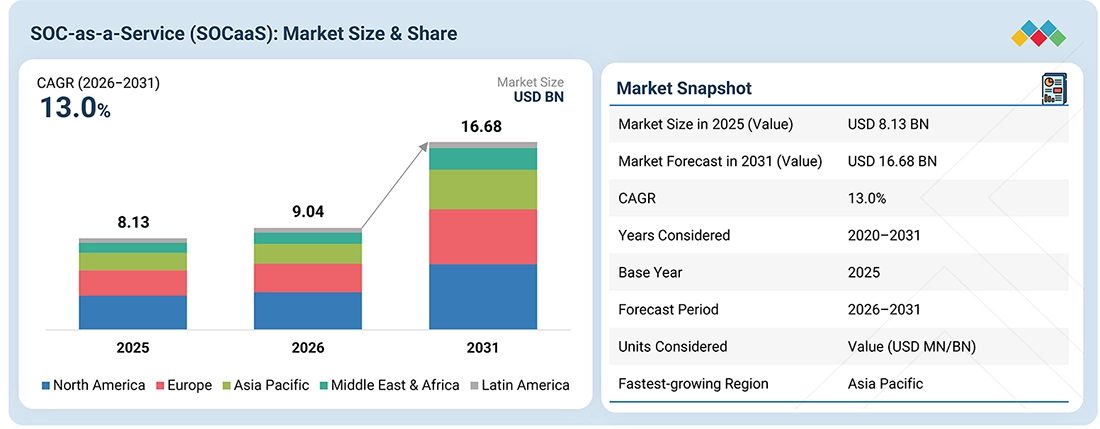
Source: Secondary Research, Interviews with Experts, MarketsandMarkets Analysis
The SOC-as-a-Service (SOCaaS) market is projected to reach USD 16.68 billion by 2031, up from USD 9.04 billion in 2026, at a CAGR of 13.0% over the forecast period. The growing adoption of AI-based security operations is driving the SOCaaS market. More and more enterprises are turning to machine learning, generative AI, and automated analysis to assist with alert prioritization, threat indicator mapping, and prompt incident triage. The 2025 Digital Defense Report by Microsoft shows how AI helps cybercriminals enhance their activities and underscores the importance of having flexible safeguards against cyber threats. Thus, the need for robust defensive mechanisms is clear. Companies offering SOCaaS services that incorporate AI-based analytics and automated response can help their clients maintain high operational efficiency while human experts supervise complex investigations.
KEY TAKEAWAYS
-
BY REGIONNorth America is estimated to account for the largest share of 36.8% of the SOCaaS market in 2026.
-
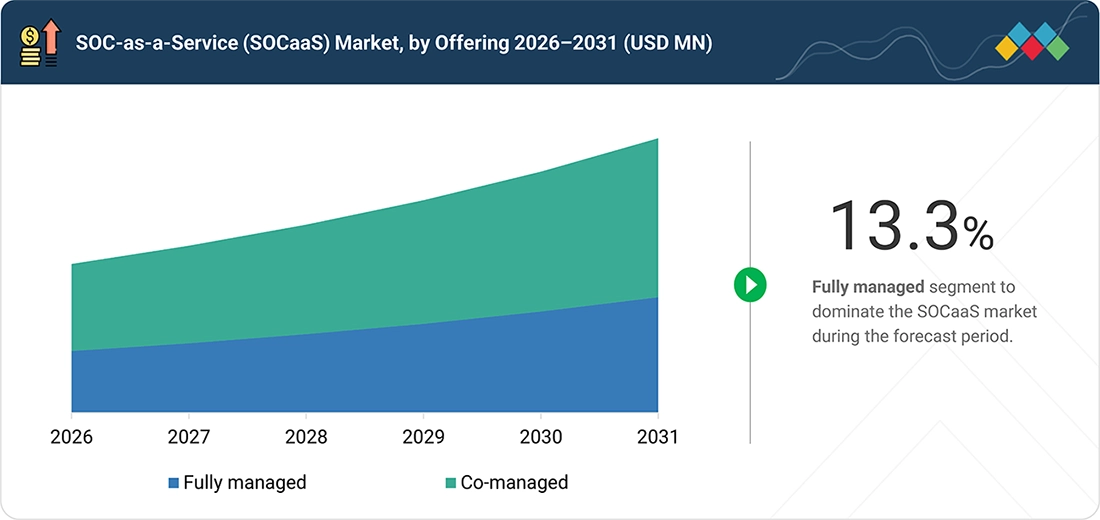
BY OFFERINGBy offering, the fully managed segment is expected to grow at a CAGR of 13.3% during the forecast period.
-
BY SERVICE TYPEBy service type, the managed SIEM & log management segment to grow significantly during the forecast period.
-
BY SECURITY TYPEBy security type, endpoint security will have the largest market size during the forecast period.
-
BY SECTORBy sector, the private sector segment will grow rapidly at a CAGR of 13.6%.
-
BY ORGANIZATION SIZEBy organization size, the SMEs segment is projected to grow rapidly during the forecast period.
-
BY VERTICALBy vertical, the BFSI segment will dominate the SOCaaS market.
-
COMPETITIVE LANDSCAPE - KEY PLAYERSKey players within the SOC-as-a-Service market include Thales, NTT DATA, Fortinet, LevelBlue, and Arctic Wolf Networks, who offer managed security operations services that cover 24/7 monitoring, SIEM and log management, threat intelligence, threat hunting, and incident investigation and response.
-
COMPETITIVE LANDSCAPE - STARTUPS/SMEsOrganizations seeking flexible, scalable security operations without the cost of building dedicated SOC infrastructure are increasingly turning to specialized providers such as Proficio, eSentire, UnderDefense Cybersecurity, Foresite Cybersecurity, and BitLyft Cybersecurity.
SOCaaS providers enable organizations to automatically target security events, detect threats, investigate incidents, and respond across endpoints, networks, cloud resources, and applications, while continuously monitoring, analyzing, and correlating threats using artificial intelligence.
TRENDS & DISRUPTIONS IMPACTING CUSTOMERS' CUSTOMERS
The SOCaaS market is shifting from traditional, analyst-intensive security monitoring to AI-driven, automated, and increasingly autonomous security operations as organizations seek faster threat detection and incident response across distributed environments. SOCaaS providers are integrating endpoint, network, cloud, identity, and application telemetry, while AI and automation enhance alert triage, investigation, threat hunting, and remediation, creating opportunities in agentic AI-powered SOCs, managed detection and response, cloud-native security monitoring, and co-managed SOC services.
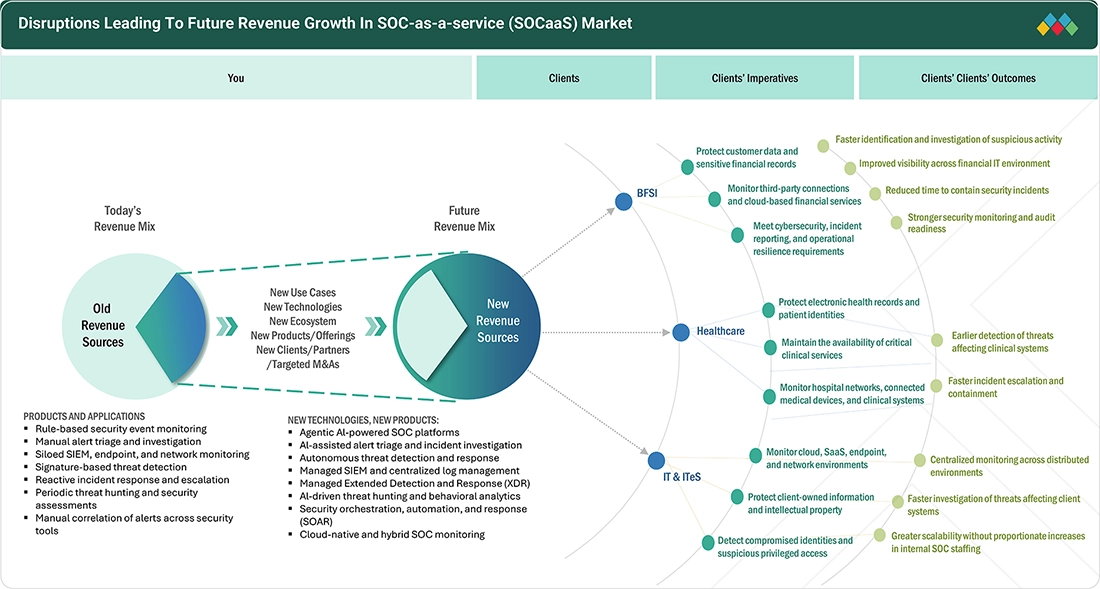
Source: Secondary Research, Interviews with Experts, MarketsandMarkets Analysis
MARKET DYNAMICS

Level
-
Escalating complexity and frequency of cyberattacks

-
Shortage of cybersecurity talent and expertise


Level
-
Integration complexity with compatibility and interoperability issues

-
Cost constraints


Level
-
Rising adoption of cloud-based solutions among SMEs

-
Implementation of Al, ML, and blockchain technologies for cyber defense advancements


Level
-
Data privacy and regulatory complexity

-
Limited customization and misalignment with business needs

Source: Secondary Research, Interviews with Experts, MarketsandMarkets Analysis
Driver: Escalating complexity and frequency of cyberattacks
Increasingly sophisticated cyberattacks, including ransomware, credential theft, phishing, and multi-stage intrusions, are driving demand for SOCaaS. Organizations need continuous monitoring, threat intelligence, and rapid incident investigation to detect malicious activity across distributed IT environments. Managed SOC providers combine specialized analysts, advanced detection technologies, and 24/7 monitoring to strengthen threat detection and response without requiring businesses to build extensive in-house security operations.
Restraint: Integration complexity with compatibility and interoperability issues
Integrating SOCaaS with existing security tools, legacy infrastructure, cloud platforms, and identity systems can pose deployment challenges. Differences in data formats, logging standards, APIs, and vendor architectures may limit telemetry sharing and consistent threat correlation. Organizations may also incur migration costs, experience operational disruption, and become dependent on provider-specific integrations. These challenges can lengthen implementation timelines and complicate centralized monitoring across heterogeneous enterprise environments.
Opportunity: Rising adoption of cloud-based solutions among SMEs
The growing adoption of cloud applications, remote work, and digital business platforms among SMEs creates opportunities for cloud-delivered SOCaaS. Subscription-based services enable smaller organizations to access continuous threat monitoring, security expertise, and incident response without heavy investment in dedicated SOC infrastructure or specialist personnel. As SMEs face rising cyber risks and limited cybersecurity resources, scalable managed services can improve protection across cloud, endpoint, and network environments.
Challenge: Data privacy and regulatory complexity
SOCaaS providers often process sensitive security logs, user information, network activity, and incident records across customer environments, creating data privacy and regulatory challenges. Requirements concerning data residency, cross-border transfers, retention, access controls, and breach reporting can vary across jurisdictions and industries. Providers must establish transparent data-handling practices, secure monitoring infrastructure, and clearly defined responsibilities with customers. Meeting these obligations while maintaining effective threat visibility can increase service delivery complexity and compliance costs.
SOC AS A SERVICE (SOCAAS) MARKET: COMMERCIAL USE CASES ACROSS INDUSTRIES
| COMPANY | USE CASE DESCRIPTION | BENEFITS |
|---|---|---|
 |
Verizon deployed its Advanced Security Operations Center and SIEM capabilities for FUJIFILM Holdings, enabling centralized, 24/7 security monitoring and threat detection across global subsidiaries and business units. | Improved global threat visibility, earlier detection of suspicious behavior, faster incident response, centralized log monitoring, enhanced threat intelligence, and more consistent security surveillance across international operations |
 |
Fortinet provided Grand View University with FortiGuard Managed Detection and Response (MDR) and SOC-as-a-Service to enable proactive, 24/7 network monitoring, automated alerting, and centralized security reporting. | Improved threat visibility, early identification of critical security events, reduced manual log analysis, avoided in-house SIEM investment, simplified reporting, and better management of the university’s security posture |
 |
Chillisoft and its New Zealand security consortium partners extended managed cybersecurity services to Fiji, providing organizations access to SOC-as-a-Service, continuous threat monitoring, and expert-led security support. | Expanded access to specialized cybersecurity expertise, 24/7 threat detection, reduced security management complexity, faster remediation, and scalable protection for organizations with limited in-house security resources |
|
|
SecureCyber deployed Fortinet FortiSIEM, FortiEDR, and FortiSOAR to expand its managed security services, delivering customized, multitenant SOC-as-a-Service dashboards and threat monitoring to customers. | Generated a seven-figure revenue stream, accelerated time to market for managed detection services, improved response times from 45 minutes to two minutes in some cases, and automated low-level alerts |
|
|
Murata Machinery USA adopted Fortinet FortiGuard SOC-as-a-Service for 24/7 security monitoring, improving threat visibility across global operations without requiring its lean IT team to monitor continuously. | Extended security monitoring coverage without hiring two or three additional staff members, improved incident investigation, strengthened threat visibility, and enabled more effective user education following security incidents |
Logos and trademarks shown above are the property of their respective owners. Their use here is for informational and illustrative purposes only.
MARKET ECOSYSTEM
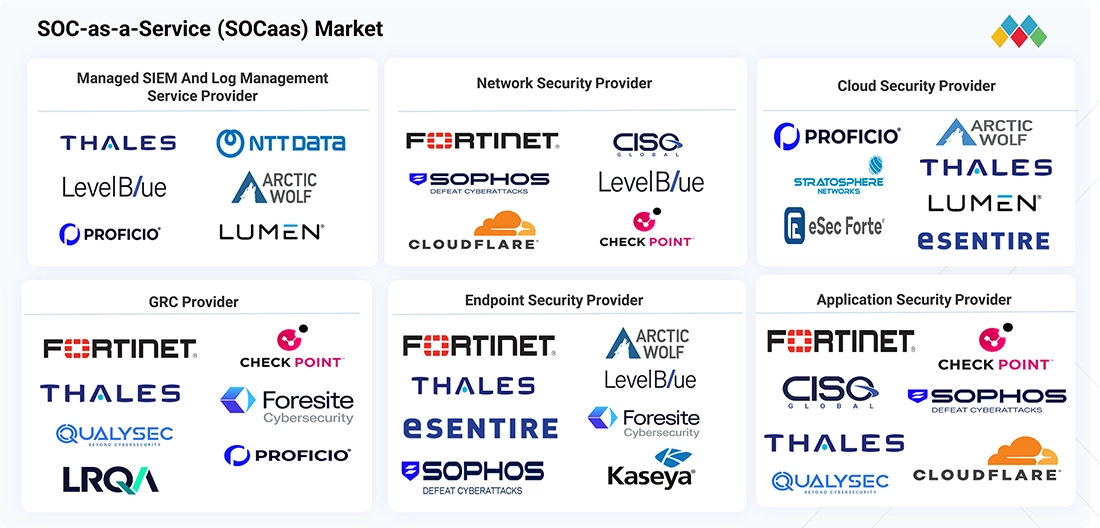
The SOCaaS ecosystem comprises managed SIEM and log management service providers, network security providers, cloud security providers, GRC providers, endpoint security providers, and application security providers. Managed SIEM providers centralize security logs, monitor events, and investigate alerts, while network and cloud security providers provide traffic inspection, infrastructure protection, and cloud threat visibility. GRC providers support security risk assessments, compliance monitoring, and governance, whereas endpoint and application security providers help detect threats targeting devices, software, APIs, and web applications. Together, these ecosystem participants enable SOCaaS providers to integrate security technologies, deliver continuous monitoring, and coordinate threat detection, investigation, and incident response across enterprise environments.
Logos and trademarks shown above are the property of their respective owners. Their use here is for informational and illustrative purposes only.
MARKET SEGMENTS
Source: Secondary Research, Interviews with Experts, MarketsandMarkets Analysis
SOC-as-a-Service (SOCaaS) Market, by Offering
The co-managed segment is expected to lead the SOCaaS market as organizations look to combine internal security teams with external expertise. This model allows enterprises to retain control over security policies and incident decisions while leveraging providers for continuous monitoring, advanced threat detection, specialist support, and investigation. It also helps address cybersecurity workforce shortages without fully outsourcing security operations.
SOC-as-a-Service (SOCaaS) Market, by Service Type
The managed SIEM & log management segment is expected to grow significantly as organizations generate increasing volumes of security telemetry across endpoints, networks, cloud platforms, and applications. Managed services help centralize log collection, correlate security events, identify suspicious activity, and support incident investigations. Outsourcing SIEM operations also reduces the burden of maintaining monitoring infrastructure and specialized personnel.
SOC-as-a-Service (SOCaaS) Market, by Security Type
Endpoint security is expected to remain dominant in the SOCaaS market, as laptops, servers, and remote devices remain key targets for malware, ransomware, and credential-based attacks. SOCaaS providers integrate endpoint telemetry with network and identity signals to identify suspicious behavior, investigate compromises, and coordinate containment. Managed endpoint monitoring also helps organizations strengthen protection across distributed workforces.
SOC-as-a-Service (SOCaaS) Market, by Organization Size
Large enterprises are expected to lead the SOCaaS market because their extensive IT infrastructure, geographically dispersed operations, and complex security environments generate substantial monitoring requirements. These organizations must correlate logs across endpoints, networks, cloud platforms, and business applications while addressing sophisticated threats. SOCaaS enables them to supplement internal security teams with continuous monitoring, specialized expertise, and scalable incident response capabilities.
SOC-as-a-Service (SOCaaS) Market, by Sector
The public sector is expected to lead the SOCaaS market as government agencies face persistent cyber threats targeting citizen information, public services, and critical digital infrastructure. Budget constraints and shortages of specialized cybersecurity personnel can make outsourced monitoring attractive. Government cybersecurity initiatives increasingly emphasize centralized logging, continuous threat detection, incident coordination, and resilience, supporting demand for managed security operations across public institutions.
SOC-as-a-Service (SOCaaS) Market, by Vertical
The BFSI vertical is expected to hold the largest share of the SOCaaS market because financial institutions manage sensitive customer information, payment transactions, and interconnected digital banking systems. Exposure to ransomware, credential theft, fraud, and third-party risks increases the need for continuous monitoring and rapid incident investigation. SOCaaS helps banks, insurers, and payment providers strengthen threat detection, support regulatory obligations, and maintain operational resilience.
REGION
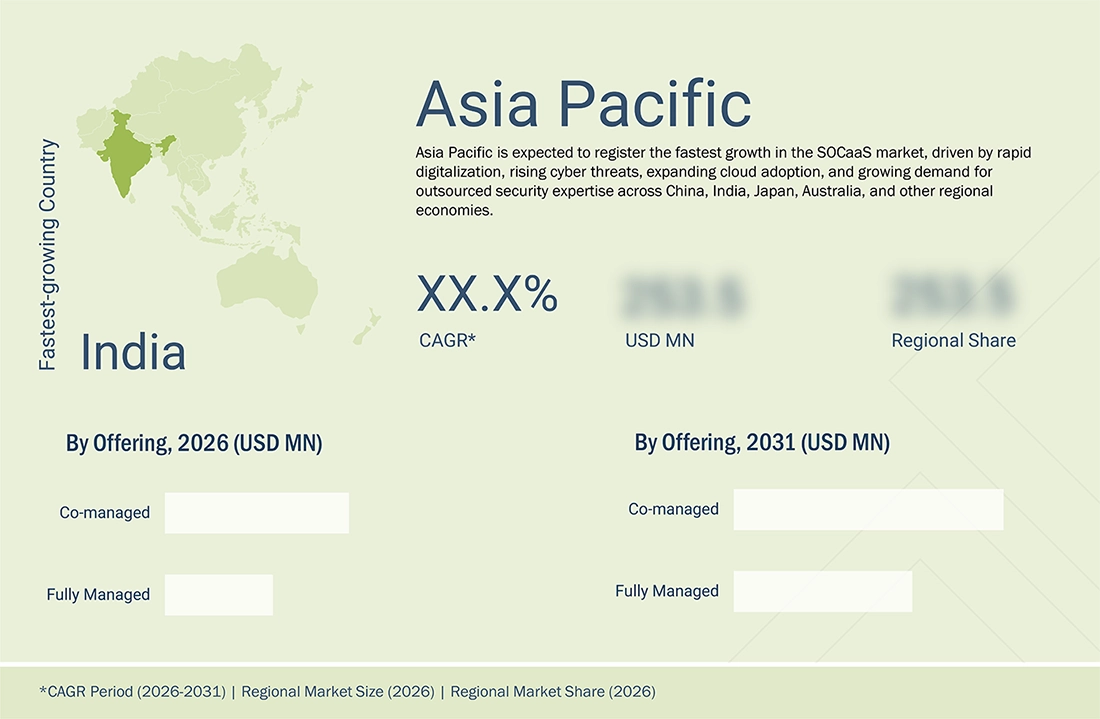
Asia Pacific to be fastest-growing region in global SOCaaS market during forecast period
Asia Pacific is expected to lead growth in the SOCaaS market, driven by rapid digitalization, cloud adoption, rising cyber threats, and growing demand for continuous security monitoring. Organizations across China, India, and Japan are outsourcing security operations to address talent shortages and avoid the costs of establishing in-house SOCs. Rising cybercrime, AI-enabled attacks, and evolving regulatory requirements are further driving businesses to adopt scalable managed security services for threat detection, investigation, and incident response.
SOC AS A SERVICE (SOCAAS) MARKET: COMPANY EVALUATION MATRIX
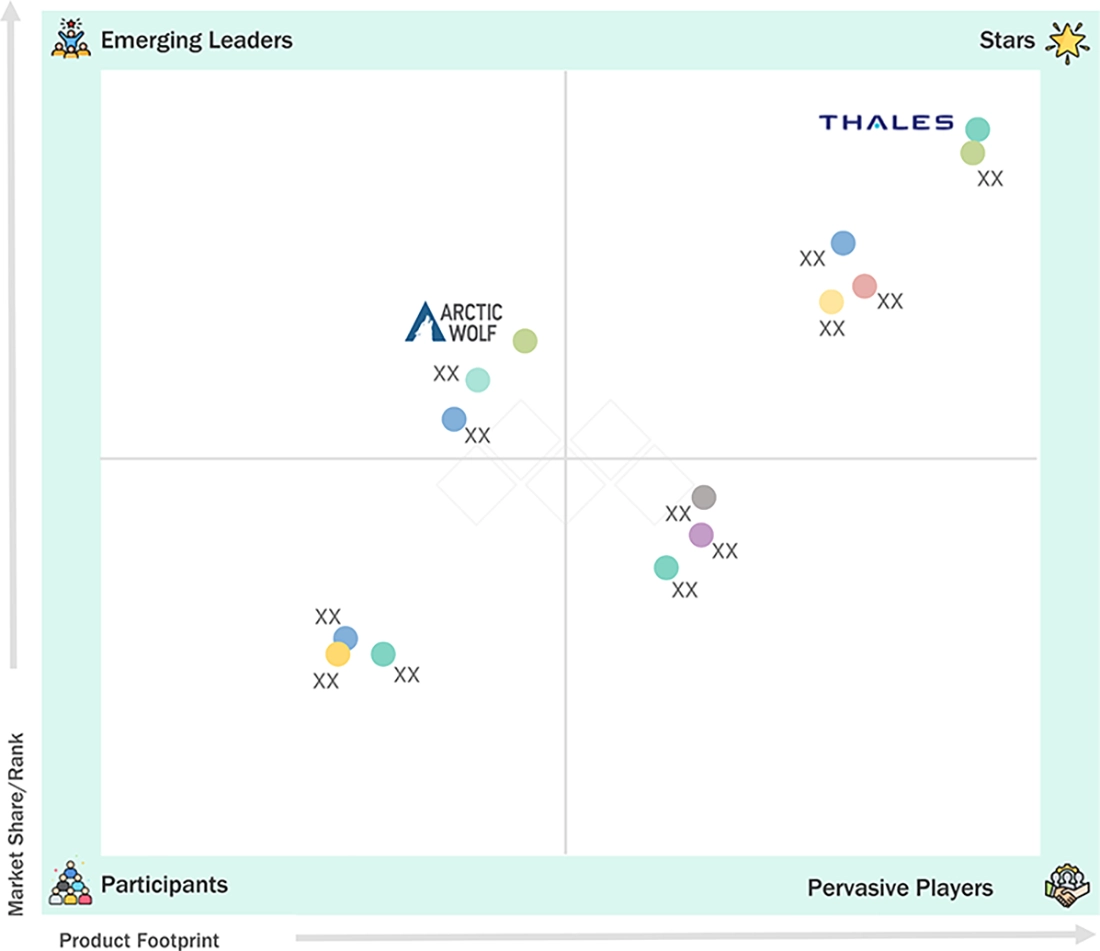
In the SOCaaS market matrix, Thales (Star) leads with a comprehensive managed SOC portfolio spanning 24/7 security monitoring, AI-driven threat detection, incident response, and integrated SIEM, endpoint, cloud, and OT security. Arctic Wolf (Emerging Leader) is strengthening its position through cloud-native security operations, AI-led detection, managed response, and its Concierge Security Team, which helps organizations improve threat visibility and access specialized security expertise without building extensive in-house SOC capabilities.
Source: Secondary Research, Interviews with Experts, MarketsandMarkets Analysis
KEY MARKET PLAYERS
- Thales (France)
- Airbus CyberSecurity (France)
- NTT DATA (Japan)
- Lumen Technologies (US)
- Fortinet (US)
- Cloudflare (US)
- Check Point Software (Israel)
- Kaseya (US)
- LevelBlue (US)
- Arctic Wolf Networks (US)
MARKET SCOPE
| REPORT METRIC | DETAILS |
|---|---|
| Market Size in 2025 (Value) | USD 8.13 Billion |
| Market Forecast in 2026 (Value) | USD 9.04 Billion |
| Market Forecast in 2031 (Value) | USD 16.68 Billion |
| Growth Rate | CAGR of 13.0% from 2026 to 2031 |
| Years Considered | 2020-2031 |
| Base Year | 2025 |
| Forecast Period | 2026-2031 |
| Units Considered | Value (USD Billion) |
| Report Coverage | Revenue forecast, company ranking, competitive landscape, growth factors, and trends |
| Segments Covered |
|
| Regions Covered | North America, Europe, Asia Pacific, Middle East & Africa, Latin America |
WHAT IS IN IT FOR YOU: SOC AS A SERVICE (SOCAAS) MARKET REPORT CONTENT GUIDE
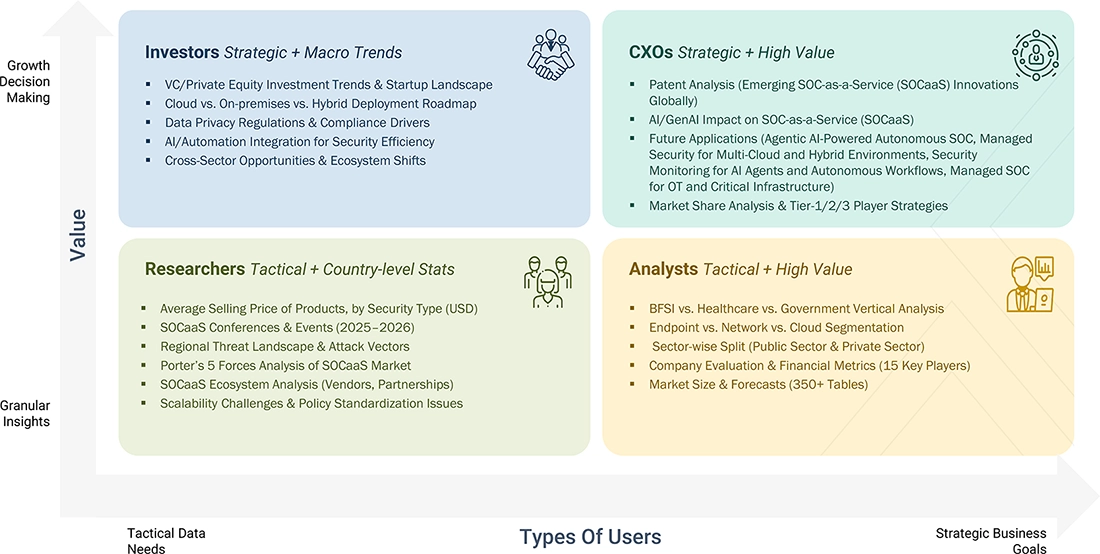
DELIVERED CUSTOMIZATIONS
We have successfully delivered the following deep-dive customizations:
| CLIENT REQUEST | CUSTOMIZATION DELIVERED | VALUE ADDS |
|---|---|---|
| Leading Service Provider (US) | Product Analysis: Comprehensive comparison of leading SOC-as-a-Service providers’ offerings, including co-managed and fully managed SOC services, managed SIEM and log management, 24/7 security monitoring, threat detection and investigation, threat intelligence, threat hunting, endpoint and network security, cloud security monitoring, automated incident response, security orchestration, and AI-driven security operations across enterprise, hybrid, cloud, and critical infrastructure environments. | Stronger understanding of vendor positioning, SOC delivery models, monitoring capabilities, threat detection maturity, investigation and response workflows, automation depth, SIEM integration, deployment flexibility, threat intelligence, and service scalability—supporting informed provider selection, cybersecurity outsourcing decisions, security operations planning, and long-term investment in managed cyber defense. |
| Leading Service Provider (UK) | Company Information: Detailed profiling and evaluation of additional SOCaaS vendors (up to 5), covering managed security service portfolios, SOC delivery models, threat detection and response capabilities, SIEM integration, AI-driven security operations, automation maturity, managed detection and response services, regional presence, strategic partnerships, technology innovations, industry focus, and competitive positioning across the global SOCaaS market. | Comprehensive perspective of the evolving SOCaaS ecosystem, highlighting the growing adoption of AI-driven threat detection, intelligent alert triage, automated investigation, agentic security operations, managed detection and response, unified security monitoring, and cloud-delivered SOC capabilities, while identifying vendor differentiation through integrated security platforms, co-managed service models, advanced analytics, continuous monitoring, and specialized incident response expertise. |
RECENT DEVELOPMENTS
- September 2026 : Quorum Cyber announced its intent to acquire Ontinue, aiming to combine their Microsoft-focused managed extended detection and response (MXDR) capabilities and agentic SOC technologies to strengthen security operations and deliver more autonomous threat detection and response. The announcement reflects an intended acquisition, not a completed transaction.
- August 2026 : ConnectWise and SentinelOne announced a joint strategy to advance managed cybersecurity for managed service providers (MSPs). The strategy combines SentinelOne’s AI-driven Singularity Platform with ConnectWise’s managed security expertise and operational workflows to support advanced cyber defense while preserving partner choice and human oversight.
- March 2026 : LevelBlue expanded its strategic partnership with SentinelOne to deliver integrated managed detection and response (MDR), managed SIEM, and incident response services. The collaboration integrates SentinelOne’s AI-driven detection, Purple AI, and Singularity Platform with LevelBlue’s Indigo security platform, threat intelligence, and global security operations to enhance threat visibility, accelerate investigations, and coordinate responses across complex IT environments.
Table of Contents
 Exclusive indicates content/data unique to MarketsandMarkets and not available with any competitors.
Methodology
Secondary research was conducted to gather information for this technical, market-oriented, and commercial study of the SOC-as-a-Service (SOCaaS) market. The next step was to validate these findings, assumptions, and sizing with industry experts across the value chain through primary research. Multiple approaches, including top-down and bottom-up methods, were used to estimate the total market size. After that, market breakup and data triangulation were used to estimate the market size of the segments and subsegments of the SOCaaS market.
Secondary Research
During the secondary research process, various secondary sources were consulted to identify and collect information relevant to the study. The secondary sources included annual reports, press releases, investor presentations from SOCaaS vendors, forums, certified publications, and whitepapers. The secondary research was primarily used to obtain key information about the industry’s supply chain, the total pool of key players, market classification and segmentation by industry trends down to the most granular level, regional markets, and key developments from both market- and technology-oriented perspectives. All of this information was further validated by primary sources.
Primary Research
In the primary research process, various primary sources from both the supply and demand sides were interviewed to obtain qualitative and quantitative information for this report. The primary sources from the supply side included industry experts such as chief executive officers (CEOs), vice presidents (VPs), marketing directors, technology and innovation directors, and other key executives from various companies and organizations operating in the SOCaaS market.
In the market engineering process, top-down and bottom-up approaches were extensively used, along with several data triangulation methods, to estimate and forecast the overall market segments and subsegments listed in this report. Extensive qualitative and quantitative analysis was conducted throughout the market engineering process to present key information and insights throughout the report.
After the complete market engineering process (including calculations for market statistics, market breakups, market size estimates, market forecasts, and data triangulation), extensive primary research was conducted to gather information and verify and validate the critical numbers arrived at. The primary research was also conducted to identify segmentation types, industry trends, the competitive landscape of SOCaaS market players, and key market dynamics, such as drivers, restraints, opportunities, challenges, and key strategies.
Following is the breakup of the primary study:
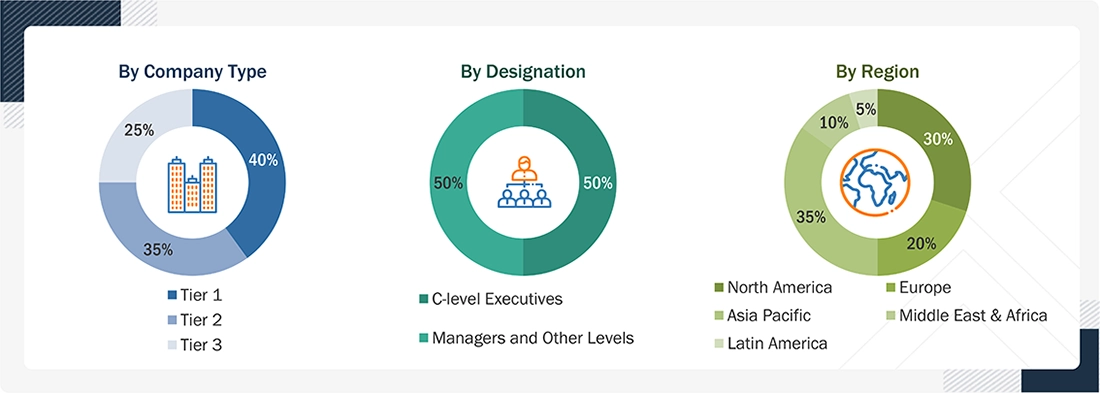
Note: Tier 1 companies have revenues above USD 10 billion; Tier 2 companies have revenues between USD 1 and 10 billion; and Tier 3 companies have revenues between USD 500 million and USD 1 billion. Other designations include sales, marketing, and product managers.
Source: Industry Experts
To know about the assumptions considered for the study, download the pdf brochure
Market Size Estimation
Top-down and bottom-up approaches were used to estimate and validate the size of the SOCaaS market and the sizes of various dependent sub-segments within the overall SOCaaS market. The research methodology used to estimate the market size includes the following details: critical players in the market were identified through secondary research, and their market shares in the respective regions were determined through primary and secondary research. This entire procedure involved studying the annual and financial reports of the top market players, and extensive interviews were conducted with key industry leaders, including CEOs, VPs, directors, and marketing executives, to gather valuable insights.
All percentage splits and breakdowns were determined using secondary sources and verified through primary sources. All possible parameters that affect the market covered in this research study were accounted for, examined in extensive detail, verified through primary research, and analyzed to produce the final quantitative and qualitative data. This data was consolidated and combined with detailed inputs and analysis from MarketsandMarkets.
SOC as a Service (SOCaaS) Market : Top-Down and Bottom-Up Approach
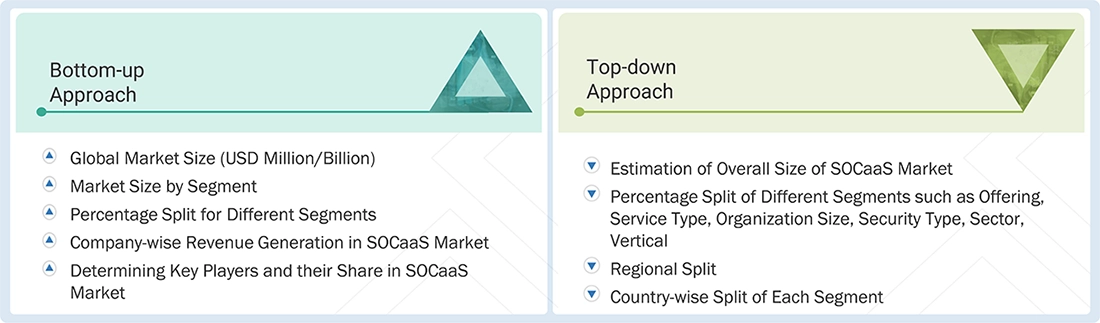
Source: MarketsandMarkets Analysis
Data Triangulation
The market was split into several segments and subsegments after arriving at the overall market size using the market size estimation processes explained above. The data triangulation and market breakup procedures were employed, wherever applicable, to complete the overall market engineering process and arrive at the exact statistics of each market segment and subsegment. The data was triangulated by studying various factors and trends from both the demand and supply sides.
Market Definition
SOC-as-a-Service (SOCaaS) is a cloud-based, subscription-driven service that provides organizations with end-to-end cybersecurity capabilities. It delivers real-time threat detection, analysis, response, and monitoring without the need for an organization to build and manage an in-house security operations center (SOC).
Key Stakeholders
- Chief Technology and Data Officers
- Cybersecurity Software Vendors
- SOCaaS Providers
- SOC Providers
- Cybersecurity Service Providers
- Government Agencies
- Independent Software Vendors (ISVs)
- Consulting Firms
- System Integrators
- Value-added Resellers (VARs)
- IT Security Agencies
- Managed Security Service Providers (MSSPs)
Report Objectives
- To define, describe, and forecast the SOC-as-a-Service (SOCaaS) market based on offering, service type, organization size, security type, sector, vertical, and region
- To provide detailed information about the major factors, such as drivers, opportunities, restraints, and challenges, influencing the growth of the market
- To forecast the size of the market segments with respect to five main regions: North America, Europe, Asia Pacific, Middle East & Africa, and Latin America
- To analyze subsegments of the market with respect to individual growth trends, prospects, and contributions to the overall market
- To profile key players of the market and comprehensively analyze their market share and core competencies
- To analyze opportunities in the market for stakeholders and provide the competitive landscape details of major players
- To map competitive intelligence based on company profiles, key player strategies, and game-changing developments, such as product enhancements/launches, collaborations, and acquisitions
- To analyze competitive developments, such as product enhancements/launches, acquisitions, partnerships, and collaborations, in the SOCaaS market globally.
Customization Options
With the given market data, MarketsandMarkets offers customizations based on company-specific needs. The following customization options are available for the report:
Geographic Analysis
- Further breakdown of the Asia Pacific market by country, showing contributions to the regional market size.
- Further breakdown of the North American market into countries contributing to the rest of the regional market size.
- Further breakup of the Latin American market into countries contributing to the rest of the regional market size.
- Further breakup of the Middle East & African market into countries contributing to the rest of the regional market size.
- Further breakup of the European market into countries contributes to the rest of the regional market size.
Company information
- Detailed analysis and profiling of additional market players (up to 5)
Key Questions Addressed by the Report


Personalize This Research
- Triangulate with your Own Data
- Get Data as per your Format and Definition
- Gain a Deeper Dive on a Specific Application, Geography, Customer or Competitor
- Any level of Personalization
Let Us Help You
- What are the Known and Unknown Adjacencies Impacting the SOC as a Service (SOCaaS) Market
- What will your New Revenue Sources be?
- Who will be your Top Customer; what will make them switch?
- Defend your Market Share or Win Competitors
- Get a Scorecard for Target Partners

Custom Market Research Services
We Will Customise The Research For You, In Case The Report Listed Above Does Not Meet With Your Requirements
Get 10% Free CustomisationTESTIMONIALS



Growth opportunities and latent adjacency in SOC as a Service (SOCaaS) Market