United States Closed System Transfer Devices Market

United States Closed System Transfer Devices Market by Closing Mechanism [Push-to-Turn, Click-to-lock, Luer Lock System], Component [Female Component, Vial Access, Bag Spike], Type [Membrane-to-Membrane, Needleless], End User [Hospitals, Clinics] - Forecast to 2031



UNITED STATES CLOSED SYSTEM TRANSFER DEVICES MARKET SIZE, SHARE & GROWTH SNAPSHOT
Source: Secondary Research, Interviews with Experts, MarketsandMarkets Analysis
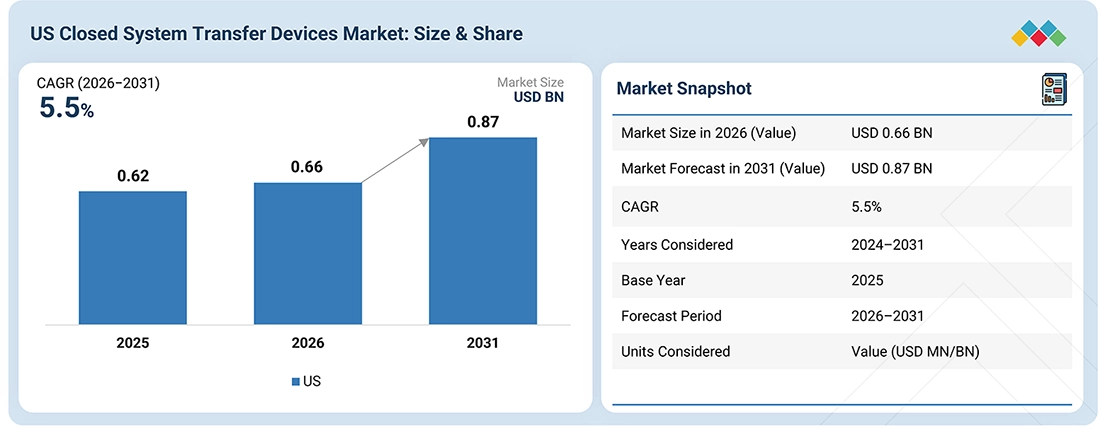
The United States closed system transfer devices market is projected to grow from USD 0.66 billion in 2026 to USD 0.87 billion by 2031, at a CAGR of 5.5% during the forecast period. The market was valued at USD 0.62 billion in 2025. This growth is due to growing hazardous-drug use, rising awareness of occupational exposure risks, and greater adoption of engineering controls to protect healthcare workers during drug preparation and administration.
KEY TAKEAWAYS
-
MARKET SNAPSHOT:
Base Year Market Size (2025): USD 0.62 Billion
Current Market Size (2026): USD 0.66 Billion
Forecast Market Size (2031): USD 0.87 Billion
CAGR (2026–2031): 5.5% -
SEGMENT LEADERSHIP:
Component Leader: Female components accounted for the largest share of 28.9% of the US closed system transfer devices market in 2025.
Type Leader: Membrane-to-membrane systems accounted for the largest share of 67% of the US closed system transfer devices market in 2025.
Technology Leader: Diaphragm-based devices accounted for the largest share of 40.6% of the US closed system transfer devices market in 2025.
Closing Mechanism Leader: Luer lock systems accounted for the largest share of the US closed system transfer devices market in 2025.
End User Leader: Hospitals & clinics accounted for the largest share of the US closed system transfer devices market in 2025. -
MARKET OUTLOOK & COMPETITIVE LANDSCAPE:
ICU Medical (US) and Becton and Dickinson Company (US) were recognized as star players due to their established strong product portfolios & geographic presence.
The US closed system transfer devices (CSTD) market is expanding as oncology and other hazardous drug treatments increase, while healthcare facilities place greater emphasis on minimizing occupational exposure. CSTDs reduce hazardous-drug and vapor escape and can lower surface contamination, encouraging adoption across hospital pharmacies, oncology centers, and infusion settings.
TRENDS & DISRUPTIONS IMPACTING CUSTOMERS' CUSTOMERS
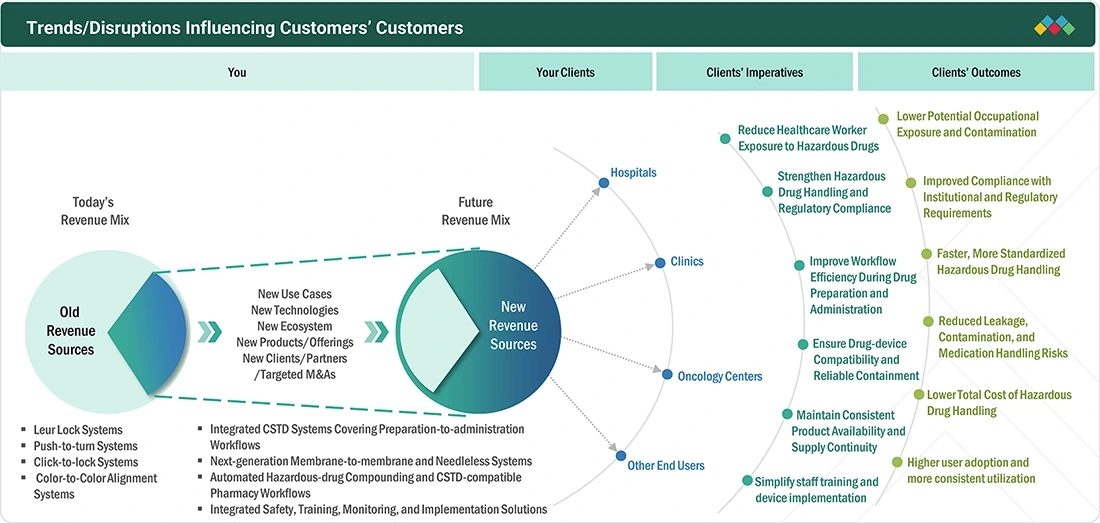
Trends and disruptions impacting CSTD customers, hospitals, pharmacies, and oncology centers include stricter hazardous-drug handling practices, greater emphasis on healthcare-worker safety, and broader implementation of USP <800>. CSTDs are required for administering NIOSH-listed antineoplastic hazardous drugs when the dosage form allows, increasing institutional demand. Customers are also moving toward integrated, compatible systems that connect pharmacy compounding with administration workflows, while evaluating CSTD chemical compatibility and containment performance. Increasing awareness of hazardous-drug contamination and occupational exposure is further encouraging facilities to upgrade engineering controls and staff practices.
Source: Secondary Research, Interviews with Experts, MarketsandMarkets Analysis
MARKET DYNAMICS

Level
-
Growing incidence of cancer and subsequent use of chemotherapy to boost market

-
Increasing oncology drug approvals and awareness of antineoplastic drug risks to drive adoption


Level
-
Reimbursement pressure and test-price controls


Level
-
Growth potential across therapeutic applications and increasing healthcare expenditure to create market opportunities


Level
-
Operational barriers and data privacy and cybersecurity risks

Source: Secondary Research, Interviews with Experts, MarketsandMarkets Analysis
Driver: Growing incidence of cancer and subsequent use of chemotherapy to boost market
Growing incidence of cancer and the subsequent increase in chemotherapy and other antineoplastic drug use are driving demand for CSTDs in the US. As the volume and complexity of hazardous-drug preparation and administration increase, healthcare facilities require effective engineering controls to minimize occupational exposure. NIOSH identifies CSTDs as an engineering control that mechanically prevents hazardous-drug or vapor escape and environmental contaminants from entering the system. Increasing awareness among pharmacists, nurses, and hospital administrators regarding the potential reproductive, genetic, and carcinogenic risks associated with occupational exposure is further supporting adoption. Consequently, hospitals and oncology centers are increasingly incorporating CSTDs into hazardous-drug handling workflows, supporting sustained market expansion.
Restraint: Reimbursement pressure and test-price controls
Reimbursement pressure and test-price controls can constrain CSTD adoption because these devices add consumable costs to hazardous drug preparation and administration workflows. Healthcare providers may struggle to obtain direct reimbursement for CSTD-related costs, particularly when procurement budgets are tightly controlled. Consequently, hospitals and pharmacies may prioritize lower-cost alternatives or limit CSTD adoption to applications where their use is required or strongly recommended. Price negotiations with group purchasing organizations and healthcare systems can further pressure manufacturers to maintain competitive pricing, potentially limiting revenue growth. These factors can slow adoption, particularly among smaller healthcare facilities with constrained budgets and limited resources for upgrading hazardous-drug handling infrastructure.
Opportunity: Growth potential across therapeutic applications and increasing healthcare expenditure to create market opportunities
Growth potential across therapeutic applications and increasing healthcare expenditure create opportunities for CSTD manufacturers to expand beyond traditional chemotherapy applications. NIOSH identifies hazardous drugs across multiple therapeutic categories, including antineoplastic agents, antivirals, hormones, and some immunosuppressive drugs, broadening the potential addressable application base. Rising healthcare spending and investments in hospital pharmacy infrastructure can support adoption of advanced hazardous-drug handling technologies. Manufacturers can capitalize by developing CSTD portfolios compatible with diverse drug formulations, administration routes, and compounding workflows. This expansion can help key players increase their customer base, strengthen hospital contracts, introduce complementary products, and generate recurring revenue from CSTD components and accessories.
Challenge: Operational barriers and data privacy and cybersecurity risks
Operational barriers and data privacy and cybersecurity risks can challenge the adoption of increasingly integrated hazardous-drug handling technologies. Implementing CSTDs may require workflow modifications, staff training, compatibility assessment, and coordination between pharmacy and nursing departments. NIOSH notes that exposure-control effectiveness depends partly on work practices, frequency of exposure, and the availability of engineering controls. In addition, automated or digitally connected compounding and medication-management systems can introduce cybersecurity and data-security considerations. Healthcare providers therefore need to balance worker protection with operational efficiency, system interoperability, training requirements, and information-security controls, potentially slowing deployment of advanced CSTD solutions.
US CLOSED SYSTEM TRANSFER DEVICES MARKET: COMMERCIAL USE CASES ACROSS INDUSTRIES
| COMPANY | USE CASE DESCRIPTION | BENEFITS |
|---|---|---|
 |
ChemoLock and ChemoClave are used during hazardous drug preparation, transport, and administration in hospitals and oncology settings, maintaining a closed connection across pharmacy and nursing workflows. | Reduces hazardous-drug exposure, minimizes leaks and spills, supports USP <800> compliance, and improves workflow efficiency through needlefree and flexible connection options. |
 |
BD PhaSeal Optima is used by pharmacists and clinicians for preparation and administration of hazardous drugs, including vial access, drug transfer, syringe handling, and IV administration. | Provides airtight and leakproof drug transfer, reduces surface and environmental contamination, and helps minimize healthcare-worker exposure to drug vapors, aerosols, and spills. |
 |
EQUASHIELD CSTD is used for hazardous drug preparation, reconstitution, compounding, transport, and administration across hospital and oncology pharmacy workflows. Its closed-back syringe and adaptors provide containment throughout the medication-handling process. | Reduces hazardous-drug and vapor exposure, prevents syringe-plunger contamination, minimizes leaks and spills, and supports efficient preparation and administration workflows. |
 |
OnGuard 2 is used across hazardous-drug preparation and administration, including vial reconstitution, syringe transfer, IV-bag connection, and closed administration through IV and catheter systems. | Provides closed, secure connections, reduces drug leakage and exposur,; prevents microbial and airborne contamination, and simplifies workflow through click-to-lock connections and fewer required SKUs. |
 |
NEO SHIELD is used for safe preparation and administration of anticancer drugs, including vial transfer, drug-bag connection, and closed administration while maintaining the closed environment throughout the workflow. | Reduces exposure risk during preparation and administration, simplifies operation, supports efficient drug preparation, and enables needle-free administration and closed priming. |
Logos and trademarks shown above are the property of their respective owners. Their use here is for informational and illustrative purposes only.
MARKET ECOSYSTEM
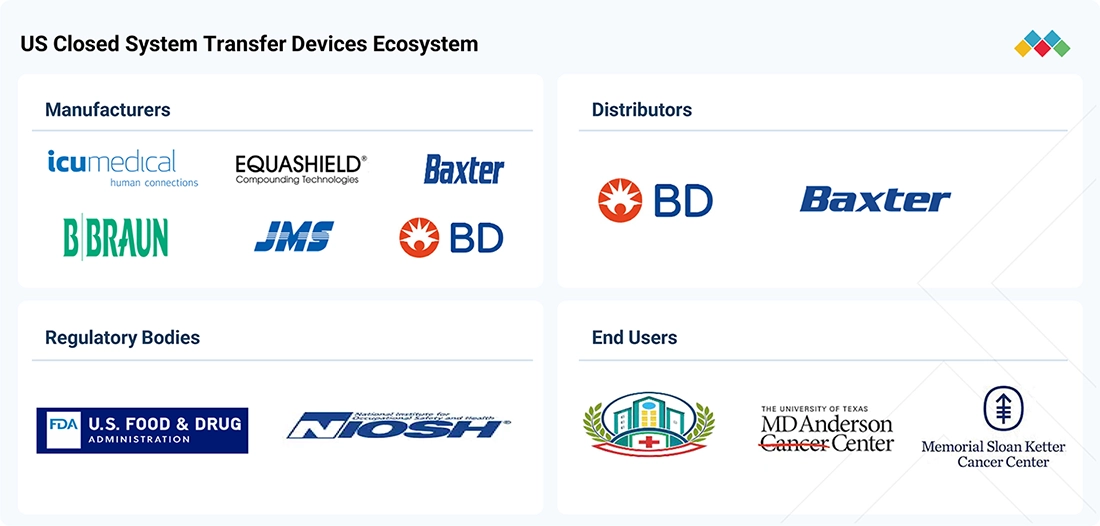
The US CSTD ecosystem comprises CSTD manufacturers, component suppliers, pharmaceutical companies, distributors, and healthcare providers involved in hazardous drug preparation and administration. Manufacturers develop CSTDs and components such as vial adapters, syringe connectors, and infusion sets, while pharmaceutical companies generate demand through hazardous-drug production and treatment. Distributors and GPOs facilitate procurement and market access for hospitals, pharmacies, oncology centers, and infusion facilities. Healthcare professionals, particularly pharmacists, pharmacy technicians, and nurses, are the primary users. The ecosystem is also influenced by FDA regulatory requirements, USP <800> standards, and NIOSH hazardous-drug guidance, which shape product development, adoption, and safe-handling practices.
Logos and trademarks shown above are the property of their respective owners. Their use here is for informational and illustrative purposes only.
MARKET SEGMENTS
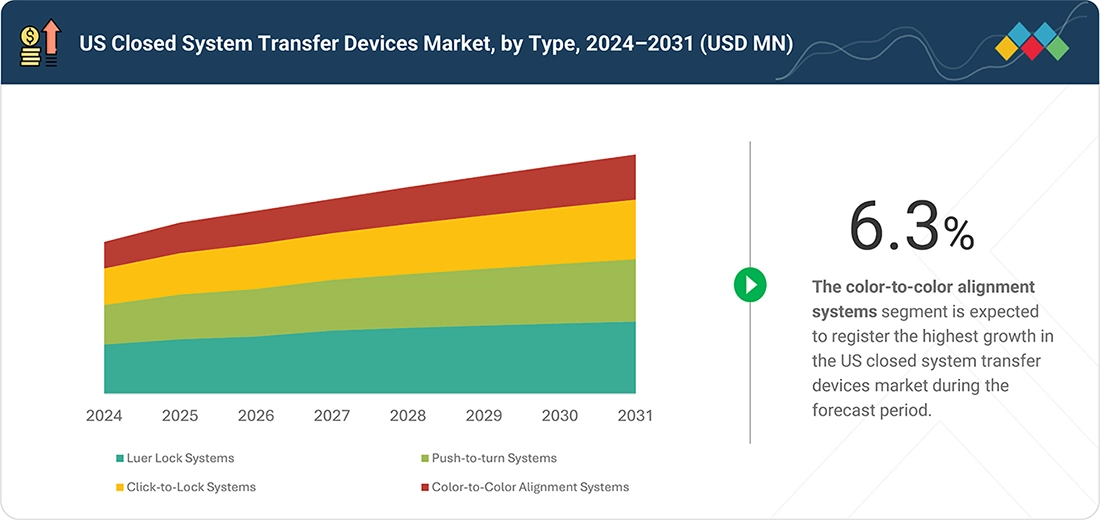
Source: Secondary Research, Interviews with Experts, MarketsandMarkets Analysis
US Closed System Transfer Devices Market, by Type
By type, the US CSTDs market is segmented into membrane-to-membrane systems and needleless systems. Among these, membrane-to-membrane systems held the largest share of the US CSTD market in 2025 because their interlocking membrane design provides effective containment during hazardous-drug transfer. The system creates a closed pathway between components, helping minimize drug leakage, vapor escape, and environmental contamination. The membrane-to-membrane technology also enables needle-free connections, reducing needlestick exposure during repeated vial, syringe, and administration transfers. Its established use across oncology pharmacy workflows, availability from leading CSTD manufacturers, and compatibility with commonly used drug-transfer components have supported widespread adoption. These advantages make membrane-to-membrane systems particularly suitable for hazardous-drug preparation and administration.
US Closed System Transfer Devices Market, by Component
By component, the market is segmented into vial access components, male Luers, bag spikes, female components, and other components. Among these, female components accounted for the largest share of the US CSTD market in 2025 because they serve as critical connection interfaces throughout hazardous drug preparation and administration workflows. These components connect syringes, vial access devices, infusion bags, administration sets, and other CSTD elements while maintaining system closure. Their utilization across multiple transfer stages generates recurring demand compared with components used in more specific applications. Female components are also available in Luer-lock and needleless configurations, enabling compatibility with existing hospital medication delivery infrastructure. Their broad applicability, repeated use, and integration with different CSTD systems support their leading market position.
US Closed System Transfer Devices Market, by Closing Mechanism
By closing mechanism, the US CSTD market is segmented into Luer lock systems, push-to-turn systems, click-to-lock systems, and color-to-color alignment systems. Among these, the Luer lock systems segment held the largest share in 2025 due to its widespread use across syringes, vial adapters, infusion sets, and needleless connectors. Its threaded connection provides secure attachment and reduces accidental disconnection during hazardous-drug preparation and administration. Luer lock interfaces also offer compatibility with existing medication-delivery infrastructure, minimizing workflow modifications and staff retraining. Established familiarity among healthcare professionals, broad availability of compatible components, and integration across multiple CSTD configurations further support adoption, making Luer lock systems the preferred closing mechanism in US healthcare facilities.
US Closed System Transfer Devices Market, by Technology
Based on technology, the US CSTD market is segmented into diaphragm-based devices, compartmentalized devices, and air cleaning/filtration devices. Among these, the diaphragm-based devices segment held the largest share of the US CSTD market in 2025 because their resealing mechanism provides a reliable barrier against hazardous-drug leakage, vapor escape, and external contamination. The diaphragm automatically closes after disconnection, helping maintain containment during repeated drug-transfer activities. This technology can be incorporated into vial adapters, syringe connectors, and administration components, enabling broad application across pharmacy and nursing workflows. Its relatively straightforward operating mechanism, established commercial availability, and compatibility with commonly used CSTD components have encouraged adoption among healthcare facilities. The technology’s focus on containment and ease of use further supports its market dominance.
US Closed System Transfer Devices Market, by End User
Based on end users, the market is divided into hospitals and clinics, oncology centers, and other end users. Among these, the hospitals and clinics segment held the largest share of the US CSTD market in 2025 because they conduct substantial volumes of hazardous-drug preparation and administration, particularly for oncology patients. These facilities employ pharmacists, pharmacy technicians, nurses, and other healthcare professionals who may encounter hazardous drugs during routine workflows, creating strong demand for exposure-control measures. Hospitals also have centralized pharmacies and established procurement systems that facilitate CSTD adoption across multiple departments. Increasing emphasis on occupational safety, hazardous-drug handling practices, and compliance with applicable standards further supports utilization. Consequently, hospitals and clinics represent the largest and most established end-user base for CSTDs.
US CLOSED SYSTEM TRANSFER DEVICES MARKET: COMPANY EVALUATION MATRIX
In the US CSTD market matrix, ICU Medical, Inc. (US) (Star) and Becton, Dickinson and Company (US) (Star) lead with their unmatched regional presence, strong brand recognition, and comprehensive portfolios of closed system transfer devices.
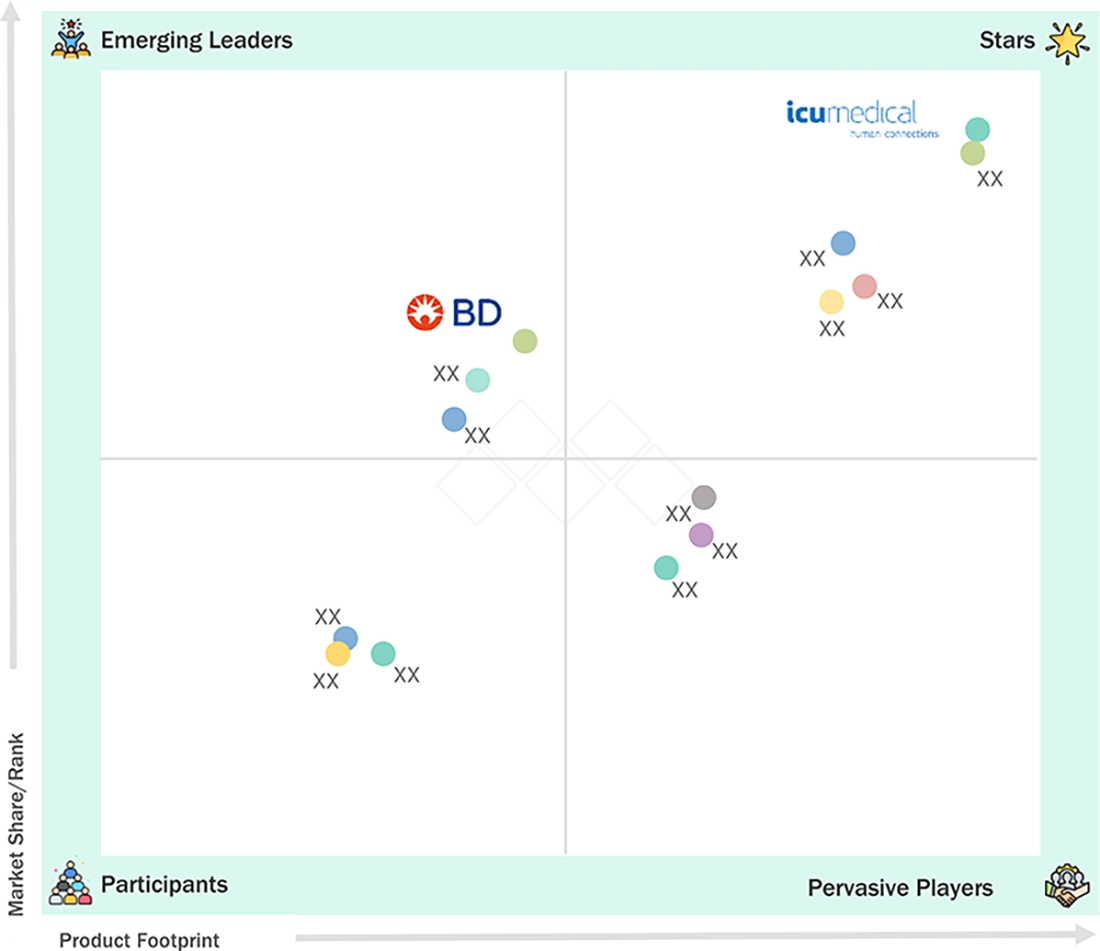
Source: Secondary Research, Interviews with Experts, MarketsandMarkets Analysis
KEY MARKET PLAYERS
- B. Braun SE (Germany)
- ICU Medical Inc (US)
- Becton, Dickinson and Company (US)
- Baxter (US)
- JMS Co., Ltd. (Japan)
- EQUASHIELD Medical Ltd. (US)
- Epic Medical Pte. Ltd. (Singapore)
- CODAN (Germany)
- Zephyrus Innovations Inc. (Canada)
- Shandong Ande Healthcare Apparatus Co., Ltd. (China)
MARKET SCOPE
| REPORT METRIC | DETAILS |
|---|---|
| Market Size in 2025 (Value) | USD 0.62 Billion |
| Market Forecast in 2026 (Value) | USD 0.66 Billion |
| Market Forecast in 2031 (Value) | USD 0.87 Billion |
| Growth Rate | CAGR of 5.5% from 2026–2031 |
| Years Considered | 2024–2031 |
| Base Year | 2025 |
| Forecast Period | 2026–2031 |
| Units Considered | Value (USD Million/Billion), Volume (Thousand Units) |
| Report Coverage | Revenue Forecast, Company Ranking, Competitive Landscape, Growth Factors, and Trends |
| Segments Covered |
|
| Regional Scope | US |
WHAT IS IN IT FOR YOU: US CLOSED SYSTEM TRANSFER DEVICES MARKET REPORT CONTENT GUIDE
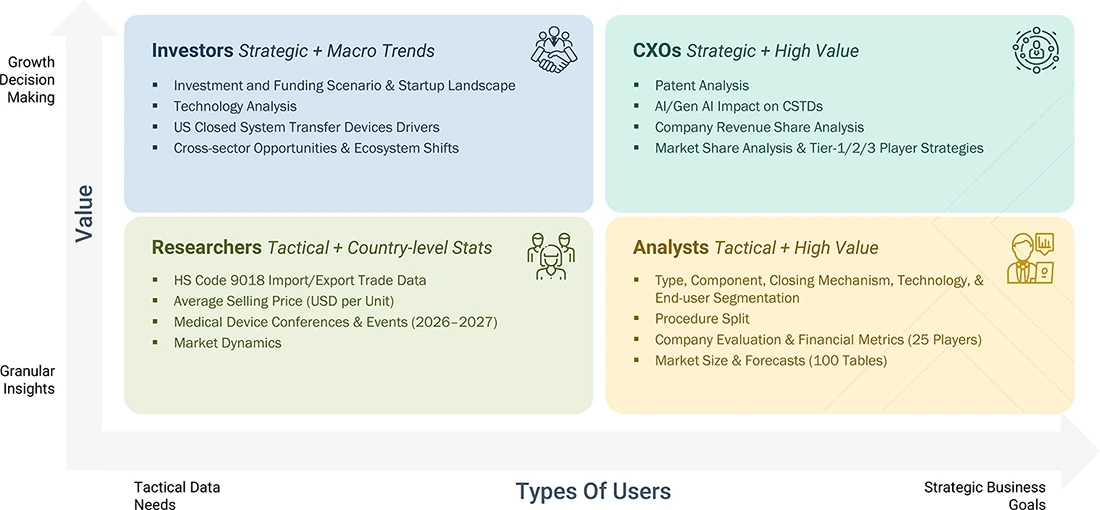
RECENT DEVELOPMENTS
- December 2025 : Zephyrus Innovations received US FDA 510(k) clearance for VaporShield CSTD, a direct-injection CSTD designed for subcutaneous and intramuscular administration. The system combines drug containment with an auto-retractable needlestick-prevention mechanism and ultra-low dead space.
- December 2025 : Epic Medical received FDA 510(k) clearance for ProSeal Transfer Injector, expanding its ProSeal CSTD portfolio with additional transfer-injector configurations for hazardous-drug preparation and administration.
- September 2025 : BD received FDA 510(k) clearance for the PhaSeal Optima Connecting Set and Spike Set, expanding the Optima CSTD product family with additional components for hazardous-drug preparation and administration.
- May 2025 : Epic Medical received FDA 510(k) clearance for ProSeal Bag Spike with Additive Port, extending its CSTD portfolio into additional IV-bag access and medication-administration applications.
Table of Contents
 Exclusive indicates content/data unique to MarketsandMarkets and not available with any competitors.
Methodology
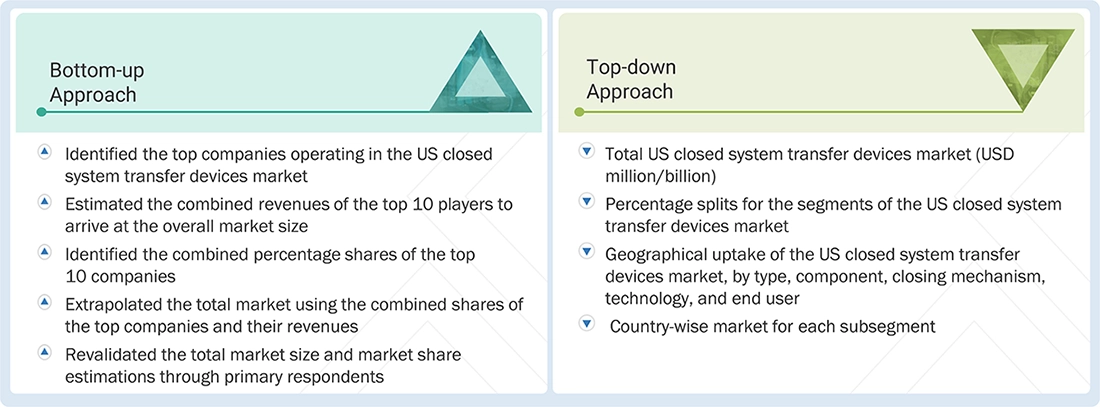
The research study aimed to estimate the current size of the US closed system transfer devices market through several key activities. Comprehensive secondary research was conducted to gather information on the industry. The next step involved validating these findings, assumptions, and size estimates with industry experts across the value chain through primary research. To estimate the total market size, both top-down and bottom-up approaches were utilized. Following this, market segmentation and data triangulation procedures were employed to determine the sizes of different segments and subsegments within the US closed system transfer devices market.
Secondary Research
The secondary research process involved the widespread use of secondary sources, directories, databases (such as Bloomberg Businessweek, Factiva, and D&B Hoovers), white papers, annual reports, investor presentations, SEC filings of companies and publications from government sources, such as National Institutes of Health (NIH), US FDA, US Census Bureau, World Health Organization (WHO), International Trade Administration (ITA), Global Burden of Disease Study, and Centers for Medicare and Medicaid Services (CMS) were referred to in order to identify and collect information for the US Closed system transfer devices market study. It was also used to obtain important information on key players, market classification & segmentation aligned with industry trends, and key developments from market and technology perspectives, down to the bottom-most level. A database of the key industry leaders was also prepared using secondary research.
Primary Research
In the primary research process, various sources from both the supply and demand sides were interviewed to obtain qualitative and quantitative information for this report. The primary sources on the supply side include industry experts, such as CEOs, vice presidents, marketing and sales directors, technology & innovation directors, and other key executives from leading companies and organizations in the US closed system transfer devices market. The primary demand-side sources include ambulatory surgical centers, hospitals, clinics, and other end users. Primary research was conducted to validate the market segmentation, identify key players and gather insights into key industry trends & key market dynamics.
A breakdown of the primary respondents is provided below:
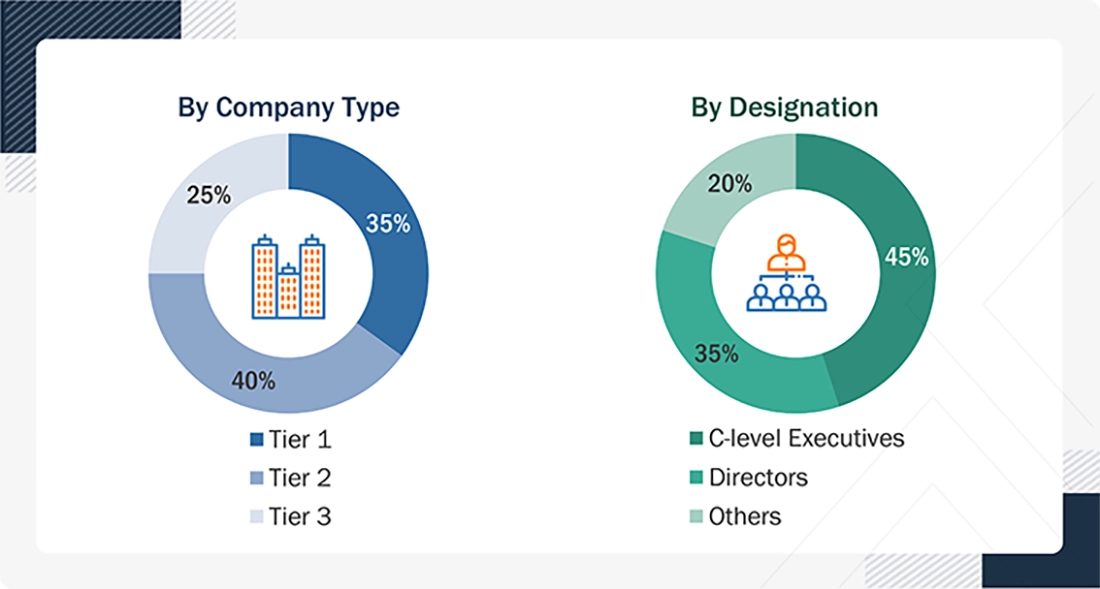
Note 1: C-level executives include CEOs, CFOs, COOs, and VPs.>
Note 2: Others include sales managers, marketing managers, business development managers, product managers, distributors, and suppliers.
Note 3: Companies are classified into tiers based on their total revenue. The tiers are as follows:
Tier 1 = > USD 10 billion, Tier 2 = USD 1 billion to USD 10 billion, and Tier 3 = <USD 1 billion
Source: MarketsandMarkets Analysis
To know about the assumptions considered for the study, download the pdf brochure
Market Size Estimation
For the market value, annual revenue figures were calculated based on the revenue mapping of major product manufacturers and OEMs active in the US closed system transfer devices market. All major product manufacturers were identified at the country/regional level. Revenue mapping for respective business segments/subsegments was done for the major players. Also, the US closed system transfer devices market was split into various segments and subsegments:
- List of major players operating in the products market at the country level
- Product mapping of various closed system transfer devices manufacturers at the regional and/or country level
- Mapping of annual revenue generated by listed major players from the US closed system transfer devices market (or the nearest reported business unit/product category)
- Extrapolation of the revenue mapping of the listed major players to derive the market value of the respective segments/subsegments
- Summation of the market value of all segments/subsegments to arrive at the US closed system transfer devices market
US Closed System Transfer Devices Market : Top-Down and Bottom-Up Approach
Data Triangulation
After determining the overall size of the US closed system transfer devices market using the methodology described above, the market was segmented into several segments and subsegments. The data triangulation and market breakdown procedures were employed, as applicable, to complete the overall market engineering process and obtain exact market value data for the key segments and subsegments. The extrapolated market data was triangulated by studying various macroindicators and regional trends from both demand- and supply-side participants.
Market Definition
Closed system transfer devices (CSTDs) are drug-transfer systems designed to mechanically prevent hazardous-drug vapors or concentrations from escaping into the environment and contaminants from entering the system. They provide closed connections during drug preparation, reconstitution, transfer, and administration, thereby reducing healthcare workers’ occupational exposure to hazardous drugs and minimizing contamination risks.
Key Stakeholders
- Closed system transfer device (CSTD) manufacturing companies
- CSTD component suppliers, raw material providers, and contract manufacturers
- Pharmaceutical and biotechnology companies
- Hazardous drug and oncology drug manufacturers
- Hospital pharmacies and outpatient/ambulatory infusion pharmacies
- Oncology centers, cancer treatment centers, and specialty clinics
- Nurses and healthcare professionals administering hazardous drugs
- US Food and Drug Administration (FDA)
- National Institute for Occupational Safety and Health (NIOSH)
- Healthcare professional associations and pharmacy organizations
Report Objectives
- To describe, analyze, and forecast the US closed system transfer devices market by closing mechanism, component, type, technology, and end user
- To describe and forecast the US closed system transfer devices market in the US
- To provide detailed information regarding drivers, restraints, opportunities, and challenges influencing market growth
- To strategically analyze micromarkets with respect to individual growth trends, prospects, and contributions to the overall market
- To analyze market opportunities for stakeholders and provide details of the competitive landscape for market players
- To profile key players and comprehensively analyze their market shares and core competencies in the US closed system transfer devices market
- To analyze competitive developments such as partnerships, agreements & acquisitions, product launches, product approvals, and expansions in the US closed system transfer devices market
- To analyze the impact of AI/Gen AI on the US closed system transfer devices market in terms of its capabilities, potential, and use cases


Personalize This Research
- Triangulate with your Own Data
- Get Data as per your Format and Definition
- Gain a Deeper Dive on a Specific Application, Geography, Customer or Competitor
- Any level of Personalization
Let Us Help You
- What are the Known and Unknown Adjacencies Impacting the United States Closed System Transfer Devices Market
- What will your New Revenue Sources be?
- Who will be your Top Customer; what will make them switch?
- Defend your Market Share or Win Competitors
- Get a Scorecard for Target Partners

Custom Market Research Services
We Will Customise The Research For You, In Case The Report Listed Above Does Not Meet With Your Requirements
Get 10% Free CustomisationTESTIMONIALS

JAYANT RAJPUROHIT
Director of Market Insights, Data and Analytics
SFI Health,
Leading Pharmaceutical Companywww.sfihealth.com/

We at SFI Health approached MarketsandMarkets for an Opportunity Assessment on "Incidence and Prevalence of Focus Indications" as we wanted to know the most attractive HCPs like Physician, Functional MD, Naturopath and Pharmacist. The project was critical for us to ensure our focus on the right target which would enable sustainable growth and profitability for SFI Health. The business insights provided exceeded our expectations and we were extremely impressed. The team at MarketsandMarkets is highly professional and detail oriented and very well understood our business needs. MarketsandMarkets offers a unique combination of expertise and dedicated engagement model. We identified 2 new products to be launched in coming months, based on the research findings provided by MarketsandMarkets. We are happy with the services and would strongly recommend MarketsandMarkets to my peers in the industry.

BEATRIZ DE LA CALLE
Head of Commercial Analytics
Qualicaps,
Leading Pharmaceutical Companywww.qualicaps.com/

We partnered with MarketsandMarkets for an assessment study on hard empty capsules. The team was extremely professional in understanding our business requirements and we received timely responses to all our queries. The market intelligence and the recommendations has met our business requirements. We were extremely impressed to see the final study results; it really exceeded our expectations. The market intelligence offered by MarketsandMarkets, and clarity on next steps will help us achieve our business objective for the Year 2021. We are happy with the services and would strongly recommend MarketsandMarkets to my peers in the industry.

Bob Williams,
Senior Director Business Development & Innovation
Bracco Diagnostics Inc.,
Italian Multinational in life sciences sector and a World Leader in imaging diagnosticsimaging.bracco.com/us-en
We were pleased with targeted insights that MarketsandMarkets identified from a custom study on the 'Radiation Dose Management Solutions Market'. Your team identified and characterized the market participants as well as underlying trends accurately. This study was useful to Bracco in formulating business strategies for our dose monitoring product lines and we thank MarketsandMarkets for the job well done.
Cody Coonradt,
Market Development and Strategy Manager
3M Health Information Systems,
Leader in Health care Coding, Payment & Analytics Solutions.www.3m.com/3M/en_US/health-information-systems-us
The value for our organization comes from three things: depth of research, specificity of segments and being easy to work with. As important as the first two are, the third can't be underestimated. MarketsandMarkets, maybe more than any other research vendor, wants to know what is top of mind for our team and what big questions we are grappling to answer.
Their customer first approach and high value engagement model, have given us great analysis and excellent value for money






Growth opportunities and latent adjacency in United States Closed System Transfer Devices Market