US Digital Diabetes Management Market Size, Growth, Share & Trends Analysis

US Digital Diabetes Management Market by Product (Device (CGM, Smart Glucometer, Insulin Patch Pump), Diabetes Apps, Service, Software & Platforms), Device Type (Handheld & Wearables), End User (Self/Home Healthcare) - Forecast to 2031




OVERVIEW
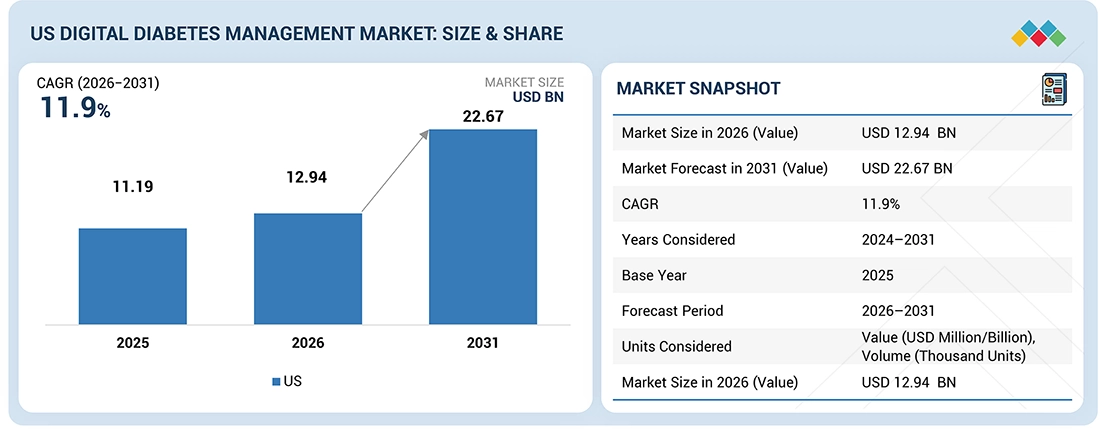
Source: Secondary Research, Interviews with Experts, MarketsandMarkets Analysis
The US digital diabetes management market, valued at US$11.19 billion in 2025, stood at US$12.94 billion in 2026 and is projected to advance at a resilient CAGR of 11.9% from 2026 to 2031, culminating in a forecasted valuation of US$22.67 billion by the end of the period. The growth of the US digital diabetes management market is driven by the integration of AI-driven analytics, telehealth platforms, and interoperable ecosystems, which enhance clinical outcomes and patient engagement.
KEY TAKEAWAYS
-
BY COUNTRYUS is expected to register the highest CAGR of 11.9% during the forecast period.
-
BY PRODUCTS & SERVICESBy product & services, the devices segment dominated the market, with a share of 77.9% in 2025.
-
BY DEVICE TYPEBy device type, the wearable devices segment dominated the market, accounting for a 53.6% share in 2025.
-
BY END USERBy end user, the self/home healthcare segment is expected to be the fastest-growing segment during the forecast period.
-
COMPETITIVE LANDSCAPE - Key PlayersMedtronic (Ireland), Dexcom, Inc. (US), and Abott (US) were identified as Star players in the Europe digital diabetes management market, as they have focused on innovation and have broad industry coverage and strong operational and financial strength.
-
COMPETITIVE LANDSCAPE - Start UpsSpike (Sweden), Noom (Ukraine), and PKvitality (US) distinguished themselves among startups and SMEs due to their strong product portfolio and business strategy.
The US has a long-standing history of global leaders in digital health, medical devices, and health IT, which continually drives innovation in digital diabetes management. Research establishments invest significantly in R&D, launch expensive products, and advance their platforms towards faster technological innovations. Strategic synergies between a device manufacturer, a software developer, a pharmaceutical company, and healthcare providers will further fortify the ecosystem. Such a competitive and innovative environment lends itself to the rapid commercialization of advanced solutions, alongside the growing availability of products, as well as continuous improvements in digital diabetes care offerings across the US market.
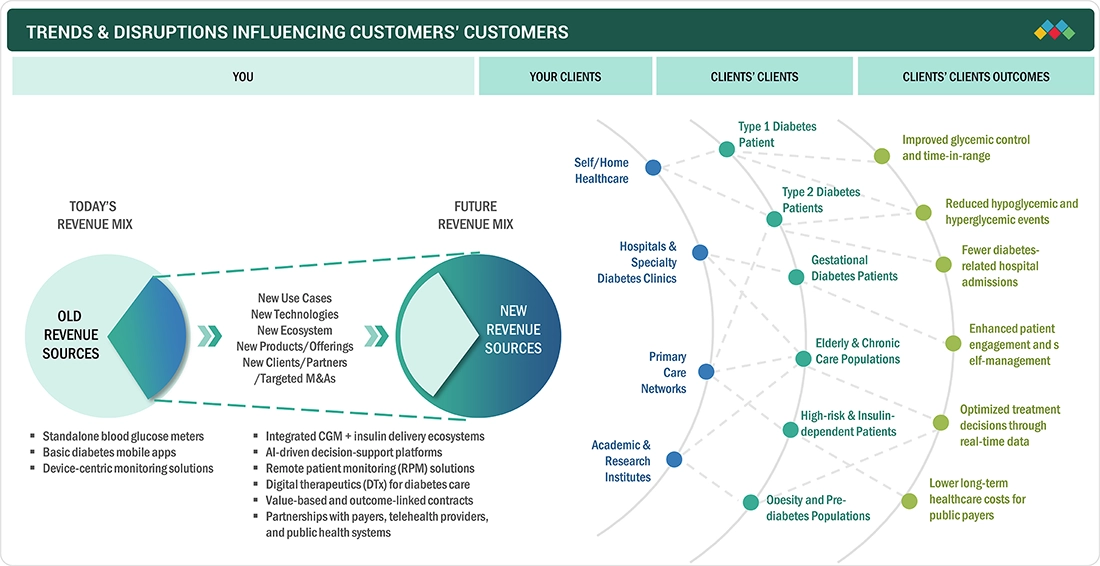
TRENDS & DISRUPTIONS IMPACTING CUSTOMERS' CUSTOMERS
Rapid changes are currently occurring in the US digital diabetes management market due to the increasing prevalence of diabetes and the accelerated adoption of continuous and remote patient monitoring in healthcare systems. Thus, providers would require highly interoperable digital platforms that could offer better glycemic outcomes while addressing value-based and population health models. With the increasing use of CGM systems and AI-enhanced decision support, as well as mobile health applications, diabetes care pathways are undergoing significant changes. The ongoing pricing and competitive environment are changing due to reimbursement policies, data security and interoperability requirements, payer-driven cost containment, and problems with integration with legacy EHRs. Sustained telehealth utilization is driving demand for further advanced digital diabetes solutions.
Source: Secondary Research, Interviews with Experts, MarketsandMarkets Analysis
MARKET DYNAMICS

Level
-
Increasing prevalence of diabetes

-
Technological advancements


Level
-
High cost of devices and lack of reimbursement in developing countries

-
Higher acceptance of traditional diabetes management devices


Level
-
Increasing diabetes-related health expenditure


Level
-
Low penetration of technologically advanced platforms in developing economies

-
Lack of data security

Source: Secondary Research, Interviews with Experts, MarketsandMarkets Analysis
Driver: Advent of artificial intelligence in diabetes care devices
The AI industry is vastly expanding, with applications in diabetes revolutionizing how the disease is diagnosed and managed. From machine learning principles, algorithms have been developed to support predictive models for assessing the risks of developing diabetes or its complications. With technology, resource utilization in diabetes can be effectively optimized. All this intelligent technology has created avenues for further improved glycemic control, with decreased fasting or postprandial glucose levels, glucose excursions, and glycosylated hemoglobin. AI will shift the paradigm away from traditional strategies for diabetes care into precision care that is targeted by healthcare data. For instance, Livongo Health (US) employs a big-data-enabled approach to support individuals in managing their health and lifestyle. A wide variety of patients utilize the company's innovative products, including blood glucose meters, blood pressure cuffs, and scales that automatically collect data and transmit it to an extensive database. The company then applies that information to create the insights available for patients.
Restraint: High cost of devices and lack of reimbursement in developing countries
Insulin-delivery devices, such as smart insulin pumps, cost nearly USD 4,500 to 6,500. Sensor-based continuous glucose monitors have an average sale price of USD 1,000 to 1,400, and sensors require replacement every few days. Digital self-monitoring blood glucose meters cost about USD 15 to 20. The high initial investment for advanced devices, coupled with the frequent need for associated consumables (requiring continuous purchasing), renders these devices out of reach for a very large proportion of end users, especially those in developing countries where reimbursement is not favorable. In developed countries, most of the currently marketed device costs are covered under commercial health plans; in developing countries, gaps in reimbursement policies often lead to occasional non-compliance with treatment. In China and India, people with diabetes have to fully pay for blood glucose monitors, insulin, integrated CGM systems, and their maintenance. Thus, high costs and non-existent reimbursement systems in developing countries hinder the adoption of digital solutions for diabetes management in the foreseeable future.
Opportunity: Increasing diabetes-related health expenditure
International healthcare budgets have significantly risen because of diabetes from 232 billion USD in 2007 to 966 billion USD in 2021 for adults aged between 20 and 79 years. This means a 316% increase in 15 years. Some of that increase can be attributed to better data quality. The direct costs of diabetes will continue to rise. The IDF projects total health expenditures incurred due to diabetes to be USD 1.03 trillion by 2030 and USD 1.05 trillion by 2045 (Source: IDF Atlas 2021). The North America and Caribbean region has the highest diabetes-related health expenditure per adult with diabetes (USD 8,209), followed by the European region (USD 3,086), the South and Central America region (USD 2,190), and the WP region (USD 1,204). For instance, the cost is 465 USD per person with diabetes for the Middle East and North Africa region, 547 USD in the African region, and 112 USD in the Southeast Asia region. The expenditure accounts for 11.4% of the annual healthcare cost worldwide. Considering the rising diabetes expenditures in emerging nations, they are poised to expand in these markets to capitalize on commercial opportunities for future blood glucose management device manufacturers.
Challenge: Low penetration of technologically advanced platforms in developing economies
The penetration of technologically advanced digital diabetes management platforms is lower in developing countries when compared to developed countries. This is due to a range of factors such as insufficient infrastructural development, unclear national e-health plans, and public distrust regarding data privacy and security. Other obstacles include the need for interoperability, the absence of a trained workforce in health informatics (and existing initiatives for its development), and fewer strategies to achieve regional integration. Health resources from private and public sectors in developing countries are limited, despite the significant amount these countries spend on healthcare. This spending has a direct impact on access to health services and the quality of the healthcare system. The most current WHO and World Bank report, as of 2021, stated that 480 million people lacked access to essential health services, with the highest concentration mostly found in Africa and South Asia. It has been estimated that by 2030, up to 5 billion people may still not be able to access health care. Poor accessibility and availability, as well as low levels of digitization, tend to have negative implications for two of the most critical health outcomes and the poverty rate. There is thus a general reluctance and inability to fully utilize any advanced solutions, including those in digital diabetes management.
US DIGITAL DIABETES MANAGEMENT MARKET: COMMERCIAL USE CASES ACROSS INDUSTRIES
| COMPANY | USE CASE DESCRIPTION | BENEFITS |
|---|---|---|
 |
Comprehensive digital diabetes management ecosystem integrating insulin pumps, CGM systems, and AI-enabled software platforms, widely adopted across US hospitals, endocrinology clinics, and integrated delivery networks for intensive diabetes management | Improved glycemic outcomes| Closed-loop automation| Seamless EHR integration| Strong clinical validation |
 |
Real-time continuous glucose monitoring solutions designed for continuous remote monitoring and smartphone-based diabetes management, extensively used in homecare, telehealth, and remote patient monitoring programs across the US | High accuracy| Real-time glucose insights| Strong patient adherence| Broad payer reimbursement |
 |
Flash and continuous glucose monitoring systems supported by user-friendly mobile applications and cloud connectivity| Enables large-scale adoption across outpatient and self-management settings in the US healthcare system | Ease of use| Reduced finger-stick testing| Wide commercial and Medicare coverage |
 |
Digital diabetes platforms integrated with blood glucose monitoring devices| Offers advanced analytics, data visualization, and clinical decision-support tools for patients and healthcare providers across the US | Reliable data management, clinical decision support, and trusted diagnostics portfolio |
 |
Tubeless insulin pump systems integrated with CGM and mobile-based control platforms| Supports automated insulin delivery and remote monitoring for type 1 and insulin-dependent type 2 diabetes patients in the US | Improved lifestyle flexibility| Discreet insulin delivery| Strong patient satisfaction |
Logos and trademarks shown above are the property of their respective owners. Their use here is for informational and illustrative purposes only.
MARKET ECOSYSTEM
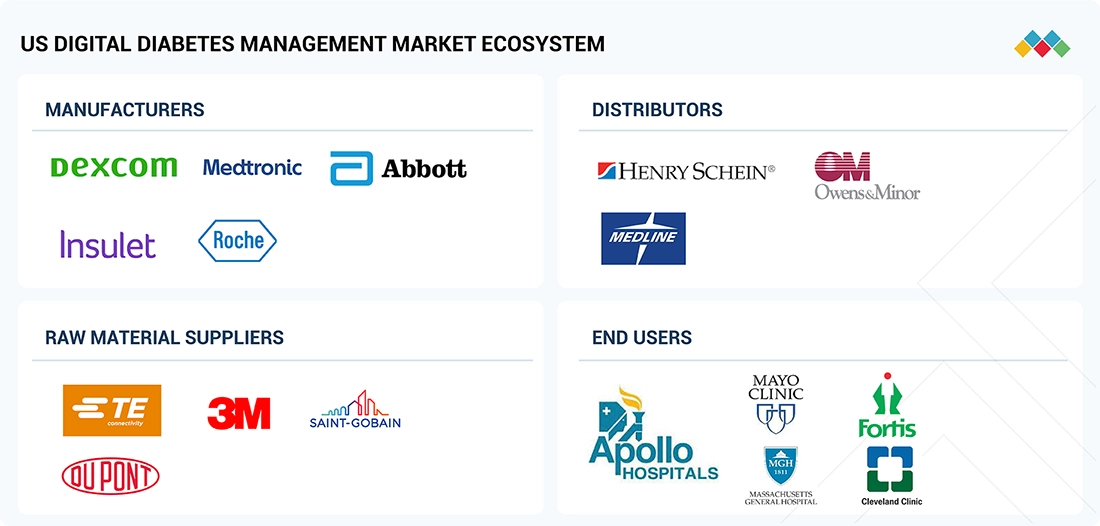
The US digital diabetes management market ecosystem comprises leading multinational and domestic players, including Medtronic, Abbott, Dexcom, F. Hoffmann-La Roche, and Insulet Corporation, which are driving innovation in continuous glucose monitoring, automated insulin delivery, and digital diabetes care platforms. These companies offer integrated solutions combining connected devices, mobile applications, cloud-based analytics, and remote patient monitoring tools to enable continuous and personalized diabetes management. Supporting this ecosystem are digital health software developers, cloud and interoperability service providers, sensor and semiconductor manufacturers, and data analytics firms that enhance device connectivity and real-time clinical insights. End users include hospitals, endocrinology and diabetes clinics, integrated delivery networks, primary care providers, and home care settings across the US. This interconnected ecosystem supports value-based care, enhances care coordination, and facilitates the nationwide adoption of digital diabetes solutions on a large scale.
Logos and trademarks shown above are the property of their respective owners. Their use here is for informational and illustrative purposes only.
MARKET SEGMENTS
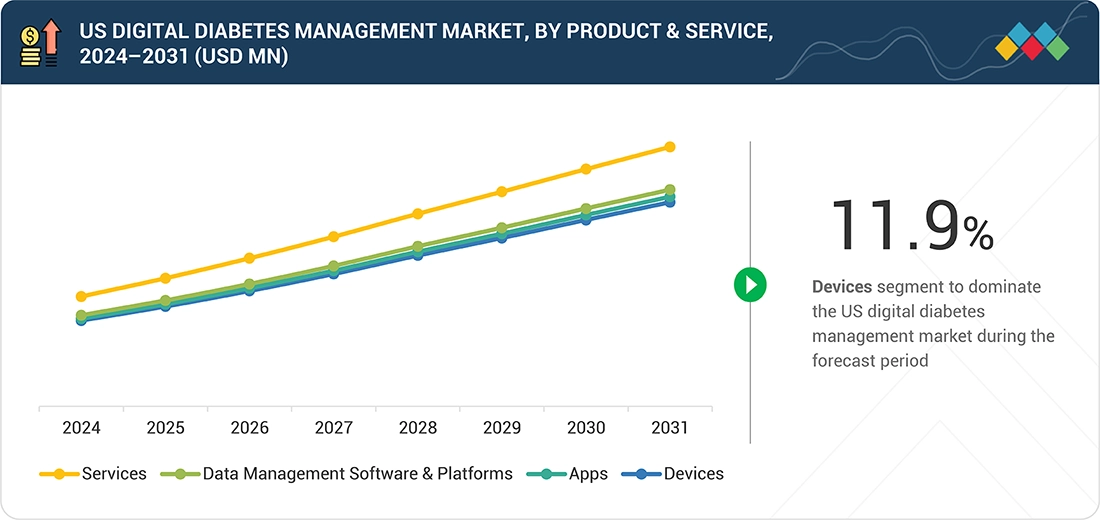
Source: Secondary Research, Interviews with Experts, MarketsandMarkets Analysis
Europe Digital Diabetes Management Market, By Product & Service
The ongoing innovation has raised CGM accuracy, sensor lifespan, wearability, and usability to new heights. Modern CGMs allow for factory calibration and extended wear duration, connecting to smartphones and sending real-time alerts without falsely pricking fingers so often. All these advancements have improved patient compliance and satisfaction in the US market, as they are being convinced to use this method rather than traditional glucose monitoring solutions at higher rates, thereby enriching the market for CGM adoption.
Europe Digital Diabetes Management Market, By Device Type
Wearable CGM devices are expected to gain widespread acceptance in the US market due to their ability to provide real-time, continuous glucose data with minimal finger-stick testing. Alerts and trend analysis give the devices clinical preference in terms of glycemic control for patients and physicians alike. High usage among insulin-dependent patients, coupled with increasing acceptance among Type 2 diabetics, significantly contributes to the wearable devices segment taking the lead in market share.
Europe Digital Diabetes Management Market, By End User
Home-based diabetes care generally reduces healthcare costs by limiting the number of hospitalizations, emergency visits, and routine consultations. Payers and providers in the US promote home-based digital diabetes solutions to enhance care efficiency and reduce the chronic disease burden. This strong economic justification leads to the rapid adoption of self/home healthcare models, which hold the largest market share in digital diabetes management.
US DIGITAL DIABETES MANAGEMENT MARKET: COMPANY EVALUATION MATRIX
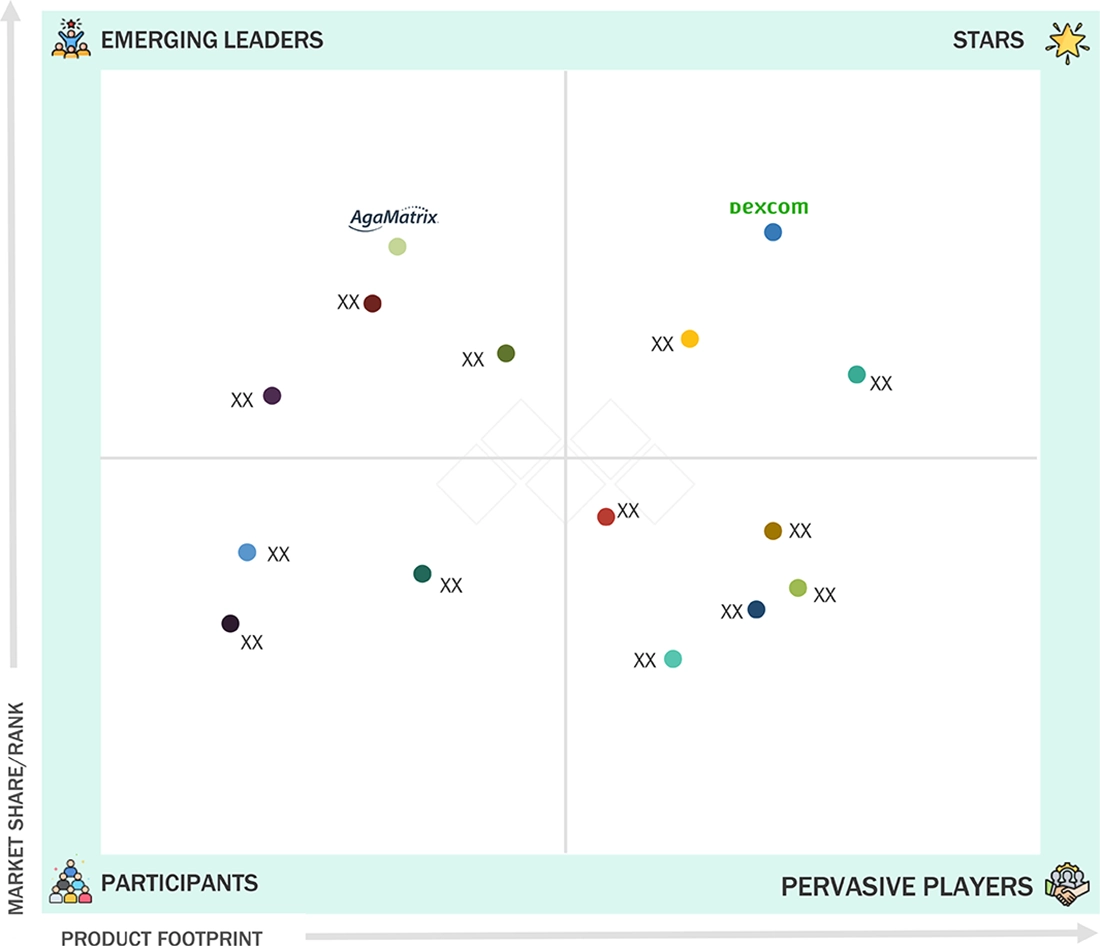
In the US digital diabetes management market, Dexcom (Star) has a strong and established product portfolio and a vast geographic presence. AgaMatrix (Emerging Leader) has substantial product innovations compared to its competitors. While they have broad product portfolios, they lack a strong growth strategy for business development, particularly in terms of geographic expansion, strategic partnerships, and aggressive commercialization initiatives compared to leading players in the market.
Source: Secondary Research, Interviews with Experts, MarketsandMarkets Analysis
KEY MARKET PLAYERS
- Medtronic (Ireland)
- Dexcom, Inc. (US)
- Abbott (US)
- F. Hoffmann-La Roche Ltd. (Switzerland)
- Insulet Corporation (US)
- Ascensia Diabetes Care Holdings AG (Switzerland)
- Tandem Diabetes Care (US)
- B. Braun Melsungen AG (Germany)
- LifeScan, Inc. (US)
- Tidepool (US)
- AgaMatrix (US)
- Glooko, Inc. (US)
- DarioHealth Corporation (Israel)
- One Drop (US)
- Dottili (Finland)
- Ypsomed Holding AG (Switzerland)
- ARKRAY (Japan)
- ACON Laboratories, Inc. (US)
- Care Innovations, LLC (US)
- Health2Sync (Taiwan)
- Emperra GmbH E-Health Technologies (Germany)
- Azumio (US)
- Decide Clinical Software GmbH (Austria)
- Pendiq GmbH (Germany)
- BeatO (India)
MARKET SCOPE
| REPORT METRIC | DETAILS |
|---|---|
| Market Size Value in 2026 (Value) | USD 12.94 BN |
| Revenue Forecast in 2031 (Value) | USD 22.67 BN |
| Growth Rate | 11.90% |
| Years Considered | 2024–2031 |
| Base Year | 2025 |
| Forecast Period | 2026–2031 |
| Units Considered | Value (USD MN/BN), Volume (Thousand Units) |
| Report Coverage | Revenue forecast, company ranking, competitive landscape, growth factors, and trends |
| Segments Covered |
|
| Country Covered | US |
| Parent & Related Segment Reports |
Digital Diabetes Management Market EUROPE Digital Diabetes Management Market |
WHAT IS IN IT FOR YOU: US DIGITAL DIABETES MANAGEMENT MARKET REPORT CONTENT GUIDE
DELIVERED CUSTOMIZATIONS
We have successfully delivered the following deep-dive customizations:
| CLIENT REQUEST | CUSTOMIZATION DELIVERED | VALUE ADDS |
|---|---|---|
| Product Analysis | Comparative evaluation of US digital diabetes solutions including CGM systems, connected blood glucose meters, insulin pumps, digital therapeutics, mobile health applications, and AI-enabled data platforms, with assessment of standalone versus integrated ecosystems across US care settings | Assessment of device accuracy, interoperability with EHRs, patient engagement, clinical decision support, and real-world outcomes to optimize diabetes care pathways under US value-based and population health models |
| Company Information | Detailed profiling of leading US and global digital diabetes players covering product portfolios, software capabilities, FDA approvals, reimbursement and CPT coverage, partnerships with payers and providers, and recent strategic developments across the US market | Competitive benchmarking based on technology maturity, reimbursement strength (Medicare and commercial), ecosystem integration, and innovation focus to support vendor selection and strategic positioning |
| Geographic Analysis | In-depth regional assessment of the US digital diabetes management market covering key states and regions including Northeast, Midwest, South, and West, with analysis of adoption across urban and rural healthcare systems | State-level market sizing, growth forecasts, reimbursement variability, telehealth penetration, and policy impact analysis to guide market entry, expansion, and investment strategies in the US |
RECENT DEVELOPMENTS
- April 2021 : Medtronic partnered with American Diabetes Association (US). This partnership was aimed to address health equity for people of color living with diabetes.
- October 2022 : Abbott Laboratories launched Freestyle Libre 3 CGM device worldwide.
- April 2022 : Dexcom launched Dexcom ONE device worldwide.
- April 2022 : Ascensia Diabetes Care Holdings AG (Switzerland) launched Eversense's 6-month CGM system in the US.
Table of Contents
 Exclusive indicates content/data unique to MarketsandMarkets and not available with any competitors.
Methodology
The study involved four major activities in estimating the current size of the US Digital Diabetes Management Market. Exhaustive secondary research was done to collect information on the market, peer market, and parent market. The next step was to validate these findings, assumptions, and sizing with industry experts across the value chain through primary research. Both top-down and bottom-up approaches were employed to estimate the complete market size. After that, market breakdown and data triangulation were used to estimate the market size of segments and subsegments.
Secondary Research
Secondary sources referred to for this research study include financial statements of companies offering Digital Diabetes Management and information from various trade, business, and professional associations. The secondary data was collected and analyzed to arrive at the overall size of the US Digital Diabetes Management Market, which was validated by primary respondents.
Primary Research
Extensive primary research was conducted after obtaining information regarding the US Digital Diabetes Management Market scenario through secondary research. Several primary interviews were conducted with market experts from both, the demand and supply sides across major countries of North America, Europe, Asia Pacific, Latin America and the Middle East & Africa. Primary data was collected through questionnaires, emails, and telephonic interview. The primary sources from the supply side included various industry experts, such as Chief X Officers (CXOs), Vice Presidents (VPs), Directors, from business development, marketing, product development/innovation teams, and related key executives from Digital Diabetes Management manufacturers; distributors; and key opinion leaders.
Market Size Estimation
The research methodology used to estimate the size of the US Digital Diabetes Management Market includes the following details.
The market sizing of the market was undertaken from the global side.
Country level Analysis: The size of the US Digital Diabetes Management Market was obtained from the annual presentations of leading players and secondary data available in the public domain. The share of products and services in the overall US Digital Diabetes Management Market was obtained from secondary data and validated by primary participants to arrive at the total US Digital Diabetes Management Market. Primary participants further validated the numbers.
Geographic market assessment (by region & country): The geographic assessment was done using the following approaches:
Approach 1: Geographic revenue contributions/splits of leading players in the market (wherever available) and respective growth trends
Approach 2: Geographic adoption trends for individual product segments by end users and growth prospects for each of the segments (assumptions and indicative estimates validated from primary interviews)
At each point, the assumptions and approaches were validated through industry experts contacted during primary research. Considering the limitations of data available from secondary research, revenue estimates for individual companies (for the overall US Digital Diabetes Management Market and geographic market assessment) were ascertained based on a detailed analysis of their respective product offerings, geographic reach/strength (direct or through distributors or suppliers), and the shares of the leading players in a particular region or country.
Data Triangulation
After arriving at the overall size from the market size estimation process explained above, the total market was split into several segments and subsegments. The data triangulation and market breakdown procedures explained below were implemented, wherever applicable, to complete the overall market engineering process and arrive at the exact statistics for various market segments and subsegments. The data was triangulated by studying various factors and trends from the demand and supply sides. Along with this, the market size was validated using both the top-down and bottom-up approaches.
Market Definition
Digital diabetes management refers to electronic medical solutions used for remote monitoring, analysis and management of patients with diabetes. Diabetes is a metabolic disorder that leads to elevated blood sugar levels in the body. Digital diabetes management involves the use of software-based applications, platforms and devices, such as smart glucose meters, insulin pens, sensors, closed-loop systems and insulin patches.
These systems are used to manage blood glucose, pressure and cholesterol levels and effectively track and maintain the record of the patients. They also aid in improving healthcare processes, delay or prevent diabetes complications and minimize medical costs for the patients. As a result, they are widely used across at-home and self-care facilities, hospitals, clinics and research institutes.
Key Stakeholders
- Senior Management
- End Users
- Diabetes Care Providers
- Finance/Procurement Department
Report Objectives
- To define, describe, analyze, and forecast the US Digital Diabetes Management Market by product, type, end user, and region
- To provide detailed information about the major factors influencing the market growth (drivers, restraints, opportunities, and challenges)
- To analyze micromarkets with respect to individual growth trends, prospects, and contributions to the overall market
- To analyze market opportunities for stakeholders and provide details of the competitive landscape for key players
- To strategically profile key players in the US Digital Diabetes Management Market and comprehensively analyze their core competencies
- To track and analyze competitive developments such as product launches, expansions, acquisitions, partnerships, agreements, and other developments of leading players in the US Digital Diabetes Management Market
Available Customizations
With the given market data, MarketsandMarkets offers customizations as per the company’s specific needs. The following customization options are available for the report:
Company Information
- Detailed analysis and profiling of additional market players


Personalize This Research
- Triangulate with your Own Data
- Get Data as per your Format and Definition
- Gain a Deeper Dive on a Specific Application, Geography, Customer or Competitor
- Any level of Personalization
Let Us Help You
- What are the Known and Unknown Adjacencies Impacting the US Digital Diabetes Management Market
- What will your New Revenue Sources be?
- Who will be your Top Customer; what will make them switch?
- Defend your Market Share or Win Competitors
- Get a Scorecard for Target Partners

Custom Market Research Services
We Will Customise The Research For You, In Case The Report Listed Above Does Not Meet With Your Requirements
Get 10% Free CustomisationTESTIMONIALS

JAYANT RAJPUROHIT
Director of Market Insights, Data and Analytics
SFI Health,
Leading Pharmaceutical Companywww.sfihealth.com/

We at SFI Health approached MarketsandMarkets for an Opportunity Assessment on "Incidence and Prevalence of Focus Indications" as we wanted to know the most attractive HCPs like Physician, Functional MD, Naturopath and Pharmacist. The project was critical for us to ensure our focus on the right target which would enable sustainable growth and profitability for SFI Health. The business insights provided exceeded our expectations and we were extremely impressed. The team at MarketsandMarkets is highly professional and detail oriented and very well understood our business needs. MarketsandMarkets offers a unique combination of expertise and dedicated engagement model. We identified 2 new products to be launched in coming months, based on the research findings provided by MarketsandMarkets. We are happy with the services and would strongly recommend MarketsandMarkets to my peers in the industry.

BEATRIZ DE LA CALLE
Head of Commercial Analytics
Qualicaps,
Leading Pharmaceutical Companywww.qualicaps.com/

We partnered with MarketsandMarkets for an assessment study on hard empty capsules. The team was extremely professional in understanding our business requirements and we received timely responses to all our queries. The market intelligence and the recommendations has met our business requirements. We were extremely impressed to see the final study results; it really exceeded our expectations. The market intelligence offered by MarketsandMarkets, and clarity on next steps will help us achieve our business objective for the Year 2021. We are happy with the services and would strongly recommend MarketsandMarkets to my peers in the industry.

Bob Williams,
Senior Director Business Development & Innovation
Bracco Diagnostics Inc.,
Italian Multinational in life sciences sector and a World Leader in imaging diagnosticsimaging.bracco.com/us-en
We were pleased with targeted insights that MarketsandMarkets identified from a custom study on the 'Radiation Dose Management Solutions Market'. Your team identified and characterized the market participants as well as underlying trends accurately. This study was useful to Bracco in formulating business strategies for our dose monitoring product lines and we thank MarketsandMarkets for the job well done.
Cody Coonradt,
Market Development and Strategy Manager
3M Health Information Systems,
Leader in Health care Coding, Payment & Analytics Solutions.www.3m.com/3M/en_US/health-information-systems-us
The value for our organization comes from three things: depth of research, specificity of segments and being easy to work with. As important as the first two are, the third can't be underestimated. MarketsandMarkets, maybe more than any other research vendor, wants to know what is top of mind for our team and what big questions we are grappling to answer.
Their customer first approach and high value engagement model, have given us great analysis and excellent value for money






Growth opportunities and latent adjacency in US Digital Diabetes Management Market