US Telehealth & Telemedicine Market Size, Growth, Share & Trends Analysis

US Telehealth & Telemedicine Market by Function (Clinical Care, Teleconsult, RPM, Patient Engagement, Analytics), Application (TeleICU, Teleradiology, Telecardiology, Diabetes), Age (Adult, Pediatric), End User (Hospital, Payer, ASC) - Forecast to 2030




OVERVIEW
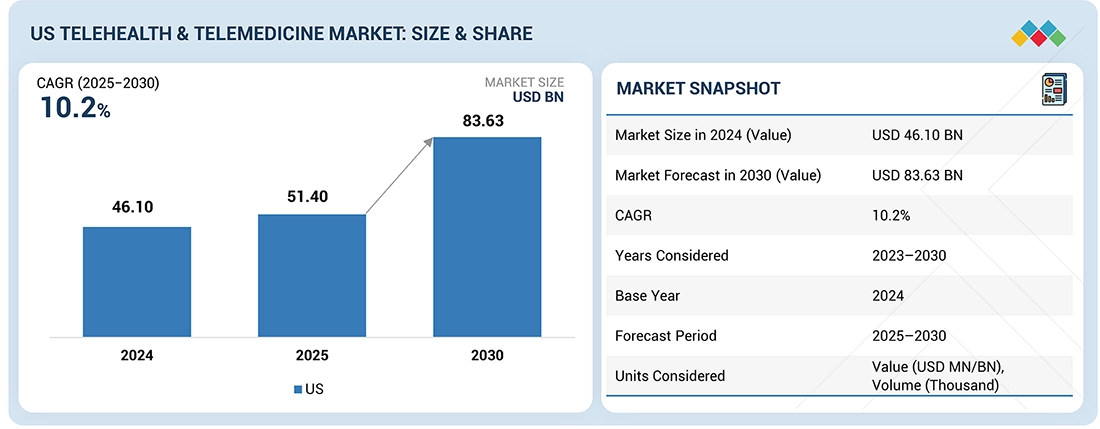
Source: Secondary Research, Interviews with Experts, MarketsandMarkets Analysis
The US Telehealth & Telemedicine Market, valued at US$46.10 billion in 2024, stood at US$51.40 billion in 2025 and is projected to advance at a resilient CAGR of 10.2% from 2025 to 2030, culminating in a forecasted valuation of US$83.63 billion by the end of the period. In the US, permanent CMS reimbursement expansions and state-level payment parity laws are driving telehealth growth by securing fair, ongoing reimbursement comparable to in-person care.
KEY TAKEAWAYS
-
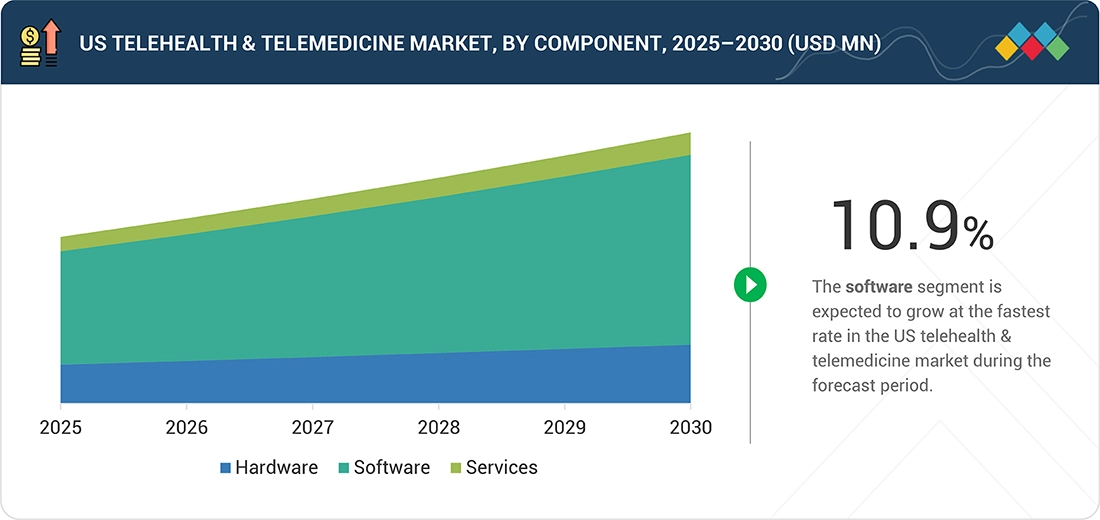
BY COMPONENTBy component, the software segment is projected to grow at the fastest rate of 10.9% from 2025 to 2030.
-
BY FUNCTIONBy function, the remote patient monitoring/patient monitoring segment is expected to register the highest CAGR of 10.8% from 2025 to 2030
-
BY APPLICATIONBy application, virtual sitting & nursing segment is expected to register the highest CAGR of 12.9% from 2025 to 2030
-
BY AGE GROUPBy age group, the adults segment is expected to dominate the market during the study period.
-
BY END USERBy end user, the patients segment is expected to register the highest CAGR from 2025 to 2030.
-
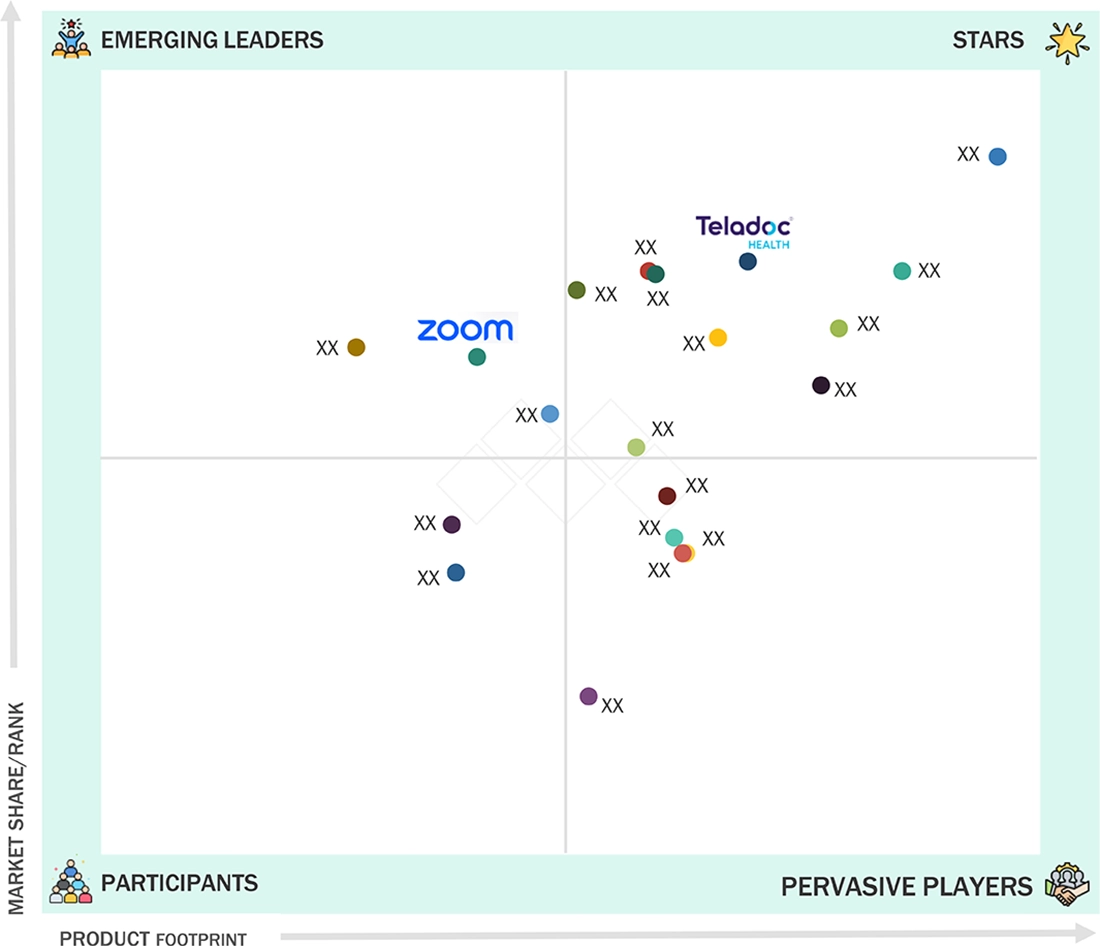
Competitive LandscapeAmerican Well, Oracle, and Caregility were identified as some of the star players in the US telehealth & telemedicine market, given their strong market share and product footprint.
-
Competitive LandscapeTimedoc, Inc., Caresimple Inc., and Transcarent have distinguished themselves among startups and SMEs by securing strong footholds in specialized niche areas, underscoring their potential as emerging market leaders
The telehealth & telemedicine market in US is driven by the rapid adoption of virtual consultations by both healthcare providers and patients, supported by Medicare and Medicaid reimbursement policies, along with continued investment from hospitals and digital health companies, further strengthening market expansion across the US.
MARKET DYNAMICS

Level
-
Adoption of RPM and hybrid care models driven by Medicare CPT codes

-
Rapid growth of virtual behavioral health and audio-only coverage


Level
-
Multi-state licensing and regulatory fragmentation

-
Reimbursement Variability Across States and Payers


Level
-
AI-enabled tele-triage, automation, and clinical decision support

-
Shift toward telehealth-enabled in-home care for acute recovery and chronic disease management


Level
-
HIPAA compliance, cybersecurity risk, and data privacy concerns

-
Fragmented telehealth Technology Landscape and EHR Integration Complexity

Source: Secondary Research, Interviews with Experts, MarketsandMarkets Analysis
Driver: Adoption of RPM and hybrid care models driven by Medicare CPT codes
In the US, hybrid care models and remote patient monitoring (RPM) are growing rapidly, partly due to favorable Medicare reimbursement regulations. RPM is financially feasible because CMS-approved CPT codes such as 99453, 99454, 99457, and 99458 allow clinicians to be compensated for device setup, data transmission, and ongoing virtual patient monitoring. These regulations encourage healthcare professionals to integrate telehealth and in-person care into a single hybrid care model by permitting ongoing monitoring of chronic illnesses outside conventional care settings. In addition to improving patient outcomes and engagement, this also lowers readmission rates and total healthcare expenditures, which drives the use of telehealth in US health systems.
Restraint: Multi-state licensing and regulatory fragmentation
The presence of multi-state licensing and varied state-by-state rules makes it difficult for telehealth services to progress seamlessly in America. All states have different rules for medical licensing, prescriptions, and payments, making it difficult for a physician to practice with patients residing in different states. A physician practicing from New York cannot hold an online consultation with a patient from California without obtaining a medical license from California as well, which requires additional paperwork and waiting. While the Interstate Medical Licensure Compact and similar projects have made it easier, it still costs telehealth practitioners a considerable amount of time and money to comply with various state regulations.
Opportunity: AI-enabled tele-triage, automation, and clinical decision support
AI-powered tele-triage solutions and decision support systems are showing strong promise for the adoption of telehealth in the US. These technologies could pave the way for easier patient registration, more precise diagnoses, and higher-priority treatment allocation. Consider Cleveland Clinic, which has an AI-assisted virtual triage system that can detect various diseases quite accurately and refer patients to the appropriate facilities. This approach would make the hospital more efficient and improve patient outcomes. These technologies will improve access to healthcare, especially in areas with high volume or a lack of medical experts, by facilitating 24-hour tele-triage services, reducing doctors' workloads, shortening waiting times, and enabling better decisions.
Challenge: HIPAA compliance, cybersecurity risk, and data privacy concerns
As more physicians interact with patients online, data security has become a major concern. A majority of cyberattacks target healthcare facilities, and in 2023, more than 133 million people's personal information was stolen. Because the telehealth system relies on cloud computing, video conferencing, and smart devices, hospitals and physicians must exercise caution and take necessary precautions to protect patient data. The impacts of cyberattacks can undermine patient trust.
US TELEHEALTH & TELEMEDICINE MARKET: COMMERCIAL USE CASES ACROSS INDUSTRIES
| COMPANY | USE CASE DESCRIPTION | BENEFITS |
|---|---|---|
 |
Offers connected care devices such as insulin pumps and cardiac monitors that transmit patient data to clinicians remotely across US | Enhances chronic-disease management, improves patient adherence, and supports timely clinical decisions |
 |
Offers a virtual-care ecosystem enabling teleconsultations, behavioral health services, chronic condition management, and AI-assisted triaging across the US | Expanded access to care, shorter wait times, integrated care continuity, improved patient satisfaction |
 |
Provides HIPAA-compliant telehealth tools (e.g., Doximity Dialer) that allow US clinicians to conduct secure video and phone visits directly from their devices | Improves provider convenience, protects clinician privacy, expands patient access, and supports seamless virtual follow-ups |
 |
Provides remote monitoring and virtual care management for chronic-disease patients through connected devices and cloud platforms | Reduces hospital visits, improves care continuity, and enables early intervention |
 |
Provides HIPAA-compliant video solutions tailored for telehealth workflows, enabling seamless patient-provider virtual interactions in clinics and home settings across US | Lower care-delivery costs, faster patient reach, improved ease of use for both patients and clinicians |
Logos and trademarks shown above are the property of their respective owners. Their use here is for informational and illustrative purposes only.
MARKET ECOSYSTEM
The US telehealth & telemedicine market ecosystem comprises key players (Teladoc Health, Inc., Cisco Systems, Inc., Doximity, Inc.) providing remote monitoring and early disease detection; other startups (TimeDoc, Cerebral, Kindbody) focused on digital therapeutics, behavioral health, and chronic care management; and major end users, including healthcare providers, healthcare payers, pharmaceutical & biotechnology companies, and patients who rely on virtual platforms for primary, specialty, and mental healthcare delivery.
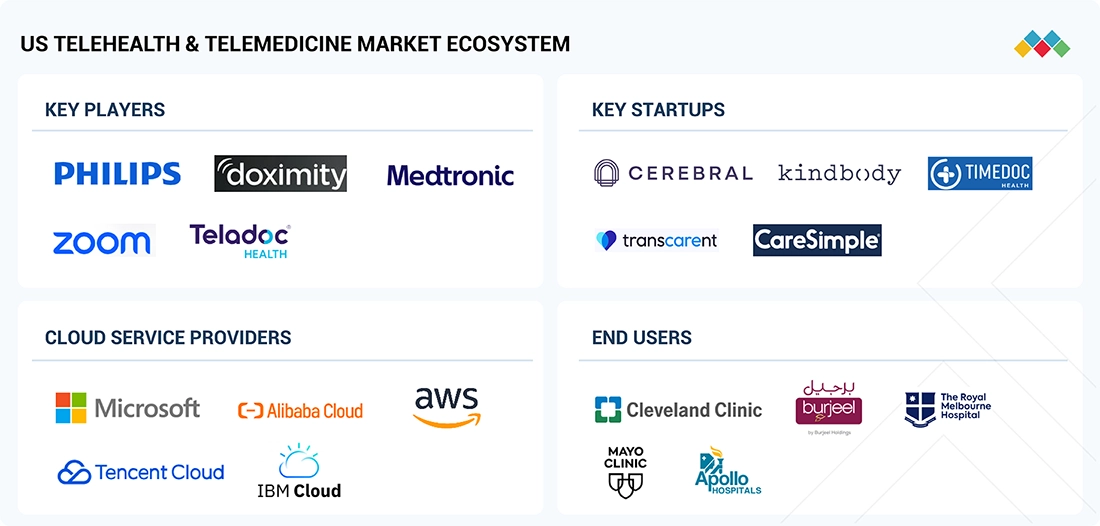
Logos and trademarks shown above are the property of their respective owners. Their use here is for informational and illustrative purposes only.
MARKET SEGMENTS
Source: Secondary Research, Interviews with Experts, MarketsandMarkets Analysis
US Telehealth & Telemedicine Market, By Component
In 2024, the software segment held the largest share of the US telehealth & telemedicine market, as digital platforms form the backbone of virtual care delivery across hospitals, clinics, and payer networks. Software solutions enable secure video consultations, appointment scheduling, EHR integration, billing, and remote patient data management, making them essential for scaling virtual services. Major US providers are shifting toward cloud-based, AI-enhanced telehealth platforms, while companies such as Teladoc Health, Amwell, and Doximity continue to expand their software capabilities. As demand rises for seamless, interoperable, and data-driven care workflows, software remains the most dominant and fastest-growing component of the US telehealth & telemedicine market.
US Telehealth & Telemedicine Market, By Function
In 2024, the clinical care management held the largest share of the US telehealth and telemedicine market. Clinical decision support, automated care coordination, and AI-enabled tele-triage are increasingly integrated to help US providers manage rising patient loads. These tools are increasingly used by US health systems and payers to lower hospital readmission rates, enhance real-time monitoring, and increase access to care, particularly for underserved and rural populations. Furthermore, adoption in primary care networks, integrated delivery systems, and accountable care organizations has been reinforced by increased Medicare and commercial payer funding for remote care services. Telehealth-enabled clinical care management ensures better treatment continuity, better health outcomes, and lower total healthcare costs, making it the leading category in the market.
US Telehealth & Telemedicine Market, By Application
In 2024, specialty care held the largest share of the US telehealth and telemedicine market, driven by the growing adoption of advanced virtual care models that support condition-specific diagnostics and treatment workflows. In US healthcare, providers such as Mayo Clinic offer telestroke services that allow neurologists to remotely consult on acute stroke cases at smaller or rural hospitals. This hospital-led delivery of specialized remote care expands access, reduces treatment delays, and reinforces the dominance of specialty telehealth services in the US. Moreover, US reimbursement frameworks, such as Medicare coverage expansions, parity laws in multiple states, and CPT code additions for virtual specialist procedures, are accelerating provider adoption.
US Telehealth & Telemedicine Market, By Age Group
In 2024, adults held the largest share of the US telehealth and telemedicine market, primarily because virtual care services for chronic disease management, mental health support, primary care consultations, and follow-up visits are widely used. This population group tends to have a higher prevalence of long-term medical conditions and lifestyle-related health issues, which fuels demand for remote care solutions. The convenience, reduced travel time, and quicker access to specialists that telehealth platforms offer also make the working adult segment appreciate the service and encourage adoption. Familiarity with technology, higher adoption of digital health tools, and the incorporation of remote monitoring programs through employer-sponsored health plans further underscore the leading position of adults in the US.
US Telehealth & Telemedicine Market, By End User
In 2024, healthcare providers held the largest share of the US telehealth and telemedicine market, as the primary users of virtual care platforms to increase access and improve operational effectiveness are hospitals, physician groups, and integrated delivery networks. To manage patient demand, shorten wait times, and advance value-based care initiatives, US providers, including Cleveland Clinic, Johns Hopkins Medicine, and Mayo Clinic, are increasingly adopting digital workflow tools, secure video consultations, and remote patient monitoring. The majority of virtual care consumption and market expansion in the US remain driven by healthcare providers, along with ongoing investments in telehealth infrastructure and the integration of software into clinical procedures.
REGION
US telehealth & telemedicine market is growing rapidly
The US telehealth & telemedicine markets will grow rapidly due to supportive CMS reimbursement policies and the digital transformation of health care providers, payers, and patient populations. The US benefits from high smartphone penetration, sophisticated broadband infrastructure, and significant investments in AI-enabled virtual care technologies such as digital medicines and remote monitoring. Taken together, supportive reimbursement rules from Medicare, Medicaid, and commercial insurers are driving broader adoption and making virtual consultations and continuous care delivery more commonplace. In addition, there is a growing shift toward telehealth-enabled home care for acute recovery in the US, which reduces hospital lengths of stay and supports faster, more convenient patient rehabilitation. These factors position the US as the leading innovation hub for scalability and growth in telehealth and telemedicine, both geographically and in terms of innovation.
US TELEHEALTH & TELEMEDICINE MARKET: COMPANY EVALUATION MATRIX
In the US telehealth & telemedicine market matrix, Teladoc Health, Inc. (Star) leads with a dominant market position and offers a broad range of services, including primary care, mental health, chronic condition management, and AI-enabled triage solutions. Zoom Communications, Inc. (Emerging Leader) is rapidly gaining traction and offers seamless virtual interactions between patients and healthcare providers.
Source: Secondary Research, Interviews with Experts, MarketsandMarkets Analysis
KEY MARKET PLAYERS
- Koninklijke Philips N. V. (Netherlands)
- Medtronic (Ireland)
- Teladoc Health, Inc. (US)
- Doximity, Inc. (US)
- American Well (US)
- Cisco Systems, Inc. (US)
- GE Healthcare (US)
- Zoom Communications, Inc. (US)
- Siemens Healthineers AG (Germany)
- Epic Systems Corporation (US)
- Included Health, Inc. (US)
- AMC Health (US)
- TeleSpecialists (US)
- Walgreen Co. (US)
- Caregility (US)
- CVS Health (US)
- Evernorth Health, Inc. (US)
- Elation (US)
- Iron Bow Technologies (US)
- Oracle (US)
MARKET SCOPE
| REPORT METRIC | DETAILS |
|---|---|
| Market Size in 2024 (Value) | USD 46.10 BN |
| Market Forecast in 2030 (Value) | USD 83.63 BN |
| Growth Rate | CAGR of 10.2% from 2025-2030 |
| Years Considered | 2023-2030 |
| Base Year | 2024 |
| Forecast Period | 2025-2030 |
| Units Considered | Value (USD Billion) |
| Report Coverage | Revenue forecast, company ranking, competitive landscape, growth factors, and trends. |
| Segments Covered |
|
| Parent & Related Segment Reports |
Telehealth and Telemedicine Market Europe Telehealth & Telemedicine Market Asia Pacific Telehealth & Telemedicine Market |
WHAT IS IN IT FOR YOU: US TELEHEALTH & TELEMEDICINE MARKET REPORT CONTENT GUIDE
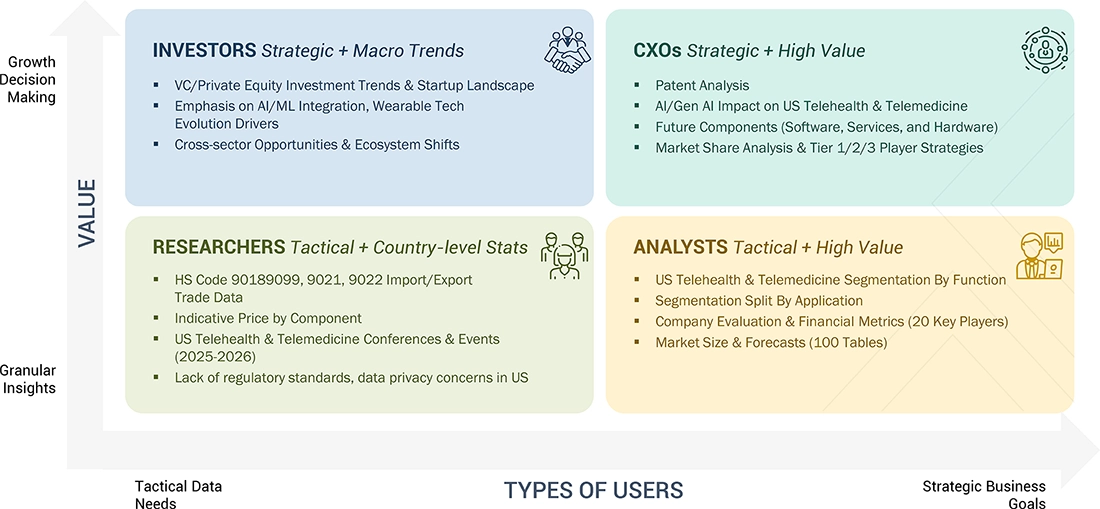
DELIVERED CUSTOMIZATIONS
We have successfully delivered the following deep-dive customizations:
| CLIENT REQUEST | CUSTOMIZATION DELIVERED | VALUE ADDS |
|---|---|---|
| Local Competitive Landscape | Profiling of leading US telehealth & telemedicine suppliers (e.g., GE HealthCare, Teladoc Health, Medtronic) covering service offerings, platform capabilities, reimbursement alignment, data security certifications, and pricing/licensing models. | Enables US competitive benchmarking, identifies functional and compliance gaps, and supports vendor selection, partnership evaluation, and market positioning strategies. |
| Regional Market Entry Strategy | Analysis of state-level telehealth regulations, Medicaid/Medicare reimbursement policies, provider network penetration, and patient adoption patterns across high-demand therapeutic areas such as behavioral health and chronic care management. | Accelerates US market access, optimizes channel strategy, and ensures compliance with evolving regulatory frameworks, improving commercialization timelines and service scalability. |
| Local Risk & Opportunity Assessment | Evaluation of cybersecurity risks, interoperability challenges, patient data privacy requirements (HIPAA), reimbursement complexities, and emerging opportunities in underserved rural and mental health segments. | Strengthens risk mitigation and compliance strategy, prioritizes high-value investment segments, and supports sustainable business expansion in rapidly growing telehealth service areas. |
| Technology Adoption by Region | Mapping of telehealth utilization trends in US, including adoption of RPM devices, AI triage tools, EMR integration, and specialty teleconsultation services across hospitals and physician networks. | Informs product and service deployment strategies, aligns offerings with digital-health maturity levels of provider networks, and supports improved care accessibility and operational efficiency. |
RECENT DEVELOPMENTS
- October 2024 : Zoom Communications partnered with Suki, a developer of AI-powered healthcare voice tools, to integrate advanced AI features into their telehealth services.
- September 2024 : AvaSure has collaborated with Oracle Cloud Infrastructure (OCI) and NVIDIA to develop an AI-powered virtual concierge solution for hospitals
- April 2024 : Philips partnered with smartQare to integrate advanced wearable biosensors with patient monitoring platforms, improving continuous monitoring both in and out of hospitals
- COLUMN 'A' SHOULD BE IN TEXT FORMAT AND NOT DATE FORMAT :
Table of Contents
 Exclusive indicates content/data unique to MarketsandMarkets and not available with any competitors.
Methodology
The study involved significant activities to estimate the current size of the US Telehealth & Telemedicine Market . Exhaustive secondary research was done to collect information on the US Telehealth & Telemedicine Market . The next step was to validate these findings, assumptions, and sizing with industry experts across the value chain using primary research. Different approaches, such as top-down and bottom-up, were employed to estimate the total market size. After that, the market breakup and data triangulation procedures were used to estimate the market size of the segments and subsegments of the US Telehealth & Telemedicine Market .
Secondary Research
This research study involved the wide use of secondary sources, directories, and databases such as Dun & Bradstreet, Bloomberg Businessweek, and Factiva; white papers, annual reports, and companies’ house documents; investor presentations; and the SEC filings of companies. The market for the companies offering telehealth & telemedicine solutions is arrived at by secondary data available through paid and unpaid sources, analyzing the product portfolios of the major companies in the ecosystem, and rating the companies by their performance and quality. Various sources were referred to in the secondary research process to identify and collect information for this study. The secondary sources include annual reports, press releases, investor presentations of companies, white papers, journals, certified publications, and articles from recognized authors, directories, and databases.
Various secondary sources were referred to in the secondary research process to identify and collect information related to the study. These sources included annual reports, press releases, investor presentations of telehealth & telemedicine vendors, forums, certified publications, and whitepapers. The secondary research was used to obtain critical information on the industry’s value chain, the total pool of key players, market classification, and segmentation from the market and technology-oriented perspectives.
Primary Research
In the primary research process, various primary sources from both the supply and demand sides were interviewed to obtain qualitative and quantitative information for this report. The primary sources from the supply side included industry experts, such as Chief Executive Officers (CEOs), Vice Presidents (VPs), marketing directors, technology and innovation directors, and related key executives from various key companies and organizations operating in the US Telehealth & Telemedicine Market .
After the complete market engineering (calculations for market statistics, market breakdown, market size estimations, market forecasting, and data triangulation), extensive primary research was conducted to gather information and verify and validate the critical numbers arrived at. Primary research was also undertaken to identify the segmentation types, industry trends, competitive landscape of telehealth & telemedicine solutions offered by various market players, and key market dynamics, such as drivers, restraints, opportunities, challenges, industry trends, and key player strategies.
In the complete market engineering process, the top-down and bottom-up approaches and several data triangulation methods were extensively used to perform the market estimation and market forecasting for the overall market segments and subsegments listed in this report. Extensive qualitative and quantitative analysis was performed on the complete market engineering process to list the key information/insights throughout the report.
Market Size Estimation
Both top-down and bottom-up approaches were used to estimate and validate the total size of the US Telehealth & Telemedicine Market . These methods were also used extensively to estimate the size of various subsegments in the market. The research methodology used to estimate the market size includes the following:
- The key players in the industry and markets have been identified through extensive secondary research.
- The industry’s supply chain and market size, in terms of value, have been determined through primary and secondary research processes.
- All percentage shares, splits, and breakdowns have been determined using secondary sources and verified through primary sources.
Data Triangulation
After arriving at the overall market size using the market size estimation processes explained above, the market was split into several segments and subsegments. The data triangulation and market breakup procedures were employed, wherever applicable, to complete the overall market engineering process and arrive at the exact statistics of each market segment and subsegment. The data was triangulated by studying various factors and trends from both the demand and supply sides.
Market Definition
Telehealth - Telehealth represents a broad group of healthcare services that are made possible through various digital communication technologies. This comprises care, education, and other health services facilitated by telecommunications equipment like video conferencing, mobile applications, devices for remote monitoring of patients, and wearable health technologies. Telehealth offers a wide range of services, including preventive care, chronic disease management, mental health support, and virtual consultations.
Telemedicine - Telemedicine is a type of telehealth which focuses on the remote delivery of clinical services. It includes diagnosing, treating, and monitoring patients using digital communication tools, which frequently fill a gap in communities with limited access to healthcare facilities. Examples include online consultations, virtual follow-ups, and electronic transmission of medical imaging for diagnostic purposes.
Stakeholders
- Pharmaceutical and Biotechnology Companies
- Contract Research Organizations (CROs)
- Technology and AI Companies
- Regulatory Authorities
- Hospitals and Healthcare Providers
- Patients and Patient Advocacy Groups
- Clinical Trial Investigators and Site Coordinators
- Data Management and Analytics Firms
- Academic Institutions and Research Organizations
- Investors and Venture Capital Firms
- Clinical Trial Software Providers
- Ethics Committees and Institutional Review Boards (IRBs)
- Insurance Companies
- Telehealth software providers
- Remote Patient Monitoring (RPM) Solutions
- Healthcare IT Service Providers
Report Objectives
- To define, describe, and forecast the US Telehealth & Telemedicine Market based on component, function, application, age group, end user, and region.
- To provide detailed information about the major factors (drivers, opportunities, restraints, and challenges) influencing the growth of the market
- To analyze opportunities for stakeholders by identifying the high-growth segments of the market
- To forecast the size of the market segments with respect to five main regions: North America, Europe, Asia Pacific, the Middle East & Africa, and Latin America
- To analyze subsegments of the market with respect to individual growth trends, prospects, and contributions to the overall market
- To profile the key players and comprehensively analyze their market sizes and core competencies.
- To track and analyze competitive developments such as acquisitions, collaborations, agreements, mergers, product launches & updates, partnerships, expansions, and other recent developments in the market globally.


Personalize This Research
- Triangulate with your Own Data
- Get Data as per your Format and Definition
- Gain a Deeper Dive on a Specific Application, Geography, Customer or Competitor
- Any level of Personalization
Let Us Help You
- What are the Known and Unknown Adjacencies Impacting the US Telehealth & Telemedicine Market
- What will your New Revenue Sources be?
- Who will be your Top Customer; what will make them switch?
- Defend your Market Share or Win Competitors
- Get a Scorecard for Target Partners

Custom Market Research Services
We Will Customise The Research For You, In Case The Report Listed Above Does Not Meet With Your Requirements
Get 10% Free CustomisationTESTIMONIALS

JAYANT RAJPUROHIT
Director of Market Insights, Data and Analytics
SFI Health,
Leading Pharmaceutical Companywww.sfihealth.com/

We at SFI Health approached MarketsandMarkets for an Opportunity Assessment on "Incidence and Prevalence of Focus Indications" as we wanted to know the most attractive HCPs like Physician, Functional MD, Naturopath and Pharmacist. The project was critical for us to ensure our focus on the right target which would enable sustainable growth and profitability for SFI Health. The business insights provided exceeded our expectations and we were extremely impressed. The team at MarketsandMarkets is highly professional and detail oriented and very well understood our business needs. MarketsandMarkets offers a unique combination of expertise and dedicated engagement model. We identified 2 new products to be launched in coming months, based on the research findings provided by MarketsandMarkets. We are happy with the services and would strongly recommend MarketsandMarkets to my peers in the industry.

BEATRIZ DE LA CALLE
Head of Commercial Analytics
Qualicaps,
Leading Pharmaceutical Companywww.qualicaps.com/

We partnered with MarketsandMarkets for an assessment study on hard empty capsules. The team was extremely professional in understanding our business requirements and we received timely responses to all our queries. The market intelligence and the recommendations has met our business requirements. We were extremely impressed to see the final study results; it really exceeded our expectations. The market intelligence offered by MarketsandMarkets, and clarity on next steps will help us achieve our business objective for the Year 2021. We are happy with the services and would strongly recommend MarketsandMarkets to my peers in the industry.

Bob Williams,
Senior Director Business Development & Innovation
Bracco Diagnostics Inc.,
Italian Multinational in life sciences sector and a World Leader in imaging diagnosticsimaging.bracco.com/us-en
We were pleased with targeted insights that MarketsandMarkets identified from a custom study on the 'Radiation Dose Management Solutions Market'. Your team identified and characterized the market participants as well as underlying trends accurately. This study was useful to Bracco in formulating business strategies for our dose monitoring product lines and we thank MarketsandMarkets for the job well done.
Cody Coonradt,
Market Development and Strategy Manager
3M Health Information Systems,
Leader in Health care Coding, Payment & Analytics Solutions.www.3m.com/3M/en_US/health-information-systems-us
The value for our organization comes from three things: depth of research, specificity of segments and being easy to work with. As important as the first two are, the third can't be underestimated. MarketsandMarkets, maybe more than any other research vendor, wants to know what is top of mind for our team and what big questions we are grappling to answer.
Their customer first approach and high value engagement model, have given us great analysis and excellent value for money






Growth opportunities and latent adjacency in US Telehealth & Telemedicine Market