US Veterinary Ophthalmology Equipment Market Size, Growth, Share & Trends Analysis

US Veterinary Ophthalmology Equipment Market by Product (Diagnostic [Ophthalmoscopes, Tonometers], Surgical Equipment, Disposables, and Implants, Animal Type, End User (Veterinary Hospitals, Clinics) - Forecast to 2031




OVERVIEW
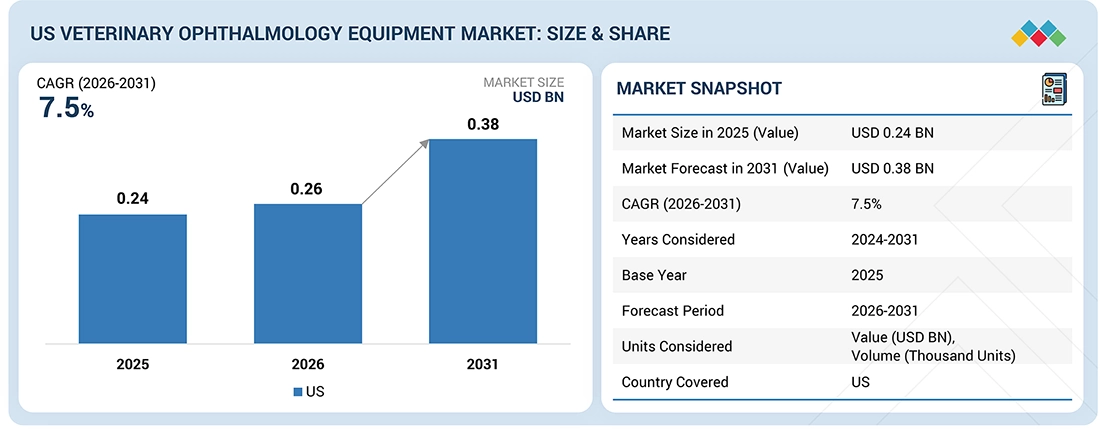
Source: Secondary Research, Interviews with Experts, MarketsandMarkets Analysis
The US veterinary ophthalmology equipment market, valued at USD 0.24 billion in 2025, stood at USD 0.26 billion in 2026 and is projected to advance at a resilient CAGR of 7.5% from 2025 to 2031, culminating in a forecasted valuation of USD 0.38 billion by the end of the period. The market is growing at a rapid pace, driven by the increasing pet ownership, awareness of pet disease, rising expenses of pet healthcare, a growing number of veterinary ophthalmologists, rising incidences of ocular disorders in veterinary cases, and the increasing use of advanced technologies in ophthalmology.
KEY TAKEAWAYS
-
By ProductThe surgical equipment, disposables, and implants segment accounted for the largest market share of 66.2% in 2025.
-
By ApplicationThe treatment segment is projected to register the highest CAGR of 7.9% during forecast period.
-
By Animal TypeThe canine segment accounted for the largest market share of 41.7% in 2025.
-
By End UserThe specialty clinics segment accounted for the largest market share in 2025.
-
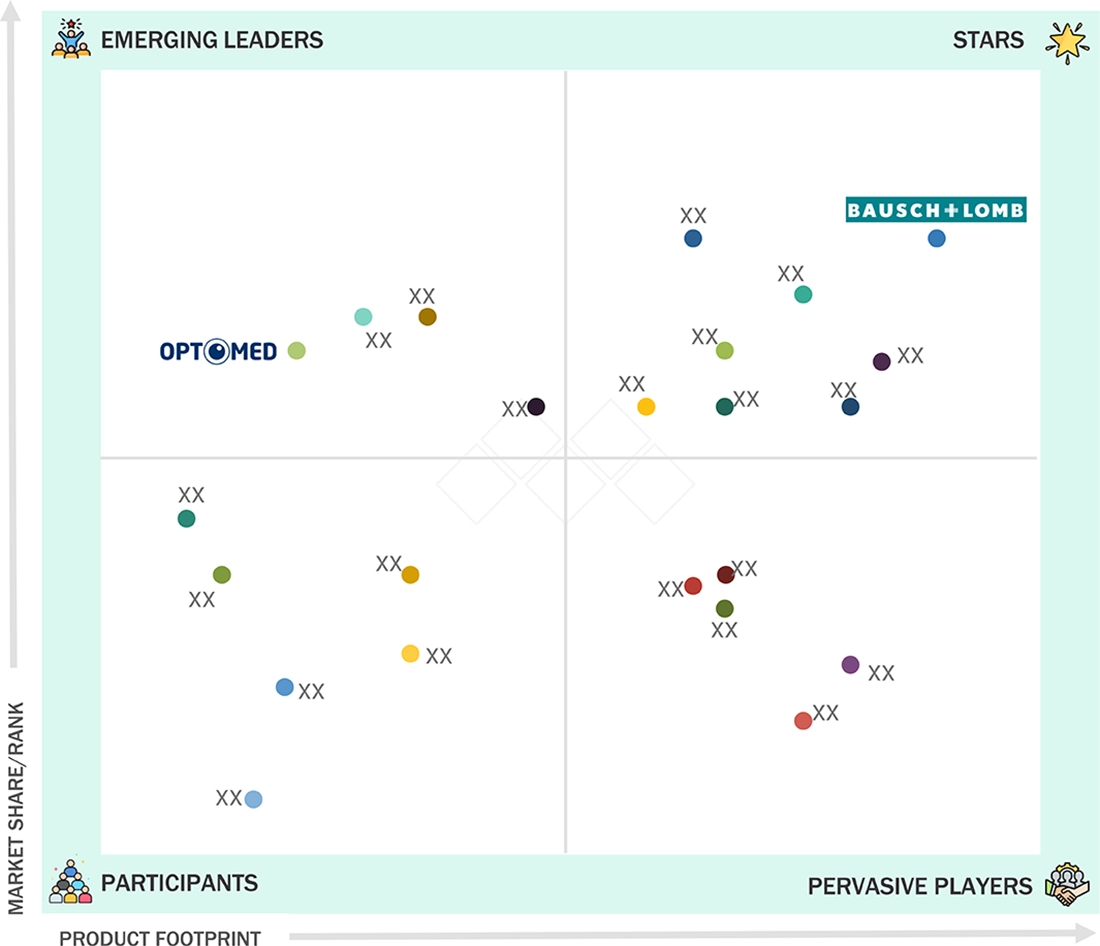
Competitive Landscape: Key PlayersBausch + Lomb Corporation, Halma plc, and Baxter International, Inc. were identified as some of the star players in the market , given their strong market share and product footprint.
-
Competitive Landscape: SMEsNew World Medical, Ocularvision, Inc., and GerVetUSA, among others, have distinguished themselves among startups and SMEs by securing strong footholds in specialized niche areas, underscoring their potential as emerging market leaders.
The US veterinary ophthalmology equipment market is experiencing robust growth. There are several key factors that are driving the market, such as the constant increase in pet ownership, better understanding of pet diseases and preventive care among the owners, and higher spending on pets, and the uptake of cutting-edge technologies in veterinary ophthalmology.
TRENDS & DISRUPTIONS IMPACTING CUSTOMERS' CUSTOMERS
The US veterinary ophthalmology equipment market is experiencing disruption in the form of a shift from basic diagnostic tools and standalone imaging devices to state-of-the-art solutions enabled by technology. Examples include OCT, digital fundus cameras, AI-assisted diagnostics, precision imaging, and portable devices, which have all transformed the care delivery across veterinary hospitals, specialty clinics, emergency centers, and academic institutions. These changes allow an early and more accurate diagnosis, a minimally invasive and precise surgical outcome, faster recovery, and better clinical decision-making. Long-term, new use cases, customer segments, and different streams of revenue will be generated by these developments, fuelling growth in this market as well as leading to improved vision outcomes in animals.
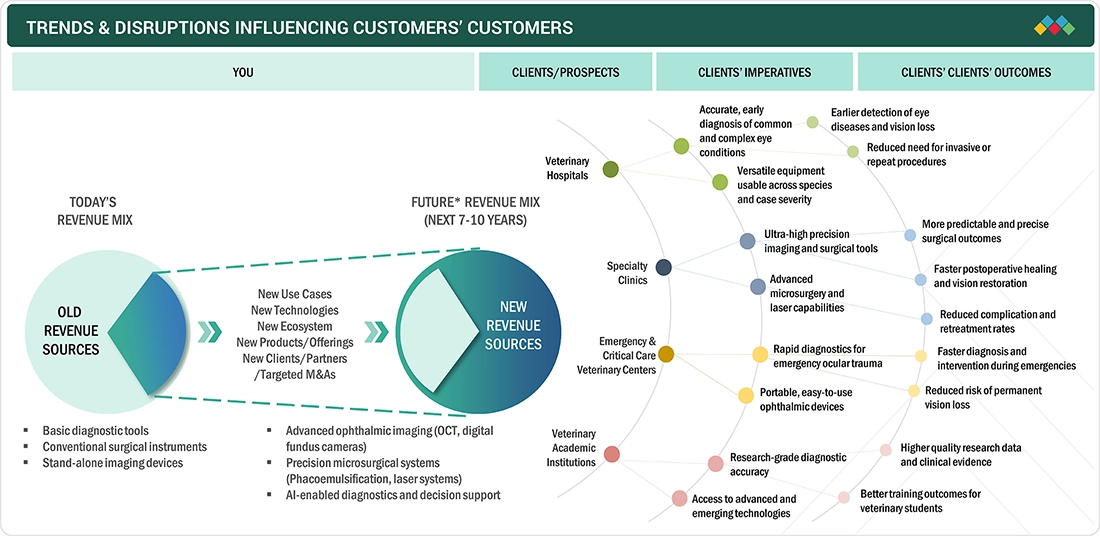
Source: Secondary Research, Interviews with Experts, MarketsandMarkets Analysis
MARKET DYNAMICS

Level
-
§Rising Pet Ownership and Pet Care Expenditure

-
§Growing Number of Veterinary Ophthalmologists


Level
-
§High Cost of Veterinary Care


Level
-
§Strategic Developments by Market Players


Level
-
Limited Awareness Among Pet Owners

Source: Secondary Research, Interviews with Experts, MarketsandMarkets Analysis
DRIVERS: Rising Pet Ownership and Pet Care Expenditure
The current trend of increasing pet ownership and expenditure on their care is responsible for the advancement of specialized veterinary services, which include the veterinary ophthalmology market. The increasing number of pet households has remained constant due to demographic changes, the rise of income levels, and the COVID-19 pandemic. The resulting increase in pet ownership led to the rising awareness and concern for the health of pets, including eye care, thereby generating demand for specialized veterinary services.
RESTRAINTS: High Cost of Veterinary Care
The high expense of veterinary care, particularly in specialty areas like ophthalmology, poses a considerable challenge to the veterinary ophthalmology equipment market. The expensive diagnostic and therapeutic equipment utilized in animal eye care can be well beyond affordability and would affect the ability of veterinarians to invest in new technologies and the inclination of pet owners to seek treatment.
OPPORTUNITIES: Strategic Developments by Market Players
Strategic activities such as partnerships and collaborations among market players are ripe with opportunities for growth. These activities allow a player within the market to grow through the avenue of shared expertise, the enlargement of the customer base, enhancement of product offerings, access to new markets and technology, cost-sharing, credibility enhancement, innovation, and shared research & development. The global veterinary ophthalmology equipment market is growing with companies entering partnerships and collaborations
CHALLENGES: Limited Awareness Among Pet Owners
Lack of knowledge among pet owners is a critical problem in the US veterinary ophthalmology equipment market. Most pet owners do not easily recognize early signs of ocular disease or underestimate the value of timely eye examinations, resulting in delayed diagnosis and treatment. This lack of awareness leads to the lower demand for advanced ophthalmic diagnostic and surgical equipment-based preventive or early-stage care. The adoption of the latest technologies in such high mobility fields of veterinary practice can be delayed, which hinders the market despite the increasing incidence of eye disorders in companion animals.
US VETERINARY OPHTHALMOLOGY EQUIPMENT MARKET: COMMERCIAL USE CASES ACROSS INDUSTRIES
| COMPANY | USE CASE DESCRIPTION | BENEFITS |
|---|---|---|
 |
Veterinary tonometers, slit lamps, and diagnostic ophthalmic instruments | Accurate intraocular pressure measurement, early glaucoma detection, reliable diagnostics |
 |
Ophthalmoscopes, retinoscopes, and diagnostic viewing systems | Clear retinal visualization, durable design, widely adopted in veterinary practices |
 |
Handheld digital fundus cameras for veterinary ophthalmology | Non-invasive retinal imaging, easy image storage, enhanced diagnostic documentation |
 |
Slit lamps, fundus cameras, and ophthalmic imaging systems | Precision optics, reliable imaging for ocular disease diagnosis |
 |
Diagnostic and surgical ophthalmic instruments, lenses, and eye-care solutions adapted for veterinary uses | High optical precision, trusted brand, improved diagnosis and surgical outcomes |
Logos and trademarks shown above are the property of their respective owners. Their use here is for informational and illustrative purposes only.
MARKET ECOSYSTEM
The ecosystem of the US veterinary ophthalmology equipment market consists of multiple actors who are diverse and engage in the development, adoption, and use of ophthalmic technologies in animal care settings. The important actors in the market include equipment manufacturers and technology providers that provide each other with diagnostic, imaging, and surgical solutions, veterinary hospitals, specialty clinics, and emergency care centers, primarily as end users, and veterinary ophthalmologists and general practitioners as those who drive clinical adoption. Academic and research institutions are important players in innovation and training plus clinical validation of advanced technologies while distributors and service providers support the market such as access, installation, and maintenance for equipment. It also involves regulatory bodies, professional associations, and pet insurances that have an impact on product approvals, clinical standards, reimbursement dynamics, and purchasing behavior. All of these above-mentioned actors propel the future of demand and innovation in the US veterinary ophthalmology equipment market along with its long-term growth.
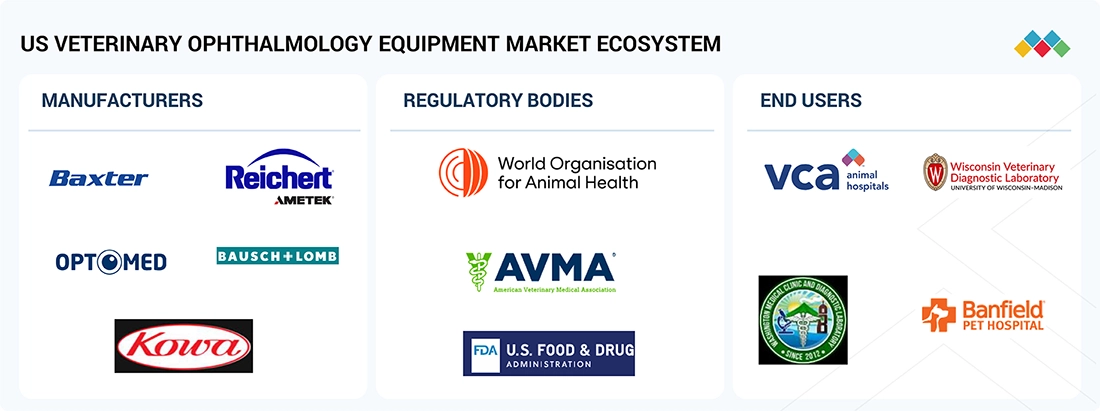
Logos and trademarks shown above are the property of their respective owners. Their use here is for informational and illustrative purposes only.
MARKET SEGMENTS
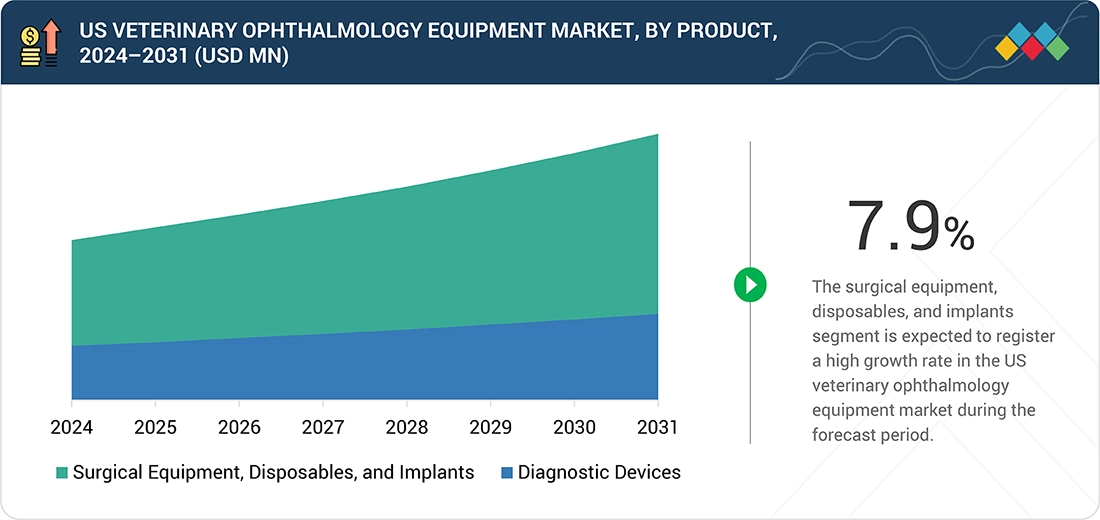
Source: Secondary Research, Interviews with Experts, MarketsandMarkets Analysis
US Veterinary Ophthalmology Equipment Market, By Product
Based on product, the surgical equipment segment dominates the market. The large share of this segment is due to a higher adoption rate of surgical devices and the repeated use of certain devices, such as ophthalmic implants and shunts for cataract and glaucoma procedures. The factors driving revenue growth for veterinary ophthalmic equipment include the rising pet ownership and the prevalence of eye infections and diseases in veterinary practice, and the increasing number of veterinary practitioners and educated pet owners.
US Veterinary Ophthalmology Equipment Market, By Animal Type
By animal type, the equine segment is projected to grow at the highest CAGR. Horses are prone to multiple ophthalmic diseases such as conjunctivitis, corneal ulcers, and uveitis. Due to such conditions, they require periodic ophthalmic examinations and treatment, leading to a demand for ophthalmology equipment in the equine segment. .
US Veterinary Ophthalmology Equipment Market, By End User
Based on end user, the specialty clinics segment is projected to grow at the highest CAGR. Most general veterinary practices refer patients needing specialized ophthalmologic care to specialty clinics, which increases the number of referrals. Increasing awareness, advancement in equipment needs, expertise, referrals, and increasing ownership of pets are the reasons that are expected to contribute to the high growth of the specialty clinics segment in the US veterinary ophthalmology equipment market.
REGION
US to be fastest-growing country in US Electrosurgery market during forecast period
The growing U.S. electrosurgery market is primarily driven by the accelerated adoption of Minimally Invasive Surgery (MIS) across specialties, combined with continuous technological integration of advanced features like AI-guided systems and robotics for superior precision and safety. This expansion is sustained by the rising volume of surgical procedures due to the aging population and the increasing number of procedures performed in cost-effective clinical settings.

US VETERINARY OPHTHALMOLOGY EQUIPMENT MARKET: COMPANY EVALUATION MATRIX
In the US veterinary ophthalmology equipment market, Bausch + Lomb (Star) is an established player due to its eye-care legacy, wide-ranging ophthalmic equipment portfolio, and widespread acceptance among most veterinary ophthalmologists, backed by continuous innovation and a large installed base. Optomed (Emerging Leader) is building its visibility on its expertise in portable and handheld retinal imaging solutions, which align well with the increased demand for accessible point-of-care diagnostics in veterinary practice. While Bausch + Lomb remains a leader due to its scale and variety, Optomed has good prospects for having even greater mobility within the matrix as portable and early-detection technologies gain more traction.
Source: Secondary Research, Interviews with Experts, MarketsandMarkets Analysis
KEY MARKET PLAYERS
- Bausch + Lomb Corporation (Canada)
- Revenio Group Oyj (Finland)
- AN-VISION (Germany)
- Eidolon Optical LLC (US)
- Ocuscience (US)
- Optomed (US)
- GerVetUSA (US)
- Kowa American Corporation (US)
- Halma Plc – Keeler (UK)
- Baxter International, Inc. – Hill-Rom (US)
- AJL Ophthalmology S.A. (Spain)
- AMETEK, Inc. – Reichert, Inc. (US)
- LKC Technologies, Inc. (US)
- IRIDEX Corporation (US)
- New World Medical (US)
- Ocularvision, Inc. (US)
- Optibrand Ltd. (US)
MARKET SCOPE
| REPORT METRIC | DETAILS |
|---|---|
| Market Size in 2025 (Value) | USD 0.24 Billion |
| Market Forecast in 2031 (Value) | USD 0.38 Billion |
| Growth Rate | CAGR of 7.5% from 2026-2031 |
| Years Considered | 2024-2031 |
| Base Year | 2025 |
| Forecast Period | 2026-2031 |
| Units Considered | Value (USD Million/Billion), Volume (Thousand Units) |
| Report Coverage | Revenue forecast, company ranking, competitive landscape, growth factors, and trends |
| Segments Covered |
|
| Countries Covered | US |
| Parent & Related Segment Reports | Veterinary Ophthalmology Equipment Market |
WHAT IS IN IT FOR YOU: US VETERINARY OPHTHALMOLOGY EQUIPMENT MARKET REPORT CONTENT GUIDE
DELIVERED CUSTOMIZATIONS
We have successfully delivered the following deep-dive customizations:
| CLIENT REQUEST | CUSTOMIZATION DELIVERED | VALUE ADDS |
|---|---|---|
| Product Analysis | In-depth assessment of veterinary ophthalmology equipment by product type, application (diagnosis, surgery, monitoring), animal type (companion animals, equine, livestock), and end user (veterinary clinics, specialty hospitals, academic & research institutes) | Analysis of emerging trends such as portable and handheld diagnostic devices, digital imaging integration, AI-assisted retinal analysis, minimally invasive surgical tools, and tele-ophthalmology solutions improving diagnostic precision and workflow efficiency |
| Company Information | Comprehensive profiles of key players active in the US market, including Reichert Technologies, iCare, Topcon, Optomed, HEINE Optotechnik, and other veterinary-focused ophthalmic equipment manufacturers | Identification of strategic partnerships with veterinary specialty centers, product launches, FDA and regulatory clearances, distributor agreements, and mergers & acquisitions shaping competitive dynamics in the US |
| Geographic Analysis | State-level demand mapping across major US regions (Northeast, Midwest, South, West), with a focus on high companion animal ownership states and specialty veterinary hospital clusters; assessment of regulatory requirements and reimbursement dynamics | Regional market outlook highlighting growth opportunities driven by increasing pet ophthalmic disorders, rising awareness of animal eye health, growth of veterinary specialty services, adoption of advanced imaging technologies, and expanding pet insurance coverage across the US |
RECENT DEVELOPMENTS
- May 2023 : Optomed and Topcon Corporation entered into a partnership to distribute the Optomed Aurora handheld fundus camera together with Thirona Retina’s AI in Europe and select Middle Eastern and Asian countries.
- December 2021 : Baxter acquired Hill-Rom to expand its product portfolio to include ophthalmology products through Welch Allyn, which was previously acquired by Hill-Rom.
- May 2021 : IRIDEX Corporation and Topcon Corporation entered into strategic collaboration that included Multiyear funding for strategic growth initiatives, particularly those designed to drive expanded market penetration of IRIDEX’s unique non-incisional glaucoma therapy products.
Table of Contents
 Exclusive indicates content/data unique to MarketsandMarkets and not available with any competitors.
Methodology
The study involved four major activities in estimating the current size of the US Veterinary Ophthalmology Equipment Market. Exhaustive secondary research was done to collect information on the market, peer market, and parent market. The next step was to validate these findings, assumptions, and sizing with industry experts across the value chain through primary research. Both top-down and bottom-up approaches were employed to estimate the complete market size. After that, market breakdown and data triangulation were used to estimate the market size of segments and subsegments.
Secondary Research
The secondary research process involved the widespread use of secondary sources, directories, databases (such as Bloomberg Businessweek, Factiva, and D&B Hoovers), white papers, annual reports, company house documents, investor presentations, and SEC filings of companies. Secondary research was used to identify and collect information useful for the extensive, technical, market-oriented, and commercial study of the US Veterinary Ophthalmology Equipment Market. It was also used to obtain important information about the key players and market classification and segmentation according to industry trends to the bottom-most level, and key developments related to market and technology perspectives. A database of the key industry leaders was also prepared using secondary research.
Primary Research
In the primary research process, various sources from both the supply and demand sides were interviewed to obtain qualitative and quantitative information for this report. The primary sources from the supply side include industry experts such as CEOs, vice presidents, marketing and sales directors, technology & innovation directors, and related key executives from various key companies and organizations operating in the US Veterinary Ophthalmology Equipment Market. The primary sources from the demand side included industry experts, purchase & sales managers, doctors, and personnel from research organizations. Primary research was conducted to validate the market segmentation, identify key players in the market, and gather insights on key industry trends and key market dynamics.
The research methodology used to estimate the size of the US Veterinary Ophthalmology Equipment Market includes the following details.
The market sizing of the market was undertaken from the global side.
Country-level Analysis: The size of the US Veterinary Ophthalmology Equipment Market was obtained from the annual presentations of leading players and secondary data available in the public domain. The share of products in the overall US Veterinary Ophthalmology Equipment Market was obtained from secondary data and validated by primary participants to arrive at the total US Veterinary Ophthalmology Equipment Market. Primary participants further validated the numbers.
Geographic market assessment (by region & country): The geographic assessment was done using the following approaches:
Approach 1: Geographic revenue contributions/splits of leading players in the market (wherever available) and respective growth trends
Approach 2: Geographic adoption trends for individual product segments by end users and growth prospects for each of the segments (assumptions and indicative estimates validated from primary interviews)
At each point, the assumptions and approaches were validated through industry experts contacted during primary research. Considering the limitations of data available from secondary research, revenue estimates for individual companies (for the overall US Veterinary Ophthalmology Equipment Market and geographic market assessment) were ascertained based on a detailed analysis of their respective product offerings, geographic reach/strength (direct or through distributors or suppliers), and the shares of the leading players in a particular region or country.
Data Triangulation
After arriving at the overall market size—using the market size estimation processes explained above—the market was split into several segments and sub-segments. To complete the overall market engineering process and arrive at the exact statistics of each market segment and subsegment, data triangulation, and market breakdown procedures were employed, wherever applicable. The data was triangulated by studying various factors and trends from both the demand and supply sides.
Market Definition
Veterinary ophthalmology equipment refers to specialized tools, instruments, and devices used by veterinarians and veterinary ophthalmologists for the diagnosis, treatment, and management of eye-related conditions in animals. This equipment is designed to facilitate various aspects of ophthalmic care for animals, ranging from routine eye examinations to advanced surgical procedures. Veterinary ophthalmology equipment may include diagnostic tools such as ophthalmoscopes, tonometers, slit lamps, and ocular ultrasound machines, which enable veterinarians to assess the health of the eye, diagnose diseases, and monitor treatment progress.
Key Stakeholders
- Manufacturers of veterinary ophthalmology equipment
- Veterinary ophthalmology equipment suppliers & distributors
- Original equipment manufacturers (OEMs)
- Veterinary hospitals & clinics
- Distributors of veterinary ophthalmology equipment
- Contract research organizations (CROs)
- Medical device research & consulting firms
- Academic & research institutes
- Veterinary research institutes
- Veterinary diagnostic laboratories
- Animal health research & development (R&D) companies
- Government associations
- Market research & consulting firms
- Venture capitalists & investors
Objectives of the Study
- To define, describe, and forecast the US Veterinary Ophthalmology Equipment Market by product, application, animal type, end user, and region
- To provide detailed information regarding the major factors influencing the market growth (such as drivers, restraints, opportunities, and challenges)
- To analyze the micromarkets1 with respect to individual growth trends, prospects, and contributions to the overall US Veterinary Ophthalmology Equipment Market
- To analyze market opportunities for stakeholders and provide details of the competitive landscape for key players
- To forecast the size of the US Veterinary Ophthalmology Equipment Market in five regions: North America (US and Canada), Europe (Germany, the UK, France, Spain, Italy, and the Rest of Europe), the Asia Pacific (Japan, China, India, Australia, South Korea, and the Rest of Asia Pacific), Latin America, and the Middle East & Africa
- To analyze the impact of the economic recession on the growth of the US Veterinary Ophthalmology Equipment Market
- To strategically profile the key players in the global market and comprehensively analyze their core competencies2
- To track and analyze competitive developments, such as partnerships, collaborations, and agreements, of the leading players in the market
Available Customizations
With the given market data, MarketsandMarkets offers customizations as per the company’s specific needs. The following customization options are available for the report:
Geographic Analysis
Further breakdown of the Rest of Asia Pacific US Veterinary Ophthalmology Equipment Market into Indonesia, Philippines, Vietnam, Hong Kong, and other countries
Further breakdown of the Rest of Europe US Veterinary Ophthalmology Equipment Market into Belgium, Russia, the Netherlands, Switzerland, and other countries.
Further breakdown of the Latin America US Veterinary Ophthalmology Equipment Market into Brazil, Argentina, Peru, and other countries.


Personalize This Research
- Triangulate with your Own Data
- Get Data as per your Format and Definition
- Gain a Deeper Dive on a Specific Application, Geography, Customer or Competitor
- Any level of Personalization
Let Us Help You
- What are the Known and Unknown Adjacencies Impacting the US Veterinary Ophthalmology Equipment Market
- What will your New Revenue Sources be?
- Who will be your Top Customer; what will make them switch?
- Defend your Market Share or Win Competitors
- Get a Scorecard for Target Partners

Custom Market Research Services
We Will Customise The Research For You, In Case The Report Listed Above Does Not Meet With Your Requirements
Get 10% Free CustomisationTESTIMONIALS

JAYANT RAJPUROHIT
Director of Market Insights, Data and Analytics
SFI Health,
Leading Pharmaceutical Companywww.sfihealth.com/

We at SFI Health approached MarketsandMarkets for an Opportunity Assessment on "Incidence and Prevalence of Focus Indications" as we wanted to know the most attractive HCPs like Physician, Functional MD, Naturopath and Pharmacist. The project was critical for us to ensure our focus on the right target which would enable sustainable growth and profitability for SFI Health. The business insights provided exceeded our expectations and we were extremely impressed. The team at MarketsandMarkets is highly professional and detail oriented and very well understood our business needs. MarketsandMarkets offers a unique combination of expertise and dedicated engagement model. We identified 2 new products to be launched in coming months, based on the research findings provided by MarketsandMarkets. We are happy with the services and would strongly recommend MarketsandMarkets to my peers in the industry.

BEATRIZ DE LA CALLE
Head of Commercial Analytics
Qualicaps,
Leading Pharmaceutical Companywww.qualicaps.com/

We partnered with MarketsandMarkets for an assessment study on hard empty capsules. The team was extremely professional in understanding our business requirements and we received timely responses to all our queries. The market intelligence and the recommendations has met our business requirements. We were extremely impressed to see the final study results; it really exceeded our expectations. The market intelligence offered by MarketsandMarkets, and clarity on next steps will help us achieve our business objective for the Year 2021. We are happy with the services and would strongly recommend MarketsandMarkets to my peers in the industry.

Bob Williams,
Senior Director Business Development & Innovation
Bracco Diagnostics Inc.,
Italian Multinational in life sciences sector and a World Leader in imaging diagnosticsimaging.bracco.com/us-en
We were pleased with targeted insights that MarketsandMarkets identified from a custom study on the 'Radiation Dose Management Solutions Market'. Your team identified and characterized the market participants as well as underlying trends accurately. This study was useful to Bracco in formulating business strategies for our dose monitoring product lines and we thank MarketsandMarkets for the job well done.
Cody Coonradt,
Market Development and Strategy Manager
3M Health Information Systems,
Leader in Health care Coding, Payment & Analytics Solutions.www.3m.com/3M/en_US/health-information-systems-us
The value for our organization comes from three things: depth of research, specificity of segments and being easy to work with. As important as the first two are, the third can't be underestimated. MarketsandMarkets, maybe more than any other research vendor, wants to know what is top of mind for our team and what big questions we are grappling to answer.
Their customer first approach and high value engagement model, have given us great analysis and excellent value for money






Growth opportunities and latent adjacency in US Veterinary Ophthalmology Equipment Market