UV Stabilizers Market

UV Stabilizers Market by Type (HALS, UV Absorbers, and Quenchers), Application (Personal Care, Cosmetics & Sunscreens, Automotive, Packaging, Agriculture, Building & Construction, Adhesives & Sealants), and Region - Global Forecast to 2031




OVERVIEW
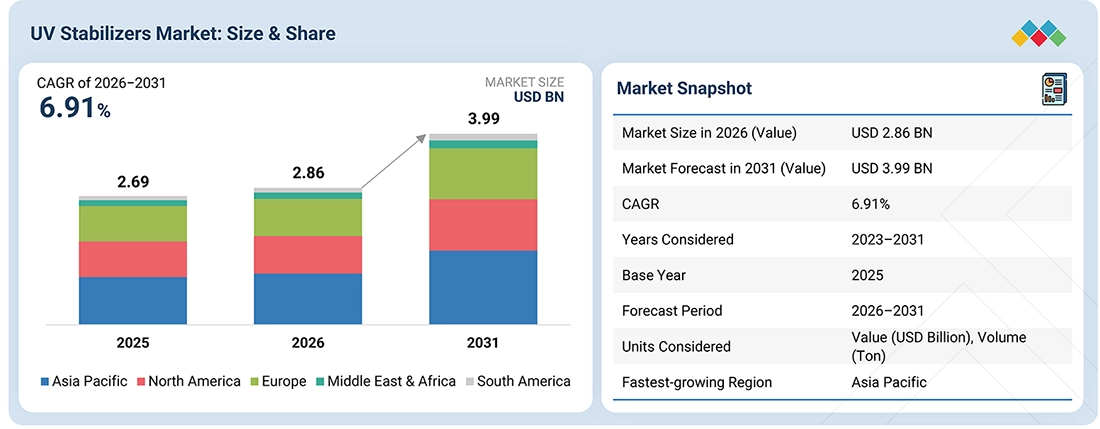
Source: Secondary Research, Interviews with Experts, MarketsandMarkets Analysis
The UV stabilizers market is estimated to grow from USD 2.86 billion in 2026 to USD 3.99 billion by 2031, at a CAGR of 6.91% during the forecast period. This growth is driven by the increasing demand for enhanced weatherability, longer product lifespans, and improved durability of polymer-based materials exposed to ultraviolet radiation. Market expansion is supported by advancements in UV absorbers, hindered amine light stabilizers (HALS), and antioxidant technologies, along with the development of high-performance stabilization systems for plastics, coatings, films, and agricultural applications. The growing use of polymers in automotive components, construction materials, packaging, agriculture, and consumer products is further increasing the need for effective UV protection. In addition, rising emphasis on material longevity, sustainable polymer solutions, and reduced maintenance and replacement costs is contributing to the adoption of UV stabilizers across diverse applications.
KEY TAKEAWAYS
-
BY REGIONAsia Pacific dominated the global UV stabilizers market in 2025, accounting for a market share of 37.2%, in terms of value.
-
BY TYPEThe HALS segment is projected to be the fastest-growing type in the UV stabilizers market with a CAGR of 7.11%, in terms of value, between 2026 and 2031.
-
BY APPLICATIONThe automotive application dominated the global UV stabilizers market with a market share of 30.7%, in terms of value, in 2025.
-
COMPETITIVE LANDSCAPE - KEY PLAYERSBASF SE (Germany), Rianlon Corporation (China), and ADEKA Corporation (Japan) are identified as key players in the global UV stabilizers market. These companies have strong market presence and extensive product portfolios.
-
COMPETITIVE LANDSCAPE - STARTUPSTintoll Performance Materials Co., Ltd. (China), Valtris and Specialty Chemicals (US), and MPI Chemie BV (Netherlands) have carved out solid positions within specialized niche segments, highlighting their potential to evolve into future market leaders.
The growth potential for the UV stabilizers market remains strong, supported by increasing demand for durable polymer materials, advancements in stabilization technologies, and the growing need for enhanced resistance to UV-induced degradation. A key trend shaping the market is the development of high-performance stabilization systems, including UV absorbers, hindered amine light stabilizers (HALS), and multifunctional stabilizers, to meet evolving performance and environmental requirements. UV stabilizers are increasingly used to extend material service life, maintain color and mechanical properties, and improve weatherability across plastics, coatings, agricultural films, automotive components, and construction materials. Their ability to enhance product durability, reduce premature material failure, and support longer replacement cycles is further driving adoption across diverse end-use applications.
TRENDS & DISRUPTIONS IMPACTING CUSTOMERS' CUSTOMERS
The impact on the UV stabilizers market largely depends on demand trends across major end-use industries, advancements in stabilization technologies, and changes in polymer processing and material consumption patterns. Key users of UV stabilizers include plastics manufacturers, automotive component producers, construction material suppliers, packaging companies, agricultural film manufacturers, adhesives & sealants producers, cosmetics manufacturers, and agriculture film producers. These users incorporate UV stabilizers into polymers, coatings, films, and other materials to enhance resistance to ultraviolet radiation, prevent discoloration, and maintain mechanical and surface properties. The increasing adoption of outdoor plastic products, lightweight automotive components, durable construction materials, sustainable polymer systems, and high-performance formulations is influencing market growth. Any slowdown in automotive production, construction activity, plastic processing, packaging demand, or availability of compatible raw materials can affect UV stabilizer consumption and revenues across the market value chain.
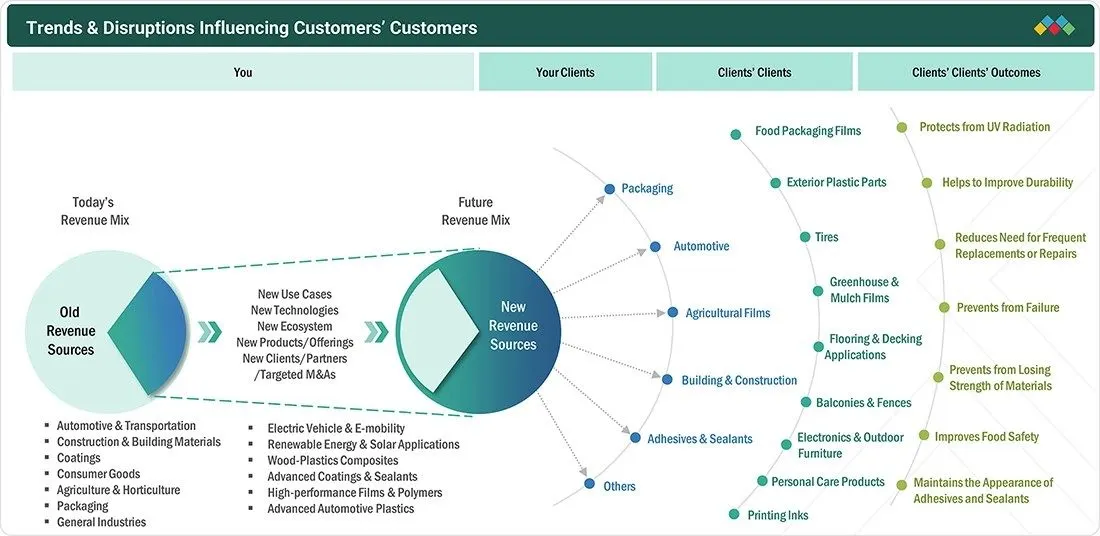
Source: Secondary Research, Interviews with Experts, MarketsandMarkets Analysis
MARKET DYNAMICS

Level
-
Expanding plastics production broadens demand base for UV stabilizers

-
Surging automotive production and premium exterior durability requirements


Level
-
Raw material price volatility and petrochemical feedstock dependence

-
Limited HALS precursor availability and supply chain disruptions


Level
-
Increasing use of nanocomposites in UV stabilizers

-
Growing agricultural films industry


Level
-
Technical compatibility challenges in recycled and bio-based polymer systems

-
Stringent government regulations

Source: Secondary Research, Interviews with Experts, MarketsandMarkets Analysis
Driver: Expanding plastics production broadens demand base for UV stabilizers
The expansion of global plastics production is driving demand for UV stabilizers, as polymers used in outdoor and high-exposure applications require protection against UV-induced degradation. Growth in packaging, automotive components, construction materials, agricultural films, and consumer plastics is increasing the addressable market for UV stabilization additives. As manufacturers seek to extend product lifespan, maintain color and mechanical properties, and reduce material failure, UV stabilizers are becoming an important component of polymer formulations. This broader plastics consumption base is therefore supporting sustained demand across different UV stabilizer product types and end-use industries.
Restraint: Raw material price volatility and petrochemical feedstock dependence
The UV stabilizers market remains exposed to fluctuations in the prices and availability of petrochemical-derived raw materials used in additive manufacturing. Volatility in crude oil, benzene, and other chemical feedstocks can increase production costs for UV absorbers, hindered amine light stabilizers (HALS), and related stabilizer chemistries. Manufacturers may face pressure to maintain margins while managing cost-sensitive polymer customers, particularly in price-competitive applications. Dependence on petrochemical feedstocks also creates supply chain uncertainty and can affect the pricing stability of UV stabilizer formulations.
Opportunity: Increasing use of nanocomposites in UV stabilizers
The growing adoption of nanotechnology presents an opportunity to develop higher-performance UV stabilizer systems with improved dispersion, UV absorption, and long-term polymer protection. Nanocomposite approaches can enable stabilizers to provide enhanced resistance to photo-oxidation while potentially reducing the additive loading required in certain polymer applications. This is particularly relevant for high-performance plastics used in automotive, construction, electronics, and outdoor applications. Investment in nano-enabled UV stabilization can therefore support product differentiation and create opportunities for premium-value formulations in the UV stabilizers market.
Challenge: Technical compatibility challenges in recycled and bio-based polymer systems
The growing adoption of recycled and bio-based polymers is creating technical compatibility challenges for UV stabilizers, as these materials often have different chemical compositions, impurity profiles, and processing characteristics than virgin polymers. UV stabilizers must therefore be carefully formulated to maintain effective UV protection without compromising the mechanical, thermal, or aesthetic properties of sustainable polymer systems. Variations in recycled feedstock quality can also affect stabilizer performance and dosage requirements, increasing formulation complexity and testing costs. These compatibility issues can limit the seamless integration of UV stabilizers into next-generation sustainable polymer applications.
UV STABILIZERS MARKET: COMMERCIAL USE CASES ACROSS INDUSTRIES
| COMPANY | USE CASE DESCRIPTION | BENEFITS |
|---|---|---|
 |
Uses UV-stabilized polypropylene and other polymer materials in exterior automotive components, including bumpers and exterior trims. HALS-based stabilization helps these components withstand prolonged sunlight and weathering while maintaining surface appearance and mechanical properties. | Improved resistance to surface chalking, gloss loss, discoloration, and UV-induced degradation; longer service life of exterior plastic components and improved vehicle appearance. |
 |
Uses BASF Tinuvin light stabilizer technology in its Waterborne Fine Coat Silicon architectural coating system. The stabilization system is incorporated to improve the durability of coatings exposed to outdoor conditions on building exteriors. | Enhanced weatherability of exterior coatings, improved color and surface durability, reduced degradation from UV exposure, and longer-lasting building appearance. |
 |
Uses UV-stabilized plastic end caps in its PF20PLUS formwork beams and shuttering panels used on construction sites. The UV stabilizer protects the plastic end reinforcements from outdoor exposure while maintaining their protective function under varying temperatures. | Better resistance to outdoor weathering, improved durability of plastic components, maintained mechanical performance, and extended useful life of construction equipment. |
 |
Uses BASF Chimassorb 2020 light stabilizer in PP non-woven fabrics used to cover crops, plants, and vegetables. The stabilizer protects thin PP filaments from UV-induced degradation during prolonged agricultural exposure. | Longer service life of agricultural fabrics, improved resistance to sunlight and heat, maintained material strength during outdoor use, and greater durability of crop-protection products. |
Logos and trademarks shown above are the property of their respective owners. Their use here is for informational and illustrative purposes only.
MARKET ECOSYSTEM
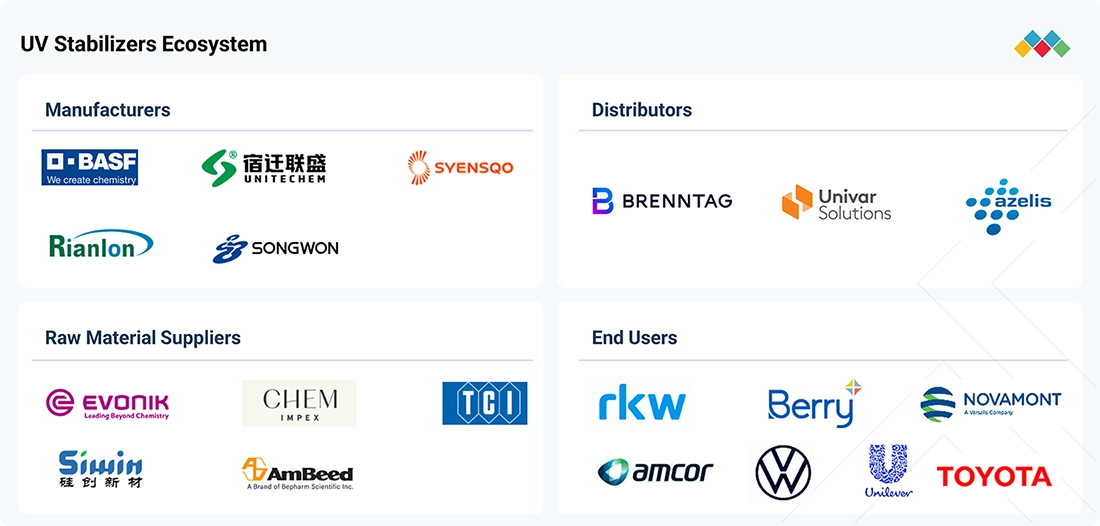
The UV stabilizers market ecosystem includes raw material suppliers, chemical manufacturers, UV stabilizer producers, compounders, polymer processors, distributors, and end-use manufacturers. Raw materials and intermediates are supplied to stabilizer manufacturers, which develop and formulate products such as hindered amine light stabilizers (HALS), UV absorbers, and quenchers for incorporation into polymer systems. Demand is primarily influenced by the need to improve polymer durability, prevent UV-induced degradation, retain color and mechanical properties, and extend product service life. Continuous product development, formulation optimization, and collaboration across the value chain are enabling the development of high-performance and more sustainable UV stabilizer solutions that meet evolving material performance and environmental requirements.
Logos and trademarks shown above are the property of their respective owners. Their use here is for informational and illustrative purposes only.
MARKET SEGMENTS
Source: Secondary Research, Interviews with Experts, MarketsandMarkets Analysis
UV Stabilizers Market, by Type
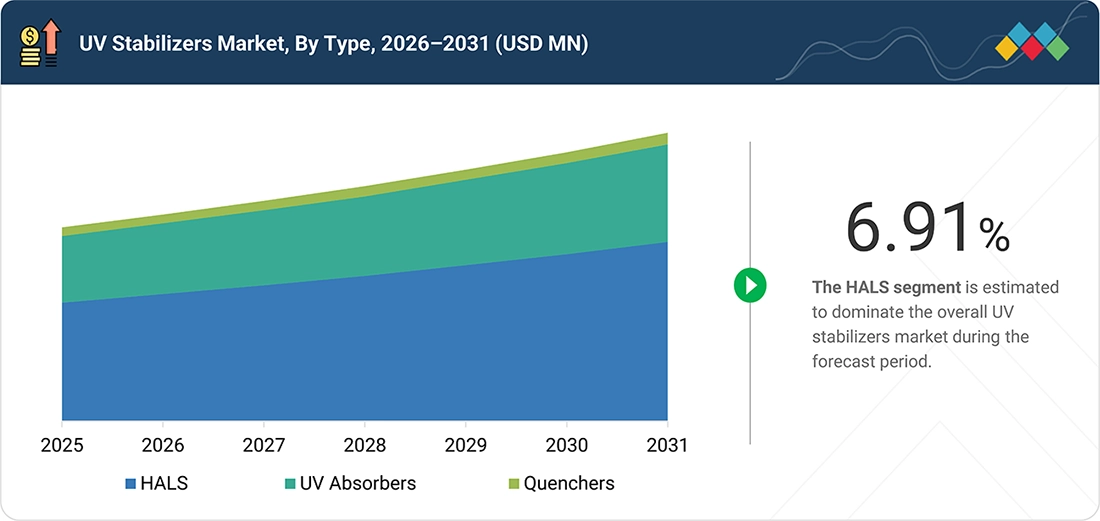
The HALS segment accounted for the largest share of the global UV stabilizers market, in terms of value, in 2025. This market dominance is led by the superior light-stabilizing efficiency of HALS, which effectively inhibits the degradation of polymers caused by UV exposure. Their high durability, low volatility, long-lasting stabilization performance, and effectiveness at relatively low concentrations make HALS highly preferred for maintaining polymer color, mechanical strength, and overall material performance.
UV Stabilizers Market, by Application
In 2025, the automotive application held the largest share of the global UV stabilizers market by value. This dominance is driven by the growing use of plastics and polymer-based materials in vehicles, where UV stabilizers help prevent fading, cracking, and degradation caused by prolonged sunlight exposure. Increasing vehicle production, lightweighting trends, and demand for durable exterior and interior components are further supporting the adoption of UV stabilizers in automotive applications.
REGION
Asia Pacific is projected to be the fastest growing market of the global UV stabilizers during forecast period
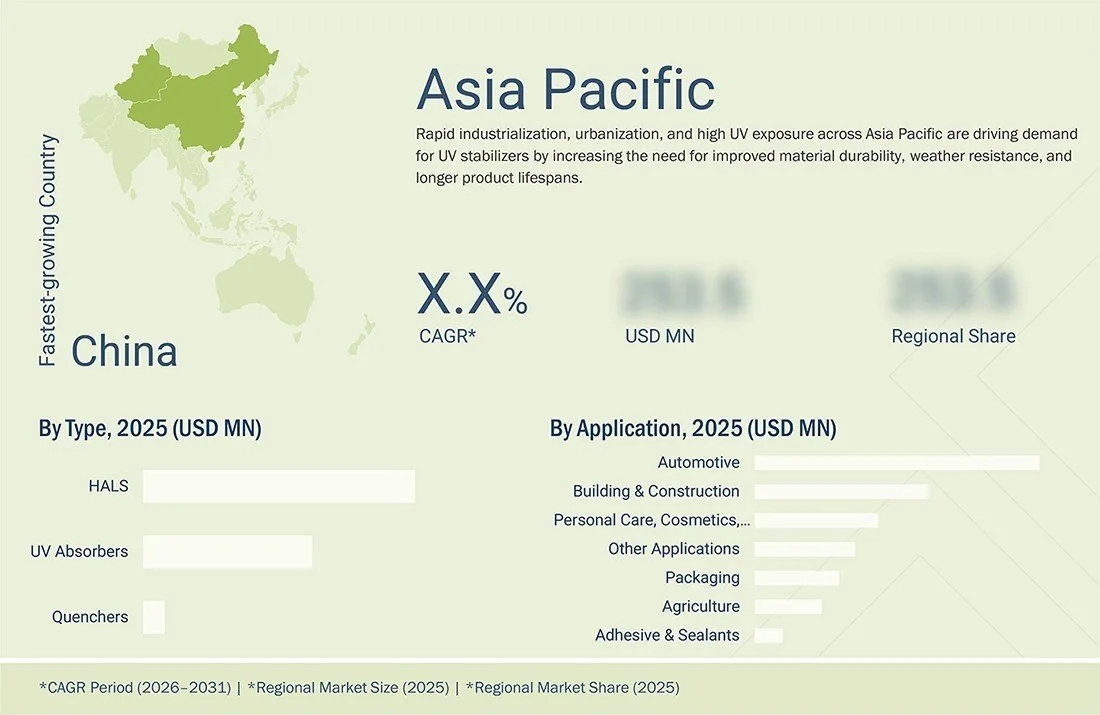
Asia Pacific is projected to be the fastest-growing market for UV stabilizers during the forecast period, in terms of value. This market growth is led by rapid industrialization, expanding automotive and construction industries, and rising plastics consumption across the region. Growing demand for durable, weather-resistant polymer products, particularly in China, India, Japan, and Southeast Asia, is increasing the adoption of UV stabilizers. In addition, expanding packaging, electronics, and infrastructure applications and increasing emphasis on product durability are supporting market growth.
UV STABILIZERS MARKET: COMPANY EVALUATION MATRIX
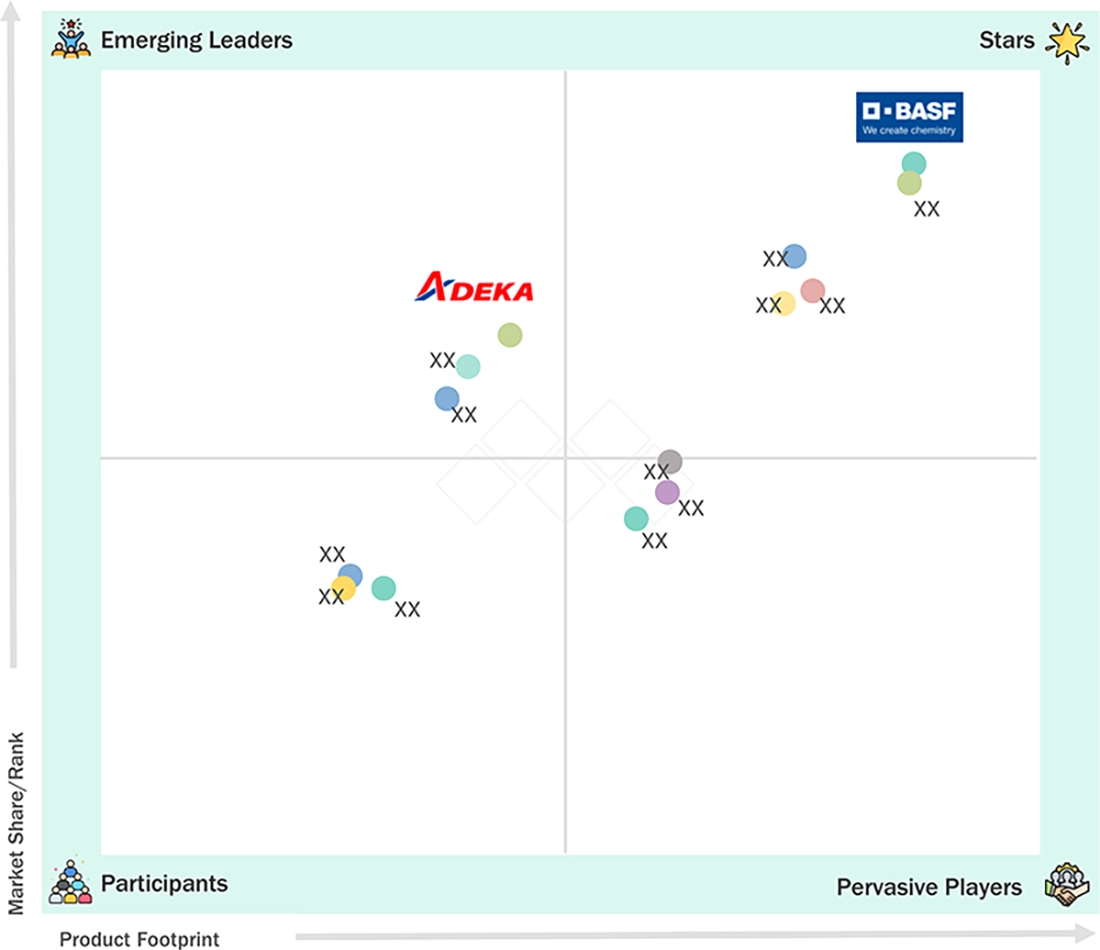
BASF SE (Star) holds a leading position in the UV stabilizers market due to its extensive portfolio of advanced UV stabilizer solutions, strong global manufacturing footprint, and widespread presence across diverse application areas, including automotive, packaging, building & construction, and consumer applications. ADEKA Corporation (Emerging) is strengthening its position in the UV stabilizers market by expanding its specialty stabilizer offerings, enhancing manufacturing capabilities, and developing value-added stabilization solutions for plastics, coatings, and polymer applications. The company's focus on product innovation, sustainable stabilization technologies, and application-specific UV stabilizer solutions is supporting its growth as demand increases for durable, efficient, and environmentally responsible UV stabilizer products. Both companies are expected to further strengthen their competitive positions through product development, capacity expansion, and investments in advanced UV stabilization technologies.
Source: Secondary Research, Interviews with Experts, MarketsandMarkets Analysis
KEY MARKET PLAYERS
- BASF SE (Germany)
- Rianlon Corporation (China)
- Suqian Unitech Corp., Ltd. (China)
- Syensqo SA/NV (Belgium)
- SONGWON Industrial Co., Ltd. (South Korea)
- ADEKA Corporation (Japan)
- SABO S.p.A. (Italy)
- Arkema (France)
- Everlight Chemical Industrial Corporation (Taiwan)
- SI Group, Inc. (US)
- Clariant AG (Switzerland)
MARKET SCOPE
| REPORT METRIC | DETAILS |
|---|---|
| Market Size in 2025 (Value) | USD 2.69 Billion |
| Market Forecast in 2026 (Value) | USD 2.86 Billion |
| Market Forecast in 2031 (Value) | USD 3.99 Billion |
| Growth Rate | CAGR of 6.91% from 2026-2031 |
| Years Considered | 2023–2031 |
| Base Year | 2025 |
| Forecast Period | 2026–2031 |
| Units Considered | Value (USD Billion), Volume (Ton) |
| Report Coverage | Revenue Forecast, Company Ranking, Competitive Landscape, Growth Factors, and Trends |
| Segments Covered |
|
| Regional Scope | Asia Pacific, Europe, North America, Middle East & Africa, South America |
WHAT IS IN IT FOR YOU: UV STABILIZERS MARKET REPORT CONTENT GUIDE
DELIVERED CUSTOMIZATIONS
We have successfully delivered the following deep-dive customizations:
| CLIENT REQUEST | CUSTOMIZATION DELIVERED | VALUE ADDS |
|---|---|---|
| North America-based UV Stabilizers Manufacturer |
|
|
| Asia Pacific-based UV Stabilizers Manufacturer |
|
|
RECENT DEVELOPMENTS
- May 2026 : Rianlon Corporation launched U-pack UV-8269 as a light stabilization solution for epoxy coating systems. The product is designed to improve resistance to outdoor weathering and yellowing caused by prolonged UV exposure.
- April 2026 : Syensqo SA/NV launched CYASORB CYASTAB M5652, a next-generation UV stabilizer designed for rotational molding applications. The product is intended to improve the durability, safety, and cost efficiency of rotationally molded plastics exposed to UV radiation.
- April 2026 : BASF SE announced an expansion of production capacity for standard HALS and NOR-HALS products to strengthen the supply of light stabilization solutions for applications requiring UV and weathering protection.
- March 2026 : Rianlon Corporation announced a 10–20% price adjustment for its polymer anti-aging additives, effective immediately or as contracts allow, in response to higher costs of key chemical raw materials. The affected products explicitly include light stabilizers under the RIASORB portfolio, along with antioxidants and U-pack blends. The company stated that its six production bases and strategic inventory reserves would support continued product supply.
- January 2024 : SONGWON Industrial Co., Ltd. strengthened its distribution network through a partnership with Bodo Möller Chemie GmbH for its coating’s portfolio. The portfolio included UV absorbers and HALS, supporting distribution of UV stabilization solutions in the German market.
Table of Contents
 Exclusive indicates content/data unique to MarketsandMarkets and not available with any competitors.
Methodology
The study involved four major activities in estimating the market size for UV stabilizers. Exhaustive secondary research was done to collect information on the market, the peer market, and the parent market. The next step was to validate these findings, assumptions, and sizing with industry experts across the value chain through primary research. Both top-down and bottom-up approaches were employed to estimate the complete market size. After that, the market breakdown and data triangulation procedures were used to estimate the market size of the segments and subsegments.
Secondary Research
Secondary sources used in this study included annual reports, press releases, and investor presentations of companies; white papers; certified publications; articles from recognized authors; and gold-standard and silver-standard websites, such as Factiva, ICIS, Bloomberg, and others. The findings of this study were verified through primary research, which involved conducting extensive interviews with key officials, including CEOs, VPs, directors, and other executives. The breakdown of profiles of the primary interviewees is illustrated in the figure below:
Primary Research
The UV stabilizers market comprises several stakeholders, such as raw material suppliers, end-product manufacturers, and regulatory organizations in the supply chain. Various primary sources from both the supply and demand sides of the market were interviewed to obtain qualitative and quantitative information.
BREAKDOWN OF PRIMARY PARTICIPANTS
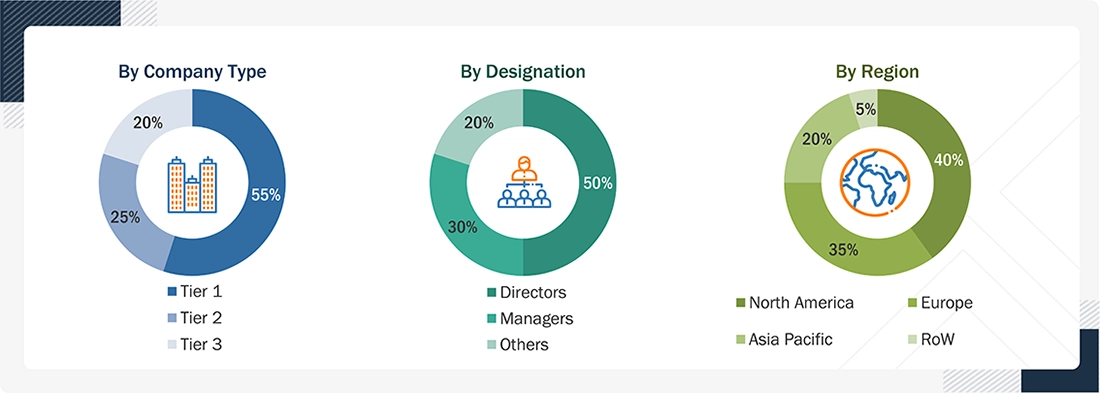
Notes: Tier 1, Tier 2, and Tier 3 companies are classified based on their market revenue in 2025, available in the public domain, product portfolios, and geographical presence.
Other designations include consultants and sales, marketing, and procurement managers.
|
COMPANY NAME |
DESIGNATION |
|
BASE SE |
Senior Manager |
|
SABO S.p.A. |
Innovation Manager |
|
ADEKA Corporation |
Vice President |
|
Clariant AG |
Production Supervisor |
|
SI Group, Inc. |
Sales Manager |
To know about the assumptions considered for the study, download the pdf brochure
Market Size Estimation
Both top-down and bottom-up approaches were used to estimate and validate the total size of the UV stabilizers market. These methods were also used extensively to estimate the size of various subsegments in the market. The research methodology used to estimate the market size includes the following:
- The key players in the industry have been identified through extensive secondary research.
- The supply chain of the industry has been determined through primary and secondary research.
- All percentage shares, splits, and breakdowns have been determined using secondary sources and verified through primary sources.
- All possible parameters that affect the markets covered in this research study have been accounted for, viewed in extensive detail, verified through primary research, and analyzed to obtain the final quantitative and qualitative data.
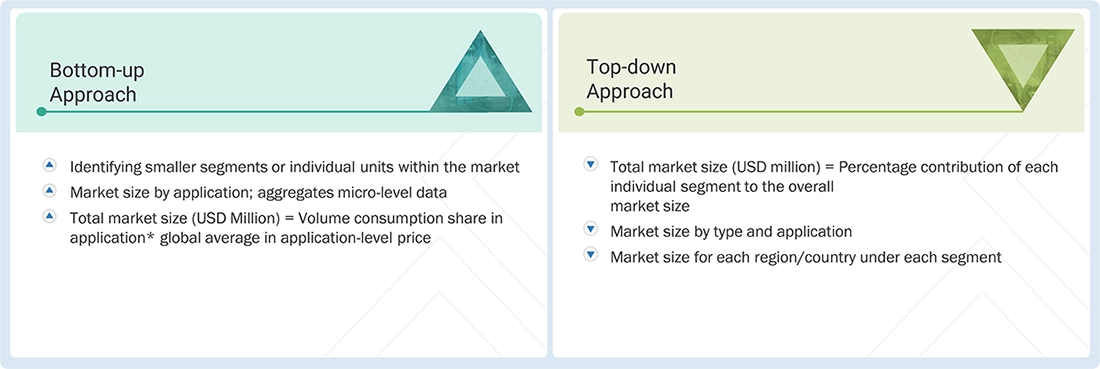
Data Triangulation
After determining the overall market size using the market size estimation processes explained above, the market was divided into several segments and subsegments. To complete the overall market engineering process and determine the exact statistics for each market segment and subsegment, data triangulation and market breakdown procedures were employed, as applicable. The data was triangulated by studying various factors and trends from both the demand and supply sides in the UV stabilizers industry.
Market Definition
According to the Plastics Industry Association, “a UV stabilizer is a chemical additive that protects materials such as plastics, coatings, polymers and textiles from ultraviolet (UV) degradation. UV light breaks down chemical bonds in a material, leading to its discoloration, cracking, brittleness, and loss of mechanical strength, thereby impacting its aesthetic properties and functionalities. UV stabilizers prevent these kinds of damage by reflecting, absorbing, or neutralizing UV radiation, thereby extending the lifespan of UV-exposed products. UV stabilizers comprise HALS, UV absorbers, and quenchers.”
Key Stakeholders
- UV Stabilizer Manufacturers
- UV Stabilizer Distributors
- Raw Material Suppliers
- Service Providers
- Industry Associations
- Government and Research Organizations
Report Objectives
- To analyze and forecast the UV stabilizers market in terms of value and volume
- To provide detailed information about the key factors (drivers, restraints, opportunities, and challenges) influencing market growth
- To define, segment, and project the size of the global UV stabilizers market based on type and application
- To project the market size for five main regions: North America, Europe, Asia Pacific, the Middle East & Africa, and South America, with their key countries
- To analyze the micromarkets concerning individual growth trends, prospects, and their contribution to the overall market
- To analyze opportunities in the market for stakeholders and provide a competitive landscape of the market leaders
- To track and analyze R&D and competitive developments such as expansions, product launches, collaborations, investments, partnerships, agreements, developments, collaborations, and mergers & acquisitions in the UV stabilizers market
Available customizations:
Along with the given market data, MarketsandMarkets offers customizations according to the company’s specific needs. The following customization options are available for the report:
Regional Analysis
- Further breakdown of a region with respect to a particular country or additional end-use industry
Company Information
- Detailed analysis and profiles of additional market players (up to five)
Key Questions Addressed by the Report
Who are the major players in the UV stabilizers market?
BASF SE (Germany), Rianlon Corporation (China), Suqian Unitech Corp., Ltd. (China), Syensqo SA/NV (Belgium), SONGWON Industrial Co., Ltd. (South Korea), ADEKA Corporation (Japan), SABO S.p.A. (Italy), Arkema (France), Clariant AG (Switzerland), Everlight Chemical Industrial Corporation (Taiwan), and SI Group, Inc. (US).
What are the drivers and opportunities for the UV stabilizers market?
Key drivers include increasing demand from the packaging and construction industries, and rising demand in Asia Pacific and North America. Opportunities include the growing use of nanocomposites in UV stabilizers and the expanding agricultural films industry.
Which strategies are the key players focusing on in the UV stabilizers market?
Major strategies include product launches, partnerships, mergers & acquisitions, agreements, and expansions aimed at enhancing global presence.
What is the expected growth rate of the UV stabilizers market between 2025 and 2030?
The UV stabilizers market is projected to grow at a CAGR of 6.76% in terms of value during the forecast period (2025–2030).
Which major factors are expected to restrain the growth of the UV stabilizers market during the forecast period?
Fluctuations in raw material prices and high production costs are anticipated to limit market growth.


Personalize This Research
- Triangulate with your Own Data
- Get Data as per your Format and Definition
- Gain a Deeper Dive on a Specific Application, Geography, Customer or Competitor
- Any level of Personalization
Let Us Help You
- What are the Known and Unknown Adjacencies Impacting the UV Stabilizers Market
- What will your New Revenue Sources be?
- Who will be your Top Customer; what will make them switch?
- Defend your Market Share or Win Competitors
- Get a Scorecard for Target Partners

Custom Market Research Services
We Will Customise The Research For You, In Case The Report Listed Above Does Not Meet With Your Requirements
Get 10% Free CustomisationTESTIMONIALS
We at Nissan Chemicals Corporation have been clients of MarketsandMarkets for more than a year now. We recently consulted MarketsandMarkets for a study, the team at MarketsandMarkets was extremely professional and organized. The business insights were very detailed and aligned well with our expectations that really helped us formulate the Business Plans and device new strategies for development themes. MarketsandMarkets offers a unique combination of expertise and dedicated engagement model. Their research findings have helped us in designing our Pricing Strategy which will make it easier for us to predict the future sales and profits for the next ten years. We look forward to working with MarketsandMarkets in the future.
VP of Strategy & New Business Development
Leading Specialty Chemical Company
The MarketsandMarkets Engagement Model, composed of both the Knowledge Store and advisory custom research, has greatly helped us in understanding our markets and making strategic decisions. The Knowledge Store is a fast way to allow everyone in our organization to understand more about most any market they are interested in. The ability to then get custom research done and get answers to specific strategic questions and market insight has been spectacular. The Markets and Markets team feel more like colleagues than vendors and their services have helped us change our culture where statements of things like growth opportunities and competitive position are always backed by industry research.

Rich Gibson,
Director, Corporate Strategy
Milliken & Company,
Leading Industrial Manufacturer of specialty chemical, floor covering, performance and protective textile materials, and healthcaremilliken.com
MarketsandMarkets is a trusted resource that helps us to better understand markets that are near-adjacencies-whether its technology, value chain or geography. Their Knowledge Store platform provides a dashboard of markets and their characteristics which is easy to use and saves us time.
Adam Shaw,
Market Development and Strategy Manager
AdvanSix Inc. USA,
An American Leader in Chemicalswww.advansix.com
The Knowledge Store from MarketsandMarkets is a valuable tool which has helped my team acquire greater insight in to the end markets that our business serves. This has enabled us to help our company build stronger strategies throughout our planning process.
TOSHIO KINOSHITA
Senior Chif Consultion Research & Consulting Division
Mitsubishi Chemical Research Corporation,
Leading Manufacturer of Chemical Productswww.mitsubishichem-res.co.jp/en/

We recently engaged with MarketsandMarkets for a study, the team not only clearly understood our business objectives but was also extremely professional in the way they handled the entire project. The study was efficiently conducted in a phase-wise manner, and the engagement model furnished us with high-quality business insights that far exceeded our expectations at each phase. We were especially happy that MarketsandMarkets could provide us with both, an English as well as a Japanese version of the study. A special thanks to the Analyst Team and Client Services Team, whose fluency in Japanese enhanced our comfort level, as we could converse with them in our preferred language.
Independent entrepreneurs
Arrow Precision
We approached MarketsandMarkets for study on Proppants Market, and their work exceeded our expectations. The study conducted was comprehensive and enabled us to view the market through the various dimensions. In addition, the team was extraordinarily responsive throughout the process and resolved our queries on time. I strongly recommend MarketsandMarkets and will certainly consider them for additional market assessments we will need in the future.
Global engineering company, Japan
Deputy Manager,
Strategic Planning OfficeThe high-quality insights shared by the MarketsandMarkets team helped us understand the pharmaceutical plant designers in a specific geography. It also captured the risks that we may likely face in communicating with our potential partners. The study would enable us identify partners, which would impact our future growth.
- China UV Stabilizers Market
- Japan UV Stabilizers Market
- India UV Stabilizers Market
- South Korea UV Stabilizers Market
- Malaysia UV Stabilizers Market
- Thailand UV Stabilizers Market
- Canada UV Stabilizers Market
- Mexico UV Stabilizers Market
- US UV Stabilizers Market
- Germany UV Stabilizers Market
- Italy UV Stabilizers Market
- France UV Stabilizers Market
- UK UV Stabilizers Market
- Turkey UV Stabilizers Market
- Spain UV Stabilizers Market
- Brazil UV Stabilizers Market
- UAE UV Stabilizers Market
- Saudi Arabia UV Stabilizers Market
- South Africa UV Stabilizers Market
- Rest Of Europe UV Stabilizers Market
- Rest Of Asia Pacific UV Stabilizers Market
- Rest Of South America UV Stabilizers Market






Growth opportunities and latent adjacency in UV Stabilizers Market