



Biostimulants Market Growth & Future Trends
Report Code
AGI 2920
Published in
Jun, 2026, By MarketsandMarkets™
Biostimulants Market by Active Ingredient (Humic Substances, Seaweed Extracts, Amino Acids, Minerals & Vitamins), Crop Type, Mode of Application (Foliar Treatment, Soil Treatment), Form, and Region - Global Forecast to 2031

USD 8.77 BN
MARKET SIZE, 2031

CAGR 12%
(2026-2031)

350
REPORT PAGES

250
MARKET TABLES
OVERVIEW
Source: Secondary Research, Interviews with Experts, MarketsandMarkets Analysis
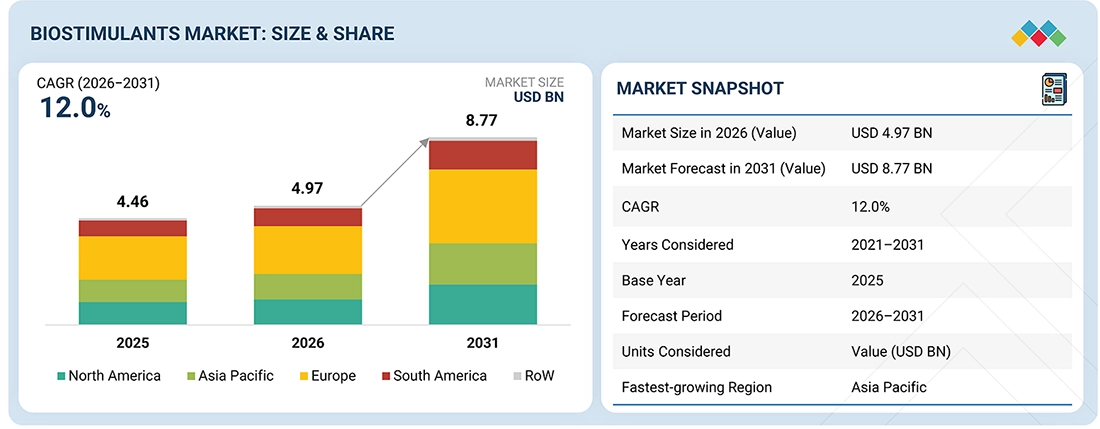
The biostimulants market is projected to reach USD 8.77 billion by 2031 from USD 4.97 billion in 2026, at a CAGR of 12.0% from 2026 to 2031. The biostimulants market is experiencing steady growth, driven by the increasing demand for sustainable agricultural practices, enhanced crop production, and the need for plants that can withstand environmental challenges. Farmers are increasingly adopting microbial, seaweed, and humic-based biostimulants to improve their farming outcomes and maintain healthy soil. The rising demand for organic agriculture, along with government initiatives and growing public awareness of the benefits of biostimulants, is supporting market expansion. However, the market faces challenges due to varying regulatory systems that create confusion, as well as differing rates of adoption among farmers, often influenced by a lack of knowledge about biostimulants in certain regions.
Market Size and Forecast:
- Market Size Value in 2025: USD 4.46 Billion
- Market Size Value in 2026: USD 4.97 Billion
- Revenue Forecast in 2031: USD 8.77 Billion
- Growth Rate: CAGR of 12.0% from 2026 to 2031
- Data available from 2021 to 2031
- Base year: 2025
- Forecast period: 2026–2031
- Asia Pacific is projected to exhibit the highest CAGR of 12.8% during 2026 to 2031.
- The liquid segment is projected to grow significantly at a CAGR of 11.7% during the forecast period.
Key Market Trends and Insights
- By Active Ingredient: Humic substances, seaweed extracts, amino acids, microbial-based ingredients, and other bioactive compounds are gaining adoption for enhancing plant growth, nutrient efficiency, and stress tolerance.
-
Growth Drivers: Biostimulants enhance nutrient uptake, strengthen plant resilience, improve crop quality, and support reduced reliance on synthetic agricultural inputs.
- Growing Trends: Rising adoption of regenerative agriculture, precision farming, organic farming, and advanced microbial-based formulations is driving market growth.
- Growth Opportunities: Growing focus on soil health, sustainable agriculture, biological inputs, and innovations in plant nutrition technologies are creating strong opportunities for the biostimulants market.
KEY TAKEAWAYS
-
BY REGIONAsia Pacific is projected to exhibit the highest CAGR of 12.8% during 2026 to 2031.
-
BY ACTIVE INGREDIENTThe seaweed extracts segment is expected to dominate the biostimulants market, accounting for around one-third of market demand.
-
BY CROP TYPEThe fruits & vegetables segment is projected to register the highest CAGR of 13.1% during the forecast period.
-
BY MODE OF APPLICATIONThe foliar treatment segment accounted for the largest market share in 2025.
-
BY FORMThe liquid segment is projected to grow significantly at a CAGR of 11.7% during the forecast period.
-
COMPETITIVE LANDSCAPE: KEY PLAYERSCompanies like Sumitomo Chemical, Syngenta Group, UPL Ltd., and Corteva Agriscience were identified as some of the star players in the biostimulants market, given their strong market share and product footprint.
-
COMPETITIVE LANDSCAPE: STARTUPSCompanies such as PI Industries, FMC Corporation, and Novonesis have strengthened their market presence by building a strong position in specialized niche segments, highlighting their potential for sustained growth and competitive impact.
The biostimulants market is expanding due to growing demand for sustainable solutions that help farmers grow more crops while protecting the environment. The use of biostimulants has increased as people become more aware of the dangers posed by soil degradation, climate change, and the overuse of chemical fertilizers and pesticides. Market growth is also driven by consumers' preference for organic agricultural products, which are free from chemical residues. Additionally, scientists are developing new microbial- and seaweed-based biostimulant products that are effective across a wider range of crops, including herbaceous field crops.
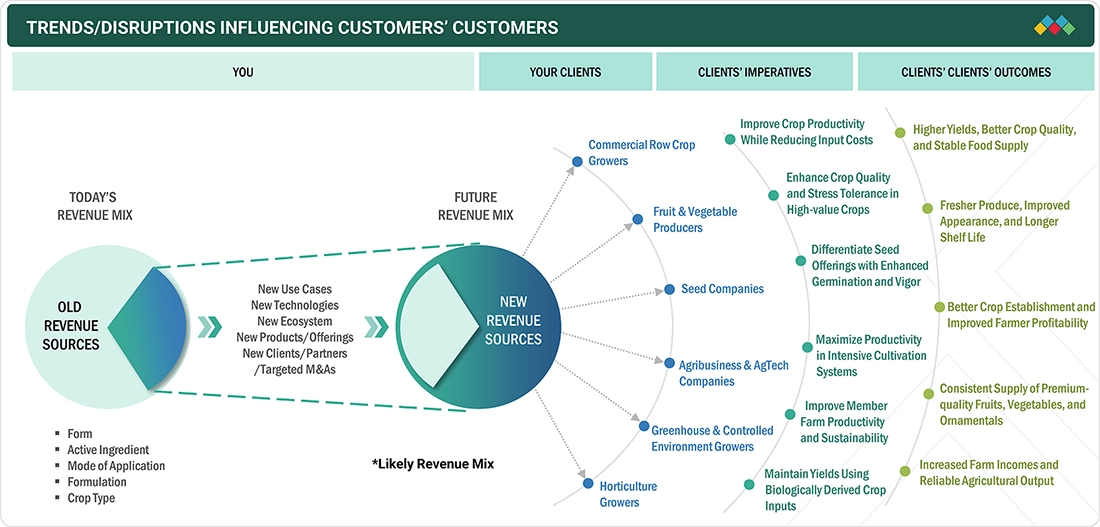
TRENDS & DISRUPTIONS IMPACTING CUSTOMERS' CUSTOMERS
A key trend disrupting the biostimulants market is the integration of digital agriculture and precision farming technologies. Companies are now using sensor-based soil analysis, AI-driven crop monitoring systems, and targeted application systems to enhance biostimulant performance while reducing operational costs and protecting the environment. This shift away from traditional product distribution methods and farming operations is prompting manufacturers to develop new chemical formulations compatible with precision agricultural equipment. As a result, there is an increased demand for high-value custom biostimulants, benefiting technology-oriented suppliers and altering the competitive landscape. This disruption enables partnerships among biostimulant producers, agri-tech companies, and data analytics providers across the regional market.
Source: Secondary Research, Interviews with Experts, MarketsandMarkets Analysis
MARKET DYNAMICS

Drivers
Impact
Level
Level
-
Increasing push for sustainable intensification of agriculture

-
Strong demand from high-value and export-oriented crops


RESTRAINTS
Impact
Level
Level
-
Proliferation of low-quality and unstandardized products

-
Storage, stability, and shelf-life challenges


OPPORTUNITIES
Impact
Level
Level
-
Advancements in formulation and delivery technologies

-
Rising integration of biostimulants with fertilizers and seed treatments


CHALLENGES
Impact
Level
Level
-
Fragmented and evolving regulatory frameworks

-
Low awareness and limited technical knowledge among smallholder farmers

Source: Secondary Research, Interviews with Experts, MarketsandMarkets Analysis
Driver: Increasing push for sustainable intensification of agriculture
A key driver of the biostimulants market is the growing emphasis on sustainable agriculture. Farmers are increasingly adopting eco-friendly methods to enhance crop production. Biostimulants help plants absorb nutrients more effectively, improve their resilience to environmental challenges, and promote the development of healthier soil. These substances have become essential for plant growth, as they help reduce reliance on synthetic fertilizers. Additionally, farmers are turning to biostimulants in response to rising consumer demand for organic and sustainably grown food products. The growth of the biostimulants market is further supported by government policies promoting sustainable agricultural practices.
Restraint: Proliferation of low-quality and unstandardized products
A significant challenge in the biostimulants market is the increasing commercialization of low-quality products. The growing demand for biostimulants, driven by sustainable agriculture and organic farming practices, has led to the introduction of untested and poorly developed products. As a result, farmers often experience unpredictable outcomes, as these low-quality products provide inconsistent performance and lack scientific validation of their effectiveness. The use of substandard products damages farmers' trust and creates unpredictability in crop results. Consequently, the market for research-based, authentic biostimulants suffers, as these inferior products become more prevalent during the sales process.
Opportunity: Advancements in formulation and delivery technologies
A significant opportunity in the biostimulants market arises from the increasing demand for advancements in technology. These advancements enable manufacturers to create innovative products that promote plant growth, enhance resilience, and support sustainable agriculture. Companies like Valagro, Sea6 Energy, UPL, and Acadian Plant Health are investing in advanced technologies to broaden their range of biostimulant products. For instance, Valagro employs its proprietary GeoPower technology to extract natural active ingredients from raw materials, such as vegetables, allowing for the production of effective crop nutrient products.
Challenge: Fragmented and evolving regulatory frameworks
A major challenge in the biostimulants market is the fragmented and evolving regulatory environment. Different countries have their own registration pathways, definitions, efficacy standards, and labeling requirements. This leads to inconsistent approval timelines and increases compliance costs for manufacturers looking to scale up regionally. Regulatory uncertainty not only delays product launches but also creates barriers to trade and mutual recognition. Additionally, it disproportionately affects smaller firms that lack the resources to navigate complex, country-specific regulations.
BIOSTIMULANTS MARKET: COMMERCIAL USE CASES ACROSS INDUSTRIES
| COMPANY | USE CASE DESCRIPTION | BENEFITS |
|---|---|---|
 |
Seaweed- and humic-based biostimulants for rice, maize, and vegetables | Enhances stress tolerance, nutrient uptake, and early growth |
 |
Microbial and plant extract biostimulants for cereals and horticultural crops | Improves root development, soil health, and crop resilience |
 |
Foliar and seed-applied biostimulants for vegetables and fruits | Increases yield, fruit quality, and plant vigor |
 |
Microbial inoculants and growth enhancers for horticulture and greenhouse crops | Reduces chemical dependency, improves nutrient efficiency, and supports sustainable farming |
Logos and trademarks shown above are the property of their respective owners. Their use here is for informational and illustrative purposes only.
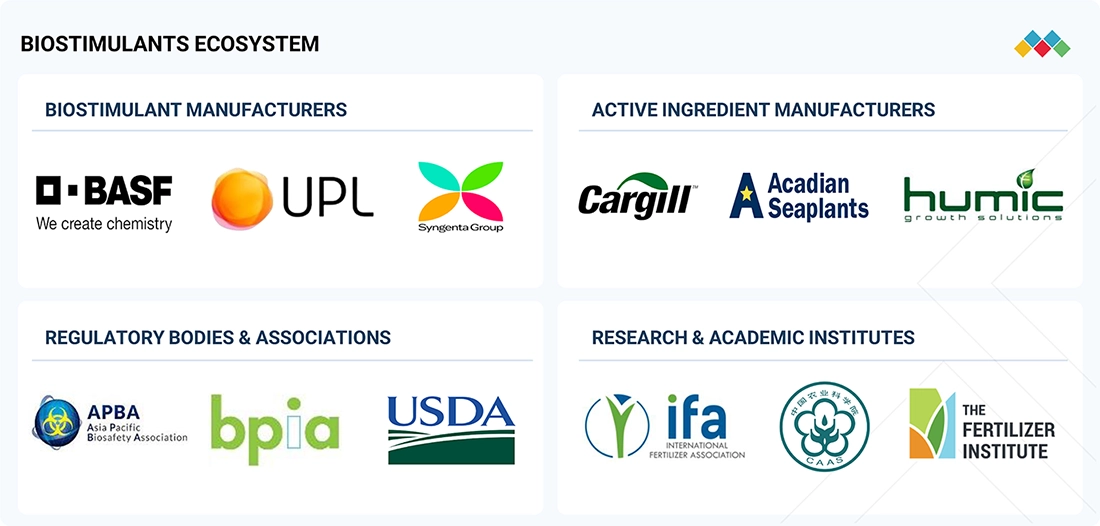
MARKET ECOSYSTEM
Logos and trademarks shown above are the property of their respective owners. Their use here is for informational and illustrative purposes only.
MARKET SEGMENTS
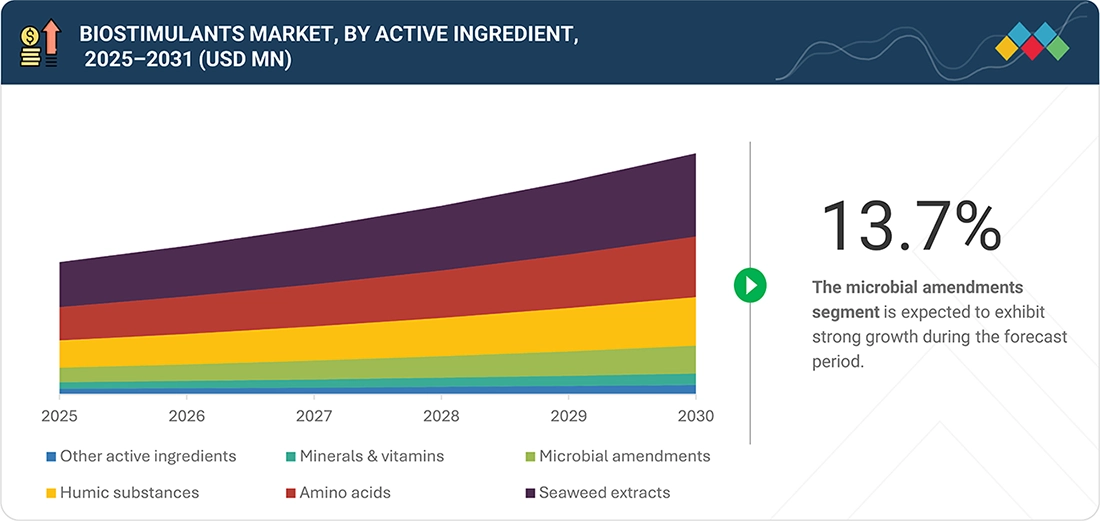
Source: Secondary Research, Interviews with Experts, MarketsandMarkets Analysis
Biostimulants Market, by Active Ingredient
Seaweed extracts hold the largest share in the biostimulants market. Seaweed extracts contain a rich array of organic compounds, including plant hormones, vitamins, and minerals, contributing to their efficacy as biostimulants. These substances play a vital role in enhancing plant growth, nutrient uptake, stress tolerance, and overall crop quality. The presence of trace levels of inorganic nutrient elements in seaweed extracts further augments their beneficial effects on plant health.
Biostimulants Market, by Form
Liquid biostimulants hold the largest share in the biostimulants market, as they dissolve easily and can be applied through irrigation or foliar spraying, ensuring uniform coverage of crops. Plants absorb liquid formulations rapidly, leading to quicker responses and benefits compared to dry forms, thus enhancing nutrient and bioactive compound utilization efficiently. The flexibility of liquid biostimulants in application methods, such as fertigation or foliar spraying, allows farmers to adjust to different needs and growth stages.
Biostimulants Market, by Mode of Application
Foliar treatment holds the largest share in the biostimulants market, as it facilitates the direct absorption of biostimulants through the leaves, thereby circumventing the need for soil application. This promotes swift uptake and utilization, ensuring rapid plant responses and benefits. Moreover, it allows precise delivery of nutrients and bioactive compounds to particular plant areas, enhancing their efficient utilization and supporting essential physiological processes crucial for plant growth and development.
Biostimulants Market, by Crop Type
Fruits & vegetables hold a major share in the market. Biostimulants enhance the efficiency of nutrient absorption in plants, improving their uptake of essential nutrients from the soil. This is especially crucial for fruits and vegetables, which rely on adequate nutrients for optimal growth. Moreover, biostimulants help plants cope with environmental stressors such as drought, salinity, and temperature fluctuations. By bolstering resilience, biostimulants mitigate yield losses in fruits and vegetables.
REGION
Asia Pacific to be fastest-growing region in biostimulants market during forecast period
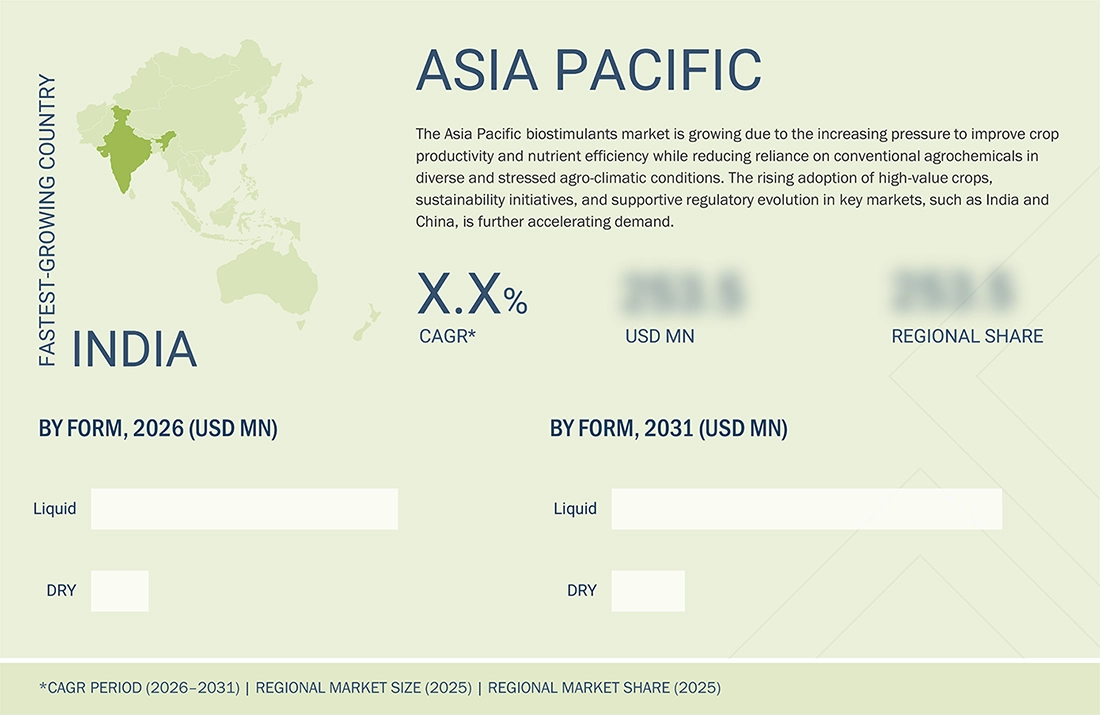
Asia Pacific is projected to be the fastest-growing region in the biostimulants market during the forecast period, due to its large agricultural base, rising demand for sustainable and organic farming, and supportive government policies that encourage soil health and reduce chemical inputs. The adoption of biostimulants in the region is expanding rapidly across cereals, horticulture, and oilseeds as farmers seek higher yields and resilience to stresses amid food-security pressures.
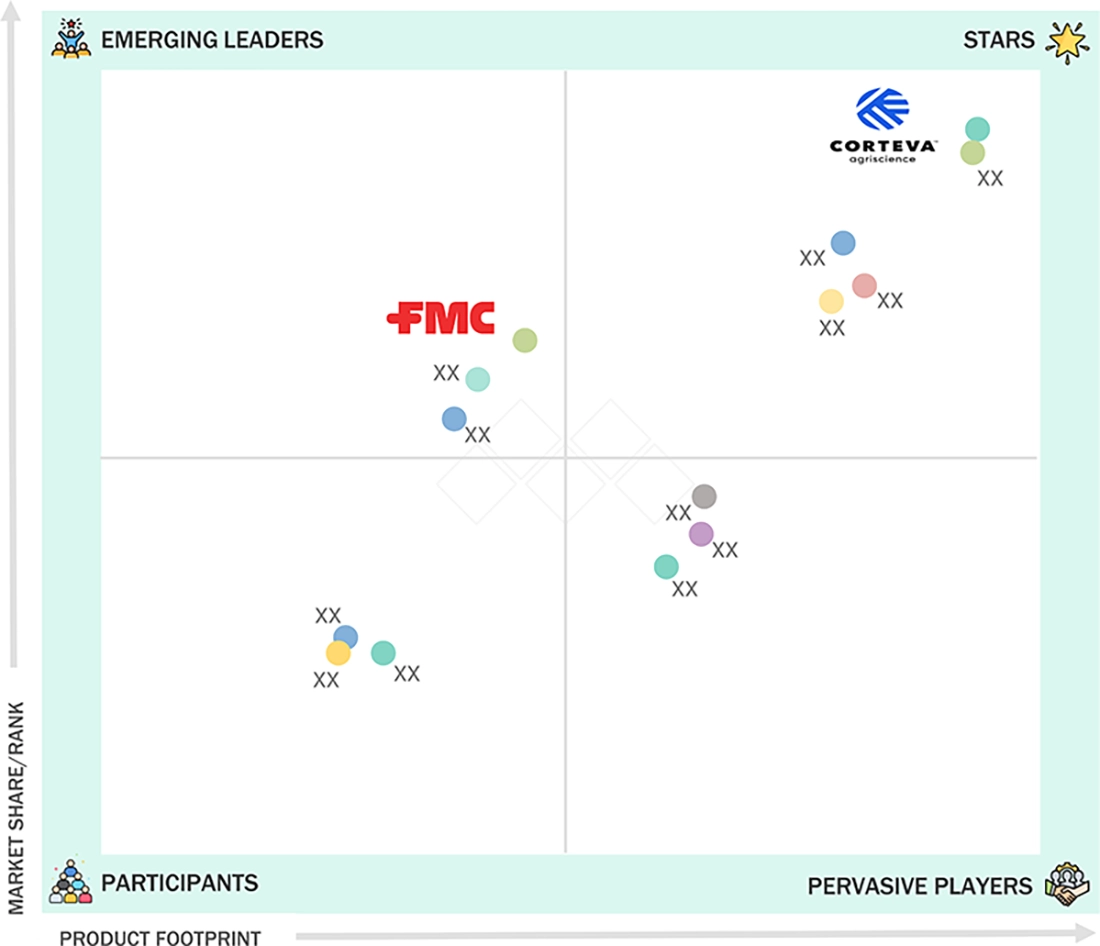
BIOSTIMULANTS MARKET: COMPANY EVALUATION MATRIX
In the biostimulants market matrix, Syngenta (Star) and Coretva (Star) lead the market with their comprehensive portfolio of plant health solutions, including seaweed extracts, microbial biostimulants, and nutrient-enhancing products that enable growers to improve crop resilience, yield, and sustainability outcomes. FMC (Emerging Leader) is emerging as a strong player by expanding its range of biostimulant solutions, focusing on innovative formulations, precision application technologies, and environmental sustainability, and positioning itself as a key innovator in modern crop management practices.
Source: Secondary Research, Interviews with Experts, MarketsandMarkets Analysis
KEY MARKET PLAYERS
- UPL Limited (India)
- FMC Corporation (US)
- Corteva Agriscience (US)
- Sumitomo Chemical Co., Ltd. (Japan)
- Nufarm Limited (Australia)
- Novonesis (Denmark)
- BASF SE (Germany)
- Bayer AG (Germany)
- PI Industries Ltd. (India)
- T. Stanes & Company Limited (India)
- J.M. Huber Corporation (US)
- Gowan Company (US)
- Koppert Biological Systems (Netherlands)
- Acadian Seaplants Limited (Canada)
- Qingdao Seawin Biotech Group Co., Ltd. (China)
MARKET SCOPE
| REPORT METRIC | DETAILS |
|---|---|
| Market Size in 2025 (Value) | USD 4.46 Billion |
| Market Size in 2026 (Value) | USD 4.97 Billion |
| Market Forecast in 2031 (Value) | USD 8.77 Billion |
| Growth Rate | CAGR of 12.0% during 2026–2031 |
| Years Considered | 2021–2031 |
| Base Year | 2025 |
| Forecast Period | 2026–2031 |
| Units Considered | Value (USD Billion) |
| Report Coverage | Revenue Forecast, Company Ranking, Competitive Landscape, Growth Factors, and Trends |
| Segments Covered |
|
| Countries Covered | North America, Europe, Asia Pacific, South America, Rest of the World |
WHAT IS IN IT FOR YOU: BIOSTIMULANTS MARKET REPORT CONTENT GUIDE
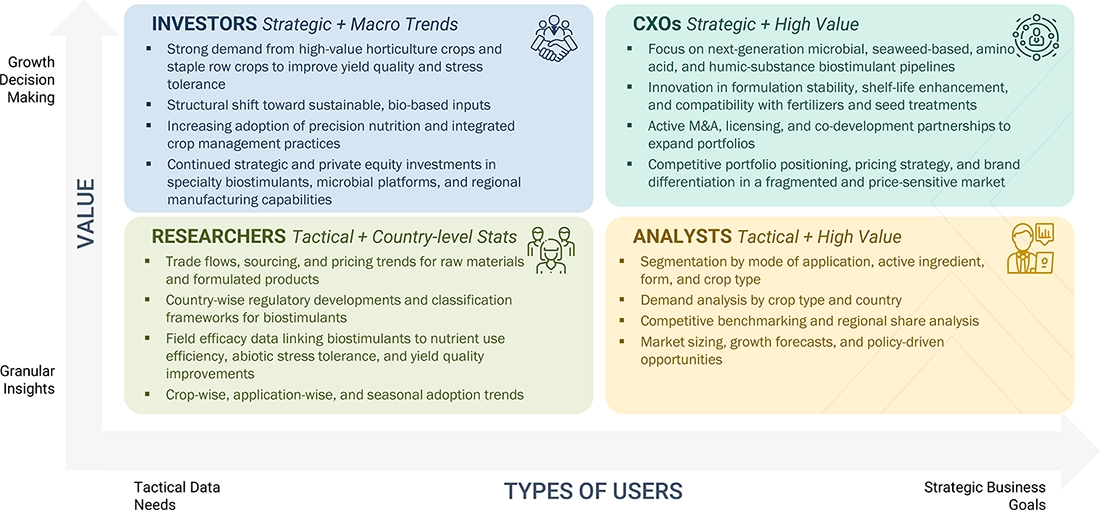
DELIVERED CUSTOMIZATIONS
We have successfully delivered the following deep-dive customizations:
| CLIENT REQUEST | CUSTOMIZATION DELIVERED | VALUE ADDS |
|---|---|---|
| Asia Pacific-based Biostimulant Manufacturer |
|
|
| Global Agrochemical Multinational |
|
|
| Asia Pacific Agritech/Crop Nutrition Firm |
|
|
| Regional Distributor/Formulator |
|
|
| Investor/Private Equity Firm |
|
|
RECENT DEVELOPMENTS
- August 2026: Novonesis launched JumpStart, a phosphate-solubilizing biostimulant containing Penicillium bilaiae, designed to release phosphate bound in soil and fertilizer and improve early-season crop growth. The development is directly relevant to biostimulants because the product uses a living microorganism to improve nutrient availability and plant uptake.
- May 2026: UPL Limited secured FCO registration for Bioclassic®, enabling its nationwide commercialisation in India. Bioclassic is explicitly identified as a biostimulant developed under UPL's natural plant-protection business, making the registration and resulting commercial availability a direct development in the biostimulants segment.
- March 2026: Corteva Agriscience introduced Harbest®, its third biostimulant, containing ureic nitrogen and water-soluble calcium oxide and targeted particularly at milling wheat. Corteva states that Harbest supplies nitrogen in an available amine form at the milky-ripe stage, supporting grain protein formation and grain filling; the product is explicitly described as a new biostimulant.
- December 2025: Sumitomo Chemical and Valent BioSciences commercially launched a new biostimulant portfolio for EMEA, comprising three technology platforms: MCOM®, S-abscisic acid and MycoApply® AMF. The portfolio includes products such as BoronBoost™ Prime, Zicron®, TopGrain®/FullGrain®, InGrain® and MycoApply® formulations, directly representing a substantive expansion of Sumitomo Chemical's biostimulant offering.
- December 2025: UPL Limited launched HYCOXA®, a new seaweed-based biostimulant technology designed to address abiotic stress and improve nitrogen-use efficiency. UPL states that the technology is intended to support crop biomass during key reproductive and fruit-filling stages, helping crops cope with heat and other abiotic stresses while improving nitrogen utilisation.
Table of Contents
 Exclusive indicates content/data unique to MarketsandMarkets and not available with any competitors.
TITLE
PAGE NO
1
INTRODUCTION
29
2
EXECUTIVE SUMMARY
34
3
PREMIUM INSIGHTS
39
4
MARKET OVERVIEW
Unlock sustainable growth by integrating advanced biostimulants with eco-friendly agricultural practices and innovative technologies.
43
4.1
INTRODUCTION
4.2
MARKET DYNAMICS
4.2.1
DRIVERS
4.2.1.1
GROWING EMPHASIS ON SUSTAINABLE AND ENVIRONMENTALLY RESPONSIBLE AGRICULTURAL PRACTICES
4.2.1.2
ABUNDANT AVAILABILITY OF SEAWEED-BASED AND OTHER NATURAL BIOSTIMULANT RAW MATERIALS
4.2.1.3
INCREASING CULTIVATION OF HIGH-VALUE CROPS REQUIRING ENHANCED YIELD AND QUALITY PERFORMANCE
4.2.2
RESTRAINTS
4.2.2.1
PRESENCE OF LOW-QUALITY AND NON-STANDARDIZED BIOSTIMULANT PRODUCTS IN THE MARKET
4.2.2.2
CONTINUED RELIANCE ON SYNTHETIC AGROCHEMICALS AMONG FARMERS, PARTICULARLY IN DEVELOPING ECONOMIES
4.2.2.3
INCREASING IMPACT OF ABIOTIC STRESS ON CROP PRODUCTION
4.2.3
OPPORTUNITIES
4.2.3.1
ADVANCEMENTS IN BIOSTIMULANT FORMULATION AND PRODUCTION TECHNOLOGIES
4.2.3.2
EXPANDING APPLICATION OF BIOSTIMULANTS IN SEED TREATMENT SOLUTIONS
4.2.3.3
INCREASING INTEGRATION OF BIOSTIMULANTS WITH FERTILIZER PROGRAMS TO ENHANCE NUTRIENT-USE EFFICIENCY
4.2.4
CHALLENGES
4.2.4.1
LACK OF HARMONIZED REGULATORY FRAMEWORKS ACROSS GLOBAL MARKETS
4.2.4.2
LIMITED FARMER AWARENESS AND UNDERSTANDING OF BIOSTIMULANT BENEFITS IN EMERGING REGIONS
4.2.4.3
VARIABILITY IN PRODUCT PERFORMANCE ACROSS DIFFERENT CROPS AND ENVIRONMENTAL CONDITIONS
4.3
UNMET NEEDS AND WHITE SPACES
4.3.1
UNMET NEEDS IN BIOSTIMULANTS MARKET
4.3.2
WHITE SPACE OPPORTUNITIES
4.4
INTERCONNECTED MARKETS AND CROSS-SECTOR OPPORTUNITIES
4.4.1
CROSS-SECTOR OPPORTUNITIES
4.5
EMERGING BUSINESS MODELS AND ECOSYSTEM SHIFTS
4.5.1
EMERGING BUSINESS MODELS
4.5.2
ECOSYSTEM SHIFTS
4.6
STRATEGIC MOVES BY TIER-1/2/3 PLAYERS
5
INDUSTRY TRENDS
Biostimulant demand surges as global agricultural growth reshapes industry dynamics and competitive strategies.
58
5.1
PORTER’S FIVE FORCES ANALYSIS
5.1.1
THREAT OF NEW ENTRANTS
5.1.2
THREAT OF SUBSTITUTES
5.1.3
BARGAINING POWER OF SUPPLIERS
5.1.4
BARGAINING POWER OF BUYERS
5.1.5
INTENSITY OF COMPETITIVE RIVALRY
5.2
MACROECONOMIC INDICATORS
5.2.1
GROWTH IN GLOBAL AGRICULTURAL VALUE-ADDED SUPPORTS DEMAND FOR BIOSTIMULANTS
5.2.2
GROWTH IN GLOBAL FERTILIZER USE SUPPORTS ADOPTION OF BIOSTIMULANT SOLUTIONS
5.3
VALUE CHAIN ANALYSIS
5.3.1
RAW MATERIAL SUPPLIERS
5.3.2
INTERMEDIATE PROCESSING & STRAIN DEVELOPMENT
5.3.3
FORMULATION & PRODUCT MANUFACTURING
5.3.4
CUSTOMIZATION & BRANDING & PRIVATE LABELING
5.3.5
DISTRIBUTION & SUPPLY NETWORK
5.3.6
END USERS & POST-SALES SUPPORT
5.4
ECOSYSTEM ANALYSIS
5.4.1
DEMAND SIDE
5.4.2
SUPPLY SIDE
5.5
PRICING ANALYSIS
5.5.1
AVERAGE SELLING PRICE BY KEY PLAYERS, ACTIVE INGREDIENTS
5.5.2
AVERAGE SELLING PRICE TREND, BY REGION
5.5.3
AVERAGE SELLING PRICE TREND, BY ACTIVE INGREDIENT
5.6
TRADE ANALYSIS
5.6.1
EXPORT SCENARIO OF HS CODE 3101
5.6.2
IMPORT SCENARIO OF HS CODE 3101
5.7
KEY CONFERENCES AND EVENTS, 2026
5.8
INVESTMENT AND FUNDING SCENARIO
5.9
TRENDS/DISRUPTIONS IMPACTING CUSTOMER BUSINESS
5.10
CASE STUDY ANALYSIS
5.10.1
LEVERAGING AI-POWERED CROP INTELLIGENCE TO OPTIMIZE APPLICATION AND IMPROVE PERFORMANCE
5.10.2
UTILIZING PREDICTIVE ANALYTICS AND DIGITAL FARMING PLATFORMS TO ENHANCE BIOLOGICAL INPUT EFFECTIVENESS
5.10.3
INTEGRATING AI-BASED FARM ANALYTICS TO ACCELERATE ADOPTION OF BIOSTIMULANTS AND BIOLOGICAL SOLUTIONS
5.11
IMPACT OF 2026 US TARIFFS – BIOSTIMULANT MARKET
5.11.1
INTRODUCTION
5.11.2
KEY TARIFF RATES
5.11.3
PRICE IMPACT ANALYSIS
5.11.4
IMPACT ON COUNTRIES/REGIONS
5.11.4.1
CHINA (ASIA PACIFIC)
5.11.4.2
INDIA
5.11.4.3
EUROPEAN UNION
5.11.4.4
BRAZIL
5.11.5
IMPACT ON END-USE INDUSTRIES
6
TECHNOLOGICAL ADVANCEMENTS, AI-DRIVEN IMPACT, PATENTS, INNOVATIONS, AND FUTURE APPLICATIONS
AI-driven innovations redefine biostimulant precision, unlocking sustainable agricultural breakthroughs and market disruption.
82
6.1
KEY EMERGING TECHNOLOGIES
6.1.1
AI-DRIVEN PRECISION BIOSTIMULANT RECOMMENDATION SYSTEMS
6.1.2
ADVANCED EXTRACTION & BIOACTIVE COMPOUND CONCENTRATION TECHNOLOGIES
6.1.3
NEXT-GENERATION MICROBIAL & METABOLITE-BASED BIOSTIMULANTS
6.2
COMPLEMENTARY TECHNOLOGIES
6.2.1
PRECISION IRRIGATION & FERTIGATION SYSTEMS
6.2.2
DIGITAL AGRICULTURE & CROP MONITORING PLATFORMS
6.2.3
BIOSTIMULANT INTEGRATION & BIOLOGICAL CROP NUTRITION PLATFORMS
6.3
ADJACENT TECHNOLOGIES
6.3.1
BIOLOGICAL SEED ENHANCEMENT & SEED APPLIED TECHNOLOGIES
6.3.2
CONTROLLED ENVIRONMENT AGRICULTURE (CEA) & HIGH-PRECISION CROP PRODUCTION
6.3.3
AGRICULTURAL BIOTECHNOLOGY & PLANT PHYSIOLOGY OPTIMIZATION
6.4
TECHNOLOGY/PRODUCT ROADMAP
6.4.1
SHORT-TERM (2025–2027) | FOUNDATION & EARLY COMMERCIALIZATION
6.4.2
MID-TERM (2027–2030) | EXPANSION & STANDARDIZATION
6.4.3
LONG-TERM (2030–2035+) | MASS COMMERCIALIZATION & DISRUPTION
6.5
PATENT ANALYSIS
6.6
FUTURE APPLICATIONS
6.6.1
BIO-ENGINEERED MICROBIAL CONSORTIA
6.6.2
AI-DRIVEN PRECISION BIOSTIMULANTS
6.6.3
ADVANCED ENCAPSULATION & CONTROLLED-RELEASE SYSTEMS
6.6.4
MULTI-FUNCTIONAL BIOLOGICAL INPUT SYSTEMS
6.6.5
SUSTAINABLE BIO-BASED PRODUCTION
6.7
IMPACT OF GENERATIVE AI ON BIOSTIMULANT MARKET
6.7.1
INTRODUCTION
6.7.2
USE OF GENERATIVE AI ON BIOSTIMULANT MARKET
6.7.3
TOP USE CASES AND MARKET POTENTIAL
6.7.4
BEST PRACTICES IN BIOSTIMULANT INDUSTRY
6.7.5
CASE STUDIES OF AI IMPLEMENTATION IN BIOSTIMULANT MARKET
6.7.6
INTERCONNECTED ADJACENT ECOSYSTEM AND IMPACT ON MARKET PLAYERS
6.7.7
CLIENTS’ READINESS TO ADOPT GENERATIVE AI IN BIOSTIMULANT MARKET
6.8
SUCCESS STORIES AND REAL-WORLD APPLICATIONS
7
REGULATORY LANDSCAPE AND SUSTAINABILITY INITIATIVES
Navigate complex regulations to unlock sustainability and compliance advantages in the biostimulant market.
101
7.1
REGIONAL REGULATIONS AND COMPLIANCE
7.1.1
INDUSTRY STANDARDS
7.2
SUSTAINABILITY INITIATIVES
7.3
IMPACT OF REGULATORY POLICIES ON SUSTAINABILITY INITIATIVES
7.4
CERTIFICATIONS, LABELING, ECO-STANDARDS
8
CUSTOMER LANDSCAPE AND BUYER BEHAVIOR
Unlock decision-making insights to navigate complex agricultural buying processes and stakeholder influences.
114
8.1
DECISION-MAKING PROCESS
8.2
KEY STAKEHOLDERS INVOLVED IN BUYING PROCESS AND THEIR EVALUATION CRITERIA
8.2.1
KEY STAKEHOLDERS IN BUYING PROCESS
8.2.2
BUYING CRITERIA
8.3
ADOPTION BARRIER AND INTERNAL CHALLENGES
8.4
UNMET NEEDS OF VARIOUS END-USER/END-USE INDUSTRIES
8.4.1
ROW CROP FARMERS (CEREALS, GRAINS, OILSEEDS)
8.4.2
HORTICULTURE & SPECIALTY CROP PRODUCERS
8.4.3
ORGANIC FARMING
8.4.4
GREENHOUSE AND CONTROLLED ENVIRONMENT AGRICULTURE (CEA) OPERATORS
8.4.5
AGRICULTURAL INPUT DISTRIBUTORS AND RETAILERS
8.4.6
CROP ADVISORS AND AGRONOMISTS
8.5
MARKET PROFITABILITY
9
BIOSTIMULANTS MARKET, BY ACTIVE INGREDIENT
Market Size & Growth Rate Forecast Analysis to 2031 in USD Million and Kilotons | 30 Data Tables
120
9.1
INTRODUCTION
9.2
HUMIC SUBSTANCES
9.2.1
ABILITY TO HOLD WATER, STABILIZE SOIL TEMPERATURE, PREVENT WATER EVAPORATION, AND FACILITATE NUTRIENT UPTAKE
9.3
SEAWEED EXTRACTS
9.3.1
NEED TO BOOST SOIL FERTILITY, ENHANCE SEED GERMINATION, AND IMPROVE CROP PRODUCTIVITY TO FUEL DEMAND
9.4
AMINO ACIDS
9.4.1
INCREASE IN AWARENESS REGARDING ROLE OF AMINO ACIDS IN PLANT GROWTH
9.5
MICROBIAL AMENDMENTS
9.5.1
NEED TO ENHANCE GROWTH AND NUTRIENT UPTAKE OF PLANTS AND IMPROVE SOIL CONDITIONS
9.5.2
BACTERIAL BIOSTIMULANTS
9.5.3
FUNGAL BIOSTIMULANTS
9.6
MINERALS & VITAMINS
9.6.1
EFFECTIVENESS OF VITAMINS & MINERALS AGAINST DROUGHT STRESS
9.7
OTHER ACTIVE INGREDIENTS
10
BIOSTIMULANTS MARKET, BY FORM
Market Size & Growth Rate Forecast Analysis to 2031 in USD Million | 6 Data Tables
140
10.1
INTRODUCTION
10.2
LIQUID
10.2.1
EASE OF APPLICATION, UNIFORM DISTRIBUTION, AND RAPID ABSORPTION BY CROPS
10.3
DRY
10.3.1
LONGER SHELF LIFE AND REDUCED WATER USAGE
11
BIOSTIMULANTS MARKET, BY MODE OF APPLICATION
Market Size & Growth Rate Forecast Analysis to 2031 in USD Million | 8 Data Tables
146
11.1
INTRODUCTION
11.2
SEED TREATMENT
11.2.1
TREATMENT TO STIMULATE STRESS-RESPONSIVE GENES FOR BETTER NUTRIENT UPTAKE
11.3
SOIL TREATMENT
11.3.1
NEED TO REPLENISH SOIL HEALTH, PROMOTE PLANT GROWTH, AND IMPROVE SOIL STRUCTURE
11.4
FOLIAR TREATMENT
11.4.1
NEED TO ENHANCE THE EFFECT OF BIOACTIVE MOLECULES ON CROP GROWTH AND IMPROVE THE ABSORPTION AND UPTAKE OF MICRONUTRIENTS
12
BIOSTIMULANTS MARKET, BY CROP TYPE
Market Size & Growth Rate Forecast Analysis to 2031 in USD Million | 18 Data Tables
154
12.1
INTRODUCTION
12.2
CEREALS & GRAINS
12.2.1
HIGHER DEMAND FOR CEREAL CROPS AND AN INCREASE IN EFFICIENCY OF BIOSTIMULANTS ON YIELD OF CEREALS & GRAINS
12.3
OILSEEDS & PULSES
12.3.1
INCREASE IN NEED TO INCREASE PLANT TOLERANCE TO ABIOTIC STRESS
12.4
FRUITS & VEGETABLES
12.4.1
INCREASED GLOBAL CONSUMPTION OF FRUITS & VEGETABLES AND HIGH EXPORT POTENTIAL
12.5
FLOWERS & ORNAMENTALS
12.5.1
DEMAND FOR PROMOTING HEALTH AND VITALITY AND ENHANCING NUTRIENT UPTAKE, EFFICIENCY, AND STRESS TOLERANCE
12.6
OTHER CROP TYPES
13
BIOSTIMULANTS MARKET, BY REGION
Comprehensive coverage of 9 Regions with country-level deep-dive of 15 Countries | 150 Data Tables.
167
13.1
INTRODUCTION
13.2
NORTH AMERICA
13.2.1
US
13.2.1.1
STRATEGIC INVESTMENTS AND PRODUCT CERTIFICATION ACCELERATE US BIOSTIMULANTS MARKET GROWTH
13.2.2
CANADA
13.2.2.1
GROWING FOCUS ON SUSTAINABLE AGRICULTURE AND BIOLOGICAL CROP INPUTS STRENGTHENS CANADA BIOSTIMULANTS MARKET
13.2.3
MEXICO
13.2.3.1
MODERNIZATION OF AGRICULTURE AND EXPORT-ORIENTED CROP PRODUCTION DRIVE MEXICO BIOSTIMULANTS MARKET GROWTH
13.3
EUROPE
13.3.1
SPAIN
13.3.1.1
PROTECTED AGRICULTURE EXPANSION ACCELERATES BIOSTIMULANTS DEMAND IN SPAIN
13.3.2
ITALY
13.3.2.1
HIGH-VALUE HORTICULTURE AND ORGANIC FARMING EXPANSION TO STRENGTHEN ITALY'S BIOSTIMULANTS MARKET
13.3.3
FRANCE
13.3.3.1
SUSTAINABLE AGRICULTURE POLICIES AND ORGANIC FARMING EXPANSION DRIVE BIOSTIMULANTS ADOPTION IN FRANCE
13.3.4
GERMANY
13.3.4.1
ORGANIC FOOD DEMAND AND SUSTAINABLE FARMING PRACTICES ACCELERATE BIOSTIMULANTS ADOPTION IN GERMANY
13.3.5
UK
13.3.5.1
REGENERATIVE AGRICULTURE INITIATIVES AND HIGH-VALUE CROP PRODUCTION DRIVE BIOSTIMULANTS MARKET GROWTH IN THE UNITED KINGDOM
13.3.6
REST OF EUROPE
13.4
ASIA PACIFIC
13.4.1
CHINA
13.4.1.1
CHINA STRENGTHENS BIOSTIMULANTS MARKET THROUGH SUSTAINABLE AGRICULTURE INITIATIVES AND SEAWEED INNOVATION
13.4.2
JAPAN
13.4.2.1
HIGH-VALUE AGRICULTURE THROUGH PRECISION BIOSTIMULANT TECHNOLOGIES AND SUSTAINABLE FARMING INNOVATION
13.4.3
INDIA
13.4.3.1
INDIA ACCELERATES BIOSTIMULANTS ADOPTION THROUGH ORGANIC FARMING EXPANSION AND SUSTAINABLE AGRICULTURE PROGRAMS
13.4.4
AUSTRALIA
13.4.4.1
BIOSTIMULANTS ADOPTION TO ENHANCE CLIMATE RESILIENCE AND SUSTAINABLE AGRICULTURAL PRODUCTIVITY
13.4.5
REST OF ASIA PACIFIC
13.5
SOUTH AMERICA
13.5.1
BRAZIL
13.5.1.1
EXPANDING SOYBEAN AND SUGARCANE CULTIVATION DRIVES BIOSTIMULANTS ADOPTION ACROSS BRAZIL
13.5.2
ARGENTINA
13.5.2.1
LARGE-SCALE ROW CROP FARMING AND SOIL PRODUCTIVITY MANAGEMENT DRIVE BIOSTIMULANTS DEMAND IN ARGENTINA
13.5.3
REST OF SOUTH AMERICA
13.6
REST OF THE WORLD (ROW)
13.6.1
AFRICA
13.6.1.1
CLIMATE-SMART AGRICULTURE AND SOIL HEALTH RESTORATION DRIVE BIOSTIMULANTS MARKET GROWTH
13.6.2
MIDDLE EAST
13.6.2.1
CLIMATE-SMART AGRICULTURE AND SOIL HEALTH RESTORATION DRIVE BIOSTIMULANTS MARKET GROWTH
14
COMPETITIVE LANDSCAPE
Uncover market dominance tactics and emerging leaders shaping the competitive landscape by 2025.
240
14.1
OVERVIEW
14.2
KEY PLAYERS' STRATEGIES/RIGHT TO WIN
14.3
REVENUE ANALYSIS
14.4
MARKET SHARE ANALYSIS, 2025
14.5
COMPANY EVALUATION MATRIX: KEY PLAYERS, 2025
14.5.1
STARS
14.5.2
EMERGING LEADERS
14.5.3
PERVASIVE PLAYERS
14.5.4
PARTICIPANTS
14.5.5
COMPANY FOOTPRINT: KEY PLAYERS, 2025
14.5.5.1
COMPANY FOOTPRINT
14.5.5.2
REGION FOOTPRINT
14.5.5.3
ACTIVE INGREDIENT FOOTPRINT
14.5.5.4
MODE OF APPLICATION FOOTPRINT
14.5.5.5
FORM FOOTPRINT
14.6
COMPANY EVALUATION MATRIX: STARTUPS/SMES, 2025
14.6.1
PROGRESSIVE COMPANIES
14.6.2
RESPONSIVE COMPANIES
14.6.3
DYNAMIC COMPANIES
14.6.4
STARTING BLOCKS
14.6.5
COMPETITIVE BENCHMARKING: STARTUPS/SMES, 2025
14.6.5.1
DETAILED LIST OF KEY STARTUPS/SMES
14.6.5.2
COMPETITIVE BENCHMARKING OF KEY STARTUPS/SMES
14.7
COMPANY VALUATION AND FINANCIAL METRICS
14.8
BRAND/PRODUCT/SERVICE ANALYSIS
14.9
COMPETITIVE SCENARIO AND TRENDS
14.9.1
PRODUCT LAUNCHES
14.9.2
DEALS
14.9.3
EXPANSIONS
15
COMPANY PROFILES
In-depth Company Profiles of Leading Market Players with detailed Business Overview, Product and Service Portfolio, Recent Developments, and Unique Analyst Perspective (MnM View)
261
15.1
KEY PLAYERS
15.1.1
UPL
15.1.1.1
BUSINESS OVERVIEW
15.1.1.2
PRODUCTS/SOLUTIONS/SERVICES OFFERED
15.1.1.3
RECENT DEVELOPMENTS
15.1.1.3.1
PRODUCT LAUNCHES
15.1.1.3.2
DEALS
15.1.1.4
MNM VIEW
15.1.1.4.1
RIGHT TO WIN
15.1.1.4.2
STRATEGIC CHOICES
15.1.1.4.3
WEAKNESSES AND COMPETITIVE THREATS
15.1.2
FMC CORPORATION
15.1.3
CORTEVA
15.1.4
SYNGENTA GROUP
15.1.5
SUMITOMO CHEMICAL CO., LTD
15.1.6
NUFARM
15.1.7
NOVONESIS GROUP
15.1.8
BASF SE
15.1.9
BAAGR AG
15.1.10
PI INDUSTRIES
15.1.11
T.STANES AND COMPANY LIMITED
15.1.12
J.M. HUBER CORPORATION
15.1.13
HAIFA NEGEV TECHNOLOGIES LTD
15.1.14
GOWAN COMPANY
15.1.15
KOPPERT
15.2
STARTUPS/SMES
15.2.1
ACADIAN SEAPLANTS LIMITED
15.2.2
QINGDAO SEAWIN BIOTECH GROUP CO., LTD.
15.2.3
OMEX
15.2.4
SEIPASA, S.A.
15.2.5
SUSTAINABLE AGRO SOLUTIONS, S.A.U.
15.2.6
ALGAENERGY
15.2.7
LAWRIECO
15.2.8
AMINOCORE
15.2.9
KELPAK
15.2.10
CASCADIA SEAWEED
16
RESEARCH METHODOLOGY
344
16.1
RESEARCH DATA
16.1.1
SECONDARY DATA
16.1.1.1
LIST OF MAJOR SECONDARY SOURCES
16.1.1.2
KEY DATA FROM SECONDARY SOURCES
16.1.2
PRIMARY DATA
16.1.2.1
KEY DATA FROM PRIMARY SOURCES
16.1.2.2
KEY INDUSTRY INSIGHTS
16.1.2.3
BREAKDOWN OF PRIMARIES
16.2
MARKET SIZE ESTIMATION
16.2.1
BOTTOM-UP APPROACH
16.2.2
TOP-DOWN APPROACH
16.2.2.1
APPROACH TO ESTIMATE MARKET SIZE USING TOP-DOWN ANALYSIS
16.3
DATA TRIANGULATION
16.4
RESEARCH ASSUMPTIONS
16.5
RESEARCH LIMITATIONS AND RISK ASSESSMENT
17
ADJACENT AND RELATED MARKETS
355
17.1
INTRODUCTION
17.2
LIMITATIONS
17.3
BIOPESTICIDES MARKET
17.3.1
MARKET DEFINITION
17.3.2
MARKET OVERVIEW
17.4
PLANT GROWTH REGULATORS MARKET
17.4.1
MARKET DEFINITION
17.4.2
MARKET OVERVIEW
18
APPENDIX
359
18.1
DISCUSSION GUIDE
18.2
KNOWLEDGESTORE: MARKETSANDMARKETS’ SUBSCRIPTION PORTAL
18.3
CUSTOMIZATION OPTIONS
18.4
RELATED REPORTS
18.5
AUTHOR DETAILS
LIST OF TABLES
TABLE 1
INCLUSIONS AND EXCLUSIONS
TABLE 2
USD EXCHANGE RATES, 2021–2025
TABLE 3
INTERCONNECTED MARKETS
TABLE 4
KEY MOVES AND STRATEGIC FOCUS
TABLE 5
IMPACT OF PORTER’S FIVE FORCES ON BIOSTIMULANT MARKET
TABLE 6
ROLE OF COMPANIES IN ECOSYSTEM
TABLE 7
AVERAGE SELLING PRICE OF KEY PLAYERS, BY TECHNOLOGY, 2025 (USD/TON)
TABLE 8
AVERAGE SELLING PRICE TREND OF BIOFERTILIZER, BY REGION, 2023–2025 (USD/TON)
TABLE 9
AVERAGE SELLING PRICE TREND OF BIOSTIMULANTS, BY ACTIVE INGREDIENT, 2023–2025 (USD/TON)
TABLE 10
EXPORT VALUE OF HS CODE 3101, BY KEY COUNTRY, 2021–2025 (USD THOUSAND)
TABLE 11
IMPORT VALUE OF HS CODE 3101, BY KEY COUNTRY, 2021–2025 (USD THOUSAND)
TABLE 12
BIOSTIMULANT MARKET: LIST OF KEY CONFERENCES AND EVENTS, 2026
TABLE 13
US ADJUSTED RECIPROCAL TARIFF RATES
TABLE 14
REGIONAL TARIFF IMPACT ON BIOSTIMULANT EXPORTS TO US
TABLE 15
KEY PATENTS PERTAINING TO BIOSTIMULANT, 2016–2025
TABLE 16
TOP USE CASES AND MARKET POTENTIAL
TABLE 17
BEST PRACTICES: COMPANIES IMPLEMENTING USE CASES
TABLE 18
BIOSTIMULANT MARKET: CASE STUDIES RELATED TO GEN AI IMPLEMENTATION
TABLE 19
INTERCONNECTED ADJACENT ECOSYSTEM AND IMPACT ON MARKET PLAYERS
TABLE 20
NORTH AMERICA: LIST OF REGULATORY BODIES, GOVERNMENT AGENCIES, AND OTHER ORGANIZATIONS
TABLE 21
EUROPE: LIST OF REGULATORY BODIES, GOVERNMENT AGENCIES, AND OTHER ORGANIZATIONS
TABLE 22
ASIA PACIFIC: LIST OF REGULATORY BODIES, GOVERNMENT AGENCIES, AND OTHER ORGANIZATIONS
TABLE 23
SOUTH AMERICA: LIST OF REGULATORY BODIES, GOVERNMENT AGENCIES, AND OTHER ORGANIZATIONS
TABLE 24
REST OF THE WORLD: LIST OF REGULATORY BODIES, GOVERNMENT AGENCIES, AND OTHER ORGANIZATIONS
TABLE 25
GLOBAL INDUSTRY STANDARDS IN BIOSTIMULANT MARKET
TABLE 26
KEY INDUSTRY STANDARDS FOR BIOSTIMULANT MARKET
TABLE 27
INFLUENCE OF STAKEHOLDERS ON BUYING PROCESS, FOR FORM
TABLE 28
KEY BUYING CRITERIA FOR FORM
TABLE 29
BIOSTIMULANTS MARKET, BY ACTIVE INGREDIENT, 2021–2025 (USD MILLION)
TABLE 30
BIOSTIMULANTS MARKET, BY ACTIVE INGREDIENT, 2026–2031 (USD MILLION)
TABLE 31
BIOSTIMULANTS MARKET, BY ACTIVE INGREDIENT, 2021–2025 (KT)
TABLE 32
BIOSTIMULANTS MARKET, BY ACTIVE INGREDIENT, 2026–2031 (KT)
TABLE 33
HUMIC BIOSTIMULANTS MARKET, BY REGION, 2021–2025 (USD MILLION)
TABLE 34
HUMIC BIOSTIMULANTS MARKET, BY REGION, 2026–2031 (USD MILLION)
TABLE 35
HUMIC BIOSTIMULANTS MARKET, BY REGION, 2021–2025 (KT)
TABLE 36
HUMIC BIOSTIMULANTS MARKET, BY REGION, 2026–2031 (KT)
TABLE 37
HUMIC BIOSTIMULANTS MARKET, BY TYPE, 2021–2025 (USD MILLION)
TABLE 38
HUMIC BIOSTIMULANTS MARKET, BY TYPE, 2026–2031 (USD MILLION)
TABLE 39
SEAWEED EXTRACT-BASED BIOSTIMULANTS MARKET, BY REGION, 2021–2025 (USD MILLION)
TABLE 40
SEAWEED EXTRACT-BASED BIOSTIMULANTS MARKET, BY REGION, 2026–2031 (USD MILLION)
TABLE 41
SEAWEED EXTRACT-BASED BIOSTIMULANTS MARKET, BY REGION, 2021–2025 (KT)
TABLE 42
SEAWEED EXTRACT-BASED BIOSTIMULANTS MARKET, BY REGION, 2026–2031 (KT)
TABLE 43
AMINO ACID-BASED BIOSTIMULANTS MARKET, BY REGION, 2021–2025 (USD MILLION)
TABLE 44
AMINO ACID-BASED BIOSTIMULANTS MARKET, BY REGION, 2026–2031 (USD MILLION)
TABLE 45
AMINO ACID-BASED BIOSTIMULANTS MARKET, BY REGION, 2021–2025 (KT)
TABLE 46
AMINO ACID-BASED BIOSTIMULANTS MARKET, BY REGION, 2026–2031 (KT)
TABLE 47
MICROBIAL AMENDMENTS MARKET, BY REGION, 2021–2025 (USD MILLION)
TABLE 48
MICROBIAL AMENDMENTS MARKET, BY REGION, 2026–2031 (USD MILLION)
TABLE 49
MICROBIAL AMENDMENTS MARKET, BY REGION, 2021–2025 (KT)
TABLE 50
MICROBIAL AMENDMENTS MARKET, BY REGION, 2026–2031 (KT)
TABLE 51
MINERAL- & VITAMIN-BASED BIOSTIMULANTS MARKET, BY REGION, 2021–2025 (USD MILLION)
TABLE 52
MINERAL- & VITAMIN-BASED BIOSTIMULANTS MARKET, BY REGION, 2026–2031 (USD MILLION)
TABLE 53
MINERAL- & VITAMIN-BASED BIOSTIMULANTS MARKET, BY REGION, 2021–2025 (KT)
TABLE 54
MINERAL- & VITAMIN-BASED BIOSTIMULANTS MARKET, BY REGION, 2026–2031 (KT)
TABLE 55
OTHER ACTIVE INGREDIENT-BASED BIOSTIMULANTS MARKET, BY REGION, 2021–2025 (USD MILLION)
TABLE 56
OTHER ACTIVE INGREDIENT-BASED BIOSTIMULANTS MARKET, BY REGION, 2026–2031 (USD MILLION)
TABLE 57
OTHER ACTIVE INGREDIENT-BASED BIOSTIMULANTS MARKET, BY REGION, 2021–2025 (KT)
TABLE 58
OTHER ACTIVE INGREDIENT-BASED BIOSTIMULANTS MARKET, BY REGION, 2026–2031 (KT)
TABLE 59
BIOSTIMULANTS MARKET, BY FORM, 2021–2025 (USD MILLION)
TABLE 60
BIOSTIMULANTS MARKET, BY FORM, 2026–2031 (USD MILLION)
TABLE 61
LIQUID BIOSTIMULANTS MARKET, BY REGION, 2021–2025 (USD MILLION)
TABLE 62
LIQUID BIOSTIMULANTS MARKET, BY REGION, 2026–2031 (USD MILLION)
TABLE 63
DRY BIOSTIMULANTS MARKET, BY REGION, 2021–2025 (USD MILLION)
TABLE 64
DRY BIOSTIMULANTS MARKET, BY REGION, 2026–2031 (USD MILLION)
TABLE 65
BIOSTIMULANTS MARKET, BY MODE OF APPLICATION, 2021–2025 (USD MILLION)
TABLE 66
BIOSTIMULANTS MARKET, BY MODE OF APPLICATION, 2026–2031 (USD MILLION)
TABLE 67
SEED TREATMENT APPLICATION MARKET, BY REGION, 2021–2025 (USD MILLION)
TABLE 68
SEED TREATMENT APPLICATION MARKET, BY REGION, 2026–2031 (USD MILLION)
TABLE 69
SOIL TREATMENT APPLICATION MARKET, BY REGION, 2021–2025 (USD MILLION)
TABLE 70
SOIL TREATMENT APPLICATION MARKET, BY REGION, 2026–2031 (USD MILLION)
TABLE 71
FOLIAR TREATMENT APPLICATION MARKET, BY REGION, 2021–2025 (USD MILLION)
TABLE 72
FOLIAR TREATMENT APPLICATION MARKET, BY REGION, 2026–2031 (USD MILLION)
TABLE 73
BIOSTIMULANTS MARKET, BY CROP TYPE, 2021–2025 (USD MILLION)
TABLE 74
BIOSTIMULANTS MARKET, BY CROP TYPE, 2026–2031 (USD MILLION)
TABLE 75
BIOSTIMULANTS MARKET IN CEREAL & GRAIN CULTIVATION, BY REGION, 2021–2025 (USD MILLION)
TABLE 76
BIOSTIMULANTS MARKET IN CEREAL & GRAIN CULTIVATION, BY REGION, 2026–2031 (USD MILLION)
TABLE 77
BIOSTIMULANTS MARKET IN CEREAL & GRAIN CULTIVATION, BY CROP TYPE, 2021–2025 (USD MILLION)
TABLE 78
BIOSTIMULANTS MARKET IN CEREAL & GRAIN CULTIVATION, BY CROP TYPE, 2026–2031 (USD MILLION)
TABLE 79
BIOSTIMULANTS MARKET IN OILSEED & PULSE CULTIVATION, BY REGION, 2021–2025 (USD MILLION)
TABLE 80
BIOSTIMULANTS MARKET IN OILSEED & PULSE CULTIVATION, BY REGION, 2026–2031 (USD MILLION)
TABLE 81
BIOSTIMULANTS MARKET IN OILSEED & PULSE CULTIVATION, BY CROP TYPE, 2021–2025 (USD MILLION)
TABLE 82
BIOSTIMULANTS MARKET IN OILSEED & PULSE CULTIVATION, BY CROP TYPE, 2026–2031 (USD MILLION)
TABLE 83
BIOSTIMULANTS MARKET IN FRUIT & VEGETABLE CULTIVATION, BY REGION, 2021–2025 (USD MILLION)
TABLE 84
BIOSTIMULANTS MARKET IN FRUIT & VEGETABLE CULTIVATION, BY REGION, 2026–2031 (USD MILLION)
TABLE 85
BIOSTIMULANTS MARKET IN FRUIT & VEGETABLE CULTIVATION, BY CROP TYPE, 2021–2025 (USD MILLION)
TABLE 86
BIOSTIMULANTS MARKET IN FRUIT & VEGETABLE CULTIVATION, BY CROP TYPE, 2026–2031 (USD MILLION)
TABLE 87
BIOSTIMULANTS MARKET IN FLOWER & ORNAMENTAL CULTIVATION, BY REGION, 2021–2025 (USD MILLION)
TABLE 88
BIOSTIMULANTS MARKET IN FLOWER & ORNAMENTAL CULTIVATION, BY REGION, 2026–2031 (USD MILLION)
TABLE 89
BIOSTIMULANTS MARKET IN OTHER CROP TYPES, BY REGION, 2021–2025 (USD MILLION)
TABLE 90
BIOSTIMULANTS MARKET IN OTHER CROP TYPES, BY REGION, 2026–2031 (USD MILLION)
TABLE 91
BIOSTIMULANTS MARKET, BY REGION, 2021–2025 (USD MILLION)
TABLE 92
BIOSTIMULANTS MARKET, BY REGION, 2026–2031 (USD MILLION)
TABLE 93
BIOSTIMULANTS MARKET, BY REGION, 2021–2025 (KT)
TABLE 94
BIOSTIMULANTS MARKET, BY REGION, 2026–2031 (KT)
TABLE 95
NORTH AMERICA: BIOSTIMULANTS MARKET, BY COUNTRY, 2021–2025 (USD MILLION)
TABLE 96
NORTH AMERICA: BIOSTIMULANTS MARKET, BY COUNTRY, 2026–2031 (USD MILLION)
TABLE 97
NORTH AMERICA: BIOSTIMULANTS MARKET, BY COUNTRY, 2021–2025 (KT)
TABLE 98
NORTH AMERICA: BIOSTIMULANTS MARKET, BY COUNTRY, 2026–2031 (KT)
TABLE 99
NORTH AMERICA: BIOSTIMULANTS MARKET, BY ACTIVE INGREDIENT, 2021–2025 (USD MILLION)
TABLE 100
NORTH AMERICA: BIOSTIMULANTS MARKET, BY ACTIVE INGREDIENT, 2026–2031 (USD MILLION)
TABLE 101
NORTH AMERICA: BIOSTIMULANTS MARKET, BY ACTIVE INGREDIENT, 2021–2025 (KT)
TABLE 102
NORTH AMERICA: BIOSTIMULANTS MARKET, BY ACTIVE INGREDIENT, 2026–2031 (KT)
TABLE 103
NORTH AMERICA: BIOSTIMULANTS MARKET, BY MODE OF APPLICATION, 2021–2025 (USD MILLION)
TABLE 104
NORTH AMERICA: BIOSTIMULANTS MARKET, BY MODE OF APPLICATION, 2026–2031 (USD MILLION)
TABLE 105
NORTH AMERICA: BIOSTIMULANTS MARKET, BY CROP TYPE, 2021–2025 (USD MILLION)
TABLE 106
NORTH AMERICA: BIOSTIMULANTS MARKET, BY CROP TYPE, 2026–2031 (USD MILLION)
TABLE 107
NORTH AMERICA: BIOSTIMULANTS MARKET, BY FORM, 2021–2025 (USD MILLION)
TABLE 108
NORTH AMERICA: BIOSTIMULANTS MARKET, BY FORM, 2026–2031 (USD MILLION)
TABLE 109
US: BIOSTIMULANTS MARKET, BY ACTIVE INGREDIENT, 2021–2025 (USD MILLION)
TABLE 110
US: BIOSTIMULANTS MARKET, BY ACTIVE INGREDIENT, 2026–2031 (USD MILLION)
TABLE 111
US: BIOSTIMULANTS MARKET, BY ACTIVE INGREDIENT, 2021–2025 (KT)
TABLE 112
US: BIOSTIMULANTS MARKET, BY ACTIVE INGREDIENT, 2026–2031 (KT)
TABLE 113
CANADA: BIOSTIMULANTS MARKET, BY ACTIVE INGREDIENT, 2021–2025 (USD MILLION)
TABLE 114
CANADA: BIOSTIMULANTS MARKET, BY ACTIVE INGREDIENT, 2026–2031 (USD MILLION)
TABLE 115
CANADA: BIOSTIMULANTS MARKET, BY ACTIVE INGREDIENT, 2021–2025 (KT)
TABLE 116
CANADA: BIOSTIMULANTS MARKET, BY ACTIVE INGREDIENT, 2026–2031 (KT)
TABLE 117
MEXICO: BIOSTIMULANTS MARKET, BY ACTIVE INGREDIENT, 2021–2025 (USD MILLION)
TABLE 118
MEXICO: BIOSTIMULANTS MARKET, BY ACTIVE INGREDIENT, 2026–2031 (USD MILLION)
TABLE 119
MEXICO: BIOSTIMULANTS MARKET, BY ACTIVE INGREDIENT, 2021–2025 (KT)
TABLE 120
MEXICO: BIOSTIMULANTS MARKET, BY ACTIVE INGREDIENT, 2026–2031 (KT)
TABLE 121
EUROPE: BIOSTIMULANTS MARKET, BY COUNTRY, 2021–2025 (USD MILLION)
TABLE 122
EUROPE: BIOSTIMULANTS MARKET, BY COUNTRY, 2026–2031 (USD MILLION)
TABLE 123
EUROPE: BIOSTIMULANTS MARKET, BY COUNTRY, 2021–2025 (KT)
TABLE 124
EUROPE: BIOSTIMULANTS MARKET, BY COUNTRY, 2026–2031 (KT)
TABLE 125
EUROPE: BIOSTIMULANTS MARKET, BY ACTIVE INGREDIENT, 2021–2025 (USD MILLION)
TABLE 126
EUROPE: BIOSTIMULANTS MARKET, BY ACTIVE INGREDIENT, 2026–2031 (USD MILLION)
TABLE 127
EUROPE: BIOSTIMULANTS MARKET, BY ACTIVE INGREDIENT, 2021–2025 (KT)
TABLE 128
EUROPE: BIOSTIMULANTS MARKET, BY ACTIVE INGREDIENT, 2026–2031 (KT)
TABLE 129
EUROPE: BIOSTIMULANTS MARKET, BY MODE OF APPLICATION, 2021–2025 (USD MILLION)
TABLE 130
EUROPE: BIOSTIMULANTS MARKET, BY MODE OF APPLICATION, 2026–2031 (USD MILLION)
TABLE 131
EUROPE: BIOSTIMULANTS MARKET, BY CROP TYPE, 2021–2025 (USD MILLION)
TABLE 132
EUROPE: BIOSTIMULANTS MARKET, BY CROP TYPE, 2026–2031 (USD MILLION)
TABLE 133
EUROPE: BIOSTIMULANTS MARKET, BY FORM, 2021–2025 (USD MILLION)
TABLE 134
EUROPE: BIOSTIMULANTS MARKET, BY FORM 2026–2031 (USD MILLION)
TABLE 135
SPAIN: BIOSTIMULANTS MARKET, BY ACTIVE INGREDIENT, 2021–2025 (USD MILLION)
TABLE 136
SPAIN: BIOSTIMULANTS MARKET, BY ACTIVE INGREDIENT, 2026–2031 (USD MILLION)
TABLE 137
SPAIN: BIOSTIMULANTS MARKET, BY ACTIVE INGREDIENT, 2021–2025 (KT)
TABLE 138
SPAIN: BIOSTIMULANTS MARKET, BY ACTIVE INGREDIENT, 2026–2031 (KT)
TABLE 139
ITALY: BIOSTIMULANTS MARKET, BY ACTIVE INGREDIENT, 2021–2025 (USD MILLION)
TABLE 140
ITALY: BIOSTIMULANTS MARKET, BY ACTIVE INGREDIENT, 2026–2031 (USD MILLION)
TABLE 141
ITALY: BIOSTIMULANTS MARKET, BY ACTIVE INGREDIENT, 2021–2025 (KT)
TABLE 142
ITALY: BIOSTIMULANTS MARKET, BY ACTIVE INGREDIENT, 2026–2031 (KT)
TABLE 143
FRANCE: BIOSTIMULANTS MARKET, BY ACTIVE INGREDIENT, 2021–2025 (USD MILLION)
TABLE 144
FRANCE: BIOSTIMULANTS MARKET, BY ACTIVE INGREDIENT, 2026–2031 (USD MILLION)
TABLE 145
FRANCE: BIOSTIMULANTS MARKET, BY ACTIVE INGREDIENT, 2021–2025 (KT)
TABLE 146
FRANCE: BIOSTIMULANTS MARKET, BY ACTIVE INGREDIENT, 2026–2031 (KT)
TABLE 147
GERMANY: BIOSTIMULANTS MARKET, BY ACTIVE INGREDIENT, 2021–2025 (USD MILLION)
TABLE 148
GERMANY: BIOSTIMULANTS MARKET, BY ACTIVE INGREDIENT, 2026–2031 (USD MILLION)
TABLE 149
GERMANY: BIOSTIMULANTS MARKET, BY ACTIVE INGREDIENT, 2021–2025 (KT)
TABLE 150
GERMANY: BIOSTIMULANTS MARKET, BY ACTIVE INGREDIENT, 2026–2031 (KT)
TABLE 151
UK: BIOSTIMULANTS MARKET, BY ACTIVE INGREDIENT, 2021–2025 (USD MILLION)
TABLE 152
UK: BIOSTIMULANTS MARKET, BY ACTIVE INGREDIENT, 2026–2031 (USD MILLION)
TABLE 153
UK: BIOSTIMULANTS MARKET, BY ACTIVE INGREDIENT, 2021–2025 (KT)
TABLE 154
UK: BIOSTIMULANTS MARKET, BY ACTIVE INGREDIENT, 2026–2031 (KT)
TABLE 155
REST OF EUROPE: BIOSTIMULANTS MARKET, BY ACTIVE INGREDIENT, 2021–2025 (USD MILLION)
TABLE 156
REST OF EUROPE: BIOSTIMULANTS MARKET, BY ACTIVE INGREDIENT, 2026–2031 (USD MILLION)
TABLE 157
REST OF EUROPE: BIOSTIMULANTS MARKET, BY ACTIVE INGREDIENT, 2021–2025 (KT)
TABLE 158
REST OF EUROPE: BIOSTIMULANTS MARKET, BY ACTIVE INGREDIENT, 2026–2031 (KT)
TABLE 159
ASIA PACIFIC: BIOSTIMULANTS MARKET, BY COUNTRY, 2021–2025 (USD MILLION)
TABLE 160
ASIA PACIFIC: BIOSTIMULANTS MARKET, BY COUNTRY, 2026–2031 (USD MILLION)
TABLE 161
ASIA PACIFIC: BIOSTIMULANTS MARKET, BY COUNTRY, 2021–2025 (KT)
TABLE 162
ASIA PACIFIC: BIOSTIMULANTS MARKET, BY COUNTRY, 2026–2031 (KT)
TABLE 163
ASIA PACIFIC: BIOSTIMULANTS MARKET, BY ACTIVE INGREDIENT, 2021–2025 (USD MILLION)
TABLE 164
ASIA PACIFIC: BIOSTIMULANTS MARKET, BY ACTIVE INGREDIENT, 2026–2031 (USD MILLION)
TABLE 165
ASIA PACIFIC: BIOSTIMULANTS MARKET, BY ACTIVE INGREDIENT, 2021–2025 (KT)
TABLE 166
ASIA PACIFIC: BIOSTIMULANTS MARKET, BY ACTIVE INGREDIENT, 2026–2031 (KT)
TABLE 167
ASIA PACIFIC: BIOSTIMULANTS MARKET, BY MODE OF APPLICATION, 2021–2025 (USD MILLION)
TABLE 168
ASIA PACIFIC: BIOSTIMULANTS MARKET, BY MODE OF APPLICATION, 2026–2031 (USD MILLION)
TABLE 169
ASIA PACIFIC: BIOSTIMULANTS MARKET, BY CROP TYPE, 2021–2025 (USD MILLION)
TABLE 170
ASIA PACIFIC: BIOSTIMULANTS MARKET, BY CROP TYPE, 2026–2031 (USD MILLION)
TABLE 171
ASIA PACIFIC: BIOSTIMULANTS MARKET, BY FORM, 2021–2025 (USD MILLION)
TABLE 172
ASIA PACIFIC: BIOSTIMULANTS MARKET, BY FORM, 2026–2031 (USD MILLION)
TABLE 173
CHINA: BIOSTIMULANTS MARKET, BY ACTIVE INGREDIENT, 2021–2025 (USD MILLION)
TABLE 174
CHINA: BIOSTIMULANTS MARKET, BY ACTIVE INGREDIENT, 2026–2031 (USD MILLION)
TABLE 175
CHINA: BIOSTIMULANTS MARKET, BY ACTIVE INGREDIENT, 2021–2025 (KT)
TABLE 176
CHINA: BIOSTIMULANTS MARKET, BY ACTIVE INGREDIENT, 2026–2031 (KT)
TABLE 177
JAPAN: BIOSTIMULANTS MARKET, BY ACTIVE INGREDIENT, 2021–2025 (USD MILLION)
TABLE 178
JAPAN: BIOSTIMULANTS MARKET, BY ACTIVE INGREDIENT, 2026–2031 (USD MILLION)
TABLE 179
JAPAN: BIOSTIMULANTS MARKET, BY ACTIVE INGREDIENT, 2021–2025 (KT)
TABLE 180
JAPAN: BIOSTIMULANTS MARKET, BY ACTIVE INGREDIENT, 2026–2031 (KT)
TABLE 181
INDIA: BIOSTIMULANTS MARKET, BY ACTIVE INGREDIENT, 2021–2025 (USD MILLION)
TABLE 182
INDIA: BIOSTIMULANTS MARKET, BY ACTIVE INGREDIENT, 2026–2031 (USD MILLION)
TABLE 183
INDIA: BIOSTIMULANTS MARKET, BY ACTIVE INGREDIENT, 2021–2025 (KT)
TABLE 184
INDIA: BIOSTIMULANTS MARKET, BY ACTIVE INGREDIENT, 2026–2031 (KT)
TABLE 185
AUSTRALIA: BIOSTIMULANTS MARKET, BY ACTIVE INGREDIENT, 2021–2025 (USD MILLION)
TABLE 186
AUSTRALIA: BIOSTIMULANTS MARKET, BY ACTIVE INGREDIENT, 2026–2031 (USD MILLION)
TABLE 187
AUSTRALIA: BIOSTIMULANTS MARKET, BY ACTIVE INGREDIENT, 2021–2025 (KT)
TABLE 188
AUSTRALIA: BIOSTIMULANTS MARKET, BY ACTIVE INGREDIENT, 2026–2031 (KT)
TABLE 189
REST OF ASIA PACIFIC: BIOSTIMULANTS MARKET, BY ACTIVE INGREDIENT, 2021–2025 (USD MILLION)
TABLE 190
REST OF ASIA PACIFIC: BIOSTIMULANTS MARKET, BY ACTIVE INGREDIENT, 2026–2031 (USD MILLION)
TABLE 191
REST OF ASIA PACIFIC: BIOSTIMULANTS MARKET, BY ACTIVE INGREDIENT, 2021–2025 (KT)
TABLE 192
REST OF ASIA PACIFIC: BIOSTIMULANTS MARKET, BY ACTIVE INGREDIENT, 2026–2031 (KT)
TABLE 193
SOUTH AMERICA: BIOSTIMULANTS MARKET, BY COUNTRY, 2021–2025 (USD MILLION)
TABLE 194
SOUTH AMERICA: BIOSTIMULANTS MARKET, BY COUNTRY, 2026–2031 (USD MILLION)
TABLE 195
SOUTH AMERICA: BIOSTIMULANTS MARKET, BY COUNTRY, 2021–2025 (KT)
TABLE 196
SOUTH AMERICA: BIOSTIMULANTS MARKET, BY COUNTRY, 2026–2031 (KT)
TABLE 197
SOUTH AMERICA: BIOSTIMULANTS MARKET, BY ACTIVE INGREDIENT, 2021–2025 (USD MILLION)
TABLE 198
SOUTH AMERICA: BIOSTIMULANTS MARKET, BY ACTIVE INGREDIENT, 2026–2031 (USD MILLION)
TABLE 199
SOUTH AMERICA: BIOSTIMULANTS MARKET, BY ACTIVE INGREDIENT, 2021–2025 (KT)
TABLE 200
SOUTH AMERICA: BIOSTIMULANTS MARKET, BY ACTIVE INGREDIENT, 2026–2031 (KT)
TABLE 201
SOUTH AMERICA: BIOSTIMULANTS MARKET, BY MODE OF APPLICATION, 2021–2025 (USD MILLION)
TABLE 202
SOUTH AMERICA: BIOSTIMULANTS MARKET, BY MODE OF APPLICATION, 2026–2031 (USD MILLION)
TABLE 203
SOUTH AMERICA: BIOSTIMULANTS MARKET, BY CROP TYPE, 2021–2025 (USD MILLION)
TABLE 204
SOUTH AMERICA: BIOSTIMULANTS MARKET, BY CROP TYPE, 2026–2031 (USD MILLION)
TABLE 205
SOUTH AMERICA: BIOSTIMULANTS MARKET, BY FORM, 2021–2025 (USD MILLION)
TABLE 206
SOUTH AMERICA: BIOSTIMULANTS MARKET, BY FORM 2026–2031 (USD MILLION)
TABLE 207
BRAZIL: BIOSTIMULANTS MARKET, BY ACTIVE INGREDIENT, 2021–2025 (USD MILLION)
TABLE 208
BRAZIL: BIOSTIMULANTS MARKET, BY ACTIVE INGREDIENT, 2026–2031 (USD MILLION)
TABLE 209
BRAZIL: BIOSTIMULANTS MARKET, BY ACTIVE INGREDIENT, 2021–2025 (KT)
TABLE 210
BRAZIL: BIOSTIMULANTS MARKET, BY ACTIVE INGREDIENT, 2026–2031 (KT)
TABLE 211
ARGENTINA: BIOSTIMULANTS MARKET, BY ACTIVE INGREDIENT, 2021–2025 (USD MILLION)
TABLE 212
ARGENTINA: BIOSTIMULANTS MARKET, BY ACTIVE INGREDIENT, 2026–2031 (USD MILLION)
TABLE 213
ARGENTINA: BIOSTIMULANTS MARKET, BY ACTIVE INGREDIENT, 2021–2025 (KT)
TABLE 214
ARGENTINA: BIOSTIMULANTS MARKET, BY ACTIVE INGREDIENT, 2026–2031 (KT)
TABLE 215
REST OF SOUTH AMERICA: BIOSTIMULANTS MARKET, BY ACTIVE INGREDIENT, 2021–2025 (USD MILLION)
TABLE 216
REST OF SOUTH AMERICA: BIOSTIMULANTS MARKET, BY ACTIVE INGREDIENT, 2026–2031 (USD MILLION)
TABLE 217
REST OF SOUTH AMERICA: BIOSTIMULANTS MARKET, BY ACTIVE INGREDIENT, 2021–2025 (KT)
TABLE 218
REST OF SOUTH AMERICA: BIOSTIMULANTS MARKET, BY ACTIVE INGREDIENT, 2026–2031 (KT)
TABLE 219
ROW: BIOSTIMULANTS MARKET, BY SUBREGION, 2021–2025 (USD MILLION)
TABLE 220
ROW: BIOSTIMULANTS MARKET, BY SUBREGION, 2026–2031 (USD MILLION)
TABLE 221
ROW: BIOSTIMULANTS MARKET, BY SUBREGION, 2021–2025 (KT)
TABLE 222
ROW: BIOSTIMULANTS MARKET, BY SUBREGION, 2026–2031 (KT)
TABLE 223
ROW: BIOSTIMULANTS MARKET, BY ACTIVE INGREDIENT, 2021–2025 (USD MILLION)
TABLE 224
ROW: BIOSTIMULANTS MARKET, BY ACTIVE INGREDIENT, 2026–2031 (USD MILLION)
TABLE 225
ROW: BIOSTIMULANTS MARKET, BY ACTIVE INGREDIENT, 2021–2025 (KT)
TABLE 226
ROW: BIOSTIMULANTS MARKET, BY ACTIVE INGREDIENT, 2026–2031 (KT)
TABLE 227
ROW: BIOSTIMULANTS MARKET, BY MODE OF APPLICATION, 2021–2025 (USD MILLION)
TABLE 228
ROW: BIOSTIMULANTS MARKET, BY MODE OF APPLICATION, 2026–2031 (USD MILLION)
TABLE 229
ROW: BIOSTIMULANTS MARKET, BY CROP TYPE, 2021–2025 (USD MILLION)
TABLE 230
ROW: BIOSTIMULANTS MARKET, BY CROP TYPE, 2026–2031 (USD MILLION)
TABLE 231
ROW: BIOSTIMULANTS MARKET, BY FORM, 2021–2025 (USD MILLION)
TABLE 232
ROW: BIOSTIMULANTS MARKET, BY FORM, 2026–2031 (USD MILLION)
TABLE 233
AFRICA: BIOSTIMULANTS MARKET, BY ACTIVE INGREDIENT, 2021–2025 (USD MILLION)
TABLE 234
AFRICA: BIOSTIMULANTS MARKET, BY ACTIVE INGREDIENT, 2026–2031 (USD MILLION)
TABLE 235
AFRICA: BIOSTIMULANTS MARKET, BY ACTIVE INGREDIENT, 2021–2025 (KT)
TABLE 236
AFRICA: BIOSTIMULANTS MARKET, BY ACTIVE INGREDIENT, 2026–2031 (KT)
TABLE 237
MIDDLE EAST: BIOSTIMULANTS MARKET, BY ACTIVE INGREDIENT, 2021–2025 (USD MILLION)
TABLE 238
MIDDLE EAST: BIOSTIMULANTS MARKET, BY ACTIVE INGREDIENT, 2026–2031 (USD MILLION)
TABLE 239
MIDDLE EAST: BIOSTIMULANTS MARKET, BY ACTIVE INGREDIENT, 2021–2025 (KT)
TABLE 240
MIDDLE EAST: BIOSTIMULANTS MARKET, BY ACTIVE INGREDIENT, 2026–2031 (KT)
TABLE 241
OVERVIEW OF STRATEGIES ADOPTED BY KEY PLAYERS IN BIOSTIMULANTS MARKET, 2020–2026
TABLE 242
BIOSTIMULANTS MARKET: DEGREE OF COMPETITION, 2025
TABLE 243
BIOSTIMULANTS MARKET: REGION FOOTPRINT, 2025
TABLE 244
BIOSTIMULANTS MARKET: ACTIVE INGREDIENT FOOTPRINT, 2025
TABLE 245
BIOSTIMULANTS MARKET: MODE OF APPLICATION FOOTPRINT, 2025
TABLE 246
BIOSTIMULANTS MARKET: FORMULATION FOOTPRINT, 2025
TABLE 247
BIOSTIMULANTS MARKET: LIST OF KEY STARTUPS/SMES
TABLE 248
BIOSTIMULANTS MARKET: COMPETITIVE BENCHMARKING OF KEY STARTUPS/SMES, 2025
TABLE 249
BIOSTIMULANTS MARKET: PRODUCT/SERVICE LAUNCHES, JANUARY 2021–JUNE 2026
TABLE 250
BIOSTIMULANTS MARKET: DEALS, JANUARY 2021–JUNE 2026
TABLE 251
BIOSTIMULANTS MARKET: EXPANSIONS, JANUARY 2021–JUNE 2026
TABLE 252
UPL: COMPANY OVERVIEW
TABLE 253
UPL: PRODUCTS/SOLUTIONS/SERVICES OFFERED
TABLE 254
UPL: PRODUCT LAUNCHES
TABLE 255
UPL: DEALS
TABLE 256
FMC CORPORATION: COMPANY OVERVIEW
TABLE 257
FMC CORPORATION: PRODUCTS/SOLUTIONS/SERVICES OFFERED
TABLE 258
FMC CORPORATION: PRODUCT LAUNCHES
TABLE 259
FMC CORPORATION: DEALS
TABLE 260
FMC CORPORATION: EXPANSIONS
TABLE 261
FMC CORPORATION: OTHER DEVELOPMENTS
TABLE 262
CORTEVA: BUSINESS OVERVIEW
TABLE 263
CORTEVA: PRODUCTS/SOLUTIONS/SERVICES OFFERED
TABLE 264
CORTEVA: PRODUCT LAUNCHES
TABLE 265
CORTEVA AGRISCIENCE: DEALS
TABLE 266
SYNGENTA GROUP: BUSINESS OVERVIEW
TABLE 267
SYNGENTA GROUP: PRODUCTS/SOLUTIONS/SERVICES OFFERED
TABLE 268
SYNGENTA GROUP: PRODUCT LAUNCHES
TABLE 269
SYNGENTA GROUP: DEALS
TABLE 270
SYNGENTA CROP: EXPANSIONS
TABLE 271
SUMITOMO CHEMICAL CO., LTD.: COMPANY OVERVIEW
TABLE 272
SUMITOMO CHEMICAL CO., LTD.: PRODUCTS/SOLUTIONS/SERVICES OFFERED
TABLE 273
SUMITOMO CHEMICAL CO., LTD: DEALS
TABLE 274
SUMITOMO CHEMICAL CO., LTD: EXPANSIONS
TABLE 275
NUFARM: COMPANY OVERVIEW
TABLE 276
NUFARM: PRODUCTS/SOLUTIONS/SERVICES OFFERED
TABLE 277
NUFARM: PRODUCT LAUNCHES
TABLE 278
NUFARM: OTHER DEVELOPMENTS
TABLE 279
NOVONESIS GROUP: COMPANY OVERVIEW
TABLE 280
NOVONESIS GROUP: PRODUCTS/SOLUTIONS/SERVICES OFFERED
TABLE 281
NOVONESIS: PRODUCT LAUNCHES
TABLE 282
NOVONESIS GROUP: DEALS
TABLE 283
BASF SE: COMPANY OVERVIEW
TABLE 284
BASF SE: PRODUCTS/SOLUTIONS/SERVICES OFFERED
TABLE 285
BASF SE: DEALS
TABLE 286
BASF SE: EXPANSIONS
TABLE 287
BAYER AG: COMPANY OVERVIEW
TABLE 288
BAYER AG: PRODUCTS/SOLUTIONS/SERVICES OFFERED
TABLE 289
BAYER AG: DEALS
TABLE 290
PI INDUSTRIES: COMPANY OVERVIEW
TABLE 291
PI INDUSTRIES: PRODUCTS/SOLUTIONS/SERVICES OFFERED
TABLE 292
PI INDUSTRIES: DEALS
TABLE 293
T.STANES AND COMPANY LIMITED: COMPANY OVERVIEW
TABLE 294
T.STANES AND COMPANY LIMITED: PRODUCTS/SOLUTIONS/SERVICES OFFERED
TABLE 295
J.M. HUBER CORPORATION: COMPANY OVERVIEW
TABLE 296
J.M. HUBER CORPORATION: PRODUCTS/SOLUTIONS/SERVICES OFFERED
TABLE 297
J.M. HUBER CORPORATION: DEALS
TABLE 298
HAIFA NEGEV TECHNOLOGIES LTD: COMPANY OVERVIEW
TABLE 299
HAIFA NEGEV TECHNOLOGIES LTD: PRODUCTS/SOLUTIONS/SERVICES OFFERED
TABLE 300
HAIFA NEGEV TECHNOLOGIES LTD: PRODUCT LAUNCHES
TABLE 301
HAIFA NEGEV TECHNOLOGIES LTD: DEALS
TABLE 302
HAIFA NEGEV TECHNOLOGIES LTD: EXPANSIONS
TABLE 303
GOWAN COMPANY: COMPANY OVERVIEW
TABLE 304
GOWAN COMPANY: PRODUCTS/SOLUTIONS/SERVICES OFFERED
TABLE 305
GOWAN COMPANY: DEALS
TABLE 306
KOPPERT: COMPANY OVERVIEW
TABLE 307
KOPPERT: PRODUCTS/SOLUTIONS/SERVICES OFFERED
TABLE 308
KOPPERT: DEALS
TABLE 309
KOPPERT: EXPANSIONS
TABLE 310
ACADIAN SEAPLANTS LIMITED: BUSINESS OVERVIEW
TABLE 311
ACADIAN SEAPLANTS LIMITED: PRODUCTS/SOLUTIONS/SERVICES OFFERED
TABLE 312
ACADIAN SEAPLANTS LIMITED: DEALS
TABLE 313
QINGDAO SEAWIN BIOTECH GROUP CO., LTD.: BUSINESS OVERVIEW
TABLE 314
QINGDAO SEAWIN BIOTECH GROUP CO., LTD.: PRODUCTS/SOLUTIONS/ SERVICES OFFERED
TABLE 315
OMEX: BUSINESS OVERVIEW
TABLE 316
OMEX: PRODUCTS/SOLUTIONS/SERVICES OFFERED
TABLE 317
SEIPASA, S.A.: COMPANY OVERVIEW
TABLE 318
SEIPASA, S.A.: PRODUCTS/SOLUTIONS/SERVICES OFFERED
TABLE 319
SEIPASA, S.A.: PRODUCT LAUNCHES
TABLE 320
SEIPASA, S.A.: EXPANSIONS
TABLE 321
SUSTAINABLE AGRO SOLUTIONS, S.A.U.: COMPANY OVERVIEW
TABLE 322
SUSTAINABLE AGRO SOLUTIONS, S.A.U.: PRODUCTS/SOLUTIONS/ SERVICES OFFERED
TABLE 323
SUSTAINABLE AGRO SOLUTIONS, S.A.U.: DEALS
TABLE 324
ALGAENERGY: COMPANY OVERVIEW
TABLE 325
LAWRIECO: COMPANY OVERVIEW
TABLE 326
AMINOCORE: COMPANY OVERVIEW
TABLE 327
KELPAK: COMPANY OVERVIEW
TABLE 328
CASCADIA SEAWEED: COMPANY OVERVIEW
TABLE 329
LIST OF SECONDARY SOURCES
TABLE 330
ADJACENT MARKET
TABLE 331
BIOPESTICIDES MARKET, BY TYPE, 2019–2023 (USD MILLION)
TABLE 332
BIOPESTICIDES MARKET, BY TYPE, 2024–2029 (USD MILLION)
TABLE 333
BIOPESTICIDES MARKET, BY TYPE, 2019–2023 (KT)
TABLE 334
BIOPESTICIDES MARKET, BY TYPE, 2024–2029 (KT)
TABLE 335
PLANT GROWTH REGULATORS MARKET, BY TYPE, 2019–2023 (USD MILLION)
TABLE 336
PLANT GROWTH REGULATORS MARKET, BY TYPE, 2024–2029 (USD MILLION)
LIST OF FIGURES
FIGURE 1
MARKET SEGMENTATION
FIGURE 2
STUDY YEARS CONSIDERED
FIGURE 3
KEY INSIGHTS AND MARKET HIGHLIGHTS
FIGURE 4
BIOSTIMULANTS MARKET, BY TYPE, 2026–2031 (USD MILLION)
FIGURE 5
MAJOR STRATEGIES ADOPTED BY KEY PLAYERS IN BIOSTIMULANTS MARKET, 2021–2025
FIGURE 6
DISRUPTIVE TRENDS IMPACTING GROWTH OF BIOSTIMULANTS MARKET
FIGURE 7
HIGH-GROWTH SEGMENTS AND EMERGING FRONTIERS IN BIOSTIMULANTS MARKET, 2026
FIGURE 8
EUROPE TO REGISTER HIGHEST GROWTH DURING FORECAST PERIOD
FIGURE 9
GROWING DEMAND FOR SUSTAINABLE FARMING METHOD IN BIOSTIMULANTS MARKET
FIGURE 10
FRUITS & VEGETABLES AND ASIA PACIFIC ACCOUNTED FOR LARGEST MARKET SHARES IN 2026
FIGURE 11
LIQUID SEGMENT TO LEAD MARKET IN 2026
FIGURE 12
FOLIAR TREATMENT SEGMENT TO LEAD MARKET IN 2026
FIGURE 13
SEAWEED EXTRACT SEGMENT TO LEAD MARKET IN 2026
FIGURE 14
INDIA TO REGISTER HIGHEST CAGR DURING 2026–2031
FIGURE 15
MARKET DYNAMICS: BIOSTIMULANTS MARKET
FIGURE 16
WORLD DISTRIBUTION OF ORGANIC PRODUCERS, BY REGION, 2023
FIGURE 17
GLOBAL EXPORT VALUE OF FRUITS AND VEGETABLES, BY COMMODITY, 2000–2020 (USD BILLION)
FIGURE 18
BIOSTIMULANT MARKET: PORTER’S FIVE FORCES ANALYSIS
FIGURE 19
GROWTH IN GLOBAL AGRICULTURAL VALUE-ADDED SUPPORTS DEMAND FOR BIOSTIMULANTS (2015-2024)
FIGURE 20
GLOBAL FERTILIZER CONSUMPTION, 2014–2023
FIGURE 21
BIOSTIMULANT MARKET: VALUE CHAIN ANALYSIS
FIGURE 22
KEY PARTICIPANTS IN BIOSTIMULANTS ECOSYSTEM
FIGURE 23
BIOSTIMULANT MARKET: ECOSYSTEM ANALYSIS
FIGURE 24
AVERAGE SELLING PRICE TREND OF BIOSTIMULANT, BY REGION, 2023–2025 (USD/TON)
FIGURE 25
AVERAGE SELLING PRICE TREND OF BIOSTIMULANTS, BY ACTIVE INGREDIENT, 2023–2025 (USD/TON)
FIGURE 26
EXPORT VALUE OF HS CODE 3101, BY KEY COUNTRY, 2021–2025 (USD THOUSAND)
FIGURE 27
IMPORT VALUE OF HS CODE 3101, BY KEY COUNTRY, 2021–2025 (USD THOUSAND)
FIGURE 28
INVESTMENT & FUNDING SCENARIO OF FEW MAJOR PLAYERS, 2010–2026
FIGURE 29
BIOSTIMULANT MARKET: TRENDS/DISRUPTIONS IMPACTING CUSTOMER BUSINESS
FIGURE 30
NUMBER OF PATENTS APPLIED FOR AND GRANTED, 2016–2026
FIGURE 31
FUTURE APPLICATIONS
FIGURE 32
SUCCESS STORIES AND REAL-WORLD APPLICATIONS
FIGURE 33
BIOSTIMULANT MARKET: DECISION-MAKING FACTORS
FIGURE 34
INFLUENCE OF STAKEHOLDERS ON BUYING PROCESS, BY FORM
FIGURE 35
KEY INFLUENCE OF STAKEHOLDERS ON BUYING PROCESS FOR FORM
FIGURE 36
BIOSTIMULANTS MARKET, BY ACTIVE INGREDIENT, 2026 VS. 2031 (USD MILLION)
FIGURE 37
BIOSTIMULANTS MARKET, BY FORM, 2025 VS. 2030 (USD MILLION)
FIGURE 38
BIOSTIMULANTS MARKET, BY MODE OF APPLICATION, 2026 VS. 2031 (USD MILLION)
FIGURE 39
BIOSTIMULANTS MARKET, BY CROP TYPE, 2025 VS. 2030 (USD MILLION)
FIGURE 40
CHINA TO GROW AT HIGHEST CAGR DURING FORECAST PERIOD
FIGURE 41
ASIA PACIFIC: REGIONAL SNAPSHOT
FIGURE 42
ANNUAL REVENUE ANALYSIS OF KEY PLAYERS, 2021–2025 (USD BILLION)
FIGURE 43
BIOSTIMULANTS MARKET: MARKET SHARE ANALYSIS, 2025
FIGURE 44
BIOSTIMULANTS MARKET: COMPANY EVALUATION MATRIX (KEY PLAYERS), 2025
FIGURE 45
COMPANY FOOTPRINT, 2025
FIGURE 46
BIOSTIMULANTS MARKET: COMPANY EVALUATION MATRIX (STARTUPS/SMES), 2025
FIGURE 47
COMPANY VALUATION OF FEW MAJOR PLAYERS, 2025
FIGURE 48
EV/EBITDA OF KEY COMPANIES, 2025
FIGURE 49
BRAND/PRODUCT/SERVICE ANALYSIS, BY KEY PLAYERS OF BIOSTIMULANTS
FIGURE 50
UPL: COMPANY SNAPSHOT
FIGURE 51
FMC CORPORATION: COMPANY SNAPSHOT
FIGURE 52
CORTEVA: COMPANY SNAPSHOT
FIGURE 53
SYNGENTA GROUP: COMPANY SNAPSHOT
FIGURE 54
SUMITOMO CHEMICAL CO., LTD.: COMPANY SNAPSHOT
FIGURE 55
NUFARM: COMPANY SNAPSHOT
FIGURE 56
NOVONESIS GROUP: COMPANY SNAPSHOT
FIGURE 57
BASF SE: COMPANY SNAPSHOT
FIGURE 58
BAYER AG: COMPANY SNAPSHOT
FIGURE 59
PI INDUSTRIES: COMPANY SNAPSHOT
FIGURE 60
T.STANES AND COMPANY LIMITED: COMPANY SNAPSHOT
FIGURE 61
BIOSTIMULANTS MARKET: RESEARCH DESIGN
FIGURE 62
KEY DATA FROM SECONDARY SOURCES
FIGURE 63
KEY DATA FROM PRIMARY SOURCES
FIGURE 64
INSIGHTS FROM INDUSTRY EXPERTS
FIGURE 65
BREAKDOWN OF PRIMARIES, BY COMPANY TYPE, DESIGNATION, AND REGION
FIGURE 66
BIOSTIMULANTS MARKET: BOTTOM-UP CALCULATION
FIGURE 67
BIOSTIMULANTS MARKET: DEMAND-SIDE CALCULATION
FIGURE 68
BIOSTIMULANTS MARKET: TOP-DOWN APPROACH
FIGURE 69
BIOSTIMULANTS MARKET SIZE ESTIMATION STEPS AND RESPECTIVE SOURCES: SUPPLY SIDE
FIGURE 70
BIOSTIMULANTS MARKET: SUPPLY-SIDE ANALYSIS
FIGURE 71
DATA TRIANGULATION METHODOLOGY
FIGURE 72
RESEARCH ASSUMPTIONS
FIGURE 73
RESEARCH LIMITATIONS AND RISK ASSESSMENT
Methodology
The study involved two major approaches in estimating the current size of the biostimulants market. Exhaustive secondary research was done to collect information on the market, peer, and parent markets. The next step was to validate these findings, assumptions, and sizing with industry experts across the value chain through primary research. Both top-down and bottom-up approaches were employed to estimate the complete market size. After that, market breakdown and data triangulation were used to estimate the market size of segments and subsegments.
Secondary Research
This research study involved the extensive use of secondary sources—directories and databases such as Bloomberg Businessweek and Factiva—to identify and collect information useful for a technical, market-oriented, and commercial study of the market.
In the secondary research process, various sources such as annual reports, press releases & investor presentations of companies, white papers, food journals, certified publications, articles from recognized authors, directories, and databases were referred to identify and collect information.
Secondary research was mainly used to obtain key information about the industry’s supply chain, the total pool of key players, and market classification and segmentation as per the industry trends to the bottom-most level, regional markets, and key developments from both market- and technology-oriented perspectives.
Primary Research
Extensive primary research was conducted after obtaining information regarding the biostimulants market scenario through secondary research. Several primary interviews were conducted with market experts from both the demand and supply sides across major countries of North America, Europe, Asia Pacific, South America, and the Rest of the World. Primary data was collected through questionnaires, emails, and telephonic interviews. The primary sources from the supply side included various industry experts, such as chief executive officers (CXOs), vice presidents (VPs), directors from business development, marketing, research, and development teams, and related key executives from distributors and key opinion leaders. Primary interviews were conducted to gather insights such as market statistics, data on revenue collected from the products and services, market breakdowns, market size estimations, market forecasting, and data triangulation. Primary research also helped in understanding the various trends related to active ingredients, form, crop type, mode of application, and region. Stakeholders from the demand side, such as research institutions and universities, agrochemical distributors and retailers, and food processing companies, were interviewed to understand the buyer’s perspective on the suppliers, products, and their current usage of biostimulants and the outlook for their business, which will affect the overall market.
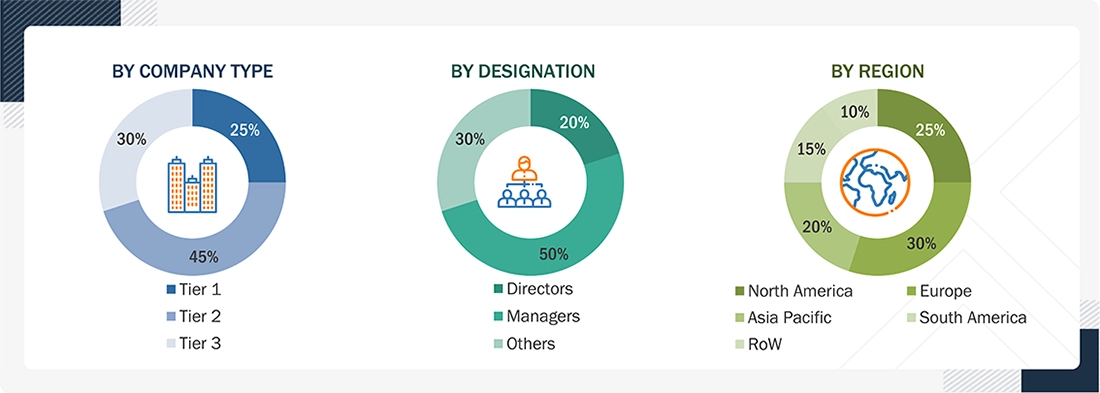
Note: The three tiers of the companies are defined based on their total revenues in 2025, as per the availability of financial data: Tier 1: Revenue > USD 1 billion; Tier 2: USD 100 million to 1 billion; Tier 3: Revenue < USD 100 million.
|
COMPANY NAME |
DESIGNATION |
|
UPL (India) |
General Manager |
|
BASF SE (Germany) |
Sales Manager |
|
Syngenta Group (Switzerland) |
Manager |
|
Sumitomo Chemical Co., Ltd. (Japan) |
Sales Manager |
|
PI Industries (India) |
Marketing Manager |
To know about the assumptions considered for the study, download the pdf brochure
Market Size Estimation
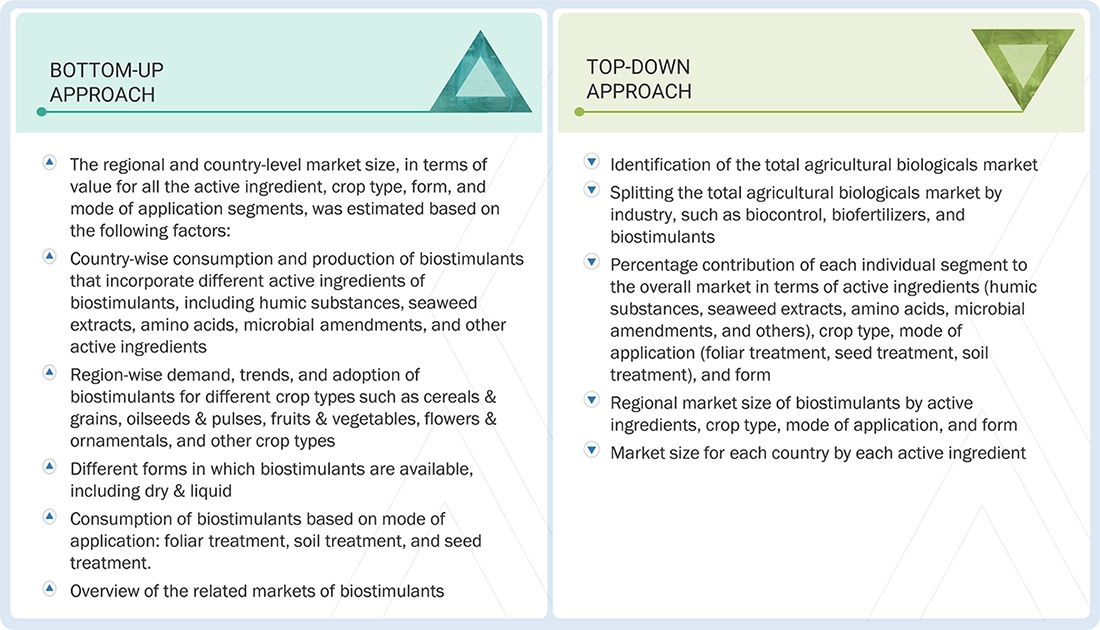
Both the top-down and bottom-up approaches were used to estimate and validate the total size of the biostimulants market. These approaches were also used extensively to determine the size of various subsegments in the market. The research methodology used to estimate the market size includes the following details:
- The key players in the industry and the overall markets were identified through extensive secondary research.
- All shares, splits, and breakdowns were determined using secondary sources and verified through primary sources.
- All possible parameters that affect the market covered in this research study were accounted for, viewed in extensive detail, verified through primary research, and analyzed to obtain final quantitative and qualitative data.
- The research included the study of reports, reviews, and newsletters of top market players, along with extensive interviews for opinions from leaders, such as CEOs, directors, and marketing executives.
Biostimulants Market : Top-Down and Bottom-Up Approach
Data Triangulation
After arriving at the overall market size from the estimation process explained above, the total market was split into several segments and subsegments. The data triangulation and market breakdown procedures were employed, wherever applicable, to estimate the overall biostimulants market and arrive at the exact statistics for all segments and subsegments. The data was triangulated by studying various factors and trends from the demand and supply sides. The market size was also validated using both the top-down and bottom-up approaches.
Market Definition
According to the European Biostimulants Industry Council (EBIC), “plant biostimulants contain substance(s) and/or microorganisms whose function, when applied to plants or the rhizosphere, is to stimulate natural processes to enhance/benefit nutrient uptake, nutrient efficiency, tolerance to abiotic stress, and crop quality.”
According to the Agriculture and Horticulture Development Board (AHDB), a plant biostimulant contains substances and/or microorganisms that stimulate natural processes. The effect will be independent of its nutrient content and will improve one or more of the following characteristics of the plant or the plant rhizosphere:
- Nutrient-use efficiency
- Tolerance to environmental stress
- Quality traits
- Availability of nutrients in the soil or rhizosphere
Key Stakeholders
- Manufacturers, dealers, and suppliers of biostimulants
- Government bodies and research organizations
- Intermediate suppliers, such as retailers, wholesalers, and distributors
- Agriculture and Horticulture Development Board (AHDB)
- European Biostimulants Industry Council (EBIC)
- Biological Products Industry Alliance (BPIA)
- Regulatory bodies and institutions
- Canadian Food Inspection Agency (CFIA)
- US Food and Drug Administration (FDA)
- US Environmental Protection Agency (US EPA)
Report Objectives
- To determine and project the size of the biostimulants market with respect to active ingredient, form, mode of application, crop type, and region segments in terms of value over five years, ranging from 2026 to 2031
- To identify the attractive opportunities in the market by determining the largest and fastest-growing segments across regions
- To provide detailed information about the key factors influencing market growth (drivers, restraints, opportunities, and challenges)
- To analyze the opportunities in the market for stakeholders and provide details of the competitive landscape for market leaders
- To analyze the micromarkets with respect to individual growth trends, prospects, and their contribution to the total market
- To identify and profile the key players in the biostimulants market
- To understand the competitive landscape and identify the major growth strategies adopted by players across the key regions
Available customizations:
With the given market data, MarketsandMarkets offers customizations according to company-specific scientific needs.
The following customization options are available for the report:
Product Analysis
-
Product Matrix, which gives a detailed comparison of the product portfolio of each company
Gegraphical Analysis
With the given market data, MarketsandMarkets offers customizations according to company-specific scientific needs.
- Further breakdown of the Rest of Europe biostimulants market into key countries.
- Further breakdown of the Rest of Asia Pacific biostimulants market into key countries.
- Further breakdown of the Rest of South America biostimulants market into key countries.
Company Information
-
Detailed analyses and profiling of additional market players (up to five)
Key Questions Addressed by the Report
What is the current size of the global biostimulants market?
The biostimulants market is projected to reach USD 8.77 billion by 2031 from USD 4.97 billion in 2026, at a CAGR of 12.0% from 2026 to 2031.
Which region dominates the global biostimulants market?
Europe currently dominates the global biostimulants market due to strong regulatory support for sustainable farming and widespread adoption of organic agriculture practices.
Which region is expected to witness the fastest growth?
The Asia Pacific region is expected to experience significant growth because of increasing agricultural modernization, rising awareness among farmers, and government initiatives promoting sustainable agriculture.
What factors are driving the growth of the biostimulants market?
Major growth drivers include increasing adoption of sustainable agriculture, rising demand for organic food products, concerns regarding soil degradation, reduction in chemical fertilizer usage, and advancements in microbial and seaweed-based formulations.
Which segment is expected to witness the highest growth rate?
The microbial amendments segment is expected to register the highest CAGR during the forecast period because of increasing interest in biological crop enhancement solutions and soil health management.
What are the major challenges faced by the biostimulants market?
Key challenges include lack of standardized regulations, commercialization of low-quality products, high R&D costs, and limited product awareness in developing regions.
Who are the leading companies in the biostimulants market?
Major companies operating in the market include BASF SE, Bayer AG, FMC Corporation, Syngenta Group, Corteva, UPL, and Sumitomo Chemical Co., Ltd.
What opportunities exist in the biostimulants market?
Emerging opportunities include development of crop-specific formulations, precision agriculture integration, expansion in emerging economies, and innovations in microbial and seaweed-derived products.
Fact checked
Personalize This Research
- Triangulate with your Own Data
- Get Data as per your Format and Definition
- Gain a Deeper Dive on a Specific Application, Geography, Customer or Competitor
- Any level of Personalization
Let Us Help You
- What are the Known and Unknown Adjacencies Impacting the Biostimulants Market
- What will your New Revenue Sources be?
- Who will be your Top Customer; what will make them switch?
- Defend your Market Share or Win Competitors
- Get a Scorecard for Target Partners

Custom Market Research Services
We Will Customise The Research For You, In Case The Report Listed Above Does Not Meet With Your Requirements
Get 10% Free CustomisationTESTIMONIALS

Business Innovation Director
US Based Leading Agribusiness,
Food and Ingredients ManufacturerI highly appreciate the team's efficiency for a well conducted study that helped us clarify some blind spots in food and agricultural niche markets. Although compiling information for B2B markets is very difficult, the MnM team pulled out the task successfully. The quality of research, level of insights, and responsiveness of team were commendable.
- US Biostimulants Market
- Canada Biostimulants Market
- Mexico Biostimulants Market
- France Biostimulants Market
- Germany Biostimulants Market
- Italy Biostimulants Market
- Spain Biostimulants Market
- UK Biostimulants Market
- China Biostimulants Market
- Japan Biostimulants Market
- India Biostimulants Market
- Australia Biostimulants Market
- Brazil Biostimulants Market
- Argentina Biostimulants Market
Growth opportunities and latent adjacency in Biostimulants Market






Robert
Jul, 2026
How do biostimulants support sustainable agriculture?.
Justin
Jul, 2026
How are technological advancements shaping the future of the biostimulants industry?.
Edward
Jul, 2026
Retrieving data. Wait a few seconds and try to cut or copy again..
Edward
Jul, 2026
Which factors are driving innovation in microbial biostimulants?.
Daniel
Jul, 2026
How are biofertilizers and biopesticides influencing the growth of the biostimulants market?.