Wi-Fi as a Service Market by Service Type (Fully Managed, Partially Managed, Subscription-based), Location Type (Indoor, Outdoor), Enterprise Size (Large Enterprises, SMEs), End User (Consumer, Enterprise) - Global Forecast to 2030

icon1
USD 21.96 BN
MARKET SIZE, 2030
icon2
CAGR 18.8%
(2025-2030)
icon3
261
REPORT PAGES
icon4
250
MARKET TABLES

OVERVIEW

wi-fi-as-a-service-market Overview

Source: Secondary Research, Interviews with Experts, MarketsandMarkets Analysis

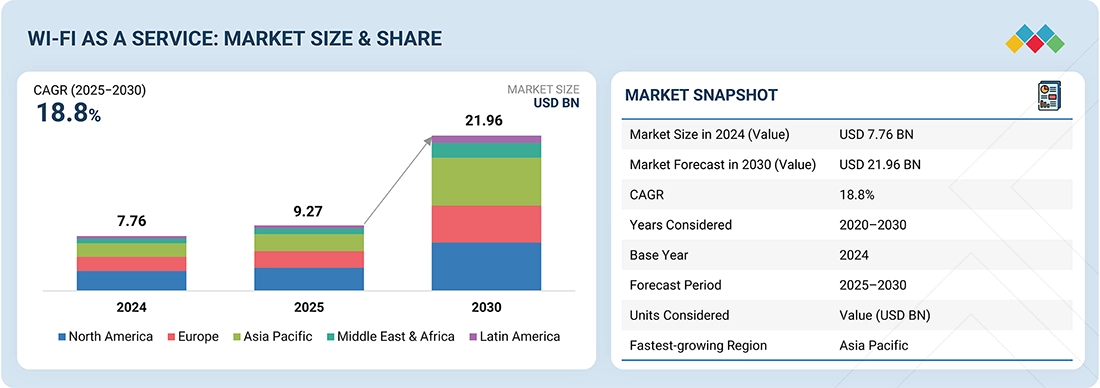
The Wi-Fi as a Service market is projected to grow from USD 9.27 billion in 2025 to USD 21.96 billion by 2030 at a compounded annual growth rate (CAGR) of 18.8% during the forecast period. The increasing demand for cost-effective and scalable Wi-Fi solutions, as organizations shift from traditional CapEx models to OpEx-based subscription models that offer predictable costs and reduced infrastructure burden, is driving the market growth. The growing adoption of cloud-managed Wi-Fi is also fueling market expansion, enabling centralized management, remote troubleshooting, and seamless scalability, particularly for distributed enterprises.

KEY TAKEAWAYS

  • BY ENTERPRISE SIZE
    The WaaS market has been segmented into small and medium enterprises (SMEs) and large enterprises based on enterprise size. In terms of organization size, the study of the WaaS market is important as it directly impacts the adoption of WaaS across the globe. The adoption of WaaS in Small and Medium Enterprises is higher than in large enterprises. This is because most large enterprises have already implemented traditional on-premises Wi-Fi services and are reluctant to replace their legacy systems. Increasing mobility in communication and the growing trend of the adoption of Bring Your Own Device (BYOD) in organizations have led to the rise in cost-effective WaaS by SMEs globally. Ease of deployment and availability of several vendors of Wi-Fi services are some of the factors leading to the adoption of WaaS in SMEs.
  • BY END USER
    The end user segment is categorized into consumer and enterprise segment, each with distinct needs and usage patterns. This segmentation helps in understanding demand drivers, service expectations, and technology adoption across different user bases. While consumers primarily seek reliable, plug-and-play Wi-Fi solutions for personal, home, and small office use, enterprises require robust, scalable, and secure wireless networks to support complex business operations. The growing digital dependence across both segments is fueling the adoption of WaaS, with tailored offerings designed to meet the unique connectivity, management, and security needs of each user type. Based on enterprise, Wi-Fi as a service market has been segmented into education, retail & eCommerce, travel and hospitality, healthcare and life sciences, BFSI, transportation and logistics, IT and ITeS, manufacturing, government and public sector, and others enterprises.
  • BY REGION
    Asia Pacific is projected to register the highest CAGR of 23.3%, fueled by some of the world's fastest-growing economies, including China, India, and Japan. These areas are known for their young, tech-savvy populations that are driving a demand for digital transformation.
  • COMPETITIVE LANDSCAPE
    The major market players have adopted both organic and inorganic strategies including partnerships, collaborations, and investments. For instance, in October 2024, e& announced the launch of its Managed Wi-Fi 7 services. Designed to meet the growing demands of businesses, this next-generation wireless solution offers up to four times faster speeds and twice the capacity of previous Wi-Fi generations, delivering enhanced operational efficiency and scalability.

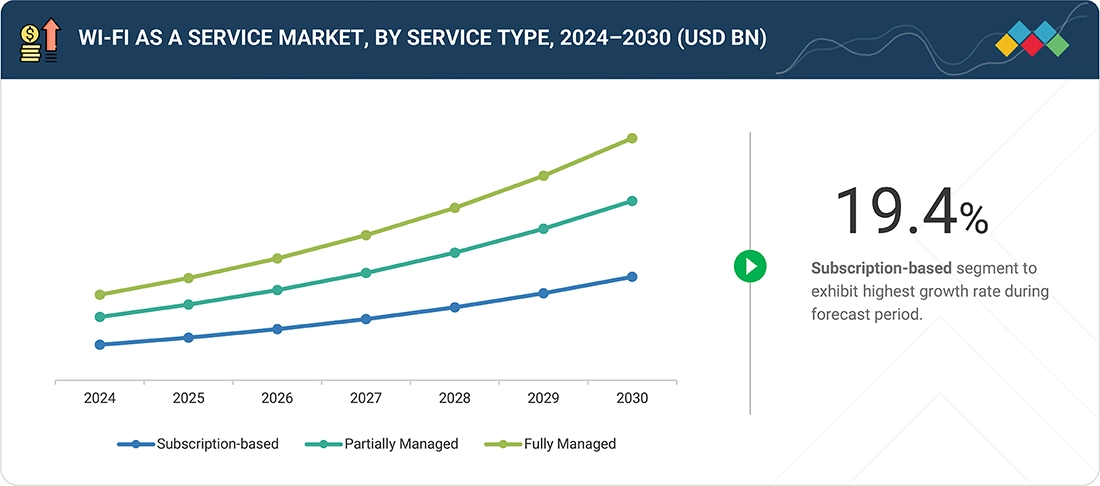
The Wi-Fi as a Service market has been broadly categorized into fully managed, partially managed, and subscription-based services based on service type, each addressing different levels of control, complexity, and customer requirements. Fully managed services provide end-to-end management of Wi-Fi infrastructure, including network design, deployment, monitoring, and support, ideal for organizations seeking minimal in-house involvement. Partially managed services allow clients to retain some control over network operations while leveraging external expertise for specific tasks such as troubleshooting or performance optimization. Subscription-based services, on the other hand, offer flexible, cost-effective access to Wi-Fi solutions through recurring payment models, making them attractive to small businesses, startups, and cost-conscious enterprises.

TRENDS & DISRUPTIONS IMPACTING CUSTOMERS' CUSTOMERS

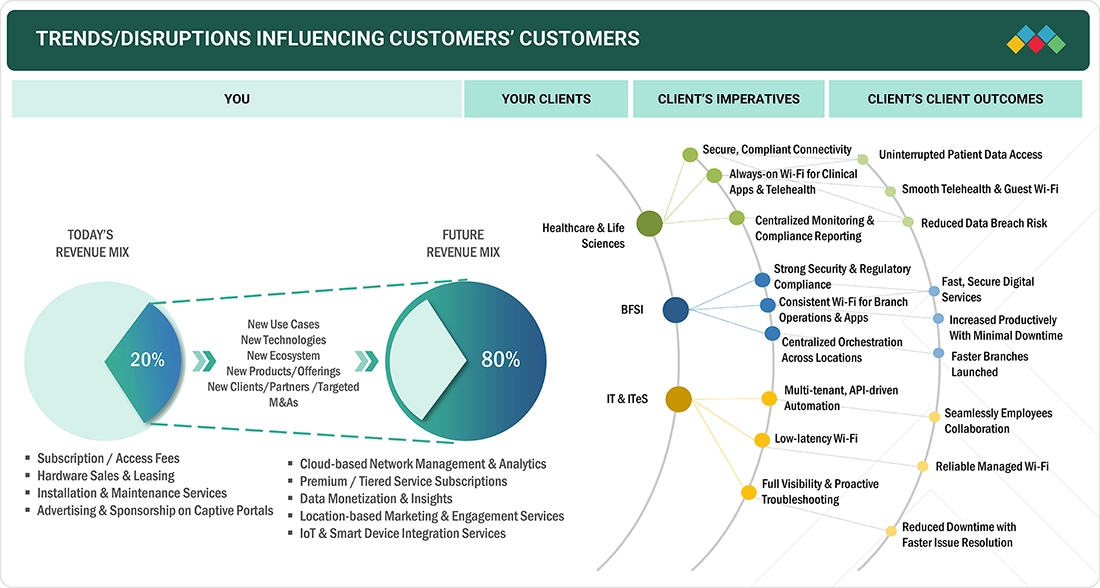
The Wi-Fi as a Service market is undergoing significant transformation, with several trends and disruptions reshaping how customers manage and consume wireless connectivity. One major shift is the move from capital expenditure (CAPEX) to operational expenditure (OPEX) models, enabling businesses to adopt scalable, subscription-based Wi-Fi solutions that reduce upfront investment and improve cash flow. The increasing complexity of networks and the shortage of skilled IT personnel are driving demand for managed services, prompting enterprises to outsource Wi-Fi operations to expert providers. Additionally, the growing need for real-time data processing, especially with the rise of IoT and edge computing, is pushing WaaS vendors to deliver low-latency, high-performance networks. Security remains a top concern, with enterprises requiring advanced features such as zero trust, device segmentation, and automated threat detection. At the same time, cloud-based network management and AI-driven analytics are enhancing visibility, optimization, and proactive troubleshooting. However, disruptions such as hardware supply chain constraints, evolving compliance requirements, and vendor lock-in risks are affecting deployment timelines and flexibility.
wi-fi-as-a-service-market Disruptions

Source: Secondary Research, Interviews with Experts, MarketsandMarkets Analysis

MARKET DYNAMICS

Drivers
Impact
Level
  • Digital transformation initiatives in businesses, paving way for Wi-Fi networks
  • Ease of Wi-Fi infrastructure management and remote troubleshooting
RESTRAINTS
Impact
Level
  • Data protection and confidentiality concerns
  • Slower backups and restores
OPPORTUNITIES
Impact
Level
  • Shift from CapEx to OpEx models
  • Increasing demand for Wi-Fi as a Service in small, medium, and distributed companies
CHALLENGES
Impact
Level
  • Poor user experience in high-density environments
  • Lack of skilled workforce

Source: Secondary Research, Interviews with Experts, MarketsandMarkets Analysis

Driver: Rising adoption of smartphones and wireless devices

The rising adoption of smartphones and wireless devices is a major driver for the growth of the Wi-Fi as a Service (WaaS) market. With increasing smartphone penetration and the widespread use of tablets, laptops, wearables, and IoT devices across both consumer and enterprise environments, there is a growing need for fast, reliable, and scalable wireless connectivity. Traditional Wi-Fi infrastructure often falls short in managing the high volume and dynamic behavior of connected devices, particularly in dense or distributed settings such as campuses, retail chains, hospitals, and warehouses. WaaS addresses this challenge by offering cloud-managed, flexible, and centrally controlled Wi-Fi solutions that can efficiently support large numbers of endpoints. Additionally, the Bring Your Own Device (BYOD) trend in workplaces, along with rising expectations for uninterrupted, high-performance wireless access in public and commercial spaces, further drives demand for managed Wi-Fi services. As connected devices become central to business operations and consumer experiences, WaaS emerges as a strategic solution to deliver seamless connectivity, enhanced user experience, and simplified network management.

Restraint: Data protection and confidentiality concerns

Data protection and confidentiality concerns act as a significant restraint in the Wi-Fi as a Service (WaaS) market, particularly for organizations operating in highly regulated sectors such as finance, healthcare, and government. Since WaaS relies on cloud-based platforms and centralized network management, enterprises often worry about the security of sensitive data, including user credentials, usage logs, and operational insights. The multi-tenant architecture of many WaaS solutions raises fears of data breaches, unauthorized access, and accidental exposure due to misconfigurations or shared infrastructure. Additionally, concerns around data residency and compliance with privacy regulations such as GDPR, HIPAA, or India's DPDP Act further complicate adoption, especially when data is stored across multiple geographic regions. The lack of transparency in service-level agreements regarding data ownership, access rights, and breach response protocols also adds to enterprise hesitation. Furthermore, integrations with third-party services and the involvement of multiple vendors in the service delivery chain can introduce security risks and obscure accountability. As a result, despite the operational and financial advantages WaaS offers, these data protection and confidentiality issues remain a critical barrier to broader market adoption.

Opportunity: Shift from CapEx to OpEx models

The increasing shift from capital expenditure (CapEx) to operational expenditure (OpEx) models presents a major opportunity for the Wi-Fi as a Service (WaaS) market. Traditionally, enterprises have invested heavily in purchasing and maintaining on-premise Wi-Fi infrastructure, which involves high upfront costs and ongoing maintenance. WaaS transforms this approach by offering Wi-Fi connectivity through a subscription-based model, allowing organizations to access the latest wireless technologies without the burden of asset ownership. This OpEx-driven approach provides cost predictability, faster return on investment, and greater scalability, making it especially attractive to small and medium-sized businesses. It also reduces the complexity of network management, as service providers handle installation, monitoring, updates, and security. As more businesses embrace cloud-first strategies and seek agile IT consumption models, the demand for OpEx-based WaaS solutions continues to rise, enabling providers to offer bundled services, drive recurring revenues, and expand into new customer segments.

Challenge: Lack of a skilled workforce

The lack of a skilled workforce poses a significant challenge to the growth and adoption of Wi-Fi as a Service (WaaS). As WaaS evolves to include advanced capabilities such as cloud management, AI-driven analytics, IoT integration, and enhanced cybersecurity protocols, it demands a highly specialized talent pool proficient in wireless networking, cloud orchestration, and compliance management. However, there is a noticeable shortage of professionals who possess this blend of expertise, particularly in emerging markets and Tier 2 and 3 cities. This talent gap leads to delays in deployment, increased reliance on expensive in-house training or third-party services, and higher operational costs for providers. Moreover, academic institutions have been slow to align their curricula with evolving industry needs, exacerbating the shortage of job-ready graduates. The lack of skilled personnel not only hampers service quality and scalability but also restricts innovation and customization for vertical-specific requirements, ultimately impacting customer satisfaction and limiting the competitive landscape of the WaaS market.

wi-fi-as-a-service-market: COMMERCIAL USE CASES ACROSS INDUSTRIES

COMPANY USE CASE DESCRIPTION BENEFITS
Radford College is an independent co-educational school based in Canberra that has deployed Extreme Wi-Fi 6 managed by ExtremeCloud IQ to enable a digital learning environment. It supports teachers and students for e-learning by offering a secure, strong, flexible modular infrastructure. Offered flexible, secure, consistent network connection to ensure internet connectivity all over the campus. Improved real-time device visibility helps diagnose problems and errors rapidly and resolve issues quickly. Offered Wi-Fi services at a large-scale to support thousands of users and devices.
Ohso Technical is a service provider based in London. The company has adopted Wi-Fi services offered by Ubiquiti to improve operation in the commercial environment. Ubiquiti has enhanced the network efficiency and provides 5GHz wireless coverage throughout the campus. Wireless connectivity issue has been resolved. Staff members received fewer complaints after deployment. The company offered services to their clients at a low cost and with less disruption to their business operations.
Anord Mardix has adopted Wi-Fi services offered by Redway Networks to improve production efficiency at its three production facilities in the UK. This new service has increased the network for its employees and provided seamless connectivity throughout the campus. The company has deployed new Wi-Fi with Redway Networks to support internet connectivity in 10,100 sq./ft production area in Blackburn and 140,000 sq./ft of fabrication and production areas across two sites in Kendal. Anord Mardix is now working on robust Wi-Fi services that enhance the workforce's work efficiency. Enabled remote testing through Wi-Fi in high-quality HD video. Quick error detection and troubleshooting remotely have saved time.
East Bernard is an independent educational school based in n East Bernard, Texas. The school has deployed a high-performance Wi-Fi foundation to enable classroom technology. It also supports BYOD policy and offers seamless internet connectivity to BYOD devices such as tablets given by districts. The school serves approximately 1,000 students and 130 employees. They need internet connectivity in 8 buildings with up to 300 devices connected to Wi-Fi. ADTRAN enabled BYOD policy in the East Bernard Independent School and provides extensive Wi-Fi connectivity. Increased network flexibility and reduced load on the IT department by offering wireless network management tools and handling daily internet traffic. ADTRAN has offered cost-effective and cost-controlled Wi-Fi services in districts' budget to schools by eliminating extra hardware needs.

Logos and trademarks shown above are the property of their respective owners. Their use here is for informational and illustrative purposes only.

MARKET ECOSYSTEM

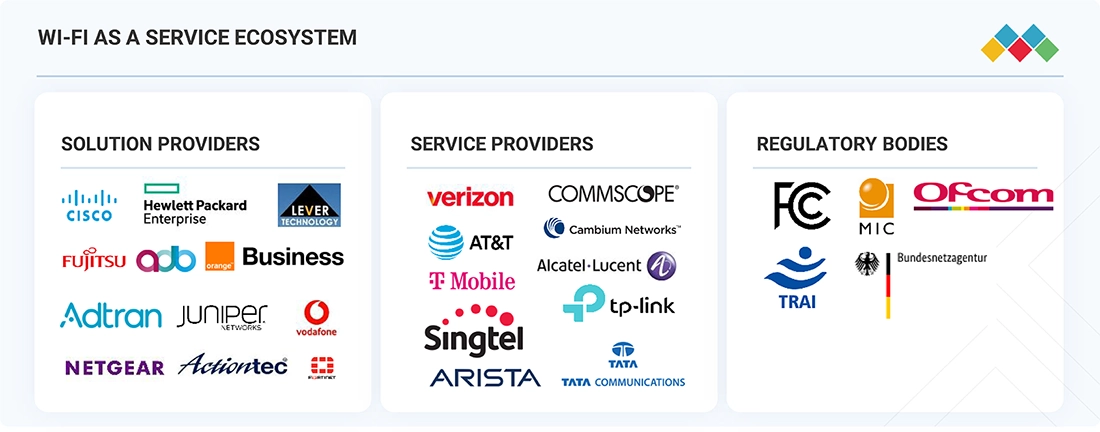
Prominent players in this market include well-established, financially stable Wi-Fi as a Service providers, as well as regulatory bodies. These companies have been operating in the market for several years and possess a diversified product portfolio and state-of-the-art technologies. The vendors are involved in various partnerships and collaborations to develop comprehensive solutions that address a wide range of requirements
wi-fi-as-a-service-market Ecosystem

Logos and trademarks shown above are the property of their respective owners. Their use here is for informational and illustrative purposes only.

MARKET SEGMENTS
wi-fi-as-a-service-market Segments

Source: Secondary Research, Interviews with Experts, MarketsandMarkets Analysis

Wi-Fi as a Service Market, By Service Type

The subscription-based segment accounted for the largest market size in 2024. Subscription-based Wi-Fi services are a flexible and cost-efficient delivery model in which organizations pay a recurring fee, monthly, quarterly, or annually, to access Wi-Fi infrastructure and services without incurring high upfront capital expenditure. Under this model, the service provider typically offers a bundled package that may include Wi-Fi hardware, software licenses, network configuration, security features, remote monitoring, and technical support. These services are particularly attractive to small and medium-sized businesses (SMBs), startups, co-working spaces, SOHOs (Small Office/Home Office), and temporary setups such as events or pop-up stores, where budget constraints, limited IT resources, and the need for fast deployment are common. Subscription-based Wi-Fi solutions are commonly used to deliver guest Wi-Fi, manage employee access, enable cloud-based applications, and run customer engagement platforms through captive portals. One of the primary advantages is the shift from CapEx to OpEx, allowing businesses to manage expenses predictably and scale services as needed. This model also reduces the burden of hardware maintenance, firmware updates, and network troubleshooting, as these are typically handled by the provider

REGION

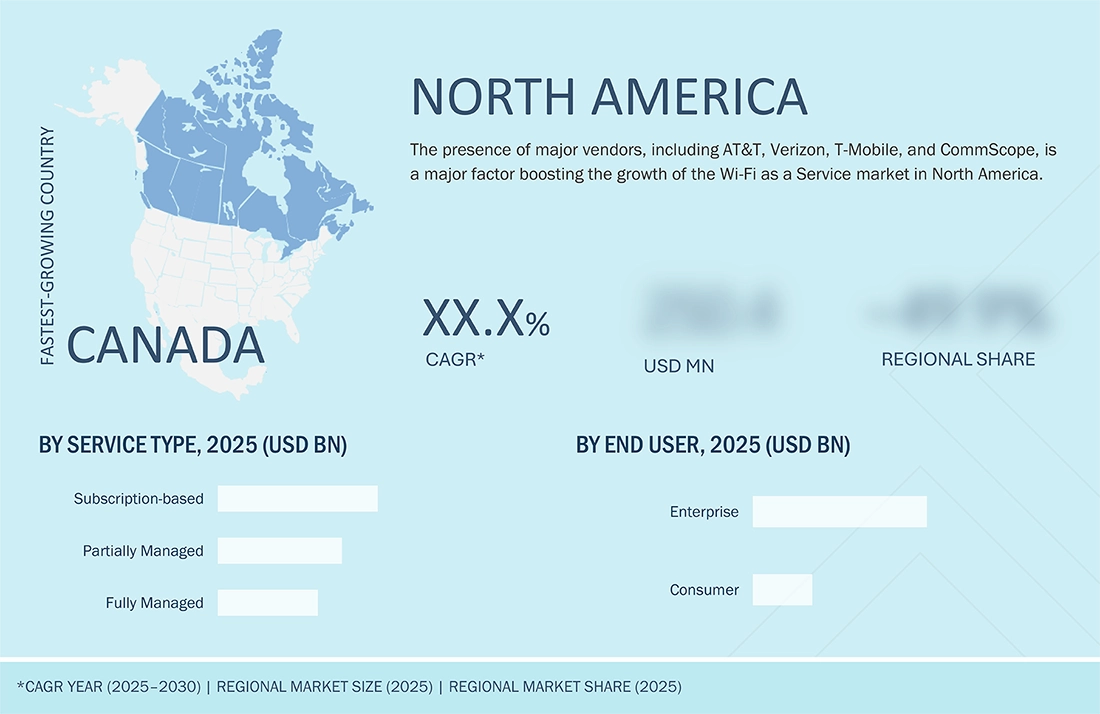
North America is estimated to account for the largest market share during the forecast period

North America holds the leading position in the global Wi-Fi as a Service (WaaS) market, driven by its advanced digital infrastructure, high broadband penetration, and strong enterprise adoption of cloud-based networking solutions. The presence of major WaaS providers such as AT&T, Verizon, and T-Mobile, coupled with a mature IT ecosystem, has accelerated the deployment of managed and subscription-based Wi-Fi services across key industries such as IT & ITeS, BFSI, healthcare, retail, and education. Enterprises in the US and Canada are leveraging WaaS to support hybrid work environments, enhance network flexibility, and optimize operational costs. The growing demand for seamless connectivity, proliferation of IoT devices, and the increasing need for secure, scalable wireless networks further contribute to regional growth. Moreover, supportive regulatory frameworks, a skilled workforce, and rising digital transformation initiatives among SMEs continue to strengthen North America’s dominance in the WaaS market
wi-fi-as-a-service-market Region

wi-fi-as-a-service-market: COMPANY EVALUATION MATRIX

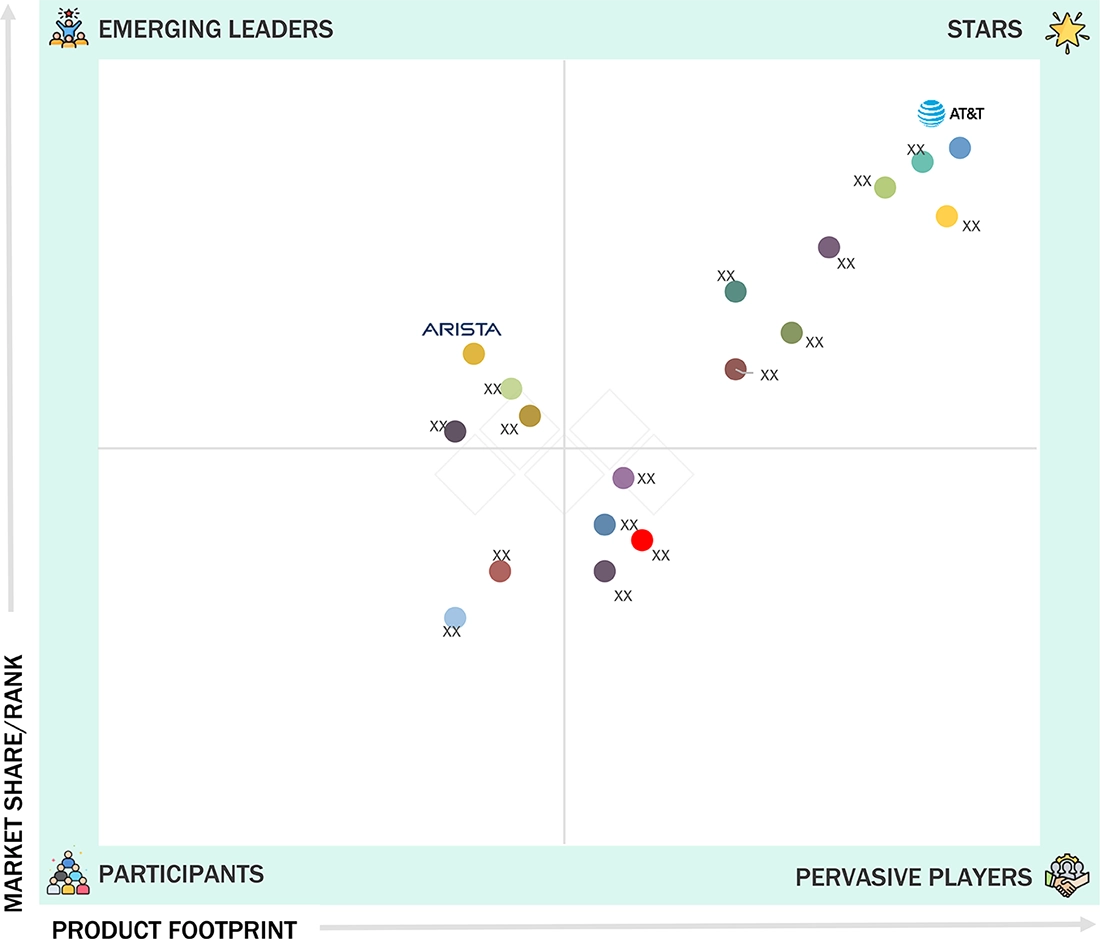
In the Wi-Fi as a Service market matrix, AT&T (Star) leads with a strong market presence and comprehensive managed Wi-Fi portfolio, driving widespread adoption across industries such as healthcare, education, and enterprise. Arista Networks (Emerging leader) is gaining momentum with its cloud-driven networking solutions, delivering agility and scalability to enterprises embracing digital transformation
wi-fi-as-a-service-market Evaluation Metrics

Source: Secondary Research, Interviews with Experts, MarketsandMarkets Analysis

MARKET SCOPE

REPORT METRIC DETAILS
Market Size in 2024 (Value) USD 7.76 Billion
Market Forecast in 2030 (Value) USD 21.96 Billion
Growth Rate CAGR of 18.8% from 2025-2030
Years Considered 2020–2030
Base Year 2024
Forecast Period 2025–2030
Units Considered Value (USD Million/Billion)
Report Coverage Revenue forecast, company ranking, competitive landscape, growth factors, and trends
Segments Covered By service type, location type, enterprise size, end user, and region
Regions Covered North America, Europe, Asia Pacific, Middle East & Africa, and Latin America

WHAT IS IN IT FOR YOU: wi-fi-as-a-service-market REPORT CONTENT GUIDE
wi-fi-as-a-service-market Content Guide

RECENT DEVELOPMENTS

  • May 2025 : AT&T reached an agreement to acquire substantially all of Lumen’s Mass Markets fiber business for USD 5.75 billion, subject to purchase price adjustments, in an all-cash transaction that will expand investment in critical US connectivity infrastructure, create new middle-class jobs, and accelerate high-speed fiber internet access to millions of Americans.
  • May 2025 : TP-Link announced the launch of its first Tri-Band Six-Stream Omnidirectional BE11000 Outdoor Access Point EAP772-Outdoor. With its 6 GHz band unlocked by AFC, this device achieves true tri-band omnidirectional coverage, surpassing other dual-band products currently on the market.
  • April 2025 : T-Mobile partnered with EQT, to acquire fiber-to-the-home provider Lumos. The partnership will expand fiber to millions of customers and bring even more capable broadband options, greater value, and benefits to customers.
  • October 2024 : e& announced the launch of its Managed Wi-Fi 7 services. Designed to meet the growing demands of businesses, this next-generation wireless solution offers up to four times faster speeds and twice the capacity of previous Wi-Fi generations, delivering enhanced operational efficiency and scalability.
  • September 2024 : Nokia partnered with RUCKUS Networks, a CommScope business, to create an innovative solution for deploying seamless in-building and campus-wide connectivity, which is uniquely tailored to the needs of diverse industry verticals.


Table of Contents

Exclusive indicates content/data unique to MarketsandMarkets and not available with any competitors.

TITLE
PAGE NO
1
INTRODUCTION


28
2
RESEARCH METHODOLOGY


32
3
EXECUTIVE SUMMARY


43
4
PREMIUM INSIGHTS


46
5
MARKET OVERVIEW AND INDUSTRY TRENDS
The shift to OPEX models and digital transformation is redefining Wi-Fi as a service.


49
 
5.1
INTRODUCTION


5.2
MARKET DYNAMICS


5.2.1
DRIVERS


5.2.1.1
DIGITAL TRANSFORMATION INITIATIVES IN BUSINESSES


5.2.1.2
RISING ADOPTION OF SMARTPHONES AND WIRELESS DEVICES


5.2.1.3
EASE OF WI-FI INFRASTRUCTURE MANAGEMENT AND REMOTE TROUBLESHOOTING


5.2.1.4
SAVINGS IN CAPEX AND OPEX WITH ‘AS A SERVICE’ MODEL


5.2.1.5
INCREASING ADOPTION OF BYOD AND CYOD TREND AMONG ORGANIZATIONS


5.2.2
RESTRAINTS


5.2.2.1
DATA PROTECTION AND CONFIDENTIALITY CONCERNS


5.2.2.2
SLOWER BACKUPS AND RESTORES


5.2.3
OPPORTUNITIES


5.2.3.1
SHIFT FROM CAPEX TO OPEX MODELS


5.2.3.2
INCREASING DEMAND FOR WAAS IN SMALL, MEDIUM, AND DISTRIBUTED COMPANIES


5.2.3.3
EXPANSION OF SMART CITIES


5.2.4
CHALLENGES


5.2.4.1
POOR USER EXPERIENCE IN HIGH-DENSITY ENVIRONMENTS


5.2.4.2
LACK OF SKILLED WORKFORCE
 
 
5.3
INDUSTRY TRENDS


5.3.1
HISTORY OF WI-FI AS A SERVICE MARKET


5.3.1.1
2000–2010


5.3.1.2
2010–2020


5.3.1.3
2021–PRESENT


5.3.2
TRENDS/DISRUPTIONS IMPACTING CUSTOMER BUSINESS


5.3.3
PRICING ANALYSIS


5.3.3.1
AVERAGE SELLING PRICE OF KEY PLAYERS, BY SERVICE TYPE


5.3.3.2
INDICATIVE PRICING ANALYSIS OF WI-FI AS A SERVICE


5.3.4
SUPPLY CHAIN ANALYSIS


5.3.5
ECOSYSTEM ANALYSIS


5.3.6
TECHNOLOGY ANALYSIS


5.3.6.1
KEY TECHNOLOGIES


5.3.6.2
COMPLEMENTARY TECHNOLOGIES


5.3.6.3
ADJACENT TECHNOLOGIES


5.3.7
PORTER’S FIVE FORCES ANALYSIS


5.3.7.1
THREAT OF NEW ENTRANTS


5.3.7.2
THREAT OF SUBSTITUTES


5.3.7.3
BARGAINING POWER OF SUPPLIERS


5.3.7.4
BARGAINING POWER OF BUYERS


5.3.7.5
INTENSITY OF COMPETITIVE RIVALRY


5.3.8
KEY STAKEHOLDERS AND BUYING CRITERIA


5.3.8.1
KEY STAKEHOLDERS IN BUYING PROCESS


5.3.8.2
BUYING CRITERIA


5.3.9
PATENT ANALYSIS


5.3.9.1
METHODOLOGY


5.3.10
USE CASES


5.3.10.1
CASE STUDY 1: DEPLOYMENT OF EXTREME NETWORKS WI-FI SERVICE TO SUPPORT DIGITAL LEARNING


5.3.10.2
CASE STUDY 2: GHELAMCO STADIUM DEPLOYS WI-FI TO IMPROVE FAN EXPERIENCE


5.3.10.3
CASE STUDY 3: DEPLOYMENT OF WI-FI SERVICE PROVIDED BY ADTRAN TO SUPPORT BYOD POLICY


5.3.10.4
CASE STUDY 4: DEPLOYMENT OF EXTREME NETWORKS WI-FI SERVICE TO SUPPORT DIGITAL LEARNING


5.3.10.5
CASE STUDY 5: ANORD MARDIX USES REDWAY NETWORKS WI-FI TO CREATE CITY-WIDE NETWORK ACCESS


5.3.11
KEY CONFERENCES AND EVENTS, 2025-2026


5.3.12
CURRENT AND EMERGING BUSINESS MODELS


5.3.13
BEST PRACTICES OF WI-FI AS A SERVICE MARKET


5.3.14
TOOLS, FRAMEWORKS, AND TECHNIQUES


5.3.15
REGULATORY BODIES, GOVERNMENT AGENCIES, AND OTHER ORGANIZATIONS


5.3.15.1
NORTH AMERICA


5.3.15.2
EUROPE


5.3.15.3
ASIA PACIFIC


5.3.15.4
MIDDLE EAST & AFRICA


5.3.15.5
LATIN AMERICA


5.3.16
FUTURE LANDSCAPE OF WI-FI AS A SERVICE MARKET


5.3.16.1
WI-FI AS A SERVICE: TECHNOLOGY ROADMAP TILL 2030


5.3.16.2
SHORT-TERM ROADMAP (2025–2026)


5.3.16.3
MID-TERM ROADMAP (2027–2028)


5.3.16.4
LONG-TERM ROADMAP (2029–2030)


5.3.17
INVESTMENT AND FUNDING SCENARIO


5.3.18
INTRODUCTION TO ARTIFICIAL INTELLIGENCE AND GENERATIVE AI


5.3.18.1
IMPACT OF GENERATIVE AI ON WI-FI AS A SERVICE


5.3.18.2
USE CASES OF GENERATIVE AI IN WI-FI AS A SERVICE


5.3.18.3
FUTURE OF GENERATIVE AI IN WI-FI AS A SERVICE


5.3.19
IMPACT OF 2025 US TARIFF – WI-FI AS A SERVICE MARKET


5.3.19.1
INTRODUCTION


5.3.19.2
KEY TARIFF RATES


5.3.19.3
PRICE IMPACT ANALYSIS


5.3.19.4
IMPACT ON COUNTRY/REGION


5.3.19.5
IMPACT ON VERTICALS
 
6
WI-FI AS A SERVICE MARKET, BY SERVICE TYPE
Market Size & Growth Rate Forecast Analysis to 2030 in USD Million | 8 Data Tables


89
 
6.1
INTRODUCTION


6.1.1
SERVICE TYPE: WI-FI AS A SERVICE MARKET DRIVERS


6.2
FULLY MANAGED


6.2.1
ENHANCED NEED FOR SEAMLESS, SECURE, AND HIGH-PERFORMANCE CONNECTIVITY TO DRIVE MARKET


6.3
PARTIALLY MANAGED


6.3.1
NEED FOR CUSTOMIZABLE NETWORK CONTROL FOR INFRASTRUCTURE AND SUPPORT TO BOOST MARKET


6.4
SUBSCRIPTION-BASED


6.4.1
FLEXIBILITY OF PAY-AS-YOU-GO MODELS FOR AFFORDABLE AND SCALABLE WI-FI ACCESS – KEY DRIVER
 
 
7
WI-FI AS A SERVICE MARKET, BY LOCATION TYPE
Market Size & Growth Rate Forecast Analysis to 2030 in USD Million | 6 Data Tables


95
 
7.1
INTRODUCTION


7.1.1
LOCATION TYPE: WI-FI AS A SERVICE MARKET DRIVERS


7.2
INDOOR


7.2.1
NEED FOR HIGH-SPEED, RELIABLE WI-FI IN DENSE ENVIRONMENTS TO DRIVE MARKET GROWTH


7.3
OUTDOOR


7.3.1
SMART CITY PROJECTS AND WI-FI DEPLOYMENT IN OPEN SPACES AND TRANSPORT HUBS TO FUEL GROWTH
 
 
8
WI-FI AS A SERVICE MARKET, BY ENTERPRISE SIZE
Market Size & Growth Rate Forecast Analysis to 2030 in USD Million | 6 Data Tables


99
 
8.1
INTRODUCTION


8.1.1
ENTERPRISE SIZE: WI-FI AS A SERVICE MARKET DRIVERS


8.2
LARGE ENTERPRISES


8.2.1
DEMAND FOR SCALABLE, SECURE WIRELESS NETWORKS ACROSS MULTIPLE SITES TO DRIVE MARKET


8.3
SMALL AND MEDIUM-SIZED ENTERPRISES


8.3.1
RISING NEED FOR AFFORDABLE, EASY-TO-MANAGE WI-FI WITHOUT HEAVY IT INVESTMENT TO DRIVE MARKET
 
 
9
WI-FI AS A SERVICE MARKET, BY END USER
Market Size & Growth Rate Forecast Analysis to 2030 in USD Million | 28 Data Tables


103
 
9.1
INTRODUCTION


9.1.1
END USER: WI-FI AS A SERVICE MARKET DRIVERS


9.2
CONSUMER


9.2.1
INCREASING SURGE IN SMART HOME AND IOT DEVICE USAGE TO DRIVE MARKET


9.3
ENTERPRISE


9.3.1
RISING DEMAND FOR SCALABLE, CENTRALLY MANAGED WI-FI NETWORKS TO DRIVE MARKET GROWTH


9.3.2
EDUCATION


9.3.3
RETAIL


9.3.4
TRAVEL & HOSPITALITY


9.3.5
HEALTHCARE & LIFE SCIENCES


9.3.6
MANUFACTURING


9.3.7
BFSI


9.3.8
IT & ITES


9.3.9
TRANSPORTATION & LOGISTICS


9.3.10
GOVERNMENT & PUBLIC SECTOR


9.3.11
OTHER ENTERPRISES
 
 
10
WI-FI AS A SERVICE MARKET, BY REGION
Comprehensive coverage of 7 Regions with country-level deep-dive of 12 Countries | 122 Data Tables.


118
 
10.1
INTRODUCTION


10.2
NORTH AMERICA


10.2.1
NORTH AMERICA: MACROECONOMIC OUTLOOK


10.2.2
US


10.2.3
CANADA


10.3
EUROPE


10.3.1
EUROPE: MACROECONOMIC OUTLOOK


10.3.2
UK


10.3.3
GERMANY


10.3.4
FRANCE


10.3.5
ITALY


10.3.6
REST OF EUROPE


10.4
ASIA PACIFIC


10.4.1
ASIA PACIFIC: MACROECONOMIC OUTLOOK


10.4.2
CHINA


10.4.3
JAPAN


10.4.4
SOUTH KOREA


10.4.5
INDIA


10.4.6
REST OF ASIA PACIFIC


10.5
MIDDLE EAST & AFRICA


10.5.1
MIDDLE EAST & AFRICA: MACROECONOMIC OUTLOOK


10.5.2
MIDDLE EAST


10.5.3
AFRICA


10.6
LATIN AMERICA


10.6.1
LATIN AMERICA: MACROECONOMIC OUTLOOK


10.6.2
BRAZIL


10.6.3
MEXICO


10.6.4
REST OF LATIN AMERICA
 
 
11
COMPETITIVE LANDSCAPE
Uncover strategic moves shaping the market dominance of key Wi-Fi as a Service players.


164
 
11.1
INTRODUCTION


11.2
KEY PLAYER STRATEGIES /RIGHT TO WIN, 2021–2024


11.3
REVENUE ANALYSIS, 2020–2024


11.4
MARKET SHARE ANALYSIS OF TOP PLAYERS


11.5
COMPANY EVALUATION MATRIX: KEY PLAYERS, 2024


11.5.1
STARS


11.5.2
EMERGING LEADERS


11.5.3
PERVASIVE PLAYERS


11.5.4
PARTICIPANTS


11.5.5
COMPANY FOOTPRINT: KEY PLAYERS, 2024


11.5.5.1
COMPANY FOOTPRINT


11.5.5.2
REGION FOOTPRINT


11.5.5.3
SERVICE TYPE FOOTPRINT


11.5.5.4
LOCATION TYPE FOOTPRINT
 
 
11.6
STARTUP/SME EVALUATION MATRIX, 2024


11.6.1
PROGRESSIVE COMPANIES


11.6.2
RESPONSIVE COMPANIES


11.6.3
DYNAMIC COMPANIES


11.6.4
STARTING BLOCKS


11.7
COMPETITIVE BENCHMARKING


11.7.1
WAAS MARKET: DETAILED LIST OF KEY STARTUPS/SMES


11.7.2
WAAS MARKET: COMPETITIVE BENCHMARKING OF KEY STARTUPS/SMES


11.8
BRAND/PRODUCT COMPARISON


11.9
COMPANY VALUATION


11.10
COMPETITIVE SCENARIO


11.10.1
PRODUCT LAUNCHES


11.10.2
DEALS
 
 
12
COMPANY PROFILES
In-depth Company Profiles of Leading Market Players with detailed Business Overview, Product and Service Portfolio, Recent Developments, and Unique Analyst Perspective (MnM View)


184
 
12.1
MAJOR PLAYERS


12.1.1
AT&T


12.1.1.1
BUSINESS OVERVIEW


12.1.1.2
PRODUCTS/SOLUTIONS/SERVICES OFFERED


12.1.1.3
RECENT DEVELOPMENTS


12.1.1.4
MNM VIEW


12.1.2
VERIZON


12.1.3
T-MOBILE


12.1.4
E&


12.1.5
SINGTEL


12.1.6
TATA COMMUNICATIONS


12.1.7
COMMSCOPE


12.1.8
ARISTA NETWORKS


12.1.9
TP-LINK


12.1.10
WIFIRST


12.2
OTHER PLAYERS


12.2.1
ALCATEL LUCENT ENTERPRISE


12.2.2
JIO


12.2.3
SPECTRA


12.2.4
TELSTRA


12.2.5
VIASAT


12.2.6
ADTRAN


12.2.7
ALLIED TELESIS


12.2.8
4IPNET


12.3
STARTUPS/SMES


12.3.1
LANCOM SYSTEMS


12.3.2
RUIJIE NETWORKS


12.3.3
DATTO


12.3.4
SUPERLOOP


12.3.5
CAMBIUM NETWORKS


12.3.6
REDWAY NETWORKS


12.3.7
CUCUMBER TONY


12.3.8
TANAZA


12.3.9
EDGECORE NETWORKS
 
 
13
ADJACENT MARKETS AND APPENDIX


225
 
13.1
INTRODUCTION


13.2
WI-FI MARKET – GLOBAL FORECAST TO 2029


13.2.1
MARKET DEFINITION


13.3
NETWORK AS A SERVICE MARKET – GLOBAL FORECAST TO 2027


13.3.1
MARKET DEFINITION
 
 
14
APPENDIX


233
 
14.1
DISCUSSION GUIDE


14.2
KNOWLEDGESTORE: MARKETSANDMARKETS’ SUBSCRIPTION PORTAL


14.3
CUSTOMIZATION OPTIONS


14.4
RELATED REPORTS


14.5
AUTHOR DETAILS


LIST OF TABLES


TABLE 1
USD EXCHANGE RATES, 2022–2025


TABLE 2
FACTOR ANALYSIS


TABLE 3
AVERAGE SELLING PRICE OF KEY PLAYERS, BY SERVICE TYPE, 2025


TABLE 4
INDICATIVE PRICING LEVELS OF KEY PLAYERS, BY LOCATION TYPE, 2024


TABLE 5
WI-FI AS A SERVICE MARKET: ECOSYSTEM


TABLE 6
WI-FI AS A SERVICE MARKET: PORTER’S FIVE FORCES ANALYSIS


TABLE 7
INFLUENCE OF STAKEHOLDERS ON BUYING PROCESS FOR TOP THREE ENTERPRISES (%)


TABLE 8
KEY BUYING CRITERIA FOR TOP THREE ENTERPRISES


TABLE 9
WAAS MARKET: KEY PATENTS, 2022–2024


TABLE 10
WAAS MARKET: KEY CONFERENCES AND EVENTS, 2025–2026


TABLE 11
NORTH AMERICA: REGULATORY BODIES, GOVERNMENT AGENCIES, AND OTHER ORGANIZATIONS


TABLE 12
EUROPE: REGULATORY BODIES, GOVERNMENT AGENCIES, AND OTHER ORGANIZATIONS


TABLE 13
ASIA PACIFIC: REGULATORY BODIES, GOVERNMENT AGENCIES, AND OTHER ORGANIZATIONS


TABLE 14
MIDDLE EAST & AFRICA: REGULATORY BODIES, GOVERNMENT AGENCIES, AND OTHER ORGANIZATIONS


TABLE 15
LATIN AMERICA: REGULATORY BODIES, GOVERNMENT AGENCIES, AND OTHER ORGANIZATIONS


TABLE 16
US ADJUSTED RECIPROCAL TARIFF RATES


TABLE 17
EXPECTED CHANGE IN PRICES AND IMPACT ON END-USE MARKET DUE TO TARIFFS


TABLE 18
WI-FI AS A SERVICE MARKET, BY SERVICE TYPE, 2020–2024 (USD MILLION)


TABLE 19
WI-FI AS A SERVICE MARKET, BY SERVICE TYPE, 2025–2030 (USD MILLION)


TABLE 20
FULLY MANAGED: WI-FI AS A SERVICE MARKET, BY REGION, 2020–2024 (USD MILLION)


TABLE 21
FULLY MANAGED: WI-FI AS A SERVICE MARKET, BY REGION, 2025–2030 (USD MILLION)


TABLE 22
PARTIALLY MANAGED: WI-FI AS A SERVICE MARKET, BY REGION, 2020–2024 (USD MILLION)


TABLE 23
PARTIALLY MANAGED: WI-FI AS A SERVICE MARKET, BY REGION, 2025–2030 (USD MILLION)


TABLE 24
SUBSCRIPTION-BASED: WI-FI AS A SERVICE MARKET, BY REGION, 2020–2024 (USD MILLION)


TABLE 25
SUBSCRIPTION-BASED: WI-FI AS A SERVICE MARKET, BY REGION, 2025–2030 (USD MILLION)


TABLE 26
WI-FI AS A SERVICE MARKET, BY LOCATION TYPE, 2020–2024 (USD MILLION)


TABLE 27
WI-FI AS A SERVICE MARKET, BY LOCATION TYPE, 2025–2030 (USD MILLION)


TABLE 28
INDOOR: WI-FI AS A SERVICE MARKET, BY REGION, 2020–2024 (USD MILLION)


TABLE 29
INDOOR: WI-FI AS A SERVICE MARKET, BY REGION, 2025–2030 (USD MILLION)


TABLE 30
OUTDOOR: WI-FI AS A SERVICE MARKET, BY REGION, 2020–2024 (USD MILLION)


TABLE 31
OUTDOOR: WI-FI AS A SERVICE MARKET, BY REGION, 2025–2030 (USD MILLION)


TABLE 32
WI-FI AS A SERVICE MARKET, BY ENTERPRISE SIZE, 2020–2024 (USD MILLION)


TABLE 33
WI-FI AS A SERVICE MARKET, BY ENTERPRISE SIZE, 2025–2030 (USD MILLION)


TABLE 34
LARGE ENTERPRISES: WI-FI AS A SERVICE MARKET, BY REGION, 2020–2024 (USD MILLION)


TABLE 35
LARGE ENTERPRISES: WI-FI AS A SERVICE MARKET, BY REGION, 2025–2030 (USD MILLION)


TABLE 36
SMALL AND MEDIUM-SIZED ENTERPRISES: WI-FI AS A SERVICE MARKET, BY REGION, 2020–2024 (USD MILLION)


TABLE 37
SMALL AND MEDIUM-SIZED ENTERPRISES: WI-FI AS A SERVICE MARKET, BY REGION, 2025–2030 (USD MILLION)


TABLE 38
WI-FI AS A SERVICE MARKET, BY END USER, 2020–2024 (USD MILLION)


TABLE 39
WI-FI AS A SERVICE MARKET, BY END USER, 2025–2030 (USD MILLION)


TABLE 40
CONSUMER: WI-FI AS A SERVICE MARKET, BY REGION, 2020–2024 (USD MILLION)


TABLE 41
CONSUMER: WI-FI AS A SERVICE MARKET, BY REGION, 2025–2030 (USD MILLION)


TABLE 42
ENTERPRISE: WI-FI AS A SERVICE MARKET, BY REGION, 2020–2024 (USD MILLION)


TABLE 43
ENTERPRISE: WI-FI AS A SERVICE MARKET, BY REGION, 2025–2030 (USD MILLION)


TABLE 44
WI-FI AS A SERVICE MARKET, BY ENTERPRISE, 2020–2024 (USD MILLION)


TABLE 45
WI-FI AS A SERVICE MARKET, BY ENTERPRISE, 2025–2030 (USD MILLION)


TABLE 46
EDUCATION: WI-FI AS A SERVICE MARKET, BY REGION, 2020–2024 (USD MILLION)


TABLE 47
EDUCATION: WI-FI AS A SERVICE MARKET, BY REGION, 2025–2030 (USD MILLION)


TABLE 48
RETAIL: WI-FI AS A SERVICE MARKET, BY REGION, 2020–2024 (USD MILLION)


TABLE 49
RETAIL: WI-FI AS A SERVICE MARKET, BY REGION, 2025–2030 (USD MILLION)


TABLE 50
TRAVEL & HOSPITALITY: WI-FI AS A SERVICE MARKET, BY REGION, 2020–2024 (USD MILLION)


TABLE 51
TRAVEL & HOSPITALITY: WI-FI AS A SERVICE MARKET, BY REGION, 2025–2030 (USD MILLION)


TABLE 52
HEALTHCARE & LIFE SCIENCES: WI-FI AS A SERVICE MARKET, BY REGION, 2020–2024 (USD MILLION)


TABLE 53
HEALTHCARE & LIFE SCIENCES: WI-FI AS A SERVICE MARKET, BY REGION, 2025–2030 (USD MILLION)


TABLE 54
MANUFACTURING: WI-FI AS A SERVICE MARKET, BY REGION, 2020–2024 (USD MILLION)


TABLE 55
MANUFACTURING: WI-FI AS A SERVICE MARKET, BY REGION, 2025–2030 (USD MILLION)


TABLE 56
BFSI: WI-FI AS A SERVICE MARKET, BY REGION, 2020–2024 (USD MILLION)


TABLE 57
BFSI: WI-FI AS A SERVICE MARKET, BY REGION, 2025–2030 (USD MILLION)


TABLE 58
IT & ITES: WI-FI AS A SERVICE MARKET, BY REGION, 2020–2024 (USD MILLION)


TABLE 59
IT & ITES: WI-FI AS A SERVICE MARKET, BY REGION, 2025–2030 (USD MILLION)


TABLE 60
TRANSPORTATION & LOGISTICS: WI-FI AS A SERVICE MARKET, BY REGION, 2020–2024 (USD MILLION)


TABLE 61
TRANSPORTATION & LOGISTICS: WI-FI AS A SERVICE MARKET, BY REGION, 2025–2030 (USD MILLION)


TABLE 62
GOVERNMENT & PUBLIC SECTOR: WI-FI AS A SERVICE MARKET, BY REGION, 2020–2024 (USD MILLION)


TABLE 63
GOVERNMENT & PUBLIC SECTOR: WI-FI AS A SERVICE MARKET, BY REGION, 2025–2030 (USD MILLION)


TABLE 64
OTHER ENTERPRISES: WI-FI AS A SERVICE MARKET, BY REGION, 2020–2024 (USD MILLION)


TABLE 65
OTHER ENTERPRISES: WI-FI AS A SERVICE MARKET, BY REGION, 2025–2030 (USD MILLION)


TABLE 66
WI-FI AS A SERVICE MARKET, BY REGION, 2020–2024 (USD MILLION)


TABLE 67
WI-FI AS A SERVICE MARKET, BY REGION, 2025–2030 (USD MILLION)


TABLE 68
NORTH AMERICA: WI-FI AS A SERVICE MARKET, BY SERVICE TYPE, 2020–2024 (USD MILLION)


TABLE 69
NORTH AMERICA: WI-FI AS A SERVICE MARKET, BY SERVICE TYPE, 2025–2030 (USD MILLION)


TABLE 70
NORTH AMERICA: WI-FI AS A SERVICE MARKET, BY LOCATION TYPE, 2020–2024 (USD MILLION)


TABLE 71
NORTH AMERICA: WI-FI AS A SERVICE MARKET, BY LOCATION TYPE, 2025–2030 (USD MILLION)


TABLE 72
NORTH AMERICA: WI-FI AS A SERVICE MARKET, BY ENTERPRISE SIZE, 2020–2024 (USD MILLION)


TABLE 73
NORTH AMERICA: WI-FI AS A SERVICE MARKET, BY ENTERPRISE SIZE, 2025–2030 (USD MILLION)


TABLE 74
NORTH AMERICA: WI-FI AS A SERVICE MARKET, BY END USER, 2020–2024 (USD MILLION)


TABLE 75
NORTH AMERICA: WI-FI AS A SERVICE MARKET, BY END USER, 2025–2030 (USD MILLION)


TABLE 76
NORTH AMERICA: WI-FI AS A SERVICE MARKET, BY ENTERPRISE, 2020–2024 (USD MILLION)


TABLE 77
NORTH AMERICA: WI-FI AS A SERVICE MARKET, BY ENTERPRISE, 2025–2030 (USD MILLION)


TABLE 78
NORTH AMERICA: WI-FI AS A SERVICE MARKET, BY COUNTRY, 2020–2024 (USD MILLION)


TABLE 79
NORTH AMERICA: WI-FI AS A SERVICE MARKET, BY COUNTRY, 2025–2030 (USD MILLION)


TABLE 80
US: WI-FI AS A SERVICE MARKET, BY SERVICE TYPE, 2020–2024 (USD MILLION)


TABLE 81
US: WI-FI AS A SERVICE MARKET, BY SERVICE TYPE, 2025–2030 (USD MILLION)


TABLE 82
US: WI-FI AS A SERVICE MARKET, BY LOCATION TYPE, 2020–2024 (USD MILLION)


TABLE 83
US: WI-FI AS A SERVICE MARKET, BY LOCATION TYPE, 2025–2030 (USD MILLION)


TABLE 84
US: WI-FI AS A SERVICE MARKET, BY ENTERPRISE SIZE, 2020–2024 (USD MILLION)


TABLE 85
US: WI-FI AS A SERVICE MARKET, BY ENTERPRISE SIZE, 2025–2030 (USD MILLION)


TABLE 86
US: WI-FI AS A SERVICE MARKET, BY END USER, 2020–2024 (USD MILLION)


TABLE 87
US: WI-FI AS A SERVICE MARKET, BY END USER, 2025–2030 (USD MILLION)


TABLE 88
US: WI-FI AS A SERVICE MARKET, BY ENTERPRISE, 2020–2024 (USD MILLION)


TABLE 89
US: WI-FI AS A SERVICE MARKET, BY ENTERPRISE, 2025–2030 (USD MILLION)


TABLE 90
EUROPE: WI-FI AS A SERVICE MARKET, BY SERVICE TYPE, 2020–2024 (USD MILLION)


TABLE 91
EUROPE: WI-FI AS A SERVICE MARKET, BY SERVICE TYPE, 2025–2030 (USD MILLION)


TABLE 92
EUROPE: WI-FI AS A SERVICE MARKET, BY LOCATION TYPE, 2020–2024 (USD MILLION)


TABLE 93
EUROPE: WI-FI AS A SERVICE MARKET, BY LOCATION TYPE, 2025–2030 (USD MILLION)


TABLE 94
EUROPE: WI-FI AS A SERVICE MARKET, BY ENTERPRISE SIZE, 2020–2024 (USD MILLION)


TABLE 95
EUROPE: WI-FI AS A SERVICE MARKET, BY ENTERPRISE SIZE, 2025–2030 (USD MILLION)


TABLE 96
EUROPE: WI-FI AS A SERVICE MARKET, BY END USER, 2020–2024 (USD MILLION)


TABLE 97
EUROPE: WI-FI AS A SERVICE MARKET, BY END USER, 2025–2030 (USD MILLION)


TABLE 98
EUROPE: WI-FI AS A SERVICE MARKET, BY ENTERPRISE, 2020–2024 (USD MILLION)


TABLE 99
EUROPE: WI-FI AS A SERVICE MARKET, BY ENTERPRISE, 2025–2030 (USD MILLION)


TABLE 100
EUROPE: WI-FI AS A SERVICE MARKET, BY COUNTRY, 2020–2024 (USD MILLION)


TABLE 101
EUROPE: WI-FI AS A SERVICE MARKET, BY COUNTRY, 2025–2030 (USD MILLION)


TABLE 102
UK: WI-FI AS A SERVICE MARKET, BY SERVICE TYPE, 2020–2024 (USD MILLION)


TABLE 103
UK: WI-FI AS A SERVICE MARKET, BY SERVICE TYPE, 2025–2030 (USD MILLION)


TABLE 104
UK: WI-FI AS A SERVICE MARKET, BY LOCATION TYPE, 2020–2024 (USD MILLION)


TABLE 105
UK: WI-FI AS A SERVICE MARKET, BY LOCATION TYPE, 2025–2030 (USD MILLION)


TABLE 106
UK: WI-FI AS A SERVICE MARKET, BY ENTERPRISE SIZE, 2020–2024 (USD MILLION)


TABLE 107
UK: WI-FI AS A SERVICE MARKET, BY ENTERPRISE SIZE, 2025–2030 (USD MILLION)


TABLE 108
UK: WI-FI AS A SERVICE MARKET, BY END USER, 2020–2024 (USD MILLION)


TABLE 109
UK: WI-FI AS A SERVICE MARKET, BY END USER, 2025–2030 (USD MILLION)


TABLE 110
UK: WI-FI AS A SERVICE MARKET, BY ENTERPRISE, 2020–2024 (USD MILLION)


TABLE 111
UK: WI-FI AS A SERVICE MARKET, BY ENTERPRISE, 2025–2030 (USD MILLION)


TABLE 112
ITALY: WI-FI AS A SERVICE MARKET, BY SERVICE TYPE, 2020–2024 (USD MILLION)


TABLE 113
ITALY: WI-FI AS A SERVICE MARKET, BY SERVICE TYPE, 2025–2030 (USD MILLION)


TABLE 114
ITALY: WI-FI AS A SERVICE MARKET, BY LOCATION TYPE, 2020–2024 (USD MILLION)


TABLE 115
ITALY: WI-FI AS A SERVICE MARKET, BY LOCATION TYPE, 2025–2030 (USD MILLION)


TABLE 116
ITALY: WI-FI AS A SERVICE MARKET, BY ENTERPRISE SIZE, 2020–2024 (USD MILLION)


TABLE 117
ITALY: WI-FI AS A SERVICE MARKET, BY ENTERPRISE SIZE, 2025–2030 (USD MILLION)


TABLE 118
ITALY: WI-FI AS A SERVICE MARKET, BY END USER, 2020–2024 (USD MILLION)


TABLE 119
ITALY: WI-FI AS A SERVICE MARKET, BY END USER, 2025–2030 (USD MILLION)


TABLE 120
ITALY: WI-FI AS A SERVICE MARKET, BY ENTERPRISE, 2020–2024 (USD MILLION)


TABLE 121
ITALY: WI-FI AS A SERVICE MARKET, BY ENTERPRISE, 2025–2030 (USD MILLION)


TABLE 122
ASIA PACIFIC: WI-FI AS A SERVICE MARKET, BY SERVICE TYPE, 2020–2024 (USD MILLION)


TABLE 123
ASIA PACIFIC: WI-FI AS A SERVICE MARKET, BY SERVICE TYPE, 2025–2030 (USD MILLION)


TABLE 124
ASIA PACIFIC: WI-FI AS A SERVICE MARKET, BY LOCATION TYPE, 2020–2024 (USD MILLION)


TABLE 125
ASIA PACIFIC: WI-FI AS A SERVICE MARKET, BY LOCATION TYPE, 2025–2030 (USD MILLION)


TABLE 126
ASIA PACIFIC: WI-FI AS A SERVICE MARKET, BY ENTERPRISE SIZE, 2020–2024 (USD MILLION)


TABLE 127
ASIA PACIFIC: WI-FI AS A SERVICE MARKET, BY ENTERPRISE SIZE, 2025–2030 (USD MILLION)


TABLE 128
ASIA PACIFIC: WI-FI AS A SERVICE MARKET, BY END USER, 2020–2024 (USD MILLION)


TABLE 129
ASIA PACIFIC: WI-FI AS A SERVICE MARKET, BY END USER, 2025–2030 (USD MILLION)


TABLE 130
ASIA PACIFIC: WI-FI AS A SERVICE MARKET, BY ENTERPRISE, 2020–2024 (USD MILLION)


TABLE 131
ASIA PACIFIC: WI-FI AS A SERVICE MARKET, BY ENTERPRISE, 2025–2030 (USD MILLION)


TABLE 132
ASIA PACIFIC: WI-FI AS A SERVICE MARKET, BY COUNTRY, 2020–2024 (USD MILLION)


TABLE 133
ASIA PACIFIC: WI-FI AS A SERVICE MARKET, BY COUNTRY, 2025–2030 (USD MILLION)


TABLE 134
CHINA: WI-FI AS A SERVICE MARKET, BY SERVICE TYPE, 2020–2024 (USD MILLION)


TABLE 135
CHINA: WI-FI AS A SERVICE MARKET, BY SERVICE TYPE, 2025–2030 (USD MILLION)


TABLE 136
CHINA: WI-FI AS A SERVICE MARKET, BY LOCATION TYPE, 2020–2024 (USD MILLION)


TABLE 137
CHINA: WI-FI AS A SERVICE MARKET, BY LOCATION TYPE, 2025–2030 (USD MILLION)


TABLE 138
CHINA: WI-FI AS A SERVICE MARKET, BY ENTERPRISE SIZE, 2020–2024 (USD MILLION)


TABLE 139
CHINA: WI-FI AS A SERVICE MARKET, BY ENTERPRISE SIZE, 2025–2030 (USD MILLION)


TABLE 140
CHINA: WI-FI AS A SERVICE MARKET, BY END USER, 2020–2024 (USD MILLION)


TABLE 141
CHINA: WI-FI AS A SERVICE MARKET, BY END USER, 2025–2030 (USD MILLION)


TABLE 142
CHINA: WI-FI AS A SERVICE MARKET, BY ENTERPRISE, 2020–2024 (USD MILLION)


TABLE 143
CHINA: WI-FI AS A SERVICE MARKET, BY ENTERPRISE, 2025–2030 (USD MILLION)


TABLE 144
MIDDLE EAST & AFRICA: WI-FI AS A SERVICE MARKET, BY SERVICE TYPE, 2020–2024 (USD MILLION)


TABLE 145
MIDDLE EAST & AFRICA: WI-FI AS A SERVICE MARKET, BY SERVICE TYPE, 2025–2030 (USD MILLION)


TABLE 146
MIDDLE EAST & AFRICA: WI-FI AS A SERVICE MARKET, BY LOCATION TYPE, 2020–2024 (USD MILLION)


TABLE 147
MIDDLE EAST & AFRICA: WI-FI AS A SERVICE MARKET, BY LOCATION TYPE, 2025–2030 (USD MILLION)


TABLE 148
MIDDLE EAST & AFRICA: WI-FI AS A SERVICE MARKET, BY ENTERPRISE SIZE, 2020–2024 (USD MILLION)


TABLE 149
MIDDLE EAST & AFRICA: WI-FI AS A SERVICE MARKET, BY ENTERPRISE SIZE, 2025–2030 (USD MILLION)


TABLE 150
MIDDLE EAST & AFRICA: WI-FI AS A SERVICE MARKET, BY END USER, 2020–2024 (USD MILLION)


TABLE 151
MIDDLE EAST & AFRICA: WI-FI AS A SERVICE MARKET, BY END USER, 2025–2030 (USD MILLION)


TABLE 152
MIDDLE EAST & AFRICA: WI-FI AS A SERVICE MARKET, BY ENTERPRISE, 2020–2024 (USD MILLION)


TABLE 153
MIDDLE EAST & AFRICA: WI-FI AS A SERVICE MARKET, BY ENTERPRISE, 2025–2030 (USD MILLION)


TABLE 154
MIDDLE EAST & AFRICA: WI-FI AS A SERVICE MARKET, BY REGION, 2020–2024 (USD MILLION)


TABLE 155
MIDDLE EAST & AFRICA: WI-FI AS A SERVICE MARKET, BY REGION, 2025–2030 (USD MILLION)


TABLE 156
MIDDLE EAST: WI-FI AS A SERVICE MARKET, BY SERVICE TYPE, 2020–2024 (USD MILLION)


TABLE 157
MIDDLE EAST: WI-FI AS A SERVICE MARKET, BY SERVICE TYPE, 2025–2030 (USD MILLION)


TABLE 158
MIDDLE EAST: WI-FI AS A SERVICE MARKET, BY LOCATION TYPE, 2020–2024 (USD MILLION)


TABLE 159
MIDDLE EAST: WI-FI AS A SERVICE MARKET, BY LOCATION TYPE, 2025–2030 (USD MILLION)


TABLE 160
MIDDLE EAST: WI-FI AS A SERVICE MARKET, BY ENTERPRISE SIZE, 2020–2024 (USD MILLION)


TABLE 161
MIDDLE EAST: WI-FI AS A SERVICE MARKET, BY ENTERPRISE SIZE, 2025–2030 (USD MILLION)


TABLE 162
MIDDLE EAST: WI-FI AS A SERVICE MARKET, BY END USER, 2020–2024 (USD MILLION)


TABLE 163
MIDDLE EAST: WI-FI AS A SERVICE MARKET, BY END USER, 2025–2030 (USD MILLION)


TABLE 164
MIDDLE EAST: WI-FI AS A SERVICE MARKET, BY ENTERPRISE, 2020–2024 (USD MILLION)


TABLE 165
MIDDLE EAST: WI-FI AS A SERVICE MARKET, BY ENTERPRISE, 2025–2030 (USD MILLION)


TABLE 166
LATIN AMERICA: WI-FI AS A SERVICE MARKET, BY SERVICE TYPE, 2020–2024 (USD MILLION)


TABLE 167
LATIN AMERICA: WI-FI AS A SERVICE MARKET, BY SERVICE TYPE, 2025–2030 (USD MILLION)


TABLE 168
LATIN AMERICA: WI-FI AS A SERVICE MARKET, BY LOCATION TYPE, 2020–2024 (USD MILLION)


TABLE 169
LATIN AMERICA: WI-FI AS A SERVICE MARKET, BY LOCATION TYPE, 2025–2030 (USD MILLION)


TABLE 170
LATIN AMERICA: WI-FI AS A SERVICE MARKET, BY ENTERPRISE SIZE, 2020–2024 (USD MILLION)


TABLE 171
LATIN AMERICA: WI-FI AS A SERVICE MARKET, BY ENTERPRISE SIZE, 2025–2030 (USD MILLION)


TABLE 172
LATIN AMERICA: WI-FI AS A SERVICE MARKET, BY END USER, 2020–2024 (USD MILLION)


TABLE 173
LATIN AMERICA: WI-FI AS A SERVICE MARKET, BY END USER, 2025–2030 (USD MILLION)


TABLE 174
LATIN AMERICA: WI-FI AS A SERVICE MARKET, BY ENTERPRISE, 2020–2024 (USD MILLION)


TABLE 175
LATIN AMERICA: WI-FI AS A SERVICE MARKET, BY ENTERPRISE, 2025–2030 (USD MILLION)


TABLE 176
LATIN AMERICA: WI-FI AS A SERVICE MARKET, BY COUNTRY, 2020–2024 (USD MILLION)


TABLE 177
LATIN AMERICA: WI-FI AS A SERVICE MARKET, BY COUNTRY, 2025–2030 (USD MILLION)


TABLE 178
BRAZIL: WI-FI AS A SERVICE MARKET, BY SERVICE TYPE, 2020–2024 (USD MILLION)


TABLE 179
BRAZIL: WI-FI AS A SERVICE MARKET, BY SERVICE TYPE, 2025–2030 (USD MILLION)


TABLE 180
BRAZIL: WI-FI AS A SERVICE MARKET, BY LOCATION TYPE, 2020–2024 (USD MILLION)


TABLE 181
BRAZIL: WI-FI AS A SERVICE MARKET, BY LOCATION TYPE, 2025–2030 (USD MILLION)


TABLE 182
BRAZIL: WI-FI AS A SERVICE MARKET, BY ENTERPRISE SIZE, 2020–2024 (USD MILLION)


TABLE 183
BRAZIL: WI-FI AS A SERVICE MARKET, BY ENTERPRISE SIZE, 2025–2030 (USD MILLION)


TABLE 184
BRAZIL: WI-FI AS A SERVICE MARKET, BY END USER, 2020–2024 (USD MILLION)


TABLE 185
BRAZIL: WI-FI AS A SERVICE MARKET, BY END USER, 2025–2030 (USD MILLION)


TABLE 186
BRAZIL: WI-FI AS A SERVICE MARKET, BY ENTERPRISE, 2020–2024 (USD MILLION)


TABLE 187
BRAZIL: WI-FI AS A SERVICE MARKET, BY ENTERPRISE, 2025–2030 (USD MILLION)


TABLE 188
OVERVIEW OF STRATEGIES ADOPTED BY KEY WI-FI AS A SERVICE PLAYERS


TABLE 189
WAAS MARKET: DEGREE OF COMPETITION


TABLE 190
WAAS MARKET: REGION FOOTPRINT


TABLE 191
WAAS MARKET: SERVICE TYPE FOOTPRINT


TABLE 192
WAAS MARKET: LOCATION TYPE FOOTPRINT


TABLE 193
WAAS MARKET: DETAILED LIST OF KEY STARTUPS/SMES


TABLE 194
WAAS MARKET: COMPETITIVE BENCHMARKING OF KEY STARTUPS/SMES


TABLE 195
WAAS MARKET: PRODUCT LAUNCHES, 2021–2025


TABLE 196
WAAS MARKET: DEALS, 2021–2025


TABLE 197
AT&T: COMPANY OVERVIEW


TABLE 198
AT&T: PRODUCTS/SOLUTIONS/SERVICES OFFERED


TABLE 199
AT&T: DEALS


TABLE 200
VERIZON: COMPANY OVERVIEW


TABLE 201
VERIZON: PRODUCTS/SOLUTIONS/SERVICES OFFERED


TABLE 202
VERIZON: DEALS


TABLE 203
T-MOBILE: COMPANY OVERVIEW


TABLE 204
T-MOBILE: PRODUCTS/SOLUTIONS/SERVICES OFFERED


TABLE 205
T-MOBILE: PRODUCT LAUNCHES


TABLE 206
T-MOBILE: DEALS


TABLE 207
E&: COMPANY OVERVIEW


TABLE 208
E&: PRODUCTS/SOLUTIONS/SERVICES OFFERED


TABLE 209
E&: PRODUCT LAUNCHES


TABLE 210
SINGTEL: COMPANY OVERVIEW


TABLE 211
SINGTEL: PRODUCTS/SOLUTIONS/SERVICES OFFERED


TABLE 212
SINGTEL: DEALS


TABLE 213
TATA COMMUNICATIONS: COMPANY OVERVIEW


TABLE 214
TATA COMMUNICATIONS: PRODUCTS/SOLUTIONS/SERVICES OFFERED


TABLE 215
TATA COMMUNICATIONS: PRODUCT LAUNCHES


TABLE 216
TATA COMMUNICATIONS: DEALS


TABLE 217
COMMSCOPE: COMPANY OVERVIEW


TABLE 218
COMMSCOPE: PRODUCTS/SOLUTIONS/SERVICES OFFERED


TABLE 219
COMMSCOPE: PRODUCT LAUNCHES


TABLE 220
COMMSCOPE: DEALS


TABLE 221
ARISTA NETWORKS: COMPANY OVERVIEW


TABLE 222
ARISTA NETWORKS: PRODUCTS/SOLUTIONS/SERVICES OFFERED


TABLE 223
TP-LINK: COMPANY OVERVIEW


TABLE 224
TP-LINK: PRODUCTS/SOLUTIONS/SERVICES OFFERED


TABLE 225
TP-LINK: PRODUCT LAUNCHES


TABLE 226
WIFIRST: COMPANY OVERVIEW


TABLE 227
WIFIRST: PRODUCTS/SOLUTIONS/SERVICES OFFERED


TABLE 228
WIFIRST: DEALS


TABLE 229
WI-FI MARKET, BY OFFERING, 2018–2023 (USD MILLION)


TABLE 230
WI-FI MARKET, BY OFFERING, 2024–2029 (USD MILLION)


TABLE 231
WI-FI MARKET, BY DENSITY, 2018–2023 (USD MILLION)


TABLE 232
WI-FI MARKET, BY DENSITY, 2024–2029 (USD MILLION)


TABLE 233
WI-FI MARKET, BY DEPLOYMENT, 2018–2023 (USD MILLION)


TABLE 234
WI-FI MARKET, BY DEPLOYMENT, 2024–2029 (USD MILLION)


TABLE 235
WI-FI MARKET, BY TECHNOLOGY, 2024–2029 (USD MILLION)


TABLE 236
WI-FI MARKET, BY APPLICATION, 2018–2023 (USD MILLION)


TABLE 237
WI-FI MARKET, BY APPLICATION, 2024–2029 (USD MILLION)


TABLE 238
WI-FI MARKET, BY REGION, 2018–2023 (USD MILLION)


TABLE 239
WI-FI MARKET, BY REGION, 2024–2029 (USD MILLION)


TABLE 240
NETWORK AS A SERVICE MARKET, BY TYPE, 2016–2021 (USD MILLION)


TABLE 241
NETWORK AS A SERVICE MARKET, BY TYPE, 2022–2027 (USD MILLION)


TABLE 242
NETWORK AS A SERVICE MARKET, BY APPLICATION, 2016–2021 (USD MILLION)


TABLE 243
NETWORK AS A SERVICE MARKET, BY APPLICATION, 2022–2027 (USD MILLION)


TABLE 244
NETWORK AS A SERVICE MARKET, BY ORGANIZATION SIZE, 2016–2021 (USD MILLION)


TABLE 245
NETWORK AS A SERVICE MARKET, BY ORGANIZATION SIZE, 2022–2027 (USD MILLION)


TABLE 246
NETWORK AS A SERVICE MARKET, BY END-USER, 2016–2021 (USD MILLION)


TABLE 247
NETWORK AS A SERVICE MARKET, BY END-USER, 2022–2027 (USD MILLION)


TABLE 248
NETWORK AS A SERVICE MARKET, BY REGION, 2016–2021 (USD MILLION)


TABLE 249
NETWORK AS A SERVICE MARKET, BY REGION, 2022–2027 (USD MILLION)


LIST OF FIGURES


FIGURE 1
WI-FI AS A SERVICE MARKET: RESEARCH DESIGN


FIGURE 2
DATA TRIANGULATION


FIGURE 3
WI-FI AS A SERVICE MARKET: TOP-DOWN AND BOTTOM-UP APPROACHES


FIGURE 4
MARKET SIZE ESTIMATION METHODOLOGY – APPROACH 1 (SUPPLY SIDE): REVENUE OF SERVICES IN WI-FI AS A SERVICE MARKET


FIGURE 5
MARKET SIZE ESTIMATION METHODOLOGY - APPROACH 2 (BOTTOM-UP) (SUPPLY-SIDE): COLLECTIVE REVENUE OF SERVICES IN WI-FI AS A SERVICE MARKET


FIGURE 6
MARKET SIZE ESTIMATION METHODOLOGY - APPROACH 3, BOTTOM-UP (SUPPLY-SIDE ANALYSIS): COLLECTIVE REVENUE FROM ALL SERVICES IN WI-FI AS A SERVICE MARKET


FIGURE 7
WI-FI AS A SERVICE MARKET, 2023–2030


FIGURE 8
WI-FI AS A SERVICE MARKET: REGIONAL SNAPSHOT


FIGURE 9
INCREASING BYOD AND CYOD TREND IN ORGANIZATIONS TO DRIVE MARKET GROWTH DURING FORECAST PERIOD


FIGURE 10
INDOOR SEGMENT AND US TO ACCOUNT FOR MAJOR MARKET SHARE IN NORTH AMERICA IN 2025


FIGURE 11
INDOOR SEGMENT AND CHINA TO DOMINATE ASIA PACIFIC MARKET IN 2025


FIGURE 12
SUBSCRIPTION-BASED SEGMENT TO ACCOUNT FOR LARGEST MARKET SHARE IN 2025


FIGURE 13
ENTERPRISE SEGMENT TO HOLD MAJOR MARKET SHARE IN 2025


FIGURE 14
WI-FI AS A SERVICE MARKET: DRIVERS, RESTRAINTS, OPPORTUNITIES, AND CHALLENGES


FIGURE 15
SMART CITY: WI-FI APPLICATION AREAS


FIGURE 16
HISTORY OF WI-FI AS A SERVICE MARKET


FIGURE 17
TRENDS AND DISRUPTIONS IMPACTING CUSTOMER BUSINESS


FIGURE 18
AVERAGE SELLING PRICE OF KEY PLAYERS, BY SERVICE TYPE, 2024


FIGURE 19
WI-FI AS A SERVICE MARKET: SUPPLY CHAIN ANALYSIS


FIGURE 20
WI-FI AS A SERVICE MARKET: ECOSYSTEM ANALYSIS


FIGURE 21
WI-FI AS A SERVICE MARKET: PORTER’S FIVE FORCES ANALYSIS


FIGURE 22
INFLUENCE OF STAKEHOLDERS ON BUYING PROCESS FOR TOP THREE ENTERPRISES


FIGURE 23
KEY BUYING CRITERIA FOR TOP THREE ENTERPRISES


FIGURE 24
PATENTS APPLIED AND GRANTED, 2014–2024


FIGURE 25
INVESTMENT AND FUNDING SCENARIO, 2020–2024


FIGURE 26
USE CASES OF GENERATIVE AI IN WI-FI AS A SERVICE


FIGURE 27
SUBSCRIPTION-BASED SEGMENT TO LEAD MARKET IN 2030


FIGURE 28
OUTDOOR SEGMENT TO GROW AT HIGHER CAGR DURING FORECAST PERIOD


FIGURE 29
LARGE ENTERPRISES TO LEAD WI-FI AS A SERVICE MARKET IN 2025 AND 2030


FIGURE 30
ENTERPRISE SEGMENT TO DOMINATE MARKET IN 2025


FIGURE 31
IT& ITES SEGMENT TO LEAD MARKET AMONG END USERS


FIGURE 32
NORTH AMERICA TO HOLD LARGEST MARKET SIZE IN 2025 AND 2030


FIGURE 33
ASIA PACIFIC TO REGISTER HIGHEST CAGR FROM 2025 TO 2030


FIGURE 34
NORTH AMERICA: MARKET SNAPSHOT


FIGURE 35
ASIA PACIFIC: MARKET SNAPSHOT


FIGURE 36
REVENUE ANALYSIS OF KEY PLAYERS, 2020–2024 (USD MILLION)


FIGURE 37
SHARE OF LEADING COMPANIES IN WAAS MARKET, 2024


FIGURE 38
WAAS MARKET: COMPANY EVALUATION MATRIX (KEY PLAYERS), 2024


FIGURE 39
WAAS MARKET: COMPANY FOOTPRINT


FIGURE 40
WAAS MARKET: COMPANY EVALUATION MATRIX (STARTUPS/SMES), 2024


FIGURE 41
BRAND/PRODUCT COMPARISON


FIGURE 42
COMPANY VALUATION


FIGURE 43
VALUATION AND FINANCIAL METRICS OF KEY WI-FI AS A SERVICE PLAYERS


FIGURE 44
AT&T: COMPANY SNAPSHOT


FIGURE 45
VERIZON: COMPANY SNAPSHOT


FIGURE 46
T-MOBILE: COMPANY SNAPSHOT


FIGURE 47
E&: COMPANY SNAPSHOT


FIGURE 48
SINGTEL: COMPANY SNAPSHOT


FIGURE 49
TATA COMMUNICATIONS: COMPANY SNAPSHOT


FIGURE 50
COMMSCOPE: COMPANY SNAPSHOT


FIGURE 51
ARISTA NETWORKS: COMPANY SNAPSHOT


Methodology

This research on the Wi-Fi as a Service market used extensive secondary sources, directories, journals, and databases such as D&B Hoovers, Bloomberg Businessweek, and Factiva to gather information for this technical, market, and commercial study. Primary sources included industry experts from core and related industries, preferred system developers, service providers, resellers, partners, and organizations involved in various segments of the industry’s value chain. In-depth interviews were conducted with key industry participants and subject-matter experts to gather and validate critical qualitative and quantitative data, as well as to evaluate the market’s outlook. These respondents included top industry players, subject-matter experts, C-level executives of major companies, and industry consultants. The primary sources mainly comprised industry specialists from core and related industries, preferred Wi-Fi as a Service providers, third-party service providers, consulting firms, end users, and other commercial organizations. In-depth interviews with these primary respondents helped obtain and confirm essential qualitative and quantitative information and assess growth potential. The following figure illustrates the market research methodology used to develop the Wi-Fi as a Service market report.

Secondary Research

The market size of companies providing Wi-Fi as a Service was calculated using secondary data from both paid and free sources. It was also determined by analyzing the product offerings of leading companies and rating them based on their performance and quality.

In the secondary research process, various sources were used to identify and gather information for this study. Secondary sources included annual reports, press releases, and investor presentations of companies; white papers, journals, and reputable publications; and articles from recognized authors, directories, and databases. Data was also collected from other secondary sources such as journals and related magazines. Wi-Fi as a Service spending by different countries was obtained from the respective sources. Secondary research primarily aimed to gather key information about the industry’s value chain and supply chain to identify key players, market classification, and segmentation based on offerings of major companies; industry trends related to service type, location type, enterprise size, end users, and regions; and significant developments from both market and technology perspectives.

Primary Research

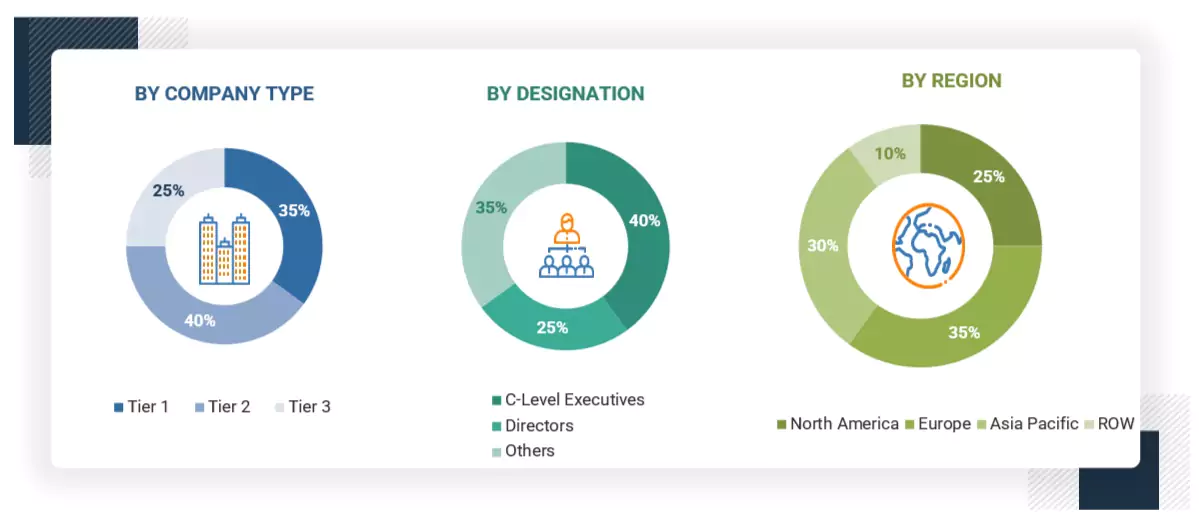
In the primary research process, various primary sources from both the supply and demand sides were interviewed to obtain qualitative and quantitative information for the report. The primary sources from the supply side included industry experts, such as Chief Executive Officers (CEOs), Vice Presidents (VPs), marketing directors, technology and innovation directors, and related key executives from various key companies and organizations providing Wi-Fi as a Service solutions and services. The primary sources from the demand side included end users, such as Chief Information Officers (CIOs), consultants, service professionals, technicians and technologists, and managers at public and investor-owned utilities.

In the market engineering process, both top-down and bottom-up approaches were widely used, along with several data triangulation methods, to estimate and forecast market segments and subsegments listed in the report. Extensive qualitative and quantitative analyses were conducted throughout the entire market engineering process to highlight key information and insights for the report.

After completing comprehensive market analysis, including calculations for market statistics, market breakdown, market size estimations, market forecasting, and data triangulation, extensive primary research was carried out to gather information. This research aimed to identify segmentation, industry trends, key players, the competitive landscape, and crucial market dynamics such as drivers, restraints, opportunities, challenges, industry trends, and key strategies.
Wi-Fi as a Service Market Size, and Share

Note 1: Tier 1 companies - Revenue greater than USD 10 billion; Tier 2 companies - Revenue ranges between
USD 1 and 10 billion; and Tier 3 companies - Revenue ranges between USD 500 million and 1 billion
Note 2: Others include sales, marketing, and product managers.
Source: Secondary Literature, Interviews with Experts, and MarketsandMarkets Analysis

To know about the assumptions considered for the study, download the pdf brochure

Market Size Estimation

Multiple methods were used to estimate and forecast the Wi-Fi as a Service market. The first method involved calculating the market size by summing the revenue generated by companies through service sales.

The research methodology used to estimate the market size included the following:

  • The revenue contributions of the major market participants in each country were determined using primary and secondary research after they were identified through secondary research.
  • Critical insights were obtained through in-depth interviews with industry professionals, including directors, CEOs, VPs, and marketing executives, as well as by reviewing the annual and financial reports of the top firms in the market.
  • Primary sources were used to verify all percentage splits and breakups, which were calculated using secondary sources..

Wi-Fi as a Service Market : Top-Down and Bottom-Up Approach
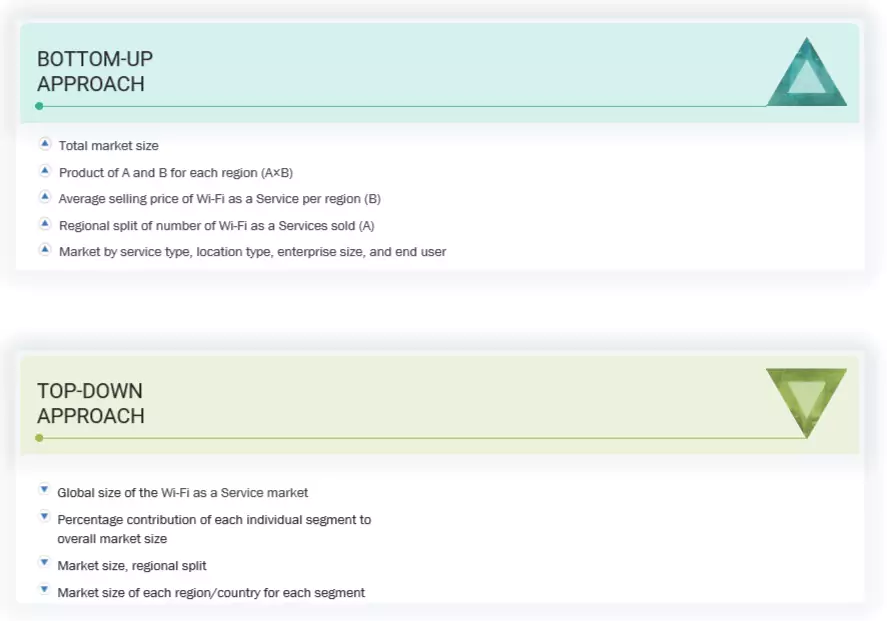
Wi-Fi as a Service Market Top Down and Bottom Up Approach

Data Triangulation

Once the overall market size was established, the market was divided into segments and subsegments using the previously described market size estimation methods. When necessary, market breakdown and data triangulation procedures were utilized to complete the market engineering process and determine the precise figures for each market segment and subsegment. The data was triangulated by analyzing various variables and patterns from the supply and demand sides of government entities.

Market Definition

Wi-Fi as a Service (WaaS) is a model where a provider manages and delivers wireless network infrastructure, including hardware, software, maintenance, and support, to businesses or organizations. Instead of buying and maintaining their own Wi-Fi equipment, customers pay a recurring fee for fully managed, partially managed, or subscription-based, scalable, and secure wireless connectivity. WaaS typically involves network setup, monitoring, upgrades, and troubleshooting, often utilizing cloud-based management for flexibility and ease of use. This enables organizations to concentrate on their core operations while outsourcing Wi-Fi management to specialists.

Stakeholders

  • WaaS Providers
  • Managed Service Providers
  • Cloud Platform Providers
  • Hardware Vendors
  • Software Providers
  • System Integrators
  • Enterprise End Users
  • Vertical-Specific Users
  • Regulatory Bodies & Standards Organizations
  • End Consumers
  • Internet Service Providers
  • Network Security Providers
  • Real Estate and Infrastructure Owners
  • Channel Partners and Distributors
  • Technology Consultants and Advisory Firms

Report Objectives

  • To define, describe, and forecast the Wi-Fi as a Service market in terms of value
  • To provide detailed information regarding drivers, restraints, opportunities, and challenges influencing the growth of the market
  • To forecast the market by service type, location type, enterprise size, end user, and region
  • To forecast the market size of segments for five main regions: North America, Europe, Asia Pacific, the Middle East & Africa, and Latin America
  • To analyze opportunities in the market and provide details of the competitive landscape for stakeholders and market leaders
  • To profile the key market players, including top vendors and startups; provide a comparative analysis based on business overviews, regional presence, product offerings, business strategies, and key financials; and provide a detailed competitive landscape of the market
  • To analyze competitive developments, such as mergers & acquisitions (M&A), product launches/enhancements, agreements, partnerships, collaborations, expansions, and R&D activities, in the market.

Available Customizations

MarketsandMarkets offers customized options based on the company's specific needs using market data. These include the following:

Product Analysis

  • Product matrix – detailed comparison of each company's portfolio

Geographic Analysis as per Feasibility

  • Further breakup of Wi-Fi as a Service market

Company Information

  • Detailed analysis and profiling of five additional market players

Key Questions Addressed by the Report

What is the definition of the Wi-Fi as a Service market?

Wi-Fi as a Service (WaaS) is a model where a provider manages and supplies wireless network infrastructure, including hardware, software, maintenance, and support, to businesses or organizations. Instead of buying and maintaining their Wi-Fi equipment, customers pay a recurring fee for fully managed or partially managed subscription-based, scalable, and secure wireless connectivity. WaaS typically covers network setup, monitoring, upgrades, and troubleshooting, often using cloud-based management for flexibility and ease of use. This approach lets organizations focus on their core operations while delegating Wi-Fi management to specialists.

What is the market size of the Wi-Fi as a Service market?

The Wi-Fi as a Service market is projected to be worth USD 9.27 billion in 2025 and is expected to reach USD 21.96 billion by 2030, with a CAGR of 18.8% from 2025 to 2030.

What are the major drivers in the Wi-Fi as a Service market?

The main drivers in the Wi-Fi as a Service market are digital transformation initiatives in businesses that enable Wi-Fi networks, increasing adoption of smartphones and wireless devices worldwide, ease of Wi-Fi infrastructure management and remote troubleshooting, cost savings through the as-a-service model, and the rising trend of BYOD and CYOD among organizations.

Who are the key players operating in the Wi-Fi as a Service market?

The key market players profiled in the Wi-Fi as a Service market include AT&T (US), Verizon (US), T-Mobile (US), e& (UAE), Singtel (Singapore), Tata Communications (India), CommScope (US), Arista Networks (US), TP-Link (China), Wifirst (UK), Alcatel-Lucent Enterprise (France), Jio (India), Spectra (India), Telstra (Australia), Viasat (US), Adtran (US), Allied Telesis (Japan), 4ipnet (Taiwan), LANCOM Systems (Germany), Ruijie Networks (China), Datto (US), Superloop (Australia), Cambium Networks (US), Redway Networks (England), Cucumber Tony (UK), Tanaza (Italy), and Edgecore Networks (Taiwan).

What are the key technological trends prevailing in the Wi-Fi as a Service market?

The Wi-Fi as a Service market is experiencing key trends such as AI-driven network management, cloud-native Wi-Fi infrastructure, IoT connectivity integration, SASE and Zero Trust adoption, multi-access edge computing (MEC) compatibility, Wi-Fi 6 and Wi-Fi 6E deployment, API-first and open architecture, and Network-as-a-Service (NaaS) convergence.

Personalize This Research

  • Triangulate with your Own Data
  • Get Data as per your Format and Definition
  • Gain a Deeper Dive on a Specific Application, Geography, Customer or Competitor
  • Any level of Personalization
Request A Free Customisation

Let Us Help You

  • What are the Known and Unknown Adjacencies Impacting the Wi-Fi as a Service Market
  • What will your New Revenue Sources be?
  • Who will be your Top Customer; what will make them switch?
  • Defend your Market Share or Win Competitors
  • Get a Scorecard for Target Partners
Customized Workshop Request

Custom Market Research Services

We Will Customise The Research For You, In Case The Report Listed Above Does Not Meet With Your Requirements

Get 10% Free Customisation

Growth opportunities and latent adjacency in Wi-Fi as a Service Market

DMCA.com Protection Status