Zinc Agriculture Micronutrients Market

Zinc Agricultural Micronutrients Market by Mode of Application (Soil, Foliar and Fertigation), Form (Chelated and Non-Chelated Micronutrients), Crop Type and Region - Global Forecast to 2030




OVERVIEW
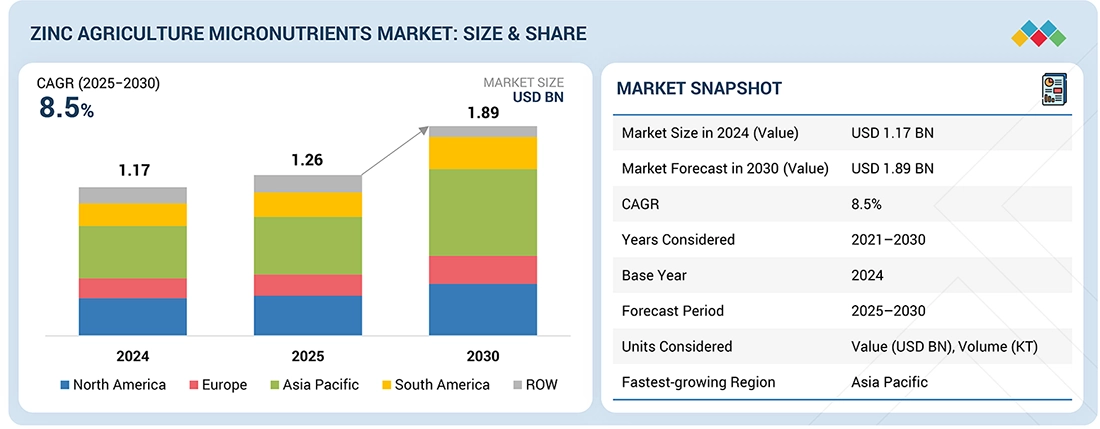
Source: Secondary Research, Interviews with Experts, MarketsandMarkets Analysis
The zinc agriculture micronutrients market is estimated to be valued at USD 1.26 billion in 2025. It is projected to reach USD 1.89 billion in 2030, growing at a CAGR of 8.5%. The market is largely exhibiting a rising trend, which is associated with the enhanced understanding of the importance of zinc in plant growth, activation of enzymes, protein synthesis, and enhancing plant vitality. Deficiency of zinc is considered one of the most common nutrient deficiencies in the world’s soils, and this has significantly accelerated the demand for zinc-based agricultural nutrients. The enhanced emphasis on balanced plant nutrition, precision agriculture techniques, such as foliar and fertigation, and government initiatives to improve the fertility of the soil have significantly accelerated the growth of the market.
Market Size and Forecast:
- Market Size Value in 2024: USD 1.17 Billion
- Market Size Value in 2025: USD 1.26 Billion
- Revenue Forecast in 2030: USD 1.89 Billion
- Growth Rate: CAGR of 8.5% from 2025 to 2030
- Base year: 2024
- Forecast period: 2025–2030
- Asia Pacific is estimated to account for a significant share (37.2%) in the market in 2025.
- The non-chelated segment is estimated to account for a significant market share (69.1%) in the market in 2025.
Key Market Trends and Insights
- By Crop Type: The Cereals & Grains segment accounts for a significant share of the zinc agriculture micronutrients market, driven by the extensive cultivation of staple crops and the growing need to address zinc deficiency in soils to improve crop yield and quality.
- Industry Evolution: Growers are increasingly adopting zinc-based micronutrient solutions as part of balanced crop nutrition programs to enhance nutrient uptake, improve plant growth, and maximize agricultural productivity.
- Market Drivers: Rising concerns regarding soil micronutrient deficiencies, increasing demand for high-yield crops, growing awareness of balanced fertilization practices, and the need to improve agricultural productivity are supporting market growth.
- Future Potential: Significant opportunities are emerging in precision nutrient management, specialty micronutrient formulations, sustainable farming practices, and advanced crop nutrition solutions designed to improve yield, quality, and soil health.
KEY TAKEAWAYS
-
By RegionAsia Pacific is estimated to account for a significant share (37.2%) in the market in 2025.
-
By Crop TypeThe fruits & vegetables segment is projected to register notable growth during the forecast period.
-
By FormThe non-chelated segment is estimated to account for a significant market share (69.1%) in the market in 2025.
-
By Mode of ApplicationThe foliar segment is estimated to lead the zinc agriculture micronutrients market in 2025, accounting for a share of 36.9%.
-
Competitive LandscapeBASF SE, Nouryon, Nufarm, Yara International ASA, Syngenta AG, The Mosaic Company, and Coromandel International Limited are identified as the key players in the zinc agriculture micronutrients market.
-
Competitive LandscapeManvert, Zuari Agrochemicals, Haifa Negev Technologies, Stoller Enterprises, and ATP Nutrition, among others, have established a presence as startups/SMEs in the zinc agriculture micronutrients market.
The zinc agriculture micronutrients market is steadily growing owing to the increased focus on balanced crop nutrition, yield improvement, and nutrient-use efficiency. Additionally, the growing awareness of crop producers regarding the deficiency of micronutrients in the soil coupled with modern farming practices is driving the use of micronutrients on almost all major crop types.
TRENDS & DISRUPTIONS IMPACTING CUSTOMERS' CUSTOMERS
Shift in customer preferences and agronomic practices directly influences the performance of end users in the zinc agriculture micronutrients market. Additionally, emerging focus areas—including crop-specific nutrition solutions, evolving cropping patterns, and changing application methods—are reshaping demand dynamics. As these trends accelerate or shift, they impact the purchasing behavior and revenue streams of end users, thereby influencing overall market performance and growth opportunities for micronutrient manufacturers across globally.
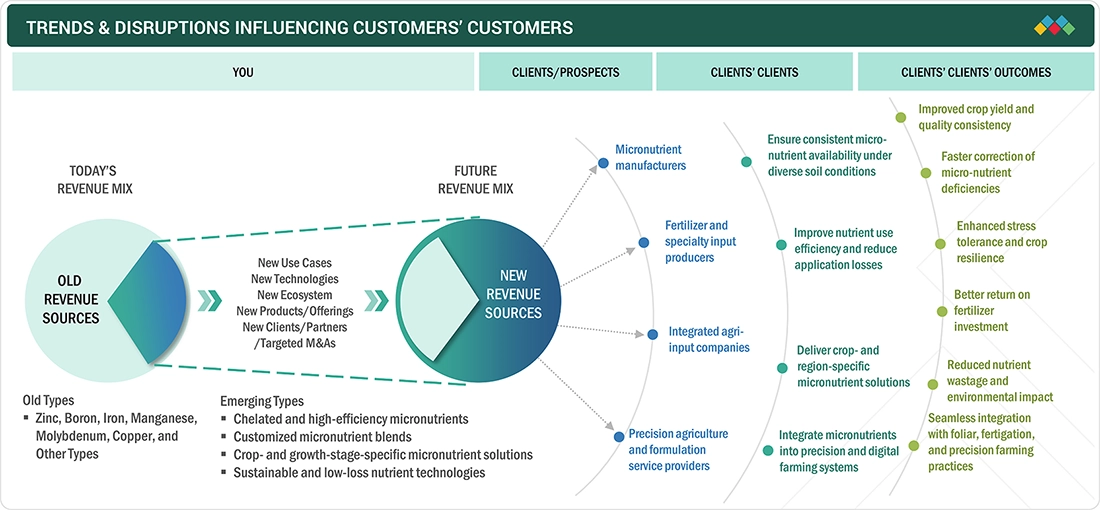
Source: Secondary Research, Interviews with Experts, MarketsandMarkets Analysis
MARKET DYNAMICS

Level
-
Expansion of commercial and intensive farming systems

-
Rising focus on improving crop yield, quality, and nutrient efficiency


Level
-
Volatility in raw material and fertilizer input prices

-
Limited awareness among smallholder farmers


Level
-
Growing demand for chelated and specialty micronutrient formulations

-
Adoption of precision agriculture and targeted nutrient application


Level
-
Price competition from conventional fertilizer products

-
Regulatory compliance and formulation standardization

Source: Secondary Research, Interviews with Experts, MarketsandMarkets Analysis
Driver: Expansion of commercial and intensive farming systems
The expansion of commercial and intensive farming methods is boosting the demand for balanced micronutrient applications, owing to the increasing deficiency in soil, which is affecting yield and quality of the crop, besides nutrient efficiency.
Restraint: Volatility in raw material and fertilizer input prices
Volatility in fertilizer and raw material prices is just building up the general input costs, which is dampening the adoption of micronutrient products, mainly in price-sensitive and smallholder farming systems.
Opportunity: Growing demand for chelated and specialty micronutrient formulations
The growing adoption of chelated and specialty micronutrients, coupled with support from precision agriculture practices, presents opportunities in the development of targeted and value-added crop nutrition solutions.
Challenge: Price competition from conventional fertilizer products
Advanced micronutrient formulation faces continued challenges from price competition with conventional fertilizers and the need to adhere to myriad regional regulations.
ZINC AGRICULTURE MICRONUTRIENTS MARKET: COMMERCIAL USE CASES ACROSS INDUSTRIES
| COMPANY | USE CASE DESCRIPTION | BENEFITS |
|---|---|---|
 |
Application of chelated micronutrients in cereals, fruits, and vegetables to address soil nutrient deficiencies | Improve nutrient availability | Enhance crop yield and quality | Support sustainable soil management |
 |
Integration of micronutrient-enriched fertilizers through soil and fertigation systems | Enable balanced crop nutrition | Improve nutrient use efficiency | Support precision agriculture practices |
 |
Use of specialty chelating agents in micronutrient formulations for broad-acre and horticultural crops | Enhance micronutrient stability | Improve uptake under challenging soil conditions | Reduce nutrient losses |
 |
Deployment of crop-specific micronutrient solutions combined with crop protection programs | Strengthen plant health | Improve stress tolerance | Support integrated crop management strategies |
Logos and trademarks shown above are the property of their respective owners. Their use here is for informational and illustrative purposes only.
MARKET ECOSYSTEM
The zinc agriculture micronutrients ecosystem include major micronutrient manufacturers, small micronutrient manufacturers, producers of agriculture products, and regulatory bodies and research institutions. The ecosystem reflects a steadily growing, agronomy-driven landscape driven by the rising focus on soil health, balanced crop nutrition, and sustainable yield improvement. Key market participants encompass established multinational companies through to regional suppliers, contributing to the development of advanced micronutrient solutions that enhance nutrient availability, crop productivity, stress tolerance, and long-term soil fertility within global agricultural systems.
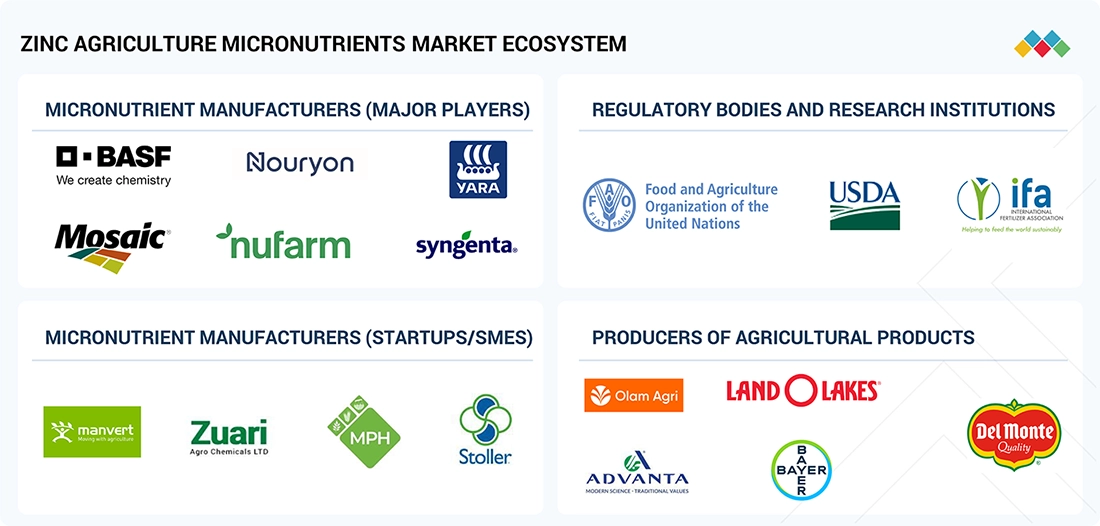
Logos and trademarks shown above are the property of their respective owners. Their use here is for informational and illustrative purposes only.
MARKET SEGMENTS
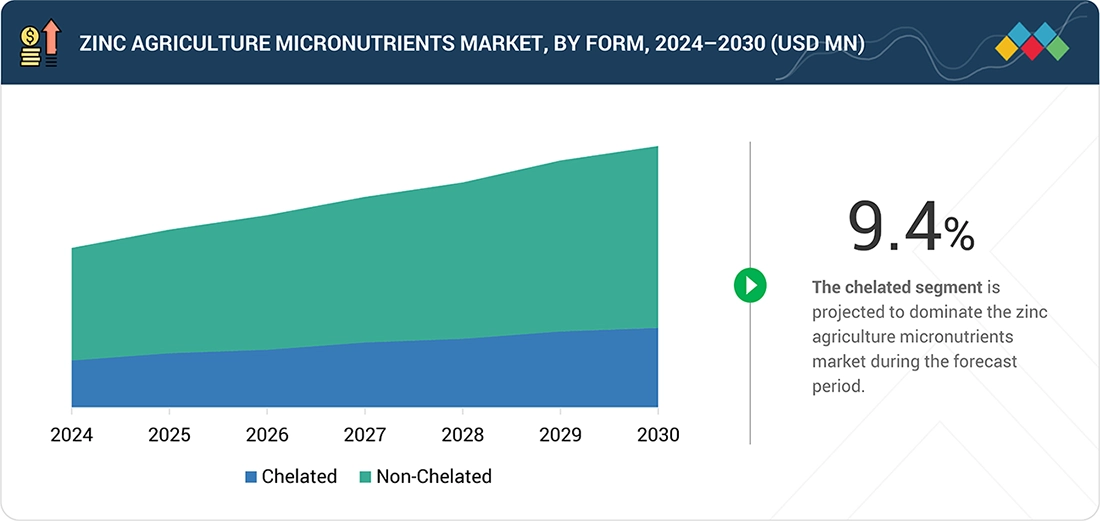
Source: Secondary Research, Interviews with Experts, MarketsandMarkets Analysis
Zinc Agriculture Micronutrients Market, By Crop Type
By crop type, the fruits & vegetables segment is projected to lead the market during the forecast period. Since horticultural crops are highly susceptible to micronutrient treatment and must be properly nourished to enhance their quality, storage life, and appearance, the demand for zinc micronutrients is expected to grow in this segment.
Zinc Agriculture Micronutrients Market, By Form
By form, the non-chelated segment is projected to account for a substantial market share during the forecast period. This growth of the segment is mainly due to the cost-effectiveness of non-chelated micronutrients, their availability, and their use in conventional and large-scale agriculture.
Zinc Agriculture Micronutrients Market, By Mode of Application
By mode of application, the foliar segment is projected to lead the market during the forecast period. This growth is due to the efficiency of this method to quickly provide correction of micronutrient deficiencies. This method helps fast nutrient uptake, which is also driving its popularity.
REGION
Asia Pacific to dominate zinc agriculture micronutrients market during forecast period
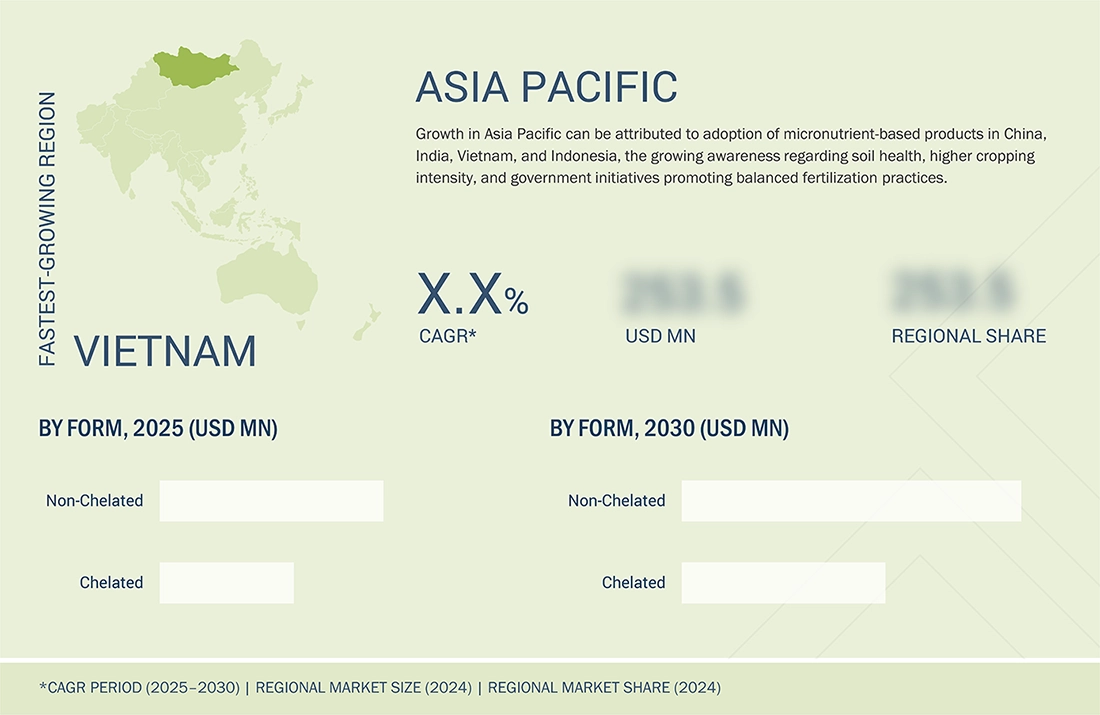
Asia Pacific is projected to dominate the zinc agriculture micronutrients market during the forecast period. The growth of the region is driven by region's expanding agriculture production, rising population-driven food demand, and increasing focus on improving crop productivity and quality.
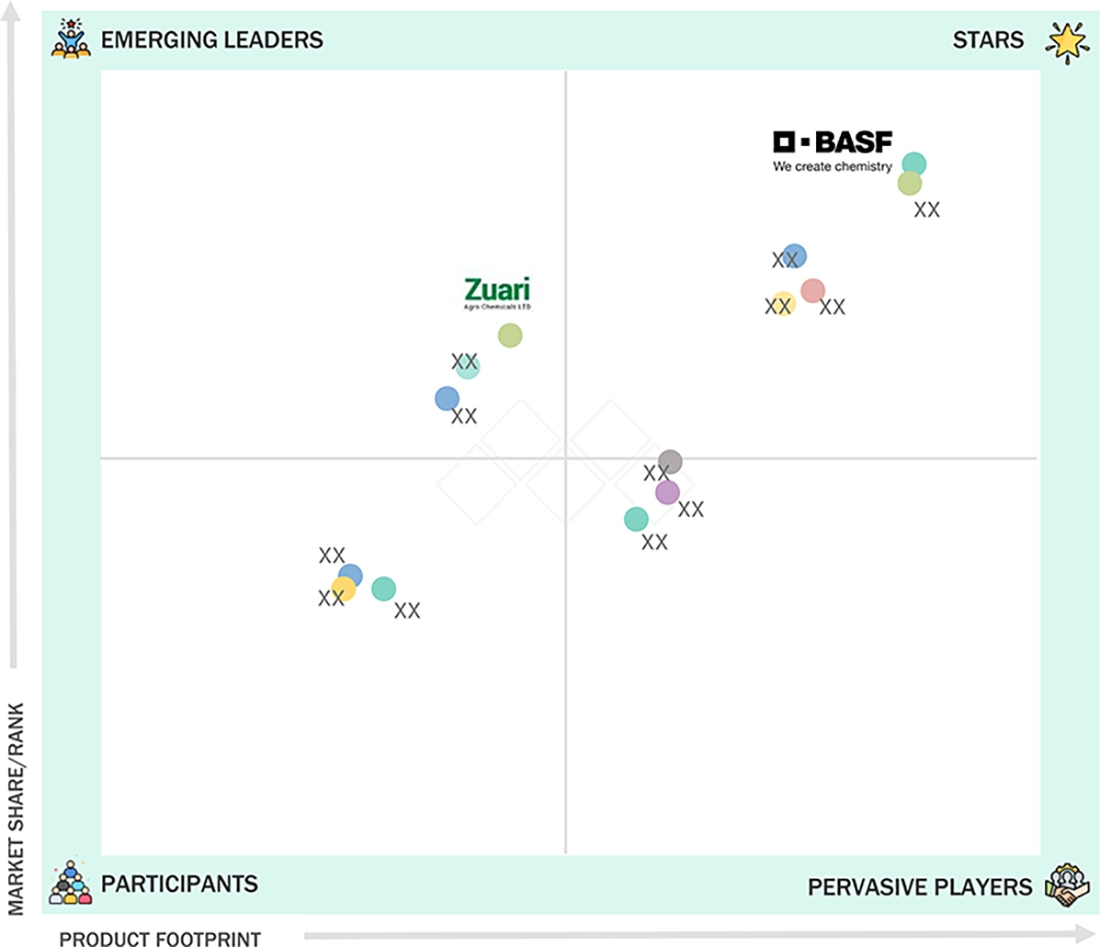
ZINC AGRICULTURE MICRONUTRIENTS MARKET: COMPANY EVALUATION MATRIX
Leading players such as BASF SE and Yara International ASA (Stars) hold strong market positions, supported by their large-scale production capabilities, comprehensive micronutrient portfolios, and well-established global distribution networks. Their integration with fertilizer and crop nutrition programs and emphasis on consistent, science-backed micronutrient solutions reinforce their dominance. Meanwhile, Manvert (Emerging Leader) is strengthening its presence through specialized micronutrient blends and customized crop nutrition solutions, addressing region-specific soil deficiencies and evolving crop productivity and quality requirements.
Source: Secondary Research, Interviews with Experts, MarketsandMarkets Analysis
KEY MARKET PLAYERS
- BASF SE (Germany)
- Yara International ASA (Norway)
- Nouryon (Netherlands)
- Syngenta AG (Switzerland)
- The Mosaic Company (US)
- Coromandel International Limited (India)
- Nufarm Limited (Australia)
- Haifa Negev Technologies Ltd (Israel)
- Manvert (Spain)
- Zuari Agrochemicals Ltd (India)
MARKET SCOPE
| REPORT METRIC | DETAILS |
|---|---|
| Market Size in 2024 (Value) | USD 1.17 Billion |
| Market Forecast in 2030 (Value) | USD 1.89 Billion |
| Growth Rate | CAGR of 8.5% from 2025–2030 |
| Years Considered | 2021–2030 |
| Base Year | 2024 |
| Forecast Period | 2025–2030 |
| Units Considered | Value (USD Billion), Volume (KT) |
| Report Coverage | Revenue Forecast, Company Ranking, Competitive Landscape, Growth Factors, and Trends |
| Segments Covered |
|
| Regions Covered | North America, Europe, Asia Pacific, South America, and Rest of the World |
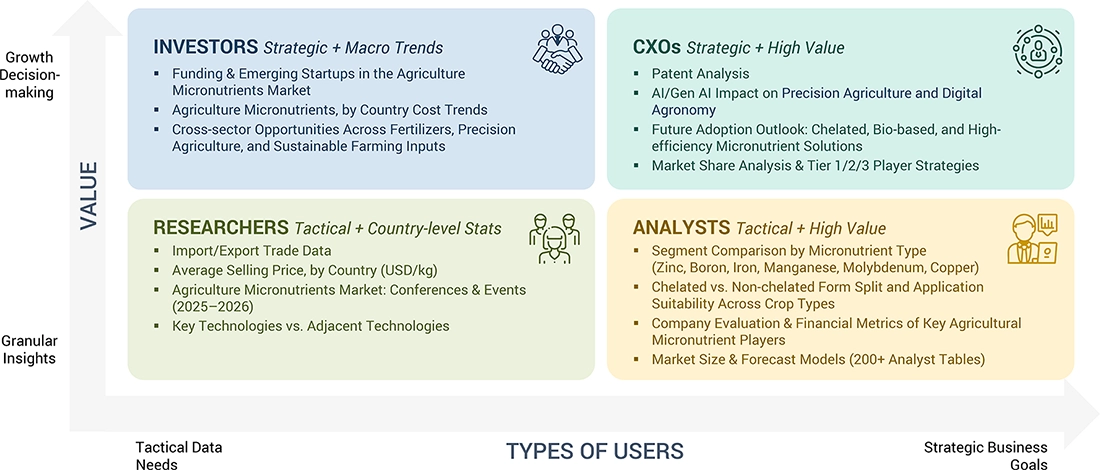
WHAT IS IN IT FOR YOU: ZINC AGRICULTURE MICRONUTRIENTS MARKET REPORT CONTENT GUIDE
DELIVERED CUSTOMIZATIONS
We have successfully delivered the following deep-dive customizations:
| CLIENT REQUEST | CUSTOMIZATION DELIVERED | VALUE ADDS |
|---|---|---|
| China-based Zinc Agriculture Micronutrient Manufacturer |
|
|
| Zinc Agriculture Micronutrient Manufacturer |
|
|
RECENT DEVELOPMENTS
- October 2025 : BASF expanded its micronutrient portfolio with a new chelated zinc-iron blend fertilizer, enhancing corn yield by 15% in Midwest trials amid soil deficiency challenges. This launch targeted high-demand row crops, integrating drone-compatible formulations for precision application.
- October 2025 : Sumitomo Chemical launched a specialized rice micronutrient pack with zinc and manganese, tailored for paddy soils deficient from volcanic ash. This innovation improves grain nutrition and yield stability, aligning with Japan's food security initiatives.?
- May, 2025 : Syngenta, a leading global crop protection and seed company, completed the acquisition of Intrinsyx Bio, a biotechnology firm specializing in nutrient use efficiency (NUE) technologies. This acquisition strengthened Syngenta’s R&D capabilities in advanced nutrient solutions, including technologies that enhance micronutrient uptake and efficiency aligning with broader precision agriculture and sustainability goals in crop nutrition.
- May 2024 : Yara International ASA (Norway) and BASF SE (Germany) announced a strategic partnership to co-develop and commercialize next-generation micronutrient fertilizers, with a focus on sustainable, high-efficiency solutions for global agricultural applications.
Table of Contents
 Exclusive indicates content/data unique to MarketsandMarkets and not available with any competitors.
Methodology
This research study involved the extensive use of secondary sources—directories and databases such as Bloomberg Businessweek and Factiva—to identify and collect information useful for a technical, market-oriented, and commercial study of the agricultural micronutrient market. In-depth interviews were conducted with various primary respondents—such as key industry participants, subject matter experts (SMEs), C-level executives of key market players, and industry consultants—to obtain and verify critical qualitative and quantitative information as well as to assess prospects.
Secondary Research
The secondary sources referred for this research study include government sources, such as the Food and Agriculture Organization (FAO), International Fertilizer Association (IFA), Micronutrient Manufacturers Association (MMA), the ministries of the agricultural department in various countries, corporate filings (such as annual reports, press releases, investor presentations, and financial statements), and trade, business, and professional associations. The secondary data was collected and analyzed to arrive at the overall market size, which was further validated by primary research and manufacturers' annual reports, press releases & investor presentations of companies, white papers, food journals, certified publications, articles from recognized authors, gold & silver standard websites, regulatory bodies, trade directories, and paid databases.
Secondary research was used to obtain key information about the industry’s supply chain, the total pool of key players, and market classification and segmentation according to industry trends to the bottom-most level, regional markets, and key developments from both market and technology-oriented perspectives. The secondary data was collected and analyzed to arrive at the overall market size, which was further validated by primary research. It was also used to obtain information on the key developments from a market-oriented perspective.
Primary Research
The Zinc Agriculture Micronutrients Market comprises multiple stakeholders, including raw material suppliers, and regulatory organizations in the supply chain. Various primary sources from the supply and demand sides of the market were interviewed to obtain qualitative and quantitative information. Primary interviewees from the supply side include research institutions involved in R&D to introduce to the manufacturers, and importers & exporters of agricultural micronutrients from the demand side including distributors, wholesalers, and key opinion leaders through questionnaires, emails, and telephonic interviews.
Market Size Estimation
Both top-down and bottom-up approaches were used to estimate and validate the total size of the Zinc Agriculture Micronutrients Market . These approaches were also used extensively to estimate the size of various dependent submarkets.
The following figure represents the overall market size estimation process employed for the purpose of this study.
Bottom-Up Approach
Through the bottom-up approach, the data extracted from secondary research was utilized to validate the market segment sizes obtained. The approach was employed to arrive at the overall size of the Zinc Agriculture Micronutrients Market in particular regions, and its share in the market was validated through primary interviews conducted with fungicide manufacturers, suppliers, dealers, and distributors.
With the data triangulation procedure and validation of data through primaries, the overall size of the parent market and each segmental market were determined.
Top-Down Approach
For the estimation of the Zinc Agriculture Micronutrients Market , the size of the most appropriate immediate parent market was considered to implement the top-down approach. For the Zinc Agriculture Micronutrients Market , the specialty fertilizers market was considered as the parent market to arrive at the market size, which was again used to estimate the size of individual markets (mentioned in the market segmentation) through percentage shares arrived from secondary and primary research.
Data Triangulation
After arriving at the overall market size from the estimation process explained above, the total market was split into several segments and subsegments. To estimate the overall agricultural micronutrient market and arrive at the exact statistics for all segments and subsegments, the data triangulation and market breakdown procedures were employed, wherever applicable. The data was triangulated by studying various factors and trends from the demand and supply sides.
Market Definition
Agricultural micronutrients can be defined as nutrients required in small amounts, which are necessary for plant growth. Due to their requirement in limited quantities, micronutrients are also known as trace elements. These micronutrients, also known as trace elements, play a crucial role in various physiological processes within plants, including enzyme activation, photosynthesis, and nutrient uptake. The primary agricultural micronutrients include iron (Fe), manganese (Mn), zinc (Zn), copper (Cu), molybdenum (Mo), and boron (B).
Stakeholders
- Agricultural micronutrient manufacturers, formulators, and blenders
- Fertilizer traders, suppliers, distributors, importers, and exporters
- Raw material suppliers and technology providers to agricultural micronutrient manufacturers
- Agricultural co-operative societies
- Fertilizer associations and industry bodies:
- Food and Agriculture Organization (FAO)
- International Fertilizer Association (IFA)
- Micronutrient Manufacturers Association (MMA)
- The Fertilizer Institute (TFI)
- Government agricultural departments and regulatory bodies:
- US Environmental Protection Agency (EPA)
- Association of American Plant Food Control Officials (AAFCO)
- European Commission
- Ministry of Agriculture (MOA), China
- Department of Agriculture, Forestry, and Fisheries (DAFF), South Africa
- US Department of Agriculture (USDA)
Report Objectives
Market Intelligence
Determining and projecting the size of the Zinc Agriculture Micronutrients Market , based on type, form, crop type, mode of application, and regional markets, over a five-year period, ranging from 2023 to 2028
Identifying attractive opportunities in the market by determining the largest and fastest-growing segments across regions
Analyzing the demand-side factors based on the following:
- Impact of macro- and microeconomic factors on the market
- Shift in demand patterns across different subsegments and regions
Competitive Intelligence
- Identifying and profiling the key players in the agricultural micronutrientss market.
- Determining the share of key players operating in the Zinc Agriculture Micronutrients Market
-
Providing a comparative analysis of market leaders based on the following:
- Product offerings
- Business strategies
- Strengths and weaknesses
- Key financials
- Understanding the competitive landscape and identifying the major growth strategies adopted by players across the key regions.
- Analyzing the value chain and products across the key regions and their impact on the prominent market players.
- Analyzing the market dynamics, competitive situations, and trends across the regions, and their impact on prominent market players.
Available Customizations:
With the given market data, MarketsandMarkets offers customizations according to company-specific scientific needs.
The following customization options are available for the report:
Product Analysis
- Product Matrix, which gives a detailed comparison of the product portfolio of each company.
Geographic Analysis
With the given market data, MarketsandMarkets offers customizations according to company-specific scientific needs.
- Further breakdown of the rest of the Zinc Agriculture Micronutrients Market into the Philippines, Vietnam, South Korea, Malaysia, and Australia & New Zealand.
- Further breakdown of the rest of Zinc Agriculture Micronutrients Market into Netherlands, Poland, other EU, and non-EU countries.
- Further breakdown of the rest of Zinc Agriculture Micronutrients Market into Peru, Chile, and Venezuela.
Company Information
- Detailed analyses and profiling of additional market players (up to five)
Key Questions Addressed by the Report
What is the projected size of the global zinc agriculture micronutrients market?
The global zinc agriculture micronutrients market is projected to grow from USD 1.26 billion in 2025 to USD 1.89 billion by 2030, at a CAGR of 8.5% during the forecast period. Growth is driven by increasing awareness of zinc deficiency in soils, rising demand for balanced crop nutrition, and the adoption of precision agriculture practices.
Which segment holds the largest share of the zinc agriculture micronutrients market?
The non-chelated segment holds the largest share of the market, accounting for 69.1% in 2025. By mode of application, the foliar segment leads with a 36.9% market share due to its rapid nutrient uptake and effectiveness in correcting zinc deficiencies.
What are the key trends driving the zinc agriculture micronutrients market?
Key trends include increasing adoption of foliar and fertigation techniques, growing focus on balanced plant nutrition, rising demand for high-value horticultural crops, expansion of precision farming, and government initiatives promoting soil health and micronutrient application.
Which region holds the largest share of the zinc agriculture micronutrients market?
Asia Pacific holds the largest share of the zinc agriculture micronutrients market, accounting for 37.2% in 2025. The region's growth is supported by its extensive agricultural base, increasing food demand, and growing adoption of advanced crop nutrition practices.
Who are the key players in the zinc agriculture micronutrients market?
Key companies operating in the zinc agriculture micronutrients market include BASF SE (Germany), Nouryon (Netherlands), Nufarm Limited (Australia), Yara International ASA (Norway), Syngenta AG (Switzerland), The Mosaic Company (US), Coromandel International Limited (India), Haifa Negev Technologies Ltd (Israel), Manvert (Spain), and Zuari Agrochemicals Ltd (India).


Personalize This Research
- Triangulate with your Own Data
- Get Data as per your Format and Definition
- Gain a Deeper Dive on a Specific Application, Geography, Customer or Competitor
- Any level of Personalization
Let Us Help You
- What are the Known and Unknown Adjacencies Impacting the Zinc Agricultural Micronutrients Market
- What will your New Revenue Sources be?
- Who will be your Top Customer; what will make them switch?
- Defend your Market Share or Win Competitors
- Get a Scorecard for Target Partners

Custom Market Research Services
We Will Customise The Research For You, In Case The Report Listed Above Does Not Meet With Your Requirements
Get 10% Free Customisation





Growth opportunities and latent adjacency in Zinc Agricultural Micronutrients Market