Aluminum Rolled Products Market

Aluminum Rolled Products Market by Grade (3xxx, 5xxx, 6xxx), Product Form (Hot Rolled Thick Plate, Hot Rolled Medium Thick Sheet, Cold Rolled Sheet, End-use Industry (Automotive, Aerospace & Defense, Construction), and Region – Global Forecast to 2030




OVERVIEW
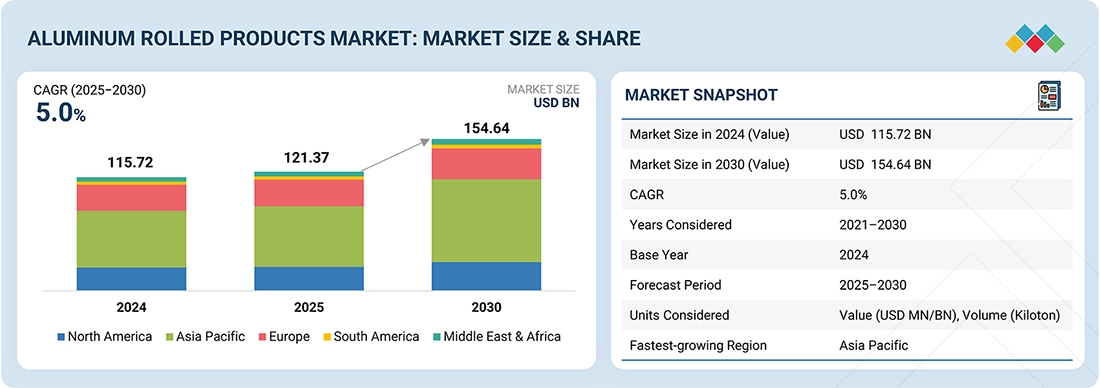
Source: Secondary Research, Interviews with Experts, MarketsandMarkets Analysis
The aluminum rolled products market is expected to reach USD 154.64 billion by 2030, up from USD 121.37 billion in 2025, at a CAGR of 5.0% over the forecast period. The market for aluminum rolled products is on the rise due to the growth of lightweighting requirements in the automotive industry, increasing construction and infrastructure investments, the adoption of aluminum rolled products in the aerospace and defense industry, and demand in the packaging industry. The opportunities in the electric vehicle (EV) expansion, recycling, circular economy integration, and technological solutions in manufacturing support growth. But the volatility of raw material prices, the high cost of energy and production, supply chain factors, and emission intensity are major issues. In general, the market has a positive perspective, which has been backed by the structural demand trends and sustainability initiatives.
KEY TAKEAWAYS
-
By RegionAsia Pacific's aluminum rolled products market dominated, with a share of 50.0% in 2024.
-
By GradeBy grade, the 6xxx segment is expected to register the highest CAGR of 5.3% from 2025 to 2030, in terms of value.
-
By Product FormBy product form, the cold rolled sheet (0.25-5 mm) dominated the market in 2024 with a market share of 23.4% and is expected to grow at a CAGR of 5.0% from 2025 to 2030, in terms of value.
-
By End-use IndustryBy end-use industry, the construction segment is expected to dominate the market, growing at the highest CAGR of 5.3%.
-
Competitive Landscape - Key PlayersHindalco Industries Ltd, Constellium SE, and UACJ Corporation were identified as Star players in the aluminum rolled products market, as they have focused on innovation and have broad industry coverage, and strong operational & financial strength.
-
Competitive Landscape- StartupsHenan Mingtai AL. Industrial Co., Ltd., Haomei Aluminum, and Laminazione Sottile, among others, have distinguished themselves among startups and SMEs through their strong product portfolios and business strategies.
The demand for aluminum rolled products is rising due to the growing need for lightweight materials in the automotive sector, increased investments in construction and infrastructure, the use of aluminum rolled products in aerospace and defense, and the packaging industry's requirements. Opportunities in the electric vehicle (EV) market, integration of recycling and circular economy principles, and technological advancements in manufacturing contribute to this growth.
TRENDS & DISRUPTIONS IMPACTING CUSTOMERS' CUSTOMERS
The aluminum rolled products market is shifting from commodity-driven revenues toward high-value, sustainable solutions. Growth is centered on automotive, aerospace, transportation, and construction applications, driven by lightweighting, advanced alloys, battery safety, corrosion resistance, and recyclability. Low-carbon aluminum and digitally enabled manufacturing are shaping future revenue streams and competitive differentiation.
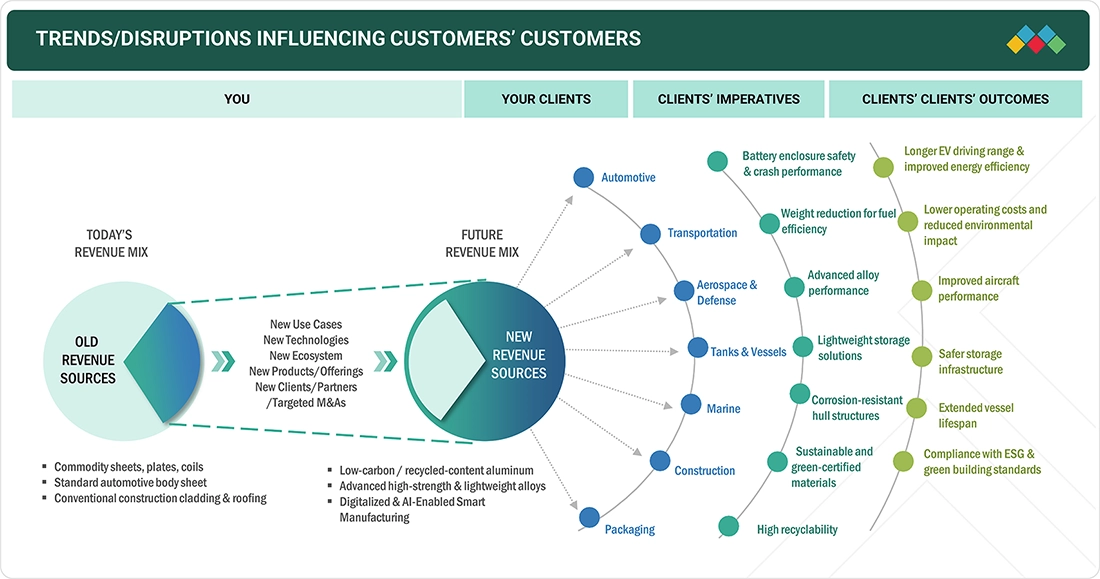
Source: Secondary Research, Interviews with Experts, MarketsandMarkets Analysis
MARKET DYNAMICS

Level
-
Lightweighting demand from the automotive sector

-
Construction and infrastructure growth


Level
-
Raw material price volatility

-
High production and energy costs


Level
-
Electrical Vehicle (EV) growth

-
Recycling and circular economy integration


Level
-
Supply chain and trade volatility

-
Energy dependency and emissions intensity

Source: Secondary Research, Interviews with Experts, MarketsandMarkets Analysis
Driver: Lightweighting demand from automotive sector
Lightweighting is a major driver of the aluminum rolled products market, as automobile companies seek to meet stringent global fuel-efficiency and emissions requirements. Aluminum sheets and coils have become more popular as OEMs replace heavier steel components with aluminum to reduce vehicle mass, improving fuel economy and EV range. In Europe, regulatory requirements, including stricter CO 2 emission reduction targets for new vehicles, are driving increased use of aluminum in body parts, closures, and other structural materials. Automakers have already been heavy users of aluminum to enhance performance and meet emission requirements. The growth of EV segments is also favorable: aluminum battery enclosures and structural components reduce weight and improve thermal management, enhancing EV performance. This trend is highlighted by investment in specialized aluminum facilities (e.g., battery enclosure plants). The availability of downstream expansion initiatives and strategic alliances indicates increased integration between automotive/EV OEMs and aluminum suppliers, thereby increasing the presence of rolled aluminum in next-gen vehicles.
Restraint: High Production and Energy Costs
The key limitations in the aluminum rolled products market are high production and energy costs. Smelting and rolling of aluminum are highly power-intensive, and in most cases, they account for a major share of overall manufacturing costs. The variable energy prices in major markets like Europe and North America, where electricity prices have risen sharply over the last few years, have hurt primary aluminum production and limited competitiveness for cheaper producers. This is a pressure on the downstream rolled product margins. Moreover, the uncertainty in supply chain prices is exacerbated by global volatility in raw material prices, especially alumina feedstock. Manufacturers have to either absorb the cost fluctuations or pass them on to consumers, making it difficult to contract prices and plan profitability. Even production has been shifted because of energy cost problems, with some smelters being shut down or reduced because of the adverse economics of power. The regulatory pressures to decarbonise production provide an extra cost factor, whereby to comply with the emissions requirements, cleaner technologies have to be invested in, which can be costly to cash-strapped plants.
Opportunity: Electrical Vehicle (EV) Growth
The rapid shift to electric vehicles is an opportunity that poses a serious challenge to aluminum rolled products. EV manufacturers are increasingly using lightweight materials like aluminum to build battery housings, structural parts, crash management systems, and lightweight body parts. The strength-to-weight ratio of aluminum is high, which enhances the EV range and the energy efficiency, which is an essential performance indicator in the case of competitiveness. This trend is further boosted by regulatory pressure to electrify key markets such as the EU and North America. The increased demand for aluminum is indirectly driven by government incentives and EV adoption standards. Moreover, growth is supported by Asia Pacific, which is the largest producer of EVs. Expanding into new technology in the downstream aluminum industry and strategic expansions highlight how suppliers are preparing to service EV supply chains. Moreover, aluminum battery enclosures, which offer significant weight savings and safety advantages, are gaining momentum among OEMs and are increasing the utilization of rolled products. The production of EVs is set to drive the demand for aluminum, which is connected to electrification infrastructure and components, causing a strong rise in demand over the course of the decade.
Challenge: Supply chain and trade volatility
Supply chain and trade instability are one of the fundamental problems for aluminum rolled products manufacturers. The international geopolitical unrest and fluctuating tariff systems have disrupted the material flow and increased costs. For example, the U.S. has levied high tariffs on imported steel and aluminum to safeguard its home industries and influence the supply and price elasticity of the commodities. All these trade actions, together with investigations into the rerouted aluminum imports in other markets such as the EU, make it uncertain about the source and inventory planning. Moreover, the EU's Carbon Border Adjustment Mechanism (CBAM), which can take effect in 2026, levies carbon-based pricing on imported aluminum products, which may affect the competitiveness of exporters in territories with greater carbon intensity. There have already been reductions in export volumes to Europe due to emissions reporting regulations, before the full impact of CBAM. Disruptions to global supply chains due to plant failures or raw material unavailability, as evidenced by recent production cuts at key aluminum plants, are indicators of the brittle nature of the global supply network and the importance of resilience planning.
ALUMINUM ROLLED PRODUCTS MARKET: COMMERCIAL USE CASES ACROSS INDUSTRIES
| COMPANY | USE CASE DESCRIPTION | BENEFITS |
|---|---|---|
 |
Speira supplied low-carbon, marine-grade aluminium with over 70% recycled content for the 27m Arksen 85 explorer yacht, supporting lightweight construction, hybrid propulsion integration, and sustainable vessel design. | 70%+ recycled content supporting lower carbon footprint | Lightweight, high-strength alloy reducing fuel consumption | Excellent corrosion resistance for durability and lower maintenance | Fully recyclable structure supporting circular design |
 |
Novelis collaborated with Li Auto to supply advanced aluminium sheet (Advanz 6HS-s650) for structural components in the Li MEGA electric MPV, focusing on lightweighting and crash performance. | 11% part weight reduction, improving EV efficiency and range | High in-service strength and enhanced crash safety | Optimized manufacturability and mixed-material integration | Supports sustainable and high-performance EV design |
 |
Aluminium Duffel supplied over 1,000 tonnes of 151EX architectural aluminum sheets, and plates, for the museum’s folded roof and façade, designed to withstand extreme desert conditions. | Maintains ~23°C internal temperature despite extreme heat | Lightweight, corrosion-resistant, and UV-stable material | High formability enabling complex architectural design | Long lifecycle with full recyclability |
Logos and trademarks shown above are the property of their respective owners. Their use here is for informational and illustrative purposes only.
MARKET ECOSYSTEM
The aluminum rolled products market ecosystem comprises raw material suppliers, manufacturers, distributors, and end users. Raw material suppliers (bauxite and alumina) and primary aluminum producers supply materials to manufacturers, who convert them into sheets, plates, and coils in rolling mills, and then supply them to end-use industries such as automotive, aerospace, construction, and packaging. Recyclers play a growing role in supplying low-carbon secondary aluminum. The ecosystem is shaped by energy providers, logistics networks, technology partners, and regulations, with increasing collaboration across the value chain to improve sustainability, cost efficiency, and supply security.
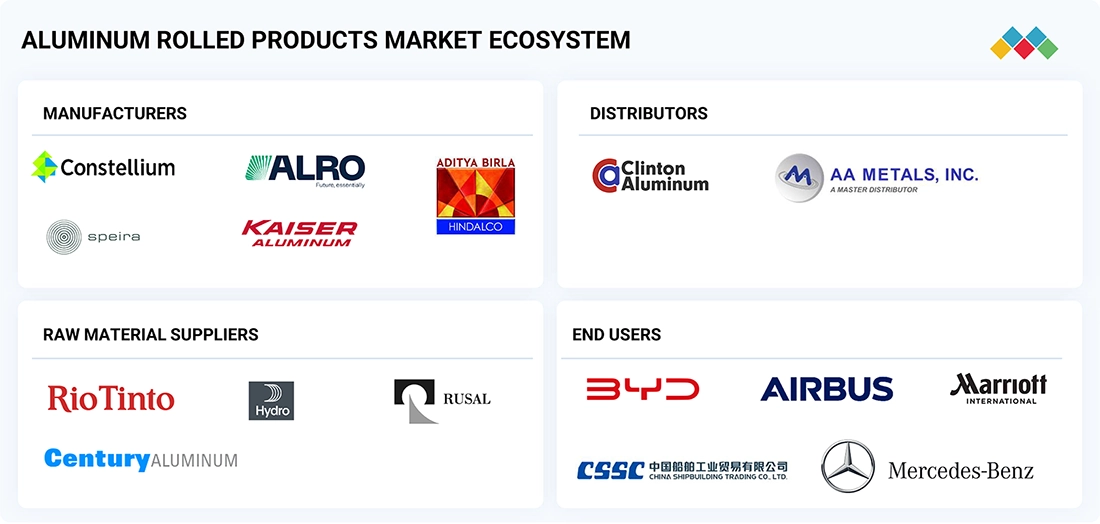
Logos and trademarks shown above are the property of their respective owners. Their use here is for informational and illustrative purposes only.
MARKET SEGMENTS
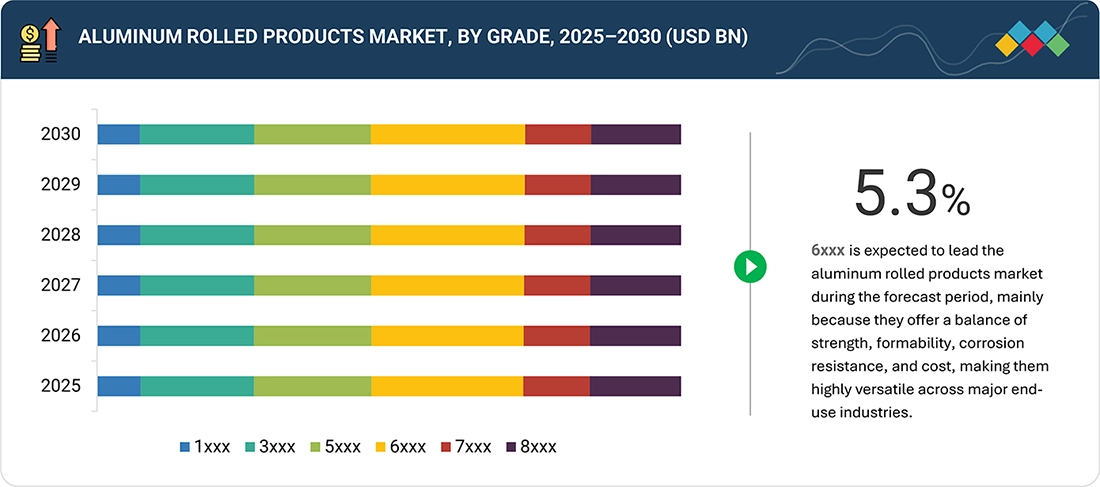
Source: Secondary Research, Interviews with Experts, MarketsandMarkets Analysis
Aluminum rolled products Market, By Grade
The 6xxx series alloys lead the aluminum rolled products market; the major alloys in this series are 6061 and 6082, due to their superior property combinations, which make them useful in many industries. The main metals used in this series are aluminum, magnesium, and silicon, which are stronger, more formable, corrosion-resistant, and weldable. These characteristics make the 6xxx alloys essential in applications where the strength-to-weight ratio plays a decisive role, including construction, aerospace, transportation, and automotive industries. Moreover, the 6xxx alloys are relatively easy to machine and can be heat-treated to further improve their mechanical properties. They are very versatile because of their high extrusion and rolling capacity, allowing them to be formed into thin sheets. Their good resistance to corrosion, particularly in the open environment, and the fact that they can be anodized to enhance better surface wordlife also make them a good choice in architectural applications. These alloys also are quite effective in the challenging environment such as marine and structural applications and hence they are the largest category of aluminum rolled products in the market. Their flexibility, cost-efficiency, and durability are some of the main factors that made the 6xxx series alloys conquer the international market of aluminum rolled products.
Aluminum rolled products Market, By Product Form
The cold-rolled aluminum sheets ( 0.25 to 5mm) is the largest product form of aluminum rolled products due to its great diversity of application in different industries. Cold rolling incorporates the process where the strength and smoothness of the aluminum are enhanced by decreasing the thickness of the metal at low temperatures thereby improving the surface finish of the metals and also the dimensional accuracy. The end product is stronger than its hot-rolled one thus it is used in more specialized applications. The automotive, packaging, and construction industries are the major users of these sheets because they are very formable and resistant to corrosion as well as being attractive. To give an example, they are usually utilized in creating car body panels, roofs, and architecture. Also, they are used as an ingredient in can, foil and other packaging material making. The thickness of 0.25-5 mm is suitable to a wide rate of end-use applications since it provides a balance between strength and flexibility and the product is easy to deal with in fabrication and assembly. In addition, it is more demanded in the manufacturing industry, with the capability to attain precise thickness control and uniformity further allowing it to dominate the aluminum rolled product industry.
Aluminum rolled products Market, By End-use Industry
Construction industry is the most distinguished end-use industry of aluminum rolled products mostly due to the superior performance of aluminum on the structural, aesthetic and functional uses. The combination of aluminum with its natural ability to resist corrosion, as well as its strength-to-weight ratio, has made it a perfect product in a vast construction application, including windows, doors, facades, roofing, and curtain walls. Aluminum is also highly insulating and energy-efficient, thanks to its high thermal conductivity, making it very popular for insulation and energy-saving applications in buildings. Aluminum rolled products, including sheets and coils, find wide applications in construction due to their versatility, ease of installation, and durability in both residential and commercial applications. Moreover, aluminum can be chosen because it has a high degree of sustainability, as it can be recycled 100% without losing its properties, which is becoming critical in the construction of green buildings and other eco-friendly buildings. The growing demand for renewable, energy-saving materials in construction has further boosted aluminum's popularity in the industry. Aluminum rolled products can be used in the construction of structural frames, decoration, and facades to meet the aesthetic, functional, and environmental needs of modern construction, and hence they have become the preferred choice across the industry.
REGION
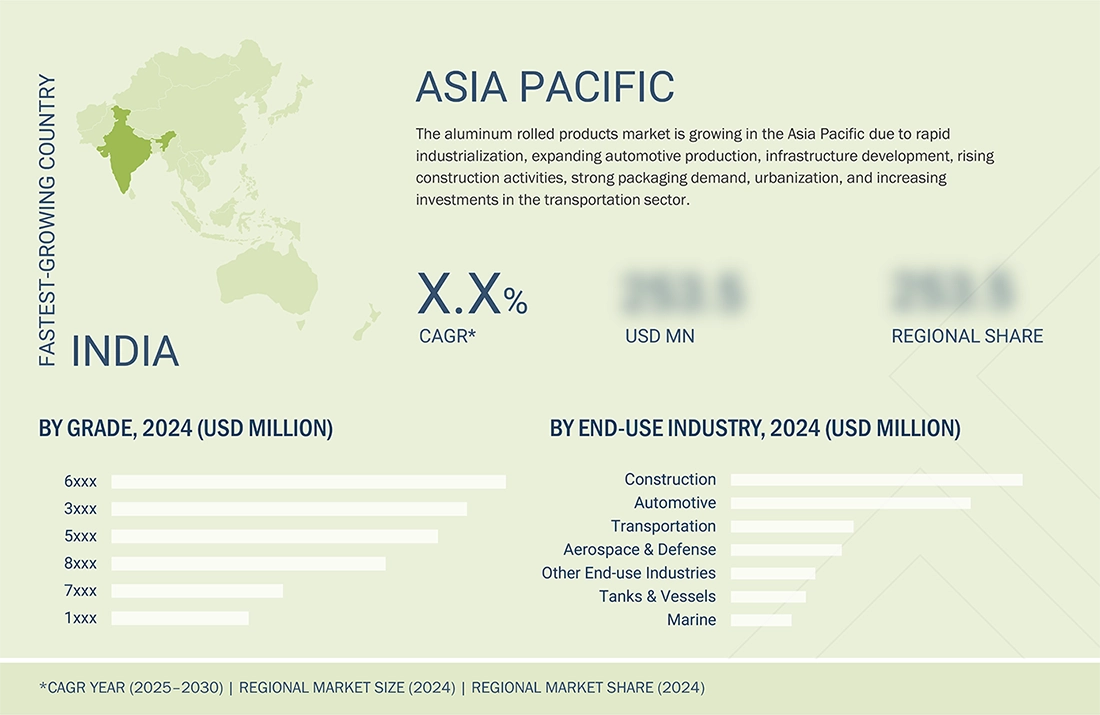
Asia Pacific to be the fastest-growing region in the aluminum rolled products market during the forecast period
The increased demand in automobile, construction, packaging, and electrical end-use, coupled with the high rate of growth in industrialization and manufacturing capacity in the Asia-Pacific region are some of the major factors that are increasing the aluminum rolled products in the region. Countries like China, India, Japan and South Korea are still spending much money on the infrastructure development, metro rail, airports, residential housing, and commercial buildings and sustained demand of aluminum sheets and plates as facades, roofing, cladding and structural material. The automotive manufacturing center of the world is also located there, and the growing trend toward lightweight and electric vehicles (EVs) has increased the use of aluminum rolled products in body panels, battery cases, heat exchangers, and structural components to improve fuel efficiency and reduce emissions. Moreover, the increasing adoption of a middle-class, urban lifestyle is boosting the use of aluminum packaging, especially beverage cans and food containers, as it is recyclable and durable. Asia-Pacific also enjoys cost-effective manufacturing, integrated distribution chains, growing rolling mill capacity, and domestic manufacturing supported by strong government programs such as India's Make in India and China's industrial modernization. Moreover, sustainability and high recyclability of aluminum contribute to the growth on the long term, as the industry will turn to low-carbon and circular economy approaches. All these structural demand drivers put the Asia-Pacific region as the fastest growing and largest market of aluminum rolled products in the world.
ALUMINUM ROLLED PRODUCTS MARKET: COMPANY EVALUATION MATRIX
In the aluminum rolled products market matrix, Hindalco Industries Ltd. (Star) leads with a strong market share and an extensive product footprint, driven by its advanced products and significant international market presence. Granges AB (Emerging Leader) is gaining visibility with its unique product portfolio, technological advancements, and recycling initiatives. While Hindalco Industries Ltd. dominates through scale and a diverse portfolio, Granges AB shows significant potential to move toward the leaders’ quadrant as demand for aluminum rolled products continues to rise.
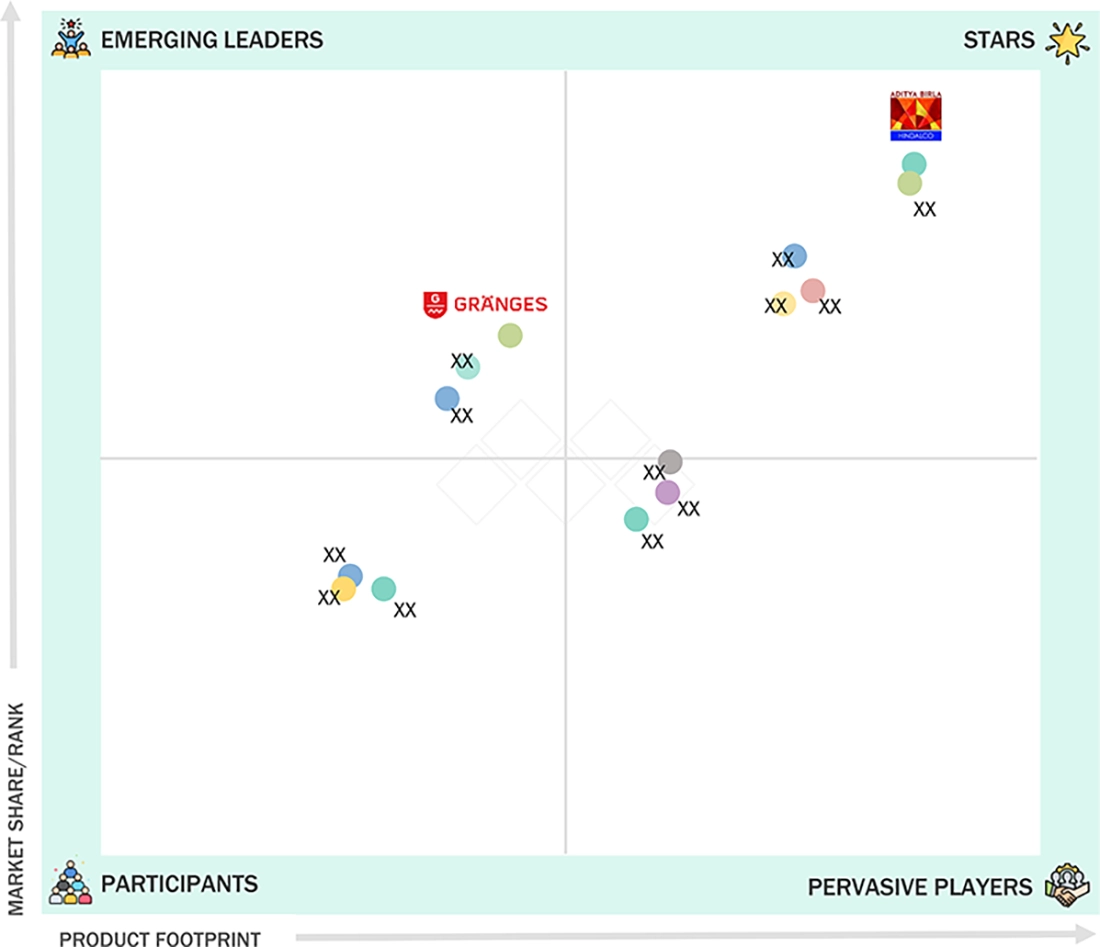
Source: Secondary Research, Interviews with Experts, MarketsandMarkets Analysis
KEY MARKET PLAYERS
- Hindalco Industries Ltd. (India)
- Constellium SE(France)
- UACJ Corporation (Japan)
- Granges AB (Sweden)
- Arconic (US)
- Speira GmbH (Germany)
- AMAG Austria Metall AG (Austria)
- Elvalhalcor (Greece)
- ALRO S.A. (Romania)
- Kibar Holding (Turkey)
- Kaiser Aluminum (US)
- Aluminium Duffel (Belgium)
MARKET SCOPE
| REPORT METRIC | DETAILS |
|---|---|
| Market Size in 2024 (Value) | USD 115.72 BN |
| Market Size in 2030 (Value) | USD 154.64 BN |
| CAGR | 5.0% |
| Years Considered | 2021–2030 |
| Base Year | 2024 |
| Forecast Period | 2025–2030 |
| Units Considered | Value (USD MN/BN), Volume (Kiloton) |
| Report Coverage | Revenue forecast, company ranking, competitive landscape, growth factors, and trends |
| Segments Covered |
|
| Regions Covered | North America, Europe, Asia Pacific, South America, and Middle East & Africa |
WHAT IS IN IT FOR YOU: ALUMINUM ROLLED PRODUCTS MARKET REPORT CONTENT GUIDE
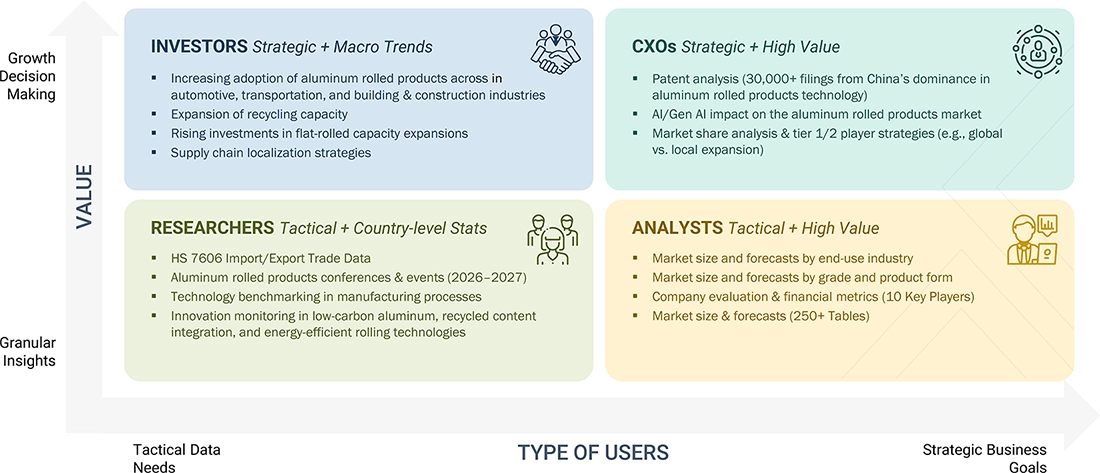
DELIVERED CUSTOMIZATIONS
We have successfully delivered the following deep-dive customizations:
| CLIENT REQUEST | CUSTOMIZATION DELIVERED | VALUE ADDS |
|---|---|---|
| Sub-segmental study of Gradees of aluminum rolled products | Aluminum rolled products grades were studied on the basis of sub segments of 3xxx, 5xxx, 6xxx, 7xxx, and 8xxx series | Major sub-segments were identified and the scope for growth through end-use industries delivered. |
| Aluminum Rolled Products Market based on Product Form | Aluminum rolled products market was studied on the basis of product forms based on cold and hot rolling technologies. Product forms included Hot Rolled Thick Plates (15-200 mm), Hot Rolled Medium Thick Sheets (3-15 mm), Cold Rolled Sheet (0.25-5 mm), Hot Rolled Coil (3-18 mm), and Cold Rolled Strip/Coil (0.25-5 mm) | Delivered market scope, manufacturing technologies, and major end-use industries for the product forms studied. |
RECENT DEVELOPMENTS
- January 2026 : Hindalco Industries Ltd. announced a ?21,000-crore 3.6-lakh-tonne-per-annum aluminum smelter expansion in Odisha. It commissioned new 1.7-lakh-tonne-per-annum flat-rolled products (FRP) and battery-grade aluminum foil facilities, enhancing domestic production and reducing import dependence by half.
- September 2025 : Arconic commissioned a USD 57.5 million expansion at its Davenport Works facility in Iowa to double U.S. production of high-purity aluminum (99.9 %+), essential for aerospace and defense alloys, supported by U.S. Defense Production Act funding to strengthen domestic supply chains.
- September 2025 : Constellium extended its long-term partnership with Embraer to continue supplying high-performance aluminum solutions, to support Embraer’s Commercial Aviation, Executive Jets, and Defense & Security divisions. Under this renewed agreement, Constellium provided specialty aluminum plates, sheets, and extrusions from its facilities in France and the US.
- October 2024 : In October 2024, Gränges AB completed the acquisition of a casting and hot-rolling facility in China, from Shandong Innovation Group (SIG).
- February 2023 : UACJ Corporation and Toyo Seikan Group Holdings, a renowned packaging manufacturer, signed a business alliance to jointly develop environmentally enhanced aluminum cans and promote closed-loop “can-to-can” aluminum recycling across the value chain, advancing sustainability and circular material use.
Table of Contents
 Exclusive indicates content/data unique to MarketsandMarkets and not available with any competitors.
Methodology
The study involved four major activities to estimate the current size of the global aluminum rolled products market. Exhaustive secondary research was conducted to gather information on the market, the peer product market, and the parent product group market. The next step was to validate these findings, assumptions, and sizes with the industry experts across the value chain of aluminum rolled products through primary research. The top-down and bottom-up approaches were employed to estimate the overall size of the aluminum rolled products market. After that, market breakdown and data triangulation were used to determine the sizes of the market's segments and sub-segments.
Secondary Research
The market for companies offering aluminum rolled products is derived from secondary data from paid and unpaid sources, analyzing the product portfolios of major companies in the ecosystem, and rating companies based on performance and quality. Various secondary sources, such as Business Standard, Bloomberg, World Bank, and Factiva, were referred to identify and collect information for this study on the aluminum rolled products market. In the secondary research process, various secondary sources were referred to identify and collect information related to the study. Secondary sources included annual reports, press releases, and investor presentations of door vendors, forums, certified publications, and whitepapers. The secondary research was used to obtain critical information on the industry’s value chain, the total pool of key players, market classification, and segmentation from the market and technology-oriented perspectives.
Primary Research
In the primary research process, various primary sources from both the supply and demand sides were interviewed to obtain qualitative and quantitative information for this report. The primary sources from the supply side included industry experts, such as Chief Executive Officers (CEOs), Vice Presidents (VPs), marketing directors, technology and innovation directors, and related key executives from several key companies and organizations operating in the aluminum rolled products market. After the complete market engineering (calculations for market statistics, market breakdown, market size estimations, market forecasting, and data triangulation), extensive primary research was conducted to gather information and verify and validate the critical numbers arrived at. Primary research was also conducted to identify segmentation types, industry trends, the competitive landscape of aluminum rolled products offered by various market players, and key market dynamics, including drivers, restraints, opportunities, challenges, and key player strategies. Throughout the complete market engineering process, the top-down and bottom-up approaches, along with several data triangulation methods, were extensively used to estimate and forecast the overall market segments and subsegments listed in this report. Extensive qualitative and quantitative analysis was performed on the complete market engineering process to list the key information/insights throughout the report.
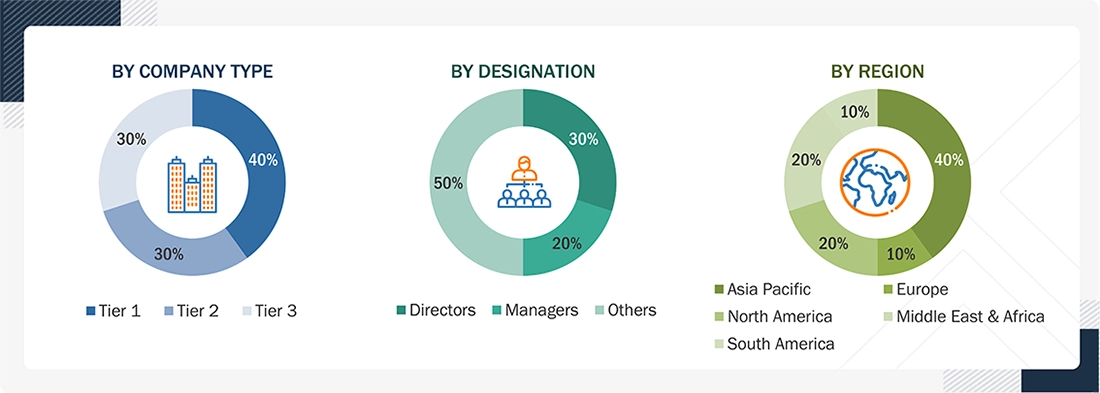
Notes: Other designations include sales, marketing, and product managers.
Tier 1: >USD 1 Billion; Tier 2: USD 500 million–1 Billion; and Tier 3: <USD 500 million.
To know about the assumptions considered for the study, download the pdf brochure
Market Size Estimation
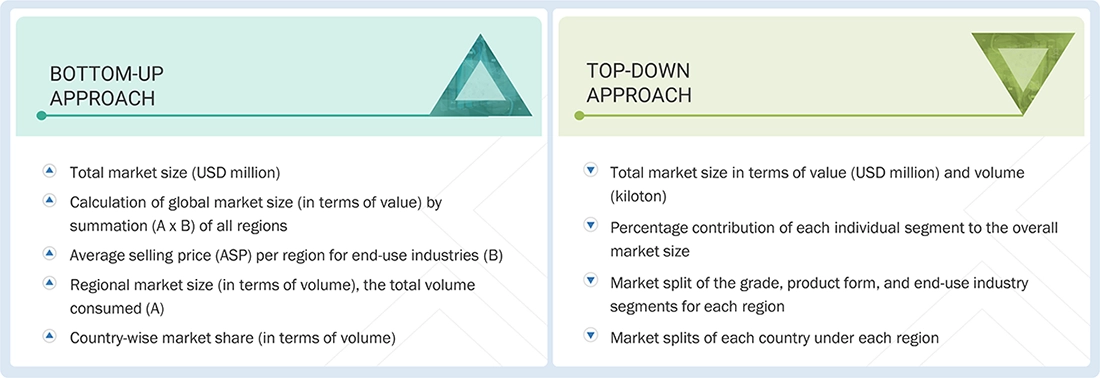
The top-down and bottom-up approaches were used to estimate and validate the size of the global aluminum rolled products market. These approaches were also used extensively to estimate the size of various dependent market segments. The research methodology used to estimate the market size included the following:
Aluminum Rolled Products Market : Top-Down and Bottom-Up Approach
Data Triangulation
After arriving at the overall market size using the market size estimation processes, the market was split into several segments and subsegments. The data triangulation and market breakup procedures were employed, wherever applicable, to complete the overall market engineering process and arrive at the exact statistics of each market segment and subsegment. The data was triangulated by studying various factors and trends from both the demand and supply sides.
Market Definition
Aluminum rolled products are materials produced by rolling aluminum. This involves passing aluminum through a set of rollers to reduce its thickness and shape it into thin sheets, plates, or coils. The rolling process can be done hot or cold, depending on the required properties and uses of the final product. These products are commonly used across a variety of industries, including automotive, aerospace, construction, and packaging, due to their lightweight, corrosion-resistant, and durable properties.
Stakeholders
- Aluminum rolled product manufacturers
- Raw material suppliers
- Fabricators
- Distributors and traders
- Government bodies
- Industry associations and regulatory bodies
- End users
Report Objectives
- To define, describe, and forecast the size of the global aluminum rolled products market, based on grade, product form, end-use industry, and region in terms of value and volume
- To provide detailed information on the significant drivers, restraints, opportunities, and challenges influencing the market
- To strategically analyze micromarkets concerning individual growth trends, prospects, and their contribution to the market
- To assess the growth opportunities in the market for stakeholders and provide details on the competitive landscape for market leaders
- To forecast the market size of segments and subsegments for North America, Europe, Asia Pacific, South America, and the Middle East & Africa
- To strategically profile key players and comprehensively analyze their market shares and core competencies
- To analyze competitive developments such as product launches, acquisitions, expansions, partnerships, and agreements in the aluminum rolled products market
- To provide the impact of AI/Gen AI on the market
Available Customizations
With the given market data, MarketsandMarkets offers customizations according to client-specific needs.
The following customization options are available for the aluminum rolled products market report:
Geographic Analysis
-
A further breakdown of the aluminum rolled products market for additional countries
Company Information
- Detailed analysis and profiling of additional market players (up to five)


Personalize This Research
- Triangulate with your Own Data
- Get Data as per your Format and Definition
- Gain a Deeper Dive on a Specific Application, Geography, Customer or Competitor
- Any level of Personalization
Let Us Help You
- What are the Known and Unknown Adjacencies Impacting the Aluminum Rolled Products Market
- What will your New Revenue Sources be?
- Who will be your Top Customer; what will make them switch?
- Defend your Market Share or Win Competitors
- Get a Scorecard for Target Partners

Custom Market Research Services
We Will Customise The Research For You, In Case The Report Listed Above Does Not Meet With Your Requirements
Get 10% Free CustomisationTESTIMONIALS
We at Nissan Chemicals Corporation have been clients of MarketsandMarkets for more than a year now. We recently consulted MarketsandMarkets for a study, the team at MarketsandMarkets was extremely professional and organized. The business insights were very detailed and aligned well with our expectations that really helped us formulate the Business Plans and device new strategies for development themes. MarketsandMarkets offers a unique combination of expertise and dedicated engagement model. Their research findings have helped us in designing our Pricing Strategy which will make it easier for us to predict the future sales and profits for the next ten years. We look forward to working with MarketsandMarkets in the future.
VP of Strategy & New Business Development
Leading Specialty Chemical Company
The MarketsandMarkets Engagement Model, composed of both the Knowledge Store and advisory custom research, has greatly helped us in understanding our markets and making strategic decisions. The Knowledge Store is a fast way to allow everyone in our organization to understand more about most any market they are interested in. The ability to then get custom research done and get answers to specific strategic questions and market insight has been spectacular. The Markets and Markets team feel more like colleagues than vendors and their services have helped us change our culture where statements of things like growth opportunities and competitive position are always backed by industry research.

Rich Gibson,
Director, Corporate Strategy
Milliken & Company,
Leading Industrial Manufacturer of specialty chemical, floor covering, performance and protective textile materials, and healthcaremilliken.com
MarketsandMarkets is a trusted resource that helps us to better understand markets that are near-adjacencies-whether its technology, value chain or geography. Their Knowledge Store platform provides a dashboard of markets and their characteristics which is easy to use and saves us time.
Adam Shaw,
Market Development and Strategy Manager
AdvanSix Inc. USA,
An American Leader in Chemicalswww.advansix.com
The Knowledge Store from MarketsandMarkets is a valuable tool which has helped my team acquire greater insight in to the end markets that our business serves. This has enabled us to help our company build stronger strategies throughout our planning process.
TOSHIO KINOSHITA
Senior Chif Consultion Research & Consulting Division
Mitsubishi Chemical Research Corporation,
Leading Manufacturer of Chemical Productswww.mitsubishichem-res.co.jp/en/

We recently engaged with MarketsandMarkets for a study, the team not only clearly understood our business objectives but was also extremely professional in the way they handled the entire project. The study was efficiently conducted in a phase-wise manner, and the engagement model furnished us with high-quality business insights that far exceeded our expectations at each phase. We were especially happy that MarketsandMarkets could provide us with both, an English as well as a Japanese version of the study. A special thanks to the Analyst Team and Client Services Team, whose fluency in Japanese enhanced our comfort level, as we could converse with them in our preferred language.
Independent entrepreneurs
Arrow Precision
We approached MarketsandMarkets for study on Proppants Market, and their work exceeded our expectations. The study conducted was comprehensive and enabled us to view the market through the various dimensions. In addition, the team was extraordinarily responsive throughout the process and resolved our queries on time. I strongly recommend MarketsandMarkets and will certainly consider them for additional market assessments we will need in the future.
Global engineering company, Japan
Deputy Manager,
Strategic Planning OfficeThe high-quality insights shared by the MarketsandMarkets team helped us understand the pharmaceutical plant designers in a specific geography. It also captured the risks that we may likely face in communicating with our potential partners. The study would enable us identify partners, which would impact our future growth.
- France Aluminum Rolled Products Market
- Turkey Aluminum Rolled Products Market
- Italy Aluminum Rolled Products Market
- Spain Aluminum Rolled Products Market
- Canada Aluminum Rolled Products Market
- Mexico Aluminum Rolled Products Market
- US Aluminum Rolled Products Market
- South Africa Aluminum Rolled Products Market
- Brazil Aluminum Rolled Products Market
- Argentina Aluminum Rolled Products Market
- Rest Of Europe Aluminum Rolled Products Market
- Rest Of Asia Pacific Aluminum Rolled Products Market
- GCC Countries Aluminum Rolled Products Market
- –Rest Of GCC Aluminum Rolled Products Market
- Rest Of South America Aluminum Rolled Products Market
- China Aluminum Rolled Products Market
- India Aluminum Rolled Products Market
- Japan Aluminum Rolled Products Market
- South Korea Aluminum Rolled Products Market
- Germany Aluminum Rolled Products Market
- UK Aluminum Rolled Products Market






Growth opportunities and latent adjacency in Aluminum Rolled Products Market