Asia Pacific Enteral Feeding Devices Market Size, Growth, Share & Trends Analysis

Asia Pacific Enteral Feeding Devices Market, by Type (Administration sets, Nasogastric Tubes, Enteral Feeding Syringes, Nasal Feeding, Nasoduodenal), Insertion Method, Age Group (Adult, Pediatric), Application (Oncology, Respiratory), End User - Forecast to 2032




OVERVIEW
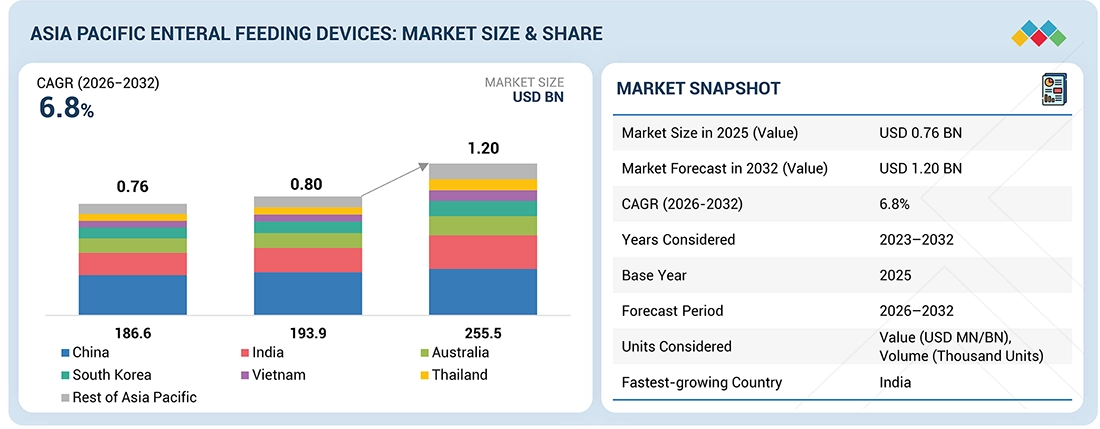
Source: Secondary Research, Interviews with Experts, MarketsandMarkets Analysis
The Asia Pacific enteral feeding device market, valued at USD 0.76 billion in 2025, stood at USD 0.80 billion in 2026 and is projected to advance at a resilient CAGR of 6.8% from 2026 to 2032, culminating in a forecasted valuation of USD 1.20 billion by the end of the period. In the Asia Pacific enteral feeding devices market, the growth of enteral feeding tubes is primarily attributed to the incidence of diseases such as cancer, stroke, neurological disorders, and gastrointestinal diseases that often lead to swallowing difficulties and require prolonged nutrition support. The increase in the elderly population in China, Japan, and South Korea is significantly contributing to the demand for gastrostomy and nasogastric tubes. The expansion of ICU and acute-care capacity, the acceptance of early enteral nutrition protocols, and the wider availability of skilled clinicians trained in tube placement are boosting the use of tubes. Strong local manufacturing in China and India, along with the growing adoption of home-care feeding solutions, is making enteral feeding tubes more affordable and accessible.
KEY TAKEAWAYS
-
BY TYPEBased on type, the enteral feeding tubes segment accounted for the largest share, at 45.4%, in the enteral feeding devices market in 2025.
-
BY INSERTION METHODBy insertion method, Transnasal, Transoral, and Percutaneous Endoscopic Insertion (PEG/PEJ) is expected to register the highest CAGR of 7.3% during the forecast period.
-
BY AGE GROUPBy age group, the adult patients segment accounted for the largest share, 38.6%, in the enteral feeding devices market in 2025.
-
BY APPLICATIONBy application, the oncology segment accounted for the largest share of 26.2% in the enteral feeding devices market in 2025.
-
BY END USERBy end user, the home care settings segment is expected to register the highest CAGR of 7.5% during the forecast period.
-
BY REGIONIn 2025, China dominated the Asia Pacific enteral feeding devices market, with the largest market share of 27.2%.
-
COMPETITIVE LANDSCAPEFresenius SE & Co. KGaA (Germany) is the star player in the Asia Pacific enteral feeding devices market, leveraging its reach, geographic presence, and broad portfolio of offerings to support its market growth.
-
COMPETITIVE LANDSCAPEOmex Medical Technology (India) has been identified as a prominent SME/startup/emerging leader in this market that has high potential for growth and room to expand in the area of enteral feeding devices.
The Asia Pacific enteral feeding tubes market is experiencing an upward trajectory due to the increasing number of patients suffering from cancer, stroke, neurological disorders, and gastrointestinal diseases. They usually have difficulties in swallowing and require long-term support for their nutrition. The use of gastrostomy and nasogastric tubes is propelled by the growing geriatric population in China, Japan, and South Korea. The market is also driven by acute-care infrastructure, higher acceptance of early enteral nutrition protocols, and the presence of more skilled clinicians trained in tube placement. Strong local manufacturing bases in China and India, combined with the gradual acceptance of home-care feeding solutions, are making enteral feeding tubes more accessible and affordable.
TRENDS & DISRUPTIONS IMPACTING CUSTOMERS' CUSTOMERS
The Asia Pacific enteral feeding devices market is experiencing a significant influence from various trends and disruptions. Technology is the primary driving force behind the development of more intelligent, portable, and user-friendly pumps for enteral feeding, as well as low-profile gastrostomy devices and safety-enhanced connectors, collectively making the home care scenario more appealing. The increased focus on nutrition, based on solid ground and early intervention protocols, is shifting the use of devices from hospitals to outpatient and home settings. Disruptions are occurring in the form of supply chain issues, especially with imported components, and the extensive regulations of different Asia Pacific countries are making it more challenging for manufacturers to get their products approved. Moreover, the rapid increase in the number of local manufacturers in both China and India is making the market more competitive, forcing players to come up with less expensive options. The adoption of digital health solutions, such as remote monitoring and connected feeding systems, is changing patient care models and creating challenges for the sales of traditional products.
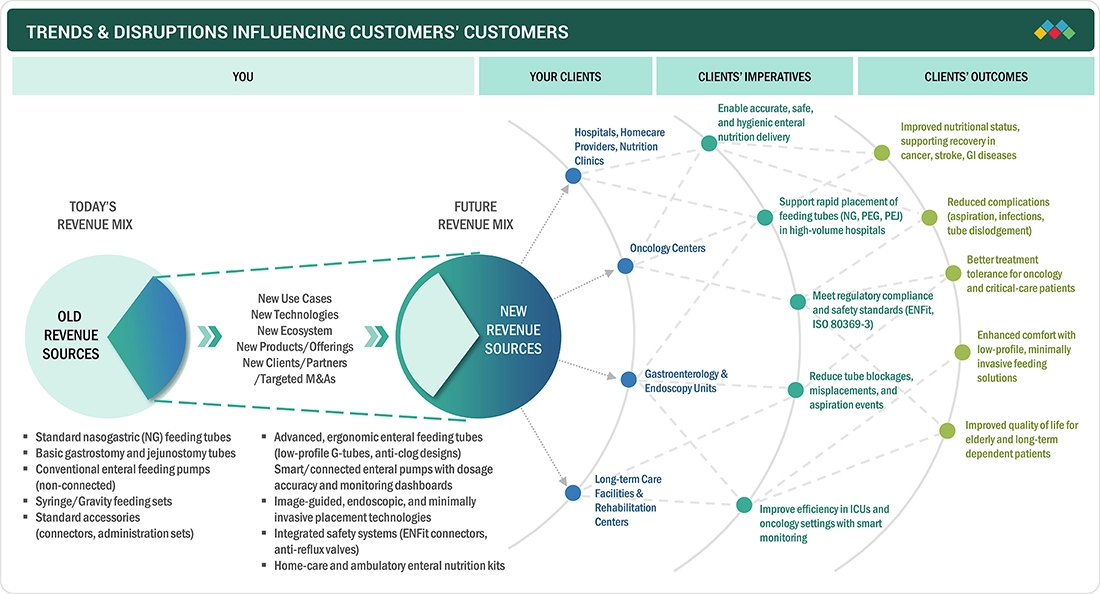
Source: Secondary Research, Interviews with Experts, MarketsandMarkets Analysis
MARKET DYNAMICS

Level
-
Increasing Prevalence of Chronic and Critical Illnesses

-
Rise in Geriatric Population


Level
-
Limited Adoption in Low-and Middle-Income Countries

-
Regulatory Compliance and Product Recalls


Level
-
Untapped Growth Potential in Emerging Economies

-
Growing Awareness and Training Programs


Level
-
Shortage of Intubation specialists

Source: Secondary Research, Interviews with Experts, MarketsandMarkets Analysis
Driver: Increasing Prevalence of Chronic and Critical Illnesses
The increasing incidence of chronic and critical diseases in the Asia Pacific region has made enteral feeding devices essential. Such diseases consume extensive medical resources with special feeding or long-term support. The growing number of patients in the ICU and the longer duration of hospitalizations are boosting the adoption of enteral nutrition solutions. The general trend of moving patients with chronic or critical illnesses from hospitals to home or outpatient care is leading to a higher demand for easy-to-use feeding pumps, tubes, and accessories. Enteral feeding devices are becoming a crucial part of the management of patients in hospitals and home care settings in the region.
Restraint: Limited Adoption in Low-and Middle-income Countries
The Asia Pacific enteral feeding devices market is negatively impacted by the invasion of new markets due to a mixture of economic, infrastructural, and awareness issues. In several economies of the region classified as low- or middle-income, the universal use of enteral feeding devices is hindered by restrictions imposed by limited healthcare budgets, lower hospital and ICU capacities, and unevenly distributed skilled clinicians. The lack of awareness about the benefits of early enteral nutrition, the limited share of home care services, and restricted access to advanced minimally invasive placement techniques limit market expansion. The price sensitivity in these markets further complicates the market and limits the launch of high-end pumps and tubes, thus leading to a slower uptake compared to other developed economies such as China, Japan, and South Korea.
Opportunity: Untapped Growth Potential in Emerging Economies
Untapped growth potential in the Asia Pacific enteral feeding devices market is creating significant opportunities by addressing unmet needs in both hospital and home care settings. Large segments of the population in India, Indonesia, Vietnam, and rural China still have limited access to advanced enteral nutrition solutions, particularly in secondary and tertiary care centers outside major urban areas. Rising awareness of the importance of early nutritional intervention, coupled with expanding home health services and outpatient care models, is opening new avenues for device adoption. Opportunities exist in developing cost-effective, locally manufactured feeding tubes, pumps, and accessories tailored to regional patient needs. Players can leverage digital health technologies for remote monitoring, adherence tracking, and caregiver training.
Challenge: Shortage of Intubation Specialists
The Asia Pacific lacks competent intubation and endoscopy specialists. Procedures such as PEG, nasogastric, and orogastric tube placements require the presence of skilled clinicians to confirm proper and safe insertion. The limited number of trained people in smaller towns and rural areas causes patients to wait longer for procedures, which in turn reduces the use of devices outside big cities. This also causes hospitals and ICUs to be under more pressure, to experience more risks related to complications from the procedures, and to be slower in introducing the new feeding technologies. The deficiency of specialists is trapping the market growth, especially in the applications of home care and long-term nutrition, where professional support is vital.
ASIA PACIFIC ENTERAL FEEDING DEVICES MARKET: COMMERCIAL USE CASES ACROSS INDUSTRIES
| COMPANY | USE CASE DESCRIPTION | BENEFITS |
|---|---|---|
 |
Offers a complete range of products for enteral feeding to offer nutrition safely | Gives patients reliable nutrition| Limits interruptions during feeding |
 |
Offers reliable enteral feeding devices to deliver medication accurately | Controls the food flow accurately| Less misconnections due to ENFit technology, allowing patient safety |
 |
Supplies special devices for safe insertion and ensures that patients get the long-term nutrition they need | Offers more precision with tube placement| Fewer complications| Option for patients to move around more freely |
 |
Deals in medical nutrition goods and tubes that are designed specifically for cancer, neurology, and geriatrics | Better outcomes for patients| Better nutritional shape |
 |
Designs enteral feeding syringes, pumps, and tubes for use in hospitals and at home, with a focus on precision and cleanliness | Accurate dosing |
Logos and trademarks shown above are the property of their respective owners. Their use here is for informational and illustrative purposes only.
MARKET ECOSYSTEM
The Asia Pacific enteral feeding devices market ecosystem comprises manufacturers, suppliers, and healthcare providers. Global and regional manufacturers produce various feeding tubes, pumps, syringes, and other accessories. They collaborate with local wholesalers to cover hospitals, ICUs, and home care bases. The key customers are hospitals, oncology centers, rehab facilities, and home care services. They are dependent on skilled clinicians, nutritionists, and endoscopy specialists. Favorable government policies, reimbursement frameworks, and a growing healthcare infrastructure enable market growth. Research institutions and tech providers are also driving innovations with new smart pumps, safety connectors, and disease-specific nutrition solutions. The ecosystem receives a further boost from training programs, professional bodies & awareness campaigns that encourage clinicians to use the devices and patients to adopt them, creating a dynamic environment.
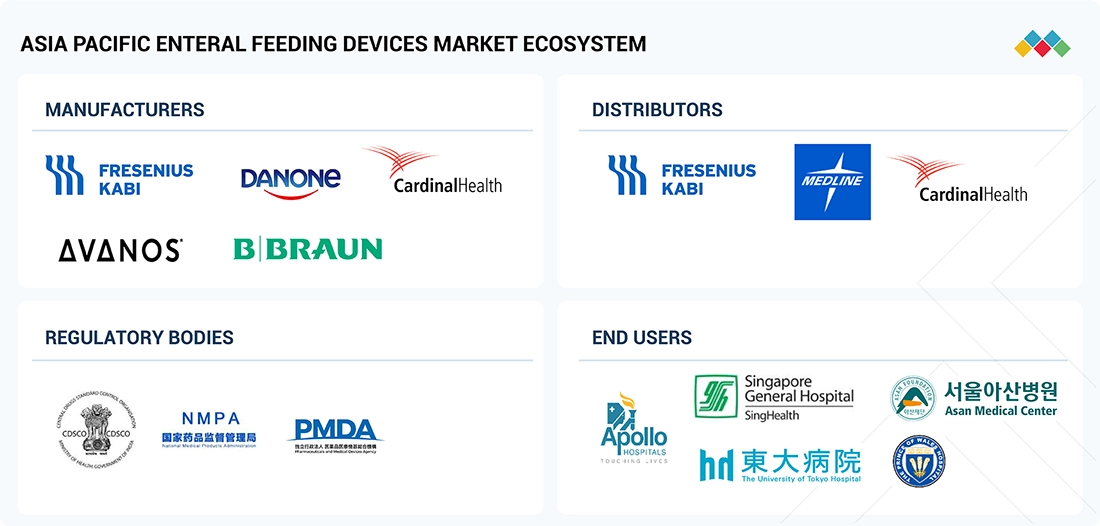
Logos and trademarks shown above are the property of their respective owners. Their use here is for informational and illustrative purposes only.
MARKET SEGMENTS
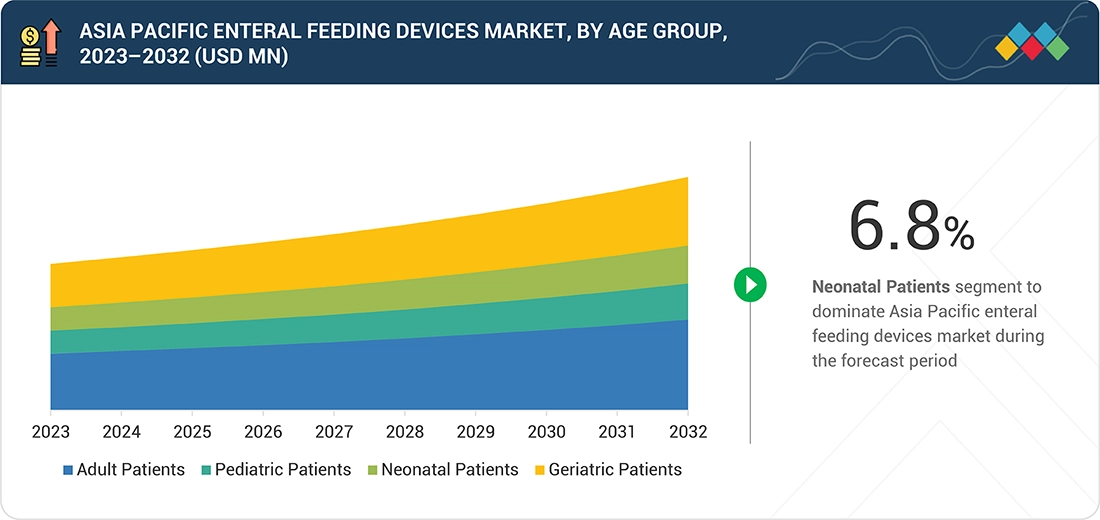
Source: Secondary Research, Interviews with Experts, MarketsandMarkets Analysis
ASIA PACIFIC Enteral Feeding Devices Market, By Type
Based on the type segment, the enteral feeding tube is expected to dominate the market. The use of enteral feeding tubes in the Asia Pacific enteral feeding devices market continues to expand, driven by the rapidly growing elderly population and the increasing prevalence of chronic conditions, tumors, and nerve disorders that require prolonged care through nutrition. The development of hospital infrastructure further backs the demand, improved access to less invasive procedures, and the increased use of enteral nutrition over parenteral nutrition. Moreover, the healthcare spending that is taking place in the region and the swift growth of home healthcare services in countries that are key players in the Asia Pacific market are also contributing to the market's rapid expansion.
ASIA PACIFIC Enteral Feeding Devices Market, By Insertion Method
The transnasal, transoral, and percutaneous segment is expected to dominate due to changing demographics, the rise of chronic diseases, and the need for reliable access to nourishment. The expansion of healthcare systems and the upgrading of medical facilities are giving more people access to endoscopic procedures. There is a shift toward less invasive and more guided endoscopic methods over conventional hospital-based nutritional support interventions.
ASIA PACIFIC Enteral Feeding Devices Market, By Age Group
The adult patient segment is expected to lead the segment with the booming geriatric population, higher occurrence of chronic diseases, and the need for long-term nutritional support. Several patients who are being admitted to the ICUs, rehab centers, and nursing homes are dependent on enteral devices. Moreover, the use of early enteral nutrition guidelines is becoming more common in clinics, and gastrostomy and jejunostomy procedures are also increasing, resulting in more home-care services available; all of these factors contribute to the rise in the utilization of these devices. The medical infrastructure is improving, and devices are becoming available at lower costs due to manufacturers in the region, which helps continue the acceptance among adult patients.
ASIA PACIFIC Enteral Feeding Devices Market, By Application
The demand for enteral feeding devices in oncology in the Asia Pacific region is influenced by the increasing number of cancer cases, particularly head-and-neck, gastrointestinal, and esophageal cancer. They usually lead to swallowing difficulties, extreme weight loss, and nutritional deficits due to the treatment, which makes use of long-term enteral support. Oncologists are aware of the placement of feeding tubes in advance during radiotherapy and chemotherapy. The rapid development of oncology hospitals, radiotherapy facilities, and multidisciplinary cancer treatment in China, India, Japan, and Southeast Asia is creating an even greater demand for these devices. The growing trend of providing cancer care at home and the wide availability of PEG, gastrostomy, and nasogastric tubes are speeding up the adoption of enteral feeding devices among oncology patients.
ASIA PACIFIC Enteral Feeding Devices Market, By End User
The hospitals segment is expected to lead the end-user market due to an increasing number of patients with cancers, stroke, neurological diseases, and digestive problems who need fast and certain nutrition support in severe and critical care situations. Several hospitals in China, India, Japan, and Southeast Asia are expanding their infrastructures that include the construction of more ICUs and endoscopy units, which directly leads to the higher use of PEG, nasogastric, and other feeding tube placements. Hospitals are introducing clinical nutrition protocols based on the evidence that suggests early enteral feeding to be beneficial in terms of recovery and fewer complications, which in turn leads to higher consumption of enteral feeding devices. The hospitals in the region are also experiencing an upward trend in the use of enteral feeding devices due to the improved accessibility of devices brought by the strong manufacturing and distribution network. There are growing concerns for patient safety, along with the introduction of standardized connectors and advanced enteral pumps.
REGION
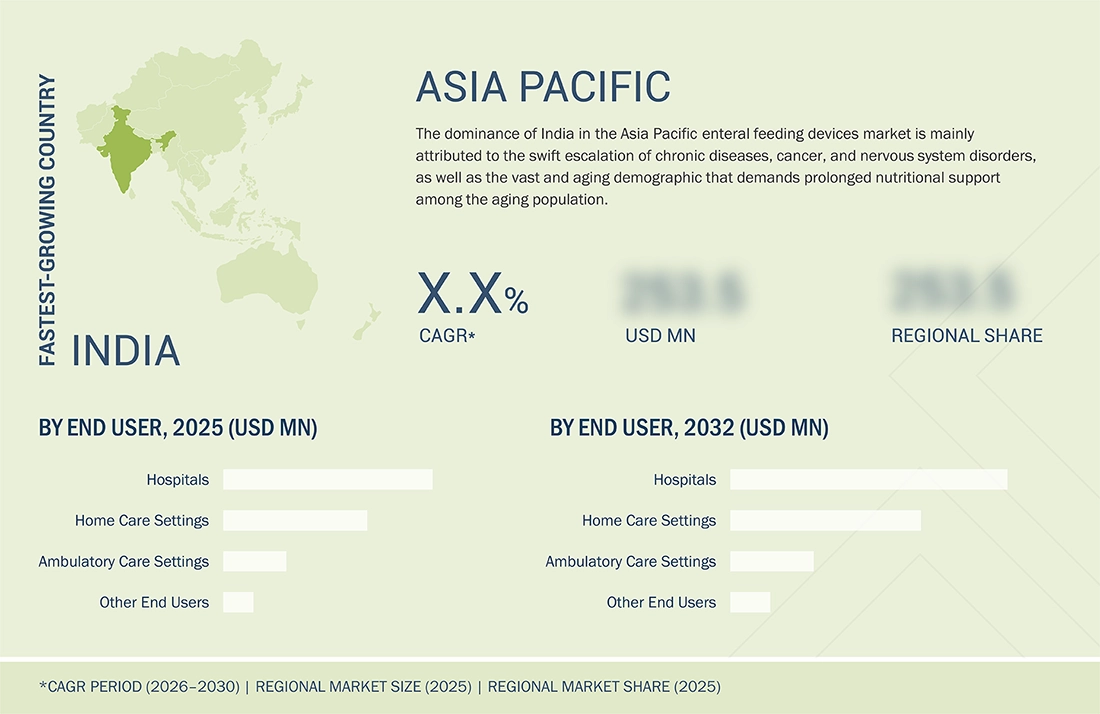
India is expected to be the fastest-growing region in the Asia Pacific enteral feeding devices market during the forecast period.
India is the fastest-growing country in the Asia Pacific enteral feeding devices market due to the rise in the number of cancer, stroke, neurological disorders, and gastrointestinal diseases that require reliable nutritional support. The major contributing factor is the rapidly increasing geriatric population. The development of hospital, ICU, and endoscopy infrastructure, particularly in tier-2 and tier-3 cities, is enabling more people to access PEG, nasogastric, and other feeding tube procedures. The increasing awareness about early enteral nutrition, the wider adoption of evidence-based critical-care protocols, and the growing number of home-care service providers are stimulating demand for these devices. Strong local manufacturing capabilities, decreasing costs, and the widening of private healthcare networks are making enteral feeding devices available in India to various patient settings.
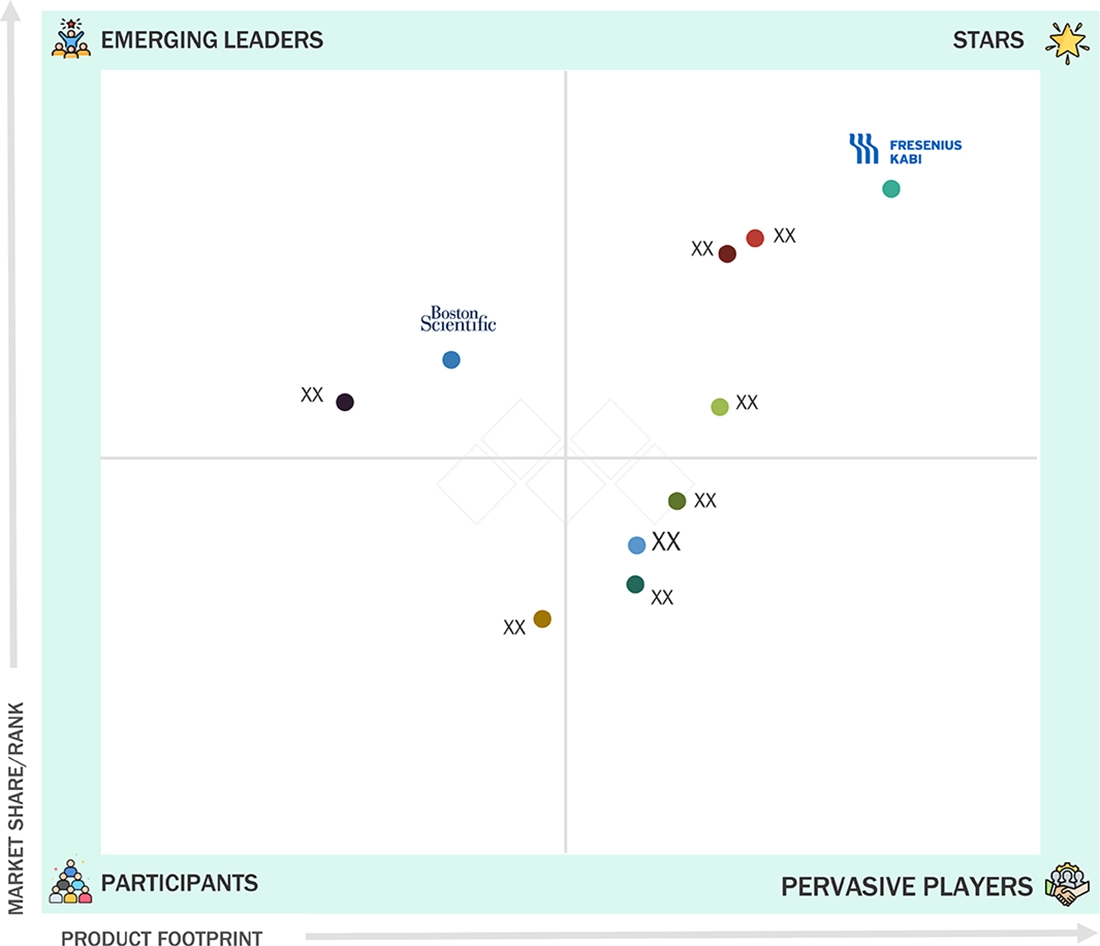
ENTERAL FEEDING DEVICES MARKET: COMPANY EVALUATION MATRIX
In the enteral feeding devices market matrix, Fresenius Kabi (Star) is recognized as one of the leading players in the Asia Pacific enteral feeding devices market. The company offers a broad portfolio of feeding pumps, tubes, connectors, and disposables. It has a strong global distribution network across over 100 countries and a robust presence in the region. Boston Scientific Corporation (Emerging Leader) has developed a dedicated enteral access portfolio under the EndoVive brand. This includes initial placement and replacement gastrostomy (PEG) kits, jejunal feeding tubes, and low-profile button devices. They are compatible with the safety-driven ENFit connector standard.
Source: Secondary Research, Interviews with Experts, MarketsandMarkets Analysis
KEY MARKET PLAYERS
- Fresenius SE & Co. KGaA (Germany)
- Cardinal Health, Inc. [US]
- Avanos Medical, Inc. (US)
- Danone S.A. (France)
- Becton, Dickinson and Company (US)
- Boston Scientific Corporation (US)
- Nestlé S.A. (Switzerland)
- B. Braun Melsungen AG. (US)
- CONMED Corporation (US)
- Baxter International Inc. (US)
- Abbott (US)
- Moog, Inc. (US)
- Cook Medical (US)
- Terumo Corporation (Japan)
- Weigao Medical International Co., Ltd. (China)
- JMS Co., Ltd.(Japan)
- Vygon (France)
- Applied Medical Technology (US)
- Amsino International Inc. (US)
- Medela AG (Switzerland)
MARKET SCOPE
| REPORT METRIC | DETAILS |
|---|---|
| Market Size in 2025 (Value) | USD 0.76 Billion |
| Market Forecast in 2032 (Value) | USD 1.20 Billion |
| Growth Rate | CAGR of 6.8% from 2026–2032 |
| Years Considered | 2023–2032 |
| Base Year | 2025 |
| Forecast Period | 2026–2032 |
| Units Considered | Value (USD Million/Billion), Volume (Thousand units) |
| Report Coverage | Revenue forecast, company ranking, competitive landscape, growth factors, and trends |
| Segments Covered |
|
| Countries Covered | Japan, China, Australia, South Korea, Vietnam, Thailand, Rest of Asia Pacific |
| Parent & Related Segment Reports |
Enteral Feeding Devices Market US Enteral Feeding Devices Market Europe Enteral Feeding Devices Market LATAM Enteral Feeding Devices Market |
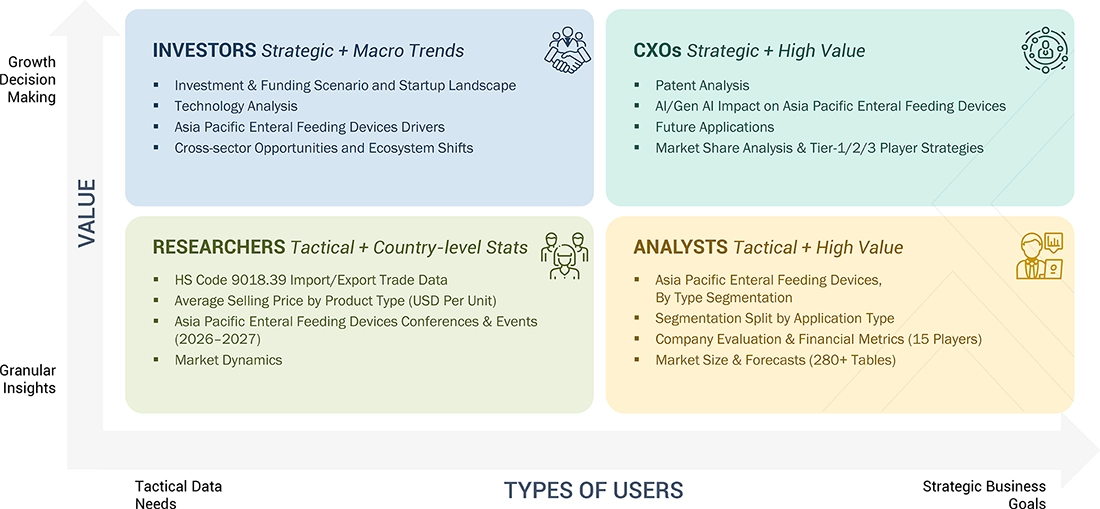
WHAT IS IN IT FOR YOU: AISA PACIFIC ENTERAL FEEDING DEVICES MARKET REPORT CONTENT GUIDE
DELIVERED CUSTOMIZATIONS
We have successfully delivered the following deep-dive customizations:
| CLIENT REQUEST | CUSTOMIZATION DELIVERED | VALUE ADDS |
|---|---|---|
| Product Analysis | Detailed assessment of enteral feeding devices by type, application, age group, and insertion method | Analysis of emerging trends such as smart, connected pumps & remote monitoring, personalized nutrition & smart dosing, compact, portable and user-friendly pumps for home & ambulatory use, and low-profile & pediatric/neonatal specialized tubes |
| Company Information | Comprehensive profiles of major players such as Cardinal Health, Fresenius Kabi, Avanos, Danone, B Braun, Boston Scientific Corporation, Nestle, and others | Identification of strategic partnerships, collaborations, licensing agreements, and mergers & acquisitions in enteral feeding devices market |
| Geographic Analysis | Country-level demand mapping with a focus on Asia Pacific (China, India, Japan), and other emerging markets | Regional market outlook with detailed growth opportunities, regulatory updates, and adoption trends across key countries |
RECENT DEVELOPMENTS
- July 2025: Danone strengthened its medical and plant-based nutrition portfolio by acquiring a majority stake in Kate Farms, supporting innovation and cross-market synergies from its European base.
- March 2025: Fresenius Kabi announced an expansion with an innovation center to advance enteral and patient-specific nutrition solutions for European and global markets.
- February 2024: Fresenius Kabi reinforced its leadership in clinical nutrition across Europe by extending its collaboration with ESICM to support education and professional development in intensive care nutrition.
Table of Contents
 Exclusive indicates content/data unique to MarketsandMarkets and not available with any competitors.
Methodology
This study involved the extensive use of both primary and secondary sources. The research process involved the study of various factors affecting the industry to identify the segmentation types, industry trends, key players, competitive landscape, market dynamics, and key player strategies.
Secondary Research
The secondary research process involves the comprehensive use of secondary sources, directories, databases (such as Factiva, Bloomberg Businessweek, and D&B Hoovers), white papers, annual reports, company house documents, investor presentations, and SEC filings of companies. Secondary research was used to identify and collect information useful for the extensive, technical, market-oriented, and commercial study of the Asia Pacific Enteral Feeding Devices Market. It was also used to obtain important information about the key players and market classification & segmentation according to industry trends to the bottom-most level and key developments related to market and technology perspectives. Moreover, a database of the key industry leaders was prepared using secondary research.
Primary Research
In the primary research process, various sources from the supply and demand sides were interviewed to obtain qualitative and quantitative information for this report. The primary sources from the supply side include industry experts such as CEOs, vice presidents, marketing & sales directors, technology & innovation directors, and related key executives from various companies and organizations in Asia Pacific Enteral Feeding Devices Market. The primary sources from the demand side include medical OEMs, analytical instrument OEMs, CDMOs, and service providers. Primary research was conducted to validate the market segmentation, identify key players, and gather insights on industry trends & market dynamics.
Market Size Estimation
In this report, the size of the Asia Pacific Enteral Feeding Devices Market was determined using revenue analysis of leading players. For this purpose, key players in the market were identified, and their revenues from the enteral feeding device business were determined through various insights gathered during the primary and secondary research phases. Secondary research included the study of the annual and financial reports of the top market players. Meanwhile, primary research included extensive interviews with key opinion leaders, such as CEOs, directors, and marketing executives.
Segmental revenues were calculated based on the revenue mapping of major solution/service providers to calculate the market value. This process involved the following steps:
- Generating a list of major players operating in the Asia Pacific Enteral Feeding Devices Market
- Mapping annual revenues generated by major players from the Asia Pacific Enteral Feeding Devices Market (or nearest reported business unit/product category)
- Revenue mapping of key players to cover a major share of the market as of 2024
- Extrapolating the regional value of the Asia Pacific Enteral Feeding Devices Market
Data Triangulation
After arriving at the overall market size from the market size estimation process explained above, the Asia Pacific Enteral Feeding Devices Market was split into segments and subsegments. Data triangulation and market breakdown procedures were employed to complete the overall market engineering process and arrive at the exact statistics for all segments and subsegments. The data was triangulated by studying various factors and trends from both the demand and supply sides. Additionally, the Asia Pacific Enteral Feeding Devices Market was validated using top-down and bottom-up approaches.
Market Definition
Enteral feeding devices are instruments and configurations designed for nutrition administration directly into the gastrointestinal tract, bypassing the mouth. These devices serve medically challenged patients who cannot eat food orally due to swallowing disorders, severe illnesses, or surgical interferences. Enteral feeding can be accomplished through the insertion of tubes from the nose or mouth, which are then placed into the stomach or small intestine to deliver nutrients.
Stakeholders
- Manufacturers and Distributors of Enteral Feeding Devices
- Ambulatory Surgical Centers
- Home Care Facilities
- Healthcare Institutions (Hospitals and Cardiac Centers)
- Research Institutions
- Research and Consulting Firms
- Contract Research Organizations (CROS) and Contract Manufacturing Organizations (CMOS)
- Academic Medical Centers and Universities
- Market Research and Consulting Firms
- Clinical Research Organizations
- Group Purchasing Organizations (GPOs)
- Academic Medical Centers and Universities
- Accountable Care Organizations (ACOs)
Report Objectives
- To define, describe, and forecast the Asia Pacific Enteral Feeding Devices Market on product, age group, application, and end user
- To identify and analyze drivers, restraints, opportunities, and challenges influencing market growth
- To strategically analyze micro markets concerning individual growth trends, prospects, and contributions to the total market
- To analyze opportunities in the market for stakeholders and provide details of the competitive landscape for market leaders
- To profile key market players and comprehensively analyze their market shares and core competencies
- To analyze competitive developments such as acquisitions, agreements, collaborations, expansions, partnerships, and product launches/approvals in the Asia Pacific Enteral Feeding Devices Market


Personalize This Research
- Triangulate with your Own Data
- Get Data as per your Format and Definition
- Gain a Deeper Dive on a Specific Application, Geography, Customer or Competitor
- Any level of Personalization
Let Us Help You
- What are the Known and Unknown Adjacencies Impacting the Asia Pacific Enteral
- What will your New Revenue Sources be?
- Who will be your Top Customer; what will make them switch?
- Defend your Market Share or Win Competitors
- Get a Scorecard for Target Partners

Custom Market Research Services
We Will Customise The Research For You, In Case The Report Listed Above Does Not Meet With Your Requirements
Get 10% Free CustomisationTESTIMONIALS

JAYANT RAJPUROHIT
Director of Market Insights, Data and Analytics
SFI Health,
Leading Pharmaceutical Companywww.sfihealth.com/

We at SFI Health approached MarketsandMarkets for an Opportunity Assessment on "Incidence and Prevalence of Focus Indications" as we wanted to know the most attractive HCPs like Physician, Functional MD, Naturopath and Pharmacist. The project was critical for us to ensure our focus on the right target which would enable sustainable growth and profitability for SFI Health. The business insights provided exceeded our expectations and we were extremely impressed. The team at MarketsandMarkets is highly professional and detail oriented and very well understood our business needs. MarketsandMarkets offers a unique combination of expertise and dedicated engagement model. We identified 2 new products to be launched in coming months, based on the research findings provided by MarketsandMarkets. We are happy with the services and would strongly recommend MarketsandMarkets to my peers in the industry.

BEATRIZ DE LA CALLE
Head of Commercial Analytics
Qualicaps,
Leading Pharmaceutical Companywww.qualicaps.com/

We partnered with MarketsandMarkets for an assessment study on hard empty capsules. The team was extremely professional in understanding our business requirements and we received timely responses to all our queries. The market intelligence and the recommendations has met our business requirements. We were extremely impressed to see the final study results; it really exceeded our expectations. The market intelligence offered by MarketsandMarkets, and clarity on next steps will help us achieve our business objective for the Year 2021. We are happy with the services and would strongly recommend MarketsandMarkets to my peers in the industry.

Bob Williams,
Senior Director Business Development & Innovation
Bracco Diagnostics Inc.,
Italian Multinational in life sciences sector and a World Leader in imaging diagnosticsimaging.bracco.com/us-en
We were pleased with targeted insights that MarketsandMarkets identified from a custom study on the 'Radiation Dose Management Solutions Market'. Your team identified and characterized the market participants as well as underlying trends accurately. This study was useful to Bracco in formulating business strategies for our dose monitoring product lines and we thank MarketsandMarkets for the job well done.
Cody Coonradt,
Market Development and Strategy Manager
3M Health Information Systems,
Leader in Health care Coding, Payment & Analytics Solutions.www.3m.com/3M/en_US/health-information-systems-us
The value for our organization comes from three things: depth of research, specificity of segments and being easy to work with. As important as the first two are, the third can't be underestimated. MarketsandMarkets, maybe more than any other research vendor, wants to know what is top of mind for our team and what big questions we are grappling to answer.
Their customer first approach and high value engagement model, have given us great analysis and excellent value for money






Growth opportunities and latent adjacency in Asia Pacific Enteral