AI Cybersecurity Market

AI Cybersecurity Market by Security Function (Security Operations & Incident Response, OT/IoT & Cyber-Physical Security), Application (Threat Detection & Anomaly Detection, Security Automation & Orchestration), Vertical – Global Forecast to 2031




OVERVIEW
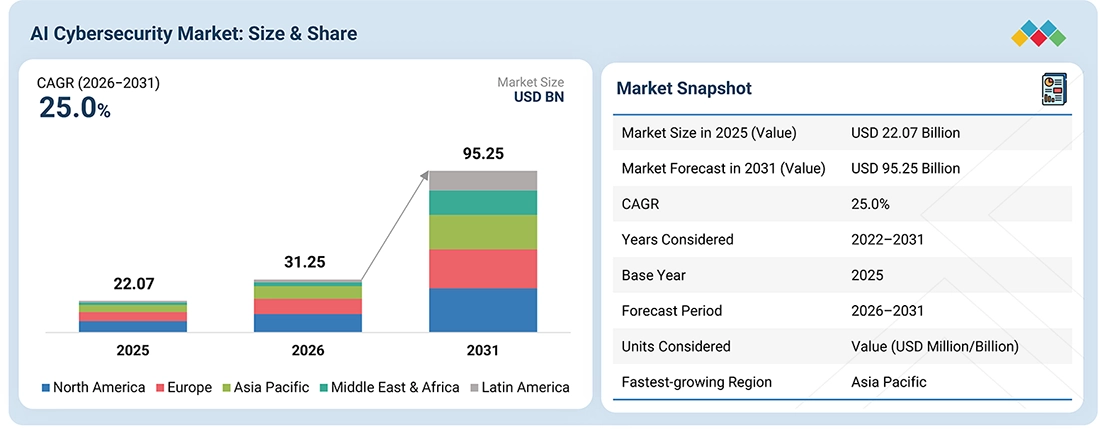
Source: Secondary Research, Interviews with Experts, MarketsandMarkets Analysis
The AI cybersecurity market is projected to grow from USD 31.25 billion in 2026 to USD 95.25 billion by 2031, at a CAGR of 25.0% during the forecast period. Agentic security operations are driving demand for AI cybersecurity as organizations adopt autonomous systems capable of performing alert analysis, threat investigation, and response. In 2026, companies are deploying AI across triage, threat hunting, investigation, and remediation to accelerate response times, while retaining human oversight for tasks that require precision and care.
KEY TAKEAWAYS
-
BY REGIONNorth America accounted for the highest share, at 41.7%, of the AI cybersecurity market in 2026.
-
BY OFFERINGBy offering, the software & platforms segment is expected to dominate the market in 2026.
-
BY SERVICEBy service, the professional services segment is expected to have the largest market size during the forecast period.
-
BY SECURITY FUNCTIONBy security function, the OT/IoT & cyber-physical security segment is expected to record the highest CAGR, at 34.2%, during the forecast period.
-
BY APPLICATIONBy application, the security automation & orchestration segment is expected to grow the fastest, with a CAGR of 36.1%.
-
BY DEPLOYMENT MODEBy deployment mode, the cloud segment is projected to lead the market during the forecast period.
-
BY ORGANIZATION SIZEBy organization size, SMEs are expected to grow at the fastest rate, with a CAGR of 29.3%.
-
BY VERTICALBy vertical, BFSI is expected to dominate the market during the forecast period.
-
COMPETITIVE LANDSCAPE - KEY PLAYERSThe key players in the AI cybersecurity market include Microsoft, Palo Alto Networks, CrowdStrike, Cisco, and Fortinet, which offer broad AI-enabled cybersecurity portfolios spanning threat detection, security analytics, endpoint and network protection, threat intelligence, automated investigation, incident response, and security operations.
-
COMPETITIVE LANDSCAPE - STARTUPS/SMEsDropzone AI, Anvilogic, and other emerging vendors are advancing AI-native cybersecurity through autonomous investigation, AI-powered threat hunting, intelligent detection engineering, and agentic security workflows.
AI-powered cybersecurity platforms help organizations detect, analyze, and respond to cyberattacks more quickly by examining relevant data and identifying potential anomalies. These technologies strengthen an organization's ability to respond to such threats, help reduce alert fatigue among personnel, and significantly improve analyst productivity.
TRENDS & DISRUPTIONS IMPACTING CUSTOMERS' CUSTOMERS
The AI cybersecurity market is shifting from traditional, rule-based security solutions to AI-based cyber defense solutions that provide intelligent threat detection, behavioral analytics, automated investigation, and rapid response within enterprise security systems. Market growth is being fueled by rising adoption across IT & ITeS, BFSI, and retail & e-commerce, as organizations protect sensitive data, customer-facing platforms, and cloud infrastructure against growing cyber threats while building larger digital ecosystems. Developments such as generative AI, agentic AI, predictive analytics, and security automation are further contributing to the wider use of AI in cybersecurity.
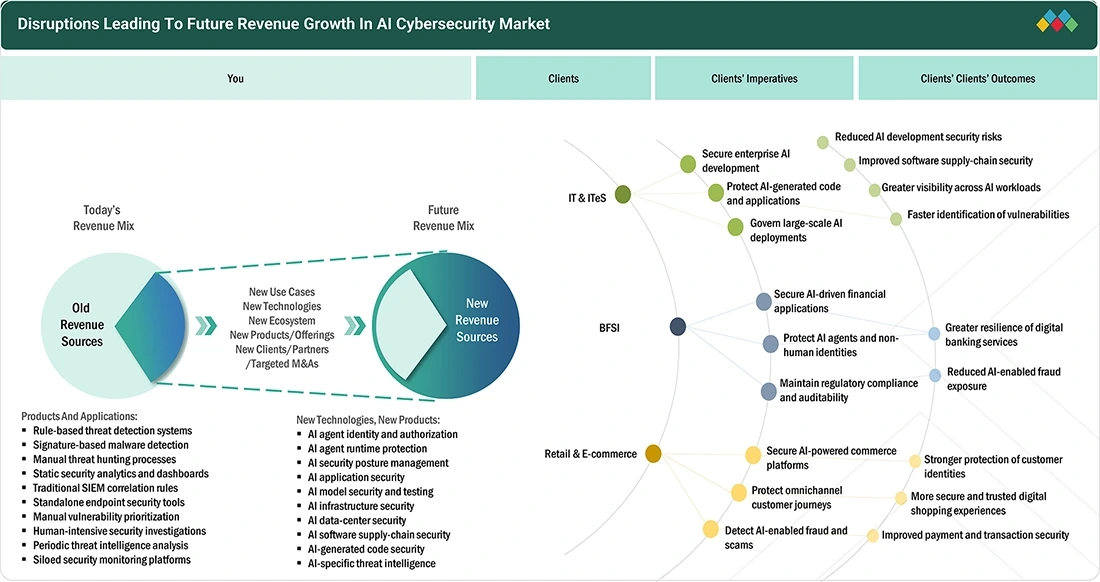
Source: Secondary Research, Interviews with Experts, MarketsandMarkets Analysis
MARKET DYNAMICS

Level
-
Increasing sophistication of AI-enabled cyber threats

-
Growing adoption of AI-driven cybersecurity solutions


Level
-
Shortage of AI and cybersecurity skills

-
Complexity of integrating AI with existing security infrastructure


Level
-
Expansion of agentic AI in security operations

-
Growing demand for autonomous threat detection and response


Level
-
Growing threat of adversarial attacks against AI security systems

-
Managing false positives and AI-generated inaccuracies

Source: Secondary Research, Interviews with Experts, MarketsandMarkets Analysis
Driver: Increasing sophistication of AI-enabled cyber threats
AI is increasing the speed, scale, and complexity of cyberattacks by enabling the automation of reconnaissance, vulnerability detection, phishing, malware creation, and adaptive attack strategies. As AI technologies are used throughout the attack cycle, companies are investing in detection, threat intelligence, behavioral analysis, and automated countermeasures to defend against rapidly evolving threats.
Restraint: Shortage of AI and cybersecurity skills
The shortage of professionals with combined AI and cybersecurity expertise is constraining adoption of AI-enabled security technologies. Organizations require specialized skills to deploy, integrate, operate, validate, and oversee AI-driven security solutions. The World Economic Forum (WEF) reports that 54% of organizations identify insufficient knowledge and skills as a key barrier to deploying AI for cybersecurity.
Opportunity: Expansion of agentic AI in security operations
The growing adoption of agentic AI presents an opportunity to automate complex security operations, including alert triage, threat investigation, hunting, and response. AI agents can reason across security data and execute defined tasks with limited intervention, helping organizations address workload pressures and accelerate machine-speed defense while maintaining human oversight for critical decisions.
Challenge: Growing threat of adversarial attacks against AI security systems
AI-enabled cybersecurity systems face emerging adversarial risks, including manipulation of AI inputs, adaptive attacks, prompt-based attacks, and exploitation of model weaknesses. For instance, NIST’s 2026 research indicates that traditional AI-based security features can easily become ineffective when put to adaptive prompt attacks, as an organization will have to perform continuous monitoring, testing, and security updates to maintain defensive effectiveness.
AI CYBERSECURITY MARKET: COMMERCIAL USE CASES ACROSS INDUSTRIES
| COMPANY | USE CASE DESCRIPTION | BENEFITS |
|---|---|---|
 |
St. Luke’s University Health Network deployed Microsoft Security Copilot agents to automate phishing alert triage, analyze security alerts, and support incident investigation and reporting. | Saved nearly 200 analyst hours monthly, automated thousands of false-positive alerts, reduced incident-reporting time from hours to minutes, and improved analyst productivity |
 |
Relay Network implemented SentinelOne's Singularity Data Lake and Purple AI to centralize security data, enable natural-language threat hunting, and improve cloud threat detection across AWS infrastructure. | Improved security visibility by 100%, reduced issue-detection time by 50%, decreased manual threat-detection efforts by 80%, and accelerated security investigations |
 |
Village Roadshow deployed Palo Alto Networks Cortex XSIAM to consolidate security operations, unify XDR, SIEM, SOAR, and attack surface management, and automate threat detection and response. | Reduced security costs by 23%, freed 500 work hours monthly, consolidated 1,400 cases into 20 actionable issues, and achieved a 2-minute median resolution time |
 |
Bluebird Group deployed Darktrace's Self-Learning AI and Autonomous Response to detect anomalous email behavior, identify known and unknown phishing threats, and automate threat containment. | Identified and neutralized phishing threats, reduced manual security analysis, enabled rapid autonomous containment, and allowed IT teams to focus on strategic security activities |
 |
Coop deployed Vectra AI with Managed Detection and Response services to improve security visibility, prioritize genuine threats, reduce security noise, and strengthen proactive threat investigation. | Reduced security noise by 98%, saved approximately 55,000 investigation hours, improved threat visibility, prioritized genuine attacks, and reduced the security team's workload |
Logos and trademarks shown above are the property of their respective owners. Their use here is for informational and illustrative purposes only.
MARKET ECOSYSTEM
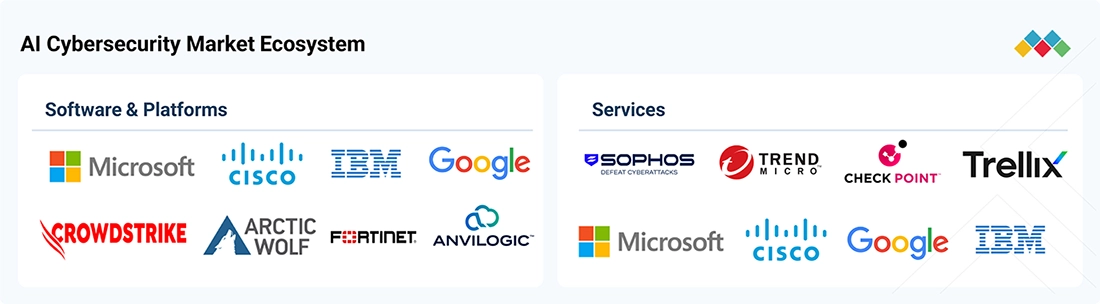
The AI cybersecurity market ecosystem comprises software & platforms and services used to apply AI to threat detection, security analytics, threat intelligence, investigation, incident response, and security automation. Software and platform vendors offer AI-powered cybersecurity solutions across endpoints, networks, data, identities, cloud, and security operations, while service providers offer managed detection and response, monitoring, incident response, consulting, deployment, and other specialized expertise. These offerings improve the efficiency of detection and response, reduce analyst workload, and strengthen cyber resilience for organizations.
Logos and trademarks shown above are the property of their respective owners. Their use here is for informational and illustrative purposes only.
MARKET SEGMENTS
Source: Secondary Research, Interviews with Experts, MarketsandMarkets Analysis
AI Cybersecurity Market, by Offering
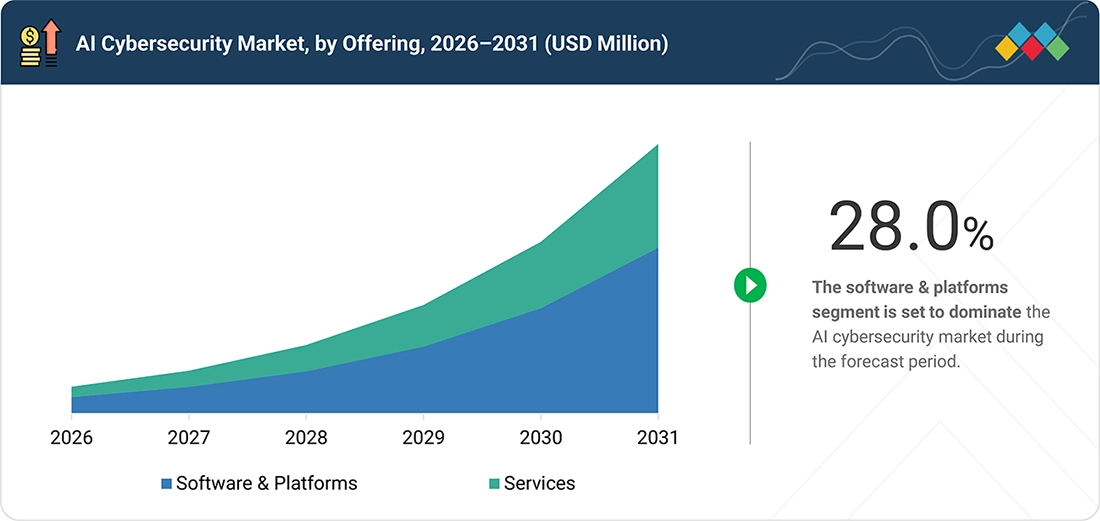
The software & platforms segment is expected to lead the AI cybersecurity market, supported by growing enterprise adoption of AI-enabled threat detection, security analytics, automated investigation, and response technologies. Organizations are increasingly deploying integrated platforms to process large security-data volumes, improve detection accuracy, and automate repetitive cybersecurity workflows across diverse environments.
AI Cybersecurity Market, by Services
The professional services segment is expected to dominate the AI cybersecurity services market, driven by demand for consulting, deployment, integration, and training expertise. Organizations require specialized support to identify AI use cases, integrate AI capabilities with existing security environments, address skills gaps, and operationalize AI-driven cybersecurity technologies effectively.
AI Cybersecurity Market, by Security Function
The security operations & incident response segment is expected to account for the largest market size, as organizations increasingly apply AI to alert triage, threat investigation, incident detection, response automation, and security analytics. AI adoption is helping security teams handle growing alert volumes, accelerate investigations, and improve response efficiency across complex enterprise environments.
AI Cybersecurity Market, by Application
The threat detection & anomaly detection segment is expected to lead the AI cybersecurity market, driven by the need to identify sophisticated and previously unknown threats across large volumes of security telemetry. AI enables organizations to analyze behavioral patterns, correlate signals, detect deviations, and identify malicious activity faster than conventional rule-based approaches.
AI Cybersecurity Market, by Deployment Mode
The cloud segment is expected to account for a large market size as enterprises increasingly adopt cloud-based security platforms to support scalable AI analytics, centralized security data processing, and automated threat detection. Expanding cloud infrastructures and increasingly complex digital environments are encouraging organizations to deploy AI-enabled cybersecurity capabilities through flexible, cloud-delivered architectures.
AI Cybersecurity Market, by Organization Size
The large enterprises segment is expected to dominate the AI cybersecurity market, supported by higher cybersecurity budgets, extensive digital infrastructures, larger security-data volumes, and greater capacity to deploy advanced AI technologies. Large organizations also face complex and distributed attack surfaces, increasing demand for AI-enabled detection, analytics, threat intelligence, and automated response.
AI Cybersecurity Market, by Vertical
The BFSI segment is expected to account for a significant share of the AI cybersecurity market, driven by the sector's extensive digital infrastructure, high-value financial data, interconnected systems, and exposure to sophisticated cyber threats. Financial institutions are increasingly deploying AI for threat detection, anomaly analysis, vulnerability discovery, identity protection, incident response, and automated security operations.
REGION
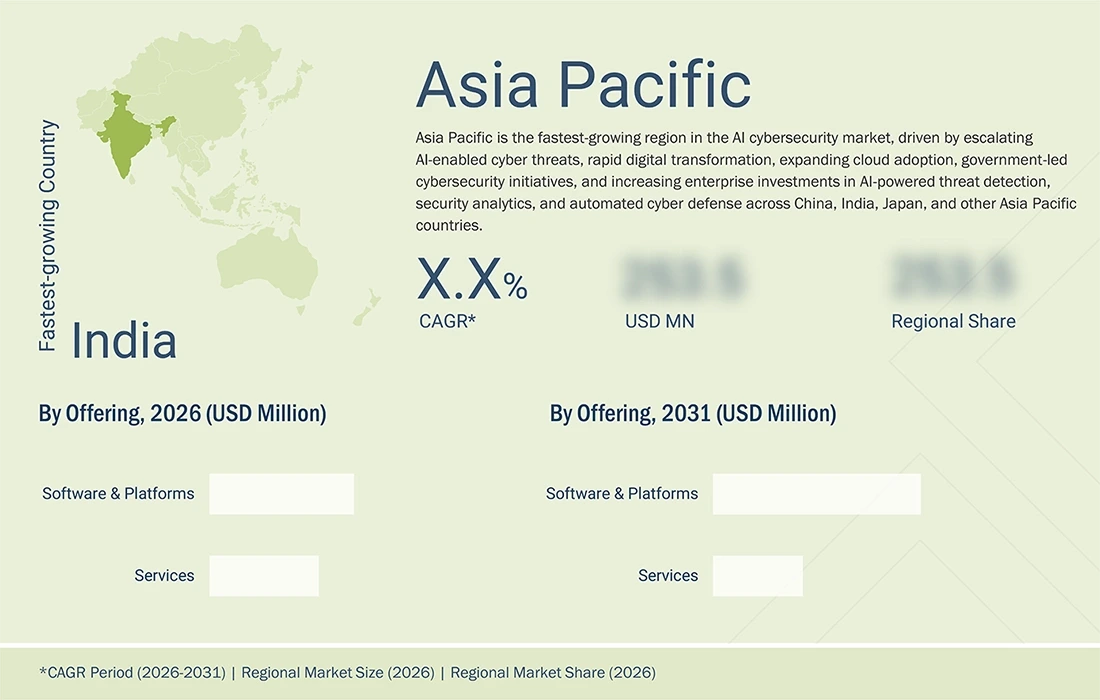
Asia Pacific to be the fastest-growing region in the global AI cybersecurity market during the forecast period
The AI cybersecurity market is experiencing rapid growth in Asia Pacific, driven by accelerating digital transformation, expanding cloud and digital financial services, rising AI-enabled cyber threats, and increasing investment in AI-powered threat detection and cyber defense across China, India, Japan, and other Asia Pacific countries. Governments and enterprises are strengthening their cybersecurity capabilities, while AI adoption is expanding across threat detection, predictive analytics, digital forensics, and incident response. According to INTERPOL, 66.7% of the law-enforcement agencies surveyed in the region have implemented AI tools for applications such as threat detection, digital forensics, and predictive analysis.
AI CYBERSECURITY MARKET: COMPANY EVALUATION MATRIX
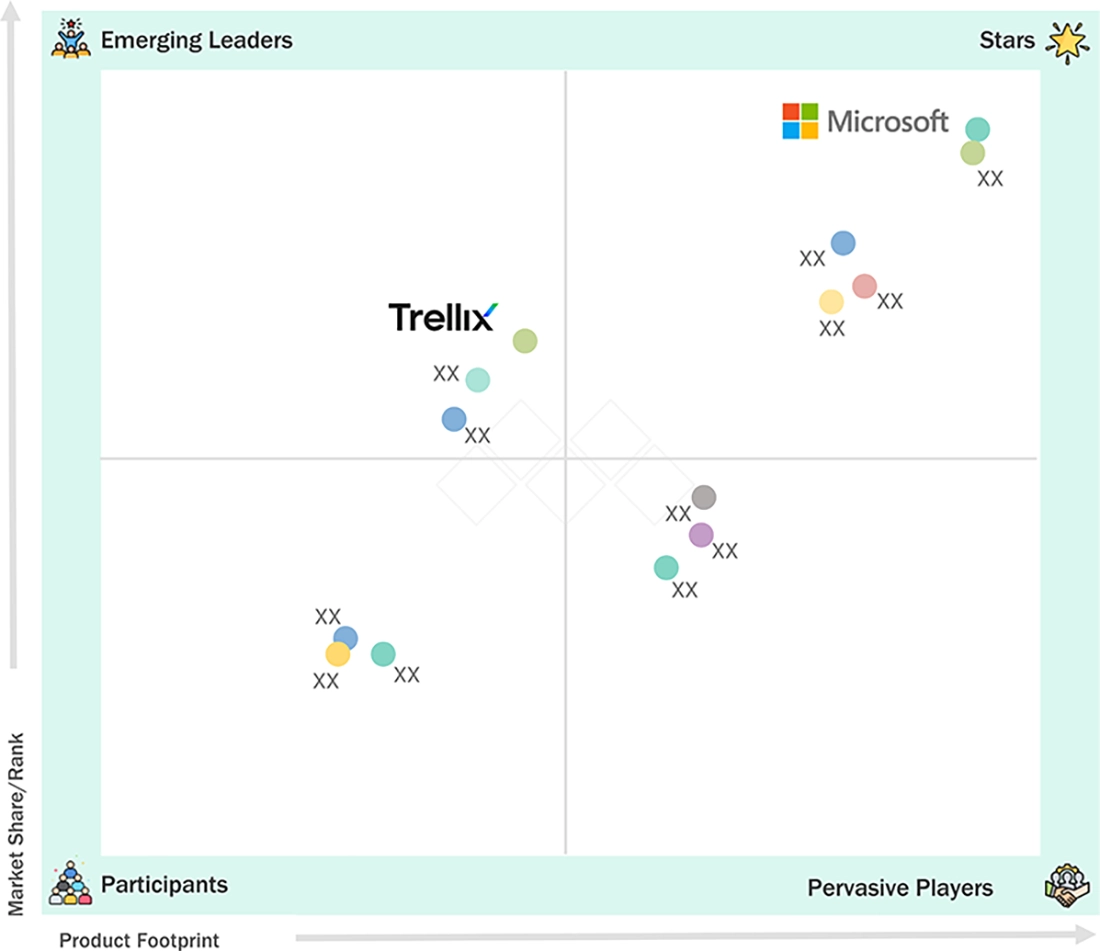
Microsoft (Star) holds a strong position in the AI cybersecurity market through its integrated portfolio spanning Defender, Sentinel, Security Copilot, AI-powered detection, investigation, automated response, and agentic security operations. Trellix (Emerging Leader) is expanding its presence through its AI-powered Security Platform, Trellix Wise, AI-driven threat detection, investigation, threat intelligence, and automated response capabilities.
Source: Secondary Research, Interviews with Experts, MarketsandMarkets Analysis
KEY MARKET PLAYERS
- Microsoft (US)
- Palo Alto Networks (US)
- CrowdStrike (US)
- Cisco (US)
- Fortinet (US)
- Proofpoint (US)
- Darktrace (UK)
- Check Point (Israel)
- Trend Micro (Japan)
- Google (US)
- Zscaler (US)
- IBM (US)
- SentinelOne (US)
- Sophos (UK)
- Trellix (US)
MARKET SCOPE
| REPORT METRIC | DETAILS |
|---|---|
| Market Size in 2025 (Value) | USD 22.07 Billion |
| Market Forecast in 2026 (Value) | USD 31.25 Billion |
| Market Forecast in 2031 (Value) | USD 95.25 Billion |
| Growth Rate | CAGR of 25.0% from 2026 to 2031 |
| Years Considered | 2022–2031 |
| Base Year | 2025 |
| Forecast Period | 2026–2031 |
| Units Considered | Value (USD Million/Billion) |
| Report Coverage | Revenue forecast, company ranking, competitive landscape, growth factors, and trends |
| Segments Covered |
|
| Regions Covered | North America, Europe, Asia Pacific, Middle East & Africa, Latin America |
WHAT IS IN IT FOR YOU: AI CYBERSECURITY MARKET REPORT CONTENT GUIDE
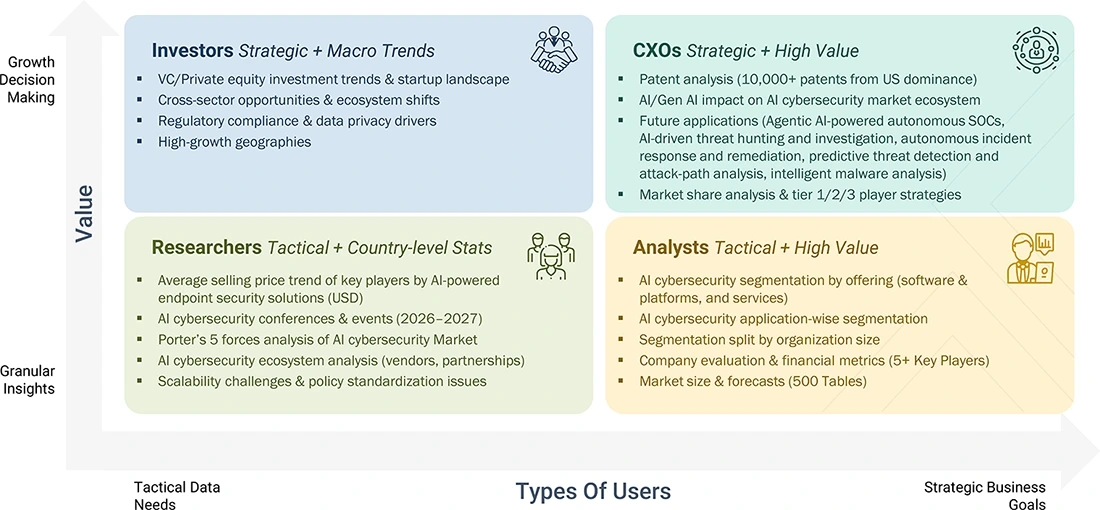
DELIVERED CUSTOMIZATIONS
We have successfully delivered the following deep-dive customizations:
| CLIENT REQUEST | CUSTOMIZATION DELIVERED | VALUE ADDS |
|---|---|---|
| Leading Software & Platform Provider (US) | Product Analysis: Comprehensive comparison of leading AI cybersecurity vendors’ solutions, including AI-powered threat detection and analytics, endpoint and network security, AI-driven security operations, threat intelligence, behavioral analytics, automated incident response, vulnerability and exposure management, security automation, and AI-powered security assistants across enterprise, cloud, hybrid, and critical infrastructure environments | Stronger understanding of vendor positioning, AI maturity, threat detection capabilities, automation depth, security analytics, response capabilities, deployment flexibility, threat intelligence, platform integration, and innovation strategies—supporting informed technology selection, cybersecurity investment planning, and long-term AI-enabled cyber defense initiatives |
| Leading Service Provider (UK) | Company Information: Detailed profiling and evaluation of additional AI cybersecurity vendors (up to 5), covering AI-powered cybersecurity product portfolios, threat detection and response capabilities, AI-driven security operations, autonomous security solutions, managed security services, regional presence, strategic partnerships, technology innovations, industry focus, and competitive positioning across the global AI cybersecurity market | Comprehensive perspective of the evolving AI cybersecurity ecosystem, highlighting the growing adoption of AI-powered threat detection, intelligent investigation, automated response, predictive analytics, security automation, and agentic capabilities, while identifying vendor differentiation through integrated security platforms, advanced AI models, unified telemetry, threat intelligence, and continuous innovation in cyber defense |
RECENT DEVELOPMENTS
- September 2026 : Palo Alto Networks acquired Console, an AI-native platform enabling agentic analysis and actions, to expand Cortex's capabilities for automated investigation, alert prioritization, issue resolution, and machine-speed security operations.
- July 2026 : Microsoft introduced Project Perception, a multi-model agentic security system combining specialized cybersecurity agents, models, and enterprise signals to continuously identify vulnerabilities, investigate threats, and drive automated remediation.
- July 2026 : CrowdStrike partnered with Cerebras Systems to combine high-speed AI inference with Falcon AI Detection and Response, enabling powerful security models to operate at machine speed for real-time cyber threat detection and response.
- June 2026 : Google collaborated with PwC to help organizations deploy AI Threat Defense, combining Gemini, Wiz, CodeMender, and Mandiant expertise with PwC’s cyber-defense capabilities for AI-driven threat detection, risk prioritization, remediation, and response.
- March 2026 : Microsoft and Stellantis entered a five-year strategic collaboration to strengthen Stellantis' global cyber defense center using AI-driven analytics for faster cyber threat detection, consistent protection, and improved response across IT, connected vehicles, manufacturing, and digital products.
Table of Contents
 Exclusive indicates content/data unique to MarketsandMarkets and not available with any competitors.
Methodology
Secondary research was conducted to collect information useful for this technical, market-oriented, and commercial study of the AI cybersecurity market. The next step involved validating these findings, assumptions, and sizing with industry experts across the value chain using primary research. Different approaches, including top-down and bottom-up methods, were employed to estimate the total market size. After that, the market breakup and data triangulation procedures were used to estimate the market size of the segments and subsegments of the AI cybersecurity market.
Secondary Research
During the secondary research process, various secondary sources were consulted to identify and collect information relevant to the study. The secondary sources included annual reports, press releases, investor presentations of AI cybersecurity vendors, forums, certified publications, and whitepapers. The secondary research was mainly used to obtain key information about the industry’s supply chain, the total pool of key players, market classification and segmentation according to industry trends to the bottom-most level, regional markets, and key developments from both market- and technology-oriented perspectives, all of which were further validated by primary sources.
Primary Research
In the primary research process, various primary sources from both the supply and demand sides were interviewed to obtain qualitative and quantitative information for this report. The primary sources from the supply side included various industry experts, including chief executive officers (CEOs), vice presidents (VPs), marketing directors, technology and innovation directors, and related key executives from various key companies and organizations operating in the AI cybersecurity market.
In the market engineering process, top-down and bottom-up approaches were extensively used, along with several data triangulation methods, to perform market estimation and forecasting for the overall market segments and subsegments listed in this report. Extensive qualitative and quantitative analysis was performed on the complete market engineering process to list key information/insights throughout the report.
After the complete market engineering process (including calculations for market statistics, market breakups, market size estimations, market forecasts, and data triangulation), extensive primary research was conducted to gather information and verify and validate the critical numbers arrived at. The primary research was also conducted to identify the segmentation types, industry trends, competitive landscape of AI cybersecurity market players, and key market dynamics, such as drivers, restraints, opportunities, challenges, and key strategies.
Following is the breakup of the primary study:
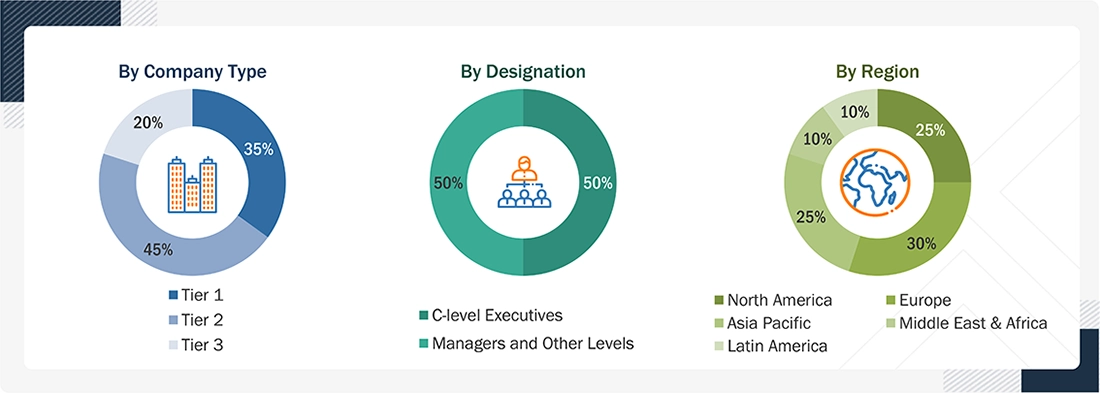
Note: Tier 1 companies receive revenues higher than USD 10 billion; Tier 2 companies' revenues range between USD 1 and 10 billion; and Tier 3 companies' revenues range between USD 500 million and USD 1 billion. Other designations include sales, marketing, and product managers.
To know about the assumptions considered for the study, download the pdf brochure
Market Size Estimation
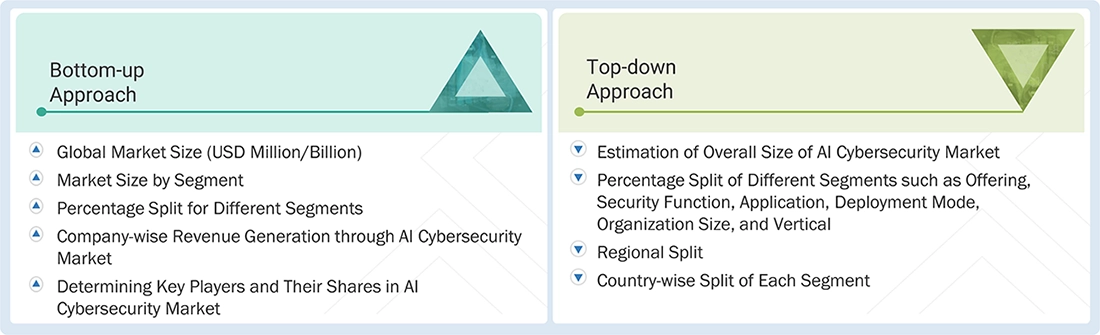
Top-down and bottom-up approaches were employed to estimate and validate the size of the AI cybersecurity market, as well as the size of various dependent subsegments within the overall AI cybersecurity market. The research methodology used to estimate the market size includes the following details: critical players in the market were identified through secondary research, and their market shares in the respective regions were determined through primary and secondary research. This entire procedure involved studying the annual and financial reports of the top market players, and extensive interviews were conducted with key industry leaders, including CEOs, VPs, directors, and marketing executives, to gather valuable insights.
All percentage splits and breakdowns were determined using secondary sources and verified through primary sources. All possible parameters that affect the market covered in this research study were accounted for, viewed in extensive detail, verified through primary research, and analyzed to get the final quantitative and qualitative data. This data was consolidated and added to detailed inputs and analysis from MarketsandMarkets.
AI Cybersecurity Market : Top-Down and Bottom-Up Approach
Data Triangulation
The market was split into several segments and subsegments after arriving at the overall market size using the market size estimation processes explained above. The data triangulation and market breakup procedures were employed, wherever applicable, to complete the overall market engineering process and arrive at the exact statistics of each market segment and subsegment. The data was triangulated by studying various factors and trends from both the demand and supply sides.
Market Definition
The AI cybersecurity market covers software, platforms, and services in which artificial intelligence materially enables or enhances cybersecurity detection, prevention, prediction, analysis, investigation, prioritization, response, remediation, automation, and decision support across enterprise digital environments. The market includes both AI-native and AI-enhanced security offerings and AI-enabled managed and professional services.
It excludes specialized products primarily intended to secure, govern, monitor, or protect AI models, AI applications, AI agents, and AI infrastructure, which are treated as the adjacent “Securing AI” market. General AI infrastructure and the non-AI portion of broader cybersecurity products and services are also excluded.
Key Stakeholders
- Chief Information Officers (CIOs), Chief Technology Officers (CTOs) & Chief Information Security Officers (CISOs)
- Cybersecurity Leaders, Security Operations Leaders & SOC Teams
- Chief Data Officers (CDOs), Data Scientists & AI/ML Teams
- Security Analysts, Threat Hunters & Incident Response Teams
- Security Architects, Engineers & IT Infrastructure Teams
- Threat Intelligence, Security Analytics & Detection Teams
- Vulnerability Management, Application Security & Cloud Security Teams
- AI-Enabled Cybersecurity Solution & Platform Vendors
- Threat Intelligence, Security Analytics & Security Automation Providers
- Endpoint, Network, Cloud & Application Security Providers
- Managed Security Service Providers (MSSPs) and Managed Detection and Response (MDR) Providers
- Cloud Service, AI Infrastructure & Computing Providers
- System Integrators, Cybersecurity Consultants & Professional Services Providers
- Large Enterprises & Small and Medium-sized Enterprises (SMEs)
- Government Agencies, Cybersecurity Authorities, Regulators & Critical Infrastructure Organizations
- Standards Organizations, Industry Associations & Cybersecurity Research Institutions
- Investors, Venture Capital Firms & Private Equity Firms
Report Objectives
- To define, describe, and forecast the AI cybersecurity market based on offering, security function, application, deployment mode, organization size, vertical, and region
- To provide detailed information about the major factors, such as drivers, opportunities, restraints, and challenges, influencing the growth of the market
- To forecast the size of the market segments with respect to five main regions: North America, Europe, Asia Pacific, Middle East & Africa, and Latin America
- To analyze subsegments of the market with respect to individual growth trends, prospects, and contributions to the overall market
- To profile the key players of the market and comprehensively analyze their market shares and core competencies
- To map the competitive intelligence based on company profiles, key player strategies, and game-changing developments, such as product enhancements/launches, collaborations, and acquisitions
- To track and analyze the competitive developments, such as product enhancements/launches, acquisitions, partnerships, and collaborations, in the AI cybersecurity market globally
Available customizations:
With the given market data, MarketsandMarkets offers customizations based on company-specific needs. The following customization options are available for the report:
Geographic Analysis
- Further breakup of the Asia Pacific market into countries contributing to the rest of the regional market size
- Further breakup of the North American market into countries contributing to the rest of the regional market size
- Further breakup of the Latin American market into countries contributing to the rest of the regional market size
- Further breakup of the Middle East & African market into countries contributing to the rest of the regional market size
- Further breakup of the European market into countries contributing to the rest of the regional market size
Company Information
- Detailed analysis and profiling of additional market players (up to five)
Key Questions Addressed by the Report
What is the projected size of the global AI cybersecurity market?
The global AI cybersecurity market is projected to grow from USD 31.25 billion in 2026 to USD 95.25 billion by 2031, at a CAGR of 25.0% during the forecast period. Growth is driven by the increasing frequency of cyberattacks, expanding cloud adoption, and growing demand for AI-powered threat detection and automated security operations.
Which segment holds the largest share of the AI cybersecurity market?
The software segment is projected to hold the largest share of the AI cybersecurity market in 2026.
What are the key trends driving the AI cybersecurity market?
Key trends include the adoption of AI-native security platforms, AI-enhanced threat detection, autonomous security operations, predictive threat intelligence, cloud workload protection, identity threat detection and response (ITDR), and AI-powered security analytics.
Which region holds the largest share of the AI cybersecurity market?
North America is estimated to hold the largest share of the AI cybersecurity market. The region's leadership is supported by early adoption of AI technologies, strong cybersecurity investments, and the presence of major technology providers.
Who are the key players in the AI cybersecurity market?
Key companies operating in the AI cybersecurity market include Microsoft (US), Palo Alto Networks (US), AWS (US), Google (US), IBM (US), Cisco (US), CrowdStrike (US), SentinelOne (US), Darktrace (UK), and Fortinet (US). These companies are investing heavily in AI-driven threat detection, automation, and next-generation cybersecurity platforms.


Personalize This Research
- Triangulate with your Own Data
- Get Data as per your Format and Definition
- Gain a Deeper Dive on a Specific Application, Geography, Customer or Competitor
- Any level of Personalization
Let Us Help You
- What are the Known and Unknown Adjacencies Impacting the AI Cybersecurity Market
- What will your New Revenue Sources be?
- Who will be your Top Customer; what will make them switch?
- Defend your Market Share or Win Competitors
- Get a Scorecard for Target Partners

Custom Market Research Services
We Will Customise The Research For You, In Case The Report Listed Above Does Not Meet With Your Requirements
Get 10% Free CustomisationTESTIMONIALS






Growth opportunities and latent adjacency in AI Cybersecurity Market