Asia Pacific Blood Glucose Monitoring Devices Market Size, Growth, Share & Trends Analysis

Asia Pacific Blood Glucose Monitoring Devices Market by Product Type (Self-blood glucose monitoring, Professional point of care), Application (Diabetes management, Health & wellness Monitoring), Test Site (Fingertip, Upper arm), End User (Self/Homecare) - Forecast to 2030




OVERVIEW
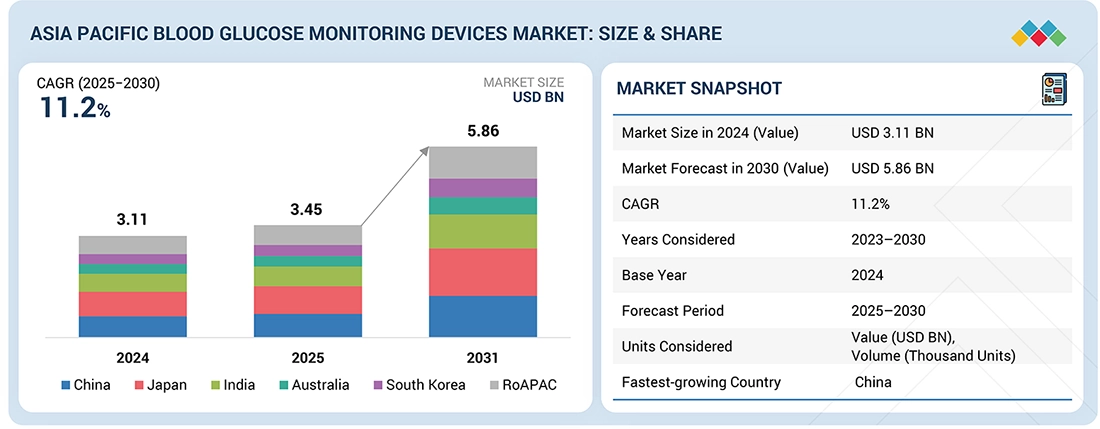
Source: Secondary Research, Interviews with Experts, MarketsandMarkets Analysis
The Asia Pacific blood glucose monitoring devices market, valued at USD 3.11 billion in 2024, stood at USD 3.45 billion in 2025 and is projected to advance at a resilient CAGR of 11.2% from 2025 to 2030, culminating in a forecasted valuation of USD 5.86 billion by the end of the period. The market is set for steady growth, driven by advancements in continuous glucose monitoring (CGM) systems and smart self-monitoring devices that enhance accuracy, enable real-time glucose data access, and improve ease of use. Rising diabetes prevalence, increasing health awareness, and the growing adoption of digital and mobile health solutions are further boosting demand for blood glucose monitoring devices across healthcare settings in the Asia Pacific region.
KEY TAKEAWAYS
-
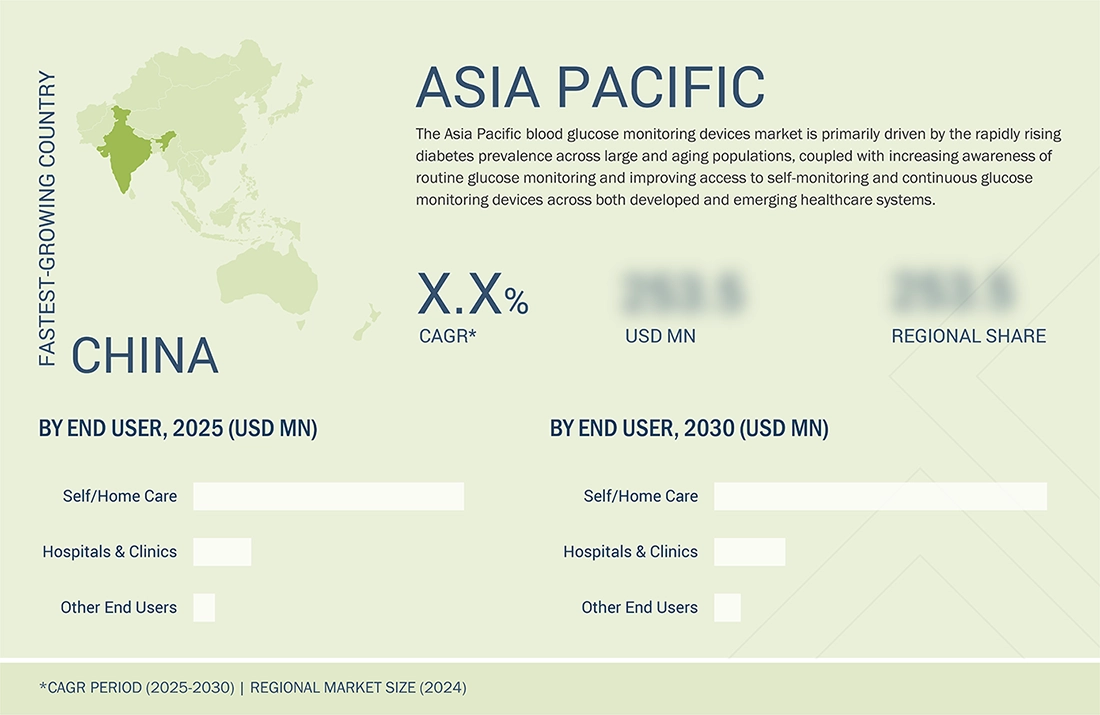
BY COUNTRYChina will grow at the highest CAGR of 12.0% in the Asia Pacific blood glucose monitoring devices market during the forecast period.
-
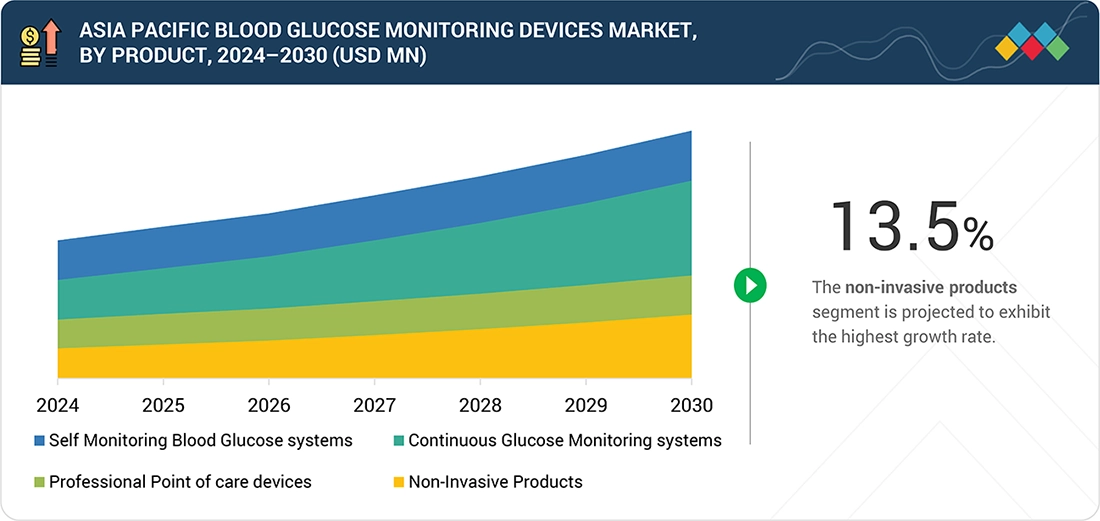
BY PRODUCT TYPEThe self-monitoring blood glucose systems segment held the maximum share of 42.4% in the Asia Pacific blood glucose monitoring devices market in 2024.
-
BY APPLICATIONThe diabetes management segment is expected to grow at the highest CAGR of 11.3% during the forecast period.
-
BY TEST SITEThe fingertip segment contributed to the largest share because of its convenience, fast results, and extensive usage both among patients and healthcare professionals.
-
BY END USERThe self/home care segment accounted for the largest share in the market.
-
COMPETITIVE LANDSCAPE - KEY PLAYERSAbbott Laboratories (US), Sinocare (China), and Medtronic (Ireland) were identified as some of the key players in the Asia Pacific blood glucose monitoring devices market, given their substantial market share and product/service footprint.
-
COMPETITIVE LANDSCAPE - STARTUPSCompanies such as Agatsa have distinguished themselves among startups and SMEs by securing strong footholds in specialized niche areas, underscoring their potential as emerging market leaders.
The Asia Pacific blood glucose monitoring devices market is experiencing steady growth, supported by the rapidly increasing prevalence of diabetes driven by urbanization, sedentary lifestyles, and dietary shifts across major economies in the region. Rising adoption of advanced continuous and emerging non-invasive monitoring technologies, along with innovations in device connectivity, mobile health integration, and smart data analytics, is expanding their use across hospitals, clinics, and home-care settings in the Asia Pacific region.
TRENDS & DISRUPTIONS IMPACTING CUSTOMERS' CUSTOMERS
The blood glucose monitoring devices market is experiencing a shift from traditional glucose meters and strip-based testing toward advanced, technology-driven solutions. Emerging trends include the adoption of continuous glucose monitoring (CGM) systems, non-invasive and minimally invasive sensors, smart connected devices, and AI-powered analytics. These innovations are creating high-growth opportunities, driven by demand for real-time monitoring, improved accuracy, and enhanced diabetes management. End users such as hospitals, clinics, and home-care patients are increasingly adopting these disruptive technologies, reshaping the future of diabetes care.
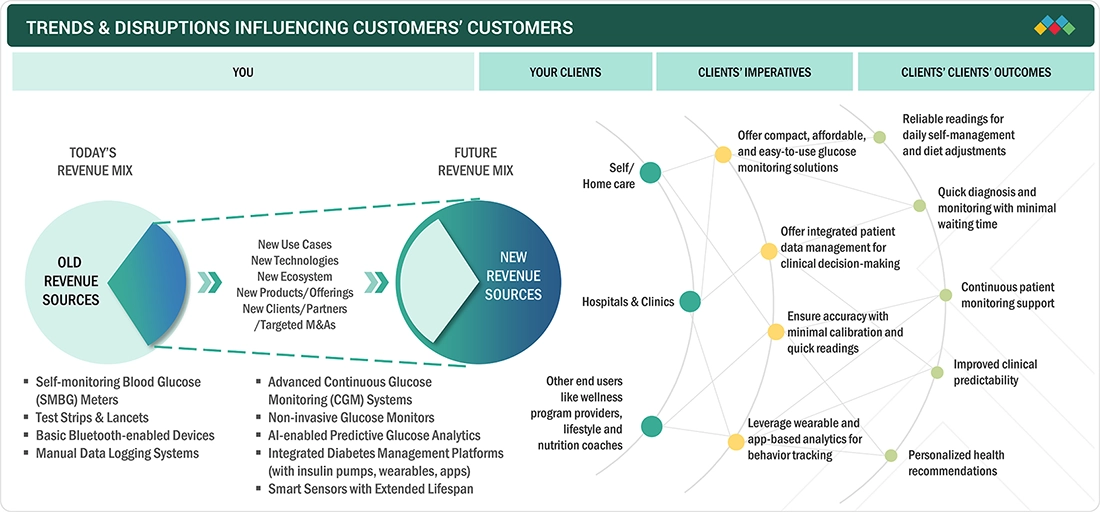
Source: Secondary Research, Interviews with Experts, MarketsandMarkets Analysis
MARKET DYNAMICS

Level
-
Increasing prevalence of diabetes

-
Growing elderly population and increasing life expectancy


Level
-
Short sensor lifespan and frequent replacements


Level
-
Integration with digital health platforms and smart devices

-
Expansion of coverage and reimbursement policies for CGMs


Level
-
Regulatory compliance challenges for non-invasive glucose monitoring technologies

-
Data overload & alarm fatigue

Source: Secondary Research, Interviews with Experts, MarketsandMarkets Analysis
Driver: Increasing prevalence of diabetes
The Asia Pacific blood glucose monitoring devices market is mainly driven by the rapid increase in diabetes cases across the region, which houses the largest share of the world's diabetic population. It is estimated that China and India are growth centers in this context. As per the International Diabetes Federation (IDF) Diabetes Atlas, 11th Edition (2025), China had around 148 million adults (aged 20-79 years) with diabetes in 2024, and this number is likely to reach 168. 3 million by 2050. In India, there were about 89. 8 million diabetic adults in 2024, with a sharp increase to 156.7 million anticipated by 2050. Besides that, Pakistan is expected to have more cases of diabetes than the United States by 2050, which again points to Asia Pacific's growing disease burden. The rise in Type 2 diabetes cases, more diagnoses of younger and working-age populations, and the rapidly growing elderly population segment are together increasing the demand for accurate, convenient, and continuous glucose monitoring devices. Since diabetes is a key public health problem throughout the region, healthcare systems are under constant pressure to provide long-term disease management support. This results in an increase in the demand for reliable, user-friendly, and technologically advanced blood glucose monitoring devices across both clinical and home-care settings.
Restraint: Short sensor lifespan and frequent replacements
The short lifespan of blood glucose monitoring sensors and the need for frequent replacements have been identified as a major limitation of the Asia Pacific blood glucose monitoring devices market. Most continuous glucose monitoring (CGM) sensors are only meant to be worn for a short time, such as days or weeks, which leads to increased costs for the patient and the payer over time. Due to repeated sensor replacements, the out-of-pocket expenses of users of these monitoring devices constitute an issue for concern for diabetic populations. Besides, frequent sensor changes can cause inconvenience and challenge adherence to the treatment plan for users, particularly for elderly patients and those with long-term diabetes. In addition, supply continuity, prescription renewals, and reimbursement limitations related to the frequency of replacements can also hinder the consistent use of the device. Altogether, these factors have a limiting influence on the wide-ranging market penetration and hamper the overall growth potential of blood glucose monitoring systems in the Asia Pacific region.
Opportunity: Integration with digital health platforms and smart devices
The integration of blood glucose monitors with digital health platforms and smart devices is emerging as a transformative opportunity in diabetes management. Advancements in Bluetooth and cloud connectivity allow real-time glucose data to be synchronized with smartphones, wearables, and electronic health records, enabling continuous monitoring and data-driven decision-making. Patients benefit from personalized alerts, automated insulin dose recommendations, and trend analytics that improve self-management and clinical outcomes. For healthcare providers, integrated platforms facilitate remote monitoring, teleconsultations, and population-level analytics, enhancing care coordination and reducing hospital visits. As governments and insurers increasingly support digital health adoption, this trend is expected to accelerate, positioning connected glucose monitoring as a cornerstone of next-generation diabetes care.
Challenge: Regulatory compliance challenges for non-invasive glucose monitoring technologies
Non-invasive glucose monitoring technologies in the Asia Pacific (APAC) region are currently confronted with significant regulatory challenges. This is mainly because the approval pathways differ drastically among countries such as China, Japan, India, South Korea, and Australia, each of which asks for very strong evidence of safety, accuracy, and clinical performance on a wide range of patient populations. Traditional blood-based monitoring systems measure glucose level directly from blood; however, these new non-invasive methods that rely on optical or electromagnetic sensing may be influenced by factors such as skin tone, hydration levels, or even environmental conditions prevalent in the region, thus complicating validation efforts. The absence of harmonized regulatory standards and uniform testing protocols across Asia Pacific adds a layer of uncertainty for device manufacturers which in turn often lead to the extensions of approval timelines and the clinical validation costs are also very high. Therefore, although there is a lot of innovation and technology promise, the regulatory environment and the limited reimbursement support have so far hampered the large-scale commercialization and adoption of non-invasive glucose monitoring solutions in the Asia Pacific market.
ASIA PACIFIC BLOOD GLUCOSE MONITORING DEVICES MARKET: COMMERCIAL USE CASES ACROSS INDUSTRIES
| COMPANY | USE CASE DESCRIPTION | BENEFITS |
|---|---|---|
 |
FreeStyle Libre 3 continuous glucose monitoring (CGM) system designed for real-time glucose tracking without routine fingersticks; transmits minute-by-minute readings to a connected smartphone app | Eliminates fingerstick calibration, enhances patient comfort, enables proactive glucose management, and supports better glycemic control through trend-based insights |
 |
Dexcom G7 all-in-one CGM sensor providing real-time glucose readings, customizable alerts, and integration with smartphones and insulin pumps for seamless diabetes management | Offers superior accuracy and fast warm-up; provides predictive alerts to prevent hypo- and hyperglycemia; improves adherence through connectivity and data visualization |
 |
Guardian 3 Sensor used with Medtronic insulin pumps to deliver continuous glucose data every five minutes, supporting automated insulin delivery and trend-based therapy adjustments | Enables hybrid closed-loop insulin management, improves time-in-range, reduces glycemic variability, and enhances safety for insulin-dependent users |
 |
Omnitest self-monitoring blood glucose (SMBG) device designed for capillary blood testing, offering reliable and quick results for daily home or point-of-care glucose monitoring | Provides affordable, accurate, and easy-to-use glucose testing; supports frequent monitoring and improved patient engagement in self-managed care |
 |
Accu-Chek range of SMBG systems designed for fast and dependable glucose measurement with connectivity to digital platforms for progress tracking and data sharing | Ensures consistent accuracy, simplifies diabetes management, enables remote data access, and strengthens patient–clinician communication for improved outcomes |
Logos and trademarks shown above are the property of their respective owners. Their use here is for informational and illustrative purposes only.
MARKET ECOSYSTEM
The blood glucose monitoring devices market operates within a complex ecosystem comprising multiple stakeholders that collectively drive innovation, distribution, and adoption. Device manufacturers develop accurate and reliable blood glucose monitoring systems, while distributors ensure these products reach hospitals, clinics, pharmacies, and retail channels. Healthcare providers, including hospitals and specialized diabetes care centers, integrate these devices into patient management, supported by doctors, nurses, and other professionals who guide usage and monitor outcomes. Patients and caregivers form the end-user base, relying on these devices for daily diabetes management. Health advocacy organizations promote awareness, best practices, and policy support, while government and regulatory bodies ensure safety, efficacy, and compliance, shaping market access and product standards. Together, this interconnected network defines the operational and innovation landscape of the global blood glucose monitoring devices market.
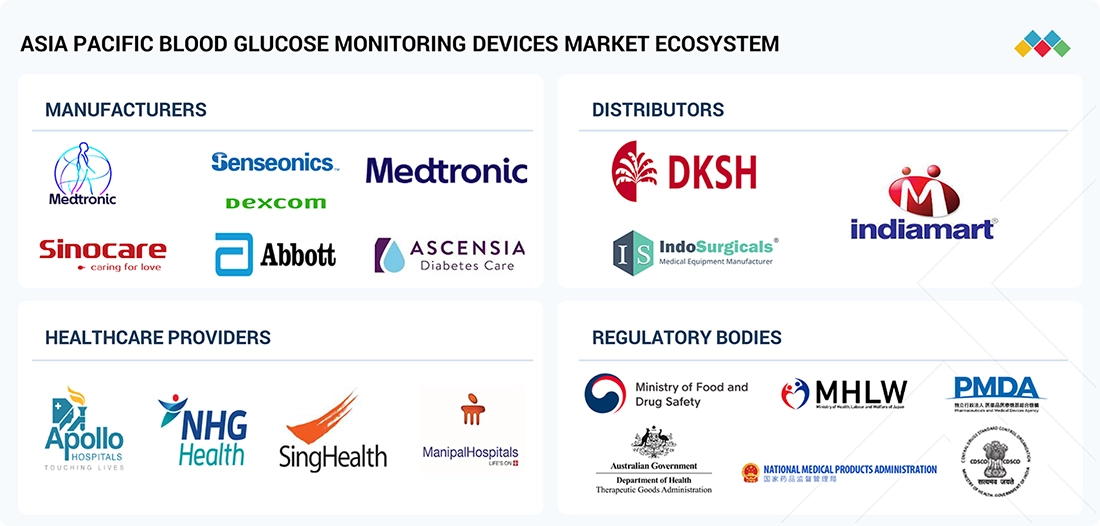
Logos and trademarks shown above are the property of their respective owners. Their use here is for informational and illustrative purposes only.
MARKET SEGMENTS
Source: Secondary Research, Interviews with Experts, MarketsandMarkets Analysis
Asia Pacific Blood Glucose Monitoring Devices Market, By Product Type
Based on product, the Asia Pacific blood glucose monitoring devices market is segmented into self-monitoring blood glucose (SMBG) systems, continuous glucose monitoring (CGM) systems, professional point-of-care devices, and non-invasive products. CGM systems are expected to register the second-highest growth rate during the forecast period, driven by increasing demand for continuous, real-time glucose monitoring in developed markets such as Japan, Australia, and South Korea, as well as gradual adoption in urban centers across China and India. CGM devices reduce dependence on frequent finger-prick testing and enable improved glycaemic control through continuous trend analysis and early detection of glucose fluctuations. Their integration with digital health platforms, insulin delivery systems, and smartphone applications further enhances patient convenience and supports personalized diabetes management. In addition, expanding reimbursement support in select Asia Pacific countries is facilitating CGM uptake; for example, Terumo Corporation announced in December 2022 that the reimbursement coverage for the Dexcom G6 CGM System would be expanded under Japan's national medical insurance system, thereby allowing a greater number of diabetes patients to access CGM technology.
Asia Pacific Blood Glucose Monitoring Devices Market, By Application
By application, the Asia Pacific blood glucose monitoring devices market is segmented into diabetes management, health and wellness monitoring, and other applications, with the diabetes management segment expected to register the fastest growth during the forecast period. The rising prevalence of Type 1 and Type 2 diabetes across China, India, Japan, and Southeast Asia, driven by urbanization, lifestyle changes, and an expanding aging population, is increasing demand for reliable glucose monitoring. CGM systems are gaining adoption by providing real-time glucose insights that support treatment optimization and daily disease management in both clinical and home-care settings. Integration with mobile health platforms and hospital information systems, along with improving access to easy-to-use home monitoring solutions and selective reimbursement support, is strengthening patient engagement and driving sustained growth of the diabetes management segment across the Asia Pacific region.
Asia Pacific Blood Glucose Monitoring Devices Market, By End User
Based on end user, the Asia Pacific blood glucose monitoring devices market is segmented into self/home care, hospitals and clinics, and other end users. Among these, the self/home care segment accounts for the largest share, driven by the high burden of diabetes, increasing out-of-pocket healthcare expenditure, and a strong preference for home-based disease management across both developed and emerging Asia Pacific countries. Rising patient awareness regarding the importance of regular glucose monitoring, along with the growing number of individuals managing diabetes outside hospital settings—particularly in populous markets such as China and India—has strengthened demand for home-use monitoring devices. The widespread availability of blood glucose monitors through retail pharmacies, hospital pharmacies, and rapidly expanding e-commerce platforms has further supported adoption. In addition, technological advancements such as connected meters, continuous glucose monitoring (CGM) systems, and smartphone-based data tracking are improving ease of use and patient engagement. The growing adoption of teleconsultations, digital health platforms, and remote disease management programs across countries such as Japan, Australia, South Korea, and China continues to reinforce the dominance of the self/home care segment in the Asia Pacific blood glucose monitoring devices market.
REGION
China to be fastest-growing country in Asia Pacific blood glucose monitoring devices market during forecast period
The blood glucose monitoring devices market in China is expected to register the highest growth rate within Asia Pacific during the forecast period. Growth is driven by China’s large and rapidly expanding diabetic population, increasing awareness of the importance of regular glucose monitoring, and rising adoption of continuous and digitally connected monitoring technologies. The country’s aging population and high prevalence of lifestyle-related conditions are boosting demand for accurate, convenient, and patient-friendly monitoring solutions across home-care and outpatient settings. In addition, expanding healthcare access, rising digital health adoption, and growing use of telemedicine and remote monitoring are supporting broader uptake of advanced glucose monitoring systems, positioning China as a key growth market in the region.
ASIA PACIFIC BLOOD GLUCOSE MONITORING DEVICES MARKET: COMPANY EVALUATION MATRIX
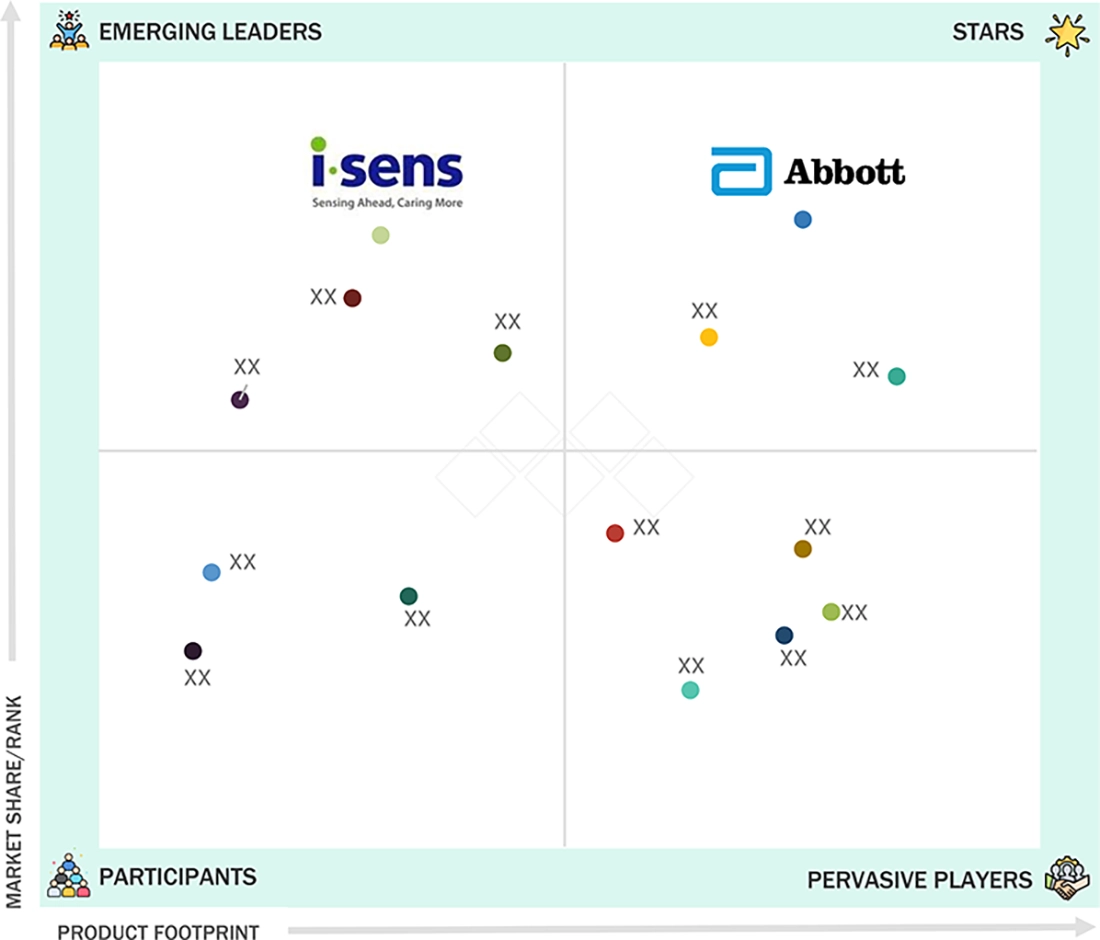
In the Asia Pacific blood glucose monitoring devices market matrix, Abbott Laboratories (Star) maintains a dominant position, supported by its extensive regional footprint and comprehensive portfolio across continuous glucose monitoring (CGM) and self-monitoring blood glucose (SMBG) systems. Its leadership is underpinned by strong R&D capabilities, clinically proven accuracy, and advanced digital integration through the widely adopted FreeStyle Libre platform across home-care and clinical settings. i-SENS, Inc. (Emerging Leader) is gradually strengthening its presence in the region with accurate, cost-effective SMBG devices and early-stage expansion into CGM through its CareSens Air system. While Abbott continues to benefit from scale, innovation, and strong brand recognition across hospitals, pharmacies, and home-use channels, i-SENS shows potential to advance toward the leaders' quadrant by leveraging its manufacturing expertise, expanding distribution partnerships, and focusing on connected, value-driven glucose monitoring solutions for price-sensitive segments in Asia Pacific.
Source: Secondary Research, Interviews with Experts, MarketsandMarkets Analysis
KEY MARKET PLAYERS
- Abbott Laboratories (US)
- Medtronic (Ireland),
- Dexcom (US)
- Ascensia Diabetes Care Holdings AG (Switzerland)
- Sinocare (China)
- F. Hoffmann-La Roche Ltd (Switzerland),
- B Braun SE (Germany)
- Nipro (Japan)
- Senseonics (US)
- i-Sens, Inc (South Korea)
MARKET SCOPE
| REPORT METRIC | DETAILS |
|---|---|
| Market Size Value in 2024 (Value) | USD 3.11 BN |
| Market Forecast in 2030 (Value) | USD 5.86 BN |
| Growth Rate | CAGR of 11.2% during 2025–2030 |
| Years Considered | 2023–2030 |
| Base Year | 2024 |
| Forecast Period | 2025-2030 |
| Units Considered | Value (USD BN), Volume (Thousands Units) |
| Report Coverage | Revenue Forecast, Company Ranking, Competitive Landscape, Growth Factors, and Trends |
| Segments Covered | By Product Type: Self-monitoring blood glucose systems, Continuous glucose monitoring systems, Professional point of care devices, Non-invasive products I By Test Site: Fingertip, Upper arm, Alternate sites I By Application: Diabetes management, Health & wellness monitoring, Other applications I By End User: Self/Home care, Hospitals & clinics, Other end users |
| Countries Covered | China, Japan, India, Australia, South Korea, and the Rest of Asia Pacific |
| Parent & Related Segment Reports |
Blood Glucose Monitoring Devices Market North America Blood Glucose Monitoring Devices Market Europe Blood Glucose Monitor Market LATAM Blood Glucose Monitor Market |
WHAT IS IN IT FOR YOU: ASIA PACIFIC BLOOD GLUCOSE MONITORING DEVICES MARKET REPORT CONTENT GUIDE
DELIVERED CUSTOMIZATIONS
We have successfully delivered the following deep-dive customizations:
| CLIENT REQUEST | CUSTOMIZATION DELIVERED | VALUE ADDS |
|---|---|---|
| Volume Analysis | Market assessment by volume (units) for products such as self-monitoring blood glucose monitoring systems and continuous glucose monitoring systems |
|
| Company Information | Key players: Abbott Laboratories (US), DexCom, Inc. (US), Medtronic (Ireland), F. Hoffmann-La Roche Ltd. (Switzerland), B. Braun SE (Germany), and Ascensia Diabetes Care Holdings AG (Switzerland). Top 3-5 players market share analysis at the APAC and the North American country level | Insights on revenue shifts toward emerging innovations |
| Disease Prevalence |
|
|
RECENT DEVELOPMENTS
- May 2023 : F. Hoffmann-La Roche Ltd. (Switzerland) announced that its blood glucose monitoring device 'Accu-Chek Active' will be manufactured in India.
- February 2023 : DexCom, Inc. (US) announced the launch of the Dexcom G6 Continuous Glucose Monitoring System in Singapore.
Table of Contents
 Exclusive indicates content/data unique to MarketsandMarkets and not available with any competitors.
Methodology
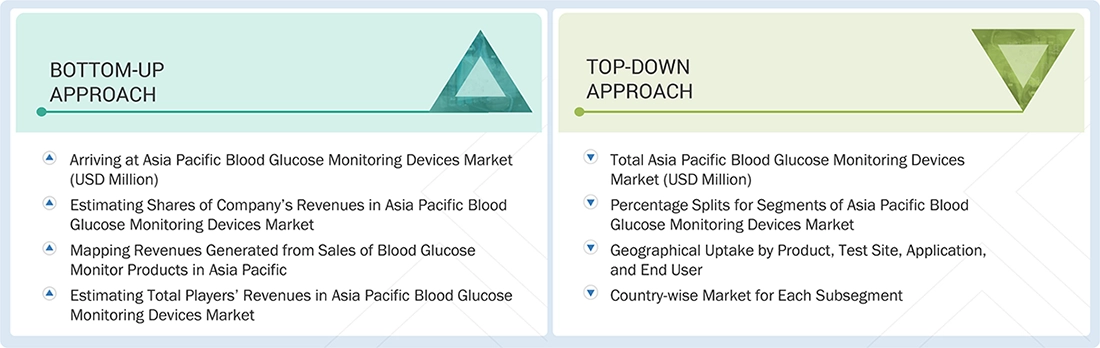
The study comprised four key activities to estimate the current size of the Asia Pacific blood glucose monitor market. First, extensive secondary research was conducted to gather information on the market, including related and parent markets. The next step involved validating these findings, assumptions, and market size estimates through primary research with industry experts across the value chain. Top-down and bottom-up approaches were used to arrive at a comprehensive estimate of the overall market size. Finally, market breakdown and data triangulation techniques were utilized to determine the sizes of segments and subsegments within the market.
Secondary Research
The secondary research process involved extensive use of various secondary sources, including directories, databases like Bloomberg Business, Factiva, and D&B Hoovers, as well as white papers, annual reports, company house documents, investor presentations, and SEC filings. This research was conducted to gather information valuable for a comprehensive, technical, market-oriented, and commercial study of the Asia Pacific blood glucose monitor market. It also helped obtain critical insights about key players in the industry, market classification, and segmentation based on current industry trends, down to the finest details. Additionally, a database of leading industry players was created through this secondary research.
Primary Research
In the primary research process, interviews were conducted with various sources from the supply and demand sides to gather qualitative and quantitative information for this report. On the supply side, industry experts were interviewed, including CEOs, vice presidents, marketing & sales directors, technology & innovation directors, and other key executives from prominent companies and organizations involved in the Asia Pacific blood glucose monitor market. For the demand side, interviews were conducted with industry experts, purchase and sales managers, doctors, and personnel from research organizations. This primary research was essential to validate market segmentation, identify key players in the industry, and gather insights on important industry trends and market dynamics.
A breakdown of the primary respondents for the Asia Pacific blood glucose monitor market is provided below:
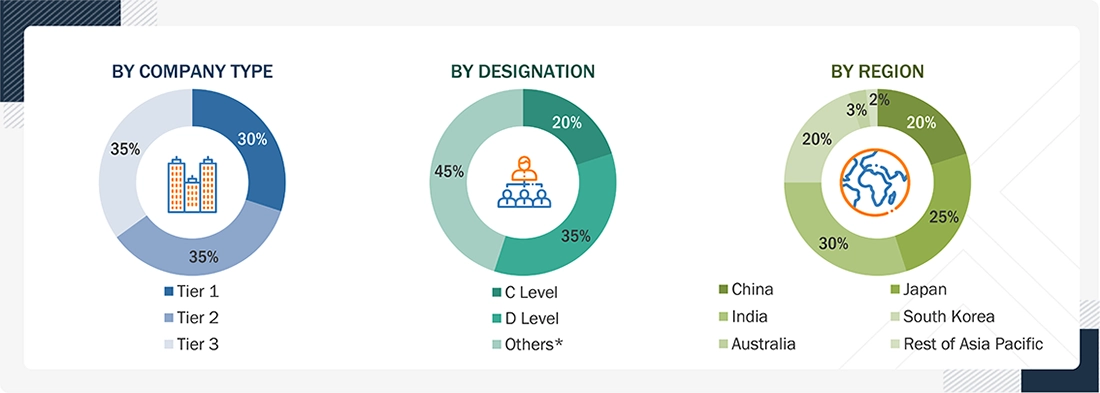
Note 1: C-level executives include CEOs, COOs, CTOs, and VPs.
Note 2: Other designations include sales, marketing, and product managers.
Note 3: Companies are classified into tiers based on their total revenue. As of 2024: Tier 1=>USD 1 billion, Tier 2 = USD 500 million to USD 1 billion, and Tier 3 = <USD 500 million.
To know about the assumptions considered for the study, download the pdf brochure
Market Size Estimation
The research methodology used to estimate the size of the Asia Pacific blood glucose monitor market includes the following details. The market sizing was undertaken from the global side.
Country-level Analysis: The size of the blood glucose monitor market was obtained from the annual presentations of leading players and secondary data available in the public domain. The share of products in the blood glucose monitor market was obtained from secondary data and validated by primary participants to arrive at the total blood glucose monitor market. Primary participants further validated the numbers.
Geographic Market Assessment (By Region and Country): The geographic assessment was done using the following approaches:
Approach 1: Geographic revenue contributions/splits of leading players in the market (wherever available) and respective growth trends
Approach 2: Geographic adoption trends for individual product segments by end users and growth prospects for each of the segments (assumptions and indicative estimates validated from primary interviews)
At each point, the assumptions and approaches were validated by industry experts who were contacted during primary research. Considering the limitations of data available from secondary research, revenue estimates for individual companies (for the overall blood glucose monitor market and geographic market assessment) were ascertained based on a detailed analysis of their respective product offerings, geographic reach/strength (direct or through distributors or suppliers), and the shares of the leading players in a particular region or country.
Asia Pacific Blood Glucose Monitor Market Size: Bottom-up Approach and Top-down Approach
Data Triangulation
After arriving at the overall size from the market size estimation process explained above, the total market was split into several segments and subsegments. The data triangulation and market breakdown procedures explained below were implemented, wherever applicable, to complete the overall market engineering process and arrive at the exact statistics for various market segments and subsegments. The data was triangulated by studying various factors and trends from the demand and supply sides. Along with this, the market size was validated using both the top-down and bottom-up approaches.
Market Definition
Blood glucose monitors are medical devices used to measure and monitor blood glucose (sugar) levels in individuals, primarily for the diagnosis and management of diabetes mellitus. These monitors help patients and healthcare professionals assess glycemic control, adjust treatment plans, and prevent diabetes-related complications.
Key Stakeholders
- Blood Glucose Monitor Manufacturers
- Contract Manufacturers
- Suppliers and Distributors of Blood Glucose Monitors
- Senior Management
- Finance Department
- Healthcare Services Providers (Hospitals and Public & Private Clinics)
- Academic & Research Institutes
- E-commerce and Digital Platforms
- Retail Pharmacies and Supermarkets
- Trade Associations and Industry Bodies
- Regulatory Bodies and Government Agencies
- Business Research and Consulting Service Providers
- Market Research and Consulting Firms
- Venture Capitalists and Investors
Report Objectives
- To define, describe, segment, analyze, and forecast the Asia Pacific blood glucose monitor market by product type, application, test site, end user, and country.
- To provide detailed information about the factors influencing market growth (drivers, restraints, opportunities, and challenges)
- To analyze micromarkets concerning individual growth trends, prospects, and contributions to the overall market.
- To analyze market opportunities for stakeholders and provide details of the competitive landscape for key players.
- To forecast the size of the Asia Pacific blood glucose monitor market in China, Japan, India, Australia, South Korea, and the rest of the Asia Pacific.
- To profile the key players in the Asia Pacific blood glucose monitor market and comprehensively analyze their core competencies
- To track and analyze competitive developments such as agreements, collaborations, and partnerships; acquisitions; and product approvals & launches in the Asia Pacific blood glucose monitor market.
Available customizations:
- With the given market data, MarketsandMarkets offers customizations as per your company’s specific needs. The following customization options are available for the report:
Geographic Analysis
- Breakdown of the Rest of Asia Pacific blood glucose monitor market into Singapore, Indonesia, Malaysia, and othe
Company Information
- Detailed analysis and profiling of additional market players (up to 5)


Personalize This Research
- Triangulate with your Own Data
- Get Data as per your Format and Definition
- Gain a Deeper Dive on a Specific Application, Geography, Customer or Competitor
- Any level of Personalization
Let Us Help You
- What are the Known and Unknown Adjacencies Impacting the Asia Pacific Blood Glucose Monitoring Devices Market
- What will your New Revenue Sources be?
- Who will be your Top Customer; what will make them switch?
- Defend your Market Share or Win Competitors
- Get a Scorecard for Target Partners

Custom Market Research Services
We Will Customise The Research For You, In Case The Report Listed Above Does Not Meet With Your Requirements
Get 10% Free CustomisationTESTIMONIALS

JAYANT RAJPUROHIT
Director of Market Insights, Data and Analytics
SFI Health,
Leading Pharmaceutical Companywww.sfihealth.com/

We at SFI Health approached MarketsandMarkets for an Opportunity Assessment on "Incidence and Prevalence of Focus Indications" as we wanted to know the most attractive HCPs like Physician, Functional MD, Naturopath and Pharmacist. The project was critical for us to ensure our focus on the right target which would enable sustainable growth and profitability for SFI Health. The business insights provided exceeded our expectations and we were extremely impressed. The team at MarketsandMarkets is highly professional and detail oriented and very well understood our business needs. MarketsandMarkets offers a unique combination of expertise and dedicated engagement model. We identified 2 new products to be launched in coming months, based on the research findings provided by MarketsandMarkets. We are happy with the services and would strongly recommend MarketsandMarkets to my peers in the industry.

BEATRIZ DE LA CALLE
Head of Commercial Analytics
Qualicaps,
Leading Pharmaceutical Companywww.qualicaps.com/

We partnered with MarketsandMarkets for an assessment study on hard empty capsules. The team was extremely professional in understanding our business requirements and we received timely responses to all our queries. The market intelligence and the recommendations has met our business requirements. We were extremely impressed to see the final study results; it really exceeded our expectations. The market intelligence offered by MarketsandMarkets, and clarity on next steps will help us achieve our business objective for the Year 2021. We are happy with the services and would strongly recommend MarketsandMarkets to my peers in the industry.

Bob Williams,
Senior Director Business Development & Innovation
Bracco Diagnostics Inc.,
Italian Multinational in life sciences sector and a World Leader in imaging diagnosticsimaging.bracco.com/us-en
We were pleased with targeted insights that MarketsandMarkets identified from a custom study on the 'Radiation Dose Management Solutions Market'. Your team identified and characterized the market participants as well as underlying trends accurately. This study was useful to Bracco in formulating business strategies for our dose monitoring product lines and we thank MarketsandMarkets for the job well done.
Cody Coonradt,
Market Development and Strategy Manager
3M Health Information Systems,
Leader in Health care Coding, Payment & Analytics Solutions.www.3m.com/3M/en_US/health-information-systems-us
The value for our organization comes from three things: depth of research, specificity of segments and being easy to work with. As important as the first two are, the third can't be underestimated. MarketsandMarkets, maybe more than any other research vendor, wants to know what is top of mind for our team and what big questions we are grappling to answer.
Their customer first approach and high value engagement model, have given us great analysis and excellent value for money






Growth opportunities and latent adjacency in Asia Pacific Blood Glucose Monitoring Devices Market