Asia-Pacific Contrast Media Market

Asia-Pacific Contrast Media Market by Product (Microbubble, Iodine, Gadolinium, Barium-based), Modality (CT, MRI, Ultrasound, X-ray), Indication (Cancer, GIT, CVD, Musculoskeletal), Route of Administration (IV, Oral, Rectal), End User, Forecasts to 2031




ASIA-PACIFIC CONTRAST MEDIA MARKET SIZE, SHARE & GROWTH SNAPSHOT
Source: Secondary Research, Interviews with Experts, MarketsandMarkets Analysis
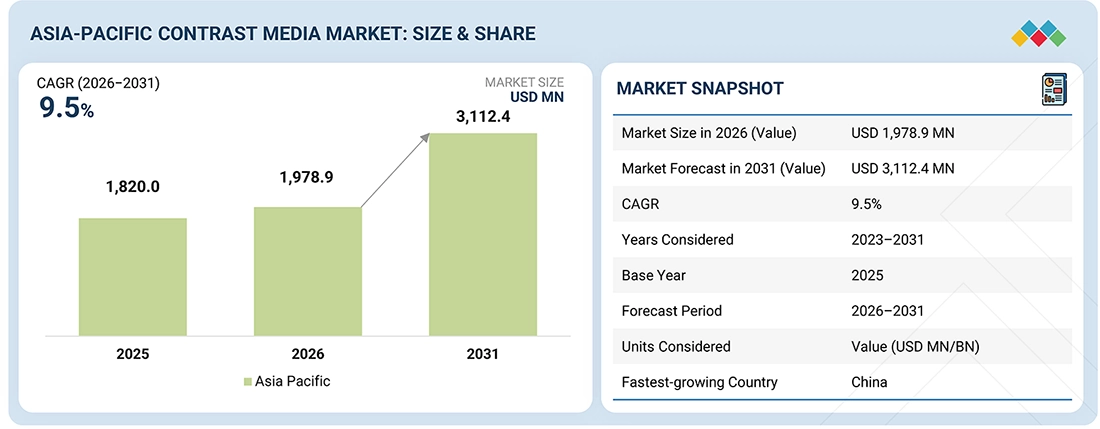
The asia-pacific contrast media market is projected to grow from USD 1,978.9 million in 2026 to USD 3,112.4 million by 2031, at a CAGR of 9.5% during the forecast period. The market was valued at USD 1820.0 million in 2025. The market is being driven by the rapid adoption of high-throughput multi-slice CT scanners, including 64- to 256-slice, Spectral CT/Dual-Energy CT, and 3T MRI scanners in the major markets of China, Japan, South Korea, and India. These scanners are expected to meet the growing needs of high-end applications with precise contrast enhancement. Contrast-enhanced angiography, perfusion CT, and dynamic contrast-enhanced MRI are experiencing strong growth, particularly in the assessment of cardiovascular risk factors, stroke diagnosis, and cancer staging. Low- and iso-osmolar contrast media are being used in the region to ensure safety during high-volume use. Apart from this, there is a growing trend in the region towards adopting AI-based imaging techniques to optimize contrast use.
KEY TAKEAWAYS
-
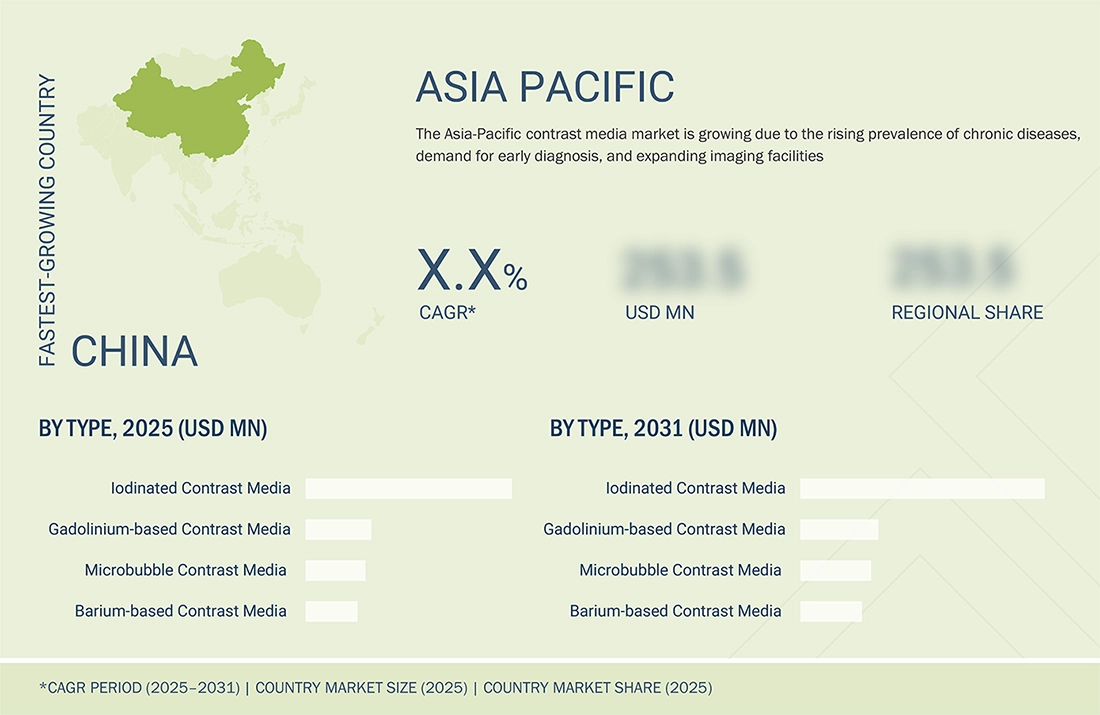
BY REGIONChina accounted for 55% of the market in 2025.
-
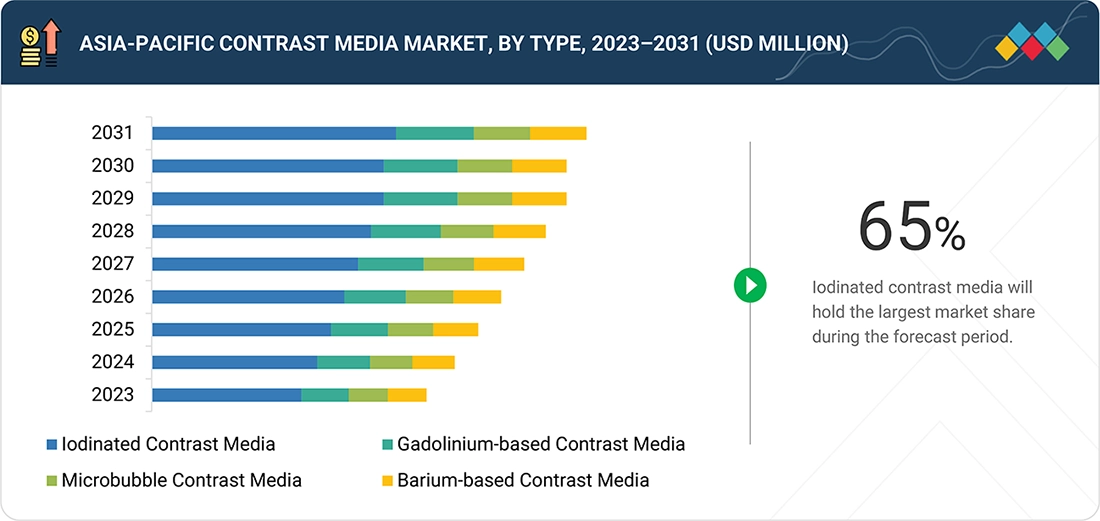
BY TYPEBy type, the iodinated contrast media accounted for 65% of the market in 2025.
-
BY FORMBy form, liquid contrast media accounted for the largest market share in 2025.
-
BY MODALITYBy modality, CT is expected to register the highest CAGR of 10% during the forecast period.
-
BY ADMINSTRATIONBy adminstration, the oral segment is expected to register the highest CAGR of 9.5%.
-
BY INDICATIONBy indication, the cardiovascular disease segment is expected to grow at the highest CAGR during the forecast period.
-
BY APPLICATIONBy application, the interventional radiology segment is expected to register a 10.5% CAGR in the contrast media market.
-
BY END USERBy end user, diagnostic imaging centers are expected to register the highest CAGR during the forecast period.
-
COMPETITIVE LANDSCAPE- KEY PLAYERSBayer AG (Germany), Bracco Imaging S.p.A (Italy), and GE HealthCare (US) were identified as some of the key players in the Asia-Pacific contrast media market. Growth is driven by rising demand for advanced diagnostic solutions and the expansion of healthcare infrastructure across the Asia-Pacific.
-
COMPETITIVE LANDSCAPE- STARTUPSUnispire Biopharma Private Limited (India), Arco Lifescience Pvt Ltd (India), and Rege Imaging & Cine Films Pvt Ltd (India), among others, are classified as emerging players. These companies are propelled by increased R&D investment, innovation in contrast media formulations, and niche opportunities in minimally invasive and personalized diagnostics.
The X-ray modality has seen the most growth in the Asia Pacific market for contrast media, as various diagnostic procedures such as X-ray, CT scan, fluoroscopy, and angiography are most prevalent. The rapid increase in urbanization and its subsequent effects on healthcare spending and the easy accessibility of various diagnostic imaging procedures and facilities within emerging markets like China, India, and Southeast Asia have had a positive influence on the increase in the number of X-ray procedures performed. The use of iodinated contrast media has gained popularity because it provides clearer images and has thus become a vital modality in the diagnostic field. The cost-effectiveness and easy availability of X-ray and CT compared to other modalities have helped it gain a major foothold in this region.
TRENDS & DISRUPTIONS IMPACTING CUSTOMERS' CUSTOMERS
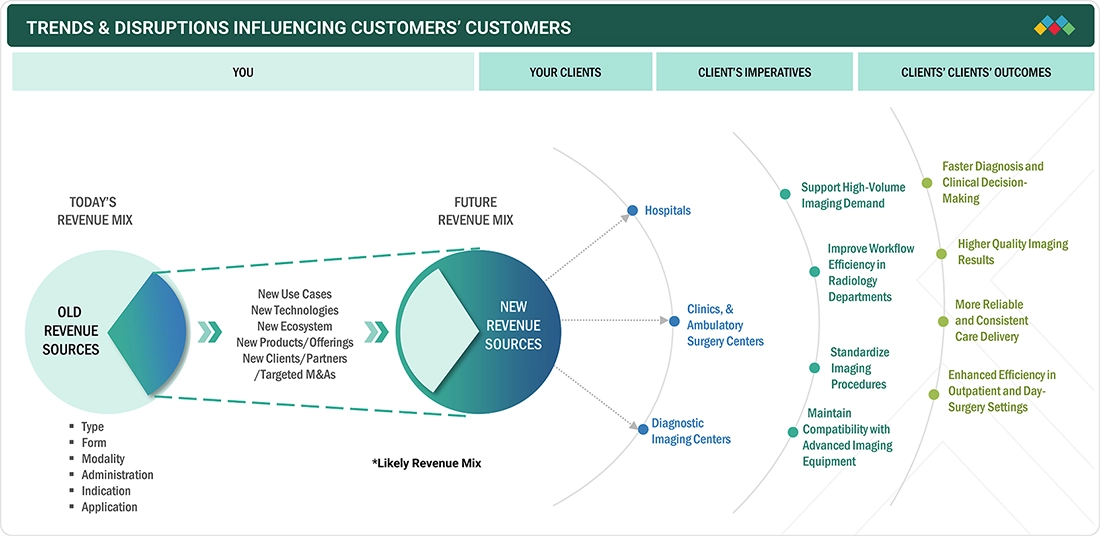
The Asia-Pacific contrast media market serves several commercial users, including Bayer, Bracco, GE Healthcare, and Guerbet. These companies exemplify the shift toward integrated, patient-centric imaging solutions driven by rising diagnostic volumes, cost pressures, and variations in healthcare infrastructure. All four firms are combining advanced contrast agents with digital platforms, injectors, and analytics to develop imaging solutions that enhance diagnostic confidence through greater accuracy, improve efficiency in contrast agent usage, increase patient safety, and streamline radiology and report generation workflows. Additionally, they are creating scalable, clinically confident, sustainable growth opportunities in the healthcare market across the diverse Asia-Pacific region.
Source: Secondary Research, Interviews with Experts, MarketsandMarkets Analysis
MARKET DYNAMICS

Level
-
Increasing demand for advanced diagnostic imaging

-
Growing demand for early disease detection is driving market growth


Level
-
Risk of side effects and allergic reactions limits contrast media adoption

-
High costs of contrast agents and imaging procedures hinder market growth


Level
-
Expansion of minimally invasive and image-guided procedures in Asia-Pacific

-
Rising demand for minimally invasive imaging drives market growth


Level
-
Lack of skilled professionals hinders growth

-
Limited availability of contrast media poses a market challenge

Source: Secondary Research, Interviews with Experts, MarketsandMarkets Analysis
Driver: Increasing demand for advanced diagnostic imaging
Changing lifestyle patterns, urbanisation and aging populations are all contributing to the rise in chronic diseases, including cardiovascular disease, cancer, diabetes, and kidney disease within the Asia-Pacific region. As a result of the growing disease burden, an increased requirement for accurate and timely diagnosis has emerged from increased demand for advanced imaging techniques (CT, MR, and X-ray Scans), which use contrast agents for improved visualization of organs, tissues, and blood vessels. As the importance of early disease detection increases, contrast-enhanced imaging methods are being adopted by diagnostic facilities across many Asian countries. The rising prevalence of chronic illness is driving greater use of imaging diagnostics, a primary driver of growth in the Asia-Pacific. The rapidly evolving technology and increased demand for these products have encouraged both existing and start-up companies to invest heavily in developing and distributing innovative new products to satisfy increased demand
Restraint: High costs of contrast agents and imaging procedures hinder market growth
High prices for contrast agents and imaging services create a substantial barrier to the development of the AP contrast media market. Advanced imaging modalities, including CT, MRI, and PET scans, require the utilization of specialized contrast media. Due to complex manufacturing processes, regulatory constraints, and the need to use the highest-quality raw materials, these specialized contrast agents tend to be relatively expensive. Furthermore, the financial burden that high contrast product costs can place on patients, healthcare facilities, and diagnostic providers prevents wide-scale adoption of these imaging procedures in developing regions of the APAC. Thus, the use of contrast-enhanced imaging modalities, despite their clinical advantages, will likely stagnate in terms of market growth. Furthermore, the financial challenge of affording new and better contrast media products and technologies will continue to limit market growth.
Opportunity: Expansion of Minimally Invasive and Image-Guided Procedures in Asia Pacific
The Asia Pacific region is expanding in the contrast media industry due to the rise in minimally invasive and image-guided procedures. Countries like China, India, Japan, and those in Southeast Asia are making significant investments in high-end imaging equipment. Hospitals and diagnostic facilities are also heavily investing in advanced imaging tools because of the growing number of contrast-enhanced angiographic procedures, interventional cardiology, and oncology treatments that rely on image contrast enhancement techniques. Additionally, rapid growth in the construction of tertiary care centers and hybrid operating rooms is boosting demand for iodinated contrast media. The trend toward shorter hospital stays and more cost-effective treatment protocols is driving the increase in minimally invasive procedures that depend on image guidance.
Challenge: Lack of skilled professionals hinders growth
The Asia Pacific contrast media market faces challenges due to a shortage of trained professionals in advanced imaging techniques. In addition to administering contrast agents properly, professionals must interpret images accurately and safely manage potentially hazardous procedures. This requires specialized knowledge. The shortage impacts many developing countries in the region, reducing the use of contrast-enhanced imaging by hospitals and diagnostic centers, which in turn hampers the growth of the contrast media market in the Asia Pacific. Additionally, this skills gap prevents healthcare facilities from adopting newer high-tech imaging modalities that involve contrast media. As a result, many hospitals and diagnostic centers may be hesitant to invest in expensive, high-tech imaging equipment because of the risks associated with contrast media use. Building a trained workforce and providing targeted training will support the sustainable growth of the contrast media industry in the region.
ASIA-PACIFIC CONTRAST MEDIA MARKET: COMMERCIAL USE CASES ACROSS INDUSTRIES
| COMPANY | USE CASE DESCRIPTION | BENEFITS |
|---|---|---|
 |
Development and commercialization of advanced iodinated and gadolinium-based contrast agents integrated with digital imaging platforms and AI-enabled dose management tools to support CT and MRI diagnostics. | Enhances diagnostic accuracy while optimizing contrast dosing, patient safety, and imaging workflow efficiency |
 |
Manufacturing and supply of contrast agents for CT, MRI, and ultrasound, with a focus on patient-centric formulations and injector-compatible solutions for radiology departments. | Improves patient safety and radiology efficiency through reliable, patient-centric contrast solutions. |
 |
End-to-end imaging solutions combining contrast media, injectors, imaging equipment, and software analytics to optimize contrast utilization across CT and MRI procedures. | Reduces costs and contrast waste while ensuring consistent image quality through integrated imaging solutions. |
 |
Specialized contrast media portfolio for diagnostic imaging, including cardiovascular and neurological applications, supported by education, training, and workflow optimization services. | Delivers high-quality, indication-specific imaging with added clinical confidence and workflow support. |
Logos and trademarks shown above are the property of their respective owners. Their use here is for informational and illustrative purposes only.
MARKET ECOSYSTEM
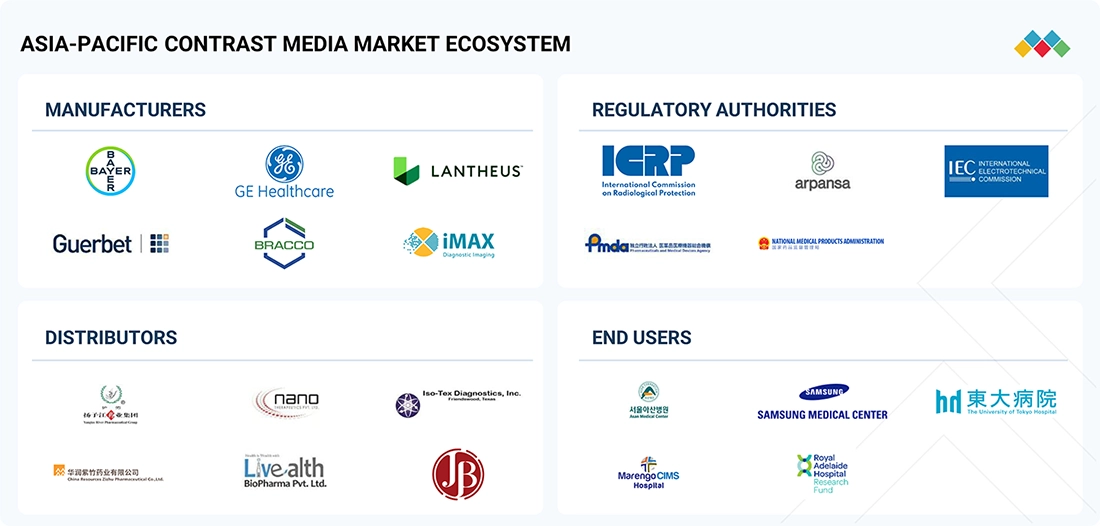
The market for contrast media in the Asia-Pacific region is characterized by an integrated global and regional manufacturer network, multiple distribution channels, and technologically advanced end-user organizations. Global or multinational manufacturers such as Bayer, GE Healthcare, Bracco, Guerbet, and Lantheus provide a steady supply of high-quality products and the latest technology, while local or regional manufacturers and distributors help ensure affordable pricing and access to regional markets through localized supply chains. Government regulatory agencies maintain safety standards for patients and provide equitable access to standardization as imaging volumes continue to rise. As leading hospitals and imaging centers adopt new technologies, they generate demand for higher imaging volumes, which in turn will drive the need for improved workflow efficiency and sustainable long-term growth of the global Asia-Pacific market for imaging and diagnostic products.
Logos and trademarks shown above are the property of their respective owners. Their use here is for informational and illustrative purposes only.
MARKET SEGMENTS
Source: Secondary Research, Interviews with Experts, MarketsandMarkets Analysis
Asia-pacific Contrast Media Market, By Type
Iodinated contrast media held the major share in 2025. An increase in treatment options available in the Asia Pacific region is being driven by continued growth and the expanded use of computed tomography (CT) and X-ray imaging technologies by healthcare providers. Today, diagnostic imaging technologies are widely used to diagnose various diseases, including cardiovascular disease, cancer, trauma, and gastrointestinal disorders. As healthcare markets in developing areas of the Asia-Pacific region (China and Southeast Asia) continue to expand rapidly due to rising healthcare spending and various government initiatives aimed at earlier detection of disease states, market demand for CT and X-ray contrast materials is increasing. The demand for CT contrast materials continues to be driven primarily by the growing number of imaging procedures among the senior population aged 80 years and older, as well as the increasing prevalence of chronic and lifestyle-related diseases.
Asia-pacific Contrast Media Market, By form
Liquid contrast agents have become widely used in the Asia-Pacific region and are popular among imaging professionals because they are easy to handle, accurately dosed, and well tolerated by patients. The rapid growth of diagnostic facilities, the increase in the number of patients in hospitals, and the increasing use of contrast-enhanced images due to the increase in the number of patients suffering from chronic diseases are all contributing to the dominance of liquid contrast formulations liquid media allow for more seamless integration into imaging workflows provide precise administration via the use of automated power injectors and result in the ability to obtain consistent, high-quality images. Due to these benefits, liquid contrast media have become the preferred contrast agent in both developed and emerging healthcare systems in the Asia-Pacific market.
Asia-pacific Contrast Media Market, By application
The Asia-Pacific region's radiology application sector benefits greatly from the rapid development of diagnostic imaging infrastructure, an increase in the incidence of chronic diseases such as cardiovascular disease, cancer, and neurological disorder and an increase in the desire for a prompt and accurate diagnosis. An increase in healthcare spending, supportive government policies designed to increase access to advanced imaging technology, and significant spending on infrastructure (particularly hospital and diagnostic facilities) will enhance the technology, particularly in China, India, and Southeast Asia. Further, the growing share of elderly individuals, an increase in medical tourists, and a shift toward minimally invasive and image-guided techniques will increase the use of radiology, resulting in greater demand for radiology-based applications across the region.
Asia-pacific Contrast Media Market, By end-user
Over the years, there has been a steady increase in the amount of diagnostic and interventional procedures performed at hospitals, clinics, and ambulatory surgical centers located throughout the Asia-Pacific. These facilities have become a major source of revenue for producers of contrast media. Patient admissions continue to rise rapidly, reflecting the growing number of patients suffering from chronic and lifestyle-related illnesses. An increase in the number of patients undergoing imaging procedures (CT, MRI, X-ray, and Angiography) leads to a corresponding increase in the demand for contrast media.
REGION
China to be fastest-growing region in Asia-pacific contrast media market during forecast period
The contrast media market in China is poised for significant growth, driven by the rapid expansion of high-throughput diagnostic imaging infrastructure as part of the national healthcare modernization efforts. Large investments in infrastructure are enabling the deployment of advanced diagnostic imaging technologies such as multi-slice CT, spectral CT, and high-tech digital radiography systems. The increasing incidence of chronic diseases like cardiovascular conditions, cancer, and neurodegenerative disorders is also fueling demand for contrast media used in diagnostic imaging to enable early and accurate diagnosis. Additionally, there is a growing preference for liquid contrast media, which is expected to boost demand in the region. Liquid contrast media are favored because they are easy to use and allow standardized dosages, supporting the effective implementation of imaging protocols.
ASIA-PACIFIC CONTRAST MEDIA MARKET: COMPANY EVALUATION MATRIX
The market has a competitive and dynamic market environment, driven by high growth in diagnostic imaging procedures and a rise in healthcare infrastructure in key countries such as China, India, Japan, and South Korea. The key companies in this market are Bracco Imaging, GE HealthCare, Bayer AG, and Guerbet, which have strong market presence in the Asia Pacific contrast media market due to their wide product ranges, robust distribution networks, and long-standing relationships with key hospitals in these countries. In parallel, a number of regional and new contrast media manufacturers, such as Jiangsu Hengrui Pharmaceuticals from China, Taejoon Pharm from South Korea, and Jodas Expoim from India, are now participating in this market with competitive prices and domestic manufacturing capabilities, which are further focusing on domestic demand and are gradually building their market share to compete with leaders.
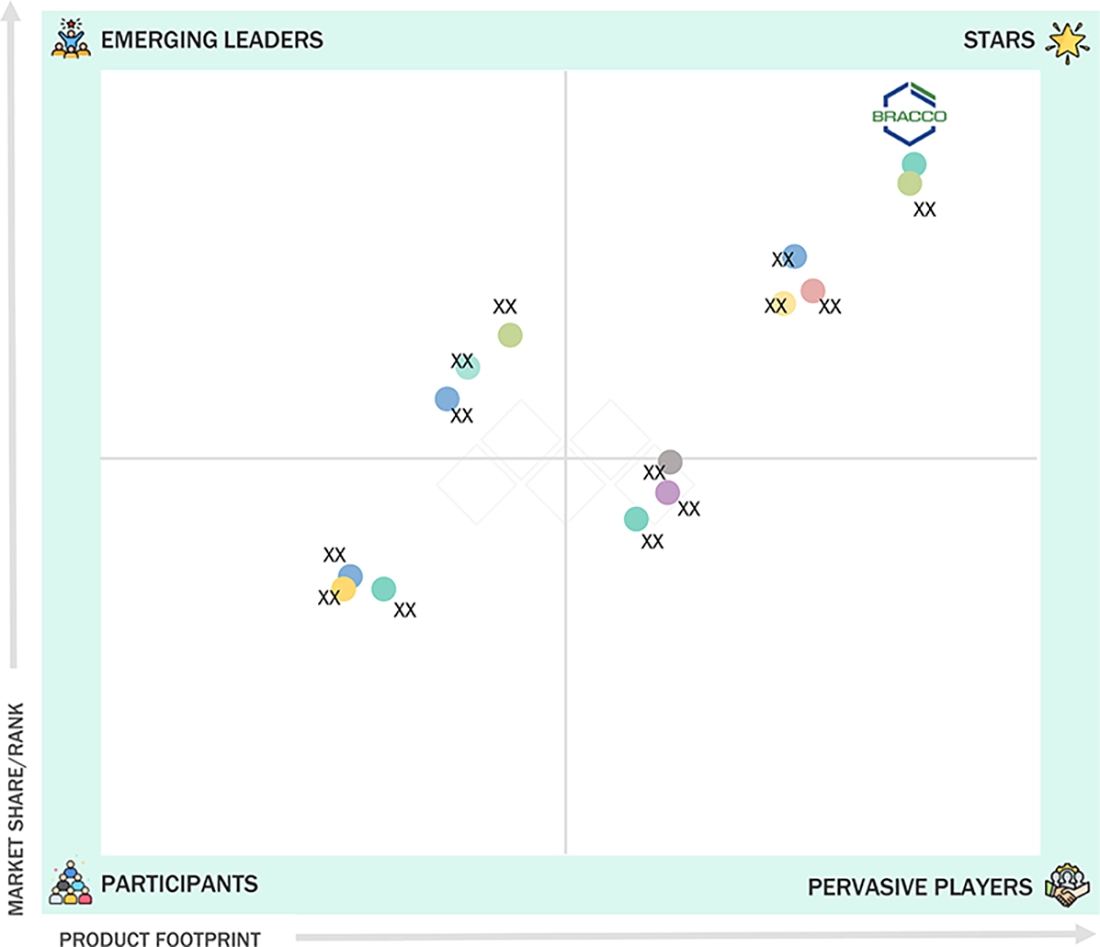
Source: Secondary Research, Interviews with Experts, MarketsandMarkets Analysis
KEY MARKET PLAYERS
- GE Healthcare (US)
- Bracco Imaging S.p.A (Italy)
- Bayer AG (Germany)
- Guerbet (France)
- Lantheus Medical Imaging (US)
- Unijules Life Sciences (India)
- J.B. Chemicals & Pharmaceuticals Ltd (India)
- Sanochemia Pharmazeutika Gmbh (Austria)
- Taejoon Pharm Co Ltd (South Korea)
- Jodas Expoim (India)
MARKET SCOPE
| REPORT METRIC | DETAILS |
|---|---|
| Market Size in 2026 (Value) | USD 1,978.9 Million |
| Market Forecast in 2031 (value) | USD 3,112.4 Million |
| Growth Rate | CAGR of 9.5% from 2026–2031 |
| Years Considered | 2023–2031 |
| Base Year | 2024 |
| Forecast Period | 2026–2031 |
| Units Considered | Value (USD Million/Billion) |
| Report Coverage | Revenue forecast, company ranking, competitive landscape, growth factors, and trends |
| Segments Covered |
|
| Country Covered | China, Japan, India, South Korea, Australia, Rest of Asia-Pacific |
| Parent & Related Segment Reports |
Contrast Media Market Europe Contrast Media Market United States Contrast Media Market |
WHAT IS IN IT FOR YOU: ASIA-PACIFIC CONTRAST MEDIA MARKET REPORT CONTENT GUIDE
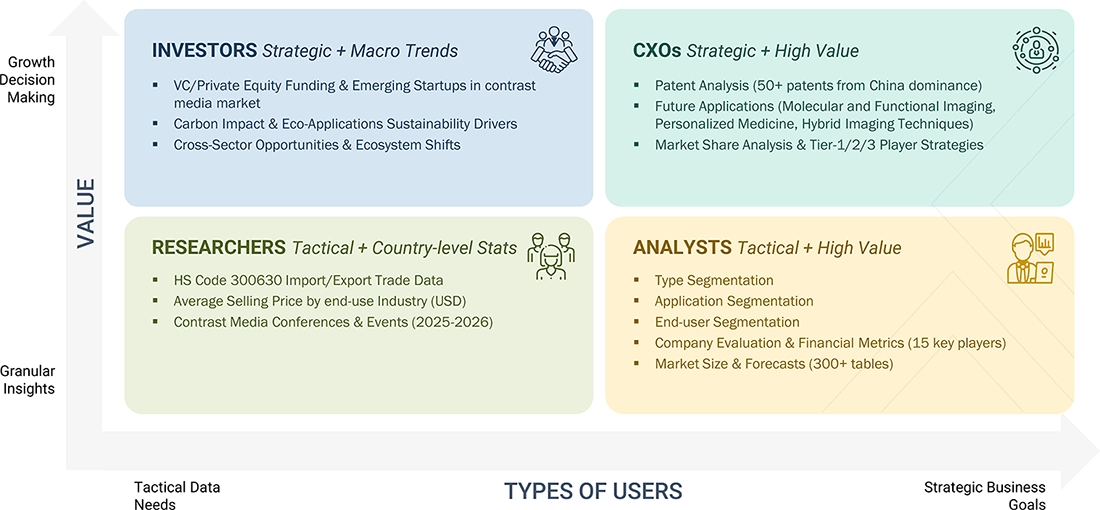
DELIVERED CUSTOMIZATIONS
We have successfully delivered the following deep-dive customizations:
| CLIENT REQUEST | CUSTOMIZATION DELIVERED | VALUE ADDS |
|---|---|---|
| Biopharmaceutical Companies |
|
|
RECENT DEVELOPMENTS
- March 2025 : Lantheus and GE HealthCare Announce Exclusive Licensing Agreement for Prostate Cancer Imaging Agent PYLARIFY (Piflufolastat F 18) in Japan
- March 2024 : Korea's Samsung Medison partners with Italy-based Bracco Imaging for diagnostic ultrasound technology
Table of Contents
 Exclusive indicates content/data unique to MarketsandMarkets and not available with any competitors.
Methodology
The study involved four main activities to estimate the current size of the Asia-Pacific Contrast Media Market . Extensive secondary research was conducted to gather information on the market, peer, and parent markets. The next step was to validate these findings, assumptions, and sizing with industry experts across the value chain through primary research. Both top-down and bottom-up methods were used to estimate the overall market size. Subsequently, market segmentation and data triangulation were employed to estimate the market sizes of various segments and subsegments.
Secondary Research
The secondary research process involves the widespread use of secondary sources, directories, databases (such as Bloomberg Businessweek, Factiva, and D&B Hoovers), white papers, annual reports, company house documents, investor presentations, and SEC filings of companies. Secondary research was used to identify and collect information useful for the extensive, technical, market-oriented, and commercial Asia-Pacific Contrast Media Market study. It was also used to obtain important information about the key players and market classification & segmentation according to industry trends to the bottom-most level, and key developments related to market and technology perspectives. A database of the key industry leaders was also prepared using secondary research.
Primary Research
In the primary research process, various supply and demand sources were interviewed to obtain qualitative and quantitative information for this report. The primary sources on the supply side include industry experts such as CEOs, vice presidents, marketing and sales directors, technology & innovation directors, and other key executives from leading companies and organizations in the Asia-Pacific Contrast Media Market . The primary sources from the demand side include hospitals and multispecialty healthcare systems, and diagnostic imaging and radiology centers. Primary research was conducted to validate the market segmentation, identify key players, and gather insights on key industry trends & key market dynamics.
To know about the assumptions considered for the study, download the pdf brochure
Market Size Estimation
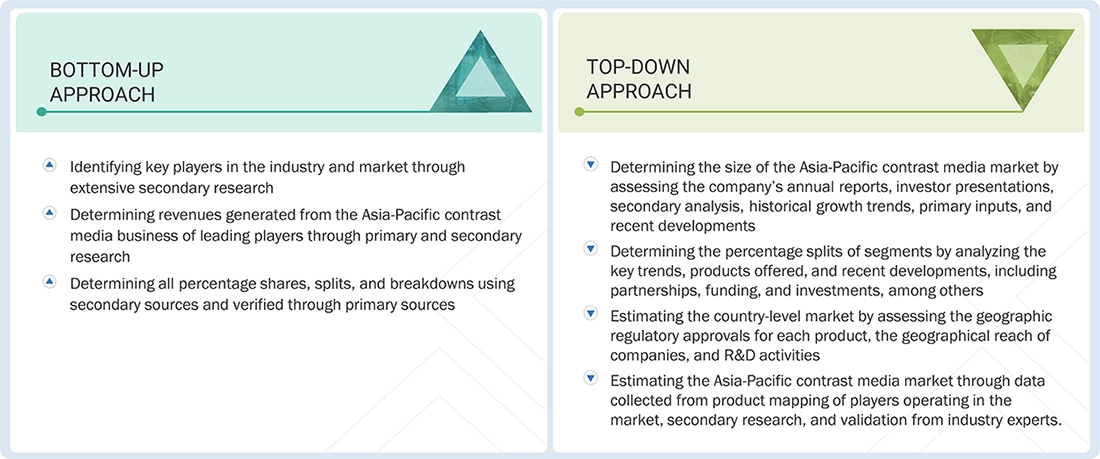
In this report, the Asia-Pacific Contrast Media Market ’s size was determined using the revenue share analysis of leading players. For this purpose, key market players were identified, and their market revenues were determined using insights gathered during the primary and secondary research phases. Secondary research included analyzing the annual and financial reports of the top market players. In contrast, primary research included extensive interviews with key opinion leaders, including CEOs, directors, and senior marketing executives.
Segmental revenues were calculated based on the revenue mapping of major solution/service providers to calculate the global market value. This process involved the following steps:
- Generating a list of major global players operating in the Asia-Pacific Contrast Media Market .
- Mapping annual revenues generated by major global players from the type segment (or nearest reported business unit/product category)
- Revenue mapping of major players to cover a major share of the global market, as of 2025
- Extrapolating the global value of the Asia-Pacific Contrast Media Market industry
Asia-Pacific Contrast Media Market : Top-Down and Bottom-Up Approach
Data Triangulation
After arriving at the overall market size through the market size estimation process explained above, the Asia-Pacific Contrast Media Market was segmented and subsegmented. Data triangulation and market breakdown procedures were employed to complete the overall market engineering process and obtain exact statistics for all segments and subsegments. The data was triangulated by studying various factors and trends from both the demand and supply sides. Additionally, the Asia-Pacfiic Contrast Media Market was validated using top-down and bottom-up approaches.
Market Definition
Contrast media are administered to patients to enhance the visibility of internal organs, tissues, and blood vessels during diagnostic techniques such as X-ray, CT, MRI, and ultrasound. The market includes iodinated, gadolinium-based, microbubble, and barium-based contrast media used across hospitals, diagnostic centers, clinics, and ambulatory surgery centers.
Key Stakeholders
- Manufacturers and Suppliers
- Healthcare Providers
- Regulatory Authorities
- Distributors and Wholesalers
- Logistics and Cold-Chain Providers
- Healthcare IT and PACS Providers
- Training and Professional Associations
- Venture capitalists and investors
- Radiology centers
- Medical imaging and nuclear medicine consultants
Report Objectives
- To define, describe, and forecast the size of the Asia-Pacific Contrast Media Market based on type, form, route of administration, modality, indication, application, end user, and region
- To provide detailed information regarding the major factors influencing the growth potential of the Asia-Pacific Contrast Media Market (drivers, restraints, opportunities, challenges, and trends)
- To analyze the micro markets with respect to individual growth trends, prospects, and contributions to the global Asia-Pacific Contrast Media Market .
- To analyze key growth opportunities in the Asia-Pacfiic Contrast Media Market for key stakeholders and provide details of the competitive landscape for market leaders
- To forecast the size of market segments and/or subsegments with respect to five major regions, namely, North America (US and Canada), Europe (Germany, France, UK, Italy, Spain, and Rest of Europe), Asia Pacific (Japan, China, India, Australia, South Korea, and Rest of Asia Pacific), Latin America (Brazil, Mexico, and Rest of Latin America), and the Middle East & Africa
- To profile the key players in the Asia-Pacific Contrast Media Market and comprehensively analyze their market shares and core competencies
- To track and analyze the competitive developments undertaken in the Asia-Pacific Contrast Media Market , such as product launches, agreements, expansions, and mergers & acquisitions
Available customizations:
Based on the given market data, MarketsandMarkets offers customizations tailored to the company’s specific needs. The following customization options are available for the present Asia-Pacific Contrast Media Market report:
Product Analysis
- Product matrix, which gives a detailed comparison of the product portfolios of the top five companies
Company Information
- Detailed analysis and profiling of additional market players (up to five)


Personalize This Research
- Triangulate with your Own Data
- Get Data as per your Format and Definition
- Gain a Deeper Dive on a Specific Application, Geography, Customer or Competitor
- Any level of Personalization
Let Us Help You
- What are the Known and Unknown Adjacencies Impacting the Asia-Pacific Contrast Media Market
- What will your New Revenue Sources be?
- Who will be your Top Customer; what will make them switch?
- Defend your Market Share or Win Competitors
- Get a Scorecard for Target Partners

Custom Market Research Services
We Will Customise The Research For You, In Case The Report Listed Above Does Not Meet With Your Requirements
Get 10% Free CustomisationTESTIMONIALS

JAYANT RAJPUROHIT
Director of Market Insights, Data and Analytics
SFI Health,
Leading Pharmaceutical Companywww.sfihealth.com/

We at SFI Health approached MarketsandMarkets for an Opportunity Assessment on "Incidence and Prevalence of Focus Indications" as we wanted to know the most attractive HCPs like Physician, Functional MD, Naturopath and Pharmacist. The project was critical for us to ensure our focus on the right target which would enable sustainable growth and profitability for SFI Health. The business insights provided exceeded our expectations and we were extremely impressed. The team at MarketsandMarkets is highly professional and detail oriented and very well understood our business needs. MarketsandMarkets offers a unique combination of expertise and dedicated engagement model. We identified 2 new products to be launched in coming months, based on the research findings provided by MarketsandMarkets. We are happy with the services and would strongly recommend MarketsandMarkets to my peers in the industry.

BEATRIZ DE LA CALLE
Head of Commercial Analytics
Qualicaps,
Leading Pharmaceutical Companywww.qualicaps.com/

We partnered with MarketsandMarkets for an assessment study on hard empty capsules. The team was extremely professional in understanding our business requirements and we received timely responses to all our queries. The market intelligence and the recommendations has met our business requirements. We were extremely impressed to see the final study results; it really exceeded our expectations. The market intelligence offered by MarketsandMarkets, and clarity on next steps will help us achieve our business objective for the Year 2021. We are happy with the services and would strongly recommend MarketsandMarkets to my peers in the industry.

Bob Williams,
Senior Director Business Development & Innovation
Bracco Diagnostics Inc.,
Italian Multinational in life sciences sector and a World Leader in imaging diagnosticsimaging.bracco.com/us-en
We were pleased with targeted insights that MarketsandMarkets identified from a custom study on the 'Radiation Dose Management Solutions Market'. Your team identified and characterized the market participants as well as underlying trends accurately. This study was useful to Bracco in formulating business strategies for our dose monitoring product lines and we thank MarketsandMarkets for the job well done.
Cody Coonradt,
Market Development and Strategy Manager
3M Health Information Systems,
Leader in Health care Coding, Payment & Analytics Solutions.www.3m.com/3M/en_US/health-information-systems-us
The value for our organization comes from three things: depth of research, specificity of segments and being easy to work with. As important as the first two are, the third can't be underestimated. MarketsandMarkets, maybe more than any other research vendor, wants to know what is top of mind for our team and what big questions we are grappling to answer.
Their customer first approach and high value engagement model, have given us great analysis and excellent value for money






Growth opportunities and latent adjacency in Asia-Pacific Contrast Media Market