Asia Pacific Human Microbiome Market Size, Growth, Share & Trends Analysis

Asia Pacific Human Microbiome Market by Drug & Supplement (Drugs, Probiotics, Prebiotics), Disease (Infectious, Gastrointestinal, Endocrine & Metabolic Diseases), Type (BCT/FMT, LBP), End User (Hospitals, Clinics, Long-term Care) - Forecast to 2031




OVERVIEW
Source: Secondary Research, Interviews with Experts, MarketsandMarkets Analysis
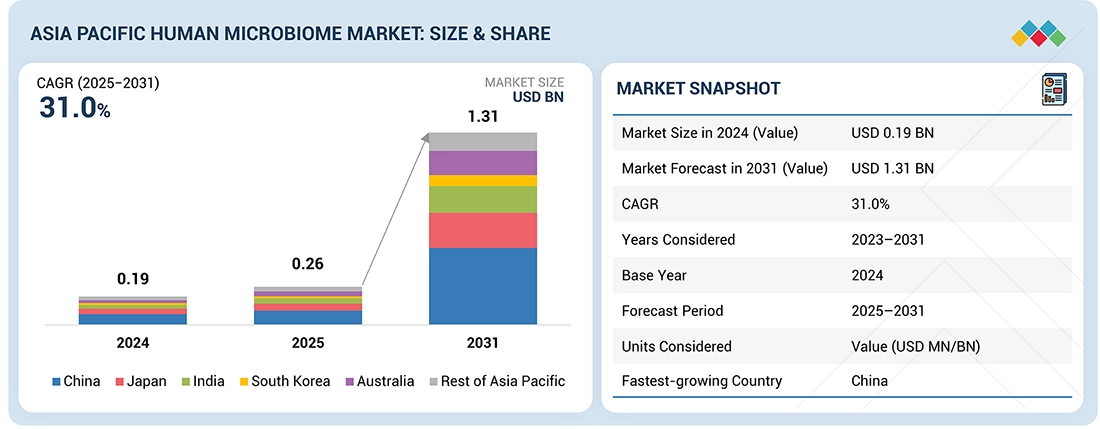
The Asia Pacific Human Microbiome Market, valued at US$0.19 billion in 2024, stood at US$0.26 billion in 2025 and is projected to advance at a resilient CAGR of 31.0% from 2025 to 2031, culminating in a forecasted valuation of US$1.31 billion by the end of the period. Market growth is driven by an increasing focus on preventive and personalized health, rising adoption of microbiome-based diagnostics and therapeutic solutions, and rapid advances in next-generation sequencing, AI-enabled microbiome analytics, and regional bioinformatics capabilities.
KEY TAKEAWAYS
-
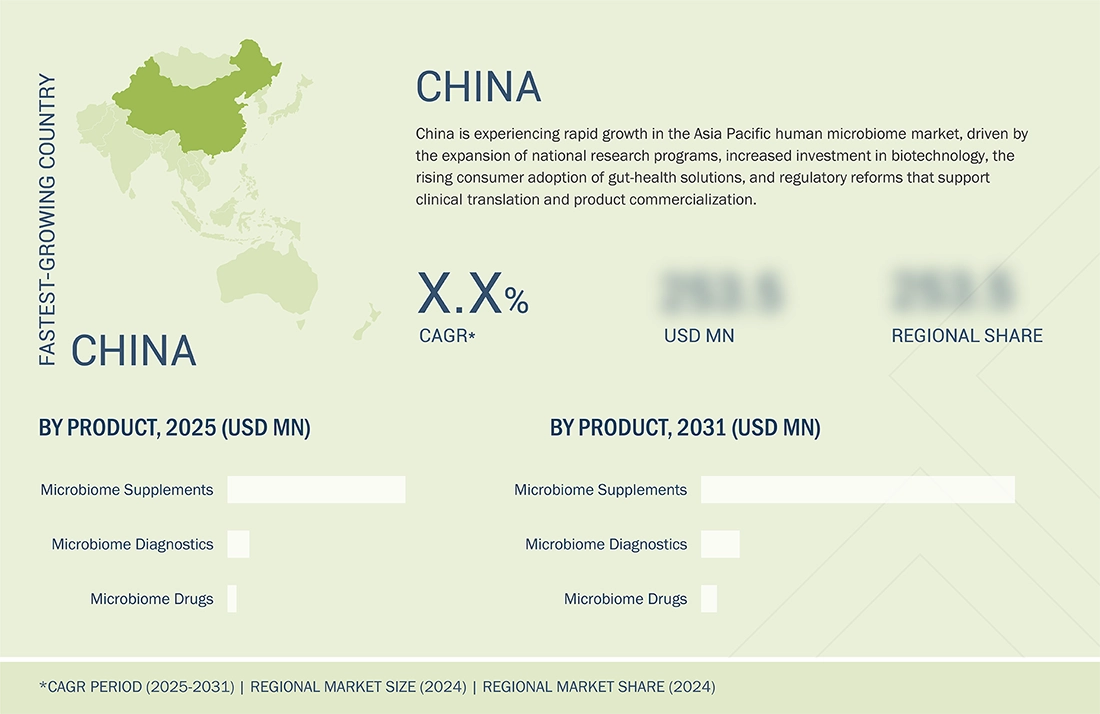
By RegionChina accounted for 38.2% of the Asia Pacific human microbiome market in 2024 due to the large population base in China, the high prevalence of lifestyle and digestive disorders, and the fast pace of the adoption of sequencing technologies.
-
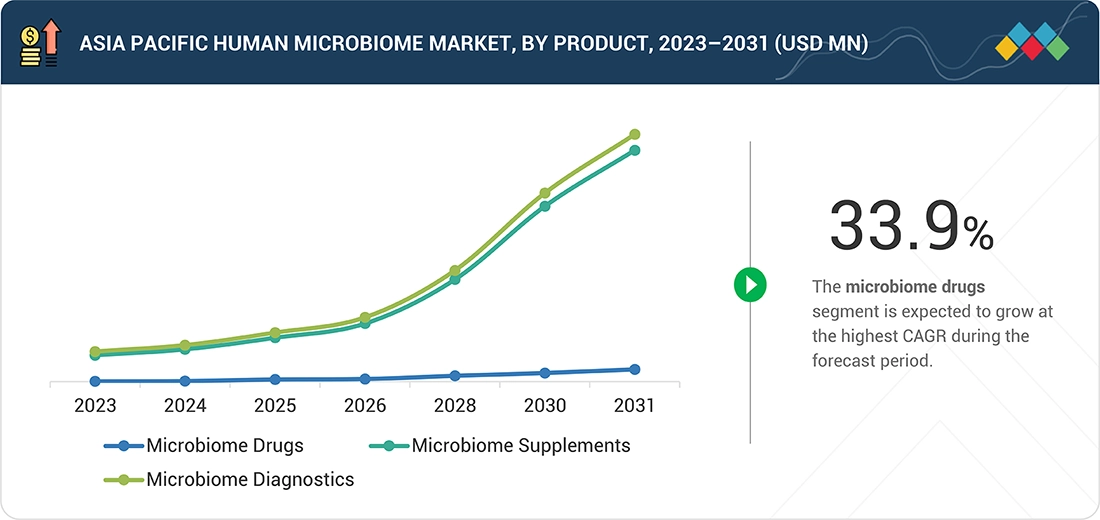
By ProductBy product, the microbiome drugs segment is predicted to be at the top position with a share of 33.9%, mainly due to the clinical validation of microbiome-based therapeutics that keeps on rising, alongside the considerable investment in the live biotherapeutic product (LBP) pipelines.
-
By Route of AdministrationThe perspective of the route of administration shows that the rectal route is expected to have the highest growth rate between 2025 and 2031 due to its ability to provide high concentrations of live microbiome therapeutics directly into the lower gut, which is usually followed by faster clinical response and higher efficacy.
-
By DiseaseThe market analysis from a disease point of view shows that gastrointestinal disorders have been the leading diseases with a 73.4% share of the total market in 2024. The main reason for this is the prevalence of gut-related disorders in the Asia-Pacific region, and the rising trend of using personalized interventions for gastrointestinal health.
-
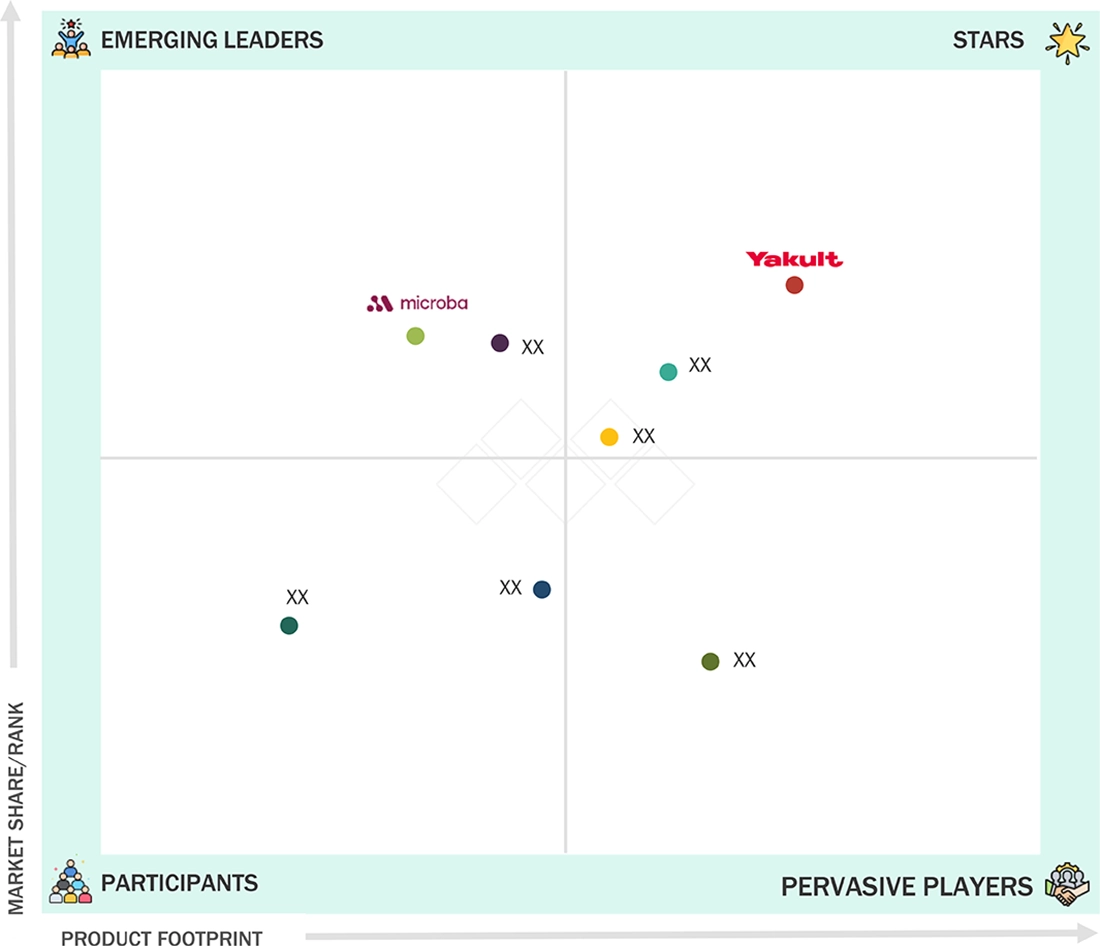
Competitive LandscapeSeveral companies are identified as the major players in the Asia Pacific microbiome market. These are Yakult Honsha Co., Ltd., International Flavors & Fragrances Inc., and Nestlé, which together have established a strong presence in the market and have a wide range of products.
-
Competitive LandscapeCompanies such as Guangzhou Zhiyi Biotechnology Co., Ltd., Metagen Therapeutics, Inc., and Microba are establishing themselves in niche application areas and can be considered as the upcoming leaders and trendsetters.
The human microbiome market in Asia Pacific keeps growing steadily owing to the growing demand for preventive healthcare, rising interest in gut-health solutions, and significant investments in advanced sequencing and bioinformatics across countries such as China, Japan, South Korea, and Australia. Consumers in the region are increasingly adopting microbiome-focused wellness approaches, accelerating the uptake of direct-to-consumer microbiome testing kits that combine detailed microbial profiling with culturally tailored dietary, lifestyle, and probiotic recommendations.
TRENDS & DISRUPTIONS IMPACTING CUSTOMERS' CUSTOMERS
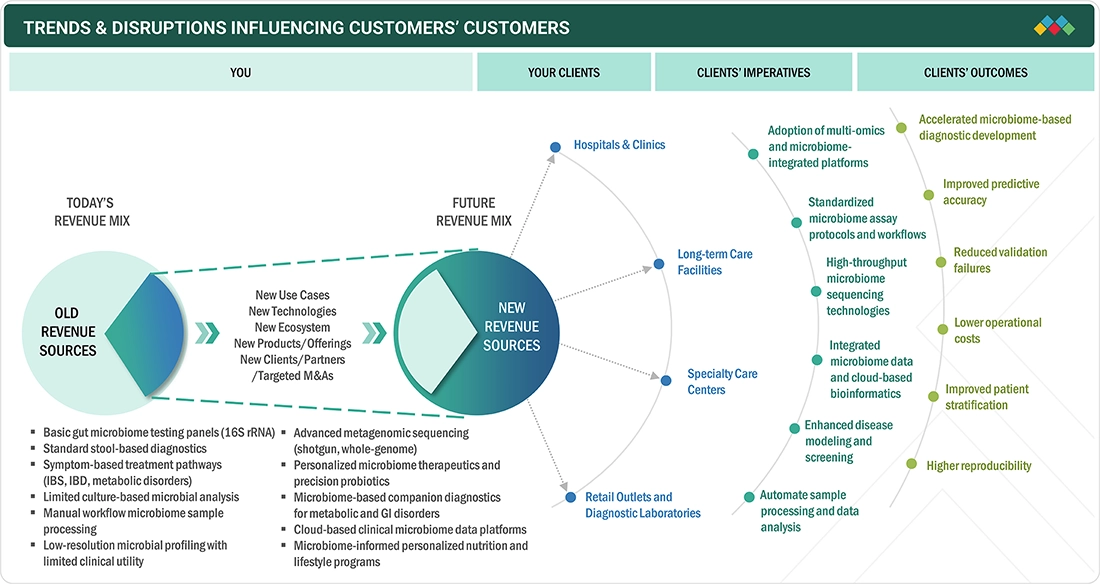
The Asia Pacific human microbiome market's revenue growth is shifting from low-resolution testing and simple probiotic products to sophisticated, clinically focused, and technologically advanced solutions. Rapid adoption of AI-supported microbiome analytics, increased access to high-throughput metagenomic sequencing, the development of microbiome-based treatments, and the growing need for culturally specific, individualized nutrition programs are some of the region's major drivers. To manage high testing volumes, customers in hospitals, clinics, specialty care facilities, and diagnostic labs are placing a greater emphasis on multi-omics integration, workflow automation, and scalable bioinformatics platforms. These developments are accelerating the commercialization and clinical adoption of microbiome-based diagnostics and therapeutics throughout the Asia Pacific by increasing reproducibility, lowering operational barriers, improving patient stratification, and improving diagnostic accuracy.
Source: Secondary Research, Interviews with Experts, MarketsandMarkets Analysis
MARKET DYNAMICS

Level
-
Growing burden of chronic & metabolic diseases

-
Growing awareness of gut health & preventive personalized medicine


Level
-
Regulatory complexity & lack of harmonization across countries

-
High cost of developing clinically validated microbiome therapies


Level
-
Expansion of consumer microbiome testing & personalized nutrition services

-
Growth of microbiome-based functional foods, probiotics, and nutraceuticals


Level
-
Limited consumer & clinician trust

-
Distribution & supply chain constraints

Source: Secondary Research, Interviews with Experts, MarketsandMarkets Analysis
Driver: Growing burden of chronic & metabolic diseases
Conditions?????? that are chronic and metabolic, including obesity, diabetes, and digestive disorders, are rising at a rapid pace, not only in the Asia Pacific region but everywhere in the world. Currently, healthcare providers and patients are searching for new methods to detect, treat, and prevent disease. The overburden of these health problems on the healthcare systems is a clear indication of the great potential that exists in the use of microbiome-based treatments and personalized care strategies in the management of these issues. Such an approach can lead to better patient outcomes and, ultimately, to an improvement in public ??????health.
Restraint: Regulatory complexity & lack of harmonization across countries
The?????? Asia Pacific human microbiome market is riddled with regulatory difficulties caused by the diversity and fragmentation of policies in different countries. Differences in the regulatory approval paths for probiotics, diagnostics, and therapeutics result in the limited cross-border commercialization of these products. In most cases, companies are required to conduct separate clinical validations or modify their products to comply with local regulations. Such difficulties discourage the pace at which the region opens up to new products, escalate the costs, and hamper the regional expansion of microbiome-based ??????products.
Opportunity: Expansion of consumer microbiome testing & personalized nutrition services
Customized?????? diet plans and at-home microbiome tests are trends that keep on getting more and more popular, particularly across the urban Asia Pacific region. As people become more conscious of their health, a lot of them are willing to know more about their digestive health and get advice on a diet and lifestyle compatible with their health. Mobile apps and digital health devices are helpful to users in monitoring their progress, and they get motivated by themselves over time. This presents a significant opportunity for companies to communicate with a broader audience while promoting preventive care and wellness products that are in demand.
Challenge: Limited consumer & clinician trust
Even with the increased awareness, the uptake of microbiome-based diagnostics and therapies is still limited due to the lack of trust that exists between consumers and clinicians. The intricacy of microbiome science, the variability of results, and the changing clinical evidence are some of the factors that make people doubt the efficacy and reliability of the solutions. Therefore, gaining trust through supported clinical studies, educational programs, and conveying information in a straightforward manner is the way to go if one wants to see adoption rates increase and also ensure the long-term success of microbiome solutions in the Asia Pacific healthcare ??????market.
ASIA PACIFIC HUMAN MICROBIOME MARKET: COMMERCIAL USE CASES ACROSS INDUSTRIES
| COMPANY | USE CASE DESCRIPTION | BENEFITS |
|---|---|---|
 |
AMILI operates a precision gut-microbiome platform tailored for Asian populations, leveraging a large multi-ethnic Asian gut-microbiome database and a transplant-bank model (gut microbiome transplant bank) to develop live-microbiome-based interventions. Their platform aims to enable microbiome transplants and therapeutic modulation specifically tuned to the genetic, dietary, and microbiome diversity in Asia. | Scalable and optimized microbiome infrastructure | Standardized microbiome bank |
Logos and trademarks shown above are the property of their respective owners. Their use here is for informational and illustrative purposes only.
MARKET ECOSYSTEM
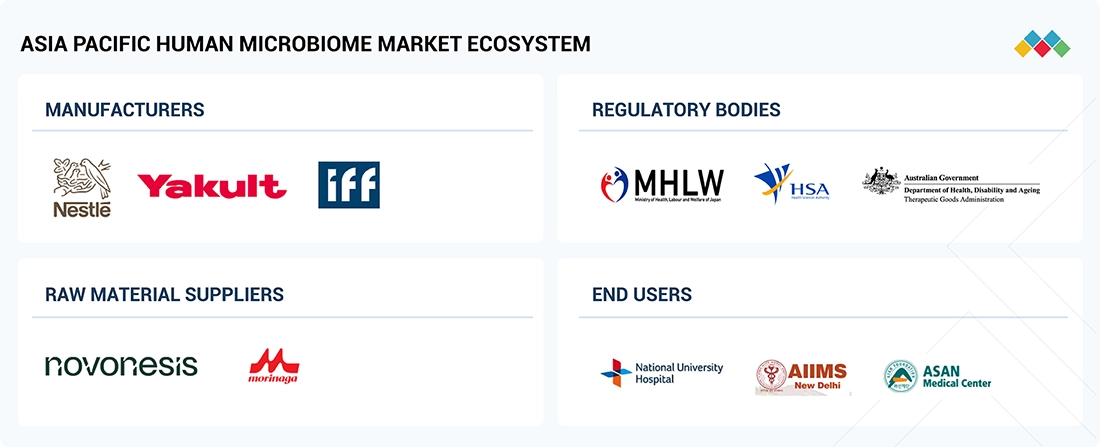
The Asia Pacific human microbiome market ecosystem consists of manufacturers (Nestlé, Yakult, IFF), regulatory bodies (Ministry of Health, Labour and Welfare, Japan, Therapeutic Goods Administration, Australia, Health Sciences Authority, Singapore), raw material suppliers (Novonesis, Morinaga), and end users (National University Hospital Singapore, AIIMS New Delhi, Asan Medical Center). Microbial strains, fermentation inputs, and specialized substrates supplied by raw material providers are formulated by manufacturers into probiotics, microbiome-based nutrition solutions, and research-focused microbiome tools. Regulatory authorities guide approval pathways, safety standards, and quality assessments across the region. End users, including hospitals, research institutes, and public health systems, drive the adoption of advanced microbiome products for clinical care, preventive health, and translational research.
Logos and trademarks shown above are the property of their respective owners. Their use here is for informational and illustrative purposes only.
MARKET SEGMENTS
Source: Secondary Research, Interviews with Experts, MarketsandMarkets Analysis
Asia Pacific Human Microbiome Market, By Product
In 2024, microbiome supplements dominated the Asia Pacific human microbiome market, driven by strong consumer demand for probiotics, prebiotics, and synbiotics aimed at digestive health, immunity, and overall wellness. These products are widely accessible without prescriptions, supported by growing awareness of gut–health links and preventive healthcare trends.
Asia Pacific Human Microbiome Market, By Route of Administration
In 2024, the oral route of administration was the leading segment in the Asia Pacific human microbiome drugs & supplements market. The large market growth is mainly a result of high patient convenience and its widespread acceptance. Oral formulations, such as capsules, powders, and liquids, are very easy for patients to consume, cost-effective in terms of production, and are the most suitable for delivering probiotics, prebiotics, and live biotherapeutics to support gut health.
Asia Pacific Human Microbiome Market, By Disease
In 2024, gastrointestinal diseases dominated the Asia Pacific human microbiome market, driven by the strong association between gut microbiome imbalance and gastrointestinal disorders, the gastrointestinal diseases.
REGION
North America to be fastest-growing region in global aerospace materials market during forecast period
ASIA PACIFIC HUMAN MICROBIOME MARKET: COMPANY EVALUATION MATRIX
In the Asia Pacific human microbiome market matrix, Yakult Honsha Co., Ltd. stands out as a leader, supported by its strong legacy in probiotic innovation, robust clinical validation programs, and extensive consumer reach across the region. The company's continued investment in strain development and large-scale manufacturing capabilities reinforces its leading position in the Asia Pacific microbiome landscape. Microba is establishing itself as an emerging leader, driven by its advanced microbiome sequencing technologies and expanding clinical and wellness partnerships.
Source: Secondary Research, Interviews with Experts, MarketsandMarkets Analysis
KEY MARKET PLAYERS
- Yakult Honsha Co., Ltd. (Japan)
- International Flavors & Fragrances Inc. (US)
- Nestlé (Switzerland)
- Guangzhou Zhiyi Biotechnology Co., Ltd. (China)
- Microba (Australia)
- BiomeBank (Australia)
- Ferring B.V. (Switzerland)
- Metagen Therapeutics, Inc. (Japan)
MARKET SCOPE
| REPORT METRIC | DETAILS |
|---|---|
| Market Size in 2024 (Value) | USD 0.19 Billion |
| Market Forecast in 2031 (Value) | USD 1.31 Billion |
| Growth Rate | CAGR of 31.0% from 2025-2031 |
| Years Considered | 2023-2031 |
| Base Year | 2024 |
| Forecast Period | 2025-2031 |
| Units Considered | Value (USD Million/Billion) |
| Report Coverage | Revenue forecast, company ranking, competitive landscape, growth factors, and trends |
| Segments Covered |
|
| Countries Covered | China, Japan, India, South Korea, Australia, Rest of Asia Pacific |
| Parent & Related Segment Reports |
Human Microbiome Market North America Human Microbiome Market Europe Human Microbiome Market Human Microbiome Manufacturing Services Market Human Microbiome Drugs Market |
WHAT IS IN IT FOR YOU: ASIA PACIFIC HUMAN MICROBIOME MARKET REPORT CONTENT GUIDE
DELIVERED CUSTOMIZATIONS
We have successfully delivered the following deep-dive customizations:
| CLIENT REQUEST | CUSTOMIZATION DELIVERED | VALUE ADDS |
|---|---|---|
| Asia Pacific Human Microbiome Market, By Distribution Channel | Market size & forecast for the human microbiome market based on type of distribution - Prescription-based Products and OTC Products | Split of Supplements into clinical (prescription/FSMP/medical foods) vs. consumer OTC (wellness probiotics, synbiotics) |
| Asia Pacific Human Microbiome Diagnostics Market, By Type | Market size & forecast for the human microbiome market based on the type of diagnostics - microbiome test and companion diagnostics | Diagnostic TAM assessment |
RECENT DEVELOPMENTS
- February 2024: BiomeBank received a USD 2.15 million grant from the Australian Government Cooperative Research Centres Projects (CRC-P) to open a manufacturing facility for cultured microbial therapeutics in Adelaide.
- November 2023: BiomeBank announced the opening of its new GMP manufacturing facility. The facility is designed to increase the global supply of approved donor-derived microbiome-based therapy and further develop its second-generation therapies.
Table of Contents
 Exclusive indicates content/data unique to MarketsandMarkets and not available with any competitors.
Methodology
This research study extensively used secondary sources, directories, and databases to identify and collect valuable information to analyze the Asia Pacific Human Microbiome Market. In-depth interviews were conducted with various primary respondents, including key industry participants, subject-matter experts (SMEs), C-level executives of key market players, and industry consultants, to obtain and verify critical qualitative & quantitative information and assess the growth prospects of the market. The market size estimated through secondary research was then triangulated with inputs from primary research to arrive at the final market size.
Secondary Research
Secondary research was used primarily to identify & collect information for the extensive, technical, market-oriented, and commercial study. The secondary sources used for this study include World Health Organization (WHO), Human Microbiome Project (HMP), Organisation for Economic Co-operation and Development (OECD), National Institutes of Health (NIH), Food and Drug Administration (FDA), ClinicalTrials.gov, Annual Reports, SEC Filings, Investor Presentations, Research Journals, Press Releases, and financial statements. These sources also obtained key information about major players, market classification, and segmentation according to industry trends, regional/country-level markets, market developments, and technology perspectives.
Primary Research
In-depth interviews were conducted with various primary respondents, including key industry participants, subject-matter experts (SMEs), C-level executives of key market players, and industry consultants, to obtain and verify the critical qualitative & quantitative information and assess the prospects of the market. Various primary sources from both the supply & demand sides of the market were interviewed to obtain qualitative and quantitative information. The following is a breakdown of the primary respondents:
Market Size Estimation
Both top-down and bottom-up approaches were used to estimate & validate the total size of the Asia Pacific Human Microbiome Market. These methods were also used extensively to estimate the size of various subsegments in the market. The research methodology used to estimate the market size includes the following:
Data Triangulation
The total market was split into several segments and subsegments after arriving at the overall market size from the estimation process. Where applicable, data triangulation and market breakdown procedures were employed to complete the overall market engineering process and arrive at the exact statistics for all segments and subsegments. The data was triangulated by studying various factors and trends from both the demand and supply sides.
Market Definition
The human microbiome encompasses the collective genetic material of diverse microorganisms residing within the human body, known as the metagenome. This includes bacteria, fungi, protozoans, non-living viruses, and various single-celled organisms. These microorganisms play a crucial role in human physiology, influencing metabolic and immune functions. Found within human tissues, the microbiome is a focal point of research for medical advancements and analytical techniques. It is applied in probiotics, prebiotics, pharmaceuticals, and therapeutic systems to address conditions such as diabetes, obesity, and cancer, as well as a range of metabolic, gastrointestinal, neurological, central nervous system, and autoimmune disorders.
The study provides an in-depth analysis of the Asia Pacific Human Microbiome Market based on contemporary market trends and developments, and its potential growth from 2025 to 2031. It includes detailed market trends, the competitive landscape, market size, forecasts, and the analysis of the key Human Microbiome service providers.
Stakeholders
- Manufacturers and Distributors of Human Microbiome Products
- Pharmaceutical and Biotechnology Companies
- Market Research and Consulting Firms
- R&D Centers
- Researchers and Scientists
- Academic & Research Institutes
- Hospitals & Clinics
- Long-term Care Centers
- Specialty Care Centers
- Outpatient Care Centers
Report Objectives
- To define, describe, and forecast the Asia Pacific Human Microbiome Market based on products, disease, drugs & supplements type, drugs & supplements route of administration, end user, manufacturing services and region
- To provide detailed information regarding the major factors influencing the market growth (such as drivers, restraints, opportunities, and challenges)
- To strategically analyze micromarkets with respect to individual growth trends, prospects, and contributions to the overall Asia Pacific Human Microbiome Market
- To analyze the opportunities in the market for stakeholders and provide details of the competitive landscape for market leaders
- To strategically profile the key players in the Asia Pacific Human Microbiome Market and comprehensively analyze their core competencies and market rankings
- To track and analyze competitive developments such as product launches, acquisitions, expansions, agreements, partnerships, and collaborations in the Asia Pacific Human Microbiome Market
- To benchmark players within the Asia Pacific Human Microbiome Market using the ‘Company Evaluation Matrix' framework, which analyzes market players based on various parameters within the broad categories of business and product strategy


Personalize This Research
- Triangulate with your Own Data
- Get Data as per your Format and Definition
- Gain a Deeper Dive on a Specific Application, Geography, Customer or Competitor
- Any level of Personalization
Let Us Help You
- What are the Known and Unknown Adjacencies Impacting the Asia Pacific Human Microbiome Market
- What will your New Revenue Sources be?
- Who will be your Top Customer; what will make them switch?
- Defend your Market Share or Win Competitors
- Get a Scorecard for Target Partners

Custom Market Research Services
We Will Customise The Research For You, In Case The Report Listed Above Does Not Meet With Your Requirements
Get 10% Free CustomisationTESTIMONIALS

JAYANT RAJPUROHIT
Director of Market Insights, Data and Analytics
SFI Health,
Leading Pharmaceutical Companywww.sfihealth.com/

We at SFI Health approached MarketsandMarkets for an Opportunity Assessment on "Incidence and Prevalence of Focus Indications" as we wanted to know the most attractive HCPs like Physician, Functional MD, Naturopath and Pharmacist. The project was critical for us to ensure our focus on the right target which would enable sustainable growth and profitability for SFI Health. The business insights provided exceeded our expectations and we were extremely impressed. The team at MarketsandMarkets is highly professional and detail oriented and very well understood our business needs. MarketsandMarkets offers a unique combination of expertise and dedicated engagement model. We identified 2 new products to be launched in coming months, based on the research findings provided by MarketsandMarkets. We are happy with the services and would strongly recommend MarketsandMarkets to my peers in the industry.

BEATRIZ DE LA CALLE
Head of Commercial Analytics
Qualicaps,
Leading Pharmaceutical Companywww.qualicaps.com/

We partnered with MarketsandMarkets for an assessment study on hard empty capsules. The team was extremely professional in understanding our business requirements and we received timely responses to all our queries. The market intelligence and the recommendations has met our business requirements. We were extremely impressed to see the final study results; it really exceeded our expectations. The market intelligence offered by MarketsandMarkets, and clarity on next steps will help us achieve our business objective for the Year 2021. We are happy with the services and would strongly recommend MarketsandMarkets to my peers in the industry.

Bob Williams,
Senior Director Business Development & Innovation
Bracco Diagnostics Inc.,
Italian Multinational in life sciences sector and a World Leader in imaging diagnosticsimaging.bracco.com/us-en
We were pleased with targeted insights that MarketsandMarkets identified from a custom study on the 'Radiation Dose Management Solutions Market'. Your team identified and characterized the market participants as well as underlying trends accurately. This study was useful to Bracco in formulating business strategies for our dose monitoring product lines and we thank MarketsandMarkets for the job well done.
Cody Coonradt,
Market Development and Strategy Manager
3M Health Information Systems,
Leader in Health care Coding, Payment & Analytics Solutions.www.3m.com/3M/en_US/health-information-systems-us
The value for our organization comes from three things: depth of research, specificity of segments and being easy to work with. As important as the first two are, the third can't be underestimated. MarketsandMarkets, maybe more than any other research vendor, wants to know what is top of mind for our team and what big questions we are grappling to answer.
Their customer first approach and high value engagement model, have given us great analysis and excellent value for money






Growth opportunities and latent adjacency in Asia Pacific Human Microbiome Market