Human Microbiome Drugs Market Size, Growth, Share & Trends Analysis

Human Microbiome Drugs Market by Type (Live Biotherapeutic Products, Fecal Microbiota-derived Therapeutics), Disease (Gastrointestinal, Infectious), End User (Hospitals, Clinics, Long-term Care) - Global Forecast to 2031




OVERVIEW
Source: Secondary Research, Interviews with Experts, MarketsandMarkets Analysis
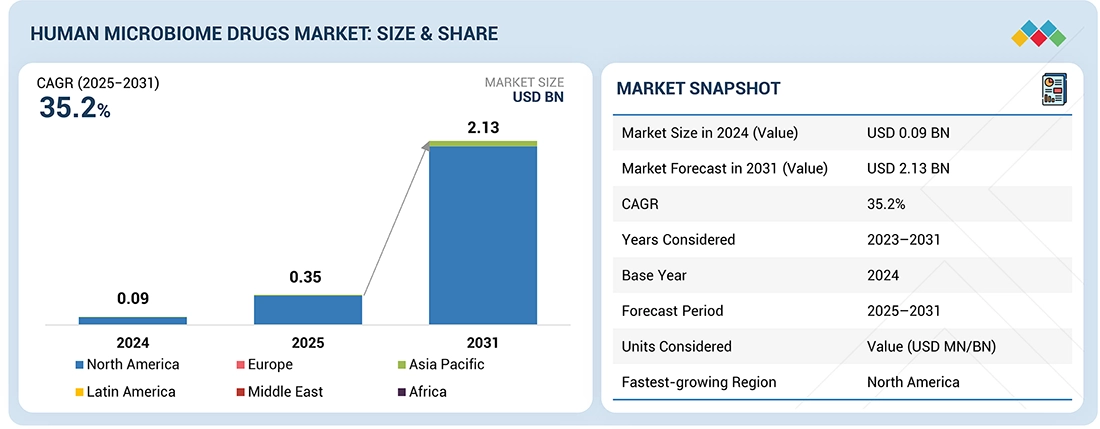
The human microbiome drugs market, valued at US$0.09 billion in 2024, stood at US$0.35 billion in 2025 and is projected to advance at a resilient CAGR of 35.2% from 2025 to 2031, culminating in a forecasted valuation of US$2.13 billion by the end of the period. The human microbiome drugs market is growing, driven by the increasing clinical success of live biotherapeutic products, rising prevalence of chronic and recurrent diseases, and expanding therapeutic applications beyond gastrointestinal disorders into metabolic, immune, and neurological conditions.
KEY TAKEAWAYS
-
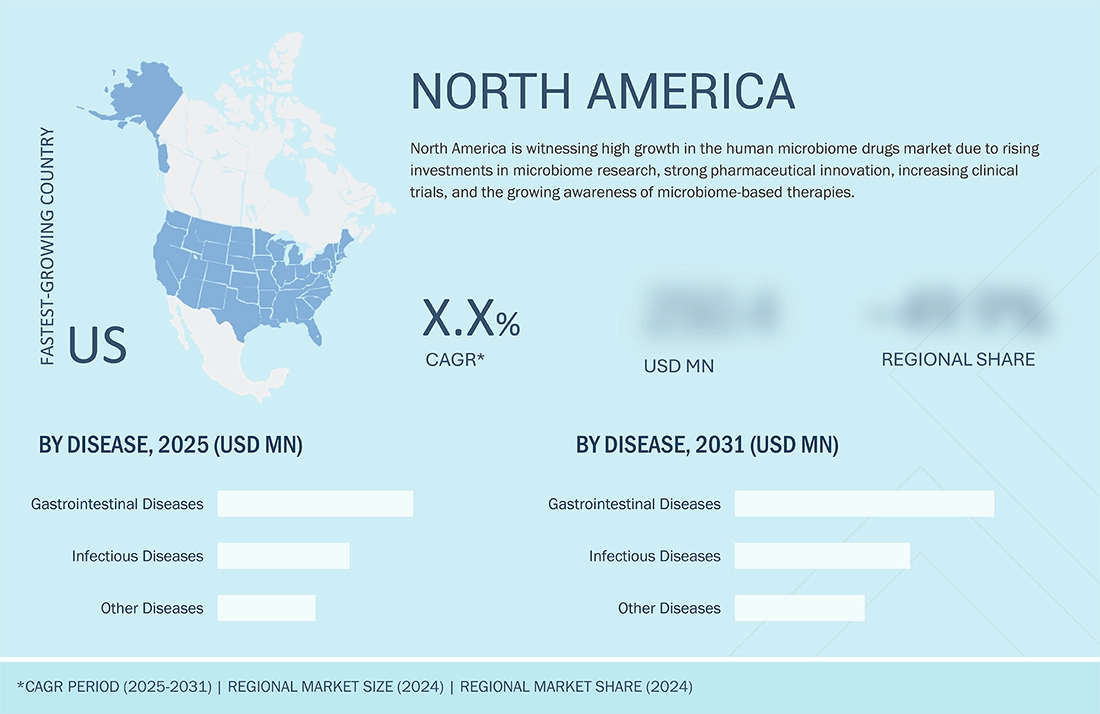
By RegionThe North America human microbiome market accounted for a 96.7% revenue share in 2024. The growth in this segment is driven by a strong clinical pipeline, an advanced regulatory framework, and a high concentration of leading microbiome drug developers in the region.
-
By Route of AdministrationBy route of administration, the oral route of administration segment accounted for the largest share of the Human Microbiome Drugs Market in 2024. This growth is driven by targeted GI delivery, high patient compliance, and scalable formulation of live biotherapeutics.
-
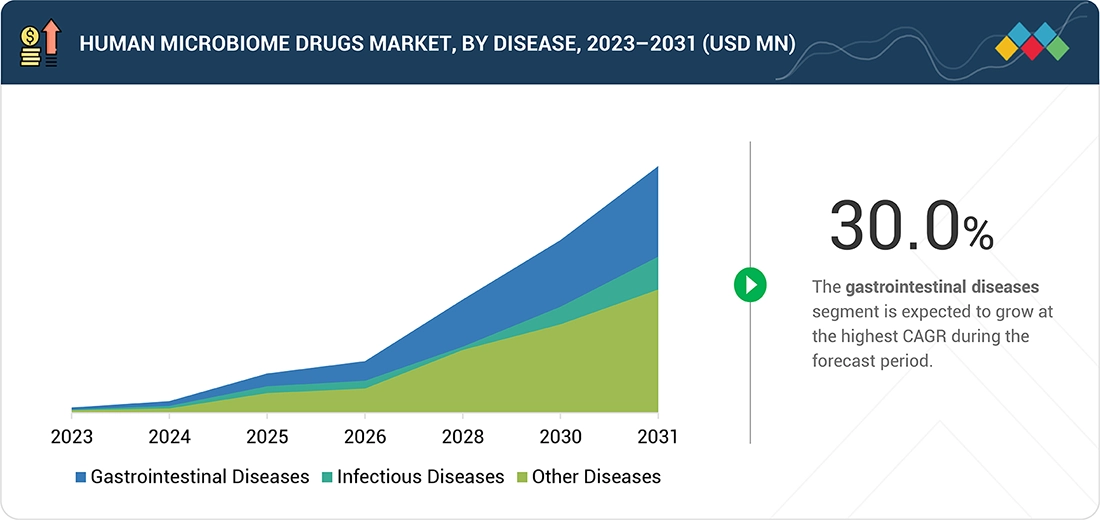
By DiseaseBy disease, the gastrointestinal disease segment accounted for the largest share of the human microbiome drugs market in 2024 due to the high prevalence of gut-related disorders.
-
By End UserBy end user, the hospitals & clinics segment accounted for the largest share of the Human Microbiome Drugs Market in 2024. The growth of this segment is driven by its central role in diagnosing, prescribing, and administering advanced microbiome-based therapies.
-
Competitive LandscapeSeres Therapeutics, Ferring B.V., and MaaT Pharma were identified as key players in the human microbiome drugs market, given their strong market share and service footprint.
-
Competitive LandscapeAOBiome, Guangzhou Zhiyi Biotechnology Co., Ltd., and NuBiyota, among others, have distinguished themselves among startups and SMEs by securing strong footholds in specialized niche areas, underscoring their potential as emerging market leaders
The human microbiome drugs market is attracting significant attention, driven by major advances in live biotherapeutics and microbiome-modulating drug pipelines, growing clinical evidence, and increased investment from pharmaceutical and biotechnology developers. As programs progress into mid- and late-stage trials, demand is rising for targeted microbial consortia, engineered strains, and precision probiotic formulations to treat gastrointestinal, metabolic, immune, and neurological conditions. Moreover, growing collaborations between industry and academic research centers are becoming a major driver of innovation in strain engineering, formulation stability, and delivery technologies.
TRENDS & DISRUPTIONS IMPACTING CUSTOMERS' CUSTOMERS
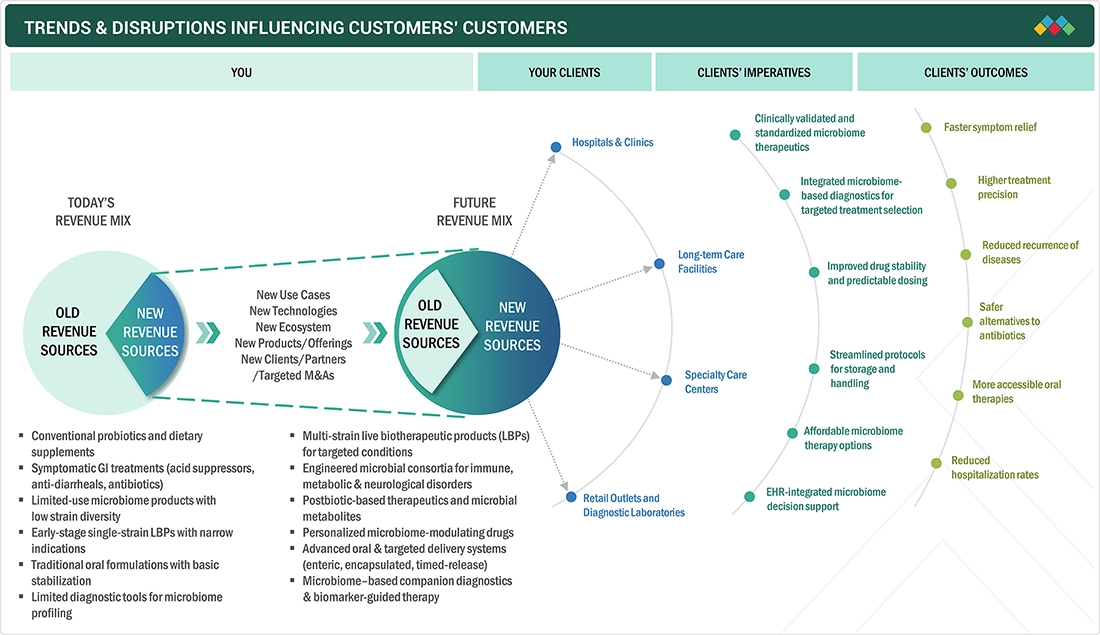
The human microbiome drugs market is shifting from traditional revenue sources, such as conventional probiotics, symptomatic GI treatments, and limited-use microbiome products, toward innovative drug solutions, including multi-strain live biotherapeutics, engineered microbial consortia, postbiotic-based drugs, and personalized microbiome-modulating therapies. Future growth is driven by advanced oral and targeted delivery systems and microbiome-based companion diagnostics. These innovations address client imperatives such as improved drug stability, standardized treatments, and EHR-integrated decision support, ultimately enabling faster symptom relief, greater treatment precision, safer alternatives to antibiotics, and lower hospitalization rates.
Source: Secondary Research, Interviews with Experts, MarketsandMarkets Analysis
MARKET DYNAMICS

Level
-
Growing clinical validation of live biotherapeutic products

-
Rising burden of chronic and recurrent diseases


Level
-
Complexity of microbial strain behavior and variability

-
High manufacturing & stability constraints


Level
-
Focus on emerging applications

-
Integration of AI & microbiome analytics


Level
-
Long clinical development timeline

Source: Secondary Research, Interviews with Experts, MarketsandMarkets Analysis
Driver: Growing clinical validation of live biotherapeutic products
The human microbiome drugs market is gaining popularity, driven by a rising number of studies confirming the safety, efficacy, and therapeutic potential of microbiome drugs. One of the main reasons for this is the growing clinical validation of live biotherapeutic products (LBPs). Regulatory agencies are becoming increasingly comfortable with LBPs as the number of positive outcomes in gastrointestinal, metabolic, and immune-related disorders continues to grow. As a result, they are becoming more open to investments from biopharmaceutical companies. The market is gaining credibility due to the growing number of late-stage clinical trials. This expanding evidence base is leading to a rapid increase in microbiome-based therapeutic pipelines.
Restraint: Complexity of microbial strain behavior and variability
Market growth is constrained by the inherent complexity and variability of microbial strain behavior, which complicate drug development, standardization, and clinical predictability. Differences in colonization potential, microbiome interactions, patient microbiota composition, and environmental influences make it challenging to achieve consistent therapeutic outcomes. These biological uncertainties increase development risks, require extensive characterization, and often slow regulatory progress. As a result, developers must invest heavily in advanced analytics and strain-stability technologies to mitigate variability-related constraints.
Opportunity: Focus on emerging applications
There is substantial growth potential in the new application of microbiome-based drugs, distinct from traditional treatments for gastrointestinal diseases. Studies show that changes in the microbiome can be used to treat various diseases across therapeutic areas, including cancer, immune system diseases, metabolic disorders, nervous system diseases, and women's health. These less explored uses of the microbiome have very high unmet needs and strong potential for commercial success. Along with developments in precision microbiome engineering, targeted delivery systems, and multi-strain consortia, there are increasing possibilities for novel product innovations that can eventually make microbiome drugs a revolutionary category across multiple clinical domains with high value.
Challenge: Long clinical development timeline
One of the biggest obstacles the human microbiome drugs industry faces is the time-consuming and complex clinical development required to confirm safety, mechanism of action, and long-term efficacy. The need for detailed characterization, stability, and patient-specific responses, as set by regulatory authorities, also contributes to the length of the studies. Moreover, differences in host microbiome profiles usually require larger, more stratified trials, thereby increasing the time and money needed for the studies. Such long trials postpone the time when the products can be sold and thus create a considerable financial strain on new microbiome-based biopharmaceutical developers, which is the main reason behind the existence of these extended pathways.
HUMAN MICROBIOME DRUGS MARKET: COMMERCIAL USE CASES ACROSS INDUSTRIES
| COMPANY | USE CASE DESCRIPTION | BENEFITS |
|---|---|---|
 |
Seres Therapeutics partnered with Nestlé Health Science to advance development and commercialization of microbiome therapeutics. The collaboration focuses on leveraging Seres’ microbiome platform to develop treatments for diseases linked to the gut microbiome, including recurrent Clostridioides difficile infection (rCDI) | Enabled cGMP-compliant production of microbiome therapeutics |
Logos and trademarks shown above are the property of their respective owners. Their use here is for informational and illustrative purposes only.
MARKET ECOSYSTEM
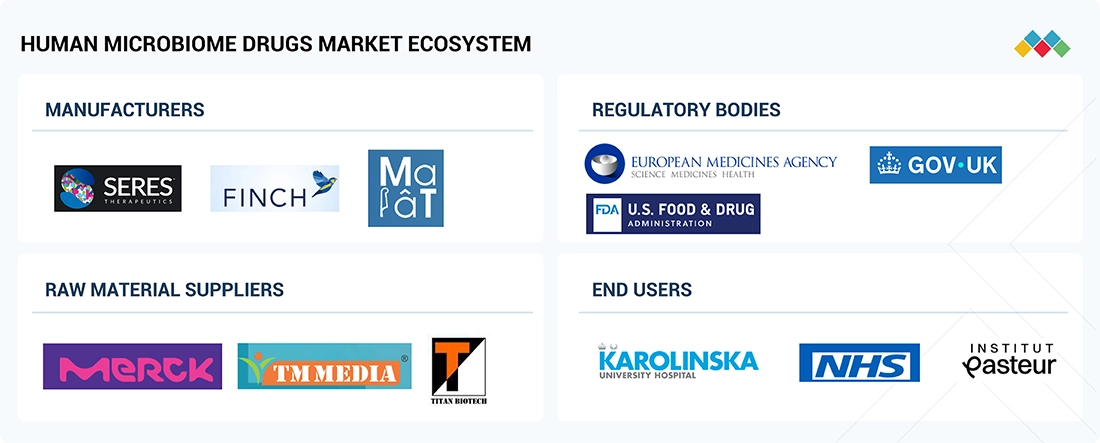
The human microbiome drugs market ecosystem comprises the following components: raw material suppliers (Merck KGaA, Titan Biotech, TM Media), drug developers (Finch Therapeutics, Seres Therapeutics), regulatory authorities (EEMA, US FDA), and end users (NHS, Karolinska University Hospital). Raw material suppliers provide essential inputs, including microbial strains, culture media, fermentation nutrients, and specialized substrates, that manufacturers use to develop and produce microbiome-based therapeutics and live biotherapeutic products. Regulatory authorities set the pathways to approval, safety standards, and clinical evaluation requirements to ensure the quality, safety, and effectiveness of microbiome drugs. End users, comprising hospitals, research institutions, and public health organizations, are instrumental in the clinical use of these therapeutics for treatments, research studies, and translational applications.
Logos and trademarks shown above are the property of their respective owners. Their use here is for informational and illustrative purposes only.
MARKET SEGMENTS
Source: Secondary Research, Interviews with Experts, MarketsandMarkets Analysis
Human Microbiome Drugs, By Disease
In 2024, the gastrointestinal diseases segment captured the largest revenue share of the human microbiome drugs market, driven by a growing patient population with GI disorders, strong clinical evidence supporting microbiome-based interventions, and a robust pipeline of targeted therapies. GI-focused therapeutics address conditions such as Clostridioides difficile infection, inflammatory bowel disease, and irritable bowel syndrome, where modulation of the gut microbiome has demonstrated significant efficacy.
Human Microbiome Drugs, By Route of Administration
By the oral route of administration, the human microbiome drugs market had the largest share in 2024. This route was chosen as the preferred one because it is very convenient, patients readily comply with it, and it is the most appropriate way to target the gut microbiome. Oral formulations provide a method of targeted delivery of live biotherapeutics to the gastrointestinal tract, thereby ensuring the microbial community there is effectively modulated. In addition, improvements in encapsulation and formulation technologies make the product more stable and more potent, and allow controlled release, thereby reinforcing the oral route as the predominantly chosen route in microbiome therapeutics.
Human Microbiome Drugs, By End User
In 2024, hospitals and clinics dominated the human microbiome drugs market, driven by their central role in administering live biotherapeutics and managing complex gastrointestinal and systemic disorders. They provide the clinical infrastructure, trained healthcare professionals, and monitoring capabilities essential for the safe and effective delivery of microbiome therapies.
REGION
North America to be fastest-growing region in global aerospace materials market during forecast period
HUMAN MICROBIOME DRUGS MARKET: COMPANY EVALUATION MATRIX
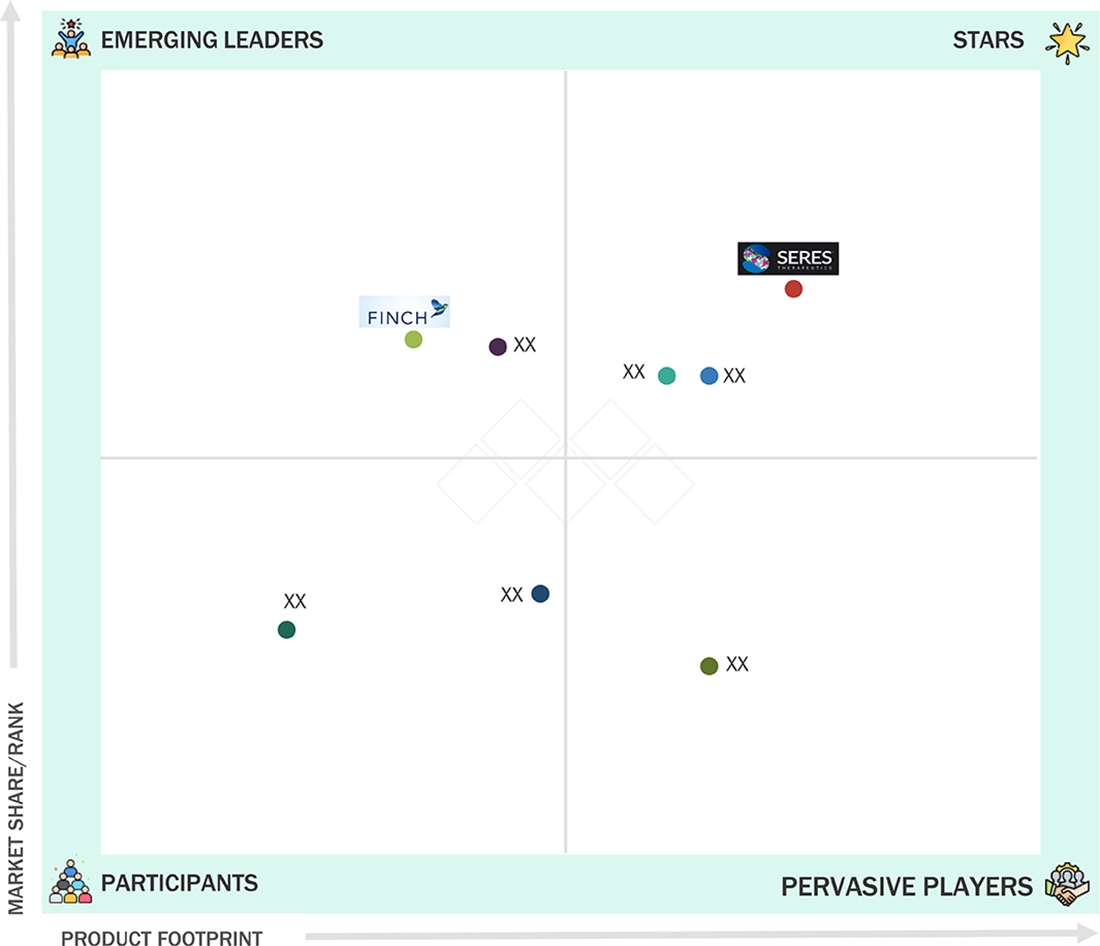
Within the human microbiome drugs market matrix, Seres Therapeutics is the star player, primarily due to its clinical trial portfolio and leadership in microbiome-based therapies. Its firm position in the microbiome drugs arena is further supported by cross-industry partnerships, strong regulatory know-how, and a commitment to expanding co-indications across both gastrointestinal and systemic disorders. Finch Therapeutics Group, Inc. is a rising leader, propelled by innovative research in microbiome therapeutics, the expansion of clinical programs, and the company’s decision to invest in next-generation live biotherapeutic product platforms.
Source: Secondary Research, Interviews with Experts, MarketsandMarkets Analysis
KEY MARKET PLAYERS
- Seres Therapeutics (US)
- Ferring B.V. (Switzerland)
- MaaT Pharma (France)
- BiomeBank (Australia)
- Infant Bacterial Therapeutics AB (Sweden)
- Finch Therapeutics Group, Inc. (US)
- ExeGi Pharma (US)
- Seed Health, Inc. (US)
MARKET SCOPE
| REPORT METRIC | DETAILS |
|---|---|
| Market Size in 2024 (Value) | USD 0.09 Billion |
| Market Forecast in 2031 (Value) | USD 2.13 Billion |
| Growth Rate | CAGR of 35.2% from 2025-2031 |
| Years Considered | 2023-2031 |
| Base Year | 2024 |
| Forecast Period | 2025-2031 |
| Units Considered | Value (USD Billion) |
| Report Coverage | Revenue forecast, company ranking, competitive landscape, growth factors, and trends |
| Segments Covered |
|
| Regions Covered | North America, Europe, Asia Pacific, Latin America, Middle East and Africa |
| Parent & Related Segment Reports |
Human Microbiome Market North America Human Microbiome Market Europe Human Microbiome Market Human Microbiome Manufacturing Services Market Asia Pacific Human Microbiome Market |
WHAT IS IN IT FOR YOU: HUMAN MICROBIOME DRUGS MARKET REPORT CONTENT GUIDE
DELIVERED CUSTOMIZATIONS
We have successfully delivered the following deep-dive customizations:
| CLIENT REQUEST | CUSTOMIZATION DELIVERED | VALUE ADDS |
|---|---|---|
| Rest of Europe Breakdown |
|
Provides granular country-level insights, enabling clients to prioritize high-growth markets, and tailor portfolio strategies across live biotherapeutic products for maximum regional impact |
| Company Evaluation |
|
Delivers visibility into competitors, helping clients identify partners, evaluate positioning, and detect market gaps for smarter collaboration, outsourcing, and strategic market entry decisions |
RECENT DEVELOPMENTS
- June 2024 : Nestlé S.A. (Switzerland) acquired complete ownership of VOWST (live-brpk), an oral microbiome therapy, from Seres Therapeutics, Inc. (US). Since its launch in June 2023 in the US, Nestle S.A. has been the main commercialization party for the product. This transaction granted Nestle S.A. full control over the future development, commercialization, and manufacturing of VOWST in the US and worldwide.
- April 2023 : The US Food and Drug Administration approved Seres Therapeutic's VOWST (live-brpk), which is the first fecal microbiota transplant product meant to be taken orally. VOWST has been given the green light for preventing Clostridioides difficile (C. difficile) Infection recurrence in individuals aged 18 and above, following antibacterial treatment for recurrent CDI.
- November 2022 : Ferring B.V. announced that the US Food and Drug Administration (FDA) approved REBYOTA (a fecal microbiota, live biotherapeutic product), a first-in- class microbiota-based live biotherapeutic. It is indicated for the prevention of recurrence of Clostridioides difficile infection (CDI) in individuals 18 years of age and older, following antibiotic treatment for recurrent CDI.
Table of Contents
 Exclusive indicates content/data unique to MarketsandMarkets and not available with any competitors.
Methodology
This research study extensively used secondary sources, directories, and databases to identify and collect valuable information to analyze the global Human Microbiome Drugs Market. In-depth interviews were conducted with various primary respondents, including key industry participants, subject-matter experts (SMEs), C-level executives of key market players, and industry consultants, to obtain and verify critical qualitative & quantitative information and assess the growth prospects of the market. The global market size estimated through secondary research was then triangulated with inputs from primary research to arrive at the final market size.
Secondary Research
Secondary research was used primarily to identify & collect information for the extensive, technical, market-oriented, and commercial study. The secondary sources used for this study include World Health Organization (WHO), Human Microbiome Project (HMP), Organisation for Economic Co-operation and Development (OECD), National Institutes of Health (NIH), Food and Drug Administration (FDA), ClinicalTrials.gov, Annual Reports, SEC Filings, Investor Presentations, Research Journals, Press Releases, and financial statements. These sources also obtained key information about major players, market classification, and segmentation according to industry trends, regional/country-level markets, market developments, and technology perspectives.
Primary Research
In-depth interviews were conducted with various primary respondents, including key industry participants, subject-matter experts (SMEs), C-level executives of key market players, and industry consultants, to obtain and verify the critical qualitative & quantitative information and assess the prospects of the market. Various primary sources from both the supply & demand sides of the market were interviewed to obtain qualitative and quantitative information. The following is a breakdown of the primary respondents:
Market Size Estimation
Both top-down and bottom-up approaches were used to estimate & validate the total size of the Human Microbiome Drugs Market. These methods were also used extensively to estimate the size of various subsegments in the market. The research methodology used to estimate the market size includes the following:
Data Triangulation
The total market was split into several segments and subsegments after arriving at the overall market size from the estimation process. Where applicable, data triangulation and market breakdown procedures were employed to complete the overall market engineering process and arrive at the exact statistics for all segments and subsegments. The data was triangulated by studying various factors and trends from both the demand and supply sides.
Market Definition
The human microbiome encompasses the collective genetic material of diverse microorganisms residing within the human body, known as the metagenome. This includes bacteria, fungi, protozoans, non-living viruses, and various single-celled organisms. These microorganisms play a crucial role in human physiology, influencing metabolic and immune functions. Found within human tissues, the microbiome is a focal point of research for medical advancements and analytical techniques. It is applied in probiotics, prebiotics, pharmaceuticals, and therapeutic systems to address conditions such as diabetes, obesity, and cancer, as well as a range of metabolic, gastrointestinal, neurological, central nervous system, and autoimmune disorders.
The study provides an in-depth analysis of the Human Microbiome Drugs Market based on contemporary market trends and developments, and its potential growth from 2025 to 2031. It includes detailed market trends, the competitive landscape, market size, forecasts, and the analysis of the key Human Microbiome service providers.
Stakeholders
- Manufacturers and Distributors of Human Microbiome Products
- Pharmaceutical and Biotechnology Companies
- Market Research and Consulting Firms
- R&D Centers
- Researchers and Scientists
- Academic & Research Institutes
- Hospitals & Clinics
- Long-term Care Centers
- Specialty Care Centers
- Outpatient Care Centers
Report Objectives
- To define, describe, and forecast the Human Microbiome Drugs Market based on products, disease, drugs & supplements type, drugs & supplements route of administration, end user, manufacturing services and region
- To provide detailed information regarding the major factors influencing the market growth (such as drivers, restraints, opportunities, and challenges)
- To strategically analyze micromarkets with respect to individual growth trends, prospects, and contributions to the overall Human Microbiome Drugs Market
- To analyze the opportunities in the market for stakeholders and provide details of the competitive landscape for market leaders
- To forecast the size of the market segments with respect to six main regions, namely, North America, Europe, the Asia Pacific, Latin America, the Middle East, and Africa
- To strategically profile the key players in the Human Microbiome Drugs Market and comprehensively analyze their core competencies and market rankings
- To track and analyze competitive developments such as product launches, acquisitions, expansions, agreements, partnerships, and collaborations in the Human Microbiome Drugs Market
- To benchmark players within the Human Microbiome Drugs Market using the ‘Company Evaluation Matrix' framework, which analyzes market players based on various parameters within the broad categories of business and product strategy


Personalize This Research
- Triangulate with your Own Data
- Get Data as per your Format and Definition
- Gain a Deeper Dive on a Specific Application, Geography, Customer or Competitor
- Any level of Personalization
Let Us Help You
- What are the Known and Unknown Adjacencies Impacting the Human Microbiome Drugs Market
- What will your New Revenue Sources be?
- Who will be your Top Customer; what will make them switch?
- Defend your Market Share or Win Competitors
- Get a Scorecard for Target Partners

Custom Market Research Services
We Will Customise The Research For You, In Case The Report Listed Above Does Not Meet With Your Requirements
Get 10% Free CustomisationTESTIMONIALS

JAYANT RAJPUROHIT
Director of Market Insights, Data and Analytics
SFI Health,
Leading Pharmaceutical Companywww.sfihealth.com/

We at SFI Health approached MarketsandMarkets for an Opportunity Assessment on "Incidence and Prevalence of Focus Indications" as we wanted to know the most attractive HCPs like Physician, Functional MD, Naturopath and Pharmacist. The project was critical for us to ensure our focus on the right target which would enable sustainable growth and profitability for SFI Health. The business insights provided exceeded our expectations and we were extremely impressed. The team at MarketsandMarkets is highly professional and detail oriented and very well understood our business needs. MarketsandMarkets offers a unique combination of expertise and dedicated engagement model. We identified 2 new products to be launched in coming months, based on the research findings provided by MarketsandMarkets. We are happy with the services and would strongly recommend MarketsandMarkets to my peers in the industry.

BEATRIZ DE LA CALLE
Head of Commercial Analytics
Qualicaps,
Leading Pharmaceutical Companywww.qualicaps.com/

We partnered with MarketsandMarkets for an assessment study on hard empty capsules. The team was extremely professional in understanding our business requirements and we received timely responses to all our queries. The market intelligence and the recommendations has met our business requirements. We were extremely impressed to see the final study results; it really exceeded our expectations. The market intelligence offered by MarketsandMarkets, and clarity on next steps will help us achieve our business objective for the Year 2021. We are happy with the services and would strongly recommend MarketsandMarkets to my peers in the industry.

Bob Williams,
Senior Director Business Development & Innovation
Bracco Diagnostics Inc.,
Italian Multinational in life sciences sector and a World Leader in imaging diagnosticsimaging.bracco.com/us-en
We were pleased with targeted insights that MarketsandMarkets identified from a custom study on the 'Radiation Dose Management Solutions Market'. Your team identified and characterized the market participants as well as underlying trends accurately. This study was useful to Bracco in formulating business strategies for our dose monitoring product lines and we thank MarketsandMarkets for the job well done.
Cody Coonradt,
Market Development and Strategy Manager
3M Health Information Systems,
Leader in Health care Coding, Payment & Analytics Solutions.www.3m.com/3M/en_US/health-information-systems-us
The value for our organization comes from three things: depth of research, specificity of segments and being easy to work with. As important as the first two are, the third can't be underestimated. MarketsandMarkets, maybe more than any other research vendor, wants to know what is top of mind for our team and what big questions we are grappling to answer.
Their customer first approach and high value engagement model, have given us great analysis and excellent value for money






Growth opportunities and latent adjacency in Human Microbiome Drugs Market