Asia Pacific Surgical Staplers Market Size, Growth, Share & Trends Analysis

Asia Pacific Surgical Staplers Market by Type (Linear, Circular, Skin, Curved), Technology (Manual, Powered), Usability (Disposable, Reusable), Application (Abdominal & Pelvic Surgery, General Surgery, Orthopedic Surgery), End User (Hospitals) - Forecast to 2031




OVERVIEW
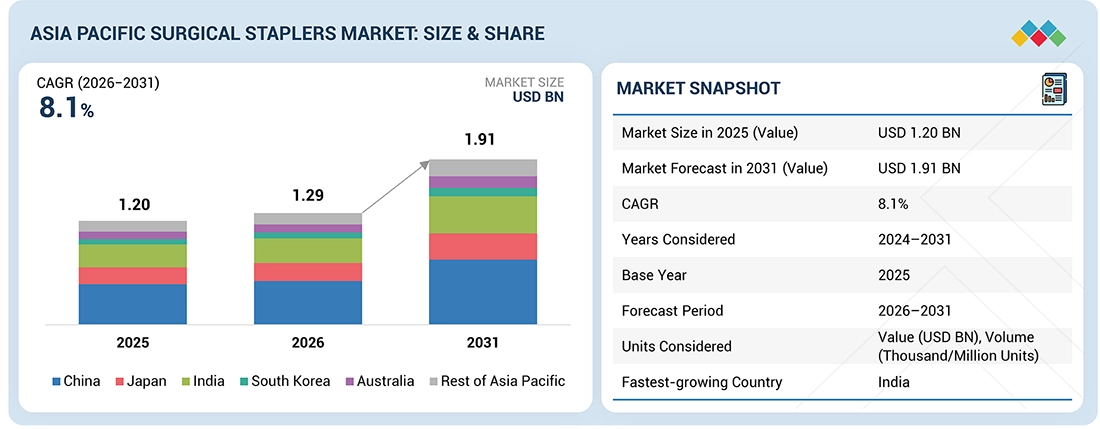
Source: Secondary Research, Interviews with Experts, MarketsandMarkets Analysis
Countries such as Japan, South Korea, China, and Australia are witnessing rapidly aging populations, which is driving higher rates of surgeries. Older patients increasingly require different procedures, such as gastrointestinal, cardiovascular, orthopedic, and urological surgeries, many of which use stapling devices. The rise in chronic conditions, including diabetes, heart disease, and gastrointestinal disorders, also contributes to more surgeries. Staplers are preferred for older patients because they are more reliable and reduce operating time compared with manual sutures. As life expectancy rises across the Asia Pacific region, demand for surgery, as well as for surgical staplers, is expected to increase steadily, supporting long-term market growth.
KEY TAKEAWAYS
-
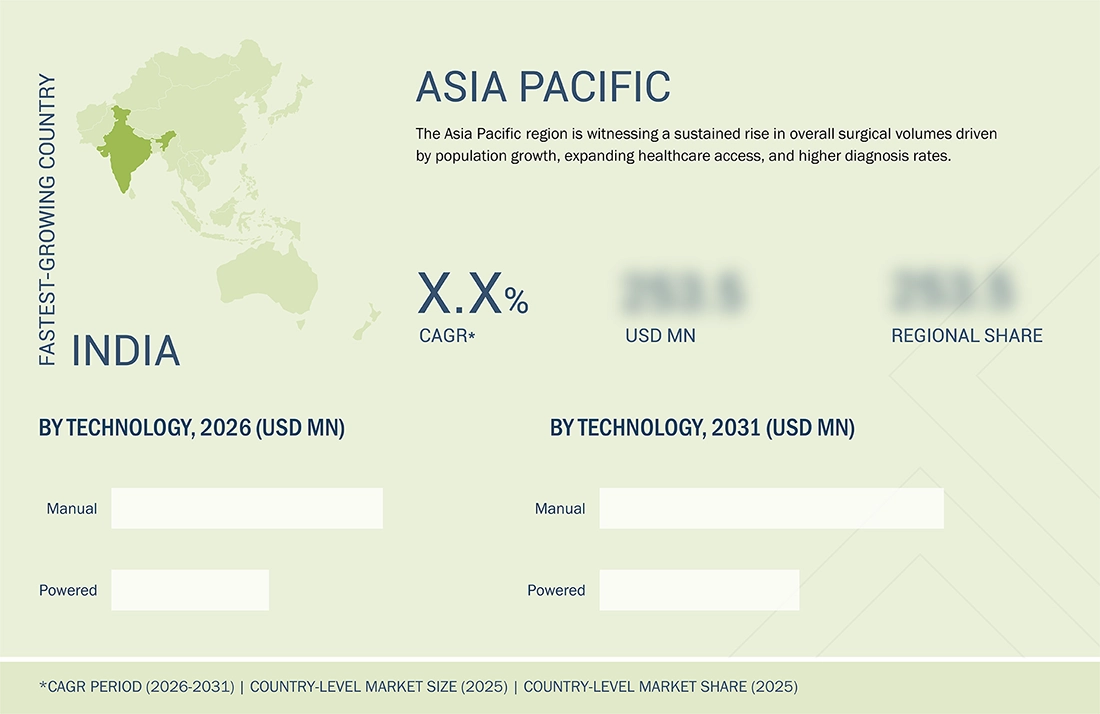
BY CountryIndia is expected to register the highest CAGR of 8.4% during the forecast period.
-
BY TYPEBy type, the linear surgical staplers led the market, accounting for a share of 35.9% in 2025.
-
BY TECHNOLOGYBy technology, manual surgical staplers dominated the market, with a share of 63.3% in 2025.
-
BY USABILITYBy usability, reusable staplers are expected to record a higher CAGR during forecast period.
-
BY APPLICATIONBy application, the abdominal & pelvic surgery segment led the market, with a share of 35.4% in 2025.
-
BY END USERBy end user, hospitals are likely to register the highest CAGR during the forecast period.
-
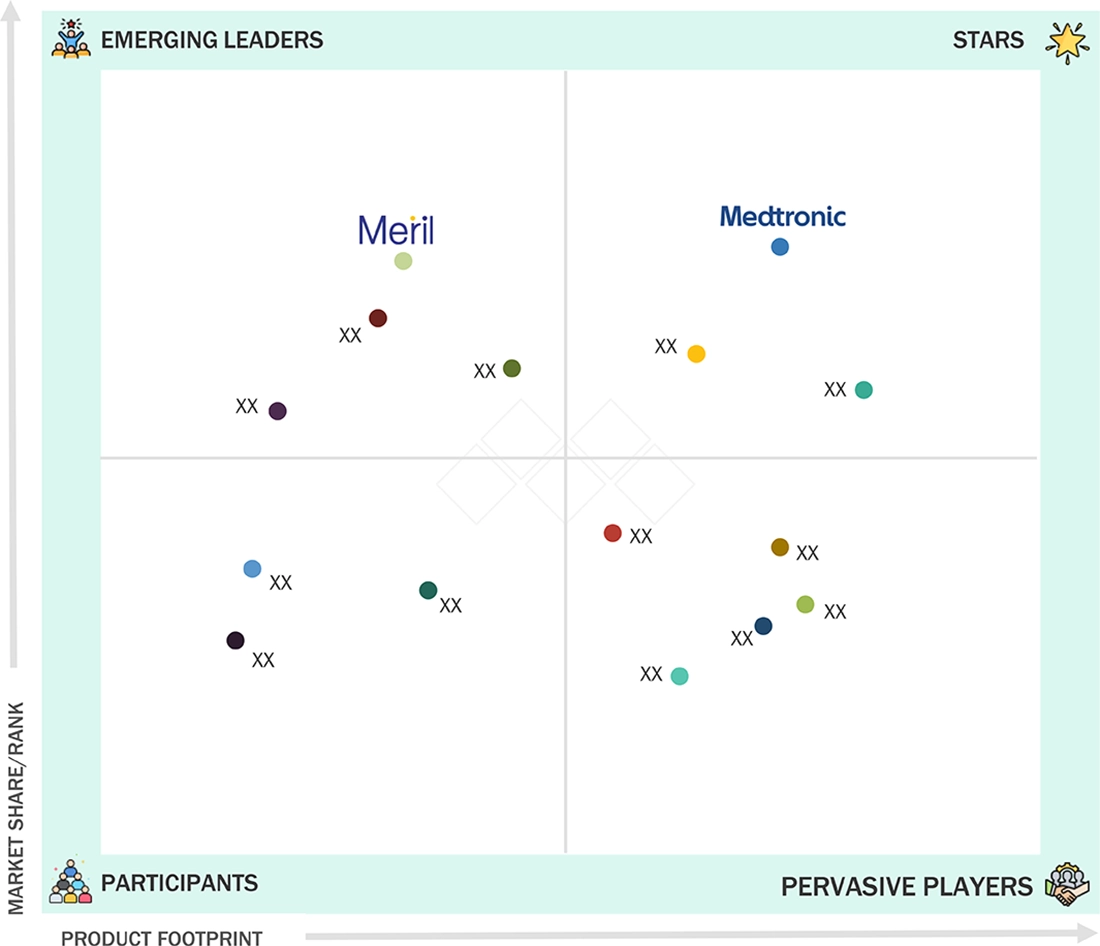
COMPETITIVE LANDSCAPE - KEY PLAYERSMedtronic plc, Johnson & Johnson (Ethicon. Inc) and Lepu Medical Technology (Beijing) Co.,Ltd. were identified as Star players in the Asia Pacific surgical staplers market, as they emphasis more on innovation and have broad industry coverage and strong operational and financial strength.
-
COMPETITIVE LANDSCAPE - STARTUPS/SMESWaston Medical Corporation, Touchstone International Medical Science Co. Ltd., and Victor Medical Instruments Co., Ltd. are among a few key startups and SMEs due to their strong product portfolio and business strategies.
The Asia Pacific governments have made significant investments in building healthcare infrastructure to address surgical access and treatment backlogs. Public hospitals, specialty surgical centers, and private chains of multi-specialty hospitals are being set up across China, India, Southeast Asia, and Australia. Expenditure on expanding operating rooms and adopting modern surgical equipment directly tends to stimulate the phased demand for surgical staplers. In contrast, private hospitals tend to focus more on advanced surgical instruments with an aim to increase efficiency, reduce complications, and improve patient outcomes. With the gradual improvement of the infrastructure in secondary and tertiary cities, surgical staple penetration has trended beyond the top-tier hospitals, consequently widening the addressable markets across the region.
TRENDS & DISRUPTIONS IMPACTING CUSTOMERS' CUSTOMERS
The Asia Pacific surgical stapler market is evolving rapidly. Demand varies by procedure but is high in emerging economies, driven by the growth of minimally invasive surgeries. Hospitals prioritize staplers that offer both quality and value, supporting surgical efficiency and better outcomes. Trends such as disposable and powered staplers, improved staple line security, and ergonomic designs influence purchasing decisions. At the same time, local manufacturers, pricing pressures, and regulatory alignment across the region shape competition. Growth in private hospitals and medical tourism further accelerates the adoption of advanced stapling technologies. The Asia Pacific surgical staplers market is expanding beyond traditional manual and reusable staplers to include powered, single-use, reloadable, and smart staplers for procedures such as bariatric, thoracic, colorectal, and minimally invasive surgeries. Partnerships with local manufacturers support growth, with hospitals, surgical centers, clinics, and research institutes as key customers and surgeons driving demand. These innovations enhance patient safety, reduce complications, shorten recovery, lower reoperation rates, and improve surgeon confidence, leading to wider adoption and greater surgical efficiency across the region.
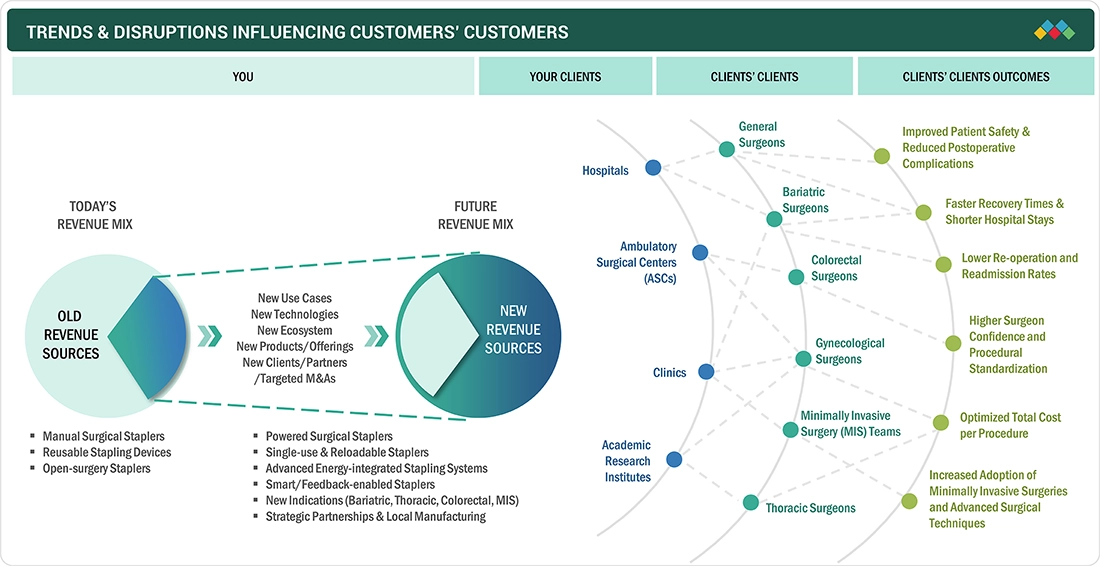
Source: Secondary Research, Interviews with Experts, MarketsandMarkets Analysis
MARKET DYNAMICS

Level
-
Integration of Smart Technologies for Real-time Surgical Feedback

-
Rising Adoption of Minimally Invasive Surgeries


Level
-
High Cost of Advanced Surgical Staplers

-
Risk of Complications and Device Failures


Level
-
Integration of Surgical Staplers with Robotic Surgery Systems

-
Advancing Global Health by Expanding Surgical Stapler Availability


Level
-
Integrating Advanced Staplers into Routine Surgical Practice

-
Navigating Diverse Regulatory Environments

Source: Secondary Research, Interviews with Experts, MarketsandMarkets Analysis
Driver: Integration of smart technologies for real-time surgical feedback
Technological progress continues to play a central role in the evolution of the surgical staplers market, with innovations focused on improving precision, safety, and clinical outcomes. Competition among leading manufacturers remains strong, as companies increasingly differentiate their offerings through electronic, powered, and smart staplers designed to enhance surgical performance and operating room efficiency. Electronic staplers improve accuracy by automating staple placement and adapting to varying tissue thickness, reducing manual effort and ensuring consistent results. This level of control is particularly valuable in procedures where tissue integrity is critical, as precise stapling supports better healing and recovery. The integration of smart technologies represents a further advancement, enabling real-time feedback through sensors that assess tissue characteristics and applied force. This allows surgeons to make immediate adjustments during firing, helping to reduce staple line failures, especially in high-risk procedures such as gastrointestinal surgeries. Powered staplers address ergonomic challenges by minimizing the physical effort required from surgeons. By reducing hand strain during long and complex procedures, these devices help lower fatigue-related errors and improve overall workflow efficiency, contributing to shorter procedure times and more reliable surgical outcomes.
Restraint: High cost of advanced surgical staplers
High costs remain a major hindrance for the growth of the surgical staplers market. Advanced features such as robotic compatibility, smart sensors, and precision mechanisms require sophisticated technology, significant R&D investment, and specialized materials, all of which increase manufacturing complexity and raise the final product price. These higher costs are often passed on to healthcare providers. For many hospitals and clinics, particularly smaller facilities and those in cost-sensitive or emerging markets, such devices are difficult to afford. In these regions, budget limitations make price a critical factor in purchasing decisions, limiting the adoption of advanced staplers. Even in developed markets, ongoing pressure to control healthcare spending and reduce operating costs discourages investment in expensive surgical tools. While advanced staplers offer clear clinical advantages, some providers view them as optional rather than essential, especially when traditional suturing or basic stapling methods deliver acceptable outcomes at much lower cost. In addition, limited reimbursement from insurers further reduces their appeal, as hospitals are often required to absorb the additional expense. Together, these factors restrict wider adoption and slow market penetration.
Opportunity: Advancing global health by expanding surgical stapler availability
Expanding access to surgical staplers in low-resource settings offers a practical way to improve surgical care while opening new market opportunities. In many of these regions, limited access to advanced tools leads to higher complication rates and longer recoveries. Cost-effective, durable, and easy-to-use staplers designed for local conditions can help address these challenges and support better patient outcomes. For manufacturers, this approach enables entry into underserved markets, strengthens global presence, and creates opportunities for partnerships with governments and international health organizations. Beyond commercial benefits, it also demonstrates a clear commitment to improving healthcare access and quality worldwide.
Challenge: Integrating advanced staplers into routine surgical practice
Integrating advanced staplers into routine surgical practice can be challenging because healthcare professionals often prefer established methods that have delivered reliable results over time. Surgeons and hospitals may be cautious about adopting new technologies, particularly when they introduce uncertainty or require changes to familiar workflows. This hesitation is further reinforced by the training demands of advanced staplers, which offer added features but require time and effort to learn. The learning curve can slow adoption, as surgical teams carefully assess whether the benefits outweigh the disruption to current practices. In addition, hospitals typically expect strong clinical evidence showing clear advantages, such as better patient outcomes, shorter procedure times, or fewer complications. Without such proof, there is little incentive to move away from proven techniques. To overcome these barriers, manufacturers must invest in focused training and education programs that provide hands-on support and clearly demonstrate the real-world value of advanced staplers in surgical settings.
ASIA PACIFIC SURGICAL STAPLERS MARKET: COMMERCIAL USE CASES ACROSS INDUSTRIES
| COMPANY | USE CASE DESCRIPTION | BENEFITS |
|---|---|---|
 |
Broad portfolio of disposable staplers for general, GI, and colorectal surgeries, focused on consistency, ease of use, and cost efficiency | Reliable closure | reduced OR time | cost-effective adoption |
 |
Staplers designed for efficiency and affordability across open and minimally invasive procedures in high-volume hospitals | Improves surgical throughput |affordable solutions |
 |
Precision stapling systems for GI, thoracic, and colorectal surgeries, aligned with minimally invasive workflows | Enhances accuracy| lowers complication risk |
 |
Ergonomic and affordable staplers for open and laparoscopic procedures, tailored for Asia Pacific regulatory and clinical needs | Consistent performance | improved surgeon comfort |
 |
Disposable staplers optimized for routine surgical use in cost-sensitive healthcare settings. | Safe closure|easy handling|value pricing |
Logos and trademarks shown above are the property of their respective owners. Their use here is for informational and illustrative purposes only.
MARKET ECOSYSTEM
The Asia Pacific surgical staplers ecosystem consists of key manufacturers such as Johnson & Johnson Services, Inc. (Ethicon, Inc.), Medtronic, Lepu Medical Technology (Beijing) Co., Ltd., Frankenman International Ltd., and Reach Surgical, driving innovation in surgical solutions. These companies manufacture surgical staplers used in wound closure and complex surgical procedures. Suppliers supporting this supply chain include raw material suppliers such as Thermo Fisher Scientific, BASF, ThyssenKrupp, and Avion Alloys, which provide the necessary materials for manufacturing, including metals and polymers. The distributors are Medline, Owens & Minor, and Promedika. The end users are leading healthcare providers such as Mayo Clinic, Cleveland Clinic, Massachusetts General Hospital, Fortis, Apollo Hospitals, and Johns Hopkins Medicine. This interconnected network fosters efficiency and growth within the Asia Pacific surgical staplers market.
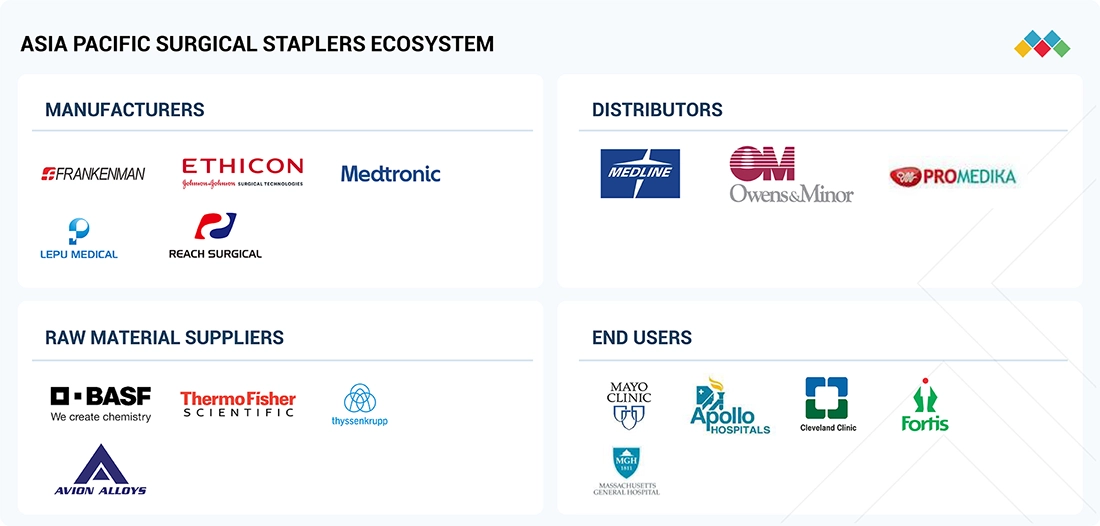
Logos and trademarks shown above are the property of their respective owners. Their use here is for informational and illustrative purposes only.
MARKET SEGMENTS
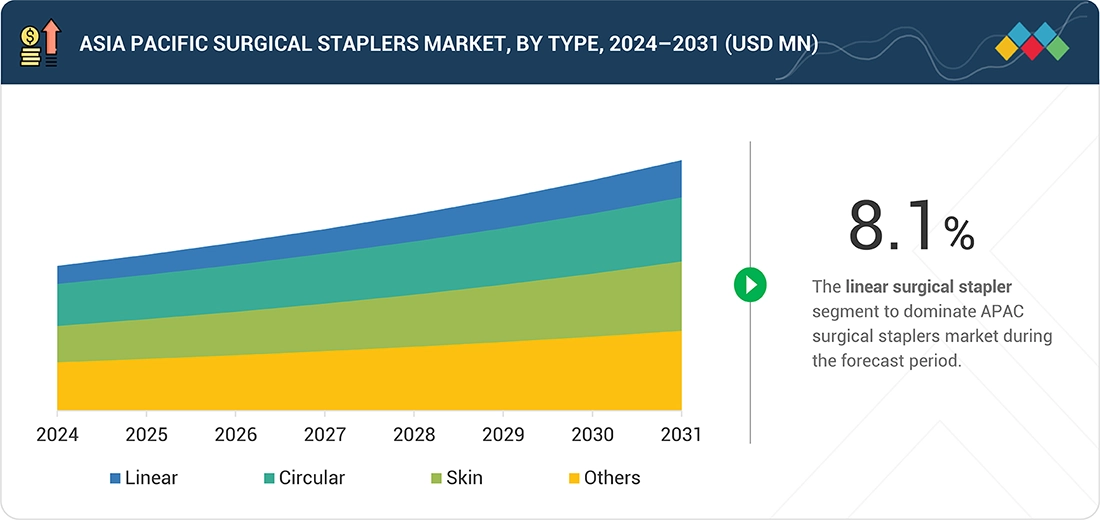
Source: Secondary Research, Interviews with Experts, MarketsandMarkets Analysis
Asia Pacific Surgical Staplers Market, by Type
In surgical training and standardized operative protocols throughout the Asia Pacific region, linear staplers are deeply embedded in the system. Surgeons have been extensively trained in linear stapling techniques during residency and fellowship programs, making them the preferred choice for many procedures. A high comfort level, predictable outcomes, and easy handling make adoption fairly straightforward. Since hospitals prefer devices that require minimal retraining, procurement decisions are often in favor of linear staplers, thereby validating their leading market share.
Asia Pacific Surgical Staplers Market, by Technology
Manual surgical staplers have been in use for decades, and they remain deeply embedded in surgical training programs across Asia Pacific. Surgeons are very familiar with handling, firing force, and clinical results, leaving no room for hesitation in adopting new mechanisms. Unlike powered staplers, manual devices do not require additional training, battery management, or maintenance. Hospitals prefer manual staplers to minimize costs associated with training and workflow interruptions, making them the go-to choice for routine surgical procedures.
Asia Pacific Surgical Staplers Market, by Usability
Infection prevention and safeguarding patients' interests are increasingly becoming the prime objectives of hospitals in the Asia Pacific region, especially in busy surgical settings, making the case for disposable surgical staplers. Disposable surgical staplers diminish cross-contamination hazards associated with the use of reusable instruments and reduce dependence on sterilization status of reusable instruments. This aspect assumes additional importance in populous countries such as China and India, with high surgical turnover. An ongoing regulatory emphasis on the control of hospital-acquired infections provides additional impetus for the widespread acceptance of single-use staplers in public and private health care settings.
Asia Pacific Surgical Staplers Market, by Application
Some of the world's highest-volume surgeries comprising abdominal and pelvic surgeries are gastrointestinal, colorectal, gastric, and hepatobiliary operations within Asia Pacific. The demand for surgeries has increased due to the rising incidence of colorectal cancer, gastric cancer, inflammatory bowel disease, and digestive disorders in China, Japan, South Korea, and India. These surgeries include tissue dissection and anastomosis, which heavily depend on the use of surgical staplers, and this accounts for higher consumption of stapler for these procedures than for any other types of surgery.
Asia Pacific Surgical Staplers Market, by End User
Most of the complicated and high-risk surgeries across Asia Pacific are performed within the tertiary and multi-specialty hospitals. This includes gastrointestinal, colorectal, thoracic, and oncological surgical procedures. All of these surgeries involve extensive use of surgical staplers to transect tissue and create anastomosis. Hospitals generally handle a greater number of patients with longer and more complicated procedures compared with ambulatory centers. This results in greater consumption of surgical staplers, making hospitals the largest end user.
REGION
India to be fastest-growing region in Asia Pacific surgical staplers market during forecast period
Colorectal cancer rates are on the rise in India along with gastric disorders, rising incidence of obesity, complications related to diabetes, and trauma cases, all necessitating the performance of surgery. Most of these surgeries involve tissue transection and anastomosis, where staplers develop speed and standardization. Increasing diagnosis rates will lead to a more proactive surgical treatment pathway, which can result in higher procedure volumes; consequently, demand for staplers is expected to increase correspondingly during the period under consideration.
ASIA PACIFIC SURGICAL STAPLERS MARKET: COMPANY EVALUATION MATRIX
In the Asia Pacific surgical staplers market, Medtronic plc (Star) has a strong and established product portfolio and a vast geographic presence. Meril Life Sciences Pvt Ltd. (Emerging Leader) has substantial product innovations compared to its competitors. While the company maintains a broad product portfolio, there is an opportunity to further strengthen and refine its growth strategy for business development.
Source: Secondary Research, Interviews with Experts, MarketsandMarkets Analysis
KEY MARKET PLAYERS
- Medtronic (Ireland)
- Johnson & Johnson Services, Inc. – Ethicon, Inc. (US)
- Lepu Medical Technology (Beijing) Co., Ltd. (China)
- Frankenman International Ltd. (China)
- Reach Surgical (China)
- Intuitive Surgical Operations, Inc. (US)
- 3M (US)
- CONMED Corporation (US)
- B. Braun SE (Germany)
- Smith+Nephew (UK)
- Welfare Medical Ltd. (UK)
- Meril Life Sciences Pvt. Ltd. (India)
- XNY Medical (China)
- Purple Surgical (UK)
- Lexington Medical Center (US)
- Ningbo Verykind Medical Device Co., Ltd. (China)
- Waston Medical Corporation (China)
- Suture Planet (India)
- Dolphin Suture (India)
- Touchstone International Medical Science Co. Ltd. (China)
- NewGen Surgical (US)
- Edges Medicare Private Limited (India)
- Golden Stapler Surgical Co., Ltd. (China)
- Victor Medical Instruments Co., Ltd. (China)
- Volkmann Medizintechnik GmbH (Germany)
MARKET SCOPE
| REPORT METRIC | DETAILS |
|---|---|
| Market Size Value in 2025 (Value) | USD 1.20 Billion |
| Market Forecast in 2031 (Value) | USD 1.91 Billion |
| Growth Rate | 8.1% |
| Years Considered | 2024–2031 |
| Base Year | 2025 |
| Forecast Period | 2026–2031 |
| Units Considered | Value (USD Billion), Volume (Thousand Units) |
| Report Coverage | Revenue Forecast, Company Ranking, Competitive Landscape, Growth Factors, and Trends |
| Segments Covered | By Type: Linear, Circular, Skin, and Others; By Technology: Manual, Powered; By Usability: Disposable, Reusable; By Application: Abdominal & Pelvic Surgery, General Surgery, Cardiac Surgery, Orthopedic Surgery, Other Applications; By End User: Hospitals, Ambulatory Surgical Centers (ASCs), Other End Users |
| Countries Covered | China, Japan, India, South Korea, Australia, and Rest of Asia Pacific |
| Parent & Related Segment Reports |
Surgical Staplers Market LATAM Surgical Staplers Market |
WHAT IS IN IT FOR YOU: ASIA PACIFIC SURGICAL STAPLERS MARKET REPORT CONTENT GUIDE
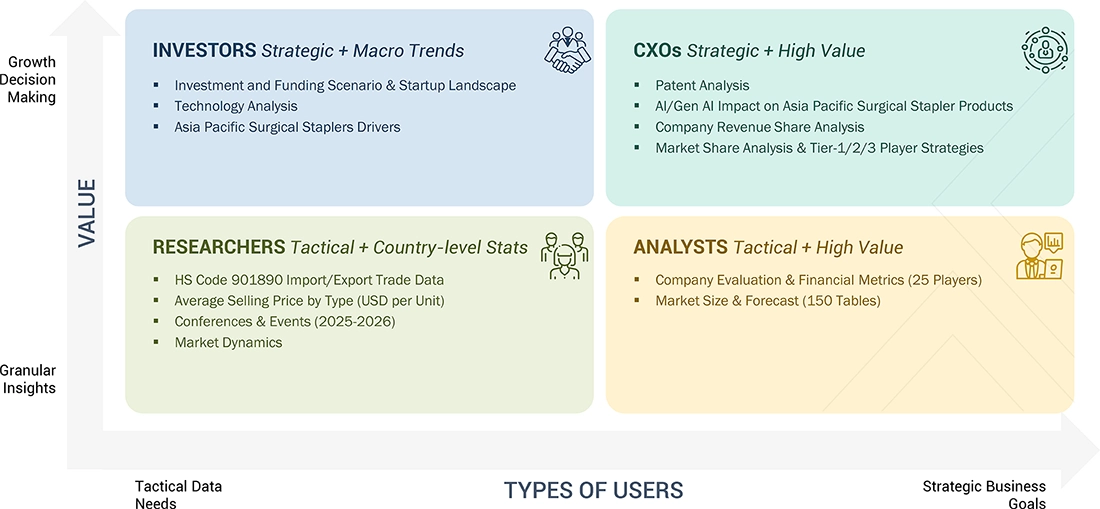
DELIVERED CUSTOMIZATIONS
We have successfully delivered the following deep-dive customizations:
| CLIENT REQUEST | CUSTOMIZATION DELIVERED | VALUE ADDS |
|---|---|---|
| Product Analysis | Comparison of surgical staplers by type including linear, circular, curved, purse-string, and skin staplers, along with analysis by manual vs. powered devices and disposable vs. reusable formats | Evaluation of staple-line integrity, tissue compression consistency, ergonomic design, and reload compatibility to support improved surgical outcomes and operating room efficiency |
| Company Information | Detailed profiles of key Asia Pacific and global manufacturers operating in the region, including product portfolios, manufacturing footprint, distribution networks, and recent developments | Competitive benchmarking of leading players across China, India, Japan, South Korea, and Southeast Asia, highlighting positioning by price, product breadth, and innovation |
| Geographic Analysis | In-depth regional assessment of the Asia Pacific surgical staplers market covering East Asia, South Asia, Southeast Asia, and Oceania | Country-level market sizing, CAGR forecasts, procedure volume analysis, and adoption trends for major Asia Pacific markets such as China, India, Japan, South Korea, and Australia |
RECENT DEVELOPMENTS
- May 2024 : Covidien Japan, Inc., a subsidiary of Medtronic plc, and HOGY Medical Co., Ltd. entered into a service agreement to collaborate on the commercialization of SuReFInD, a medical marking device used in the treatment of lung cancer patients. The partnership aims to deliver a more comprehensive surgical solution by combining SuReFInD with Medtronic Covidien’s Endo GIA surgical stapler to support precise and effective lesion resection.
- May 2024 : Johnson & Johnson (Ethicon, Inc., US) launched the ECHELON LINEAR Cutter, a linear surgical stapler designed with proprietary 3D-Stapling Technology and Gripping Surface Technology (GST). These integrated technologies enhance staple line security and consistency, supporting greater surgical precision. Clinical use of these features has been shown to help surgeons reduce procedural risks and improve patient outcomes.
- May 2024 : Lexington Medical (US) launched the AEON-Powered Stapling System, a next-generation linear surgical stapler designed to deliver an optimized stapling experience. The platform features a powered mechanism combined with an ergonomic, lightweight, and user-friendly design, supporting improved handling, control, and overall surgical efficiency.
- December 2021 : Intuitive Surgical, Inc. (US) received FDA approval for the SureForm 30 Curved-Tip Stapler, a linear surgical stapler featuring a fully wristed 8 mm design. The approval covers the stapler and its reloads (gray, white, and blue) for use across a wide range of procedures, including general, thoracic, gynecologic, urologic, and pediatric surgeries.
Table of Contents
 Exclusive indicates content/data unique to MarketsandMarkets and not available with any competitors.
Methodology
This research study involved the extensive use of both primary and secondary sources. It involved the study of various factors affecting the industry to identify the segmentation types, industry trends, key players, the competitive landscape of market players, and key market dynamics such as drivers, opportunities, challenges, restraints, and key player strategies.
Secondary Research
This research study involved the wide use of secondary sources, directories, databases such as Dun & Bradstreet, Bloomberg Businessweek, and Factiva, white papers, and companies’ house documents. Secondary research was undertaken to identify and collect information for this extensive, technical, market-oriented, and commercial study of the Asia Pacific Surgical Staplers market. It was also used to obtain important information about the top players, market classification, and segmentation according to industry trends to the bottom-most level, geographic markets, and key developments related to the market. A database of the key industry leaders was also prepared using secondary research.
Primary Research
In the primary research process, various supply side and demand side sources were interviewed to obtain qualitative and quantitative information for this report. Primary sources from the supply side included industry experts such as CEOs, vice presidents, marketing and sales directors, technology & innovation directors, engineers, and related key executives from various companies and organizations operating in the Asia Pacific surgical staplers market. Primary sources from the demand side included hospitals, clinics, researchers, lab technicians, purchase managers etc, and stakeholders in corporate & government bodies.
To know about the assumptions considered for the study, download the pdf brochure
Market Size Estimation
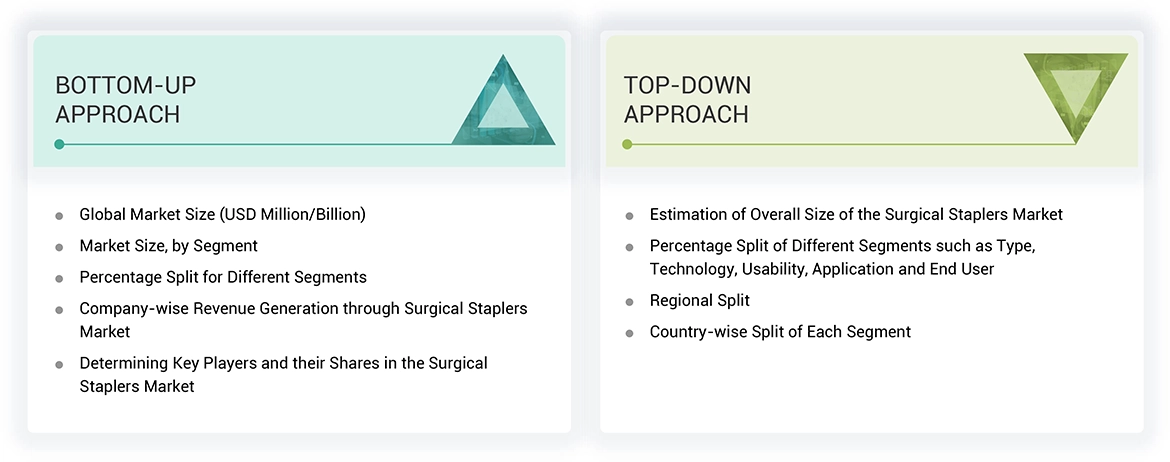
The market size for Asia Pacific Surgical Staplers market was calculated using data from four different sources, as will be discussed below. Each technique concluded and a weighted average of the four ways was calculated based on the number of assumptions each approach made. The market size for Asia Pacific Surgical Staplers market was calculated using data from three distinct sources, as will be discussed below:
Data Triangulation
The entire market was split up into four segments when the market size was determined. Data triangulation and market breakdown processes were used where necessary to complete the entire market engineering process and arrive at the precise statistics for all segments.
Approach to derive the market size and estimate market growth.
Using secondary data from both paid and unpaid sources, the market rankings for the major players were determined following a thorough analysis of their sales of Asia Pacific surgical staplers. Due to data restrictions, the revenue share in certain cases was determined after a thorough analysis of the product portfolio of big corporations and their individual sales performance. This information was verified at each stage by in-depth interviews with professionals in the field.
Market Definition
Surgical staplers are a type of specialized medical device that could be used during surgery to close wounds or to remove or separate tissues. Stapling is generally faster and more accurate than suturing because staple lines are both more uniform and less likely to bleed or experience air leaks. These devices can either be hand-powered or battery-powered.
Stakeholders
- Surgical stapler manufacturers
- Surgical stapler suppliers and distributors
- Healthcare associations/institutes
- Distributors, Channel Partners, and Third-party Suppliers
- Healthcare Service Providers
- Academic Medical Centers and Universities
- Business Research and Consulting Service Providers
- Venture Capitalists and Other Government Funding Organizations
Report Objectives
- To define, describe, and forecast the Asia Pacific surgical staplers market based on by type, technology, usability, application, end user and region
- To provide detailed information about the major factors influencing the market growth (such as drivers, restraints, challenges, and opportunities)
- To strategically analyze micromarkets with respect to individual growth trends, prospects, and contributions to the overall Asia Pacific surgical staplers market
- To analyze market opportunities for stakeholders and provide details of the competitive landscape for key players
- To profile the key players and comprehensively analyze their market shares and core competencies in the Asia Pacific surgical staplers market
- To track and analyze competitive developments such as partnerships, expansions, acquisitions, collaborations, product launches, agreements, and other developments in the Asia Pacific surgical staplers market
- To benchmark players within the Asia Pacific surgical staplers market using the Company Evaluation Quadrant framework, which analyzes market players on various parameters within the broad categories of business strategy, market share, and product offerings


Personalize This Research
- Triangulate with your Own Data
- Get Data as per your Format and Definition
- Gain a Deeper Dive on a Specific Application, Geography, Customer or Competitor
- Any level of Personalization
Let Us Help You
- What are the Known and Unknown Adjacencies Impacting the Asia Pacific Surgical Staplers Market
- What will your New Revenue Sources be?
- Who will be your Top Customer; what will make them switch?
- Defend your Market Share or Win Competitors
- Get a Scorecard for Target Partners

Custom Market Research Services
We Will Customise The Research For You, In Case The Report Listed Above Does Not Meet With Your Requirements
Get 10% Free CustomisationTESTIMONIALS

JAYANT RAJPUROHIT
Director of Market Insights, Data and Analytics
SFI Health,
Leading Pharmaceutical Companywww.sfihealth.com/

We at SFI Health approached MarketsandMarkets for an Opportunity Assessment on "Incidence and Prevalence of Focus Indications" as we wanted to know the most attractive HCPs like Physician, Functional MD, Naturopath and Pharmacist. The project was critical for us to ensure our focus on the right target which would enable sustainable growth and profitability for SFI Health. The business insights provided exceeded our expectations and we were extremely impressed. The team at MarketsandMarkets is highly professional and detail oriented and very well understood our business needs. MarketsandMarkets offers a unique combination of expertise and dedicated engagement model. We identified 2 new products to be launched in coming months, based on the research findings provided by MarketsandMarkets. We are happy with the services and would strongly recommend MarketsandMarkets to my peers in the industry.

BEATRIZ DE LA CALLE
Head of Commercial Analytics
Qualicaps,
Leading Pharmaceutical Companywww.qualicaps.com/

We partnered with MarketsandMarkets for an assessment study on hard empty capsules. The team was extremely professional in understanding our business requirements and we received timely responses to all our queries. The market intelligence and the recommendations has met our business requirements. We were extremely impressed to see the final study results; it really exceeded our expectations. The market intelligence offered by MarketsandMarkets, and clarity on next steps will help us achieve our business objective for the Year 2021. We are happy with the services and would strongly recommend MarketsandMarkets to my peers in the industry.

Bob Williams,
Senior Director Business Development & Innovation
Bracco Diagnostics Inc.,
Italian Multinational in life sciences sector and a World Leader in imaging diagnosticsimaging.bracco.com/us-en
We were pleased with targeted insights that MarketsandMarkets identified from a custom study on the 'Radiation Dose Management Solutions Market'. Your team identified and characterized the market participants as well as underlying trends accurately. This study was useful to Bracco in formulating business strategies for our dose monitoring product lines and we thank MarketsandMarkets for the job well done.
Cody Coonradt,
Market Development and Strategy Manager
3M Health Information Systems,
Leader in Health care Coding, Payment & Analytics Solutions.www.3m.com/3M/en_US/health-information-systems-us
The value for our organization comes from three things: depth of research, specificity of segments and being easy to work with. As important as the first two are, the third can't be underestimated. MarketsandMarkets, maybe more than any other research vendor, wants to know what is top of mind for our team and what big questions we are grappling to answer.
Their customer first approach and high value engagement model, have given us great analysis and excellent value for money






Growth opportunities and latent adjacency in Asia Pacific Surgical Staplers Market