Burn Care Market Size, Growth, Share & Trends Analysis

Burn Care Market by Product (Advanced (Collagen, Film, Hydrogel, Foam, Alginate Dressings), Therapy Devices (Debridement, NPWT), Biologics, Traditional), Burn Degree (First, Second, Third-degree Burns), End User (Hospitals, ASCs) - Global Forecast to 2030




OVERVIEW
Source: Secondary Research, Interviews with Experts, MarketsandMarkets Analysis
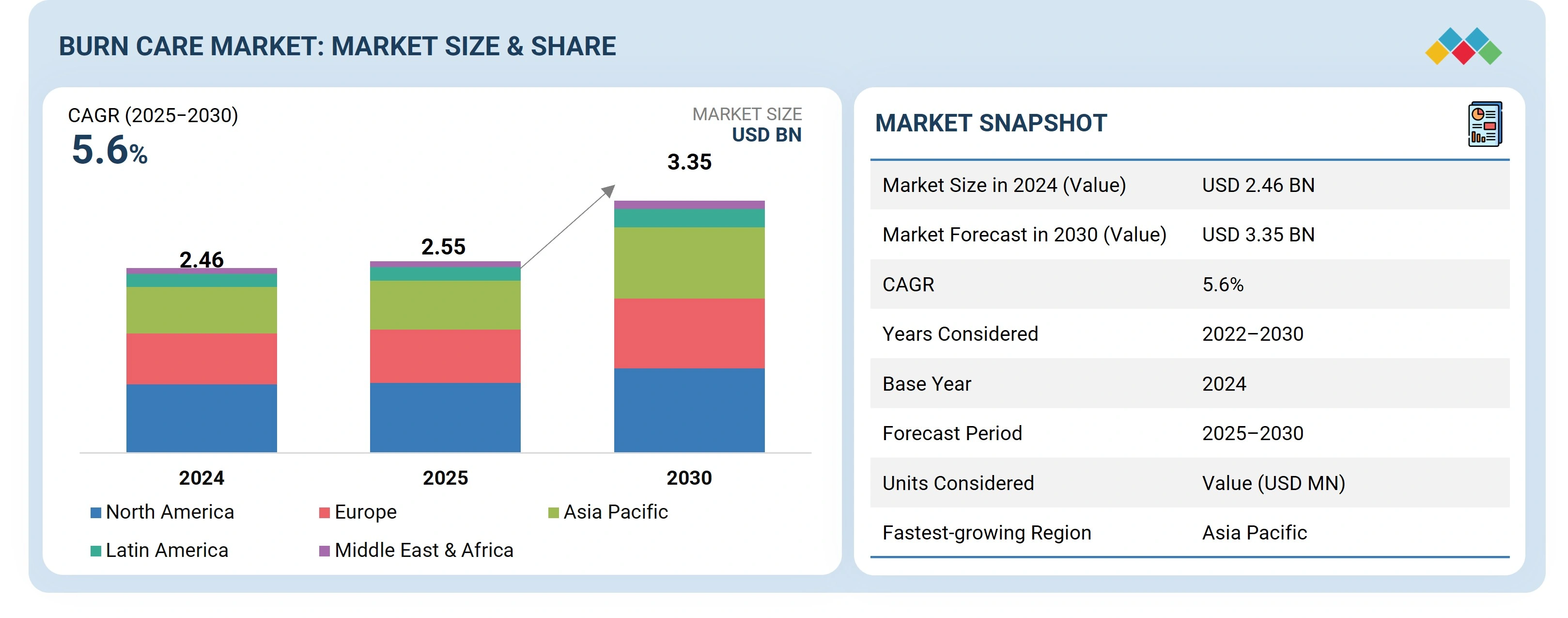
The burn care market is expected to grow from USD 2.55 billion in 2025 to USD 3.35 billion by 2030, registering a CAGR of 5.6% during the forecast period. Growth is being driven by several key factors, including the rising incidence of burn injuries, advancements in treatment technologies, increasing awareness and education, and supportive government initiatives. Globally, demand for effective burn treatments continues to rise due to a higher number of cases caused by industrial accidents, household fires, and other hazards. At the same time, technological innovations such as advanced burn dressings, biologics, and wound assessment devices are improving the effectiveness of treatment options. In addition, the growing elderly population, which is more vulnerable to slow-healing wounds and burn-related complications, is further boosting the adoption of advanced burn care solutions.
KEY TAKEAWAYS
-
BY PRODUCTBased on product, the burn care market is segmented into advanced burn dressings, burn wound therapy devices, biologics, traditional burn care products, and other burn care products. Among these, advanced burn dressings accounted for the largest share of the market. Their dominance is primarily due to their superior clinical effectiveness in managing burn wounds. Advanced dressings create an optimal moist healing environment, lower the risk of infection, accelerate recovery, and improve overall patient outcomes.
-
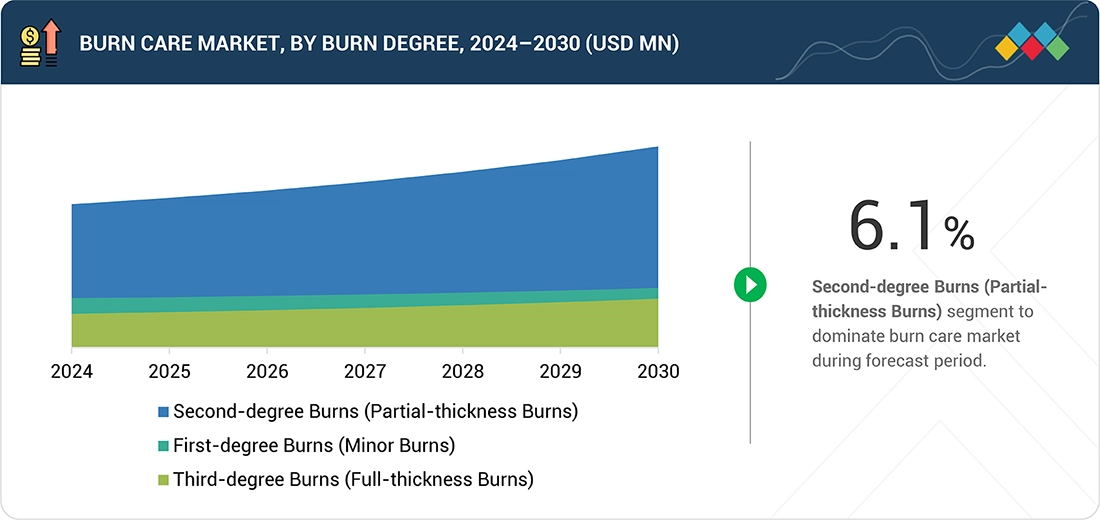
BY BURN DEGREEBased on burn degree, the market is categorized into first-degree burns (minor burns), second-degree burns (partial-thickness burns), and third-degree burns (full-thickness burns). The second-degree burn segment held the largest share of the global burn care market. This dominance is attributed to the higher frequency and greater clinical severity of second-degree burns, which affect both the epidermis and the dermis. Such cases are more common and typically require specialized, ongoing medical interventions.
-
BY END USERBased on end user, the burn care market is segmented into hospitals, physician clinics & ambulatory care settings, home care settings, burn treatment centers, and other end users. Among these, hospitals accounted for the largest share of the market. This dominance is mainly driven by the rising incidence of burn cases that require specialized and intensive care
-
BY REGIONBased on region, North America dominated the global burn care market. One of the major drivers is the increasing number of burn injuries, caused by industrial accidents, household fires, and other trauma-related incidents, which continues to drive demand for effective and advanced treatment options. Additionally, the region's infrastructure for healthcare is well-developed, and it is supported by a strong network of specialized care units and burn centers
-
COMPETITIVE LANDSCAPEThe major players in the burn care market include Smith+Nephew (UK), Mölnlycke Health Care AB (Sweden), Cardinal Health Inc. (US), Integra LifeSciences Holdings Corporation (US), and ConvaTec Group Plc (UK). These companies focus on product innovation, strategic partnerships, market expansion, and acquisitions to strengthen their market position and expand their global footprint. By leveraging both organic and inorganic growth strategies, they offer a wide range of burn care solutions to meet the growing demand in the market.
The burn care market is experiencing steady growth, primarily driven by the rising incidence of burn injuries, which is increasing the demand for effective treatments in both emergency and long-term care settings. Advances in regenerative medicine, particularly the use of biologics, are improving healing outcomes and reducing complications such as scarring. In addition, supportive government policies and proactive industry initiatives including increased healthcare investments and public awareness campaigns are enhancing access to advanced burn care solutions. Collectively, these factors are fueling the expansion of the global burn care market.
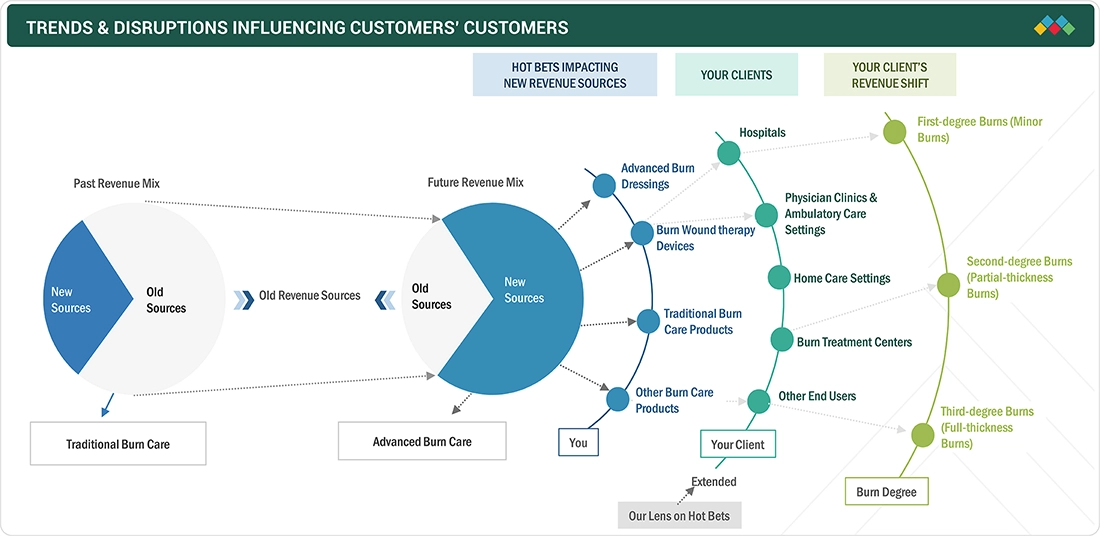
TRENDS & DISRUPTIONS IMPACTING CUSTOMERS' CUSTOMERS
The burn care market is increasingly focused on the development of advanced and highly effective products. Strict regulatory requirements and quality standards are driving demand for solutions that deliver consistent clinical performance. Innovations designed to reduce complications such as infections and scarring through advanced dressings, bioengineered skin substitutes, and wound assessment devices are further fueling the adoption of sophisticated burn care products. These trends are guiding healthcare providers’ decisions and attracting substantial investment in next-generation burn care solutions.
Source: Secondary Research, Interviews with Experts, MarketsandMarkets Analysis
MARKET DYNAMICS

Level
-
Rising incidence of burn injuries

-
Advancements in burn care products


Level
-
High cost of advanced burn care treatments

-
Risks associated with use of advanced burn care products


Level
-
High growth opportunities in emerging economies


Level
-
Availability of alternative therapies

Source: Secondary Research, Interviews with Experts, MarketsandMarkets Analysis
Driver: Rising incidence of burn injuries
The increasing prevalence of burn injuries worldwide is a key factor driving the growth of the burn care market. Burn injuries remain a leading cause of morbidity and mortality, especially in low- and middle-income countries where access to healthcare and treatment facilities is limited. Additionally, industrial accidents, road traffic incidents, and domestic injuries contribute to the rising demand for burn care services. As the number of burn cases continues to grow, the need for effective and accessible burn care solutions becomes increasingly critical, further accelerating market expansion.
Restraint: High cost of advanced burn care treatments
A major constraint in the burn care market is the high cost of advanced treatments and therapies. Managing burn injuries particularly severe cases often involves long, complex, and resource-intensive care, placing significant financial burdens on both healthcare systems and patients. Treatment expenses vary depending on the severity of the burn, the type of therapy employed, and the region. Moreover, the cost of specialized burn care products further limits accessibility and can restrain market growth.
Opportunity: High growth opportunities in emerging economies
Emerging markets offer significant growth opportunities for the burn care market, driven by a rising incidence of burn injuries linked to rapid industrialization and increasing population density. Ongoing improvements in healthcare infrastructure, higher government spending, and greater awareness of advanced treatment options are enhancing access to care. Additionally, rising disposable incomes and expanded health coverage are making specialized burn care more affordable. Collectively, these factors are expected to play a key role in driving the expansion of the burn care market in developing regions.
Challenge: Availability of alternative therapies
The availability of alternative treatments, such as herbal remedies and traditional therapies, presents a challenge to the adoption of advanced burn care products. In many regions, these alternatives are more cost-effective, culturally accepted, and easily accessible than modern burn care solutions. As a result, their widespread use can limit the demand for advanced burn care products, particularly in markets where traditional practices are deeply established or preferred.
Burn Care Market: COMMERCIAL USE CASES ACROSS INDUSTRIES
| COMPANY | USE CASE DESCRIPTION | BENEFITS |
|---|---|---|
 |
Offers silver-based antimicrobial dressings, biosynthetic burn coverings, enzymatic debriders, advanced hydrosurgery tools, and biologic matrices for wound repair. | Helps control infections, accelerates wound bed preparation, minimizes trauma during dressing changes, and supports natural tissue regeneration. |
 |
Provides gentle foam and adhesive dressings, antimicrobial dressings, and wound cleansing solutions. | Reduces pain and trauma during dressing changes, prevents infection, promotes undisturbed healing, and improves patient comfort. |
 |
Supplies traditional gauze burn dressings and antimicrobial hydrofiber dressings. | Cost-effective care, maintains a moist healing environment, supports autolytic debridement, and protects against infection. |
 |
Offers honey-based biologic dressings and wound reconstruction matrices. | Promotes moist wound healing, reduces inflammation, supports tissue regeneration, and adapts to different wound depths. |
 |
Provides hydrofiber and foam burn dressings, as well as advanced wound coverage solutions. | Maintains a moist healing environment, absorbs exudate effectively, facilitates autolytic debridement, and protects against external contaminants. |
Logos and trademarks shown above are the property of their respective owners. Their use here is for informational and illustrative purposes only.
MARKET ECOSYSTEM
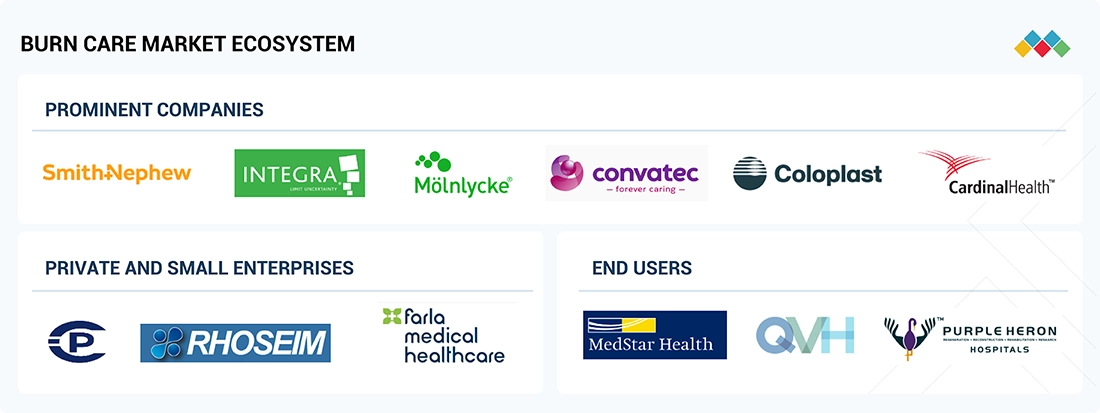
The ecosystem of the burn care market comprises key elements and stakeholders, including products, burn degree, and end users. The product category includes advanced burn dressings, burn wound therapy devices, biologics, traditional burn care products, and other burn care products. Manufacturers handle research, product development, optimization, and launch, while distributors including third parties and e-commerce sites support marketing. Research and product development involve in-house facilities, contract research organizations, and contract development and manufacturing organizations. End customers are the main stakeholders in the supply chain, with investors/funders and health regulatory bodies acting as major influencers in the market.
Logos and trademarks shown above are the property of their respective owners. Their use here is for informational and illustrative purposes only.
MARKET SEGMENTS
Source: Secondary Research, Interviews with Experts, MarketsandMarkets Analysis
Burn Care Market, By Product
The burn care market is categorized into advanced burn dressings, burn wound therapy devices, biologics, traditional burn care products, and other burn care products. Advanced burn dressings hold the largest share due to their ability to create an optimal healing environment, reduce infection risk, accelerate recovery, and improve overall patient outcomes. Their ease of use and effectiveness make them widely adopted across hospitals, clinics, burn centers, and home care settings.
Burn Care Market, By Burn Degree
The market is segmented based on burn degree into first-degree burns (minor burns), second-degree burns (partial-thickness burns), and third-degree burns (full-thickness burns). Second-degree burns dominate the market due to their higher frequency and complexity, as they affect both the epidermis and dermis. Treatment typically requires advanced burn care products, infection control, pain management, and longer recovery periods, contributing to the larger market share.
Burn Care Market, By End User
Based on end user, the burn care market is segmented into hospitals, physician clinics & ambulatory care settings, home care settings, burn treatment centers, and other end users. Hospitals account for the largest share as they are equipped to manage moderate to severe burn cases, offering specialized resources such as advanced diagnostic tools, surgical suites., intensive care units, and dedicated burn care services
REGION
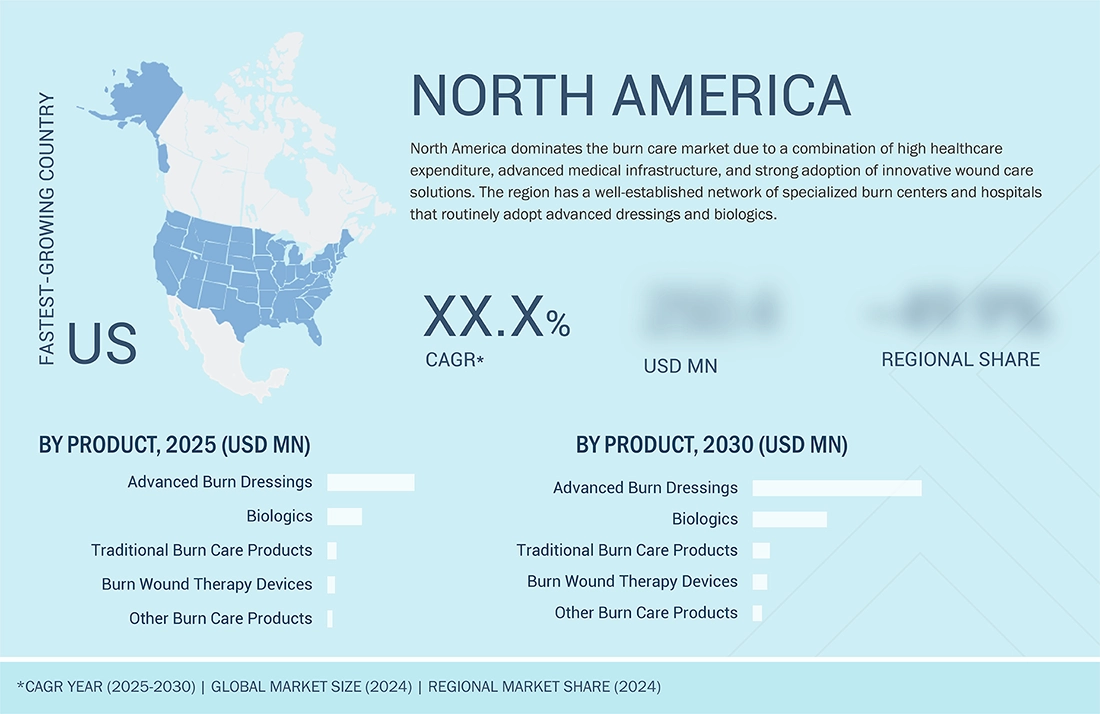
North America accounted for the largest share of the global burn care market during the forecast period.
North America dominates the burn care market due to a combination of high healthcare expenditure, advanced medical infrastructure, and strong adoption of innovative wound care solutions. The region has a well-established network of specialized burn centers and hospitals that routinely adopt advanced dressings, biologics, and skin substitutes.
Burn Care Market: COMPANY EVALUATION MATRIX
Smith+Nephew is a leading player in the burn care market, offering a wide range of solutions, including advanced burn dressings, traditional burn care products, burn wound therapy devices, and biologics. Its strong global presence, supported by an extensive distribution network, ensures broad accessibility of its products in both developed and emerging markets. The company also invests significantly in R&D to develop innovative and improved burn care solutions, maintaining its leadership position in the market
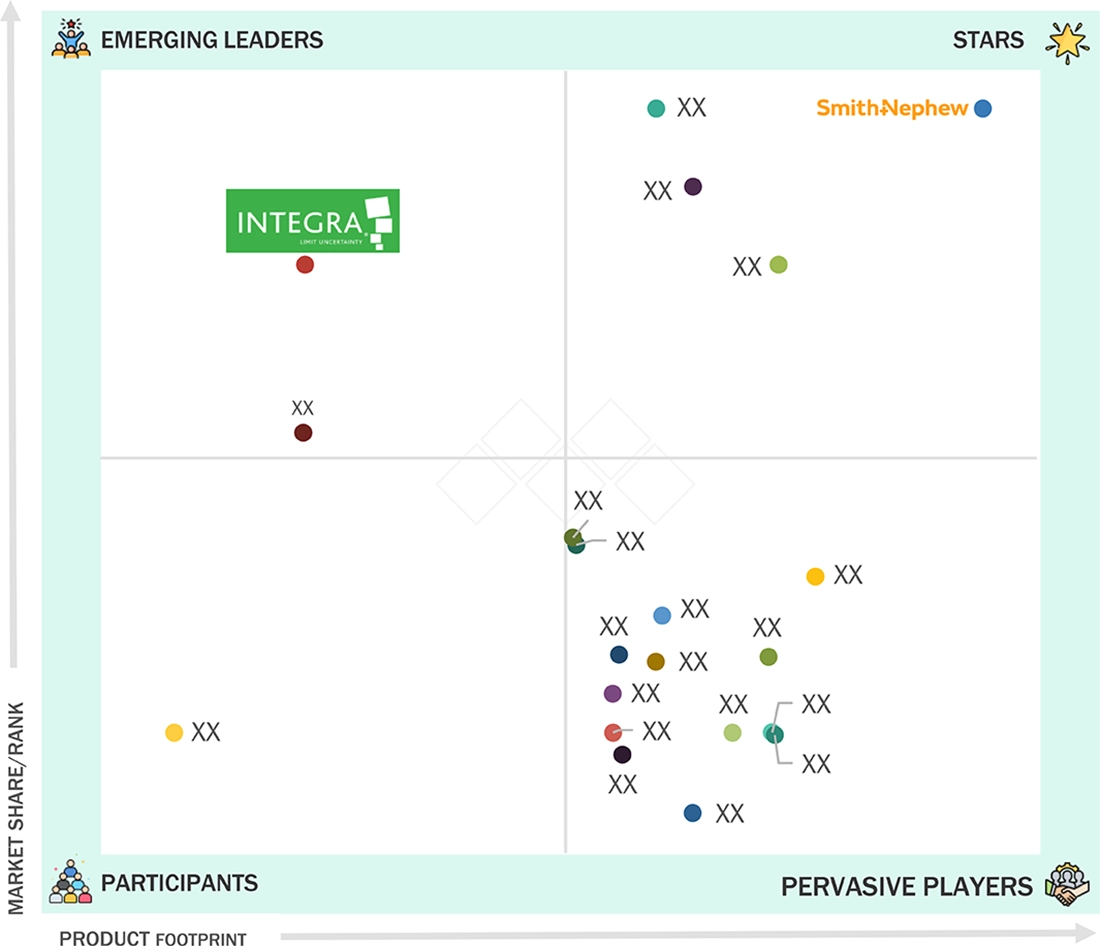
Source: Secondary Research, Interviews with Experts, MarketsandMarkets Analysis
KEY MARKET PLAYERS
MARKET SCOPE
| REPORT METRIC | DETAILS |
|---|---|
| Market Size Value in 2024 | USD 2.46 Billion |
| Revenue Forecast in 2030 | USD 3.35 Billion |
| Growth Rate | CAGR of 5.6% from 2025-2030 |
| Actual data | 2022-2030 |
| Base year | 2024 |
| Forecast period | 2025-2030 |
| Units considered | Value (USD Million) |
| Report Coverage | Revenue Forecast, Company Ranking, Competitive Landscape, Growth Factors, and Trends |
| Segments Covered |
|
| Regional Scope | North America, Europe, Asia Pacific, Latin America and the Middle East & Africa |
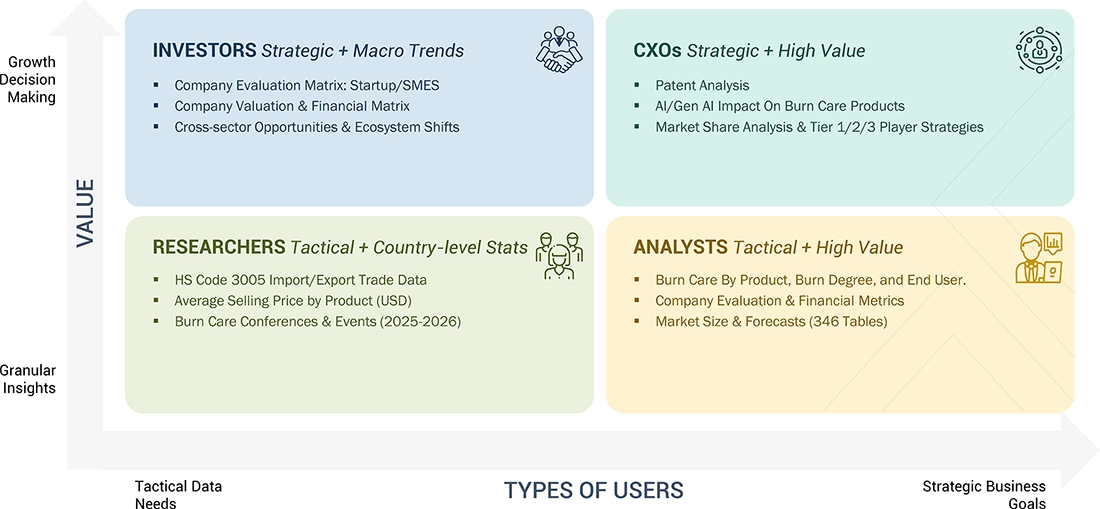
WHAT IS IN IT FOR YOU: Burn Care Market REPORT CONTENT GUIDE
RECENT DEVELOPMENTS
- In May 2024 : Mölnlycke Health Care AB (Sweden) entered into a new partnership with Phoenix Society (US). Through this partnership, the company will support the initiatives of the Phoenix Society with its comprehensive range of burn care solutions, including cleansing products, gentle wound dressings, and scar management devices.
- In March 2024 : Smith & Nephew (UK) launched the RENASYS EDGE Negative-pressure Wound Therapy (NPWT) System. This system is designed to treat chronic wounds.
- In March 2024 : Integra LifeSciences Holdings Corporation (US) launched MicroMatrix Flex in the US. MicroMatrix Flex is used for the management of wounds including burns.
- In March 2023 : ConvaTec Group Plc (UK) received clearance from the US Food and Drug Administration for its InnovaBurn placental extracellular matrix. This product is now approved for the management of complex surgical wounds and burns.
Table of Contents
 Exclusive indicates content/data unique to MarketsandMarkets and not available with any competitors.
Methodology
The study involved major activities in estimating the current size of the burn care market. Exhaustive secondary research was done to collect information on the burn care industry. The next step was to validate these findings, assumptions, and sizing with industry experts across the value chain using primary research. Different approaches, such as top-down and bottom-up, were employed to estimate the total market size. After that, the market breakup and data triangulation procedures were used to estimate the market size of the segments and subsegments of the burn care market.
Secondary Research
In the secondary research process, a variety of sources were utilized to gather information for this study. These sources included company annual reports, press releases, and investor presentations; white papers; certified publications; articles by recognized authors; reputable websites; and information from regulatory bodies and databases, such as D&B Hoovers, Bloomberg Business, and Factiva.
Primary Research
In the primary research process, various sources from both the supply and demand sides were interviewed to obtain qualitative and quantitative information for this report. Primary sources were mainly industry experts from the core and related industries and preferred suppliers, manufacturers, distributors, service providers, and organizations related to all segments of this industry’s value chain. In-depth interviews were conducted with various primary respondents, including key industry participants, subject-matter experts, C-level executives of key market players, and industry consultants, to obtain and verify critical qualitative and quantitative information as well as assess prospects.
The following is a breakdown of the primary respondents:
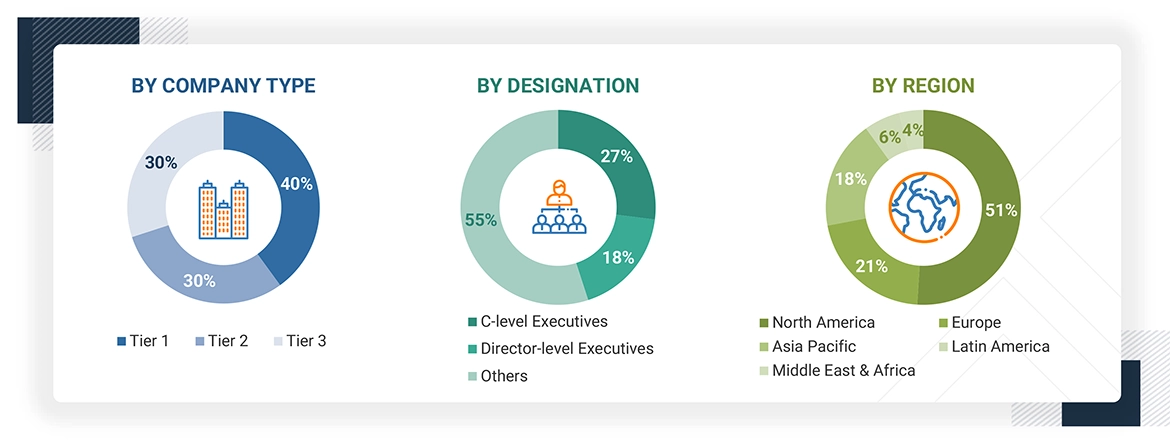
Note 1: Others include sales, marketing, and product managers.
Note 2: Companies are classified into tiers based on their total revenues. As of 2024, Tier 1 = >USD 100 million, Tier 2 = USD 10 million to USD 100 million, and Tier 3 = < USD 10 million.
To know about the assumptions considered for the study, download the pdf brochure
| COMPANY NAME | DESIGNATION |
|---|---|
| Smith+Nephew | Regional Sales Manager |
| Mölnlycke Health Care AB (Sweden) | Clinical Specialist |
Market Size Estimation
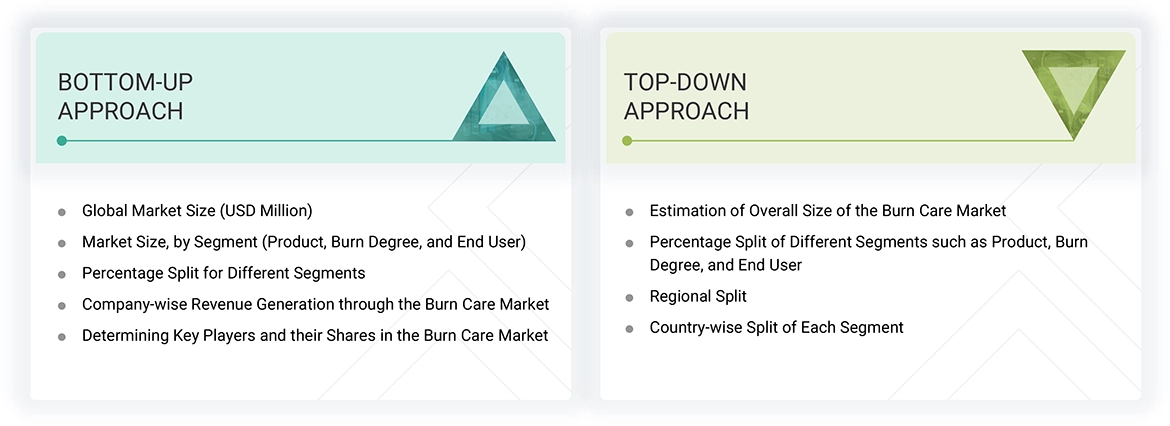
Both top-down and bottom-up approaches were used to estimate and validate the burn care market's total size. These methods were also used extensively to estimate the size of various subsegments in the market. The research methodology used to estimate the market size includes the following:
- The key players in the industry were identified through extensive secondary research.
- The revenues generated by leading players operating in the burn care market were determined through primary and secondary research.
- All percentage shares, splits, and breakdowns were determined using secondary sources and verified through primary sources.
The research methodology used to estimate the market size includes the following:
Data Triangulation
After arriving at the overall market size by applying the process mentioned above, the total market was split into several segments. To complete the overall market engineering process and arrive at the exact statistics for all segments and subsegments, data triangulation and market breakdown procedures were employed, wherever applicable. The data was triangulated by studying various factors and trends from both the demand and supply sides.
Market Definition
A burn is an injury resulting from the destruction of tissues or the rupture of the membrane. It is caused by flames, fire, hot objects, or liquids. Burn care involves using products such as dressings, devices, and biologics to promote rapid healing of injuries. Burns can range in severity from superficial to deep tissue damage and may lead to complications such as infection or scarring. Burn care products aim to prevent infection, support tissue regeneration, and relieve pain.
Stakeholders
- Manufacturers and distributors of burn care products
- Government organizations
- Hospitals
- Physicians’ clinics
- Burn centers
- Government associations
- Venture capitalists and investors
Report Objectives
- To define, describe, segment, and forecast the global burn care market by product, burn degree, end user, and region
- To provide detailed information regarding the major factors influencing market growth (such as drivers, restraints, opportunities, and challenges)
- To analyze the micromarkets with respect to individual growth trends, prospects, and contributions to the overall burn care market
- To analyze market opportunities for stakeholders and provide details of the competitive landscape for key players
- To forecast the size of the market segments with respect to five regions: North America, Europe, the Asia Pacific, Latin America, and the Middle East & Africa
- To profile the key players and comprehensively analyze their product portfolios, market positions, and core competencies
- To track and analyze company developments such as product launches & approvals, partnerships, acquisitions, agreements, and other developments
- To benchmark players within the market using the proprietary Company Evaluation Matrix framework, which analyzes market players on various parameters within the broad categories of business and product excellence
Key Questions Addressed by the Report
- First-degree burns affect only the outer skin layer (epidermis), causing redness and mild pain, without blisters.
- Second-degree burns reach the dermis, resulting in blisters, swelling, and increased pain.
- Third-degree burns destroy all skin layers, may appear white or charred, and often cause numbness due to nerve damage.
- Hospitals (largest market share in 2024 due to advanced infrastructure and critical care capability)
- Physician clinics & ambulatory care settings
- Home care settings
- Burn treatment centers


Personalize This Research
- Triangulate with your Own Data
- Get Data as per your Format and Definition
- Gain a Deeper Dive on a Specific Application, Geography, Customer or Competitor
- Any level of Personalization
Let Us Help You
- What are the Known and Unknown Adjacencies Impacting the Burn Care Market
- What will your New Revenue Sources be?
- Who will be your Top Customer; what will make them switch?
- Defend your Market Share or Win Competitors
- Get a Scorecard for Target Partners

Custom Market Research Services
We Will Customise The Research For You, In Case The Report Listed Above Does Not Meet With Your Requirements
Get 10% Free CustomisationTESTIMONIALS

JAYANT RAJPUROHIT
Director of Market Insights, Data and Analytics
SFI Health,
Leading Pharmaceutical Companywww.sfihealth.com/
We at SFI Health approached MarketsandMarkets for an Opportunity Assessment on "Incidence and Prevalence of Focus Indications" as we wanted to know the most attractive HCPs like Physician, Functional MD, Naturopath and Pharmacist. The project was critical for us to ensure our focus on the right target which would enable sustainable growth and profitability for SFI Health. The business insights provided exceeded our expectations and we were extremely impressed. The team at MarketsandMarkets is highly professional and detail oriented and very well understood our business needs. MarketsandMarkets offers a unique combination of expertise and dedicated engagement model. We identified 2 new products to be launched in coming months, based on the research findings provided by MarketsandMarkets. We are happy with the services and would strongly recommend MarketsandMarkets to my peers in the industry.

BEATRIZ DE LA CALLE
Head of Commercial Analytics
Qualicaps,
Leading Pharmaceutical Companywww.qualicaps.com/

We partnered with MarketsandMarkets for an assessment study on hard empty capsules. The team was extremely professional in understanding our business requirements and we received timely responses to all our queries. The market intelligence and the recommendations has met our business requirements. We were extremely impressed to see the final study results; it really exceeded our expectations. The market intelligence offered by MarketsandMarkets, and clarity on next steps will help us achieve our business objective for the Year 2021. We are happy with the services and would strongly recommend MarketsandMarkets to my peers in the industry.

Bob Williams,
Senior Director Business Development & Innovation
Bracco Diagnostics Inc.,
Italian Multinational in life sciences sector and a World Leader in imaging diagnosticsimaging.bracco.com/us-en
We were pleased with targeted insights that MarketsandMarkets identified from a custom study on the 'Radiation Dose Management Solutions Market'. Your team identified and characterized the market participants as well as underlying trends accurately. This study was useful to Bracco in formulating business strategies for our dose monitoring product lines and we thank MarketsandMarkets for the job well done.
Cody Coonradt,
Market Development and Strategy Manager
3M Health Information Systems,
Leader in Health care Coding, Payment & Analytics Solutions.www.3m.com/3M/en_US/health-information-systems-us
The value for our organization comes from three things: depth of research, specificity of segments and being easy to work with. As important as the first two are, the third can't be underestimated. MarketsandMarkets, maybe more than any other research vendor, wants to know what is top of mind for our team and what big questions we are grappling to answer.
Their customer first approach and high value engagement model, have given us great analysis and excellent value for money






Growth opportunities and latent adjacency in Burn Care Market