Circuit Breaker Monitoring Systems Market

Circuit Breaker Monitoring Systems Market by Monitoring Mode (Continuous, Diagnostic), Offering (Hardware, Software, Services), Voltage Level (LV, MV, HV), End User (Utilities, Renewables, Industrial, Data Centers), and Region - Global Forecast to 2031




OVERVIEW
Source: Secondary Research, Interviews with Experts, MarketsandMarkets Analysis
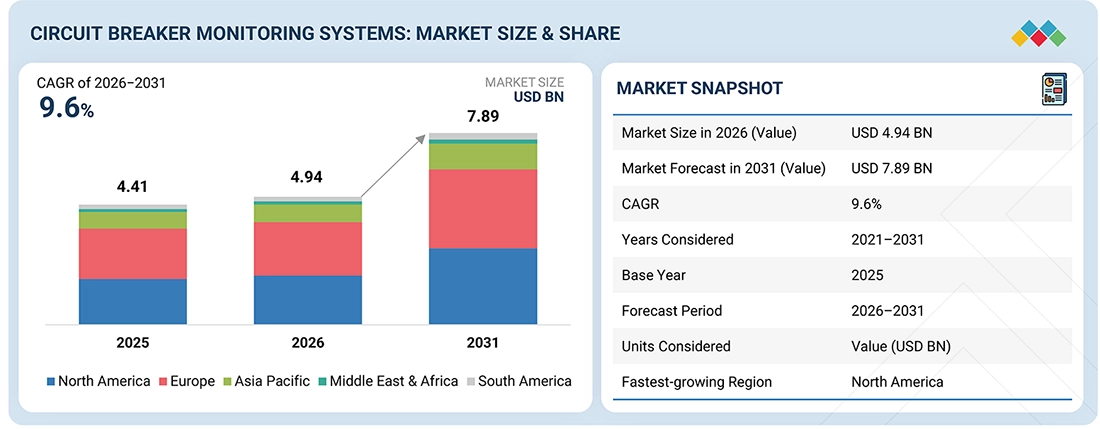
The global circuit breaker monitoring systems market is projected to grow from USD 4.41 billion in 2025 to USD 7.89 billion by 2031, at a CAGR of 9.6%. This market plays a vital role in modern power infrastructure by enabling real-time condition monitoring of circuit breakers, supporting predictive maintenance, and improving grid reliability.
Circuit Breaker Monitoring Systems Market Size and Forecast:
- Market Size Value in 2025: USD 4.41 Billion
- Market Size Value in 2026: USD 4.94 Billion
- Revenue Forecast in 2031: USD 7.89 Billion
- Growth Rate: CAGR of 9.6% from 2026 to 2031
- Data available from 2021 to 2031
Circuit Breaker Monitoring Systems Market Trends and Insights
- Market Growth: Circuit Breaker Monitoring Systems Market growth is driven by increasing smart grid investments, grid modernization initiatives, and the rising adoption of predictive maintenance for power infrastructure.
-
Growing Trends: Utilities are increasingly deploying digital Circuit Breaker Monitoring Systems to enable real-time asset monitoring, improve grid reliability, and reduce unplanned outages.
- Growth Opportunities: Rising investments in transmission and distribution infrastructure, renewable energy integration, and substation modernization are creating significant Circuit Breaker Monitoring Systems market growth opportunities.
- Market Share Analysis: By offering, the hardware segment is expected to account for the largest Circuit Breaker Monitoring Systems market share in 2025, driven by the growing deployment of monitoring sensors and communication devices.
KEY TAKEAWAYS
-
BY REGIONAsia-Pacific commanded the largest market share in 2025 and is likely to continue to do so due to massive grid expansion programs in China, India, Southeast Asia, and Australia. North America leads in technology adoption and per-capita spending and is supported by data centers and smart grid programs.
-
BY OfferingHardware held the largest share in the circuit breaker monitoring systems market in 2025 with a share of 62%, driven by strong demand for sensors, monitoring units, and communication modules required for new installations and upgrades.
-
BY VoltageBy voltage, the EHV/UHV segment is expected to register a CAGR of 11.7% during the forecast period.
-
By Monitoring ModeThe diagnostic + hybrid monitoring segment is projected to register a CAGR of 11.9% during the forecast period.
-
By End UserUtilities is the largest end-use industry of circuit breaker monitoring systems market, accounting for 23.2% of the overall market in terms of value in 2025.
-
Competitive Landscape - Key PlayersSiemens Energy, ABB Ltd., Hitachi Energy Ltd., GE Grid Solutions, LLC (Vernova), Schneider Electric, Eaton Corporation plc, Mitsubishi Electric Corporation, and Toshiba Energy Systems & Solutions are identified as some of the star players in the circuit breakers monitoring systems market (global), given their strong market share and product footprint.
-
Competitive Landscape - StartupsSynaptec, AiDASH, and GeoDigita, among others, have distinguished themselves among startups and SMEs by securing strong footholds in specialized niche areas, underscoring their potential as emerging market leaders.
The global circuit breaker monitoring systems market is projected to grow from USD 4.41 billion in 2025 to USD 7.89 billion by 2031, at a CAGR of 9.6%. This market plays a vital role in modern power infrastructure by enabling real-time condition monitoring of circuit breakers, supporting predictive maintenance, and improving grid reliability. The market growth for circuit breaker monitoring systems is driven by rapid grid digitalization, large-scale integration of renewable energy, and the explosive growth of data centers requiring ultra-reliable power protection. The market study covers key segments, including monitoring mode (Continuous, Diagnostic, and Hybrid), offering (Hardware, Software, Services), voltage Level (LV, MV, HV, EHV), end user (Utilities, Renewables, Data Centers, Industrial, etc.), and region.
TRENDS & DISRUPTIONS IMPACTING CUSTOMERS' CUSTOMERS
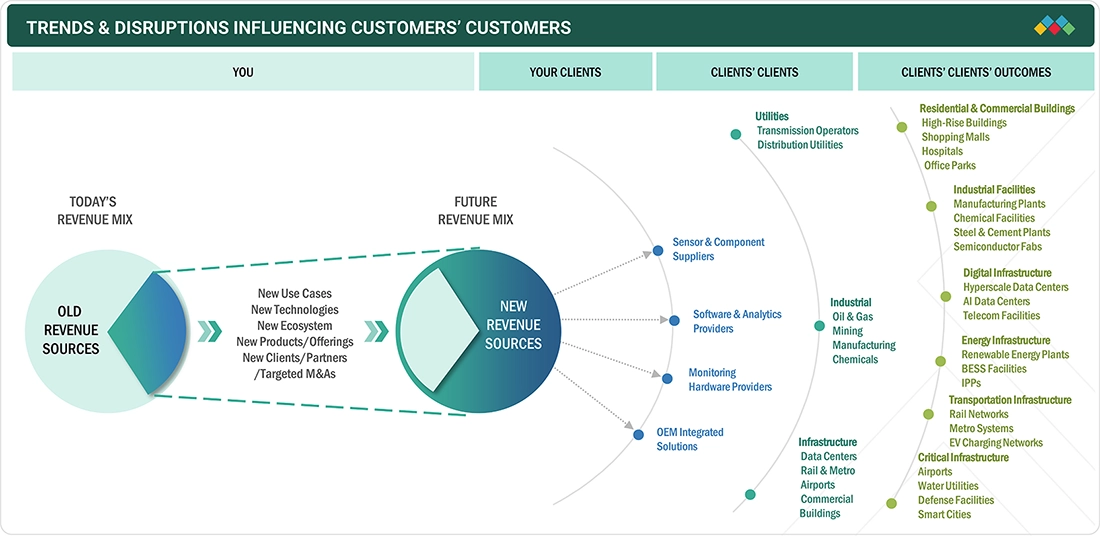
The global circuit breaker monitoring (CBM) systems market is undergoing a shift from standalone condition monitoring systems to integrated, AI-enabled asset management platforms. Utilities are increasingly adopting predictive maintenance, digital substations, IoT sensors, and cloud-based analytics to improve asset reliability and reduce unplanned outages. The growing deployment of renewable energy, grid modernization programs, and high-voltage transmission infrastructure is accelerating demand for real-time monitoring solutions. Additionally, digital twins, machine learning-driven diagnostics, and fleet-wide asset health management are emerging as key disruptors, transforming how utilities manage critical grid assets.
Source: Secondary Research, Interviews with Experts, MarketsandMarkets Analysis
MARKET DYNAMICS

Level
-
Smart Grid Modernization and Rising Power Demand Drive Strong Market Growth

-
Aging Grid Infrastructure Driving Asset Reliability Investments


Level
-
High Initial Deployment and Integration Costs

-
Long Utility Procurement and Approval Cycles


Level
-
Hybrid Solutions and High-Growth Verticals Create Significant New Revenue Streams

-
Renewable Energy and HVDC Network Expansion


Level
-
Lack of Standardized Monitoring Architectures Across Utilities

-
Managing Massive Volumes of Asset Data

Source: Secondary Research, Interviews with Experts, MarketsandMarkets Analysis
Driver: Smart Grid Modernization and Rising Power Demand Drive Strong Market Growth
The circuit breaker monitoring systems market growth is driven by multiple drivers. Strong smart grid investments worldwide are driving utilities to adopt real-time monitoring for better asset visibility and operational efficiency. Rapid expansion of renewable energy projects, especially large-scale solar, offshore wind, and hybrid installations, requires advanced protection at interconnection points to effectively manage intermittent generation and maintain grid stability. In addition, the explosive growth of hyperscale data centers, which demand 99.999% uptime, is creating premium demand for reliable monitoring solutions. Aging substation infrastructure and the need to reduce unplanned outages in many economies are further encouraging the shift from reactive to predictive maintenance strategies.
Restraints: High Upfront Costs and Legacy System Compatibility Slow Down Wider Adoption
Despite strong growth drivers, the circuit breaker monitoring systems market faces notable restraints. High initial capital expenditure for advanced hardware, sensors, and monitoring units remains a key barrier, particularly for smaller utilities and industrial users in cost-sensitive markets. Integration with legacy substation infrastructure continues to pose technical challenges, requiring additional customization and increasing project timelines. Cybersecurity concerns around connected IoT devices and cloud-based platforms also limit quicker adoption, as utilities prioritize data protection in critical infrastructure. The lack of clear and standard protocols across regions and vendors limits large-scale deployments. In some emerging markets, the limited availability of skilled personnel for installation and maintenance tends to further slow the progress.
Opportunity: Hybrid Solutions and High-Growth Verticals Create Significant New Revenue Streams
The circuit breaker monitoring systems market offers substantial opportunities for innovation and expansion. Hybrid monitoring systems, which combine continuous data with advanced diagnostics, are expected to register the highest growth during the 2026–2031 forecast period. Data centers demand premium, high-reliability monitoring solutions, while renewables require compact and efficient solutions to manage intermittent generation. Significant retrofit opportunities exist in existing MV and HV brownfield installations. Emerging markets in the Middle East & Africa and South America offer attractive greenfield potential, supported by energy access and infrastructure modernization projects. Circuit breaker monitoring solution providers can benefit by offering integrated hardware-software-service bundles tailored to regional needs, such as cost-effective solutions in Asia-Pacific and premium AI-integrated systems in North America. Additionally, strategic partnerships with leading OEMs such as ABB, Siemens Energy, and Schneider Electric can significantly accelerate the market adoption of circuit breaker monitoring solutions. The convergence of IoT sensors, AI analytics, and cloud platforms is creating powerful new use cases such as centralized monitoring across large networks and predictive failure analytics. Companies that focus on ease of deployment, strong cybersecurity, and seamless SCADA integration may gain a significant competitive advantage.
Challenge: Skills Shortage and Cybersecurity Risks Test Market Readiness
The circuit breaker monitoring systems market faces several operational challenges. Shortage of skilled utility personnel capable of handling advanced IoT and AI-based systems remains a significant hurdle, especially in emerging markets. Training and upskilling programs are needed that require time and investment. In addition, cybersecurity threats targeting connected monitoring infrastructure present another critical challenge, as any potential breach could compromise grid stability and national security. Standardization gaps across different vendors and regions make interoperability difficult, complicating large-scale deployments. Data privacy regulations and varying compliance requirements across countries add further complexity for global players. While end user industries like data centers tend to adopt solutions quickly, conventional markets like utilities and industrial segments absorb these solutions cautiously and slowly.
CIRCUIT BREAKER MONITORING SYSTEMS MARKET: COMMERCIAL USE CASES ACROSS INDUSTRIES
| COMPANY | USE CASE DESCRIPTION | BENEFITS |
|---|---|---|
 |
Implemented asset health monitoring and risk-based maintenance programs across transmission assets, leveraging digital diagnostics and condition monitoring technologies to improve breaker and substation asset visibility | Improved grid reliability, optimized maintenance planning, and reduced risk of critical asset failures |
 |
Utilizes condition-based asset management and monitoring technologies across transmission infrastructure to support predictive maintenance and lifecycle optimization of critical electrical assets | Enhanced asset utilization, reduced maintenance costs, and improved network reliability |
 |
Invested in digital substations and asset performance monitoring solutions to support real-time condition assessment of critical transmission equipment | Improved operational visibility, higher asset availability, and better maintenance prioritization |
 |
Adopted condition-based maintenance strategies supported by asset monitoring systems across high-voltage transmission infrastructure | Reduced unplanned outages, extended asset life, and improved reliability of the transmission network |
Logos and trademarks shown above are the property of their respective owners. Their use here is for informational and illustrative purposes only.
MARKET ECOSYSTEM
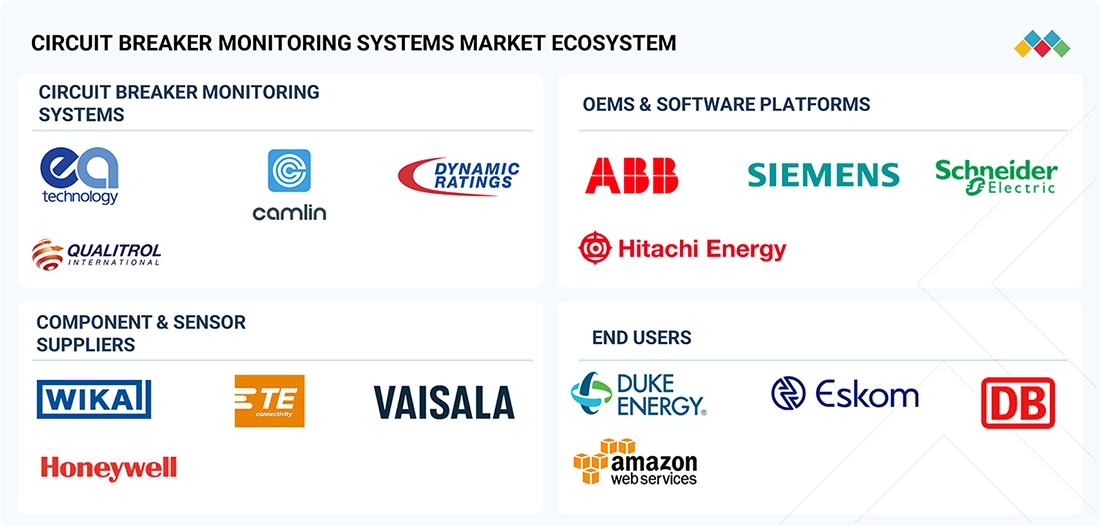
Key players in the circuit breaker monitoring (CBM) systems market are large, established power equipment manufacturers and asset monitoring solution providers with strong global utility relationships, extensive product portfolios, and advanced digital grid capabilities. Few leading players include Hitachi Energy (Switzerland), Siemens Energy (Germany), GE Vernova (US), Schneider Electric (France), ABB (Switzerland), Eaton (US), Mitsubishi Electric (Japan), Qualitrol (US), Dynamic Ratings (US), Camlin Energy (Ireland), and IPEC (New Zealand). Emerging innovators such as Heimdall Power (Norway), Synaptec (UK), AiDASH (US), GeoDigital (Canada), and Oktogrid (Denmark) are also gaining traction through AI-enabled monitoring, digital grid analytics, and predictive asset management solutions.
Logos and trademarks shown above are the property of their respective owners. Their use here is for informational and illustrative purposes only.
MARKET SEGMENTS
Source: Secondary Research, Interviews with Experts, MarketsandMarkets Analysis
Circuit Breaker Monitoring Systems, By End User
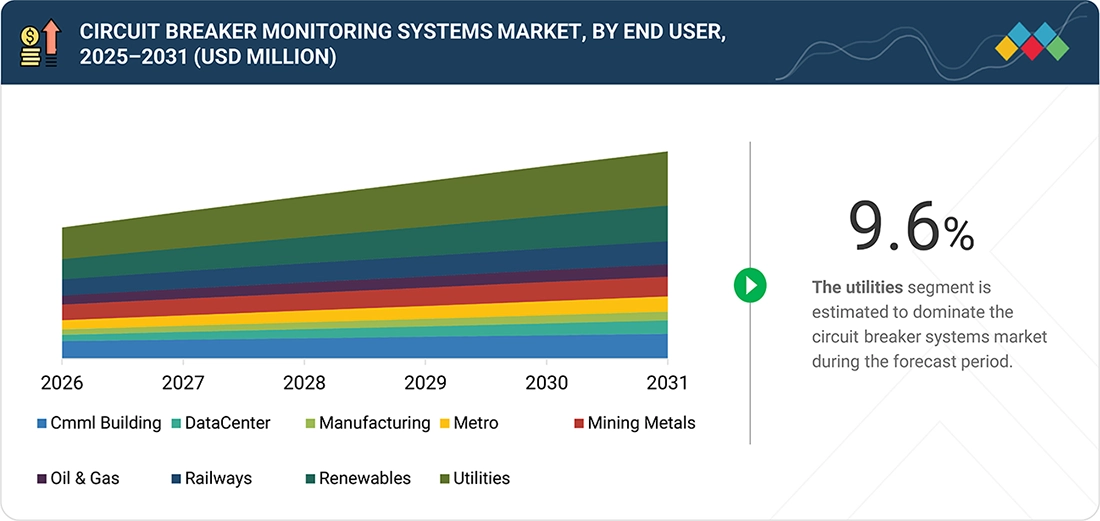
Utilities (Transmission and Distribution) represent the largest end-user vertical due to their vast installed base of circuit breakers across power networks. However, data centers and renewable energy developers are the fastest-growing end-user verticals through 2031. Utilities continue to lead because of large-scale asset management needs, while data centers demand premium, high-reliability monitoring to ensure 99.999% uptime. Renewable energy developers require compact and efficient solutions to manage intermittent generation and grid stability. Industrial & process industries provide steady demand, supported by transportation infrastructure and commercial buildings.
Circuit Breaker Monitoring Systems, By Offering
Hardware accounted for the largest share of the circuit breaker monitoring systems market in 2025, driven by strong demand for sensors, monitoring units, and communication modules for new installations and upgrades. However, software and services are the fastest-growing segments through the 2026–2031 forecast period. Software (particularly AI Diagnostics and SaaS Platforms) and services (Managed Monitoring and Maintenance Contracts) are expanding rapidly as utilities and end users shift from one-time hardware purchases toward recurring revenue and outcome-based models. This transition is supported by the need for cloud-based analytics, remote diagnostics, and reduced on-site expertise.
Circuit Breaker Monitoring Systems, By Voltage
Medium-voltage (MV) and high-voltage (HV) segments together account for the largest share of the market. These voltage classes are critical for distribution networks, renewable interconnections, and industrial applications. Significant retrofit opportunities in existing brownfield installations, along with new grid expansion projects, continue to drive demand in these segments. Temperature, contact wear, and timing analysis features are particularly valuable for MV and HV applications.
REGION
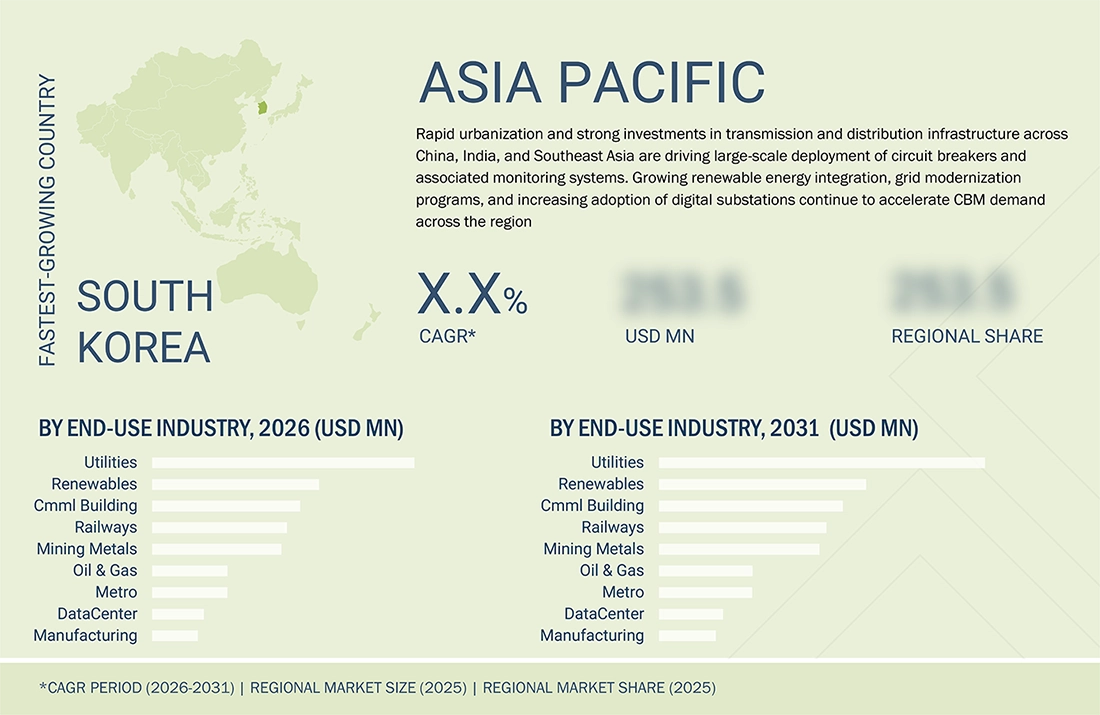
Asia Pacific is estimated to account for the largest market share during the forecast period.
Asia-Pacific held the largest share in the global circuit breaker monitoring systems market in 2025, driven by massive grid expansion programs in China, India, Southeast Asia, and Australia. North America follows with strong growth momentum, while Europe maintains steady demand. The Middle East & Africa and South America offer attractive emerging opportunities. Asia-Pacific benefits from large-scale infrastructure buildout. North America excels in technology adoption, particularly due to data center growth. Europe is supported by renewable targets and grid resilience initiatives. Key countries such as China (grid modernization), the US (data centers), India (renewables + distribution), and Saudi Arabia (Vision 2030) are major growth engines.
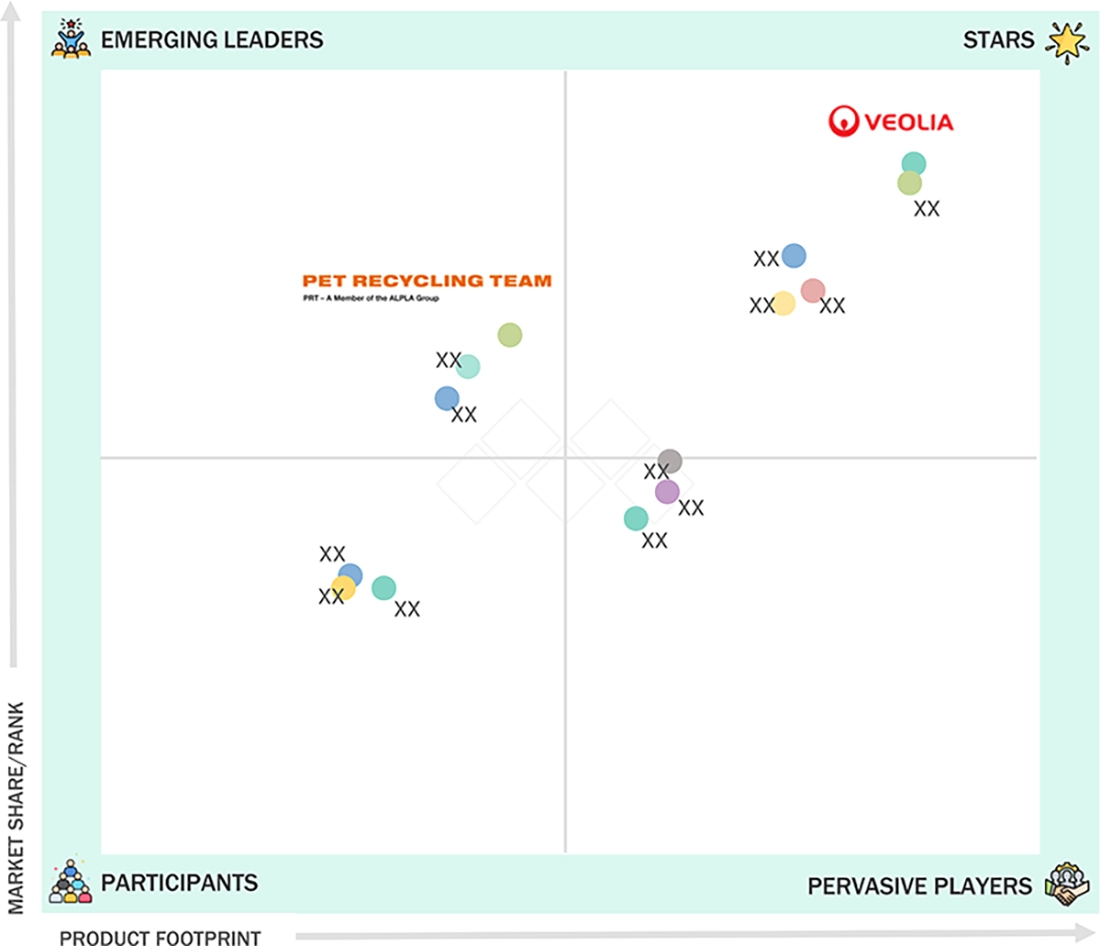
CIRCUIT BREAKER MONITORING SYSTEMS MARKET: COMPANY EVALUATION MATRIX
In the circuit breaker monitoring (CBM) systems market, Siemens Energy (Star) maintains a leading position through its extensive installed base, advanced digital substation portfolio, and integrated condition monitoring capabilities. The company leverages its strong presence across utility, transmission, and industrial applications to provide predictive maintenance and asset health management solutions. Hitachi Energy (Emerging Leader) continues to strengthen its market position through its Lumada Asset Performance Management platform, digital grid technologies, and advanced monitoring solutions, enabling utilities to enhance asset reliability, optimize maintenance strategies, and support large-scale grid modernization initiatives.
Source: Secondary Research, Interviews with Experts, MarketsandMarkets Analysis
KEY MARKET PLAYERS
- ABB Ltd.
- Siemens Energy AG
- Schneider Electric SE
- Hitachi Energy Ltd.
- GE Grid Solutions, LLC
- Eaton Corporation plc
- Mitsubishi Electric Corporation
- Toshiba Energy Systems & Solutions Corporation
- Qualitrol Company LLC
- Dynamic Ratings Pty Ltd.
- Camlin Group (Camlin Energy)
- Iris Power LP
- Camlin Group (Camlin Energy)
MARKET SCOPE
| REPORT METRIC | DETAILS |
|---|---|
| Market Size in 2025 (Value) | USD 4.41 BN |
| Market Forecast in 2031 | USD 7.89 BN |
| CAGR (2026–2031) | 9.60% |
| Years Considered | 2021–2031 |
| Base Year | 2025 |
| Forecast Period | 2026–2031 |
| Units Considered | Value (USD BN) |
| Report Coverage | The report defines, segments, and forecasts the circuit breaker monitoring (CBM) systems market based on monitoring mode, voltage, offering, end user, and region. It provides detailed information on the key factors influencing market growth, including drivers, restraints, opportunities, and challenges. The report strategically profiles leading CBM solution providers and equipment manufacturers, analyzes their market shares and core competencies, and tracks key competitive developments, including product launches, partnerships, acquisitions, and expansions. |
| Segments Covered | By Monitoring Mode (Continuous Monitoring, Diagnostic/Event-Based Monitoring, Hybrid Monitoring Systems) |
| Regional Scope | North America, Europe, Asia Pacific, Middle East & Africa, South America |
WHAT IS IN IT FOR YOU: CIRCUIT BREAKER MONITORING SYSTEMS MARKET REPORT CONTENT GUIDE
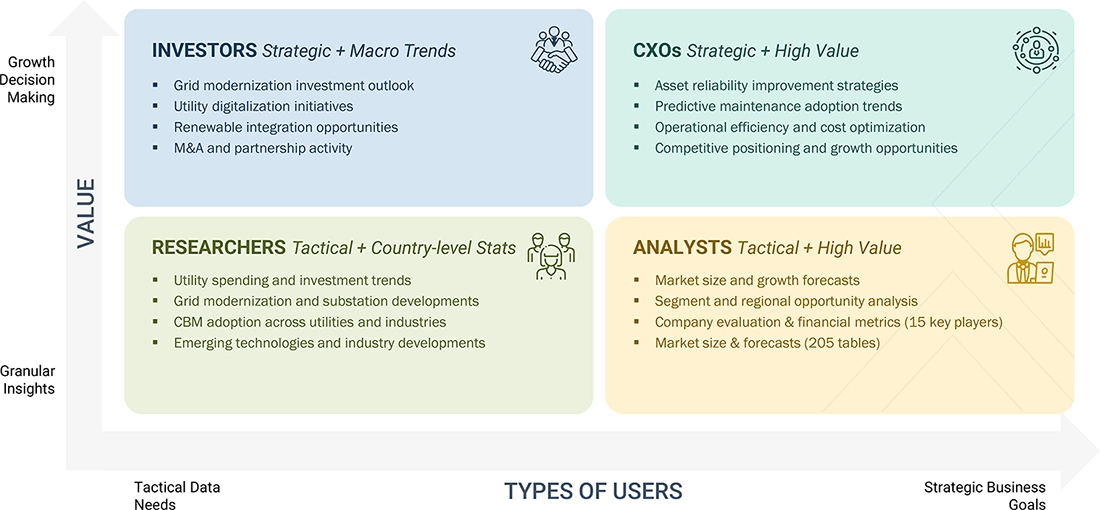
DELIVERED CUSTOMIZATIONS
We have successfully delivered the following deep-dive customizations:
| CLIENT REQUEST | CUSTOMIZATION DELIVERED | VALUE ADDS |
|---|---|---|
| Asia-Pacific: Regional Players Market Assessment |
|
|
RECENT DEVELOPMENTS
- Mar-24 : Schneider Electric launched the MasterPacT MTZ Active low-voltage air circuit breaker, featuring advanced power monitoring, energy measurement, digital connectivity, and predictive maintenance capabilities for critical infrastructure and industrial applications.
- Jul-25 : ABB launched the SACE Emax 3 air circuit breaker, incorporating advanced sensing, real-time monitoring, predictive maintenance, cybersecurity certification, and integrated arc-flash detection capabilities for data centers, advanced manufacturing facilities, and critical infrastructure.
- Oct-25 : ABB introduced its next-generation MNS low-voltage switchgear platform integrated with the SACE Emax 3 circuit breaker, enabling enhanced monitoring, intelligence, cybersecurity, and operational visibility for AI-ready data centers.
- 2025 : Siemens Energy expanded its Blue GIS portfolio with enhanced digital condition-monitoring capabilities, including equipment status, temperature, and environmental monitoring to support SF6-free switchgear and digital substation deployments.
- Jun-25 : Hitachi Energy strengthened its digital substation portfolio through enhanced asset performance management and circuit breaker monitoring capabilities integrated into its high-voltage switchgear and grid automation solutions.
- 2025 : GE Vernova expanded its grid modernization portfolio and increased investments in high-voltage switching and monitoring solutions to support growing transmission infrastructure and data center power demand.
Table of Contents
 Exclusive indicates content/data unique to MarketsandMarkets and not available with any competitors.
Methodology
The study involved four key activities to estimate the size of the circuit breaker monitoring systems market. Extensive secondary research was conducted to gather information on the market, related markets, and the broader power and energy industry. These findings, assumptions, and size estimates were then validated through primary research with industry experts across the value chain. Both top-down and bottom-up approaches were used to determine the total market size. Finally, market segmentation and data triangulation techniques were applied to estimate the sizes of individual segments and sub-segments.
Secondary Research
In the secondary research process, various sources were used to identify and collect information for this study. These include annual reports, press releases, investor presentations of companies, white papers, certified publications, trade directories, articles from recognized authors, gold standard and silver standard websites, and industry databases.
Secondary research helped gather essential information about the industry’s value chain, market monetary flows, key market classifications, detailed segmentation based on industry trends, and regional market dynamics. It was also used to collect data on key developments and market-oriented insights for the circuit breaker monitoring systems industry.
Primary Research
The circuit breaker monitoring systems market comprises several stakeholders in the value chain, including component suppliers, manufacturers, system integrators, utilities, and end users. Primary research involved interviewing key stakeholders from both the supply and demand sides to obtain qualitative and quantitative insights.
From the demand side, key opinion leaders in utilities, renewable energy developers, data center operators, and industrial sectors were interviewed. From the supply side, major manufacturers, industry associations, and technology providers were consulted. Primary interviews helped validate market statistics, revenue data, market breakdowns, size estimates, forecasts, and data triangulation. They also provided a deeper understanding of trends related to monitoring mode, offering, voltage level, end-user verticals, and regional dynamics. Stakeholders such as CIOs, CTOs, and technical heads were interviewed to understand buyer perspectives, current adoption levels, and future outlook for the circuit breaker monitoring systems market.

Notes: Tier 1, Tier 2, and Tier 3 companies are classified based on their market revenue in 2024 available in the public domain, product portfolios, and geographic presence.
To know about the assumptions considered for the study, download the pdf brochure
Market Size Estimation
The top-down approach was used to estimate and validate the size of the overall circuit breaker monitoring systems market and its various submarkets. The research methodology used to estimate the market size included the following steps:
- The key players in the industry were identified through extensive secondary research.
- The supply chain of the circuit breaker monitoring systems market was mapped through primary and secondary research.
- All percentage shares, splits, and breakdowns by monitoring mode, offering, voltage level, end-user vertical, and region were determined using secondary sources and verified through primary sources.
- All possible parameters that impact the market were accounted for, examined in detail, verified through primary research, and analyzed to obtain the final quantitative and qualitative data. This data was consolidated, supplemented with detailed inputs and analysis, and presented in this report.
CIRCUIT BREAKER MONITORING SYSTEMS MARKET: BOTTOM-UP APPROACH

Data Triangulation
After determining the total market size through the estimation process, the overall circuit breaker monitoring systems market was divided into several segments and sub-segments. Data triangulation and market breakdown methods were applied, where appropriate, to complete the market analysis and derive accurate statistics for all segments and sub-segments. The data was triangulated by examining various factors and trends from both the demand and supply sides. The market size was further validated using top-down and bottom-up approaches, along with insights from primary interviews. For each data point, three sources were considered — top-down approach, bottom-up approach, and expert interviews. The data was considered accurate when the values from these three sources converged.
Market Definition
The circuit breaker monitoring systems market encompasses advanced hardware, software, and service solutions designed to monitor the health and performance of circuit breakers in real time. These systems enable predictive maintenance, fault detection, and improved reliability across power transmission, distribution, and critical infrastructure networks.
The market is segmented by monitoring mode (Continuous/Online, Diagnostic/Event-Based, and Hybrid), offering (Hardware, Software, and Services), voltage level (Low Voltage, Medium Voltage, High Voltage, and Extra High Voltage), and end-user verticals. Hardware includes sensors, monitoring units, portable test equipment, and communication modules. Software covers monitoring dashboards, AI diagnostics, asset performance management, and SaaS platforms. Services include installation & commissioning, remote diagnostics, managed monitoring, and maintenance contracts.
These solutions help utilities, renewable energy developers, data centers, and industrial users reduce downtime, extend asset life, and enhance grid stability. With the rising need for smart grid modernization, renewable integration, and high-reliability power infrastructure, the market is driven by the demand for intelligent, data-driven monitoring systems that support safer, more efficient, and resilient power networks worldwideKey Stakeholders
- Circuit Breaker and Monitoring Equipment Manufacturers (OEMs)
- Sensor and IoT Device Manufacturers
- Software Solution Providers (AI Diagnostics, Dashboards, and SaaS Platforms)
- System Integrators and Solution Providers
- Utilities (Transmission and Distribution Operators)
- Renewable Energy Developers
- Data Center Operators and Hyperscale Facility Managers
- Industrial End Users (Oil & Gas, Mining, Manufacturing)
- Distributors, Traders, and Channel Partners
- Government and Regulatory Bodies
- Industry Associations and Standards Organizations
- Research Institutions and Technology Labs
Report Objectives
- To define, describe, and forecast the size of the circuit breaker monitoring systems market, in terms of value
- To provide detailed information regarding the major factors (drivers, opportunities, restraints, and challenges) influencing the growth of the market
- To estimate and forecast the market size based on monitoring mode, offering, voltage, end user, and region
- To forecast the market size with respect to key regions (North America, Europe, Asia-Pacific, Middle East & Africa, and South America), along with major countries
- To strategically analyze micromarkets with respect to individual growth trends, prospects, and their contribution to the overall market
- To analyze opportunities in the market for stakeholders and provide a competitive landscape of the market leaders
- To track and analyze recent developments such as partnerships, agreements, joint ventures, collaborations, product launches, expansions, and acquisitions in the market
- To strategically profile key market players and comprehensively analyze their core competencies
Available customizations:
Along with the given market data, MarketsandMarkets offers customizations according to the company’s specific needs. The following customization options are available for the report:
Company Information
- Detailed analysis and profiles of additional market players
Tariff & Regulations
- Regulations and impact on circuit breaker monitoring systems
.By Country
- Size of the circuit breaker monitoring systems market in other countries


Personalize This Research
- Triangulate with your Own Data
- Get Data as per your Format and Definition
- Gain a Deeper Dive on a Specific Application, Geography, Customer or Competitor
- Any level of Personalization
Let Us Help You
- What are the Known and Unknown Adjacencies Impacting the Circuit Breaker Monitoring Systems Market
- What will your New Revenue Sources be?
- Who will be your Top Customer; what will make them switch?
- Defend your Market Share or Win Competitors
- Get a Scorecard for Target Partners

Custom Market Research Services
We Will Customise The Research For You, In Case The Report Listed Above Does Not Meet With Your Requirements
Get 10% Free CustomisationTESTIMONIALS

Kimberly Murphy
GLOBAL MARKETING DIRECTOR
Bently Nevada,
Leading Condition Monitoring & Asset Protectionwww.bakerhughesds.com/bently-nevada

MarketsandMarkets™ showed consistent rigor for success and relentlessly worked with Bently Nevada stakeholders to positively impact go-to-market strategy. Their proactiveness and flexibility has been instrumental in achieving the objectives to grow our sales pipeline in key industrial markets.

DARRICK HUEBER
Business Development Leader
Nexus Controls LLC,
Leading Manufacturer of Automation System & Electrical Panelswww.bakerhughesds.com/nexus-controls

We partnered with MarketsandMarkets to expand our business further by tapping into new industrial segments. It was critical for us to gather crucial business insights about specific markets to achieve this goal. MarketsandMarkets engagement model and client services helped us provide those insights, it was really impressive and valuable for my business. The team was extremely flexible and helpful.

Mike Schoff
Global Industrial Commercial Strategy Leader
Nexus Controls LLC
Leading Manufacturer of Automation System & Electrical Panelswww.bakerhughesds.com/nexus-controls
We consulted MarketsandMarkets for potential Partner Identification. Overall, it was a good experience. The insights provided through interviews conducted by the team helped us put together the questionnaire required for discussion with the selected partners. Their ability to provide insights through interviews with customers in a timely manner was quite impressive.






Growth opportunities and latent adjacency in Circuit Breaker Monitoring Systems Market