Modular Data Center Market

Modular Data Center Market by Solution (All-in-one and Prefabricated Modules [IT, Power, Cooling]), Form Factor (ISO Containers [20 feet, 40 feet], Enclosures, Skid-mounted), Build Type (Semi-prefabricated, Fully-prefabricated) – Global Forecast to 2031




OVERVIEW
Source: Secondary Research, Interviews with Experts, MarketsandMarkets Analysis
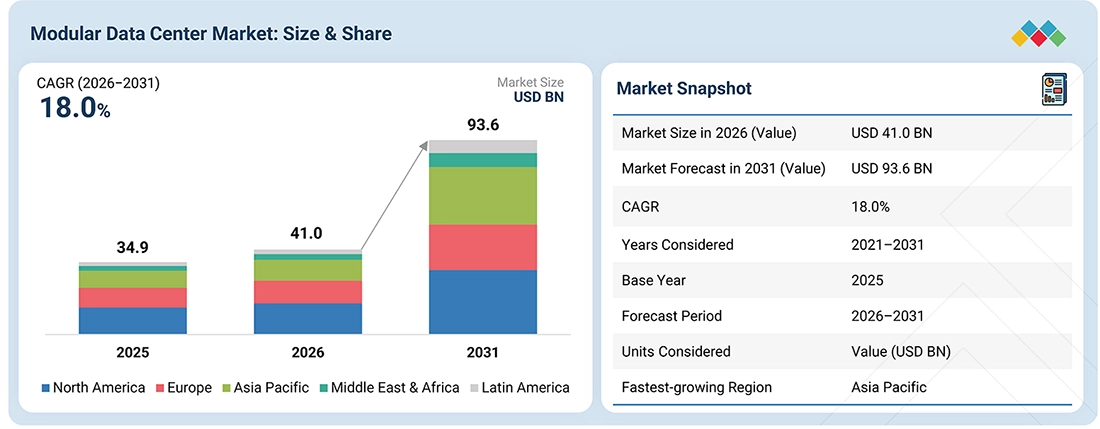
The global modular data center market is expected to witness significant growth from USD 41.0 billion in 2026 to USD 93.6 billion in the year 2031, with a CAGR of 18% during the forecast period 2026 to 2031, driven by the increasing demand for scalable and rapidly deployable digital infrastructure, growing adoption of cloud computing, and the proliferation of AI-driven applications. Rising data generation and processing requirements are compelling organizations to expand data center capacity while minimizing deployment timelines, capital expenditure, and operational complexity. These factors are accelerating the adoption of prefabricated and modular data center solutions, which offer standardized designs, flexible capacity expansion, and faster installation compared with conventional data center infrastructure. In addition, the increasing deployment of edge computing facilities and the growing need for energy-efficient and advanced cooling solutions are creating opportunities for modular data center providers. The continued expansion of hyperscale cloud infrastructure and investments in digital infrastructure across developed and emerging economies are further supporting market growth. As data center operators increasingly prioritize scalability, deployment speed, operational efficiency, and adaptability to evolving workloads, demand for modular data center solutions is expected to increase significantly during the forecast period.
KEY TAKEAWAYS
-
By ComponentThe solution segment is expected to hold the largest market value of USD 29,852.4 million by 2026.
-
By Build TypeThe all-in-one data center segment is projected to grow at the highest CAGR of 19.6% during the forecast period.
-
By Form FactorThe skid-mounted systems segment is projected to grow at the fastest rate at a CAGR of 21.2% during the forecast period.
-
By Data Center SizeLarge-sized data center is expected to dominate the market in 2026.
-
By Deployment TypeOutdoor is expected to grow at the fastest CAGR during the forecast period.
-
By End UserBy end user, the enterprise data center is expected to account for USD 7,993.1 million in 2025.
-
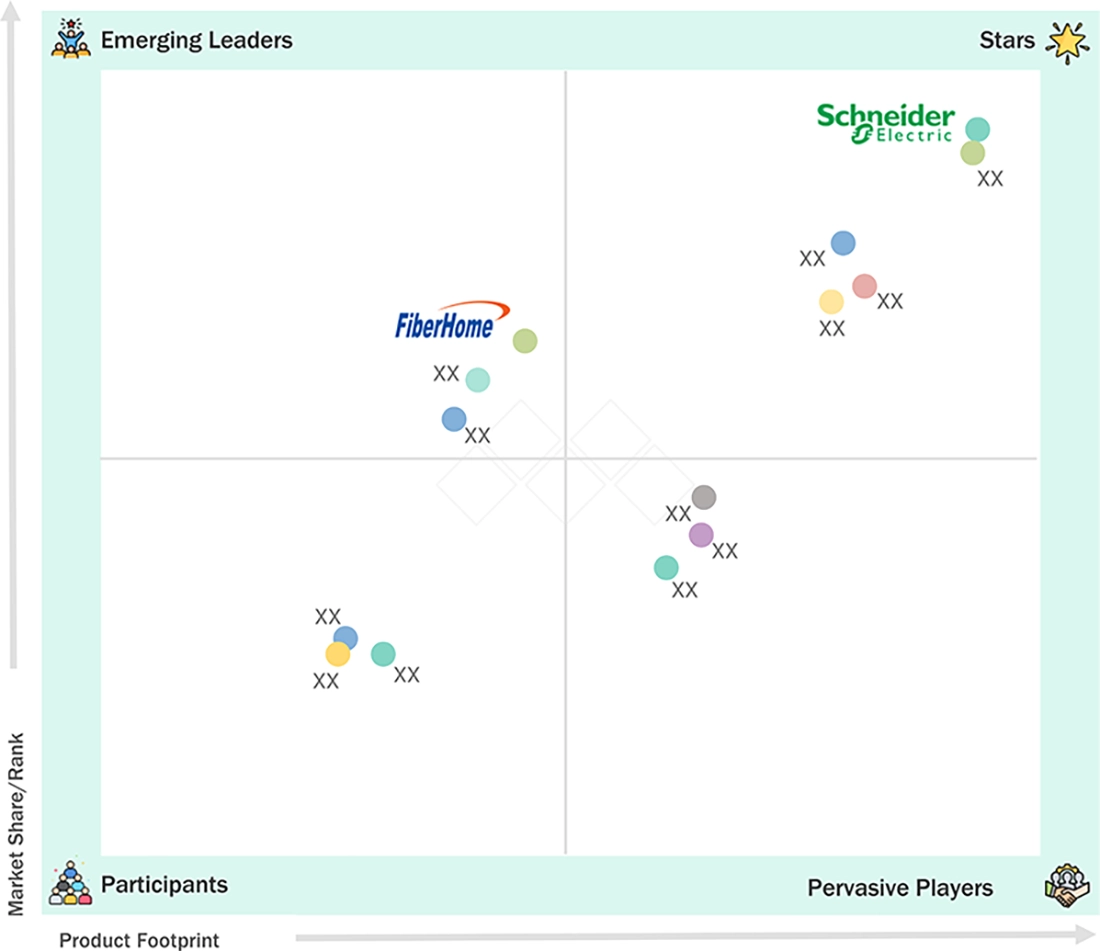
Competitive Landscape - Key PlayersVertiv, Schneider Electric, Huawei, ABB, and Stulz were identified as some of the star players in the global modular data center market, given their strong market share and product footprint.
-
Competitive Landscape - Startups/SMEsTAS, Total Site Solutions, Industrial ElectriC Mfg-(IEM), Modular Power Solutions, and Cannon Technologies have distinguished themselves among startups and SMEs by securing strong footholds in the Global modular data center market.
The global modular data center market is gaining significant momentum as organizations increasingly seek infrastructure solutions that can be deployed rapidly, scaled efficiently, and operated with greater flexibility. The growing adoption of cloud computing, edge computing, 5G networks, and AI-driven workloads is driving demand for modular data center solutions across enterprises, cloud service providers, telecom operators, and government organizations. In parallel, increasing emphasis on energy efficiency and sustainability is encouraging data center operators to adopt modular designs incorporating energy-efficient power and cooling systems. Modular data centers enable organizations to reduce deployment timelines, optimize capital expenditure, enhance operational resilience, and accommodate incremental capacity requirements. As digital transformation initiatives and data-intensive workloads continue to expand globally, the demand for flexible, scalable, and efficient modular data center infrastructure is expected to increase during the forecast period.
TRENDS & DISRUPTIONS IMPACTING CUSTOMERS' CUSTOMERS
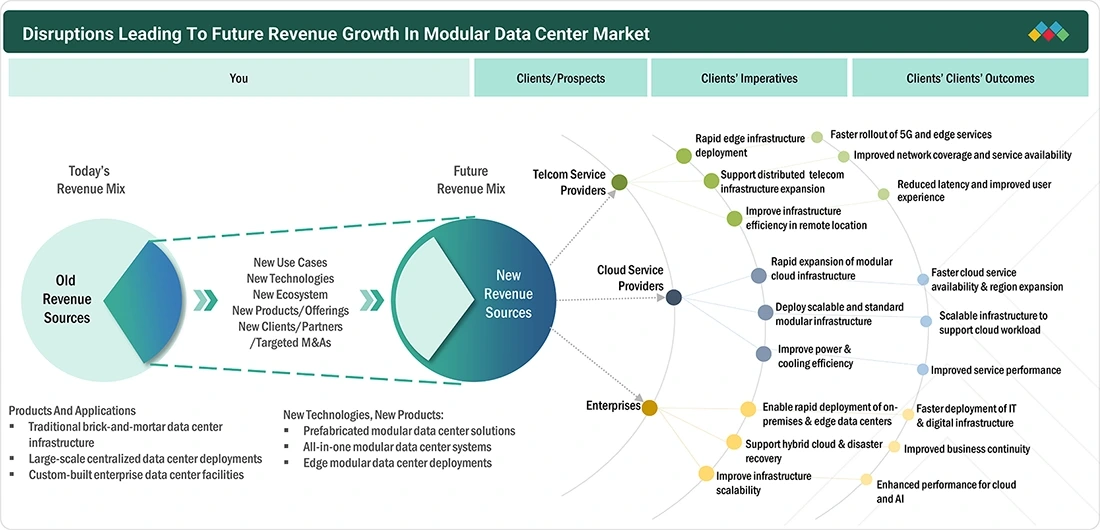
The global modular data center market is being shaped by the rapid proliferation of artificial intelligence (AI), cloud computing, and hyperscale data center investments, which are driving demand for faster, scalable, and more efficient infrastructure deployment. The increasing adoption of edge computing and distributed data center architectures is further supporting market growth, particularly for low-latency applications and real-time data processing. In addition, growing emphasis on energy efficiency and sustainability is encouraging data center operators to deploy advanced cooling technologies, optimized power infrastructure, and energy-efficient modular designs. Government-led digitalization initiatives, smart city developments, and investments in digital infrastructure across developed and emerging economies are further accelerating data center capacity expansion. These trends are driving a shift toward modular data center solutions that offer rapid deployment, scalability, operational efficiency, and flexibility to accommodate evolving workloads and infrastructure requirements.
Source: Secondary Research, Interviews with Experts, MarketsandMarkets Analysis
MARKET DYNAMICS

Level
-
Rising Adoption of Cloud Computing and Services

-
Mobility, scalability, and disaster recovery benefits


Level
-
High Initial Capital Expenditure

-
High electricity consumption and power infrastructure requirements


Level
-
Rising Demand for IoT, AI, and 5G-Driven Data Infrastructure

-
Growth in edge computing deployment


Level
-
Scalability in Large Data Center Projects

-
Limited customization for specialized needs & increased maintenance complexity

Source: Secondary Research, Interviews with Experts, MarketsandMarkets Analysis
Driver: Rising Adoption of Cloud Computing and Services
The growing adoption of cloud computing and cloud-based services is a key driver of the global modular data center market. The increasing migration of workloads to cloud environments, particularly among small and medium-sized enterprises (SMEs), is creating demand for scalable, flexible, and rapidly deployable data center infrastructure. Modular data centers enable organizations to expand IT capacity in a phased manner and deploy infrastructure more quickly than traditional data center facilities. This flexibility allows cloud service providers and enterprises to efficiently accommodate increasing data volumes, changing workload requirements, and new service deployments while optimizing capital and operational expenditures.
Restraint: High Initial Capital Expenditure
High initial capital expenditure can act as a significant restraint on the growth of the global modular data center market, particularly for SMEs and organizations with constrained investment budgets. Although modular data centers can deliver long-term cost savings through faster deployment, standardized designs, and operational efficiencies, the upfront costs associated with purchasing, transporting, installing, integrating, and commissioning modular infrastructure can be substantial. The financial burden may discourage organizations from adopting modular solutions, especially when conventional data center infrastructure or incremental capacity expansion appears more cost-effective in the short term. In addition, investments in supporting power, cooling, networking, and monitoring infrastructure can further increase initial deployment costs. This challenge is particularly pronounced among budget-sensitive end users, where emphasis on near-term capital expenditure may outweigh the long-term benefits of scalability, flexibility, and operational efficiency offered by modular data centers, thereby limiting market adoption.
Opportunity: Rising Demand for IoT, AI, and 5G-Driven Data Infrastructure
The growing adoption of artificial intelligence (AI), Internet of Things (IoT), and 5G technologies is creating significant opportunities for the global modular data center market. The rapid deployment of AI and machine learning applications is increasing demand for high-performance computing and scalable data center infrastructure capable of supporting growing processing and storage requirements. At the same time, the expansion of IoT applications and 5G networks is driving the need for distributed and localized data processing to enable low-latency connectivity and real-time decision-making across industries. Modular data centers, with their standardized architecture, rapid deployment capabilities, and flexible scalability, are well positioned to support these evolving infrastructure requirements. The increasing deployment of edge computing environments to bring processing capabilities closer to end users and connected devices is further creating opportunities for modular data center solutions. As AI, IoT, and 5G ecosystems continue to expand, the demand for reliable, scalable, and rapidly deployable data center infrastructure is expected to create significant growth opportunities for modular data center providers.
Challenge: Scalability in Large Data Center Projects
Scalability in large-scale data center projects remains a key challenge for the global modular data center market. Although modular solutions offer flexibility and faster deployment, scaling multiple modules to accommodate rapidly increasing capacity requirements can involve significant planning, coordination, and integration complexities. Ensuring seamless interoperability among multiple modules is essential to maintain consistent performance, reliability, and operational efficiency as infrastructure expands. Large-scale deployments can also face logistical challenges related to the transportation, installation, commissioning, and integration of modular components, particularly across geographically dispersed or constrained sites. In addition, variations in module designs, technologies, interfaces, and infrastructure standards can create interoperability and standardization challenges when integrating modules from different suppliers or expanding existing facilities. These factors can increase project complexity and deployment costs, potentially limiting the scalability of modular solutions for large and rapidly expanding data center projects.
MODULAR DATA CENTER MARKET: COMMERCIAL USE CASES ACROSS INDUSTRIES
| COMPANY | USE CASE DESCRIPTION | BENEFITS |
|---|---|---|
 |
Luzhou’s Smart City program required a rapidly deployable, energy-efficient, and highly reliable data center to support large-scale municipal digitalization. Huawei’s modular data center addressed challenges related to tight timelines, limited construction experience, and stringent PUE requirements, enabling seamless cloud migration and strengthening the city’s technology-driven urban development. | The modular deployment reduced implementation time by nearly 50%, ensuring faster project readiness while achieving a low PUE for substantial energy savings. High-redundancy design delivered 99.999% power uptime for critical services, and Huawei’s NetEco platform automated O&M tasks, reducing maintenance labor by 80% and improving operational efficiency. |
 |
MEEZA required rapid, scalable data center expansion to support Qatar’s 2030 Digital Transformation goals and meet the immediate infrastructure demands of the FIFA World Cup 2022. Vertiv delivered modular and hybrid solutions that integrated seamlessly with existing facilities, enabling fast deployment, high capacity, and efficient project execution under tight timelines. | The collaboration enabled the timely delivery of a scalable hybrid data center, significantly reducing deployment time through parallel module preparation. Evaporative cooling improved energy efficiency, lowering power consumption, while seamless integration with existing infrastructure and contractor training ensured smooth implementation and enhanced long-term operational performance. |
 |
Animal Logic required a high-density, low-latency data center to support growing rendering demands and accelerate production workflows. With a tight four-and-a-half-month timeline, Schneider Electric delivered a customized prefabricated modular solution with optimized power, cooling, and real-time monitoring to enhance performance and meet future high-performance computing needs. | The solution boosted animation productivity with render performance reaching 1.25 petaflops, eliminating latency bottlenecks and accelerating production. Seamless on-premise integration improved operational reliability, while 24/7 remote monitoring ensured continuous uptime and rapid issue resolution, strengthening overall efficiency and supporting long-term scalability. |
Logos and trademarks shown above are the property of their respective owners. Their use here is for informational and illustrative purposes only.
MARKET ECOSYSTEM
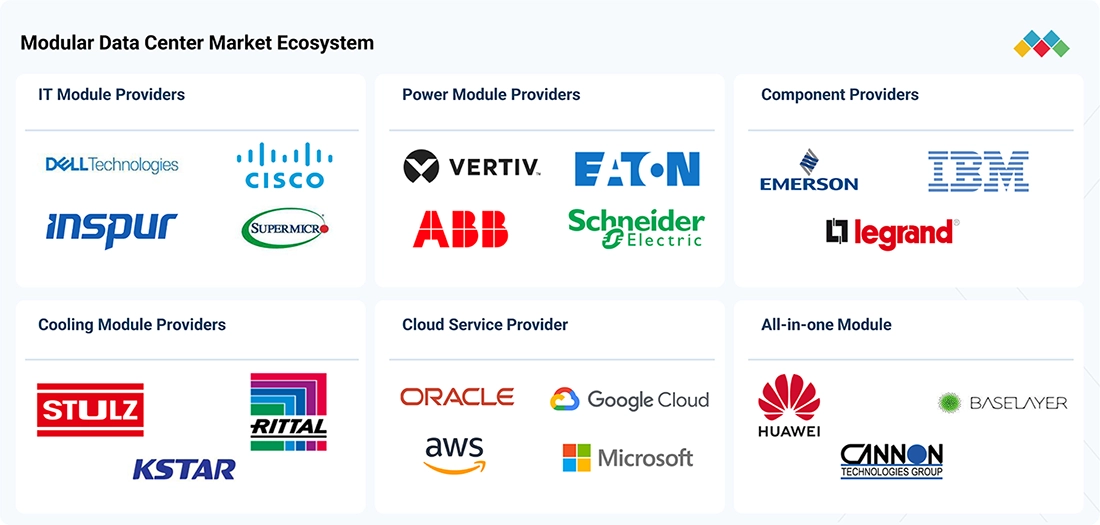
The market operates through a collaborative ecosystem, which includes technology providers, infrastructure specialists, and system integrators who work together to deliver complete solutions. Modular data center manufacturers design their products to use prefabricated and containerized systems, which enable quicker deployment and expansion capabilities. IT infrastructure providers deliver computing and networking equipment while power and cooling experts maintain system performance and efficiency throughout operational periods. The deployment process requires engineering firms and integrators to provide installation and execution support, which enables system installation across hyperscale, enterprise, and edge environments across the globe.
Logos and trademarks shown above are the property of their respective owners. Their use here is for informational and illustrative purposes only.
MARKET SEGMENTS
Source: Secondary Research, Interviews with Experts, MarketsandMarkets Analysis
Global Modular Data Center Market, By Component
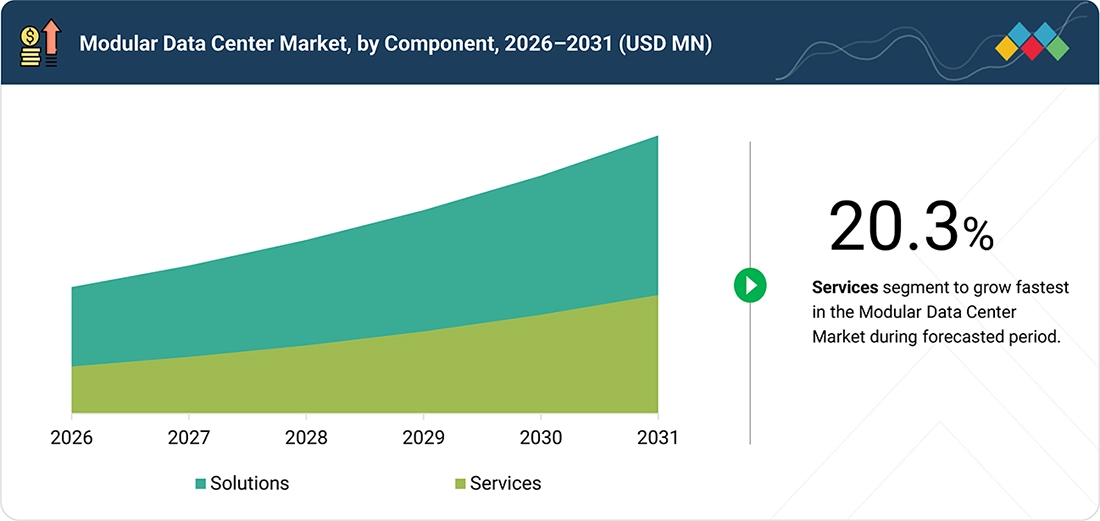
The solutions segment accounts for the largest share because modular data center deployments globally are typically implemented as fully integrated infrastructure packages rather than individual components. Hyperscale cloud, AI, and digital transformation projects require the coordinated deployment of critical infrastructure, including power, cooling, racks, and monitoring, to minimize integration risks and accelerate deployment. This approach enables rapid system activation while maintaining operational efficiency across diverse locations, particularly where data center capacity is expanded in phases. In this context, integrated solutions are preferred over individual components to support faster, standardized, repeatable, and scalable data center deployments.
Global Modular Data Center Market, By Solution
Prefabricated modules dominate this segment because they directly address the growing need for rapid deployment, standardization, and reduced on-site complexity. Globally, large-scale data center projects are often implemented within stringent timelines and under diverse environmental conditions, making prefabricated modules well suited for infrastructure that needs to be assembled, tested, and deployed within defined schedules. This approach helps minimize construction delays while ensuring consistent quality and performance across deployments. In addition, prefabrication enables standardized replication of infrastructure, which is particularly important for hyperscale cloud, edge computing, and large digital infrastructure projects requiring multiple data center facilities. As a result, prefabricated modules are increasingly preferred over conventional construction methods due to their ability to support faster, repeatable, scalable, and efficient data center development.
Global Modular Data Center Market, By Service
Support and maintenance services are growing steadily due to the increasing installed base of modular data centers operating in high-temperature and dust-prone environments. The system needs constant monitoring to maintain operational performance in its cooling systems, power infrastructure, and environmental assessment capabilities. The expansion of telecom networks, enterprise facilities, and cloud infrastructure requires organizations to increase their use of predictive maintenance, remote monitoring, and lifecycle management services. The current market trend shows a transition from deployment activities toward the development of operational efficiency and system reliability management.
Global Modular Data Center Market, By Form Factor
Support and maintenance services are expected to grow steadily due to the expanding installed base of modular data centers across diverse operating environments. These facilities require continuous monitoring and maintenance to ensure optimal performance of critical cooling systems, power infrastructure, environmental controls, and monitoring systems. The increasing deployment of modular data centers by telecom operators, cloud service providers, colocation providers, and enterprises is driving demand for predictive maintenance, remote monitoring, and lifecycle management services. As the installed base expands, market participants are increasingly shifting their focus from initial deployment toward maintaining operational efficiency, system availability, and long-term reliability. This transition is expected to support the growing adoption of support and maintenance services across the global modular data center market.
Global Modular Data Center Market, By Deployment Type
Outdoor modular data centers are gaining traction because they enable infrastructure deployment in locations where conventional data center construction may be challenging or impractical. Globally, the expansion of telecom infrastructure, industrial facilities, remote operations, and government digitalization initiatives is increasing the need for data center infrastructure across geographically distributed locations. The growing adoption of 5G networks, industrial IoT systems, and edge computing applications is further supporting demand for outdoor modular data centers, as these solutions can be deployed without requiring permanent building infrastructure. Their ability to support rapid deployment, flexible capacity expansion, and reliable operation across diverse and demanding environmental conditions makes outdoor modular data centers increasingly suitable for non-traditional and distributed deployment environments.
Global Modular Data Center Market, By Build Type
Semi-prefabricated modular data centers have a significant market share due to their balance in standardization and customization. Many projects in global are focused on expanding existing data centers or integrating with existing infrastructure in urban areas. The semi-prefabricated solution offers customization opportunities for various components, such as power and cooling, while still benefiting from prefabricated modules, which are manufactured in a factory environment. This provides opportunities for expansion while allowing for customization to suit specific needs, which is critical in data centers due to scalability needs.
Global Modular Data Center Market, By Data Center Size
Small modular data centers are witnessing increasing demand as organizations expand digital infrastructure beyond major urban centers into secondary cities, remote locations, and emerging markets. These solutions address localized data processing requirements associated with edge computing, IoT, 5G, and distributed cloud services, where low latency and proximity to end users are critical. Their compact footprint, rapid deployment capabilities, and ability to operate independently make small modular data centers well suited for geographically distributed digital infrastructure. In addition, the growing adoption of decentralized data processing models is encouraging organizations to deploy computing resources closer to end users, connected devices, and operational sites. This trend is expected to create further opportunities for small modular data centers across diverse applications and deployment environments globally.
Global Modular Data Center Market, By End User
Hyperscale operators represent the largest segment because they are driving substantial investments in cloud regions, AI infrastructure, and large-scale digital platforms across global markets. These operators require infrastructure that enables incremental capacity expansion while maintaining standardized architectures, high performance, and operational efficiency. Modular data centers address these requirements by offering faster deployment, flexible scalability, and standardized infrastructure compared with conventional data center construction. The continued growth of cloud computing across government, financial services, healthcare, manufacturing, and other industries is further driving hyperscale infrastructure investments. As hyperscale operators expand their global data center footprints to accommodate growing cloud and AI workloads, they are expected to remain a key contributor to demand for large-scale modular data center solutions.
REGION
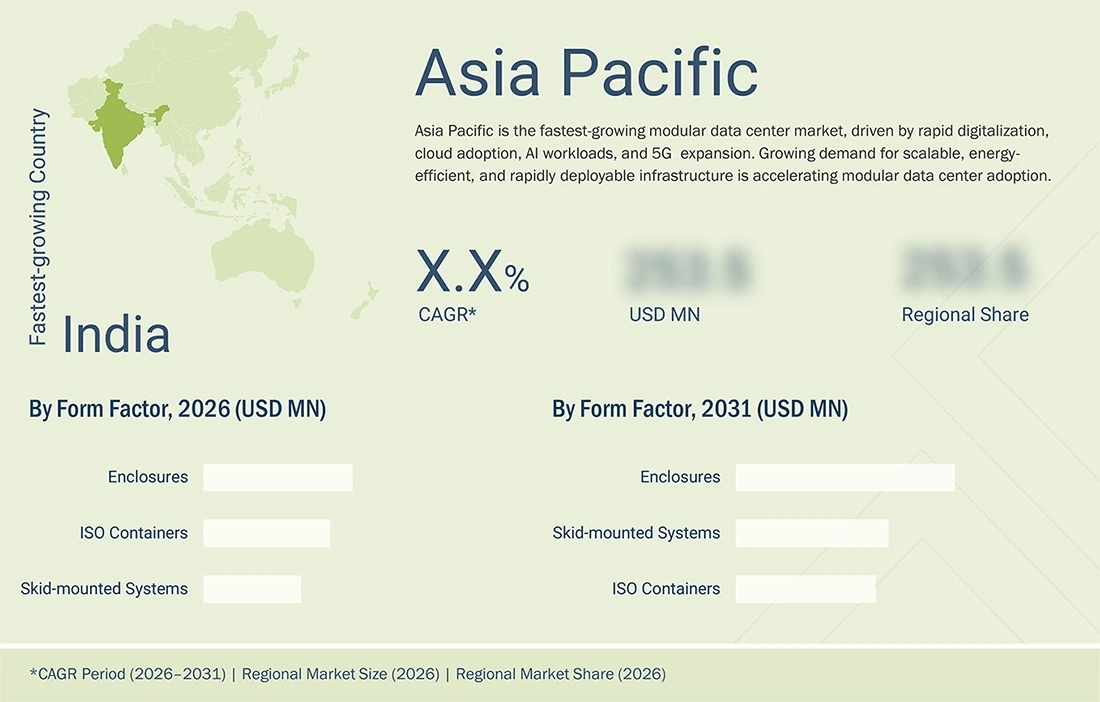
Asia Pacific to be the fastest growing region in the Modular Data Center Market during forecast period
The Asia Pacific modular data center market is expected to witness significant growth during the forecast period, driven by rapid digital transformation, increasing cloud adoption, rising internet penetration, and growing investments in data center infrastructure across countries such as China, India, Japan, Australia, Singapore, and Southeast Asian economies. The proliferation of AI, IoT, 5G, and edge computing applications is increasing demand for scalable and rapidly deployable computing infrastructure, particularly in locations where conventional data center development can involve longer construction timelines and higher costs. Hyperscale cloud service providers, colocation operators, telecom companies, and enterprises are increasingly adopting modular data centers to expand capacity in response to growing data generation and processing requirements. In addition, the development of digital economies, smart cities, and national cloud infrastructure is supporting investments in distributed and edge data center facilities. Growing emphasis on energy efficiency and sustainability is also encouraging the deployment of modular solutions incorporating advanced cooling, power management, and energy-efficient technologies. However, land availability, power constraints, regulatory requirements, and differences in infrastructure standards across countries may create challenges for market expansion. Overall, the region is expected to remain a key growth market for modular data center solutions.
MODULAR DATA CENTER MARKET: COMPANY EVALUATION MATRIX
The competitive analysis in the modular data center market in Global includes both existing leaders and emerging leaders, based on the depth of their solutions and execution capabilities in the region. Schneider Electric is identified as a Star player due to its depth of prefabricated modular solutions and existing footprint in large-scale digital infrastructure projects in the region. The solutions based on EcoStruxure technology have a high potential to meet customer requirements in the hyperscale, enterprise, and government segments in the country. On the other hand, FiberHome is placed in the Emerging Leader position owing to its increasing footprint in the telecom and network infrastructure space and its potential to offer cost-effective and deployable modular solutions. The market is slowly transitioning to companies that can deliver on the promise of integrated infrastructure solutions, execution capabilities within the region, and adaptability to harsh environments. A clear differentiation is emerging between existing solution players and emerging players in the region.
Source: Secondary Research, Interviews with Experts, MarketsandMarkets Analysis
KEY MARKET PLAYERS
- Dell Technologies (US)
- Vertiv (US)
- Schneider Electric (France)
- Huawei (China)
- Eaton (Ireland)
- Rittal (Germany)
- Siemens (Germany)
- Johnson Controls (Ireland)
- STULZ (Germany)
- Mitsubishi Electric (Japan)
- ABB (Swizerland)
- Delta Electronics (Taiwan)
- Hubbell (PCX) (US)
- Canon Technologies (UK)
- Edge MCS (US)
MARKET SCOPE
| REPORT METRIC | DETAILS |
|---|---|
| Market Size, 2026 (Value) | USD 41 Billion |
| Market Forecast, 2031 (Value) | USD 93.6 Billion |
| CAGR | 18.0% |
| Years Considered | 2021–2031 |
| Base Year | 2025 |
| Forecast Period | 2026–2031 |
| Units Considered | Value (USD Million) |
| Report Coverage | Revenue forecast, company ranking, competitive landscape, growth factors, and trends |
| Segments Covered |
|
| Regions | North America, Europe, Asia Pacific, Middle East & Africa, and Latin America |
WHAT IS IN IT FOR YOU: MODULAR DATA CENTER MARKET REPORT CONTENT GUIDE
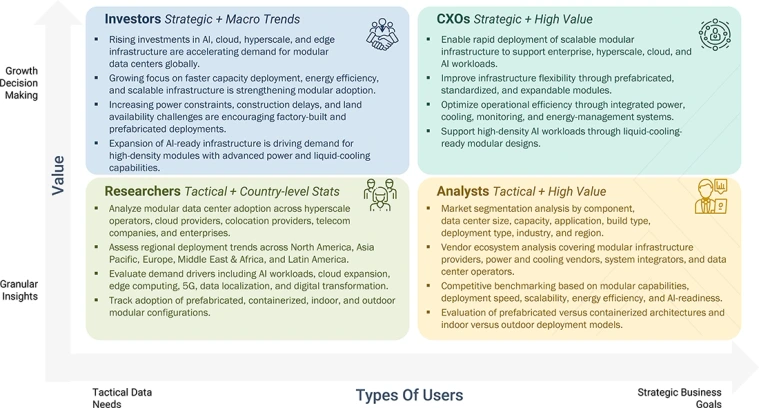
DELIVERED CUSTOMIZATIONS
We have successfully delivered the following deep-dive customizations:
| CLIENT REQUEST | CUSTOMIZATION DELIVERED | VALUE ADDS |
|---|---|---|
| Competitive benchmarking of modular data center vendors globally |
|
|
| Market sizing across modular form factors, deployment models, and end-user segments globally |
|
|
| Assessment of deployment services, systems integration, and O&M models for global modular deployments |
|
|
RECENT DEVELOPMENTS
- April 2026 : Vertiv acquired BMarko Structures, a US-based provider of custom-engineered structural fabrication. The acquisition was aimed at strengthening Vertiv’s manufacturing and engineering capabilities and expanding its ability to deliver scalable, prefabricated, and converged infrastructure solutions. The move supports the growing demand for faster and more flexible data center deployment driven by AI workloads and enables Vertiv to improve capacity, customization, and execution for large-scale data center projects.
- June 2026 : Schneider Electric and Hon Hai Technology Group (Foxconn) announced a strategic collaboration to accelerate the development and deployment of next-generation AI data centers. The partnership focuses on developing integrated, ready-to-deploy infrastructure by combining Foxconn’s AI rack integration and manufacturing capabilities with Schneider Electric’s expertise in power, cooling, and energy management. The companies also plan to explore modular power and cooling skids and standardized design frameworks, supporting faster, repeatable, and scalable AI data center deployments globally.
Table of Contents
 Exclusive indicates content/data unique to MarketsandMarkets and not available with any competitors.
Methodology
The study involved four major activities in estimating the modular data center market. We conducted secondary research to gather information on the market, competitors, and parent market. The next stage was to validate these findings and assumptions and size them with industry professionals across the value chain using primary research. Top-down and bottom-up methodologies were used to determine the total market size. We used the market breakup and data triangulation techniques to estimate the market size of the modular data center market segments.
Secondary Research
Multiple sources were utilized to find and gather data for this research project in the secondary research phase. Other sources used were annual reports, press releases, investor presentations, white papers, journals, publications, and articles from reputable sources, directories, and databases. Information was also collected from additional secondary sources like academic journals, official government sites, blogs, and online platforms of vendors.
Primary Research
Primary sources included industry experts from the core and associated industries, preferred software suppliers, hardware manufacturers, distributors, service providers, technology developers, alliances, and organizations representing all parts of the industry's value chain. In-depth interviews were conducted with primary respondents, including major industry participants, subject-matter experts, C-level executives of important market companies, and industry consultants, to acquire and verify critical qualitative and quantitative data and analyze the market's potential.
We performed primary interviews to gain insights such as market statistics, the current trends disrupting the industry, new use cases applied, revenue data collected from products and services, market breakdowns, market size projections, market predictions, and data triangulation. Primary research has helped us grasp different technology trends, segmentation types, industry trends, and geographies. Demand-side stakeholders, such as Chief Information Officers (CIOs), Chief Technology Officers (CTOs), and Chief Security Officers (CSOs); installation teams of governments/end users using modular data center solutions and services; and digital initiatives project teams, were interviewed to understand the buyer's perspective on suppliers, products, service providers, and their current use of services, which will affect the overall modular data center market.
Breakup of Primary Profiles:
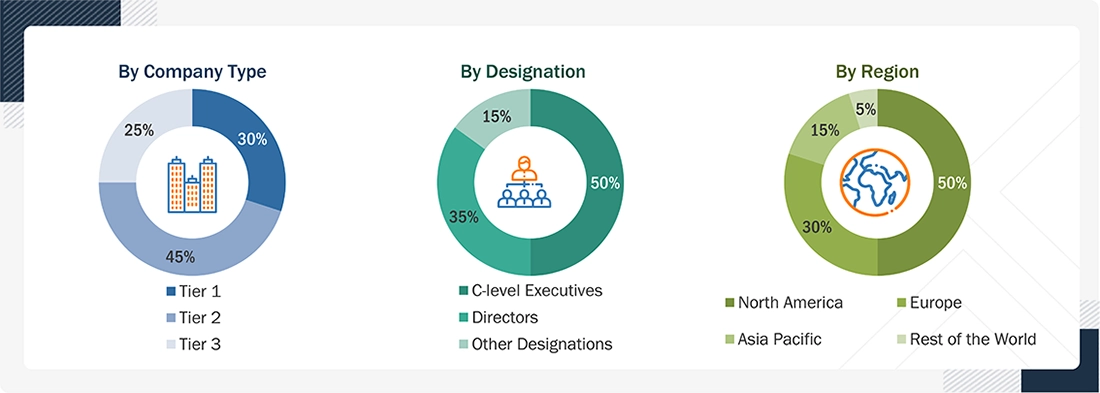
*Others include sales managers, marketing managers, and product managers
Note: Tier 1 – recorded overall annual revenues of more than USD 10 billion; Tier 2 company – USD 1–10 billion; and Tier 3 company – USD 500 million – 1 billion of the overall revenues
To know about the assumptions considered for the study, download the pdf brochure
Market Size Estimation
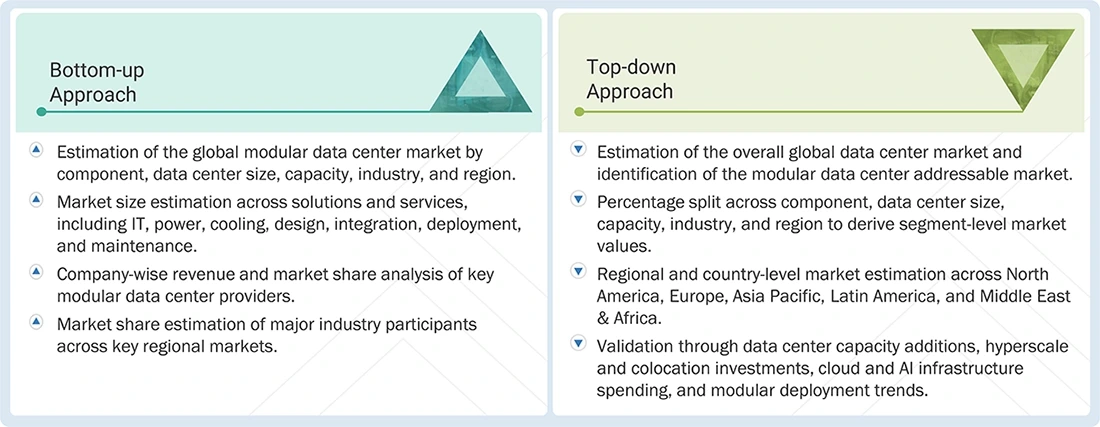
We estimated and forecasted the modular data center market. And other related submarkets using top-down and bottom-up methodologies. We used a bottom-up approach to calculate the overall market size by analyzing the revenues and offerings of significant market players. This study used data triangulation methods and validation through primary interviews to determine and confirm the precise worth of the whole parent market. We used the overall market size in the top-down process to estimate the size of other particular markets using percentage splits of market segments.
We used top-down and bottom-up approaches to estimate and validate the modular data center market and other dependent subsegments.
The research methodology used to estimate the market size included the following details:
- We identified key players in the market through secondary research. We then determined their revenue contributions in the respective countries through primary and secondary research.
- This procedure included studying top market players' annual and financial reports and extensive interviews for key insights from industry leaders, such as Chief Executive Officers (CEOs), VPs, directors, and marketing executives.
- All percentage splits and breakups were determined using secondary sources and verified through primary sources.
Using top-down and bottom-up methodologies, we estimated and forecasted the modular data center market and related submarkets. We used a bottom-up approach to calculate the overall market size by analyzing the revenues and offerings of significant market players. This study used data triangulation methods and validation through primary interviews to determine and confirm the precise worth of the whole parent market. We used the overall market size in the top-down process to estimate the size of other particular markets using percentage splits of market segments.
Modular Data Center Market: Top-Down and Bottom-Up Approach
Data Triangulation
After determining the overall market size, the market was divided into segments and subsegments using the previously described market size estimating techniques. Where applicable, data triangulation and market breakup methods were used to complete the whole market engineering process and ascertain the exact numbers for each market segment and subsegment. The data was triangulated by evaluating many elements and trends on the demand and supply sides of the modular data center market.
Market Definition
Considering the views of various sources and associations, MarketsandMarkets defines modular data center as "a deployment method and engineered solution for assembling a portable data center out of prefabricated modular components (commonly ISO standard container dimensions) that enable scalability and a rapid delivery schedule. Characteristics of modular data centers include standardization, rapid time to market, multiple power and cooling options, ease of deployment, greater reliability, location flexibility, smaller footprint, minimal construction dependencies, ease of scale, reduced stranded capacity, and lower cost, among others."
According to Subird, "A modular data center is a self-contained, prefabricated, and portable data center that can be easily transported and deployed where additional data center capacity is needed."
Key Stakeholders
- Cloud Service Providers (CSPs)
- Original Equipment Manufacturers (OEMs)
- Data Center Equipment Suppliers
- Colocation Providers
- Technology Services Providers
- Data Center Managed Services Providers
- Government Organizations
- Networking Companies
- Consultants/Consultancies/Advisory Firms
- Support and Maintenance Service Providers
- Telecom Service Providers
- Information Technology (IT) Infrastructure Providers
- System Integrators (SIs)
- Regional Associations
- Independent Software Vendors
- Value-added Resellers and Distributors
Report Objectives
- To define, describe, and forecast the Modular Data Center market based on component, form factor, deployment type, build type, data center size, end user, and region
- To forecast the market size of the five major regional segments: North America, Europe, Asia Pacific, Middle East & Africa, and Latin America
- To strategically analyze the market subsegments with respect to individual growth trends, prospects, and contributions to the total market
- To provide detailed information related to the major factors influencing the growth of the market (drivers, restraints, opportunities, and challenges)
- To strategically analyze macro and micro markets with respect to growth trends, prospects, and their contribution to the overall market
- To analyze industry trends, patents and innovations, and pricing data related to the market
- To analyze the opportunities in the market for stakeholders and provide details of the competitive landscape for major players.
- To profile key players in the market and comprehensively analyze their market share/ranking and core competencies.
- To track and analyze competitive developments, such as mergers & acquisitions, product developments, and partnerships & collaborations in the market.
Available customizations:
With the given market data, MarketsandMarkets offers customizations per the company's specific needs. The following customization options are available for the report:
Product Analysis
- The product matrix provides a detailed comparison of each company's product portfolio.
Geographic Analysis
- Further breakdown of the Asia Pacific market into countries contributing 75% to the regional market size
- Further breakup of the North American market into countries contributing 75% to the regional market size
- Further breakup of the Latin American market into countries contributing 75% to the regional market size
- Further breakup of the Middle Eastern & African market into countries contributing 75% to the regional market size
- Further breakup of the European market into countries contributing 75% to the regional market size
Company Information
-
Detailed analysis and profiling of additional market players (up to 5)


Personalize This Research
- Triangulate with your Own Data
- Get Data as per your Format and Definition
- Gain a Deeper Dive on a Specific Application, Geography, Customer or Competitor
- Any level of Personalization
Let Us Help You
- What are the Known and Unknown Adjacencies Impacting the Modular Data Center Market
- What will your New Revenue Sources be?
- Who will be your Top Customer; what will make them switch?
- Defend your Market Share or Win Competitors
- Get a Scorecard for Target Partners

Custom Market Research Services
We Will Customise The Research For You, In Case The Report Listed Above Does Not Meet With Your Requirements
Get 10% Free CustomisationTESTIMONIALS
- Canada Modular Data Center Market
- US Modular Data Center Market
- UK Modular Data Center Market
- Germany Modular Data Center Market
- France Modular Data Center Market
- Italy Modular Data Center Market
- China Modular Data Center Market
- Japan Modular Data Center Market
- South Africa Modular Data Center Market
- Brazil Modular Data Center Market
- Mexico Modular Data Center Market
- Rest Of Europe Modular Data Center Market
- Rest Of Asia Pacific Modular Data Center Market
- Rest Of Latin America Modular Data Center Market
- GCC Countries Modular Data Center Market
- Rest Of GCC Countries Modular Data Center Market
- Saudi Arabia Modular Data Center Market
- UAE Modular Data Center Market






Growth opportunities and latent adjacency in Modular Data Center Market