Fingerprint Sensor Market Size, Share & Trends

Fingerprint Sensor Market Size, Share & Trends by Technology (Capacitive, Optical, Thermal, Ultrasonic), Type (Area & Touch Sensors, Swipe Sensors), Sensor Technology (2D, 3D), End-Use Application - Global Forecast to 2032




FINGERPRINT SENSOR MARKET OVERVIEW
According to Marketsandmarkets, Fingerprint Sensor Market is projected to reach USD 6.98 billion by 2032 from USD 5.01 billion in 2026, at a CAGR of 5.7 % from 2026 to 2032. The market is experiencing steady growth, driven by the increasing adoption of biometric authentication across smartphones, laptops, payment cards, access control systems, and other connected devices. Growing concerns regarding cybersecurity, identity theft, and unauthorized access are encouraging organizations and consumers to deploy fingerprint-based security solutions. Advances in capacitive, optical, and ultrasonic sensing technologies are improving authentication accuracy, response speed, and user convenience, further supporting market expansion. In addition, the rising popularity of digital payments, mobile banking, e-commerce, and digital identity programs is creating strong demand for secure and seamless authentication methods. As governments and enterprises continue investing in digital transformation and identity verification initiatives, fingerprint sensors are expected to play an increasingly important role in enabling secure access and trusted digital interactions across a wide range of applications.
REPORT SCOPE
| REPORT METRIC | DETAILS |
|---|---|
| Market Size in 2025 (Value) | USD 4.71 Billion |
| Market Size in 2026 (Value) | USD 5.01 Billion |
| Market Forecast in 2032 (Value) | USD 6.98 Billion |
| Growth Rate | CAGR of 5.7% during 2026-2032 |
| Years Considered | 2022-2032 |
| Base Year | 2025 |
| Forecast Period | 2026-2032 |
| Units Considered | Value (USD Billion) |
| Report Coverage | Revenue Forecast, Company Ranking, Competitive Landscape, Growth Factors, and Trends |
| Top Companies |
|
| Growth Drivers |
|
| Segments Covered |
|
| Countries Covered | North America, Europe, Asia Pacific, Rest of the World |
KEY TAKEAWAYS
-
BY REGIONAsia Pacific is projected to register the highest CAGR of 6.7% from 2026 to 2032.
-
BY TYPEThe area & touch sensors segment is expected to dominate the fingerprint sensor market with a share of 97.0% in 2026.
-
BY TECHNOLOGYThe ultrasonic segment is projected to register the highest CAGR of 11.9% during the forecast period.
-
BY SENSOR TECHNOLOGYThe 2D segment is expected to account for the largest market share of 93.1% in 2026.
-
BY END-USE APPLICATIONThe commercial segment is projected to grow at the highest CAGR during the forecast period.
-
COMPETITIVE LANDSCAPE: KEY PLAYERSCompanies such as Shenzhen Goodix Technology Co., Ltd., Fingerprint Cards AB, Synaptics Incorporated, Egis Technology Inc., Qualcomm Technologies, Inc., and Apple Inc. were identified as key players in the fingerprint sensors market, owing to their strong market presence, extensive product portfolios, technological expertise, and established relationships with leading consumer electronics and device manufacturers.
-
COMPETITIVE LANDSCAPE: STARTUPSCompanies such as IDEX Biometrics, ELAN Microelectronics Corp., FocalTech Systems Co., Ltd., CMOS Sensor Inc., Japan Display Inc., and Touch Biometrix B.V. have strengthened their market presence by focusing on specialized fingerprint sensing technologies and niche biometric authentication applications. These companies are expanding their footprint through continuous product innovation, technology development, and strategic collaborations across consumer electronics, access control, payment authentication, and identity verification markets.
The fingerprint sensor market growth is driven by the growing demand for secure, convenient, and reliable biometric authentication solutions across consumer electronics, financial services, government, and enterprise applications. The increasing adoption of fingerprint-enabled smartphones, laptops, tablets, payment cards, and access control systems is accelerating market growth. Rising concerns regarding cybersecurity, identity theft, and unauthorized access are encouraging organizations and consumers to replace traditional password-based security methods with biometric authentication technologies. Market expansion is further supported by continuous advancements in capacitive, optical, ultrasonic, and 3D fingerprint sensing technologies, which enhance authentication accuracy, speed, and user experience. In addition, the rapid growth of digital payments, mobile banking, e-commerce, and digital identity programs is creating strong demand for fingerprint-based security solutions. As governments and enterprises continue to invest in digital transformation and secure identity verification systems, fingerprint sensors are expected to play an increasingly important role in enabling trusted, seamless authentication across a wide range of applications.
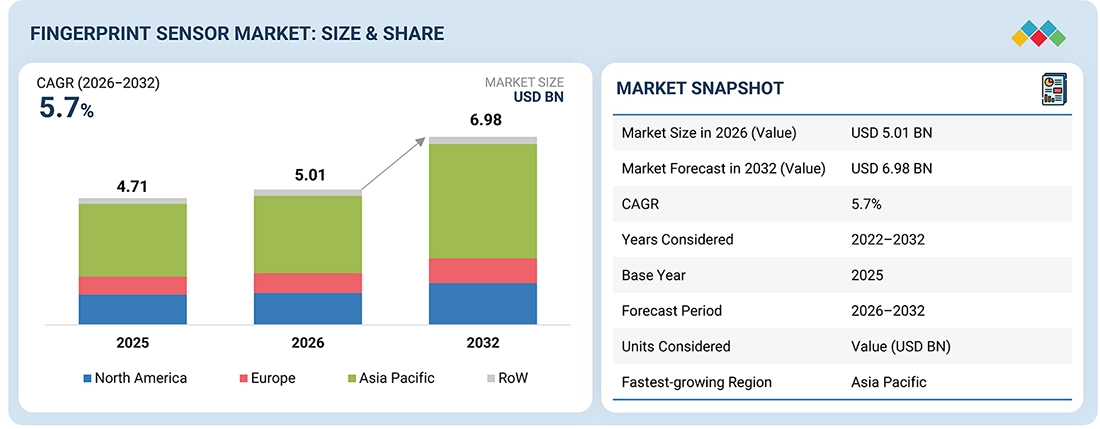
Source: Secondary Research, Interviews with Experts, MarketsandMarkets Analysis
TRENDS & DISRUPTIONS IMPACTING CUSTOMERS' CUSTOMERS
The fingerprint sensor market trends is evolving beyond its traditional dependence on consumer electronics and is increasingly benefiting from new applications, technologies, and end-user ecosystems. While smartphones, laptops, banking and finance, government identification programs, healthcare, and defense applications continue to contribute significantly to current revenues, future growth is expected to be driven by emerging opportunities in IoT devices, smart homes, and connected digital ecosystems. Leading fingerprint sensor providers such as Shenzhen Goodix Technology Co., Ltd., Apple Inc., Fingerprint Cards AB, Egis Technology Inc., Qualcomm Technologies, Inc., and Synaptics Incorporated are expanding their technology capabilities to address the growing demand for secure biometric authentication across diverse industries. Their solutions are increasingly being adopted by smart device manufacturers, industrial IoT providers, access control system vendors, and biometric smart card providers. As biometric authentication becomes more deeply integrated into digital services and connected environments, organizations are leveraging fingerprint sensing technologies to enable secure digital identities, reduce fraud and identity theft, facilitate seamless payments, strengthen privacy protection, and enhance customer trust. These evolving customer requirements are creating new revenue streams and long-term growth opportunities across the fingerprint sensor value chain.
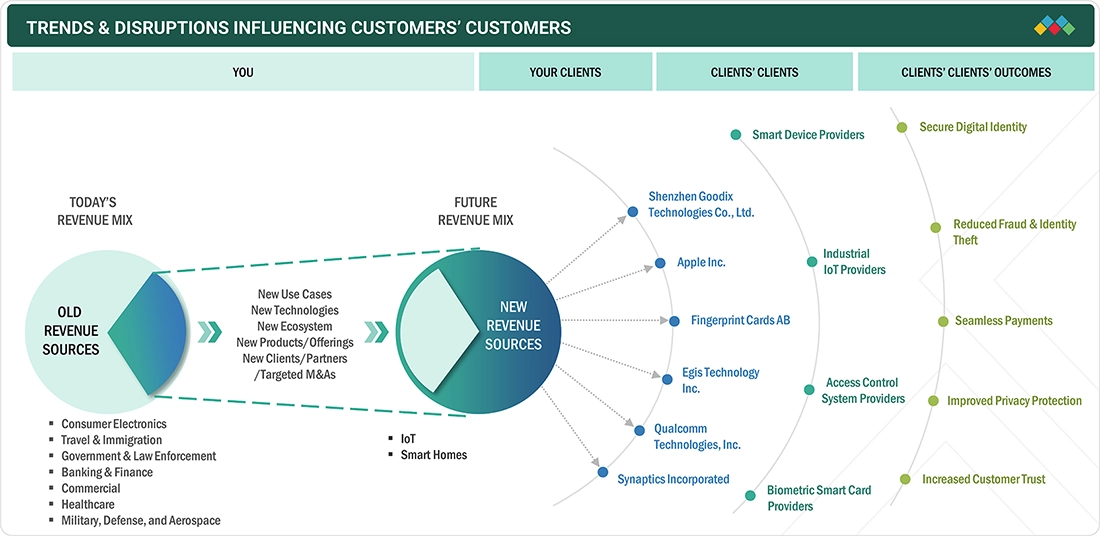
Source: Secondary Research, Interviews with Experts, MarketsandMarkets Analysis
FINGERPRINT SENSOR MARKET DYNAMICS

Level
-
Extensive use of fingerprint sensors in consumer electronic devices for biometric authentication

-
High adoption of biometrics in law enforcement and government applications for enhanced security


Level
-
Security threats pertaining to biometric data

-
Availability of substitute technologies such as face and iris recognition


Level
-
Emergence of biometric smart cards for BFSI applications

-
Integration of IoT into biometric solutions


Level
-
Performance limitations of fingerprint sensors

Source: Secondary Research, Interviews with Experts, MarketsandMarkets Analysis
Driver: Extensive use of fingerprint sensors in consumer electronic devices for biometric authentication
The widespread integration of fingerprint sensors in smartphones, tablets, laptops, and wearable devices is a major driver of market growth. Consumers increasingly prefer fingerprint-based authentication due to its convenience, speed, and enhanced security compared to traditional passwords and PINs. As device manufacturers continue to prioritize seamless and secure user experiences, the adoption of fingerprint sensing technologies is expected to remain strong.
Restraint: Security threats pertaining to biometric data
Concerns regarding the security and privacy of biometric data remain a key restraint for the fingerprint sensors market. Unauthorized access, data breaches, and potential misuse of stored biometric information can reduce user confidence and create regulatory challenges. As a result, vendors must continuously invest in advanced encryption, secure storage, and anti-spoofing technologies to address these concerns.
Opportunity: Emergence of biometric smart cards for BFSI applications
The growing adoption of biometric smart cards in banking, financial services, and insurance (BFSI) applications presents a significant market opportunity. These cards enhance transaction security by enabling fingerprint-based user verification, reducing fraud risks, and eliminating the need for PINs. The increasing demand for secure, contactless payment solutions is expected to accelerate the global deployment of biometric payment cards.
Challenge: Performance limitations of fingerprint sensors
Performance limitations such as reduced accuracy in wet, dirty, or damaged fingerprint conditions continue to challenge market adoption. Variations in environmental conditions and user characteristics can affect sensor reliability and authentication speed. Manufacturers are focusing on improving sensing technologies and algorithms to enhance accuracy, robustness, and overall user experience across diverse operating environments.
FINGERPRINT SENSOR MARKET SIZE, SHARE & GROWTH: COMMERCIAL USE CASES ACROSS INDUSTRIES
| COMPANY | USE CASE DESCRIPTION | BENEFITS |
|---|---|---|
 |
In-display optical and capacitive fingerprint sensors for smartphones, tablets, laptops, and IoT devices | Enables fast and secure biometric authentication, enhances user convenience, and supports seamless device access |
 |
Fingerprint sensing solutions for smartphones, payment cards, access control systems, and enterprise security applications | Improves identity verification, reduces fraud risks, and delivers reliable and convenient user authentication |
 |
Fingerprint sensors integrated into PCs, laptops, mobile devices, and enterprise authentication platforms | Enhances device security, supports password-free access, and improves user experience through accurate biometric recognition |
 |
Capacitive and optical fingerprint sensors for consumer electronics, payment authentication, and access control systems | Provides high-accuracy fingerprint recognition, strengthens data protection, and enables secure digital transactions |
 |
Ultrasonic fingerprint sensing solutions for premium smartphones and advanced mobile devices | Delivers superior authentication accuracy, improved spoof resistance, and secure in-display biometric verification under various operating conditions |
Logos and trademarks shown above are the property of their respective owners. Their use here is for informational and illustrative purposes only.
FINGERPRINT SENSOR MARKET ECOSYSTEM
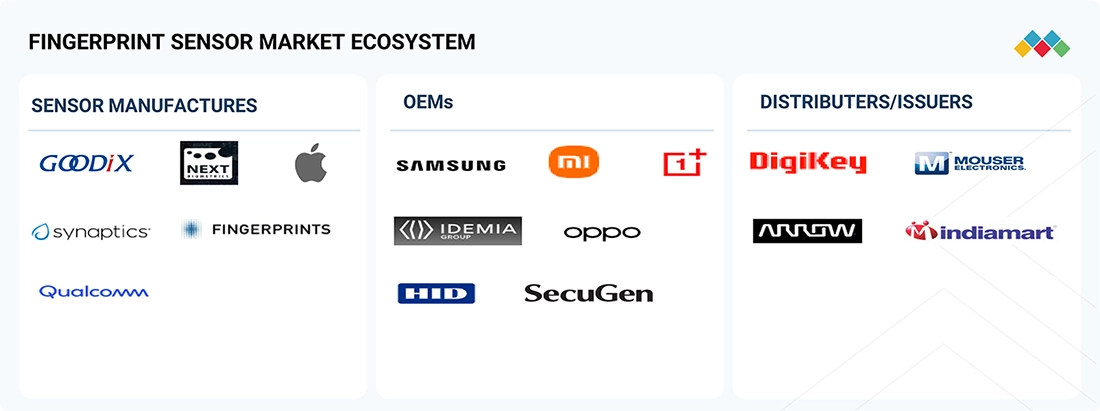
Logos and trademarks shown above are the property of their respective owners. Their use here is for informational and illustrative purposes only.
FINGERPRINT SENSOR MARKET SEGMENTS
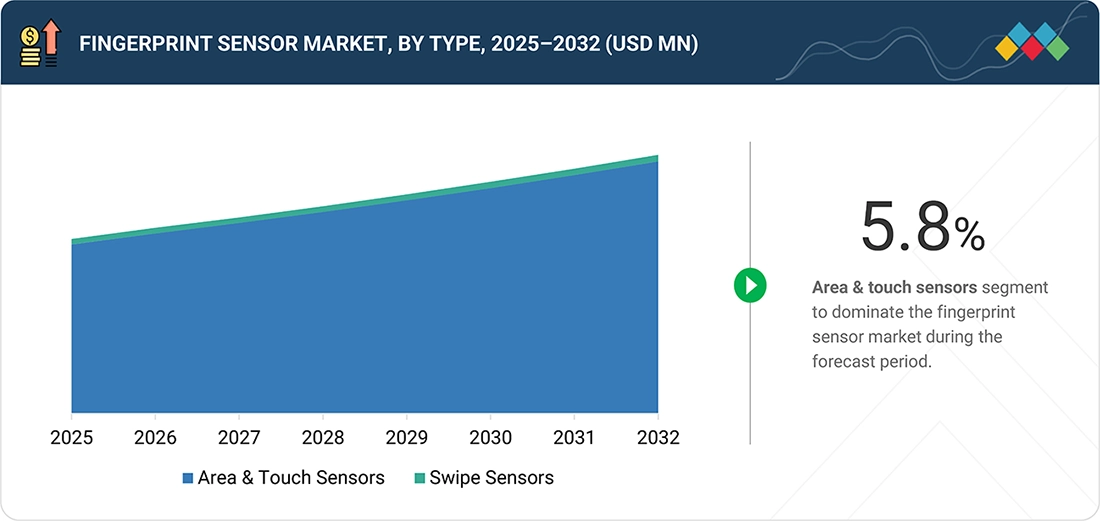
Source: Secondary Research, Interviews with Experts, MarketsandMarkets Analysis
Fingerprint Sensor Market, by Type
The area & touch Sensors segment is expected to account for the largest share of the fingerprint sensor market size due to its widespread adoption across smartphones, laptops, tablets, access control systems, and other consumer electronic devices. These sensors offer a strong balance of accuracy, reliability, ease of integration, and cost-effectiveness, making them the preferred choice for large-scale biometric authentication applications. Growing demand for secure and convenient user authentication continues to support the segment's market leadership.
Fingerprint Sensor Market, by Technology
The capacitive technology segment is projected to hold the largest market share owing to its high accuracy, fast response time, low power consumption, and cost-effectiveness. Capacitive fingerprint sensors are extensively used in smartphones, laptops, and access control devices, where reliable biometric authentication is essential. Continuous advancements in sensor design and performance are further strengthening the adoption of capacitive technology across multiple end-use applications.
Fingerprint Sensor Market, by Sensor Technology
The 2D sensor technology segment is expected to dominate the market due to its widespread deployment in consumer electronics and security applications. These sensors provide reliable fingerprint recognition while offering lower manufacturing costs and easier integration compared to advanced alternatives. Their established presence across a broad range of devices continues to drive demand and maintain their leading market position.
Fingerprint Sensor Market, by End-use Application
The consumer electronics segment is expected to account for the largest share of the fingerprint sensor market share , driven by the extensive use of fingerprint authentication in smartphones, tablets, laptops, wearables, and other connected devices. Increasing consumer demand for secure device access, digital payments, and seamless user experiences is encouraging manufacturers to integrate advanced fingerprint sensing technologies into their products, supporting sustained segment growth.
FINGERPRINT SENSOR MARKET BY REGION
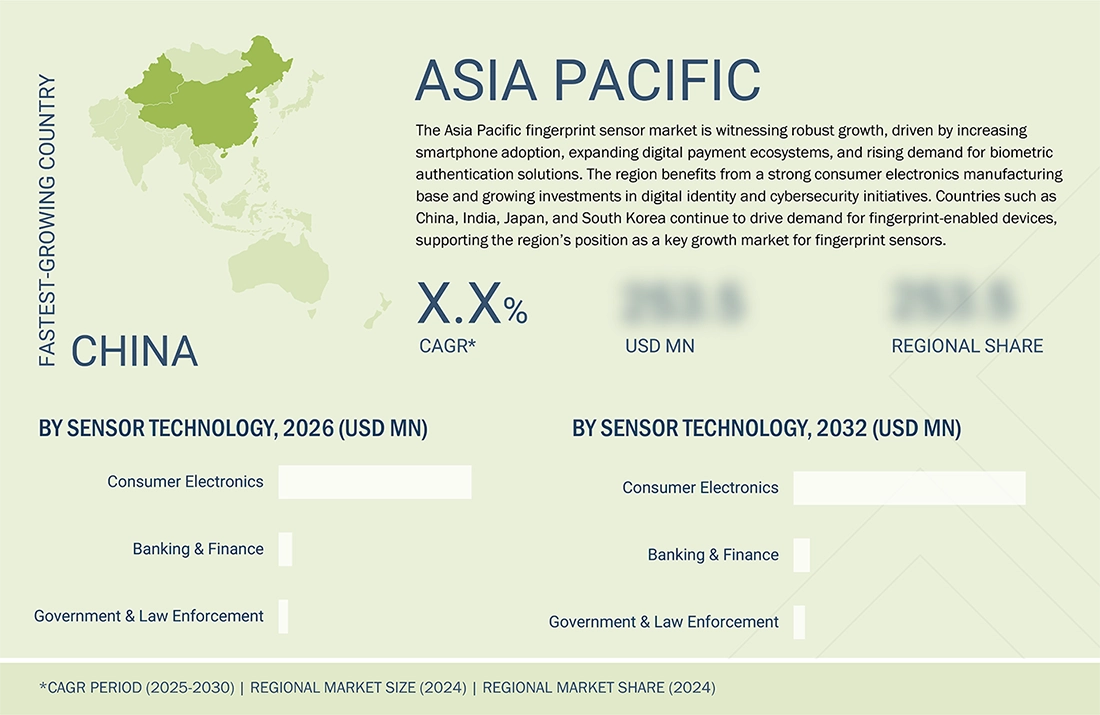
Asia Pacific to be fastest-growing region in fingerprint sensor market during forecast period
Asia Pacific is expected to register the highest growth rate in the fingerprint sensor industry during the forecast period, driven by increasing smartphone penetration, rapid expansion of digital payment platforms, and growing adoption of biometric authentication technologies. The region benefits from a strong consumer electronics manufacturing ecosystem and the presence of major fingerprint sensor suppliers and semiconductor companies. In addition, government-led digital identity initiatives, rising cybersecurity awareness, and increasing demand for secure access control and financial authentication solutions are accelerating market growth across countries such as China, India, Japan, and South Korea.
FINGERPRINT SENSOR MARKET SIZE, SHARE & GROWTH: COMPANY EVALUATION MATRIX
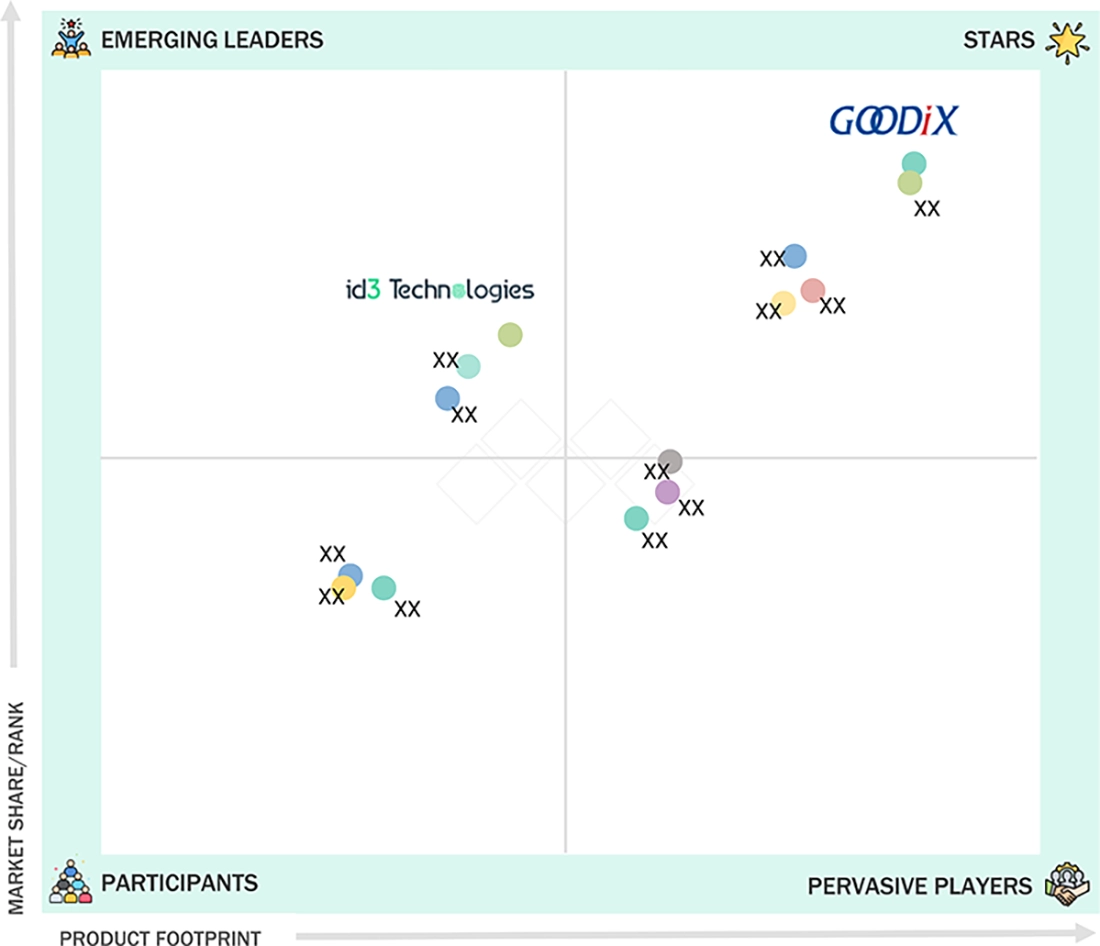
The fingerprint sensor companies comprises a mix of established industry leaders, specialized technology providers, and emerging innovators competing across a wide range of biometric authentication applications. Companies in the Stars quadrant demonstrate strong market presence, extensive product portfolios, and broad industry reach, enabling them to maintain a competitive edge through continuous innovation and strategic partnerships. Shenzhen Goodix Technology Co., Ltd. (China) is recognized as a leading player in this category. Meanwhile, emerging companies such as id3 Technologies are strengthening their market position through product innovation, niche expertise, and expanding customer relationships. As demand for secure biometric authentication continues to grow across consumer electronics, financial services, access control, and digital identity applications, market participants are increasingly focusing on technological advancements, portfolio diversification, and strategic collaborations to enhance their competitive positioning.
Source: Secondary Research, Interviews with Experts, MarketsandMarkets Analysis
KEY MARKET PLAYERS
- Shenzhen Goodix Technology Co., Ltd. (China)
- Fingerprint Cards AB (Sweden)
- Synaptics Incorporated (US),
- Egis Technology Inc. (Taiwan)
- Qualcomm Technologies (US)
- Apple Inc. (US)
- CrucialTec (South Korea)
- NEXT Biometrics (Norway)
- Novatek Microelectronics Corp. (Norway)
- Qtechnology (China)
WHAT IS IN IT FOR YOU: FINGERPRINT SENSOR MARKET SIZE, SHARE & GROWTH REPORT CONTENT GUIDE
DELIVERED CUSTOMIZATIONS
We have successfully delivered the following deep-dive customizations:
| CLIENT REQUEST | CUSTOMIZATION DELIVERED | VALUE ADDS |
|---|---|---|
| Asia Pacific Smartphone OEM |
|
|
| Global Consumer Electronics Manufacturer |
|
|
| Digital Identity & Access Control Provider |
|
|
| Biometric Solutions Distributor/System Integrator |
|
|
| Private Equity Firm/Strategic Investor |
|
|
RECENT DEVELOPMENTS IN FINGERPRINT SENSOR MARKET
- July 2026: NEXT Biometrics announced a strategic shift toward Anywhere-on-Display fingerprint authentication, adapting its next-generation biometric technology to enable fingerprint authentication from virtually anywhere on a device display. The company identified this capability as a major commercial opportunity and a central focus of its future product strategy. The development directly advances fingerprint-sensor technology toward more flexible, display-integrated biometric authentication.
- June 2026 : Microsoft introduced Project Solara, a chip-to-cloud platform for agent-first enterprise devices, including a wearable AI Badge reference design. The AI Badge combines a touchscreen, camera, microphone array, fingerprint authentication, and wireless connectivity to bring AI agents directly into frontline workflows. It can capture and transcribe conversations, interpret visual information, and provide hands-free assistance through Microsoft’s cloud-based AI services. Project Solara is being piloted with enterprise partners across healthcare, retail, and field-service applications. The initiative positions Microsoft to extend AI beyond PCs and smartphones into practical, wearable workplace devices.
- March 2026: Fingerprint Cards AB and Precise Biometrics announced a proposed merger to create a combined biometrics and identity company. Fingerprints brings fingerprint sensors and related biometric technology to the combination, while Precise contributes biometric software and identity-management capabilities. The transaction is directly relevant to the fingerprint-sensor industry because it consolidates Fingerprints' sensor technology with complementary biometric software capabilities and forms part of the company's strategic repositioning.
- November 2025 : Synaptics and Qualcomm entered a strategic engagement focused on advancing touch and fingerprint sensor technology for mobile and compute platforms. The announcement explicitly references fingerprint sensor technology and integration with Qualcomm 3D Sonic fingerprint technologies.
Table of Contents
 Exclusive indicates content/data unique to MarketsandMarkets and not available with any competitors.
Methodology
The research study involved four major activities in estimating the fingerprint sensor market size. Exhaustive secondary research has been done to collect important information about the market and peer markets. The next step has been to validate these findings and assumptions and size them with the help of primary research with industry experts across the value chain. Both top-down and bottom-up approaches have been used to estimate the market size. Post which, the market breakdown and data triangulation have been adopted to estimate the market sizes of segments and subsegments.
Secondary Research
The market size of the companies offering fingerprint sensors to various end users was arrived at based on the secondary data available through paid and unpaid sources and by analyzing the product portfolios of major companies in the ecosystem and rating the companies based on their performance and quality. In the secondary research process, various sources were referred to identify and collect information for the study. The secondary sources include annual reports, press releases, investor presentations of companies, white papers, certified publications, and articles from recognized associations and government publishing sources. Several journals and industry organizations, such as the International Biometrics + Identity Association (IBIA), FIDO Alliance, Biometrics Institute, IEEE Biometrics Council, Semiconductor Industry Association (SIA), and the International Association for Pattern Recognition (IAPR), were also referred to.
Secondary research was mainly used to obtain critical information about industry insights, the market’s monetary chain, the overall pool of key players, market classification and segmentation according to industry trends to the bottom-most level, regional markets, and key developments from both market-oriented and technology-oriented perspectives.
Primary Research
In the primary research process, various sources from the supply and demand sides were interviewed to obtain qualitative and quantitative information for the report, such as chief experience officers (CXOs), vice presidents (VPs), directors from business development, marketing, and product development/innovation teams, and related key executives from fingerprint sensor vendors, system integrators, professional and managed service providers, industry associations, independent consultants, and key opinion leaders.
Primary interviews were conducted to gather insights, such as market statistics, data on revenue collected from platforms and services, market breakups, market size estimations, market forecasts, and data triangulation. Stakeholders from the demand side, such as chief information officers (CIOs), chief finance officers (CFOs), chief strategy officers (CSOs), and the installation team of end users who use fingerprint sensors, were interviewed to understand buyers’ perspectives on suppliers, products, service providers, and their current usage of fingerprint sensors which is expected to affect the overall fingerprint sensor market growth.
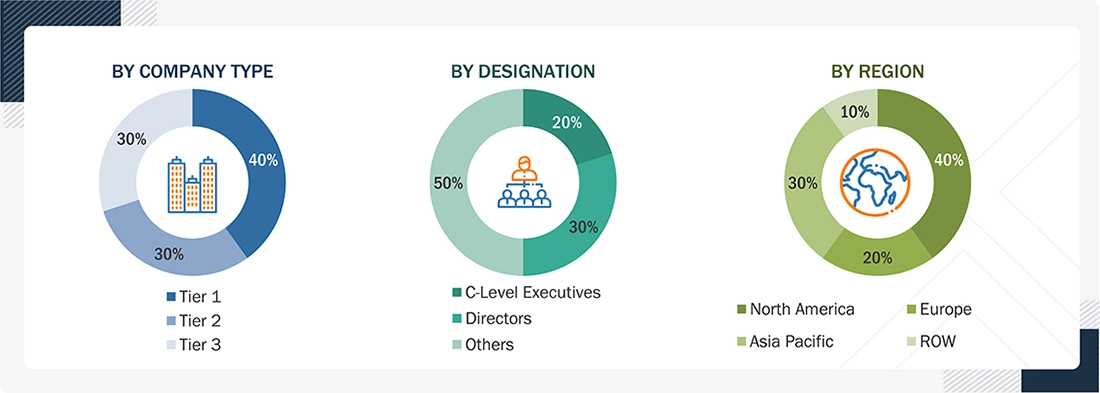
Note 1: Tier 1 companies have revenues over USD 1 billion; Tier 2 companies’ revenues range between USD 500 million and 1 billion; and Tier 3 companies have revenues of less than USD 500 million.
To know about the assumptions considered for the study, download the pdf brochure
Market Size Estimation
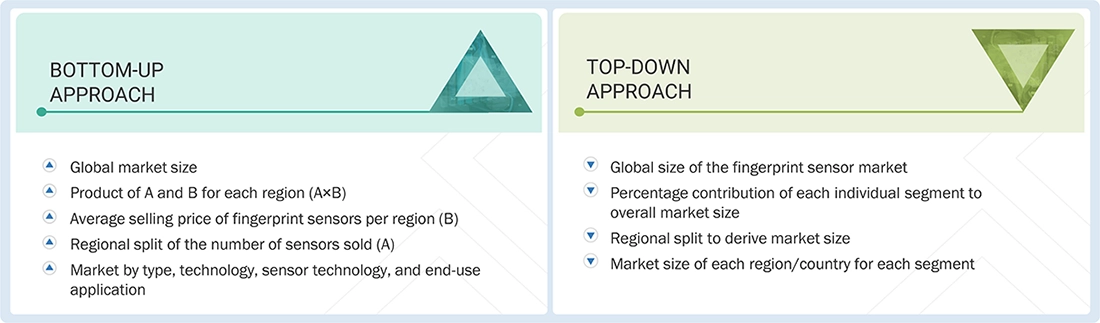
Multiple approaches were adopted to estimate and forecast the size of the fingerprint sensor market. The first approach involves estimating market size by summing up the revenue generated by companies through the sale of solutions.
Top-down and bottom-up approaches were used to estimate and validate the total size of the fingerprint sensor market. These methods were extensively used to estimate the size of various segments in the market. The research methodology used to evaluate the market size is listed below.
- Key players in the market have been identified through extensive secondary research.
- In terms of value, the industry’s supply chain and market size have been determined through primary and secondary research processes.
- All percentage shares, splits, and breakups have been determined using secondary sources and verified through primary sources.
Data Triangulation
After arriving at the overall market size from the above estimation process, the fingerprint sensor market has been split into several segments and subsegments. To complete the overall market engineering process and arrive at the exact statistics for all segments and subsegments, data triangulation and market breakdown procedures have been used, wherever applicable. The data has been triangulated by studying various factors and trends from both the demand and supply sides. The fingerprint sensor market size has been validated using top-down and bottom-up approaches.
Market Definition
A fingerprint sensor is an electronic component used to capture a digital image of the fingerprint pattern of a person, i.e., the ridges and valleys (minutiae) found on the surface tips of a human finger, to identify an individual. The captured image is called a live scan, and live scans are digitally processed to create a biometric template stored and used for matching the patterns. Since every person’s fingerprint is unique and different from any other in the world, it has become an ideal and popular identification method.
Key Stakeholders
- Smartphone original equipment manufacturers (OEMs), access control system providers, fingerprint scanner providers, and Internet of Things (IoT) device manufacturers
- Sensor manufacturers
- Smartcard providers
- Integrated device manufacturers
- Research organizations and consulting companies
- Subcomponent manufacturers
- Technology providers
- Sensor chip traders and distributors
- Electronic hardware equipment manufacturers
- Research institutes and organizations
Report Objectives
- To define, describe, and forecast the fingerprint sensor market, in terms of value, by technology, sensor technology, type, end-use application, and region
- To describe and forecast the fingerprint sensor market, by end-use application, in terms of volume
- To forecast the size of the market segments for four major regions—North America, Europe, Asia Pacific, and the Rest of the World (RoW)
- To explain the different materials used in fingerprint sensors, key standards for fingerprint sensors, and various products that use fingerprint sensors
- To provide detailed information regarding the major factors influencing the growth of the market (drivers, restraints, opportunities, and challenges)
- To offer an ecosystem analysis, case study analysis, patent analysis, technology analysis, pricing analysis, Porter’s Five Forces analysis, and regulations pertaining to the market
- To give a detailed overview of the value chain of the fingerprint sensor market ecosystem
- To strategically analyze micromarkets with respect to individual growth trends, prospects, and contributions to the total market
- To strategically profile the key players and comprehensively analyze their market shares and core competencies
- To analyze the opportunities in the market for stakeholders and describe the competitive landscape of the market
- To study competitive developments such as collaborations, partnerships, product developments, and acquisitions in the market
Available customizations:
With the given market data, MarketsandMarkets offers customizations per the company’s specific needs. The following customization options are available for the report:
Company Information
- Detailed analysis and profiling of additional market players (up to 5)
Key Questions Addressed by the Report
What is the current size of the global fingerprint sensor market?
According to the MarketsandMarkets report, the global fingerprint sensor market is valued at USD 5.01 billion in 2026 and is projected to reach USD 6.98 billion by 2032.
What is the expected growth rate of the fingerprint sensor market?
The market is expected to grow at a CAGR of 5.7% during 2026–2032, driven by increasing demand for biometric authentication across multiple industries.
What are the major growth drivers for the fingerprint sensor market?
Key growth drivers include the increasing adoption of smartphones, laptops, tablets, wearable devices, digital payments, IoT devices, and rising cybersecurity concerns, along with advancements in ultrasonic and optical fingerprint technologies.
Which companies are leading the fingerprint sensor market?
Major companies include Shenzhen Goodix Technology Co., Ltd., Fingerprint Cards AB, Synaptics Incorporated, Egis Technology Inc., Qualcomm Technologies, Apple Inc., CrucialTec, NEXT Biometrics, Novatek Microelectronics, and Qtechnology.
Which region dominates the fingerprint sensor market?
Asia Pacific is expected to register the highest CAGR of 6.7% during 2026–2032, supported by strong consumer electronics manufacturing and increasing biometric adoption.
Which fingerprint sensor technology is expected to grow the fastest?
The Ultrasonic fingerprint sensor segment is projected to record the highest CAGR of 11.9% during the forecast period due to higher accuracy and better performance under-display.
Which fingerprint sensor type holds the largest market share?
Area & Touch Sensors are expected to dominate the market with approximately 97.0% market share in 2026, owing to their widespread use in smartphones and consumer electronics.
Which sensor technology segment accounts for the largest share?
The 2D fingerprint sensor segment is expected to account for 93.1% of the market in 2026, although demand for 3D sensing technologies continues to increase.
Which industries are creating the highest demand for fingerprint sensors?
Major end-use industries include consumer electronics, banking & finance, healthcare, government & law enforcement, defense, aerospace, smart homes, and commercial applications. Consumer electronics remains the largest contributor to market demand.


Personalize This Research
- Triangulate with your Own Data
- Get Data as per your Format and Definition
- Gain a Deeper Dive on a Specific Application, Geography, Customer or Competitor
- Any level of Personalization
Let Us Help You
- What are the Known and Unknown Adjacencies Impacting the Fingerprint Sensor Market
- What will your New Revenue Sources be?
- Who will be your Top Customer; what will make them switch?
- Defend your Market Share or Win Competitors
- Get a Scorecard for Target Partners

Custom Market Research Services
We Will Customise The Research For You, In Case The Report Listed Above Does Not Meet With Your Requirements
Get 10% Free CustomisationTESTIMONIALS

Tetsuya Ohhira
Business Development Manager-Technology Business
Nikon Corporation,
Leading Japanese MNC specializing in optics and imaging productswww.nikon.com
MarketsandMarkets™ response
is quick. Their attitude is flexible and positive. Analyst Insights are globally considered and
significant. Client Services quickly respond to our inquiry and demand. Their wide range of global
surveys help us make our strategic plan.
We hope Knowledge Store will be easier to search
for a report.
VP - Marketing & Business Development
Leading Provider of Process Control Solutions
We engaged with MarketsandMarkets on a study to perform an analysis and recommend a Go-To-Market strategy for metrology and process control in the semiconductor market. The study was tailored to our targets and needs with well-defined milestones. Our overall experience with the MarketsandMarkets team was very good throughout the project in all aspects including the analysis methodologies used, the quality and depth of primary and secondary data sets, the professionalism and flexibility of the team and the ability to meet the target schedule and milestones. We want to thank MarketsandMarkets team for a job well done.
- Canada Fingerprint Sensor Market
- Mexico Fingerprint Sensor Market
- US Fingerprint Sensor Market
- France Fingerprint Sensor Market
- Germany Fingerprint Sensor Market
- Italy Fingerprint Sensor Market
- UK Fingerprint Sensor Market
- China Fingerprint Sensor Market
- India Fingerprint Sensor Market
- Japan Fingerprint Sensor Market
- South Korea Fingerprint Sensor Market
- Rest Of Europe Fingerprint Sensor Market
- Rest Of Asia Pacific Fingerprint Sensor Market
Growth opportunities and latent adjacency in Fingerprint Sensor Market






Dennis
Apr, 2026
How will the continued integration of fingerprint sensors in consumer electronics (e.g., smartphones, wearables) impact long-term revenue growth and margin stability?.
Aaron
Apr, 2026
How do increasing concerns around biometric data security and privacy impact adoption rates, and what investments are companies making to mitigate these risks?.
Alexandra
Jan, 2019
I would be very grateful if you could provide me more detailed information about technology of fingerprint sensors, technical parameters of sensors, prices of sensors, number of sales, main vendors and types of sensors, features of sensors, common problems of production and statistics on sensors' byers. .
jk
Dec, 2018
Currently, I am searching the finger print sensor tech and market trends. Can you provide us with the major market trends and opportunities for the fingerprint sensor market?.
naresh
Oct, 2019
In India day by day touch sensing market increased. I want to know, how much future potential available in India. .
anges.hsu
Sep, 2021
We focus on NB and peripheral devices, which have fingerprint devices with the next 5-year attach rate trend.wanted to know which type sensor attach rate trend in next 5 years..
jason
Sep, 2014
We are the leading providers of capacitive fingerprint sensors. I would like to understand the potential threats of these in the next 4-5 years. Also would like to understand the opportunities for this market. .
Ziyun
Aug, 2019
We're seeking for market reports about biometrics, fingerprint sensors, and palm print sensors. The contents including security and government applications would be preferred..