Medical Supplies Market

Medical Supplies Market by Type (Diagnostic Supplies, Dialysis, Disinfectants, Catheters, Radiology, PPE, Consumables), Application (Urology, Cardiology, Radiology, IVD), Class of Medical Device (I, II & III), End User (Hospitals, Clinics & Physician Offices) - Global Forecast To 2031



MEDICAL SUPPLIES MARKET SIZE, SHARE & GROWTH SNAPSHOT
Source: Secondary Research, Interviews with Experts, MarketsandMarkets Analysis
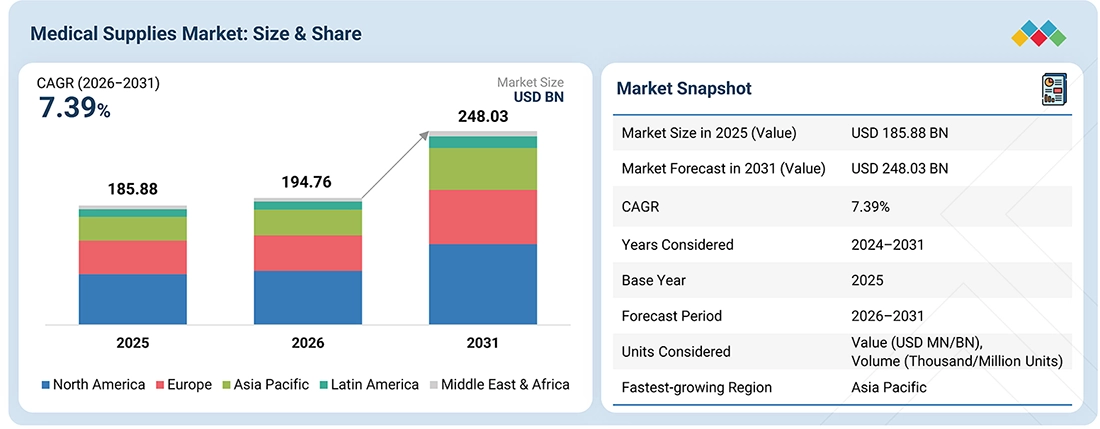
The global medical supplies market is projected to grow from USD 194.76 billion in 2026 to USD 248.03 billion by 2031, at a CAGR of 7.39% during the forecast period. The market was valued at USD 185.88 billion in 2025. The market is driven by rising healthcare spending, increasing procedure volumes, and growing demand for essential medical consumables across healthcare settings.
KEY TAKEAWAYS
-
MARKET SNAPSHOT:
Base Year Market Size (2025): USD 185.88 Billion
Current Market Size (2026): USD 194.76 Billion
Forecast Market Size (2031): USD 248.03 Billion
CAGR (2026–2031): 7.39% -
SEGMENT LEADERSHIP:
Regional Leader: Asia Pacific is expected to register the highest CAGR of 10.2% during the forecast period.
Type Leader: Infusion & injectable supplies segment will grow at the highest CAGR of 9.0% during the forecast period.
End User Leader: Hospitals led the medical supplies market, driven by rising patient admissions and increasing demand for continuous medical and surgical care. -
MARKET OUTLOOK & COMPETITIVE LANDSCAPE:
Becton, Dickinson and Company; Johnson & Johnson/J&J MedTech; Abbott; Medtronic, and Baxter were identified as Star players in the medical supplies market due to their strong focus on innovation, extensive product portfolios, broad industry presence, and robust operational and financial capabilities.
Hamilton Medical, Invacare Corporation, and Fresenius Medical Care AG are among a few key startups and SMEs due to their strong product portfolio and business strategies.
The medical supplies market is experiencing steady growth, driven by rising demand for surgical instruments, wound care products, diagnostic supplies, and disposable medical equipment. Strategic partnerships, investments in advanced healthcare technologies, and innovations in sustainable medical products are reshaping the industry.
TRENDS & DISRUPTIONS IMPACTING CUSTOMERS' CUSTOMERS
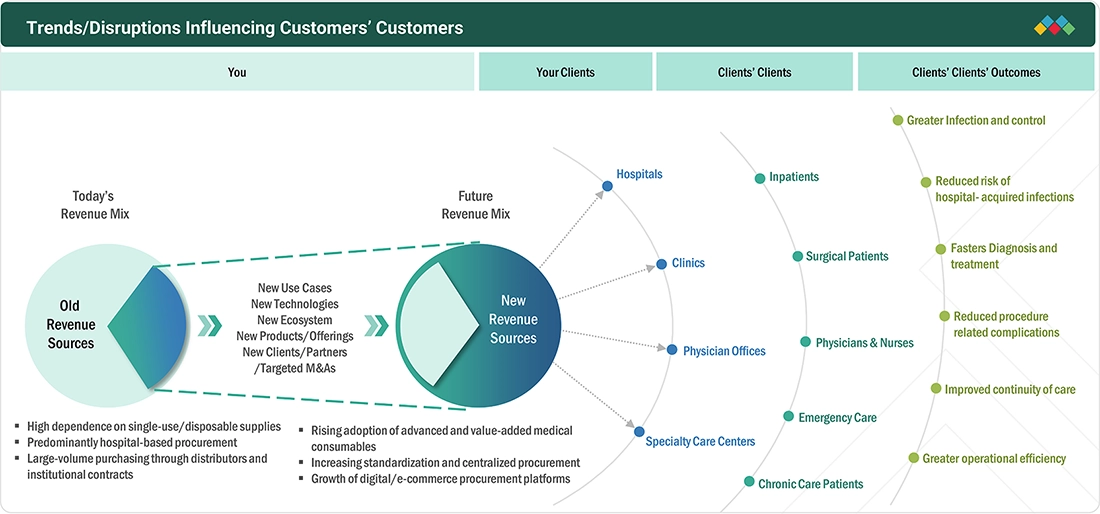
The medical supplies industry is shifting towards more efficient, technology-driven, and patient-focused solutions across hospitals, clinics, outpatient centers, and home healthcare. Increased healthcare use, surgical procedures, chronic conditions, and infection control are fueling demand. Advances in wound care, surgical products, infection prevention, smart supplies, and eco-friendly materials are enhancing patient safety and operational efficiency. As providers emphasize cost reduction, supply chain resilience, and quality, manufacturers are investing in automation, digital inventory management, strategic sourcing, and diverse supply networks. The rise of outpatient and home-based care further boosts the need for portable, single-use, and user-friendly medical supplies.
Source: Secondary Research, Interviews with Experts, MarketsandMarkets Analysis
MARKET DYNAMICS

Level
-
Rising prevalence of chronic diseases and aging population

-
Increasing healthcare expenditure and hospital expansion


Level
-
High price sensitivity and procurement constraints

-
High dependence on imported components and technologies


Level
-
Expansion of local manufacturing and supply-chain localization

-
Rising adoption of AI, connected, and digital medical devices


Level
-
Complex regulatory requirements and lengthy approval processes

-
Supply-chain disruptions and component shortages

Source: Secondary Research, Interviews with Experts, MarketsandMarkets Analysis
Driver: Increasing healthcare expenditure and hospital expansion
Rising healthcare costs, new hospital constructions, expansion of diagnostic centers, and broader access to healthcare are fueling the demand for medical supplies such as surgical consumables, gloves, syringes, wound-care items, catheters, diagnostic materials, and infection-control products. In emerging markets, growth beyond major urban centers into Tier II, Tier III, and rural healthcare facilities is further increasing demand. For example, India's rapidly growing medical-device industry benefits from investments in healthcare infrastructure and a rising need for diagnostics, consumables, and advanced medical technologies.
Restraint: High price sensitivity and procurement constraints
Medical supplies are highly price-sensitive, especially in public hospitals and emerging economies, where healthcare budgets remain constrained. Government procurement is often conducted through competitive tenders, which pressure suppliers to offer low prices while maintaining quality and regulatory compliance. Import duties, currency fluctuations, transportation costs, and long procurement cycles can further increase the cost of imported supplies. Consequently, manufacturers need to balance affordability with product quality, reliability, and regulatory requirements.
Opportunity: Expansion of local manufacturing and supply-chain localization
Governments are increasingly encouraging local production to improve supply security, reduce import dependence, and strengthen healthcare resilience. Opportunities span medical consumables, diagnostic kits, surgical instruments, PPE, catheters, dialysis products, wound-care products, and other essential supplies. Localization can also shorten lead times and transportation costs while enabling manufacturers to tailor products to local healthcare needs.
Challenge: Supply-chain disruptions and limited distribution infrastructure
Medical-supply companies operating in emerging economies face challenges stemming from fragmented distribution networks, limited transportation infrastructure, inventory management, demand forecasting, and inconsistent availability of supplies in remote areas. Power, logistics, communications, and transport limitations can make it difficult to reliably deliver medical products, particularly to rural and underserved facilities. Companies therefore need resilient supply chains, regional distribution hubs, effective inventory management, and digital tools for demand forecasting and supply tracking.
MEDICAL SUPPLIES MARKET: COMMERCIAL USE CASES ACROSS INDUSTRIES
| COMPANY | USE CASE DESCRIPTION | BENEFITS |
|---|---|---|
 |
Provides a broad portfolio of medical supplies and devices, including syringes and needles, vascular access devices, injection systems, sharps containers, medication-preparation products, and infection-prevention solutions. BD also provides products for critical care, non-acute care, and drug-delivery applications. | Supports safe medication administration and vascular access, reduces the risk of needlestick injuries and healthcare-associated infections, improves clinical workflow, and helps healthcare providers standardize procedures and enhance patient and healthcare-worker safety |
 |
Provides medical supplies and surgical technologies across wound closure, surgical stapling, surgical instruments, surgical energy, antimicrobial dressings, biosurgery, orthopedics, cardiovascular, and other interventional applications | Enables surgeons to perform procedures with greater precision, supports wound healing and bleeding management, helps reduce surgical complications, improves procedural efficiency, and supports better clinical outcomes across surgical and interventional care |
 |
Provides medical products across cardiovascular care, diabetes management, diagnostics testing, and other healthcare applications. Its portfolio includes medical devices, cardiovascular technologies, FreeStyle Libre continuous glucose monitoring systems, and diagnostic instruments and solutions for hospitals, laboratories, blood banks, and clinics | Enables continuous disease monitoring, supports early and accurate diagnosis, improves management of chronic conditions, assists clinicians in treatment decisions, and enhances patient monitoring and personalized care |
 |
Offers a broad portfolio of medical supplies, devices, and technologies spanning cardiovascular care, advanced surgery, patient monitoring, respiratory care, diabetes, renal care, gastrointestinal procedures, spinal and orthopedic care, surgical navigation, wound closure, and other specialties. | Supports minimally invasive and complex procedures, improves monitoring and treatment delivery, enhances surgical precision, facilitates cardiovascular and diabetes management, and helps healthcare providers improve clinical efficiency and patient outcomes |
 |
Provides medical products and technologies across infusion therapy, IV solutions, clinical nutrition, diagnostics and examination, respiratory therapy, surgical equipment, patient mobility, care communications, and hospital pharmaceuticals. Its portfolio supports hospitals, physician offices, pharmacies, and home-care settings | Enables safe and efficient infusion and medication delivery, supports patient monitoring and clinical decision-making, improves hospital workflow, enhances patient safety and mobility, and supports care delivery across hospital and home settings |
Logos and trademarks shown above are the property of their respective owners. Their use here is for informational and illustrative purposes only.
MARKET ECOSYSTEM
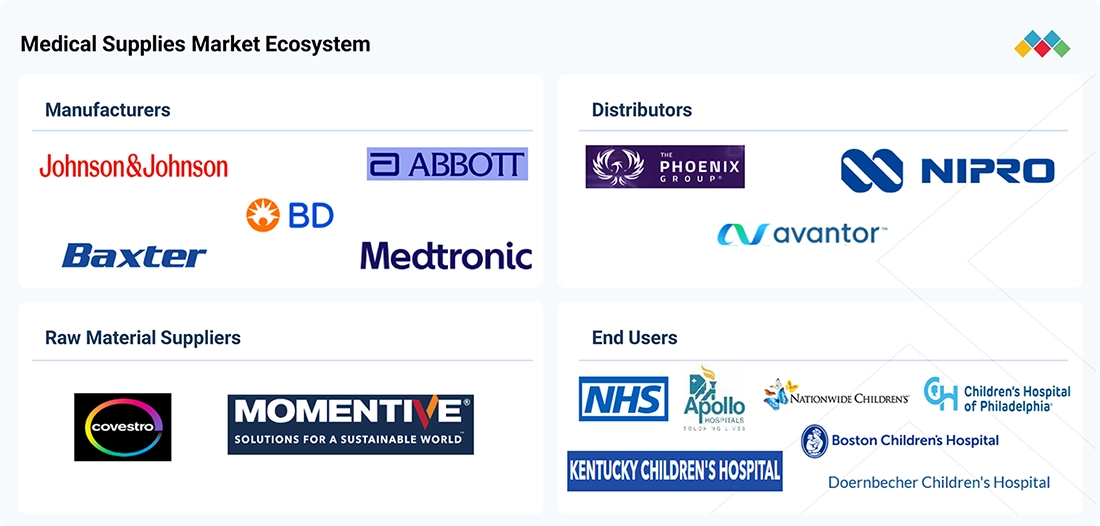
The medical supplies market ecosystem includes manufacturers, raw material suppliers, contract manufacturers, sterilization and packaging providers, distributors, wholesalers, healthcare procurement entities, regulatory bodies, and healthcare providers. It covers supplies like surgical and wound care products, syringes, needles, catheters, infusion and injection supplies, PPE, diagnostic items, sterilization products, respiratory and intubation supplies, and other disposables and patient-care items. These supports hospitals, clinics, surgical centers, labs, long-term care, home healthcare, and public health. The value chain involves raw material sourcing, manufacturing, testing, sterilization, packaging, inventory, distribution, and procurement, with a focus on quality, compliance, supply, and cost. Distributors and wholesalers ensure timely product availability to healthcare facilities. The market benefits from higher healthcare spending, more surgeries and diagnostics, infection control, chronic disease rise, hospital growth, and outpatient/home care shift. Digital procurement, inventory tech, standard purchasing, and resilient supply chains boost product availability and efficiency.
Logos and trademarks shown above are the property of their respective owners. Their use here is for informational and illustrative purposes only.
MARKET SEGMENTS
Source: Secondary Research, Interviews with Experts, MarketsandMarkets Analysis
Medical Supplies Market, by Type
The medical supplies market is segmented by type into diagnostic supplies, dialysis consumables, wound care, radiology, disinfectants, infusion and injectable supplies, intubation and ventilation supplies, PPE, sterilization, catheters, sleep apnea, surgical supplies, and others. Diagnostic supplies include blood and sample collection products, while dialysis supplies consist of peritoneal and hemodialysis. Wound care covers advanced and traditional dressings, and disinfectants include hand, skin, surface, and instrument disinfectants. Infusion, injectable supplies, intubation, ventilation supplies, and PPE support medication administration, respiratory care, and infection prevention. Catheters are cardiovascular, intravenous, urological, specialty, and neurovascular. Surgical supplies include drapes, gowns, gloves, sutures, blades, procedure kits, and other products. The market’s growth is driven by high demand for disposables, increasing surgical and dialysis procedures, rising healthcare spending, infection prevention needs, and expanding hospital and outpatient infrastructure.
Medical Supplies Market, by End User
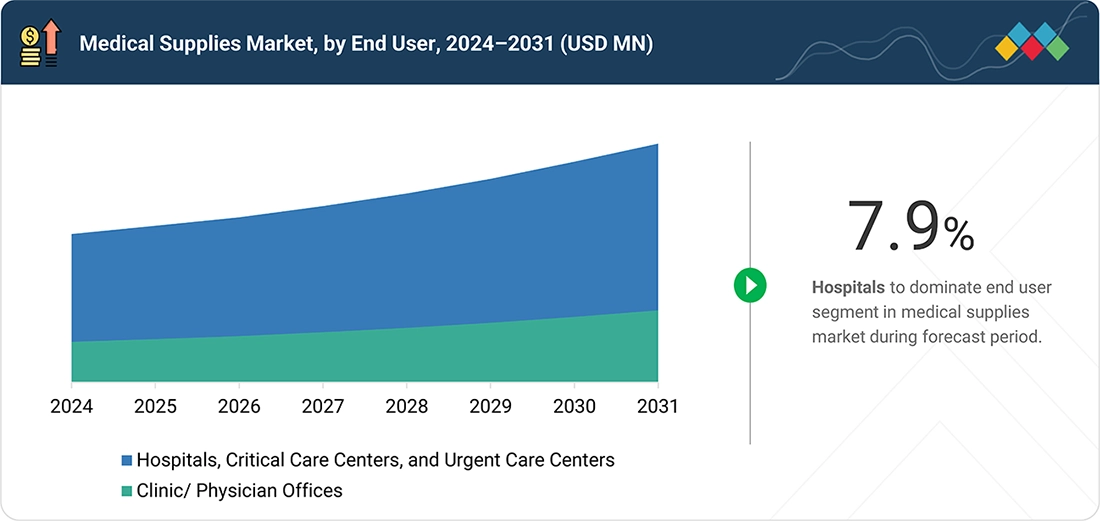
The Medical Supplies market is segmented by end user into hospitals, clinics/physician offices, and other end users. Hospitals dominate due to high surgical, emergency, and routine procedures, creating high demand for supplies. Clinics and physician offices also form an important segment, driven by increased use of disposable products and wound care in outpatient and primary care. Other end users, such as ambulatory care, home healthcare, nursing, and long-term care facilities, are seeing rising demand as outpatient and home-based healthcare grow.
REGION
Healthcare Infrastructure Expansion Drives Growth in the Asia Pacific Medical Supplies Market
The medical supplies market across Asia Pacific is rapidly expanding, driven by rising healthcare spending, growing patient volumes, increasing demand for surgical and diagnostic procedures, and government initiatives to strengthen healthcare infrastructure. Countries such as China, India, Japan, South Korea, and Australia are investing significantly to expand hospitals, clinics, and healthcare facilities and to improve access to quality medical care. The development of new healthcare facilities and the modernization of existing infrastructure are increasing demand for surgical supplies, wound care products, syringes and needles, medical gloves, catheters, and other disposable medical supplies. In addition, the growing adoption of minimally invasive procedures, a greater focus on infection prevention and control, and the expansion of healthcare services into underserved and rural areas are further supporting the uptake of medical supplies across the region.
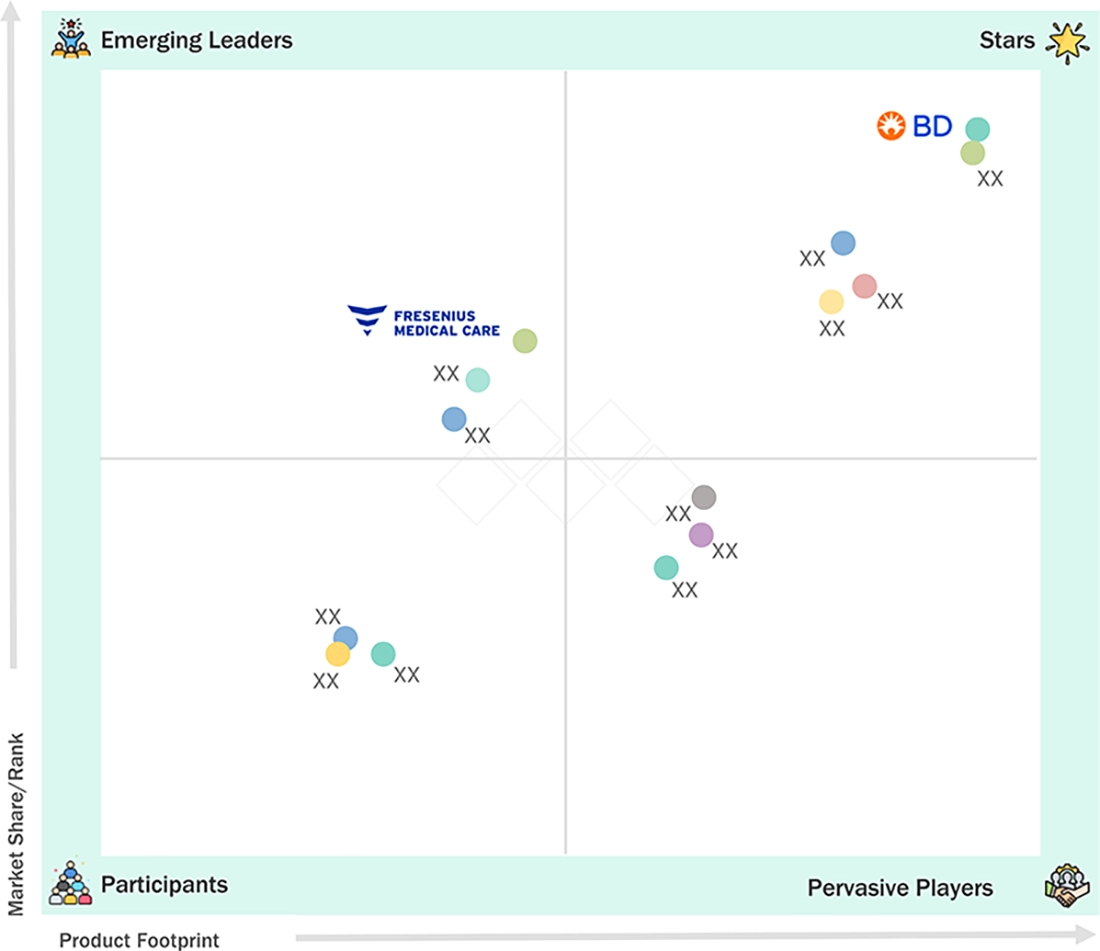
MEDICAL SUPPLIES MARKET: COMPANY EVALUATION MATRIX
In the medical supplies market, BD (Star Player) leads with its broad portfolio of medical consumables and procedural products, while Fresenius Medical Care AG (Germany) is strengthening its position with an extensive range of medical-surgical supplies and integrated healthcare solutions.
Source: Secondary Research, Interviews with Experts, MarketsandMarkets Analysis
KEY MARKET PLAYERS
- Medtronic plc (Ireland)
- Cardinal Health (US)
- BD (US)
- Johnson & Johnson Private Limited (US)
- B. Braun Melsungen AG (Germany)
- Boston Scientific Corporation (US)
- Thermo Fisher Scientific Inc. (US)
- Baxter (US)
- 3M (US)
- Smith & Nephew (UK)
- Convatec Inc. (UK)
- Abbott (US)
- Merit Medical Systems (US)
- Stryker (US)
- Terumo Corporation (Japan)
- Teleflex Incorporated (US)
MARKET SCOPE
| REPORT METRIC | DETAILS |
|---|---|
| Market Size in 2025 (Value) | USD 185.88 Billion |
| Market Forecast in 2026 (Value) | USD 194.76 Billion |
| Market Forecast in 2031 (Value) | USD 248.03 Billion |
| Growth Rate | CAGR of 7.39% from 2026-2031 |
| Years Considered | 2024-2031 |
| Base Year | 2025 |
| Forecast Period | 2026-2031 |
| Units Considered | Value (USD Million/Billion), Volume (Thousand Tests) |
| Report Coverage | Revenue forecast, company ranking, competitive landscape, growth factors, and trends |
| Segments Covered |
|
| Regions Covered | North America, Asia Pacific, Europe, Latin America, Middle East & Africa |
WHAT IS IN IT FOR YOU: MEDICAL SUPPLIES MARKET REPORT CONTENT GUIDE
DELIVERED CUSTOMIZATIONS
We have successfully delivered the following deep-dive customizations:
| CLIENT REQUEST | CUSTOMIZATION DELIVERED | VALUE ADDS |
|---|---|---|
| Product Analysis | Comparative analysis of medical supplies by product type, including diagnostic supplies, dialysis consumables, wound care consumables, radiology consumables, disinfectants, infusion & injectable supplies, intubation & ventilation supplies, personal protective equipment, sterilization consumables, catheters, sleep apnea supplies, surgical supplies, and other medical supplies, along with evaluation across hospitals, clinics/physician offices, diagnostic centers, ambulatory care settings, and other healthcare facilities | Assessment of product demand and adoption through parameters such as product utilization, clinical applications, material composition, disposable versus reusable products, infection-control requirements, technological advancements, product quality, safety standards, regulatory approvals, cost-effectiveness, supply availability, and procurement trends to support optimal product portfolio selection and market opportunity assessment |
| Company Information | Detailed profiles of leading global and regional medical supplies manufacturers and suppliers, including Medtronic, B. Braun, BD (Becton, Dickinson and Company), Cardinal Health, Stryker, Boston Scientific, 3M, Johnson & Johnson, Baxter, Abbott, Terumo, Smith+Nephew, Mölnlycke Health Care, Owens & Minor, and Teleflex, covering product portfolios, medical supply categories, manufacturing capabilities, distribution networks, strategic initiatives, partnerships, acquisitions, regulatory approvals, product launches, and recent developments | Competitive benchmarking across key players highlighting positioning by product category, geographic reach, manufacturing and distribution capabilities, supply-chain strength, product innovation, pricing strategies, regulatory compliance, hospital procurement relationships, strategic collaborations, and focus across wound care, surgical supplies, infection control, diagnostic supplies, infusion products, and other high-growth segments |
| Geographic Analysis | In-depth assessment of the global medical supplies market across North America, Europe, Asia Pacific, Latin America, and the Middle East & Africa, with analysis of healthcare infrastructure, hospital and clinic networks, healthcare expenditure, medical procedure volumes, aging population trends, infection-control requirements, domestic manufacturing capabilities, import/export dynamics, reimbursement environment, regulatory framework, and adoption of advanced medical supplies | Country-level market sizing and CAGR forecasts, healthcare expenditure analysis, procedure-volume assessment, regulatory landscape evaluation, reimbursement policies, procurement trends, import dependency, local manufacturing capacity, distribution-channel analysis, and demand outlook across major markets including the US, Canada, Germany, UK, France, Italy, China, Japan, India, South Korea, Brazil, Mexico, Saudi Arabia, and UAE |
RECENT DEVELOPMENTS
- January 2025 : Henry Schein expanded its homecare medical supplies business by acquiring Acentus, a national supplier specializing in continuous glucose monitors (CGMs). The acquisition strengthened Henry Schein’s direct-to-patient home medical supply platform and increased the platform’s annual revenue to more than USD 350 million.
- February 2025 : Strive Medical expanded its medical supply operations by acquiring Charles Pharmacy & Surgical, a New York-based pharmacy and durable medical equipment provider specializing in diabetes supplies. The transaction strengthened Strive’s national medical supply and patient-service capabilities.
- April 2025 : Cardinal Health expanded its at-home medical supplies business by completing the approximately USD 1.1 billion acquisition of Advanced Diabetes Supply Group (ADSG). ADSG serves approximately 500,000 patients annually and provides diabetes products, including continuous glucose monitors, directly to patients at home.
Table of Contents
 Exclusive indicates content/data unique to MarketsandMarkets and not available with any competitors.
Methodology
The study involved major activities to estimate the current size of the Medical Supplies market. Exhaustive secondary research was conducted to collect information on the Medical Supplies market. The next step was to validate these findings, assumptions, and sizing with industry experts across the value chain through primary research. Different approaches, such as top-down and bottom-up, were employed to estimate the total market size. After that, the market breakup and data triangulation procedures were used to estimate the market size of the segments and subsegments of the Medical Supplies market.
Secondary Research
This research study relied extensively on secondary sources, including directories, databases such as Dun & Bradstreet, Bloomberg Businessweek, and Factiva, whitepapers, and companies’ house documents. Secondary research was conducted to identify and collect information for this extensive, technical, market-oriented, and commercial study of the Medical Supplies market. It was also used to obtain important information about the top players, market classification, and segmentation according to industry trends down to the most granular level, geographic markets, and key developments related to the market. A database of the key industry leaders was also prepared using secondary research.
Primary Research
In the primary research process, various supply- and demand-side sources were interviewed to gather qualitative and quantitative information for this report. Primary sources from the supply side included industry experts such as CEOs, VPs/managing directors, marketing heads/directors and sales directors, marketing/sales managers, regional/area sales managers, export/import heads/managers, and other medical supplies market-related personnel from companies and organizations operating in the medical supplies market. Primary sources from the demand side included law enforcement agency vice presidents, C-level executives, department heads, enterprises, individuals, hospital supply management teams, clinic personnel, and laboratory technicians.
Breakdown of Primary Interviews
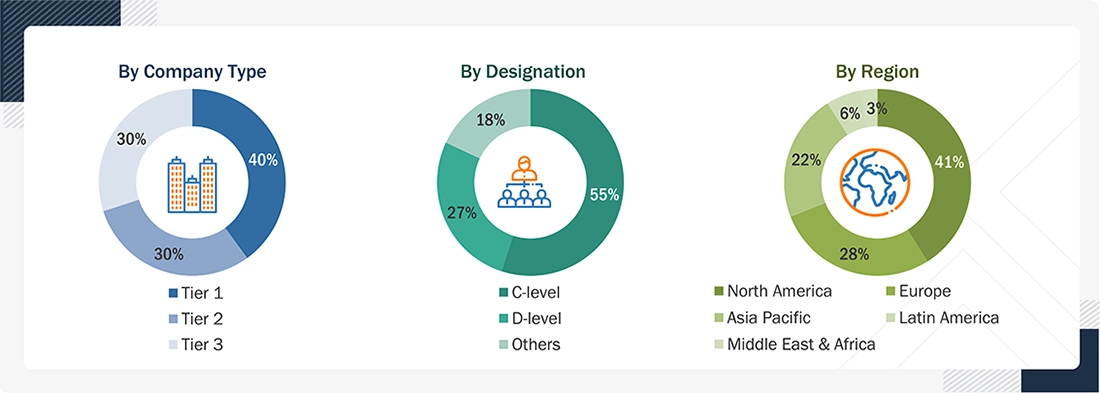
Note 1: C-level primaries include CEOs, COOs, CTOs, and VPs.
Note 2: Other primaries include sales, marketing, and product managers.
Note 3: Companies are classified into tiers based on their total revenue. As of 2025: Tier 1 = >USD 1 billion, Tier 2 = USD 500 million to USD 1 billion, and Tier 3 = <USD 500 million.
To know about the assumptions considered for the study, download the pdf brochure
Market Size Estimation
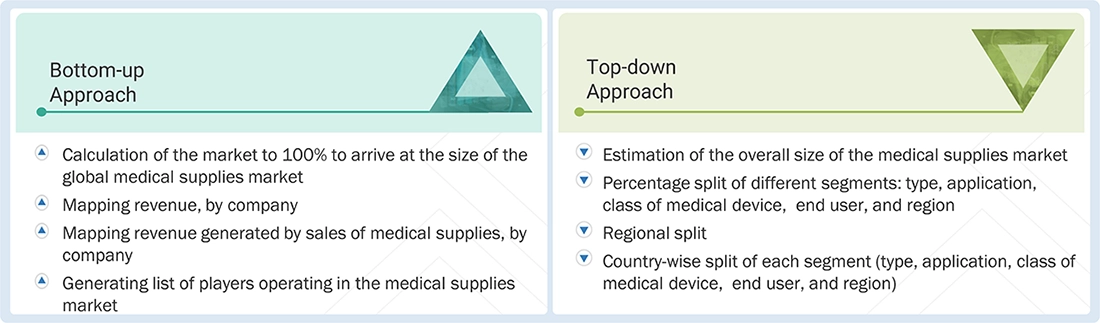
Both top-down and bottom-up approaches were used to estimate and validate the total size of the Medical Supplies market. These methods were also used extensively to estimate the size of various market subsegments. The research methodology used to estimate the market size includes the following:
Medical Supplies Market: Top-Down and Bottom-Up Approach
Data Triangulation
The entire market was split into two segments when the market size was determined. Data triangulation and market breakdown processes were used where necessary to complete the market engineering process and arrive at precise statistics for all segments.
Approach to derive the market size and estimate market growth.
Using secondary data from paid and unpaid sources, the market rankings for the major players were determined following a thorough analysis of their Medical Supplies sales. Due to data restrictions, revenue share in certain cases was determined after a thorough analysis of the product portfolios of large corporations and their individual sales performance. This information was verified at each stage through in-depth interviews with professionals in the field.
Market Definition
Medical supplies encompass a broad range of consumables used in healthcare settings for diagnosis, treatment, prevention, infection control, patient care, and medical procedures. The medical supplies market includes diagnostic supplies, infusion and injectable supplies, intubation and ventilation supplies, disinfectants, personal protective equipment (PPE), sterilization consumables, wound care consumables, dialysis consumables, radiology consumables, catheters, sleep apnea consumables, and other medical supplies.
Key Stakeholders
- Medical supplies and equipment manufacturers
- Raw material and component suppliers
- Medical consumable and disposable suppliers
- Hospitals and clinical laboratories
- Physician offices and ambulatory care centers
- Pharmacies and medical supply stores
- Medical device distributors and wholesalers
- Government healthcare agencies and public procurement bodies
- Regulatory authorities and certification organizations
Report Objectives
- To describe, analyze, and forecast the medical supplies market by type, application, class of medical device, end user, and region.
- To describe and forecast the medical supplies market for key regions, namely, North America, Europe, the Asia Pacific, Latin America, and Middle East & Africa
- To provide detailed information regarding drivers, restraints, opportunities, and challenges influencing the growth of the medical supplies market
- To strategically analyze the ecosystem, regulations, patenting trend, value chain, Porter’s five forces, and prices pertaining to the market under study
- To strategically analyze micromarkets1 with respect to individual growth trends, prospects, and contributions to the overall market
- To analyze market opportunities for stakeholders and provide details of the competitive landscape for market players
- To profile key players and comprehensively analyze their market shares and core competencies2 in the medical supplies market
- To analyze competitive developments such as collaborations, acquisitions, product launches, expansions, and R&D activities in the medical supplies market
Available customizations:
With the given market data, MarketsandMarkets offers customizations as per your company’s specific needs. The following customization options are available for the report:
Company Information
- Detailed analysis and profiling of additional market players (up to 5)
Product Analysis
- Product matrix, which gives a detailed comparison of the product portfolios of each company
Geographic Analysis
- Further breakdown of the Rest of Asia Pacific Medical Supplies market into Vietnam, New Zealand, and others.
- Further breakdown of the Rest of Latin America Medical Supplies market into Columbia, Chile, Ecuador, and others.
- Further breakdown of the Rest of Europe Medical Supplies market into Belgium, Russia, Netherlands, Switzerland, and others.


Personalize This Research
- Triangulate with your Own Data
- Get Data as per your Format and Definition
- Gain a Deeper Dive on a Specific Application, Geography, Customer or Competitor
- Any level of Personalization
Let Us Help You
- What are the Known and Unknown Adjacencies Impacting the Medical Supplies Market
- What will your New Revenue Sources be?
- Who will be your Top Customer; what will make them switch?
- Defend your Market Share or Win Competitors
- Get a Scorecard for Target Partners

Custom Market Research Services
We Will Customise The Research For You, In Case The Report Listed Above Does Not Meet With Your Requirements
Get 10% Free CustomisationTESTIMONIALS

JAYANT RAJPUROHIT
Director of Market Insights, Data and Analytics
SFI Health,
Leading Pharmaceutical Companywww.sfihealth.com/

We at SFI Health approached MarketsandMarkets for an Opportunity Assessment on "Incidence and Prevalence of Focus Indications" as we wanted to know the most attractive HCPs like Physician, Functional MD, Naturopath and Pharmacist. The project was critical for us to ensure our focus on the right target which would enable sustainable growth and profitability for SFI Health. The business insights provided exceeded our expectations and we were extremely impressed. The team at MarketsandMarkets is highly professional and detail oriented and very well understood our business needs. MarketsandMarkets offers a unique combination of expertise and dedicated engagement model. We identified 2 new products to be launched in coming months, based on the research findings provided by MarketsandMarkets. We are happy with the services and would strongly recommend MarketsandMarkets to my peers in the industry.

BEATRIZ DE LA CALLE
Head of Commercial Analytics
Qualicaps,
Leading Pharmaceutical Companywww.qualicaps.com/

We partnered with MarketsandMarkets for an assessment study on hard empty capsules. The team was extremely professional in understanding our business requirements and we received timely responses to all our queries. The market intelligence and the recommendations has met our business requirements. We were extremely impressed to see the final study results; it really exceeded our expectations. The market intelligence offered by MarketsandMarkets, and clarity on next steps will help us achieve our business objective for the Year 2021. We are happy with the services and would strongly recommend MarketsandMarkets to my peers in the industry.

Bob Williams,
Senior Director Business Development & Innovation
Bracco Diagnostics Inc.,
Italian Multinational in life sciences sector and a World Leader in imaging diagnosticsimaging.bracco.com/us-en
We were pleased with targeted insights that MarketsandMarkets identified from a custom study on the 'Radiation Dose Management Solutions Market'. Your team identified and characterized the market participants as well as underlying trends accurately. This study was useful to Bracco in formulating business strategies for our dose monitoring product lines and we thank MarketsandMarkets for the job well done.
Cody Coonradt,
Market Development and Strategy Manager
3M Health Information Systems,
Leader in Health care Coding, Payment & Analytics Solutions.www.3m.com/3M/en_US/health-information-systems-us
The value for our organization comes from three things: depth of research, specificity of segments and being easy to work with. As important as the first two are, the third can't be underestimated. MarketsandMarkets, maybe more than any other research vendor, wants to know what is top of mind for our team and what big questions we are grappling to answer.
Their customer first approach and high value engagement model, have given us great analysis and excellent value for money




Growth opportunities and latent adjacency in Medical Supplies Market