Foamed Plastic Insulation Market

Foamed Plastic Insulation Market by Product Type (Polystyrene Foam, Polyurethane Foam, Polyisocyanurate Foam, Phenolic Form), Application (Building & Construction, Transportation, Consumer Appliances), End-Use Industry, and Region - Global Forecast to 2030




OVERVIEW
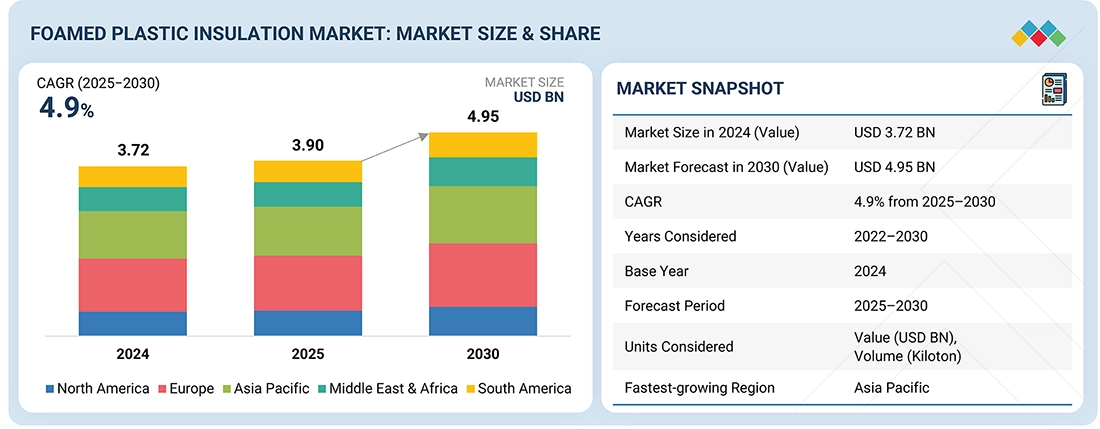
Source: Secondary Research, Interviews with Experts, MarketsandMarkets Analysis
The foamed plastic insulation market is projected to grow from USD 3.90 billion in 2025 to USD 4.95 billion by 2030, representing a compound annual growth rate (CAGR) of 4.9% during this period. This growth is driven by the rising demand for energy-efficient buildings, stricter building energy codes, and increased environmental awareness. Fast urbanization and infrastructure development, especially in developing countries, are making thermal insulation more popular in residential and commercial construction sectors. Foamed plastics are advantageous because they are lightweight, offer high thermal resistance, are moisture-resistant, and are easy to install, making them an economical choice. Additionally, the growth of cold-chain logistics, as well as the increasing use of appliances and HVAC systems, is further contributing to market expansion. The introduction of eco-friendly and recyclable foam materials, along with government financial support for energy-saving initiatives, is also accelerating market growth worldwide.
KEY TAKEAWAYS
-
By RegionEurope accounted for the largest share (31.5%) of the foamed plastic insulation market in 2024.
-
By Product TypeBy product type, the polystyrene foam segment accounted for the largest share (54.5%) of the market in 2024.
-
By ApplicationBy application, the consumer appliances segment is projected to grow at the highest CAGR of 6.26% in the foamed plastic insulation market during forecast period.
-
By End-Use IndustryBy end-use industry, the industrial segment accounted for the largest share in 2024.
-
Competitive Landscape - Key PlayersSaint-Gobain (France), Covestro AG (Germany), and Armacell (Luxembourg) were identified as some of the star players in the foamed plastic insulation, given their strong market share and product footprint.
-
Competitive Landscape - StartupsFletcher Insulation, Trocellen, REGUPOL Germany GmbH & Co. KG, among others, have distinguished themselves among startups and SMEs by securing strong footholds in specialized niche areas.
The foamed plastic insulation market is experiencing growth due to the increasing demand for energy-efficient construction, stricter building codes, and rapid urbanization. The rise in insulation usage across residential, commercial, and industrial buildings leads to lower energy consumption and costs. Foam plastic is the preferred choice for insulation because of its lightweight nature, excellent thermal insulation properties, moisture resistance, and ease of application. Additionally, there is a growing demand in the HVAC system, appliance, and cold storage industries. These factors, along with technological advancements and environmental policies that promote green construction through incentives, are contributing to global market growth.
TRENDS & DISRUPTIONS IMPACTING CUSTOMERS' CUSTOMERS
The influence of business clients on the global foamed plastic insulation market is significantly shaped by changes in building quality and standards, energy efficiency, and environmental protection. Major customers, such as Skanska, Lennar Corporation, and VINCI Construction, are dedicated to using the best thermal and foamed plastic insulation solutions. They prioritize quick installation and eco-friendly materials not only to comply with ISO standards but also to enhance customer service. Meeting these requirements reduces operational costs, creates a more comfortable indoor environment, promotes healthier living spaces, and increases property values over time. This underscores the importance of continuous innovation, expertise in material technologies, and strict quality control to provide the world with sustainable, compliant, and high-value construction solutions.
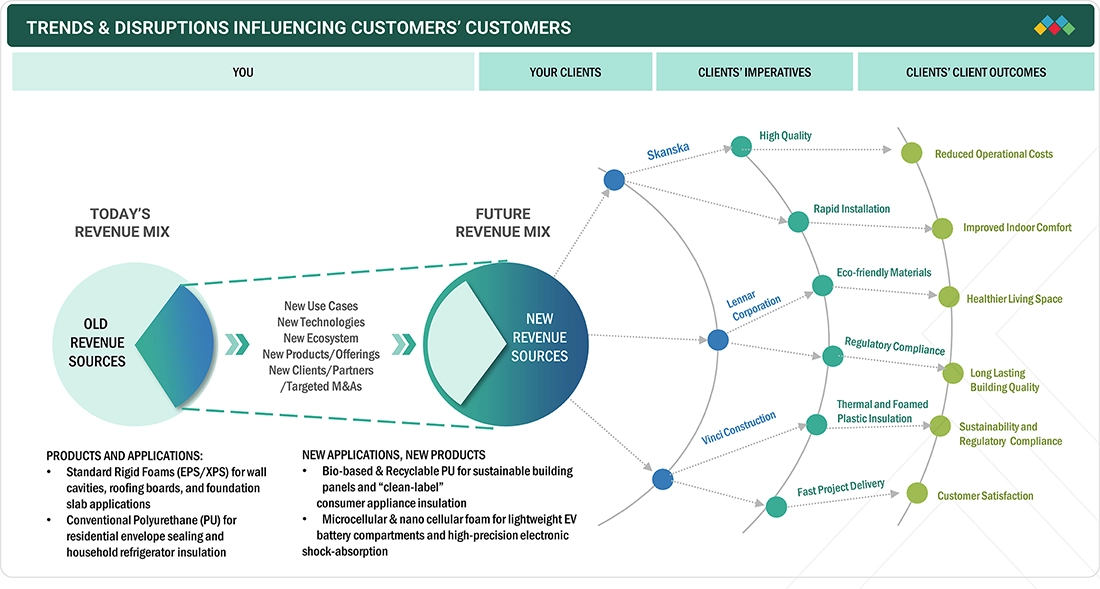
Source: Secondary Research, Interviews with Experts, MarketsandMarkets Analysis
MARKET DYNAMICS

Level
-
Rising demand for energy-efficient and green buildings

-
Stringent building energy codes and regulations


Level
-
Environmental concerns over non-biodegradable plastic

-
Volatility in raw material prices


Level
-
Development of sustainable and recyclable foam insulation materials

-
Growing construction activities in emerging economies


Level
-
Managing disposal and recycling of foamed plastic waste

-
Competition from alternative insulation materials

Source: Secondary Research, Interviews with Experts, MarketsandMarkets Analysis
Driver: Rising demand for energy-efficient and green buildings
The foamed plastic insulation market is mainly driven by the growing demand for energy-efficient and eco-friendly buildings. These materials significantly reduce heat loss, enhancing the overall energy performance of structures. Foamed plastic insulation offers high thermal resistance while being lightweight and exceptionally durable. This makes it ideal for meeting stringent building energy codes and sustainability standards. Additionally, as governments promote the construction of low-carbon buildings, insulation's role in energy efficiency becomes increasingly important for developers seeking green building certifications. The use of foamed plastic in construction has become a key factor in lowering heating and cooling costs, reducing greenhouse gas emissions, and improving indoor air quality. As a result, its use in residential and commercial construction has been steadily increasing.
Restraint: Environmental concerns over non-biodegradable plastic
The foamed plastic insulation market is being restrained mostly because of environmental concerns regarding non-biodegradable plastic, as it is all made from petrochemicals with a long life span in nature. The growing awareness regarding plastic waste, landfill accumulation, and microplastic pollution is pushing regulators to impose stricter rules, thus increasing the scrutiny of policymakers and consumers. The green building movement prefers biodegradable, recyclable, or natural insulation alternatives over the traditional foamed plastics, which are becoming less favorable. Moreover, problems with recycling foamed plastic insulation and its disposal at the end of its life raise the costs of environmental compliance, thus hindering the growth of the market and leading to a shift toward more sustainable insulation materials.
Opportunity: Development of sustainable and recyclable foam insulation materials
The development of sustainable and recyclable foam insulation materials presents a significant opportunity for the foamed plastic insulation market, as it addresses growing environmental and regulatory concerns. Innovative products include bio-based foams, low-VOC formulations, and materials with enhanced recyclability. These advancements contribute to minimizing the environmental impact of traditional foamed plastics while maintaining strong thermal performance. As companies strive to meet green building standards and sustainability certifications, the demand for eco-friendly construction materials continues to rise. Eco-friendly foam insulation not only has the potential to gain market acceptance but also to create new applications and attract environmentally conscious consumers. This ultimately ensures long-term growth and a competitive advantage for companies in the industry.
Challenge: Managing disposal and recycling of foamed plastic waste
The disposal and recycling of foamed plastic waste has become a significant challenge for the foam plastic insulation industry due to the material's properties, such as its bulky volume, low weight, and contamination from construction debris. Additionally, the processes of collecting, transporting, and recycling foamed plastics are complex and costly. Most recycling facilities also lack the technology needed to process these materials effectively. As a result, a large portion of this waste ends up in landfills, raising environmental concerns. Moreover, increasing regulations on waste management within the construction industry and pressure to adopt circular economy practices make compliance even more difficult. This, in turn, raises operational costs for both manufacturers and contractors and poses a risk of limiting market adoption.
FOAMED PLASTIC INSULATION MARKET: COMMERCIAL USE CASES ACROSS INDUSTRIES
| COMPANY | USE CASE DESCRIPTION | BENEFITS |
|---|---|---|
 |
Foamed plastic insulation (EPS, XPS, PU) for walls, roofs, floors, and building envelopes | Offer high thermal insulation, energy efficiency, moisture resistance, less weight, easy installation |
 |
Elastomeric foamed plastic insulation for HVAC systems, pipes, and industrial applications | Offer excellent thermal control, condensation prevention, flexible, less weight, corrosion protection |
 |
Polyurethane (PU) and polystyrene foam solutions for construction, appliances, and refrigeration | Offer superior thermal performance, durability, design flexibility, energy savings |
 |
Extruded polystyrene (XPS) foam insulation for residential and commercial buildings | Offer high compressive strength, long-term thermal stability, moisture resistance, cost-effective insulation |
Logos and trademarks shown above are the property of their respective owners. Their use here is for informational and illustrative purposes only.
MARKET ECOSYSTEM
The foamed plastic insulation market ecosystem consists of several key participants, including raw material suppliers, manufacturers, distributors, and end users. Raw material suppliers, such as Covestro AG, SABIC, and Celanese Corporation, provide the essential minerals, fibers, and specialty polymers needed for producing high-quality foamed plastic insulation. Manufacturers, including Saint-Gobain, BASF SE, and Armacell, transform these raw materials into insulation products suitable for various sectors such as residential, commercial, and industrial applications. Distributors, like Insulation Distributors Inc. (IDI), Profoam Corporation, and Atlas Foam Products, are responsible for storage, logistics, and delivery to contractors and builders. Finally, end users, which include property developers, real estate companies, and construction firms, utilize foamed plastic insulation to enhance indoor comfort and adhere to noise control regulations.
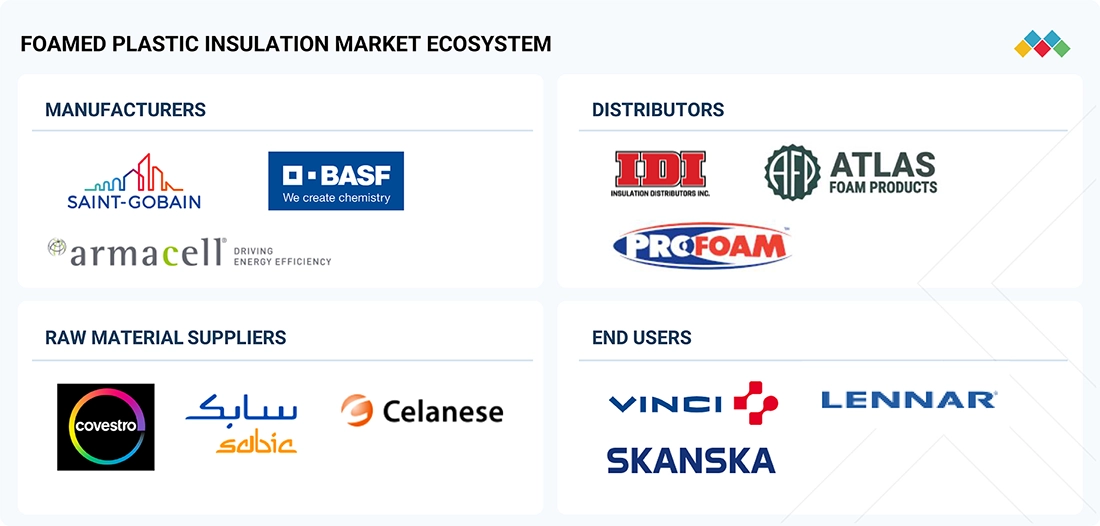
Logos and trademarks shown above are the property of their respective owners. Their use here is for informational and illustrative purposes only.
MARKET SEGMENTS
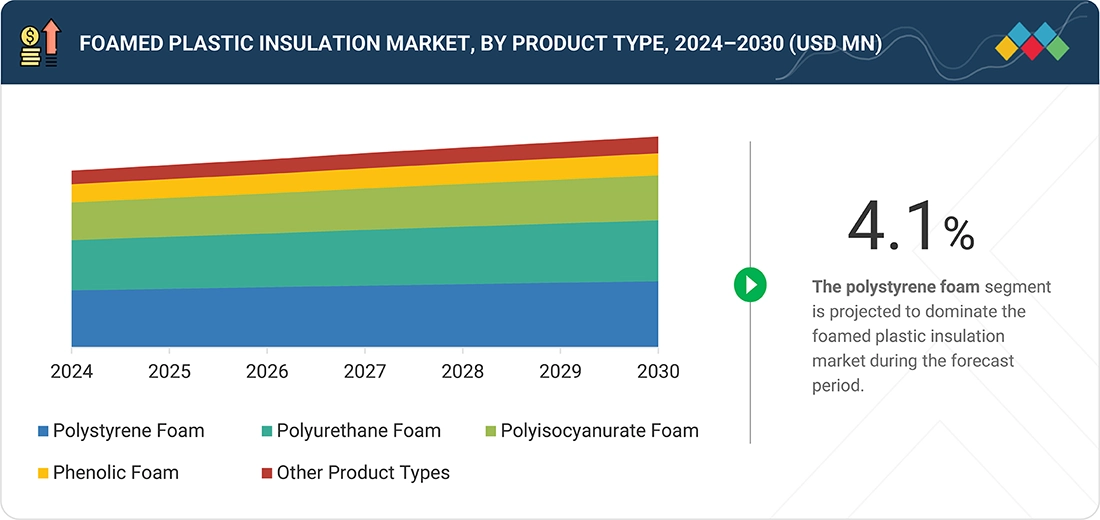
Source: Secondary Research, Interviews with Experts, MarketsandMarkets Analysis
Foamed Plastic Insulation Market, by Product Type
The polystyrene foam segment is expected to dominate the market during the forecast period due to its ideal combination of price, performance, and versatility. It is known for its excellent thermal insulation, moisture resistance, and lightweight properties, which make it suitable for use in walls, roofs, floors, and foundations. Expanded polystyrene (EPS) and extruded polystyrene (XPS) are easy to produce, simple to install, and can be customized to meet the specific demands of various construction projects. Additionally, the availability of polystyrene in large quantities, the presence of established production facilities, and the material's ability to comply with building codes in residential, commercial, and industrial settings further reinforce its leading position in the market.
Foamed Plastic Insulation Market, by Application
The consumer appliances segment is expected to be the largest market during the forecast period. This growth can be attributed to the increasing demand for household products that are energy-efficient and noise-reducing. Freezing, drying, cooling, and heating are the main applications of the foamed plastic insulation, whose primary function is to control the heat transfer, thus improving energy efficiency and making the temperature stable. Awareness of consumers regarding energy savings, coupled with the setting of higher energy efficiency standards for appliances, is motivating manufacturers to use the best insulating materials. Furthermore, the rise in urbanization, increase in disposable income, and growing appliance ownership in developing regions are key factors driving the application of foamed plastic insulation in this market segment.
Foamed Plastic Insulation Market, by End-Use Industry
The industrial segment is expected to lead the foamed plastic insulation market during the forecast period. This expectation is primarily due to the extensive use of insulation in energy-intensive factories and plants. The implementation of foamed plastic insulation across various industrial applications not only enhances liquefied natural gas terminals, refineries, and chemical plants, but also improves the performance of pipes, tanks, and heating, ventilation, and air conditioning (HVAC) systems. This insulation plays a crucial role in controlling thermodynamics, thereby preventing energy loss and protecting equipment. Industries such as oil and gas, chemicals, food, and pharmaceuticals rely on effective heat insulation to maintain operations, ensure safety, and comply with regulatory standards. The need for continuous processes, energy-efficient operations that reduce costs, and durable insulation solutions will drive the high demand for these products in the industrial sector over time.
REGION
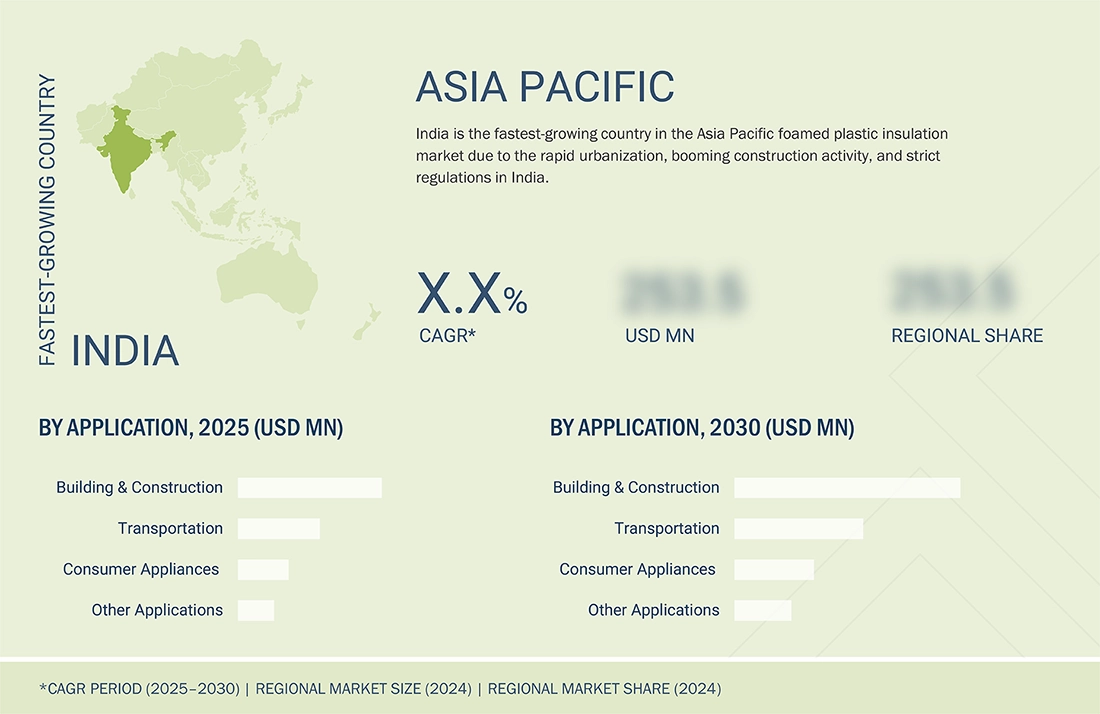
Asia Pacific to be fastest-growing region in the foamed plastic insulation market during forecast period
The foamed plastic insulation market is experiencing rapid growth in the Asia Pacific region, driven by factors such as rapid urbanization, industrialization, and extensive infrastructure development in China, India, and Southeast Asia. There is a rising demand for energy-saving insulation materials, largely due to the increasing construction of residential, commercial, and industrial buildings. Governments in the region are implementing stricter policies that promote energy efficiency in building codes and sustainability, which further supports market growth. Additionally, the growing use of HVAC systems and the construction of cold storage and refrigeration facilities are significant contributors to this market expansion. Other factors favoring the adoption of foamed plastic insulation in the Asia Pacific region include the rise in disposable income, increased awareness of energy-saving measures, and the influx of foreign investments in the construction and manufacturing sectors.
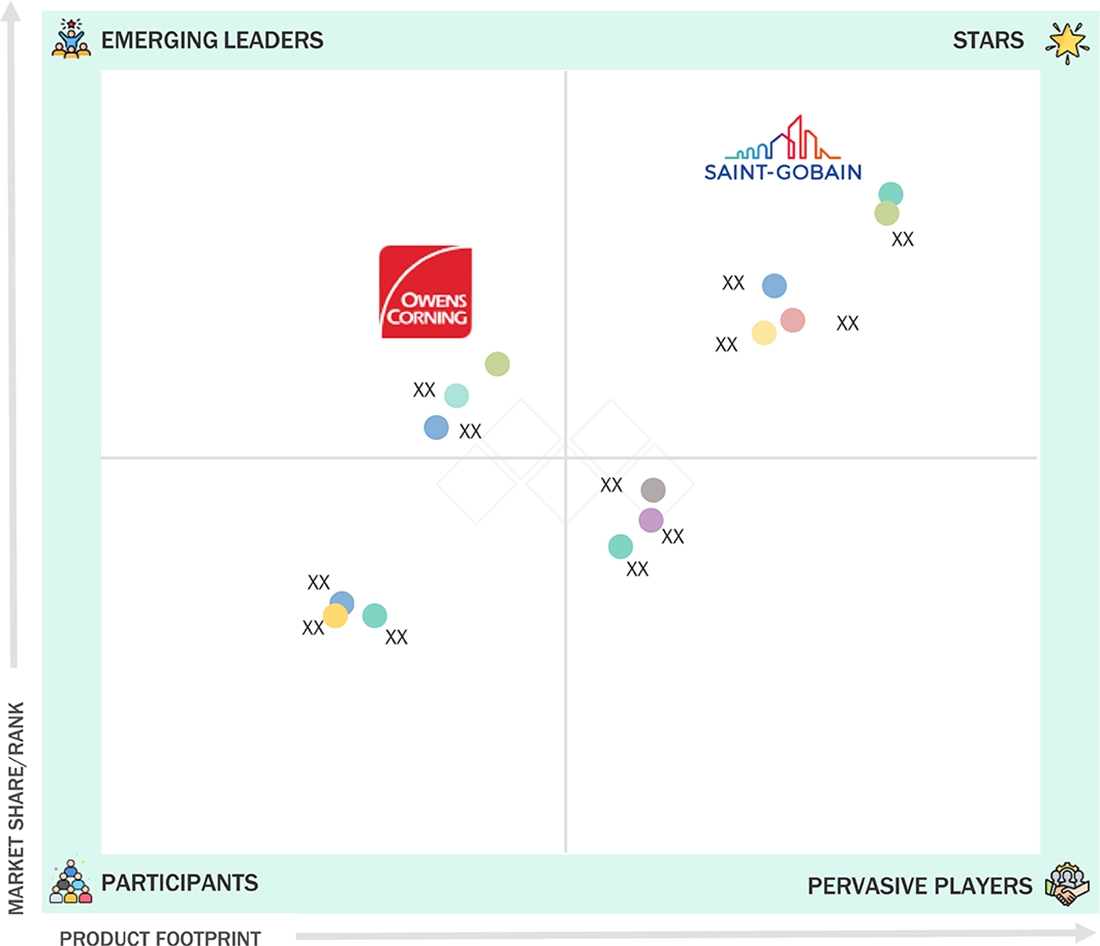
FOAMED PLASTIC INSULATION MARKET: COMPANY EVALUATION MATRIX
Saint-Gobain (Star) is a significant player in the global market for foamed plastic insulation. Several factors contribute to its success. Some of the factors are its leading global position, its diversified insulation portfolio, its highly advanced and sustainable R&D department, and the range of high-performance insulation solutions it offers. These elements have established the company as a market leader in foamed plastic insulation. Additionally, its extensive distribution network and strategic acquisitions further reinforce its leadership in the construction and industrial sectors. On the other hand, Owens Corning (Emerging Player) has emerged as a strong newcomer in this market. The company is expanding its product line of foamed plastic insulation, making significant investments in energy-efficient and eco-friendly products, and enhancing its presence in high-growth areas.
Source: Secondary Research, Interviews with Experts, MarketsandMarkets Analysis
KEY MARKET PLAYERS
- Saint-Gobain (France)
- Armacell (Germany)
- BASF SE (Germany)
- Owens Corning (US)
- Kingspan Group (Ireland)
- Covestro AG (Germany)
- Dow (US)
- Johns Manville (US)
- REGUPOL Germany GmbH & Co. KG (Germany)
- Huntsman International LLC (US)
MARKET SCOPE
| REPORT METRIC | DETAILS |
|---|---|
| Market Size in 2024 (Value) | USD 3.72 Billion |
| Market Forecast in 2030 (Value) | USD 4.95 Billion |
| Growth Rate | CAGR of 4.9% from 2025–2030 |
| Years Considered | 2022–2030 |
| Base Year | 2024 |
| Forecast Period | 2025–2030 |
| Units Considered | Value (USD Billion), Volume (Kiloton) |
| Report Coverage | Revenue Forecast, Company Ranking, Competitive Landscape, Growth Factors, and Trends |
| Segments Covered |
|
| Regions Covered | North America, Europe, Asia Pacific, Middle East & Africa, South America |
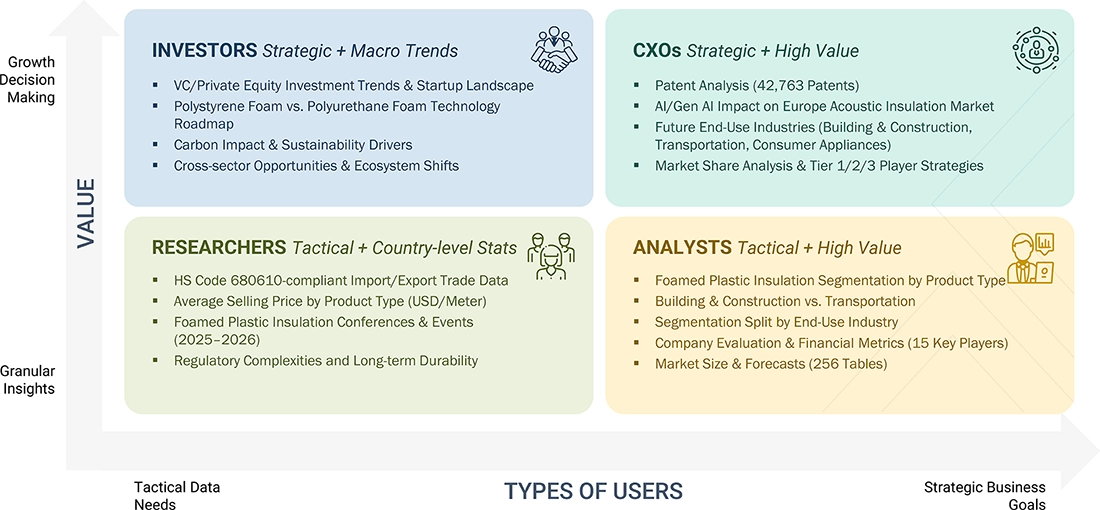
WHAT IS IN IT FOR YOU: FOAMED PLASTIC INSULATION MARKET REPORT CONTENT GUIDE
DELIVERED CUSTOMIZATIONS
We have successfully delivered the following deep-dive customizations:
| CLIENT REQUEST | CUSTOMIZATION DELIVERED | VALUE ADDS |
|---|---|---|
| Construction Contractor | Supplier profiling of EPS, XPS, PU insulation based on performance, certifications, and fire ratings |
|
| Foamed Plastic Insulation Manufacturer | Performance and sustainability comparison of foamed plastic insulation materials across applications | Support product improvement, innovation, and alignment with energy efficiency standards |
| Raw Material Supplier | Regional demand mapping for polymers and additives used in foamed plastic insulation |
|
RECENT DEVELOPMENTS
- June 2022 : Owens Corning acquired Natural Polymers LLC, a producer of spray polyurethane foam insulation for building and construction purposes. This acquisition empowered the company's primary building and construction products even more.
- April 2022 : Armacell acquired the insulation division of Nomaco, a producer of extruded polyethylene (PE) insulation foam articles. The acquisition of the manufacturing plant located in Yukon, Oklahoma, is likely to boost Armacell's domestic production capability and its regional distribution network.
- September 2021 : Kingspan acquired the US-based Minnesota Diversified Products, Inc. (DBA DiversiFoam). DiversiFoam produces XPS and EPS and makes polyisocyanurate foam billets for construction, insulation, packaging, and OEM applications. This deal is going to increase Kingspan's US client base and let it grow in the core building insulation business, which is expected to be the sector with very strong growth.
Table of Contents
 Exclusive indicates content/data unique to MarketsandMarkets and not available with any competitors.
Methodology
In this report, the market size has been derived using both, bottom-up and top-down approaches. First, the market size for product type (polystyrene, polyurethane & polyisocyanurate, polyolefin, phenolic, and elastomeric), end-use industry (building & construction, transportation, and consumer appliances), and region (Asia-Pacific, North America, Europe, South America, Middle East & Africa) is identified through both, secondary and primary research. The overall foamed plastic insulation market size for various regions and countries has been calculated by adding these individual market sizes. The foamed plastic insulation market has been further segmented based on end-use industry, using percentage splits gathered during the research. Future growth (CAGRs) trends of the foamed plastic insulation market have been analyzed with respect to the end-use industry – building & construction, transportation, and consumer appliances. The secondary resources include annual reports, press releases, and investor presentations of companies; white papers; certified publications; articles from recognized authors; and gold standard & silver standard websites, such as Factiva, ICIS, Bloomberg, and so on. Findings of this study were verified through primary research by conducting extensive interviews with key officials, such as CEOs, VPs, directors, and other executives. The breakdown of profiles of the primary interviewees is illustrated in the figure below:
To know about the assumptions considered for the study, download the pdf brochure
The key market players include BASF SE (Germany), Covestro AG (Germany), Huntsman International LLC (U.S.), Kingspan Group PLC (Republic of Ireland), Lapolla Industries, Inc. (U.S.), Owens Corning (U.S.), Recticel Group (Belgium), Saint-Gobain (France), the Dow Chemical Company (U.S.), Armacell International S.A. (Luxembourg), and Johns Manville (U.S.).
Target Audience:
Foamed Plastic Insulation Manufacturers, Dealers, and Suppliers
- Government Bodies
- Feedstock Suppliers
- Industry Associations
- Large Infrastructure Companies
- Investment Banks
- Consulting Companies/Consultants in the chemical and material sectors
- End-use Industries
“This study answers several questions for the stakeholders, primarily, which market segments they need to focus on during the next two to five years to prioritize their efforts and investments.”
Scope of the Report:
This report categorizes the global foamed plastic insulation market based on product type, end-use industry, and region.
Market Segmentation, by Product Type:
- Polystyrene foam
- Polyurethane & polyisocyanurate foam
- Polyolefin foam
- Phenolic foam
- Elastomeric foam
Market Segmentation, by End-Use Industry:
- Building & construction
- Transportation
- Consumer Appliances
Market Segmentation, by Region:
- Asia-Pacific
- North America
- Europe
- South America
- Middle East & Africa
Available Customizations:
With the given market data, MarketsandMarkets offers customizations according to the company’s specific needs. The following customization options are available for the report:
Regional Analysis
- Further breakdown of a region with respect to a particular country, additional end-use industry, and/or product type


Personalize This Research
- Triangulate with your Own Data
- Get Data as per your Format and Definition
- Gain a Deeper Dive on a Specific Application, Geography, Customer or Competitor
- Any level of Personalization
Let Us Help You
- What are the Known and Unknown Adjacencies Impacting the Foamed Plastic Insulation Market
- What will your New Revenue Sources be?
- Who will be your Top Customer; what will make them switch?
- Defend your Market Share or Win Competitors
- Get a Scorecard for Target Partners

Custom Market Research Services
We Will Customise The Research For You, In Case The Report Listed Above Does Not Meet With Your Requirements
Get 10% Free CustomisationTESTIMONIALS
We at Nissan Chemicals Corporation have been clients of MarketsandMarkets for more than a year now. We recently consulted MarketsandMarkets for a study, the team at MarketsandMarkets was extremely professional and organized. The business insights were very detailed and aligned well with our expectations that really helped us formulate the Business Plans and device new strategies for development themes. MarketsandMarkets offers a unique combination of expertise and dedicated engagement model. Their research findings have helped us in designing our Pricing Strategy which will make it easier for us to predict the future sales and profits for the next ten years. We look forward to working with MarketsandMarkets in the future.
VP of Strategy & New Business Development
Leading Specialty Chemical Company
The MarketsandMarkets Engagement Model, composed of both the Knowledge Store and advisory custom research, has greatly helped us in understanding our markets and making strategic decisions. The Knowledge Store is a fast way to allow everyone in our organization to understand more about most any market they are interested in. The ability to then get custom research done and get answers to specific strategic questions and market insight has been spectacular. The Markets and Markets team feel more like colleagues than vendors and their services have helped us change our culture where statements of things like growth opportunities and competitive position are always backed by industry research.

Rich Gibson,
Director, Corporate Strategy
Milliken & Company,
Leading Industrial Manufacturer of specialty chemical, floor covering, performance and protective textile materials, and healthcaremilliken.com
MarketsandMarkets is a trusted resource that helps us to better understand markets that are near-adjacencies-whether its technology, value chain or geography. Their Knowledge Store platform provides a dashboard of markets and their characteristics which is easy to use and saves us time.
Adam Shaw,
Market Development and Strategy Manager
AdvanSix Inc. USA,
An American Leader in Chemicalswww.advansix.com
The Knowledge Store from MarketsandMarkets is a valuable tool which has helped my team acquire greater insight in to the end markets that our business serves. This has enabled us to help our company build stronger strategies throughout our planning process.
TOSHIO KINOSHITA
Senior Chif Consultion Research & Consulting Division
Mitsubishi Chemical Research Corporation,
Leading Manufacturer of Chemical Productswww.mitsubishichem-res.co.jp/en/

We recently engaged with MarketsandMarkets for a study, the team not only clearly understood our business objectives but was also extremely professional in the way they handled the entire project. The study was efficiently conducted in a phase-wise manner, and the engagement model furnished us with high-quality business insights that far exceeded our expectations at each phase. We were especially happy that MarketsandMarkets could provide us with both, an English as well as a Japanese version of the study. A special thanks to the Analyst Team and Client Services Team, whose fluency in Japanese enhanced our comfort level, as we could converse with them in our preferred language.
Independent entrepreneurs
Arrow Precision
We approached MarketsandMarkets for study on Proppants Market, and their work exceeded our expectations. The study conducted was comprehensive and enabled us to view the market through the various dimensions. In addition, the team was extraordinarily responsive throughout the process and resolved our queries on time. I strongly recommend MarketsandMarkets and will certainly consider them for additional market assessments we will need in the future.
Global engineering company, Japan
Deputy Manager,
Strategic Planning OfficeThe high-quality insights shared by the MarketsandMarkets team helped us understand the pharmaceutical plant designers in a specific geography. It also captured the risks that we may likely face in communicating with our potential partners. The study would enable us identify partners, which would impact our future growth.






Growth opportunities and latent adjacency in Foamed Plastic Insulation Market