Molecular Diagnostics Market by Product & Service (Kits, Instruments, Software), Test Type (Lab, PoC), Sample (Blood, Urine), Technology (PCR, NGS, ISH), Application (Infectious, Cancer), Technique, Clinical Application, End User- Global Forecast to 2031

Market Size
$21.68B
MARKET SIZE, 2026
Projected Market Size
$32.56B
MARKET SIZE, 2031
CAGR
8.5%
CAGR (2026-2031)
Forecast Period
2026-2031
FORECAST PERIOD

MOLECULAR DIAGNOSTICS MARKET SIZE, SHARE & GROWTH SNAPSHOT

molecular-diagnostic-market Overview

Source: Secondary Research, Interviews with Experts, MarketsandMarkets Analysis

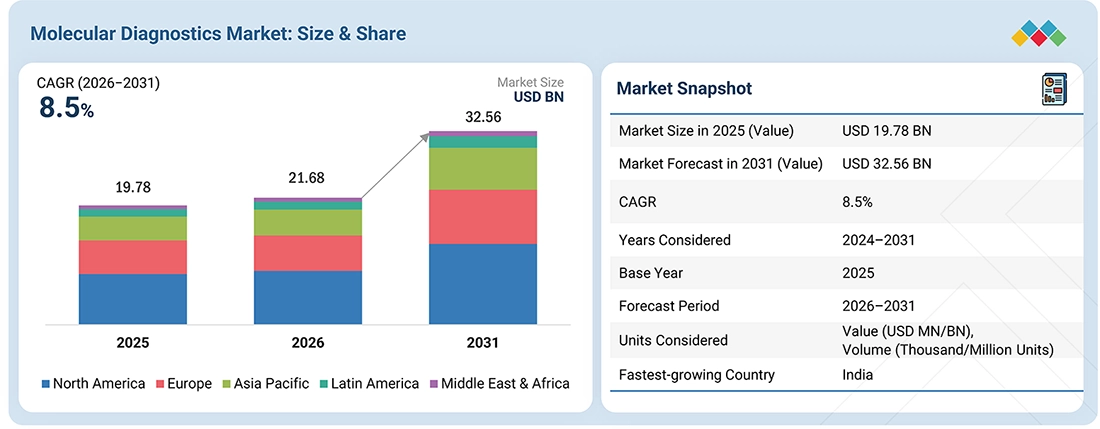
The global molecular diagnostics market is projected to grow from USD 21.68 billion in 2026 to USD 32.56 billion by 2031, at a CAGR of 8.5% during the forecast period. The market was valued at USD 19.78 billion in 2025. Market growth is driven by the increasing adoption of advanced diagnostic technologies, rising demand for rapid and accurate disease detection, and the growing need for personalized healthcare solutions.

KEY TAKEAWAYS

  • MARKET SNAPSHOT:
    Base Year Market Size (2025): USD 19.78 Billion
    Current Market Size (2026): USD 21.68 Billion
    Forecast Market Size (2031): USD 32.56 Billion
    CAGR (2026–2031): 8.5%
  • SEGMENT LEADERSHIP:
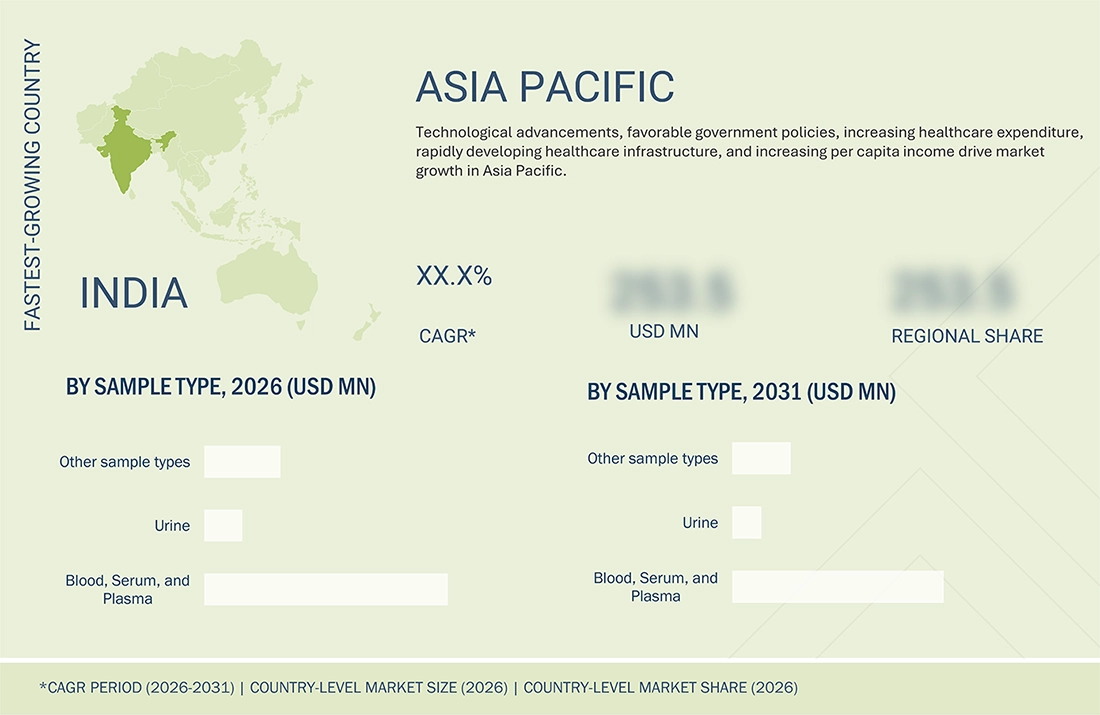
    Regional Leader: Asia Pacific is anticipated to register the highest CAGR of 10.6% during the forecast period.
    Type Leader: Lab tests accounted for a share of 88.9% in 2025.
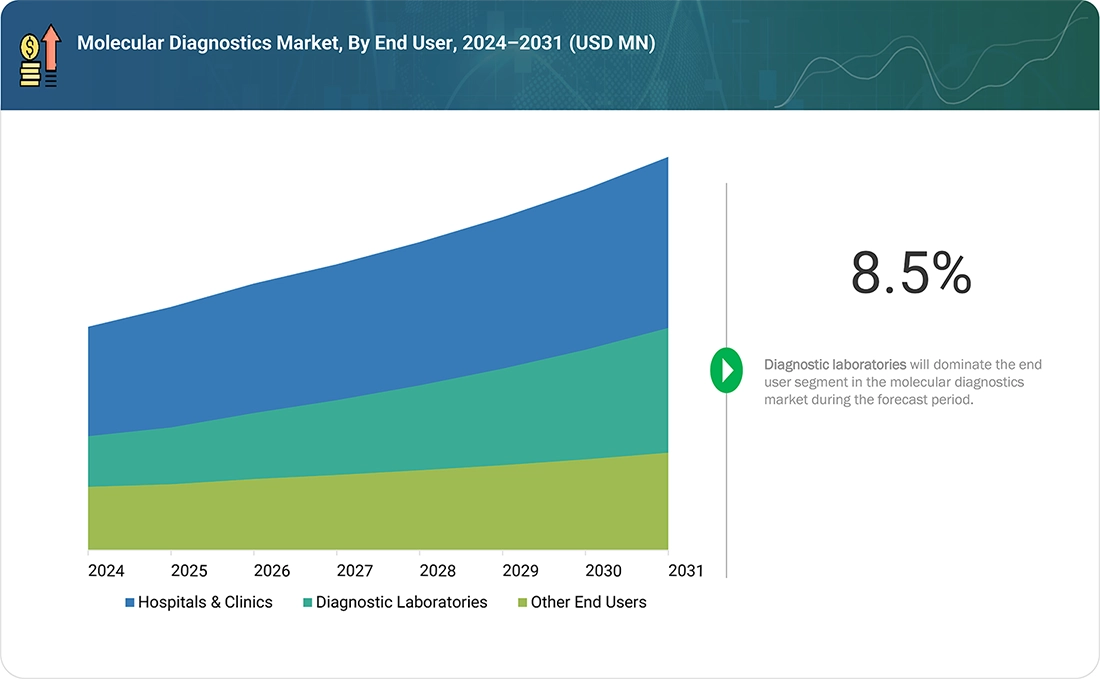
    Fastest-Growing End User: Diagnostics laboratories will grow at a CAGR of 10.1% during the forecast period.
  • MARKET OUTLOOK & COMPETITIVE LANDSCAPE:
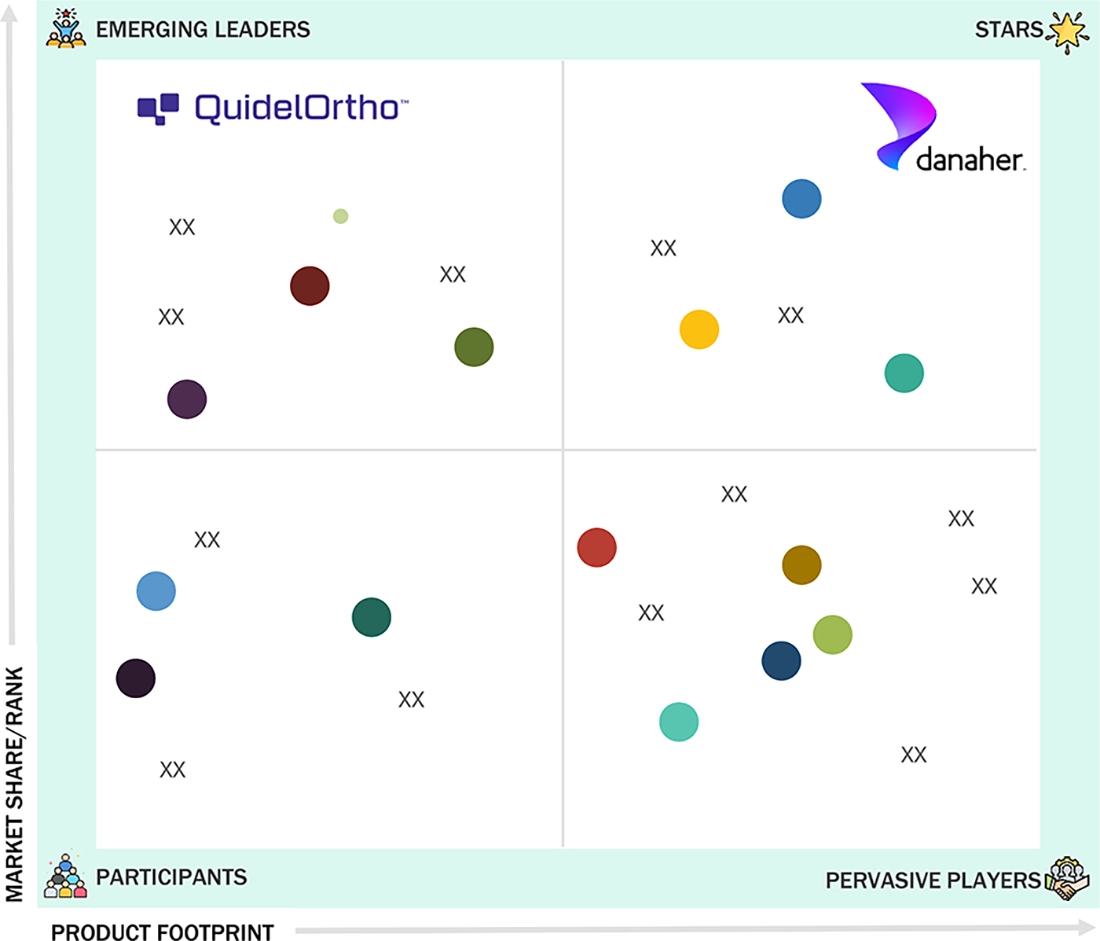
    Star Players include F. Hoffmann-La Roche Ltd., Danaher Corporation/Cepheid, Abbott Laboratories, QIAGEN N.V., Thermo Fisher Scientific Inc., and bioMérieux SA, recognized for their strong focus on innovation, broad molecular testing portfolios, established global presence, and robust technological and operational capabilities.
    Emerging players and SMEs include Visby Medical, Fulgent Genetics, Seegene Inc., QuantuMDx, and CERTEST BIOTEC, recognized for their specialized molecular diagnostic technologies, innovative product portfolios, and focus on decentralized, multiplex, and next-generation molecular testing solutions.

The molecular diagnostics market is experiencing steady growth, driven by rising demand for rapid, accurate, and advanced diagnostic solutions for the detection and management of various diseases. Growing adoption of molecular testing, advances in diagnostic technologies, and the need for early and precise disease detection are supporting market expansion.

TRENDS & DISRUPTIONS IMPACTING CUSTOMERS' CUSTOMERS

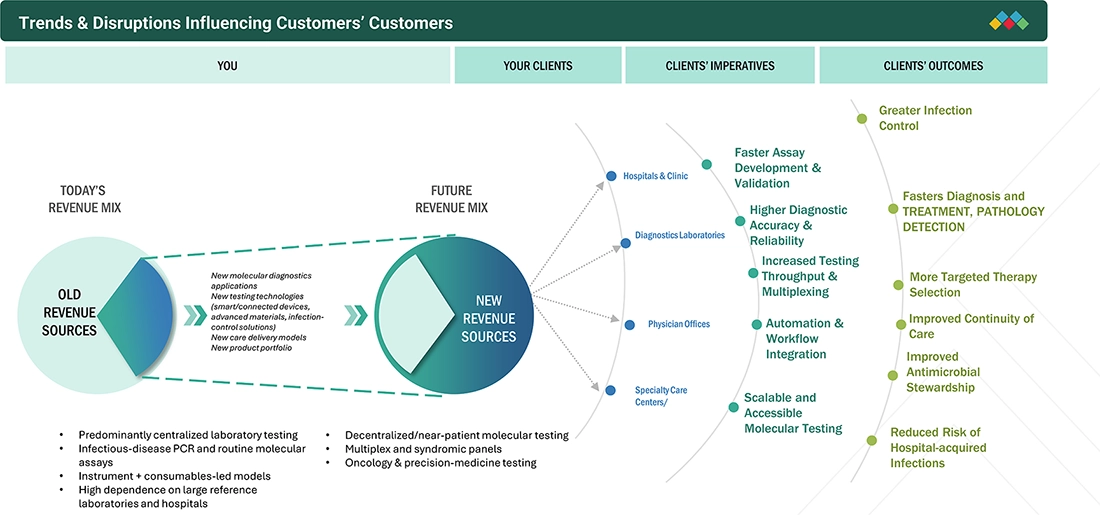
The molecular diagnostics market is evolving toward faster, more automated, multiplex, and decentralized testing solutions across hospitals, clinical laboratories, physician offices, and point-of-care settings. Rising demand for early disease detection, infectious disease surveillance, precision medicine, and biomarker-based diagnosis is driving market growth. Innovations in PCR, multiplex PCR, digital PCR, next-generation sequencing (NGS), isothermal amplification, microfluidics, and liquid biopsy are improving diagnostic accuracy, sensitivity, and turnaround time. As healthcare providers prioritize rapid clinical decision-making and workflow efficiency, manufacturers are focusing on sample-to-answer systems, laboratory automation, high-throughput testing, and integrated molecular platforms. Growing applications in infectious diseases, oncology, genetic disorders, and personalized medicine, along with increasing adoption of point-of-care and decentralized testing, are further expanding the use of molecular diagnostics across healthcare settings.

molecular-diagnostic-market Disruptions

Source: Secondary Research, Interviews with Experts, MarketsandMarkets Analysis

MARKET DYNAMICS

Drivers
Impact
Level
  • Rising prevalence of infectious diseases and chronic conditions
  • Growing demand for rapid, accurate, and early disease diagnosis
RESTRAINTS
Impact
Level
  • High cost of advanced molecular diagnostic platforms and instruments
  • Complex workflows and requirement for skilled laboratory personnel
OPPORTUNITIES
Impact
Level
  • Growing adoption of molecular diagnostics in emerging markets
  • Expansion of oncology, liquid biopsy, and precision-medicine applications
CHALLENGES
Impact
Level
  • Complex regulatory requirements and lengthy approval processes
  • Data privacy and interoperability requirements for connected diagnostics

Source: Secondary Research, Interviews with Experts, MarketsandMarkets Analysis

Driver: Rising demand for rapid, accurate, and early disease diagnosis

The rising prevalence of infectious diseases, cancer, and chronic conditions is driving demand for rapid, accurate molecular diagnostics. PCR, NGS, multiplex testing, and other molecular technologies enable earlier disease detection and more precise diagnosis. Growing emphasis on preventive healthcare, screening, and timely treatment is further supporting adoption across hospitals, diagnostic laboratories, and physician offices.

Restraint: High cost of advanced molecular diagnostic platforms and instruments

Molecular diagnostic systems often require substantial investment in instruments, specialized reagents, laboratory infrastructure, and skilled personnel. High testing costs can limit adoption, especially in price-sensitive emerging markets and smaller healthcare facilities. Reimbursement limitations and variations in healthcare budgets can further constrain the use of advanced molecular diagnostic technologies.

Opportunity: Expansion of oncology, liquid biopsy, and precision-medicine applications

The growing adoption of precision medicine is creating opportunities for molecular diagnostics across oncology, companion diagnostics, genetic testing, and biomarker-based treatment selection. At the same time, the shift toward point-of-care and decentralized testing is increasing demand for compact, automated, sample-to-answer platforms. Emerging markets also offer opportunities as healthcare infrastructure, diagnostic capacity, and access to advanced testing continue to expand.

Challenge: Complex regulatory requirements and lengthy approval processes

Molecular diagnostic manufacturers face stringent regulatory requirements covering analytical performance, clinical validation, quality management, and product approval. Differences in regulatory frameworks across countries can lengthen development timelines and increase compliance costs. In addition, reliance on specialized reagents, enzymes, primers, probes, chips, and other critical components can expose companies to supply-chain disruptions, shortages, and manufacturing constraints.

MOLECULAR DIAGNOSTICS MARKET: COMMERCIAL USE CASES ACROSS INDUSTRIES

COMPANY USE CASE DESCRIPTION BENEFITS
company logo
Provides molecular diagnostic solutions for infectious diseases, oncology, virology, women’s health, and genetic testing, including PCR- and sequencing-based platforms for hospitals, laboratories, and clinical settings Enables accurate and timely disease detection, supports personalized treatment decisions, improves patient management, and enhances laboratory workflow efficiency
company logo
Offers molecular diagnostic technologies for infectious disease testing, respiratory pathogens, sexually transmitted infections, and other clinical applications through automated and point-of-care testing platforms Enables rapid diagnosis, supports timely clinical decision-making, reduces turnaround times, and improves access to diagnostic testing across hospitals, laboratories, and decentralized care settings
company logo
Provides molecular diagnostics through platforms and brands serving infectious disease, oncology, and other clinical applications, including rapid PCR-based testing and automated molecular workflows Supports rapid and reliable pathogen detection, enables decentralized testing, improves laboratory productivity, and facilitates faster clinical intervention
company logo
Develops molecular diagnostic technologies, reagents, instruments, and testing solutions for infectious diseases, genetic disorders, oncology, and precision medicine applications Enables sensitive and accurate molecular testing, supports biomarker and genetic analysis, accelerates clinical research and diagnostics, and facilitates personalized healthcare
company logo
Offers molecular diagnostic solutions focused on women's health, infectious diseases, sexually transmitted infections, respiratory testing, and cervical cancer screening Improves early disease detection, supports screening and diagnosis, enables high-throughput laboratory testing, and contributes to improved patient management and women's healthcare outcomes

Logos and trademarks shown above are the property of their respective owners. Their use here is for informational and illustrative purposes only.

MARKET ECOSYSTEM

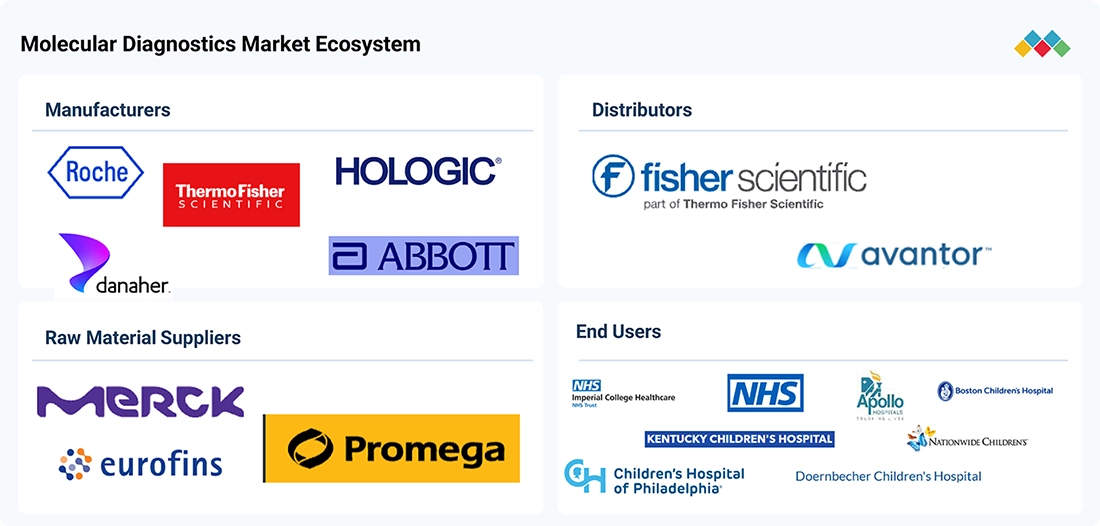
The molecular diagnostics market ecosystem comprises assay and reagent manufacturers, diagnostic instrument and platform providers, laboratory service providers, distributors, wholesalers, healthcare procurement organizations, regulatory bodies, and healthcare providers. Key products include PCR and real-time PCR systems, molecular assays and reagents, nucleic acid amplification tests, sequencing-based diagnostics, sample preparation products, instruments, and consumables. These technologies support hospitals, clinics, diagnostic laboratories, ambulatory care centers, research institutions, and public health programs in the detection, diagnosis, and monitoring of infectious diseases, cancer, genetic disorders, and other conditions. The value chain spans raw material sourcing, assay development, manufacturing, quality testing, regulatory approval, distribution, laboratory testing, and healthcare procurement, with an increasing focus on accuracy, sensitivity, specificity, automation, regulatory compliance, faster turnaround, workflow integration, and cost efficiency. Market growth is driven by rising disease burden, demand for early and accurate diagnosis, personalized medicine, cancer and genetic testing, healthcare expenditure, infectious disease surveillance, antimicrobial resistance testing, and precision medicine. Advancements in automation, multiplex testing, high-throughput platforms, point-of-care testing, digital laboratory workflows, next-generation sequencing, and PCR technologies further support market development.

molecular-diagnostic-market Ecosystem

Logos and trademarks shown above are the property of their respective owners. Their use here is for informational and illustrative purposes only.

MARKET SEGMENTS

molecular-diagnostic-market Segments

Source: Secondary Research, Interviews with Experts, MarketsandMarkets Analysis

Molecular Diagnostics Market, by Product & Service

The molecular diagnostics market, by product and service, is segmented into reagents & kits, instruments, and services & software. Reagents and kits include molecular assay components, amplification reagents, primers, probes, and other consumables used for detecting and analyzing nucleic acids. Instruments comprise molecular diagnostic platforms and automated systems used for sample preparation, amplification, detection, and analysis. Services and software include laboratory, testing, data analysis, interpretation, and workflow-management solutions that support molecular diagnostic applications.

Molecular Diagnostics Market, by Test Type

The molecular diagnostics market, by test type, is segmented into laboratory and point-of-care (PoC) tests. Laboratory tests include molecular diagnostic assays performed in centralized or specialized laboratories to detect and analyze infectious diseases, genetic conditions, cancer biomarkers, and other clinical indications. Point-of-care tests are performed closer to the patient and provide rapid diagnostic results, supporting timely clinical decision-making in hospitals, clinics, physician offices, and other decentralized healthcare settings.

REGION

Healthcare Infrastructure Expansion Driving Growth in the Asia Pacific Molecular Diagnostics Market

The molecular diagnostics market in the Asia Pacific region is rapidly expanding, driven by rising healthcare spending, the growing prevalence of infectious and chronic diseases, rising demand for early and accurate diagnosis, and government initiatives to strengthen healthcare infrastructure and diagnostic capabilities. Countries such as China, India, Japan, South Korea, and Australia are investing significantly to modernize clinical laboratories, expand molecular testing facilities, and improve access to advanced diagnostic technologies. The development of new healthcare facilities and the adoption of automated diagnostic systems are increasing demand for PCR, multiplex testing, next-generation sequencing, and other molecular diagnostic platforms. In addition, the growing focus on infectious disease surveillance, cancer screening, personalized medicine, and point-of-care testing is further supporting the adoption of molecular diagnostics across the region.

molecular-diagnostic-market Region

MOLECULAR DIAGNOSTICS MARKET: COMPANY EVALUATION MATRIX

In the molecular diagnostics market, Roche (Star Player) leads with its broad portfolio of molecular diagnostic solutions and advanced testing platforms, while QuidelOrtho strengthens its position with an expanding range of molecular diagnostic assays and integrated testing solutions.

molecular-diagnostic-market Evaluation Metrics

Source: Secondary Research, Interviews with Experts, MarketsandMarkets Analysis

KEY MARKET PLAYERS

MARKET SCOPE

REPORT METRIC DETAILS
Market Size in 2025 (Value) USD 19.78 Billion
Market Forecast in 2026 (Value) USD 21.68 Billion
Market Forecast in 2031 (Value) USD 32.56 Billion
Growth Rate CAGR of 8.5% from 2026-2031
Years Considered 2024-2031
Base Year 2025
Forecast Period 2026-2031
Units Considered Value (USD Million/Billion), Volume (Thousand Tests)
Report Coverage Revenue forecast, company ranking, competitive landscape, growth factors, and trends
Segments Covered
  • By Product & Service:
    • Reagents & Kits
    • Instruments
    • Services & Software
  • By Test Type:
    • Lab Tests
    • PoC Tests
  • By Sample Type:
    • Blood
    • Serum & Plasma
    • Urine
    • Other Sample Types
  • By Technology:
    • Polymerase Chain Reaction (PCR)
    • Isothermal Nucleic Acid Amplification Technology
    • DNA Sequencing & Next-generation Sequencing
    • In Situ Hybridization
    • DNA Microarrays
    • Other Technologies
  • By Application:
    • Infectious Disease Diagnostics
    • Oncology Testing
    • Genetic Testing
    • Other Applications
  • By Technique:
    • Multiplex Testing
    • Singleplex Testing
  • By Clinical Application:
    • Diagnostic
    • Screening
  • By End User:
    • Diagnostic Laboratories
    • Hospitals & Clinics
    • Other End Users
Regions Covered North America, Asia Pacific, Europe, Latin America, Middle East & Africa

WHAT IS IN IT FOR YOU: MOLECULAR DIAGNOSTICS MARKET REPORT CONTENT GUIDE

molecular-diagnostic-market Content Guide

DELIVERED CUSTOMIZATIONS

We have successfully delivered the following deep-dive customizations:

CLIENT REQUEST CUSTOMIZATION DELIVERED VALUE ADDS
Product Analysis Comparative analysis of molecular diagnostics products by technology and application, including PCR and RT-PCR, real-time PCR, digital PCR, nucleic acid amplification tests, isothermal amplification, sequencing-based diagnostics, next-generation sequencing (NGS), microarrays, molecular point-of-care testing, infectious disease diagnostics, oncology diagnostics, genetic and inherited disease testing, liquid biopsy, and pharmacogenomics, with evaluation across hospitals, diagnostic laboratories, physician offices, reference laboratories, and point-of-care settings Assessment of product demand and adoption based on parameters such as test utilization, clinical applications, target analytes, sample types, assay sensitivity and specificity, turnaround time, multiplexing capabilities, automation, throughput, instrument compatibility, reagent and consumable requirements, workflow efficiency, regulatory approvals, reimbursement environment, technological advancements, and cost-effectiveness to support product portfolio selection and market opportunity assessment
Company Information Detailed profiles of leading global and regional molecular diagnostics manufacturers and suppliers, including Roche Diagnostics, Abbott, Danaher, bioMérieux, QIAGEN, Hologic, Thermo Fisher Scientific, Becton Dickinson, Siemens Healthineers, Bio-Rad Laboratories, Illumina, DiaSorin, Luminex, Cepheid, and other relevant players, covering molecular diagnostic portfolios, technology platforms, assay menus, instrument capabilities, manufacturing footprint, distribution networks, strategic initiatives, partnerships, acquisitions, regulatory approvals, product launches, and recent developments Competitive benchmarking across key players highlighting positioning by technology and application, geographic reach, assay portfolio breadth, instrument and platform capabilities, R&D and innovation strength, manufacturing and distribution capabilities, supply-chain strength, pricing strategies, regulatory compliance, laboratory relationships, strategic collaborations, and focus across infectious disease, oncology, genetic testing, reproductive health, respiratory diagnostics, and other high-growth molecular diagnostic segments
Geographic Analysis In-depth assessment of the global molecular diagnostics market across North America, Europe, Asia Pacific, Latin America, and the Middle East & Africa, with analysis of healthcare infrastructure, laboratory networks, diagnostic testing volumes, disease prevalence, screening programs, healthcare expenditure, reimbursement environment, regulatory frameworks, laboratory automation, adoption of advanced molecular technologies, domestic manufacturing capabilities, and import/export dynamics Country-level market sizing and CAGR forecasts, molecular testing volume assessment, healthcare expenditure analysis, regulatory landscape evaluation, reimbursement and pricing policies, laboratory and hospital procurement trends, import dependencies, local manufacturing capacity, distribution-channel analysis, infectious disease and oncology testing demand, and adoption outlook across major markets including the US, Canada, Germany, UK, France, Italy, China, Japan, India, South Korea, Brazil, Mexico, Saudi Arabia, and UAE

RECENT DEVELOPMENTS

  • May 2025 : QIAGEN strengthened its clinical genomics and molecular diagnostics portfolio by acquiring Genoox. The deal was for USD 70 million in cash, with potential milestone payments of up to USD 10 million. The acquisition added Genoox’s Franklin AI-powered platform for interpreting genetic test results, supporting clinical laboratories using next-generation sequencing and genomic diagnostics. C corporate.
  • April 2025 : Eurofins expanded its clinical genomics and molecular diagnostics capabilities by acquiring SYNLAB’s clinical diagnostics operations in Spain. The transaction included genetics and anatomical pathology services and generated approximately €140 million in revenue in 2024. The expanded network was expected to enhance Eurofins’ ability to provide specialized clinical and molecular diagnostic testing across Spain.
  • March 2025 : DKSH expanded its molecular diagnostics and life-science solutions business through the acquisition of Molecular Diagnostics Korea (MDxK). Announced on March 26, 2025, the transaction strengthened DKSH Technology’s presence in South Korea, with MDxK providing solutions spanning molecular diagnostics, cellular analysis, structural biology and biobanking.
  • February 2025 : Bio-Rad Laboratories strengthened its digital PCR and molecular diagnostics portfolio through the planned acquisition of Stilla Technologies. Bio-Rad submitted a binding offer to acquire Stilla for approximately USD 225 million in cash, plus potential milestone payments. Stilla develops digital PCR instruments, consumables, and assays for genetic testing, liquid biopsy, infectious disease, and other molecular applications.
  • January 2025 : Quanterix expanded its biomarker detection and precision diagnostics capabilities through the acquisition of Akoya Biosciences. Announced in January 2025, the all-stock transaction combined Quanterix’s ultra-sensitive blood biomarker detection technology with Akoya’s spatial biology platform, supporting applications across oncology, neurology, and immunology and expanding capabilities relevant to tissue and liquid-biopsy diagnostics.


Table of Contents

checkmarkExclusive indicates content/data unique to MarketsandMarkets and not available with any competitors.

TITLE
PAGE NO
1
INTRODUCTION


15
2
EXECUTIVE SUMMARY


3
PREMIUM INSIGHTS


4
MARKET OVERVIEW
Summarizes the competitive environment, macro signals, and segment-level movements driving market outcomes.


4.1
INTRODUCTION


4.2
MARKET DYNAMICS


4.2.1
DRIVERS


4.2.2
RESTRAINTS


4.2.3
OPPORTUNITIES


4.2.4
CHALLENGES


4.3
UNMET NEEDS AND WHITE SPACES


4.4
INTERCONNECTED MARKETS AND CROSS-SECTOR OPPORTUNITIES


4.5
STRATEGIC MOVES BY TIER-1/2/3 PLAYERS


5
INDUSTRY TRENDS
Maps the market evolution with focus on trend catalysts, risk factors, and growth opportunities across segments.


5.1
PORTER'S FIVE FORCES ANALYSIS


5.2
MACROECONOMIC INDICATORS


5.2.1
INTRODUCTION


5.2.2
GDP TRENDS AND FORECAST


5.2.3
TRENDS IN GLOBAL MOLECULAR DIAGNOSTICS INDUSTRY


5.3
SUPPLY CHAIN ANALYSIS


5.4
VALUE CHAIN ANALYSIS


5.5
ECOSYSTEM ANALYSIS


5.6
PRICING ANALYSIS


5.6.1
AVERAGE SELLING PRICE TREND OF MOLECULAR DIAGNOSTICS PRODUCTS, BY PRODUCT, 2024-2026


5.6.2
AVERAGE SELLING PRICE TREND OF MOLECULAR DIAGNOSTICS PRODUCTS, BY KEY PLAYER, 2024-2026


5.6.3
AVERAGE SELLING PRICE TREND OF MOLECULAR DIAGNOSTICS PRODUCTS, BY REGION, 2024-2026


5.7
TRADE ANALYSIS


5.7.1
IMPORT SCENARIO


5.7.2
EXPORT SCENARIO


5.8
KEY CONFERENCES AND EVENTS, 2026–2027


5.9
TRENDS/DISRUPTIONS IMPACTING CUSTOMER BUSINESS


5.10
INVESTMENT AND FUNDING SCENARIO


5.11
CASE STUDY ANALYSIS


5.12
IMPACT OF 2025 US TARIFF – MOLECULAR DIAGNOSTICS MARKET


5.12.1
INTRODUCTION


5.12.2
KEY TARIFF RATES


5.12.3
PRICE IMPACT ANALYSIS


5.12.4
IMPACT ON COUNTRIES/REGIONS


5.12.4.1
US


5.12.4.2
EUROPE


5.12.4.3
ASIA PACIFIC


5.12.5
IMPACT ON END USERS
 
 
6
TECHNOLOGICAL ADVANCEMENTS, AI-DRIVEN IMPACT, PATENTS, INNOVATIONS, AND FUTURE APPLICATIONS


6.1
KEY EMERGING TECHNOLOGIES


6.2
COMPLEMENTARY TECHNOLOGIES


6.3
TECHNOLOGY/PRODUCT ROADMAP


6.4
PATENT ANALYSIS


6.5
FUTURE APPLICATIONS


6.6
IMPACT OF AI/GEN AI ON MOLECULAR DIAGNOSTICS MARKET


6.6.1
TOP USE CASES AND MARKET POTENTIAL


6.6.2
BEST PRACTICES IN MOLECULAR DIAGNOSTICS MARKET


6.6.3
CASE STUDIES OF AI IMPLEMENTATION IN MOLECULAR DIAGNOSTICS MARKET


6.6.4
INTERCONNECTED ADJACENT ECOSYSTEM AND IMPACT ON MARKET PLAYERS


6.6.5
CLIENTS' READINESS TO ADOPT GENERATIVE AI IN MOLECULAR DIAGNOSTICS MARKET
 
 
7
SUSTAINABILITY AND REGULATORY LANDSCAPE


7.1
REGIONAL REGULATIONS AND COMPLIANCE


7.1.1
REGULATORY BODIES, GOVERNMENT AGENCIES, AND OTHER ORGANIZATIONS


7.1.2
INDUSTRY STANDARDS


7.2
SUSTAINABILITY INITIATIVES


7.2.1
ENVIRONMENTAL IMPACT AND ECO-FRIENDLY INITIATIVES IN MOLECULAR DIAGNOSTICS MARKET


7.3
SUSTAINABILITY IMPACT AND REGULATORY POLICY INITIATIVES


7.4
CERTIFICATIONS, LABELING, ECO-STANDARDS


8
CUSTOMER LANDSCAPE & BUYER BEHAVIOR


8.1
DECISION-MAKING PROCESS


8.2
BUYER STAKEHOLDERS AND BUYING EVALUATION CRITERIA


8.3
ADOPTION BARRIERS & INTERNAL CHALLENGES


8.4
UNMET NEEDS FROM VARIOUS END USERS


8.5
MARKET PROFITABILITY


9
MOLECULAR DIAGNOSTICS MARKET, BY PRODUCT & SERVICE (MARKET SIZE & FORECAST TO 2031 – IN VALUE, USD MILLION)


9.1
INTRODUCTION


9.2
REAGENTS & KITS


9.3
INSTRUMENTS


9.4
SERVICES & SOFTWARE


10
MOLECULAR DIAGNOSTICS MARKET, BY TEST TYPE (MARKET SIZE & FORECAST TO 2031 – IN VALUE, USD MILLION)


10.1
INTRODUCTION


10.2
LAB TESTS


10.3
POC TESTS


11
MOLECULAR DIAGNOSTICS MARKET, BY SAMPLE TYPE (MARKET SIZE & FORECAST TO 2031 – IN VALUE, USD MILLION)


11.1
INTRODUCTION


11.2
BLOOD, SERUM, AND PLASMA


11.3
URINE


11.4
OTHER SAMPLE TYPES


12
MOLECULAR DIAGNOSTICS MARKET, BY TECHNOLOGY (MARKET SIZE & FORECAST TO 2031 – IN VALUE, USD MILLION)


12.1
INTRODUCTION


12.2
POLYMERASE CHAIN REACTION


12.2.1
REAGENTS & KITS


12.2.2
INSTRUMENTS


12.2.3
SERVICES & SOFTWARE


12.3
ISOTHERMAL NUCLEIC ACID AMPLIFICATION TECHNOLOGY


12.2.1
REAGENTS & KITS


12.2.2
INSTRUMENTS


12.2.3
SERVICES & SOFTWARE


12.4
DNA SEQUENCING & NEXT-GENERATION SEQUENCING


12.2.1
REAGENTS & KITS


12.2.2
INSTRUMENTS


12.2.3
SERVICES & SOFTWARE


12.5
IN SITU HYBRIDIZATION


12.2.1
REAGENTS & KITS


12.2.2
INSTRUMENTS


12.2.3
SERVICES & SOFTWARE


12.6
DNA MICROARRAYS


12.2.1
REAGENTS & KITS


12.2.2
INSTRUMENTS


12.2.3
SERVICES & SOFTWARE


12.7
OTHER TECHNOLOGIES


13
MOLECULAR DIAGNOSTICS MARKET, BY APPLICATION (MARKET SIZE & FORECAST TO 2031 – IN VALUE, USD MILLION)


13.1
INTRODUCTION


13.2
INFECTIOUS DISEASE DIAGNOSTICS


13.2.1
SEXUALLY TRANSMITTED DISEASES


13.2.1.1
CT/NG


13.2.1.2
HIV


13.2.1.3
HPV


13.2.1.4
SYPHILIS


13.2.1.5
OTHER SEXUALLY TRANSMITTED DISEASES


13.2.2
HEPATITIS


13.2.2.1
HEPATITIS B


13.2.2.2
HEPATITIS C


13.2.2.3
OTHER HEPATITIS DISEASES


13.2.3
RESPIRATORY INFECTIOUS DISEASES


13.2.3.1
TUBERCULOSIS


13.2.3.2
INFLUENZA


13.2.3.3
PHARYNGITIS


13.2.3.4
OTHER RESPIRATORY INFECTIOUS DISEASES


13.2.4
HOSPITAL-ACQUIRED INFECTIONS


13.2.5
VECTOR-BORNE DISEASES


13.2.6
OTHER INFECTIOUS DISEASES


13.3
ONCOLOGY TESTING


13.3.1
BREAST CANCER


13.3.2
COLORECTAL CANCER


13.3.3
LUNG CANCER


13.3.4
PROSTATE CANCER


13.3.5
OTHER CANCER TYPES


13.4
GENETIC TESTING


13.5
OTHER APPLICATIONS


14
MOLECULAR DIAGNOSTICS MARKET, BY TECHNIQUE (MARKET SIZE & FORECAST TO 2031 – IN VALUE, USD MILLION)


14.1
INTRODUCTION


14.2
MULTIPLEX TESTING


14.3
SINGLEPLEX TESTING


15
MOLECULAR DIAGNOSTICS MARKET, BY CLINICAL APPLICATION (MARKET SIZE & FORECAST TO 2031 – IN VALUE, USD MILLION)


15.1
INTRODUCTION


15.2
DIAGNOSTIC


15.3
SCREENING


16
MOLECULAR DIAGNOSTICS MARKET, BY END USER (MARKET SIZE & FORECAST TO 2031 – IN VALUE, USD MILLION)


16.1
INTRODUCTION


16.2
DIAGNOSTIC LABORATORIES


16.3
HOSPITALS & CLINICS


16.4
OTHER END USERS


17
MOLECULAR DIAGNOSTICS MARKET, BY REGION (MARKET SIZE & FORECAST TO 2031 – IN VALUE, USD MILLION)


17.1
INTRODUCTION


17.2
NORTH AMERICA


17.2.1
US


17.2.2
CANADA


17.3
EUROPE


17.3.1
GERMANY


17.3.2
UK


17.3.3
FRANCE


17.3.4
ITALY


17.3.5
SPAIN


17.3.6
RUSSIA


17.3.7
SWITZERLAND


17.3.8
REST OF EUROPE


17.4
ASIA PACIFIC


17.4.1
CHINA


17.4.2
JAPAN


17.4.3
INDIA


17.4.4
AUSTRALIA


17.4.5
SOUTH KOREA


17.4.6
REST OF ASIA PACIFIC


17.5
LATIN AMERICA


17.5.1
BRAZIL


17.5.2
MEXICO


17.5.3
REST OF LATIN AMERICA


17.6
MIDDLE EAST & AFRICA


17.6.1
SAUDI ARABIA


17.6.2
UAE


17.6.3
REST OF MIDDLE EAST & AFRICA
 
 
18
COMPETITIVE LANDSCAPE


18.1
OVERVIEW


18.2
KEY PLAYER STRATEGIES/RIGHT TO WIN


18.3
REVENUE ANALYSIS


18.4
MARKET SHARE ANALYSIS


18.4.1
GLOBAL MARKET SHARE ANALYSIS


18.4.2
US MARKET SHARE ANALYSIS


18.5
BRAND COMPARISON


18.6
COMPANY EVALUATION MATRIX: KEY PLAYERS,


18.6.1
STARS


18.6.2
EMERGING LEADERS


18.6.3
PERVASIVE PLAYERS


18.6.4
PARTICIPANTS


18.6.5
COMPANY FOOTPRINT: KEY PLAYERS,


18.6.5.1
COMPANY FOOTPRINT


18.6.5.2
REGION FOOTPRINT


18.6.5.3
PRODUCT & SERVICE FOOTPRINT


18.6.5.4
TEST TYPE FOOTPRINT


18.6.5.5
SAMPLE TYPE FOOTPRINT


18.6.5.6
TECHNOLOGY FOOTPRINT


18.6.5.7
APPLICATION FOOTPRINT


18.6.5.8
TECHNIQUE FOOTPRINT


18.6.5.9
CLINICAL APPLICATION FOOTPRINT


18.6.5.10
END USER FOOTPRINT
 
 
18.7
COMPANY EVALUATION MATRIX: STARTUPS/SMES,


18.7.1
PROGRESSIVE COMPANIES


18.7.2
RESPONSIVE COMPANIES


18.7.3
DYNAMIC COMPANIES


18.7.4
STARTING BLOCKS


18.7.5
COMPETITIVE BENCHMARKING: STARTUPS/SMES,


18.7.5.1
DETAILED LIST OF KEY STARTUPS/SMES


18.7.5.2
COMPETITIVE BENCHMARKING OF KEY STARTUPS/SMES
 
 
18.8
COMPANY VALUATION AND FINANCIAL METRICS


18.9
COMPETITIVE SCENARIO


18.9.1
PRODUCT LAUNCHES


18.9.2
DEALS


18.9.3
EXPANSIONS
 
 
19
COMPANY PROFILES


19.1
KEY PLAYERS


19.1.1
DANAHER CORPORATION


19.1.2
F. HOFFMANN-LA ROCHE LTD


19.1.3
ILLUMINA, INC.


19.1.4
BIOMÉRIEUX S.A.


19.1.5
QIAGEN N.V.


19.1.6
HOLOGIC, INC.


19.1.7
THERMO FISHER SCIENTIFIC INC.


19.1.8
ABBOTT LABORATORIES


19.1.9
SIEMENS HEALTHINEERS AG


19.1.10
BD DIAGNOSTIC SOLUTIONS (NOW WATERS ADVANCED DIAGNOSTICS)


19.1.11
AGILENT TECHNOLOGIES


19.1.12
GRIFOLS, S.A.


19.1.13
DIASORIN S.P.A.


19.1.14
SEEGENE INC.


19.1.15
SANSURE BIOTECH INC.


19.1.16
REVITY, INC.


19.2
OTHER PLAYERS


19.2.1
QUIDELORTHO CORPORATION


19.2.2
GENETIC SIGNATURES LTD.


19.2.3
MDXHEALTH SA


19.2.4
BIOCARTIS NV


19.2.5
MEDIGEN BIOTECHNOLOGY CORP.


19.2.6
VELA DIAGNOSTICS


19.2.7
AMOY DIAGNOSTICS CO., LTD.


19.2.8
BRUKER CORPORATION


19.2.9
MOLBIO DIAGNOSTICS LIMITED


19.2.10
GENEOBIOMIO TECHNOLOGIES PVT. LTD.


19.2.11
SAVYON DIAGNOSTICS LTD.


19.2.12
UNIOGEN OY


19.2.13
SYSMEX CORPORATION


19.2.14
BIO RAD LABORATORIES


19.2.15
SD BIOSENSORS, INC.


19.2.16
MGI TECH CO.
 
 
20
RESEARCH METHODOLOGY


20.1
RESEARCH DATA


20.1.1
SECONDARY DATA


20.1.1.1
KEY DATA FROM SECONDARY SOURCES


20.1.2
PRIMARY DATA


20.1.2.1
KEY DATA FROM PRIMARY SOURCES


20.1.2.2
KEY PRIMARY PARTICIPANTS


20.1.2.3
BREAKDOWN OF PRIMARY INTERVIEWS


20.1.2.4
KEY INDUSTRY INSIGHTS
 
 
20.2
MARKET SIZE ESTIMATION


20.2.1
BOTTOM-UP APPROACH


20.2.2
TOP-DOWN APPROACH


20.2.3
BASE NUMBER CALCULATION


20.3
MARKET FORECAST APPROACH


20.3.1
SUPPLY SIDE


20.3.2
DEMAND SIDE


20.4
DATA TRIANGULATION


20.5
FACTOR ANALYSIS


20.6
RESEARCH ASSUMPTIONS


20.7
RESEARCH LIMITATIONS AND RISK ASSESSMENT


21
APPENDIX


21.1
DISCUSSION GUIDE


21.2
KNOWLEDGESTORE: MARKETSANDMARKETS' SUBSCRIPTION PORTAL


21.3
CUSTOMIZATION OPTIONS


21.4
RELATED REPORTS


21.5
AUTHOR DETAILS


Methodology

The study involved major activities to estimate the current size of the molecular diagnostics market. Exhaustive secondary research was conducted to collect information on the molecular diagnostics market. The next step was to validate these findings, assumptions, and sizing with industry experts across the value chain through primary research. Different approaches, such as top-down and bottom-up, were employed to estimate the total market size. After that, the market breakup and data triangulation procedures were used to estimate the market size of the segments and subsegments of the molecular diagnostics market.

Secondary Research

This study relied extensively on secondary sources, including directories, databases such as Dun & Bradstreet, Bloomberg Businessweek, and Factiva, white papers, and company documents. Secondary research helped identify and collect information for this extensive, technical, market-oriented, and commercial study of the molecular diagnostics market. It also provided important information on leading players, market classifications and segmentation—from industry trends to the most granular levels—geographic markets, and key market developments. Secondary research was also used to create a database of key industry leaders.

Primary Research

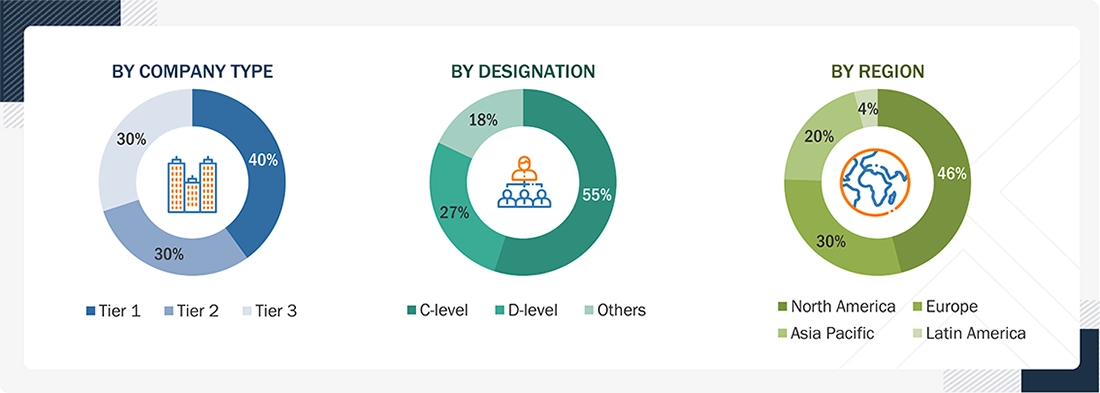
In the primary research process, various supply- and demand-side sources were interviewed to gather qualitative and quantitative information for this report. Primary sources from the supply side included industry experts such as CEOs, VPs/managing directors, marketing heads/directors and sales directors, marketing/sales managers, regional/area sales managers, export/import heads/managers, and other personnel from companies and organizations operating in the molecular diagnostics market. Primary sources from the demand side included vice presidents at law enforcement agencies, C-level executives, department heads, enterprises, individuals, supply management teams at hospitals, clinic personnel, and laboratory technicians.

Following is the breakdown of primary respondents:

Molecular Diagnostics Market
 Size, and Share

To know about the assumptions considered for the study, download the pdf brochure

Note 1: C-level primaries include CEOs, COOs, CTOs, and VPs.

Note 2: Other primaries include sales, marketing, and product managers.

Note 3: Companies are classified into tiers based on their total revenue. As of 2025: Tier 1 = >USD 1 billion, Tier 2 = USD 500 million to USD 1 billion, and Tier 3 = <USD 500 million.

Market Size Estimation

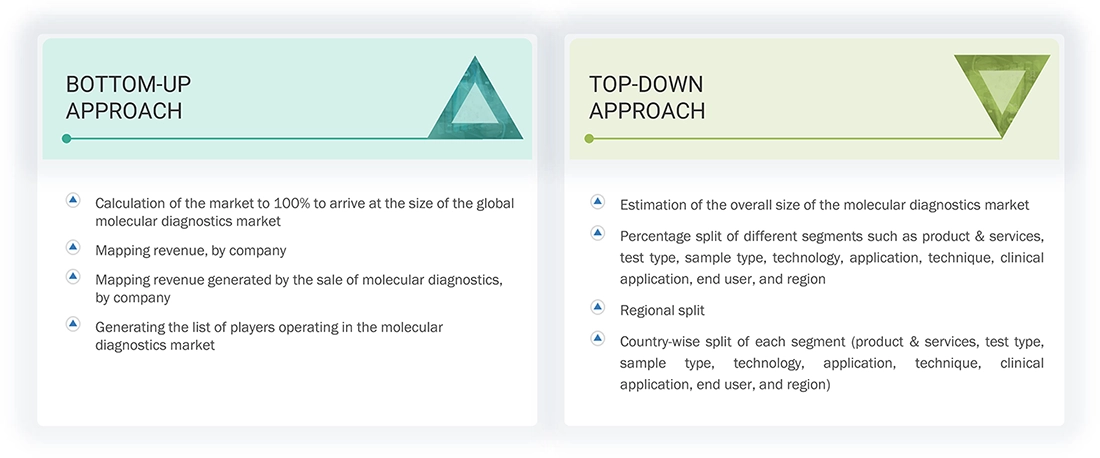
Both top-down and bottom-up approaches were used to estimate and validate the total size of the molecular diagnostics market. These methods were also used extensively to estimate the size of various market subsegments. The research methodology used to estimate the market size includes the following:

Molecular Diagnostics Market Top Down and Bottom Up Approach

Data Triangulation

The entire market was split into two segments when the market size was determined. Data triangulation and market breakdown processes were used where necessary to complete the market engineering process and arrive at precise statistics for all segments.

Approach to derive the market size and estimate market growth.

Using secondary data from paid and unpaid sources, the market rankings for the major players were determined following a thorough analysis of their molecular diagnostics sales. Due to data restrictions, revenue share in certain cases was determined after a thorough analysis of the product portfolios of large corporations and their individual sales performance. This information was verified at each stage through in-depth interviews with professionals in the field.

Market Definition

Molecular diagnostics is a technique used to identify and analyze nucleic acids or proteins at the molecular level. This technique assesses an individual’s genetic makeup to identify a predisposition to a particular disease or condition and to diagnose it.

Key Stakeholders

  • Molecular diagnostics and equipment manufacturers
  • Raw material and component suppliers
  • Medical consumable and disposable suppliers
  • Hospitals and clinical laboratories
  • Physician offices and ambulatory care centers
  • Pharmacies and medical supply stores
  • Medical device distributors and wholesalers
  • Government healthcare agencies and public procurement bodies
  • Regulatory authorities and certification organizations

Report Objectives

  • To describe, analyze, and forecast the molecular diagnostics market by product and service, test type, sample type, technology, application, technique, clinical application, end user, and region.
  • To describe and forecast the molecular diagnostics market for key regions, namely, North America, Europe, the Asia-Pacific, Latin America, and the Middle East and Africa.
  • To provide detailed information on drivers, restraints, opportunities, and challenges influencing the growth of the molecular diagnostics market.
  • To strategically analyze the ecosystem, regulations, patenting trends, value chain, Porter’s Five Forces, and pricing pertaining to the market under study.
  • To strategically analyze micromarkets1 with respect to individual growth trends, prospects, and contributions to the overall market.
  • To analyze market opportunities for stakeholders and provide details of the competitive landscape for market players.
  • To profile key players and comprehensively analyze their market shares and core competencies2 in the molecular diagnostics market.
  • To analyze competitive developments such as collaborations, acquisitions, product launches, expansions, and R&D activities in the molecular diagnostics market.

Customization Options

With the given market data, MarketsandMarkets offers customizations as per your company’s specific needs. The following customization options are available for the report:

Company Information


  • Detailed analysis and profiling of additional market players (up to 5)
Product Analysis


  • Product matrix, which gives a detailed comparison of the product portfolios of each company
Geographic Analysis


  • Further breakdown of the Rest of Asia Pacific molecular diagnostics market into Vietnam, New Zealand, and others.
  • Further breakdown of the Rest of Latin America molecular diagnostics market into Colombia, Chile, Ecuador, and others.
  • Further breakdown of the Rest of Europe molecular diagnostics market into Belgium, Russia, Netherlands, Switzerland, and others.


Key Questions Addressed by the Report

What are the recent trends affecting the molecular diagnostics market?

Key trends shaping the molecular diagnostics market include the global rise in life-threatening infectious diseases caused by pathogenic microorganisms, increasing government initiatives that promote R&D activities, and growing public awareness regarding the benefits of early disease detection.

Which test types are covered in the molecular diagnostics market report?

The two main test types covered in this study are lab and PoC. In 2024, the lab tests segment accounted for a significant market share, driven by increasing demand for automated workflows and a rising prevalence of infectious diseases. Additionally, technological advancements in diagnostic platforms have significantly contributed to the growth of the segment.

Who are the key players in the molecular diagnostics market?

The key players in this market are Danaher Corporation (US), F. Hoffmann-La Roche Ltd. (Switzerland), Illumina, Inc. (US), bioMérieux (France), Hologic, Inc. (US), Abbott (US), QIAGEN N.V. (Netherlands), Thermo Fisher Scientific Inc. (US), Revvity (US), Myriad Genetics, Inc. (US), Siemens Healthineers AG (Germany), Becton, Dickinson and Company (BD) (US), Grifols, S.A. (Spain), QuidelOrtho Corporation (US), and DiaSorin S.p.A. (Italy).

Which techniques are covered in the molecular diagnostics market report?

The two main techniques this report covers are multiplex testing and singleplex testing. In 2024, the multiplex testing segment accounted for a significant share of the global market. Its dominance was primarily driven by the technique’s ability to simultaneously detect multiple targets in a single assay, enhancing diagnostic accuracy and reducing turnaround time.

Which region is lucrative for the molecular diagnostics market?

Asia Pacific, led by rapidly developing healthcare systems, represents a high-growth region for the molecular diagnostics market. Factors such as expanding healthcare infrastructure, increasing investments in diagnostic technologies, and a growing patient population are creating substantial market opportunities across the region.

Personalize This Research

  • Triangulate with your Own Data
  • Get Data as per your Format and Definition
  • Gain a Deeper Dive on a Specific Application, Geography, Customer or Competitor
  • Any level of Personalization
Request A Free Customisation

Let Us Help You

  • What are the Known and Unknown Adjacencies Impacting the Molecular Diagnostics Market
  • What will your New Revenue Sources be?
  • Who will be your Top Customer; what will make them switch?
  • Defend your Market Share or Win Competitors
  • Get a Scorecard for Target Partners
Customized Workshop Request

Custom Market Research Services

We Will Customise The Research For You, In Case The Report Listed Above Does Not Meet With Your Requirements

Get 10% Free Customisation

TESTIMONIALS

Growth opportunities and latent adjacency in Molecular Diagnostics Market

avtar

MnM

Jun, 2022

• Due to covid, there was an increase in the demand for immunodiagnostics and molecular testing, which was regarded as the gold standard for diagnosing infectious diseases, leading to the increased sales of related consumables and kits. During the pandemic era, revenue growth for key players was majorly driven by the sales of COVID-19 diagnostic tests. The dominant model of laboratory testing throughout the world remains the centralized laboratory that uses automated analytical testing methods to detect target analytes. This trend is well established in clinical chemistry and haematology disciplines and is now extending to other areas, including immunoassays and molecular diagnostics. Reagents & kits segment accounted for the largest share in the IVD market and Oncology segment is expected to witness the fastest growth in the forecast period. With 30,000+ partners, technologies, and use-cases as the primary levers, we have deep understanding of IVD ecosystem. We offer more than 2X coverage throughout the IVD curve as compared to our competitors..

avtar

MnM

Jun, 2022

•The molecular diagnostics market is segmented into lab tests and PoC tests by test type. The lab tests segment accounted for the largest share of the molecular diagnostics market in 2021. Factors such as the increasing need for automation and the rising incidence of various infectious diseases are driving the growth of this segment. •Molecular diagnostic reagents include disease-specific kits and general reagents used during infectious disease diagnosis and pathogen screening. Laboratory technicians utilize specific disease diagnostic kits for earlier and more accurate identification of specific pathogen strains in a patient sample. General reagents are key components of a majority of conventional molecular diagnostic procedures. • Companies are now launching rapid kits and reagents to detect the novel coronavirus, which is further fueling the growth of this market segment. Regional authorities have also been actively engaged in providing emergency approvals for the use of these kits. In September 2020, Danaher Corporation (US) received Emergency Use Authorization (EUA) from the US Food & Drug Administration (FDA) for its Xpert Xpress SARS-CoV-2/Flu/RSV, a rapid molecular diagnostic test for the qualitative detection of the viruses causing COVID-19, Flu A, Flu B, and RSV infections from a single patient sample. In March 2020, QIAGEN N.V. (Netherlands) received FDA approval for its QIAstat-Dx test kit to detect coronavirus. .

avtar

Maverick

Jun, 2026

I went through the Molecular Diagnostics Market report to assess growth drivers, and it helped me better understand how infectious disease testing and oncology applications are shaping revenue opportunities across regions..

avtar

Briar

Jun, 2026

Reviewing the Molecular Diagnostics Market insights gave me a clearer technical perspective on how PCR and next-generation sequencing platforms are evolving and influencing lab adoption strategies..

avtar

Delaney

Jun, 2026

From an investment standpoint, the Molecular Diagnostics Market analysis provided useful clarity on competitive positioning and where mid-sized players can realistically capture share in a rapidly consolidating space..

THIS REPORT TELLS YOU

How big the Molecular Diagnostics market is, and who leads it.

GROWTHIQ TELLS YOU NEW

Where your company should play next, and who is taking your share.

Get your company's view of this market. Free snapshot.

DMCA.com Protection Status
popup img