
GCC Countries Aerospace Materials Market (2025-2030)

The GCC Countries Aerospace Materials Market was valued at $502.8 Million in 2025 and projected to reach to $685.2 Million by 2030, representing a compound annual growth rate of 6.4%. The aerospace materials market in GCC Countries is positioned for robust growth through 2030, driven by the region's strategic importance in global aviation networks and escalating defense modernization programs.


| Market Size in | USD 26.32 MN |
| Market Forecast in | |
| CAGR | |
| Forecast Period | |
| Units Considered | Value (USD MN) |
GCC Countries Aerospace Materials Market Trends and Insights
- GCC Countries' strategic position as a regional aviation hub and growing defense spending are driving demand for advanced composite materials, aluminum alloys, and titanium components.
- By 2030, GCC Countries is forecast to reach $685.2 million, reflecting a compound annual growth rate of 6.4%. GCC Countries' aerospace sector benefits from significant investments in commercial aviation infrastructure and military modernization programs.
- The region's major airlines and defense contractors are increasingly adopting lightweight, high-performance materials to improve fuel efficiency and operational capabilities.
- GCC Countries' market growth is supported by rising air traffic, expansion of maintenance and repair operations (MRO), and government initiatives to develop indigenous aerospace capabilities. GCC Countries remains a critical market within the Middle East Africa region, with opportunities spanning commercial aircraft manufacturing, defense applications, and space technology.
- The forecast period through 2030 indicates sustained demand as GCC Countries continues to position itself as a global aerospace hub..
Key Market Statistics
- CAGR (2025-2030) 6.4% CAGR
- Market Size, 2025 ~USD 502.8 Million
- Forecast, 2030 ~USD 685.2 Million
- Country GCC Countries
GCC Countries Aerospace Materials Market Overview
Regional Aviation Hub Growth :
GCC Countries' position as a major Middle Eastern aviation hub is driving increased demand for aerospace materials, supported by expanding airline fleets and airport infrastructure development across UAE, Saudi Arabia, and Qatar.
Defense Spending Momentum :
Rising defense budgets in GCC nations are accelerating procurement of advanced aerospace components, including composite materials and titanium alloys for military aircraft and defense systems manufacturing.
Composite Materials Adoption :
GCC aerospace manufacturers are increasingly adopting advanced composite materials to reduce aircraft weight and improve fuel efficiency, aligning with regional sustainability initiatives and operational cost reduction goals.
Strategic Manufacturing Investments :
Major aerospace OEMs and Tier-1 suppliers are establishing regional manufacturing and assembly facilities in GCC Countries, creating localized demand for high-performance aerospace materials and components.
GCC Countries Aerospace Materials Market Dynamics
- The market's 6.4% CAGR reflects steady expansion as airlines based in the GCC expand their fleets and maintenance, repair, and overhaul (MRO) operations increase demand for replacement materials and components. Key growth catalysts include investments in domestic aerospace manufacturing capabilities, particularly in the UAE and Saudi Arabia, coupled with rising military spending across the region.
- The shift toward lightweight composite materials and advanced alloys will continue to support market expansion, with the market reaching $685.2 million by 2030.
- Regional partnerships with global aerospace suppliers and increasing localization of production will further strengthen market dynamics..
Market Ecosystem
Related Ecosystem
Fibers And Composites
- Polyetheretherketone (PEEK)
- Polyphenylene Sulfide (PPS)
- Epoxy Resin
- Polycarbonate
- Polyester Resin
- Toray Industries, Inc.
- Teijin Limited
- Sgl carbon se
- Hexcel Corporation
- Solvay sa
Key Takeaways
- GCC Countries aerospace materials market valued at $502.8M in 2025, expanding to $685.2M by 2030 at 6.4% CAGR
- GCC Countries' regional aviation hub status and defense modernization drive demand for advanced composites and titanium alloys
- GCC Countries benefits from rising air traffic and MRO expansion, supporting sustained material consumption through 2030
- GCC Countries government initiatives to develop indigenous aerospace capabilities create long-term growth opportunities in the sector
Aerospace Materials Market Report Scope
| Report Metric | Details |
|---|---|
| Base Year | 2025 |
| Fastest Growing Segment | COMPOSITE MATERIALS (Type) |
| Forecast Period | 2025-2030 |
| Growth Rate | CAGR of 8.4% from 2025 to 2030 |
| Largest Segment | EXTERIOR (Application) |
| Market Size Base Year (Billions) | ~USD 41.62 (2025) |
| Revenue Forecast (Billions) | ~USD 62.3 (2030) |
| Segments Covered | Type, Aircraft Type, Application |
GCC Countries Aerospace Materials Market Report Segmentation
3 segment dimensions are covered across the global market.
By Type
- Aluminum Alloys
- Composite Materials
- Other Types
- Steel Alloys
- Super Alloys
- Titanium Alloys
By Aircraft Type
- Business & General Aviation
- Civil Helicopter
- Commercial Aircraft
- Military Aircraft
- Other Aircraft Types
By Application
- Exterior
- Interior
Target Audience
- Aerospace Material Suppliers : Suppliers of composites, alloys, and specialty materials need GCC-specific demand forecasts to optimize inventory, plan capacity expansion, and develop targeted sales strategies for regional OEMs and MRO providers.
- Aircraft Manufacturers & OEMs : Major aerospace OEMs establishing or expanding regional manufacturing in GCC Countries require detailed material market data to source locally, negotiate supplier contracts, and align production with regional demand.
- Defense & Military Procurement : GCC defense ministries and military procurement agencies use market intelligence to evaluate domestic aerospace material capabilities, plan modernization programs, and assess localization opportunities for defense platforms.
- MRO & Maintenance Service Providers : Maintenance, repair, and overhaul operators in the GCC region need material demand forecasts to stock replacement components, plan service capacity, and identify growth opportunities in the expanding regional aviation sector.
- Investment & Strategy Consultants : Management consultants and investment firms advising aerospace clients on GCC expansion require market-specific data to validate business cases, identify partnership opportunities, and assess regional market entry strategies.
Reasons to Buy this Report
- Regional Market Sizing & Forecasts : Obtain precise market valuations specific to GCC Countries with detailed 2025-2030 projections, enabling accurate budget allocation and investment planning for regional aerospace operations and supply chain strategies.
- Defense & Aviation Demand Drivers : Understand how GCC defense spending and regional aviation hub expansion directly impact aerospace materials procurement, helping suppliers and manufacturers identify high-growth customer segments and contract opportunities.
- Material Type & Application Insights : Access detailed breakdowns of composite materials, aluminum alloys, and titanium component demand across GCC military, commercial, and MRO sectors to optimize product portfolios and market positioning.
- Competitive Landscape Analysis : Identify key suppliers, OEMs, and Tier-1 manufacturers operating in GCC Countries, including localization trends and partnership opportunities that shape regional market dynamics and competitive advantages.
- Strategic Investment Guidance : Leverage GCC-specific market intelligence to evaluate manufacturing facility locations, joint venture opportunities, and supply chain investments aligned with regional growth trajectories and government initiatives.
Frequently asked questions
What is the current size of the aerospace materials market in GCC Countries?
The aerospace materials market in GCC Countries is estimated at $502.8 million in 2025, with verified data confirming this market valuation for the base year.
What is the projected market size for GCC Countries by 2030?
GCC Countries' aerospace materials market is forecast to reach $685.2 million by 2030, representing growth from the 2025 baseline.
What is the CAGR for aerospace materials in GCC Countries?
The compound annual growth rate for GCC Countries' aerospace materials market is 6.4% between 2025 and 2030.
Which materials drive demand in GCC Countries' aerospace sector?
GCC Countries' aerospace demand is driven by advanced composite materials, aluminum alloys, and titanium components used in commercial and defense applications.
What factors support growth in GCC Countries' aerospace materials market?
GCC Countries' market growth is supported by rising air traffic, MRO expansion, defense modernization, and government initiatives to develop indigenous aerospace capabilities.
RESEARCH METHODOLOGY
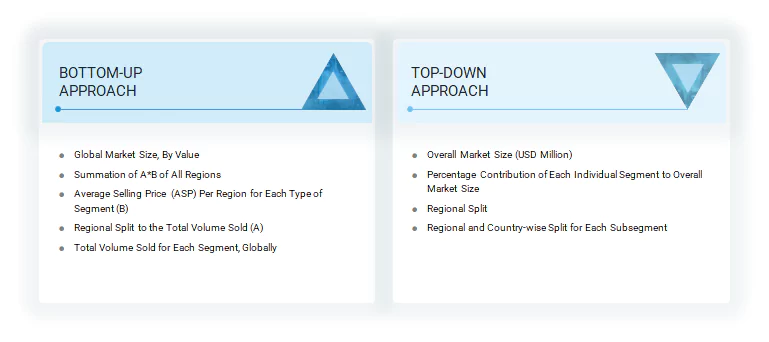
The study to estimate the current size of the aerospace materials market involved two key steps. First, comprehensive secondary research was conducted to gather data on the market itself, as well as related and parent markets. This was followed by primary research, where insights, assumptions, and market estimates were validated through interviews with industry experts across the value chain. Both top-down and bottom-up methodologies were applied to determine the overall market size. Finally, the market was segmented, and data triangulation techniques were used to refine and validate the estimates for each segment and subsegment.
Secondary Research
Secondary sources consulted for this research included financial reports of aerospace materials manufacturers, along with data from trade organizations, business publications, and professional associations. This secondary research provided essential insights into the industry's value chain, identified key players, and helped classify and segment the market based on prevailing industry trends down to the regional and sub-regional levels. The information gathered was thoroughly analyzed to estimate the overall size of the aerospace materials market, which was then validated through primary research with industry experts.
Primary Research
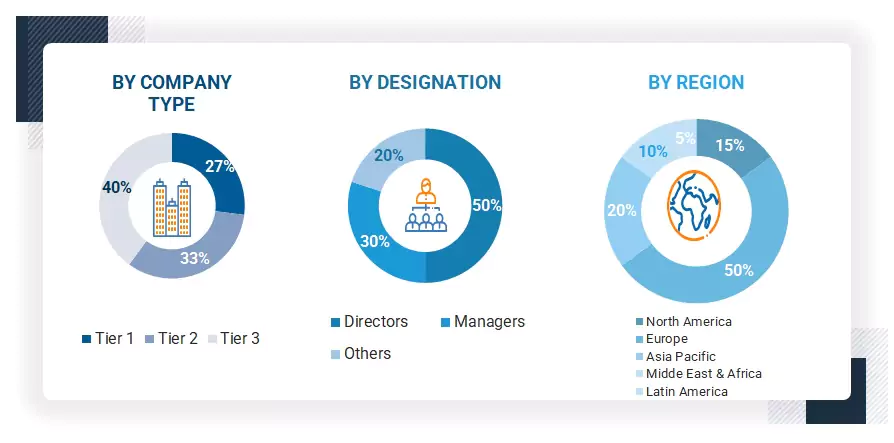
Extensive primary research was carried out following the collection of market insights through secondary research to validate the aerospace materials market scenario. Numerous interviews were conducted with industry experts from both the demand and supply sides across key regions, including North America, Europe, Asia Pacific, the Middle East & Africa, and South America. Primary data was gathered through structured questionnaires, emails, and telephonic interviews. On the supply side, respondents included industry professionals such as CXOs, Vice Presidents, Directors of business development, marketing, product innovation teams, system integrators, component suppliers, distributors, and key opinion leaders in the aerospace materials space. These interviews provided valuable insights into market statistics, revenue data, segmentation, size estimations, forecasts, and enabled data triangulation. On the demand side, stakeholders such as CIOs, CTOs, CSOs, and installation teams from end-user organizations were consulted to gain a better understanding of customer perspectives, current usage patterns, supplier evaluations, and the future outlook for aerospace materials, all of which influence the overall market dynamics.
To know about the assumptions considered for the study, download the pdf brochure
Market Size Estimation
The research methodology used to estimate the size of the aerospace materials market primarily focused on a demand-side approach. Market sizing was conducted by analyzing procurement activities and modernization efforts involving aerospace composite products across various applications at the regional level. These procurement trends offered valuable insights into the demand patterns within the aerospace materials industry for each application segment. All relevant segments were thoroughly mapped and integrated to provide a comprehensive view of the market structure and size across different end-use applications.
Data Triangulation
After estimating the overall market size through the process described above, the total market was further segmented into various segments and subsegments. To ensure accuracy, data triangulation and market breakdown techniques were applied wherever relevant, forming a key part of the overall market engineering process. This involved analyzing multiple factors and trends from both the demand and supply sides. Additionally, the final market size and segment-level figures were validated using a combination of top-down and bottom-up approaches to ensure precision and reliability of the statistical estimates.
Market Definition
Aerospace materials are specialized materials engineered to deliver high performance under the extreme operating conditions of aircraft and spacecraft, characterized by their lightweight properties, high strength-to-weight ratio, and resistance to fatigue, creep, and corrosion. These include composites, which combine carbon, glass, or aramid fibers in a resin matrix to provide lightweight strength for fuselage, wings, and interiors; titanium alloys, valued for their high strength, corrosion resistance, and temperature endurance; aluminum alloys, widely used for their light weight, corrosion resistance, and machinability in fuselage and wing structures; steel alloys, offering exceptional strength and durability for landing gear, fasteners, and load-bearing components; and super alloys (nickel-, cobalt-, and iron-based), critical in jet engines and turbines for their ability to withstand extreme heat. Other advanced materials include GLARE (Glass Laminate Aluminum Reinforced Epoxy), which combines aluminum and glass fibers to offer fatigue resistance and damage tolerance, ceramics for thermal protection systems, and magnesium alloys for lightweight structural and interior applications. Collectively, these materials enable the aerospace industry to achieve greater efficiency, durability, safety, and innovation in modern aircraft and space vehicles.
Stakeholders
- Aerospace materials manufacturers
- Aircraft manufacturers
- Universities, governments, and research organizations
- Aerospace composites and composite associations and industrial bodies
- Research and consulting firms
- R&D institutions
- Environmental support agencies
- Investment banks and private equity firms
Report Objectives
- To define, describe, and forecast the aerospace materials market size in terms of volume and value
- To provide detailed information regarding the key factors, such as drivers, restraints, opportunities, and challenges influencing market growth
- To analyze and project the global aerospace materials market by type, aircraft type, application, and region
- To forecast the market size concerning five main regions (along with country-level data), namely, North America, Europe, Asia Pacific, South America, and the Middle East & Africa, and analyze the significant region-specific trends
- To strategically analyze micromarkets with respect to individual growth trends, prospects, and contributions of the submarkets to the overall market
- To analyze the market opportunities and the competitive landscape for stakeholders and market leaders
- To assess recent market developments and competitive strategies, such as agreements, contracts, acquisitions, and new product developments/new product launches, to draw the competitive landscape
- To strategically profile the key market players and comprehensively analyze their core competencies
Get the Full Aerospace Materials Market Report
Full forecast, segment splits, and company analysis for all Aerospace Materials Market.
- US Aerospace Materials Market
- Canada Aerospace Materials Market
- Mexico Aerospace Materials Market
- Germany Aerospace Materials Market
- France Aerospace Materials Market
- UK Aerospace Materials Market
- Turkey Aerospace Materials Market
- Russia Aerospace Materials Market
- China Aerospace Materials Market
- Japan Aerospace Materials Market
- India Aerospace Materials Market
- South Korea Aerospace Materials Market
- Indonesia Aerospace Materials Market
- Brazil Aerospace Materials Market
- Argentina Aerospace Materials Market
- Israel Aerospace Materials Market
- South Africa Aerospace Materials Market
- Rest Of Europe Aerospace Materials Market
- Rest Of Asia Pacific Aerospace Materials Market
- -Rest Of GCC Countries Aerospace Materials Market
- Rest Of South America Aerospace Materials Market
Need a Tailored Report?
Customize this report to your needs
Get 10% FREE Customization
Customize This Report
