
Spain AI in Sports Market (2024-2029)

The Spain AI in Sports Market was valued at $34.2 Million in 2024 and projected to reach to $99.3 Million by 2029, representing a compound annual growth rate of 19.4%. Spain's AI in Sports market is positioned for exceptional growth through 2029, driven by increasing digitalization of professional sports leagues, substantial investment from technology companies, and growing adoption among mid-tier clubs seeking competitive advantages.


| Market Size in | USD 26.32 MN |
| Market Forecast in | |
| CAGR | |
| Forecast Period | |
| Units Considered | Value (USD MN) |
Spain AI in Sports Market Trends and Insights
- This represents a compound annual growth rate of 19.4%, significantly outpacing global trends and reflecting Spain's increasing adoption of artificial intelligence technologies across professional sports, fan engagement, and performance analytics.
- Spain's sports industry, home to world-renowned football clubs and athletic organizations, is leveraging AI for player performance optimization, injury prevention, and real-time game analytics. The forecast period from 2024 to 2029 demonstrates Spain's commitment to digital transformation within its sports ecosystem.
- Spain is witnessing growing investment in AI-powered solutions for talent scouting, predictive analytics, and personalized fan experiences.
- Major Spanish sports franchises and emerging technology startups are driving innovation in computer vision, machine learning, and data analytics applications.
- Spain's strategic position in Europe, combined with its sports heritage and tech-savvy population, positions the country as a key growth market for AI in Sports solutions..
Key Market Statistics
- CAGR (2024-2029) 19.4% CAGR
- Market Size, 2024 ~USD 34.2 Million
- Forecast, 2029 ~USD 99.3 Million
- Country Spain
Spain AI in Sports Market Overview
Market Growth Acceleration :
Spain's AI in Sports market is expanding at 19.4% CAGR, significantly outpacing the global rate of 16.7%, demonstrating strong regional momentum and investor confidence in Spanish sports technology adoption.
Valuation Trajectory :
The market is projected to nearly triple from $34.2 million in 2024 to $99.3 million by 2029, reflecting increasing investment in AI-driven performance analytics, fan engagement platforms, and operational efficiency across Spanish sports organizations.
Professional Sports Integration :
Spanish football clubs, basketball teams, and other professional sports entities are rapidly adopting AI technologies for player performance analysis, injury prevention, tactical optimization, and real-time decision-making capabilities.
Fan Engagement Innovation :
Spanish sports organizations are leveraging AI for personalized fan experiences, predictive analytics, content recommendation, and interactive platforms, driving engagement and revenue diversification in the competitive Spanish sports market.
Spain AI in Sports Market Dynamics
- The Spanish sports ecosystem, anchored by world-class football clubs and diverse athletic organizations, provides a robust foundation for AI implementation across performance analytics, injury management, and fan engagement platforms. Key growth catalysts include regulatory support for sports technology innovation, partnerships between Spanish tech firms and sports organizations, and rising demand for data-driven decision-making.
- As Spanish clubs compete internationally, AI adoption becomes essential for maintaining competitive standards.
- The market will likely see consolidation around leading AI platforms while emerging startups capture niche opportunities in specialized sports analytics and fan experience personalization..
Market Ecosystem
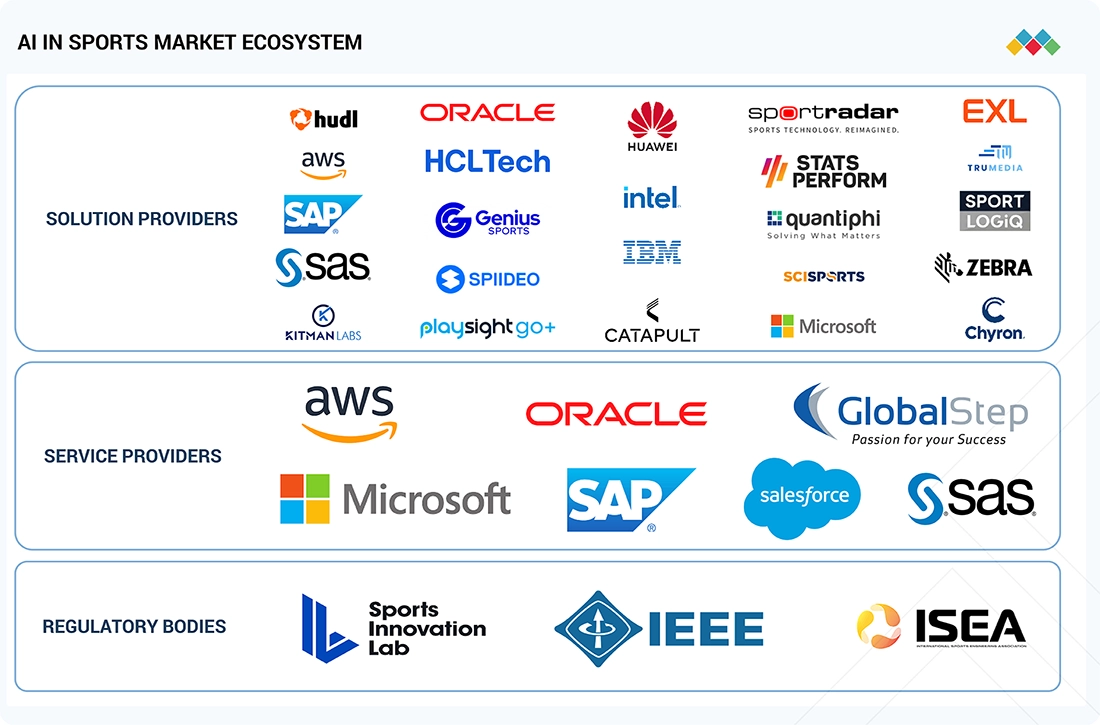
AI in Sports Market: COMMERCIAL USE CASES ACROSS INDUSTRIES
| COMPANY | USE CASE DESCRIPTION | BENEFITS |
|---|---|---|
 |
Catapult is an Australian sports analytics company founded in 1999 through collaboration with the Australian Institute of Sport (AIS) and the Australian Cooperative Research Centres (CRC) Program. The company specializes in wearable technology to monitor and measure athletes’ performance in real time. FIFA needed to approve Catapult's wearable tracking devices for use in live games. | Gained global recognition and expanded its reach to over 500 sports teams. Strengthened its brand by securing partnerships with major football teams in the 2018 FIFA World Cup. Increased its market value by around USD 200 million. |
 |
Orlando Magic is a professional basketball team based in Orlando, Florida, competing in the NBA. The team is committed to enhancing fan experiences in the arena and through digital channels. Orlando Magic also aims to optimize operational efficiency and increase profitability across its business operations. The team needed to improve fan engagement by delivering personalized and real-time experiences during games and beyond. | Enhanced fan engagement with tailored experiences, improving satisfaction and loyalty. Increased ticket sales and revenue through data-driven pricing and promotions. Streamlined operations and decision-making processes with real-time insights. Improved ability to measure and predict fan behaviors, creating more personalized marketing opportunities |
 |
Vodafone is a global telecommunications company that provides mobile and broadband services, with operations in over 20 countries. The company sought to enhance its sports content offerings through AI-driven insights. | Vodafone integrated Stats Perform’s AI technology, enabling real-time data analysis and predictive insights. This improved match engagement by delivering dynamic, tailored content to viewers and attracted six months' worth of users in just one week. Increased engagement through customized match insights. |
Logos and trademarks shown above are the property of their respective owners. Their use here is for informational and illustrative purposes only.
Related Ecosystem
Software And Services
- Natural Language Processing (NLP)
- Machine Learning
- Supply Chain Management
- Predictive Analytics
- Image Sensors
- International Business Machines Corporation
- MICROSOFT CORPORATION
- Oracle Corporation
- SAP SE
- Amazon.com, Inc.
Analytics
- Natural Language Processing (NLP)
- Machine Learning
- Supply Chain Management
- Predictive Analytics
- Image Sensors
- International Business Machines Corporation
- MICROSOFT CORPORATION
- Oracle Corporation
- SAP SE
Key Takeaways
- Spain's AI in Sports market is valued at $34.2 million in 2024 and is forecast to grow to $99.3 million by 2029, representing a 19.4% CAGR.
- Spain's growth rate significantly exceeds the global average of 16.7%, indicating accelerated adoption of AI technologies in Spanish sports organizations.
- Spain's world-class football clubs and sports franchises are primary drivers of AI investment in performance analytics, player development, and fan engagement.
- Spain's strategic European location and tech infrastructure position it as a regional hub for AI sports innovation and cross-border sports technology partnerships.
AI in Sports Market Report Scope
| Report Metric | Details |
|---|---|
| Base Year | 2024 |
| Fastest Growing Segment | FAN ENGAGEMENT (Application) |
| Forecast Period | 2024-2029 |
| Growth Rate | CAGR of 16.7% from 2024 to 2029 |
| Largest Segment | DEVICES (Technology) |
| Market Size Base Year (Billions) | ~USD 1.03 (2024) |
| Revenue Forecast (Billions) | ~USD 2.24 (2029) |
| Segments Covered | Offering, Sports Solution, Service Type, Type, Sports Type, End User, Solution, Service, Professional Service, Individual Sport, Team Sport, Technology, Sports, Component, Deployment Mode, Application |
Spain AI in Sports Market Report Segmentation
16 segment dimensions are covered across the global market.
By Offering
- Services
- Solutions
By Sports Solution
- Broadcast Management
- Fan Engagement & Experience Enhancement
- Game Strategy & Coaching Solutions
- Other Solutions
- Performance Analytics
- Player Monitoring
By Service Type
- Managed Services
- Professional Services
By Type
- American Football/Rugby
- Athletics
- Baseball
- Basketball
- Boxing
- Consulting
- Cricket
- E-Sports
- Generative AI
- Hockey
- Individual Sports
- Other AI
- Racing
- Soccer
- Support & Maintenance
- System Integration & Implementation
- Team Sports
- Tennis
By Sports Type
- E-Sports
- Individual Sports
- Team Sports
By End User
- Athletes
- Clubs
- Coaches
- Leagues
- Other End Users
- Sports Associations
- Sports Media & Broadcasting
- Sports Teams
By Solution
- Broadcast Management
- Fan Engagement And Experience Enhancement
- Game Strategy And Coaching Solutions
- Other Solutions
- Performance Analytics
- Player Monitoring
By Service
- Managed Services
- Professional Services
By Professional Service
- Consulting
- Support & Maintenance
- System Integration & Implementation
By Individual Sport
- Athletics
- Boxing
- Racing
- Tennis
By Team Sport
- American Football/Rugby
- Baseball
- Basketball
- Cricket
- Hockey
- Soccer
By Technology
- Devices
- E-Sports
- Smart Stadiums
- Sports Analytics
By Sports
- American Football/Rugby
- Baseball
- Basketball
- Cricket
- E-Sports
- Golf
- ICE Hockey
- Soccer
- Tennis
By Component
- Services
- Solutions
By Deployment Mode
- Cloud
- On-Premises
By Application
- Broadcast Management
- Fan Engagement
- Other Applications
- Performance Analytics
- Player And Team Valuation
- Player Fitness And Safety
Target Audience
- Sports Technology Vendors : AI software and analytics platform providers need Spain-specific market intelligence to prioritize product localization, identify target customer segments among Spanish clubs, and develop region-appropriate pricing and partnership strategies.
- Investment & Private Equity Firms : Investors evaluating Spanish sports tech opportunities require detailed market sizing, growth trajectories, and competitive landscape analysis to validate investment theses and support due diligence for portfolio companies.
- Spanish Sports Organizations : Professional clubs, leagues, and sports management entities need market benchmarking data to justify AI technology investments, evaluate vendor solutions, and understand competitive adoption rates among peer organizations.
- Management Consulting Firms : Consultants advising Spanish sports clients on digital transformation and technology strategy require market data, trend analysis, and implementation benchmarks to develop credible recommendations and business cases.
- Corporate Strategy & Innovation Teams : Technology companies and sports media organizations exploring Spanish market expansion need regional market intelligence, growth drivers, and customer insights to inform strategic planning and resource allocation decisions.
Reasons to Buy this Report
- Market Entry Strategy : Comprehensive analysis of Spain's unique AI adoption landscape, competitive dynamics, and regulatory environment enables informed market entry decisions and localized go-to-market strategies for technology providers and investors.
- Investment Opportunity Assessment : Detailed market sizing and growth projections through 2029 provide quantifiable investment thesis validation, helping venture capital, private equity, and corporate investors identify high-potential opportunities in Spanish sports technology.
- Competitive Positioning : Understand Spain-specific market trends, key players, and emerging segments to benchmark competitive positioning, identify white-space opportunities, and develop differentiated value propositions for Spanish sports organizations.
- Stakeholder Alignment : Data-driven insights support executive presentations, board discussions, and partnership negotiations with Spanish sports clubs, leagues, and technology partners by demonstrating market momentum and growth potential.
- Risk Mitigation : Identify market headwinds, adoption barriers, and regional challenges specific to Spain's sports industry to develop contingency plans and realistic financial projections for business planning and forecasting.
Frequently asked questions
What is the current market size of AI in Sports in Spain?
Spain's AI in Sports market was valued at $34.2 million in 2024 and is projected to reach $99.3 million by 2029.
What is the growth rate for AI in Sports in Spain?
Spain's AI in Sports market is growing at a compound annual growth rate (CAGR) of 19.4% from 2024 to 2029.
How does Spain's AI in Sports market compare to global growth?
Spain's 19.4% CAGR outpaces the global average of 16.7%, demonstrating faster adoption and investment in AI sports technologies within Spain.
What are the main applications of AI in Spain's sports industry?
Spain's sports organizations are utilizing AI for player performance analytics, injury prevention, talent scouting, predictive game analysis, and personalized fan engagement solutions.
Which sectors in Spain are driving AI in Sports adoption?
Spain's professional football clubs, major sports franchises, and emerging sports technology startups are the primary drivers of AI adoption and investment in the Spanish sports market.
RESEARCH METHODOLOGY
This research study involved the extensive use of secondary sources, directories, and databases, such as Dun & Bradstreet (D&B) Hoovers and Bloomberg BusinessWeek, to identify and collect valuable information for a technical, market-oriented, and commercial study of the AI in Sports market. The primary sources have been mainly industry experts from the core and related industries and preferred suppliers, manufacturers, distributors, service providers, technology developers, alliances, and organizations related to all segments of the value chain of this market. In-depth interviews have been conducted with primary respondents, including key industry participants, subject matter experts, C-level executives of key market players, and industry consultants, to obtain and verify critical qualitative and quantitative information.
Secondary Research
In the secondary research process, various secondary sources were referred to identify and collect information for the study. The secondary sources included annual reports, press releases, investor presentations of companies, white papers, certified publications, and articles from recognized associations and government publishing sources. Several journals and associations, such as Artificial Intelligence in Sport Programme 2024, AI for Sport Conference 2nd Edition, were also referred to. Secondary research was used to obtain key information about industry insights, the market’s monetary chain, the overall pool of key players, market classification and segmentation according to industry trends to the bottom-most level, regional markets, and key developments from both the market and technology-oriented perspectives.
Primary Research
In the primary research process, various primary sources from both the supply and demand sides were interviewed to obtain qualitative and quantitative information for the report. The primary sources from the supply side included industry experts, such as Chief Executive Officers (CEOs), Chief Technology Officers (CTOs), Chief Operating Officers (COOs), Vice Presidents (VPs), marketing directors, technology and innovation directors, and related key executives from various key companies and organizations operating in the AI in Sports market. The primary sources from the demand side included AI in Sports end users, consultants/specialists, Chief Information Officers (CIOs), and subject-matter experts from enterprises and government associations.
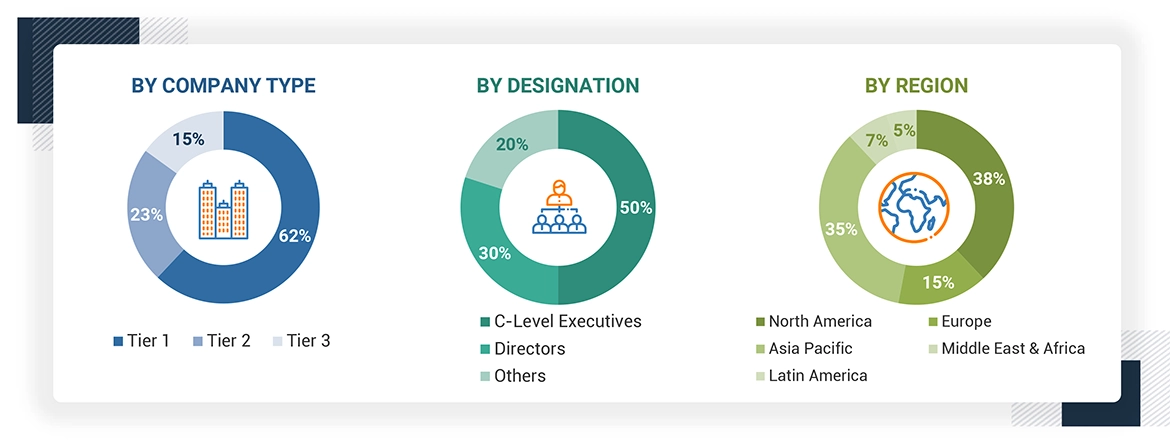
*Others include sales managers, marketing managers, and product managers.
Note: Tier 1 companies’ revenue is more than USD 1 billion; Tier 2 companies ‘revenue ranges between
USD 500 million to 1 billion; and Tier 3 companies’ revenue ranges in between USD 100 million
and USD 500 million
To know about the assumptions considered for the study, download the pdf brochure
Market Size Estimation
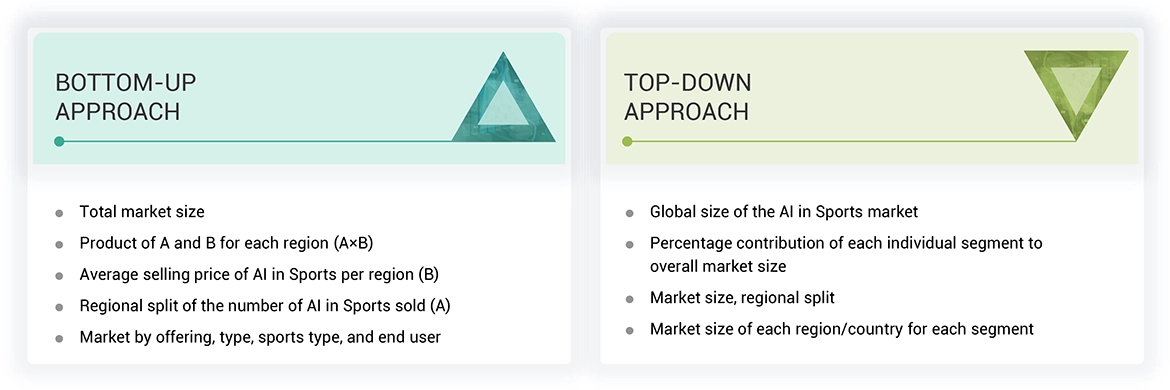
Multiple approaches were adopted to estimate and forecast the size of the AI in Sports market. The first approach involves estimating market size by summing up the revenue companies generate by selling AI solutions for Sports.
Both top-down and bottom-up approaches were used to estimate and validate the total size of the market. These methods were extensively used to estimate the size of various segments in the market. The research methodology used to estimate the market size includes the following:
- Key players in the market have been identified through extensive secondary research.
- In terms of value, the industry’s supply chain and market size have been determined through primary and secondary research processes.
- All percentage shares, splits, and breakups have been determined using secondary sources and verified through primary sources.
AI in Sports Market : Top-Down and Bottom-Up Approach
Data Triangulation
After arriving at the overall market size using the market size estimation processes as explained above, the market was split into several segments and subsegments. To complete the overall market engineering process and arrive at the exact statistics of each market segment and subsegment, data triangulation and market breakup procedures were employed, wherever applicable. The overall market size was then used in the top-down procedure to estimate the size of other individual markets via percentage splits of the market segmentation.
Market Definition
AI in Sports refers to the integration and application of artificial intelligence technologies to enhance various aspects of the sports industry. This includes improving athletic performance, optimizing game strategies, enriching fan experiences, and managing operations efficiently. AI-powered solutions in sports leverage data analytics, machine learning, computer vision, and natural language processing to analyze vast amounts of data and deliver actionable insights.
Additionally, AI automates broadcasting, generates real-time analytics, and improves operations such as ticketing, crowd management, and scheduling, transforming the way sports are played, managed, and consumed.
Stakeholders
- Sports Teams and Athletes
- Coaches and Managers
- Sports Data Providers
- Technology Providers
- Sports Broadcast Networks
- Sports Organizations
- Fans and Consumers
- Sponsors and Advertisers
- Health and Fitness Professionals
- Sports Medicine Specialists
- Sports Analytics Firms
- Sports Betting Companies
- Media and Content Creators
- Equipment Manufacturers
- Regulatory Bodies
- Esports Organizations
- Academic Institutions and Researchers
- AI Startups and Innovators
Report Objectives
- To determine, segment, and forecast the AI in Sports market based on offering (solutions and services), technology (Generative AI and Other AI), sport type (Individual Sports, Team Sports, E-Sports), end user (Sports Associations, Sports Teams, Sports Media and Broadcasting,and Other), and region in terms of value
- To forecast the size of the market segments with respect to five main regions: North America, Europe, Asia Pacific, Middle East & Africa, and Latin America
- To provide detailed information about the major factors (drivers, restraints, opportunities, and challenges) influencing the growth of the market
- To study the complete value chain and related industry segments and perform a value chain analysis of the market landscape
- To strategically analyze the macro and micromarkets1 with respect to individual growth trends, prospects, and contributions to the total market
- To analyze the industry trends, pricing data, patents, and innovations related to the market
- To analyze the opportunities for stakeholders by identifying the high-growth segments of the market
- To profile the key players in the market and comprehensively analyze their market share/ranking and core competencies
- To track and analyze competitive developments, such as mergers & acquisitions, product launches & developments, partnerships, agreements, collaborations, business expansions, and R&D activities
Available Customizations
With the given market data, MarketsandMarkets offers customizations as per the company’s specific needs. The following customization options are available for the report:
Product Analysis
- Analysis for additional countries (up to five)
Company Information
- Detailed analysis and profiling of additional market players (up to 5)
Get the Full AI in Sports Market Report
Full forecast, segment splits, and company analysis for all AI in Sports Market.
- China AI in Sports Market
- Brazil AI in Sports Market
- France AI in Sports Market
- Germany AI in Sports Market
- Italy AI in Sports Market
- Nordic Countries AI in Sports Market
- Rest Of Europe AI in Sports Market
- India AI in Sports Market
- Japan AI in Sports Market
- Rest Of Asia Pacific AI in Sports Market
- South Korea AI in Sports Market
- Southeast Asia AI in Sports Market
- Argentina AI in Sports Market
- Mexico AI in Sports Market
- Rest Of Latin America AI in Sports Market
- Bahrain AI in Sports Market
- Ksa AI in Sports Market
- Kuwait AI in Sports Market
- South Africa AI in Sports Market
- UAE AI in Sports Market
- Canada AI in Sports Market
- US AI in Sports Market
- UK AI in Sports Market
Need a Tailored Report?
Customize this report to your needs
Get 10% FREE Customization
Customize This Report
