
Asia Pacific Aluminum Fluoride (AlF3) Market (2025-2030)

The Asia Pacific Aluminum Fluoride (AlF3) Market was valued at $1087.4 Million in 2025 and projected to reach to $1486 Million by 2030, representing a compound annual growth rate of 6.4%. Asia Pacific's Aluminum Fluoride market is poised for sustained expansion, with the region's 6.4% CAGR reflecting robust industrial demand across China's dominant smelting operations, India's growing aluminum sector, and emerging applications in Southeast Asia.


| Market Size in | USD 26.32 MN |
| Market Forecast in | |
| CAGR | |
| Forecast Period | |
| Units Considered | Value (USD MN) |
Asia Pacific Aluminum Fluoride (AlF3) Market Trends and Insights
- The region's growth trajectory, driven by a 6.4% compound annual growth rate, reflects robust demand from aluminum smelting operations and fluorochemical manufacturing sectors across China, India, and Southeast Asia.
- Asia Pacific's dominance is underpinned by the region's position as a global aluminum production hub and increasing industrial applications in refrigerants and uranium enrichment. During the 2025-2030 forecast period, Asia Pacific is expected to maintain momentum through rising aluminum production capacity and stricter environmental regulations favoring fluoride-based processes.
- The region's competitive cost structure and abundant raw material access position it as a critical supply node for global AlF3 distribution.
- Strategic investments in chemical infrastructure and growing end-use industries across Asia Pacific will sustain market expansion and reinforce the region's strategic importance in the global supply chain..
Key Market Statistics
- CAGR (2025-2030) 6.4% CAGR
- Market Size, 2025 ~USD 1087.4 Million
- Forecast, 2030 ~USD 1486 Million
- Geography Asia Pacific
Asia Pacific Aluminum Fluoride (AlF3) Market Overview
China's Dominance :
China accounts for USD 940.4 million of Asia Pacific's AlF3 market, driven by its massive aluminum smelting industry and fluorochemical production capacity, representing 86.5% of the region's total market value.
India's Emerging Growth :
India's AlF3 market is valued at USD 230.8 million in 2025, positioning it as the second-largest market in Asia Pacific with accelerating demand from expanding aluminum refining and chemical manufacturing sectors.
Regional CAGR Outpaces Global :
Asia Pacific's 6.4% CAGR significantly exceeds the global growth rate of 5.9%, reflecting the region's strategic importance in aluminum production and fluorochemical innovation through 2030.
Diversified Market Base :
Japan (USD 125.8M) and South Korea (USD 94.3M) contribute specialized demand from advanced aluminum alloy manufacturing and electronics-grade fluoride applications, complementing China and India's bulk production.
Asia Pacific Aluminum Fluoride (AlF3) Market Dynamics
- The forecast growth from USD 1,087.4 million (2025) to USD 1,486.0 million (2030) underscores the region's critical role in global aluminum fluoride supply chains. Key growth drivers include increasing aluminum production capacity, rising fluorochemical manufacturing investments, and expanding end-use applications in automotive, aerospace, and electronics industries.
- China's continued industrial dominance, coupled with India's rapid industrialization and Japan's advanced manufacturing capabilities, will sustain market momentum.
- Strategic investments in production efficiency and regulatory compliance across the region will further strengthen Asia Pacific's competitive position in the global AlF3 market..
Market Ecosystem
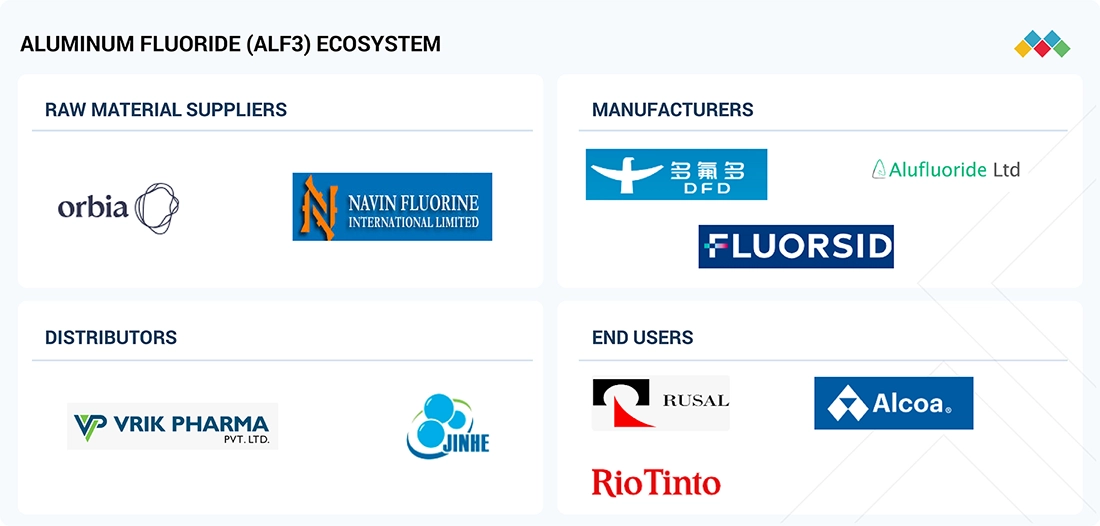
Aluminum Fluoride (AlF3): COMMERCIAL USE CASES ACROSS INDUSTRIES
| COMPANY | USE CASE DESCRIPTION | BENEFITS |
|---|---|---|
 |
Aluminum fluoride is used in primary aluminum electrolysis to improve cell stability, enhance metal purity, and optimize production efficiency. | Enhanced electrolyte conductivity, lower energy consumption, improved aluminum yield |
 |
Application of aluminum fluoride in advanced smelting cells enables controlled alumina dissolution, consistent electrolysis, and reduced energy consumption. | Reduced alumina melting point, stabilized electrolysis, extended cell life |
 |
Aluminum fluoride is used in global primary aluminum smelters to optimize electrolysis, improve energy efficiency, and consistently produce high-quality aluminum. | Enhanced electrolysis efficiency, lower energy consumption, improved aluminum yield and quality |
 |
Specialty electrical-grade aluminum incorporates aluminum fluoride to enhance conductivity, reduce defects, and maintain consistent material properties for electrical applications. | Improved conductivity, reduced defects, stable quality for electrical components |
Logos and trademarks shown above are the property of their respective owners. Their use here is for informational and illustrative purposes only.
Related Ecosystem
Bulk Chemicals And Inorganics
- Corrosion Inhibitors
- Glycol Ethers
- Acetic Acid
- Acetone
- Ammonium Nitrate
- Basf se
- DOW CHEMICAL COMPANY
- Exxon Mobil Corporation
- AZELIS HOLDINGS SA
- Sinopec limited
Key Takeaways
- Asia Pacific AlF3 market valued at USD 1,087.4 million in 2025, expanding to USD 1,486.0 million by 2030 at 6.4% CAGR.
- China and India drive Asia Pacific demand through dominant aluminum smelting capacity and fluorochemical manufacturing growth.
- Asia Pacific's cost competitiveness and raw material availability position the region as the global AlF3 supply backbone.
- Regulatory support for fluoride-based processes and rising end-use applications sustain Asia Pacific market momentum through 2030.
Aluminum Fluoride (AlF3) Market Report Scope
| Report Metric | Details |
|---|---|
| Base Year | 2025 |
| Fastest Growing Segment | ELECTROLYTE ADDITIVE (Application) |
| Forecast Period | 2025-2030 |
| Growth Rate | CAGR of 5.9% from 2025 to 2030 |
| Largest Segment | HIGH-BULK DENSITY (Bulk Density) |
| Market Size Base Year (Billions) | ~USD 2.34 (2025) |
| Revenue Forecast (Billions) | ~USD 3.12 (2030) |
| Segments Covered | Grade, Product Type, Form, Bulk Density, Application, End-Use Industry |
Asia Pacific Aluminum Fluoride (AlF3) Market Report Segmentation
6 segment dimensions are covered across the global market.
By Grade
- Catalyst Grade
- High-Purity Grade
- Laboratory Grade
- Smelter Grade
- Technical Grade
By Product Type
- Anhydrous
- Dry
- Wet
By Form
- Granule
- Pellet
- Powder
By Bulk Density
- High-Bulk Density
- Low-Bulk Density
By Application
- Catalyst/Catalyst Support
- Electrolyte Additive
- Fluoro Intermediate
- Flux Agent
- Functional Additive
- Optical Coating Material
- Other Applications
By End-Use Industry
- Aerospace
- Aluminum
- Aluminum Industry
- Automotive
- Ceramics & Glass
- Chemical & Petrochemical
- Construction
- Electronics & Optics
- Other End-Use Industries
Target Audience
- Aluminum Smelting Operators : Producers and operators in China, India, and Japan require detailed AlF3 market data to optimize procurement strategies, forecast raw material costs, and plan production capacity expansions.
- Fluorochemical Manufacturers : Chemical producers across Asia Pacific need regional market insights to identify growth opportunities, assess competitive positioning, and develop product portfolios aligned with regional demand trends.
- Investment & Private Equity Firms : Investors evaluating opportunities in Asia Pacific's chemicals and materials sector require comprehensive market sizing and growth forecasts to support due diligence and portfolio decisions.
- Supply Chain & Procurement Managers : Corporate procurement teams need country-specific market data to negotiate supplier contracts, diversify sourcing across China, India, and Japan, and mitigate supply chain risks.
- Market Entry & Business Development Teams : Companies planning regional expansion require granular Asia Pacific market intelligence to identify high-growth countries, assess market saturation, and develop localized go-to-market strategies.
Countries within Asia Pacific - compare and drill down
| Country | 2025 size (native) |
|---|---|
| China | USD 940.4 Million |
| India | USD 230.8 Million |
| Japan | USD 125.8 Million |
| South Korea | USD 94.3 Million |
| Rest Of Asia Pacific | USD 94.7 Million |
Country market size visualization
Reasons to Buy this Report
- Country-Level Market Granularity : Access detailed market sizing for China (USD 940.4M), India (USD 230.8M), Japan (USD 125.8M), and South Korea (USD 94.3M), enabling precise regional investment and expansion strategies.
- Competitive Landscape Intelligence : Understand market dynamics across Asia Pacific's diverse industrial base, from China's bulk production dominance to Japan's specialty applications, informing competitive positioning and partnership opportunities.
- Growth Trajectory Validation : Leverage the region's 6.4% CAGR—outpacing global 5.9% growth—to identify high-potential markets and justify capital allocation decisions for aluminum fluoride production and distribution expansion.
- End-Market Demand Insights : Gain actionable intelligence on aluminum smelting, fluorochemical manufacturing, and emerging applications driving demand across China, India, and Southeast Asia through 2030.
- Strategic Planning & Forecasting : Utilize 2025-2030 market projections (USD 1,486.0M by 2030) to develop long-term supply chain strategies, capacity planning, and market entry roadmaps specific to Asia Pacific's growth trajectory.
Frequently asked questions
What is the market size of Aluminum Fluoride in Asia Pacific?
Asia Pacific's Aluminum Fluoride market is valued at USD 1,087.4 million in 2025 and is projected to reach USD 1,486.0 million by 2030.
What is the CAGR for Asia Pacific Aluminum Fluoride market?
The Asia Pacific Aluminum Fluoride market is expected to grow at a compound annual growth rate of 6.4% from 2025 to 2030.
Which countries drive Aluminum Fluoride demand in Asia Pacific?
China and India are the primary demand drivers in Asia Pacific, leveraging their dominant aluminum smelting capacity and expanding fluorochemical manufacturing sectors.
What are the main end-use applications for AlF3 in Asia Pacific?
Key applications in Asia Pacific include aluminum smelting flux, refrigerant production, uranium enrichment, and specialty fluorochemical manufacturing.
How does Asia Pacific's AlF3 market compare to global trends?
Asia Pacific's 6.4% CAGR outpaces the global 5.9% CAGR, reflecting the region's stronger industrial growth and aluminum production expansion through 2030.
RESEARCH METHODOLOGY
The study involved four main activities to estimate the aluminum fluoride (AlF3) market size. Extensive secondary research was conducted to gather information on the market, related markets, and the parent market. The next step was to validate these findings, assumptions, and size estimates with industry experts across the value chain through primary research. Both top-down and bottom-up approaches were used to determine the total market size. Later, market breakdown and data triangulation methods were employed to estimate the sizes of segments and subsegments.
Secondary Research
Various sources were consulted during the secondary research process to gather information for this study. These sources include annual reports, press releases, investor presentations of companies, white papers, certified publications, trade directories, articles from recognized authors, reputable websites, and databases. Secondary research was used to obtain key details about the industry’s value chain, monetary chain, market classification, and segmentation based on industry trends down to the most specific level, and regional markets. It also helped gather information about major developments from a market-oriented perspective.
Primary Research
The aluminum fluoride (AlF3) market includes several stakeholders in the supply chain, such as raw material suppliers, manufacturers, and end users. Various key sources from both the supply and demand sides of the aluminum fluoride (AlF3) market have been interviewed to gather qualitative and quantitative data. On the demand side, primary interviewees include influential leaders in end-use industries. On the supply side, primary sources consist of manufacturers, associations, and institutions involved in the AlF3 industry.
Primary interviews were conducted to gather insights such as market statistics, revenue data from products and services, market breakdowns, market size estimates, market forecasts, and data triangulation. Primary research also helped understand various product types, forms, grades, bulk densities, applications, end-use industries, and regional trends. Stakeholders from the demand side, including CIOs, CTOs, and CSOs, were interviewed to understand the buyers’ perspectives on suppliers, products, component providers, and their current use of AlF3, as well as the future outlook of their business, which will influence the overall market.
The breakdown of profiles of the primary interviewees is illustrated in the figure below:
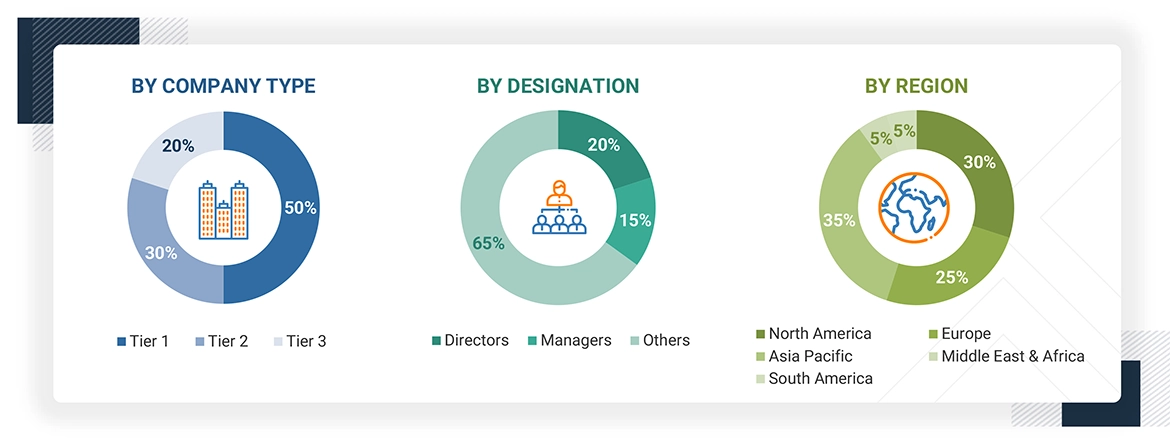
Note: Tier 1, Tier 2, and Tier 3 companies are classified based on their market revenue in 2024, available in the public domain, product portfolios, and geographical presence.
Other designations include sales representatives, production heads, and technicians.
To know about the assumptions considered for the study, download the pdf brochure
Market Size Estimation
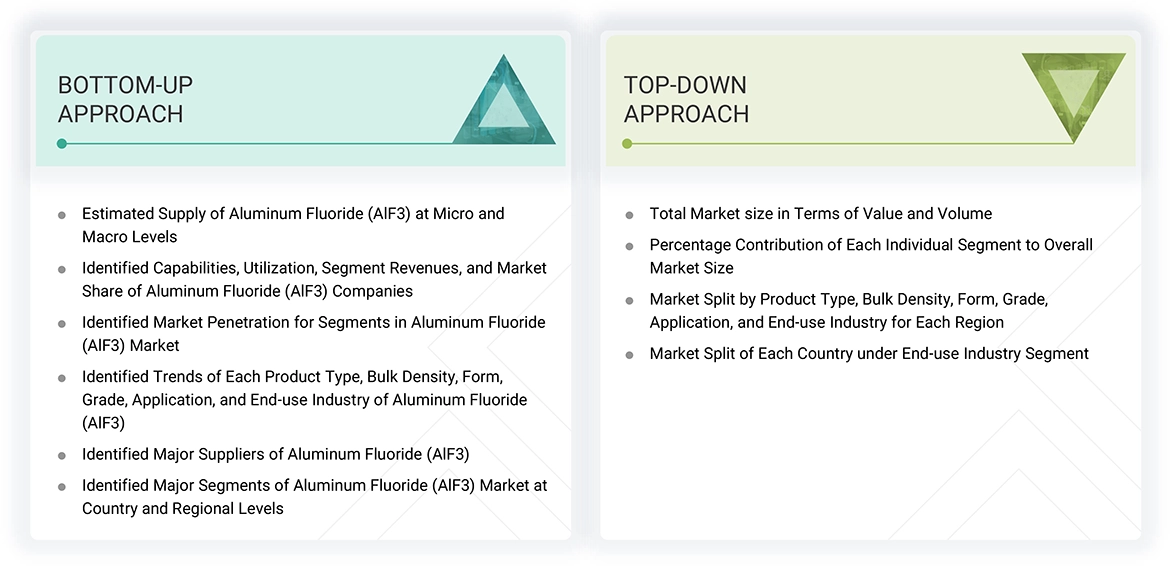
The top-down approach was used to estimate and validate the size of various submarkets of the AlF3 market for each region. The research methodology used to estimate the market size included the following steps:
- The key players in the industry have been identified through extensive secondary research.
- The supply chain has been mapped out using both primary and secondary research.
- The global market was then divided into five major regions, which industry experts confirmed.
- All percentage shares, splits, and breakdowns based on product type, bulk density, form, grade, application, end-use industry, and regions were determined from secondary sources and verified through primary sources.
- All possible parameters influencing the markets discussed in this research were thoroughly examined, verified through primary research, and analyzed to produce the final quantitative and qualitative data. This data was then consolidated, supplemented with detailed inputs and analysis, and presented in this report.
Data Triangulation
After estimating the total market size for Aluminum Fluoride (AlF3), the overall market has been divided into several segments and sub-segments. Data triangulation and market breakdown procedures have been used wherever applicable to complete the market analysis and determine accurate statistics for all segments. The data was triangulated by examining various factors and trends from both the demand and supply sides. Additionally, the market size was validated using both top-down and bottom-up approaches, along with primary interviews. Therefore, three sources were utilized for each data segment: top-down approach, bottom-up approach, and expert interviews. The data was considered accurate when the values from the three sources matched.
Market Definition
Aluminum Fluoride (AlF3) is a crucial chemical compound widely used in aluminum production to boost the smelting process’s efficiency by lowering alumina’s melting point, reducing energy use, and increasing overall output. Its main use is aluminum smelting, which helps increase production while maintaining operational efficiency. Beyond aluminum, AlF3 is also used in chemical manufacturing, ceramics, and glass-making, showing its versatility across different industries. The demand for aluminum fluoride closely follows the growth of aluminum production and expanding industrial activities that need lightweight, durable metals. Factors like the availability of raw materials, advancements in production technology, and the focus on high-purity, environmentally friendly manufacturing all support the market’s steady growth. As industrialization rises, infrastructure projects grow, and energy-efficient production methods become more common, the importance and long-term prospects of the aluminum fluoride (AlF3) market worldwide continue to strengthen.
Stakeholders
- AlF3 manufacturers
- AlF3 traders, distributors, and suppliers
- Raw material suppliers
- Government and private research organizations
- Associations and industrial bodies
- R&D institutions
- Environmental support agencies
Report Objectives
- To define, describe, and forecast the size of the aluminum fluoride (AlF3) market, in terms of value and volume
- To provide detailed information regarding the major factors (drivers, opportunities, restraints, and challenges) influencing the growth of the market
- To estimate and forecast the market size based on product type, bulk density, form, grade, application, end-use industry, and region
- To forecast the size of the market with respect to major regions, namely, Europe, North America, Asia Pacific, the Middle East & Africa, and South America, along with their key countries
- To strategically analyze micromarkets with respect to individual growth trends, prospects, and their contribution to the overall market
- To analyze opportunities in the market for stakeholders and provide a competitive landscape of market leaders
- To track and analyze recent developments, such as partnerships and expansions, in the market
- To strategically profile key market players and comprehensively analyze their core competencies
Get the Full Aluminum Fluoride (AlF3) Market Report
Full forecast, segment splits, and company analysis for all Aluminum Fluoride (AlF3) Market.
- China Aluminum Fluoride (AlF3) Market
- Japan Aluminum Fluoride (AlF3) Market
- India Aluminum Fluoride (AlF3) Market
- South Korea Aluminum Fluoride (AlF3) Market
- Canada Aluminum Fluoride (AlF3) Market
- Mexico Aluminum Fluoride (AlF3) Market
- US Aluminum Fluoride (AlF3) Market
- Germany Aluminum Fluoride (AlF3) Market
- Italy Aluminum Fluoride (AlF3) Market
- France Aluminum Fluoride (AlF3) Market
- UK Aluminum Fluoride (AlF3) Market
- Spain Aluminum Fluoride (AlF3) Market
- Russia Aluminum Fluoride (AlF3) Market
- South Africa Aluminum Fluoride (AlF3) Market
- Argentina Aluminum Fluoride (AlF3) Market
- Brazil Aluminum Fluoride (AlF3) Market
- Rest Of Europe Aluminum Fluoride (AlF3) Market
- Rest Of Asia Pacific Aluminum Fluoride (AlF3) Market
- GCC Countries Aluminum Fluoride (AlF3) Market
- -Rest Of GCC Countries Aluminum Fluoride (AlF3) Market
- Rest Of South America Aluminum Fluoride (AlF3) Market
Need a Tailored Report?
Customize this report to your needs
Get 10% FREE Customization
Customize This Report
