
Brazil Fatty Amines Market (2025-2030)

The Brazil Fatty Amines Market was valued at $109.9 Million in 2025 and projected to reach to $156 Million by 2030, representing a compound annual growth rate of CAGR 7.3%. Brazil's fatty amines market is poised for sustained expansion through 2030, driven by rising consumption in personal care and cosmetics manufacturing, coupled with growing agrochemical applications across the country's extensive agricultural sector.


| Market Size in | USD 26.32 MN |
| Market Forecast in | |
| CAGR | |
| Forecast Period | |
| Units Considered | Value (USD MN) |
Brazil Fatty Amines Market Trends and Insights
- This expansion in Brazil reflects strong demand from the personal care, agrochemical, and industrial sectors, where fatty amines serve as critical surfactants and emulsifiers.
- Brazil's position as a leading chemical consumer in South America, combined with its thriving agricultural and cosmetics industries, positions the country as a key market for fatty amine applications. The growth trajectory in Brazil is driven by increasing industrialization and rising consumer demand for specialty chemicals in formulations.
- Brazil's fatty amines market benefits from the country's robust palm oil processing industry and expanding pharmaceutical manufacturing base.
- Between 2025 and 2030, Brazil is expected to capture significant market share within the region, supported by favorable regulatory environments and growing investments in chemical infrastructure.
- The 7.3% CAGR underscores Brazil's accelerating adoption of fatty amine-based products across multiple end-use industries..
Key Market Statistics
- CAGR (2025-2030) CAGR 7.3%
- Market Size, 2025 ~USD 109.9 Million
- Forecast, 2030 ~USD 156 Million
- Country Brazil
Brazil Fatty Amines Market Overview
Market Valuation :
Brazil's fatty amines market is valued at USD 109.9 million in 2025, with strong momentum driven by regional industrial expansion and increasing demand from key end-use sectors.
Robust Growth Trajectory :
The market is projected to reach USD 156.0 million by 2030, representing a 7.3% CAGR—outpacing the global growth rate of 6.7%, indicating Brazil's accelerating market potential.
Key Application Sectors :
Personal care, agrochemical, and industrial sectors are primary drivers of fatty amines demand in Brazil, where these compounds function as essential surfactants and emulsifiers in formulations.
Regional Economic Position :
Brazil's status as a major agricultural and manufacturing hub in Latin America positions it as a critical market for fatty amines, with expanding production capabilities and export opportunities.
Brazil Fatty Amines Market Dynamics
- The market's 7.3% CAGR reflects increasing industrialization, growing middle-class consumer demand, and investments in chemical manufacturing infrastructure. Key growth catalysts include rising demand for sustainable surfactants, expansion of domestic cosmetics production, and increased adoption of advanced agrochemical formulations.
- As Brazil strengthens its position in regional chemical manufacturing and export markets, fatty amines will remain integral to multiple industrial applications, supporting continued market expansion and attracting both domestic and international investment..
Market Ecosystem
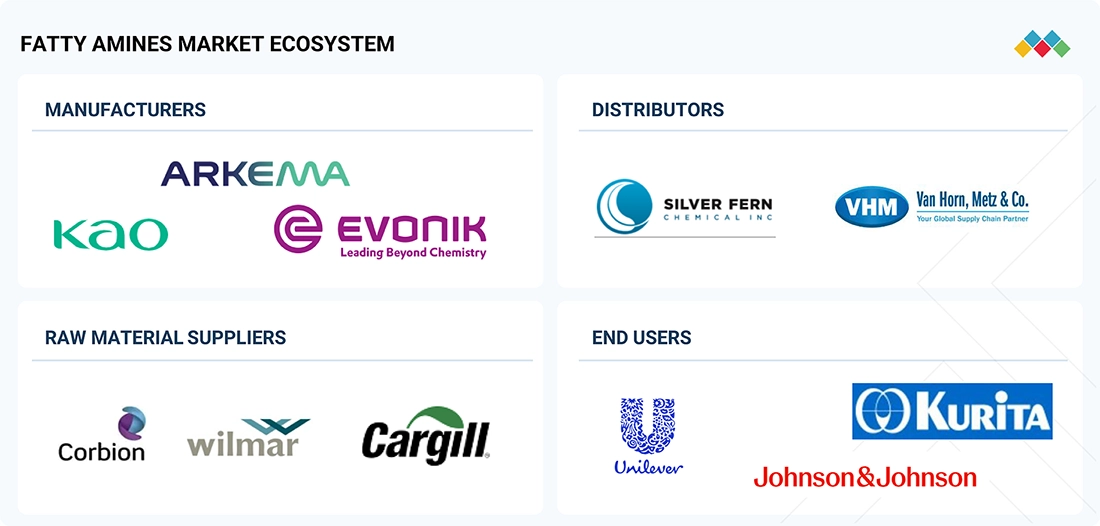
Fatty Amines Market: COMMERCIAL USE CASES ACROSS INDUSTRIES
| COMPANY | USE CASE DESCRIPTION | BENEFITS |
|---|---|---|
 |
Develops bio-based ethoxylated fatty amines used as emulsifiers, dispersing agents, and corrosion inhibitors across industrial and consumer applications. | Enhances product stability, sustainability, and performance while offering customized solutions through advanced R&D and localized production. |
 |
Develops primary, secondary, and tertiary fatty amines under the brands ACETAMIN, DIAMIN, and FARMIN, serving industries such as asphalt, pigments, fertilizers, and emulsifiers. | Enhances surface performance, provides corrosion resistance, and improves formulation stability in diverse industrial and household applications. |
 |
Provides tertiary fatty amine products. These amines are primarily used as intermediates in producing cationic surfactants and as quaternaries for biocides. | Used in agriculture, personal care, and household products applications. |
 |
Manufactures primary amines like N-Octylamine and Octylamine BMBCert for biocides, lubricants, greases, marine, and wood coating formulations. | Used as a building block for biocides subsequently utilized in marine and wood coating formulations. It is also used as a corrosion inhibitor in lubricants and greases. |
 |
Evonik manufactures fatty amines such as ADOGEN 140, ADOGEN 170, and VARONIC T 205, designed for applications like surfactants, flotation agents, emulsifiers, anticorrosive agents, and chemical intermediates. | Evonik’s fatty amines provide superior surface activity, anticaking, dispersion, and anticorrosion performance, supporting high-quality chemical processing and product stability. |
Logos and trademarks shown above are the property of their respective owners. Their use here is for informational and illustrative purposes only.
Related Ecosystem
Speciality Chemicals
- Corrosion Inhibitors
- Polyetheretherketone (PEEK)
- Acrylonitrile Butadiene Styrene (ABS)
- Epoxy Resin
- Polycarbonate
- Basf se
- DOW CHEMICAL COMPANY
- Evonik industries ag
- Clariant ag.
- Solvay sa
Key Takeaways
- Brazil's fatty amines market is valued at USD 109.9 million in 2025 and is forecast to reach USD 156.0 million by 2030.
- Brazil demonstrates a 7.3% CAGR, outpacing the global average of 6.7%, indicating strong regional demand momentum.
- Brazil's agricultural and personal care sectors are primary drivers of fatty amine consumption and market expansion.
- Brazil's strategic position in South America and robust chemical infrastructure support sustained market growth through 2030.
Fatty Amines Market Report Scope
| Report Metric | Details |
|---|---|
| Base Year | 2025 |
| Fastest Growing Segment | CORROSION INHIBITORS (Function) |
| Forecast Period | 2025–2030 |
| Growth Rate | CAGR of 6.7% from 2025 to 2030 |
| Largest Segment | PRIMARY (Type) |
| Market Size Base Year (Billions) | ~USD 3.59 (2025) |
| Revenue Forecast (Billions) | ~USD 4.97 (2030) |
| Segments Covered | Type, Function, End Use |
Brazil Fatty Amines Market Report Segmentation
3 segment dimensions are covered across the global market.
By Type
- Primary
- Secondary
- Tertiary
By Function
- Anti-Caking Agents
- Chemical Intermediates
- Corrosion Inhibitors
- Dispersants
- Emulsifiers
- Flotation Agents
- Other Functions
By End Use
- Agrochemical
- Agrochemicals
- Asphalt Additives
- Chemical Processing
- Oilfield Chemicals
- Other End Uses
- Personal Care
- Water Treatment
Target Audience
- Chemical Manufacturers : Producers and suppliers of fatty amines need Brazil-specific market data to optimize production capacity, identify distribution channels, and develop localized product strategies for regional growth.
- Personal Care & Cosmetics Companies : Formulators and brands operating in Brazil require detailed market insights to source fatty amines competitively, understand demand trends, and align product development with regional consumer preferences.
- Agrochemical Producers : Agricultural chemical manufacturers targeting Brazil's vast farming sector need market intelligence to assess fatty amines demand, identify key customers, and plan regional expansion initiatives.
- Investment & Private Equity Firms : Investors evaluating opportunities in Brazil's chemical sector require market-specific data to assess growth potential, competitive dynamics, and ROI projections for fatty amines-related investments.
- Trade & Distribution Partners : Distributors and logistics providers need Brazil market insights to forecast demand volumes, optimize inventory management, and identify high-potential customer segments and geographic regions.
Key Companies in the Brazil Fatty Amines Market
| Company | HQ | Ownership | Strongest segments |
|---|---|---|---|
| HEXION INC | United States | Private Company | Engineered wood and industrial adhesives,Formaldehyde and derivative products including melamine-based resins,Performance materials: wax emulsions, monomers, fire mitigation, flotation chemicals, |
| ARKEMA | France | Public Company | Advanced Materials (high performance polymers and additives),Adhesive Solutions,Coating Solutions, |
| EVONIK INDUSTRIES AG | Germany | Public Company | Advanced Technologies (polymers, silicas, crosslinkers, hydrogen peroxide, amino acids),Custom Solutions (coatings, adhesives, sealants, PU, lubricants additives),Infrastructure (butadiene, MTBE, butene-1, isononanol, DINP), |
| KAO CORPORATION | Japan | Public Company | Fabric, kitchen, home, and sanitary care,Health and beauty care (facial, body, hair, oral, warming),Cosmetics and self-selection beauty (incl. counselling), |
| PROCTER & GAMBLE | United States | Public Company | Fabric & Home Care,Baby, Feminine & Family Care,Beauty, |
| BASF | Germany | Public Company | Chemicals (petrochemicals and intermediates),Materials (isocyanates, polyamides, plastics specialties),Industrial Solutions (dispersions, resins, catalysts, additives), |
| HUNTSMAN INTERNATIONAL LLC | United States | Private Company | MDI and Polyurethane Systems,Amines, Maleic Anhydride, and Carbonates,Advanced Materials (Epoxy, Phenoxy, Acrylic, PU, and Related Systems), |
| INDIA GLYCOLS LIMITED | India | Public Company | Bio-based Specialities and Performance Chemicals,Potable Spirits,Ennature Biopharma (APIs, nutraceuticals, botanical extracts, nicotine derivatives), |
| INDO AMINES LIMITED | India | Public Company | Fine chemicals (amines, nitriles, intermediates),Specialty chemicals (fatty amines, quats, ethoxylates),Performance chemicals (additives and functional agents), |
| SYENSQO | Belgium | Public Company | Specialty Polymers (aromatic polyamides, fluoropolymers, sulfones, high-performance polyester, engineered polyolefins),Performance & Care (surfactants, solvents, green solvents, flame retardants, specialty chemicals),Advanced Intermediates & Specialties (amines, antioxidants, stabilizers, phosphorus specialties, lithium derivatives, diphenols, monomers), |
HEXION INC
HEXION INC is a private chemical company founded in 1857 and headquartered in the United States. With 2,600 employees, the company operates as an established player in the chemical manufacturing sector.
ARKEMA
ARKEMA is a French public chemical company founded in 2003 with 20,700 employees. The company is engaged in the production and distribution of specialty chemicals and advanced materials.
EVONIK INDUSTRIES AG
EVONIK INDUSTRIES AG is a German public company founded in 1847 with 30,643 employees. The company is a major producer of specialty chemicals, performance materials, and industrial gases.
KAO CORPORATION
KAO CORPORATION is a Japanese public company founded in 1887 with 31,514 employees. The company manufactures and markets consumer products, chemicals, and specialty materials globally.
PROCTER & GAMBLE
PROCTER & GAMBLE is a United States-based public company founded in 1837 with 109,000 employees. The company is a leading manufacturer of consumer goods, including personal care, household, and health products.
BASF
BASF is a German public company founded in 1865 with 106,428 employees. The company is one of the world's largest chemical producers, offering a broad portfolio of chemicals, plastics, and performance products.
HUNTSMAN INTERNATIONAL LLC
HUNTSMAN INTERNATIONAL LLC is a United States-based private company founded in 1970 with 6,000 employees. The company manufactures specialty chemicals, pigments, and polyurethane products.
INDIA GLYCOLS LIMITED
INDIA GLYCOLS LIMITED is an Indian public company founded in 1983 with 1,357 employees. The company produces specialty chemicals and glycol-based products for industrial applications.
INDO AMINES LIMITED
INDO AMINES LIMITED is an Indian public company founded in 1992 with 599 employees. The company manufactures and supplies amine-based chemicals for various industrial applications.
SYENSQO
SYENSQO is a Belgian public company founded in 1863 with 13,000 employees. The company is a specialty chemicals manufacturer producing advanced materials and chemical solutions.
Reasons to Buy this Report
- Market-Specific Growth Data : Access precise valuation metrics and forecasts tailored to Brazil's market, enabling accurate investment planning and competitive positioning in this high-growth regional segment.
- Sector-Specific Demand Insights : Understand application-level demand drivers across Brazil's personal care, agrochemical, and industrial sectors to identify targeted growth opportunities and customer segments.
- Competitive Landscape Analysis : Gain intelligence on regional market dynamics, local competitors, and supply chain structures specific to Brazil's fatty amines ecosystem for strategic decision-making.
- Investment & Expansion Strategy : Leverage Brazil-specific market forecasts and growth indicators to evaluate expansion opportunities, facility investments, and partnership strategies in this outperforming regional market.
- Regulatory & Trade Insights : Understand Brazil-specific regulatory frameworks, trade policies, and compliance requirements affecting fatty amines production, distribution, and market entry strategies.
Frequently asked questions
What is the current size of Brazil's fatty amines market?
Brazil's fatty amines market is estimated at USD 109.9 million in 2025, with strong growth anticipated through the forecast period.
What is the projected market size for Brazil's fatty amines by 2030?
Brazil's fatty amines market is projected to reach USD 156.0 million by 2030, representing significant expansion from 2025 levels.
What is the CAGR for Brazil's fatty amines market?
Brazil's fatty amines market is expected to grow at a compound annual growth rate of 7.3% between 2025 and 2030.
Which industries drive demand for fatty amines in Brazil?
Brazil's primary demand drivers include personal care, agrochemicals, pharmaceuticals, and industrial cleaning sectors that rely on fatty amine-based formulations.
How does Brazil's market growth compare to global trends?
Brazil's 7.3% CAGR exceeds the global fatty amines market CAGR of 6.7%, demonstrating stronger regional growth momentum and market opportunity.
RESEARCH METHODOLOGY
The research methodology for assessing the current market size of fatty amines involved four key stages. Initially, comprehensive secondary research was conducted to collect relevant data on the fatty amines market and related peer and parent markets. This was followed by primary research, wherein findings, assumptions, and market estimations were validated through interviews and consultations with industry experts across the fatty amines value chain.
To determine the overall market size, top-down and bottom-up approaches were utilized. Finally, market segmentation analysis and data triangulation techniques were applied to refine and validate the size and scope of individual market segments and sub-segments, ensuring accuracy and reliability in the final assessment.
Secondary Research
The research approach employed to assess and project the fatty amines market is initiated by collecting revenue data from prominent suppliers using secondary research. During the secondary research, many secondary sources, such as D&B Hoovers, Bloomberg BusinessWeek, Factiva, the World Bank, and industry magazines, were utilized to identify and compile information for this study. The secondary sources comprised annual reports, press releases, and investor presentations from corporations; white papers; accredited periodicals; writings by esteemed authors; announcements from regulatory agencies; trade directories; and databases. Vendor offerings have been considered to ascertain market segmentation.
Primary Research
The fatty amines market comprises several stakeholders in the supply chain, such as manufacturers, suppliers, traders, associations, and regulatory organizations. The demand side of this market is characterized by the development of various industries, including agrochemicals, oilfield chemicals, chemical processing, water treatment, asphalt additives, and personal care. Advancements in technology characterize the supply side. Various primary sources from the supply and demand sides of the market were interviewed to obtain qualitative and quantitative information.
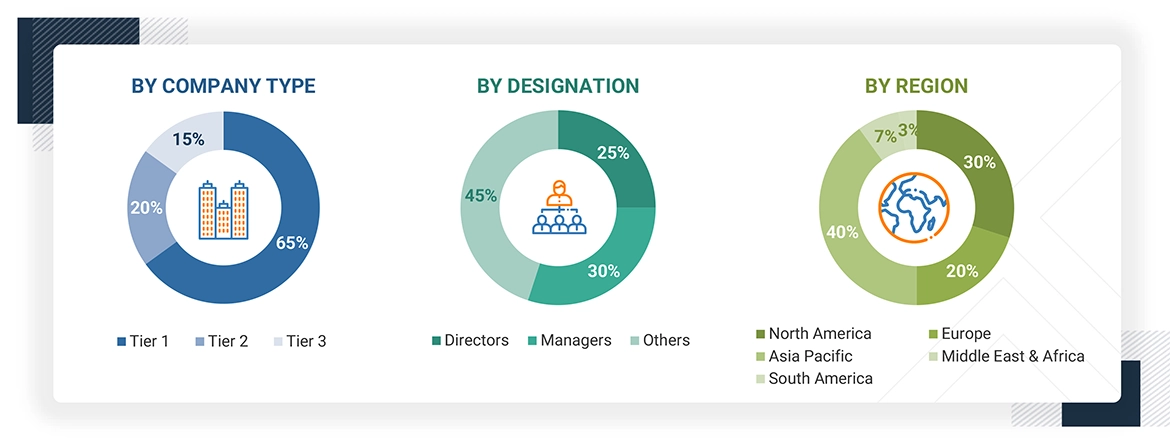
Following is the breakdown of the primary respondents:
To know about the assumptions considered for the study, download the pdf brochure
Market Size Estimation
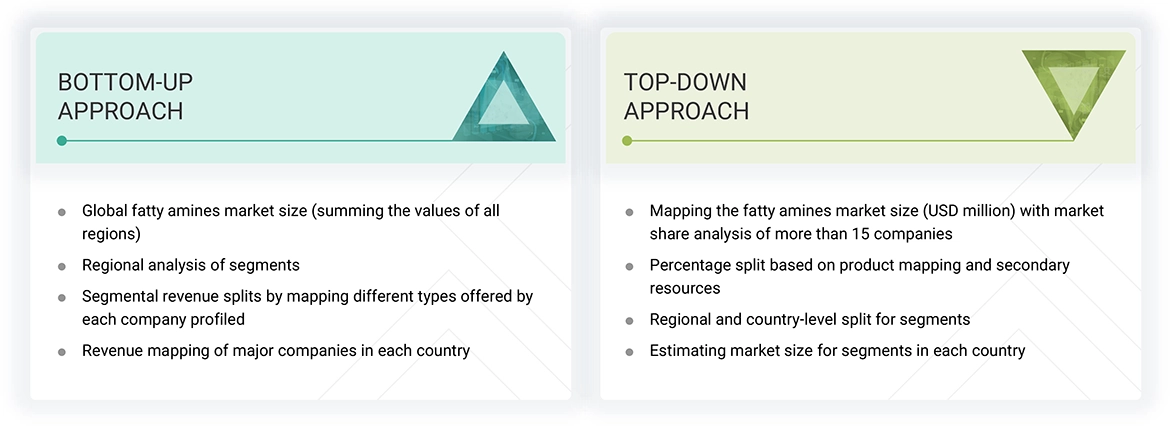
The top-down and bottom-up approaches were used to estimate and validate the total size of the fatty amines market. These methods were also used extensively to determine the size of various sub-segments in the market. The research methodology used to estimate the market size included the following:
- The key players were identified through extensive primary and secondary research.
- The value chain and market size of the fatty amines market, in terms of value, were determined through primary and secondary research.
- All percentage shares, splits, and breakdowns were determined using secondary sources and verified through primary sources.
- All possible parameters that impact the market covered in this research study were accounted for, viewed in extensive detail, verified through primary research, and analyzed to obtain the final quantitative and qualitative data.
- The research included the study of reports, reviews, and newsletters of top market players, along with extensive interviews for opinions from key leaders, such as CEOs, directors, and marketing executives.
Global Fatty Amines Market Size: Bottom-up and Top-down Approaches
Data Triangulation
The market was split into several segments and sub-segments after arriving at the overall market size using the market size estimation processes as explained above. Data triangulation and market breakdown procedures were employed to complete the overall market engineering process and arrive at the exact statistics of each market segment and subsegment. The market size was calculated globally by summing up the country-level and regional-level data.
Market Definition
Fatty amines are classified as oleochemicals comprising hydrocarbon chains with eight or more carbon atoms bonded to an amine group. They are primarily produced from fatty acids derived from natural sources such as seed oils—including palm oil, crude tall oil, palm kernel oil, and soybean oil—and can also be synthesized from fatty alcohols.
This global market study examines three main types of fatty amines: primary, secondary, and tertiary. The production of each type is influenced by reaction conditions such as temperature, ammonia pressure, and catalyst selection. Fatty amines serve various functional roles, including emulsifiers, flotation agents, anti-caking agents, dispersants, corrosion inhibitors, and chemical intermediates. Their diverse functionality supports applications across several key industries, including agrochemicals, personal care, oilfield chemicals, chemical processing, asphalt additives, and water treatment—each analyzed in detail in this report.
Stakeholders
- Fatty amine manufacturers
- Fatty amine suppliers
- Fatty amine traders, distributors, and suppliers
- Investment banks and private equity firms
- Raw material suppliers
- Government and research organizations
- Consulting companies/consultants in the chemicals & materials industry
- Industry associations
- Contract Manufacturing Organizations (CMOs)
- NGOs, governments, investment banks, venture capitalists, and private equity firms
Report Objectives
- To define, describe, and forecast the size of the global fatty amines market in terms of volume and value
- To provide detailed information regarding the key factors, such as drivers, restraints, opportunities, and industry-specific challenges, influencing the growth of the global fatty amines market
- To analyze and forecast the size of various segments of the fatty amines market based on five major regions—North America, Asia Pacific, Europe, South America, and the Middle East & Africa—along with key countries in each of these regions
- To analyze recent developments and competitive strategies, such as expansions, to draw the competitive landscape of the market
- To strategically profile the key players in the market and comprehensively analyze their core competencies
Get the Full Fatty Amines Market Report
Full forecast, segment splits, and company analysis for all Fatty Amines Market.
- Germany Fatty Amines Market
- UK Fatty Amines Market
- France Fatty Amines Market
- Italy Fatty Amines Market
- Russia Fatty Amines Market
- Turkey Fatty Amines Market
- Canada Fatty Amines Market
- Mexico Fatty Amines Market
- US Fatty Amines Market
- China Fatty Amines Market
- Japan Fatty Amines Market
- India Fatty Amines Market
- South Korea Fatty Amines Market
- Thailand Fatty Amines Market
- Malaysia Fatty Amines Market
- Saudi Arabia Fatty Amines Market
- South Africa Fatty Amines Market
- Egypt Fatty Amines Market
- Colombia Fatty Amines Market
- Argentina Fatty Amines Market
- South America Fatty Amines Market
- Rest Of Europe Fatty Amines Market
Need a Tailored Report?
Customize this report to your needs
Get 10% FREE Customization
Customize This Report
