
France Animal Genetics Market (2024-2029)

The France Animal Genetics Market was valued at $148.86 Million in 2024 and projected to reach to $195.08 Million by 2029, representing a compound annual growth rate of 5.6%. France's animal genetics market is poised for steady growth through 2029, driven by increasing demand for improved livestock breeding and genomic solutions.


| Market Size in | USD 26.32 MN |
| Market Forecast in | |
| CAGR | |
| Forecast Period | |
| Units Considered | Value (USD MN) |
France Animal Genetics Market Trends and Insights
- France is establishing itself as a key player in European animal genetics, driven by advances in genomic technologies and increasing demand for improved livestock breeding.
- The French market benefits from strong agricultural infrastructure and regulatory support for genetic innovation in both dairy and meat production sectors. In 2024, France's animal genetics sector reflects growing adoption of precision breeding techniques and DNA-based selection tools among French farmers and breeding organizations.
- By 2029, France is expected to see accelerated market penetration as genomic testing becomes more accessible and cost-effective across French agricultural regions.
- France's commitment to sustainable farming practices and food security is positioning the country as a regional hub for animal genetics research and commercialization..
Key Market Statistics
- CAGR (2024-2029) 5.6% CAGR
- Market Size, 2024 ~USD 148.86 Million
- Forecast, 2029 ~USD 195.08 Million
- Country France
France Animal Genetics Market Overview
Market Valuation :
France's animal genetics market reached USD 148.86 million in 2024, with projections to grow to USD 195.08 million by 2029, representing a steady 5.6% CAGR.
Genomic Technology Adoption :
French livestock producers are increasingly adopting advanced genomic technologies for selective breeding, enhancing productivity and disease resistance in cattle, poultry, and swine sectors.
Agricultural Infrastructure :
France's robust agricultural sector and strong research institutions provide a solid foundation for animal genetics innovation and market expansion across European markets.
European Market Position :
France is establishing itself as a key European player in animal genetics, leveraging its agricultural heritage and investment in biotechnology to drive regional competitiveness.
France Animal Genetics Market Dynamics
- The country's strong agricultural sector, combined with investments in biotechnology research and development, supports market expansion.
- French producers are increasingly adopting precision breeding techniques to enhance productivity, disease resistance, and sustainability in livestock operations.
- Government support for agricultural innovation and EU regulations promoting genetic improvement further bolster market prospects.
- The market will benefit from collaborations between research institutions and commercial breeding companies, positioning France as a leading hub for animal genetics innovation in Europe..
Market Ecosystem
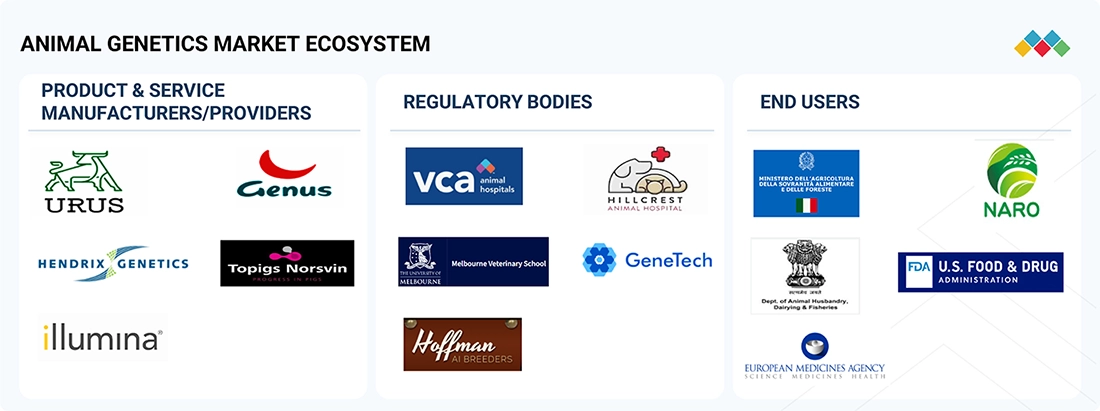
ANIMAL GENETICS MARKET: COMMERCIAL USE CASES ACROSS INDUSTRIES
| COMPANY | USE CASE DESCRIPTION | BENEFITS |
|---|---|---|
 |
ISA and Bovans layer genetics, Hybrid Turkeys, and Hypor swine breeding programs combine genomic selection, pedigree evaluation, and performance testing to develop elite breeding stock for commercial poultry and swine production. | Improves egg production, feed conversion, fertility, growth performance, robustness, and disease resilience while supporting sustainable livestock production. |
 |
Commercial breeding lines including TN70, TN Tempo, and Norsvin Duroc utilize genomic selection, CT-based carcass evaluation, and nucleus breeding programs to optimize commercial pig production. | Delivers larger litters, superior feed efficiency, improved carcass quality, faster growth rates, and greater sow longevity, enhancing producer profitability. |
 |
Through ABS Global and PIC, the company provides elite bovine semen, genomic mating programs, Sexcel sexed semen technology, and high-performance swine breeding stock for dairy, beef, and pork production. | Accelerates genetic gain, improves conception rates, enhances milk and meat productivity, and strengthens herd health and reproductive efficiency. |
 |
Through Alta Genetics, GENEX, PEAK, and VAS, URUS integrates elite sire genetics, genomic evaluations, embryo transfer, and herd management technologies for dairy and beef cattle improvement. | Enables data-driven breeding decisions that improve fertility, milk yield, beef performance, genetic merit, and long-term herd profitability. |
 |
Combines genomic evaluation, herd recording, artificial insemination, and customized breeding programs to optimize dairy and beef cattle genetics based on farm-specific breeding objectives. | Improves lifetime milk production, fertility, udder health, longevity, and feed efficiency while reducing replacement costs and increasing overall herd productivity. |
Logos and trademarks shown above are the property of their respective owners. Their use here is for informational and illustrative purposes only.
Related Ecosystem
Advanced Genetic Sequencing
- Polymerase Chain Reaction (PCR)
- Reagents
- Assay Kits
- Bioinformatics
- Flow Cytometry
- Thermo Fisher Scientific Inc.
- Illumina, Inc.
- Qiagen N.V.
- Agilent Technologies, Inc.
- Danaher Corporation
Animal Health
- Polymerase Chain Reaction (PCR) Tests
- Porcine
- Immunodiagnostics
- Lateral Flow Assays
- Microarrays
- Zoetis Inc.
- Patterson Companies, Inc.
- Virbac
- Elanco Animal Health Incorporated
- BOEHRINGER INGELHEIM GMBH
Biotechnology
- Reagents
- Polymerase Chain Reaction (PCR)
- Stem Cells
- Assay Kits
- Flow Cytometers
- Thermo Fisher Scientific Inc.
- Merck KGaA
- Danaher Corporation
- Agilent Technologies, Inc.
- Bio-Rad Laboratories, Inc.
Key Takeaways
- France's animal genetics market reached USD 148.86 million in 2024 with a projected value of USD 195.08 million by 2029.
- France is experiencing a 5.6% CAGR, reflecting steady adoption of genomic technologies in livestock breeding.
- France's strong agricultural sector and regulatory framework support innovation in precision breeding and genetic selection.
- By 2029, France is expected to lead regional growth in animal genetics through increased accessibility of DNA-based testing solutions.
Animal Genetics Market Report Scope
| Report Metric | Details |
|---|---|
| Base Year | 2024 |
| Fastest Growing Segment | OTHER TECHNOLOGIES (Technology) |
| Forecast Period | 2024–2029 |
| Growth Rate | CAGR of 7.1% from 2024 to 2029 |
| Largest Segment | ANIMAL GENETIC MATERIALS (Product & Service) |
| Market Size Base Year (Billions) | ~USD 2.97 (2024) |
| Revenue Forecast (Billions) | ~USD 4.19 (2029) |
| Segments Covered | Animal Type, Product & Service, Type, Live Animal, Technology, End User |
France Animal Genetics Market Report Segmentation
6 segment dimensions are covered across the global market.
By Animal Type
- Bovine
- Canine
- Other Animals
- Porcine
- Poultry
By Product & Service
- Animal Genetic Materials
- Animal Genetic Testing Services
- Animal Genetics Materials
- Animal Genetics Testing Services
By Type
- Bovine Embryos
- Bovine Genetic Trait Tests
- Bovine Semen
- Canine Semen
- Dna Typing
- Embryos
- Equine Embryos
- Equine Semen
- Genetic Disease Tests
- Genetic Trait Tests
- Other Animal Embryos
- Other Animal Semen
- Other Genetic Trait Tests
- Other Services
- Porcine Semen
- Semen
By Live Animal
- Bovine
- Canine
- Porcine
- Poultry
By Technology
- Microarrays
- Ngs
- Other Technologies
- Pcr
- Rdna
By End User
- Animal Farms
- Diagnostic Centers
- Research Institutes
- Veterinary Hospitals & Clinics
FRANCE: ANIMAL GENETICS MARKET, BY END USER, 2022–2029
| Segment | 2022 | 2023 | 2024 | 2025 | 2026 | 2027 | 2028 | 2029 | CAGR (%) |
|---|---|---|---|---|---|---|---|---|---|
| ANIMAL FARMS | 85.3 | 91.8 | 98.3 | 104.2 | 110.4 | 116.9 | 124.3 | 133.9 | 6.4 |
| DIAGNOSTIC CENTERS | 51.2 | 55.3 | 59.4 | 63.3 | 67.3 | 71.5 | 76.4 | 82.6 | 6.8 |
| RESEARCH INSTITUTES | 7.3 | 7.8 | 8.2 | 8.6 | 9 | 9.4 | 9.9 | 10.6 | 5.2 |
| VETERINARY HOSPITALS & CLINICS | 36.8 | 39.3 | 41.7 | 43.9 | 46.2 | 48.6 | 51.3 | 54.9 | 5.6 |
| TOTAL | 180.5 | 194.2 | 207.6 | 220 | 232.9 | 246.5 | 261.8 | 282 | 6.3 |
Target Audience
- Livestock Breeding Companies : French and European breeding firms need market data to assess expansion opportunities, competitive positioning, and investment priorities in France's growing animal genetics sector.
- Agricultural Biotechnology Firms : Biotech companies developing genomic solutions require France-specific market insights to guide product development, commercialization strategies, and partnership opportunities.
- Investment & Private Equity : Investors evaluating opportunities in French agricultural technology need detailed market sizing and growth forecasts to assess portfolio companies and acquisition targets.
- Government & Agricultural Agencies : French agricultural ministries and policy bodies use market data to inform regulations, subsidies, and strategic initiatives supporting the animal genetics industry.
- Research Institutions & Universities : Academic centers and research organizations need market intelligence to align genomics research programs with commercial opportunities and funding priorities in France.
Key Companies in the France Animal Genetics Market
| Company | HQ | Ownership | Strongest segments |
|---|---|---|---|
| QIAGEN NV | Netherlands | Public Company | Sample technology consumables (stabilization, purification kits, secondary consumables),Immune response (IGRA TB, transplant, viral load),Oncology and sexual/reproductive health assays, |
| NEOGEN CORPORATION | United States | Public Company | Food Safety test kits and consumables,Food Safety software, media, and lab services,Animal Safety instruments, disposables, and animal care products, |
| GENUS PLC | United Kingdom | Public Company | Genus PIC (pork genetics and semen),Genus ABS (dairy and beef semen and embryos),Genus Research and Development, |
| GENETIC TECHNOLOGIES LIMITED | Australia | Public Company | GeneType oncology risk tests (breast, colorectal, ovarian, prostate, pancreatic, melanoma),Non-oncology polygenic risk tests (coronary artery disease, type 2 diabetes, atrial fibrillation),Consumer and lifestyle genetic testing (EasyDNA, AffinityDNA), |
| ZOETIS, INC. | United States | Public Company | Companion animal pharmaceuticals (parasiticides, dermatology, pain, other),Livestock pharmaceuticals and vaccines,Diagnostics (point-of-care, instruments, reference labs), |
QIAGEN NV
QIAGEN NV is a Dutch public company founded in 1984 with 5,500 employees. The company is a major player in the life sciences and diagnostics industry.
NEOGEN CORPORATION
NEOGEN CORPORATION is a United States public company founded in 1981 with 2,974 employees. The company operates in the genetics and life sciences sector.
GENUS PLC
GENUS PLC is a United Kingdom public company founded in 1994 with 3,190 employees. The company specializes in animal genetics and breeding solutions.
GENETIC TECHNOLOGIES LIMITED
GENETIC TECHNOLOGIES LIMITED is an Australian public company founded in 1987 with 55 employees. The company operates in the genetic testing and diagnostics field.
ZOETIS, INC.
ZOETIS, INC. is a United States public company founded in 2012 with 14,500 employees. The company is a leading global provider of animal health products and services.
Reasons to Buy this Report
- France-Specific Market Sizing : Access precise valuation data for France's animal genetics market with verified 2024 baseline (USD 148.86M) and 2029 forecasts, enabling accurate business planning and investment decisions.
- Regional Growth Trajectory : Understand France's 5.6% CAGR performance relative to global 7.1% growth, identifying market dynamics unique to French agricultural and regulatory environments.
- Competitive Landscape Intelligence : Gain insights into France's position within European animal genetics markets, identifying opportunities for market entry, partnerships, and expansion strategies.
- Technology Adoption Trends : Analyze genomic technology penetration rates and breeding innovation adoption patterns specific to French livestock producers across cattle, poultry, and swine sectors.
- Strategic Investment Guidance : Make informed decisions on R&D investments, facility expansion, and market development initiatives tailored to France's agricultural infrastructure and growth potential.
Frequently asked questions
What is the current size of France's animal genetics market?
France's animal genetics market was valued at USD 148.86 million in 2024.
What is the projected market size for France by 2029?
France's animal genetics market is projected to reach USD 195.08 million by 2029.
What is the growth rate of France's animal genetics market?
France's animal genetics market is growing at a compound annual growth rate of 5.6% from 2024 to 2029.
What factors are driving growth in France's animal genetics market?
Growth in France is driven by advances in genomic technologies, increasing demand for improved livestock breeding, strong agricultural infrastructure, and regulatory support for genetic innovation.
How does France's market compare to other European countries?
France is establishing itself as a key player in European animal genetics with a 5.6% CAGR, supported by its strong agricultural sector and commitment to sustainable farming practices.
RESEARCH METHODOLOGY
Secondary research was conducted to gather information for this technical, market-oriented, and commercial study of the global animal genetics market. The next step was to validate these findings, assumptions, and sizing with industry experts across the value chain through primary research. Different approaches, such as top-down and bottom-up, were used to estimate the total market size. After that, market breakup and data triangulation procedures were used to estimate the size of the segments and subsegments of the animal genetics market.
Secondary Research
In the secondary research process, various secondary sources were consulted to identify and collect information for the study. These sources included annual reports, press releases, and investor presentations; regulatory filings; clinical literature and peer-reviewed journals; related association publications; certified publications; and white papers. Secondary research was primarily used to obtain key information on the industry's supply chain, the total pool of key players, market classification and segmentation according to industry trends down to the most granular level, regional markets, and key developments from both market- and technology-oriented perspectives. Primary sources further validated all this information.
Primary Research
In the primary research process, various primary sources from both the supply and demand sides were interviewed to obtain qualitative and quantitative information for this report. Primary sources from the supply side included CEOs, vice presidents, business development directors, marketing directors, R&D heads, genomics specialists, breeding program managers, and other key executives from companies operating in the animal genetics market. Primary sources from the demand side included livestock producers, breeding organizations, veterinarians, veterinary surgeons, diagnostic laboratories, research institutes, universities, and government organizations involved in animal breeding and genetic improvement. Primary research was conducted to validate the market segmentation, identify key players, and gather insights into industry trends, technological advancements, and market dynamics.
In the market engineering process, top-down and bottom-up approaches were extensively used, along with multiple data triangulation methods, to estimate and forecast the overall market as well as its segments and subsegments. Extensive qualitative and quantitative analyses were conducted throughout the market engineering process to provide comprehensive market estimates and strategic insights.
Following the market engineering process, including market size estimation, forecasting, market breakdown, and data triangulation, extensive primary research was conducted to verify and validate the final market estimates. Primary interviews were also used to confirm the market segmentation, competitive landscape, adoption of genomic and reproductive technologies, regional trends, and key market dynamics, including drivers, restraints, opportunities, challenges, and strategic developments within the animal genetics market.
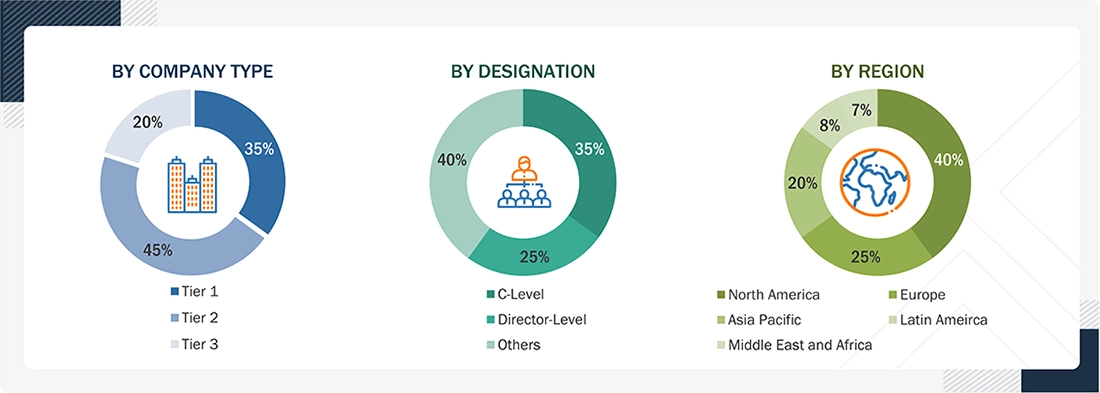
Note 1: Others include veterinarians, breeding managers, livestock producers, genomics specialists, and diagnostic laboratory professionals
Note 2: Tier 1 companies – revenue higher than USD 10 billion; Tier 2 companies – revenue between USD 1 and 10 billion; Tier 3 companies – revenue between USD 500 million and USD 1 billion.
Note 3: The breakup above represents an indicative list of primary profiles.
To know about the assumptions considered for the study, download the pdf brochure
Market Size Estimation
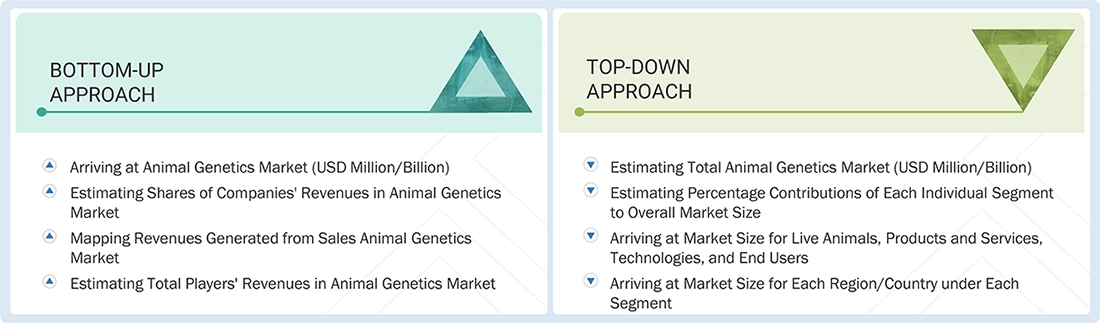
Top-down and bottom-up approaches were used to estimate and validate the size of the animal genetics market and the sizes of various dependent subsegments within the overall market. The research methodology used to estimate market size includes the following: key players in the market were identified through secondary research, and their market shares in the respective regions were determined through primary and secondary research. This procedure included reviewing the annual and financial reports of the top market players, along with extensive interviews with key industry leaders, such as CEOs, VPs, directors, and marketing executives, to gain key insights.
All percentage splits and breakdowns were determined using secondary sources and verified through primary sources. All possible parameters that affect the market covered in this research study have been accounted for, examined in extensive detail, verified through primary research, and analyzed to obtain the final quantitative and qualitative data. This data is consolidated and combined with detailed input and analysis from MarketsandMarkets.
Infographic Depicting Bottom-Up and Top-Down Approaches
Data Triangulation
After determining the overall market size using the market size estimation processes explained above, the market was segmented into several segments and subsegments. Data triangulation and market breakup procedures were employed, wherever applicable, to complete the overall market engineering process and arrive at the exact statistics for each market segment and subsegment. The data was triangulated by analyzing various factors and trends from both the demand and supply sides.
Market Definition
The animal genetics market comprises products, services, and technologies used to improve the genetic characteristics of livestock and companion animals through selective breeding, assisted reproductive technologies, and molecular genetics. The market includes genetic materials, such as semen, embryos, and ova, along with genetic testing services including disease susceptibility testing, genetic trait testing, parentage verification, breed identification, DNA typing, and genomic analysis. It also encompasses enabling technologies such as Polymerase Chain Reaction (PCR), Next-Generation Sequencing (NGS), Recombinant DNA (rDNA) technology, microarrays, SNP genotyping, microsatellite (STR) analysis, and Sanger sequencing, which facilitate genetic evaluation and selection. These products and services are used across bovine, porcine, poultry, aquaculture, equine, canine, feline, ovine, caprine, and other animal species by animal farms, veterinary hospitals & clinics, diagnostic centers, and research institutes to enhance productivity, fertility, disease resistance, product quality, and the long-term sustainability of animal breeding programs.
Key Stakeholders
- Animal genetic materials producers (semen and embryo suppliers)
- Animal genetic testing service providers and diagnostic laboratories
- Animal breeding cooperatives and breed societies
- Livestock farms and integrators across poultry, swine, bovine, and other species
- Veterinary hospitals and clinics
- Companion animal breeders and kennel/cattery associations
- Research institutes and veterinary organizations
- Government bodies and regulatory authorities
- Investors and private equity firms focused on animal health and biotechnology
- Distributors and channel partners for genetic materials
Report Objectives
- To define, describe, and forecast the animal genetics market by live animal, product & service, technology, end user, and region from 2026 to 2031, and to analyze the various macroeconomic and microeconomic factors that affect market growth
- To forecast the market size of five main regions: North America, Europe, Asia Pacific, the Middle East & Africa, and Latin America.
- To analyze the subsegments of the market with respect to individual growth trends, prospects, and contributions to the overall market.
- To provide detailed information regarding the major factors (drivers, restraints, opportunities, and challenges) influencing market growth.
- To analyze opportunities in the market for stakeholders and to provide details of the competitive landscape of major players.
- To profile key market players and comprehensively analyze their business overviews, regional presence, product offerings, business strategies, and key financials, and to illustrate the competitive landscape of the market.
- To analyze competitive developments such as mergers & acquisitions, product launches, partnerships and collaborations, and research & development (R&D) activities in the market.
Available customizations:
With the given market data, MarketsandMarkets offers customizations based on company-specific needs. The following customization options are available for the report:
Geographic Analysis
- Further breakup of the market in the Rest of Asia Pacific, by country
- Further breakup of the market in the Rest of Europe, by country
- Further breakup of the market in the Rest of Latin America, by country
-
Further breakup of the market in the Rest of Middle East & Africa, by country
Company Information
-
- Detailed analysis and profiling of additional market players (up to 5).
-
Get the Full Animal Genetics Market Report
Full forecast, segment splits, and company analysis for all Animal Genetics Market.
- Canada Animal Genetics Market
- US Animal Genetics Market
- Germany Animal Genetics Market
- UK Animal Genetics Market
- Italy Animal Genetics Market
- Spain Animal Genetics Market
- Netherlands Animal Genetics Market
- China Animal Genetics Market
- India Animal Genetics Market
- Japan Animal Genetics Market
- Australia Animal Genetics Market
- South Korea Animal Genetics Market
- Brazil Animal Genetics Market
- Mexico Animal Genetics Market
Need a Tailored Report?
Customize this report to your needs
Get 10% FREE Customization
Customize This Report
