
Rest Of South America Anti-Counterfeit Packaging Market (2026-2031)

The Rest Of South America Anti-Counterfeit Packaging Market was valued at $2900 Million in 2026 and projected to reach to $3700 Million by 2031, representing a compound annual growth rate of 4.96%. Rest Of South America's anti-counterfeit packaging market is poised for steady expansion as counterfeiting activities intensify across multiple industries.


| Market Size in | USD 26.32 MN |
| Market Forecast in | |
| CAGR | |
| Forecast Period | |
| Units Considered | Value (USD MN) |
Rest Of South America Anti-Counterfeit Packaging Market Trends and Insights
- Rest Of South America is experiencing steady demand for advanced packaging solutions driven by increasing counterfeiting threats across pharmaceuticals, beverages, and consumer goods sectors.
- The region's growth trajectory reflects rising regulatory pressures and brand protection investments among manufacturers seeking to safeguard product authenticity and consumer trust. Rest Of South America's market expansion is supported by growing awareness of supply chain vulnerabilities and the economic impact of counterfeit products on local industries.
- Rest Of South America's manufacturers are increasingly adopting holographic labels, QR codes, RFID technology, and tamper-evident packaging to combat illicit trade.
- The forecast period through 2031 indicates that Rest Of South America will continue to strengthen its anti-counterfeit infrastructure, driven by both multinational corporations and regional players committed to market integrity and consumer safety..
Key Market Statistics
- CAGR (2026-2031) 4.96% CAGR
- Market Size, 2026 ~USD 2900 Million
- Forecast, 2031 ~USD 3700 Million
- Country Rest Of South America
Rest Of South America Anti-Counterfeit Packaging Market Overview
Market Size & Growth :
Rest Of South America's anti-counterfeit packaging market is valued at USD 2,900 million in 2026 and is projected to reach USD 3,700 million by 2031, representing a steady CAGR of 4.96% over the forecast period.
Regional Demand Drivers :
The region is experiencing increased demand for advanced packaging solutions driven by rising counterfeiting threats in pharmaceuticals, beverages, and consumer goods sectors, necessitating robust anti-counterfeit measures.
Industry Focus Areas :
Key sectors driving adoption include pharmaceutical manufacturers, beverage producers, and consumer goods companies across Rest Of South America seeking to protect brand integrity and ensure product authenticity.
Growth Trajectory :
With a regional CAGR of 4.96% compared to the global rate of 6.82%, Rest Of South America shows steady but moderate growth potential, indicating emerging market maturity and increasing regulatory compliance requirements.
Rest Of South America Anti-Counterfeit Packaging Market Dynamics
- The region's pharmaceutical, beverage, and consumer goods sectors are increasingly adopting advanced authentication technologies including holograms, QR codes, and blockchain-enabled solutions to combat product fraud and protect consumer safety. Government regulations and industry standards are strengthening across Rest Of South America, compelling manufacturers to invest in sophisticated packaging solutions.
- The market's 4.96% CAGR reflects growing awareness among regional stakeholders about the economic and reputational costs of counterfeiting, driving sustained demand for innovative anti-counterfeit packaging technologies through 2031..
Market Ecosystem

ANTI-COUNTERFEIT PACKAGING MARKET: COMMERCIAL USE CASES ACROSS INDUSTRIES
| COMPANY | USE CASE DESCRIPTION | BENEFITS |
|---|---|---|
 |
Implementation of secure QR codes with serialization on wine labels to authenticate products and detect counterfeits; integrated with a mobile app and scan analytics dashboard | Real-time product authentication, counterfeit detection alerts, improved brand protection, enhanced consumer engagement, and supply chain visibility through scan data insights |
 |
Deployment of EPC-enabled RFID tagging for apparel to uniquely identify products, automate order fulfillment, and replace manual processes with standardized barcode and RFID systems | Over 99.5% order accuracy, 98.8% reduction in chargebacks, strong ROI within 8 months, improved productivity, scalability, and enhanced customer satisfaction |
 |
Item-level RFID tagging across all products to enable real-time inventory tracking, improve supply chain visibility, and enhance omnichannel retail operations | Improved inventory accuracy and product availability, reduced stockouts, enhanced customer experience, faster checkout (up to 50%), and increased operational efficiency |
Logos and trademarks shown above are the property of their respective owners. Their use here is for informational and illustrative purposes only.
Related Ecosystem
Fandb Logistics Cold Chain And Packaging
- Rigid Packaging
- Acrylics
- Active Packaging
- Dairy Products
- Gravure Process
- Amcor plc
- Essentra plc
- Basf se
- AZELIS HOLDINGS SA
- Sonoco Products Company
Labels And Tags
- Gravure Process
- Digital Printing
- Global Positioning System (GPS)
- Radio Frequency Identification (RFID)
- Smart Card & Readers
- Essentra plc
- Ccl industries inc.
- Avery Dennison Corporation
- Lg chem ltd.
- 3M COMPANY
Packaging
- Ampoules
- Gravure Process
- Rigid Packaging
- Aerosols
- Aseptic Filling and Sealing Equipment
- Amcor plc
- Essentra plc
- Berry Global Group, Inc.
- Mondi plc
- SEALED AIR CORPORATION
Key Takeaways
- Rest Of South America's anti-counterfeit packaging market is valued at USD 2,900 million in 2026 and will reach USD 3,700 million by 2031, representing a 4.96% CAGR.
- Rest Of South America is witnessing increased adoption of digital authentication technologies including QR codes, RFID, and blockchain-enabled tracking systems.
- Pharmaceutical and beverage sectors in Rest Of South America are primary drivers of anti-counterfeit packaging demand due to high counterfeiting vulnerability.
- Rest Of South America's regulatory environment and brand protection initiatives are accelerating investment in advanced packaging security solutions through 2031.
Anti-Counterfeit Packaging Market Report Scope
| Report Metric | Details |
|---|---|
| Base Year | 2026 |
| Fastest Growing Segment | FOOD & BEVERAGE (End-Use Industry) |
| Forecast Period | 2026–2031 |
| Growth Rate | CAGR of 6.82% from 2026 to 2031 |
| Largest Segment | PHARMACEUTICAL (End-Use Industry) |
| Market Size Base Year (Billions) | ~USD 227.7 (2026) |
| Revenue Forecast (Billions) | ~USD 316.68 (2031) |
| Segments Covered | Technology, End-Use Industry |
Rest Of South America Anti-Counterfeit Packaging Market Report Segmentation
2 segment dimensions are covered across the global market.
By Technology
- Forensic Markers
- Hologram
- Mass Encoding
- Other Technologies
- Rfid
- Tamper Evidence
By End-Use Industry
- Apparel & Footwear
- Automotive
- Electronics & Electrical
- Food & Beverage
- Luxury Goods
- Other End-Use Industries
- Personal Care
- Pharmaceutical
Target Audience
- Packaging Manufacturers : Regional and international packaging companies need detailed market data to develop anti-counterfeit solutions tailored to Rest Of South America's pharmaceutical, beverage, and consumer goods sectors.
- Pharmaceutical Companies : Pharma manufacturers operating in Rest Of South America require market intelligence to select appropriate anti-counterfeit packaging technologies and understand regional regulatory compliance requirements.
- Beverage & Consumer Goods Producers : Beverage and consumer goods companies need insights into anti-counterfeit packaging adoption trends and competitive solutions to protect their brands and ensure product authenticity in Rest Of South America.
- Technology & Solution Providers : Authentication technology vendors and security solution providers need regional market data to identify growth opportunities and develop region-specific anti-counterfeit packaging innovations.
- Investment & Strategy Teams : Corporate strategists, investors, and business development teams require comprehensive market analysis to evaluate expansion opportunities and assess the commercial viability of anti-counterfeit packaging ventures in Rest Of South America.
Key Companies in the Rest Of South America Anti-Counterfeit Packaging Market
| Company | HQ | Ownership | Strongest segments |
|---|---|---|---|
| ESSENTRA PLC | United Kingdom | Public Company | Protection caps, plugs, masking, and hose protection,Cable management, PCB hardware, and fiber management,Fasteners and point-of-sale hardware, |
| RR DONNELLEY & SONS COMPANY | United States | Private Company | Customer communications & transactional print,Marketing print & direct mail,Digital & multichannel marketing services, |
ESSENTRA PLC
Essentra PLC is a United Kingdom-based public company founded in 2005 that employs 2,998 people. The company operates as a diversified industrial business providing essential components and solutions across multiple sectors.
RR DONNELLEY & SONS COMPANY
RR Donnelley & Sons Company is a United States-based private company founded in 1864 with 32,000 employees, making it one of the largest printing and communications services providers. The company offers comprehensive print, digital, and logistics solutions to clients worldwide.
Reasons to Buy this Report
- Regional Market Sizing : Obtain precise market valuation for Rest Of South America (USD 2,900M in 2026) with detailed forecasts through 2031, enabling accurate budget allocation and investment planning specific to this regional market.
- Competitive Landscape Intelligence : Understand regional market dynamics, key players, and competitive positioning within Rest Of South America's anti-counterfeit packaging sector to identify partnership and expansion opportunities.
- Sector-Specific Insights : Access detailed analysis of pharmaceutical, beverage, and consumer goods segments within Rest Of South America, revealing which industries offer the highest growth potential and adoption rates.
- Growth Trajectory Analysis : Leverage the 4.96% CAGR forecast to benchmark regional performance against global trends (6.82%) and identify emerging opportunities in this moderately growing South American market.
- Strategic Decision Support : Make informed decisions on market entry, product development, and resource allocation in Rest Of South America based on comprehensive data-driven insights and forward-looking market projections.
Frequently asked questions
What is the market size of anti-counterfeit packaging in Rest Of South America?
Rest Of South America's anti-counterfeit packaging market is estimated at USD 2,900 million in 2026 and is projected to reach USD 3,700 million by 2031.
What is the expected growth rate for Rest Of South America's anti-counterfeit packaging market?
Rest Of South America's anti-counterfeit packaging market is expected to grow at a CAGR of 4.96% from 2026 to 2031.
Which industries in Rest Of South America are driving anti-counterfeit packaging demand?
Rest Of South America's pharmaceutical, beverage, and consumer goods sectors are the primary drivers of anti-counterfeit packaging adoption due to high counterfeiting risks.
What technologies are being adopted in Rest Of South America's anti-counterfeit packaging market?
Rest Of South America manufacturers are increasingly implementing holographic labels, QR codes, RFID technology, blockchain tracking, and tamper-evident packaging solutions.
What factors are supporting growth in Rest Of South America's anti-counterfeit packaging market?
Rest Of South America's market growth is driven by regulatory pressures, supply chain awareness, brand protection investments, and the economic impact of counterfeit products on local industries.
RESEARCH METHODOLOGY
The study involved four major activities to estimate the current size of the global anti-counterfeit packaging market. Exhaustive secondary research was carried out to collect information on the market, the peer product market, and the parent product group market. The next step was to validate these findings, assumptions, and sizes with the industry experts across the value chain of anti-counterfeit packaging through primary research. The top-down and bottom-up approaches were employed to estimate the overall size of the anti-counterfeit packaging market. After that, market breakdown and data triangulation procedures were used to determine the size of different segments of the market.
Secondary Research
The market for companies offering anti-counterfeit packaging was arrived at by studying the secondary data available through paid and unpaid sources, analyzing the product portfolios of the major companies in the ecosystem, and rating the companies by their performance and quality. Various secondary sources, such as Business Standard, Bloomberg, World Bank, and Factiva, were referred to identify and collect information for this study on the anti-counterfeit packaging market. In the secondary research process, various secondary sources were referred to identify and collect information related to the study. Secondary sources included annual reports, press releases, investor presentations, anti-counterfeit packaging vendors, forums, certified publications, and white papers. The secondary research was used to obtain critical information on the industry’s value chain, the total pool of key players, market classification, and segmentation from the market and technology-oriented perspectives.
Primary Research
In the primary research process, various primary sources from the supply and demand sides were interviewed to obtain qualitative and quantitative information for this report. The primary sources from the supply side included industry experts, such as Chief Executive Officers (CEOs), Vice Presidents (VPs), marketing directors, technology and innovation directors, and related key executives from several key companies and organizations operating in the anti-counterfeit packaging market. After the complete market engineering (calculations for market statistics, market breakdown, market size estimations, market forecasting, and data triangulation), extensive primary research was conducted to gather information and verify and validate the critical numbers arrived at. Primary research was also conducted to identify the segmentation types, industry trends, competitive landscape of anti-counterfeit packaging offered by various market players, and key market dynamics, such as drivers, restraints, opportunities, challenges, industry trends, and key player strategies. In the complete market engineering process, the top-down and bottom-up approaches and several data triangulation methods were extensively used to perform the market estimation and market forecasting for the overall market segments and subsegments listed in this report. Extensive qualitative and quantitative analysis was performed on the complete market engineering process to list key information/insights throughout the report.
The following is the breakdown of primary respondents:
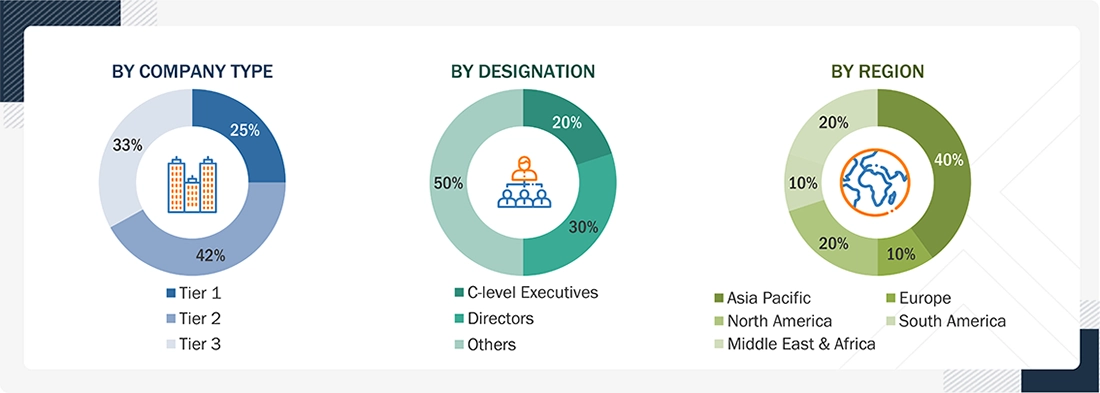
Notes: Others include sales, marketing, and product managers.
Tier 1: > USD 1 billion; Tier 2: USD 500 million–1 billion; and Tier 3: < USD 500 million
To know about the assumptions considered for the study, download the pdf brochure
Market Size Estimation
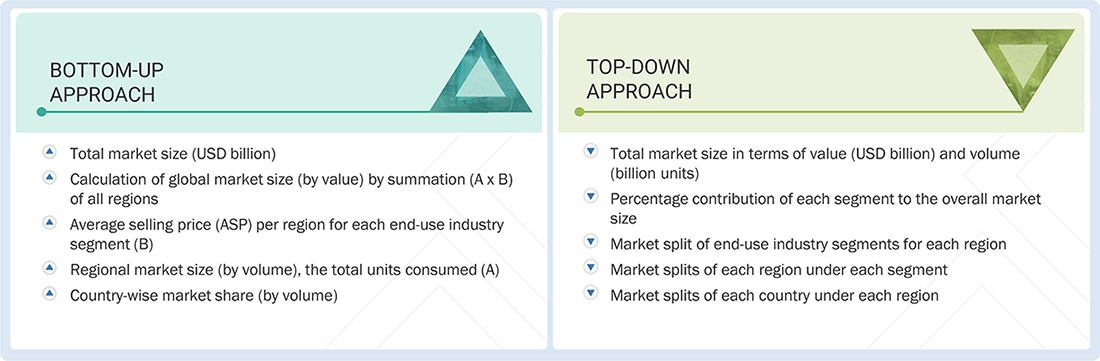
The top-down and bottom-up approaches were used to estimate and validate the size of the global anti-counterfeit packaging market. These approaches were also used extensively to estimate the size of various dependent market segments.
The research methodology used to estimate the market size included the following approaches:
Anti-Counterfeit Packaging Market : Top-Down and Bottom-Up Approach
Data Triangulation
After arriving at the overall market size using the market size estimation processes, the market was split into several segments and subsegments. The data triangulation and market breakup procedures were employed, wherever applicable, to complete the overall market engineering process and arrive at the exact statistics of each market segment and subsegment. The data was triangulated by studying various factors and trends from both the demand and supply sides.
Market Definition
Anti-counterfeiting involves various methods and techniques to protect products from being illegally duplicated, distributed, or sold. Anti-counterfeit packaging encompasses any packaging that integrates features or technologies designed to prevent unauthorized parties from copying, tampering with, or diverting the product. These features can be visible, hidden, or forensic, based on the required level of security and verification. The technologies used in anti-counterfeit packaging are mass encoding, RFID, holograms, forensic markers, and others. These technologies can be utilized in various types of packaging, such as bottles, cartons, and bags. They can either be integrated into the packaging materials themselves or added as separate components. The anti-counterfeit packaging solution is widely used in the end-use industries such as pharmaceutical, personal care, and food & beverage.
Key Stakeholders
- Raw Material Suppliers
- Regulatory Bodies
- Government and Consulting Firms
- End Users
- Research and Development Organizations
- Anti-counterfeit Packaging Manufacturers, Dealers, Traders, and Suppliers
Report Objectives
- To define, describe, and forecast the size of the global anti-counterfeit packaging market based on technology, end-use industry, and region in terms of value and volume
- To provide detailed information on the significant drivers, restraints, opportunities, and challenges influencing the market
- To analyze and forecast the market based on technology and end-use industry
- To strategically analyze micro markets concerning individual growth trends, prospects, and their contribution to the market
- To assess the growth opportunities in the market for stakeholders and provide details on the competitive landscape for market leaders
- To forecast the market size of segments for North America, Europe, Asia Pacific, South America, and the Middle East & Africa
- To strategically profile key players and comprehensively analyze their market shares and core competencies
- To analyze competitive developments, such as expansions, partnerships, and acquisitions, in the anti-counterfeit packaging market
- To provide the impact of AI on the anti-counterfeit packaging market
Available customizations:
With the given market data, MarketsandMarkets offers customizations according to client-specific needs.
The following customization options are available for the anti-counterfeit packaging report:
Product Analysis
- A product matrix that gives a detailed comparison of the product portfolio of each company
Regional Analysis
- A further breakdown of the anti-counterfeit packaging market for additional countries
Company Information
- Detailed analysis and profiling of additional market players (up to five)
Get the Full Anti-Counterfeit Packaging Market Report
Full forecast, segment splits, and company analysis for all Anti-Counterfeit Packaging Market.
- Canada Anti-Counterfeit Packaging Market
- Mexico Anti-Counterfeit Packaging Market
- US Anti-Counterfeit Packaging Market
- Germany Anti-Counterfeit Packaging Market
- France Anti-Counterfeit Packaging Market
- UK Anti-Counterfeit Packaging Market
- Italy Anti-Counterfeit Packaging Market
- Russia Anti-Counterfeit Packaging Market
- Spain Anti-Counterfeit Packaging Market
- China Anti-Counterfeit Packaging Market
- India Anti-Counterfeit Packaging Market
- Japan Anti-Counterfeit Packaging Market
- Australia Anti-Counterfeit Packaging Market
- Brazil Anti-Counterfeit Packaging Market
- Argentina Anti-Counterfeit Packaging Market
- Saudi Arabia Anti-Counterfeit Packaging Market
- UAE Anti-Counterfeit Packaging Market
- South Africa Anti-Counterfeit Packaging Market
- Turkey Anti-Counterfeit Packaging Market
- South America Anti-Counterfeit Packaging Market
- Rest Of Europe Anti-Counterfeit Packaging Market
- Rest Of Asia Pacific Anti-Counterfeit Packaging Market
Need a Tailored Report?
Customize this report to your needs
Get 10% FREE Customization
Customize This Report
