
Rest Of Asia Pacific Automotive Sensors Market (2026-2031)

The Rest Of Asia Pacific Automotive Sensors Market was valued at $3370 Million in 2026 and projected to reach to $7240 Million by 2031, representing a compound annual growth rate of 13.6%. Rest Of Asia Pacific represents a pivotal growth engine for the global automotive sensors market, with emerging economies in the region rapidly modernizing their vehicle fleets and adopting advanced automotive technologies.


| Market Size in | USD 26.32 MN |
| Market Forecast in | |
| CAGR | |
| Forecast Period | |
| Units Considered | Value (USD MN) |
Rest Of Asia Pacific Automotive Sensors Market Trends and Insights
- This expansion reflects the region's accelerating vehicle electrification, rising adoption of advanced driver-assistance systems (ADAS), and increasing regulatory mandates for vehicle safety and emissions control.
- Rest Of Asia Pacific's automotive sensor demand is driven by growing manufacturing capacity, rising middle-class vehicle ownership, and OEM investments in smart vehicle technologies across emerging economies. The 13.6% compound annual growth rate (CAGR) for Rest Of Asia Pacific underscores the region's robust market momentum relative to mature markets.
- Rest Of Asia Pacific benefits from competitive labor costs, expanding supply chain infrastructure, and government incentives supporting electric vehicle adoption.
- Key sensor categories including image sensors, pressure sensors, temperature sensors, and position sensors are experiencing heightened demand as Rest Of Asia Pacific manufacturers integrate IoT and autonomous driving capabilities into next-generation vehicles..
Key Market Statistics
- CAGR (2026-2031) 13.6% CAGR
- Market Size, 2026 ~USD 3370 Million
- Forecast, 2031 ~USD 7240 Million
- Country Rest Of Asia Pacific
Rest Of Asia Pacific Automotive Sensors Market Overview
Rapid Market Expansion :
Rest Of Asia Pacific automotive sensors market is projected to grow from $3,370 million in 2026 to $7,240 million by 2031, representing a robust 13.6% CAGR driven by increasing vehicle production and technological adoption across emerging economies.
Vehicle Electrification Surge :
The region is experiencing accelerating adoption of electric and hybrid vehicles, creating substantial demand for advanced sensor technologies including temperature, pressure, and position sensors essential for EV battery management and powertrain optimization.
ADAS Implementation Growth :
Rising consumer demand and regulatory requirements are driving widespread adoption of Advanced Driver-Assistance Systems across Rest Of Asia Pacific, necessitating increased deployment of radar, LiDAR, and camera-based sensor solutions for autonomous safety features.
Regulatory Compliance Drivers :
Stringent emissions standards and vehicle safety mandates across Rest Of Asia Pacific countries are compelling manufacturers to integrate sophisticated sensor systems for real-time monitoring, emissions control, and collision avoidance capabilities.
Rest Of Asia Pacific Automotive Sensors Market Dynamics
- The region's expanding middle class, coupled with increasing disposable incomes, is driving vehicle sales and creating substantial demand for sensor-enabled safety and efficiency features.
- Government initiatives promoting electric vehicle adoption and stricter environmental regulations are accelerating sensor integration across the automotive supply chain. The competitive landscape in Rest Of Asia Pacific is intensifying as both established semiconductor manufacturers and regional players invest in localized production facilities and R&D centers.
- Strategic partnerships between automotive OEMs and sensor suppliers are facilitating technology transfer and cost optimization.
- By 2031, the region is expected to account for a significant share of global automotive sensor consumption, driven by continued industrialization, urbanization, and the transition toward connected and autonomous vehicles..
Market Ecosystem
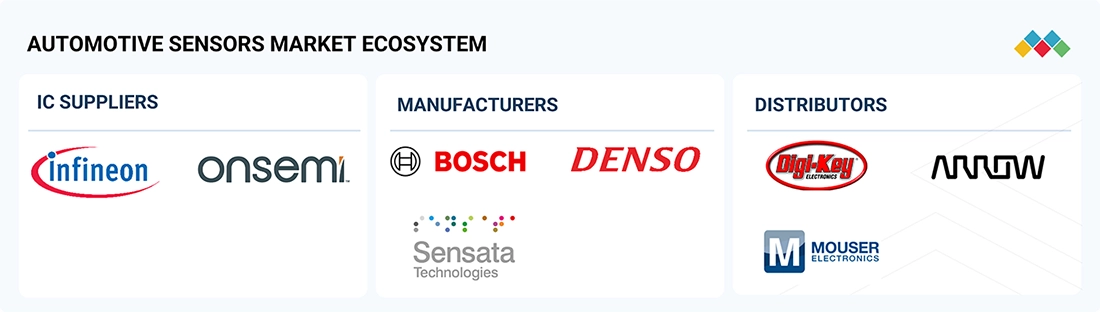
AUTOMOTIVE SENSORS MARKET SIZE, SHARE AND GROWTH ANALYSIS: COMMERCIAL USE CASES ACROSS INDUSTRIES
| COMPANY | USE CASE DESCRIPTION | BENEFITS |
|---|---|---|
 |
Bosch expanded its collaboration with Qualcomm to develop advanced ADAS and automated driving solutions by integrating radar, camera, ultrasonic, and AI-enabled sensing technologies into next-generation vehicle platforms. | Improved vehicle perception and decision-making capabilities | Enhanced safety performance | Accelerated ADAS deployment | Supported higher levels of vehicle automation |
 |
DENSO strengthened its electrification portfolio through the development of advanced sensing and control solutions for battery management, thermal management, and vehicle energy optimization in electric vehicles. | Enhanced battery efficiency | Improved vehicle range and reliability | Optimized energy consumption | Supported electric vehicle adoption |
 |
Valeo advanced its LiDAR and sensor fusion capabilities to support ADAS and autonomous driving applications, enabling more accurate detection of vehicles, pedestrians, and road obstacles. | Improved sensing accuracy and environmental perception | Enhanced vehicle safety | Enabled advanced autonomous driving functions | Strengthened OEM competitiveness through differentiated safety features |
Logos and trademarks shown above are the property of their respective owners. Their use here is for informational and illustrative purposes only.
Related Ecosystem
Automotive Electronics And Electrical Equipment
- Battery Electric Vehicle (BEV)
- Light Commercial Vehicles (LCVs)
- Fuel Cell Electric Vehicle (FCEV)
- Sensors
- Hybrid Electric Vehicle (HEV)
- BOSCH LIMITED
- DENSO Corporation
- Continental ag
- Panasonic Holdings Corporation
- Texas Instruments Incorporated
Connected Car
- Light Commercial Vehicles (LCVs)
- Battery Electric Vehicle (BEV)
- Fuel Cell Electric Vehicle (FCEV)
- Cellular Network
- Sensors
- BOSCH LIMITED
- Visteon Corporation
- Jabil Inc.
- DENSO Corporation
- VALENS SEMICONDUCTOR LTD.
Analytics
- Natural Language Processing (NLP)
- Machine Learning
- Supply Chain Management
- Predictive Analytics
- Image Sensors
- International Business Machines Corporation
- MICROSOFT CORPORATION
- Oracle Corporation
- SAP SE
Key Takeaways
- Rest Of Asia Pacific automotive sensors market is valued at $3,370 million in 2026 and expected to reach $7,240 million by 2031, representing a 13.6% CAGR.
- Rest Of Asia Pacific is experiencing rapid vehicle electrification and ADAS adoption, driving sensor demand across emerging economies in the region.
- Rest Of Asia Pacific benefits from competitive manufacturing advantages, expanding OEM presence, and government EV incentives supporting market growth.
- Rest Of Asia Pacific sensor market is characterized by increasing integration of advanced technologies including autonomous driving, IoT connectivity, and real-time vehicle diagnostics.
Automotive Sensors Market Report Scope
| Report Metric | Details |
|---|---|
| Base Year | 2026 |
| Fastest Growing Segment | LIDAR SENSORS (Sensor Type) |
| Forecast Period | 2026–2031 |
| Growth Rate | CAGR of 14.6% from 2026 to 2031 |
| Largest Segment | ORIGINAL EQUIPMENT MANUFACTURERS (Sales Channel) |
| Market Size Base Year (Billions) | ~USD 48.49 (2026) |
| Revenue Forecast (Billions) | ~USD 95.86 (2031) |
| Segments Covered | Sensor Type, Sales Channel, Application, Vehicle Type |
Rest Of Asia Pacific Automotive Sensors Market Report Segmentation
4 segment dimensions are covered across the global market.
By Sensor Type
- Chemical Sensors
- Current Sensors
- Image Sensors
- Inertial Sensors
- Level Sensors
- Lidar Sensors
- Nox Sensors
- Other Sensors
- Oxygen Sensors
- Position Sensors
- Pressure Sensors
- Radar Sensors
- Speed Sensors
- Temperature Sensors
- Ultrasonic Sensors
By Sales Channel
- Aftermarket
- OEM
- Original Equipment Manufacturers
By Application
- Chassis
- Driver Assistance & Automation
- Driver-Assistance & Automation Systems
- Exhaust Systems
- Other Applications
- Powertrain Systems
- Safety & Control Systems
- Telematics Systems
- Vehicle Body Electronics
By Vehicle Type
- Hcv
- Heavy Commercial Vehicles
- Lcv
- Light Commercial Vehicles
- Passenger Car
- Passenger Cars
Target Audience
- Automotive OEM Executives : Strategic decision-makers at vehicle manufacturers need Rest Of Asia Pacific-specific sensor market data to optimize component sourcing, plan production capacity, and align product portfolios with regional electrification and ADAS adoption trends.
- Semiconductor & Sensor Manufacturers : Component suppliers require detailed regional market insights to identify growth opportunities, assess competitive positioning, and develop localized product strategies for the rapidly expanding Rest Of Asia Pacific automotive sensor segment.
- Investment & Private Equity Firms : Investors evaluating automotive technology opportunities need comprehensive Rest Of Asia Pacific market analysis to identify high-growth companies, assess valuation multiples, and structure investment theses in this emerging region.
- Supply Chain & Procurement Managers : Procurement professionals require region-specific supplier landscapes, cost benchmarking, and supply chain risk assessments for Rest Of Asia Pacific to optimize sourcing strategies and ensure supply security for automotive sensor components.
- Market Research & Consulting Professionals : Analysts and consultants need granular Rest Of Asia Pacific market data to support client advisory engagements, competitive benchmarking studies, and strategic planning initiatives within the automotive sensors industry.
Key Companies in the Rest Of Asia Pacific Automotive Sensors Market
| Company | HQ | Ownership | Strongest segments |
|---|---|---|---|
| UNITED MICROELECTRONICS CORP | Taiwan | Public Company | Wafer fabrication for communication devices,Wafer fabrication for consumer electronics,Computer and other IC wafer fabrication, |
| SPECTRA PREMIUM INDUSTRIES | Canada | Private Company | Automotive cooling systems (radiators, condensers, intercoolers, charge air coolers),Fuel delivery systems and steel fuel tanks,Engine management and undercar components, |
| TOWER SEMICONDUCTOR LTD | Israel | Public Company | RF CMOS / SiGe / SiPho,Mixed-Signal CMOS / Analog,CMOS Image Sensors & Non-Imaging Sensors, |
| LENOVO | China | Public Company | Small form factor PCs & embedded signage controllers,Dedicated media players & thin clients,Tablets and smart devices for kiosks/PoS, |
| AMS AG | United States | Public Company | Air Distribution (GDS and related services),Air IT Solutions (Altéa, New Skies, airline operations and payments),Hospitality & Other Solutions, |
| FIRST SENSOR AG | Germany | Public Company | Sensor chips, components, and systems,Connectivity (cable assemblies, connectors, terminals, wire & cable),EMI/EMC, protection, and passive components, |
| DELPHI AUTOMOTIVE | Ireland | Public Company | Electrical Distribution Systems,Engineered Components (Connection Systems & Interconnects),Advanced Safety and User Experience, |
| ROBERT BOSCH GMBH | India | Private Company | Mobility (powertrain, chassis, electronics, aftermarket, steering),Industrial Technology (drive, control, actuators, process and packaging),Consumer Goods (power tools, garden tools, appliances, measuring equipment), |
| DENSO CORPORATION | Japan | Public Company | Air-conditioning and thermal management systems,Powertrain systems (gasoline, diesel, hybrid, EV, fuel cell),Safety and cockpit systems, |
| AUMOVIO SE | Germany | Public Company | Software-defined mobility platforms and UX,Safety, driver assistance, and driver security,Vehicle E/E architectures and virtualization services, |
| VALEO SA | France | Public Company | Power (thermal systems, EV thermal, HVAC, air quality),Brain (ADAS, lidar, cameras, connectivity, access),Light (lighting systems and wipers), |
| SENSATA TECHNOLOGIES, INC. | United States | Public Company | Automotive sensors and sensor-rich solutions,Electrification and energy storage systems,Industrial sensors, controls, and protection, |
| NITERRA CO., LTD. | Japan | Public Company | Spark plugs and glow plugs (OEM + aftermarket),Sensors (oxygen, NOx, temperature, knock),Technical and fine ceramics (industrial, medical, semiconductor equipment), |
| APTIV PLC | Switzerland | Public Company | Electrical Distribution Systems,Engineered Components (Connection Systems & Interconnects),Advanced Safety & User Experience, |
| ZF FRIEDRICHSHAFEN AG | Germany | Private Company | Passenger car driveline, chassis, and safety systems,Commercial vehicle, truck, trailer, bus, and fleet systems,Industrial applications (construction, agriculture, marine, wind, rail, material handling), |
| HYUNDAI MOBIS CO., LTD. | South Korea | Public Company | Chassis, cockpit, and front-end modules,Electrification (power conversion, drive, battery, 48V),Safety (airbag modules and control units), |
| MAGNA INTERNATIONAL | Canada | Public Company | Body Exteriors & Structures (incl. battery enclosures, hot stamping, frames),Power & Vision (ADAS, powertrain control, energy management),Seating Systems and Interior/Exterior Modules, |
| TE CONNECTIVITY | Ireland | Public Company | Automotive and e-mobility connectivity,Industrial and energy connectivity,Aerospace, defense, and space, |
| MOBILEYE GLOBAL INC. | Israel | Public Company | Base ADAS (EyeQ front-camera safety),Cloud-Enhanced & Surround ADAS / SuperVision (L2/L2+),Autonomous stacks (Chauffeur, Drive, robotaxi), |
UNITED MICROELECTRONICS CORP
United Microelectronics Corp is a Taiwanese public semiconductor manufacturer founded in 1980 with approximately 20,000 employees.
SPECTRA PREMIUM INDUSTRIES
Spectra Premium Industries is a Canadian private company founded in 1989 with 1,500 employees operating in the automotive and industrial sectors.
TOWER SEMICONDUCTOR LTD
Tower Semiconductor Ltd is an Israeli public company founded in 1993 with 5,613 employees specializing in semiconductor manufacturing.
LENOVO
Lenovo is a Chinese public technology company founded in 1984 known for manufacturing computers and consumer electronics.
AMS AG
AMS AG is a United States-based public semiconductor company founded in 1987 with 20,605 employees.
FIRST SENSOR AG
First Sensor AG is a German public company founded in 1991 with 538 employees specializing in sensor technology.
DELPHI AUTOMOTIVE
Delphi Automotive is an Irish public company founded in 2011 with 140,000 employees specializing in automotive technology and components.
ROBERT BOSCH GMBH
Robert Bosch GmbH is a German private company founded in 1886 with 412,774 employees, one of the world's largest suppliers of automotive and industrial technology.
DENSO CORPORATION
Denso Corporation is a Japanese public company founded in 1949 with 154,716 employees specializing in automotive components and systems.
AUMOVIO SE
Aumovio SE is a German public company founded in 2024 with 31,054 employees operating in the automotive sector.
VALEO SA
Valeo SA is a French public company founded in 1923 with 87,115 employees specializing in automotive technology and components.
SENSATA TECHNOLOGIES, INC.
Sensata Technologies, Inc. is a United States-based public company founded in 1916 with 16,700 employees manufacturing sensors and controls.
NITERRA CO., LTD.
Niterra Co., Ltd. is a Japanese public company founded in 1936 with 15,698 employees specializing in automotive and industrial ceramics.
APTIV PLC
Aptiv PLC is a Swiss public company founded in 2011 with 140,000 employees providing automotive technology and mobility solutions.
ZF FRIEDRICHSHAFEN AG
ZF Friedrichshafen AG is a German private company founded in 1915 with 145,909 employees specializing in driveline and chassis technology.
HYUNDAI MOBIS CO., LTD.
Hyundai Mobis Co., Ltd. is a South Korean public company founded in 1977 specializing in automotive components and systems.
MAGNA INTERNATIONAL
Magna International is a Canadian public company founded in 1957 with 156,000 employees, a leading global automotive supplier.
TE CONNECTIVITY
TE Connectivity is an Irish public company founded in 1941 with 80,000 employees manufacturing connectivity and sensor solutions.
MOBILEYE GLOBAL INC.
Mobileye Global Inc. is an Israeli public company founded in 1999 with 4,200 employees specializing in autonomous driving technology.
Reasons to Buy this Report
- Market-Specific Growth Projections : Access detailed forecasts and CAGR analysis specific to Rest Of Asia Pacific, enabling precise investment decisions and resource allocation strategies tailored to this high-growth regional market segment.
- Competitive Landscape Intelligence : Gain insights into regional competitors, market consolidation trends, and emerging players in Rest Of Asia Pacific, identifying partnership and acquisition opportunities within the automotive sensor ecosystem.
- Regulatory & Compliance Roadmap : Understand country-specific emissions standards, safety mandates, and electrification policies across Rest Of Asia Pacific that directly influence sensor technology requirements and market demand dynamics.
- Technology Adoption Trends : Identify which sensor technologies (radar, LiDAR, camera, pressure, temperature) are gaining traction in Rest Of Asia Pacific markets, enabling product development and go-to-market strategies aligned with regional preferences.
- Investment & Expansion Strategy : Leverage region-specific market data to evaluate manufacturing facility locations, supply chain partnerships, and distribution channels optimized for Rest Of Asia Pacific's unique economic and logistical landscape.
Frequently asked questions
What is the market size of automotive sensors in Rest Of Asia Pacific?
Rest Of Asia Pacific's automotive sensors market is estimated at $3,370 million in 2026 and is projected to grow to $7,240 million by 2031.
What is the CAGR for Rest Of Asia Pacific automotive sensors market?
Rest Of Asia Pacific's automotive sensors market is expected to grow at a compound annual growth rate (CAGR) of 13.6% from 2026 to 2031.
What are the primary drivers of growth in Rest Of Asia Pacific?
Rest Of Asia Pacific growth is driven by vehicle electrification, ADAS adoption, regulatory safety mandates, expanding OEM manufacturing, and government EV incentives across emerging economies.
Which sensor types are most in demand in Rest Of Asia Pacific?
Rest Of Asia Pacific demand is strongest for image sensors, pressure sensors, temperature sensors, and position sensors used in ADAS, powertrain control, and autonomous driving applications.
How does Rest Of Asia Pacific compare to other regions?
Rest Of Asia Pacific's 13.6% CAGR demonstrates strong growth momentum, supported by emerging market vehicle adoption, competitive manufacturing costs, and rapid technology integration compared to mature markets.
RESEARCH METHODOLOGY
The research process for this technical, market-oriented, and commercial study of the automotive sensors market included the systematic gathering, recording, and analysis of data about companies operating in the market. It involved the extensive use of secondary sources, directories, and databases (Factiva and Oanda) to identify and collect relevant information. In-depth interviews were conducted with various primary respondents, including experts from core and related industries and preferred manufacturers, to obtain and verify critical qualitative and quantitative information as well as to assess the growth prospects of the market. Key players in the automotive sensors market were identified through secondary research, and their market rankings were determined through primary and secondary research. This included studying annual reports of top players and interviewing key industry experts, such as CEOs, directors, and marketing executives.
Secondary Research
In the secondary research process, various secondary sources were referred to for identifying and collecting information relevant to this study. Secondary sources include annual reports, press releases, and investor presentations of companies; white papers, certified publications, and articles from recognized authors; directories; and databases. Secondary research has been mainly conducted to obtain key information about the supply chain and value chain of the industry; a total pool of key players; segmentation of the market according to the industry trends, geographic markets, and key developments from market- and technology-oriented perspectives.
Primary Research
In the primary research process, primary sources from the supply and demand sides were interviewed to obtain qualitative and quantitative information for this report. Primary sources from the supply side include experts, such as CEOs, vice presidents, marketing directors, technology and innovation directors, subject-matter experts, consultants, and related key executives from major companies and organizations operating in the automotive sensors market.
After the complete market engineering process (market statistics calculations, market breakdown, market size estimations, market forecasting, and data triangulation), extensive primary research was conducted to gather information and verify and validate the critical market numbers.
Several primary interviews were conducted with experts from the demand and supply sides across four major regions—North America, Europe, Asia Pacific, and RoW. This primary data was collected through questionnaires, emails, and telephonic interviews.
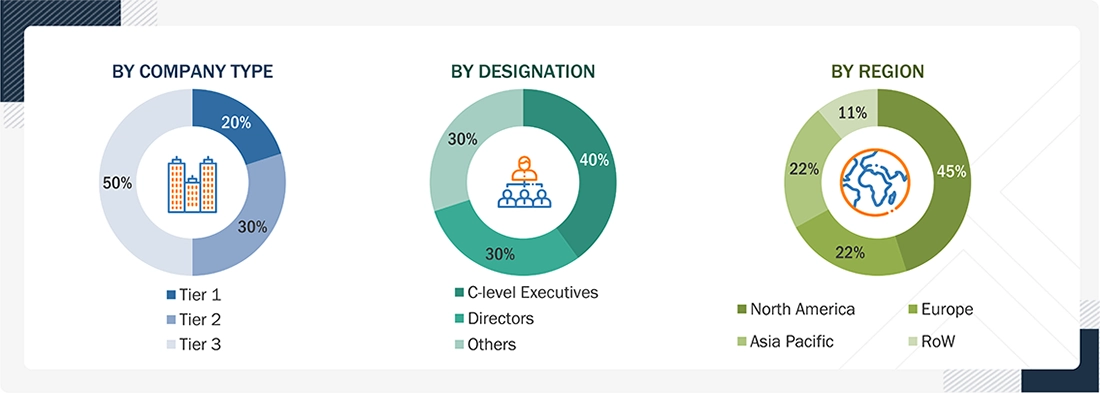
Note: Other designations include product managers, sales managers, and marketing managers.
Three tiers of companies have been defined based on their total revenue as of 2025: tier 3: revenue less than USD 500 million; tier 2: revenue between USD 500 million and USD 1 billion; and tier 1: revenue more than USD 1 billion.
RoW includes South America, Africa, and the Middle East.
To know about the assumptions considered for the study, download the pdf brochure
Market Size Estimation
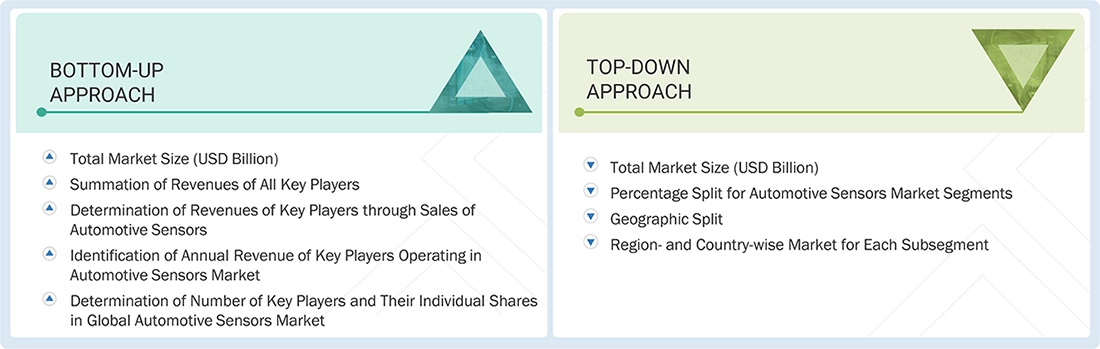
In the complete market engineering process, top-down and bottom-up approaches and several data triangulation methods were used to estimate and forecast the overall market segments and subsegments listed in this report. Key players in the market were identified through secondary research, and their market shares in the respective regions were determined through primary and secondary research. This entire procedure included the study of annual and financial reports of the top market players and extensive interviews for key insights (quantitative and qualitative) with industry experts (CEOs, VPs, directors, and marketing executives).
All percentage shares, splits, and breakdowns were determined using secondary sources and verified through primary sources. All the parameters affecting the markets covered in this research study were accounted for, viewed in detail, verified through primary research, and analyzed to obtain the final quantitative and qualitative data. This data was consolidated and supplemented with detailed inputs and analysis from MarketsandMarkets and presented in this report.
BOTTOM-UP APPROACH
- Companies offering automotive sensors were identified, and their offerings were mapped based on their applications and regional footprint.
- The global automotive sensors market size was derived through the data sanity method. The revenues of automotive sensor providers were analyzed through annual reports and press releases and summed up to derive the overall market size.
- For each company, a percentage was assigned to the overall revenue to derive the revenues from automotive sensors.
- Each company’s percentage was assigned after analyzing various factors, including its product offerings, geographic presence, R&D expenditures and initiatives, and recent developments/strategies adopted for growth in the automotive sensors market.
- For the CAGR, the market trend analysis of automotive sensors was carried out by understanding the industry penetration rate and the demand and supply of automotive sensors for different applications.
- Estimates at every level were verified and cross-checked by discussing them with key opinion leaders, including sales heads, directors, operations managers, and market domain experts of MarketsandMarkets.
- Various paid and unpaid information sources, such as annual reports, press releases, white papers, and databases, were studied.
TOP-DOWN APPROACH
- Focusing initially on the top-line investments and expenditures being made in the ecosystem of automotive sensors, further splitting into sensor types, vehicle types, applications, and listing key developments in key market areas
- Identifying all major players in the automotive sensors market and their penetration in various applications through secondary research, as well as verifying with a brief discussion with industry experts
- Analyzing revenues, product mix, geographic presence, and key applications for which all identified players serve automotive sensors to estimate and arrive at the percentage splits for all key segments
- Discussing these splits with the industry experts to validate the information and identify key growth pockets across all key segments
- Breaking down the total market based on verified splits and key growth pockets across all segments
Data Triangulation
After arriving at the overall market size, the market was split into several segments and subsegments using the market size estimation processes as explained above. Data triangulation and market breakdown procedures were employed to complete the entire market engineering process and determine each market segment's and subsegment's exact statistics. The data was triangulated by studying various factors and trends from the demand and supply sides in the automotive sensors market.
Market Definition
Automotive sensors are electronic devices that detect, measure, and convert physical or chemical parameters into electrical signals for vehicle control systems. These sensors act as the sensory organs of a vehicle, continuously monitoring parameters such as pressure, temperature, speed, position, acceleration, fluid levels, oxygen concentration, and nitrogen oxide (NOx) emissions. The collected data is transmitted to electronic control units (ECUs), which process the information and initiate appropriate control actions to optimize vehicle performance, safety, efficiency, and passenger comfort.
Automotive sensors play a critical role in a wide range of vehicle systems, including powertrain, chassis, body electronics, safety, advanced driver assistance systems (ADAS), infotainment, and electrification platforms. With the increasing adoption of connected, electric, and autonomous vehicles, sensor technologies have become essential for enabling real-time monitoring, intelligent decision-making, regulatory compliance, and enhanced driving experiences. As vehicle electronics continue to evolve, automakers are integrating a greater number of sensors to improve vehicle control, safety, fuel efficiency, and overall operational reliability.
Key Stakeholders
- Raw material suppliers
- Original equipment manufacturers (OEMs)
- Technology solution providers
- Research institutes
- Market research and consulting firms
- Governments and financial institutions
- Analysts and strategic business planners
Report Objectives
- To describe and forecast the automotive sensors market by sensor type, sales channel, vehicle type, application, and region, in terms of value
- To describe and forecast the market for various segments across four main regions, namely, North America, Europe, Asia Pacific, and the RoW, in terms of value
- To describe and forecast the market for sensor types, in terms of volume
- To strategically analyze micromarkets1 about individual growth trends, prospects, and their contribution to the market
- To provide detailed information regarding the drivers, restraints, opportunities, and challenges influencing market growth
- To analyze opportunities for stakeholders by identifying high-growth segments in the market
- To provide a detailed overview of the automotive sensor value chain
- To strategically profile the key players in the automotive sensors market and comprehensively analyze their market shares and core competencies
- To analyze competitive developments such as partnerships, acquisitions, expansions, collaborations, and product launches, along with R&D activities in the automotive sensors market
- To provide interconnected markets and cross-sector opportunities, strategic moves by tier 1/2/3 players, ecosystem analysis, case study analysis, patent analysis, technology analysis, impact of AI/Gen AI, key conferences and events, Porter’s five forces analysis, and regulations pertaining to the market under study
Available customizations:
With the given market data, MarketsandMarkets offers customizations according to the company’s specific needs. The following customization options are available for the report:
COMPANY INFORMATION
- Detailed analysis and profiling of additional market players (up to five)
Get the Full Automotive Sensors Market Report
Full forecast, segment splits, and company analysis for all Automotive Sensors Market.
- US Automotive Sensors Market
- Canada Automotive Sensors Market
- Mexico Automotive Sensors Market
- Germany Automotive Sensors Market
- UK Automotive Sensors Market
- France Automotive Sensors Market
- Italy Automotive Sensors Market
- Rest Of Europe Automotive Sensors Market
- China Automotive Sensors Market
- Japan Automotive Sensors Market
- India Automotive Sensors Market
- South Korea Automotive Sensors Market
Need a Tailored Report?
Customize this report to your needs
Get 10% FREE Customization
Customize This Report
