
UK Building Thermal Insulation Market (2026-2031)

The UK Building Thermal Insulation Market was valued at $1083.6 Million in 2026 and projected to reach to $1257.8 Million by 2031, representing a compound annual growth rate of 3.03%. The UK building thermal insulation market is positioned for steady growth through 2031, supported by stringent regulatory frameworks and the government's commitment to achieving net-zero carbon emissions by 2050.


| Market Size in | USD 26.32 MN |
| Market Forecast in | |
| CAGR | |
| Forecast Period | |
| Units Considered | Value (USD MN) |
UK Building Thermal Insulation Market Trends and Insights
- The UK market reflects steady expansion driven by regulatory compliance with building energy efficiency standards and increased retrofit activity across residential and commercial properties.
- The UK's commitment to net-zero carbon targets and stringent Building Regulations continues to underpin demand for advanced insulation solutions. The UK thermal insulation sector benefits from strong government incentives, including the Energy Company Obligation and various retrofit schemes targeting older building stock.
- The UK market demonstrates resilience despite economic headwinds, with construction recovery and renovation cycles supporting consistent demand.
- Between 2026 and 2031, the UK market is expected to experience moderate but stable growth as building owners and developers prioritize energy efficiency improvements to meet compliance requirements and reduce operational costs..
Key Market Statistics
- CAGR (2026-2031) 3.03% CAGR
- Market Size, 2026 ~USD 1083.6 Million
- Forecast, 2031 ~USD 1257.8 Million
- Country UK
UK Building Thermal Insulation Market Overview
Steady Growth Trajectory :
The UK building thermal insulation market is valued at USD 1,083.6 million in 2026 and is projected to reach USD 1,257.8 million by 2031, with a CAGR of 3.03%, reflecting consistent market expansion.
Regulatory Compliance Driver :
UK building energy efficiency standards and Building Regulations Part L requirements are primary growth catalysts, mandating improved thermal performance in new constructions and major renovations.
Retrofit Activity Surge :
Increased retrofit activity across UK residential and commercial properties, driven by government incentives and net-zero commitments, is significantly boosting demand for thermal insulation solutions.
Below Global Growth Rate :
The UK market CAGR of 3.03% is lower than the global CAGR of 5.29%, indicating a more mature market with steady but moderate expansion compared to emerging regions.
UK Building Thermal Insulation Market Dynamics
- Building Regulations Part L updates and the Energy Performance of Buildings Directive continue to mandate higher insulation standards, creating sustained demand across residential, commercial, and industrial sectors.
- Retrofit programmes, including the Energy Company Obligation and various local authority schemes, are accelerating the replacement of outdated insulation materials with modern, high-performance alternatives. Market expansion will be tempered by economic constraints and competition from alternative energy efficiency solutions.
- However, the UK's mature construction market, combined with aging building stock requiring upgrades, ensures consistent demand for thermal insulation products.
- Innovation in sustainable and recycled insulation materials, alongside increasing consumer awareness of energy costs, will drive market evolution and create opportunities for differentiated product offerings..
Market Ecosystem
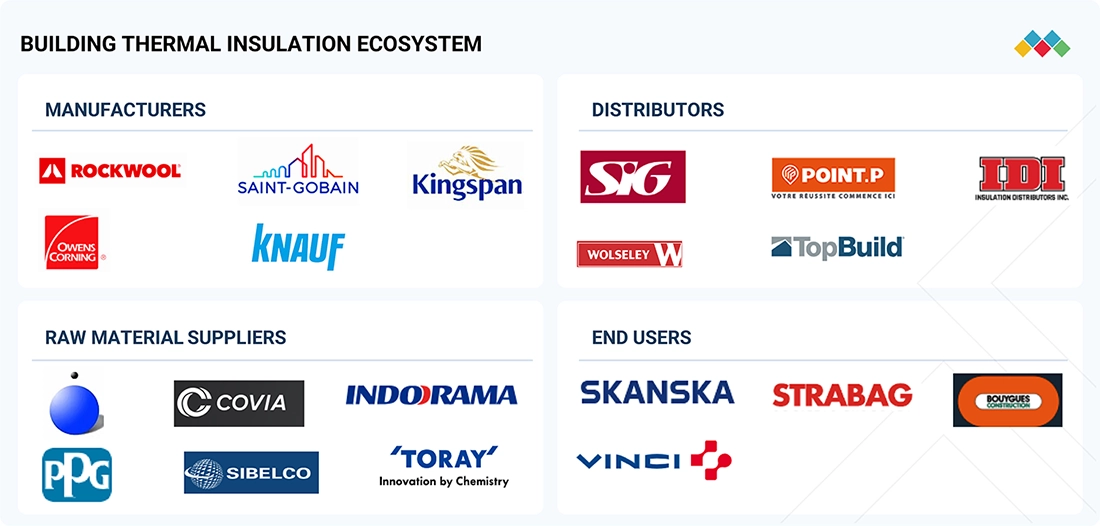
BUILDING THERMAL INSULATION MARKET: COMMERCIAL USE CASES ACROSS INDUSTRIES
| COMPANY | USE CASE DESCRIPTION | BENEFITS |
|---|---|---|
 |
Many residents in the Wilmcote House building could not afford to heat their homes adequately. This is a severe issue in Europe, where 10.8% of people cannot afford to keep their homes warm. At Wilmcote House, poor energy performance was a major issue. It led to high heating bills and mold, dampness, and condensation, which can adversely affect health. Its product, REDArt and Rockpanel, provided external wall insulation for its new constructions. This helped residents save fuel and made Wilmcote House a more pleasant place to live. | Improved conditions within all properties, making the residents feel much warmer and substantially reducing fuel bills |
 |
ISOVER glass wool insulation was used in the Grand Paris Express metro stations and associated public infrastructure in France to improve thermal efficiency and acoustic performance in underground stations and service buildings while meeting stringent fire safety standards. | Reduced energy consumption, superior acoustic insulation, excellent fire resistance, enhanced occupant comfort |
 |
Kingspan's Kooltherm insulation boards were installed at The Edge office building (Amsterdam, Netherlands) to achieve exceptional building energy performance. The thin, high-performance insulation maximized usable floor space while meeting stringent sustainability requirements. | Very low thermal conductivity, reduced operational energy costs, increased floor area, support for green building certification |
 |
Knauf Insulation supplied mineral wool insulation for the Heathrow Airport Terminal 2 (UK) redevelopment, delivering thermal and acoustic insulation across walls, roofs, and service areas to enhance passenger comfort and building efficiency. | Improved thermal efficiency, sound absorption, fire protection, lower lifecycle operating costs |
Logos and trademarks shown above are the property of their respective owners. Their use here is for informational and illustrative purposes only.
Related Ecosystem
Foam And Insulation
- Fiberglass
- Acoustic Insulation
- Elastomeric Foam
- HVAC System
- Flexible Foam
- Basf se
- Saint-gobain
- ARMACELL INTERNATIONAL
- THE WOODBRIDGE GROUP
- Huntsman Corporation
Infrastructure Material
- Alumina Ceramics
- Ceramic Coatings
- Monolithic Ceramics
- Polyphenylene Sulfide (PPS)
- Titanate Ceramics
- Saint-gobain
- Simpson Manufacturing Co., Inc.
- Sika ag
- DOW CHEMICAL COMPANY
- Basf se
Key Takeaways
- The UK building thermal insulation market is valued at USD 1,083.6 million in 2026 and will reach USD 1,257.8 million by 2031.
- The UK market is growing at a CAGR of 3.03%, reflecting steady but moderate expansion compared to global growth rates.
- UK regulatory frameworks and net-zero commitments are primary drivers of sustained demand for thermal insulation products.
- The UK retrofit market and renovation cycles present significant opportunities for insulation manufacturers through 2031.
Building Thermal Insulation Market Report Scope
| Report Metric | Details |
|---|---|
| Base Year | 2026 |
| Fastest Growing Segment | ROOF INSULATION (Application) |
| Forecast Period | 2026-2031 |
| Growth Rate | CAGR of 5.29% from 2026 to 2031 |
| Largest Segment | RESIDENTIAL (Building Type) |
| Market Size Base Year (Billions) | ~USD 33.59 (2026) |
| Revenue Forecast (Billions) | ~USD 43.47 (2031) |
| Segments Covered | Material, Sub-Type, Building Type, Application |
UK Building Thermal Insulation Market Report Segmentation
4 segment dimensions are covered across the global market.
By Material
- Argentina
- Brazil
- Glass Wool
- Plastic Foam
- Rest Of South America
- Stone Wool
By Sub-Type
- Polystyrene
- Pur & Pir
By Building Type
- Non-Residential
- Residential
By Application
- Floor Insulation
- Roof Insulation
- Wall Insulation
Target Audience
- Building Material Manufacturers : UK-based and international insulation manufacturers need market sizing and growth forecasts to optimize production capacity, plan product launches, and allocate R&D resources for the British market.
- Construction & Retrofit Contractors : Contractors and retrofit specialists require UK market intelligence to identify demand trends, forecast project pipelines, and make informed decisions on service offerings and capacity planning.
- Property Developers & Real Estate Investors : UK developers and property investors need market data to understand insulation cost implications, regulatory requirements, and retrofit ROI to optimize project economics and sustainability credentials.
- Government & Policy Bodies : UK government agencies and policy makers use market research to evaluate the effectiveness of building regulations, retrofit incentive schemes, and net-zero policies on market adoption and growth.
- Sustainability & Energy Consultants : Energy efficiency consultants and sustainability advisors require UK market forecasts to advise clients on insulation investments, regulatory compliance, and long-term energy cost savings strategies.
Reasons to Buy this Report
- UK-Specific Market Sizing : Access precise valuation data for the UK market (USD 1,083.6M in 2026 and USD 1,257.8M in 2031) to benchmark performance, allocate budgets, and identify growth opportunities specific to the British market.
- Regulatory Landscape Intelligence : Understand how UK Building Regulations Part L, Energy Performance of Buildings Directive, and net-zero commitments shape market dynamics, enabling compliant product development and strategic positioning.
- Retrofit Market Opportunity Analysis : Gain insights into the UK's accelerating retrofit activity driven by government schemes and aging building stock, identifying high-potential customer segments and revenue streams in the renovation sector.
- Competitive Positioning Strategy : Benchmark your UK operations against market growth rates (3.03% CAGR) and global comparisons (5.29% CAGR) to refine competitive strategies and identify market gaps for differentiation.
- Investment and Expansion Planning : Make informed decisions on UK market entry, expansion, or portfolio adjustments using comprehensive forecasts through 2031, supporting long-term business planning and resource allocation.
Frequently asked questions
What is the current size of the UK building thermal insulation market?
The UK building thermal insulation market is estimated at USD 1,083.6 million in 2026.
What is the projected market size for the UK by 2031?
The UK market is forecast to reach USD 1,257.8 million by 2031.
What is the CAGR for the UK building thermal insulation market?
The UK market is expected to grow at a CAGR of 3.03% from 2026 to 2031.
What are the main drivers of growth in the UK thermal insulation market?
Key drivers include UK Building Regulations compliance, net-zero carbon targets, government retrofit schemes, and increased renovation activity in residential and commercial sectors.
How does the UK market growth compare to global trends?
The UK CAGR of 3.03% is lower than the global CAGR of 5.29%, indicating more moderate growth in the UK market relative to worldwide expansion.
RESEARCH METHODOLOGY
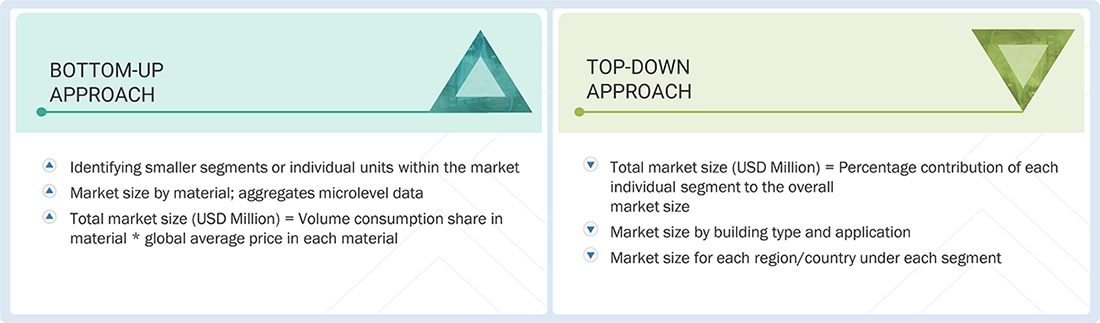
The study involved four major activities to estimate the market size for building thermal insulation. Exhaustive secondary research was conducted to collect information on the market, the peer market, and the parent market. The next step was to validate these findings, assumptions, and sizing with industry experts across the value chain through primary research. Both top-down and bottom-up approaches were employed to estimate the total market size. After that, the market breakdown and data triangulation procedures were used to estimate the market size of the segments and subsegments.
Secondary Research
Secondary sources used in this study included annual reports, press releases, and investor presentations from companies; white papers; certified publications; articles by recognized authors; and gold- and silver-standard websites, such as Factiva, ICIS, Bloomberg, and others. The findings of this study were verified through primary research, which involved extensive interviews with key officials, including CEOs, VPs, directors, and other executives. The breakdown of the primary interviewees' profiles is illustrated in the figure below:
Primary Research
The building thermal insulation market comprises several stakeholders, including raw material suppliers, end-product manufacturers, and regulatory organizations across the supply chain. Primary sources from both the supply and demand sides of the market were interviewed to gather qualitative and quantitative information.
BREAKDOWN OF PRIMARY PARTICIPANTS
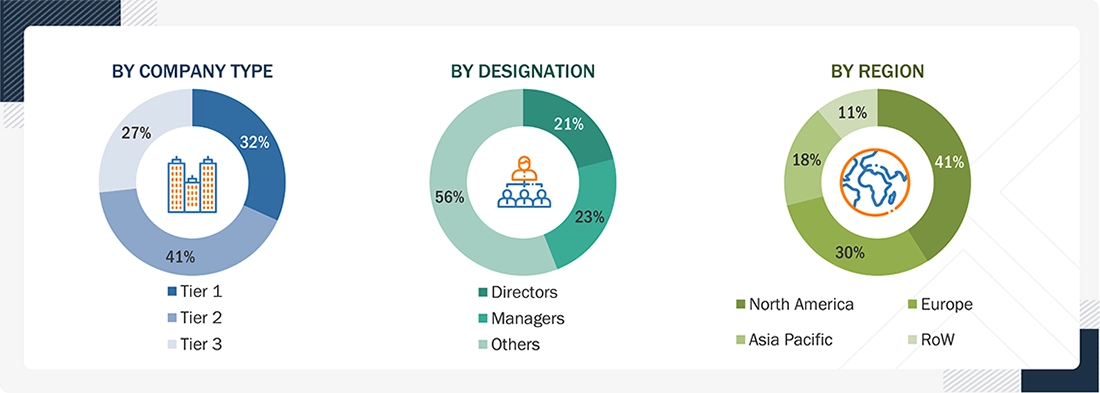
Notes: Tier 1, Tier 2, and Tier 3 companies are classified based on their market revenue in 2024/2025, available in the public domain, product portfolios, and geographical presence.
Other designations include consultants and sales, marketing, and procurement managers.
|
COMPANY NAME |
DESIGNATION |
|
Saint-Gobain S.A. |
Production Manager |
|
BASF SE |
Business Development Manager |
|
Johns Manville Corporation |
Innovation Manager |
|
Rockwool A/S |
Vice President |
|
Owens Corning |
Global Strategy and Innovation Manager |
To know about the assumptions considered for the study, download the pdf brochure
Market Size Estimation
Both top-down and bottom-up approaches were used to estimate and validate the total size of the building thermal insulation market. These methods were also used extensively to estimate the size of various market subsegments. The research methodology used to estimate the market size includes the following:
- The key players in the industry have been identified through extensive secondary research.
- The supply chain of the industry has been determined through primary and secondary research.
- All percentage shares, splits, and breakdowns have been determined using secondary sources and verified through primary sources.
- All possible parameters that affect the markets covered in this research study have been accounted for, viewed in extensive detail, verified through primary research, and analyzed to obtain the final quantitative and qualitative data
Building Thermal Insulation Market: Top-Down and Bottom-Up Approach
Data Triangulation
After determining the overall market size using the market size estimation processes explained above, the market was divided into several segments and subsegments. To complete the overall market engineering process and determine the exact statistics for each market segment and subsegment, data triangulation and market breakdown procedures were employed, as applicable. The data was triangulated by analyzing various factors and trends from both the demand and supply sides in the building thermal insulation industry.
Market Definition
According to the Climate Technology Centre and Network (CTCN), building thermal insulation is an important technology that reduces energy consumption in buildings by preventing heat gain or loss. It is used to reduce the amount of power required to heat or cool homes and to minimize heat loss in winter and hot-air penetration in summer. Building insulation tends to be the most cost-effective measure in climates with wide temperature ranges. The impact of additional insulation is significant in buildings with thin walls or timber construction. The insulation’s resistance to heat flow is measured or rated by its thermal resistance, or R-value. The higher the R-value, the greater the heat resistance and the less the heat flow.
Key Stakeholders
- Building Thermal Insulation Manufacturers
- Building Thermal Insulation Distributors
- Raw Material Suppliers
- End-use Industries
- Government and Research Organizations
Report Objectives
- To analyze and forecast the size of the global building thermal insulation market in terms of value and volume
- To provide detailed information about the major drivers, restraints, challenges, and opportunities influencing market growth
- To define, describe, and segment the market based on material, building type, application, and region
- To forecast the size of the market segments based on regions such as Asia Pacific, North America, Europe, the Middle East & Africa, and South America
- To strategically analyze micromarkets1 with respect to individual growth trends, prospects, and their contribution to the overall market
- To strategically analyze the segmented markets with respect to individual growth trends, prospects, and contributions to the overall market
- To identify and analyze opportunities for stakeholders in the market
- To analyze competitive developments such as mergers, acquisitions, collaborations, expansions, partnerships in the market
- To strategically profile the key companies and comprehensively analyze their core competencies
Available customizations:
Along with the given market data, MarketsandMarkets offers customizations according to the company’s specific needs. The following customization options are available for the report:
Regional Analysis
- Further breakdown of a region with respect to a particular country or additional end-use industry
Company Information
- Detailed analysis and profiles of additional market players (up to five)
Get the Full Building Thermal Insulation Market Report
Full forecast, segment splits, and company analysis for all Building Thermal Insulation Market.
- Poland Building Thermal Insulation Market
- Italy Building Thermal Insulation Market
- Russia Building Thermal Insulation Market
- Spain Building Thermal Insulation Market
- Mexico Building Thermal Insulation Market
- US Building Thermal Insulation Market
- China Building Thermal Insulation Market
- Japan Building Thermal Insulation Market
- India Building Thermal Insulation Market
- South Korea Building Thermal Insulation Market
- Thailand Building Thermal Insulation Market
- Malaysia Building Thermal Insulation Market
- Indonesia Building Thermal Insulation Market
- Saudi Arabia Building Thermal Insulation Market
- UAE Building Thermal Insulation Market
- Qatar Building Thermal Insulation Market
- South Africa Building Thermal Insulation Market
- Brazil Building Thermal Insulation Market
- Argentina Building Thermal Insulation Market
- Canda Building Thermal Insulation Market
- Rest Of Europe Building Thermal Insulation Market
- Turkey Building Thermal Insulation Market
- Rest Of Apac Building Thermal Insulation Market
- Rest Of South America Building Thermal Insulation Market
- Germany Building Thermal Insulation Market
- France Building Thermal Insulation Market
Need a Tailored Report?
Customize this report to your needs
Get 10% FREE Customization
Customize This Report
