
Norway CCUS Absorption Market (2024-2029)

The Norway CCUS Absorption Market was valued at $37 Million in 2024 and projected to reach to $153.3 Million by 2029, representing a compound annual growth rate of 26.7%. Norway's CCUS absorption market is positioned for transformative growth through 2029, driven by stringent EU climate regulations, national net-zero commitments, and substantial public-private investments in carbon management infrastructure.


| Market Size in | USD 26.32 MN |
| Market Forecast in | |
| CAGR | |
| Forecast Period | |
| Units Considered | Value (USD MN) |
Norway CCUS Absorption Market Trends and Insights
- Norway's strategic position as a leader in carbon capture and storage technology, combined with strong government support for decarbonization initiatives, positions the country at the forefront of CCUS adoption in Europe.
- The market growth in Norway is driven by industrial demand for emission reduction solutions and substantial investments in carbon management infrastructure. The Norwegian CCUS absorption sector benefits from the country's established expertise in subsurface storage and offshore operations.
- Norway's commitment to achieving net-zero emissions by 2030 has catalyzed significant capital allocation toward CCUS technologies and absorption solutions.
- Between 2024 and 2029, Norway is expected to see accelerated deployment of absorption-based carbon capture systems across industrial and energy sectors, supported by regulatory frameworks and financial incentives that encourage carbon utilization and permanent storage..
Key Market Statistics
- CAGR (2024-2029) 26.7% CAGR
- Market Size, 2024 ~USD 37 Million
- Forecast, 2029 ~USD 153.3 Million
- Country Norway
Norway CCUS Absorption Market Overview
Market Valuation Growth :
Norway's CCUS absorption market is valued at $37.0 million in 2024 and is projected to reach $153.3 million by 2029, demonstrating exceptional growth potential in the Nordic region.
Strong CAGR Performance :
With a compound annual growth rate of 26.7%, Norway's CCUS market significantly outpaces global growth at 26.5%, reflecting the country's accelerated investment in carbon capture technologies.
Government Support & Policy :
Norway's robust decarbonization initiatives and strategic government backing create a favorable regulatory environment for CCUS technology deployment and commercial scaling.
Technology Leadership :
As a global leader in carbon capture and storage technology, Norway leverages its expertise in offshore operations and industrial applications to drive CCUS market innovation.
Norway CCUS Absorption Market Dynamics
- The country's established expertise in subsurface storage and industrial decarbonization creates competitive advantages for technology deployment and commercialization. Expanding industrial applications across cement, chemicals, and energy sectors will accelerate market penetration.
- Strategic partnerships between Norwegian enterprises and international players, combined with government incentives for carbon capture projects, are expected to sustain the 26.7% CAGR trajectory and position Norway as a European CCUS hub..
Market Ecosystem
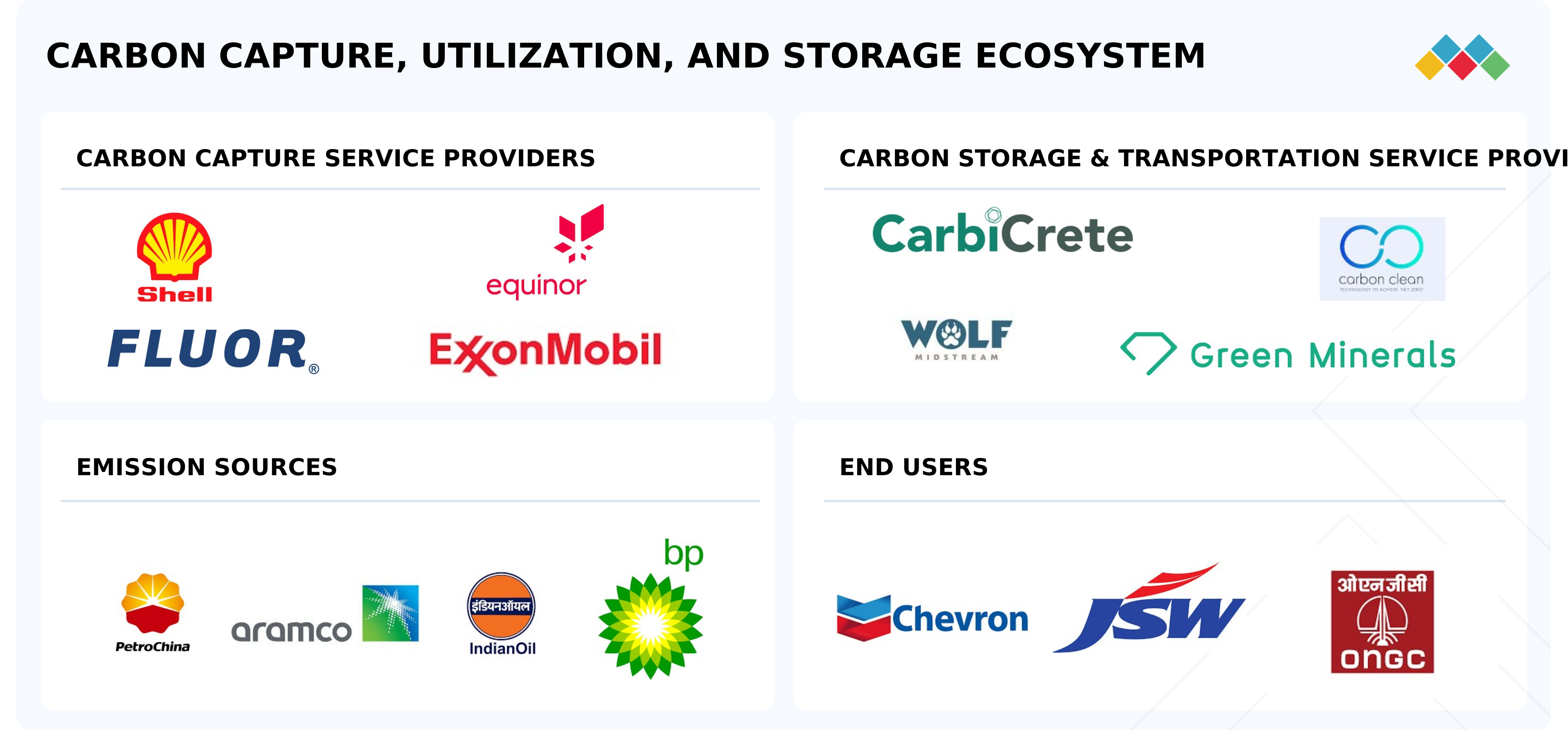
CCUS Absorption Market: COMMERCIAL USE CASES ACROSS INDUSTRIES
| COMPANY | USE CASE DESCRIPTION | BENEFITS |
|---|---|---|
 |
Captures ~1.0?MtCO2/year from hydrogen production at the Scotford bitumen upgrader (oil sands heavy-oil refinery) in Alberta | Reduces the upgrader's CO2 emissions by approximately 35% |
 |
Captures ~125,000?tCO2/year from blast-furnace off-gases (and biomass) at the Ghent steel plant | Produces low-carbon ethanol, branded as Carbalyst, for fuels and chemicals, converting emissions into a sellable product |
 |
A first-of-its-kind cement CCS retrofit at Norcem’s Brevik plant captures about 400,000?tCO2/year (~50% of the plant’s emissions) from clinker production | Cuts approximately 50% of the plant’s CO2 emissions and allows for the sale of "evoZero" carbon-neutral cement |
Logos and trademarks shown above are the property of their respective owners. Their use here is for informational and illustrative purposes only.
Related Ecosystem
Bulk Chemicals And Inorganics
- Corrosion Inhibitors
- Glycol Ethers
- Acetic Acid
- Acetone
- Ammonium Nitrate
- Basf se
- DOW CHEMICAL COMPANY
- Exxon Mobil Corporation
- AZELIS HOLDINGS SA
- Sinopec limited
Green Bio Chemicals
- Animal-Based Sealants
- Bacterial Fermentation
- Corrosion Inhibitors
- Hydrogen Peroxide
- Nitrile Butadiene Rubber (NBR)
- Basf se
- Evonik industries ag
- Solvay sa
- AZELIS HOLDINGS SA
- CARGILL, INCORPORATED
Power Infrastructure
- Geographical Information System (GIS)
- Cogeneration
- Battery Electric Vehicle (BEV)
- Cellular Network
- Fuel Cell
- ABB India Limited
- Siemens ag
- SCHNEIDER ELECTRIC SE
- General Electric Company
- Eaton Corporation plc
Key Takeaways
- Norway's CCUS absorption market will grow from $37.0M (2024) to $153.3M (2029) at a 26.7% CAGR, outpacing global growth.
- Norway leverages its world-class subsurface storage expertise and offshore infrastructure to lead European CCUS adoption.
- Government decarbonization targets and financial incentives are accelerating CCUS absorption technology deployment across Norwegian industries.
- Norway's established carbon capture ecosystem positions it as a regional hub for CCUS innovation and commercial deployment through 2029.
CCUS Absorption Market Report Scope
| Report Metric | Details |
|---|---|
| Base Year | 2024 |
| Fastest Growing Segment | OIL & GAS (End-Use Industry) |
| Forecast Period | 2024-2029 |
| Growth Rate | CAGR of 26.5% from 2024 to 2029 |
| Largest Segment | CHEMICAL (Absorption Type) |
| Market Size Base Year (Billions) | ~USD 0.41 (2024) |
| Revenue Forecast (Billions) | ~USD 1.34 (2029) |
| Segments Covered | Absorption Type, End-Use Industry |
Norway CCUS Absorption Market Report Segmentation
2 segment dimensions are covered across the global market.
By Absorption Type
- Chemical
- Physical
By End-Use Industry
- Cement
- Chemical & Petrochemical
- Iron & Steel
- Oil & Gas
- Other End-Use Industries
- Power Generation
Target Audience
- CCUS Technology Providers : Companies developing carbon capture, utilization, and storage solutions need Norway-specific market data to identify deployment opportunities and assess commercial viability in this high-growth market.
- Industrial Manufacturers : Cement, chemical, and energy producers operating in Norway require market intelligence to evaluate CCUS adoption strategies and understand competitive pressures from decarbonization mandates.
- Investment & Private Equity Firms : Investors targeting Nordic climate tech and energy transition opportunities need detailed Norway market analysis to evaluate portfolio companies and identify promising investment targets.
- Government & Policy Makers : Norwegian government agencies and policymakers use market research to design effective decarbonization policies, allocate subsidies, and track progress toward climate commitments.
- Strategic Consultants : Management consulting firms advising industrial clients on sustainability strategies require Norway-specific CCUS market data to develop credible decarbonization roadmaps and business cases.
Reasons to Buy this Report
- Market Entry Strategy : Gain detailed insights into Norway's regulatory landscape, competitive positioning, and investment opportunities to develop targeted market entry strategies for CCUS technologies.
- Investment Decision Support : Access comprehensive forecasts and growth drivers specific to Norway to evaluate capital allocation decisions and identify high-potential CCUS segments and applications.
- Competitive Intelligence : Understand Norway's technology leadership, key players, and innovation trends to benchmark competitive positioning and identify partnership or acquisition opportunities.
- Sector-Specific Insights : Analyze demand patterns across Norwegian industrial sectors including cement, chemicals, and energy to tailor product development and commercialization strategies.
- Policy & Regulatory Tracking : Monitor Norway's decarbonization policies, government incentives, and subsidy programs to anticipate market dynamics and optimize business planning timelines.
Frequently asked questions
What is the current size of Norway's CCUS absorption market?
Norway's CCUS absorption market was valued at $37.0 million in 2024 and is projected to reach $153.3 million by 2029.
What is the expected growth rate for Norway's CCUS absorption market?
Norway's CCUS absorption market is expected to grow at a compound annual growth rate (CAGR) of 26.7% from 2024 to 2029.
Why is Norway a leader in CCUS absorption technology?
Norway's leadership in CCUS absorption stems from its extensive subsurface storage expertise, offshore operational capabilities, and strong government commitment to decarbonization and net-zero emissions targets.
What industries in Norway are driving CCUS absorption market growth?
Industrial sectors including cement, chemicals, steel, and energy production are primary drivers of CCUS absorption adoption in Norway, supported by regulatory requirements and financial incentives.
How does Norway's CCUS market compare to global trends?
Norway's CCUS absorption market CAGR of 26.7% slightly exceeds the global CAGR of 26.5%, reflecting Norway's advanced infrastructure and policy support for carbon capture technologies.
RESEARCH METHODOLOGY
The study involves two major activities in estimating the current size of the CCUS Absorption market. Exhaustive secondary research was done to collect information on the market, the peer market, and the parent market. The next step was to validate these findings, assumptions, and sizing with industry experts across the value chain through primary research. Both the top-down and bottom-up approaches were employed to estimate the total market size. After that, market breakdown and data triangulation procedures were used to determine the extent of market segments and sub-segments.
Secondary Research
In the secondary research process, information has been sourced from annual reports, press releases & investor presentations of companies; white papers; certified publications; trade directories; articles from recognized authors; and databases. Secondary research has been used to obtain critical information about the industry's value chain, the total pool of key players, market classification & segmentation according to industry trends to the bottom-most level, and regional markets. These have also been utilized to obtain information about the key developments from a market-oriented perspective.
Primary Research
The stakeholders in the value chain of the CCUS Absorption market include raw material suppliers, processors, end-product manufacturers, and end users. Various primary sources from the supply and demand sides of the market have been interviewed to obtain qualitative and quantitative information. Primary sources from the demand side include key opinion leaders from various end-use industries in the CCUS Absorption market. Primary sources from the supply side include experts from companies involved in CCUS Absorption.
Following is the breakdown of primary respondents:
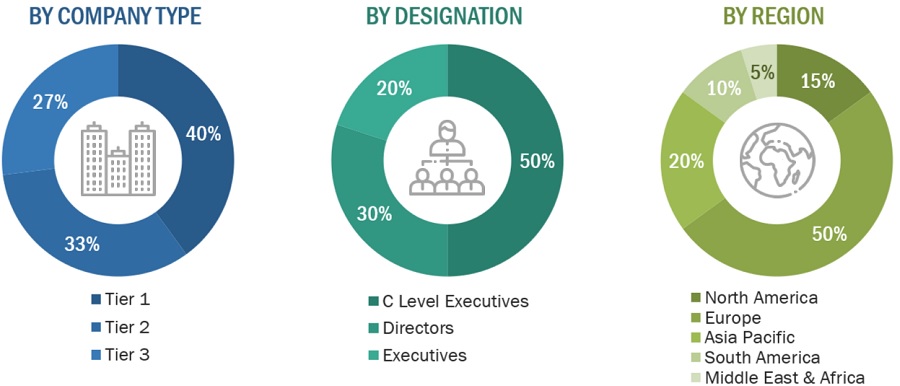
Notes: Tiers of companies are selected based on their ownership and revenues in 2023.
Others include sales managers, marketing managers, and product managers.
Source: Secondary Research, Expert Interviews, and MarketsandMarkets Analysis
To know about the assumptions considered for the study, download the pdf brochure
Market Size Estimation
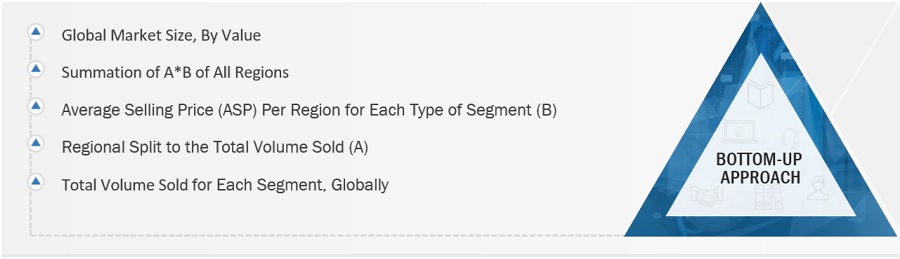
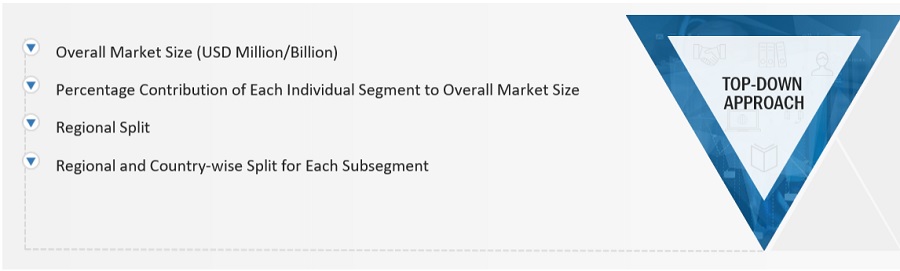
Both the top-down and bottom-up approaches were used to estimate and validate the total CCUS Absorption market. These methods were also used extensively to determine the size of various sub-segments in the market. The research methodology used to estimate the market size included the following:
- The key players in the industry and markets were identified through extensive secondary research.
- The industry’s supply chain and market size, in terms of value, were determined through primary and secondary research processes.
- All percentage shares, splits, and breakdowns were determined using secondary sources and verified through primary sources.
CCUS Absorption Market Size: Botton Up Approach
To know about the assumptions considered for the study, Request for Free Sample Report
CCUS Absorption Market Size: Top-Down Approach
Data Triangulation
After arriving at the overall CCUS Absorption market size using the market size estimation processes as explained above, the market was split into several segments and sub-segments. To complete the whole market engineering process and arrive at the exact statistics of each market segment and subsegment, the data triangulation, and market breakdown procedures were employed, wherever applicable. The data was triangulated by studying various factors and trends from both the demand and supply sides, mainly from the highways, bridges & buildings, marine structures & waterfronts and other applications.
Market Definition
Carbon Capture, Utilization, and Storage (CCUS) absorption is a process that involves capturing carbon dioxide (CO2) from industrial sources, such as power plants and manufacturing facilities, and storing it underground or utilizing it in various applications. The captured CO2 is chemically absorbed by a liquid solvent, typically an amine-based solution, and then transported to storage sites or utilized for enhanced oil recovery, production of fuels and chemicals, or other industrial processes. CCUS absorption plays a crucial role in reducing greenhouse gas emissions and mitigating climate change by preventing CO2 from entering the atmosphere. It is segmented based on absorption type (Chemical Absorption, Physical Absorption), End-Use industry (oil & gas, power generation, cement, chemicals & petrochemicals, iron & steel, others).
Key Stakeholders
- CCUS technology developers
- OEM
- Universities, governments, and research organizations
- CCUS technology associations and industrial bodies
- Research and consulting firms
- R&D institutions
- Environmental support agencies
- Investment banks and private equity firms
Report Objectives
- To define, describe, and forecast the CCUS Absorption market size in terms of volume and value
- To provide detailed information regarding the key factors, such as drivers, restraints, opportunities, and challenges influencing market growth
- To analyze and project the global CCUS Absorption market by type, form, application, end-use industry, and region
- To forecast the market size concerning five main regions (along with country-level data), namely, North America, Europe, Asia Pacific, South America, and the Middle East & Africa, and analyze the significant region-specific trends
- To strategically analyze micromarkets with respect to individual growth trends, prospects, and contributions of the submarkets to the overall market
- To analyze the market opportunities and the competitive landscape for stakeholders and market leaders
- To assess recent market developments and competitive strategies, such as agreements, contracts, acquisitions, and new product developments/new product launches, to draw the competitive landscape
- To strategically profile the key market players and comprehensively analyze their core competencies
Available Customizations
MarketsandMarkets offers following customizations for this market report:
- Additional country-level analysis of the CCUS Absorption market
Product Analysis
- Product matrix, which provides a detailed comparison of the product portfolio of each company's market
Get the Full CCUS Absorption Market Report
Full forecast, segment splits, and company analysis for all CCUS Absorption Market.
- US CCUS Absorption Market
- Canada CCUS Absorption Market
- Mexico CCUS Absorption Market
- France CCUS Absorption Market
- UK CCUS Absorption Market
- Netherlands CCUS Absorption Market
- Italy CCUS Absorption Market
- China CCUS Absorption Market
- Japan CCUS Absorption Market
- India CCUS Absorption Market
- Australia CCUS Absorption Market
- Brazil CCUS Absorption Market
- Argentina CCUS Absorption Market
- Chile CCUS Absorption Market
- Rest Of Europe CCUS Absorption Market
- Rest Of Asia Pacific CCUS Absorption Market
- GCC Countries CCUS Absorption Market
- -Rest Of GCC Countries CCUS Absorption Market
- Rest Of Sa CCUS Absorption Market
Need a Tailored Report?
Customize this report to your needs
Get 10% FREE Customization
Customize This Report
