
US Cosmetic Preservatives Market (2026-2031)

The US Cosmetic Preservatives Market was valued at $92.4 Million in 2026 and projected to reach to $119.8 Million by 2031, representing a compound annual growth rate of 5.3%. The US cosmetic preservatives market is poised for steady growth through 2031, driven by evolving consumer preferences toward natural and sustainable beauty products.


| Market Size in | USD 26.32 MN |
| Market Forecast in | |
| CAGR | |
| Forecast Period | |
| Units Considered | Value (USD MN) |
US Cosmetic Preservatives Market Trends and Insights
- The US market reflects strong demand driven by increasing consumer preference for natural and clean-label cosmetic products, regulatory compliance requirements, and innovation in preservation technologies.
- The US cosmetic industry's emphasis on product safety and shelf-life extension continues to fuel demand for advanced preservative solutions across skincare, haircare, and color cosmetics segments. In the US, the cosmetic preservatives market is characterized by a shift toward multifunctional and naturally derived preservatives that meet evolving consumer expectations and stringent FDA regulations.
- The US market benefits from a mature cosmetics industry with high R&D investment and strong distribution networks.
- Between 2026 and 2031, the US is expected to see sustained growth as manufacturers balance efficacy, safety, and sustainability in their formulations..
Key Market Statistics
- CAGR (2026-2031) 5.3% CAGR
- Market Size, 2026 ~USD 92.4 Million
- Forecast, 2031 ~USD 119.8 Million
- Country US
US Cosmetic Preservatives Market Overview
Market Size & Growth :
The US cosmetic preservatives market is valued at $92.4 million in 2026 and is projected to reach $119.8 million by 2031, representing a steady CAGR of 5.3% over the forecast period.
Clean-Label Demand :
US consumers increasingly demand natural and clean-label cosmetic products, driving manufacturers to adopt safer, more sustainable preservation solutions that meet consumer expectations without synthetic chemicals.
Regulatory Compliance :
Stringent FDA and EPA regulations in the US require cosmetic manufacturers to use approved preservatives, creating consistent demand for compliant preservation technologies and driving innovation in the sector.
Technology Innovation :
The US market is witnessing rapid advancement in preservation technologies, including natural preservatives, multi-functional ingredients, and advanced formulation techniques that extend product shelf-life while maintaining safety standards.
US Cosmetic Preservatives Market Dynamics
- Manufacturers are increasingly investing in innovative preservation solutions that balance efficacy with clean-label positioning, responding to heightened consumer awareness about ingredient safety.
- The regulatory landscape continues to support market expansion, as FDA compliance requirements ensure consistent demand for approved preservatives across the cosmetics industry. Key growth drivers include the rising popularity of indie and premium beauty brands that prioritize natural preservation methods, expansion of e-commerce channels, and increased R&D investments by major chemical manufacturers.
- The US market's maturity and high consumer spending power position it as a critical hub for preservation technology innovation, with trends likely to influence global market dynamics..
Market Ecosystem

COSMETIC PRESERVATIVES MARKET: COMMERCIAL USE CASES ACROSS INDUSTRIES
| COMPANY | USE CASE DESCRIPTION | BENEFITS |
|---|---|---|
 |
Uses broad-spectrum preservative systems (phenoxyethanol, parabens, organic acids) across skincare, haircare, and makeup products | Ensures microbial safety, extends shelf life, maintains product stability, and supports global regulatory compliance |
 |
Incorporates preservative blends in premium skincare, serums, and makeup formulations | Prevents contamination in high-value products, enhances product longevity, and ensures consumer safety |
 |
Uses preservatives in mass-market personal care brands (Dove, Sunsilk, etc.) across creams, shampoos, and deodorants | Cost-effective preservation, large-scale product stability, and protection against microbial growth |
Logos and trademarks shown above are the property of their respective owners. Their use here is for informational and illustrative purposes only.
Related Ecosystem
Speciality Chemicals
- Corrosion Inhibitors
- Polyetheretherketone (PEEK)
- Acrylonitrile Butadiene Styrene (ABS)
- Epoxy Resin
- Polycarbonate
- Basf se
- DOW CHEMICAL COMPANY
- Evonik industries ag
- Clariant ag.
- Solvay sa
Key Takeaways
- The US cosmetic preservatives market is valued at $92.4 million in 2026 and will reach $119.8 million by 2031 at a 5.3% CAGR.
- The US market is driven by consumer demand for clean-label and naturally derived preservatives that comply with FDA regulations.
- The US cosmetics industry's focus on product safety and extended shelf-life supports sustained demand for innovative preservation technologies.
- The US market benefits from a mature, well-established cosmetics sector with significant R&D investment and advanced distribution infrastructure.
Cosmetic Preservatives Market Report Scope
| Report Metric | Details |
|---|---|
| Base Year | 2026 |
| Fastest Growing Segment | ORGANIC ACIDS & THEIR SALTS (Type) |
| Forecast Period | 2026–2031 |
| Growth Rate | CAGR of 5.7% from 2026 to 2031 |
| Largest Segment | SKIN CARE (Application) |
| Market Size Base Year (Billions) | ~USD 0.58 (2026) |
| Revenue Forecast (Billions) | ~USD 0.77 (2031) |
| Segments Covered | Type, Application |
US Cosmetic Preservatives Market Report Segmentation
2 segment dimensions are covered across the global market.
By Type
- Alcohol-Based Preservatives
- Formaldehyde Donors
- Isothiazolinones
- Metal-Based/Inorganic Preservatives
- Organic Acids & Their Salts
- Other Types
- Paraben Esters
- Phenolic Preservatives
- Quaternary Ammonium Compounds
By Application
- Bath & Shower Products
- Color Cosmetics
- Hair Care
- Oral Care
- Other Applications
- Skin Care
- Sskin Care
US: COSMETIC PRESERVATIVES MARKET, BY APPLICATION, 2026–2031
| Segment | 2026 | 2027 | 2028 | 2029 | 2030 | 2031 | CAGR (%) |
|---|---|---|---|---|---|---|---|
| BATH & SHOWER PRODUCTS | 12.9 | 13.6 | 14.2 | 15 | 15.7 | 16.5 | 5 |
| COLOR COSMETICS | 11.1 | 11.8 | 12.6 | 13.4 | 14.2 | 15.1 | 6.4 |
| HAIR CARE | 21.7 | 22.8 | 24 | 25.3 | 26.6 | 28 | 5.2 |
| ORAL CARE | 5.3 | 5.6 | 5.8 | 6.1 | 6.4 | 6.7 | 4.7 |
| OTHER APPLICATIONS | 4.4 | 4.6 | 4.8 | 5 | 5.3 | 5.5 | 4.9 |
| SKIN CARE | 37 | 39 | 41.1 | 43.3 | 45.6 | 48 | 5.3 |
| TOTAL | 92.4 | 97.3 | 102.5 | 108 | 113.7 | 119.8 | 5.3 |
Target Audience
- Cosmetic Manufacturers : US-based and international cosmetic brands need detailed market data to source appropriate preservatives, understand regulatory requirements, and align product formulations with consumer demand for clean-label solutions.
- Chemical & Ingredient Suppliers : Preservative manufacturers and chemical suppliers require US market intelligence to identify growth opportunities, assess competitive positioning, and develop targeted sales strategies for the American cosmetics industry.
- Market Investors & PE Firms : Investment professionals evaluating opportunities in the US cosmetics supply chain need comprehensive market data, growth projections, and trend analysis to make informed investment decisions in preservation technology companies.
- Regulatory & Compliance Consultants : Consultants advising cosmetic companies on FDA compliance and ingredient approval need detailed US regulatory landscape insights and market-specific guidance to help clients navigate preservation requirements.
- Beauty Industry Analysts : Market researchers, industry consultants, and business strategists require granular US market data to support competitive analysis, trend forecasting, and strategic recommendations for stakeholders across the beauty supply chain.
Key Companies in the US Cosmetic Preservatives Market
| Company | HQ | Ownership | Strongest segments |
|---|---|---|---|
| SYNTHOS S.A | Poland | Private Company | Synthetic rubber (SBR, BR, NBR and related),EPS/XPS and polystyrene (InSphere, Inpacto, Silver, XPS PRIME, SYNTHOS PS),Dispersions, latex, adhesives (Osakryl, Synexil, WOODMAX, PAPERMAX), |
| BOREALIS AG | Austria | Private Company | Polyolefin solutions (PE/PP for consumer, infrastructure, mobility, energy, healthcare),Base chemicals (olefins, phenol, aromatics, intermediates),Recycling and circular polyolefin materials, |
| AZELIS HOLDINGS SA | Belgium | Private Company | Life Sciences (food, nutrition, pharma, personal and home care),Industrial Specialties (coatings, plastics, lubricants, advanced materials),Other and cross-portfolio services, |
| ASHLAND | United States | Public Company | Life Sciences (pharma, nutrition, ag, diagnostics, fine chemicals),Personal Care & Household,Specialty Additives (coatings, construction, energy, industrial), |
| BASF | Germany | Public Company | Chemicals (Petrochemicals and Intermediates),Materials (Isocyanates, Polyamides, Inorganics, Plastics Specialties),Industrial Solutions (Dispersions, Resins, Additives, Catalysts, Electronic Materials), |
| SYMRISE | Germany | Public Company | Taste, Nutrition & Health – Food & Beverage,Taste, Nutrition & Health – Pet Food & Aqua,Taste, Nutrition & Health – Probiotics & Dietary Supplements, |
| CLARIANT | Switzerland | Public Company | Care Chemicals,Adsorbents & Additives,Catalysts, |
| LANXESS | Germany | Public Company | Specialty Additives,Consumer Protection,Advanced Intermediates, |
| EASTMAN CHEMICAL COMPANY | United States | Public Company | Additives & Functional Products,Advanced Materials,Chemical Intermediates, |
| GALAXY SURFACTANTS | India | Public Company | Core surfactants (fatty alcohol sulfates, ether sulfates, ethoxylates, LABSA),Mild surfactants and blends,Emollients, pearlizers, foam and viscosity boosters, |
SYNTHOS S.A
SYNTHOS S.A is a Polish private chemical company founded in 1945 with 2,975 employees.
BOREALIS AG
BOREALIS AG is an Austrian private chemical company founded in 1994 with 5,887 employees.
AZELIS HOLDINGS SA
AZELIS HOLDINGS SA is a Belgian private chemical company founded in 2001 with 1,325 employees.
ASHLAND
ASHLAND is a United States public company founded in 1924 with 2,900 employees.
BASF
BASF is a German public chemical company founded in 1865 with 106,428 employees.
SYMRISE
SYMRISE is a German public company established in 1874 with 12,697 employees.
CLARIANT
CLARIANT is a Swiss public chemical company founded in 1886 with 9,998 employees.
LANXESS
LANXESS is a German public chemical company founded in 1863 with 11,630 employees.
EASTMAN CHEMICAL COMPANY
EASTMAN CHEMICAL COMPANY is a United States public company established in 1920 with 13,000 employees.
GALAXY SURFACTANTS
GALAXY SURFACTANTS is an Indian public company founded in 1980 with 1,723 employees.
Reasons to Buy this Report
- US-Specific Market Sizing : Obtain precise valuation data for the US cosmetic preservatives market with detailed 2026-2031 forecasts, enabling accurate budgeting and investment decisions tailored to the American market landscape.
- Regulatory Intelligence : Understand FDA and EPA compliance requirements specific to US cosmetic preservatives, helping manufacturers and suppliers navigate regulatory frameworks and ensure product approval in this critical market.
- Consumer Trend Analysis : Gain insights into US consumer preferences for natural and clean-label cosmetics, identifying market opportunities and competitive positioning strategies for brands targeting health-conscious American consumers.
- Competitive Landscape : Access detailed analysis of US-based and international competitors operating in the cosmetic preservatives sector, including market share, product portfolios, and strategic initiatives specific to the American market.
- Growth Opportunity Identification : Identify high-potential segments and emerging technologies within the US market, including natural preservatives and multi-functional ingredients, to guide product development and market entry strategies.
Frequently asked questions
What is the size of the US cosmetic preservatives market in 2026?
The US cosmetic preservatives market is estimated at $92.4 million in 2026.
What is the projected size of the US cosmetic preservatives market by 2031?
The US cosmetic preservatives market is forecast to reach $119.8 million by 2031.
What is the CAGR for the US cosmetic preservatives market?
The US cosmetic preservatives market is expected to grow at a compound annual growth rate of 5.3% from 2026 to 2031.
What are the main drivers of growth in the US cosmetic preservatives market?
Key drivers include consumer preference for clean-label products, stringent FDA regulatory requirements, innovation in preservation technologies, and the US cosmetics industry's emphasis on product safety and shelf-life extension.
What types of preservatives are gaining traction in the US market?
Naturally derived and multifunctional preservatives are gaining significant traction in the US market as consumers and manufacturers seek safer, more sustainable alternatives that meet regulatory standards.
RESEARCH METHODOLOGY
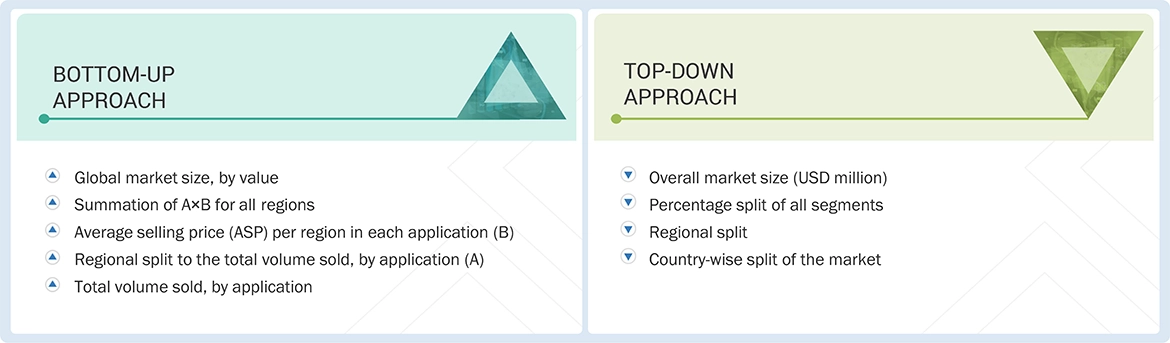
The study involves two major activities in estimating the current market size for the cosmetic preservatives market. Exhaustive secondary research was done to collect information on the market, peer market, and parent market. The next step was to validate these findings, assumptions, and sizing with industry experts across the value chain through primary research. Both top-down and bottom-up approaches were employed to estimate the complete market size. After that, data triangulation was used to estimate the market size of segments and subsegments.
Secondary Research
Secondary sources referred to for this research study included financial statements of companies offering cosmetic preservatives and information from various trade, business, and professional associations. Secondary research was used to obtain critical information about the industry’s value chain, the total pool of key players, market classification, and segmentation according to industry trends to the bottom-most level and regional markets. The secondary data was collected and analyzed to arrive at the overall size of the cosmetic preservatives market, which was validated by primary respondents.
Primary Research
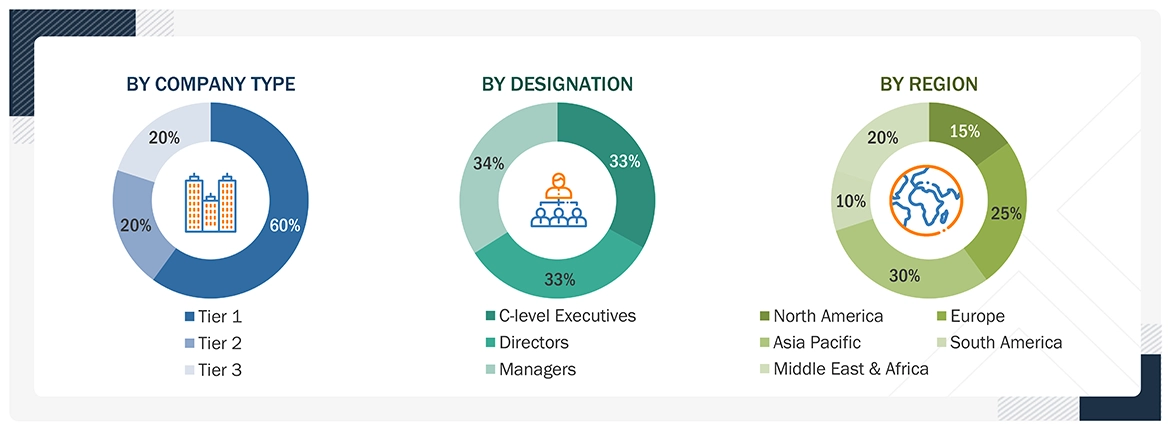
Extensive primary research was conducted after obtaining information regarding the cosmetic preservatives market scenario through secondary research. Several primary interviews were conducted with market experts from both the demand and supply sides across major countries of North America, Europe, the Asia Pacific, the Middle East & Africa, and South America. Primary data was collected through questionnaires, emails, and telephonic interviews. The primary sources from the supply side included various industry experts, such as Chief X Officers (CXOs), Vice Presidents (VPs), Directors from business development, marketing, product development/innovation teams, and related key executives from cosmetic preservatives industry vendors; system integrators; component providers; distributors; and key opinion leaders.
Primary interviews were conducted to gather insights such as market statistics, data on revenue collected from the products and services, market breakdowns, market size estimations, market forecasting, and data triangulation. Primary research also helped in understanding the various trends related to type, application, and region.
Stakeholders from the demand side, such as CIOs, CTOs, CSOs, and installation teams of the customers/end users who are using cosmetic preservatives, were interviewed to understand the buyer’s perspective on the suppliers, products, component providers, and their current usage of cosmetic preservatives and future outlook of their business, which would affect the overall market.
To know about the assumptions considered for the study, download the pdf brochure
Market Size Estimation
The research methodology used to estimate the size of the cosmetic preservatives market includes the following details. The market sizing was undertaken from the demand side. The market was upsized based on procurements and modernizations in cosmetic preservatives in different applications at a regional level. Such procurements provided information on the demand aspects of the cosmetic preservatives industry for each application. For each application, all possible segments of the cosmetic preservatives market were integrated and mapped.
Data Triangulation
After arriving at the overall size from the market size estimation process explained above, the total market was split into several segments and subsegments. The data triangulation and market breakdown procedures explained below were implemented, wherever applicable, to complete the overall market engineering process and arrive at the exact statistics for various market segments and subsegments. The data was triangulated by studying various factors and trends from the demand and supply sides. Along with this, the market size was validated using both the top-down and bottom-up approaches.
Market Definition
Preservatives are substances mainly used to prevent the formation of microorganisms across various products. Cosmetic preservatives are used in personal care products to prevent spoilage caused by microbial growth and thereby increase their shelf life.
Cosmetic preservatives are added to personal care products such as lotions, facemasks, sunscreens, shampoos, and others to prevent undesirable chemical changes or microbial growth. Without preservatives, products can become contaminated, which may lead to product spoilage and possibly cause infections.
Key Stakeholders
- Cosmetic preservatives manufacturers
- Raw material manufacturers
- Government and research organizations
- R&D institutions
- National and local government organizations
- Institutional investors
- Cosmetic preservatives supplier
- End users
Report Objectives
- To define, describe, and forecast the cosmetic preservatives market size in terms of volume and value
- To provide detailed information regarding the key factors, such as drivers, restraints, opportunities, and challenges influencing market growth
- To analyze and project the global cosmetic preservatives market by type, application, and region
- To forecast the market size concerning five main regions (along with country-level data), namely, North America, Europe, the Asia Pacific, the Middle East & Africa, and South America, and analyze the significant region-specific trends
- To strategically analyze micromarkets with respect to individual growth trends, prospects, and contributions of the submarkets to the overall market
- To analyze the market opportunities and the competitive landscape for stakeholders and market leaders
- To assess recent market developments and competitive strategies, such as agreements, contracts, acquisitions, and product developments/product launches, to draw the competitive landscape
- To strategically profile the key market players and comprehensively analyze their core competencies
Available customizations:
MarketsandMarkets offers the following customizations for this market report:
- Additional country-level analysis of the cosmetic preservatives market
Product Analysis
- Product matrix, which provides a detailed comparison of the product portfolio of each company’s market
Get the Full Cosmetic Preservatives Market Report
Full forecast, segment splits, and company analysis for all Cosmetic Preservatives Market.
- Canada Cosmetic Preservatives Market
- Mexico Cosmetic Preservatives Market
- Germany Cosmetic Preservatives Market
- France Cosmetic Preservatives Market
- UK Cosmetic Preservatives Market
- Italy Cosmetic Preservatives Market
- Spain Cosmetic Preservatives Market
- China Cosmetic Preservatives Market
- India Cosmetic Preservatives Market
- Japan Cosmetic Preservatives Market
- Turkey Cosmetic Preservatives Market
- South Africa Cosmetic Preservatives Market
- Brazil Cosmetic Preservatives Market
- Rest Of Europe Cosmetic Preservatives Market
- Rest Of Asia Pacific Cosmetic Preservatives Market
Need a Tailored Report?
Customize this report to your needs
Get 10% FREE Customization
Customize This Report
