
South Africa Cryogenic Equipment Market (2025-2030)

The South Africa Cryogenic Equipment Market was valued at $229 Million in 2025 and projected to reach to $284.1 Million by 2030, representing a compound annual growth rate of 4.4%. South Africa's cryogenic equipment market is positioned for steady growth as industrial sectors increasingly recognize the value of cryogenic technologies in enhancing operational efficiency.


| Market Size in | USD 26.32 MN |
| Market Forecast in | |
| CAGR | |
| Forecast Period | |
| Units Considered | Value (USD MN) |
South Africa Cryogenic Equipment Market Trends and Insights
- This moderate expansion reflects South Africa's developing industrial base and increasing adoption of cryogenic technologies across liquefied natural gas (LNG), healthcare, and industrial gas sectors.
- South Africa's strategic position as a regional energy hub and growing investment in cold-chain infrastructure are supporting steady market development. The cryogenic equipment sector in South Africa is driven by rising demand from the healthcare and pharmaceutical industries, coupled with expansion in industrial applications including metal processing and food preservation.
- South Africa's energy transition initiatives and potential LNG projects are expected to create additional opportunities for cryogenic storage and handling equipment.
- Between 2025 and 2030, South Africa will likely see increased capital expenditure in specialized cooling systems and liquefaction technologies to support both domestic consumption and regional export capabilities..
Key Market Statistics
- CAGR (2025-2030) 4.4% CAGR
- Market Size, 2025 ~USD 229 Million
- Forecast, 2030 ~USD 284.1 Million
- Country South Africa
South Africa Cryogenic Equipment Market Overview
Market Size & Growth :
South Africa's cryogenic equipment market is valued at USD 229.0 million in 2025, with projected growth to USD 284.1 million by 2030, reflecting a steady CAGR of 4.4% driven by industrial modernization.
Key Application Sectors :
LNG infrastructure development, healthcare applications, and industrial gas production are primary growth drivers in South Africa, supported by increasing energy demands and medical sector expansion.
Industrial Base Development :
South Africa's developing industrial sector is progressively adopting cryogenic technologies, with growing investments in manufacturing and processing facilities requiring advanced cooling solutions.
Regional Market Position :
While growing at 4.4% CAGR, South Africa's market expands slower than the global average of 9.3%, indicating untapped potential and emerging opportunities for market penetration.
South Africa Cryogenic Equipment Market Dynamics
- The expansion of LNG infrastructure, coupled with rising healthcare demands and industrial gas applications, creates sustained demand for specialized cooling equipment.
- Government initiatives supporting energy diversification and industrial development are expected to accelerate market adoption.
- However, economic constraints and infrastructure limitations may moderate growth rates compared to global benchmarks, presenting both challenges and opportunities for market participants seeking to establish strong regional footholds..
Market Ecosystem
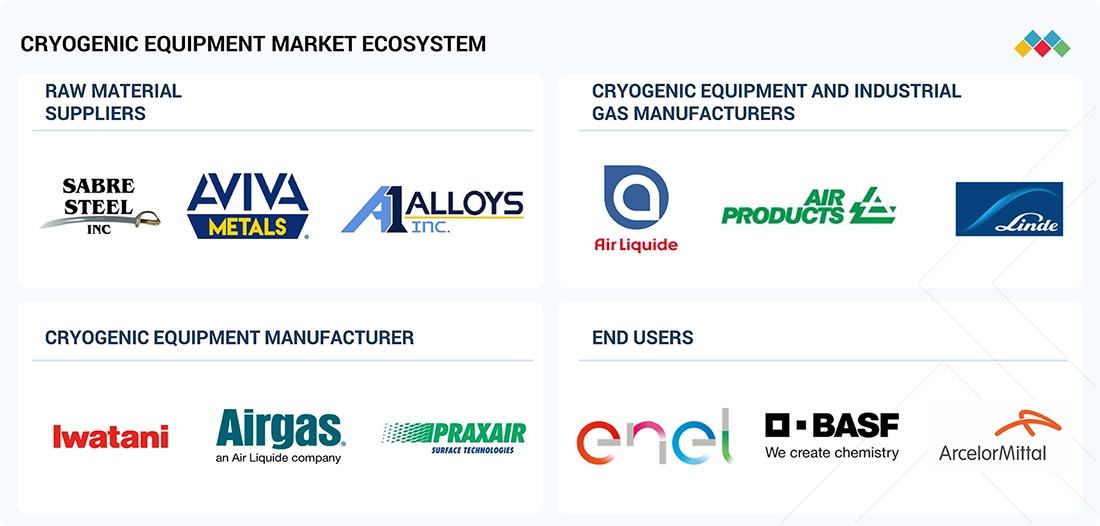
CRYOGENIC EQUIPMENT MARKET: COMMERCIAL USE CASES ACROSS INDUSTRIES
| COMPANY | USE CASE DESCRIPTION | BENEFITS |
|---|---|---|
 |
An LNG facility implemented a Fisher Joule–Thomson (JT) control valve, provided by Emerson, in the liquefaction section to improve the main cryogenic heat exchanger (MCHE) performance and stabilize low-temperature operation under demanding cryogenic conditions. | Improved MCHE operating stability, better process efficiency and control at cryogenic temperatures, and reduced operational risk through more reliable valve performance |
 |
A pharmaceutical ingredient manufacturer worked with AFcryo to deploy CryoCube, a mobile cryogenic system providing on-site production of pharmacopoeia-compliant liquid and gaseous nitrogen for vaccine and serum development. The solution was rapidly deployable and designed to meet strict pharmaceutical safety and quality standards. | Enabled independence from external liquid gas supply, ensured continuous availability of high-purity liquid and gas, reduced supply risk, and improved operational reliability through remote monitoring and proactive servicing |
Logos and trademarks shown above are the property of their respective owners. Their use here is for informational and illustrative purposes only.
Related Ecosystem
Industrial Equipment
- HVAC System
- Fiberglass
- Actuators
- Cartridge Filters
- Electrostatic Precipitators
- Siemens ag
- GRUNDFOS GROUP
- ABB India Limited
- SCHNEIDER ELECTRIC SE
- Emerson Electric Co.
Key Takeaways
- South Africa's cryogenic equipment market is valued at USD 229.0 million in 2025 and will reach USD 284.1 million by 2030 at a 4.4% CAGR.
- South Africa's healthcare, pharmaceutical, and industrial gas sectors are primary drivers of cryogenic equipment demand.
- South Africa's energy transition and potential LNG infrastructure projects present significant growth opportunities through 2030.
- South Africa's regional role as an energy hub positions it for increased adoption of advanced cryogenic storage and liquefaction technologies.
Cryogenic Equipment Market Report Scope
| Report Metric | Details |
|---|---|
| Base Year | 2025 |
| Fastest Growing Segment | ELECTRONICS (End-Use Industry) |
| Forecast Period | 2025–2030 |
| Growth Rate | CAGR of 9.3% from 2025 to 2030 |
| Largest Segment | CASU (Application) |
| Market Size Base Year (Billions) | ~USD 14.72 (2025) |
| Revenue Forecast (Billions) | ~USD 22.96 (2030) |
| Segments Covered | Equipment, Cryogen, System Type, Application, End Use, End-Use Industry, Transport Type, Non-Casu Application |
South Africa Cryogenic Equipment Market Report Segmentation
8 segment dimensions are covered across the global market.
By Equipment
- Other Equipment
- Pumps
- Tanks
- Valves
- Vaporizers
By Cryogen
- Argon
- Hydrogen
- Lng
- Nitrogen
- Other Cryogens
- Oxygen
By System Type
- Handling Systems
- Other Systems
- Storage Systems
- Supply Systems
By Application
- Casu
- Non-Casu
By End Use
- Lng Bulk Carrier Ships
- Lng Regasification & Liquefaction Terminals
- Lng Regasification And Liquefaction Terminals
- Other Minor Applications
- Other Minor End Uses
- Rail & Road Transport Industry
By End-Use Industry
- Chemical
- Chemicals
- Electronics
- Energy & Power
- Metallurgy
- Other End-Use Industries
- Transportation
By Transport Type
- Rail & Road Transport
- Shipping
By Non-Casu Application
- Lng Bulk Carrier Ships
- Lng Regasification And Liquefaction Terminals
- Other Minor Applications
- Rail & Road Transport Industry
Target Audience
- Equipment Manufacturers & Suppliers : Cryogenic equipment producers need South Africa-specific market data to assess demand potential, identify growth sectors (LNG, healthcare, industrial gas), and develop localized product strategies.
- Energy & Utilities Companies : LNG operators and industrial gas producers require detailed market insights to evaluate cryogenic technology investments, plan infrastructure expansion, and optimize operational efficiency in South Africa.
- Healthcare & Medical Institutions : Medical facilities and healthcare providers need market intelligence on cryogenic equipment availability, pricing trends, and technological advancements to support clinical operations and facility planning.
- Investment & Private Equity Firms : Investors seeking South African industrial opportunities require comprehensive market data to evaluate investment viability, assess growth potential, and identify acquisition targets in the cryogenic sector.
- Government & Policy Makers : South African government agencies and industrial development bodies need market insights to inform energy policy, infrastructure planning, and industrial development initiatives supporting sector growth.
Reasons to Buy this Report
- Market-Specific Sizing & Forecasts : Access precise valuation data for South Africa's cryogenic equipment market with detailed 2025-2030 projections, enabling accurate budgeting and investment planning tailored to regional dynamics.
- Sector-Focused Growth Drivers : Understand South Africa-specific growth catalysts including LNG infrastructure expansion, healthcare modernization, and industrial gas sector development to identify high-potential investment opportunities.
- Competitive Landscape Intelligence : Gain insights into regional market dynamics, competitive positioning, and emerging players within South Africa's cryogenic equipment sector to inform strategic business decisions.
- Risk & Opportunity Assessment : Evaluate South Africa-specific market challenges including economic constraints and infrastructure limitations alongside emerging opportunities for market entry and expansion strategies.
- Strategic Market Entry Planning : Leverage country-specific data to develop targeted go-to-market strategies, identify key customer segments, and optimize resource allocation for South African market penetration.
Frequently asked questions
What is the current size of South Africa's cryogenic equipment market?
South Africa's cryogenic equipment market is estimated at USD 229.0 million in 2025.
What is the projected market size for South Africa's cryogenic equipment by 2030?
South Africa's cryogenic equipment market is forecast to reach USD 284.1 million by 2030.
What is the CAGR for South Africa's cryogenic equipment market?
South Africa's cryogenic equipment market is expected to grow at a compound annual growth rate of 4.4% from 2025 to 2030.
Which industries drive demand for cryogenic equipment in South Africa?
South Africa's primary demand drivers include healthcare, pharmaceuticals, industrial gas production, metal processing, and food preservation sectors.
What growth opportunities exist for cryogenic equipment in South Africa?
South Africa's energy transition initiatives, potential LNG projects, and expanding cold-chain infrastructure create significant opportunities for cryogenic storage and liquefaction equipment through 2030.
RESEARCH METHODOLOGY
The study involved major activities in estimating the current size of the global cryogenic equipment market. Exhaustive secondary research was done to collect information on the peer and parent markets. The next step was to validate these findings, assumptions, and sizing with industry experts across the value chain through primary research. Both top-down and bottom-up approaches were employed to estimate the total market size. Thereafter, market breakdown and data triangulation were used to estimate the market size of the segments and subsegments.
Secondary Research
This research study on the market involved the use of extensive secondary sources, directories, and databases, such as Hoover’s, Bloomberg, Factiva, IRENA, International Energy Agency, and Statista Industry Journal, to collect and identify information useful for a technical, market-oriented, and commercial study of the cryogenic equipment market. The other secondary sources included annual reports, press releases & investor presentations of companies, white papers, certified publications, articles by recognized authors, manufacturer associations, trade directories, and databases.
Primary Research
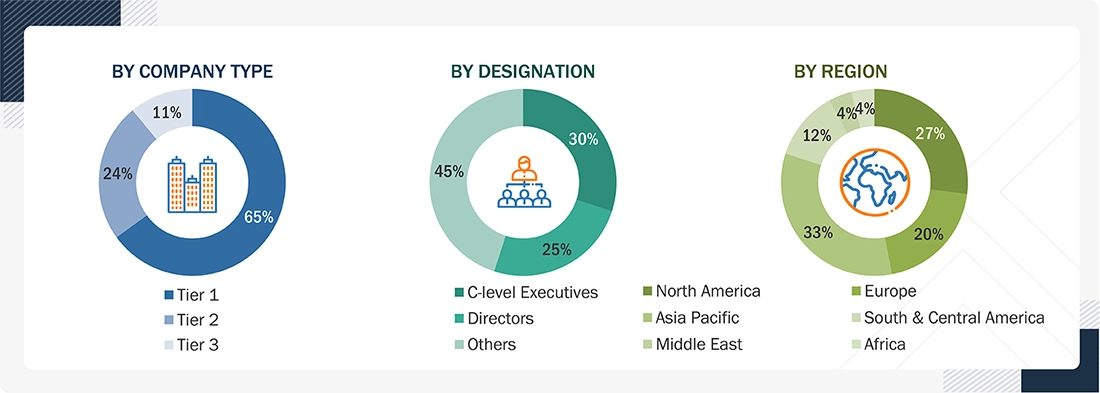
The global market comprises several stakeholders, such as cryogenic equipment manufacturers, technology providers, and technical support providers in the supply chain. The demand side of this market is characterized by the rising demand for types of cryogenic equipments such as rod lift systems, electric submersible pumps, progressive cavity pumps, and gas lift systems. The supply side is characterized by rising demand for contracts from the industrial sector and mergers & acquisitions among big players. Various primary sources from both the supply and demand sides of the market were interviewed to obtain qualitative and quantitative information. Following is the breakdown of primary respondents:
To know about the assumptions considered for the study, download the pdf brochure
Market Size Estimation
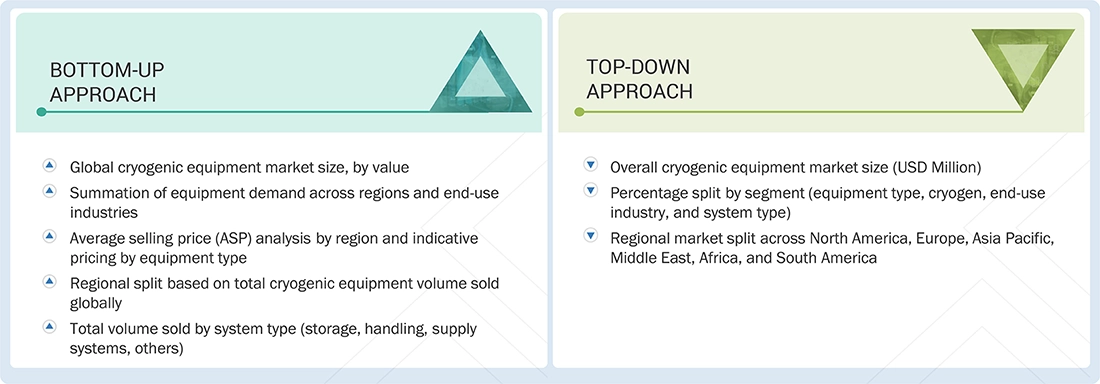
Both top-down and bottom-up approaches were used to estimate and validate the total size of the global cryogenic equipment market. These methods were also used extensively to estimate the size of various subsegments in the market. The research methodology used to estimate the market size includes the following:
- The key players in the industry and market have been identified through extensive secondary research, and their market share has been determined through primary and secondary research.
- The industry’s value chain and market size, in terms of value, have been determined through both primary and secondary research processes.
- All percentage shares, splits, and breakdowns have been determined using secondary sources and verified through primary sources.
Data Triangulation
After arriving at the overall market size from the above estimation process, the total market has been split into several segments and subsegments. Data triangulation and market breakdown processes have been employed to complete the overall market engineering process and arrive at the exact statistics for all the segments and sub-segments, wherever applicable. The data has been triangulated by studying various factors and trends from both the demand- and supply sides. Along with this, the market has been validated using both the top-down and bottom-up approaches.
Market Definition
Cryogenic equipment comprises specialized machinery designed for use at extremely low temperatures, typically below -150 degrees Celsius. It enables the storage, transport, and handling of materials like gases and biological samples at these ultra-low temperatures. This technology finds application in various fields, from healthcare to aerospace, supporting scientific research and industrial processes.
The market for cryogenic equipment is the sum of revenues generated by global companies through the sales of cryogenic equipment.
Key Stakeholders
- Cryogenic equipment manufacturers and providers
- Industrial gas supplying companies
- Manufacturing industries
- R&D laboratories
- Consulting companies from energy & power sector
- Distributors of cryogenic equipment
- Government and research organizations
- State and national regulatory authorities
Objectives of the Study
- To define, describe, segment, and forecast the global cryogenic equipment market by equipment, cryogen, end-user industry, system type, application, and region, in terms of value
- To describe and forecast the global cryogenic equipment market for six key regions: North America cryogenic equipment market , Europe cryogenic equipment market, Asia Pacific, South America, the Middle East, and Africa, along with their country-level market sizes, in terms of value
- To provide detailed information regarding key drivers, restraints, opportunities, and challenges influencing the global cryogenic equipment market growth
- To strategically analyze the micromarkets with respect to individual growth trends, prospects, and contributions to the overall global cryogenic equipment market size
- To provide supply chain analysis, trends/disruptions impacting customer business, ecosystem/market map, pricing analysis, Porter’s five forces analysis, case study analysis, and regulatory standards pertaining to global cryogenic equipment market
- To analyze opportunities for stakeholders in the global cryogenic equipment industry and draw a competitive landscape of the market
- To strategically analyze the ecosystem, tariffs and regulations, patents, and trading scenarios pertaining to global cryogenic equipment market
- To compare key market players based on product specifications and applications pertaining to global cryogenic equipment market
- To strategically profile key players and comprehensively analyze their market rankings and core competencies in the global cryogenic equipment market
- To analyze competitive developments, such as contracts and agreements, investments and expansions, mergers and acquisitions, partnerships, joint ventures and collaborations, in the global cryogenic equipment market
Available Customizations:
With the given market data, MarketsandMarkets offers customizations according to the specific requirements of companies. The following customization options are available for the report:
Product Analysis
- Product Matrix, which provides a detailed comparison of the product portfolio of each company
Company Information
- Detailed analyses and profiling of additional market players
Get the Full Cryogenic Equipment Market Report
Full forecast, segment splits, and company analysis for all Cryogenic Equipment Market.
- China Cryogenic Equipment Market
- India Cryogenic Equipment Market
- Australia Cryogenic Equipment Market
- Japan Cryogenic Equipment Market
- Malaysia Cryogenic Equipment Market
- Russia Cryogenic Equipment Market
- UK Cryogenic Equipment Market
- Germany Cryogenic Equipment Market
- France Cryogenic Equipment Market
- Canada Cryogenic Equipment Market
- Mexico Cryogenic Equipment Market
- US Cryogenic Equipment Market
- Saudi Arabia Cryogenic Equipment Market
- UAE Cryogenic Equipment Market
- Qatar Cryogenic Equipment Market
- Nigeria Cryogenic Equipment Market
- Brazil Cryogenic Equipment Market
- Argentina Cryogenic Equipment Market
- Venezuela Cryogenic Equipment Market
Need a Tailored Report?
Customize this report to your needs
Get 10% FREE Customization
Customize This Report
