
Japan Digital Substation Market (2025-2030)

The Japan Digital Substation Market was valued at $755.4 Million in 2025 and projected to reach to $980.5 Million by 2030, representing a compound annual growth rate of 5.4%. Japan's digital substation market is poised for steady growth as utilities prioritize grid modernization and automation to enhance operational efficiency and reliability.


| Market Size in | USD 26.32 MN |
| Market Forecast in | |
| CAGR | |
| Forecast Period | |
| Units Considered | Value (USD MN) |
Japan Digital Substation Market Trends and Insights
- Japan's advanced grid infrastructure and commitment to smart grid modernization are driving adoption of digital substation technologies across the nation.
- The market in Japan reflects strong demand for grid automation, real-time monitoring, and enhanced operational efficiency in the power distribution sector. Japan's digital substation market growth is supported by regulatory initiatives promoting renewable energy integration and grid resilience.
- Japan's aging power infrastructure and the need for digital transformation in utility operations are accelerating investment in intelligent electronic devices (IEDs), communication networks, and control systems.
- By 2030, Japan is expected to solidify its position as a key adopter of digital substation solutions in the Asia Pacific region, driven by both government support and private sector innovation..
Key Market Statistics
- CAGR (2025-2030) 5.4% CAGR
- Market Size, 2025 ~USD 755.4 Million
- Forecast, 2030 ~USD 980.5 Million
- Country Japan
Japan Digital Substation Market Overview
Market Valuation :
Japan's digital substation market is valued at USD 755.4 million in 2025, with projected growth to USD 980.5 million by 2030, reflecting steady expansion in the region's energy infrastructure modernization.
Growth Trajectory :
The Japanese market demonstrates a CAGR of 5.4% from 2025 to 2030, slightly below the global average of 6.5%, indicating a mature but stable market with consistent investment in grid digitalization.
Smart Grid Leadership :
Japan's advanced grid infrastructure and government commitment to smart grid modernization are driving widespread adoption of digital substation technologies, positioning the nation as a regional leader in grid automation.
Grid Automation Demand :
Strong demand for grid automation, renewable energy integration, and resilience against natural disasters are key drivers propelling Japan's digital substation market expansion across utilities and regional operators.
Japan Digital Substation Market Dynamics
- The nation's aging infrastructure, combined with increasing renewable energy integration and the need for disaster-resilient systems, creates sustained demand for digital substation solutions.
- Government initiatives supporting smart grid development and cybersecurity investments further accelerate market adoption.
- By 2030, Japan's market is expected to reach USD 980.5 million, driven by technological advancements and regulatory support for energy transition.
- The market will continue to benefit from Japan's focus on achieving carbon neutrality and improving grid stability in the face of climate-related challenges..
Market Ecosystem
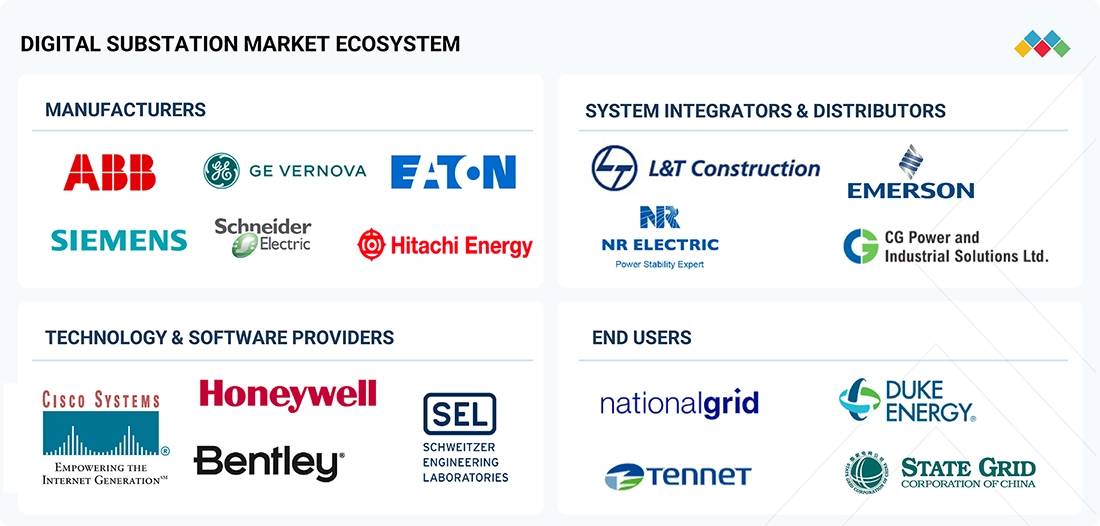
Digital Substation Market Share: COMMERCIAL USE CASES ACROSS INDUSTRIES
| COMPANY | USE CASE DESCRIPTION | BENEFITS |
|---|---|---|
 |
Deployed IEC 61850-based digital substations with optical current transformers and digital relays across urban networks | Enhances grid reliability, streamlines maintenance, and enables integration of renewable energy sources |
 |
Implemented digital twin and predictive monitoring platforms in transmission substations for real-time condition assessment | Enables predictive maintenance, minimizes unplanned outages, and improves operational efficiency |
 |
Rolled out digital substations integrated with optical sensors and process bus communication to replace legacy analog systems | Improves data accuracy and fault isolation speed, strengthens cybersecurity, and lowers lifecycle cost |
 |
Adopted fully digital substation architecture with IEC 61850 process bus and fiber-based communication for renewable grid expansion | Enhances interoperability, supports remote operation in harsh environments, and accelerates renewable energy integration |
 |
Implemented substation automation and digital protection devices across transmission infrastructure as part of grid modernization | Increases reliability, enables real-time monitoring and control, and reduces maintenance overheads |
Logos and trademarks shown above are the property of their respective owners. Their use here is for informational and illustrative purposes only.
Related Ecosystem
Smart Grid
- Meter Data Management (MDM)
- Sensors
- Workforce Management
- Cellular Network
- Customer Analytics
- SCHNEIDER ELECTRIC SE
- Siemens ag
- ABB India Limited
- Eaton Corporation plc
- Hitachi Energy India Limited
Electronics System And Components
- Sensors
- Temperature Sensors
- Pressure Sensors
- Actuators
- Image Sensors
- Lenovo
- Samsung
- Texas Instruments Incorporated
- HONEYWELL INTERNATIONAL INC.
- Teledyne Technologies Incorporated
Industrial Iot
- Sensors
- Pressure Sensors
- Flow Sensors
- Gas Sensors
- Image Sensors
- Siemens ag
- ABB India Limited
- HONEYWELL INTERNATIONAL INC.
- Emerson Electric Co.
- SCHNEIDER ELECTRIC SE
Key Takeaways
- Japan's digital substation market is valued at USD 755.4 million in 2025 and will reach USD 980.5 million by 2030, growing at a 5.4% CAGR.
- Japan's commitment to smart grid modernization and renewable energy integration is a primary driver of digital substation adoption.
- Japan's aging power infrastructure necessitates digital transformation, creating sustained demand for automation and monitoring solutions.
- By 2030, Japan will emerge as a leading digital substation market in Asia Pacific, supported by government initiatives and technological innovation.
Digital Substation Market Report Scope
| Report Metric | Details |
|---|---|
| Base Year | 2025 |
| Fastest Growing Segment | SCADA SYSTEMS (Module) |
| Forecast Period | 2025–2030 |
| Growth Rate | CAGR of 6.5% from 2025 to 2030 |
| Largest Segment | HARDWARE (Module) |
| Market Size Base Year (Billions) | ~USD 14.44 (2025) |
| Revenue Forecast (Billions) | ~USD 19.78 (2030) |
| Segments Covered | Type, Installation Type, Industry, Module, Voltage, Hardware Type, Utility Type, Protection Devices Type |
Japan Digital Substation Market Report Segmentation
8 segment dimensions are covered across the global market.
By Type
- Bus Bars
- Circuit Breakers
- Distribution
- Distribution Substations
- Interfacing Units
- Other Hardware Types
- Protection Devices
- Protection Relays
- Switch Gears
- Transformers
- Transmission
- Transmission Substations
By Installation Type
- New Installations
- Retrofit
By Industry
- Heavy Industries
- Other Industries
- Transportation
- Utilities
By Module
- Fiber-Optic Communication Networks
- Hardware
- Scada Systems
By Voltage
- 220–550 Kv
- 220–550Kv
- Above 550 Kv
- Above 550Kv
- Up To 220 Kv
- Up To 220Kv
By Hardware Type
- Bus Bars
- Interfacing Units
- Other Hardware Type
- Other Hardware Types
- Protection Devices
- Transformers
By Utility Type
- Non-Renewable
- Non-Renewables
- Renewable
- Renewables
By Protection Devices Type
- Circuit Breakers
- Protection Relays
- Switch Gears
JAPAN: DIGITAL SUBSTATION MARKET, BY INDUSTRY, 2025–2030
| Segment | 2025 | 2026 | 2027 | 2028 | 2029 | 2030 | CAGR (%) |
|---|---|---|---|---|---|---|---|
| HEAVY INDUSTRIES | 113.9 | 118.7 | 123.4 | 128.1 | 132.7 | 137.3 | 3.8 |
| OTHER INDUSTRIES | 44.8 | 46.2 | 47.4 | 48.4 | 49.3 | 50 | 2.2 |
| TRANSPORTATION | 63.5 | 67 | 70.5 | 74.1 | 77.7 | 81.4 | 5.1 |
| UTILITIES | 533.1 | 567 | 601.8 | 637.6 | 674.3 | 711.8 | 6 |
| TOTAL | 755.4 | 798.8 | 843.1 | 888.2 | 934 | 980.5 | 5.4 |
Target Audience
- Utility Companies & Grid Operators : Japanese utilities need market intelligence to plan digital substation investments, benchmark against peers, and align modernization strategies with regional growth trends and regulatory requirements.
- Technology Vendors & Solution Providers : Equipment manufacturers and software providers require Japan-specific market data to identify customer segments, assess market penetration opportunities, and develop localized product strategies.
- Investment & Private Equity Firms : Investors evaluating opportunities in Japan's energy infrastructure sector need accurate market sizing and growth forecasts to assess portfolio companies and identify acquisition targets in digital substation space.
- Government & Policy Makers : Japanese regulatory bodies and energy ministry officials use market research to inform smart grid policies, allocate resources for grid modernization, and track progress toward energy transition goals.
- Consulting & Engineering Firms : Professional services firms advising Japanese utilities on digital transformation need market context, competitive benchmarks, and technology trends to deliver credible strategic recommendations to clients.
Key Companies in the Japan Digital Substation Market
| Company | HQ | Ownership | Strongest segments |
|---|---|---|---|
| KONGSBERG GRUPPEN | Norway | Public Company | Air defence, combat systems, and C2,Missiles (naval strike and air-to-surface),Remote weapon stations and land systems, |
| AT&S | Canada | Public Company | Turnkey automated manufacturing and assembly systems,Lifecycle and post-automation services,Software and digital solutions, |
| TECH MAHINDRA LIMITED | India | Public Company | Application services and digital enterprise platforms (SAP, Oracle, Salesforce, ServiceNow, digital process solutions),Engineering, network, and testing services,Cloud and infrastructure services (CLOUDNXT.NOW, data center, FLEX digital workplace, enterprise mainframe), |
| KEC INTERNATIONAL LIMITED | India | Public Company | Transmission & Distribution EPC (including GIS and substations),Railway EPC and Urban Transport,Civil Infrastructure (transport, industrial, residential/defense, data centers, water), |
| ABB | Switzerland | Public Company | Electrification,Motion,Automation, |
| GE VERNOVA | United States | Public Company | Power (gas, nuclear, hydro, steam),Wind (onshore and offshore),Electrification (grid, power conversion, software, solar and storage), |
| MITSUBISHI ELECTRIC CORPORATION | Japan | Public Company | Infrastructure, Energy, Defense & Space Systems,Factory Automation & Industrial Systems,Automotive Equipment, |
| EATON | Ireland | Public Company | Electrical Americas (power distribution, power quality, residential, utility),Electrical Global (hazardous duty, emergency lighting, structural support),Aerospace (hydraulics, fuel systems, thermal management, filtration), |
| HONEYWELL INTERNATIONAL INC. | United States | Public Company | Industrial Automation,Building Automation,Energy and Sustainability Solutions (UOP and related), |
| TOSHIBA CORPORATION | Japan | Private Company | Energy Systems & Solutions,Infrastructure Systems & Solutions,Building Solutions, |
| CISCO | United States | Public Company | Data Center and Campus Switching/Routing,Network Security and SASE,Collaboration and Webex Suite, |
| LANNER ELECTRONICS | Taiwan | Public Company | x86 Network Appliances (rackmount & desktop, SD-WAN/security),Rugged & Industrial Edge Computers (DIN-rail, vehicle, rail, IEC61850-3),Edge AI Appliances & NVIDIA GPU-based Systems, |
| WELOTEC GMBH | Germany | Private Company | Industrial networking & routers,Industrial PCs & edge computing,Remote access & security solutions, |
KONGSBERG GRUPPEN
Kongsberg Gruppen is a Norwegian public company founded in 1814 with 7,586 employees. It operates as a diversified industrial group with operations across multiple sectors.
AT&S
AT&S is a Canadian public company founded in 1978 with 7,000 employees. It operates in the technology and industrial sectors.
TECH MAHINDRA LIMITED
Tech Mahindra Limited is an Indian public company founded in 1986 with 119,337 employees. It is a major information technology and business process management services provider.
KEC INTERNATIONAL LIMITED
KEC International Limited is an Indian public company founded in 1945 with 6,709 employees. It operates in the engineering and construction sectors.
ABB
ABB is a Swiss public company founded in 1883 with 111,900 employees. It is a leading provider of electrification, robotics, and industrial automation solutions.
GE VERNOVA
GE Vernova is a United States-based public company founded in 2023 with 78,000 employees. It operates in the energy and power generation sector.
MITSUBISHI ELECTRIC CORPORATION
Mitsubishi Electric Corporation is a Japanese public company founded in 1921 with 150,386 employees. It manufactures electrical and electronic equipment across industrial, consumer, and infrastructure sectors.
EATON
Eaton is an Ireland-based public company founded in 1911 with 97,303 employees. It provides power management solutions and diversified industrial products.
HONEYWELL INTERNATIONAL INC.
Honeywell International Inc. is a United States-based public company founded in 1885 with 101,000 employees. It operates in aerospace, building technologies, performance materials, and safety solutions.
TOSHIBA CORPORATION
Toshiba Corporation is a Japanese private company founded in 1875 with 106,648 employees. It operates across electronics, energy, infrastructure, and digital solutions sectors.
CISCO
Cisco is a United States-based public company founded in 1984 with 86,200 employees. It is a leading provider of networking and cybersecurity solutions.
LANNER ELECTRONICS
Lanner Electronics is a Taiwan-based public company founded in 1986. It operates in the electronics and computing sector.
WELOTEC GMBH
Welotec GmbH is a German private company founded in 1991. It operates in the industrial technology sector.
Reasons to Buy this Report
- Japan-Specific Market Sizing : Obtain precise valuation data for Japan's digital substation market with accurate 2025 baseline (USD 755.4M) and 2030 forecasts, enabling confident investment and expansion planning in this key Asian market.
- Regional Growth Insights : Understand Japan's 5.4% CAGR trajectory and how it compares to global trends, identifying unique growth drivers specific to Japanese utilities, regulatory environment, and infrastructure modernization priorities.
- Competitive Landscape Analysis : Gain intelligence on Japan's digital substation vendor ecosystem, market consolidation trends, and competitive positioning to inform go-to-market strategies and partnership opportunities in the region.
- Regulatory & Policy Context : Access detailed analysis of Japan's smart grid policies, government incentives, and cybersecurity requirements driving digital substation adoption, essential for compliance and strategic planning.
- Investment Decision Support : Leverage comprehensive Japan market data to evaluate investment opportunities, assess technology adoption rates, and identify high-growth segments within the digital substation ecosystem.
Frequently asked questions
What is the current size of Japan's digital substation market?
Japan's digital substation market is valued at USD 755.4 million in 2025.
What is the projected market size for Japan's digital substation market by 2030?
Japan's digital substation market is projected to reach USD 980.5 million by 2030.
What is the CAGR for Japan's digital substation market?
Japan's digital substation market is expected to grow at a compound annual growth rate (CAGR) of 5.4% from 2025 to 2030.
What are the main drivers of growth in Japan's digital substation market?
Key drivers in Japan include smart grid modernization initiatives, renewable energy integration requirements, aging infrastructure modernization, and regulatory support for grid digitalization.
How does Japan's digital substation market compare to other Asia Pacific countries?
Japan's advanced infrastructure, technological capabilities, and government support position it as a leading digital substation market in the Asia Pacific region by 2030.
RESEARCH METHODOLOGY
The research study involved four main activities in estimating the size of the digital substation market. Extensive secondary research was conducted to gather key information about the market and related markets. The accuracy of these findings, assumptions, and sizing was then validated through primary research with industry experts across the value chain. Both top-down and bottom-up approaches were used to estimate the market size. Market breakdown and data triangulation were applied to determine the sizes of segments and sub-segments.
Secondary Research
In the secondary research process, various sources were used to identify and gather the information needed for this study. The secondary sources include annual reports, press releases, investor presentations of companies, white papers, and articles from reputable authors. The secondary research primarily aimed to gather key details about the market’s value chain, the main market players, market segmentation based on industry trends, regional outlook, and developments from both market and technology perspectives.
In the digital substation market report, the global market size has been estimated using both the top-down and bottom-up methods, along with several other related submarkets. The major players in the market were identified through extensive secondary research, and their presence was confirmed through both secondary and primary research. All percentage shares, splits, and breakdowns were determined using secondary sources and verified through primary sources.
Primary Research
Extensive primary research was carried out after analyzing the digital substation market scenario through secondary research. Several primary interviews were conducted with key opinion leaders from both demand- and supply-side vendors across four major regions—North America, Europe, Asia Pacific, and the Rest of the World. About 25% of the primary interviews involved demand-side vendors, while 75% involved supply-side vendors. The primary data was mainly collected through telephonic interviews, accounting for 80% of all primary interviews; questionnaires and emails were also used to gather data.
After successful engagement with industry experts, brief sessions were held with highly experienced independent consultants to reinforce the findings of our primary research. This, combined with the opinions of in-house subject matter experts, led to the conclusions outlined in the report.
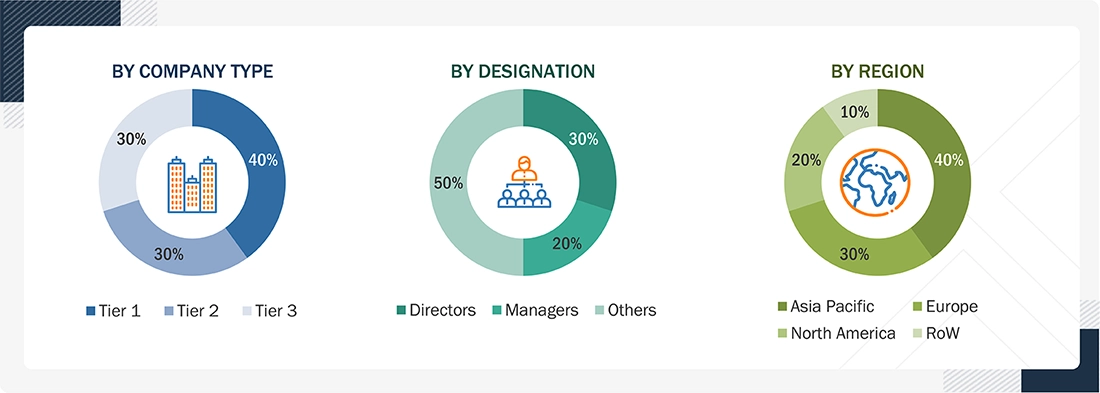
Note: “Others” includes sales, marketing, and product managers
To know about the assumptions considered for the study, download the pdf brochure
Market Size Estimation
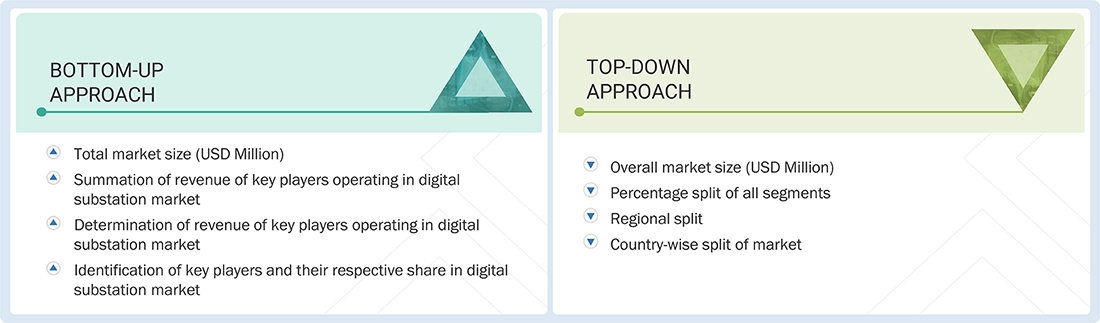
In the market engineering process, both, the top-down and bottom-up approaches, along with data triangulation methods, were used to estimate and validate the size of the digital substation market and other related submarkets. The research methodology employed to estimate the market sizes includes the following:
- Identifying top-line investments and spending in the ecosystem and considering segment-level splits and significant market developments
- Identifying different stakeholders in the digital substation market that influence the entire market, along with participants across the supply chain
- Analyzing major manufacturers in the digital substation market and studying their product portfolio
- Analyzing trends related to the adoption of digital substation modules
- Tracking recent and upcoming market developments, including investments, R&D activities, product launches, expansions, acquisitions, partnerships, collaborations, agreements, and investments, as well as forecasting the market size based on these developments and other critical parameters
- Carrying out multiple discussions with key opinion leaders to identify the adoption trends of silicon carbide (SiC)
- Segmenting the overall market into various other market segments
- Validating the estimates at every level through discussions with key opinion leaders, such as chief executives (CXOs), directors, and operations managers, and finally with the domain experts at MarketsandMarkets
Digital Substation Market : Top-Down and Bottom-Up Approach
Data Triangulation
After arriving at the overall market size by the market size estimation process explained in the earlier section, the overall digital substation market has been divided into several segments and subsegments. To complete the overall market engineering process and arrive at the exact statistics for all segments, the data triangulation and market breakdown procedures have been used, wherever applicable. The data has been triangulated by studying various factors and trends from both the demand and supply sides. Along with data triangulation and market breakdown, the market has been validated by top-down and bottom-up approaches.
Market Definition
A digital substation combines traditional substation functions with advanced digital communication, automation, and control technologies to improve grid reliability, flexibility, and efficiency. It replaces conventional copper wiring and analog instruments with fiber-optic communication, intelligent electronic devices (IEDs), sensors, and process bus architectures that follow IEC 61850 standards. These systems support real-time data collection, predictive maintenance, and remote monitoring, resulting in better operational visibility and faster fault detection across transmission and distribution networks. Digital substations are essential in modernizing power infrastructure, integrating renewable energy sources, and advancing smart grid development.
The digital substation market is broadly divided by module, type, installation type, architecture, voltage, and industry. The module category includes hardware (transformers, switchgears, protection devices, interfacing units, and communication systems), fiber-optic communication networks, and SCADA systems, all of which work together to ensure efficient monitoring, control, and automation of power systems. The market is also segmented by type into transmission and distribution substations, serving different voltage and capacity levels. Regarding installation type, digital substations are classified as either new installations or retrofits, supporting both greenfield and modernization projects. In terms of architecture, they are divided into air-insulated (AIS), gas-insulated (GIS), and hybrid substations, each designed for specific spatial and environmental conditions.
By voltage, digital substations are categorized into up to 220 kV, 220–550 kV, and above 550 kV, addressing diverse transmission needs. Industry-wise, the market includes utilities (renewable and non-renewable), heavy industries (steel, cement, chemicals), transportation (railways and metro), and others (data centers and commercial infrastructure). The increasing integration of renewable energy, expansion of grid automation, and adoption of IoT and AI-based monitoring platforms are propelling the rapid evolution of the digital substation ecosystem, making it a key element of next-generation power systems.
Key Stakeholders
- Primary equipment manufacturers (transformers, switchgear, circuit breakers, etc.)
- Intelligent electronic device (IED) manufacturers
- Supervisory control and data acquisition (SCADA) solution providers
- Communication network providers
- Engineering, procurement & construction (EPC) firms/system integrators
- Power utility companies
- Turnkey contractors
- Distributors and traders
- Research organizations
- Regulatory bodies & government energy agencies
- Forums, alliances, and associations
Report Objectives
- To define, analyze, and forecast the digital substation market size by module, type, installation type, voltage, architecture type, industry, and region, in terms of value
- To define, analyze, and forecast the digital substation market size, by hardware type, in terms of volume
- To forecast the market size for various segments with respect to four main regions, namely, North America, Europe, Asia Pacific, and RoW
- To provide detailed information regarding the major drivers, restraints, opportunities, and challenges influencing the growth of the market
- To study the complete supply chain and related industry segments for the market
- To strategically study the micromarkets with respect to individual growth trends, prospects, and contributions to the total market
- To analyze the supply chain, market ecosystem, trends/disruptions impacting customer’s business, technology analysis, pricing analysis, Porter’s five forces model, key stakeholders & buying criteria, case study analysis, trade analysis, patent analysis, key conferences & events, 2025–2026; regulations related to the digital substation market; and investment and funding scenario
- To understand opportunities in the market for various stakeholders by identifying the high-growth segments of the market
- To strategically profile the key players and comprehensively analyze their market position in terms of ranking, core competencies, company valuation & financial metrics, and product/brand comparison, along with detailing the competitive landscape for the market leaders
- To analyze competitive developments such as product launches, agreements, partnerships, collaborations, contracts, acquisitions, expansions, and research and development (R&D) activities carried out by players in the market
Customization Options
With the given market data, MarketsandMarkets offers customizations according to the specific requirements of companies. The following customization options are available for the report:
Country-wise Information:
- Country-wise breakdown for North America, Europe, Asia Pacific, and Rest of the World
Company Information:
- Detailed analysis and profiling of additional market players (up to five)
Get the Full Digital Substation Market Report
Full forecast, segment splits, and company analysis for all Digital Substation Market.
- Bahrain Digital Substation Market
- Kuwait Digital Substation Market
- Oman Digital Substation Market
- Qatar Digital Substation Market
- Rest Of Middle East Digital Substation Market
- Saudi Arabia Digital Substation Market
- UAE Digital Substation Market
- Rest Of Africa Digital Substation Market
- South Africa Digital Substation Market
- Canada Digital Substation Market
- Mexico Digital Substation Market
- US Digital Substation Market
- UK Digital Substation Market
- Germany Digital Substation Market
- France Digital Substation Market
- Italy Digital Substation Market
- Spain Digital Substation Market
- Poland Digital Substation Market
- China Digital Substation Market
- South Korea Digital Substation Market
- India Digital Substation Market
- Australia Digital Substation Market
- Indonesia Digital Substation Market
- Malaysia Digital Substation Market
- Thailand Digital Substation Market
- Vietnam Digital Substation Market
- Nordics Digital Substation Market
- Rest Of Europe Digital Substation Market
- Rest Of Asia Pacific Digital Substation Market
Need a Tailored Report?
Customize this report to your needs
Get 10% FREE Customization
Customize This Report
