
India Electronic Waste Recycling Market (2024-2029)

The India Electronic Waste Recycling Market was valued at $1240.2 Million in 2024 and projected to reach to $1734.5 Million by 2029, representing a compound annual growth rate of 6.9%. India's electronic waste recycling market is poised for sustained growth driven by increasing regulatory pressures, rising consumer awareness, and the government's commitment to circular economy principles.


| Market Size in | USD 26.32 MN |
| Market Forecast in | |
| CAGR | |
| Forecast Period | |
| Units Considered | Value (USD MN) |
India Electronic Waste Recycling Market Trends and Insights
- This expansion reflects India's increasing focus on sustainable waste management practices and regulatory compliance within the packaging, construction, mining, and gases sectors.
- India's growing consumer electronics adoption and rising awareness of environmental concerns are driving demand for efficient e-waste recycling solutions. The Indian e-waste recycling market is supported by strengthened regulatory frameworks and corporate sustainability initiatives across the country.
- India's rapid industrialization and urbanization are generating substantial volumes of electronic waste, creating both challenges and opportunities for recycling operators.
- Between 2024 and 2029, India is expected to witness accelerated investment in recycling infrastructure and technology adoption, positioning the nation as a key player in Asia Pacific's circular economy transition..
Key Market Statistics
- CAGR (2024-2029) 6.9% CAGR
- Market Size, 2024 ~USD 1240.2 Million
- Forecast, 2029 ~USD 1734.5 Million
- Country India
India Electronic Waste Recycling Market Overview
Market Valuation Growth :
India's electronic waste recycling market is valued at USD 1,240.2 million in 2024, with a projected CAGR of 6.9% through 2029, reaching USD 1,734.5 million. This growth outpaces the global CAGR of 6.5%, positioning India as a high-growth market in the Asia-Pacific region.
Regulatory Compliance Drivers :
India's strengthened Extended Producer Responsibility (EPR) regulations and the Plastic Waste Management Rules are compelling manufacturers and packaging companies to invest in sustainable e-waste recycling infrastructure, directly boosting market expansion.
Consumer Electronics Surge :
Rapid urbanization and rising disposable incomes in India have led to exponential growth in consumer electronics adoption, generating substantial volumes of electronic waste that require professional recycling and resource recovery solutions.
Sector Integration Opportunities :
The convergence of packaging, construction, mining, and gases industries with e-waste recycling creates unique opportunities for integrated waste management solutions and circular economy initiatives across multiple industrial verticals in India.
India Electronic Waste Recycling Market Dynamics
- The market benefits from India's position as a major electronics manufacturing hub and growing domestic consumption patterns.
- Investments in recycling infrastructure and technology adoption are accelerating across urban centers, supported by both government initiatives and private sector participation. The forecast period (2024-2029) will witness significant expansion as industries within packaging, construction, and mining sectors integrate e-waste management into their operations.
- Emerging opportunities in precious metal recovery, rare earth element extraction, and plastic reclamation will attract new market entrants.
- However, challenges related to informal recycling sectors and infrastructure gaps will require coordinated policy interventions to fully unlock the market's potential..
Market Ecosystem
Related Ecosystem
Ceramics And Glass
- Zirconia
- Alumina Ceramics
- Silicon Carbide
- Silicon Nitride
- Titanate Ceramics
- Saint-gobain
- 3M COMPANY
- Kyocera Corporation
- CERAMTEC GMBH
- COORSTEK INCORPORATED
Equipment Machine And Tooling
- Wastewater Treatment
- Air Cooled Heat Exchangers
- Diaphragm Pumps
- Fiberglass
- HVAC System
- Alfa Laval Corporate AB
- Johnson Controls International plc
- Veolia
- Daikin Industries,Ltd.
- Carrier Global Corporation
Mining Minerals And Metals
- Wastewater Treatment
- Fiberglass
- Light Commercial Vehicles (LCVs)
- Nitrogen
- Acetic Acid
- LHOIST S.A
- SEVERSTAL JSC
- ArcelorMittal S.A.
- TW METALS, INC.
- Linde plc
Key Takeaways
- India's e-waste recycling market will grow from USD 1,240.2M (2024) to USD 1,734.5M (2029) at a 6.9% CAGR.
- India's regulatory environment and corporate sustainability mandates are accelerating adoption of formal recycling channels.
- India's rapid electronics consumption and urbanization are generating increasing volumes of recyclable e-waste.
- India is positioned as a critical hub for Asia Pacific's circular economy and sustainable resource recovery initiatives.
Electronic Waste Recycling Market Report Scope
| Report Metric | Details |
|---|---|
| Base Year | 2024 |
| Fastest Growing Segment | IT & TELECOMMUNICATION (Source) |
| Forecast Period | 2024-2029 |
| Growth Rate | CAGR of 6.5% from 2024 to 2029 |
| Largest Segment | METALS (Material) |
| Market Size Base Year (Billions) | ~USD 48.41 (2024) |
| Revenue Forecast (Billions) | ~USD 66.33 (2029) |
| Segments Covered | Material, Source, Technology, Technology 2021-2029 |
India Electronic Waste Recycling Market Report Segmentation
4 segment dimensions are covered across the global market.
By Material
- Glass
- Metals
- Other Materials
- Plastics
By Source
- Consumer Electronics
- Household Appliances
- It & Telecommunication
- Mobile Computing Devices
- Other Sources
By Technology
- Electrostatic Separation
- Hydrometallurgical Process
- Lithium Battery Recycling
- Other Technologies
- Pyrometallurgical Process
By Technology 2021-2029
- Electrostatic Separation
- Hydrometallurgical Process
- Lithium Battery Recycling
- Other Technologies
- Pyrometallurgical Process
Target Audience
- Waste Management Companies : Operators and service providers need India-specific market data to expand recycling operations, invest in infrastructure, and align business strategies with the projected 6.9% CAGR growth trajectory.
- Manufacturing & Packaging Firms : Companies subject to India's EPR regulations require detailed market insights to understand compliance costs, identify certified recycling partners, and integrate sustainable practices into supply chains.
- Investment & Private Equity Firms : Investors evaluating opportunities in India's circular economy need validated market sizing, growth forecasts, and sector dynamics to make informed investment decisions in e-waste recycling ventures.
- Government & Policy Makers : Indian regulatory bodies and environmental agencies use market research to develop evidence-based policies, allocate resources for infrastructure development, and monitor sector compliance and sustainability goals.
- Technology & Equipment Suppliers : Manufacturers of recycling equipment and technology solutions need India market intelligence to identify demand drivers, forecast equipment sales, and develop region-specific product offerings.
Reasons to Buy this Report
- Market Size & Growth Validation : Obtain precise market valuation data for India's e-waste recycling sector with verified CAGR of 6.9%, enabling accurate financial forecasting and investment decision-making for the 2024-2029 period.
- Regulatory Landscape Intelligence : Understand India-specific compliance requirements, EPR regulations, and government policies shaping the e-waste recycling market, critical for operational planning and risk mitigation in the Indian market.
- Sector-Specific Insights : Gain detailed analysis of how packaging, construction, mining, and gases industries are integrating e-waste recycling, identifying cross-sector opportunities and partnership potential unique to India's industrial ecosystem.
- Competitive Positioning Strategy : Leverage India-focused market data to benchmark against competitors, identify market gaps, and develop targeted strategies for capturing market share in this high-growth emerging market.
- Investment & Expansion Planning : Access comprehensive India market forecasts to support capital allocation decisions, facility expansion plans, and technology investments aligned with projected demand growth through 2029.
Frequently asked questions
What is the current size of India's electronic waste recycling market?
India's electronic waste recycling market was valued at USD 1,240.2 million in 2024 and is expected to grow to USD 1,734.5 million by 2029.
What is the projected growth rate for India's e-waste recycling market?
India's e-waste recycling market is projected to grow at a compound annual growth rate (CAGR) of 6.9% from 2024 to 2029.
What factors are driving growth in India's e-waste recycling sector?
Growth in India's e-waste recycling market is driven by increasing consumer electronics adoption, strengthened regulatory frameworks, corporate sustainability initiatives, and rising environmental awareness.
How does India's e-waste market compare to the global market?
India's e-waste recycling market is growing at 6.9% CAGR, slightly outpacing the global market's 6.5% CAGR, reflecting India's accelerating focus on circular economy practices.
What industries contribute to e-waste generation in India?
India's e-waste is generated across packaging, construction, mining, gases, consumer electronics, telecommunications, and IT sectors, with growing volumes from rapid industrialization.
RESEARCH METHODOLOGY
The study involves two major activities in estimating the current market size for the electronic waste recycling market. Exhaustive secondary research was done to collect information on the market, peer market, and parent market. The next step was to validate these findings, assumptions, and sizing with industry experts across the value chain through primary research. Both top-down and bottom-up approaches were employed to estimate the complete market size. After that, market breakdown and data triangulation were used to estimate the market size of segments and subsegments.
Secondary Research
Secondary sources referred to for this research study include financial statements of companies offering electronic waste recycling services and information from various trade, business, and professional associations. Secondary research has been used to obtain critical information about the industry’s value chain, the total pool of key players, market classification, and segmentation according to industry trends to the bottom-most level and regional markets. The secondary data was collected and analyzed to arrive at the overall size of the Electronic Waste Recycling market, which was validated by primary respondents.
Primary Research
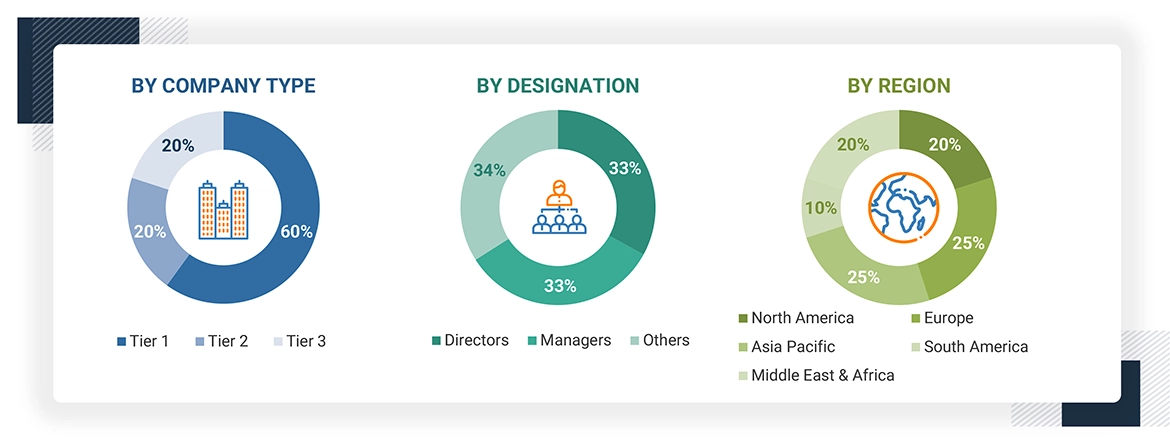
Extensive primary research was conducted after obtaining information regarding the electronic waste recycling market scenario through secondary research. Several primary interviews were conducted with market experts from both the demand and supply sides across major countries of North America, Europe, Asia Pacific, the Middle East & Africa, and Latin America. Primary data was collected through questionnaires, emails, and telephonic interviews. The primary sources from the supply side included various industry experts, such as Chief X Officers (CXOs), Vice Presidents (VPs), Directors from business development, marketing, product development/innovation teams, and related key executives from electronic waste recycling industry vendors; system integrators; component providers; distributors; and key opinion leaders. Primary interviews were conducted to gather insights such as market statistics, data on revenue collected from the products and services, market breakdowns, market size estimations, market forecasting, and data triangulation. Primary research also helped in understanding the various trends related to materials, source, technology, and region. Stakeholders from the demand side, such as CIOs, CTOs, CSOs, and installation teams of the customer/end users who are using electronic waste recycling technologies, were interviewed to understand the buyer’s perspective on the suppliers, products, component providers, and their current usage of recycled materials and future outlook of their business which will affect the overall market.
The Breakup of Primary Research
To know about the assumptions considered for the study, download the pdf brochure
Market Size Estimation
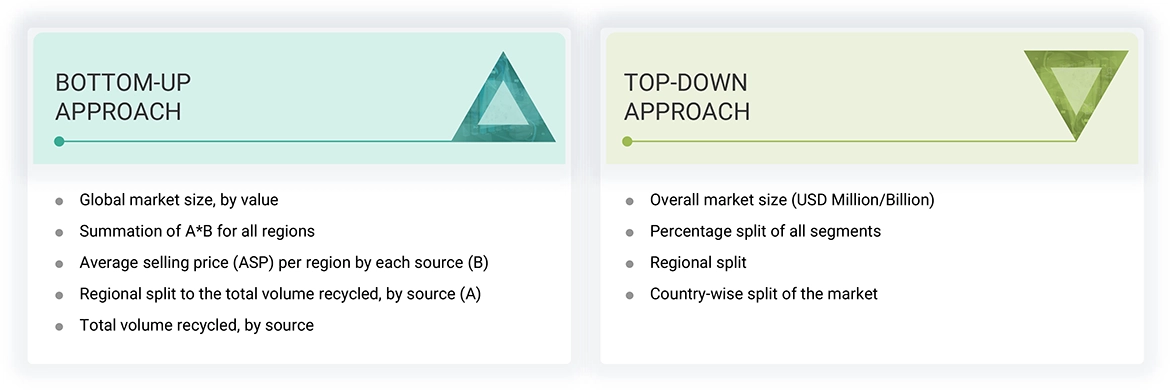
The research methodology used to estimate the size of the electronic waste recycling market includes the following details. The market sizing of the market was undertaken from the demand side. The market was upsized based on procurements and modernizations in electronic waste recycling in different industries at a regional level. Such procurements provide information on the demand aspects of the recycled materials for each application. For each material, all possible segments of the electronic waste recycling market were integrated and mapped.
Data Triangulation
After arriving at the overall size from the market size estimation process explained above, the total market was split into several segments and subsegments. The data triangulation and market breakdown procedures explained below were implemented, wherever applicable, to complete the overall market engineering process and arrive at the exact statistics for various market segments and subsegments. The data was triangulated by studying various factors and trends from the demand and supply sides. Along with this, the market size was validated using both the top-down and bottom-up approaches.
Market Definition
Electronic waste recycling, or e-waste recycling, refers to the process of collecting, disassembling, and processing discarded electronic devices to recover valuable materials while minimizing environmental impact. The recycling process begins with the collection of e-waste from various sources, followed by sorting and dismantling to extract metals (such as gold, silver, and copper), plastics, and glass. These materials are then processed for reuse in manufacturing new products, contributing to a circular economy. The e-waste recycling plays a crucial role in preventing hazardous substances present in e-waste from contaminating the environment, thereby promoting responsible disposal practices and resource recovery.
Stakeholders
- Electronic Waste Recycling Companies
- Government and Research Organizations
- National and Local Government Organizations
- Institutional Investors
- Environment Regulators
- Logistics Companies
- Retailers
Report Objectives
- To define, describe, and forecast the electronic waste recycling market size in terms of volume and value
- To provide detailed information regarding the key factors, such as drivers, restraints, opportunities, and challenges influencing market growth
- To analyze and project the global electronic waste recycling market by materials, source, technology, and region
- To forecast the market size concerning five main regions (along with country-level data), namely, North America, Europe, Asia Pacific, Latin America, and the Middle East & Africa, and analyze the significant region-specific trends
- To strategically analyze micro markets with respect to individual growth trends, prospects, and contributions of the submarkets to the overall market
- To analyze the market opportunities and the competitive landscape for stakeholders and market leaders
- To assess recent market developments and competitive strategies, such as agreements, contracts, acquisitions, and new product developments/new product launches, to draw the competitive landscape
- To strategically profile the key market players and comprehensively analyze their core competencies
Get the Full Electronic Waste Recycling Market Report
Full forecast, segment splits, and company analysis for all Electronic Waste Recycling Market.
- Germany Electronic Waste Recycling Market
- UK Electronic Waste Recycling Market
- France Electronic Waste Recycling Market
- Italy Electronic Waste Recycling Market
- Spain Electronic Waste Recycling Market
- China Electronic Waste Recycling Market
- Japan Electronic Waste Recycling Market
- South Korea Electronic Waste Recycling Market
- Canada Electronic Waste Recycling Market
- Mexico Electronic Waste Recycling Market
- US Electronic Waste Recycling Market
- South Africa Electronic Waste Recycling Market
- Brazil Electronic Waste Recycling Market
- Argentina Electronic Waste Recycling Market
- Rest Of Europe Electronic Waste Recycling Market
- Rest Of Asia Pacific Electronic Waste Recycling Market
- GCC Electronic Waste Recycling Market
- -Rest Of GCC Countries Electronic Waste Recycling Market
- Rest Of South America Electronic Waste Recycling Market
Need a Tailored Report?
Customize this report to your needs
Get 10% FREE Customization
Customize This Report
